
Plant Profile & Key Characteristics
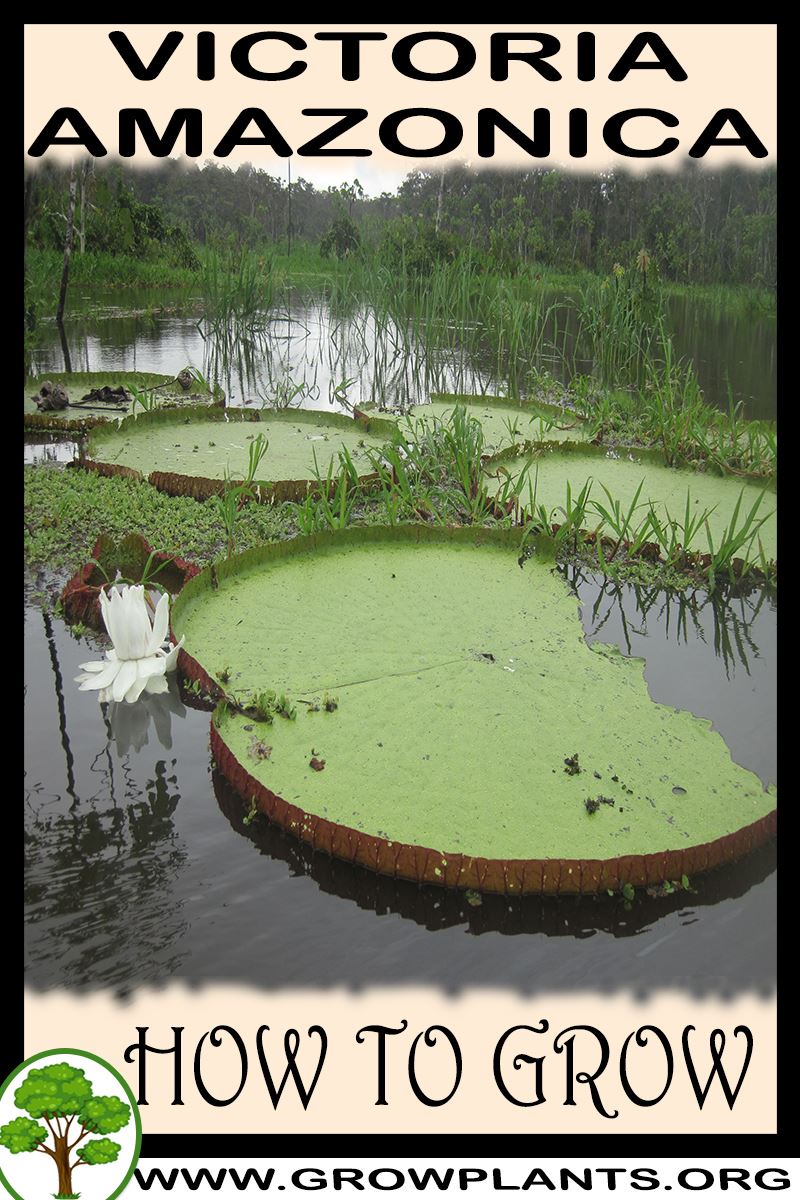
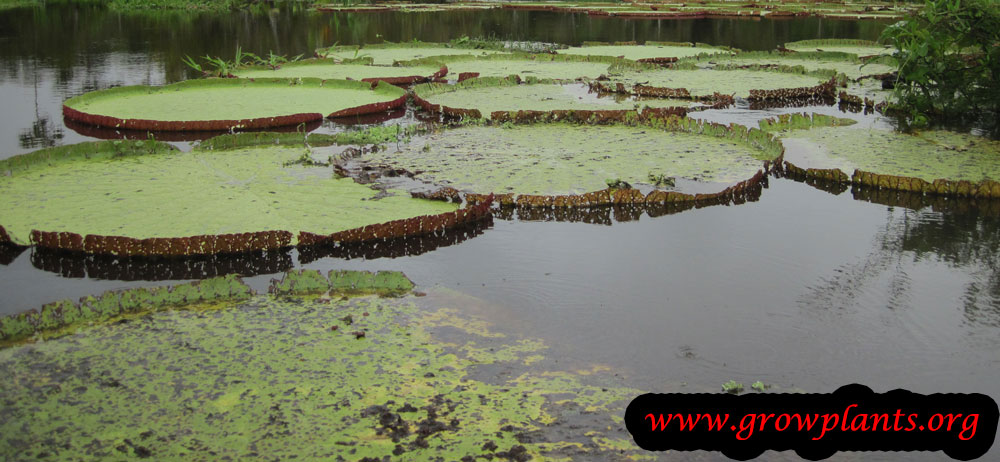
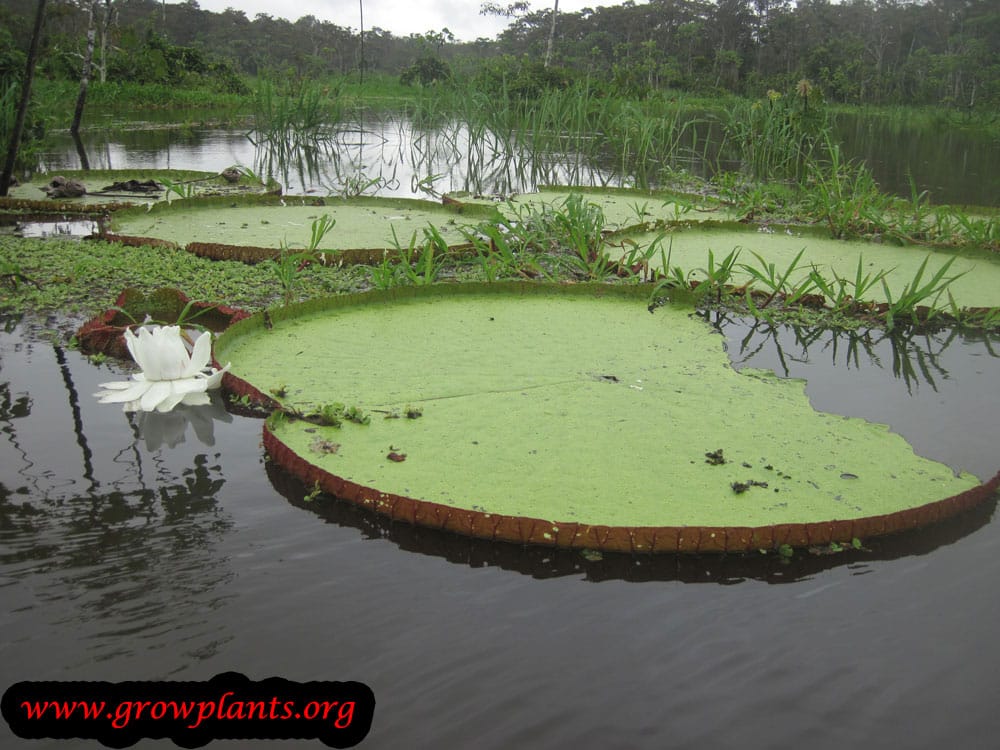
Overview: The Amazon giant waterlily is a spectacular aquatic perennial whose circular floating leaves can reach 0.4-3 m (16-120 in) across – large enough to bear considerable weight. A fast-growing tropical water plant (USDA zone 13+), it is grown ornamentally in large ponds and pools.
Quick Specifications
| Specification | Attribute |
|---|---|
| Plant Type / Life Cycle | Perennial (aquatic geophyte) |
| Foliage Type | Evergreen (in frost-free water) |
| Mature Size | Floating leaves 0.4-3 m (16-120 in) across |
| Growth Rate | Fast |
| Root System | Anchored by a submerged rhizome / tuber in the pond bed |
| Hardiness | USDA zone 13+ (tropical) |
Growth Form & Structure
- Height & Spread: Leaves and flowers sit just above the water while stems reach 0.5-5 m (20-200 in) down to the rooting rhizome; needs a large body of water and is not suited to small pots.
- Growth Habit & Form: Aquatic plant with huge circular floating leaves radiating from a submerged rhizome.
- Lifespan & Maturity: Perennial in the tropics; the rhizome can be lifted and overwintered indoors in cooler regions.
Anatomy & Physical Features
- Leaves & Foliage: Enormous round green leaves, often red beneath, with upturned rims and (in some forms) spiny undersides.
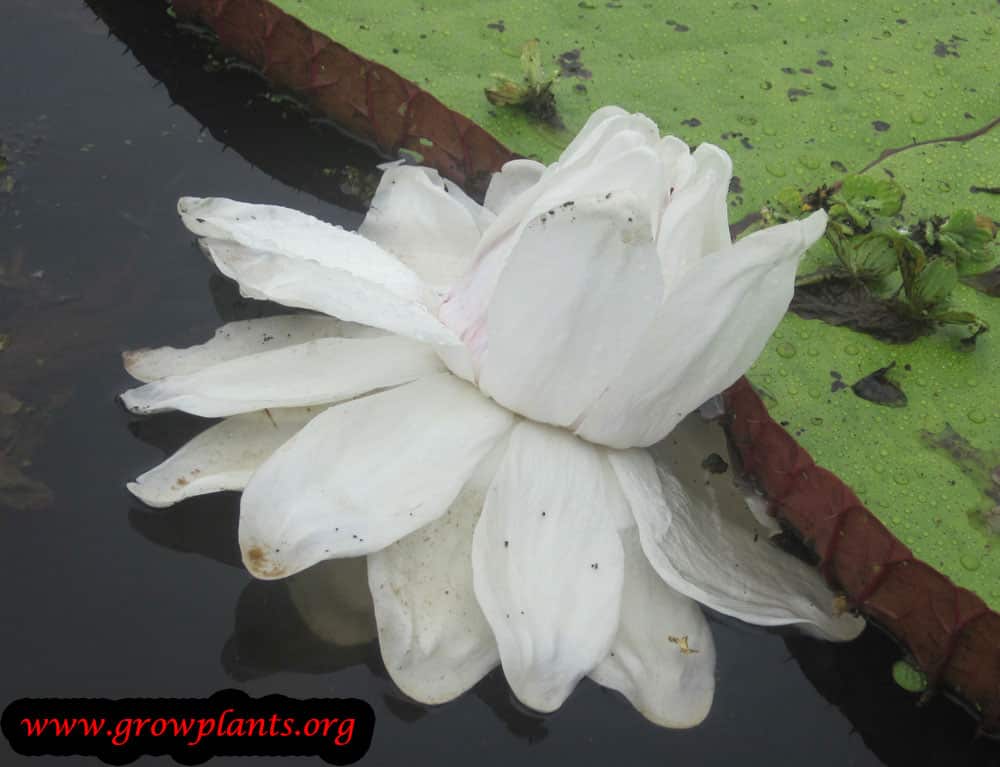
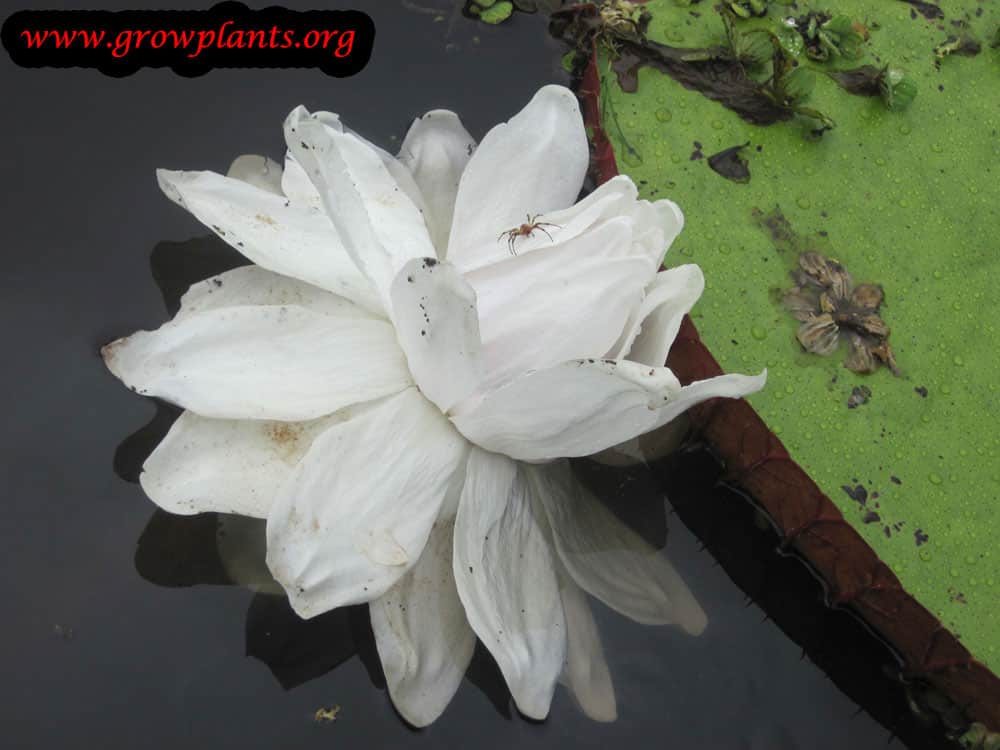
- Flower Characteristics: Large night-opening flowers that open white and age to pink.
Primary Uses & Landscape Value
- Functional & Ornamental Roles: Dramatic ornamental centrepiece for large tropical ponds and water gardens.
Care Guide: Planting, Soil & Watering
Overview: Victoria amazonica (giant Amazon waterlily) is a tropical aquatic perennial (zone 13+) grown in rich soil submerged under warm, still water in full sun. It is a fast, enormous grower that needs a large, warm pond and constant water.
Quick Care Requirements
| Requirement | Ideal Condition |
|---|---|
| Planting Season | Year-round in warm tropical water |
| Growth Rate | Fast |
| Soil Type | Rich soil submerged in a pond bed or container |
| Water Need | High – grown in standing water |
Planting & Establishment
- Best Planting Season: Plant at any time of year where the water stays warm; in cooler areas start it in warm water and lift the rhizome indoors before winter.
- How to Plant:
- Hole Preparation: Pot the rhizome into a large container of heavy, rich soil, then lower it into the pond so the crown sits under warm water.
- Soil Amendments: Use a rich, heavy aquatic soil topped with gravel to keep it from clouding the water.
- Planting Depth: Set the growing point just below the water surface at first, lowering it as the huge leaves develop.
- Growth Speed & Expectations: A very fast grower with pads up to 1-3 m (40-120 in) across – it needs a great deal of room.
Soil, Watering & Drainage Care
- Soil Mix & Drainage Needs: Grown fully aquatic in rich pond soil; drainage is not a concern, but the water must stay warm and the plant has enormous space and nutrient needs.
- Watering Schedule & Technique:
- Young / Newly Planted: Keep permanently submerged in warm, still water from the start.
- Established: Always grown in standing water; never allow it to dry.
- Seasonal Adjustments: Maintain warm water year-round; in cool climates overwinter the rhizome frost-free.
Climate, Light & Hardiness
The giant Amazon waterlily is a true aquatic plant of the humid tropics, growing submerged/floating in full sun in warm, still fresh water. It has essentially no frost or general outdoor cold tolerance, rated by the site only to USDA zone 13+, so outside the wet tropics it is grown as a heated-pond or large aquarium/greenhouse specimen.
Quick Climate Specifications
| Climate Zones | Tropical climates only |
|---|---|
| USDA Hardiness Zones | Zone 13+ |
| Optimal Temp Range | approximately 25–32°C (77–90°F) water temperature |
| Cold Damage Begins | approximately below 20°C (68°F) water temperature, growth slows and stress appears |
| Approx. Survival Minimum | Not established in source data; treat as a plant with no meaningful outdoor cold tolerance outside true tropical warmth |
| Frost Tolerance | None |
| Light Conditions | Full sun |
| Wind Tolerance | Not applicable (floating aquatic leaves in still water) |
| Salt / Coastal Tolerance | Not suitable (freshwater aquatic plant) |
Sunlight & Light Exposure
Optimal Light Setup
Full sun is required - the site lists only “Full Sun” as suitable light, with no shade tolerance noted, consistent with its need for very warm water and vigorous growth.
Shade & Heat Management
No shade tolerance is indicated; this is a plant of open, sun-baked tropical water bodies and grows fastest in full sun with warm water.
Best Exposure / Orientation
An open, unshaded pond or water feature with maximum sun exposure throughout the day.
Temperature Extremes & Hardiness
USDA Hardiness & Regional Limits
The site rates this species to zone 13+, reflecting a requirement for consistently hot, tropical conditions; it has no meaningful outdoor hardiness in temperate or even most subtropical climates and is grown as an annual or heated-water specimen outside the true tropics.
Cold Damage & Winter Protection
Growth stalls and the plant declines as water temperature drops; where grown outside zone 13, the rhizome/plant is typically kept in heated water (a warm greenhouse pool or aquarium) through any cooler months.
Frost Sensitivity
No frost tolerance - even brief exposure to cold, let alone frost, is lethal to this tropical aquatic.
Extreme Heat Tolerance
Thrives in hot tropical heat; the site notes fast growth in optimal (very warm) conditions.
Wind, Humidity & Microclimate
Humidity Preferences
Grows fully in water, so atmospheric humidity is not the limiting factor; consistently warm water temperature is what matters most.
Microclimate Recommendations
Outside naturally tropical climates, success depends on providing heated water (a warm, sunny pond, greenhouse pool, or large heated aquarium) that holds a consistently warm temperature; the site also notes it needs a lot of space, so plan for its very large floating leaves.
Growing in Pots, Balconies & Indoors
The giant Amazon water lily is a huge tropical aquatic with pads spanning up to several metres across a warm pond. The grower confirms it is neither a houseplant nor a pot or container plant – it needs a large, warm body of water, not a tub or a room. Treat it as a specimen for a heated pool or a botanical-scale water garden rather than home growing.
Quick Details
- Container Size: Not suited to pots or containers – it needs a large, warm pond
- Indoor Suitability: Not a houseplant
- Best Spot: Full sun over a large, heated body of water
- Watering: Fully aquatic – roots submerged, pads floating on the surface
Indoors & On the Windowsill
- Not for indoors: The grower marks it as no for houseplant use – its size and need for a large warm pond put it well beyond a windowsill or room.
On a Balcony or Patio
- Not a container plant: The grower marks it as no for pots and containers. A small tub cannot hold the enormous pads or the warm water volume it needs; it belongs only in a large, heated pool.
Choosing the Pot, Soil & Long-Term Care
- Water garden only: If you have a large, warm, sunlit pond you can plant the tuber into a heavy soil basket submerged in it; otherwise this species is not suited to home container growing.
Growing this plant in a greenhouse
A greenhouse can give victoria amazonica frost protection, cold protection, humidity control and extra warmth. In the right climate it may also be kept growing through winter, depending on how much warmth and light are provided.
Greenhouse at a glance
| Greenhouse suitability | Conditional - depends on your climate |
|---|---|
| Main benefits | frost protection, cold protection, humidity control, extra warmth |
| Season extension | earlier spring & later autumn |
| Protect when air drops below | about 20°C - note this is an air guide; pond/water temperature is what really governs an aquatic plant |
| Maintain greenhouse minimum | around 20°C for active growth |
| Suitable types | heated greenhouse, glass greenhouse |
| Heating | Heating is recommended in cold climates for continuous growth. |
Related greenhouse guides
- Greenhouses: How to Choose the Right Greenhouse
- Best Greenhouse Heaters
- Greenhouse Climate Control: Temperature, Ventilation and Humidity
Fertilizing & Feeding
Victoria amazonica is a heavy feeder – its huge leaves and fast growth rate demand generous, regularly renewed feeding through the warm growing season.
Quick Fertilizing Specs
| Feeding Level | Heavy |
|---|---|
| Main Nutrient Priority | Balanced-to-nitrogen feeding to keep pace with rapid leaf growth. |
| Best Feeding Period | Warm growing season while water stays consistently warm. |
| Organic Options | Rich, heavy soil refreshed regularly at the root zone. |
| Reduce/Stop Feeding | Feeding stops if the rhizome is lifted and rested indoors outside tropical conditions. |
Feeding by Growth Stage
Newly Planted Victoria amazonica
Root a young plant or seedling into rich aquatic soil and support its first large leaves.
| Nutrient direction | Balanced feeding to support root establishment and this giant water lily’s rapid early leaf growth. |
|---|---|
| Timing | After planting into warm, still water once new leaf growth begins. |
| Frequency | Regular light feedings as the plant settles in and starts producing its first leaves. |
| Fertilizer types | A root-zone aquatic fertilizer tab or pellet worked into rich, heavy planting soil, Rich organic soil as the planting base |
| Precautions | Give the planting plenty of room, since this species quickly outgrows a small container or crowded pond area. |
Vigorously Growing Victoria amazonica
Keep pace with this species’ extremely fast leaf production and large biomass through the warm growing season.
| Nutrient direction | Generous, balanced-to-nitrogen feeding to support the heavy leaf growth typical of this species. |
|---|---|
| Timing | Through the warm growing season while water temperatures stay high and the plant is actively producing new leaves. |
| Frequency | Frequent feedings through the growing season to keep up with this fast grower’s heavy nutrient demand, easing back only as water temperatures drop. |
| Fertilizer types | Root-zone aquatic fertilizer tabs renewed regularly through the growing season, Rich, heavy soil refreshed periodically to keep pace with the plant’s growth |
| Precautions | Keep water warm and still, since cool water slows growth regardless of how well the plant is fed. |
Cold-Season Rhizome Rest (Outside Tropical Climates)
Let the rhizome rest through cold weather when it is lifted and stored indoors outside true tropical conditions.
| Nutrient direction | None – withhold fertilizer while the rhizome is resting indoors. |
|---|---|
| Timing | Once the plant is lifted or water cools going into the off season, until it is replanted the following warm season. |
| Frequency | No feeding at this stage; feeding restarts only after replanting into warm water. |
| Fertilizer types | No feeding at this stage – a resting rhizome does not need fertilizer |
| Precautions | Do not fertilize a resting or stored rhizome; wait until it is replanted into warm water and shows new growth. |
Nutrient Deficiency Signs & Corrections
Smaller-than-expected new leaves and slowed growth despite otherwise good warm-water conditions.
| Possible causes | Insufficient feeding for this heavy feeder’s fast growth rate, Nutrient-exhausted soil that hasn’t been refreshed, Water too cool to support active growth regardless of feeding |
|---|---|
| Appears first on | Newest leaves as they emerge |
| What to check | Water temperature, How long since the root-zone fertilizer was last renewed, Overall root health |
| Possible correction | Refresh root-zone fertilizer and richer soil, and confirm water stays warm enough to support active growth. |
Leaf size shrinking over the course of the growing season instead of continuing to increase.
| Possible causes | Depleted planting soil that hasn’t been refreshed since planting, A container or pond area too small for the plant’s rapid growth, Root crowding limiting nutrient uptake |
|---|---|
| Appears first on | Whole-plant pattern across successive new leaves |
| What to check | How long since the soil was last refreshed or the plant was repotted, Whether the growing space is large enough for this species, Root crowding at the base of the plant |
| Possible correction | Refresh the planting soil and root-zone fertilizer, and move to a larger growing space if the plant has outgrown its current spot. |
Pruning, Training & Seasonal Maintenance
Victoria amazonica needs no pruning beyond removing individual leaves as they age and die back. It has no woody or structural growth to train – each giant round leaf and each flower arise directly from the rhizome and are naturally short-lived, so “maintenance” is simply keeping the planting free of decaying leaf tissue, which can be done year-round in the tropical, essentially frost-free conditions this plant requires.
Quick Pruning & Maintenance Specs
| Pruning Tolerance | High for dead-leaf removal; not applicable to structural cutting |
| Primary Pruning Window | Ongoing, year-round (evergreen in its required tropical conditions) |
| Typical Frequency | Remove each leaf individually as it declines |
| Main Objective | Keep decaying leaf tissue out of the water; give room for new leaves to expand |
| Best Tool Type | Long-handled precision snips or a garden knife, reaching from the water’s edge or a boat |
| Avoid Heavy Pruning During | Not applicable – there is no heavy/structural pruning to time |
Pruning by Plant Age & Size
Newly Established
No pruning needed while the young plant is building its first leaves; removing anything beyond a damaged leaf slows early establishment in what is already a fast-growing but demanding plant.
Mature / Established
Ongoing removal of individual leaves as each one ages, yellows, or collapses, since leaves are naturally replaced on a rolling basis rather than retained long-term.
Seasonal Pruning Schedule
Ongoing Sanitary
Objective: keep the pool clear of decaying leaf material, which otherwise fouls the water. What to remove: individual leaves once they visibly decline. What NOT to remove: actively expanding young leaves. Since this plant is only grown where conditions stay warm year-round, there is no distinct dormant or pre-growth season to plan around – leaf turnover and removal continue on the same rolling basis throughout the year.
Special Growth to Remove
Spent or decaying leaves and any faded flowers, removed as they occur; this rolling leaf replacement is the plant’s normal habit, not a sign of a problem, so removal is routine tidying rather than corrective pruning.
Tools
A long-handled precision snips, secateurs, or garden knife suited to reaching leaves that may be well out from the water’s edge given how much space this plant needs; nothing heavier is ever required since there is no woody tissue.
Tool Hygiene & Disease Risk
Routine: clean tools are sufficient; no elevated disease-transmission risk is documented for this plant, and its main cited difficulty is simply the large amount of open water space it requires, not a pathogen tool-borne concern.
Cut Placement & Technique
Cut each spent leaf or flower stalk at its base near where it emerges from the rhizome, rather than partway up, so no decaying stub is left in the water.
Post-Pruning Care
No special aftercare is needed beyond normal water-quality maintenance; removing decaying leaves promptly is itself the main preventive step for keeping the water clean around this plant.
Common Pruning Mistakes
Leaving spent, decaying leaves in place too long, which fouls the water; trying to “shape” or restrict the plant instead of simply giving it the large area of open water it needs, which is a spacing decision rather than something pruning can fix.
When NOT to Prune
Avoid removing young, still-expanding leaves – only cut leaves that have already peaked and begun to decline.
Recommended Tools (by task)
| Any age, routine spent-leaf removal | precision_snips | Clean single-leaf cuts at the base; no woody tissue to justify a heavier tool |
Propagation Guide
Victoria amazonica is grown almost exclusively from seed in cultivation – the site confirms vegetative reproduction is not necessary. Because it is tender (hardiness zone 13+ per the site) and needs a large body of warm water to grow on, difficulty is Specialist for most home growers, even though the germination process itself is not technically complex.
Quick Propagation Specs
| Best Propagation Method | Seed |
| Alternative Methods | Basal offset/division of an established plant – possible but uncommon, and not required per the source |
| Propagation Difficulty | Specialist |
| Seed True-to-Type | Usually true-to-type for the species; named color forms may vary |
| Vegetative True-to-Type | Yes |
| Best Propagation Season | Warm season, or year-round where water can be kept consistently warm |
Growing from Seed
Seed Handling & Viability
Not detailed by the source. In general Victoria cultivation practice, seed loses viability quickly if allowed to dry out, so it is usually kept moist or submerged rather than dried and stored – stated here as general guidance for the genus, not a site-sourced fact.
Sowing Season
The site notes the plant itself can be planted all year; for starting seed, consistently warm water and air give the most reliable results, so sowing is best timed to a warm season where temperatures cannot otherwise be maintained.
Germination Conditions
General practice for this genus favors warm water, commonly cited in the range of about 25–30°C (77–86°F), with full sun once leaves appear (external guidance, not from the site).
Seedling Care
The site notes this plant needs a lot of space to grow; seedlings are typically potted on and moved into progressively larger open water as their leaves enlarge.
Bloom & Flower Guide
Quick Details
- Bloom Season: Summer
- Flower Appearance: Huge, many-petalled flowers that open white and turn pink to red over two nights
- Edibility: Ornamental – the spectacular flowers are grown for display, not for eating
Detailed Blooming Overview
The giant Amazon water lily is famous for its enormous pads, but its flowers are just as remarkable. Each large, many-petalled bloom opens at night: on the first night it is white and strongly, sweetly scented, giving off warmth to draw in scarab beetles; by the second night it has turned pink to red as it sheds pollen, and it then sinks away. This night-blooming, colour-changing, beetle-pollinated cycle is one of the classic spectacles of the plant world.
Flower Characteristics
- Very large flowers with many petals.
- Open white on the first night, turning pink to red on the second.
- Night-opening, fragrant and warm to draw in beetles.
Bloom Care & Thinning
- Pollination: Pollinated by scarab beetles, which the flower briefly holds overnight – not by bees.
- Growing note: A tropical water plant, it flowers only in warm conditions and each bloom lasts about two nights.
Bloom Health & Protection
- Aphids: These can gather on the huge pads and flower buds; hosing them off, or an insecticidal soap used carefully around pond life, helps keep them down.
Pests, Diseases & Troubleshooting
Overview: The giant Amazon waterlily is a specialist plant grown in warm pools and heated glasshouses; its problems are mostly the general waterlily pests — waterlily aphid, waterlily leaf beetle and china mark moth grazing the enormous pads — plus fungal leaf and crown spotting, while its make-or-break needs are heat, light and feeding rather than pests. Controls must be pond-safe (physical, not chemical).
Quick Troubleshooting Overview
| Issue / Pest | Main Symptom | Primary Solution |
|---|---|---|
| Waterlily aphid | Speckled, distorted pads, honeydew | Hose into water; encourage fish |
| Waterlily leaf beetle | Grazed tracks, rotting pads | Hose off; remove leaves; fish |
| China mark moth | Leaf edges cut into cases | Pick off cases and leaves by hand |
| Leaf spot / crown rot | Brown spots; rotting crown | Remove leaves; good water quality |
| Cold/light stress | Small pads, no flowers, decline | Warm water; strong light; heavy feeding |
Common Pests & Management
- Waterlily aphid (Rhopalosiphum nymphaeae):
- Symptoms: Colonies of small brown-green aphids on the huge floating pads and flowers, causing yellow speckling, distortion and honeydew; heavy attacks disfigure the leaves.
- Prevention & Control: Hose the aphids off the pads into the water where fish eat them, and encourage fish and natural enemies rather than spraying near the water. Do not use insecticides on or near the pond; a firm water jet and healthy fish population usually keep waterlily aphids in check.
- Waterlily leaf beetle (Galerucella nymphaeae):
- Symptoms: Adults and dark larvae graze narrow tracks and holes in the upper leaf surface, and the pads then rot and disintegrate where damaged; can badly disfigure the giant leaves.
- Prevention & Control: Hose larvae and beetles off into the water for fish to take, remove badly damaged leaves, and clear old foliage in autumn where they overwinter. Encourage fish and keep sprays out of the water; physical removal is the safe control in a pond.
- China mark moth (Elophila nymphaeata):
- Symptoms: Oval pieces cut from the leaf edges and used by the caterpillars to make protective cases on the underside of the pads; leaves become notched and ragged.
- Prevention & Control: Pick off the leaf cases and affected leaves by hand and encourage fish and birds; remove debris in autumn. As with other pond pests, physical removal keeps the water safe for fish, so avoid chemical sprays.
- Spider mites (two-spotted mite) (Tetranychus urticae):
- Symptoms: Fine pale stippling or bronzing on upper leaf surfaces, later a dull sandblasted look; delicate webbing on undersides and shoot tips in hot dry spells. Confirm by tapping foliage over white paper and watching for moving specks.
- Prevention & Control: Mites thrive in hot, dusty, drought-stressed conditions, so keep plants well watered and raise humidity where practical; hose down foliage and remove badly affected leaves. Introduce predatory mites (Phytoseiulus) under cover. If needed, apply insecticidal soap or horticultural oil, ensuring thorough coverage of leaf undersides and repeating to catch newly hatched mites.
Diseases & Fungal Issues
- Waterlily leaf spot and crown rot (Fungal (various) / bacterial):
- Symptoms: Brown or black spots and blotches spreading across the floating pads, which rot and disintegrate, and softening of the central crown in poor, stagnant or cold water.
- Treatment & Management: Remove affected leaves promptly, maintain clean, warm, well-oxygenated water, and avoid crowding; good water quality and warmth are the main defences. Handle the crown gently and keep it healthy, as chemical fungicides are unsuitable in a stocked pond.
- Fungal leaf spot (Cercospora / Septoria etc.):
- Symptoms: Round to angular brown or purple-bordered spots on the leaves, sometimes merging into blotches; heavy spotting causes yellowing and early leaf drop in warm, wet conditions.
- Treatment & Management: Remove and destroy spotted leaves and fallen debris, water at the base to keep foliage dry, and space plants for airflow. Rotate annual plantings. A copper fungicide gives protection where the disease is persistent, but sanitation is the first line of defence.
Growing Difficulties & Abiotic Problems
- Insufficient heat (cold-water stress):
- Cause & Symptoms: Small, pale, poorly developing pads, failure to flower and gradual decline; V. amazonica is a tropical plant needing very warm water (about 27–30°C) and treated as an annual or under glass in cool climates.
- Correction Strategy: Grow only in heated pools or warm glasshouse ponds with water kept in the tropical range, and start plants in warmth; in cool climates it must be given heated water or grown as a heated-glasshouse specimen.
- Inadequate light or feeding:
- Cause & Symptoms: Undersized leaves and no flowers when light or nutrients are short; this vigorous giant is an extremely heavy feeder needing full sun.
- Correction Strategy: Provide full, unshaded sun and a large volume of rich planting soil with regular feeding through the growing season; the enormous leaves demand abundant light and nutrients.
- Space and depth problems:
- Cause & Symptoms: Crowded, deformed or overlapping pads and stunting when the plant is given too little surface area or the wrong water depth.
- Correction Strategy: Allow ample surface area (the pads can span two metres) and the correct planting depth in a large container of rich soil; give the plant the room and depth its scale requires.
What Helps — Products & Tools
Because this is a pond plant, controls must be water-safe: hose aphids, beetles and mites off the pads into the water for fish to eat, hand-pick china mark cases and diseased leaves, and rely on clean, warm water and heavy feeding rather than sprays. Avoid insecticides and fungicides in a stocked pond; the priorities are warmth, light and rich soil.