Plant Profile & Key Characteristics
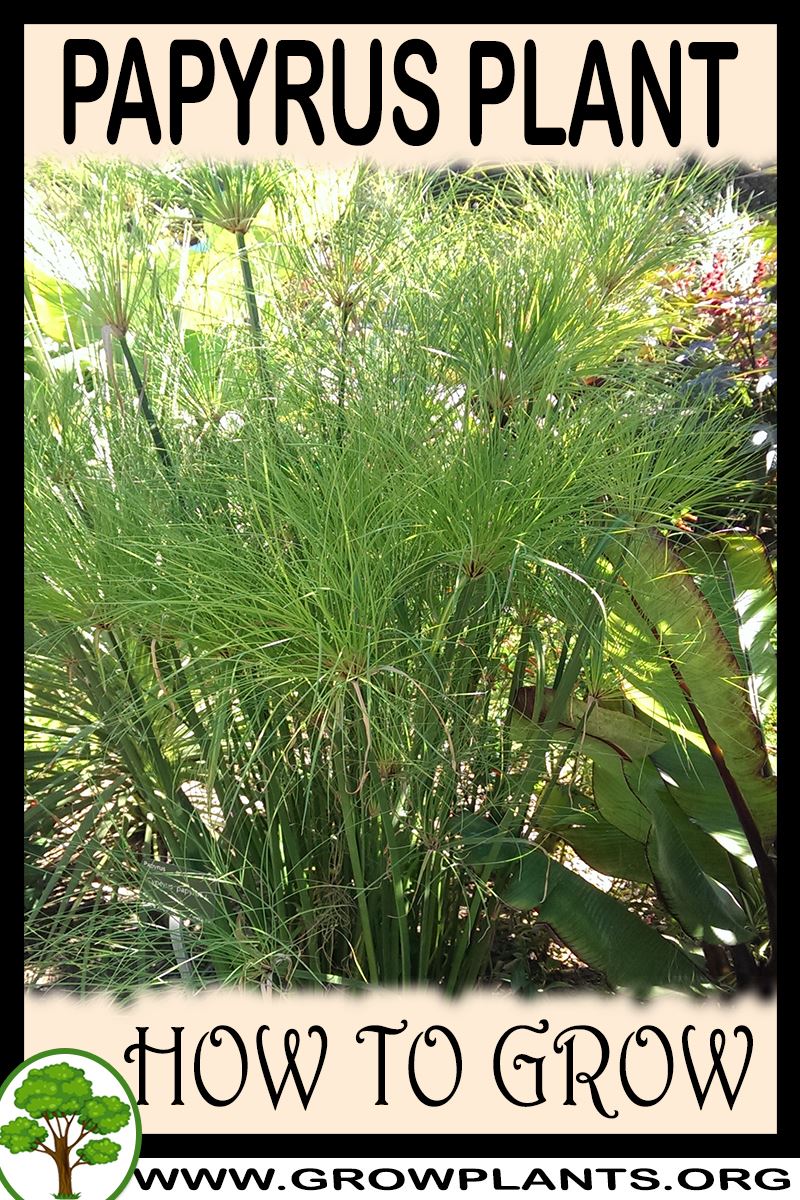
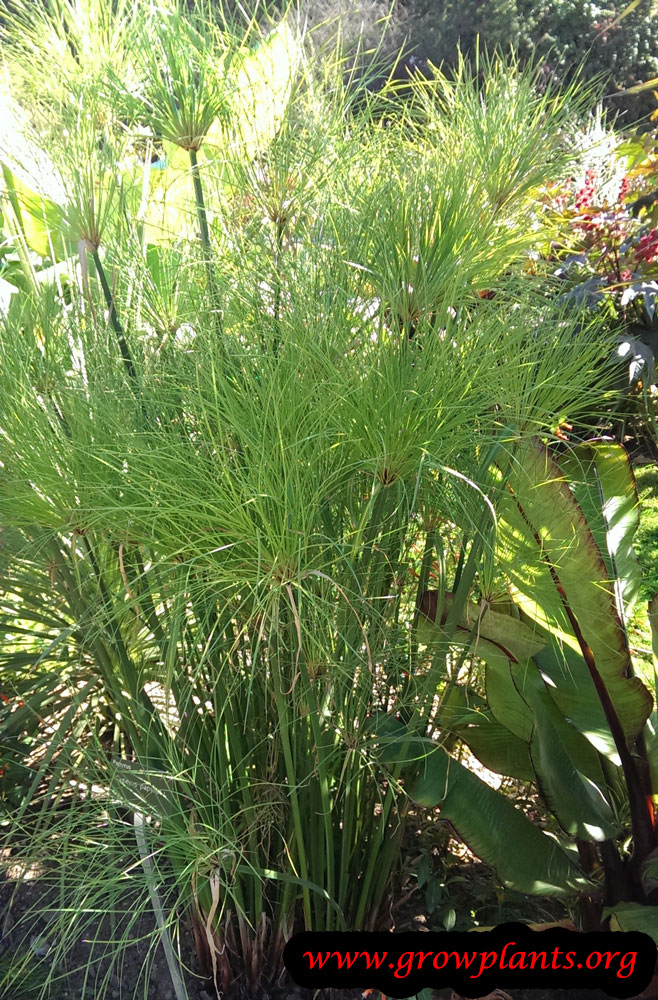
Overview: Papyrus is a striking evergreen wetland perennial 2-4 m (6-12 ft) tall, forming tall stands of triangular stems topped by rounded, mop-like heads of thread-fine rays. It is grown as a dramatic ornamental for pond margins, bog gardens and large containers.
Quick Specifications
| Specification | Attribute |
|---|---|
| Plant Type / Life Cycle | Perennial (evergreen sedge) |
| Foliage Type | Evergreen |
| Mature Size | 2-4 m (6-12 ft) tall |
| Growth Rate | Moderate to fast |
| Root System | Thick, rhizomatous and clump-forming (a wetland plant) |
| Hardiness | USDA zone 9 and warmer |
Growth Form & Structure
- Height & Spread: 2-4 m tall clumps in wet ground or at pond margins; can be grown in large containers standing in water but not indoors.
- Growth Habit & Form: Tall, clump-forming sedge with stout triangular green stems, each crowned by a spherical burst of fine green rays.
- Lifespan & Maturity: Fast-growing in warm, wet conditions, quickly forming dense stands.
Anatomy & Physical Features
- Leaves & Foliage: Leaves reduced to a reddish-brown sheath at the stem base; the green, mop-like head is formed of fine, thread-like rays.
- Flower Characteristics: Small green to brown, feathery flower clusters borne at the tips of the rays.
Primary Uses & Landscape Value
- Functional & Ornamental Roles: Dramatic ornamental marginal/aquatic plant for ponds and bog gardens, and a large container specimen; historically the source of papyrus paper.
Care Guide: Planting, Soil & Watering
Overview: Papyrus is a tall wetland plant that grows best in full sun to part shade and constantly wet, rich soil – even shallow standing water. It is frost-tender and must never dry out.
Quick Care Requirements
| Requirement | Ideal Condition |
|---|---|
| Planting Season | Any time in frost-free climates, best in spring |
| Growth Rate | Fast to Moderate |
| Soil Type | Rich, water-retentive soil; tolerates boggy ground and shallow standing water |
| Water Need | High – keep constantly wet; it can stand in water |
Planting & Establishment
- Best Planting Season: plant year-round in warm, frost-free areas, ideally in spring.
- How to Plant:
- Hole Preparation: plant into wet ground or at a pond margin, in a hole sized to the root ball; allow room for its tall 2–4 m stems.
- Soil Amendments: use heavy, rich, moisture-holding soil; sharp drainage is not needed for this bog plant.
- Planting Depth: set the crown at soil level; at a pond edge it can sit with the crown just submerged.
- Growth Speed & Expectations: fast, forming tall stands around 2–4 m tall.
Soil, Watering & Drainage Care
- Soil Mix & Drainage Needs: unlike most plants it wants water-retentive soil that never dries; in a container, stand the pot in a tray of water.
- Watering Schedule & Technique:
- Young / Newly Planted: keep the soil saturated as it establishes.
- Established: never let it dry out – keep it wet year-round.
- Seasonal Adjustments: keep moist even in cool weather, but protect it from frost.
Climate, Light & Hardiness
Papyrus is a wetland marginal/aquatic plant of tropical, Mediterranean, desert, and subtropical climates, growing in full sun to half shade with its roots in constantly wet or shallow-water soil. It needs frost-free conditions and is reliably hardy outdoors only from about USDA zone 9 and warmer.
Quick Climate Specifications
| Climate Zones | Tropical, mediterranean, desert, and subtropical climates |
|---|---|
| USDA Hardiness Zones | Zone 9+ (frost free) |
| Optimal Temp Range | approximately 20–32°C (68–90°F) |
| Cold Damage Begins | approximately 2–5°C (36–41°F) |
| Approx. Survival Minimum | approximately 0°C (32°F) briefly for top growth; the site notes it needs frost-free conditions overall |
| Frost Tolerance | Very Low |
| Light Conditions | Full sun / half shade |
| Wind Tolerance | Moderate (tall stems can lodge in strong wind) |
| Salt / Coastal Tolerance | Not established in source data |
Sunlight & Light Exposure
Optimal Light Setup
Full sun to half shade both work, with full sun generally giving the densest, fastest growth (the site rates growth speed “Fast growing / Medium growing”).
Shade & Heat Management
Tolerates hot, sunny conditions well provided the roots stay in water or consistently saturated soil; some shade is an option in the hottest climates without harming the plant.
Best Exposure / Orientation
An open, sunny spot at a pond or water-garden edge, or in a container kept standing in water, suits papyrus best.
Temperature Extremes & Hardiness
USDA Hardiness & Regional Limits
The site rates papyrus to zone 9+ and explicitly calls for frost-free conditions; it is not a plant for climates with regular winter freezes unless the rhizome is lifted or moved indoors for winter, which the site notes is an option in colder areas.
Cold Damage & Winter Protection
Top growth is damaged by cold well above freezing; in climates with any frost risk, the site’s guidance is to bring the rhizome indoors for winter rather than attempt outdoor overwintering.
Frost Sensitivity
Frost tolerance is very low - this is a frost-free-climate aquatic plant, and any frost is likely to kill top growth back to the rhizome or the whole plant if prolonged.
Extreme Heat Tolerance
Tolerates strong heat very well as long as the roots remain in water; it is adapted to hot, sunny wetland conditions.
Wind, Humidity & Microclimate
Humidity Preferences
As an aquatic/wetland plant it effectively needs constant moisture at the root zone rather than atmospheric humidity as such; ambient humidity is not a limiting factor given the standing water it grows in.
Wind Tolerance
Moderate; the tall, top-heavy flower/seed heads can lodge or snap in strong wind, so a sheltered pond edge is preferable in windy sites.
Rainfall & Seasonal Moisture
Needs a permanently wet or shallow-water growing site rather than seasonal rainfall - it is a true wetland plant, not one adapted to a dry season.
Microclimate Recommendations
In climates outside its frost-free comfort zone, growing papyrus in a container that stands in a water garden through summer and is moved to a frost-free indoor or greenhouse space for winter is the practical way to keep it long-term; note the site also flags that it can attract a lot of flying insects around the water.
Growing in Pots, Balconies & Indoors
Papyrus is a big marginal reed reaching 2-4 m (6-12 ft), not a houseplant, but it grows well in a large water-garden pot or tub on a bright balcony or patio where its roots can stay wet. It needs full sun to half shade and constant moisture, so it suits a pond edge or a container stood in water rather than a room indoors.
Quick Details
- Container Size: A large, heavy tub of rich soil stood in or beside water
- Indoor Suitability: Not a houseplant – too big and too thirsty for a room; grow it outdoors in bright light
- Best Spot: Full sun to half shade, on a warm, sheltered balcony, patio or pond edge
- Soil & Drainage: Rich, heavy soil kept permanently saturated – unlike most pot plants it wants wet feet, not free drainage
- Watering in Pots: Never let it dry; stand the pot in a saucer or tray of water so the soil stays wet
Indoors & On the Windowsill
- Houseplant limits: The grower does not recommend it as a houseplant – a full-size clump is too large and needs more light and standing water than a room offers.
- Overwintering: Papyrus is tender – in cold-winter climates move the tub into a bright, frost-free spot such as a conservatory and keep the soil wet.
On a Balcony or Patio
- Light & wind: Give it a bright, sheltered spot; the tall stems catch wind, so stand it against a wall or stake the clump. In full sun the water warms and evaporates fast – top it up often.
- Practicalities: A big tub full of wet soil and water is very heavy – place it on a strong, level base before filling.
Choosing the Pot, Soil & Long-Term Care
- Pot & water: Use a large, solid container of rich, heavy soil and keep it standing in water – here a water saucer or reservoir is a feature, not a risk.
- Potting mix: A heavy, fertile loam rather than a light, free-draining mix, so it holds water and nutrients.
- Feeding: A hungry grower – feed through the warm season, ideally with an aquatic-plant feed that won’t foul the water.
- Dividing: Lift and split the crowded clump every year or two in the warm season to keep it vigorous and within its tub.
Growing this plant in a greenhouse
A greenhouse can give papyrus plant frost protection and cold protection.
Greenhouse at a glance
| Greenhouse suitability | Conditional - depends on your climate |
|---|---|
| Main benefits | frost protection, cold protection |
| Season extension | earlier spring & later autumn |
| Outdoor protection advisable below | about 5°C |
| Maintain greenhouse minimum | around 5°C for active growth |
| Suitable types | unheated greenhouse, polycarbonate greenhouse |
| Heating | Heating is optional - useful mainly for winter growing in cold areas. |
Related greenhouse guides
- Greenhouses: How to Choose the Right Greenhouse
- Polycarbonate Greenhouses: What to Look for Before Buying
Fertilizing & Feeding
As an evergreen wetland sedge grown mainly for its foliage and umbrella-shaped stem heads, papyrus is a light feeder – a rich, heavy planting medium matters more than frequent fertilizing.
Quick Fertilizing Specs
| Feeding Level | Light |
|---|---|
| Main Nutrient Priority | Balanced feeding to sustain steady stem growth. |
| Best Feeding Period | Warm, frost-free growing season. |
| Organic Options | Rich, heavy soil at planting, refreshed with a slow-release aquatic-safe fertilizer at the root zone. |
| Soil pH | Tolerant of a wide pH range as long as the soil is rich and consistently wet. |
| Reduce/Stop Feeding | Feeding naturally slows as growth slows in cooler weather; protect the crown from frost. |
Feeding by Growth Stage
Newly Planted Papyrus
Help the rhizome settle into its wetland or container planting and put out steady new stems.
| Nutrient direction | Light, balanced feeding that supports establishment without overfeeding the surrounding water. |
|---|---|
| Timing | After planting into its permanent wetland or marginal aquatic spot, once new stems begin emerging. |
| Frequency | A light feeding as the plant settles in, then easing into its regular seasonal rhythm. |
| Fertilizer types | A slow-release, aquatic-safe fertilizer tab or pellet pressed into the soil near the root zone rather than applied to the water surface, Rich, heavy garden soil or aquatic planting mix as the base medium |
| Precautions | Keep fertilizer worked into the soil rather than floating loose in the water, which can feed algae instead of the plant. |
Actively Growing Papyrus
Support the plant’s fast stem and umbrella-head production through the warm growing season.
| Nutrient direction | Balanced feeding that keeps pace with this fast grower’s steady stem production. |
|---|---|
| Timing | Through the warm, frost-free growing season. |
| Frequency | Periodic light feedings through the growing season, easing off as growth naturally slows in cooler weather. |
| Fertilizer types | A slow-release aquatic or marginal-plant fertilizer tab renewed periodically at the root zone, Rich organic soil refreshed occasionally in its container |
| Precautions | Protect the crown from frost, since cold damage – not a lack of feeding – is this plant’s main growing challenge. |
Nutrient Deficiency Signs & Corrections
Overall pale or yellowish stems and slowed new stem production.
| Possible causes | Insufficient nitrogen feeding for the growing season, Nutrients leaching out through an open pond or water garden system, A crowded, exhausted planting medium overdue for dividing or refreshing |
|---|---|
| Appears first on | Older, lower stems first |
| What to check | How long since the soil or fertilizer tabs were last refreshed, Whether the planting is overcrowded and due for division, Water flow or exchange rate in the pond or container |
| Possible correction | Refresh the root-zone fertilizer tabs and consider dividing an overcrowded clump into fresh, richer soil. |
Thin, floppy stems that fail to stand upright, with fewer of the papery umbrella heads at the top.
| Possible causes | General nutrient depletion in an old, unfed planting, Too little light reducing the plant’s overall vigor, Overcrowded rhizomes competing for a limited root zone |
|---|---|
| Appears first on | New stems as they emerge |
| What to check | Time since the last feeding or soil refresh, Hours of direct sun the planting receives, How dense the clump has become |
| Possible correction | Refresh feeding at the root zone, move to a sunnier spot if shaded, and divide the clump if it has become overcrowded. |
Pruning, Training & Seasonal Maintenance
Papyrus needs no structural pruning at all – it is a clump-forming wetland sedge whose triangular culms each end in a feathery umbel of tiny flowers, and “pruning” here really means removing old, spent, or damaged culms at the base to keep the clump tidy and make room for new growth, which it produces readily as a fast-to-medium grower. Because it is evergreen where frost-free and can be cut on essentially any schedule, there is no strict flowering-wood timing to protect; the main consideration is doing the bulk of the cutback before the main growth push (spring) so the clump refills quickly rather than sitting cut-back and sparse.
Quick Pruning & Maintenance Specs
| Pruning Tolerance | High (for old-culm removal; not a woody framework) |
| Primary Pruning Window | Pre-growth / early spring for the main tidy-up and rejuvenation cut |
| Secondary Maintenance Window | Old/spent culm removal at the base anytime through the year |
| Typical Frequency | Ongoing spot removal, plus one heavier annual or biennial cutback |
| Main Objective | Remove old/spent culms, keep the clump dense and attractive, manage clump size |
| Young Plant Priority | Minimal – let the clump fill in |
| Mature Plant Priority | Remove old culms at the base; divide overcrowded clumps |
| Best Tool Type | Precision snips / bypass secateurs at the base of each culm |
| Avoid Heavy Pruning During | No strict restriction, but avoid stripping the whole clump bare in cold snaps in marginal (zone 9) sites |
Pruning by Plant Age & Size
Newly Established
No pruning needed beyond removing any culms damaged in transplanting; let the clump establish.
Young / Formative
No structural training applies – papyrus doesn’t branch or form a scaffold. The only formative task is thinning an overly crowded new clump so individual culms have room to develop their full umbel.
Mature / Established
Ongoing removal of old, browning, or flopped culms at the base; periodic division of the clump (see Container & Small-Space Pruning) once it becomes congested, which is more a propagation/renewal task than pruning in the woody sense.
Seasonal Pruning Schedule
Pre-Growth / Early-Spring
Objective: rejuvenation. Cut out old, tired, or winter-damaged culms at the base to make way for the coming flush of new growth; in essentially frost-free settings this can be a light tidy rather than a hard cutback since the plant is evergreen there. What NOT to remove: healthy green culms that are still actively photosynthesizing. Expected response: vigorous new culm production given this plant’s fast growth rate.
Ongoing Sanitary
Remove individual old or damaged culms at the base as they appear, any time of year.
Special Growth to Remove
Old, browning, or collapsed culms cut at the base rather than partway up, since a partial cut just leaves an unsightly dead stub – the source guidance to remove “old” growth reflects this base-cut habit. In naturalized or pond-edge settings, watch for and remove any spreading growth beyond the intended planting area, since this is a vigorous colonizer in warm climates.
Container & Small-Space Pruning
Papyrus is very commonly grown in a pot or aquatic container/basket, which also doubles as size and spread control since its rhizomes are naturally colonizing. In containers, clump maintenance is less about pruning individual culms and more about periodic division: lift and split the clump every couple of years when it becomes root- or culm-bound, discarding the oldest central portion and replanting vigorous outer sections.
Tools
Precision snips or bypass secateurs for cutting individual culms at the base; a garden knife or spade is more relevant than any pruning tool when it’s time to divide an overgrown clump. No loppers, saw, or hedge shears are needed – the stems are soft and hollow, not woody.
Tool Hygiene & Disease Risk
Routine: clean tools are sufficient for general culm removal. Increase caution only if cutting out culms showing fungal dieback (a known issue for this plant), disposing of affected material away from the water feature rather than composting it nearby.
Cut Placement & Technique
Cut old culms cleanly at or near the base/waterline rather than partway up the stem, which avoids leaving a bare dead stub standing in the clump.
Heavy Pruning & Rejuvenation
Tolerates being cut back hard to the base to rejuvenate an overgrown or tatty clump, since it regrows vigorously from the rootstock; best timed for just before the main spring growth push so the clump doesn’t sit bare for long.
Post-Pruning Care
Keep water levels/moisture consistent after a hard cutback so the new flush isn’t checked by drought stress; no extra feeding is needed beyond normal seasonal fertilizing, since a hard cut is already followed by naturally strong regrowth.
Common Pruning Mistakes
Cutting culms off partway up instead of at the base, leaving unsightly dead stubs; over-worrying about a “pruning season” for a plant that tolerates cuts nearly any time; letting the clump go completely unmanaged until it is overcrowded and choking its own new growth.
When NOT to Prune
In borderline-hardy (zone 9) sites, avoid a hard, whole-clump cutback right before a cold snap, since bare cut culms offer less insulation to the crown than an intact clump.
Recommended Tools (by task)
| Any age, removing individual old/spent culms | precision_snips | Clean single-culm cuts at the base without disturbing neighboring healthy stems |
| Mature congested clump, division/renewal | garden_spade | Needed to lift and split a crowded clump or root-bound container specimen |
Propagation Guide
Papyrus is normally increased by dividing its clumping rhizome rather than from seed – the site lists only Plant/Vegetative Reproduction as the way to start it, and notes vegetative reproduction is not strictly required but is easy to do. Difficulty is Easy for a home grower with a wetland or container-water setup.
Quick Propagation Specs
| Best Propagation Method | Rhizome/clump division |
| Alternative Methods | Rooting a cut stem tip (umbel) in water |
| Propagation Difficulty | Easy |
| Vegetative True-to-Type | Yes |
| Best Propagation Season | All year, especially spring |
Division, Offsets, Pups & Suckers
Timing
Divide the clump any time the plant is actively growing, especially in spring.
Method
Lift or separate a section of the rhizome with its own stems and roots attached, and replant it in wet, frost-free conditions.
Runners & Stolons
As the rhizome spreads, new stem clusters form along it; these can be separated once they have their own roots, following the same division approach above.
Stem Cuttings
Cutting Type
Not detailed in the source. A widely used technique for this species, not drawn from the site, is to cut a mature stem a short distance below its umbel (the tuft of thread-like bracts at the top) and invert it so the umbel sits in a container of water; the cut end will often root and produce a new plantlet that can then be potted on. This is a cautious, plant-specific supplement rather than site data.
Bloom & Flower Guide
Quick Details
- Bloom Season: Spring and summer
- Flower Appearance: Green to brown, feathery flower clusters at the tips of the tall stems, held in the mophead of thread-like bracts
- Edibility: Ornamental / none – grown as a striking architectural water plant
Detailed Blooming Overview
Papyrus is a tall, statuesque aquatic sedge, and its flowers are part of that famous silhouette: fine, feathery clusters, greenish turning brown, that burst from the mop of thread-like bracts crowning each stem. The green stems carry a reddish sheath at the base. Flowering comes in spring and summer, and the clusters are wind-pollinated.
Flower Characteristics
- Feathery green-to-brown flower clusters held in the umbrella of fine bracts.
- Carried at the very tips of the tall stems.
Bloom Care & Thinning
- Pollination: Wind-pollinated, like other sedges.
- Managing the plant: Cut old and spent stems at the base to keep the clump fresh and the outline clean.
Pests, Diseases & Troubleshooting
Overview: Umbrella sedges and papyrus are tough, moisture-loving Cyperus with remarkably few problems; papyrus (Cyperus papyrus) is a large aquatic-margin plant. Because they grow in or beside water, classic root rot is rare, and most issues are sap-sucking insects on stressed indoor plants or brown, dry foliage from low humidity. Manage them culturally: keep them wet, humid and airy, and rinse pests off before reaching for sprays.
Quick Troubleshooting Overview
| Issue / Pest | Main Symptom | Primary Solution |
|---|---|---|
| Aphids | Sticky honeydew and clustered insects on new shoots and umbels | Rinse off with water; insecticidal soap; encourage predators |
| Spider mites | Fine speckling and webbing on stems, worst in dry indoor air | Raise humidity, hose down, apply horticultural oil |
| Mealybugs / scale | White fluff or brown bumps in leaf axils and on stems | Wipe off with alcohol swab; horticultural oil or insecticidal soap |
| Brown, crispy tips | Leaf and bract tips dry and brown | Increase humidity and water; flush salts; trim tips |
| Stem/leaf rot | Blackened, mushy stems in stagnant, cool, dirty water | Improve airflow, refresh water, remove affected stems |
Common Pests & Management
- Aphids (Aphis / Rhopalosiphum species):
- Symptoms: Small soft-bodied insects gather on tender new shoots and the flowering umbels, sucking sap and coating stems with sticky honeydew that turns black with sooty mould.
- Prevention & Control: Blast off with a strong water jet, wipe or spray with insecticidal soap, and encourage ladybirds, lacewings and hoverflies; repeat until clear.
- Spider mites (Tetranychus urticae):
- Symptoms: On dry indoor plants the thread-like leaflets show fine pale stippling and, in bad cases, delicate webbing at the stem tips; foliage looks dusty and dull.
- Prevention & Control: Mites hate humidity, so mist and keep the plant wet; rinse the whole plant regularly, and apply horticultural oil or insecticidal soap, treating the undersides thoroughly and repeating.
- Mealybugs (Pseudococcus / Planococcus species):
- Symptoms: White cottony masses tuck into leaf axils and where bracts join the stem, sapping vigour and producing honeydew.
- Prevention & Control: Dab colonies with an alcohol-dipped swab, spray insecticidal soap or horticultural oil, and isolate affected plants until clean.
- Scale insects (Coccus / Saissetia species):
- Symptoms: Brown or tan limpet-like bumps along stems and leaf bases; they are firmly attached and leave sticky honeydew.
- Prevention & Control: Scrape off by hand, treat with horticultural oil to smother crawlers, and repeat every couple of weeks until no new scale appears.
- Whitefly (Trialeurodes vaporariorum):
- Symptoms: Tiny white flies rise in clouds when the plant is disturbed, mostly a greenhouse or indoor nuisance, leaving honeydew and mild yellowing.
- Prevention & Control: Hang yellow sticky traps, rinse foliage, and use insecticidal soap; encourage parasitic wasps in greenhouses.
Diseases & Fungal Issues
- Stem and leaf rot (Fusarium / Rhizoctonia species):
- Symptoms: Blackened, soft or collapsing stems, usually where water is stagnant, cool and dirty or where the crown is crowded and airless.
- Treatment & Management: Refresh the water regularly, thin congested clumps for airflow, cut out affected stems at the base, and keep the growing water clean; rarely needs a fungicide.
- Fungal leaf spot (Cercospora / Cylindrocladium species):
- Symptoms: Small brown or tan spots and blotches on the leaflets, occasionally with yellow halos, in humid crowded conditions.
- Treatment & Management: Remove spotted foliage, improve spacing and airflow, avoid splashing the leaves, and apply a copper-based fungicide only if spread is persistent.
- Root rot (Pythium species):
- Symptoms: Uncommon in these wetland plants, but if grown too cold in stale water the roots can brown and rot, causing yellowing and weak growth.
- Treatment & Management: Refresh with clean water, keep temperatures warm enough, remove rotted roots, and repot into fresh medium if needed.
Growing Difficulties & Abiotic Problems
- Brown, crispy leaf tips:
- Cause & Symptoms: Low humidity, dry air, under-watering or salt build-up from hard water and fertiliser scorch the fine leaflet tips.
- Correction Strategy: Keep the pot standing in water, raise humidity, flush the soil periodically with clean water to leach salts, and trim damaged tips.
- Yellowing and weak growth:
- Cause & Symptoms: Insufficient water, low light or nutrient deficiency in a long-unfed clump causes pale, floppy, yellowing stems.
- Correction Strategy: Never let the roots dry out, give bright light, and feed lightly during active growth; divide congested clumps to rejuvenate.
- Cold damage:
- Cause & Symptoms: These are tender, warmth-loving plants; chill browns and collapses the foliage.
- Correction Strategy: Keep above about 10°C, move indoors before cold weather, and cut back frosted growth so fresh shoots can emerge.
What Helps – Products & Tools
Very little is usually needed. Keep a spray of insecticidal soap and light horticultural oil on hand for aphids, mites, mealybugs and scale, plus rubbing alcohol on cotton swabs for spot-treating mealybugs. Yellow sticky traps help with whitefly indoors, and periodic clean-water flushing prevents salt-tip burn. A copper fungicide is only occasionally warranted for leaf spot. Apply oils in the evening and follow the label.
Frequently Asked Questions
How do you care for a papyrus plant?
Papyrus grows best in full sun to part shade in rich, constantly wet soil, even standing in shallow water. It is frost-tender and must never dry out, so keep the root zone saturated year-round and protect the plant from cold.
Can papyrus be grown as a houseplant or in a container?
Papyrus isn’t suited to life as a houseplant – a mature clump is too large and too thirsty for a room. It does grow well in a large tub or water-garden pot on a bright balcony or patio, as long as its roots can stay standing in water.
How cold-hardy is papyrus, and does it need winter protection?
Papyrus is only reliably hardy outdoors from about USDA zone 9 and warmer, since it needs frost-free conditions. In colder climates, bring the rhizome indoors for winter rather than trying to overwinter it outside.
How do you propagate papyrus?
Papyrus is normally propagated by dividing its clumping rhizome rather than from seed. Divide the clump any time it’s actively growing, especially in spring, replanting a section with its own stems and roots into wet, frost-free conditions.
Does papyrus need pruning?
Papyrus needs no structural pruning at all – the main task is removing old, spent, or damaged culms at the base to keep the clump tidy and make room for new growth. It also tolerates being cut back hard to the base to rejuvenate an overgrown clump, best timed for just before the main spring growth push.
What pests and diseases affect papyrus?
Papyrus is generally tough and trouble-free, since being in or beside water makes classic root rot rare; most problems are sap-sucking insects on stressed plants or dry, brown foliage from low humidity. Aphids are a common pest, appearing as small soft-bodied insects on tender new shoots and flowering umbels that suck sap and coat stems with sticky honeydew. The main disease risk is stem or leaf rot, which causes blackened, soft or collapsing stems where water is stagnant, cool and dirty or the crown is crowded and airless – keeping the water fresh and the clump airy prevents it.