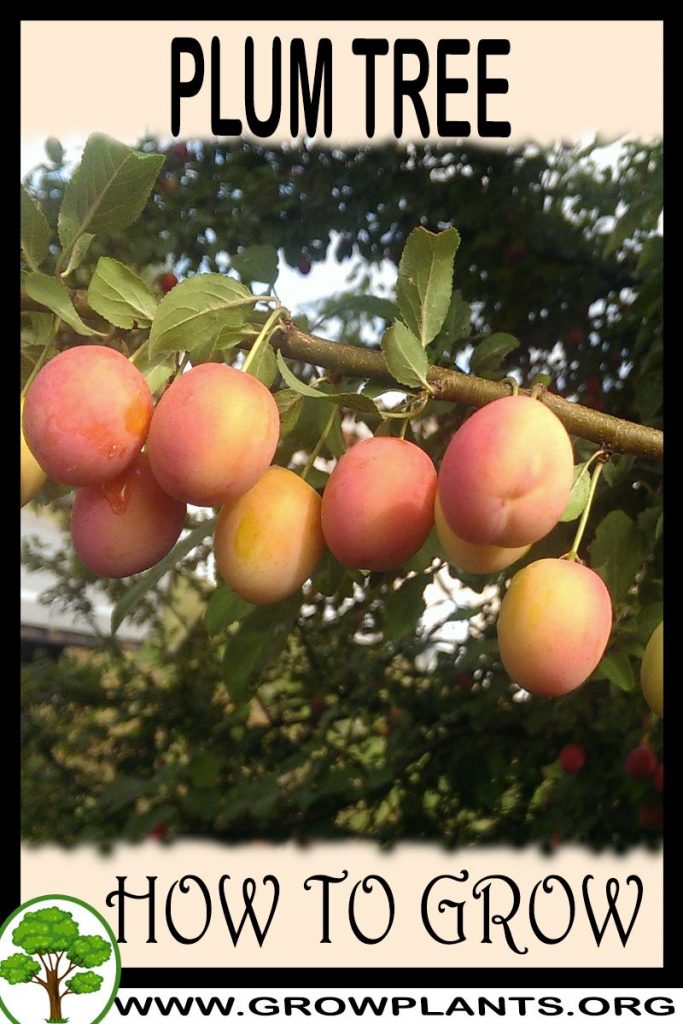
Plant Profile & Key Characteristics
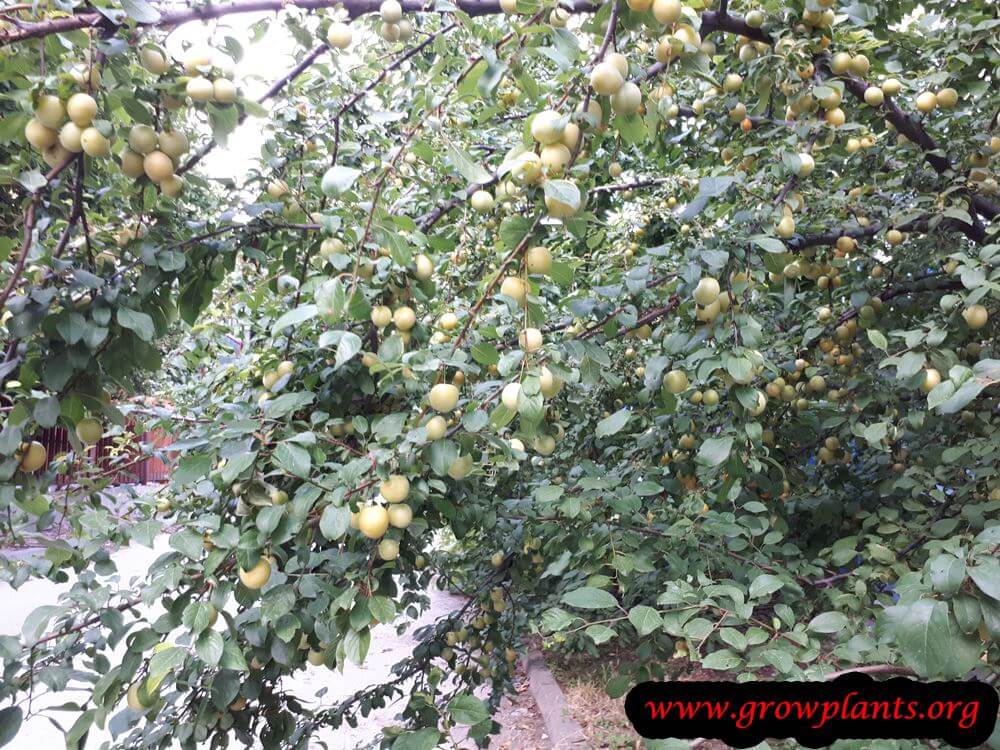
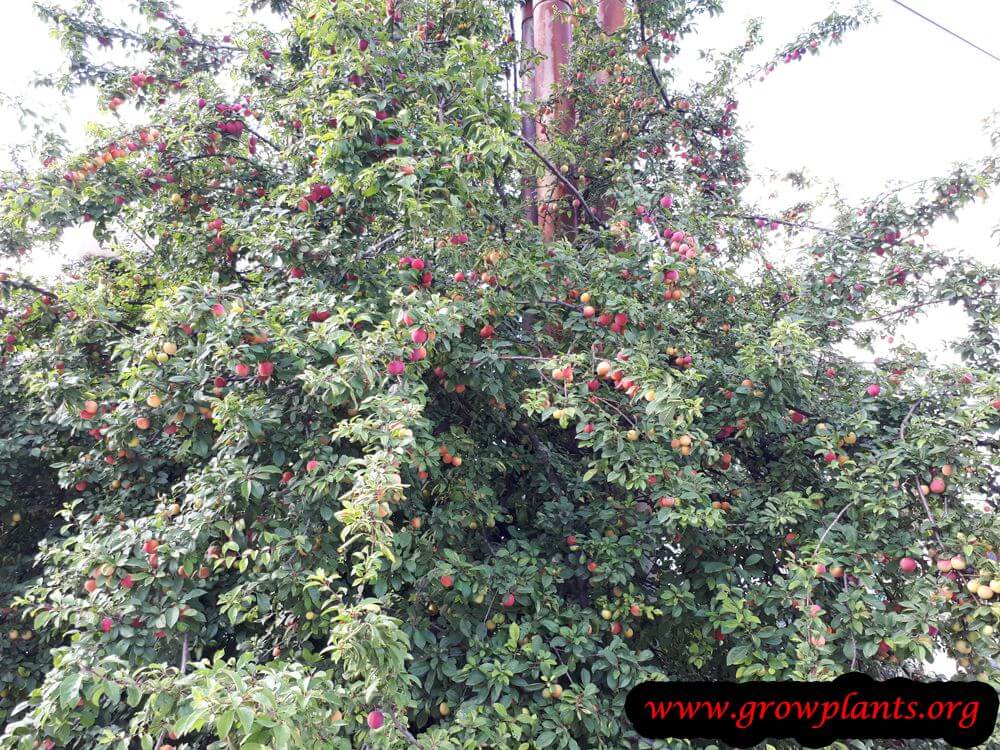
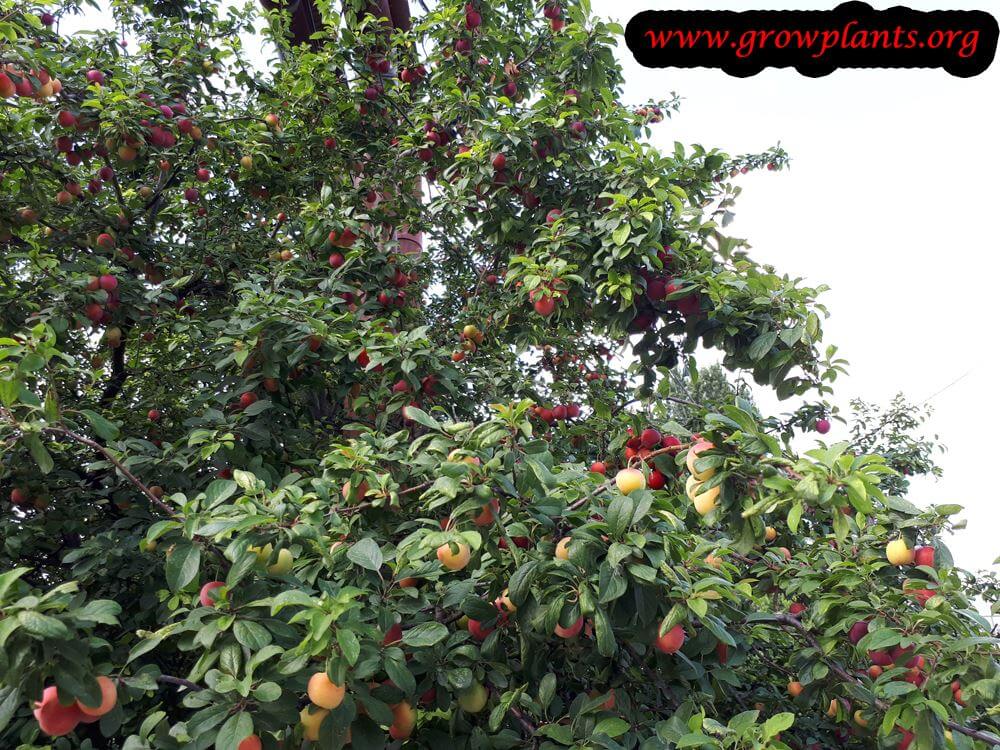
Overview: The plum is a small deciduous fruit tree of the genus Prunus, typically reaching 3-6 m, grown chiefly for its edible stone fruit. It is a long-lived perennial valued in orchards and gardens for both its early spring blossom and its harvest.
Quick Specifications
| Specification | Attribute |
|---|---|
| Plant Type / Life Cycle | Perennial (fruiting tree) |
| Foliage Type | Deciduous |
| Mature Size | 3-6 m (10-20 ft) tall |
| Growth Rate | Moderate |
| Root System | Shallow, spreading; can produce suckers |
| Toxicity | Fruit edible; leaves and seeds (pits) contain cyanogenic compounds |
| Hardiness | USDA zones 3-10 (species dependent) |
Growth Form & Structure
- Height & Spread: 3-6 m (10-20 ft) in the ground; grafted on dwarfing rootstock or grown in a large container it is kept to about 1.5-2.5 m.
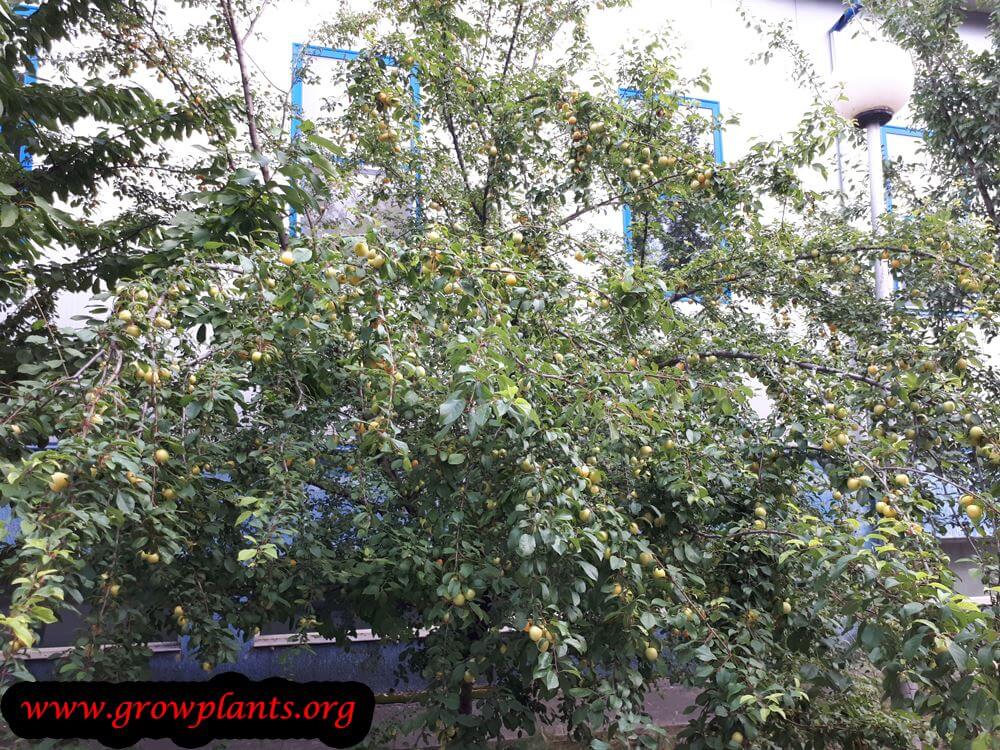
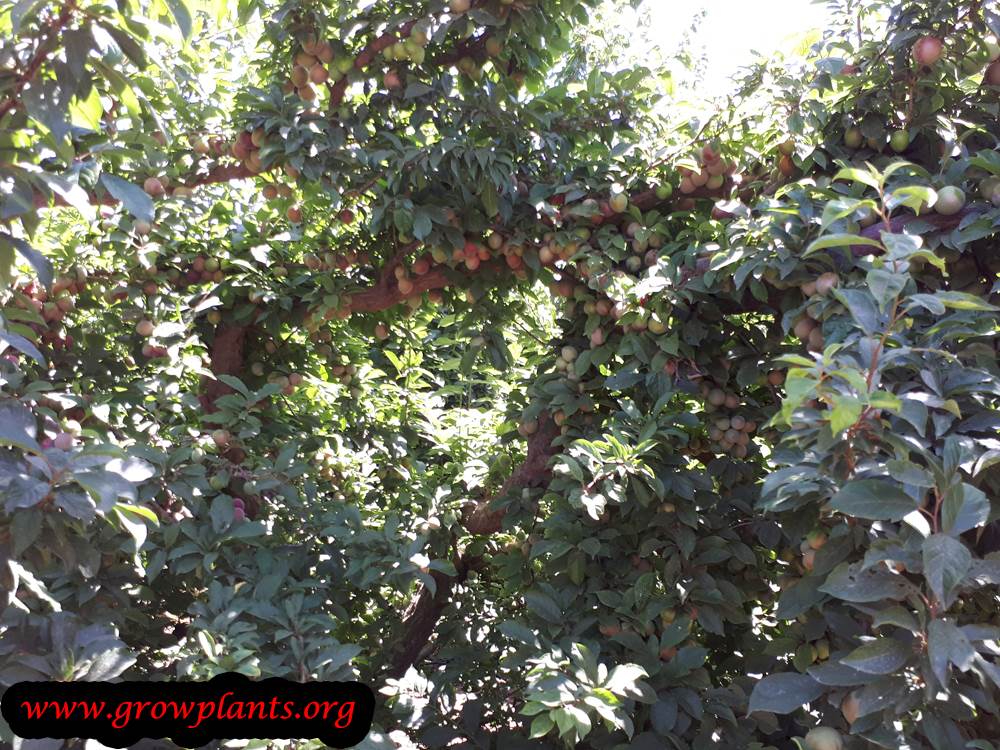
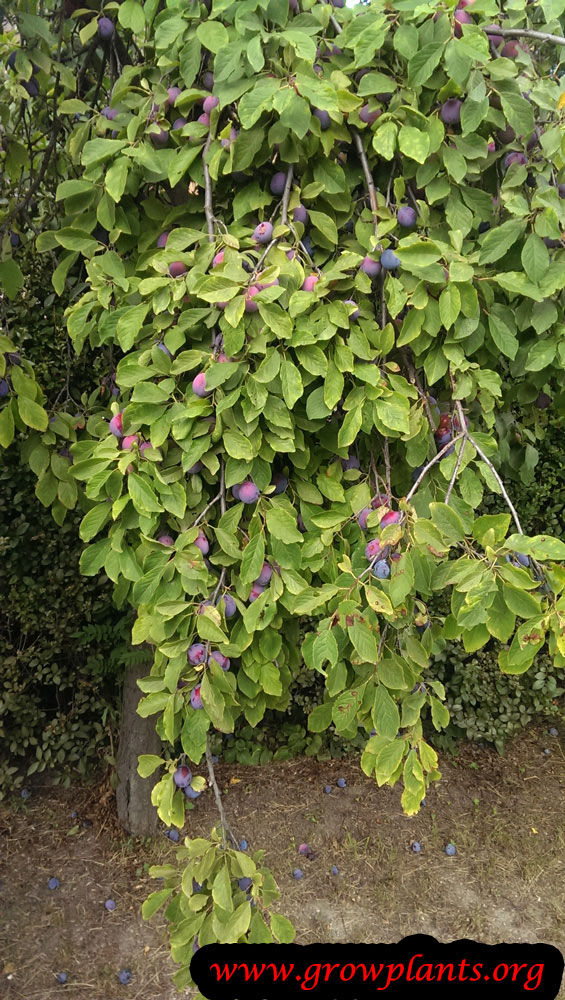
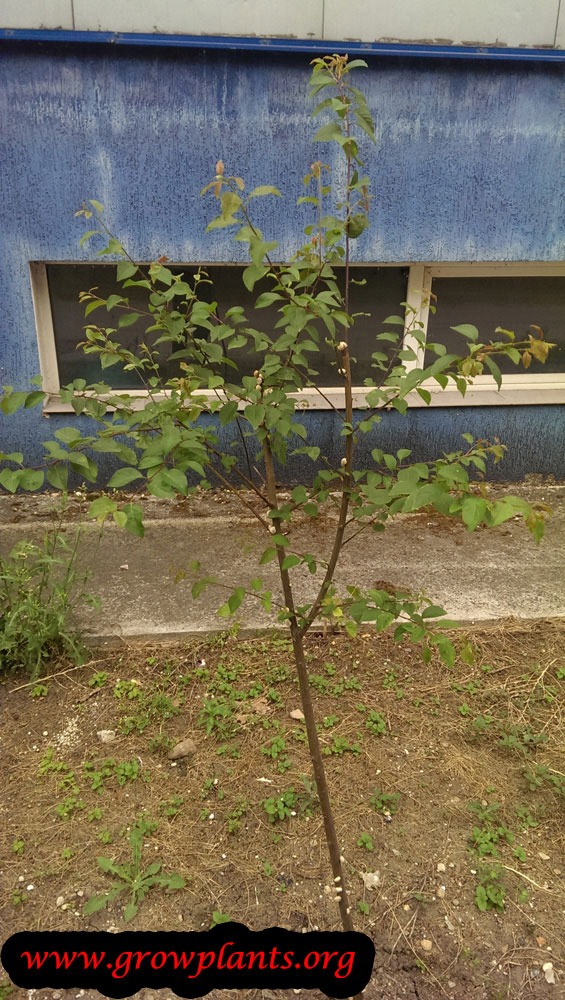
- Growth Habit & Form: Small deciduous tree with a rounded, spreading canopy on a short trunk.
- Lifespan & Maturity: Long-lived; grafted trees generally begin bearing fruit within about 3-5 years.
Anatomy & Physical Features
- Trunk & Bark: Short trunk with smooth to lightly fissured, grey-brown bark.
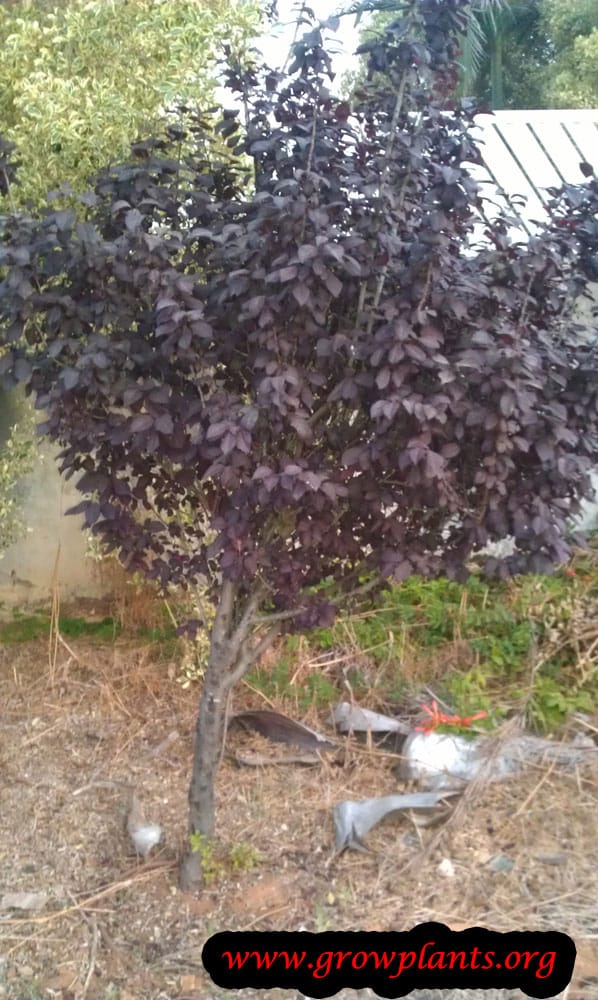
- Leaves & Foliage: Green (purple in cherry-plum types), elliptic to oval leaves.
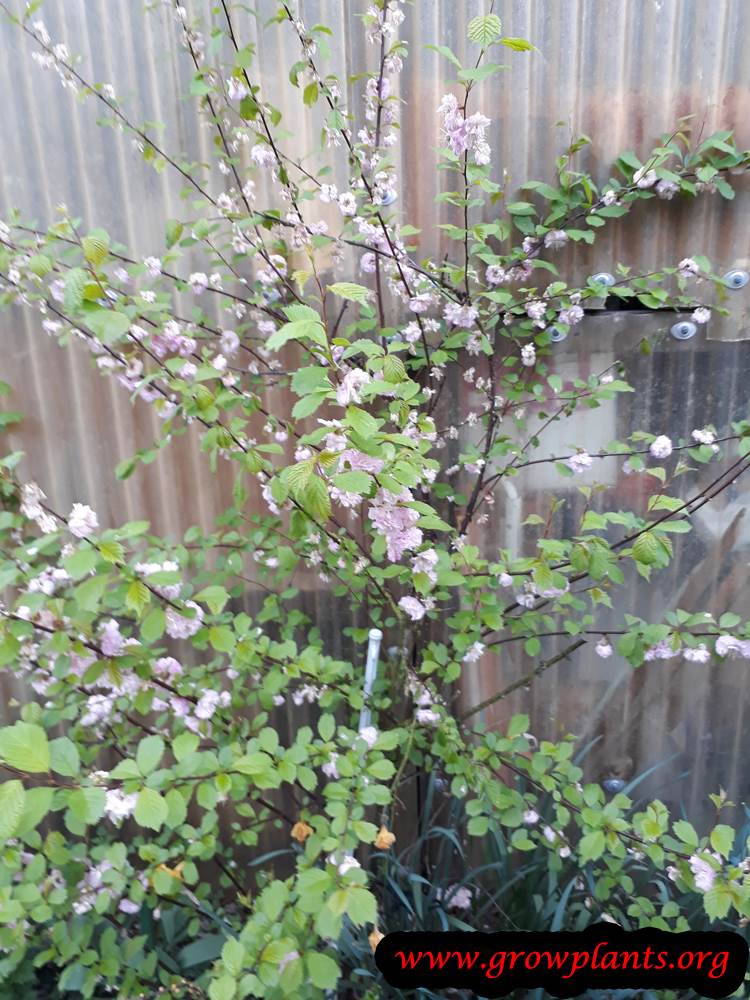
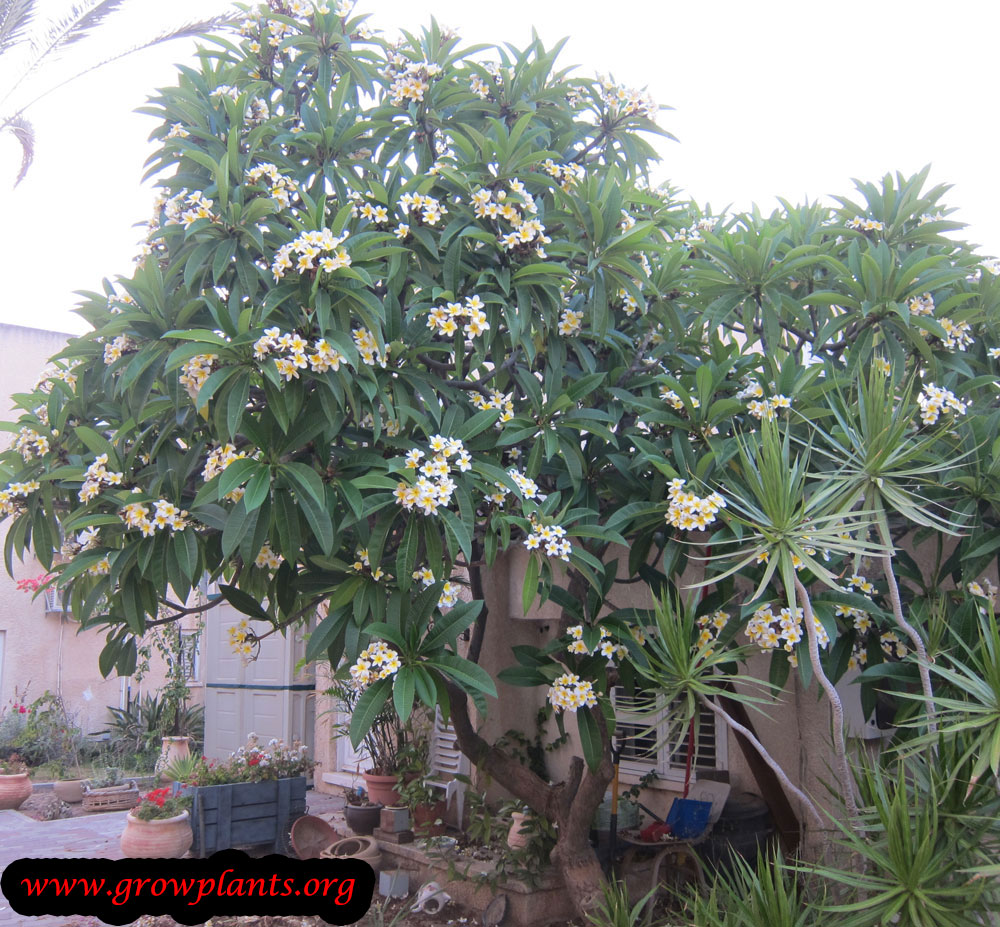
- Flower Characteristics: White or pink five-petalled blossom borne in clusters in early spring, mostly before the leaves.
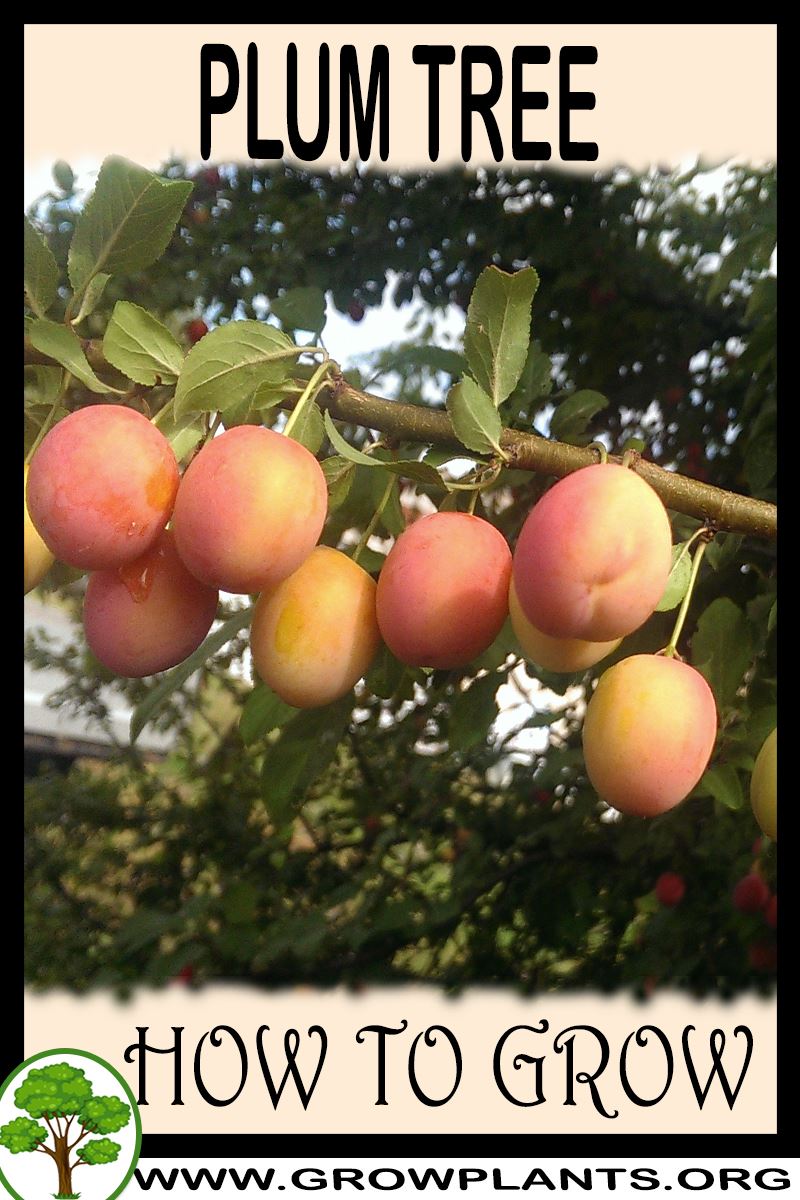
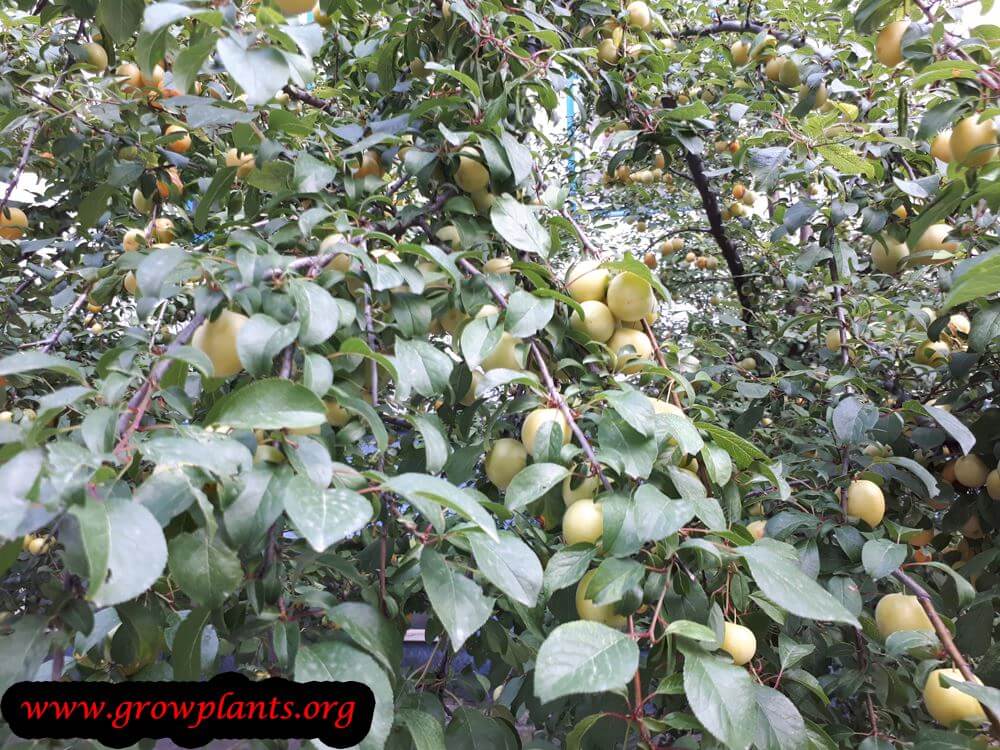
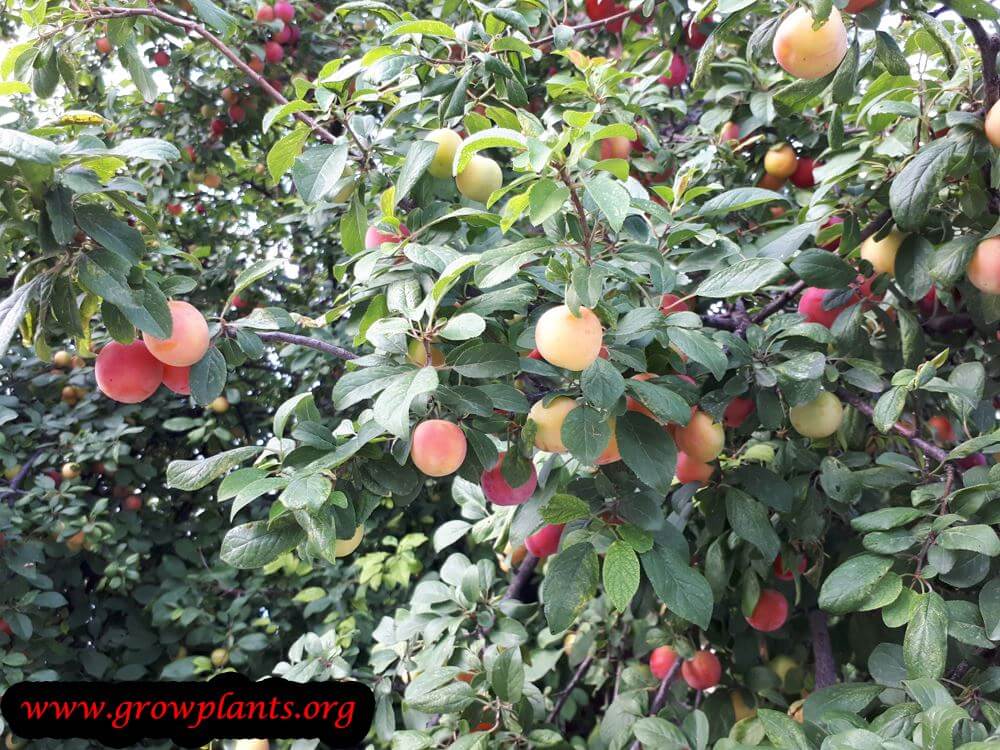
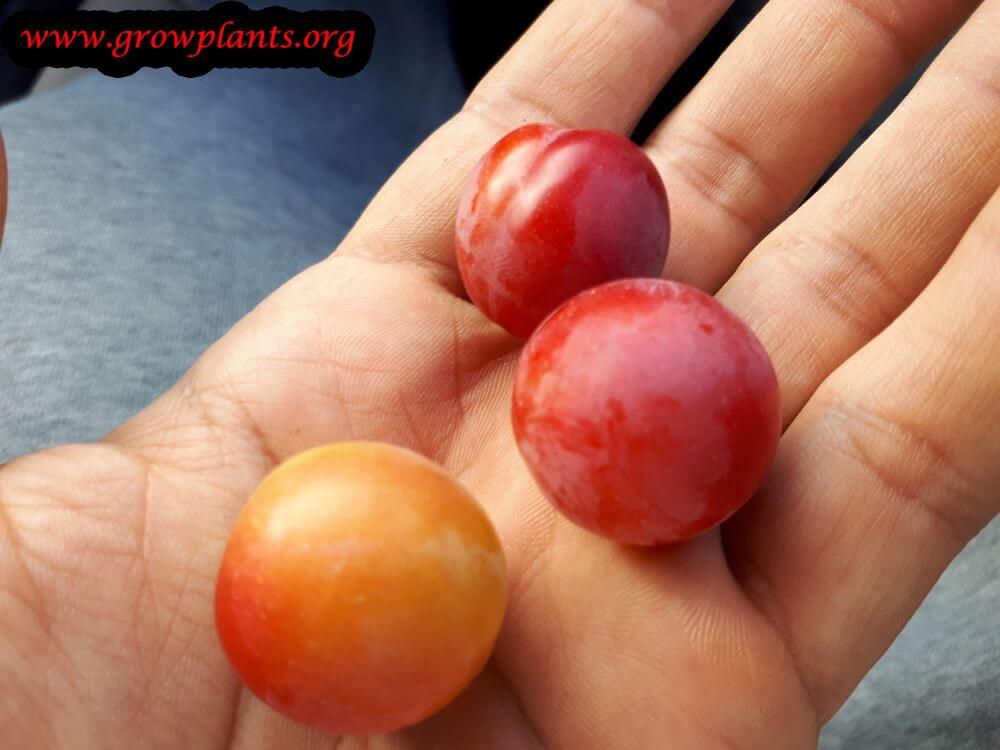
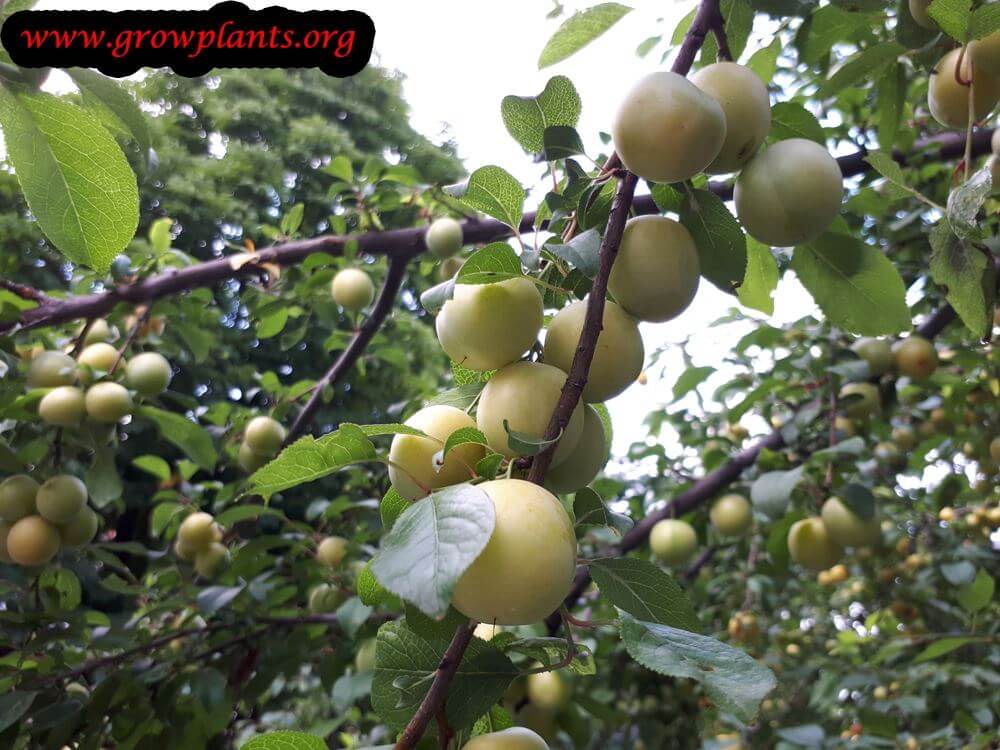
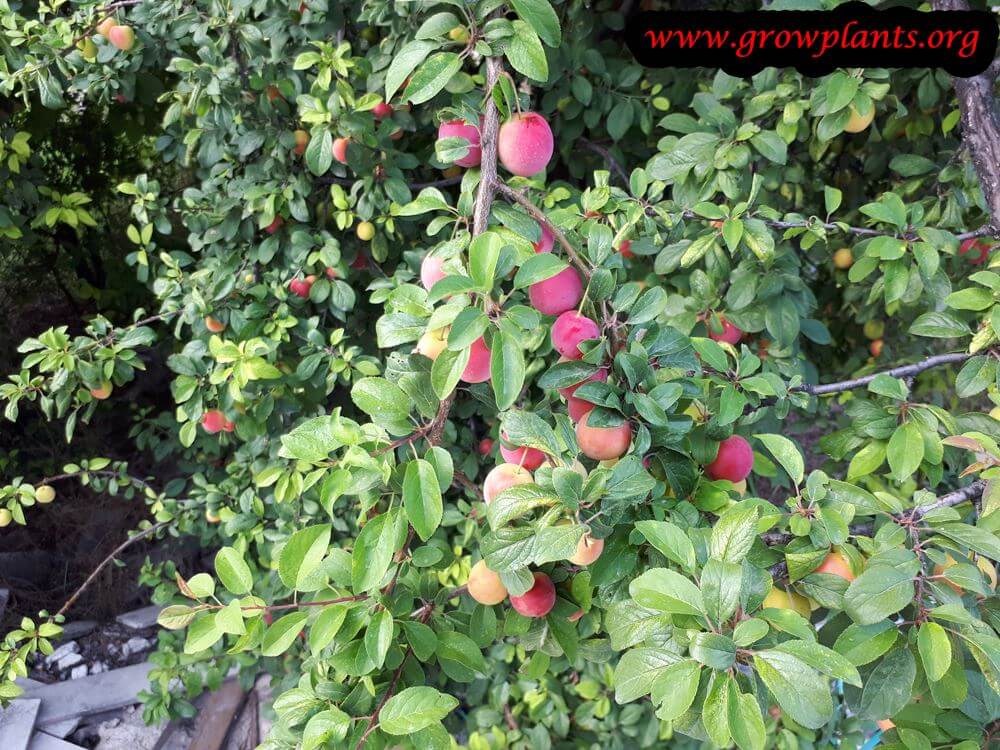
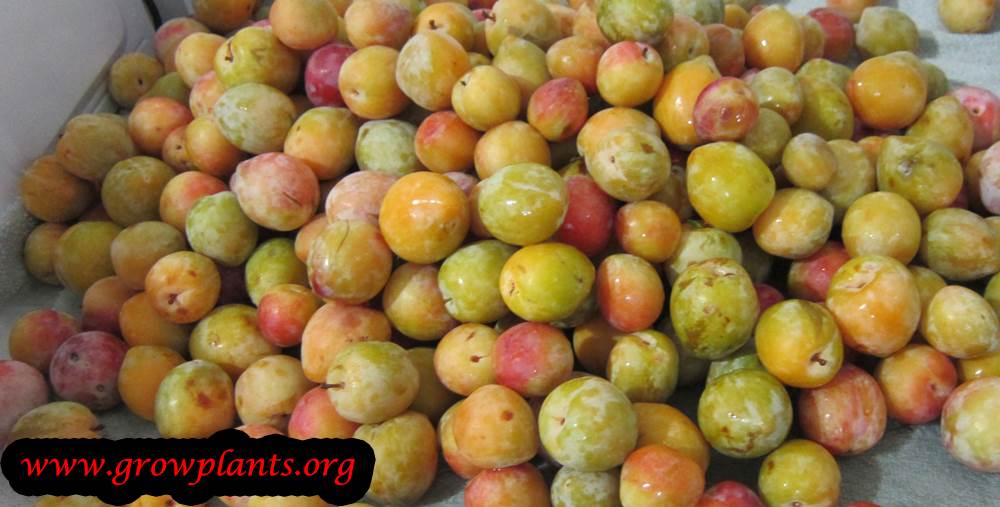
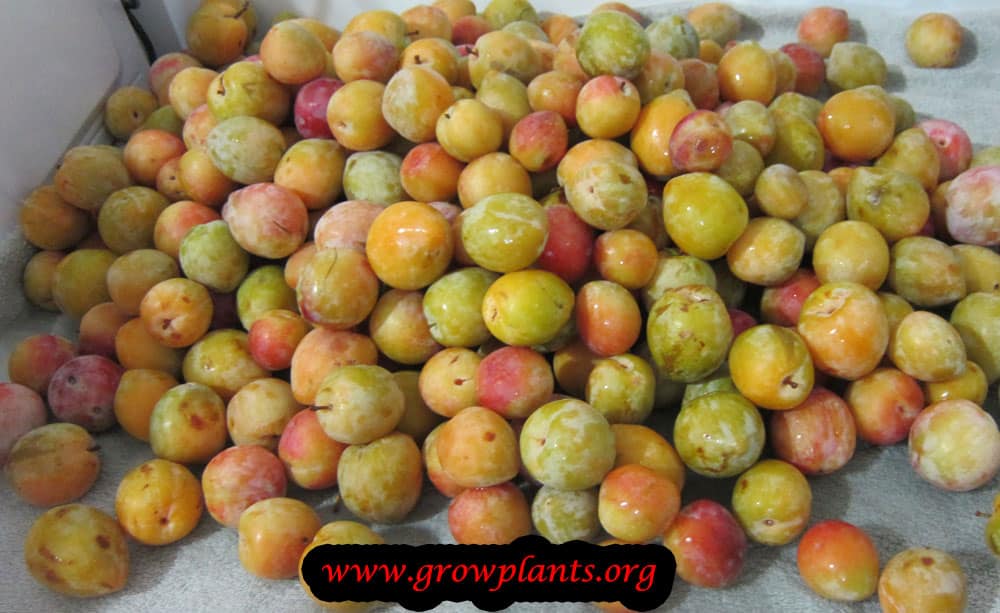
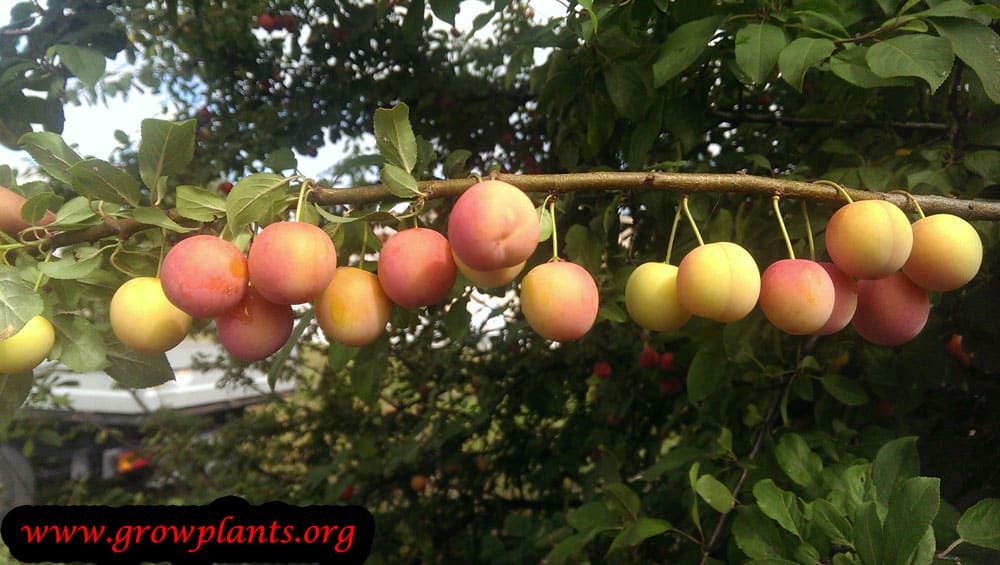
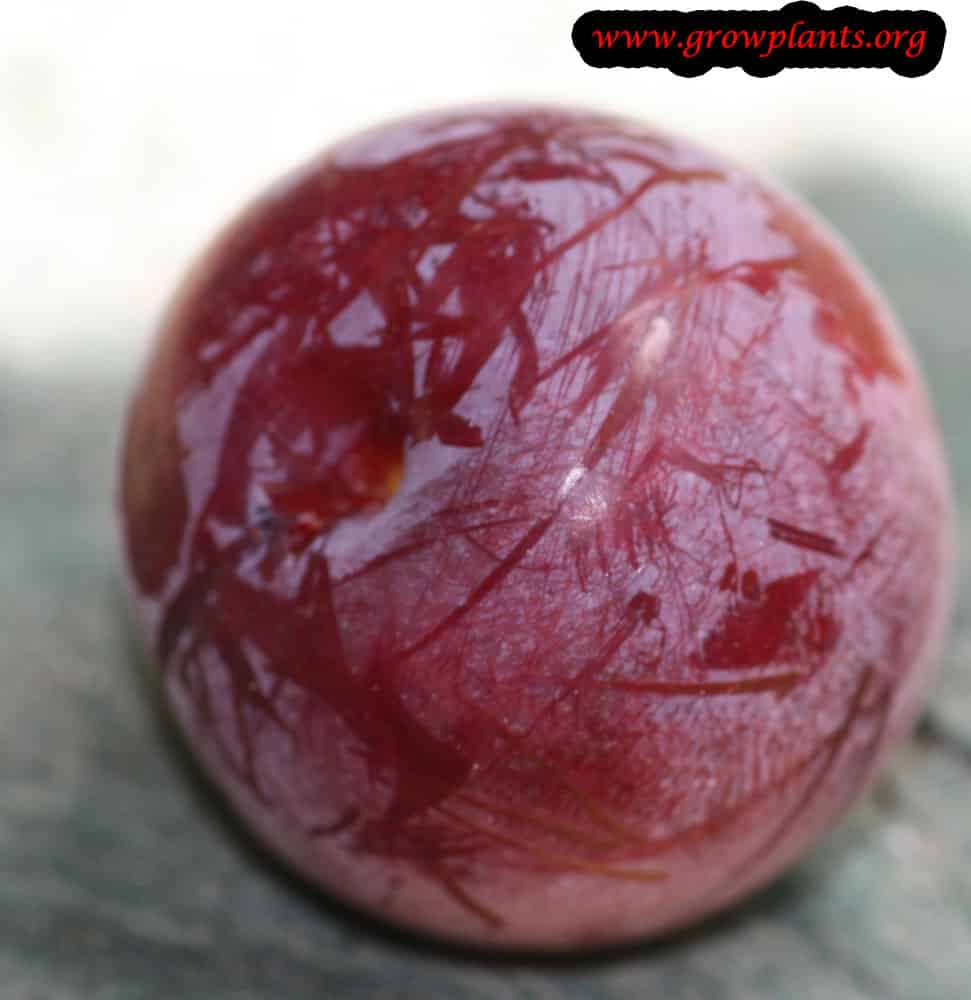
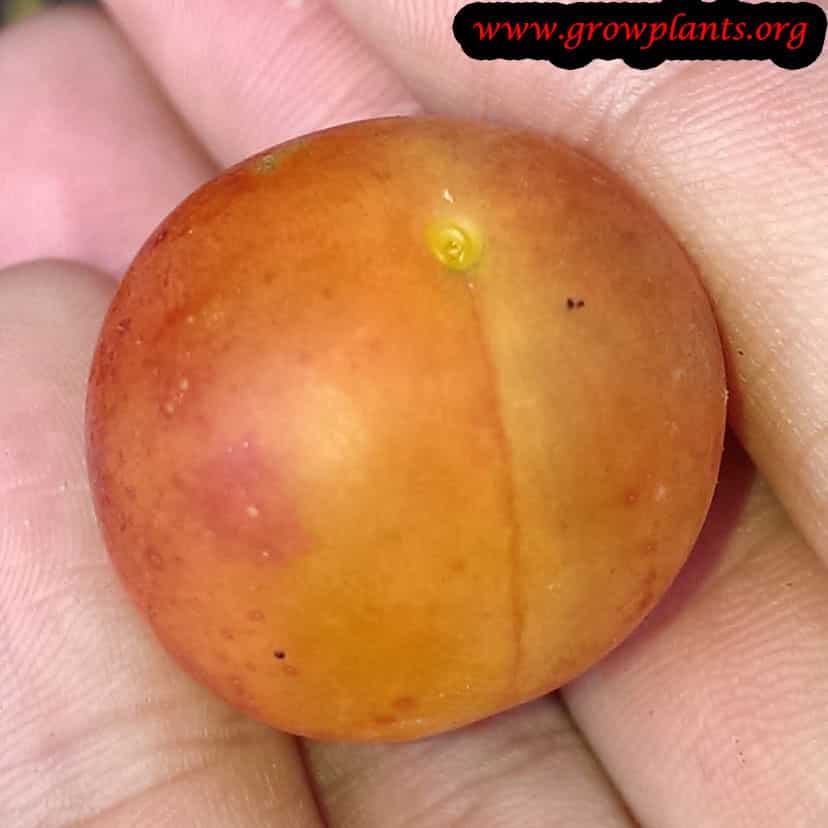
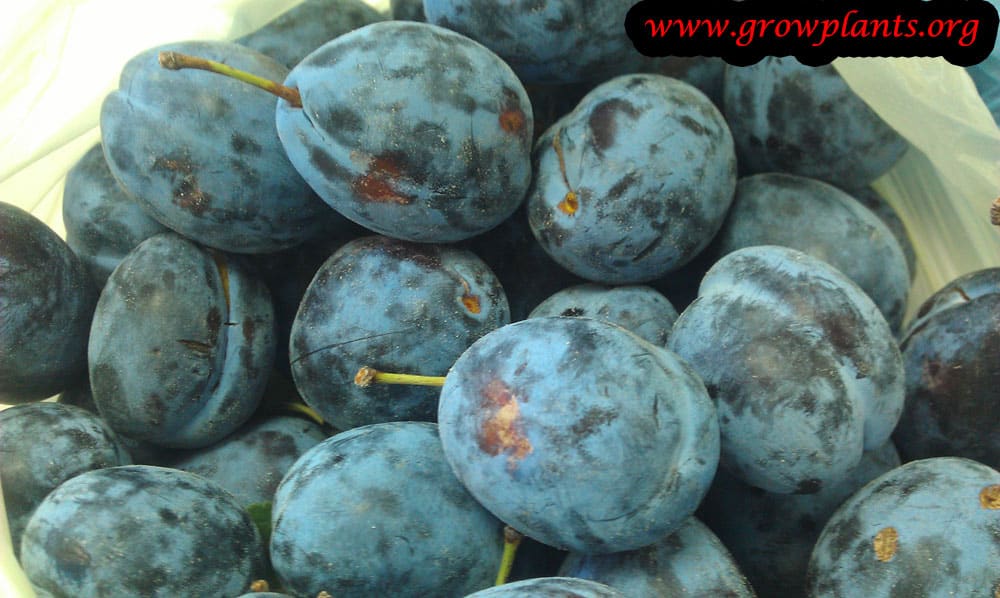
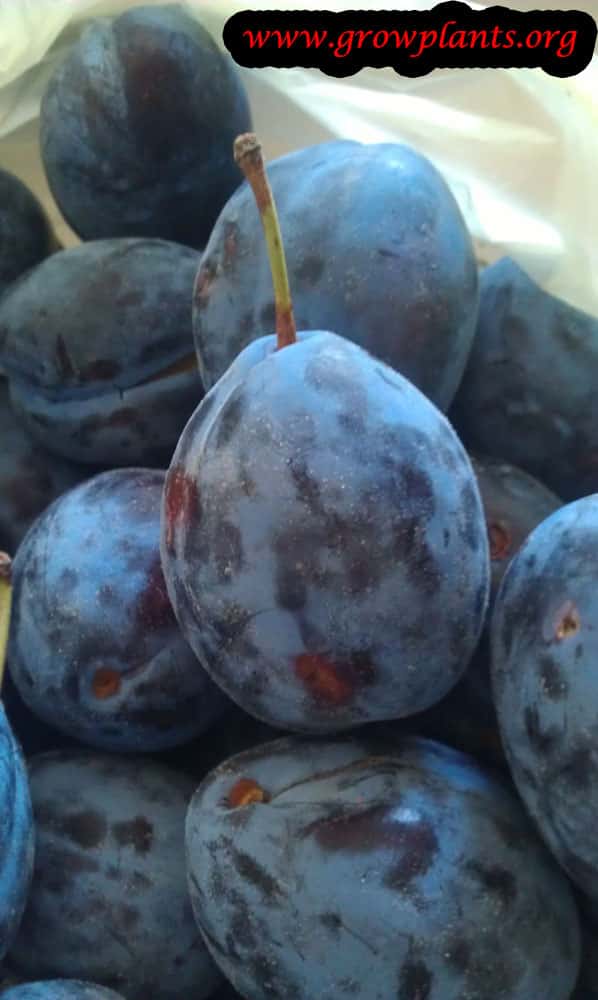
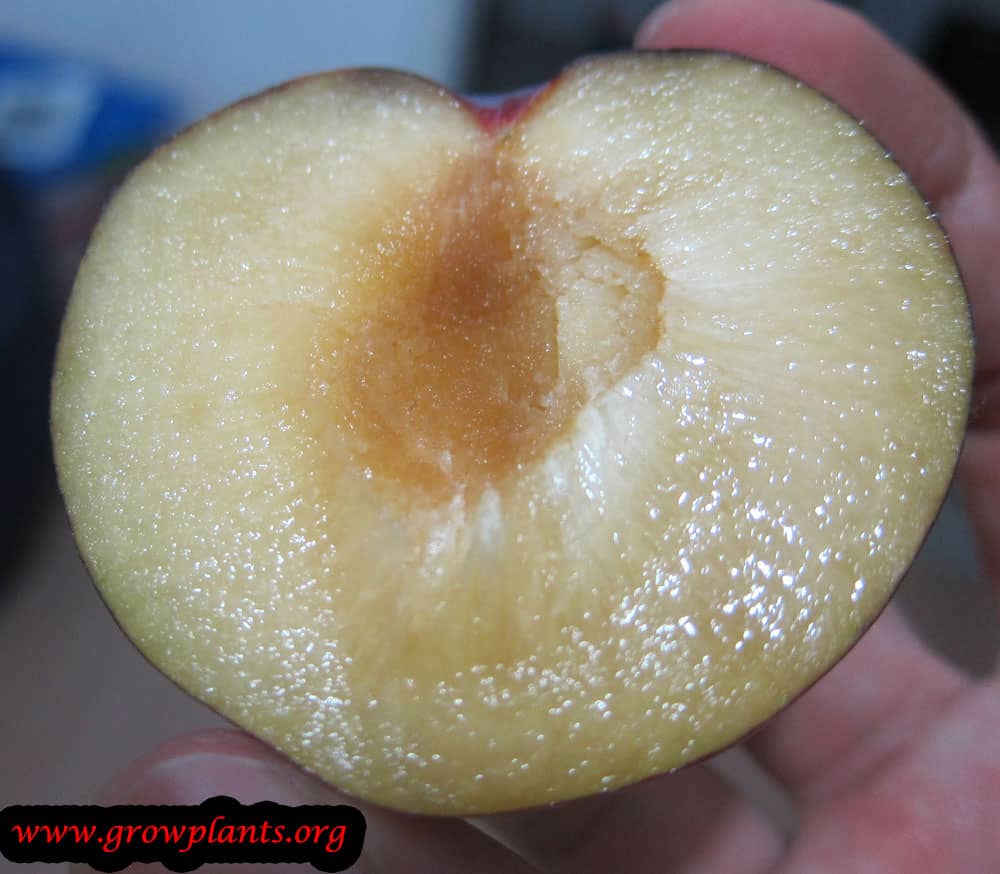
- Fruit Profile: Round to oval drupe 1-7 cm, skin red, orange, purple, yellow or black over sweet, juicy flesh around a single stone.
Primary Uses & Landscape Value
- Edible Uses: Eaten fresh, dried as prunes, and made into jams, sauces and baked goods.
- Functional & Ornamental Roles: Orchard and garden fruit tree, spring blossom feature; some types (cherry plum) planted purely as ornamentals.
Care Guide: Planting, Soil & Watering
Overview: The plum is a deciduous stone-fruit tree (Prunus) that fruits best in full sun in deep, fertile, well-drained loam. It needs steady moisture while fruit is swelling and good drainage to keep its roots healthy.
Quick Care Requirements
| Requirement | Ideal Condition |
|---|---|
| Planting Season | Dormant season – late winter to early spring (bare-root) |
| Growth Rate | Moderate |
| Soil Type | Deep, fertile, well-draining loam |
| Water Need | Moderate; keep evenly moist, especially as fruit develops |
Planting & Establishment
- Best Planting Season: Plant bare-root trees while dormant in late winter to early spring; container-grown trees can go in through the growing season in milder areas.
- How to Plant:
- Hole Preparation: Dig a hole about twice as wide as the root ball and no deeper, loosening the sides so roots can spread.
- Soil Amendments: Work compost or well-rotted organic matter into the backfill; improve drainage on heavy clay before planting.
- Planting Depth: Set the tree so the graft union sits well above soil level and the root collar is not buried, then firm in.
- Growth Speed & Expectations: A moderate grower that develops into a small to medium tree; allow a few years for a good fruiting crop.
Soil, Watering & Drainage Care
- Soil Mix & Drainage Needs: Wants a deep, fertile, well-drained soil; it dislikes waterlogged roots, so avoid low, boggy sites.
- Watering Schedule & Technique:
- Young / Newly Planted: Water deeply and regularly through the first seasons to establish a strong root system.
- Established: Water moderately, giving deep soaks in dry spells – especially while flowers set and fruit swells.
- Seasonal Adjustments: More water in summer heat and during fruiting; little needed in the dormant winter months.
Climate, Light & Hardiness
Plum trees (genus Prunus) are deciduous fruit trees whose climate needs vary by species and cultivar group: some are hardy, cold-climate types suited to temperate gardens, while others (Japanese-type plums in particular) tolerate milder, subtropical or Mediterranean winters. Site data gives a broad USDA hardiness zone 3–10 for the genus as a whole, spanning cold-hardy temperate types through to milder-winter subtropical/Mediterranean types, so an exact figure for a specific tree should be confirmed against its named cultivar.
Quick Climate Specifications
| Climate Zones | Temperate/cold-climate types through Mediterranean or subtropical types, depending on species and cultivar |
|---|---|
| USDA Hardiness Zones | 3–10 (varies by species/cultivar group) |
| Cold Damage Begins | Open blossom is damaged by frost at or just below 0°C (32°F) across plum types generally; the dormant tree tolerates much colder conditions. |
| Frost Tolerance | Moderate to High (dormant tree, varies by type) / Low (open blossom) |
| Wind Tolerance | Moderate |
Sunlight & Light Exposure
Optimal Light Setup
Full sun is the general requirement for plum trees to fruit well, consistent with other deciduous stone fruit.
Direct Sun Requirement
Recommended for good fruiting across plum types.
Temperature Extremes & Hardiness
USDA Hardiness & Regional Limits
The genus spans genuinely cold-hardy species suited to zone 3–4 winters through to milder-climate types more at home in zone 8–10; because this page covers the genus broadly rather than one named species or cultivar, the practical zone limit for any individual tree should be checked against its specific type.
Cold Damage & Winter Protection
As with other stone fruit, spring frost during bloom is generally a bigger practical risk to the crop than winter cold is to the dormant tree; siting to avoid low frost pockets is a sound general precaution.
Frost Sensitivity
Varies by type, but blossom-stage frost sensitivity is a shared trait across the genus.
Chilling Requirement
Plums generally need a period of winter chill to flower and fruit normally; the amount needed varies substantially by species and cultivar - cold-climate European-type plums typically need more chill than milder-climate Japanese-type plums - so a specific chill-hour figure cannot be given without knowing the exact cultivar.
Wind, Humidity & Microclimate
Wind Tolerance
Moderate; typical garden and orchard wind is generally tolerated across plum types.
Microclimate Recommendations
A sunny site with good cold-air drainage benefits plum trees generally, protecting spring blossom from frost while still allowing the tree to receive needed winter chill.
Growing in Pots, Balconies & Indoors
The source record for this plum tree holds no specific container or houseplant data, so this section is written from what the plant is: a full-sun, deciduous stone-fruit tree. Like other plums it is not a houseplant – it needs a winter cold rest and strong outdoor sun – but it can be grown in a large container while young or on a dwarfing rootstock.
Quick Details
- Container Size: A large tub or half-barrel (40-60 L+); a container home only while young or on a dwarf rootstock
- Indoor Suitability: Not a houseplant – too large, needs full sun and a cold winter rest
- Best Spot: Full sun, outdoors
- Soil & Drainage: Rich, free-draining mix
- Watering in Pots: Average to generous while in leaf; pots dry fast
Indoors & On the Windowsill
- Not a houseplant: As a deciduous fruit tree it needs winter cold to go dormant and strong sun to flower and fruit – a room cannot supply either.
- Why grow it potted: A container lets you grow a plum where there is no open ground, or keep a dwarf form on a patio; it still lives outdoors all year.
- Safety: As with all stone fruit, the pits and wilted leaves contain natural cyanide compounds – keep prunings and fallen pits away from pets and grazing animals.
On a Balcony or Patio
- Light & wind: Give it the sunniest, most open spot; stake young trees and shelter from strong wind, and note that walls and paving reflect heat that dries pots fast.
- Weight & drainage: A fruiting tree in a full tub is heavy – place it on castors or in its final spot, and ensure drainage runoff can escape.
- Cold rest: Leave the pot outdoors through the cold season for the winter chill it needs to fruit.
Choosing the Pot, Soil & Long-Term Care
- Pot & drainage: Use the largest practical tub with strong drainage holes; skip a standing-water saucer to avoid root rot. Terracotta breathes and dries faster, glazed or plastic holds moisture longer.
- Potting mix: A well-aerated, organic-rich mix – peat or coir blended with perlite or vermiculite – keeps roots oxygenated in a pot.
- Feeding: Potted plants need feeding a little more often than those in open ground, as regular watering leaches nutrients from the mix. Feed through the growing season for good crops.
- Repotting & pruning: Refresh the mix and root-prune every couple of years and prune the top to keep it compact; a standard tree will eventually need the open ground.
Growing this plant in a greenhouse
A greenhouse can give plum tree frost protection, cold protection, humidity control and extra warmth. In the right climate it may also be kept growing through winter, depending on how much warmth and light are provided.
Greenhouse at a glance
| Greenhouse suitability | Conditional - depends on your climate |
|---|---|
| Main benefits | frost protection, cold protection, humidity control, extra warmth |
| Season extension | earlier spring & later autumn |
| Outdoor protection advisable below | about 5°C |
| Maintain greenhouse minimum | around 5°C for active growth |
| Suitable types | heated greenhouse, glass greenhouse, polycarbonate greenhouse |
| Heating | Heating is optional - useful mainly for winter growing in cold areas. |
Related greenhouse guides
- Greenhouses: How to Choose the Right Greenhouse
- Best Greenhouse Heaters
- Greenhouse Climate Control: Temperature, Ventilation and Humidity
- Polycarbonate Greenhouses: What to Look for Before Buying
Fertilizing & Feeding
Plum trees generally follow the same moderate, stone-fruit feeding pattern as their close relatives – nitrogen-forward while young, then balanced to potassium-leaning once bearing – though specific cultivar needs can vary.
Quick Fertilizing Specs
| Feeding Level | Moderate |
|---|---|
| young_feeding | Nitrogen-forward complete fertilizer while building the branch framework |
| mature_feeding | Balanced to potassium-leaning feeding once the tree is bearing |
| Main Nutrient Priority | Nitrogen while young, shifting toward balanced and potassium at fruiting |
| Best Feeding Period | From the start of spring growth through early summer |
| Soil pH | Prefers well-drained soil; watch for chlorosis on heavy or alkaline sites |
Feeding by Growth Stage
Newly Planted
Help the young tree establish roots and settle into its planting site
| Nutrient direction | Light, balanced feeding to support root establishment without forcing soft top growth |
|---|---|
| Timing | The first growing season after planting |
| Frequency | Light feeding through the active growing season, easing off as the tree settles in |
| Fertilizer types | A balanced, complete fertilizer for young fruit trees, Compost or aged organic matter worked into the planting area |
| Precautions | Keep fertilizer away from the trunk and root flare to avoid burn while the young tree settles in |
Young Tree
Build a strong scaffold of branches ahead of the tree’s first bearing years
| Nutrient direction | A nitrogen-forward complete fertilizer to drive steady vegetative growth |
|---|---|
| Timing | Through the growing seasons before the tree begins bearing fruit |
| Frequency | Several light feedings spread across the active growing season |
| Fertilizer types | A nitrogen-forward complete fruit-tree fertilizer, Organic mulch or compost to build soil fertility |
| Routine trace nutrients | iron, manganese, zinc |
| Precautions | Plum cultivars vary widely in vigor and cold-hardiness, so watch the individual tree’s response and moderate feeding accordingly rather than following a fixed routine |
Established, Pre-Bearing
Transition from vegetative growth toward a framework ready to flower and set fruit
| Nutrient direction | Balanced feeding as the canopy matures and the tree nears its first fruiting |
|---|---|
| Timing | As the tree approaches the age when it typically begins bearing |
| Frequency | Moderate, regular feeding through the growing season |
| Fertilizer types | A balanced, complete fruit-tree fertilizer |
| Routine trace nutrients | iron, manganese, zinc |
| Precautions | Most plums need a period of winter cold to flower and bear well; feeding cannot substitute for that chilling requirement |
Mature, Bearing
Support reliable fruit development and quality once the tree is bearing consistently
| Nutrient direction | Balanced feeding with a potassium-leaning shift as fruit develops |
|---|---|
| Timing | Through the dormant-to-growing season transition, with attention around bloom and fruit development ahead of harvest |
| Frequency | Moderate feeding through the growing season, easing off once fruit is harvested |
| Fertilizer types | A balanced to potassium-leaning complete fruit-tree fertilizer |
| Routine trace nutrients | iron, manganese, zinc |
| Precautions | Stone fruit as a group is prone to common pests and diseases, so good sanitation and airflow through the canopy matter as much as feeding for fruit quality |
Nutrient Deficiency Signs & Corrections
New leaves emerge pale yellow while the veins stay distinctly green
| Possible causes | High soil pH limiting iron availability, a common issue for stone fruit on alkaline sites, Poorly drained or waterlogged planting sites, Root stress from graft-union problems or compacted soil |
|---|---|
| Appears first on | Newest leaves at branch tips |
| What to check | Soil pH and drainage around the root zone, Graft union condition, Whether the pattern follows a specific area of the planting site |
| Possible correction | Improve drainage first; if pH is confirmed as the cause, apply a chelated iron product per its label |
Overall foliage color is pale to yellow-green with shorter-than-expected new shoot growth
| Possible causes | Insufficient nitrogen in the feeding program, Heavy rainfall or irrigation leaching nutrients away from the root zone, Competition from turf or dense underplanting near the trunk |
|---|---|
| Appears first on | Older leaves lower in the canopy |
| What to check | Shoot growth length compared with a typical season, Recent feeding history, Mulch and organic matter around the root zone |
| Possible correction | Resume a nitrogen-forward feeding during the active growing season and rebuild organic matter around the root zone |
Older leaf margins yellow or scorch and fruit tends to run smaller or less flavorful than expected
| Possible causes | Sandy or heavily leached soil low in potassium, A feeding program weighted only toward nitrogen, Heavy fruit loads drawing down potassium reserves during a strong bearing year |
|---|---|
| Appears first on | Older leaves, often starting at the margins |
| What to check | Fruit size and quality compared with a typical season, Leaf margins on older growth for scorch, Recent fertilizer history for a nitrogen-only product |
| Possible correction | Shift toward a balanced to potassium-leaning complete fruit-tree fertilizer around fruit development |
Interveinal yellowing appears on young to mid-canopy leaves without affecting the leaf margins
| Possible causes | High soil pH reducing manganese availability, Overly wet, poorly aerated soil, General micronutrient depletion in old, unamended orchard soil |
|---|---|
| Appears first on | New spring growth |
| What to check | Soil pH and drainage around the root zone, Whether symptoms track with a persistently wet spot, Recent soil amendment history |
| Possible correction | Improve drainage and aeration; if confirmed, correct with a chelated manganese product per its label |
Pruning, Training & Seasonal Maintenance
Plum tree (European plum, Prunus domestica type) tolerates moderate pruning and needs a yearly structural and sanitary pass to stay productive, though it needs less severe annual renewal than peach or nectarine since fruit is carried on a mix of short spurs and one-year wood rather than one-year wood alone. The safest period is winter dormancy, before spring growth begins; pruning heavily right before or during bloom removes flower buds and reduces the summer/autumn crop.
Quick Pruning & Maintenance Specs
| Pruning Tolerance | Moderate |
| Primary Pruning Window | Winter (dormant) |
| Secondary Maintenance Window | Early summer, light thinning of vigorous new shoots |
| Typical Frequency | Once yearly, dormant season |
| Main Objective | Build strong scaffold structure while young; maintain spur productivity and airflow once mature |
| Young Plant Priority | Select well-spaced scaffold limbs, remove competing leaders |
| Mature Plant Priority | Remove dead, weak and crossing wood; thin dense growth; renew tired spur wood |
| Best Tool Type | Bypass secateurs for spur-level cuts, loppers and pruning saw for scaffold limbs |
| Avoid Heavy Pruning During | Bloom and fruit development |
Pruning by Plant Age & Size
Newly Established
Limit cuts to damaged or broken growth from transplanting; hold off on structural pruning until the tree is settled in.
Young / Formative
Train to an open-center (vase) or modified-leader framework with well-spaced scaffold limbs, removing competing upright shoots so a balanced structure develops.
Mature / Established
Shift to maintenance thinning: remove dead, weak and crossing wood each winter, and renew aging, unproductive spur wood in the interior to keep the tree fruiting rather than just producing foliage.
Seasonal Pruning Schedule
Dormant/Winter
Objective: structural correction and sanitation. Remove: dead, damaged, crossing and clearly unproductive wood. Do not remove: healthy spur wood and one-year shoots that will carry the coming crop. Expected response: renewed shoot and spur vigor in spring. Fruiting impact: moderate dormant thinning has little effect on the crop; heavy indiscriminate cutting reduces both spurs and one-year wood the tree needs to fruit.
Flowering & Fruiting Wood
Edible fruit forms on a mix of short-lived spurs and one-year-old wood. Because fruit-bearing wood is not exclusively short-term (unlike peach), winter pruning should favor selective thinning over wholesale renewal, preserving enough spur wood from prior seasons to maintain cropping while still refreshing some one-year shoots each year.
Structural Pruning & Training
Remove crossing and inward-rubbing branches to keep the canopy open enough for light to reach interior spurs, and control height/spread as the tree matures so fruit stays within easy reach.
Special Growth to Remove
- Rootstock suckers below the graft union on grafted trees.
- Dead and clearly unproductive spur clusters that are shading out healthier wood.
Container & Small-Space Pruning
Where grown in a container, prune more assertively each dormant season to keep the tree compact, favoring light annual thinning over infrequent hard cuts so the smaller root system isn’t forced to support a sudden large regrowth flush.
Tools
- Bypass secateurs – spur-level and small-wood cuts.
- Loppers – scaffold branches beyond hand-secateur reach.
- Pruning saw – larger structural limbs on a mature tree.
Tool Hygiene & Disease Risk
Routine: clean, sharp tools are sufficient for ordinary maintenance cuts; step up to disinfecting between cuts only when removing visibly diseased, cankered or borer-damaged wood, which is common in stone fruit generally.
Cut Placement & Technique
Cut just outside the branch collar rather than flush, and favor thinning cuts (removing a branch to its origin) over heading cuts to avoid provoking a thicket of upright watersprouts.
Heavy Pruning & Rejuvenation
An overgrown or neglected plum tolerates renewal pruning, but it is best spread across two dormant seasons rather than done all at once, since removing too much wood in a single pass can trigger heavy watersprout regrowth and suppress fruiting for a season or more.
Post-Pruning Care
Water normally through the following growing season and avoid extra fertilizing right after pruning, since the cuts already stimulate regrowth. Watch newly exposed interior wood for sunscald after opening up a dense canopy.
Common Pruning Mistakes
- Over-thinning spur wood, which removes future fruiting potential along with vigor.
- Heading cuts that provoke a mass of unproductive watersprouts.
- Pruning during bloom, which cuts the current season’s flowers.
- Flush cuts that slow wound healing.
When NOT to Prune
Avoid pruning during bloom and while fruit is developing on the tree; avoid cutting in wet weather, which raises the risk of disease entering fresh wounds on stone fruit.
Recommended Tools (by task)
- bypass_secateurs – for spur-level thinning and small-wood renewal cuts.
- loppers – for scaffold-branch thinning.
- pruning_saw – for larger structural limbs on a mature tree.
Pruning Troubleshooting
| Problem | Possible Cause | What to Check | Corrective Action |
| Declining fruit set year over year | Spur wood aging out without renewal | Look for long stretches of bare, unproductive spur wood | Selectively renew a portion of old spur wood each winter rather than all at once |
| Dense, shaded interior with poor fruiting | Crossing/inward growth left unthinned | Check light penetration into the canopy center | Thin crossing and inward branches during the dormant prune |
| Excess upright watersprout growth after pruning | Heading cuts used instead of thinning cuts, or an overly hard single-season prune | Look for clusters of vertical shoots below prior cut points | Switch to thinning cuts and remove watersprouts as they appear rather than heading again |
Propagation Guide
Plum trees are most reliably propagated by grafting or budding a chosen fruiting variety onto a suitable rootstock. Seed can be used to raise variable plum seedlings or rootstocks, but a seedling should not be expected to reproduce the fruit or growth characteristics of a named parent variety.
Quick Propagation Specs
| Best Method for Named Varieties | Grafting or budding |
| Seed | Suitable for seedlings or rootstocks, not for cloning a named variety |
| Cuttings | Not generally the preferred propagation method |
| True-to-Type | Vegetative propagation preserves the selected variety |
Grafting & Budding
Use healthy scion or bud material from the plum variety you want to reproduce and join it to a compatible plum rootstock. Grafting and budding preserve the chosen variety while allowing the rootstock to influence characteristics such as tree size and vigour.
Growing from Seed
Seed-grown plum trees are genetically variable and can differ substantially from the parent tree. They are most useful when raising seedlings or potential rootstocks rather than when reproducing a known fruit variety.
Choosing a Rootstock
Rootstock choice depends on the intended tree size, growing conditions and the type of plum being grown. Use a compatible rootstock suited to the local climate and intended training system.
Bloom & Flower Guide
Quick Details
- Bloom Season: Spring, generally on bare or barely-leafed branches
- Time to First Bloom: Grafted trees usually begin flowering within about two to four years
- Flower Appearance: White or pink flowers with five petals, mostly in clusters
- Edibility: Not eaten – the tree is grown for its fruit, and the flowers are ornamental only
Detailed Blooming Overview
Plum trees (Prunus) flower in spring, opening their five-petalled white or pink blooms in clusters, usually before or just as the leaves emerge. The early blossom is one of the first signs of the season, and it sets the stage for the summer fruit.
Flower Characteristics
- Five-petalled flowers in white or pink.
- Borne in clusters on most cultivars.
Bloom Care & Thinning
- Thinning: In the first years, light thinning of the bloom helps the young tree establish steady cropping.
- Pollination: Bee-pollinated; many plums also benefit from a compatible partner tree nearby.
Bloom Health & Protection
- Brown rot blossom blight: Wet spring weather can let the fungus Monilinia brown and wilt open blossoms. Clearing mummified fruit and cankered twigs, and a preventative fungicide at bloom (such as a sulfur-based spray), helps keep it in check.
Fruit & Uses
Plum trees are grown for their round to oval fruit, which varies widely in size and color across species and cultivars and is eaten fresh, cooked or, for some varieties, dried. The flesh is eaten raw once ripe, with only the stone discarded.
Quick Edible Specs
| Edible Parts | Fruit (flesh) |
|---|---|
| Main Use(s) | Culinary – fresh eating, jams, juice, alcohol (plum brandy/liqueur), baking; some varieties dried as prunes |
| Eaten Raw or Cooked | Raw; also cooked or dried depending on variety |
| Preparation Required | Remove the stone before eating or cooking |
| Harvest Season | Varies by species and cultivar – see specific plum varieties on this site (e.g. Santa Rosa plum, Damson plum) for exact timing |
| Time to First Harvest | Several years of growth before a plum tree bears fruit, as with most stone fruit |
| Storage | Fresh plums are short-lived at room temperature and best refrigerated once ripe; some varieties can be dried for longer storage |
| Safety/Toxicity Caveat | Do not eat the stone or crack the kernel inside – like other Prunus seeds it contains cyanogenic compounds |
Fruit
Fruit is round or oval, 1–7 cm, with skin color ranging from red, orange and black to purple, pink or yellow depending on the cultivar, often with a light waxy bloom on the surface. Because "plum" covers many species and cultivars, exact ripening timing differs by variety – check the specific plum being grown (see the Santa Rosa plum and Damson plum pages on this site for examples). In general, fruit is ready when fully colored and yields slightly to gentle pressure.
Harvesting
Fruit is picked by hand once ripe; dessert varieties are usually left to soften fully on the tree, while some cooking/preserving types are picked a little firmer. Fruit does not all ripen at once, so trees are typically picked over more than once.
Preparation, Uses & Safety
Ripe plums are eaten fresh, made into jam, jelly and juice, baked into cakes and pies, or fermented into plum wine or brandy; some cultivars are traditionally dried into prunes. As with all Prunus fruit, the stone and the kernel inside it are not eaten: they contain cyanogenic compounds and should be discarded whole.
Pests, Diseases & Troubleshooting
Overview: Plums are vigorous but attract a predictable set of stone-fruit pests and fungal rots, most of which are prevented rather than cured. The single most effective strategy is orchard hygiene – clearing mummified fruit and fallen leaves, pruning for an open airy canopy in dry weather, and a dormant horticultural-oil spray – backed by pheromone monitoring so you only treat when a pest is actually present.
Quick Troubleshooting Overview
| Issue / Pest | Main Symptom | Primary Solution |
|---|---|---|
| Plum aphids | Curled, sticky, distorted leaf tips with sooty mould | Dormant oil; encourage ladybirds/lacewings; insecticidal soap on colonies |
| Plum fruit (curculio/moth) | Gummy holes or a maggot in the fruit; premature drop | Pheromone traps to time control; sanitation of dropped fruit; kaolin/net |
| Brown rot | Fruit rots on the tree with tan spore tufts; twig cankers | Remove mummies; open canopy; sulphur at blossom/pre-harvest |
| Black knot | Hard black warty swellings on twigs and branches | Prune knots 15 cm below in dormancy; burn prunings |
| Bacterial canker | Sunken oozing bark, gummosis, dieback of spurs | Prune only in dry summer; copper at leaf-fall; grow on resistant rootstock |
| Silver leaf | Silvery leaf sheen, purple staining in cut wood | Prune only in mid-summer dry spells; remove dead wood promptly |
Common Pests & Management
- Plum aphids (Hyalopterus pruni & Brachycaudus helichrysi):
- Symptoms: Colonies of green or mealy-grey aphids on shoot tips and leaf undersides; leaf-curl aphid tightly curls and yellows young leaves. Honeydew coats fruit and supports black sooty mould; ants often farm the colonies.
- Prevention & Control: Wash off light infestations with a jet of water and conserve ladybirds, lacewings and hoverflies. A thorough winter/dormant horticultural-oil spray smothers overwintering eggs. On active colonies use insecticidal soap or a light summer oil, spraying leaf undersides in the evening to protect pollinators.
- Plum curculio (Conotrachelus nenuphar):
- Symptoms: Crescent-shaped egg-laying scars on young fruit, gummy exudate, and small grubs tunnelling inside causing premature fruit drop. Adults are small mottled snout weevils.
- Prevention & Control: Practise strict sanitation – collect and destroy dropped fruit weekly to break the life cycle. Spread a sheet and tap branches in early morning to knock down and collect adults. A kaolin-clay film deters egg-laying; time any spray to petal-fall using traps.
- Plum fruit moth (Grapholita funebrana):
- Symptoms: Maggots bore into ripening fruit leaving reddish frass around the stone; fruit ripens early and drops. Entry holes are hard to see from outside.
- Prevention & Control: Hang pheromone traps to detect first flight and time treatment. Bag or net high-value fruit and remove infested drops immediately. Bacillus thuringiensis or a targeted product applied at egg-hatch (guided by traps) reduces damage without harming beneficials.
- San Jose & brown scale (Diaspidiotus perniciosus):
- Symptoms: Encrusting grey or brown limpet-like scales on bark and fruit; red haloes on fruit, weak growth and dieback of twigs under heavy loads.
- Prevention & Control: The winter dormant-oil spray is the key control, smothering overwintering scale. Prune out heavily crusted wood. In summer target the mobile ‘crawler’ stage with horticultural oil; conserve tiny parasitic wasps that keep scale in check.
- Fruit tree red spider mite (Panonychus ulmi):
- Symptoms: Fine pale stippling and bronzing of leaves in hot dry spells, with tiny mites and eggs on leaf undersides; heavy attacks cause early leaf drop.
- Prevention & Control: Avoid drought stress and dusty conditions; overhead misting and mulch help. Dormant oil destroys overwintering eggs. Conserve predatory mites and only use a light summer oil or soap if bronzing becomes severe.
Diseases & Fungal Issues
- Brown rot (Monilinia laxa / M. fructigena):
- Symptoms: Blossoms wilt and blacken (blossom wilt), twigs develop cankers, and fruit rots on the tree with concentric rings of buff spore tufts, shrivelling into hard ‘mummies’ that carry the disease over winter.
- Treatment & Management: Remove every mummified fruit and cankered twig – sanitation is the core control. Prune for an open, fast-drying canopy and avoid fruit wounds. Where pressure is high, a sulphur or approved fungicide at blossom and again pre-harvest limits infection.
- Black knot (Apiosporina morbosa):
- Symptoms: Elongated, hard, coal-black galls encircling twigs and branches; girdled shoots die back and yield falls over successive years.
- Treatment & Management: Prune out knots in dry dormant weather, cutting at least 15 cm below each gall, and burn or bin the wood. Inspect wild plums and cherries nearby, which act as reservoirs. Choose less susceptible cultivars where the disease is endemic.
- Bacterial canker (Pseudomonas syringae pv. syringae/morsprunorum):
- Symptoms: Sunken, gummy, dark cankers on trunk and branches, amber gum exudation, and ‘shot-hole’ spotting on leaves; spurs and whole limbs may die back in spring.
- Treatment & Management: Prune only in warm dry mid-summer (never in wet dormancy) so wounds seal fast, and disinfect tools between cuts. Remove cankered wood well into healthy tissue. A copper spray at leaf-fall and again at bud-swell reduces infection; use tolerant rootstocks.
- Silver leaf (Chondrostereum purpureum):
- Symptoms: A silvery sheen on leaves (air pockets under the skin) usually on one limb first, with a purple-brown stain in the cut wood; branches progressively die back.
- Treatment & Management: This fungus enters through wounds, so prune only in dry summer weather when spores are scarce and healing is rapid. Cut affected limbs back to clean, unstained wood and destroy prunings. Keep trees vigorous – stressed trees are far more susceptible.
- Plum pockets / leaf curl (Taphrina pruni):
- Symptoms: Fruit becomes hollow, elongated, spongy and distorted (‘bladder plums’) with no stone; some leaf blistering and curling occurs in wet springs.
- Treatment & Management: Rake and destroy fallen infected fruit and leaves. A single copper or sulphur spray at bud-swell, before buds open, prevents infection for the season; the disease cannot be cured once tissue is infected.
- Plum pox (Sharka) virus (Plum pox virus):
- Symptoms: Chlorotic rings and blotches on leaves, pale rings and internal browning in fruit, and misshapen, poorly flavoured plums; spread by aphids and infected stock.
- Treatment & Management: There is no cure – this is a notifiable disease in many regions. Buy certified virus-free trees, control aphid vectors, and remove and report confirmed infected trees promptly to protect neighbouring orchards.
Growing Difficulties & Abiotic Problems
- Fruit splitting & cracking:
- Cause & Symptoms: Rapid water uptake after dry spells (or heavy rain near ripening) swells fruit faster than the skin can grow, splitting it and inviting brown rot.
- Correction Strategy: Keep soil moisture even with mulch and measured irrigation, and thin heavy crops so remaining fruit is less prone to gorging on sudden water.
- Gummosis:
- Cause & Symptoms: Amber gum oozing from bark in response to stress, borer or canker injury, waterlogging, or mechanical wounds – a symptom rather than a disease itself.
- Correction Strategy: Identify and correct the underlying cause (improve drainage, prune cleanly in dry weather, manage canker/borer). Avoid trunk injuries from mowers and ties.
- Iron / manganese chlorosis:
- Cause & Symptoms: On alkaline or waterlogged soils the youngest leaves yellow between green veins as iron uptake is blocked.
- Correction Strategy: Improve drainage and mulch with organic matter to acidify gradually; apply chelated iron (and manganese) as a corrective and avoid over-liming.
- Biennial bearing & June drop:
- Cause & Symptoms: Trees can crop heavily one year and barely the next, and naturally shed excess immature fruit in early summer.
- Correction Strategy: Thin fruitlets to one every 5–7 cm after natural drop to even out cropping, protect flowers from frost, and feed/water consistently.
- Frost damage to blossom:
- Cause & Symptoms: Late frosts kill open flowers and young fruitlets, blackening centres and causing a poor set.
- Correction Strategy: Site trees away from frost pockets, choose later-flowering cultivars in cold areas, and protect wall-trained trees with fleece on frosty nights.
What Helps – Products & Tools
For plums the core toolkit is a dormant/winter horticultural (mineral) oil for overwintering aphids, scale and mite eggs; insecticidal soap or a light summer oil for active soft-bodied pests; pheromone traps to monitor and time fruit-moth control; sulphur fungicide for brown rot and copper for bacterial canker and leaf-curl at the correct dormant/leaf-fall timings; plus Bacillus thuringiensis for caterpillars and bird/insect netting where needed. Sanitation tools (a good pruning saw and secateurs, disinfected between trees) do more than any spray.