
Plant Profile & Key Characteristics
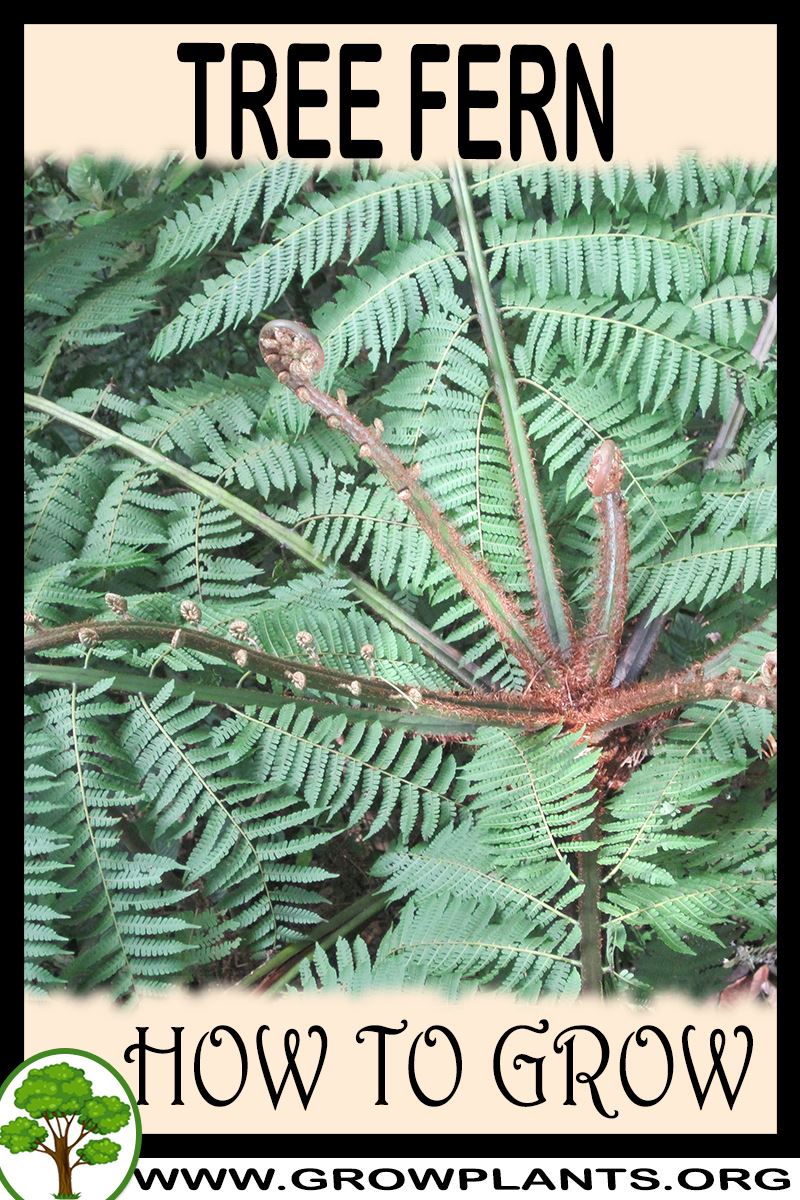
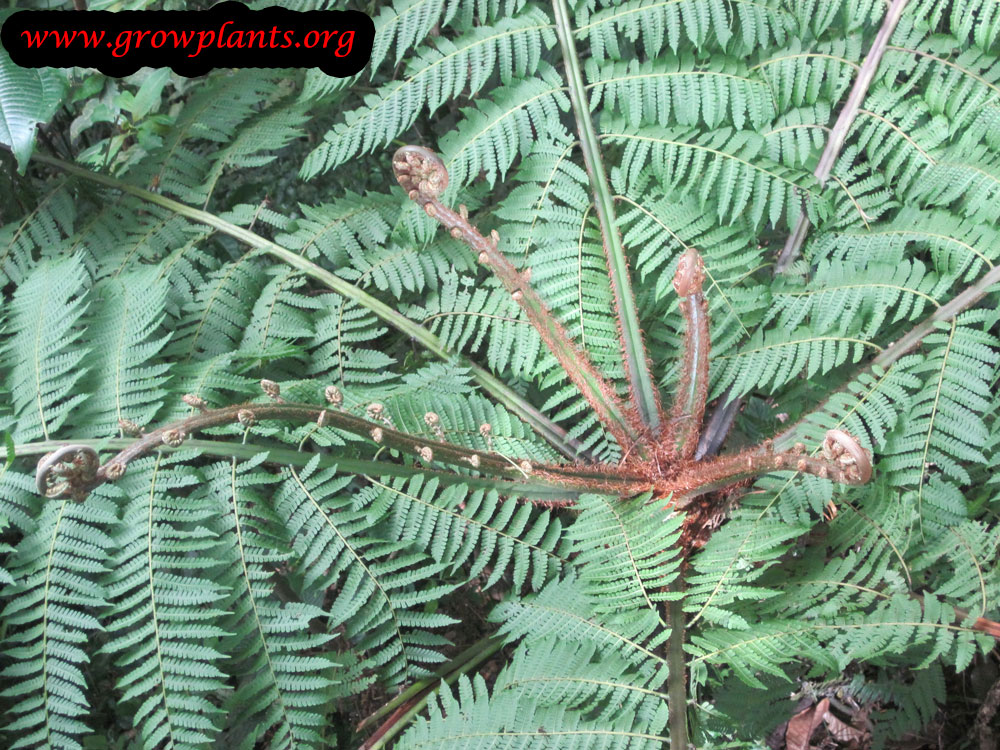
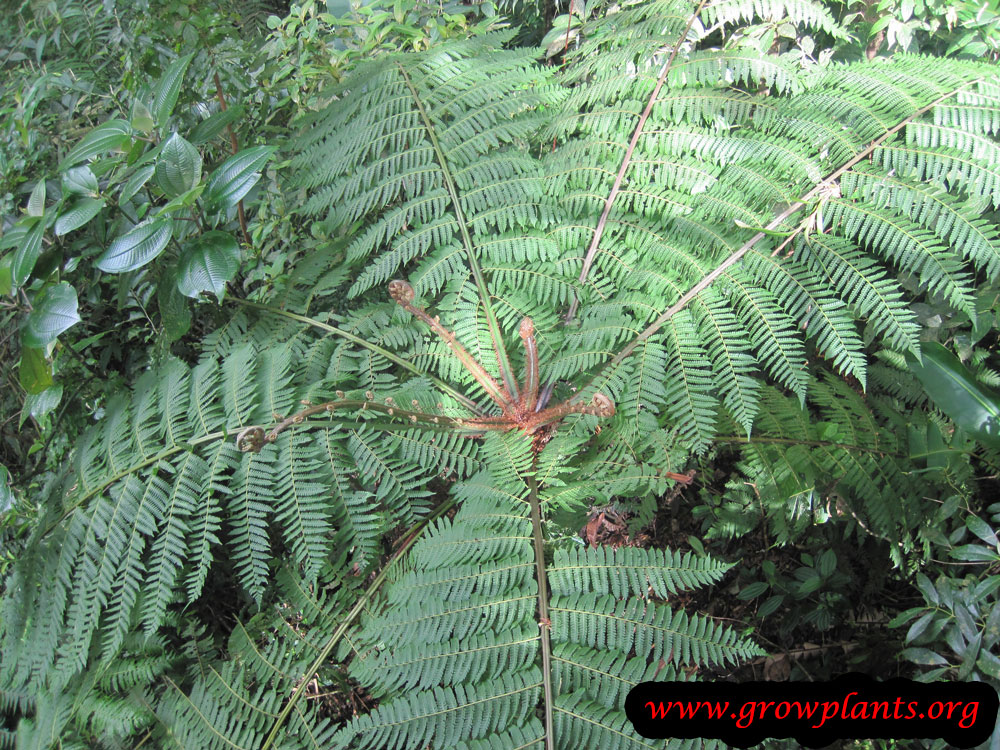
Overview: Tree ferns are evergreen, moderate-growing perennial ferns forming a slender trunk topped by a rosette of large fronds, reaching about 2-10 m (6-30 ft). They are grown as ornamentals for their tropical, architectural form.
Quick Specifications
| Specification | Attribute |
|---|---|
| Plant Type / Life Cycle | Perennial (evergreen tree fern) |
| Foliage Type | Evergreen |
| Mature Size | 2-10 m (6-30 ft) tall |
| Growth Rate | Moderate |
| Toxicity | Non-toxic |
| Hardiness | USDA zones 9+ (or grown indoors while young) |
Growth Form & Structure
- Height & Spread: A trunk-forming fern reaching 2-10 m (6-30 ft); can be grown in containers or indoors while young.
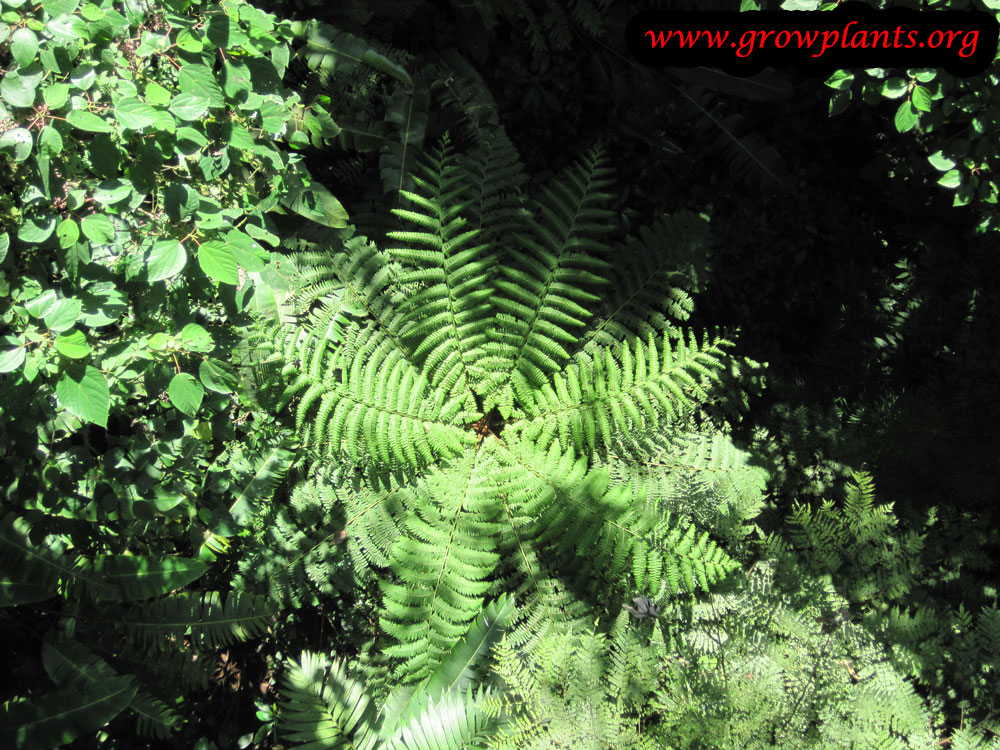
- Growth Habit & Form: A single erect trunk crowned by a spreading rosette of arching fronds.
- Lifespan & Maturity: A long-lived perennial that gains height slowly at a moderate rate.
Anatomy & Physical Features
- Trunk & Bark: A slender, fibrous trunk built from old frond bases and a dense mantle of roots.
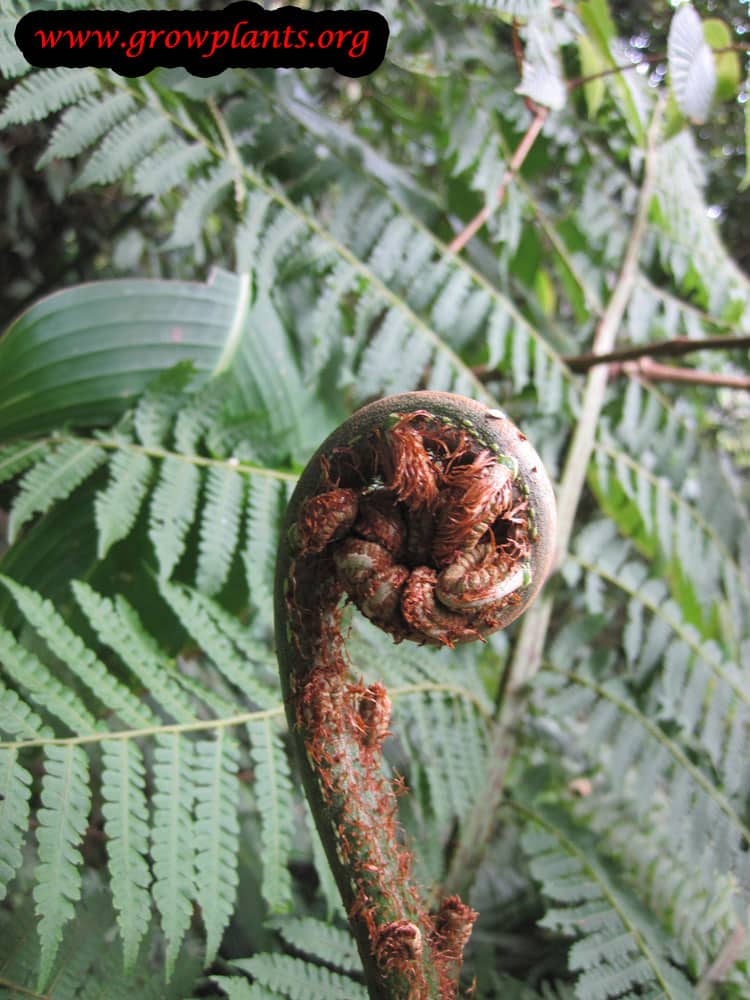
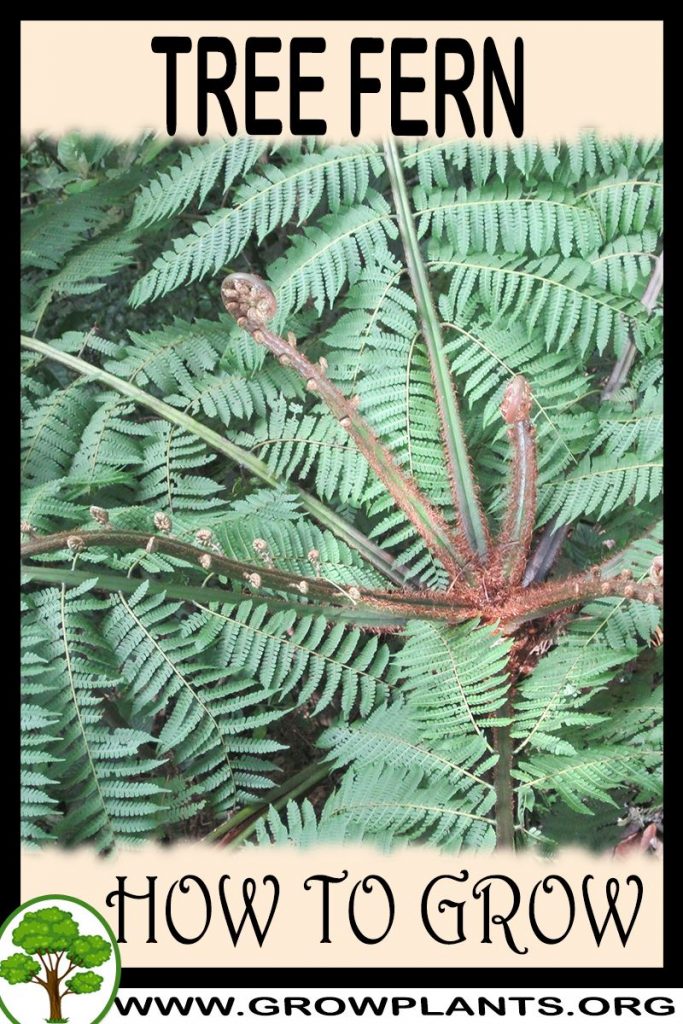
- Leaves & Foliage: Large, green, finely divided (pinnate) fronds in a rosette; new fronds unfurl as coiled fiddleheads from the centre.
Primary Uses & Landscape Value
- Functional & Ornamental Roles: Architectural ornamental for shaded, humid gardens; grown as a houseplant while young.
Care Guide: Planting, Soil & Watering
Overview: Tree ferns thrive in a humid, shaded spot with a rich, moist, slightly acidic soil that never dries out. Keep them consistently damp, mist in dry air, and shelter them from hot, drying sun.
Quick Care Requirements
| Requirement | Ideal Condition |
|---|---|
| Planting Season | In spring or summer, in warmth |
| Growth Rate | Moderate |
| Soil Type | Rich, humus-heavy, moisture-retentive and slightly acidic |
| Soil pH | Slightly acidic |
| Water Need | Moderate to high – keep the soil and crown consistently moist |
Planting & Establishment
- Best Planting Season: Plant in the warm season (spring to summer) so it establishes before cold weather.
- How to Plant:
- Hole Preparation: Dig a generous hole in rich, moisture-holding soil.
- Soil Amendments: Mix in plenty of compost, leaf-mould and organic matter.
- Planting Depth: Set the base of the trunk at soil level and keep the crown clear so it does not rot.
- Growth Speed & Expectations: Moderate; slowly builds trunk height over the years to several metres (2-10 m / 6-30 ft).
Soil, Watering & Drainage Care
- Soil Mix & Drainage Needs: A rich, spongy soil that stays moist but not waterlogged; water and mist the trunk when the air is dry.
- Watering Schedule & Technique:
- Young / Newly Planted: Keep constantly moist while it establishes; never let it dry out.
- Established: Water regularly and deeply, and raise humidity in heat.
- Seasonal Adjustments: More in warm, dry weather; slightly less in cool, damp periods, but never bone dry.
Climate, Light & Hardiness
Tree ferns (order Cyatheales) need consistently humid, subtropical-to-tropical or mild Mediterranean conditions and grow best in half to full shade, especially while young. Rated for USDA hardiness zone 9+, they are only reliably hardy outdoors in frost-free or near frost-free climates; young plants can be kept as houseplants, but their eventual trunk and canopy size makes indoor culture impractical once mature.
Quick Climate Specifications
| Climate Zones | Subtropical, Mediterranean, or tropical; young plants indoors as houseplants |
|---|---|
| USDA Hardiness Zones | 9+ |
| Optimal Temp Range | approximately 15–27°C (59–81°F) |
| Cold Damage Begins | Fronds brown and can collapse once temperatures approach freezing, roughly below 2–4°C (36–39°F). |
| Approx. Survival Minimum | The fibrous trunk retains moisture and insulates the growing crown, so an established trunked specimen can often survive a brief light frost that would kill the fronds outright - but sustained hard freezing is generally fatal. |
| Frost Tolerance | Low |
| Light Conditions | Half Shade / Full Shade |
| Wind Tolerance | Low |
| Salt / Coastal Tolerance | Not suitable |
Sunlight & Light Exposure
Optimal Light Setup
Dappled or filtered shade under a tree canopy is ideal, particularly for young plants; mature specimens with an established trunk sometimes tolerate more light if humidity and soil moisture stay high.
Shade & Heat Management
Shade is more important as heat rises - the crown and unfurling fronds scorch quickly in hot, direct sun combined with dry air.
Best Exposure / Orientation
A sheltered, shaded position under larger trees or on the shaded side of a building suits it best; avoid open, exposed sites.
Temperature Extremes & Hardiness
USDA Hardiness & Regional Limits
Reliable outdoors year-round only within zone 9+; younger, smaller specimens are more cold-sensitive than an established trunked plant and are usually grown as houseplants or given winter protection until they gain size.
Cold Damage & Winter Protection
Wrapping the crown (the growing point at the top of the trunk) with fleece or straw before hard frosts is a common protection method in marginal climates; losing the crown, not just the fronds, is what kills the plant.
Frost Sensitivity
Fronds are frost-tender and are commonly lost each winter at the cold edge of the range even when the plant itself survives; young plants without a developed trunk are more vulnerable overall.
Extreme Heat Tolerance
Tolerated only with consistently high humidity and moist, rich soil; hot, dry conditions cause rapid frond browning.
Wind, Humidity & Microclimate
Humidity Preferences
High; consistently moist air is essential for healthy, undamaged fronds, especially while new fronds are unfurling.
Dry-Air Tolerance
Low; dry air quickly browns frond tips and margins regardless of soil moisture.
Wind Tolerance
Low; large fronds tear and brown in wind, so a sheltered site out of strong or constant airflow is important.
Coastal / Salt Tolerance
Not suitable for direct salt spray or exposed coastal planting.
Rainfall & Seasonal Moisture
Best suited to climates with reliable year-round rainfall or irrigation; a pronounced dry season is poorly tolerated.
Microclimate Recommendations
Underplanting beneath larger trees, near water features, or in a shaded courtyard raises local humidity and blocks wind, closely mimicking its native forest-understory habitat.
Growing in Pots, Balconies & Indoors
Tree fern (Cyatheales) is a genuine tree fern that can reach several metres, so treat pots as a stage for its youth rather than a permanent home – the grower notes it grows well indoors only while young. Potted up it makes a lush, tropical container specimen for a shaded patio or a bright, humid room, but eventually it wants the open ground in a frost-free climate.
Quick Details
- Container Size: Start young plants in a 10-30 L (2-6 gal) pot and size up as the trunk develops; a mature tree fern outgrows practical containers
- Indoor Suitability: A good houseplant only while young – it becomes too large for indoors with age
- Best Spot: Bright, indirect light to shade – keep out of hot, direct sun, which scorches the fronds
- Soil & Drainage: Rich, moisture-retentive but free-draining mix; it likes constant moisture without waterlogging
- Watering in Pots: Keep the mix evenly moist and never let it dry out – pots dry fast, and ferns resent drought; high humidity is key
Indoors & On the Windowsill
- Houseplant while young: The grower’s answer is a qualified yes – a young plant is a striking indoor fern, but plan to move it outdoors (or to a conservatory) once it starts to gain height.
- Light indoors: Give it a bright spot out of direct sun, with high humidity – a shaded, humid room or a bright bathroom is ideal.
- Overwintering: Tender types (from warm, frost-free climates) should spend cold winters indoors as houseplants; hardier maidenhairs can stay outside in mild areas, but a pot lets you shelter them from hard frost – a key reason to grow ferns in containers.
On a Balcony or Patio
- Light & shelter: Choose a shaded, sheltered corner – a north or east aspect, or under a canopy. Ferns dislike wind, hot sun and reflected heat from walls and railings, all of which dry and crisp the fronds.
- Moisture: Pots on a balcony dry out quickly, so check daily in warm weather and keep the mix moist; grouping pots together raises humidity around the fronds. A drip irrigation kit with a timer can take over that watering check automatically.
- Practicalities: Provide free drainage and mind the runoff on paving or a shared balcony; a large planter is heavy once wet, so position it before filling.
Choosing the Pot, Soil & Long-Term Care
- Pot & drainage: Any pot with strong drainage holes; skip a standing water saucer to avoid root rot. Terracotta breathes and dries fast (you will water more often), while glazed or plastic pots hold moisture longer – useful for a thirsty fern.
- Potting mix: A rich, well-aerated organic mix – peat or coir with perlite or vermiculite, plus leaf mould if you have it – holds the steady moisture ferns need while still draining.
- Feeding: Potted plants need feeding more often than those in the ground, as watering leaches nutrients away; give a dilute, balanced feed through the warm growing season and ease off in the cool season.
- Repotting: Refresh the mix and pot up about every two years; divide crowded clumps or rhizomes in the growing season and trim away any dead or tired fronds.
Growing this plant in a greenhouse
A greenhouse can give tree fern frost protection and cold protection.
Greenhouse at a glance
| Greenhouse suitability | Good - clearly useful |
|---|---|
| Main benefits | frost protection, cold protection |
| Season extension | earlier spring & later autumn |
| Outdoor protection advisable below | about 5°C |
| Maintain greenhouse minimum | around 5°C for active growth |
| Suitable types | unheated greenhouse, polycarbonate greenhouse |
| Heating | Heating is optional - useful mainly for winter growing in cold areas. |
Related greenhouse guides
- Greenhouses: How to Choose the Right Greenhouse
- Polycarbonate Greenhouses: What to Look for Before Buying
Fertilizing & Feeding
Grown as a small container plant when young and as a trunk-forming landscape specimen once mature, this fern’s feeding shifts from light and dilute in a pot to a steadier, moderate rate that supports the crown of fronds and gradual trunk growth once established outdoors.
Quick Fertilizing Specs
| Feeding Level | moderate |
|---|---|
| Main Nutrient Priority | A balanced, nitrogen-leaning feed supports steady frond and trunk development once established |
| Best Feeding Period | Through the warm growing season while new fronds are unfurling from the crown |
| Reduce/Stop Feeding | Taper off as growth slows in cooler, shorter-day months |
| Soil pH | Prefers a rich, moisture-retentive soil on the slightly acidic side |
| Organic Options | Compost or well-rotted organic matter worked around the root zone and trunk suits its preference for rich, moist soil |
| Micronutrients | Iron and manganese support healthy frond color in a complete feed |
Feeding by Growth Stage
Young, container-grown stage
Support steady frond development while the fern is young and still grown in a container, before it is planted out.
| Nutrient direction | A diluted, nitrogen-leaning balanced feed supports steady new fronds without pushing the young plant beyond what its developing root system can use. |
|---|---|
| Timing | Through the warm growing season while young and container-grown. |
| Frequency | Light, regular feedings through the growing season, easing back if growth slows. |
| Fertilizer types | A diluted balanced liquid feed for container-grown ferns, A gentle, nitrogen-forward foliage feed |
| Routine trace nutrients | iron, manganese |
| Precautions | Keep concentrations dilute while the fern is young; strong feeding can scorch developing fronds. |
Established, trunk-forming stage
Support the crown of fronds and gradual trunk growth once the fern is established outdoors in the ground.
| Nutrient direction | A balanced, nitrogen-leaning feed at a steadier, moderate rate supports fuller frond and trunk development in rich, moisture-retentive soil. |
|---|---|
| Timing | Through the warm growing season once established in the ground. |
| Frequency | Regular light feedings through the growing season support steady crown growth. |
| Fertilizer types | A balanced granular or liquid feed for established landscape ferns, Organic mulch or compost worked around the root zone |
| Routine trace nutrients | iron, manganese |
| Precautions | Apply around the root zone rather than directly against the trunk, and keep the soil consistently moist when feeding. |
Cool-season rest
Let the fern rest as growth slows in cooler, shorter-day months.
| Nutrient direction | None – withhold feeding while growth is minimal in cooler conditions. |
|---|---|
| Timing | Cooler months, or wherever winters bring a marked slowdown in growth. |
| Frequency | No feeding at this stage. |
| Fertilizer types | No feeding at this stage; resume once active frond growth restarts in warmer weather. |
| Precautions | Do not fertilize while growth is stalled; keep the root zone from drying out completely. |
Nutrient Deficiency Signs & Corrections
Pale, sparse new fronds and noticeably slower crown and trunk growth than expected.
| Possible causes | Insufficient feeding for its size and growth stage, Poor light limiting the plant’s ability to use available nutrients, Sandy or nutrient-exhausted soil around the root zone |
|---|---|
| Appears first on | New fronds at the crown |
| What to check | Recent feeding history relative to plant size, Light levels, Soil fertility around the root zone |
| Possible correction | Resume regular balanced feeding once active growth is underway and work organic matter into the soil around the root zone. |
New fronds emerge pale yellow-green while the fine veins stay darker green.
| Possible causes | Alkaline soil limiting iron uptake, Waterlogged, poorly drained roots, Iron tied up and unavailable in high-pH soil |
|---|---|
| Appears first on | Newest fronds at the crown |
| What to check | Soil pH, Drainage around the root zone, Overall root health |
| Possible correction | Improve drainage and work organic matter into the soil to acidify it, applying a chelated iron product per its label if chlorosis persists. |
Older fronds lower on the crown show yellowing between the veins while the veins stay green.
| Possible causes | Leaching from frequent watering or heavy rain, Sandy, nutrient-poor soil low in magnesium, A long history of feeding with a fertilizer that skips secondary nutrients |
|---|---|
| Appears first on | Older, lower fronds |
| What to check | Soil texture and drainage, Watering or rainfall frequency, Which fertilizer, if any, has been used |
| Possible correction | Work in organic matter and switch to a complete fertilizer that includes secondary nutrients if symptoms persist. |
Pruning, Training & Seasonal Maintenance
Tree ferns grow from a single permanent crown at the top of a trunk-like fibrous stem, the same single-growing-point structure seen in palms – so pruning is limited to removing fully dead fronds and must never touch the crown itself. There is no structural or flowering-wood logic to manage, and pruning has no influence on the plant’s ultimate 2–10 m size or shape; it only affects the tidiness of the trunk and the health risk posed by decaying fronds. Cuts can be made at any time of year since dead fronds should be removed as soon as they are identified, not on a seasonal schedule.
Quick Pruning & Maintenance Specs
| Pruning Tolerance | Low – sanitary removal of dead fronds only; no structural cuts |
| Primary Pruning Window | All year, as fronds fully die |
| Typical Frequency | Occasional, tied to frond lifespan not a calendar |
| Main Objective | Remove dead fronds; protect the single crown |
| Young Plant Priority | Minimal intervention while the small trunk and crown establish |
| Mature Plant Priority | Careful removal of dead fronds without disturbing the crown |
| Best Tool Type | Bypass secateurs or loppers, sized to thick frond bases |
Pruning by Plant Age & Size
Newly Established
Avoid removing any fronds unless clearly dead; a young tree fern (often grown as a houseplant while small) needs all functioning foliage to build up its trunk and crown.
Young / Formative
No structural training applies – there is a single growing point, not a branching framework to shape.
Mature / Established
Only fully brown, dead fronds are removed at the base; green fronds, even sagging or older ones, are left on the plant since the crown relies on them and cutting green tissue does not improve form the way it might on a branching plant.
Seasonal Pruning Schedule
Ongoing Sanitary
Objective: remove fully dead fronds to reduce pest harborage (slugs and snails are noted problems) and tidy the trunk. Remove: fronds that are completely brown and dead. Do not remove: any green frond, or the persistent frond-base ‘skirt’ some growers leave for crown insulation in cooler or marginal sites. No flowering/fruiting impact – tree ferns reproduce by spores, not flowers.
Special Growth to Remove
- Fully dead, brown fronds – the only growth removed; everything else is retained to protect and feed the single growing point.
Container & Small-Space Pruning
Facts note this plant is only suitable as a houseplant while young – pruning cannot keep a tree fern compact the way it can a branching shrub, since removing fronds does not slow trunk growth toward its 2–10 m mature size. Plan for eventual transition to a larger space rather than relying on pruning for size control.
Tools
- bypass_secateurs – for most frond removal.
- loppers – for the thicker, fibrous frond bases found on larger specimens.
Tool Hygiene & Disease Risk
Routine – clean, sharp tools are adequate; no specific pathogen transmission risk is noted, though any cut near the crown should be made cleanly to avoid creating an entry point for rot given this plant’s need for constant moisture.
Cut Placement & Technique
Cut dead fronds at their base, leaving the persistent petiole stub if that is the trunk style being maintained, or trimming closer for a cleaner trunk – either way, keep all cuts well clear of the crown itself.
Heavy Pruning & Rejuvenation
Not tolerated: like a palm, a tree fern has one growing point and cannot be cut back hard or rejuvenated by pruning. Damage to the crown is often fatal to the whole plant, so no heavy pruning should ever be attempted.
Post-Pruning Care
Maintain the constant humidity and moist, rich soil this species needs regardless of pruning; do not fertilize simply because dead fronds were removed.
Common Pruning Mistakes
- Cutting into or near the crown, which can kill the single growing point.
- Removing green fronds for a tidier look, which weakens the plant unnecessarily.
- Expecting pruning to control the plant’s eventual height.
When NOT to Prune
Avoid any pruning near the crown during periods of drought stress or cold snaps outside this plant’s comfort range (it is only reliably hardy in zone 9+), since the crown is most vulnerable when the plant is already stressed.
Recommended Tools (by task)
- bypass_secateurs – routine removal of dead fronds close to the trunk.
- loppers – for thicker frond bases on larger, more mature specimens where secateurs cannot cleanly cut through.
Propagation Guide
Tree ferns are propagated from spores; the site notes that vegetative propagation is not necessary for this plant, which fits the fact that most tree fern species grow as a single trunk without offsets to divide. Spore propagation reliably reproduces the species but is a slow, specialist process, since seedlings take a long time to develop into recognizable young plants and even longer to form a visible trunk.
Quick Propagation Specs
| Best Propagation Method | Spores |
| Propagation Difficulty | Specialist |
| Vegetative True-to-Type | Not typically applicable (no offsets to divide in most species) |
| Best Propagation Season | Spring to summer |
Spores
Collect spores once they are mature on the undersides of fertile fronds and sow them thinly on a sterile, constantly moist medium, keeping them enclosed, humid and in bright indirect light. Germination and the early growth stage can take a long time, and even after seedlings form they grow slowly, so establishing a plant from spore is a project measured in years rather than weeks. A few tree fern species occasionally produce basal offshoots that could in principle be separated, but this is not the standard or reliable method for this plant and spores remain the practical route.
Fruit & Uses
In a few tree fern species within this group – such as Cyathea medullaris (“mamaku”) and Cyathea gigantea – the starchy pith inside the trunk, and sometimes the young fiddleheads, have traditionally been eaten as an emergency or “famine” food rather than an everyday crop. Because this entry covers tree ferns generally rather than one confirmed species, and edibility, preparation needs and safety vary between species, this should be read as background caution rather than a recommendation to eat tree fern.
Quick Edible Specs
| Edible Parts | Starchy trunk pith (in some species only); young fiddleheads (in some species/cultures) |
|---|---|
| Main Use(s) | Historical/emergency famine food, not routine culinary use |
| Eaten Raw or Cooked | Traditionally roasted or cooked; cooking is the safer option |
| Preparation Required | Cook; remove fibrous/bitter outer material |
| Harvest Season | Not season-specific – pith is obtained by cutting into or felling a mature trunk |
| Time to First Harvest | Only mature trunks were traditionally used; see Care for growth rate to size |
| Storage | Processed/dried pith served as a short-term famine reserve, not a routinely stored food |
| Safety/Toxicity Caveat | some ferns, including some tree fern species, contain compounds regarded as carcinogenic in quantity and thiaminase (broken down by thorough cooking); species-level identification matters and a general “tree fern” should not be assumed safe to eat |
Shoots & Stems
The edible part, where used, is the soft starchy pith inside the trunk, reached by cutting into or felling the trunk – a destructive harvest that removes the plant’s single growing crown and effectively ends that tree fern’s life (see Pruning for why the crown must never be cut in routine care). In some Pacific and Asian communities this pith has been roasted or cooked and eaten in hard times; the young curled fiddleheads of some tree fern species have also been eaten cooked, in the same general way as other fern fiddleheads.
Preparation, Uses & Safety
Any pith or fiddlehead from a tree fern should be thoroughly cooked, never eaten raw or as a regular food, and only occasionally at most. Because several fern species carry cautions around carcinogenic compounds and thiaminase (an enzyme that depletes vitamin B, broken down by heat), and because this entry does not identify one specific tree fern species, no given tree fern should be assumed safe to eat – treat tree fern pith as a documented emergency/traditional food in a few known species only, not a general foraging recommendation.
Pests, Diseases & Troubleshooting
Overview: Tree ferns (order Cyatheales, chiefly Cyathea and Dicksonia) are ancient, moisture-loving plants whose health depends far more on humidity, a permanently damp crown and shelter than on pest control — they are relatively pest-resistant outdoors. Their main enemies are sap-sucking scale and mealybugs on the fronds, foliar nematodes, and slugs grazing the tender emerging croziers, together with rots when the crown or roots stay waterlogged and cold. Importantly, ferns are sensitive to many soaps and oils, so always spot-test any spray before treating the whole plant.
Quick Troubleshooting Overview
| Issue / Pest | Main Symptom | Primary Solution |
|---|---|---|
| Scale insects | Brown/white bumps along fronds and rachis, yellowing | Wipe off, prune worst fronds, cautious horticultural oil |
| Mealybugs | White cottony fluff on fronds and crown | Alcohol dab, isolate, gentle soap (spot-test first) |
| Foliar (leaf) nematode | Dark bands between frond veins, spreading blotches | Remove affected fronds, keep foliage dry, sanitation |
| Slugs & snails | Chewed, ragged emerging croziers (new fronds) | Barriers, traps, hand-picking at night |
| Crown / root rot | Collapsing centre, no new croziers, foul smell | Improve drainage, avoid cold wet, do not overwater crown |
| Frond browning | Crispy tips/edges, whole fronds drying | Raise humidity, keep crown moist, shelter from wind/sun |
Common Pests & Management
- Fern scale & soft scale (Pinnaspis aspidistrae, Hemiberlesia / Coccus spp.):
- Symptoms: Small brown, tan or white limpet-like or elongated scales clustered along the frond midribs, undersides and rachis; yellow speckling, sticky honeydew and sooty mould from soft scales. Can be confused with the plant’s natural spore-bearing sori — sori are neat and geometric, scale is scattered and wipes off.
- Prevention & Control: Rub off light infestations with a soft damp cloth or old toothbrush; cut out and destroy the worst fronds. Because ferns can scorch, use only a light horticultural oil and spot-test first, applying in cool, shaded conditions. Encourage natural predators outdoors.
- Mealybugs (Pseudococcus spp.):
- Symptoms: White cottony masses in the crown, at frond bases and along the rachis; general loss of vigour and honeydew.
- Prevention & Control: Spot-treat with a cotton bud dipped in dilute alcohol; isolate new or infested plants. Use insecticidal soap cautiously and diluted, testing a single frond first for sensitivity.
- Foliar / leaf nematode (Aphelenchoides spp.):
- Symptoms: Dark brown or purplish angular blotches on fronds, typically bounded by the veins so they form bands or wedges; spreads in wet, still conditions and via splashing water.
- Prevention & Control: There is no easy chemical cure — rely on sanitation. Remove and destroy affected fronds, avoid wetting the foliage, water at the base, and space plants for airflow. Do not propagate from infected plants.
- Slugs & snails:
- Symptoms: Ragged holes and chewed, deformed new croziers (the unfurling fronds), plus slime trails — most damaging in spring flushes and shady damp gardens.
- Prevention & Control: Hand-pick after dark, set beer traps, and use grit, copper tape or wool barriers around the crown. Iron-phosphate pellets are a wildlife-safer option if needed.
- Thrips & spider mites (Tetranychus spp.) — mainly under glass:
- Symptoms: Silvery stippling, fine webbing and dull, speckled fronds in hot, dry indoor or greenhouse air.
- Prevention & Control: Raise humidity and shade — the primary cultural fix. Rinse fronds gently; treat only with well-diluted, spot-tested soap or oil if the problem persists.
Diseases & Fungal Issues
- Crown & trunk rot (Phytophthora / Rhizoctonia spp.):
- Symptoms: The growing point stops producing croziers, the centre softens, darkens and may smell foul; fronds collapse. Usually follows cold, waterlogged or poorly drained conditions.
- Treatment & Management: Prevention is everything — ensure sharp drainage, never let the plant sit cold and wet, and keep the crown moist but not flooded. Cut away rotten tissue where possible; badly affected crowns rarely recover.
- Grey mould (Botrytis cinerea):
- Symptoms: Fuzzy grey growth on damaged or dead fronds in cool, damp, stagnant air.
- Treatment & Management: Remove affected material, improve ventilation, and avoid leaving the plant wet and crowded overnight.
- Foliar nematode leaf blotch (see pests):
- Symptoms: Vein-bounded brown bands, easily mistaken for a fungal leaf spot.
- Treatment & Management: Managed only by sanitation, dry foliage and removal of infected fronds — fungicides do not control it.
Growing Difficulties & Abiotic Problems
- Low-humidity frond browning:
- Cause & Symptoms: Crispy brown tips and margins or whole fronds drying, caused by dry air, drying wind or a crown allowed to go dry.
- Correction Strategy: Keep humidity high, water the fibrous trunk/crown regularly (especially in Dicksonia-type ferns, which take water directly into the crown), mulch the root zone, and shelter from drying wind.
- Sun & wind scorch:
- Cause & Symptoms: Bleached, brown, tattered fronds from too much direct sun or exposed, windy sites.
- Correction Strategy: Site in dappled to full shade with wind protection; establish under a canopy where possible.
- Cold & frost damage:
- Cause & Symptoms: Blackened, collapsed fronds and, in hard cold, a damaged crown after frost.
- Correction Strategy: In marginal climates protect the crown over winter (straw/fleece stuffed into and over the crown) and improve drainage so cold and wet do not combine.
- Transplant & establishment shock:
- Cause & Symptoms: Newly moved trunks may pause and drop fronds while re-rooting.
- Correction Strategy: Keep the crown and trunk consistently moist, provide shade and humidity, and be patient — new croziers signal recovery.
What Helps — Products & Tools
Go gentle: ferns dislike harsh sprays, so lean on cultural control — humidity, shade, sanitation and slug barriers. Useful items include a very light, well-diluted horticultural oil and mild insecticidal soap (both spot-tested first for frond sensitivity), rubbing alcohol for spot-treating scale and mealybug, iron-phosphate slug pellets or copper tape, and a soft brush for removing scale. Keep the crown moist and the drainage sharp; that alone prevents most rots.