

Plant Profile & Key Characteristics
Overview: Yarrow (common yarrow) is a fast-growing rhizomatous herbaceous perennial of 0.2–1.2 m, grown mainly as a fragrant, pollinator-friendly ornamental with edible aromatic leaves and flowers. It is drought-tolerant and hardy across a wide range of climates.
Quick Specifications
| Specification | Attribute |
|---|---|
| Plant Type / Life Cycle | Rhizomatous herbaceous perennial (grown as an annual in cold climates) |
| Foliage Type | Evergreen or deciduous (depending on climate) |
| Mature Size | H: 0.2–1.2 m (0.8–4 ft) |
| Growth Rate | Fast to moderate |
| Root System | Rhizomatous, spreading |
| Toxicity | Toxic to pets; foliage can cause skin irritation (edible for people in moderation) |
| Hardiness | USDA zone 3–10 (to 11 with care) |
Growth Form & Structure
- Height & Spread: 0.2–1.2 m tall, spreading by rhizomes into wide clumps; grows well in the ground or in 10–20 L containers.
- Growth Habit & Form: Low, clump-forming herbaceous perennial with upright flowering stems; can be aggressive.
- Lifespan & Maturity: Long-lived, drought-tolerant perennial that establishes and spreads quickly.
Anatomy & Physical Features
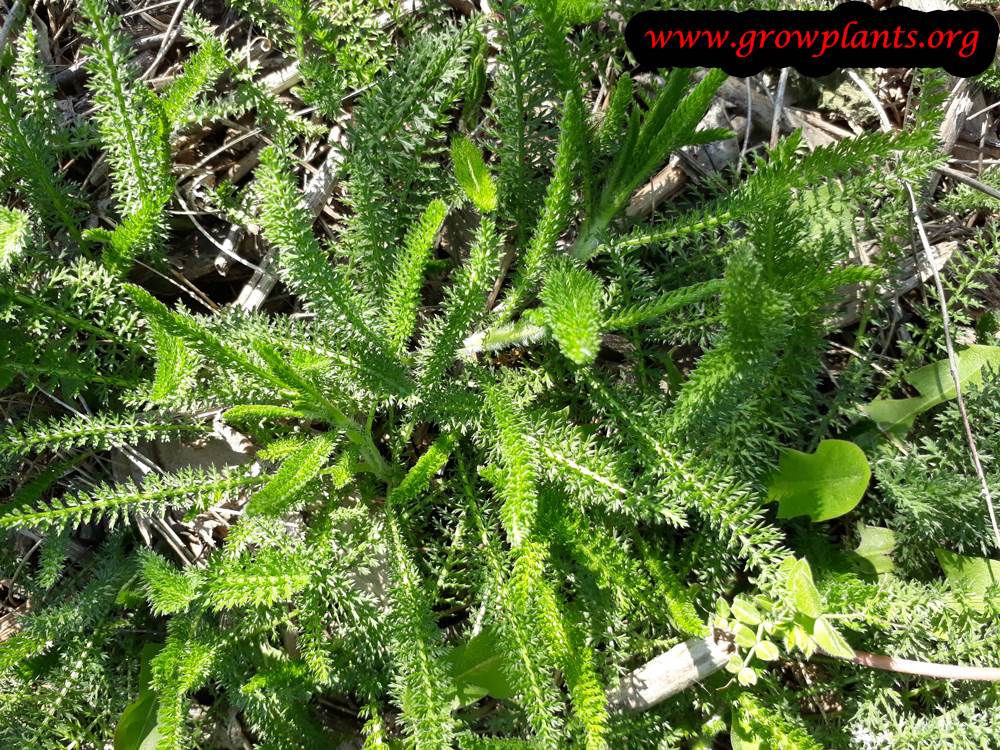
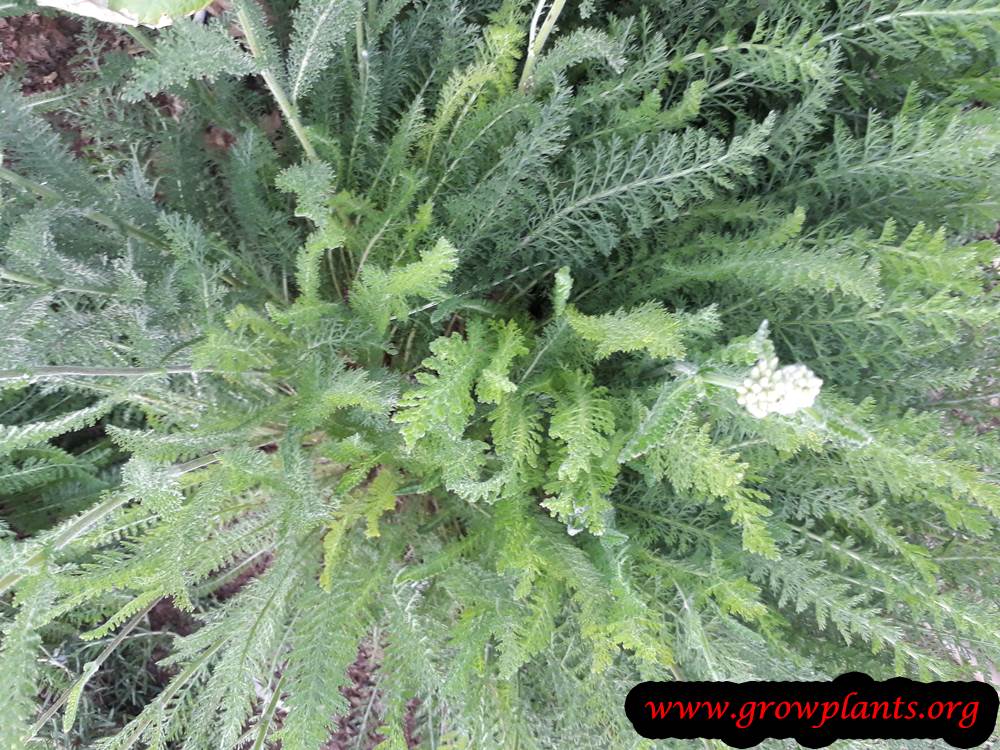
- Leaves & Foliage: Soft, finely divided fern-like leaves with serrated, pinnate structure; the leaves are edible and aromatic.
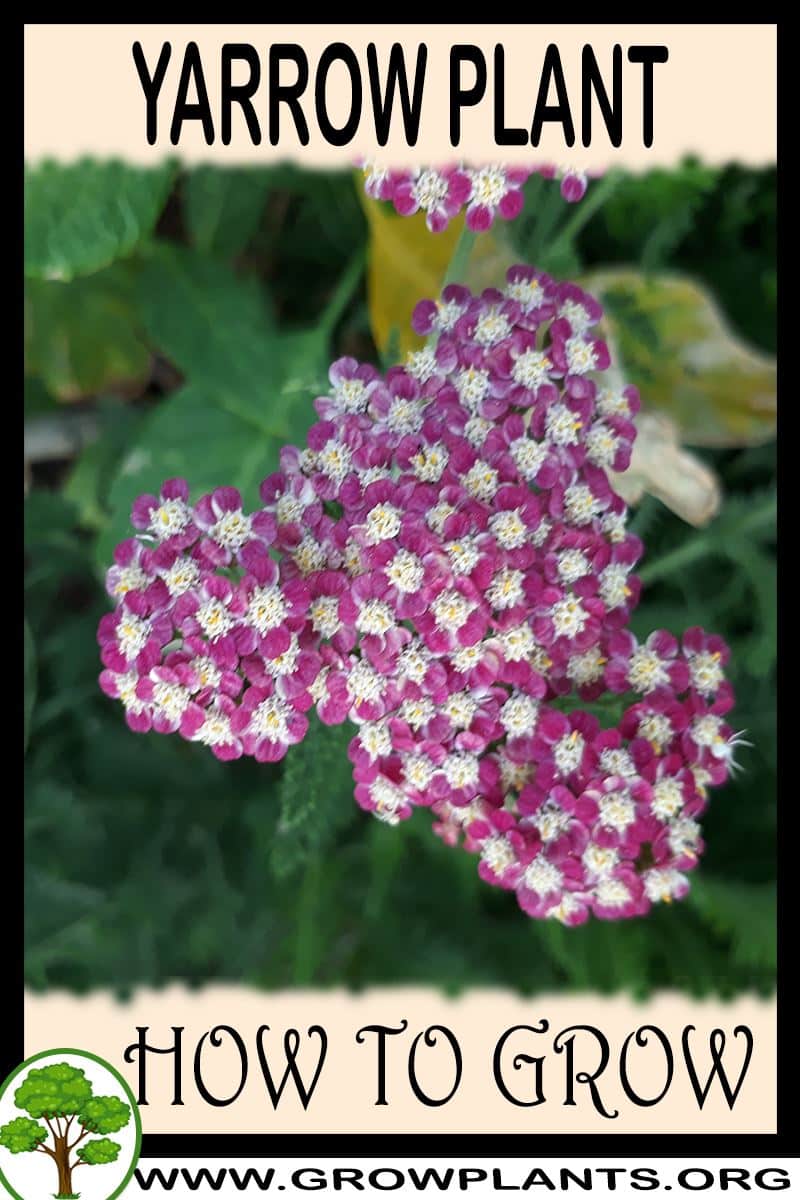
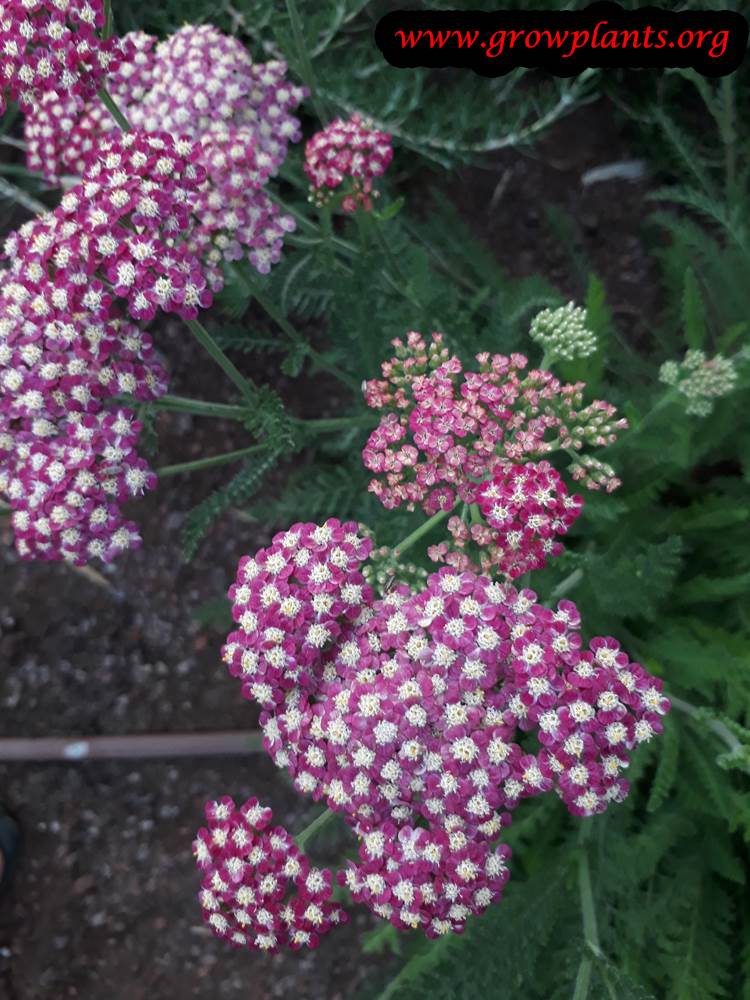
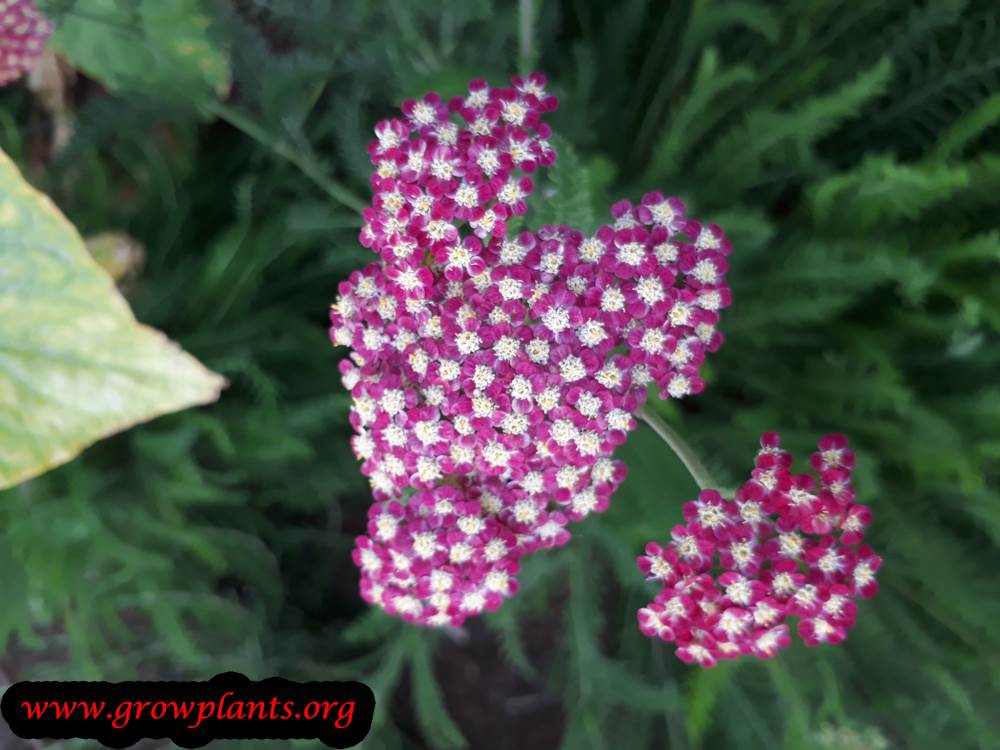
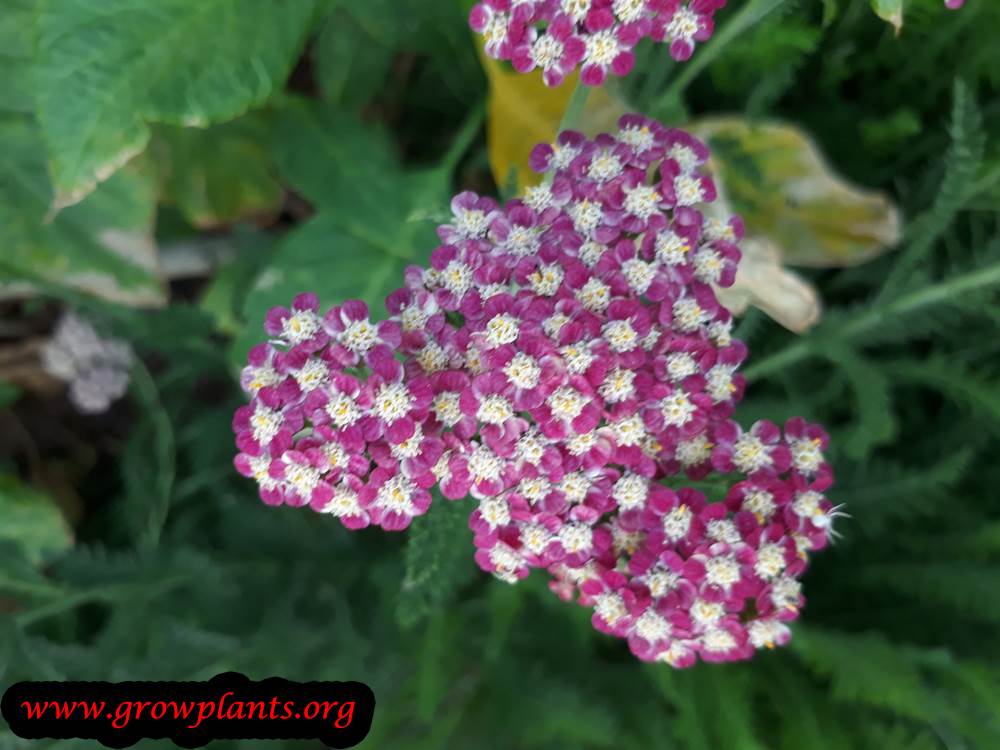
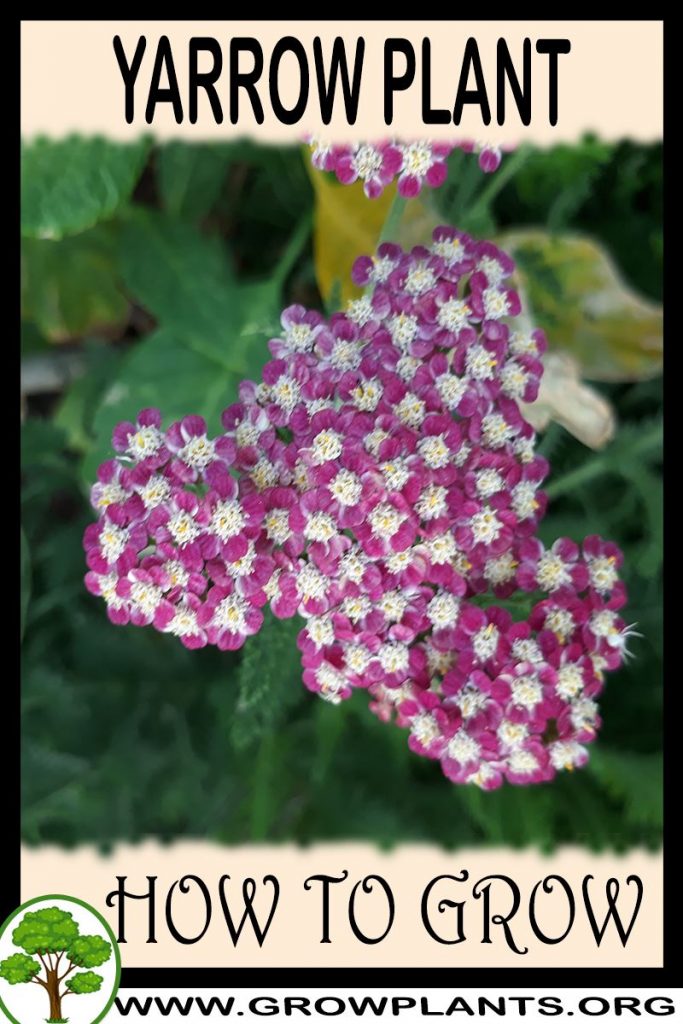
- Flower Characteristics: Flat-topped clusters (corymbs) of small fragrant flowers in purple, pink, red, white, light orange or yellow; attract butterflies and bees.
Primary Uses & Landscape Value
- Edible Uses: Leaves and flowers are edible and used as a herb, in salads, soups, stews, teas and other beverages.
- Functional & Ornamental Roles: Ornamental and pollinator-friendly border and meadow perennial, good as a cut/dried flower and has medicinal uses.
Care Guide: Planting, Soil & Watering
Overview: Yarrow (Achillea millefolium) is a fast-growing, drought-tolerant perennial for full sun that thrives in lean, well-drained, well-aerated soil. It needs only moderate water and copes with dry spells, so let the soil dry between waterings and avoid rich, soggy ground.
Quick Care Requirements
| Requirement | Ideal Condition |
|---|---|
| Planting Season | Spring — in mild zones also spring through summer and autumn |
| Growth Rate | Fast to moderate |
| Soil Type | Well-drained, well-aerated soil; thrives even in lean ground |
| Water Need | Low to moderate — drought-tolerant; let the soil dry between waterings |
Planting & Establishment
- Best Planting Season: Plant in spring for the strongest establishment; in mild zones it can also go in from spring through summer and autumn. Give it a sunny, open spot free of competition, as it needs direct full sun to start well.
- How to Plant:
- Hole Preparation: Dig a hole just wider than the root ball in a sunny, open position.
- Soil Amendments: Yarrow prefers lean soil, so keep amendments light — focus on improving drainage rather than enriching; heavy feeding causes floppy growth.
- Planting Depth: Set the crown level with the soil surface, keeping the base of the stems at ground level.
- Growth Speed & Expectations: Fast to moderate and vigorous — it spreads readily and can be aggressive, so give it room or divide regularly.
Soil, Watering & Drainage Care
- Soil Mix & Drainage Needs: Wants sharply drained, airy soil and a dry summer; it dislikes wet feet, so avoid heavy or waterlogged ground. In containers use a free-draining mix and let the pot dry between waterings.
- Watering Schedule & Technique:
- Young / Newly Planted: Keep the soil lightly moist while young plants root in.
- Established: Water moderately once established and let the soil dry between waterings — it can survive weeks without water, though occasional deep watering keeps it looking its best.
- Seasonal Adjustments: A little more in prolonged summer heat; very little in cool or wet weather.
Climate, Light & Hardiness
Yarrow (Achillea millefolium) is a widely adaptable perennial suited to temperate, Mediterranean, and subtropical climates in full sun. It is very cold hardy, growing across a broad hardiness range, and also tolerates hot, dry summer conditions well.
Quick Climate Specifications
| Climate Zones | Temperate, Mediterranean, Subtropical |
|---|---|
| USDA Hardiness Zones | 3–10 as a perennial, extending to zone 11 with the right care |
| Frost Tolerance | High |
| Light Conditions | Full Sun |
Sunlight & Light Exposure
Optimal Light Setup
Needs direct full sun, especially while establishing, when it should be planted without competing shade from taller neighbors.
Direct Sun Requirement
Requires direct sun for strong, upright growth and good flowering.
Shade & Heat Management
In desert climates or very hot summers, around 85% sun exposure (i.e., very light, brief shading) is enough and helps prevent sunburn on the foliage.
Temperature Extremes & Hardiness
USDA Hardiness & Regional Limits
Reliably perennial from zone 3 through zone 10, an unusually wide cold-hardiness range, with zone 11 possible given attentive care. In cold climates the foliage is deciduous over winter; in mild climates it stays evergreen, and it is also grown as an annual in some regions.
Cold Damage & Winter Protection
Extremely cold hardy; established plants need no special winter protection within their broad hardiness range.
Frost Sensitivity
Very frost tolerant; hard freezes simply take deciduous-climate plants into winter dormancy rather than killing them.
Extreme Heat Tolerance
Tolerates hot, dry summers well, preferring a dry summer period and well-ventilated soil.
Growing in Pots, Balconies & Indoors
Yarrow (Achillea millefolium) is a tough, sun-loving perennial for borders and big patio pots, not a houseplant – indoors it never gets the light it needs. In a good-sized container it flowers well on a sunny balcony or patio and is easy to overwinter.
Quick Details
- Container Size: 10-20 L (2.5-5 gal), or at least 100-200% larger than the plant
- Indoor Suitability: Not a houseplant – it needs full sun; grow it outdoors
- Best Spot: Full sun; in desert or very hot summers about 85% sun prevents scorch
- Soil & Drainage: Potting mix or peat with perlite, enriched with humus and organic matter; free-draining
- Watering in Pots: Moderate – fairly drought-tolerant once established, but pots dry faster, so don’t let it bake dry
Indoors & On the Windowsill
- Not an indoor plant: The grower doesn’t grow yarrow as a houseplant – it needs full sun and open air. If you want it near the house, a big pot on the sunniest doorstep or windowsill is the closest option, but outdoors is far better.
- Overwintering: It’s a hardy perennial – outdoors it dies back and returns each year; in a pot in very cold regions, move it to a sheltered spot as it goes dormant.
On a Balcony or Patio
- Light & wind: Give it the sunniest, most open spot; the flat flower heads catch the wind on exposed balconies, so a little shelter or support keeps stems upright. Walls and paving reflect heat, so check pot moisture in hot spells.
Choosing the Pot, Soil & Long-Term Care
- Pot & drainage: A 10-20 L pot (or 100-200% bigger than the plant) with strong drainage holes; the grower lets the saucer fill when watering but empties it the same day to avoid rot.
- Potting mix: Potting mix or peat with perlite, blended with humus and organic matter; a chopped-bark mulch keeps the surface from drying out.
- Feeding: Feed lightly through the growing season – a dilute general feed every few weeks, as nutrients leach from pots faster than open ground.
- Repotting: See the grower’s tip below – refresh the soil every few years, ideally in the cool dormant season.
Grower’s Container Tip
- Cool-season soil refresh: The grower’s routine: every few years, in the cool dormant season, lift the plant, wash the old soil from the roots, cut back the roots and prune the top, then repot in fresh mix – this keeps a container yarrow vigorous as old soil loses its structure.
Fertilizing & Feeding
A light-feeding, easy-care perennial grown for its edible, fragrant leaves and flowers as well as traditional medicinal use: a modest feeding at planting plus a follow-up feeding later in the season covers its needs, with nothing required once it dies back for winter.
Quick Fertilizing Specs
| Feeding Level | Light feeder |
|---|---|
| Main Nutrient Priority | Light, balanced feeding – this plant is naturally vigorous and spreads readily, so extra fertility mainly encourages sprawl |
| Best Feeding Period | At planting, with a follow-up feeding as the season progresses |
| Organic Options | Compost or organic matter worked into the soil at planting |
| Reduce/Stop Feeding | Withhold once the plant dies back for the cold season |
| Micronutrients | Rarely an issue in average, well-ventilated garden soil; correct only if diagnosed |
| Soil pH | Tolerates a wide range of well-drained soils |
Feeding by Growth Stage
Establishment after planting
Help newly planted rhizome divisions or seedlings root in and establish without encouraging weak, overly lush growth.
| Nutrient direction | A light, balanced feeding worked in at planting is sufficient for this tough, adaptable perennial. |
|---|---|
| Timing | At planting, in spring for best establishment. |
| Frequency | A single light feeding at planting is usually enough to get the plant going. |
| Fertilizer types | A balanced complete fertilizer used sparingly at planting, Compost or organic matter worked into the planting area |
| Precautions | Plant in full sun with open soil and avoid crowding; this species needs direct light and airflow to stay compact and healthy. |
Active growth through spring and summer
Support the finely divided, fragrant foliage and the flat-topped flower clusters that are harvested for culinary, beverage, and traditional medicinal use.
| Nutrient direction | A light, balanced feeding in spring followed by a lighter follow-up feeding later in summer supports steady growth without excess. |
|---|---|
| Timing | Through spring and into summer while the plant is actively growing and flowering. |
| Frequency | A light spring feeding with one further light feeding as summer growth continues is usually enough for this low-demand herb. |
| Fertilizer types | An occasional light, balanced fertilizer during the growing season |
| Precautions | Avoid heavy nitrogen feeding – it produces tall, floppy stems that need support and can dilute the fragrance the plant is valued for. |
Autumn dieback and winter rest
Let top growth die back in colder climates and allow the rhizomes to rest without pushing new growth.
| Nutrient direction | None – withhold fertilizer as top growth dies back for the cold season. |
|---|---|
| Timing | In autumn as growth declines and through winter dormancy in colder climates. |
| Frequency | No feeding at this stage; resume only once spring growth restarts. |
| Fertilizer types | No feeding at this stage; hold off fertilizing until spring growth resumes. |
| Precautions | Do not fertilize dying-back or dormant growth; cut back dead top growth and resume light feeding when new spring shoots appear. |
Nutrient Deficiency Signs & Corrections
Pale, thin foliage and slower-than-expected spread through the growing season.
| Possible causes | low available soil nitrogen, nitrogen leaching from sandy or overwatered soil, thin, low-organic-matter soil |
|---|---|
| Appears first on | older, lower leaves |
| What to check | recent feeding history, soil organic matter, watering and drainage |
| Possible correction | Apply a light, balanced fertilizer with nitrogen and work in organic matter. |
New leaves emerge pale yellow while the leaf veins remain distinctly green.
| Possible causes | high soil pH limiting iron availability, compacted or waterlogged soil restricting root function, naturally alkaline, iron-poor soil |
|---|---|
| Appears first on | newest leaves |
| What to check | soil pH, drainage and recent watering, root health |
| Possible correction | Correct soil pH or drainage first, then apply a chelated iron product per its label if new growth stays pale. |
Weak stems and sparse flower clusters on an otherwise established, healthy patch.
| Possible causes | limited potassium availability in a deliberately lean feeding program, overcrowding or competition from neighboring plants, insufficient light reducing overall vigor |
|---|---|
| Appears first on | the stems and flower clusters |
| What to check | plant spacing and competition from neighbors, light exposure, recent feeding history |
| Possible correction | On an established, otherwise healthy patch, a light application of a potassium-containing fertilizer can be considered. |
Pruning, Training & Seasonal Maintenance
Common yarrow is a fast-spreading herbaceous perennial that tolerates hard cutting back and is pruned as much to contain its vigor as to keep it looking tidy – as the wild, naturalizing form of Achillea (versus a more restrained garden cultivar), it self-seeds and spreads by rhizome readily if flower heads are left to mature. Its own care notes call for cane staking once it gets tall and a once-a-year cutback, best done after bloom fades into autumn/winter, with deadheading through the season doing double duty: prolonging flowering and limiting how far it spreads on its own.
Quick Pruning & Maintenance Specs
| Pruning Tolerance | High – resprouts readily from the crown and rhizomes |
| Primary Pruning Window | Autumn / Winter (main cutback, after bloom) |
| Secondary Maintenance Window | Spring/summer for deadheading |
| Typical Frequency | Once a year for the main cutback, plus regular deadheading |
| Main Objective | Contain self-seeding/spread; prolong bloom; prevent flopping |
| Young Plant Priority | Stake before tall stems lean; let the clump establish before cutting |
| Mature Plant Priority | Deadhead consistently to limit self-seeding; divide as the clump spreads |
| Best Tool Type | Precision snips / hand shears |
| Avoid Heavy Pruning During | Active flowering, if bloom or pollinator/foraging value is still wanted |
Pruning by Plant Age & Size
Newly Established
Leave a newly planted specimen uncut beyond removing damage; let it establish its root and rhizome system before its first maintenance cutback.
Young / Formative
Stake with a cane as stems approach their mature 0.2–1.2m height, since this species’ own care notes flag the need for support once tall – put support in early rather than after stems have already bent.
Mature / Established
The ongoing task on a mature planting is regular deadheading to limit unwanted self-seeding (this species spreads more readily than many garden Achillea cultivars), plus dividing and cutting back clumps that expand beyond their intended footprint.
Seasonal Pruning Schedule
Post-Flowering
Objective: prevent seed drop and refresh the clump for next season. Remove: spent flower stems before seed matures and disperses. Don’t remove: basal foliage still supporting the plant through autumn. Expected response: tidy regrowth and reduced volunteer seedlings the following year. Flowering impact: none negative on next season’s bloom.
Ongoing Sanitary
Objective: extend bloom and limit spread. Remove: individual faded flower heads through spring and summer, ideally before seed sets. Don’t remove: flowers still being used for foraging/tea/medicinal harvest, if that use is wanted – harvest those instead of discarding.
Structural Pruning & Training
Cane staking is the main structural intervention for the tall flowering stems; the once-a-year whole-clump cutback keeps this vigorous spreader in bounds and prevents the center of the clump from thinning out as it colonizes outward.
Special Growth to Remove
- Spent flower stems – deadhead promptly and consistently, since this wild species self-seeds more freely than many named Achillea cultivars if flower heads are left to mature.
- Rhizome growth spreading beyond the intended area – dug out or divided as needed to keep the planting contained.
Container & Small-Space Pruning
Container culture is a practical way to contain this species’ spreading tendency; its own care notes describe repotting every few years in winter with root and top growth cut back together, which both refreshes the plant and checks rhizome spread that would otherwise be unconstrained in open ground.
Tools
- Precision snips for deadheading individual flower heads, and for harvesting flowers/leaves for tea, culinary, or medicinal use.
- Hand or hedge shears for the annual whole-clump cutback.
- Soft ties/stakes for supporting tall stems.
Tool Hygiene & Disease Risk
Increased – this species is noted as susceptible to powdery mildew and rust; remove and discard affected foliage rather than composting it, and avoid dragging tools through wet, disease-affected growth onto healthy stems.
Cut Placement & Technique
Deadhead just above a leaf node or side bud rather than flush with the soil. For the annual cutback, shear the whole clump down to a few centimeters above the crown after flowering finishes.
Heavy Pruning & Rejuvenation
Tolerated well: an annual hard cutback is standard practice, and dividing an expanding clump every few years both rejuvenates it and keeps this vigorous spreader from overrunning its space.
Post-Pruning Care
Water lightly after the main cutback; avoid extra feeding beyond its normal spring/summer fertilizing, since over-feeding this already-vigorous spreader encourages more of the growth that needs containing.
Common Pruning Mistakes
- Letting flower heads mature and drop seed, accelerating unwanted spread throughout the bed.
- Confusing this vigorous wild species with more restrained garden cultivars and under-managing its spread.
- Staking too late, after tall stems have already flopped.
When NOT to Prune
Hold off on the full cutback while flowers are still being actively harvested for tea, culinary or medicinal use, or while pollinators are actively working the blooms.
Recommended Tools (by task)
- precision_snips – for deadheading and for harvesting flowers/leaves given this species’ edible/medicinal use.
- hedge_shears – for the annual whole-clump cutback.
- soft_ties_stakes – for supporting tall flowering stems before they lean.
Propagation Guide
Yarrow is most reliably propagated by dividing its rhizomatous rootstock or by taking basal stem cuttings in early spring, since named colour forms do not come true from seed while division or cuttings preserve the exact flower colour. Straight-species seed sowing is also easy and commonly used; overall difficulty is Easy.
Quick Propagation Specs
| Best Propagation Method | Rhizome division |
| Alternative Methods | Basal stem cuttings; Seed |
| Propagation Difficulty | Easy |
| Seed True-to-Type | Variable – flower colour is not guaranteed, especially for named colour forms |
| Vegetative True-to-Type | Yes – ensures flower colour |
| Best Propagation Season | Spring (division/cuttings in early spring; seed in spring, or autumn in hardiness zone 10-11) |
| Seed Germination Time | 2-4 weeks |
| Germination Temperature | 15-20°C (59-68°F) |
| Seed Sowing Depth | About 1cm (0.5 inch) |
Growing from Seed
Seed Handling & Viability
Store seed in a dry, dark place, ideally refrigerated, until sowing.
Sowing Season
Spring; in hardiness zone 10-11, sowing is also possible in autumn.
Sowing Depth & Orientation
Sow at a shallow depth of about 1cm (0.5in). When raising seedlings for transplanting, space plants roughly 20x30cm (8x12in) apart.
Germination Conditions
Keep soil moist with high humidity at 15-20°C (59-68°F), watering at an average rate. Germination proceeds over several weeks provided soil temperature stays at least around 10°C (50°F).
Germination Time
Typically 2-4 weeks.
Seedling Care
Keep seedlings in a sunny spot with moist soil.
Stem Cuttings
Best Timing
Early spring.
Cutting Preparation
Take a basal stem cutting from next to the rhizome at the base of the plant.
Rooting Setup
Moist, well-drained soil in half shade.
Rooting Hormone
Beneficial – the site recommends using a root growth hormone for reliable rooting.
Rhizomes, Tubers, Bulbs & Corms
Rhizome Division
Divide the spreading rhizomatous rootstock, separating rooted sections. This both propagates the plant and ensures the new plants flower in the same colour as the parent, unlike the variable results from seed.
Bloom & Edible Flower Guide
Quick Details
- Bloom Season: Late spring through summer, and sometimes into autumn
- Time to First Bloom: From an early sowing it often flowers in its first year, otherwise the following year
- Flower Appearance: Flat-topped clusters of many tiny flowers in purple, pink, red, white, light orange or yellow
- Edibility: Edible flowers, used in teas, salads, soups and stews and as a herb; best in moderation
Detailed Blooming Overview
Common yarrow is a tough, long-flowering herb grown for both its bloom and its culinary and medicinal uses. From late spring through summer it carries flat-topped clusters of tiny, fragrant flowers in white, yellow, pink, red or purple. The blooms draw a steady stream of pollinators and have long been used in teas and as a seasoning.
Flower Characteristics
- Flat-topped clusters of many small five-petalled flowers
- Fragrant, in colours from white, yellow and light orange to pink, red and purple
- In the kitchen, the flowers flavour teas, salads, soups and stews; use them sparingly
- A strong magnet for butterflies, bees and other pollinators
Bloom Care & Thinning
- Managing the bloom: Deadhead spent heads to prolong flowering and limit excess self-seeding; cut heads at their peak if drying them.
- Pollination: By butterflies, bees and many other insects; yarrow actively draws pollinators into the garden.
Bloom Health & Protection
- In humid, crowded conditions the foliage and flower stems can pick up powdery mildew; better airflow and, if needed, a sulfur-based fungicide help.
- Aphids sometimes gather on flower stems; insecticidal soap or neem oil keeps them in check.
Fruit & Uses
Yarrow (Achillea millefolium) is grown as much for its edible, aromatic leaves and flowers as for ornament – both are used fresh or dried as a bitter culinary herb rather than a bulk food. They can be eaten raw in small amounts (salads, garnish) or added to cooked soups, stews and beverages, including traditional herbal drinks.
Quick Edible Specs
| Edible Parts | Leaves, flowers |
| Main Use(s) | Culinary herb/spice, salads, soups & stews, beverages (including flavouring for home-brewed alcoholic drinks) |
| Eaten Raw or Cooked | Both – raw as a garnish/salad herb, or added to cooked soups, stews and beverages |
| Preparation Required | None; used fresh or dried, typically in small amounts due to the strong bitter flavour |
| Harvest Season | Leaves: most of the year (spring in hot climates, late spring to summer in colder climates), best cut before the plant flowers; Flowers: during the bloom season (spring/summer, sometimes into autumn) |
| Time to First Harvest | Leaves can be cut once the plant is established and growing; see Growth Speed for how quickly it establishes |
| Storage | Best used fresh, or dried for later use as a herb/tea |
| Safety/Toxicity Caveat | Use in normal culinary (seasoning) amounts; the fresh plant is noted on this site as able to cause skin irritation in sensitive people and as toxic to pets, so handle with care and keep away from pets |
Leaves & Greens
Yarrow’s finely divided, fern-like green leaves are aromatic and bitter. They can be cut freely at the base once the plant is established, through most of the growing season, and are best picked before the plant flowers. Leaves are used fresh or dried as a culinary herb and spice in salads, soups, stews and beverages, including traditional use as a flavouring in home-brewed alcohol.
Flowers & Flower Buds
The small, fragrant flowers, carried in flat clusters, are edible and picked during the bloom season. As with the leaves, they are used as a culinary herb/spice in beverages, salads, soups and stews.
Preparation, Uses & Safety
Both leaves and flowers are used as a fragrant, bitter seasoning and herbal-beverage ingredient, including a traditional role as a flavouring in home-brewed alcoholic drinks. Yarrow also has a long history of traditional medicinal use, but no health claims are made here. Because the fresh plant can cause skin irritation in sensitive individuals and is noted as toxic to pets, harvest with care, keep cuttings away from pets, and introduce it into the diet in small amounts, stopping if any skin or allergic reaction occurs.
Pests, Diseases & Troubleshooting
Overview: Common yarrow (Achillea millefolium) is a famously hardy, drought-tolerant perennial with few pests; the real concerns are powdery mildew and rust in humid or crowded plantings, aphids and aster-yellows-carrying leafhoppers, and flopping or rot when grown too rich and wet. Lean soil, full sun and good airflow prevent nearly all of it.
Quick Troubleshooting Overview
| Issue / Pest | Main Symptom | Primary Solution |
|---|---|---|
| Powdery mildew | White powdery coating on foliage in humid, crowded, or shaded plantings | Improve airflow, divide clumps, full sun, avoid overhead watering |
| Aphids | Sticky, distorted new growth and flower stems with colonies | Water jet, insecticidal soap, encourage predators |
| Rust | Orange-brown powdery pustules on leaf undersides | Remove affected leaves, improve airflow, avoid wetting foliage |
| Spittlebugs | Frothy ‘cuckoo spit’ on stems with a nymph inside | Hose off; damage is minor and mostly cosmetic |
| Aster yellows | Distorted, greenish, deformed flowers; stunted yellow growth | Remove and destroy infected plants; control leafhopper vectors |
| Root/crown rot | Flopping, blackened crown and rot in wet, rich, heavy soil | Lean soil, sharp drainage, divide regularly, avoid overwatering |
Common Pests & Management
- Aphids (Aphis / Macrosiphum spp.):
- Symptoms: Green or black aphids cluster on soft new shoots and flowering stems, causing sticky honeydew, sooty mould and some distortion of growth.
- Prevention & Control: Yarrow usually shrugs off aphids; dislodge colonies with a water jet and rely on ladybirds, lacewings and hoverflies (yarrow itself attracts these beneficials). Use insecticidal soap only for heavy infestations, and avoid rich feeding.
- Spittlebugs (froghoppers) (Philaenus spumarius):
- Symptoms: Blobs of white frothy ‘cuckoo spit’ on stems in late spring, each hiding a green nymph that sucks sap; damage is minor.
- Prevention & Control: Simply hose off the froth if unsightly; no chemical control is needed, as the plant tolerates the feeding easily.
- Leafhoppers (Cicadellidae (various)):
- Symptoms: Small wedge-shaped insects that hop or fly when disturbed, causing fine pale stippling on leaves; their real importance is as vectors of aster yellows.
- Prevention & Control: Tolerate light feeding, keep the area weed-free to reduce reservoirs of aster yellows, and manage numbers with insecticidal soap or by encouraging predators where the disease is a local problem.
- Thrips (Thrips / Frankliniella spp.):
- Symptoms: Silvery flecking and fine dark specks on leaves and flowers, and sometimes distorted blooms in hot, dry spells.
- Prevention & Control: Tolerate light damage, use sticky traps to monitor, and treat heavy pressure with insecticidal soap or spinosad in the evening to protect pollinators.
Diseases & Fungal Issues
- Powdery mildew (Golovinomyces / Erysiphe cichoracearum):
- Symptoms: A white to greyish powdery film on leaves and stems, worst in humid air, crowded plantings, part shade, or when plants are dry at the root; affected foliage yellows and dies back.
- Treatment & Management: Grow yarrow lean and in full sun with good air movement, divide congested clumps every few years, and avoid overhead watering. Cut back and remove badly affected growth; a sulphur or potassium-bicarbonate spray helps on valued plants if mildew persists.
- Rust (Puccinia spp.):
- Symptoms: Orange, yellow-brown or dark powdery pustules on leaf undersides, with yellow flecking above and premature leaf death in wet seasons.
- Treatment & Management: Remove and destroy affected leaves, space plants for airflow, avoid wetting the foliage, and clear debris in autumn. Rust is usually minor; a sulphur fungicide can be used for persistent cases.
- Aster yellows (phytoplasma):
- Symptoms: Distorted, stunted growth, yellowing, and characteristically deformed, greenish, leafy or witches’-broom flowers that never colour properly; spread by leafhoppers, not curable.
- Treatment & Management: There is no cure: dig up and destroy infected plants promptly to remove the reservoir, control leafhopper vectors, and keep the area free of susceptible weeds that harbour the phytoplasma.
- Crown & root rot / Botrytis (Sclerotinia / Rhizoctonia / Botrytis):
- Symptoms: Flopping stems, blackened crowns and rotted roots in wet, rich, heavy soil, and grey mould on foliage in cool, damp, crowded conditions.
- Treatment & Management: Plant in lean, free-draining soil, avoid overwatering and heavy feeding, and divide clumps regularly to keep them open and vigorous. Remove dead and rotting material promptly.
Growing Difficulties & Abiotic Problems
- Flopping / legginess:
- Cause & Symptoms: Tall stems splay open and flop, especially in rich soil, too much shade, or after wet weather; the centre of old clumps dies out.
- Correction Strategy: Grow yarrow hard in poor-to-average, free-draining soil and full sun, avoid over-feeding, and divide clumps every two to three years; cut back or provide support for tall types, and deadhead to tidy and re-bloom.
- Poor flowering:
- Cause & Symptoms: Few flowers and lax growth in too much shade or over-rich soil.
- Correction Strategy: Give full sun and lean soil; yarrow flowers best when not pampered.
- Overwatering damage:
- Cause & Symptoms: Yellowing, wilting and rot on a drought-tolerant plant kept too wet.
- Correction Strategy: Water only when needed once established; yarrow is highly drought-tolerant and prefers to dry between waterings.
What Helps – Products & Tools
Yarrow is a tough, drought-tolerant, mostly self-reliant perennial that actually attracts beneficial insects, so lean soil, full sun, good spacing and regular division prevent most trouble. Keep insecticidal soap for occasional heavy aphids or thrips, and a sulphur or potassium-bicarbonate fungicide for stubborn powdery mildew or rust. The key incurable disease, aster yellows, is managed by removing infected plants and controlling leafhoppers, not by spraying.