Plant Profile & Key Characteristics
Also known as: Achilea filipendulina, Yarrow, Fernleaf yarrow, Milfoil, Nosebleed
Overview: Achillea filipendulina (fernleaf yarrow) is a fast-growing rhizomatous herbaceous perennial of 0.2–1.2 m, grown mainly as a fragrant, pollinator-friendly ornamental with edible aromatic leaves and flowers. It is drought-tolerant and hardy across a wide range of climates.
Quick Specifications
| Specification | Attribute |
|---|---|
| Plant Type / Life Cycle | Rhizomatous herbaceous perennial (grown as an annual in cold climates) |
| Foliage Type | Evergreen or deciduous (depending on climate) |
| Mature Size | H: 0.2–1.2 m (0.8–4 ft) |
| Growth Rate | Fast to moderate |
| Root System | Rhizomatous, spreading |
| Toxicity | Toxic to pets; foliage can cause skin irritation (edible for people in moderation) |
| Hardiness | USDA zone 3–10 (to 11 with care) |
Growth Form & Structure
- Height & Spread: 0.2–1.2 m tall, spreading by rhizomes into wide clumps; grows well in the ground or in 10–20 L containers.
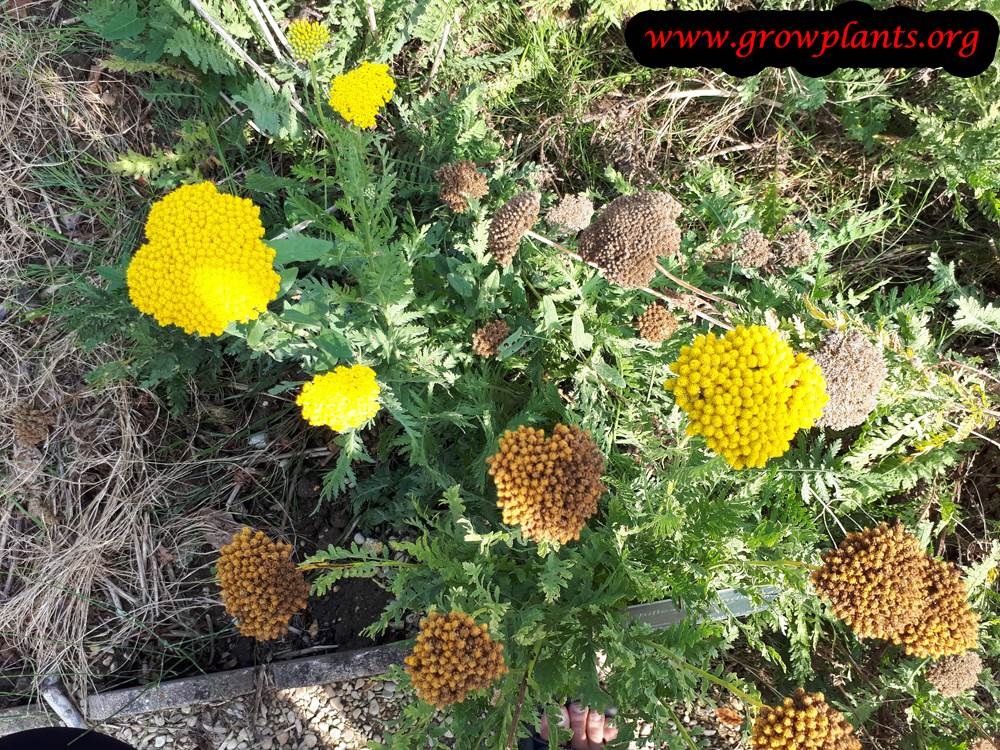
- Growth Habit & Form: Low, clump-forming herbaceous perennial with upright flowering stems; can be aggressive.
- Lifespan & Maturity: Long-lived, drought-tolerant perennial that establishes and spreads quickly.
Anatomy & Physical Features
- Leaves & Foliage: Soft, finely divided fern-like leaves with serrated, pinnate structure; leaves taste bitter; the leaves are edible and aromatic.
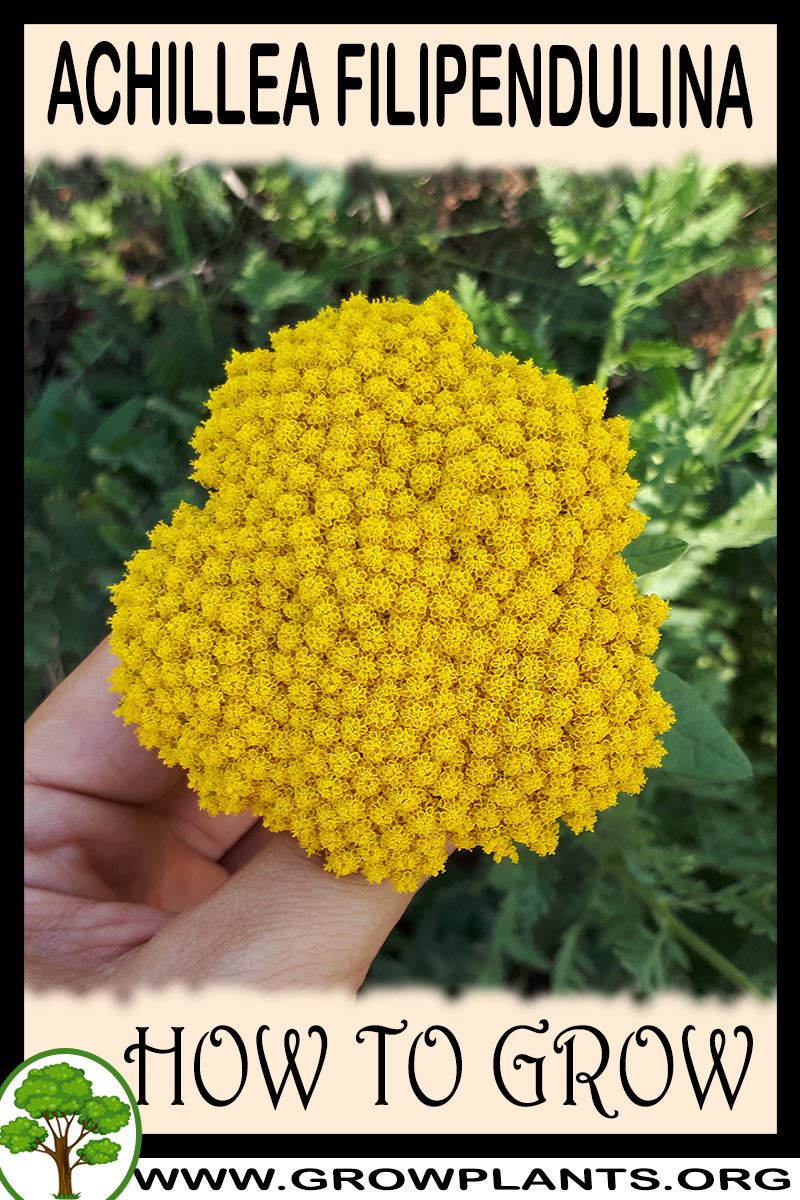
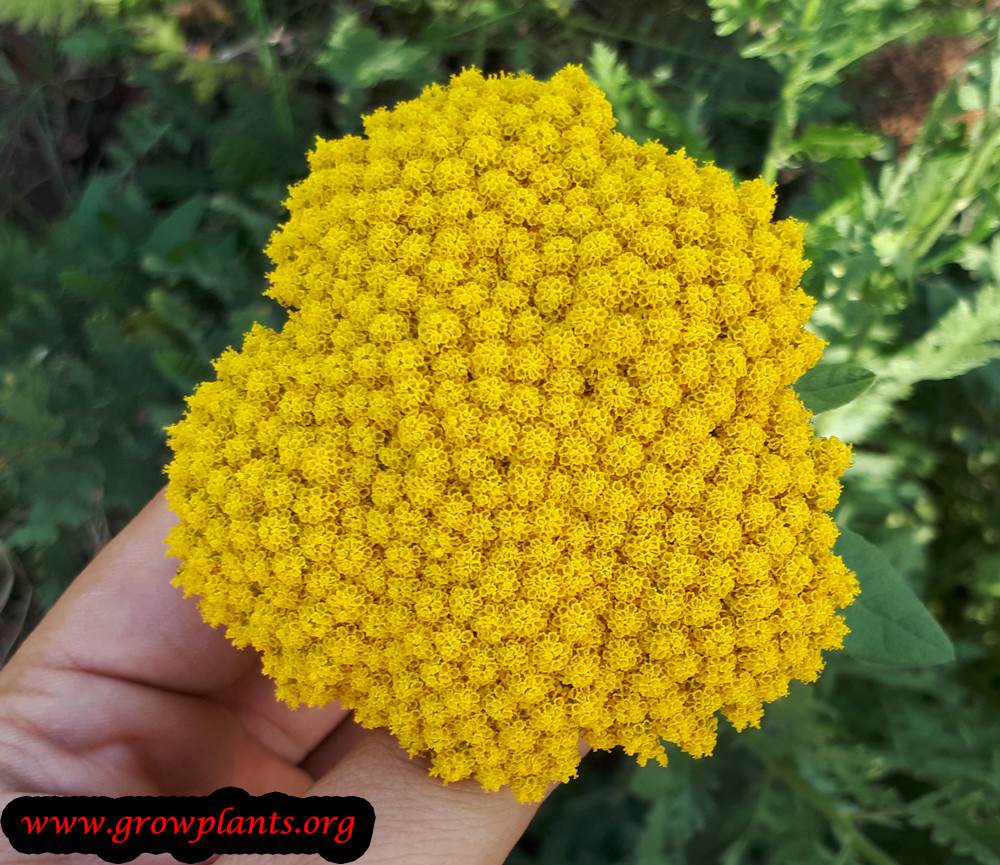
- Flower Characteristics: Flat-topped clusters (corymbs) of small fragrant flowers in yellow; attract butterflies and bees.
Primary Uses & Landscape Value
- Edible Uses: Leaves and flowers are edible and used as a herb, in salads, soups, stews, teas and other beverages.
- Functional & Ornamental Roles: Ornamental and pollinator-friendly border and meadow perennial, good as a cut/dried flower.
Care Guide: Planting, Soil & Watering
Overview: Achillea filipendulina (Fernleaf yarrow) is a fast-growing, drought-tolerant perennial for full sun that thrives in lean, well-drained, well-aerated soil. It needs only moderate water and copes with dry spells, so let the soil dry between waterings and avoid rich, soggy ground.
Quick Care Requirements
| Requirement | Ideal Condition |
|---|---|
| Planting Season | Spring — in mild zones also spring through summer and autumn |
| Growth Rate | Fast to moderate |
| Soil Type | Well-drained, well-aerated soil; thrives even in lean ground |
| Water Need | Low to moderate — drought-tolerant; let the soil dry between waterings |
Planting & Establishment
- Best Planting Season: Plant in spring for the strongest establishment; in mild zones it can also go in from spring through summer and autumn. Give it a sunny, open spot free of competition, as it needs direct full sun to start well.
- How to Plant:
- Hole Preparation: Dig a hole just wider than the root ball in a sunny, open position.
- Soil Amendments: Yarrow prefers lean soil, so keep amendments light — focus on improving drainage rather than enriching; heavy feeding causes floppy growth.
- Planting Depth: Set the crown level with the soil surface, keeping the base of the stems at ground level.
- Growth Speed & Expectations: Fast to moderate and vigorous — it spreads readily and can be aggressive, so give it room or divide regularly.
Soil, Watering & Drainage Care
- Soil Mix & Drainage Needs: Wants sharply drained, airy soil and a dry summer; it dislikes wet feet, so avoid heavy or waterlogged ground. In containers use a free-draining mix and let the pot dry between waterings.
- Watering Schedule & Technique:
- Young / Newly Planted: Keep the soil lightly moist while young plants root in.
- Established: Water moderately once established and let the soil dry between waterings — it can survive weeks without water, though occasional deep watering keeps it looking its best.
- Seasonal Adjustments: A little more in prolonged summer heat; very little in cool or wet weather.
Climate, Light & Hardiness
Achillea filipendulina (fernleaf yarrow) is a tough, drought-adapted perennial suited to temperate, Mediterranean, and subtropical climates with hot, dry summers. It needs full sun and tolerates a wide winter cold range, though it is often grown as an annual at its coldest limits.
Quick Climate Specifications
| Climate Zones | Temperate, Mediterranean, subtropical |
|---|---|
| USDA Hardiness Zones | 3–10, and zone 11a with attentive care |
| Light Conditions | Full sun (about 85% sun is sufficient in desert/hot-summer areas) |
Sunlight & Light Exposure
Optimal Light Setup
Full sun is required for strong, upright growth and good flowering.
Shade & Heat Management
In desert or very hot-summer climates, roughly 85% sun exposure is enough and helps reduce sunburn on the foliage.
Temperature Extremes & Hardiness
USDA Hardiness & Regional Limits
Hardy as a perennial across USDA zones 3–10, extending into zone 11a with good care. In its coldest hardy zones it dies back to the roots each winter; it is also commonly sown as an annual, which does not change its underlying cold tolerance where planted as a perennial.
Cold Damage & Winter Protection
Deciduous in colder climates – foliage dies back with winter cold and regrows from the crown in spring; in mild-winter zones it can stay evergreen.
Wind, Humidity & Microclimate
Dry-Air Tolerance
Well adapted to dry summers and can survive several weeks without water once established, though regular watering keeps growth denser.
Microclimate Recommendations
An open, sunny, well-ventilated site with well-drained soil suits this species best; avoid crowding, which reduces the sun access it needs.
Growing in Pots, Balconies & Indoors
Fernleaf yarrow (Achillea filipendulina) is a tough, full-sun flowering perennial (0.2-1.2 m / 8-48 in) that the grower does not rate as a houseplant – it needs open sun and air to flower and stay healthy. It makes an easy, drought-tolerant container plant for a sunny patio or balcony.
Quick Details
- Container Size: 10-20 L (2.5-5 gal), or a pot at least 100-200% larger than the plant
- Indoor Suitability: Not a houseplant – it needs full sun
- Best Spot: Full sun (in very hot climates around 85% sun helps prevent scorch)
- Soil & Drainage: Well-aerated, free-draining mix with organic matter
- Watering in Pots: Low to moderate – it is drought-tolerant, but keep it watered for the best show
Indoors & On the Windowsill
- Not a houseplant: The grower marks it “No” for indoors – it needs strong sun and airflow that a room cannot give, and would grow weak and flop.
- Overwintering: A hardy perennial that dies back and rests over winter; in containers in cold areas, move it somewhere sheltered to protect the roots from hard freezing.
On a Balcony or Patio
- Light & wind: Give it full sun; its flat flower heads on tall stems can catch the wind, so support them in exposed spots. Being drought-tolerant it copes with hot, reflective walls, but pots still dry faster than the ground.
- Safety: The grower notes it is toxic to pets and can irritate skin – place it out of pets’ reach and wear gloves when cutting or handling it.
Choosing the Pot, Soil & Long-Term Care
- Pot & drainage: A 10-20 L pot with strong drainage holes; skip a standing water saucer to avoid rot. Terracotta breathes and dries fast, which suits this drought-tolerant plant.
- Potting mix: Aerated, free-draining, with organic matter and humus; a chopped mulch helps hold moisture.
- Feeding: Feed modestly through the growing season – too rich and it grows soft and flops.
- Repotting: Refresh the soil every few years (best in the cool/rest season) – wash old soil from the roots, trim roots and prune the plant, then repot in fresh mix.
Grower’s Container Tip
- Soak-and-drain watering: Let the base of the pot fill with water, but make sure it dries out the same day – a thorough soak without leaving the roots standing wet.
Fertilizing & Feeding
A light feeder overall: this drought-tolerant perennial thrives in lean, well-drained soil and rarely needs heavy feeding, which can push weak, floppy growth at the expense of sturdy stems and bloom.
Quick Fertilizing Specs
| Feeding Level | Light feeder |
|---|---|
| Main Nutrient Priority | Balanced overall, kept light rather than nitrogen-heavy |
| Best Feeding Period | From spring growth through the summer bloom season |
| Organic Options | A light top-dressing of compost worked into well-drained soil |
| Micronutrients | Rarely an issue in well-drained soil; correct specific issues only when diagnosed |
| Soil pH | Tolerates a wide range; performs well in lean, well-drained soil |
Feeding by Growth Stage
Spring growth
Support fresh basal foliage and stem growth as the plant breaks dormancy.
| Nutrient direction | A light, balanced feeding is enough; this plant performs best without rich or heavy feeding. |
|---|---|
| Timing | As new growth emerges in spring. |
| Frequency | Rarely needs more than a light feeding as growth resumes; minimal feeding is usually sufficient. |
| Fertilizer types | A balanced complete garden fertilizer, applied sparingly, A light top-dressing of compost |
| Precautions | Avoid rich or heavy feeding, which tends to produce weak, floppy stems that need staking. |
Summer bloom
Sustain the plant through its fragrant, pollinator-attracting summer flowering without overfeeding.
| Nutrient direction | Keep feeding light and balanced; heavy feeding is not needed to support flowering. |
|---|---|
| Timing | Through the main summer flowering period, and into early autumn where climate allows a second flush. |
| Frequency | Light feeding is usually enough through the bloom season; minimal feeding is needed beyond that. |
| Fertilizer types | A balanced complete garden fertilizer, applied sparingly |
| Precautions | Avoid nitrogen-heavy feeding, which encourages soft growth and reduces the plant’s natural drought tolerance. |
Autumn-to-winter dieback and rest
Let the plant harden off and rest naturally as stems and foliage are cut back.
| Nutrient direction | None – withhold fertilizer while the plant is dormant. |
|---|---|
| Timing | From autumn dieback and pruning through winter dormancy. |
| Frequency | No feeding at this stage. |
| Fertilizer types | No feeding at this stage – allow the plant to rest until spring growth resumes |
| Precautions | Do not fertilize dormant plants; wait for active spring growth before resuming light feeding. |
Nutrient Deficiency Signs & Corrections
Older, lower leaves fade to pale green or yellow and overall growth slows noticeably.
| Possible causes | very low soil fertility, nitrogen leaching from heavy rain or watering, competition from aggressive neighboring growth |
|---|---|
| Appears first on | older, lower leaves |
| What to check | recent feeding history, soil fertility and organic matter, surrounding plant competition |
| Possible correction | Apply a light, balanced feeding rather than a heavy one, since this plant needs only modest fertility. |
New leaves emerge pale yellow while the veins remain distinctly green.
| Possible causes | high soil pH limiting iron availability, poorly drained or compacted soil, root stress from waterlogging |
|---|---|
| Appears first on | newest leaves |
| What to check | soil pH and drainage, recent watering patterns, root health |
| Possible correction | Improve drainage and apply a chelated iron product per its label if the soil is alkaline. |
Stems grow tall, soft, and floppy, flopping over before or during bloom despite adequate light.
| Possible causes | overly rich or heavy nitrogen feeding, too little direct sun, overcrowded planting reducing airflow and light |
|---|---|
| Appears first on | overall stem structure |
| What to check | recent feeding amounts, sun exposure, plant spacing and airflow |
| Possible correction | Cut back on feeding, move or thin plants for full sun, and support tall stems with stakes if needed. |
Pruning, Training & Seasonal Maintenance
Achillea filipendulina is a tall, rhizomatous herbaceous perennial that tolerates cutting back hard without harm – it resprouts from the crown/rhizome. The main jobs are deadheading to trigger rebloom, staking or a mid-season cutback to stop the flat flower heads from flopping, and an autumn-to-winter cutback once bloom finishes. Because it spreads by rhizome and self-seeds readily (the plant’s own care notes flag it as aggressive), controlling unwanted spread is as much a "pruning" task here as shaping the clump.
Quick Pruning & Maintenance Specs
| Pruning Tolerance | High – regrows freely from the crown/rhizome |
| Primary Pruning Window | After the bloom flush, through autumn to winter |
| Secondary Maintenance Window | Mid-season deadheading and staking while in bloom |
| Typical Frequency | About once a year for the main cutback, plus regular deadheading in season |
| Main Objective | Encourage rebloom, keep the clump upright, and contain spread |
| Young Plant Priority | None – let the crown establish before any cutting |
| Mature Plant Priority | Deadhead, stake tall stems, divide/remove wandering rhizomes |
| Best Tool Type | Precision snips or bypass secateurs; stakes for support |
| Avoid Heavy Pruning During | Peak summer heat/drought stress and while flowers are still attracting pollinators |
Pruning by Plant Age & Size
Newly Established
No pruning while the crown is settling in its first season; just remove any damaged growth from transplanting.
Young / Formative
No structural training in the woody sense – instead, install support canes early for stems that will reach up to about 1.2 m, since the flat flower heads catch wind and rain and lodge easily.
Mature / Established
Deadhead spent flower heads through the season to prolong bloom; after flowering finishes, cut the whole clump back; every few years divide the clump and remove wandering rhizome sections to keep the planting in bounds.
Seasonal Pruning Schedule
Post-Flowering
Objective: extend bloom and limit self-seeding. Remove: spent flower stems, cut to a lower leaf or basal rosette. Do not remove: healthy basal foliage. Expected response: a new flush of flower stems from the crown. Flowering impact: positive – deadheading is what triggers rebloom.
Dormant/Winter
Objective: tidy the planting for winter and reset for spring. Remove: the full flowering stems once foliage yellows and dies back, cut down near the basal rosette. Do not remove: the evergreen basal foliage clump itself. Expected response: fresh growth resumes from the crown in spring. Flowering impact: none – next season’s flowers come from new stems.
Structural Pruning & Training
No woody framework to build. The relevant structural work is staking floppy stems and periodically dividing/thinning the clump so it does not become congested or spread aggressively via rhizome.
Special Growth to Remove
- Spent flower stems – deadhead to a lower leaf or basal rosette to trigger rebloom and reduce unwanted self-seeding.
- Dead or yellowing leaves at the base of the clump.
- Wandering rhizome runners and unwanted self-sown seedlings, since this species spreads aggressively if left unchecked.
Container & Small-Space Pruning
Can be grown in a 10–20L container or larger. In containers, deadhead promptly to keep the plant compact, and when refreshing the potting mix every few years, trim the roots and cut back top growth together rather than just topping up soil.
Tools
- Precision snips or bypass secateurs for deadheading and the seasonal cutback.
- Soft ties or stakes for supporting tall flower stems.
- Garden spade or hand fork for dividing the rhizome clump.
Tool Hygiene & Disease Risk
Increased – this species is prone to powdery mildew, especially in dense, poorly ventilated clumps. Remove and dispose of (do not compost) visibly mildewed or rusted foliage, and wipe blades between plants when disease is present to avoid spreading spores.
Cut Placement & Technique
Deadhead just above a lower leaf or side bud rather than leaving a bare stem. Handle with light protection during heavy handling, since the sap can cause skin irritation.
Heavy Pruning & Rejuvenation
Tolerated well: an old, congested clump can be cut hard to the base after flowering, or lifted and divided, with fresh growth reliably resprouting from the crown within the same season.
Post-Pruning Care
Water normally after cutback; avoid extra fertilizing since this species is already noted to be aggressive and vigorous. Watch for regrowth density and thin again if the clump becomes crowded and mildew-prone.
Common Pruning Mistakes
- Not deadheading, which reduces the length of the bloom season and increases self-seeding.
- Skipping staking on tall stems, leading to flopping after wind or rain.
- Letting the clump go dense and unthinned, which promotes powdery mildew.
- Ignoring rhizome spread, letting the planting invade neighboring beds.
When NOT to Prune
Avoid a hard cutback during peak summer drought stress, and avoid removing flowers while pollinators are actively working them, since this plant is specifically valued for attracting bees and butterflies.
Recommended Tools (by task)
- Deadheading & seasonal cutback – precision_snips: clean cuts on soft flowering stems.
- Staking tall flower stems – soft_ties_stakes: prevents lodging of the flat flower heads.
- Clump division / rhizome control – garden_spade: needed to lift and divide the spreading rhizome.
Pruning Troubleshooting
| Problem | Possible Cause | What to Check | Corrective Action |
| Stems flopping or lodging | No staking; overly rich soil | Whether canes were installed early; recent fertilizing | Stake early next season; reduce feeding, cut lodged stems back |
| Poor rebloom after first flush | Spent flowers not deadheaded | Deadheading frequency | Deadhead promptly to a lower leaf |
| Powdery white coating on leaves | Dense, poorly ventilated clump | Clump crowding and airflow | Thin/divide the clump; remove and discard affected foliage |
| Plant spreading beyond its bed | Uncontrolled rhizome runners | Presence of runners or seedlings outside the clump | Cut and remove runners; divide clump periodically |
Propagation Guide
Achillea filipendulina is most reliably propagated by dividing its spreading rhizomes or by taking stem cuttings, both of which guarantee the exact flower color of the parent plant; seed germinates easily too but flower color can vary from the parent. Propagation is easy by any of these methods.
Quick Propagation Specs
| Best Propagation Method | Rhizome division or stem cuttings |
| Alternative Methods | Seed |
| Propagation Difficulty | Easy |
| Seed True-to-Type | Usually true-to-type for the species; flower color can vary from seed |
| Vegetative True-to-Type | Yes – division and cuttings preserve the exact flower color |
| Best Propagation Season | Spring (early spring for cuttings and division; spring is also the main sowing season) |
| Seed Germination Time | 2–4 weeks |
| Cutting Rooting Time | A few weeks |
| Germination Temperature | 15–20°C (59–68°F) |
| Seed Sowing Depth | About 1 cm (0.5 in) |
Growing from Seed
Seed Handling & Viability
Store seed in a dry, dark place; the site notes storage is even better in the refrigerator.
Dormancy & Pre-Sowing Treatment
Site guidance indicates sown seed should be kept covered and given a period of several weeks at a cool temperature of at least 10°C (50°F) before germinating on – treat this cautiously as a cool conditioning period rather than a precise stratification schedule.
Sowing Season
Sow in spring when grown as an annual; spring is also preferred when grown as a perennial, though in hardiness zones 10–11 autumn sowing is possible.
Sowing Depth & Orientation
Sow about 1 cm (0.5 in) deep, with seedlings spaced roughly 20×30 cm (8×12 in) apart.
Germination Conditions
Keep soil moist with higher humidity, in well-drained soil, at 15–20°C (59–68°F).
Germination Time
2–4 weeks.
Seedling Care
Keep seedlings in a sunny location with moist soil.
Stem Cuttings
Cutting Type
Stem cuttings taken next to the rhizome at the base of the plant.
Best Timing
Early spring.
Cutting Preparation
Cut the stem where it joins the rhizome at the plant’s base.
Rooting Setup
Root in moist, well-drained soil in half shade.
Rooting Hormone
Beneficial – the site recommends using a root growth hormone for this method.
Rooting Time
Typically a few weeks.
Rhizomes, Tubers, Bulbs & Corms
Rhizome Division
Divide the spreading rhizomes to start new plants; this, like stem cuttings, reliably keeps the flower color true to the parent plant. Best done in early spring alongside cutting propagation.
Bloom & Edible Flower Guide
Quick Details
- Bloom Season: Late spring through summer, sometimes again in autumn
- Time to First Bloom: Often the first summer from a spring start, and reliably from the second year
- Flower Appearance: Broad, flat-topped clusters (corymbs) of many tiny flowers; golden-yellow in this species, with garden yarrows also coming in white, pink, red and orange shades
- Edibility: The fragrant flowers are edible and are used in teas, as a herb, and to flavour soups, stews and salads
Detailed Blooming Overview
Achillea filipendulina (fernleaf yarrow) carries its flowers in wide, flat-topped plates held on tall, sturdy stems above soft, ferny foliage. In this species the plates are a rich golden-yellow, and each is made up of many tiny flowers. It blooms through summer, is wonderfully drought tolerant, and buzzes with pollinators.
Flower Characteristics
- Flat-topped clusters of many tiny fragrant flowers, golden-yellow in the species
- Long lasting on the plant, superb for cutting and for drying
- A magnet for butterflies, bees and other beneficial insects
Bloom Care & Thinning
- Managing the bloom: deadhead spent plates to prompt further flowering and to prevent excess self-seeding; cut some heads for drying just as they reach full colour
- Site: full sun and lean, free-draining soil give the sturdiest stems and most flowers – rich soil can make growth floppy
- Pollination: the open plates are worked by butterflies, bees and many other pollinators
- Using the flowers: gather clean, fully open heads for teas, herbs or seasoning
Bloom Health & Protection
- Powdery mildew: in humid, crowded plantings a white film can appear on foliage and stems near the blooms; spacing for airflow helps, and a sulfur-based fungicide is an option if it takes hold
Fruit & Uses
The soft, feathery leaves and fragrant yellow flowerheads of fernleaf yarrow are both edible and have a long history as a household herb: the leaves are distinctly bitter and aromatic, while the flowers are milder, and both are used fresh or dried as a flavouring rather than as a stand-alone food. They are added in small amounts to drinks, dishes, condiments and infusions rather than eaten as a bulk vegetable.
Quick Edible Specs
| Edible Parts | Leaves; flowers |
|---|---|
| Main Use(s) | Culinary herb/flavouring (beverage, spice, salad, soups, stews, alcohol); traditionally regarded as a medicinal herb (no medical claims implied) |
| Eaten Raw or Cooked | Both used raw (fresh in salads, drinks) or cooked/infused (soups, stews, alcohol, tea) |
| Preparation Required | None required beyond washing; used fresh or air-dried; leaves are strongly bitter so are typically used sparingly, as a herb rather than a salad green on its own |
| Harvest Season | Leaves: possible nearly all year, best cut before the plant blooms (spring in hot climates, late spring–summer in colder ones); Flowers: through the bloom season, spring–summer, and into autumn in warmer climates |
| Time to First Harvest | Leaves can be cut freely once the plant is established (see Growth speed/Propagation for how quickly it matures) |
| Storage | Best used fresh, or air-dried in a cool, dark place for later use as a dried herb or tea |
| Safety/Toxicity Caveat | The site notes the plant can cause skin irritation on contact and is toxic to pets, so handle with care and keep it away from animals; use in culinary, herb-sized amounts, and note that yarrow belongs to the daisy family (Asteraceae), which can cross-react in people sensitive to ragweed or chrysanthemums |
Leaves & Greens
Leaves are soft, linear and finely divided in a fern-like, pinnate pattern, with a distinctly bitter, aromatic flavour. They are used as a herb rather than a leafy green, added in small quantities to beverages, spice blends, salads, soups and stews. Harvest is possible almost all year, though it is best done before the plant flowers; once it is in bloom, either wait for fresh new leaves or cut the flowers back to encourage more leaf growth. Once established, the plant can be cut freely – harvest at the base of the leaf.
Flowers & Flower Buds
The fragrant flowers, borne in flat-topped clusters, are milder-tasting than the leaves and used the same way: as a flavouring in beverages, spice mixes, salads, soups, stews and home-made alcohol infusions, or simply as a fresh or dried herb/tea. Pick clusters once fully open and fragrant.
Preparation, Uses & Safety
Both leaves and flowers are used as a culinary and traditional household herb rather than eaten in quantity – fresh in salads and drinks, or cooked into soups, stews and infusions; both also dry well for later use as tea or seasoning. No special cooking or detoxification step is required. The main caution is topical and practical rather than dietary: handling the foliage can irritate skin in sensitive people and the plant is toxic to pets, so site it and harvest it with that in mind. Use it in the modest amounts typical of a strong herb rather than as a bulk vegetable; yarrow also has a traditional reputation as a medicinal plant, though no medical or dosing claims are made here.
Pests, Diseases & Troubleshooting
Overview: Fernleaf yarrow (Achillea filipendulina) is a tall, robust, drought-tolerant border perennial sharing the genus’s low-pest character; watch for powdery mildew and rust in humid conditions, occasional aphids and leafhoppers, and flopping or crown rot in rich, wet soil. Grow it in lean, free-draining soil and full sun with room for airflow.
Quick Troubleshooting Overview
| Issue / Pest | Main Symptom | Primary Solution |
|---|---|---|
| Powdery mildew | White powdery coating on foliage in humid, crowded, or shaded plantings | Improve airflow, divide clumps, full sun, avoid overhead watering |
| Aphids | Sticky, distorted new growth and flower stems with colonies | Water jet, insecticidal soap, encourage predators |
| Rust | Orange-brown powdery pustules on leaf undersides | Remove affected leaves, improve airflow, avoid wetting foliage |
| Spittlebugs | Frothy ‘cuckoo spit’ on stems with a nymph inside | Hose off; damage is minor and mostly cosmetic |
| Aster yellows | Distorted, greenish, deformed flowers; stunted yellow growth | Remove and destroy infected plants; control leafhopper vectors |
| Root/crown rot | Flopping, blackened crown and rot in wet, rich, heavy soil | Lean soil, sharp drainage, divide regularly, avoid overwatering |
Common Pests & Management
- Aphids (Aphis / Macrosiphum spp.):
- Symptoms: Green or black aphids cluster on soft new shoots and flowering stems, causing sticky honeydew, sooty mould and some distortion of growth.
- Prevention & Control: Yarrow usually shrugs off aphids; dislodge colonies with a water jet and rely on ladybirds, lacewings and hoverflies (yarrow itself attracts these beneficials). Use insecticidal soap only for heavy infestations, and avoid rich feeding.
- Spittlebugs (froghoppers) (Philaenus spumarius):
- Symptoms: Blobs of white frothy ‘cuckoo spit’ on stems in late spring, each hiding a green nymph that sucks sap; damage is minor.
- Prevention & Control: Simply hose off the froth if unsightly; no chemical control is needed, as the plant tolerates the feeding easily.
- Leafhoppers (Cicadellidae (various)):
- Symptoms: Small wedge-shaped insects that hop or fly when disturbed, causing fine pale stippling on leaves; their real importance is as vectors of aster yellows.
- Prevention & Control: Tolerate light feeding, keep the area weed-free to reduce reservoirs of aster yellows, and manage numbers with insecticidal soap or by encouraging predators where the disease is a local problem.
- Thrips (Thrips / Frankliniella spp.):
- Symptoms: Silvery flecking and fine dark specks on leaves and flowers, and sometimes distorted blooms in hot, dry spells.
- Prevention & Control: Tolerate light damage, use sticky traps to monitor, and treat heavy pressure with insecticidal soap or spinosad in the evening to protect pollinators.
Diseases & Fungal Issues
- Powdery mildew (Golovinomyces / Erysiphe cichoracearum):
- Symptoms: A white to greyish powdery film on leaves and stems, worst in humid air, crowded plantings, part shade, or when plants are dry at the root; affected foliage yellows and dies back.
- Treatment & Management: Grow yarrow lean and in full sun with good air movement, divide congested clumps every few years, and avoid overhead watering. Cut back and remove badly affected growth; a sulphur or potassium-bicarbonate spray helps on valued plants if mildew persists.
- Rust (Puccinia spp.):
- Symptoms: Orange, yellow-brown or dark powdery pustules on leaf undersides, with yellow flecking above and premature leaf death in wet seasons.
- Treatment & Management: Remove and destroy affected leaves, space plants for airflow, avoid wetting the foliage, and clear debris in autumn. Rust is usually minor; a sulphur fungicide can be used for persistent cases.
- Aster yellows (phytoplasma):
- Symptoms: Distorted, stunted growth, yellowing, and characteristically deformed, greenish, leafy or witches’-broom flowers that never colour properly; spread by leafhoppers, not curable.
- Treatment & Management: There is no cure: dig up and destroy infected plants promptly to remove the reservoir, control leafhopper vectors, and keep the area free of susceptible weeds that harbour the phytoplasma.
- Crown & root rot / Botrytis (Sclerotinia / Rhizoctonia / Botrytis):
- Symptoms: Flopping stems, blackened crowns and rotted roots in wet, rich, heavy soil, and grey mould on foliage in cool, damp, crowded conditions.
- Treatment & Management: Plant in lean, free-draining soil, avoid overwatering and heavy feeding, and divide clumps regularly to keep them open and vigorous. Remove dead and rotting material promptly.
Growing Difficulties & Abiotic Problems
- Flopping / legginess:
- Cause & Symptoms: Tall stems splay open and flop, especially in rich soil, too much shade, or after wet weather; the centre of old clumps dies out.
- Correction Strategy: Grow yarrow hard in poor-to-average, free-draining soil and full sun, avoid over-feeding, and divide clumps every two to three years; cut back or provide support for tall types, and deadhead to tidy and re-bloom.
- Poor flowering:
- Cause & Symptoms: Few flowers and lax growth in too much shade or over-rich soil.
- Correction Strategy: Give full sun and lean soil; yarrow flowers best when not pampered.
- Overwatering damage:
- Cause & Symptoms: Yellowing, wilting and rot on a drought-tolerant plant kept too wet.
- Correction Strategy: Water only when needed once established; yarrow is highly drought-tolerant and prefers to dry between waterings.
What Helps – Products & Tools
Yarrow is a tough, drought-tolerant, mostly self-reliant perennial that actually attracts beneficial insects, so lean soil, full sun, good spacing and regular division prevent most trouble. Keep insecticidal soap for occasional heavy aphids or thrips, and a sulphur or potassium-bicarbonate fungicide for stubborn powdery mildew or rust. The key incurable disease, aster yellows, is managed by removing infected plants and controlling leafhoppers, not by spraying.