

Plant Profile & Key Characteristics
Overview: A tiny, spineless button cactus only 1.5-5 cm (0.6-2 in) across, growing as a slow, long-lived perennial succulent. It is grown as an ornamental curiosity and drought-tolerant houseplant, and is also known for its psychoactive alkaloid content.
Quick Specifications
| Specification | Attribute |
|---|---|
| Plant Type / Life Cycle | Perennial succulent (cactus) |
| Mature Size | 1.5-5 cm (0.6-2 in) across the crown |
| Growth Rate | Slow |
| Root System | Large carrot-like taproot |
| Toxicity | Contains mescaline, a psychoactive alkaloid; legally controlled in many regions |
| Hardiness | USDA zones 10-12; frost-free |
Growth Form & Structure
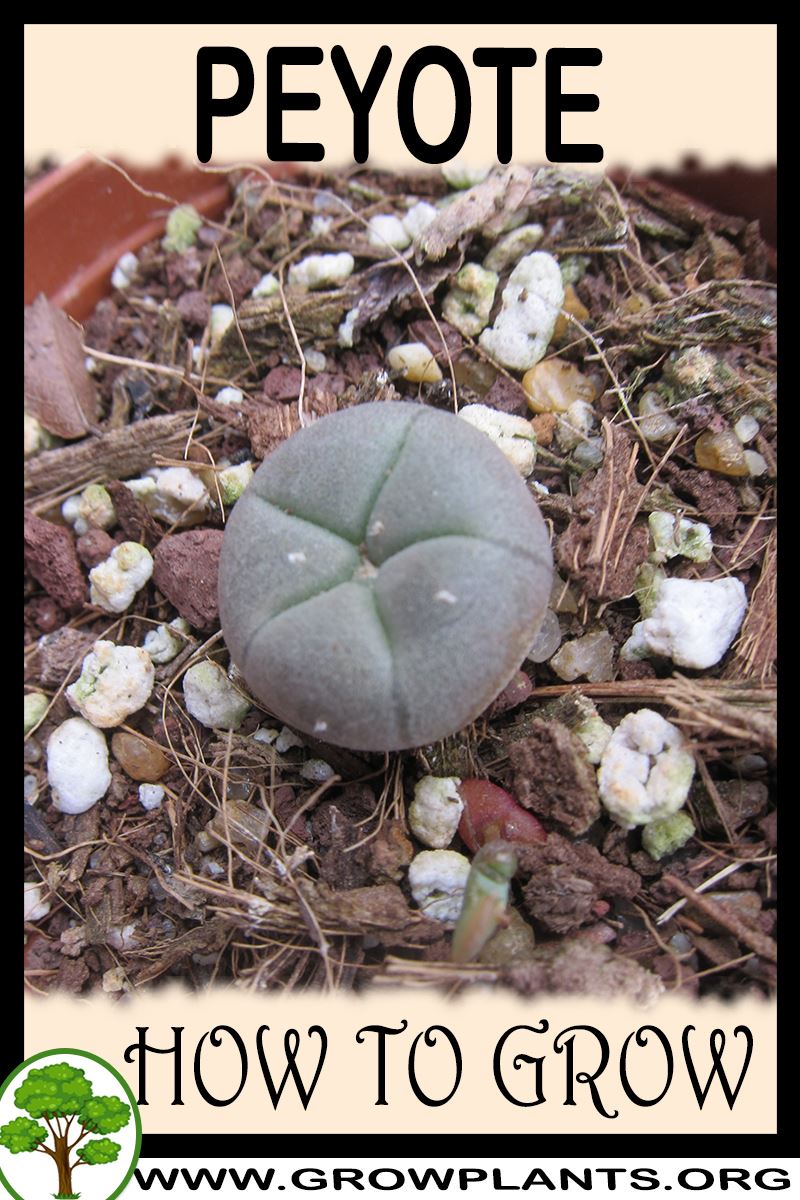
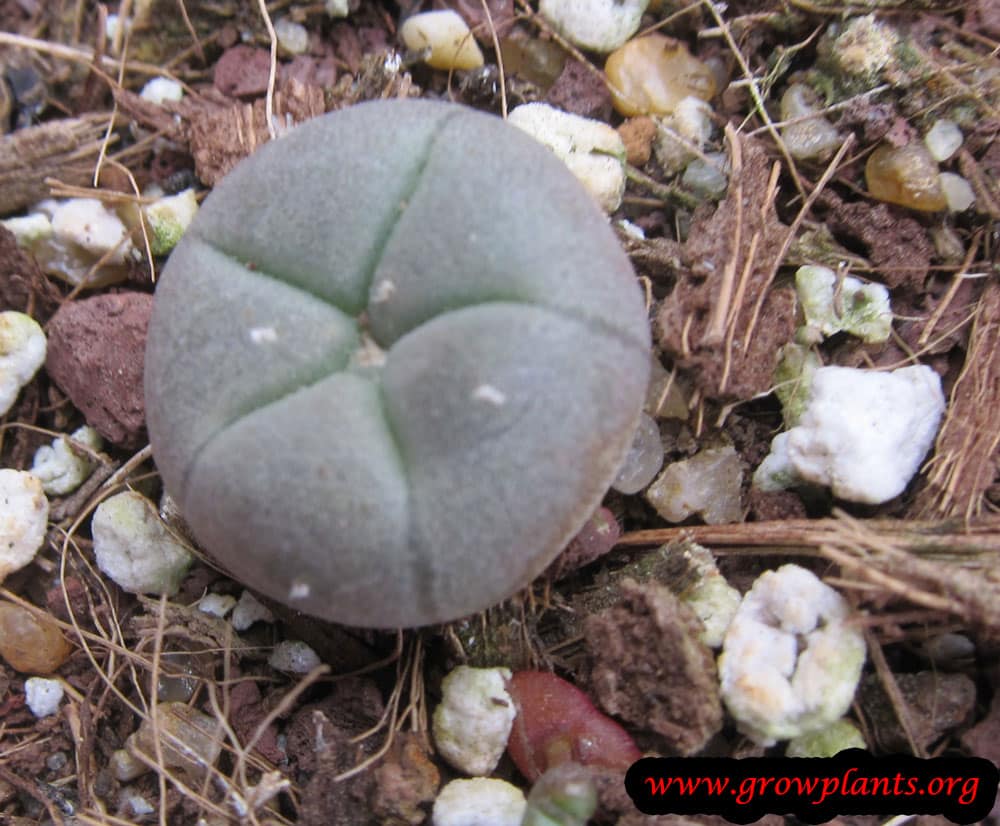
- Height & Spread: A very small, flattened dome 1.5-5 cm (0.6-2 in) wide sitting flush with the soil; naturally suited to a shallow pot and easily kept as a windowsill houseplant.
- Growth Habit & Form: Solitary or slowly clustering button-shaped body divided into rounded ribbed segments, with tufted areoles instead of spines; a disproportionately large taproot anchors it below ground.
- Lifespan & Maturity: Extremely slow-growing and long-lived, taking many years to reach flowering size and to form offsets.
Anatomy & Physical Features
- Body & Stem: Blue-green to grey (rarely yellow or red) spineless stem, the surface divided into geometric segments that look assembled into a rounded whole.
- Flower Characteristics: Small pink-to-white flat, many-petalled flowers opening from the woolly crown.
- Fruit Profile: A small pink, ovate edible berry produced from the crown.
Primary Uses & Landscape Value
- Functional & Ornamental Roles: Grown as a slow, drought-tolerant ornamental cactus and collector’s houseplant; also of ethnobotanical and medicinal note for its alkaloids.
Care Guide: Planting, Soil & Watering
Overview: Peyote (Lophophora williamsii) is a very slow-growing desert cactus for frost-free arid zones (10–12) or as a houseplant. It needs bright light with some shade and a sharply drained, gritty mineral soil, staying dry between waterings.
Quick Care Requirements
| Requirement | Ideal Condition |
|---|---|
| Planting Season | Spring or autumn, when temperatures are mild |
| Growth Rate | Slow |
| Soil Type | Sharply draining, gritty mineral cactus mix (sand/pumice/lava grit) |
| Water Need | Low – let the soil dry out completely between waterings |
Planting & Establishment
- Best Planting Season: Plant in spring or autumn when temperatures are mild.
- How to Plant:
- Hole Preparation: Pot into a container just larger than the plant, with ample drainage holes.
- Soil Amendments: Use a gritty mineral cactus mix – potting soil cut heavily with sand, pumice or lava grit.
- Planting Depth: Set the plant so the crown sits at or just above the surface; a top-dressing of grit around the neck keeps it dry and prevents rot.
- Growth Speed & Expectations: Expect very slow growth; this cactus takes many years to reach full size, so patience is essential.
Soil, Watering & Drainage Care
- Soil Mix & Drainage Needs: Use a very free-draining, gritty mineral mix – cactus or potting soil cut with sand, pumice or lava grit. Standing moisture is fatal, so the roots must dry out fully between waterings.
- Watering Schedule & Technique:
- Young / Newly Planted: Water sparingly after potting, letting the mix dry fully between drinks.
- Established: Water only when the soil has dried completely through the warm months, soaking then draining fully – overwatering is the main cause of rot.
- Seasonal Adjustments: Water more during active summer growth and keep the plant nearly dry through its cool winter rest.
Climate, Light & Hardiness
Peyote (Lophophora williamsii) is a slow-growing, drought-tolerant cactus suited to mediterranean, desert and subtropical climates, or grown as a houseplant. The site describes it as needing frost-free conditions, so it should not be exposed to freezing temperatures.
Quick Climate Specifications
| Climate Zones | Mediterranean, desert, subtropics, or indoors as a houseplant |
|---|---|
| USDA Hardiness Zones | 10–12 |
| Optimal Temp Range | Approximately 18–30°C (64–86°F) during active growth |
| Frost Tolerance | None |
| Light Conditions | Half shade |
Sunlight & Light Exposure
Optimal Light Setup
Half shade suits it best, per the site's own light data - brighter than deep shade but without the full, harsh sun some other desert cacti tolerate.
Shade & Heat Management
Some shade protection helps this low, flattened, spineless cactus avoid scorching in the most intense summer sun.
Best Exposure / Orientation
A partly shaded rockery or shallow container works well outdoors, or a bright but not harshly sun-baked indoor windowsill.
Temperature Extremes & Hardiness
USDA Hardiness & Regional Limits
Suited to USDA zones 10–12, corresponding to essentially frost-free climates; outside these it is best grown as an indoor houseplant, which the site confirms is a suitable option.
Cold Damage & Winter Protection
Treat it as needing frost-free conditions year-round; keep the soil dry between waterings, especially through any cool weather, since the site's own guidance emphasizes letting it dry out between watering.
Frost Sensitivity
Very high - no meaningful frost tolerance; move container plants under cover before any risk of frost.
Extreme Heat Tolerance
Good; adapted to warm desert, mediterranean and subtropical summers, provided watering stays sparing.
Wind, Humidity & Microclimate
Humidity Preferences
Prefers the low-to-moderate humidity typical of desert and mediterranean climates.
Dry-Air Tolerance
High - well adapted to dry air.
Rainfall & Seasonal Moisture
Adapted to climates with a pronounced dry season; the site's guidance to let it dry out fully between waterings reflects this, and well-drained soil is essential to avoid rot in its low, flattened body.
Microclimate Recommendations
A partly shaded, well-drained, frost-free spot suits it best; avoid low, damp, or exposed planting positions.
Growing in Pots, Balconies & Indoors
Peyote is a very small, slow-growing cactus (1.5-5 cm / 0.6-2 in) that the grower rates as suitable for indoor growing and for pots. It likes bright light with some shade from the fiercest sun, and its miniature size makes it a natural windowsill or desk plant. Note that it is a legally regulated plant in many countries and is toxic if eaten – keep it away from children and pets and check the law where you live.
Quick Details
- Container Size: A small, shallow pot only slightly larger than the plant
- Indoor Suitability: Grows well indoors in bright light
- Best Spot: Bright light with light shade from the harshest midday sun
- Soil & Drainage: Gritty cactus mix over a gravel base; strong drainage holes
- Watering in Pots: Water sparingly; let it dry out fully between waterings
Indoors & On the Windowsill
- Grows well indoors: The grower marks it as suitable indoors – keep it in bright light on a sill or desk. A ready-made cactus and succulent soil mix provides that structure without mixing it yourself.
- Windowsill growing: Bright light with a little shade from scorching midday sun keeps it healthy; too dark and it etiolates.
- Safety: A controlled plant in many places and toxic if eaten – site it out of reach of children and pets.
- Overwintering: Frost-tender; keep it bright, cool and nearly dry over winter.
On a Balcony or Patio
- Light & wind: A bright, sheltered spot suits it in the warm months; shield it from the fiercest sun and keep the small pot secure.
Choosing the Pot, Soil & Long-Term Care
- Pot & drainage: Use a pot only 20-50% larger than the plant – it need not be deep, since the roots run shallow. Add a layer of gravel, lava rock or pebbles in the base, give it strong drainage holes, and never leave it standing in water.
- Potting mix: A free-draining cactus and succulent mix – gritty and well aerated so it dries quickly.
- Feeding: Potted cacti need only light feeding, as nutrients leach out with each watering; a dilute low-nitrogen cactus feed through the warm growing season is enough.
- Repotting: Every few years, once the roots fill the pot or the mix has broken down, refresh the soil and move up one size.
Fertilizing & Feeding
A very light feeder: this exceptionally slow-growing cactus needs only minimal feeding during active summer growth, with no feeding through dormancy.
Quick Fertilizing Specs
| Feeding Level | Light feeder |
|---|---|
| Main Nutrient Priority | A well-diluted, low-nitrogen cactus feed matched to an exceptionally slow-growing species |
| Best Feeding Period | The warm active growing season |
| Organic Options | Minimal – a lean, mineral cactus mix suits this species |
| Reduce/Stop Feeding | Feeding is stopped through the cool dormant season |
| Micronutrients | A complete cactus fertilizer usually covers routine needs |
| Soil pH | Tolerates a wide range in a fast-draining mix |
Feeding by Growth Stage
Warm-season active growth
Support very slow, steady growth without pushing the body to grow faster than it naturally would.
| Nutrient direction | A well-diluted, low-nitrogen cactus fertilizer is enough for this exceptionally slow-growing species. |
|---|---|
| Timing | During the warm active growing season. |
| Frequency | Minimal feeding suits this very slow grower; light feeding during active growth is plenty. |
| Fertilizer types | A well-diluted, low-nitrogen cactus or succulent fertilizer |
| Precautions | Feed very lightly and infrequently – this slow-growing species is easily pushed into soft, unnaturally fast growth by overfeeding. |
Cool-season dormancy
Let the plant rest through cooler weather without pushing new growth it can’t support.
| Nutrient direction | None – withhold fertilizer while the plant is dormant. |
|---|---|
| Timing | Through cool weather or the winter rest period. |
| Frequency | No feeding at this stage; feeding resumes once active growth restarts. |
| Fertilizer types | No feeding at this stage; hold off fertilizing until active growth resumes. |
| Precautions | Withhold fertilizer during dormancy – feeding a resting plant wastes nutrients and risks salt buildup around the roots. |
Nutrient Deficiency Signs & Corrections
The body takes on a dull, pale-green cast and growth stalls even in the growing season.
| Possible causes | low available nitrogen in a very lean mineral mix, nitrogen leached out by watering or rain, a mix that has gone a long time without any nutrient input |
|---|---|
| Appears first on | the body overall |
| What to check | feeding history, potting mix composition, watering frequency |
| Possible correction | Apply a well-diluted, low-nitrogen cactus fertilizer during active growth and consider refreshing the potting mix. |
New growth at the crown looks pale or yellowish while the rest of the body stays green.
| Possible causes | high soil pH limiting iron availability, waterlogged or poorly aerated soil restricting root uptake, a potting mix depleted of micronutrients over time |
|---|---|
| Appears first on | the newest growth at the crown |
| What to check | soil drainage and aeration, potting mix age, recent watering habits |
| Possible correction | Improve drainage, correct pH if identified as a cause, and apply a chelated iron product per its label. |
The body surface browns or scars despite otherwise adequate care.
| Possible causes | fertilizer salt buildup from infrequent flushing, underwatering that concentrates salts in the mix, feeding more often than this slow-growing plant can use |
|---|---|
| Appears first on | the body surface, especially near the crown |
| What to check | recent feeding frequency and strength, time since the mix was last flushed, container drainage |
| Possible correction | Ease off feeding, flush the mix thoroughly with water, then resume only light feeding. |
Pruning, Training & Seasonal Maintenance
Peyote is a tiny, spineless, extremely slow-growing globular cactus that tops out at only 1.5-5cm across and grows from a single apical crown. It does not tolerate structural pruning of any kind – there is no branch, cane, or stem to shape. The only maintenance task is removing dead, shriveled, or rotted tissue as it appears, which can be done at any time of year without affecting the plant’s form, flowering, or growth rate.
Quick Pruning & Maintenance Specs
| Pruning Tolerance | Very Low (sanitary only – no structural pruning) |
| Primary Pruning Window | As-needed, year-round |
| Typical Frequency | Rare – only when dead or rotted tissue appears |
| Main Objective | Remove dead/rotted tissue; manage offsets in clustering specimens |
| Young Plant Priority | Do not cut – protect the single growing crown |
| Mature Plant Priority | Sanitary removal only; optional offset division for propagation |
| Best Tool Type | Sterile fine blade |
| Avoid Heavy Pruning During | Always – heavy/structural pruning is never appropriate for this species |
Pruning by Plant Age & Size
Newly Established
No pruning. At this tiny size the single crown is the entire growth point; any cut risks killing the plant.
Young / Formative
No structural training applies – Peyote has no stem or branch framework to train.
Mature / Established
Older clustering specimens may form offsets around the base; these can be left to form a natural clump or carefully separated for propagation. Otherwise, limit attention to removing any dead or rotted tissue.
Special Growth to Remove
- Dead, shriveled, or rotted tissue – excise back to firm, healthy material.
- Offsets/pups (clustering plants) – optional removal at the base only if propagation is desired; otherwise retain for a fuller clump.
Container & Small-Space Pruning
Peyote is almost always container-grown given its minute size and slow growth. No size or shape control is needed in a pot; the only container-relevant task is the same sanitary removal of dead or rotted tissue, done with extra care given how small the plant is.
Tools
- Sterile fine blade or precision snips – for excising dead or rotted tissue and separating offsets cleanly.
Tool Hygiene & Disease Risk
High-risk: Peyote is soft-bodied and slow-growing, so any cut is a real rot entry point. Always disinfect the blade before and after use, and never reuse an unsterilized blade between plants.
Cut Placement & Technique
Cut cleanly at the base of the tissue being removed, avoiding crushing. Let the cut surface dry and callus in a shaded, dry spot before any repotting or watering resumes.
Heavy Pruning & Rejuvenation
Not tolerated. There is no rejuvenation pruning for this species – removing the crown or cutting into healthy tissue permanently disfigures or kills the plant.
Post-Pruning Care
Keep the plant dry and out of direct hot sun until the cut has fully callused. Do not water immediately after cutting. Watch the cut site closely for any softening or discoloration that signals rot.
Common Pruning Mistakes
- Mistaking normal crown coloring for dead tissue and cutting into healthy material.
- Using a non-sterile blade, introducing rot to a very slow-healing plant.
- Watering right after a cut instead of letting it callus first.
When NOT to Prune
Never cut into or near the living crown – it is the plant’s only growing point. Avoid any cutting during cool, damp winter conditions when healing is slowest and rot risk is highest.
Recommended Tools (by task)
- grafting_knife – a fine, sterile blade is the right scale of tool for precise cuts on such a small plant.
- blade_disinfectant – essential given how easily a soft-bodied, slow-growing cactus can rot from a contaminated cut.
Propagation Guide
Peyote is normally raised from its own seed, which comes true to the species since no distinct graft-dependent color cultivars are standard for this plant. Propagation itself is not difficult, but this is an extremely slow-growing cactus, so raising a mature specimen from seed takes patience and careful, consistent seedling care rather than special skill.
Quick Propagation Specs
| Best Propagation Method | Seed |
| Alternative Methods | Offsets/pups from mature clumps; occasional grafting onto a fast-growing rootstock purely to speed up otherwise very slow seedling growth |
| Propagation Difficulty | Moderate (seed germinates readily, but growth afterward is extremely slow) |
| Seed True-to-Type | Usually true-to-type |
| Vegetative True-to-Type | Yes |
| Best Propagation Season | Spring – Autumn |
| Seed Germination Time | Typically a few weeks under warm, moist conditions |
| Germination Temperature | Around 21–27°C (70–80°F), typical for desert cacti |
| Seed Sowing Depth | Surface-sow or barely cover |
Growing from Seed
Sowing Season
Sow in spring or autumn, in line with the plant’s recommended planting season; a frost-free, warm spell gives seedlings the best start.
Germination Conditions
Use a gritty, well-drained mix kept lightly moist rather than wet, in half shade rather than harsh direct sun while seedlings are tiny.
Seedling Care
Growth is extremely slow even by cactus standards — plants stay only around 1.5–5 cm across for a long time — so keep seedlings evenly and lightly watered, out of hard direct sun, and expect a multi-year juvenile stage before the plant reaches a typical mature size.
Division, Offsets, Pups & Suckers
Established clumps can produce offsets (pups) around the base, sometimes encouraged by deliberately removing the growing tip (a technique growers call ‘coring’), which can stimulate several new heads from the remaining rooted base. Offsets can be separated once they have formed their own roots and potted into the same well-drained mix as the parent.
Grafting & Budding
Why Grafting Is Used
Grafting is not required for normal peyote propagation, since the plant grows well on its own roots. Growers occasionally graft young seedlings onto a fast-growing, compatible rootstock purely to accelerate the plant’s naturally very slow growth, not to change or preserve stem color.
Rootstock
A fast-growing, compatible columnar or globular cactus is typically used when this technique is applied.
Graft Aftercare
A grafted plant can later be removed from the rootstock and re-rooted on its own once it has reached a reasonable size, if the grower prefers it back on its own roots.
Bloom & Flower Guide
Quick Details
- Bloom Season: Spring.
- Flower Appearance: Small pink-to-white flowers with many flat petals, opening from the woolly centre of the plant.
- Edibility: Not edible and not safe to consume. Peyote (Lophophora williamsii) contains mescaline, a psychoactive alkaloid, and is a controlled/regulated plant in many countries – treat it strictly as an ornamental curiosity.
Detailed Blooming Overview
Peyote is a small, spineless, button-like cactus that flowers from the woolly tuft at its crown. In spring it opens modest pink-to-white flowers right in the centre of the plant. It is very slow-growing and typically flowers only once well established. While the blooms themselves are charming, this species must be handled with real care for the reasons below – it is grown here purely for interest, not for use.
Flower Characteristics
- Colour: pink to white.
- Form: small, flat, multi-petalled flowers.
- Position: emerging from the woolly centre at the top of the plant.
Bloom Care & Thinning
- Strong sun and warmth: bright light and heat, with a cool, dry winter rest, encourage the spring flowers on a mature plant.
- Very lean watering: this slow grower rots easily if overwatered; keep it dry in dormancy.
- Safety first: Lophophora williamsii is psychoactive (it contains mescaline) and is legally restricted in many places – it is not edible or medicinal for home use. Keep it away from children and pets and never consume any part of it.
Pests, Diseases & Troubleshooting
Overview: Peyote is a slow-growing, spineless button cactus whose overwhelming vulnerability is rot from excess moisture, cold and poor drainage; true pests are few. The main insects are mealybugs (including hidden root mealybugs), scale and the occasional mite, all of which prefer a stressed, sheltered plant. Lean gritty soil, careful watering and a warm, bright, airy spot prevent almost every problem.
Quick Troubleshooting Overview
| Issue / Pest | Main Symptom | Primary Solution |
|---|---|---|
| Root / basal rot | Soft, brown, collapsing body | Bone-dry winter rest, gritty mix, sharp drainage |
| Root mealybugs | Stalled growth, white waxy specks on roots | Bare-root, wash off, repot in fresh dry mix |
| Mealybugs | White cottony fluff at the crown/areoles | Spot-treat with alcohol, horticultural oil |
| Red spider mite | Rusty scarring on the upper body in dry heat | Rinse, raise airflow, horticultural oil |
| Corky scarring | Brown rough patches from cold/wet or sunburn | Correct watering, acclimatise to sun |
Common Pests & Management
- Mealybugs (Pseudococcidae spp.):
- Symptoms: White cottony masses in leaf axils, on stems and around the crown; feeding causes yellowing, stunting and honeydew with sooty mould.
- Prevention & Control: Dab individual colonies with a cotton bud dipped in surgical spirit; isolate affected plants; keep humidity moderate. For wider spread use insecticidal soap or horticultural oil, repeating every 7–10 days to catch newly hatched crawlers.
- Root mealybugs (Rhizoecus spp.):
- Symptoms: Growth stalls for no visible reason; lifting the plant reveals white waxy powder and cottony specks over the roots and inside the dry mix.
- Prevention & Control: Bare-root the plant, wash the roots clean, and repot into fresh dry gritty mix and a clean pot; a soil drench of horticultural oil or a systemic only if reinfestation persists. Keep new plants quarantined.
- Scale insects (Coccidae & Diaspididae spp.):
- Symptoms: Immobile brown or tan bumps along stems and leaf veins, often with sticky honeydew and sooty mould; slow decline and yellowing.
- Prevention & Control: Scrape off light infestations by hand or with a soft toothbrush; prune out heavily encrusted stems. Smother remaining scale with horticultural oil, targeting the mobile crawler stage with repeat applications.
- Red / two-spotted spider mite (Tetranychus spp.):
- Symptoms: Fine rusty-bronze scarring on the upper, sunniest part of the body in hot, dry, still air; faint webbing with a lens.
- Prevention & Control: Improve air movement and rinse the plant occasionally; treat with horticultural oil, avoiding scorching midday sun after spraying. The corky scarring left behind is permanent.
- Fungus gnats (Bradysia spp.):
- Symptoms: Small dark flies over the soil; larvae in persistently damp mix can nibble roots of weak plants.
- Prevention & Control: Let the mix dry thoroughly between waterings, top-dress with grit, and use yellow sticky traps; correcting watering usually ends the problem.
Diseases & Fungal Issues
- Basal & root rot (Fusarium / Phytophthora spp.):
- Symptoms: The body softens, browns or blackens from the base, sometimes collapsing suddenly; caused by wet, cold or airless soil.
- Treatment & Management: Prevent with a fast-draining mineral mix, a warm dry winter rest and careful watering. If caught early, cut back to firm white tissue, let it callus, and re-root; badly rotted plants rarely recover.
- Fungal spotting (various fungi):
- Symptoms: Sunken brown or black spots on the body after prolonged damp or water sitting in the crown.
- Treatment & Management: Keep the crown dry, water from below or at the soil, and improve ventilation; a copper or sulfur fungicide can check spread but scarring stays.
Growing Difficulties & Abiotic Problems
- Root rot (overwatering):
- Cause & Symptoms: Waterlogged, airless roots in cold, wet, or peaty airless mix lead to soft brown roots, wilting despite wet soil, yellowing lower leaves and collapse; Pythium and Phytophthora water-moulds move in.
- Correction Strategy: Let the top of the mix dry before rewatering; improve drainage and use a free-draining medium; never leave the pot standing in water. Repot into fresh gritty mix, trimming away any blackened roots.
- Corky / brown scarring:
- Cause & Symptoms: Cold-wet spells, cork barrier from age, or sudden strong sun leave rough brown patches on the body.
- Correction Strategy: Keep dry and warm in the cool season, and acclimatise gradually to bright light; scarring is cosmetic and permanent once formed.
- Etiolation (weak stretched growth):
- Cause & Symptoms: Too little light makes the button pale, soft and elongated instead of firm and flat.
- Correction Strategy: Give bright light with some direct sun; increase exposure slowly to avoid scorching the soft new tissue.
What Helps – Products & Tools
For this cactus the most important ‘product’ is a sharply draining mineral grit mix and disciplined watering. Against the occasional pest, use surgical spirit on a cotton bud or a light horticultural oil for mealybugs, scale and mites, yellow sticky traps for fungus gnats, and a copper or sulfur fungicide only if rot or spotting appears. Avoid routine insecticides on such a slow, easily scorched plant.