

Plant Profile & Key Characteristics
Overview: Christmas cactus (Schlumbergera) is an evergreen, epiphytic succulent, 40-100 cm (16-40 in), with flattened, segmented stems and showy winter flowers. Slow-growing and long-lived, it is one of the most popular flowering houseplants, hardy outdoors only in frost-free climates (hardiness zone 10+).
Quick Specifications
| Specification | Attribute |
|---|---|
| Plant Type / Life Cycle | Perennial (evergreen succulent) |
| Foliage Type | Evergreen (segmented cladodes) |
| Mature Size | 40-100 cm (16-40 in) |
| Growth Rate | Slow |
| Root System | Shallow (epiphytic) |
| Toxicity | Non-toxic to pets |
| Hardiness | USDA zone 10+ |
Growth Form & Structure
- Height & Spread: Reaches 40-100 cm (16-40 in); ideal for pots and hanging baskets and grown as an indoor houseplant.
- Growth Habit & Form: Arching to trailing epiphytic succulent with flattened, segmented stems (cladodes) that become woody and brown at the base with age.
Anatomy & Physical Features
- Leaves & Foliage: No true leaves; flattened green cladode segments perform photosynthesis and turn woody and brown at the base with age.
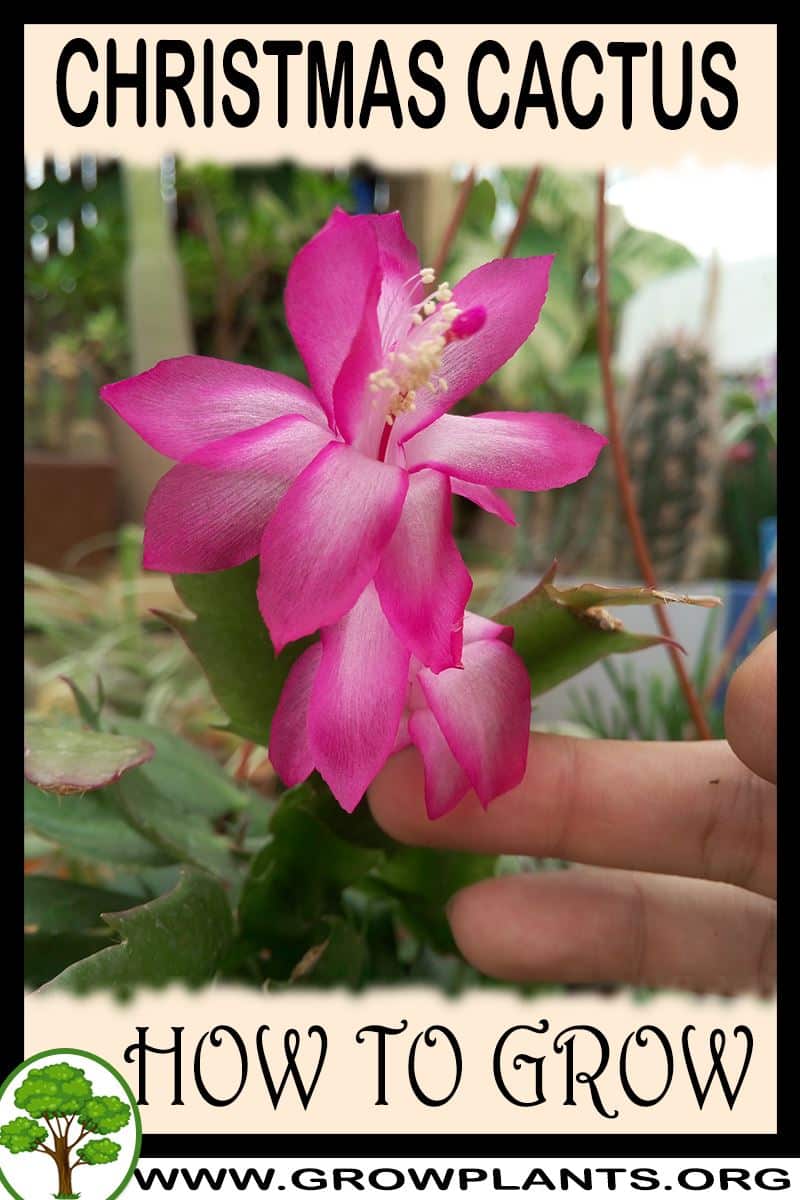
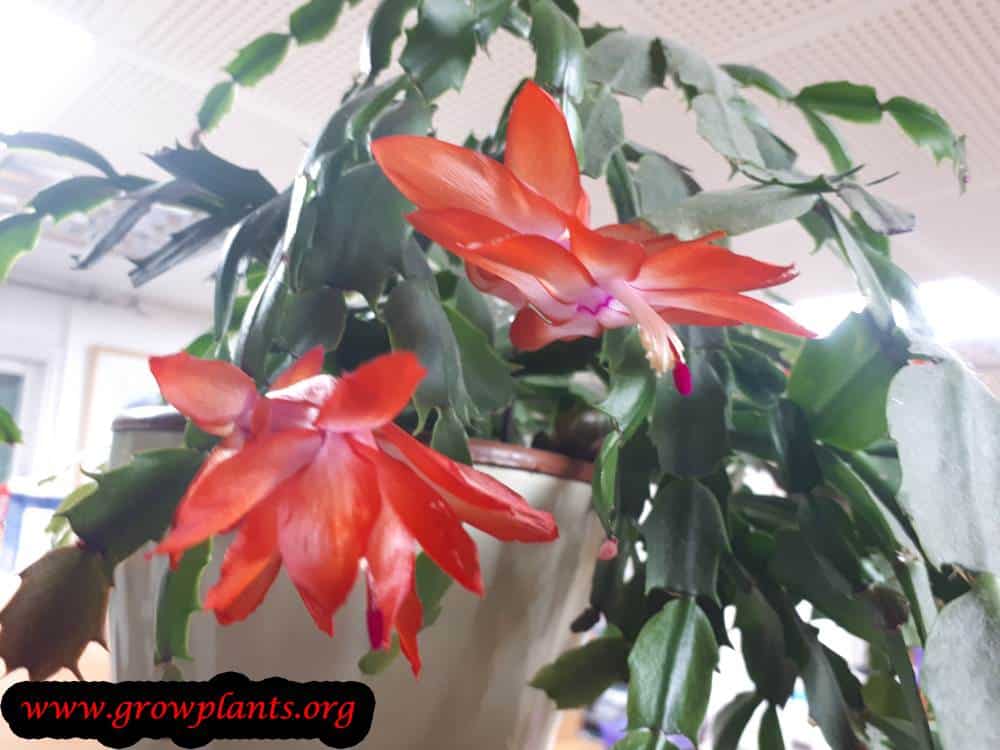
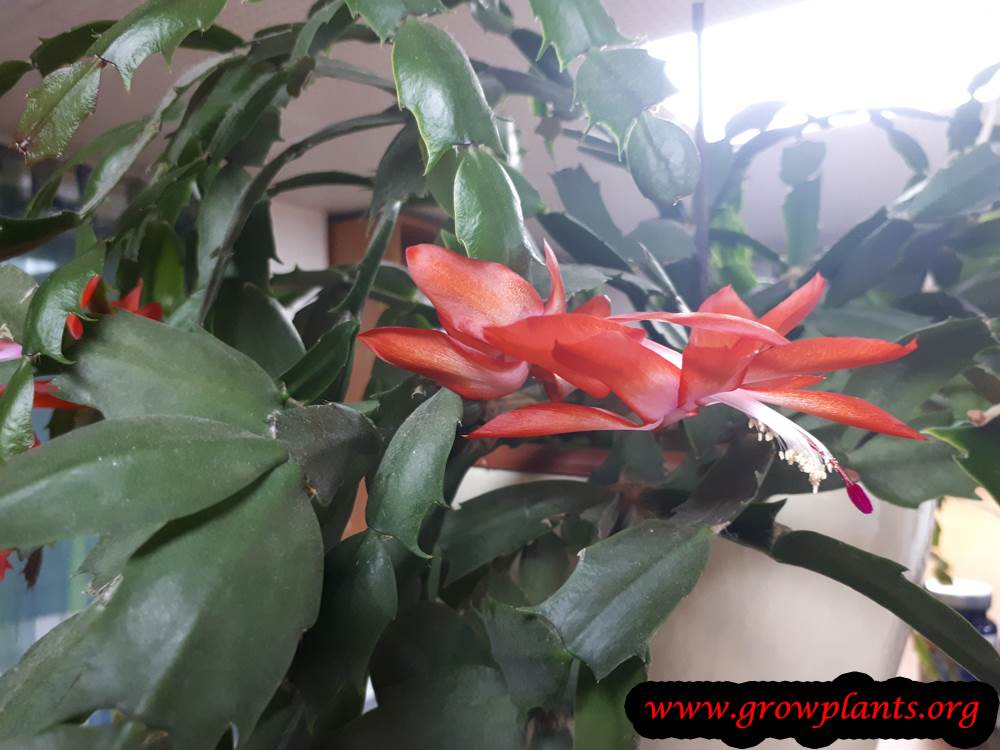
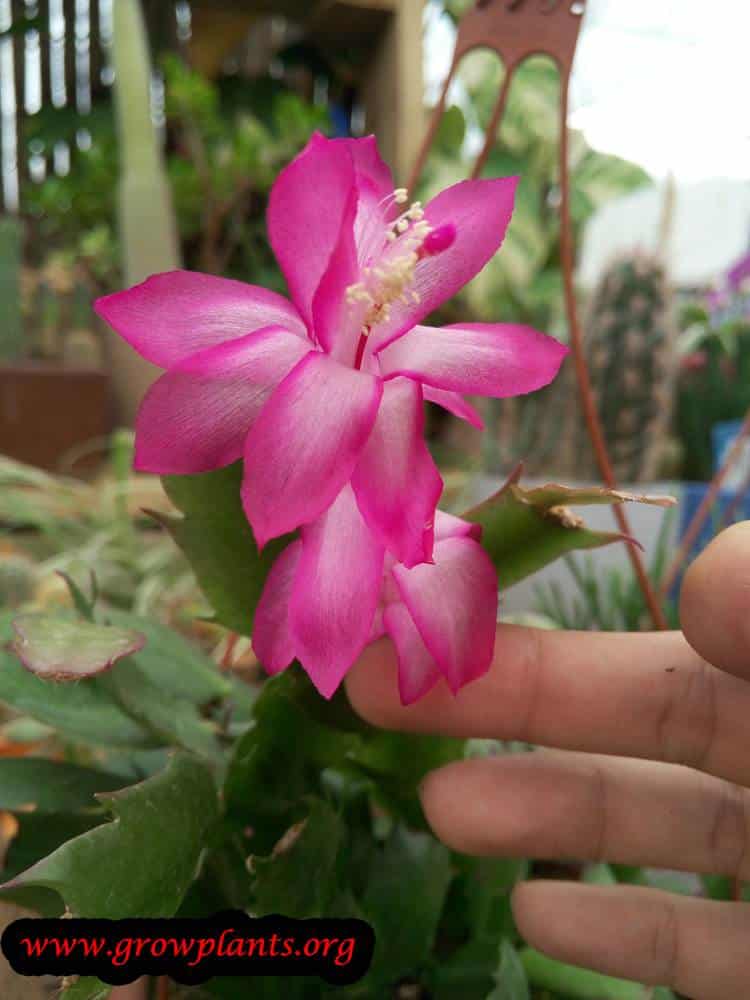
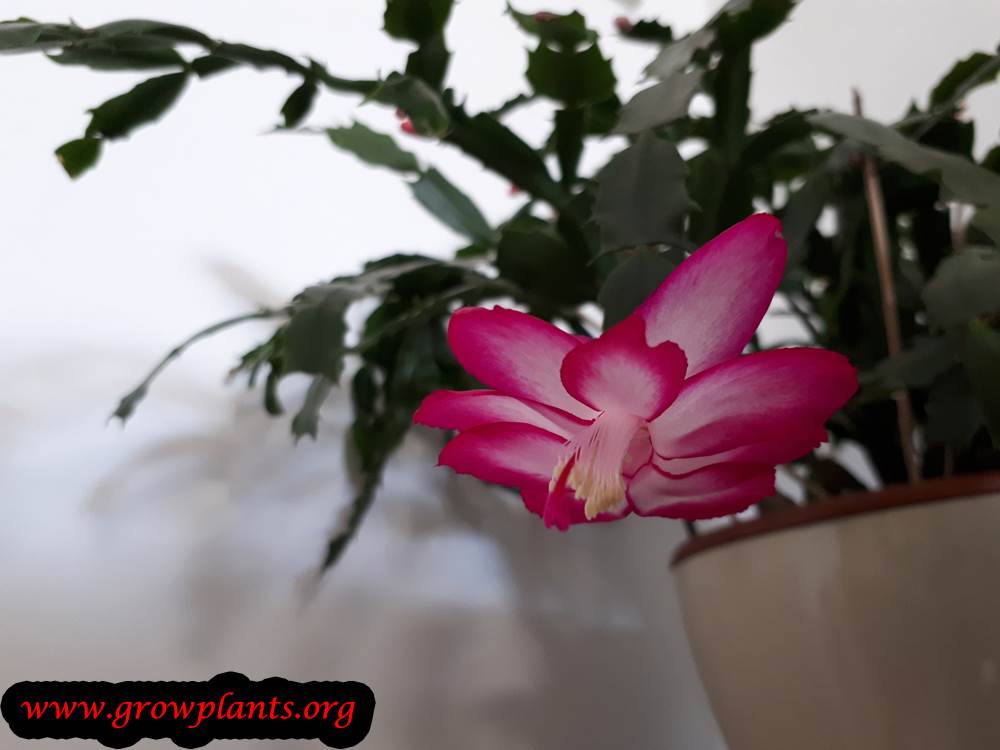
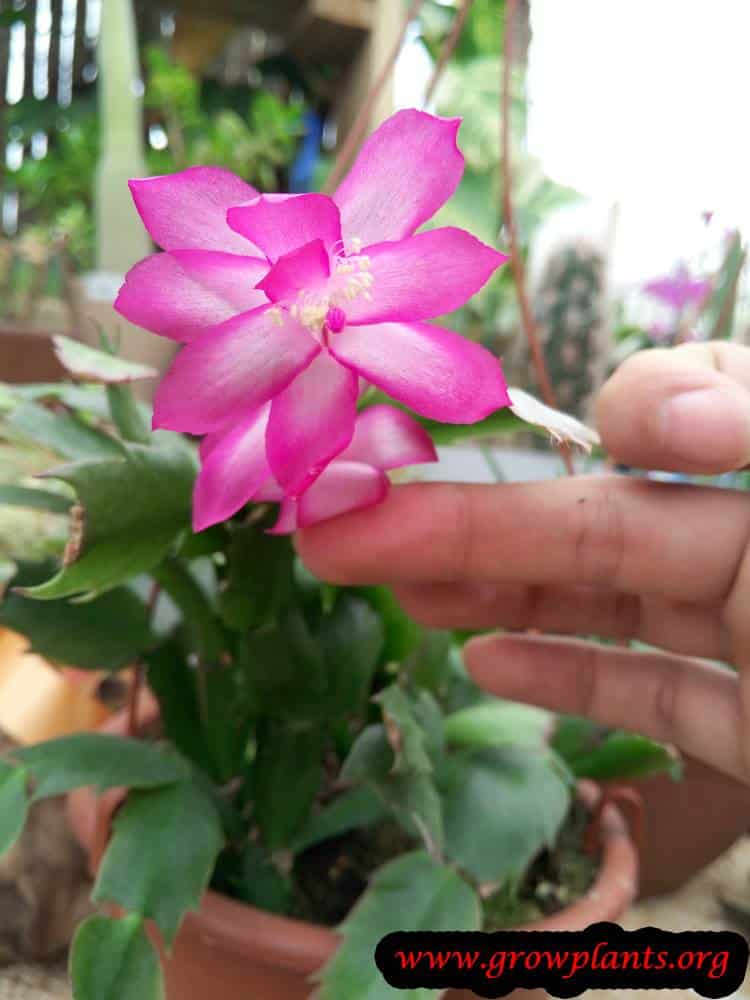
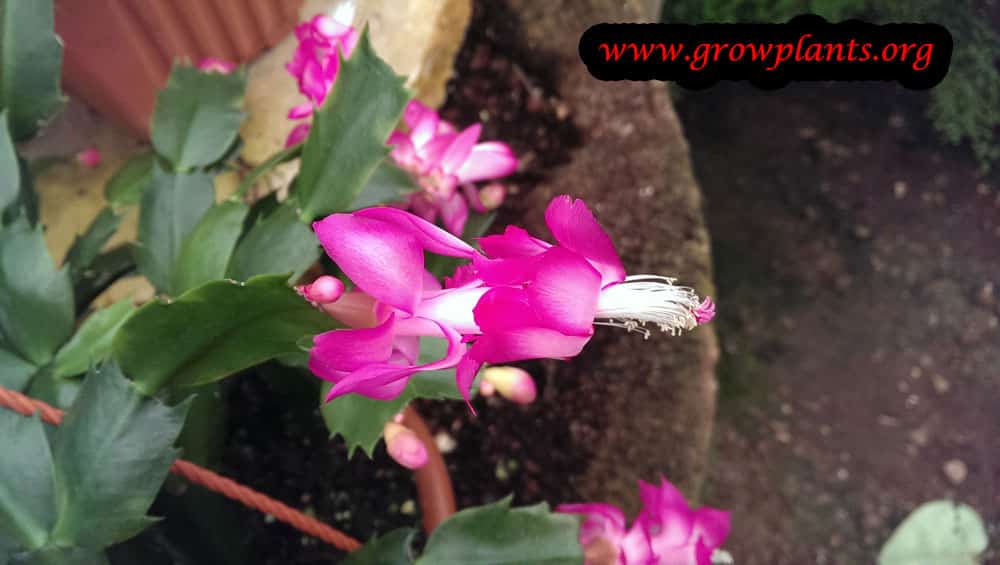
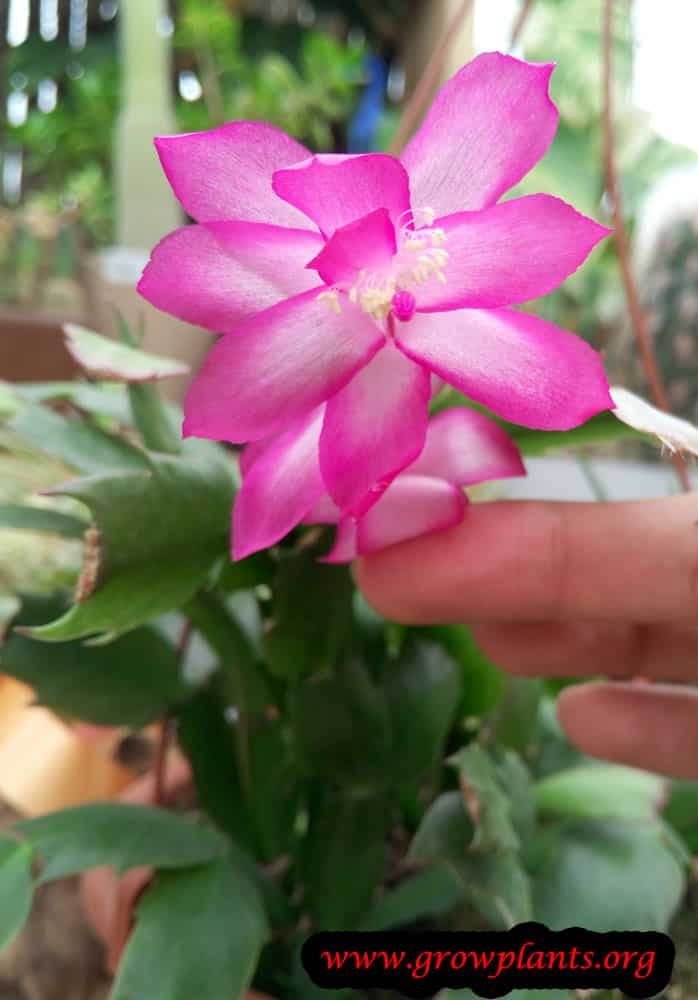
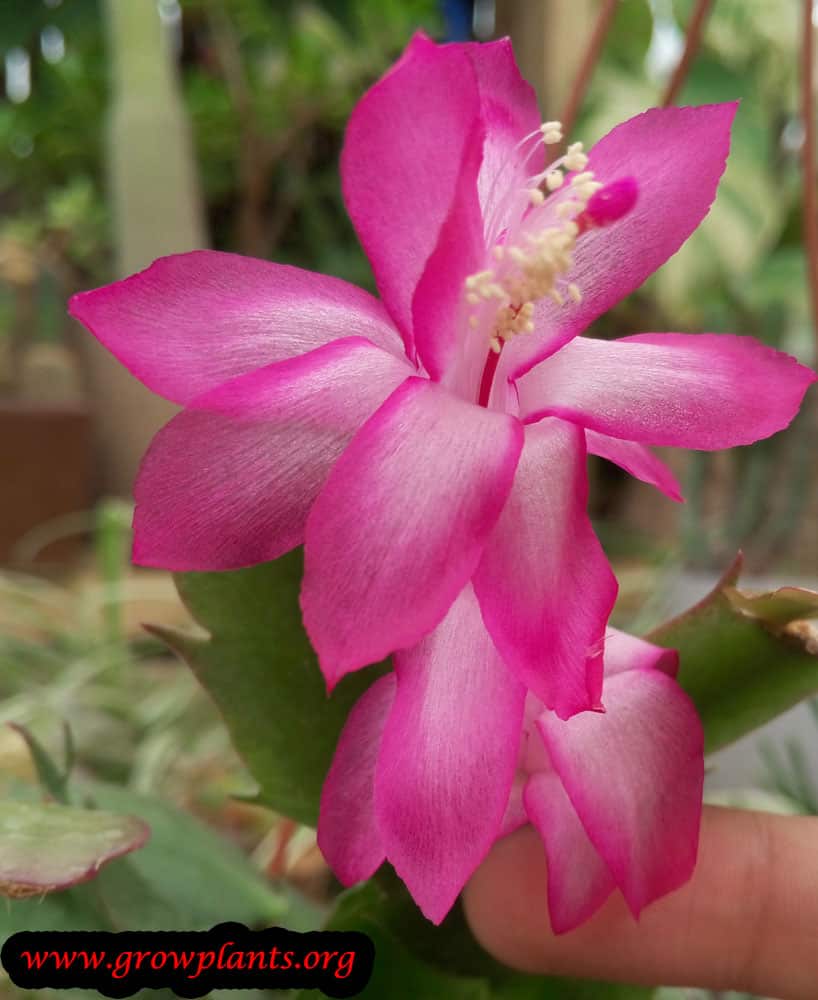
- Flower Characteristics: Tubular flowers with many tepals (red, pink, orange, white, purple or yellow) that attract hummingbirds.
Primary Uses & Landscape Value
- Functional & Ornamental Roles: Ornamental flowering houseplant, container and hanging-basket specimen.
Care Guide: Planting, Soil & Watering
Overview: Christmas cactus (Schlumbergera) is an epiphytic jungle cactus grown for its bright, tepal-rich flowers in tropical, Mediterranean and subtropical climates, or as a houseplant (hardiness zone 10 and up). It thrives in bright shade in a light, free-draining mix kept lightly moist – more moisture than a desert cactus, but never waterlogged.
Quick Care Requirements
| Requirement | Ideal Condition |
|---|---|
| Planting Season | Spring to summer; also autumn and winter in warmer climates |
| Growth Rate | Slow |
| Soil Type | Light, free-draining epiphytic mix (potting mix with perlite or bark) |
| Water Need | Moderate; keep lightly moist and let the top dry slightly |
Planting & Establishment
- Best Planting Season: Plant or pot up in spring to summer, extending into autumn and winter in warmer climates. Give it bright, indirect light rather than harsh sun.
- How to Plant:
- Hole Preparation: When potting, set the flattened stem segments so their base sits at the surface and is not buried.
- Soil Amendments: Use an airy, free-draining epiphytic mix – potting soil lightened with perlite or orchid bark rather than a heavy, water-holding soil.
- Planting Depth: Set the base level with the mix surface, keeping it free-draining so the crown never stays wet.
- Growth Speed & Expectations: A slow grower reaching about 40-100 cm (16-40 inches) over time, building into an arching, segmented plant.
Soil, Watering & Drainage Care
- Soil Mix & Drainage Needs: Grow in a light, aerated epiphytic mix in a pot with open drainage holes, and never leave water standing in the saucer.
- Watering Schedule & Technique:
- Young / Newly Planted: Keep the mix lightly moist while young plants and cuttings establish.
- Established: Water when the top few centimetres dry out – more freely during active growth and flowering, easing off between times.
- Seasonal Adjustments: Reduce watering after flowering to give it a cooler, drier rest that helps set the next round of buds, and avoid soggy soil in winter.
Climate, Light & Hardiness
Christmas cactus (Schlumbergera) is a shade-loving, epiphytic succulent suited to tropical, mediterranean and subtropical climates, and it also thrives as a houseplant. The site describes it as needing essentially frost-free conditions, though it can survive a little bit of frost once established.
Quick Climate Specifications
| Climate Zones | Tropics, mediterranean, subtropics, or indoors as a houseplant |
|---|---|
| USDA Hardiness Zones | Approximately 10+ |
| Optimal Temp Range | Approximately 18–24°C (64–75°F) |
| Approx. Survival Minimum | Essentially frost-free; the site notes it can survive only a little bit of frost |
| Frost Tolerance | Very Low |
| Light Conditions | Full shade |
Sunlight & Light Exposure
Optimal Light Setup
Full shade or bright indirect light suits it best, in keeping with its origin as an epiphyte growing in the dappled shade of Brazilian forest trees.
Shade & Heat Management
Avoid direct, harsh sun, which can scorch the flattened, jointed stems (cladodes); filtered or indirect light is preferred year-round.
Best Exposure / Orientation
A shaded outdoor spot in warm climates, or a bright but sun-free indoor window elsewhere.
Temperature Extremes & Hardiness
USDA Hardiness & Regional Limits
The site places it at roughly zone 10+, reflecting an essentially frost-free requirement; outside mild, frost-free climates it is best grown indoors, which the site confirms works well.
Cold Damage & Winter Protection
Treat it as needing frost-free conditions; while an established plant may shrug off a very light, brief frost, anything more will damage or kill the soft, jointed stems, so move container plants under cover before cold arrives.
Frost Sensitivity
High - plan for frost-free conditions rather than relying on its limited tolerance.
Extreme Heat Tolerance
Moderate; the site's guidance to plant in spring and summer, extending into autumn and winter in hotter climates, suggests it appreciates avoiding the most extreme heat spikes rather than being planted purely by calendar season.
Wind, Humidity & Microclimate
Humidity Preferences
Appreciates moist conditions, per the site's own care guidance, more typical of its tropical forest origin than of desert cacti.
Dry-Air Tolerance
Moderate to low; very dry indoor air, especially near heating vents, can stress it.
Rainfall & Seasonal Moisture
Adapted to the steadier moisture of tropical and mild subtropical/mediterranean climates rather than a harsh dry season; the growing medium should stay lightly moist without becoming waterlogged.
Microclimate Recommendations
A shaded, humid spot outdoors in frost-free climates, or an indoor position away from direct sun, cold windows and heating vents.
Growing in Pots, Balconies & Indoors
The Christmas cactus (Schlumbergera) is one of the best-loved flowering houseplants – the grower confirms it grows well both indoors and in pots. This is a shade-loving forest cactus (40-100 cm / 16-40 in) that thrives in bright, indirect light rather than direct sun, which makes it perfectly suited to indoor life.
Quick Details
- Container Size: A snug pot 20-50% wider than the plant; it flowers best slightly pot-bound
- Indoor Suitability: An excellent houseplant – happy in bright, indirect indoor light
- Best Spot: Bright, indirect light; keep it out of hot direct sun
- Soil & Drainage: Free-draining, slightly organic cactus mix; strong drainage holes
- Watering in Pots: Water when the top of the mix dries; a little more than desert cacti, but never waterlogged
Indoors & On the Windowsill
- An easy houseplant: Grows well indoors in bright, indirect light – an ideal spot is near an east or north window.
- Windowsill growing: Avoid scorching south-facing glass; steady light and cooler autumn nights help trigger the flush of flowers.
- Care: Keep it away from cold draughts and heat sources; it likes a little more moisture than desert cacti but still needs to drain freely.
On a Balcony or Patio
- Light & wind: A shaded, sheltered balcony suits it in the warm months – never bake it in full sun. The segmented stems are brittle, so keep it out of strong wind.
- Move it in for winter: It is frost-tender, so bring the pot back indoors well before cold weather.
Choosing the Pot, Soil & Long-Term Care
- Pot & drainage: A snug pot 20-50% wider than the plant with strong drainage holes; skip a standing saucer of water to avoid root rot.
- Potting mix: A free-draining, lightly organic cactus mix – it appreciates a touch more moisture-holding than desert types.
- Feeding: Feed lightly through the growing season, as pot nutrients leach with watering; ease off once buds set.
- Repotting: Refresh the mix every couple of years, ideally after flowering; it blooms happily when a little pot-bound.
Fertilizing & Feeding
A light feeder: diluted balanced feeding through the active growth period supports strong stems and later flowering, with feeding stopped as flower buds form and through winter rest.
Quick Fertilizing Specs
| Feeding Level | Light feeder |
|---|---|
| Main Nutrient Priority | A balanced, diluted houseplant fertilizer rather than a bloom-boosting high-phosphorus product |
| Best Feeding Period | Active growth in the warmer months, before flower buds begin forming |
| Organic Options | A moisture-retentive, humus-rich mix suits this epiphytic species better than a plain mineral cactus mix |
| Reduce/Stop Feeding | Feeding is stopped once flower buds are forming and through the winter rest |
| Micronutrients | A complete, diluted balanced fertilizer usually covers routine needs |
| Soil pH | Slightly acidic suits this epiphytic species best |
Feeding by Growth Stage
Warm-season active growth
Support strong, well-segmented stem growth ahead of the bloom period.
| Nutrient direction | A diluted, balanced houseplant fertilizer supports strong stems without favoring flowers over foliage. |
|---|---|
| Timing | During active growth in the warmer months, before flower buds begin forming. |
| Frequency | Light, occasional feeding through active growth; feeding eases off well before buds set. |
| Fertilizer types | A diluted, balanced houseplant fertilizer, A humus-rich, moisture-retentive potting mix |
| Precautions | Ease feeding down as the season progresses toward bud formation to avoid disrupting the coming bloom. |
Bud set, bloom, and winter rest
Let the plant direct its energy into flowering and then rest, without competing feeding demands.
| Nutrient direction | None – withhold fertilizer once buds are forming and through the winter rest. |
|---|---|
| Timing | From flower bud formation through the winter bloom and rest period. |
| Frequency | No feeding at this stage; feeding resumes once new active growth begins after the rest. |
| Fertilizer types | No feeding at this stage; hold off fertilizing through bud set, bloom, and winter rest. |
| Precautions | Withhold fertilizer through this period – feeding now can trigger bud or flower drop and offers no benefit to a resting plant. |
Nutrient Deficiency Signs & Corrections
Segments overall look pale or a dull yellow-green and new segment growth slows.
| Possible causes | low available nitrogen in a mix that has gone a long time without feeding, nitrogen leached out by frequent watering, low light reducing overall vigor and nutrient use |
|---|---|
| Appears first on | older, lower segments |
| What to check | feeding history, potting mix condition, light levels |
| Possible correction | Apply a diluted, balanced houseplant fertilizer during active growth and reassess light. |
New segment growth at the stem tips emerges pale or yellowish while older segments stay green.
| Possible causes | high mix pH limiting iron availability, waterlogged or poorly aerated mix restricting root uptake, a mix depleted of micronutrients over time |
|---|---|
| Appears first on | the newest segments at the stem tips |
| What to check | mix drainage and aeration, mix age, recent watering habits |
| Possible correction | Improve drainage, correct pH if identified as a cause, and apply a chelated iron product per its label. |
Flower buds form but drop before opening.
| Possible causes | a sudden change in temperature or the plant’s location, inconsistent watering during bud development, feeding continued too late into bud formation |
|---|---|
| Appears first on | developing flower buds |
| What to check | recent changes in location, temperature, or light, watering consistency, whether feeding continued after buds appeared |
| Possible correction | Keep the plant in a stable spot with even watering and confirm feeding has stopped for the bud and bloom period. |
Pruning, Training & Seasonal Maintenance
Christmas cactus grows as flattened, jointed segments (cladodes) rather than woody stems, and flowers form only at the tips of the most recent segments, so pruning timing directly affects next season’s bloom count. Pruning is done by twisting or cutting off segments at a joint, mainly to control legginess, remove old woody-based growth, and encourage branching, since each cut tip can produce two or more new segments – more branching means more flower-bud sites the following season. Because buds form at segment tips ahead of the autumn/winter/spring bloom, the safest window is shortly after flowering finishes, well before the next bud-forming period begins.
Quick Pruning & Maintenance Specs
| Pruning Tolerance | Moderate – segments can be removed at joints without harming the plant |
| Primary Pruning Window | Shortly after flowering ends (typically spring) |
| Secondary Maintenance Window | Any time for dead-segment removal |
| Typical Frequency | Annual light shaping after bloom, plus occasional cleanup |
| Main Objective | Control legginess, encourage branching for more flower-bud sites next season |
| Young Plant Priority | Pinch/twist off a few segment tips to encourage a bushier young plant |
| Mature Plant Priority | Remove old, woody-based, or overly long segment chains; shape after bloom |
| Best Tool Type | Precision snips, or simply twist segments off by hand at the joint |
| Avoid Heavy Pruning During | While in bud or bloom (autumn/winter/spring), which would remove that season’s flowers |
Pruning by Plant Age & Size
Newly Established
Minimal pruning; light tip-pinching only, to begin encouraging a branched, bushy habit.
Young / Formative
Pinch or twist off segment tips on young plants after their first bloom cycle to multiply branch points, since each removed tip typically produces two new segments.
Mature / Established
After flowering, remove or shorten long, leggy, or old woody-based segment chains to keep the plant compact and encourage fresh flowering growth for the following season.
Special Growth to Remove
- Old, woody-based segments – the base of the plant becomes brown and woody with age; these older chains can be shortened to redirect vigor into fresher segments.
- Spent flowers – can be removed after they fade, mainly for tidiness.
- Note on reproduction: since flower buds form only at the tips of the newest segments, any pruning done while buds are forming or open removes that cycle’s flowers rather than harming the plant itself.
Container & Small-Space Pruning
Grown as a houseplant in containers; light, regular post-bloom pinching keeps the trailing/cascading habit compact and proportional to its pot rather than letting it become a few long, sparse chains.
Tools
- Precision snips – for clean segment removal, though hand-twisting at the joint is equally effective on this soft-tissued plant.
Tool Hygiene & Disease Risk
Routine: clean, sharp snips are sufficient; no significant disease-transmission risk is noted for this species beyond general rot avoidance at fresh cuts in overly wet conditions.
Cut Placement & Technique
Twist or cut segments off cleanly at a joint rather than through the middle of a segment; a twisting motion at the natural joint is the traditional, low-damage technique for this species and also yields ready-to-root cuttings for propagation.
Heavy Pruning & Rejuvenation
Tolerated in moderation: a leggy, overgrown plant can be cut back by up to about a third after flowering to renew its shape, which sacrifices some near-term growth but not the following year’s blooms, since fresh segments will form and mature in time for the next bud cycle.
Post-Pruning Care
Resume the plant’s normal average watering once cuts have dried briefly; keep out of direct hot sun immediately after a heavier trim. Do not fertilize immediately after cutting back – wait until new growth resumes.
Common Pruning Mistakes
- Pruning while the plant is in bud or bloom, removing that season’s flowers.
- Pruning too late in the year, leaving too little time for new segments to mature before the next bud-forming period.
- Never pruning at all, leaving a few long, sparse, aging chains instead of a full, densely branched plant.
When NOT to Prune
Do not prune while buds are forming or flowers are open (autumn through spring); the safe window is the period shortly after that bloom cycle finishes.
Recommended Tools (by task)
- precision_snips – suited to the soft, flattened segments; a clean cut or twist at the joint is all this plant needs.
Propagation Guide
Christmas cactus is propagated almost exclusively from stem (cladode) cuttings — twisting or cutting off a short section of two or three flattened segments and rooting it in soil — which is quick and easy and keeps a named cultivar’s flower color true. Seed is possible mainly for breeding new hybrids and will not reliably reproduce a particular cultivar.
Quick Propagation Specs
| Best Propagation Method | Stem (cladode) cuttings |
| Alternative Methods | Seed (mainly for breeding new hybrids, not for preserving a cultivar) |
| Propagation Difficulty | Easy |
| Seed True-to-Type | Hybrid offspring vary (Schlumbergera cultivars are complex hybrids) |
| Vegetative True-to-Type | Yes |
| Best Propagation Season | Spring and summer are easiest; also possible in autumn and winter in warmer climates, matching the plant’s planting season |
| Cutting Rooting Time | Typically a few weeks under warm, humid conditions (general guidance; not specified by the site) |
Stem Cuttings
Cutting Type
A piece of two or three flattened stem segments (cladodes), twisted or cut off cleanly at a natural joint.
Best Timing
After flowering; spring through summer roots most easily, though it can be attempted at other times in warmer climates.
Cutting Preparation
Let the cut or twisted end air-dry and callus for a day or two before inserting it — this helps prevent rot, since the plant is otherwise kept fairly moist.
Rooting Setup
Insert the base into a lightly moist, well-drained potting mix and keep in indirect light or shade, matching this plant’s preferred growing conditions.
Rooting Hormone
Not necessary, though it can be used to speed rooting.
Rooting Time
Typically a few weeks under warm, humid conditions.
Bloom & Flower Guide
Quick Details
- Bloom Season: Autumn through winter and into spring, set off by cool nights and long, dark evenings.
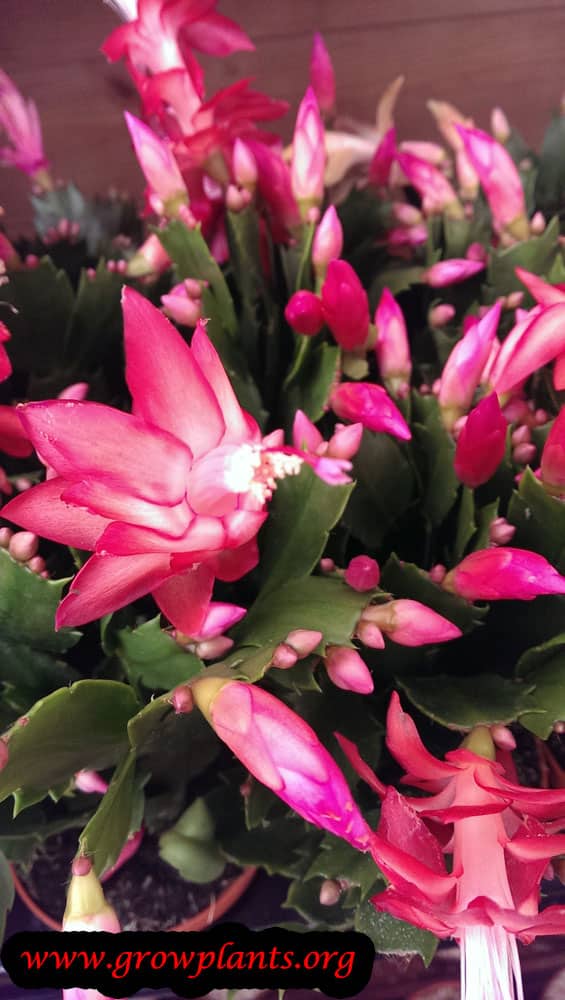
- Flower Appearance: Tubular, multi-tepalled flowers (15 to 30 tepals) in red, pink, orange, yellow, white or purple, dangling from the stem tips.
- Edibility: Ornamental only; not an edible flower – but reassuringly non-toxic to cats and dogs, unlike many houseplants.
Detailed Blooming Overview
The Christmas cactus (Schlumbergera) is a Brazilian epiphyte, and its flowering is famously governed by the calendar of light and temperature rather than season alone. As nights grow longer and cooler in autumn, it forms buds at the tips of its flattened segments and opens a cascade of elegant tubular flowers. The blooms are rich in nectar and, in the wild, are pollinated by hummingbirds – indoors they simply put on a long, colourful show through the darkest months.
Flower Characteristics
- Colour: red, pink, orange, yellow, white or purple.
- Form: long, tubular flower with 15 to 30 tepals in layered tiers.
- Position: hanging from the ends of the flattened stem segments.
- Wildlife: nectar-rich and attractive to hummingbirds in its native range.
Bloom Care & Thinning
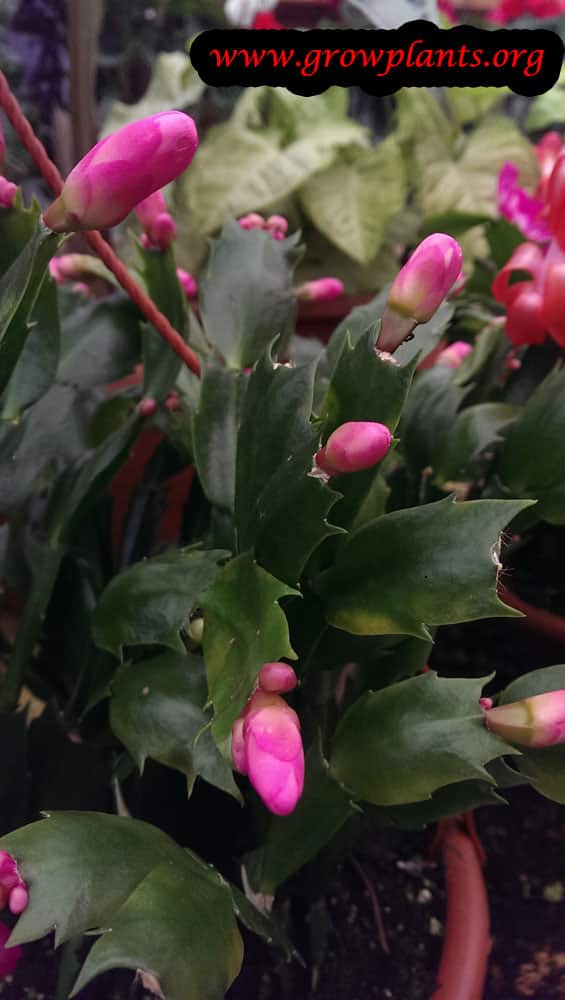
- Trigger the buds: for six weeks or so before the season, give it long, uninterrupted nights (12 to 14 hours of darkness) and cool temperatures – this is what sets the buds.
- Then hold it steady: once buds appear, avoid moving the plant, and keep it out of drafts, heat sources and sudden light changes.
- Even moisture: keep it lightly and evenly moist while in bud and bloom – do not let it dry out hard at this stage.
Bloom Health & Protection
- Bud drop is the classic complaint – it is almost always a response to being moved, to drafts, to temperature swings, or to letting the plant dry out while in bud. Keeping conditions steady is the fix.
- Mealybugs can lodge where the segments join near the buds – a cotton bud with surgical spirit, or a light insecticidal soap, deals with them.
Fruit & Uses
Christmas cactus is grown for its winter flowers, not as a food plant, but the small berry-like fruit that can follow flowering is not toxic and has been eaten raw by a few curious growers. Reports describe the flavor as unremarkable, so this is a minor curiosity rather than a real culinary use.
Quick Edible Specs
| Edible Parts | Fruit (minor/uncommon use) |
|---|---|
| Main Use(s) | Occasional raw tasting; not a culinary crop |
| Eaten Raw or Cooked | Raw |
| Preparation Required | None beyond picking the ripe fruit |
| Harvest Season | After flowering, if fruit sets at all |
| Storage | Best eaten fresh; not documented for storage |
| Safety/Toxicity Caveat | Not listed as toxic, but flavor is reported as poor; fruit-set rarely occurs on indoor houseplants since it depends on successful pollination |
Fruit
If flowers are pollinated, a small, yellow-green, ribbed berry forms, containing tiny black seeds. In the wild, birds eat this fruit and spread the seeds; on a houseplant, fruit-set is uncommon since pollination rarely happens indoors without help.
Harvesting
Pick the berry once it has coloured up and softened after flowering, if one has formed; this is an incidental occurrence on a plant grown for its flowers, not for harvest.
Preparation, Uses & Safety
The fruit is eaten raw with no preparation needed, but growers who have tried it describe the taste as bland to mediocre. There is no established culinary use for this fruit; it is safe to try but not a reason to grow the plant.
Pests, Diseases & Troubleshooting
Overview: The Christmas cactus is a tough, forgiving epiphytic cactus whose troubles are overwhelmingly cultural-stem and root rot from overwatering, and bud drop from sudden changes-rather than pests. The few pests it does get (mealybugs, scale and fungus gnats) are easily managed. Give it a chunky, fast-draining epiphyte mix, water only when it dries a little, and it lives for decades.
Quick Troubleshooting Overview
| Issue / Pest | Main Symptom | Primary Solution |
|---|---|---|
| Mealybugs | White cottony tufts between the flat stem segments, sticky honeydew | Alcohol swab, insecticidal soap or neem |
| Fungus gnats | Small black flies over the soil; larvae in constantly moist mix | Let mix dry, yellow sticky traps, sand top-dressing |
| Scale insects | Small brown bumps on stem segments, weakened growth | Scrape off, horticultural oil |
| Stem & root rot | Segments turn limp, brown, mushy; base blackens | Cut back to firm tissue, dry out, re-root, repot |
| Bud drop | Flower buds fall before opening | Keep light, temperature and watering stable while budded |
Common Pests & Management
- Mealybugs (Planococcus citri, Pseudococcus spp.):
- Symptoms: White, cottony, waxy insects wedged into the joints between the flat stem segments and around the growing tips, with sticky honeydew and sooty mould; root mealybugs may also lurk in the potting mix.
- Prevention & Control: Dab each colony with an alcohol-dipped cotton bud, then spray insecticidal soap or neem, working into the segment joints. Isolate the plant, and for a bad potted case wash the roots and repot into fresh epiphyte mix.
- Fungus gnats (Bradysia spp.):
- Symptoms: Small black flies drifting around the plant and running over the soil; their larvae live in constantly moist, peaty mix and can nibble fine roots, worst on overwatered plants.
- Prevention & Control: The cure is to let the mix dry out more between waterings. Use yellow sticky traps for the adults, a dry sand or grit top-dressing to block egg-laying, and a Bacillus thuringiensis israelensis (Bti) drench for larvae if needed.
- Scale insects (Coccus, Diaspididae):
- Symptoms: Small brown or tan bumps clamped onto the stem segments, draining sap and slowly weakening the plant, sometimes with honeydew.
- Prevention & Control: Scrape off by hand and smother the rest with horticultural or neem oil, repeating to catch crawlers; prune out any heavily encrusted segments.
- Spider mites (Tetranychus urticae):
- Symptoms: In hot, dry air the stem segments look dull, greyish and finely stippled, occasionally with fine webbing-less common than on leafy plants but possible.
- Prevention & Control: Raise humidity, rinse the plant, and spray insecticidal soap or neem, repeating every few days until clear.
Diseases & Fungal Issues
- Stem & root rot (Phytophthora, Pythium, Fusarium spp.):
- Symptoms: The main killer: stem segments become water-soaked, limp, brown and mushy, and rot spreads from the base or roots, often causing sudden collapse of a plant that was overwatered or kept cold and wet.
- Treatment & Management: Prevent with an airy, sharply drained epiphyte mix, a pot that drains, and watering only when the mix is partly dry-less in winter. At the first sign, cut back to firm green tissue, let cuttings callus and re-root them in fresh mix; discard badly rotted plants.
- Basal stem rot & Drechslera spot (Drechslera / Bipolaris cactivora):
- Symptoms: Reddish-brown to black soft lesions at the base or on segments, sometimes appearing as spreading wet spots, especially in warm, wet, humid conditions.
- Treatment & Management: Remove and destroy affected segments, keep the plant on the dry side with good airflow, and avoid wetting the stems; propagate from clean, unaffected segments.
- Botrytis / grey mould (Botrytis cinerea):
- Symptoms: Fuzzy grey mould on flowers and stem segments in cool, damp, still air, rotting the affected tissue.
- Treatment & Management: Improve airflow, remove spent flowers and mouldy parts promptly, and avoid overhead watering and stagnant humidity.
Growing Difficulties & Abiotic Problems
- Bud drop:
- Cause & Symptoms: The classic frustration: healthy-looking flower buds shrivel and fall before opening. It is caused by any sudden change while the plant is in bud-moving it, shifting light or temperature, drafts, or letting it get too dry or too wet.
- Correction Strategy: Once buds form, leave the plant alone: keep it in the same spot with steady light, cool-to-moderate temperatures and even (not heavy) watering, and away from drafts, heat sources and cold glass until it flowers.
- Failure to bloom:
- Cause & Symptoms: No flowers form because the plant did not receive the cool nights and long, uninterrupted darkness it needs in autumn to set buds.
- Correction Strategy: For six to eight weeks before the flowering season give it cool nights and around 12–14 hours of complete darkness each night (no artificial light), then return it to normal conditions once buds appear.
- Overwatering & limp segments:
- Cause & Symptoms: Despite being a cactus it is epiphytic and rots easily; overwatering or a water-retentive mix makes segments limp, yellow or mushy and rots the roots.
- Correction Strategy: Water only when the top of the mix has dried, use an open epiphyte mix, ensure sharp drainage, and cut back further in the cool, low-light months.
- Sunburn & reddening:
- Cause & Symptoms: In harsh direct sun the flat segments bleach, redden or develop scorched patches; a purplish-red tinge overall can also signal stress or the wrong feeding.
- Correction Strategy: Give bright but filtered or indirect light rather than fierce midday sun, and move shade-grown plants out gradually; correct reddening by easing light stress and light, balanced feeding.
What Helps – Products & Tools
For the Christmas cactus the essentials are gentle: isopropyl alcohol and insecticidal soap or neem for mealybugs and scale, yellow sticky traps and a Bti drench for fungus gnats, and horticultural oil for stubborn scale. Far more important than any spray is a chunky, free-draining epiphyte or cactus mix and disciplined watering, which prevent the rot that causes most losses; a biological or copper fungicide is a last resort for botrytis.
Frequently Asked Questions
When does Christmas cactus bloom, and how can I encourage it to flower?
Christmas cactus blooms in autumn through winter and into spring, set off by cool nights and long, dark evenings. To trigger buds, give it about six weeks of long, uninterrupted nights (12 to 14 hours of darkness) and cool temperatures before the season, then once buds appear avoid moving the plant or exposing it to drafts, heat sources or sudden light changes, since any disturbance can cause bud drop.
What do Christmas cactus flowers look like, and what colors do they come in?
Its flowers are long and tubular with 15 to 30 tepals arranged in layered tiers, dangling from the tips of the flattened stem segments. They come in red, pink, orange, yellow, white or purple.
How often should you water a Christmas cactus?
Water once the top few centimetres of the mix have dried out, more freely during active growth and flowering and easing off between times. After flowering, cut back on watering to give the plant a cooler, drier rest that helps set the next round of buds, and avoid soggy soil in winter.
How do you propagate a Christmas cactus?
Twist or cut off a piece of two or three flattened stem segments at a natural joint, then let the cut end air-dry and callus for a day or two before inserting it into a lightly moist, well-drained potting mix. Keep it in indirect light or shade; rooting typically takes a few weeks under warm, humid conditions.
Is Christmas cactus poisonous to pets?
No, Christmas cactus is non-toxic to pets – it’s reassuringly safe for cats and dogs, unlike many other common houseplants.
How do you care for a Christmas cactus?
Give it bright, indirect light or full shade, avoiding harsh direct sun, and grow it in a light, free-draining epiphytic mix – potting soil lightened with perlite or orchid bark rather than a heavy, water-holding soil. Keep the mix lightly moist, watering when the top dries out, and keep it away from cold drafts and heat sources; an east- or north-facing window suits it well indoors.