Plant Profile & Key Characteristics
Overview: A deciduous spring-flowering bulb 10–30 cm tall, grown as an ornamental and cut flower. It needs a dry summer dormancy and a cold winter; the bulb can be lifted and chilled between seasons.
Quick Specifications
| Specification | Attribute |
|---|---|
| Plant Type / Life Cycle | Perennial (deciduous geophyte) |
| Foliage Type | Deciduous |
| Mature Size | 10–30 cm H (4–12 in) |
| Growth Rate | Moderate |
| Root System | Bulbous geophyte |
| Toxicity | Toxic if eaten — bulbs contain tulipalin; handling can irritate skin |
| Hardiness | USDA zones 3–9 |
Growth Form & Structure
- Height & Spread: Upright stems 10–30 cm tall from a single bulb; grows well in planters and containers.
- Growth Habit & Form: Upright, single-stemmed bulb with basal leaves; needs a dry summer dormancy and cold winter.
- Lifespan & Maturity: Perennial bulb; increases by offset bulbs and is best lifted and stored dry over summer.
Anatomy & Physical Features
- Leaves & Foliage: Green, lance-shaped leaves rising from the bulb in a rosette.
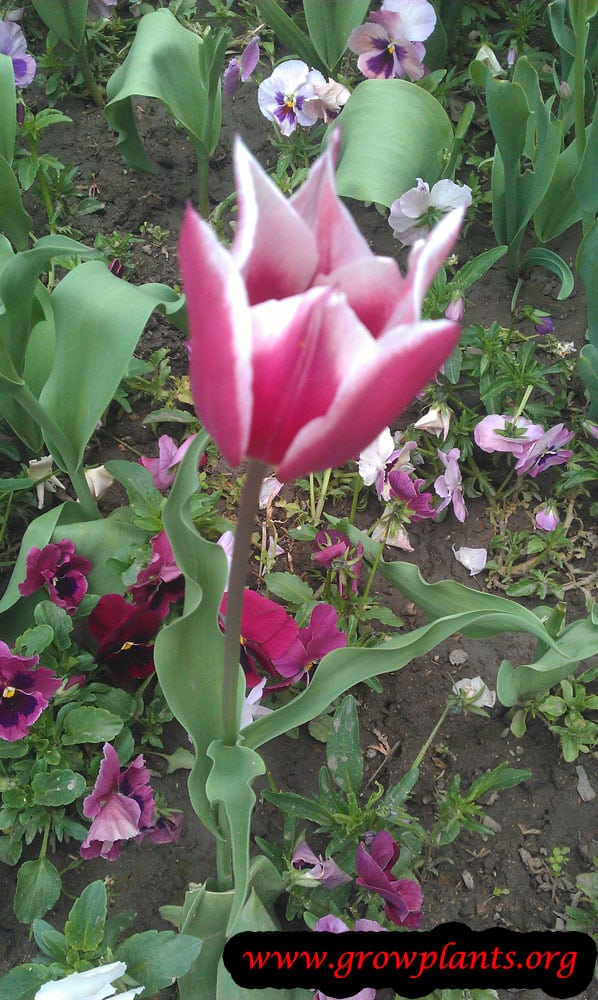
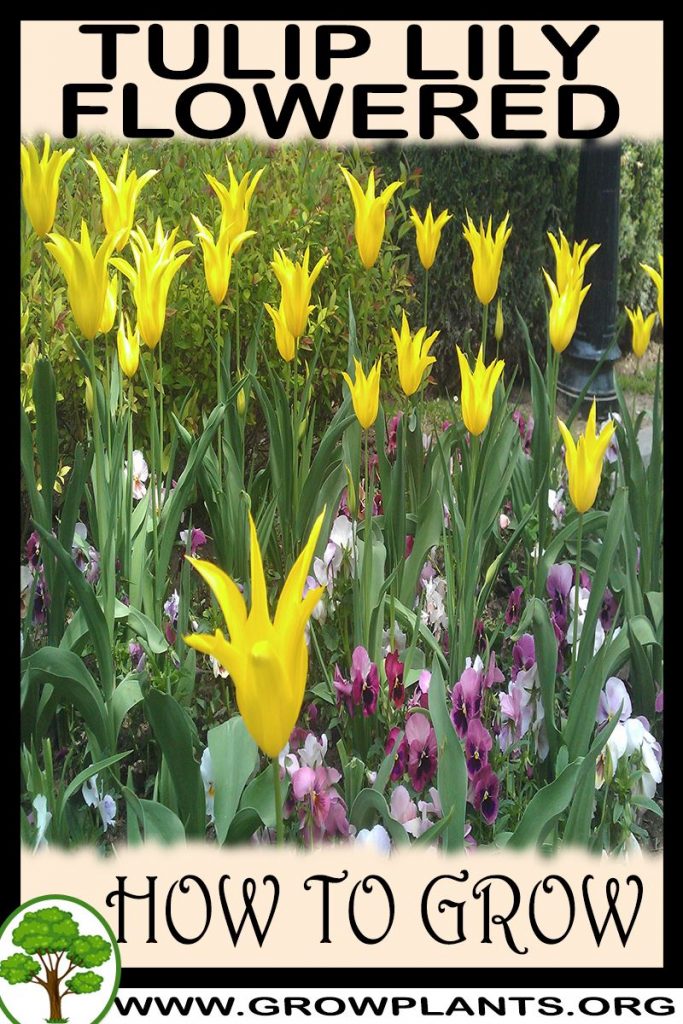
- Flower Characteristics: Flowers in red, pink, purple, orange, white, yellow or multicolour, opening from a drop-shaped bud into a triangular cup (full detail in the Bloom accordion).
Primary Uses & Landscape Value
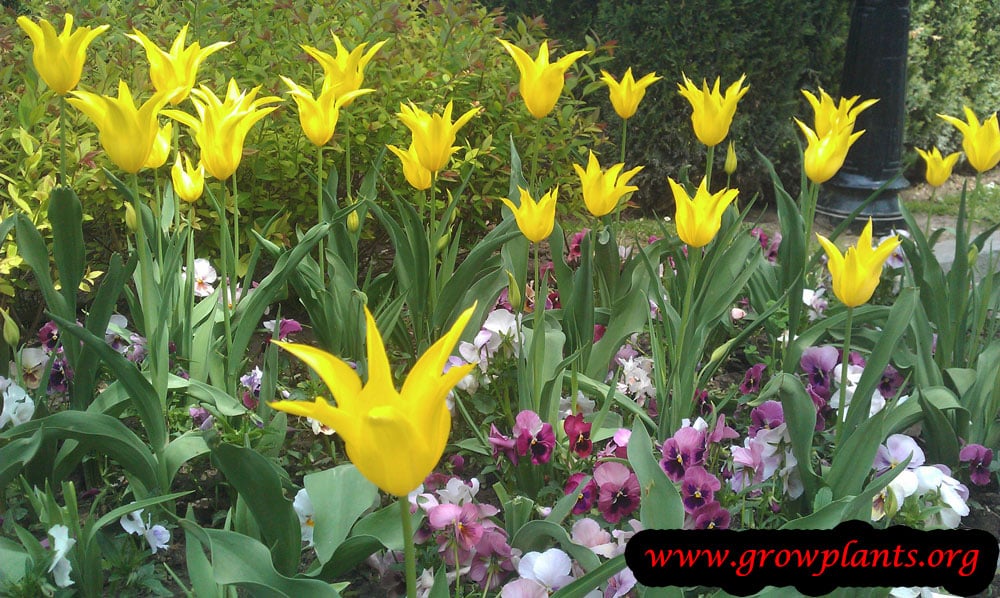
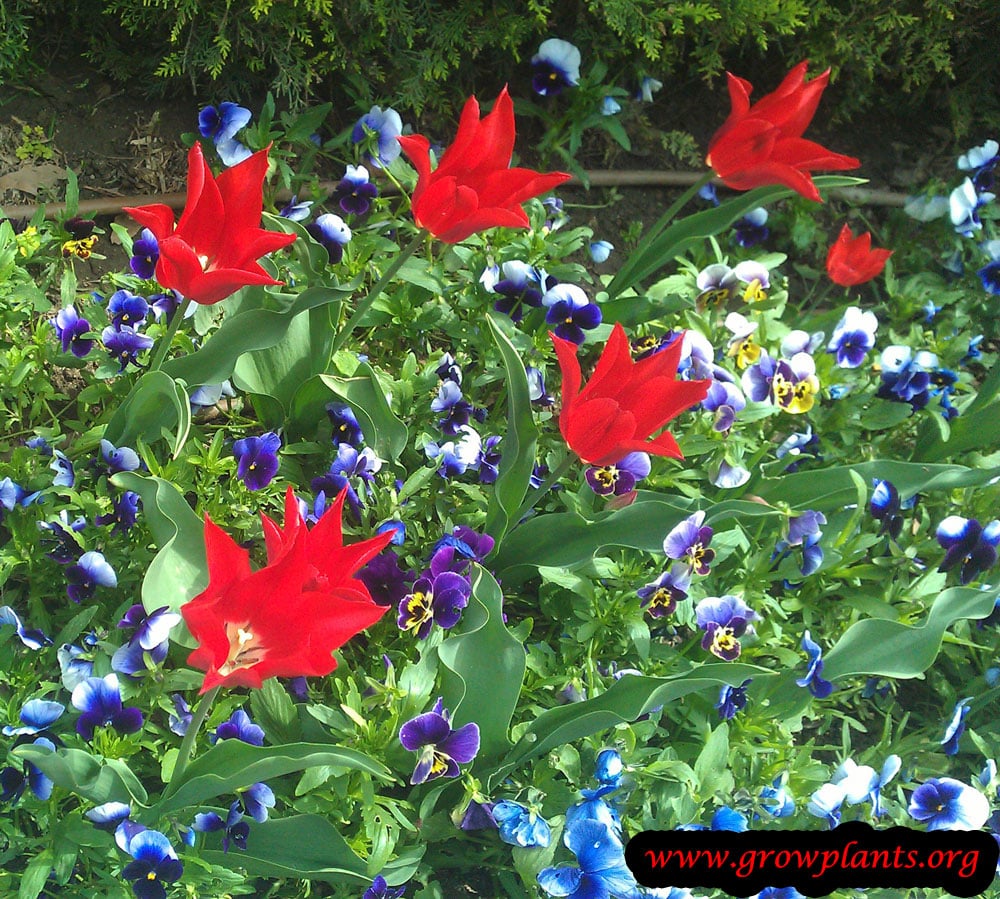
- Functional & Ornamental Roles: Ornamental spring bedding, border and container bulb, and cut flower.
Care Guide: Planting, Soil & Watering
Overview: The tulip lily is a hardy autumn-planted bulb that needs a cold winter to trigger its spring bloom and sharp drainage year-round. It grows best in sandy, free-draining soil in full sun to light shade, staying dry through its summer dormancy.
Quick Care Requirements
| Requirement | Ideal Condition |
|---|---|
| Planting Season | Autumn in warm climates, spring in cold climates |
| Growth Rate | Moderate |
| Soil Type | Sandy, well-draining |
| Water Need | Moderate; moist in growth, dry in summer dormancy |
Planting & Establishment
- Best Planting Season: Plant the bulbs in autumn so they receive their winter chilling; in the coldest zones (3-9) plant in spring instead. Where winters are mild, pre-chill the bulbs in a fridge above 5 C before planting.
- How to Plant:
- Hole Preparation: Dig a hole about two to three times the height of the bulb, in soil that drains freely.
- Soil Amendments: On heavy ground, mix in sand or grit so the bulb never sits in wet soil.
- Planting Depth: Set the bulb pointed-end up, roughly two to three times its own height deep.
- Growth Speed & Expectations: A moderate grower reaching about 10-30 cm (4-12 in), with foliage emerging first and flowers following in spring.
Soil, Watering & Drainage Care
- Soil Mix & Drainage Needs: Keep it in sandy, free-draining soil and avoid wet ground, which rots the bulb; container growing works well with a gritty mix and open drainage.
- Watering Schedule & Technique:
- Young / Newly Planted: Water in after autumn planting to settle the soil, then let winter rain do the work.
- Established: Keep lightly moist during active growth and flowering, never waterlogged.
- Seasonal Adjustments: Withhold water through the summer dormancy; the bulb can be lifted and stored dry, and given a cold spell before replanting.
Climate, Light & Hardiness
Tulip is a hardy spring-flowering bulb (geophyte) that grows in full sun to light shade during a cool season and rests dormant through summer. The site data lists hardiness zones 3–9: the dormant bulb is very cold-hardy, and, crucially, it needs a period of winter cold to flower properly.
Quick Climate Specifications
| Climate Zones | Temperate, Mediterranean, subtropics (with pre-chilled bulbs) |
|---|---|
| USDA Hardiness Zones | Approximately 3–9 |
| Optimal Temp Range | Cool growing conditions ~10–18°C (50–64°F) |
| Frost Tolerance | Dormant bulb high; emerged foliage/flowers moderate |
| Light Conditions | Full sun to partial shade |
| Wind Tolerance | Moderate |
Sunlight & Light Exposure
Optimal Light Setup
Full sun gives the strongest stems and best flowering; light shade is tolerated, especially where springs are warm, but heavy shade reduces bloom.
Best Exposure / Orientation
An open, sunny position that warms in early spring suits the short growing season.
Temperature Extremes & Hardiness
USDA Hardiness & Regional Limits
Grown roughly zone 3 to 9. Warm-winter regions are the limiting factor: without enough winter cold the bulbs flower poorly, so in mild climates they are pre-chilled and often treated as annuals.
Cold Damage & Winter Protection
The dormant bulb withstands hard freezing in the ground. Emerged foliage tolerates light frost, but open flowers can be marked by a hard late frost.
Extreme Heat Tolerance
Low during growth - heat cuts the flowering season short and pushes the bulb into dormancy; hot summers are spent dormant (bulbs can be lifted and stored).
Chilling Requirement
Tulips need a sustained cold period - several weeks of near-freezing to cool temperatures around 5°C (41°F) - to flower well. In mild-winter climates this is supplied by pre-chilling bulbs (for example in a refrigerator) before planting; without adequate chilling, stems are short and blooms are poor.
Wind, Humidity & Microclimate
Rainfall & Seasonal Moisture
Adapted to a wet-then-dry cycle: moisture through the cool growing season and a dry, warm summer dormancy. Waterlogged summer soil rots the resting bulbs.
Microclimate Recommendations
A sunny bed with sharp summer drainage - or lifting and dry-storing bulbs over summer - keeps them healthy in areas with wet or hot summers.
Growing in Pots, Balconies & Indoors
Tulips are not everyday houseplants, but as short, spring bulbs they are among the easiest to force in pots – after a cold chill they will bloom on a bright, cool windowsill, and they grow well in containers for a patio or balcony. The grower confirms they are grown in pots but not as a permanent indoor plant.
Quick Details
- Container Size: A shallow, wide pot of about 2-5 L (0.5-1.3 gal); plant the bulbs close together, almost shoulder to shoulder
- Indoor Suitability: Not a lasting houseplant, but easy to force for a temporary bloom on a bright, cool sill
- Best Spot: Full sun to half shade; cool conditions keep the flowers standing longer
- Soil & Drainage: Free-draining mix; moist in growth, then allowed to dry as leaves fade
- Watering in Pots: Water moderately in growth; keep the dormant bulbs dry
Indoors & On the Windowsill
- Houseplant limits: The grower marks them as not indoor plants – in a warm room they stretch and flop and won’t rebloom.
- Windowsill / forcing: Treat them as forced pot bulbs: chill first, then bring the pot to a bright, cool sill for the display; keeping it cool makes the flowers last.
- Overwintering: These hardy bulbs need a cold dormant period to flower; give potted bulbs that chill, then move them into light and gentle warmth.
- Safety: Tulip bulbs are toxic to cats and dogs – keep pots and stored bulbs out of their reach.
On a Balcony or Patio
- Light & wind: A sunny, sheltered balcony is ideal for spring pots; reflected heat and wind dry containers fast, so keep the mix just moist while growing.
- Practicalities: Allow for the weight of a filled pot and for drainage runoff onto the balcony below – stand pots on feet or a tray you can empty.
Choosing the Pot, Soil & Long-Term Care
- Pot & drainage: A wide 2-5 L pot with strong drainage; no standing saucer. Use strong drainage holes and skip a standing water saucer, which invites root rot; terracotta breathes and dries fast, while glazed or plastic pots hold moisture longer.
- Potting mix: A light, aerated mix – potting compost, or peat/coir with added perlite or vermiculite for drainage.
- Feeding: A light feed as leaves grow supports the bulb; let the foliage die down naturally afterwards.
- Repotting: Lift and store the bulbs dry once foliage fades, replanting into fresh mix for the next season; many gardeners treat forced tulips as one-season.
Fertilizing & Feeding
A light feeder: a balanced fertilizer during active leaf growth helps power the flower show and recharge the bulb, then feeding stops as the foliage yellows and the bulb goes dormant.
Quick Fertilizing Specs
| Feeding Level | Light feeder |
|---|---|
| Main Nutrient Priority | Balanced feeding with attention to potassium for sturdy stems and full blooms |
| Best Feeding Period | From emergence through active leaf growth and bloom |
| Organic Options | Compost worked into well-drained, sandy soil at planting |
| Reduce/Stop Feeding | Stop feeding once bloom finishes and the foliage begins to yellow |
| Micronutrients | A balanced bulb fertilizer covers routine trace needs for most plantings |
| Soil pH | Near neutral, well-drained sandy soil |
Feeding by Growth Stage
Active leaf growth through bloom
Support upright stems and a full flush of large, well-formed blooms.
| Nutrient direction | A balanced complete fertilizer, kept light, with attention to potassium for stem strength. |
|---|---|
| Timing | From emergence through active leaf growth and flowering. |
| Frequency | Light feeding during active growth. |
| Fertilizer types | A balanced complete fertilizer, Compost worked into well-drained soil |
| Precautions | Keep feeding light; well-drained, sandy soil matters as much as fertilizer for healthy bulbs. |
Post-bloom and dormancy
Let the bulb finish storing energy for next year and go dormant without pushing new growth.
| Nutrient direction | None – withhold fertilizer as the foliage yellows and dies back. |
|---|---|
| Timing | After flowering finishes, as leaves yellow and the plant prepares for its dry summer rest. |
| Frequency | No feeding at this stage. |
| Fertilizer types | No feeding at this stage; do not fertilize a bulb that is going dormant. |
| Precautions | Do not fertilize once foliage yellows; let the bulb dry down and rest naturally. |
Nutrient Deficiency Signs & Corrections
Flower stems are weak or floppy and blooms are smaller than expected.
| Possible causes | low soil potassium, an overly nitrogen-heavy fertilizer program, poor root development from wet or compacted soil |
|---|---|
| Appears first on | flower stems and bloom size |
| What to check | soil drainage and structure, recent fertilizer type used, root and bulb health |
| Possible correction | Switch to a balanced fertilizer with adequate potassium and improve soil drainage. |
Young leaves show yellowing between the veins while the veins stay green.
| Possible causes | high soil alkalinity limiting iron availability, waterlogged or poorly drained soil, naturally low iron in sandy soils |
|---|---|
| Appears first on | new, young leaves |
| What to check | soil pH and alkalinity, drainage of the planting site, whether new leaves are affected first |
| Possible correction | Improve drainage and correct soil alkalinity; apply a chelated iron product only if needed. |
Leaf tips brown or scorch and growth stalls despite regular watering.
| Possible causes | fertilizer salt buildup in the soil or container, under-watering that concentrates salts, excessive or too-frequent feeding |
|---|---|
| Appears first on | leaf tips and margins |
| What to check | recent fertilizer amounts, watering consistency, drainage of the planting site |
| Possible correction | Ease off feeding and water thoroughly to flush salts, then resume only light feeding. |
Pruning, Training & Seasonal Maintenance
Tulipa (tulip) is a true bulb with no woody growth, so pruning consists of a single seasonal task: once the Winter/Spring bloom has finished and the foliage has completely yellowed, all of the leaves are cut away in summer. Unlike some other bulbs, tulips are not usually tended leaf-by-leaf through a long die-back – the whole clump is cleared at once once it is fully spent, which also fits this species’ need for a dry summer rest and, in warm climates, deliberate cold-chilling of the lifted bulb before replanting.
Quick Pruning & Maintenance Specs
| Pruning Tolerance | Low on green tissue / High once foliage is fully dead |
| Primary Pruning Window | Summer, once all foliage has yellowed after the Winter/Spring bloom |
| Secondary Maintenance Window | Immediately after bloom (deadheading spent flowers before seed forms) |
| Typical Frequency | Twice per growing cycle |
| Main Objective | Stop seed-set drain after bloom, then clear all foliage at once so the bulb can rest/be lifted for its dry-summer, cold-winter cycle |
| Young Plant Priority | None – first-season foliage left fully intact to build the bulb |
| Mature Plant Priority | Deadhead promptly; cut all leaves away only once fully yellowed, then lift if being chilled for next season |
| Best Tool Type | Precision snips / hand shears |
| Avoid Heavy Pruning During | While any foliage is still green |
Pruning by Plant Age & Size
Newly Established
Leave all foliage on newly planted bulbs untouched through the first full cycle; remove only visibly damaged leaves.
Young / Formative
No structural training applies – there is no woody framework or cane structure.
Mature / Established
Deadhead the spent bloom near its base once petals drop; once all foliage has yellowed in summer, cut it away completely rather than leaving a partial die-back.
Seasonal Pruning Schedule
| Post-Flowering | Objective: stop energy loss to seed production. Remove: the spent flower head only. Do not remove: any green leaves. Response: bulb continues bulking up through the remaining foliage. Flowering impact: none this season; protects next year’s bloom size. |
| Summer (full foliage cutback) | Objective: clear all dead leaf material once the bulb has finished recharging, ahead of its required dry-summer rest. Remove: all foliage, once fully yellowed/collapsed. Do not remove: leaves still showing any green. Response: bulb goes dormant and is ready for lifting where a cold-storage chilling cycle is needed. Flowering impact: cutting green leaves early significantly reduces or prevents next year’s bloom. |
Special Growth to Remove
- Spent flower head, removed before it sets seed
- All foliage, removed together once fully yellowed in summer
- Any slug/snail-damaged leaf debris left on the soil (its known pests shelter in dying foliage)
Container & Small-Space Pruning
Grows well in pots. Apply the same rule – deadhead, then wait for full yellowing before removing all foliage. Container-grown bulbs in warm climates are commonly lifted after the summer cutback and refrigerated (around 5C) to supply the cold period they would not otherwise get, before replanting in autumn.
Tools
- Precision snips for deadheading spent blooms
- Hand shears for the full summer foliage cutback
Tool Hygiene & Disease Risk
Routine – clean tools are sufficient for healthy plants; this species’ main problems (slugs and snails) are pest damage rather than tool-transmitted disease, so no special disinfection is needed beyond general garden hygiene.
Cut Placement & Technique
Deadhead just below the spent flower head, above the foliage. For the summer cutback, cut all leaves at or near soil level once fully yellowed.
Heavy Pruning & Rejuvenation
Not applicable in the woody sense – there is no framework to rejuvenate. The closest equivalent is lifting, sorting and replanting bulbs (and discarding small/weak ones) each cycle, which is bulb management rather than pruning.
Post-Pruning Care
Water normally while foliage is green; stop watering once the summer cutback is done and the bulb is entering its dry rest period. Do not fertilize after the full foliage removal, since the plant is dormant, not regrowing.
Common Pruning Mistakes
- Cutting back green foliage before it has fully yellowed, which weakens or prevents next year’s bloom
- Leaving spent flowers to set seed instead of deadheading promptly
- Skipping the required cold-chilling period in warm climates after lifting, expecting the bulb to rebloom without it
When NOT to Prune
Do not cut any green foliage, even if it looks untidy after flowering – the bulb needs it to recharge before its dry summer rest. Avoid disturbing the bulb in soggy soil, which favors rot as well as slug/snail activity.
Recommended Tools (by task)
- precision_snips – clean deadheading cuts on individual flower stems
- bypass_secateurs – for the full clump cutback once foliage has yellowed
Propagation Guide
Garden tulips are propagated by dividing the offset bulbs a mature bulb produces around itself, which is the only practical way to keep a specific flower true; seed is botanically possible but garden tulip seedlings take many years to reach flowering size and hybrids do not come true, so it is not a realistic home-propagation route. Bulb division itself is easy.
Quick Propagation Specs
| Best Propagation Method | Bulb (offset) division |
| Propagation Difficulty | Easy |
| Vegetative True-to-Type | Yes |
| Best Propagation Season | Lift and divide bulbs in summer once foliage has fully died back; plant in autumn (warm climates) or spring (cold climates) |
Rhizomes, Tubers, Bulbs & Corms
Bulb Division
Once all the foliage has died back in summer, lift the bulbs from the well-drained, sandy soil they prefer and separate the offset bulbs from the mother bulb by hand.
- Keep only firm, healthy offsets; the largest can be replanted directly for bloom the next season, while smaller ones need a season or two of growing-on first.
- In warm climates without enough natural winter cold, store lifted bulbs somewhere cool and dry over summer, then refrigerate them at about 5°C (41°F) or below for the winter chilling period before planting out in autumn.
- In cold-winter climates, bulbs can generally be replanted directly in autumn and left in the ground, or planted in spring depending on local practice.
Bloom & Flower Guide
Quick Details
- Bloom Season: Late winter to spring
- Time to First Bloom: Autumn-planted bulbs flower the first spring
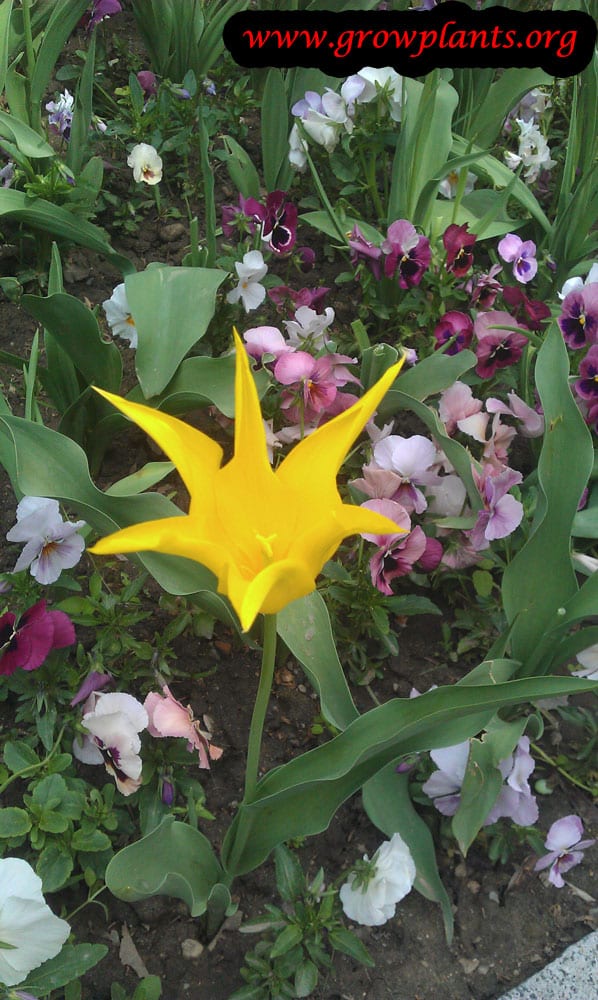
- Flower Appearance: Slender, pointed, lily-shaped petals opening from a teardrop bud, in a wide colour range
- Edibility: Ornamental – the bulbs are toxic if eaten
Detailed Blooming Overview
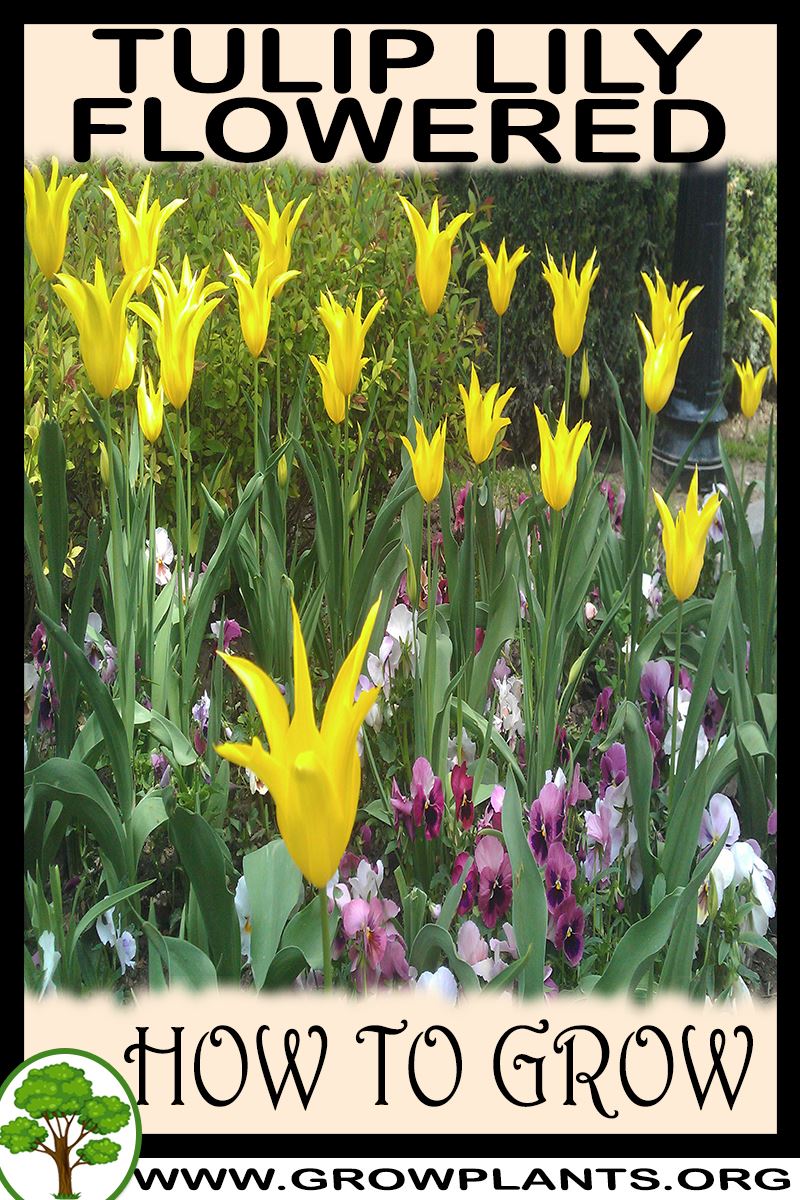
The lily-flowered tulip is grown for its elegant shape: narrow, pointed petals that start as a neat teardrop bud and flare open into a star. Colours run from red, pink and purple through orange, white and yellow to bicolours.
Flower Characteristics
- Pointed, lily-like petals opening from a drop-shaped bud into a triangular, star-like flower.
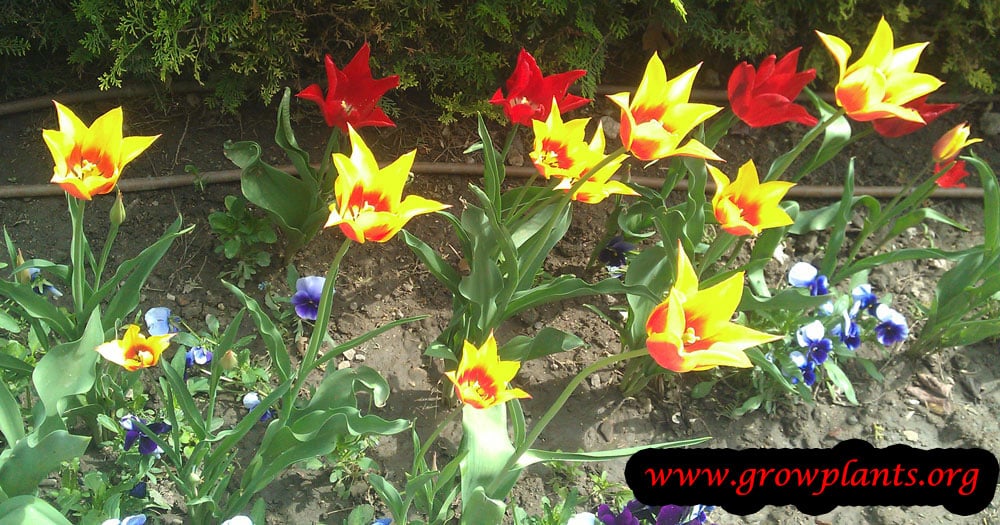
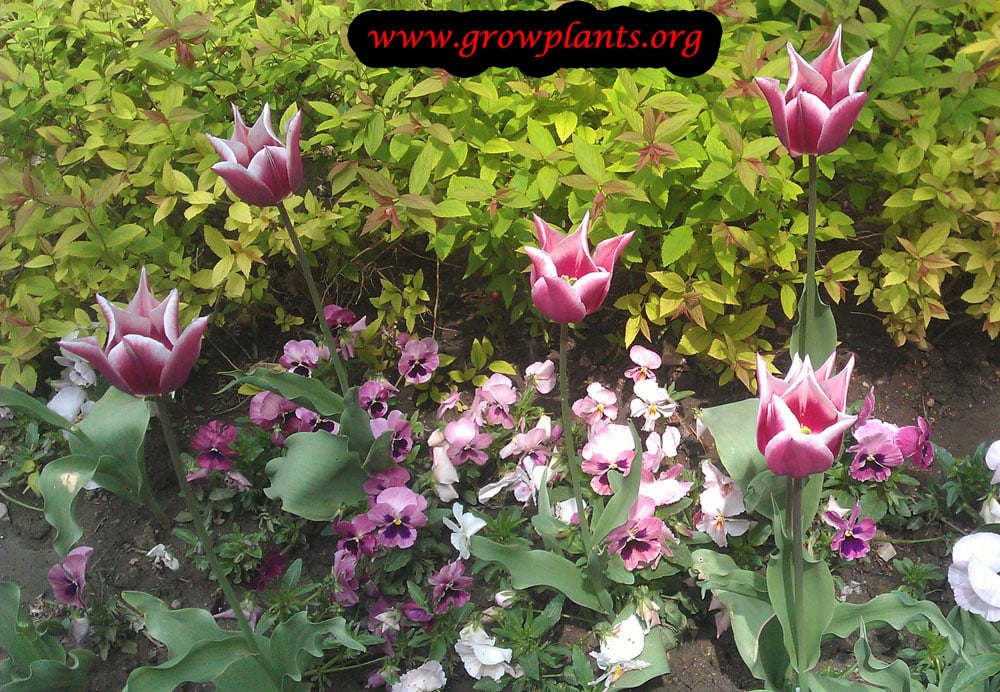
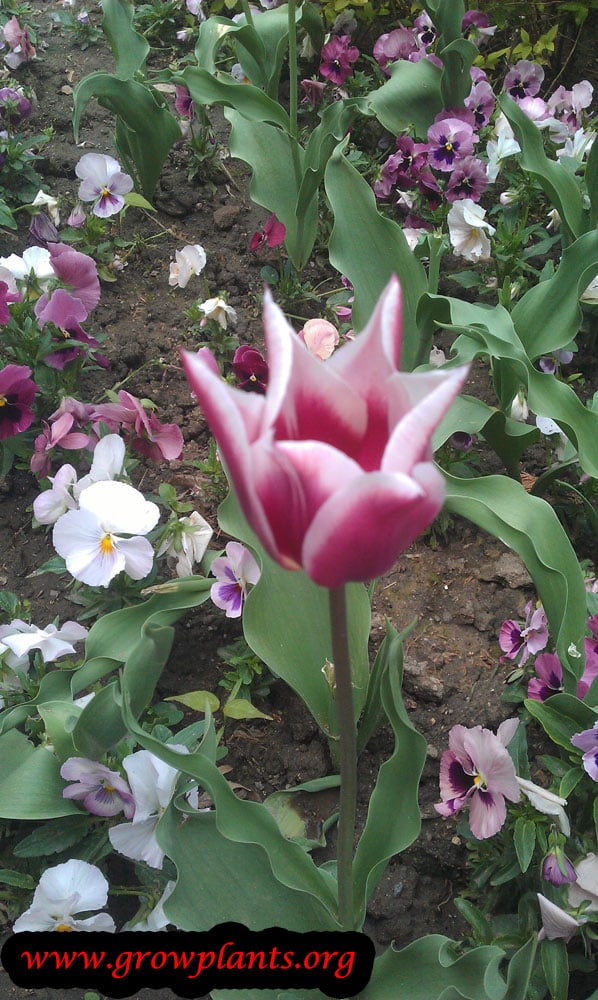
- Colours include red, pink, purple, orange, white, yellow and multicolour.
Bloom Care & Thinning
- After flowering: Deadhead spent blooms but leave the foliage to die back so the bulb can feed for next year.
- In mild climates: Many tulips flower best only in their first year, so they are often treated as annuals and replanted.
Bloom Health & Protection
- Tulip fire (Botrytis tulipae): Scorches buds and petals with brown spots and twisted growth – removing affected growth, avoiding overhead watering and, if needed, a suitable fungicide limit it.
- Aphids: Cluster on buds and can spread virus – a water jet or insecticidal soap keeps them down.
Fruit & Uses
Only the flower petals of Tulip lily have any established edible use, eaten fresh in small amounts as a decorative, mildly flavoured garnish. The bulb – the part most people associate with tulips – is not a safe food and should not be eaten.
Quick Edible Specs
| Edible Parts | Flower petals only, in small quantities |
|---|---|
| Main Use(s) | Edible garnish / decorative addition to salads and plates |
| Eaten Raw or Cooked | Raw, fresh, as a garnish |
| Preparation Required | Remove petals from the stamens/base before eating; use sparingly and only from plants grown without pesticides |
| Harvest Season | During bloom – see Blooming for season by climate |
| Time to First Harvest | Petals can be taken from any open bloom on a flowering-size bulb; not a repeat or bulk harvest |
| Storage | Best used fresh, immediately after picking; does not store |
| Safety/Toxicity Caveat | Bulbs, leaves and stems are NOT food – they contain irritant compounds (tuliposides) that can cause nausea, vomiting and skin irritation (‘tulip fingers’ in people who handle bulbs regularly); eat petals only, in small amounts, and avoid if prone to flower/pollen allergies |
Flowers & Flower Buds
Once a bloom has fully opened (see Blooming for the flower’s colour range and triangular open shape), individual petals can be pulled free of the flower’s base and eaten fresh as a garnish – flavour is mild and variably described as faintly sweet to slightly bean-like. The bitter-tasting base of the petals and the central stamens/pollen should be discarded rather than eaten. This is a decorative, occasional-use edible part, not a food crop; taking petals for eating will end that bloom’s display, so use sparingly if the flowers are also wanted for ornamental value.
Preparation, Uses & Safety
Use only petals, rinsed and taken from unsprayed plants; trim away the pale, bitter base of each petal before serving. Do not eat the bulb: despite historical accounts of tulip bulbs being eaten during famine conditions after extensive processing, this is not a safe or recommended food source today and bulbs, leaves and stems should be kept away from both people and pets. Anyone with known flower or pollen allergies should avoid eating tulip petals.
Pests, Diseases & Troubleshooting
Overview: Tulips are spring-flowering bulbs whose signature problems are the fungal disease tulip fire (Botrytis tulipae) and bulb rots in wet soil, alongside bulb-digging rodents and the tulip bulb aphid that hides in stored bulbs. Above ground slugs, aphids and the streaking of tulip breaking virus are the main callers. The whole management philosophy is dry, well-drained soil, clean bulbs, crop rotation and good airflow.
Quick Troubleshooting Overview
| Issue / Pest | Main Symptom | Primary Solution |
|---|---|---|
| Tulip fire (Botrytis) | Scorched, spotted, twisted shoots and flowers | Rotate, remove infected plants, airflow, fungicide |
| Tulip bulb aphid | Colonies on stored/sprouting bulbs | Inspect bulbs, brush off, insecticidal soap |
| Slugs & snails | Grazed shoots and flowers | Handpick, grit barriers, iron-phosphate bait |
| Rodents / squirrels | Dug-up, eaten bulbs | Wire baskets, gravel, deterrents |
| Basal rot | Bulbs fail to sprout, soft and mouldy | Plant firm bulbs, sharp drainage, no summer wet |
| Tulip breaking virus | Streaked, broken flower colour | Remove plants, control aphids |
Common Pests & Management
- Tulip bulb aphid (Dysaphis tulipae):
- Symptoms: Grey-green aphid colonies clustered under the papery tunic of stored bulbs and on emerging shoots, weakening growth and spreading tulip breaking virus.
- Prevention & Control: Inspect bulbs at planting and rub off colonies, store bulbs cool and airy, encourage lady beetles and lacewings on growing plants, and use insecticidal soap or neem on infested shoots.
- Slugs and snails (Gastropoda):
- Symptoms: Grazed, ragged emerging shoots, holed leaves and chewed flowers with slime trails in damp spring weather.
- Prevention & Control: Handpick at night, clear debris and hiding places, use grit or copper barriers around plantings, and apply pet-safe iron-phosphate bait where shoots are being damaged.
- Bulb mites (Rhizoglyphus spp.):
- Symptoms: Tiny pale mites infesting already damaged, diseased or rotting bulbs in storage or wet soil, accelerating breakdown.
- Prevention & Control: Plant only firm, undamaged bulbs, store them cool and dry, discard soft or injured bulbs, and keep growing soil free-draining so healthy bulbs are not invaded.
- Rodents and squirrels (Rodentia):
- Symptoms: Newly planted bulbs dug up and eaten, disturbed soil, and clumps that fail to emerge in spring – tulips are a favourite target.
- Prevention & Control: Plant bulbs inside wire mesh baskets, cover beds with chicken wire until growth starts, add sharp gravel around bulbs, and use humane deterrents; deep, firm planting also helps.
- Aphids on foliage and flowers (Aphidoidea):
- Symptoms: Green aphids on stems, buds and flowers causing honeydew, distortion and virus spread.
- Prevention & Control: Wash off with water, encourage natural enemies, remove badly virused plants, and use insecticidal soap or neem for persistent colonies.
Diseases & Fungal Issues
- Tulip fire (Botrytis tulipae):
- Symptoms: The signature tulip disease: distorted, scorched-looking emerging shoots, brown spots with grey mould on leaves and petals, twisted growth and rotting buds, spreading fast in cool wet springs. Bulbs may carry black sclerotia.
- Treatment & Management: Remove and destroy infected plants immediately, never replant tulips in the same soil for at least three years, space for airflow, avoid overhead watering, discard bulbs with black sclerotia, and apply a protectant fungicide in high-value plantings during wet weather.
- Basal rot and bulb rots (Fusarium oxysporum / Pythium spp.):
- Symptoms: Bulbs that fail to sprout or produce weak plants, with soft, browned, sometimes pink-mouldy basal plates; driven by warm, wet or poorly drained soil.
- Treatment & Management: Plant only firm healthy bulbs in free-draining soil, avoid waterlogging and summer irrigation of dormant bulbs, rotate planting sites, and lift and store bulbs cool and dry in wet climates.
- Tulip breaking virus (Tulip breaking virus (Potyvirus)):
- Symptoms: Feathered or streaked ‘broken’ flower colour and mottled foliage; historically prized but a sign of a debilitating, aphid-spread virus that weakens bulbs over time.
- Treatment & Management: There is no cure – remove and destroy affected plants, control the aphids that spread it, keep virus-prone tulips away from lilies, and buy virus-free stock.
- Grey mould and Pythium root rot (Botrytis cinerea / Pythium spp.):
- Symptoms: Fuzzy grey mould on flowers and foliage in cool damp still air, and soft, brown, poorly rooted plants in wet soil.
- Treatment & Management: Improve airflow and drainage, remove faded flowers and dead foliage, avoid overwatering, and keep beds free of debris.
Growing Difficulties & Abiotic Problems
- Poor or declining flowering:
- Cause & Symptoms: Warm winters that fail to chill the bulbs, cutting foliage too early, or leaving bulbs in hot wet summer soil all reduce or end flowering; many hybrid tulips naturally weaken after the first year.
- Correction Strategy: Give a proper cold dormancy (pre-chill bulbs in mild climates), let foliage die down naturally to recharge the bulb, keep bulbs dry over summer, and treat many hybrids as annuals or choose perennialising and species types.
- Frost and weather damage to flowers:
- Cause & Symptoms: Late frosts scorch buds and foliage, and heavy rain or wind flatten the tall stems.
- Correction Strategy: Site in a sheltered spot, cover during hard late frosts, and choose sturdier or shorter cultivars in exposed gardens.
What Helps – Products & Tools
Tulip care centres on prevention: sharp drainage and rotation against tulip fire and basal rot, wire baskets and gravel against rodents, iron-phosphate bait for slugs, and insecticidal soap or neem for the bulb aphid and foliar aphids that spread virus. Keep a protectant fungicide (for example chlorothalonil-type or copper) only for tulip fire in wet springs on valued displays.