


Plant Profile & Key Characteristics
Overview: A deciduous spring-flowering bulb 10–30 cm tall, grown as an ornamental and cut flower. A Mediterranean species tulip needing a dry summer and cold winter; the bulb is lifted in summer.
Quick Specifications
| Specification | Attribute |
|---|---|
| Plant Type / Life Cycle | Perennial (deciduous geophyte) |
| Foliage Type | Deciduous |
| Mature Size | 10–30 cm H (4–12 in) |
| Growth Rate | Moderate |
| Root System | Bulbous geophyte |
| Toxicity | Toxic if eaten — bulbs contain tulipalin; handling can irritate skin |
| Hardiness | USDA zones 7–11 |
Growth Form & Structure
- Height & Spread: Upright stems 10–30 cm tall from a single bulb; grows well in planters and containers.
- Growth Habit & Form: Upright, single-stemmed bulb with basal leaves; needs a dry summer dormancy and cold winter.
- Lifespan & Maturity: Perennial bulb; increases by offset bulbs and is best lifted and stored dry over summer.
Anatomy & Physical Features
- Leaves & Foliage: Green, lance-shaped leaves rising from the bulb.
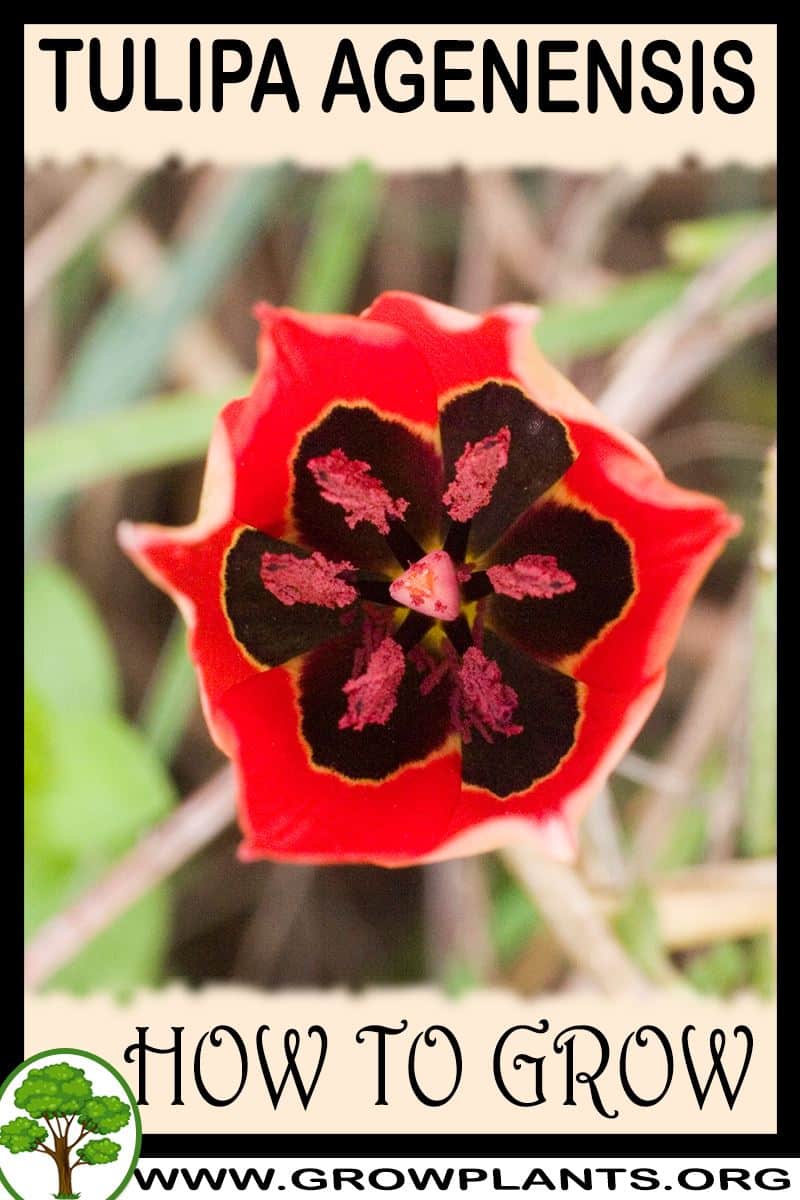
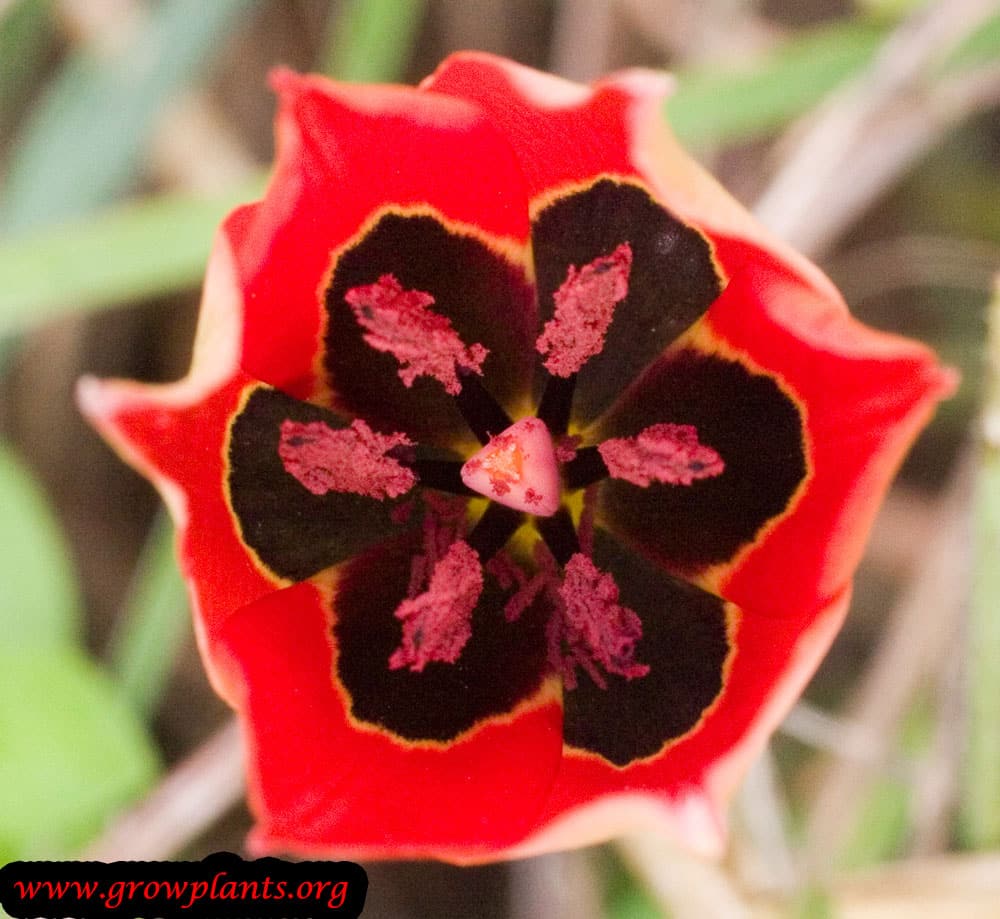
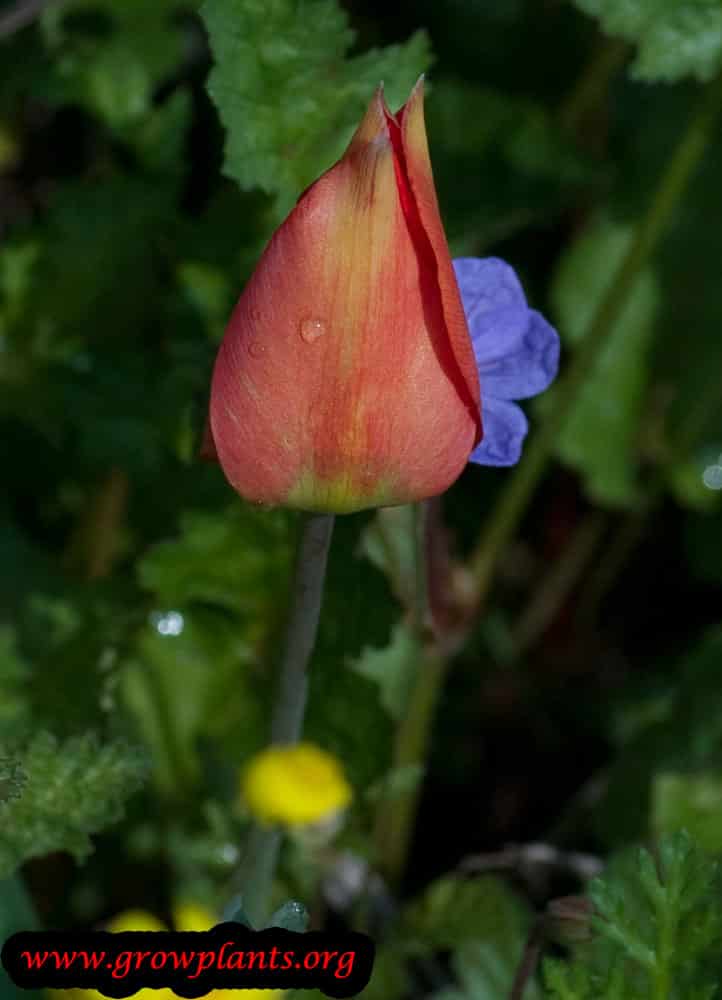
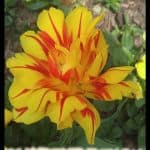
- Flower Characteristics: Red flowers with a black centre, opening from a drop-shaped bud into a flat plate shape (full detail in the Bloom accordion).
Primary Uses & Landscape Value
- Functional & Ornamental Roles: Ornamental spring bedding, border and container bulb, and cut flower.
Care Guide: Planting, Soil & Watering
Overview: Tulipa agenensis is a hardy autumn-planted bulb that needs a cold winter to trigger its spring bloom and sharp drainage year-round. It grows best in sandy, free-draining soil in full sun to light shade, staying dry through its summer dormancy.
Quick Care Requirements
| Requirement | Ideal Condition |
|---|---|
| Planting Season | Autumn |
| Growth Rate | Moderate |
| Soil Type | Sandy, well-draining |
| Water Need | Low to Moderate; moist in growth, dry in summer dormancy |
Planting & Establishment
- Best Planting Season: Plant the bulbs in autumn so they receive their winter chilling; in the coldest zones (7-11) plant in spring instead. Where winters are mild, pre-chill the bulbs in a fridge above 5 C before planting.
- How to Plant:
- Hole Preparation: Dig a hole about two to three times the height of the bulb, in soil that drains freely.
- Soil Amendments: On heavy ground, mix in sand or grit so the bulb never sits in wet soil.
- Planting Depth: Set the bulb pointed-end up, roughly two to three times its own height deep.
- Growth Speed & Expectations: A moderate grower reaching about 10-30 cm (4-12 in), with foliage emerging first and flowers following in spring.
Soil, Watering & Drainage Care
- Soil Mix & Drainage Needs: Keep it in sandy, free-draining soil and avoid wet ground, which rots the bulb; container growing works well with a gritty mix and open drainage.
- Watering Schedule & Technique:
- Young / Newly Planted: Water in after autumn planting to settle the soil, then let winter rain do the work.
- Established: Keep lightly moist during active growth and flowering, never waterlogged.
- Seasonal Adjustments: Withhold water through the summer dormancy; the bulb can be lifted and stored dry, and given a cold spell before replanting.
Climate, Light & Hardiness
Tulipa agenensis is a Mediterranean-climate species tulip, narrower in range than many garden tulip hybrids, needing a cold winter dormancy and dry summer rest in full sun to light shade. It is markedly less broadly adapted than generic garden tulips, reflecting its native mediterranean origin.
Quick Climate Specifications
| Climate Zones | Mediterranean |
| USDA Hardiness Zones | 7–11 |
| Optimal Temp Range | Cool, approximately 7–18°C (45–64°F) during active growth and bloom |
| Frost Tolerance | High (dormant bulb) / Moderate (emerging shoots and open flowers) |
| Light Conditions | Full Sun / Half Shade |
| Wind Tolerance | Moderate |
Sunlight & Light Exposure
Optimal Light Setup
Full sun for best flowering; half shade tolerated.
Temperature Extremes & Hardiness
USDA Hardiness & Regional Limits
Zone 7–11 is narrower than many hybrid tulips, consistent with its mediterranean-climate origin - it does not need (or necessarily tolerate) the extreme winter cold some northern tulip species handle.
Cold Damage & Winter Protection
Emerged foliage and flower buds can be damaged by a hard late frost; the dormant bulb itself tolerates typical winter cold within its zone range.
Frost Sensitivity
Dormant bulb: frost-tolerant. Active shoots and flowers: frost-sensitive.
Extreme Heat Tolerance
Adapted to mediterranean summers - tolerates a hot, dry summer dormancy well, but sustained heat during active spring growth can shorten bloom.
Chilling Requirement
Needs a period of winter chill for reliable annual rebloom, typical of tulip species.
Wind, Humidity & Microclimate
Rainfall & Seasonal Moisture
Requires a dry summer rest; well-drained, sandy soil is important to prevent bulb rot while dormant.
Microclimate Recommendations
Best in sharply-drained sandy soil that stays dry over summer.
Growing in Pots, Balconies & Indoors
Tulipa agenensis are not everyday houseplants, but as short, spring bulbs they are among the easiest to force in pots – after a cold chill they will bloom on a bright, cool windowsill, and they grow well in containers for a patio or balcony. The grower confirms they are grown in pots but not as a permanent indoor plant.
Quick Details
- Container Size: A shallow, wide pot of about 2-5 L (0.5-1.3 gal); plant the bulbs close together, almost shoulder to shoulder
- Indoor Suitability: Not a lasting houseplant, but easy to force for a temporary bloom on a bright, cool sill
- Best Spot: Full sun to half shade; cool conditions keep the flowers standing longer
- Soil & Drainage: Free-draining mix; moist in growth, then allowed to dry as leaves fade
- Watering in Pots: Water moderately in growth; keep the dormant bulbs dry
Indoors & On the Windowsill
- Houseplant limits: The grower marks them as not indoor plants – in a warm room they stretch and flop and won’t rebloom.
- Windowsill / forcing: Treat them as forced pot bulbs: chill first, then bring the pot to a bright, cool sill for the display; keeping it cool makes the flowers last.
- Overwintering: These hardy bulbs need a cold dormant period to flower; give potted bulbs that chill, then move them into light and gentle warmth.
- Safety: Tulip bulbs are toxic to cats and dogs – keep pots and stored bulbs out of their reach.
On a Balcony or Patio
- Light & wind: A sunny, sheltered balcony is ideal for spring pots; reflected heat and wind dry containers fast, so keep the mix just moist while growing.
- Practicalities: Allow for the weight of a filled pot and for drainage runoff onto the balcony below – stand pots on feet or a tray you can empty.
Choosing the Pot, Soil & Long-Term Care
- Pot & drainage: A wide 2-5 L pot with strong drainage; no standing saucer. Use strong drainage holes and skip a standing water saucer, which invites root rot; terracotta breathes and dries fast, while glazed or plastic pots hold moisture longer.
- Potting mix: A light, aerated mix – potting compost, or peat/coir with added perlite or vermiculite for drainage.
- Feeding: A light feed as leaves grow supports the bulb; let the foliage die down naturally afterwards.
- Repotting: Lift and store the bulbs dry once foliage fades, replanting into fresh mix for the next season; many gardeners treat forced tulips as one-season.
Fertilizing & Feeding
A light feeder: this Mediterranean species tulip is adapted to lean, well-drained soil, so a light balanced feeding during active leaf growth is enough, with no feeding once the foliage yellows and the bulb enters its dry summer rest.
Quick Fertilizing Specs
| Feeding Level | Light feeder |
|---|---|
| Main Nutrient Priority | Minimal, balanced feeding suited to a wild, lean-soil-adapted species tulip |
| Best Feeding Period | From emergence through active leaf growth and bloom |
| Organic Options | A light layer of compost worked into well-drained, sandy soil at planting |
| Reduce/Stop Feeding | Stop feeding once bloom finishes and the foliage begins to yellow |
| Micronutrients | A balanced bulb fertilizer, if used at all, covers routine trace needs for this species |
| Soil pH | Near neutral, sharply well-drained sandy soil |
Feeding by Growth Stage
Active leaf growth through bloom
Support the compact leaf growth and plate-shaped red blooms typical of this wild species.
| Nutrient direction | A balanced complete fertilizer used sparingly, in keeping with this species’ naturally lean-soil habit. |
|---|---|
| Timing | From emergence through active leaf growth and flowering in its mediterranean-climate season. |
| Frequency | A light feeding is usually enough during active growth. |
| Fertilizer types | A balanced complete fertilizer used sparingly, A light layer of compost worked into well-drained soil |
| Precautions | Avoid overfeeding; this wild tulip is adapted to lean, rocky or sandy ground and excess fertilizer favors leaf growth over next year’s bloom. |
Post-bloom and dormancy
Let the bulb store energy for next year and go dormant undisturbed through summer.
| Nutrient direction | None – withhold fertilizer as the foliage yellows and dies back. |
|---|---|
| Timing | After flowering finishes, as leaves yellow ahead of the dry summer rest. |
| Frequency | No feeding at this stage. |
| Fertilizer types | No feeding at this stage; do not fertilize a bulb that is going dormant. |
| Precautions | Do not fertilize once foliage yellows; let the bulb dry down and rest naturally in place. |
Nutrient Deficiency Signs & Corrections
Leaves emerge pale or yellow-green and overall vigor looks weak.
| Possible causes | very low soil nitrogen in extremely lean, rocky or sandy soil, nitrogen leaching from heavy rain or overwatering, bulbs left in place for years without any replenishment |
|---|---|
| Appears first on | leaves overall |
| What to check | how long the bulbs have been in place without feeding, soil texture and organic matter, watering and drainage |
| Possible correction | Apply a light, balanced fertilizer during active growth rather than a heavy single application. |
Young leaves yellow between the veins while the veins remain green.
| Possible causes | high soil alkalinity common in mediterranean, limestone-derived soils, waterlogged or poorly drained planting sites, naturally low iron availability in the local soil |
|---|---|
| Appears first on | new, young leaves |
| What to check | soil pH and alkalinity, drainage of the planting site, whether new leaves are affected first |
| Possible correction | Improve drainage and, if a deficiency is confirmed, apply a chelated iron product per its label. |
Leaf tips brown or scorch after feeding, even with adequate watering.
| Possible causes | fertilizer applied too heavily for a naturally light-feeding species, under-watering that concentrates salts, poor drainage that lets salts accumulate around the bulb |
|---|---|
| Appears first on | leaf tips |
| What to check | amount of fertilizer recently applied, watering consistency, drainage of the planting site |
| Possible correction | Stop feeding, water well to flush salts, and use only light applications going forward. |
Pruning, Training & Seasonal Maintenance
Tulipa agenensis is a Mediterranean wild tulip grown from a bulb, so as with all tulips there is no branch or structural pruning – only the flower stem and the annual foliage cycle need attention. Because this species blooms earliest of the group (winter into spring) and is restricted to warmer zones (7–11), its foliage completes die-back and the required summer lift earlier in the year than later-blooming tulip relatives, ahead of the region’s full summer heat.
Quick Pruning & Maintenance Specs
| Pruning Tolerance | N/A as structural pruning – only spent-flower and dead-leaf removal apply |
| Primary Pruning Window | Right after bloom (winter–spring) – deadhead only |
| Secondary Maintenance Window | Early summer, once foliage has fully died back – remove leaves and lift the bulb |
| Typical Frequency | Twice per bloom cycle, plus an annual lift |
| Main Objective | Protect bulb reserves and get it out of the ground before the Mediterranean summer sets in fully |
| Young Plant Priority | First-season, autumn-planted bulbs – leave undisturbed through their first bloom |
| Mature Plant Priority | Deadhead, let foliage die back fully, then clear it and lift for summer storage |
| Best Tool Type | Fingertips or precision snips |
| Avoid Heavy Pruning During | Any time leaves are still green, even though this species finishes its cycle earlier than later-blooming tulips |
Pruning by Plant Age & Size
Newly Established
A first-season bulb (planted in autumn) should be left completely alone through its first winter–spring bloom and leaf period.
Young / Formative
No formative training applies to a bulb; deadheading the faded flower is the only recurring task, done to stop the plant diverting energy into seed.
Mature / Established
Established bulbs follow the same short annual cycle – deadhead after the winter–spring bloom, let the leaves fully collapse, then clear them and lift the bulb for its dry summer rest, as its own care notes specify.
Seasonal Pruning Schedule
Post-Flowering (winter–spring): remove only the spent flower stem once it fades; leave the leaves untouched to keep recharging the bulb.
Foliage Die-Back & Lift (late spring–early summer): once leaves have fully yellowed and gone limp – earlier in the year than for later-blooming tulip relatives – clear them and lift the bulb before summer heat and dryness fully arrive.
Special Growth to Remove
Only the spent flower stem and fully collapsed dead leaves – there is nothing else to manage on this bulb.
Container & Small-Space Pruning
In a pot, let the foliage die back completely before clearing it, then lift and store the bulb dry rather than leaving it in damp mix through the Mediterranean summer this species is adapted to avoid.
Tools
Fingertips or precision snips only.
Tool Hygiene & Disease Risk
Routine. No notable tool-borne disease; its recorded pest pressure is slugs and snails feeding on foliage, not a cut-transmitted issue.
Cut Placement & Technique
Cut the flower stem cleanly above the leaves once it fades. Only remove leaves once they detach easily at the base after fully yellowing.
Post-Pruning Care
Withhold water once foliage is cleared and through the bulb’s dry summer storage – this species is adapted to a hot, dry Mediterranean summer dormancy, and damp storage risks rot.
Common Pruning Mistakes
- Delaying the summer lift too long into the region’s dry heat, or not lifting at all.
- Cutting green foliage early for tidiness, which weakens next year’s bloom.
- Skipping deadheading and letting the plant set seed instead of storing energy in the bulb.
When NOT to Prune
Never remove foliage while it is still green, even though this species finishes its above-ground cycle earlier in the year than other tulips.
Recommended Tools (by task)
- precision_snips – deadheading the spent flower stem and clearing dead leaves ahead of the summer lift.
Propagation Guide
Tulipa agenensis, a Mediterranean-region species tulip, is best increased by separating the small bulb offsets that form beside the mother bulb; being a true species rather than a garden hybrid, it can also be raised from seed reasonably true to type, though this is slower and mainly useful for naturalizing or breeding. Propagation is easy by offsets and moderate by seed.
Quick Propagation Specs
| Best Propagation Method | Bulb offset division |
| Alternative Methods | Seed (species tulip, reasonably true but slow) |
| Propagation Difficulty | Easy (offsets) / Moderate (seed) |
| Seed True-to-Type | Mostly uniform – true species, unlike hybrid garden tulips |
| Vegetative True-to-Type | Yes |
| Best Propagation Season | Lift and divide bulbs in summer once dormant; replant offsets in autumn |
| Seed Germination Time | Slow, often needing a cold period; can take a year or more, with seedlings needing several years to reach flowering size |
| Germination Temperature | Cool, roughly 10–15°C (50–59°F) |
| Seed Sowing Depth | Shallow, just covered |
Growing from Seed
Sowing Season
Autumn, matching the site’s recommended planting season.
Sowing Depth & Orientation
Sow shallowly, just covering the seed.
Germination Conditions
Cool, roughly 10–15°C (50–59°F); germination is often slow and may need a cold period to break dormancy.
Germination Time
Can take a year or longer to germinate, with seedlings typically needing several further years to reach flowering size.
Seedling Care
Grow seedlings on undisturbed in a nursery bed, transplanting only once dormant.
Rhizomes, Tubers, Bulbs & Corms
Best done as Bulb Division. Lift bulbs in summer once dormant (the site notes the bulb is taken out of the ground in summer) and separate the offset bulbs from the mother bulb. Replant in well-drained, sandy soil in autumn. Larger offsets may flower the following season; smaller ones usually need a season or two to bulk up first.
Bloom & Flower Guide
Quick Details
- Bloom Season: Late winter into spring
- Flower Appearance: Red flowers with a dark centre, drop-shaped in bud and opening out flat and plate-like
- Edibility: Not edible – the bulbs are toxic, and handling can cause skin irritation, so it is grown purely as an ornamental
Detailed Blooming Overview
This wild tulip flowers from late winter into spring, its blooms starting out as tight, teardrop-shaped buds before opening wide into flat, plate-like flowers. The scarlet petals with their dark basal blotch give a vivid, jewel-like display for a few weeks.
Flower Characteristics
- Red petals marked with black at the base.
- Drop-shaped in bud, opening out flat in full sun.
Bloom Care & Thinning
- After flowering: Remove spent flowers but let the foliage die down naturally so the bulb can recharge for next year.
- Handling: Bulbs and sap can irritate skin, so wear gloves when planting; keep bulbs away from pets.
Bloom Health & Protection
- Tulip fire (Botrytis tulipae): A fungal disease that scorches and spots petals and leaves in wet springs; good drainage, sun and removing infected parts help, and a fungicide can be used where it is a recurring problem.
Pests, Diseases & Troubleshooting
Overview: Tulips are spring-flowering bulbs whose signature problems are the fungal disease tulip fire (Botrytis tulipae) and bulb rots in wet soil, alongside bulb-digging rodents and the tulip bulb aphid that hides in stored bulbs. Above ground slugs, aphids and the streaking of tulip breaking virus are the main callers. The whole management philosophy is dry, well-drained soil, clean bulbs, crop rotation and good airflow.
Quick Troubleshooting Overview
| Issue / Pest | Main Symptom | Primary Solution |
|---|---|---|
| Tulip fire (Botrytis) | Scorched, spotted, twisted shoots and flowers | Rotate, remove infected plants, airflow, fungicide |
| Tulip bulb aphid | Colonies on stored/sprouting bulbs | Inspect bulbs, brush off, insecticidal soap |
| Slugs & snails | Grazed shoots and flowers | Handpick, grit barriers, iron-phosphate bait |
| Rodents / squirrels | Dug-up, eaten bulbs | Wire baskets, gravel, deterrents |
| Basal rot | Bulbs fail to sprout, soft and mouldy | Plant firm bulbs, sharp drainage, no summer wet |
| Tulip breaking virus | Streaked, broken flower colour | Remove plants, control aphids |
Common Pests & Management
- Tulip bulb aphid (Dysaphis tulipae):
- Symptoms: Grey-green aphid colonies clustered under the papery tunic of stored bulbs and on emerging shoots, weakening growth and spreading tulip breaking virus.
- Prevention & Control: Inspect bulbs at planting and rub off colonies, store bulbs cool and airy, encourage lady beetles and lacewings on growing plants, and use insecticidal soap or neem on infested shoots.
- Slugs and snails (Gastropoda):
- Symptoms: Grazed, ragged emerging shoots, holed leaves and chewed flowers with slime trails in damp spring weather.
- Prevention & Control: Handpick at night, clear debris and hiding places, use grit or copper barriers around plantings, and apply pet-safe iron-phosphate bait where shoots are being damaged.
- Bulb mites (Rhizoglyphus spp.):
- Symptoms: Tiny pale mites infesting already damaged, diseased or rotting bulbs in storage or wet soil, accelerating breakdown.
- Prevention & Control: Plant only firm, undamaged bulbs, store them cool and dry, discard soft or injured bulbs, and keep growing soil free-draining so healthy bulbs are not invaded.
- Rodents and squirrels (Rodentia):
- Symptoms: Newly planted bulbs dug up and eaten, disturbed soil, and clumps that fail to emerge in spring – tulips are a favourite target.
- Prevention & Control: Plant bulbs inside wire mesh baskets, cover beds with chicken wire until growth starts, add sharp gravel around bulbs, and use humane deterrents; deep, firm planting also helps.
- Aphids on foliage and flowers (Aphidoidea):
- Symptoms: Green aphids on stems, buds and flowers causing honeydew, distortion and virus spread.
- Prevention & Control: Wash off with water, encourage natural enemies, remove badly virused plants, and use insecticidal soap or neem for persistent colonies.
Diseases & Fungal Issues
- Tulip fire (Botrytis tulipae):
- Symptoms: The signature tulip disease: distorted, scorched-looking emerging shoots, brown spots with grey mould on leaves and petals, twisted growth and rotting buds, spreading fast in cool wet springs. Bulbs may carry black sclerotia.
- Treatment & Management: Remove and destroy infected plants immediately, never replant tulips in the same soil for at least three years, space for airflow, avoid overhead watering, discard bulbs with black sclerotia, and apply a protectant fungicide in high-value plantings during wet weather.
- Basal rot and bulb rots (Fusarium oxysporum / Pythium spp.):
- Symptoms: Bulbs that fail to sprout or produce weak plants, with soft, browned, sometimes pink-mouldy basal plates; driven by warm, wet or poorly drained soil.
- Treatment & Management: Plant only firm healthy bulbs in free-draining soil, avoid waterlogging and summer irrigation of dormant bulbs, rotate planting sites, and lift and store bulbs cool and dry in wet climates.
- Tulip breaking virus (Tulip breaking virus (Potyvirus)):
- Symptoms: Feathered or streaked ‘broken’ flower colour and mottled foliage; historically prized but a sign of a debilitating, aphid-spread virus that weakens bulbs over time.
- Treatment & Management: There is no cure – remove and destroy affected plants, control the aphids that spread it, keep virus-prone tulips away from lilies, and buy virus-free stock.
- Grey mould and Pythium root rot (Botrytis cinerea / Pythium spp.):
- Symptoms: Fuzzy grey mould on flowers and foliage in cool damp still air, and soft, brown, poorly rooted plants in wet soil.
- Treatment & Management: Improve airflow and drainage, remove faded flowers and dead foliage, avoid overwatering, and keep beds free of debris.
Growing Difficulties & Abiotic Problems
- Poor or declining flowering:
- Cause & Symptoms: Warm winters that fail to chill the bulbs, cutting foliage too early, or leaving bulbs in hot wet summer soil all reduce or end flowering; many hybrid tulips naturally weaken after the first year.
- Correction Strategy: Give a proper cold dormancy (pre-chill bulbs in mild climates), let foliage die down naturally to recharge the bulb, keep bulbs dry over summer, and treat many hybrids as annuals or choose perennialising and species types.
- Frost and weather damage to flowers:
- Cause & Symptoms: Late frosts scorch buds and foliage, and heavy rain or wind flatten the tall stems.
- Correction Strategy: Site in a sheltered spot, cover during hard late frosts, and choose sturdier or shorter cultivars in exposed gardens.
What Helps – Products & Tools
Tulip care centres on prevention: sharp drainage and rotation against tulip fire and basal rot, wire baskets and gravel against rodents, iron-phosphate bait for slugs, and insecticidal soap or neem for the bulb aphid and foliar aphids that spread virus. Keep a protectant fungicide (for example chlorothalonil-type or copper) only for tulip fire in wet springs on valued displays.