

Plant Profile & Key Characteristics
Overview: Madonna lily (Lilium candidum) is a bulbous perennial grown as an ornamental and cut flower for its showy, fragrant blooms. It is a fast-growing deciduous geophyte hardy across USDA zones 3-11.
Quick Specifications
| Specification | Attribute |
|---|---|
| Plant Type / Life Cycle | Perennial (bulbous geophyte) |
| Foliage Type | Deciduous |
| Mature Size | 0.5-1.5 m tall (20-60 in) |
| Growth Rate | Fast |
| Root System | Bulbous (geophyte) |
| Toxicity | Toxic (all true lilies are severely toxic to cats, causing kidney failure) |
| Hardiness | USDA zones 3-11 |
Growth Form & Structure
- Height & Spread: Reaches about 0.5-1.5 m tall on upright stems; grows well in containers.
- Growth Habit & Form: Upright, unbranched flowering stem rising from a scaly bulb.
- Lifespan & Maturity: Flowers quickly from bulbs and is long-lived, multiplying into clumps; foliage dies back after flowering.
Anatomy & Physical Features
- Leaves & Foliage: Green, linear leaves in a basal rosette and along the stem.
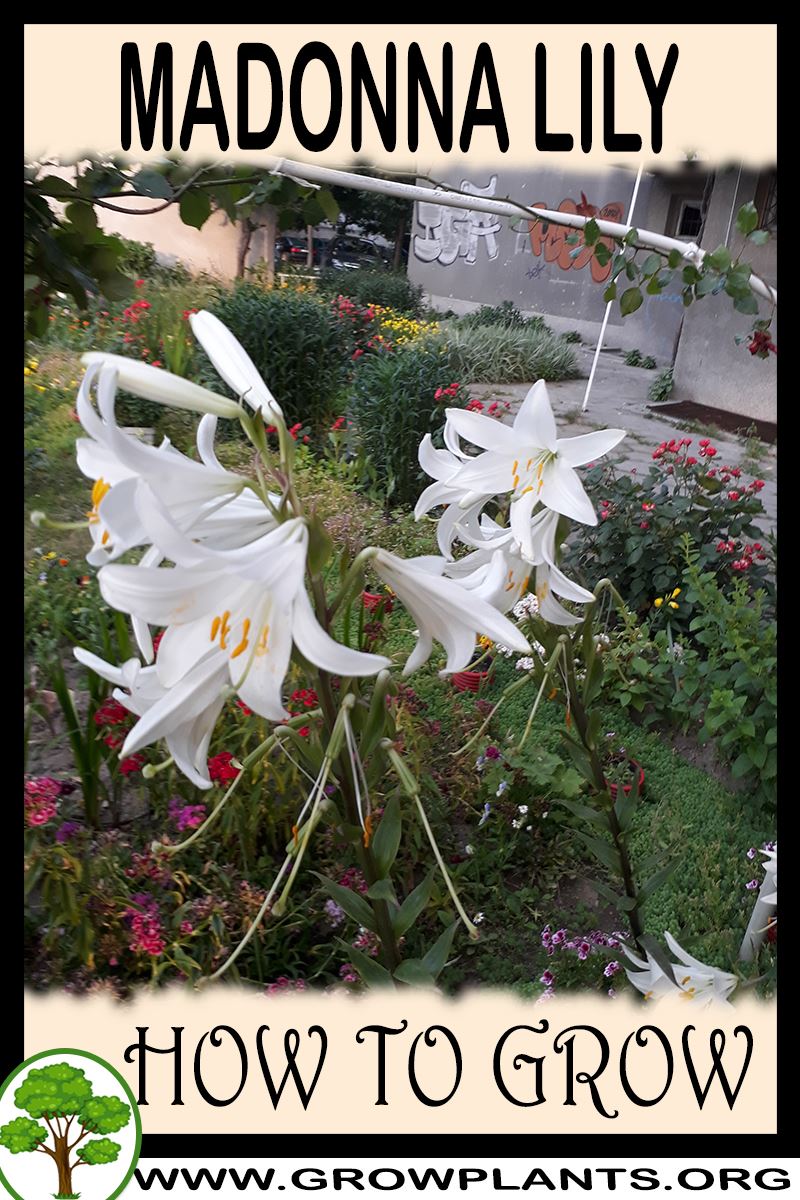
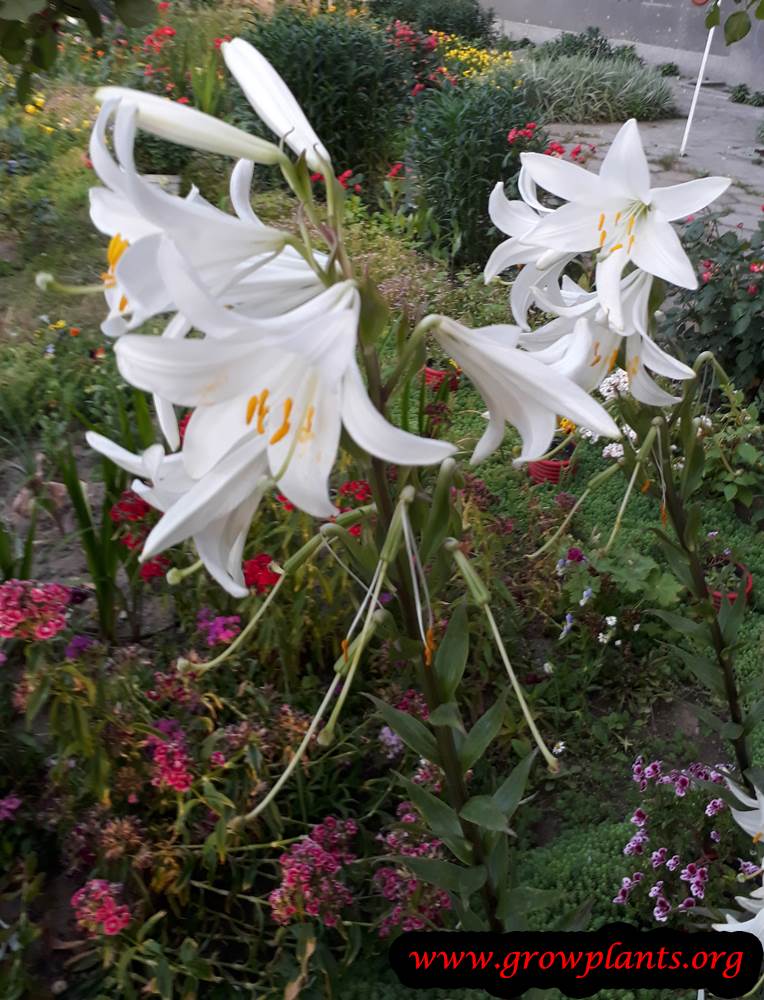
- Flower Characteristics: Fragrant, white trumpet-shaped flowers with yellow stamens.
Primary Uses & Landscape Value
- Functional & Ornamental Roles: Ornamental border and container bulb, and a popular cut flower.
Care Guide: Planting, Soil & Watering
Overview: This deciduous lily grows from a bulb in full sun to part shade in Mediterranean or subtropical climates (hardiness zone 3-11), and it needs a cool, dry dormant season. It needs a rich, well-drained soil and moderate water, with cool roots and good drainage to protect the bulb.
Quick Care Requirements
| Requirement | Ideal Condition |
|---|---|
| Planting Season | Autumn to winter in warm climates; spring in colder climates |
| Growth Rate | Fast |
| Soil Type | Rich, well-draining |
| Water Need | Moderate; keep evenly moist in growth, drier when dormant |
Planting & Establishment
- Best Planting Season: Plant in autumn to winter in warm climates, or in spring in colder climates.
- How to Plant:
- Hole Preparation: Plant the bulb in a hole about two to three times the bulb’s depth.
- Soil Amendments: Enrich with organic matter and mulch, keeping the drainage sharp.
- Planting Depth: Unlike most lilies, plant Madonna lily shallowly – with the top of the bulb just below the soil surface.
- Growth Speed & Expectations: A fast grower.
Soil, Watering & Drainage Care
- Soil Mix & Drainage Needs: Use a rich, well-drained soil; mulch to keep the roots cool and avoid waterlogging that rots the bulb.
- Watering Schedule & Technique:
- Young / Newly Planted: Keep the soil moist after planting.
- Established: Water regularly during active growth and bloom.
- Seasonal Adjustments: Keep it drier during dormancy – in warm areas the bulb can be lifted for a dry rest.
Climate, Light & Hardiness
Madonna Lily is broadly cold-hardy but, like other lilies here, is actually more limited by excessive warmth than by cold - in very hot or warm-winter climates the bulb performs poorly without a dry dormant season, so gardeners there often lift and store it.
Quick Climate Specifications
| Climate Zones | Mediterranean, subtropical; also grown as a houseplant |
|---|---|
| USDA Hardiness Zones | Approximately 3–11, though performance drops in the warmest, most humid parts of that range |
| Light Conditions | Full sun; half shade |
Temperature Extremes & Hardiness
USDA Hardiness & Regional Limits
Rated cold-hardy to roughly zone 3. Unusually, the more limiting factor for this species is excess warmth: in very warm climates the bulb struggles without a dry dormancy period, and gardeners there often lift and store it rather than leaving it in the ground.
Growing in Pots, Balconies & Indoors
Madonna lily (Lilium candidum) is a bulb best grown in outdoor pots rather than as a houseplant – the grower marks it No for indoors. In a deep container on a sunny patio it flowers superbly, and pots can be moved into view while in bloom.
Quick Details
- Container Size: A deep pot of 10-20 L – lilies like depth for good rooting
- Indoor Suitability: Not an indoor plant – it needs full outdoor sun and a winter chill
- Best Spot: Full sun to part shade, with the roots kept cool and shaded
- Soil & Drainage: Deep, free-draining, organic-rich mix; roots must never sit wet
- Watering in Pots: Keep evenly moist in growth, then much drier when dormant; sharp drainage is vital
Indoors & On the Windowsill
- Not a houseplant: The grower marks it No – lilies need full outdoor light and a cold winter rest to flower well.
- Bring pots into view: Grow them in pots outdoors and move a pot to the patio or doorway while it is in full, fragrant bloom, then return it.
- Safety: True lilies are extremely toxic to cats – even pollen or a nibbled leaf can be fatal. Keep well away from cats, and out of reach of children and dogs.
On a Balcony or Patio
- Light, wind & heat: Give it the sunniest spot you have. Walls and paving reflect heat so pots dry quickly – check moisture often in warm weather. On an exposed balcony, stake tall stems and shelter from strong wind.
- Practicalities: A full pot is heavy once watered – make sure the balcony can take the load and that drainage runoff has somewhere to go.
Choosing the Pot, Soil & Long-Term Care
- Pot & drainage: Use a pot with strong drainage holes and skip a standing-water saucer to avoid root rot. Terracotta breathes and dries faster; glazed or plastic pots hold moisture longer.
- Potting mix: A well-aerated, organic-rich mix – potting mix or peat/coir blended with perlite or vermiculite for free drainage.
- Feeding: Potted plants need feeding more often than those in open ground, as nutrients leach out with each watering – feed regularly through the growing season.
- Long-term care: As a perennial bulb, let the foliage die back after flowering; lift and divide crowded clumps and refresh the mix every couple of years.
Fertilizing & Feeding
A moderate feeder: this fragrant white trumpet lily grows its leaves in a rosette structure and, like other lilies, benefits from nitrogen-forward feeding during early growth shifting to balanced, potassium-forward feeding as buds form.
Quick Fertilizing Specs
| Feeding Level | Moderate feeder |
|---|---|
| Main Nutrient Priority | Nitrogen-forward feeding during early leaf and stem growth, shifting to balanced feeding with adequate potassium as buds form |
| Best Feeding Period | From leaf and stem emergence through bud development and bloom |
| Organic Options | Compost worked into well-drained soil at planting |
| Reduce/Stop Feeding | Feeding stops as the stem and leaves yellow and die back after bloom |
| Micronutrients | Rarely an issue in well-drained soil; correct only a diagnosed deficiency |
| Soil pH | Prefers well-drained soil; tolerates a range of garden soils given good drainage |
Feeding by Growth Stage
Planting and rosette establishment
Support root development as the bulb settles in and forms its basal rosette of green, linear leaves.
| Nutrient direction | A balanced fertilizer worked into well-drained soil at planting supports early root and rosette growth. |
|---|---|
| Timing | At planting, in autumn or spring depending on local climate. |
| Frequency | A moderate feeding at planting helps this lily establish well. |
| Fertilizer types | A balanced, complete fertilizer worked into the planting hole, Compost mixed into the soil at planting |
| Precautions | Plant where drainage is reliable, since lily bulbs are prone to fungal rot in soggy soil. |
Rosette and stem growth
Support the basal rosette of leaves and the flowering stem as it develops before buds appear.
| Nutrient direction | Nitrogen-forward feeding during active leaf and stem growth builds the framework for a strong bloom. |
|---|---|
| Timing | From rosette and shoot growth through stem elongation. |
| Frequency | A moderate, regular feeding while leaves and stem are actively growing supports this lily. |
| Fertilizer types | A nitrogen-forward complete fertilizer to build leaf and stem growth, A general-purpose bulb fertilizer applied as the stem elongates |
| Precautions | Watch for fungal disease on leaves in humid conditions, since it can damage growth independent of feeding. |
Bud development and fragrant white bloom
Support bud development and the fragrant white trumpet flowers with their yellow stamens.
| Nutrient direction | Balanced feeding with adequate potassium as buds form supports strong flower quality and stem strength. |
|---|---|
| Timing | From visible bud formation through bloom. |
| Frequency | A moderate feeding through bud development and bloom is generally enough. |
| Fertilizer types | A balanced complete fertilizer, potassium-forward to support bud and bloom quality, A bloom-supporting bulb fertilizer applied as buds form |
| Precautions | Avoid heavy feeding right at bloom, since excess nitrogen at this stage can favor foliage over flower quality. |
Post-bloom stem dieback
Let the bulb finish storing reserves as the stem and leaves yellow and die back after bloom.
| Nutrient direction | None – withhold fertilizer once bloom finishes and the stem begins to yellow. |
|---|---|
| Timing | After bloom, as the stem and leaves die back for the season. |
| Frequency | No feeding during post-bloom dieback. |
| Fertilizer types | No feeding at this stage; do not fertilize once the stem is dying back. |
| Precautions | Leave the dying stem in place until it comes away easily, since it is still feeding the bulb for next season. |
Nutrient Deficiency Signs & Corrections
The rosette and stem grow thin with pale green leaves during what should be vigorous early growth.
| Possible causes | low available soil nitrogen, nutrients leached from light, fast-draining soil, a planting bed that has not been amended in several seasons |
|---|---|
| Appears first on | rosette and lower leaves |
| What to check | soil fertility and amendment history, drainage and leaching, bulb size and vigor |
| Possible correction | Apply a nitrogen-forward fertilizer during early leaf and stem growth. |
Leaf and root tips brown or scorch despite otherwise reasonable care.
| Possible causes | fertilizer salt buildup from over-application near the bulb, insufficient watering to move salts away from roots, fertilizer placed too close to or in direct contact with the bulb |
|---|---|
| Appears first on | leaf tips and root tips |
| What to check | how and where fertilizer was applied, watering after feeding, soil drainage |
| Possible correction | Reduce fertilizer amounts, keep it away from direct bulb contact, and water thoroughly after any feeding. |
New leaves yellow between the veins while the veins remain green.
| Possible causes | high soil pH limiting iron availability, waterlogged or compacted soil restricting root uptake, cold, wet soil slowing root activity early in the season |
|---|---|
| Appears first on | youngest leaves |
| What to check | soil pH, drainage, soil temperature and root activity |
| Possible correction | Improve drainage and, if pH is the cause, apply a chelated iron product per its label. |
Pruning, Training & Seasonal Maintenance
Madonna lily needs no structural pruning, but its maintenance calendar differs from most lilies because it grows an autumn basal rosette of leaves that overwinters and only bolts into a flowering stem the following spring – that rosette must be left alone through winter. The only cuts are deadheading spent blooms in spring/summer and removing the flowering stem and old leaves once they have fully dried afterward, so the bulb keeps its reserves for next year.
Quick Pruning & Maintenance Specs
| Pruning Tolerance | Low – no structural cuts; spent-bloom and fully-dried-growth removal only |
| Primary Pruning Window | Summer, once the flowering stem and old rosette leaves have browned |
| Secondary Maintenance Window | Spring/summer, during bloom – deadhead as flowers fade |
| Typical Frequency | 1–2 passes per growing cycle |
| Main Objective | Protect the overwintering basal rosette, redirect energy to the bulb, reduce fungal carryover |
| Young Plant Priority | None – let the first rosette and stem mature undisturbed |
| Mature Plant Priority | Deadhead promptly; remove stem/old leaves only after full browning, never the new autumn rosette |
| Best Tool Type | Precision snips |
| Avoid Heavy Pruning During | Autumn/winter, while the basal rosette is present and growing |
Pruning by Plant Age & Size
Newly Established
Remove only damaged or broken planting stock; do not disturb the developing rosette.
Young / Formative
No structural training applies – single rosette-then-stem habit per bulb.
Mature / Established
Deadhead after flowering, remove the spent stem once fully dry, and leave the new autumn rosette untouched through winter; lift and divide congested bulbs at dormancy every few years.
Seasonal Pruning Schedule
Post-Flowering
Objective: stop seed formation. Remove the spent flower head just below the bloom; leave the stem and leaves standing. Response: energy stays with the bulb rather than seed.
Ongoing Sanitary
Once the flowering stem and its leaves have fully browned in summer, cut them back near the base. Do not remove the fresh basal rosette that forms in autumn – that rosette is actively growing and overwinters to fuel next year’s bloom, so leaving it untouched through winter is essential.
Special Growth to Remove
- Spent flower heads / developing seed pods.
- The old flowering stem and its leaves, once fully dried – but not the newly formed autumn rosette.
Container & Small-Space Pruning
Suits a planter with room for the shallow-planted bulb and its rosette. In containers, protect the autumn rosette from being mistaken for weed growth or accidentally trimmed; lift and divide offsets at dormancy if the pot becomes congested rather than cutting the canopy harder.
Tools
Precision snips for deadheading and for removing the dried stem once fully brown; no loppers or saws needed for this soft-stemmed bulb.
Tool Hygiene & Disease Risk
Increased risk: fungal infection is a noted problem, so wipe blades between plants when removing any diseased or spotted foliage.
Cut Placement & Technique
Deadhead just below the spent flower. Cut the dried stem near the base once fully brown, taking care not to nick the emerging or overwintering basal rosette at soil level.
Heavy Pruning & Rejuvenation
Not applicable in the woody sense. “Renewal” means lifting and dividing crowded bulb clumps at dormancy every few years – a spacing task, not a pruning cut.
Post-Pruning Care
Keep normal watering through the rosette stage in autumn/winter and while foliage is green in spring; taper off once the stem is cut back and the bulb enters summer dormancy. Do not fertilize right after cutting back.
Common Pruning Mistakes
- Mistaking the autumn basal rosette for old growth and removing it – this is the mistake specific to this species and it costs next year’s bloom.
- Cutting the flowering stem back before it has fully browned.
- Leaving spent flowers to set seed instead of deadheading.
When NOT to Prune
Never remove the autumn/winter basal rosette; not while the flowering stem or leaves are still green; not during active bloom (deadhead only).
Recommended Tools (by task)
- precision_snips – deadheading and cutting the dried stem at the base; soft growth needs a small clean cut.
- blade_disinfectant – wipe between plants given the noted fungal-infection risk on this lily.
Propagation Guide
Madonna lily is most reliably increased by dividing the offset bulbs that form around the mother bulb, which is also the fastest route to flowering-size plants; being a true species rather than a hybrid, its seed is usually true-to-type but seedlings take several years to flower. Overall propagation difficulty is Easy by division and Moderate by seed, mainly due to the long juvenile period.
Quick Propagation Specs
| Best Propagation Method | Division of bulb offsets |
| Alternative Methods | Bulb scaling; seed |
| Propagation Difficulty | Easy (division) / Moderate (seed, slow to flower) |
| Seed True-to-Type | Usually true-to-type (true species) |
| Vegetative True-to-Type | Yes |
| Best Propagation Season | Late summer, as the autumn basal rosette begins forming (site notes autumn planting, or winter in hot climates / spring in colder climates) |
| Seed Germination Time | Several weeks to a few months, can be irregular |
| Germination Temperature | Around 15–20°C (59–68°F) |
| Seed Sowing Depth | Shallow, lightly covered – roughly 0.5–1 cm (¼–½ in) |
Growing from Seed
Seed Handling & Viability
Use reasonably fresh seed where possible; viability declines with prolonged storage.
Sowing Season
Late summer to autumn, matching the species’ natural basal-rosette growth, or in spring.
Sowing Depth & Orientation
Sow shallowly and cover lightly; do not bury deeply.
Germination Conditions
Bright, evenly moist conditions at roughly 15–20°C (59–68°F); germination can be staggered.
Seedling Care
Grow seedlings on undisturbed; Madonna lily is slow from seed and commonly needs several seasons to reach flowering size, so division is preferred when a faster result is wanted.
Division, Offsets, Pups & Suckers
Lift and separate offset bulbs in late summer, while the mother bulb is starting to form its characteristic autumn rosette of leaves – unlike most other lilies, Madonna lily does not have a long true-dormant period and resents being left bare-rooted. Replant divisions immediately. Only separate offsets that carry their own roots and a reasonable bulb size; very small offsets are better grown on together for a season before moving.
Rhizomes, Tubers, Bulbs & Corms
Bulb Planting Depth
Unlike many other lilies, which are planted deep, Madonna lily bulbs are typically planted shallowly, with the bulb tip at or just below the soil surface – this is worth keeping in mind whenever replanting divisions.
Bulb Scaling
Healthy outer scales can be removed from a dormant bulb and held in a damp, well-aerated medium until small bulblets form at the base; grow the resulting bulblets on for a season or more before they reach flowering size.
Bloom & Flower Guide
Quick Details
- Bloom Season: Late spring to summer
- Time to First Bloom: The season after autumn or winter bulb planting
- Flower Appearance: Pure white, trumpet-shaped flowers with bright yellow stamens
- Edibility: Not eaten – true lilies are toxic (especially deadly to cats); grown as a fragrant ornamental
Detailed Blooming Overview
The Madonna lily is one of the oldest garden flowers, prized for its purity and scent. Each stem opens a spire of broad, white trumpet flowers with golden stamens, powerfully fragrant on a warm evening. It resents heavy heat and prefers a distinct dry, warm rest period after flowering. Lovely as it is, every part is toxic to cats, so site it thoughtfully in a pet household.
Flower Characteristics
- White trumpet-shaped flowers with yellow stamens.
- Strongly and sweetly fragrant.
Bloom Care & Thinning
- After flowering: Remove spent blooms but leave the foliage to feed the bulb until it yellows.
- Safety: Keep flowers, pollen and cut stems well away from cats – even small amounts can be fatal to them.
Bloom Health & Protection
- Botrytis (lily blight): A fungal disease that spots and rots leaves and flowers in damp, still conditions – improve airflow, avoid wetting the foliage, and treat with a copper- or sulfur-based fungicide.
Pests, Diseases & Troubleshooting
Overview: True lilies are bulbous perennials with two defining enemies – the lily leaf (scarlet lily) beetle, which can strip a plant, and Botrytis ‘lily disease’, which blights the leaves and flowers in wet weather – alongside aphids (which spread viruses), bulb rots and slugs. Vigilant hand-picking of the beetle, good airflow against Botrytis, and sharp drainage against basal rot are the heart of lily care. (Species / Candidum.)
Quick Troubleshooting Overview
| Issue / Pest | Main Symptom | Primary Solution |
|---|---|---|
| Lily leaf beetle | Bright red beetles and slimy larvae stripping leaves/buds | Hand-pick daily; check undersides; neem |
| Aphids | Curled tips; virus spread (mottling, streaking) | Water jet; beneficials; rogue virused plants |
| Botrytis (lily disease) | Water-soaked oval spots on leaves; rotting buds | Airflow; remove debris; fungicide in wet spells |
| Basal / bulb rot | Yellowing, stunting; bulb rots from the base | Sharp drainage; clean bulbs; discard rotted |
| Slugs & snails | Grazed shoots and buds, slime trails | Traps, barriers, hand-pick at night |
| Lily viruses | Mottled, streaked leaves; distorted, weak plants | Control aphids; rogue affected plants; clean stock |
Common Pests & Management
- Lily leaf (scarlet lily) beetle (Lilioceris lilii):
- Symptoms: Bright scarlet-red beetles and their disgusting slug-like larvae (which coat themselves in wet black excrement) that voraciously eat the leaves, buds and flowers, able to defoliate and ruin a lily fast; adults drop and hide when disturbed.
- Prevention & Control: Hand-pick daily in the growing season – check leaf undersides for the orange egg rows and squash them, and pick beetles into soapy water (cup a hand beneath, as they drop and play dead). Neem oil deters and kills young larvae; keep pressure up early, as this is the single most damaging lily pest.
- Aphids (Myzus / Macrosiphum / Aulacorthum spp.):
- Symptoms: Soft-bodied insects clustering on the shoot tips, buds and undersides of leaves, curling growth and leaving honeydew – but their real harm is transmitting the lily-mottling and cucumber-mosaic viruses that permanently weaken and distort plants.
- Prevention & Control: Blast off with water and encourage ladybirds, lacewings and hoverflies; because virus spread matters most, act early and rogue out any mottled, streaked plants. Insecticidal soap or neem for heavy colonies, in the evening.
- Slugs & snails (Deroceras / Helix spp.):
- Symptoms: Grazed and holed emerging shoots, leaves and flower buds with slime trails, especially in damp weather and on young growth.
- Prevention & Control: Hand-pick after dark, set traps, and ring clumps with grit or copper barriers; keep the surface clear of debris where they shelter.
- Bulb mites / narcissus bulb fly (Rhizoglyphus spp. / Merodon equestris):
- Symptoms: Bulb mites hasten a powdery breakdown of already-damaged or rotting bulbs, while bulb-fly grubs can hollow the bulb, causing failure to sprout or weak growth.
- Prevention & Control: Plant firm, healthy, blemish-free bulbs, discard any soft or damaged ones, avoid injuring bulbs at planting, and keep soil well-drained so rot (which the mites follow) does not start.
Diseases & Fungal Issues
- Botrytis (lily disease / grey mould) (Botrytis elliptica):
- Symptoms: The classic lily blight: water-soaked, then tan-to-brown oval spots on the leaves that enlarge and merge in wet, humid weather, working up the stem, with rotting, spotted, mouldy buds and flowers; can defoliate a plant while the bulb survives.
- Treatment & Management: Improve airflow with spacing, avoid overhead watering and wetting the foliage, clear and destroy all infected debris at season’s end, and grow more resistant divisions. In wet spells on valued plants, apply a protectant fungicide (e.g. copper or a broad garden fungicide) preventively.
- Basal rot (Fusarium oxysporum f. sp. lilii):
- Symptoms: The bulb rots from the base plate, so plants emerge weak, yellow and stunted or fail entirely; worst in warm, wet, poorly drained soil.
- Treatment & Management: Plant firm healthy bulbs in sharply drained soil, avoid waterlogging and bulb damage, lift and destroy rotted bulbs, and do not replant lilies into the same infected ground for several years.
- Lily viruses (lily mottle / cucumber mosaic / lily symptomless virus):
- Symptoms: Mottling, streaking, twisting and stunting of leaves and flowers, with progressive weakening; incurable and spread by aphids (note that some lilies, especially tiger lily, can carry virus symptomlessly while infecting neighbours).
- Treatment & Management: There is no cure – rogue out and destroy affected plants promptly, control aphids, keep vigorous virus-tolerant kinds away from susceptible ones, and buy healthy stock.
- Root rot (Pythium / Rhizoctonia spp.):
- Symptoms: Rotting roots with wilting, stunting and yellowing in cold, wet, poorly drained soil.
- Treatment & Management: Improve drainage, avoid over-watering, and plant in raised or gritty beds; remove badly affected plants.
Growing Difficulties & Abiotic Problems
- Leaf scorch:
- Cause & Symptoms: Brown scorched streaks or crescents along the leaves, a physiological problem linked to calcium shortage and fast growth in wet-then-dry or acidic conditions.
- Correction Strategy: Keep soil evenly moist with steady growth, ensure adequate calcium and avoid extreme pH, and grow less-susceptible kinds; it is not infectious.
- Bud blast / bud drop:
- Cause & Symptoms: Flower buds yellow, shrivel and drop before opening from water stress, sudden dryness, deep shade or root problems.
- Correction Strategy: Keep soil evenly moist during budding, provide good light, and ensure healthy, unrestricted roots.
- Poor drainage / bulb rot:
- Cause & Symptoms: Yellowing, stunting and rotting bulbs where soil stays wet, especially heavy clay.
- Correction Strategy: Plant on sharp drainage – add grit and set bulbs on a little sand – keep the ‘head in sun, feet in shade’, and never let bulbs sit waterlogged.
What Helps – Products & Tools
For lilies, two tools lead: diligent hand-picking (and neem oil) against the lily leaf beetle, and airflow plus a protectant fungicide (copper or a broad garden fungicide) against Botrytis in wet weather. Keep insecticidal soap for aphids (mainly to limit virus spread), slug traps or grit/copper barriers, and sharp-draining gritty soil against bulb rots. Rogue out virused plants rather than spraying. Apply oils and sprays in the evening to protect pollinators.