


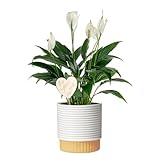

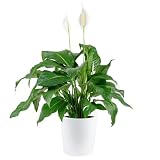
Plant Profile & Key Characteristics
Overview: Easter Lily (Lilium longiflorum) is an upright bulbous perennial reaching about 0.3-1 m tall, prized for its large, fragrant white trumpet flowers. It is a deciduous geophyte grown as an ornamental and cut flower that dies back to the bulb each dormant season.
Quick Specifications
| Specification | Attribute |
|---|---|
| Plant Type / Life Cycle | Perennial (bulbous geophyte) |
| Foliage Type | Deciduous |
| Mature Size | 0.3-1 m tall (1-3 ft), roughly 15-30 cm (6-12 in) wide |
| Growth Rate | Moderate to Fast |
| Root System | Bulb (geophyte) |
| Toxicity | Severely toxic to cats – all parts cause kidney failure if ingested |
| Hardiness | USDA zone 8+ (lift bulbs over winter in colder zones) |
Growth Form & Structure
- Height & Spread: In the ground stems reach 0.3-1 m tall; in a pot it stays compact and is easily kept indoors or on a patio.
- Growth Habit & Form: Erect single flowering stem rising from an underground bulb, with a leafy stem topped by the flowers.
- Lifespan & Maturity: Perennial from the bulb; each stem completes its cycle in a season, dying back to the bulb for dormancy.
Anatomy & Physical Features
- Leaves & Foliage: Green, linear leaves arranged along the stem.
- Flower Characteristics: Fragrant, white, bell/trumpet-shaped flowers with yellow stamens, 2-5 per stem, mostly facing outward and up.
Primary Uses & Landscape Value
- Functional & Ornamental Roles: Fragrant ornamental for borders and containers, forcing, and a classic long-lasting cut flower.
Care Guide: Planting, Soil & Watering
Overview: This deciduous lily grows from a bulb in full sun to part shade in tropical, subtropical, temperate, or Mediterranean climates (hardiness zone 8+; lift the bulb over winter in colder areas), and it needs a dry dormant season. It needs a rich, well-drained soil and moderate water, with cool roots and good drainage to protect the bulb.
Quick Care Requirements
| Requirement | Ideal Condition |
|---|---|
| Planting Season | Autumn to winter in warm climates; spring in colder climates |
| Growth Rate | Fast to moderate |
| Soil Type | Rich, moist, well-draining |
| Water Need | Moderate; keep moist during growth |
Planting & Establishment
- Best Planting Season: Plant in autumn to winter in warm climates, or in spring in colder climates.
- How to Plant:
- Hole Preparation: Plant the bulb in a hole about two to three times the bulb’s depth.
- Soil Amendments: Enrich with organic matter and mulch, keeping the drainage sharp.
- Planting Depth: Set the bulb two to three times its own height deep, pointed end up.
- Growth Speed & Expectations: A fast to moderate grower.
Soil, Watering & Drainage Care
- Soil Mix & Drainage Needs: Use a rich, well-drained soil; mulch to keep the roots cool and avoid waterlogging that rots the bulb.
- Watering Schedule & Technique:
- Young / Newly Planted: Keep the soil moist after planting.
- Established: Water regularly during active growth and bloom.
- Seasonal Adjustments: Keep it drier during dormancy – in warm areas the bulb can be lifted for a dry rest.
Climate, Light & Hardiness
Easter Lily (Lilium longiflorum) grows in tropical, subtropical, temperate, and Mediterranean climates, and is hardy outdoors as a perennial bulb in USDA zone 8 and above. In colder climates the bulb must be lifted and stored indoors over winter. It prefers full sun to half shade.
Quick Climate Specifications
| Climate Zones | Tropical, subtropical, temperate, Mediterranean |
|---|---|
| USDA Hardiness Zones | 8+ (bulb requires indoor winter storage below this range) |
| Light Conditions | Full Sun to Half Shade |
Sunlight & Light Exposure
Optimal Light Setup
Grow in full sun to half shade; some afternoon shade in hot climates helps prolong the flowers.
Temperature Extremes & Hardiness
USDA Hardiness & Regional Limits
The bulb survives outdoors year-round in USDA zone 8 and warmer. In colder climates, dig up the bulb before winter and store it indoors, replanting the following season.
Frost Sensitivity
The bulb is damaged by hard freezes in the ground; outside its hardy range, protect it with mulch or lift and store it over winter.
Wind, Humidity & Microclimate
Microclimate Recommendations
A sheltered spot protects the tall flowering stems from wind damage while in bloom.
Growing in Pots, Balconies & Indoors
The Easter lily (Lilium longiflorum) is famously grown as a potted flowering plant indoors, and the grower confirms it suits both a container and a house. Its tall, trumpet-shaped, fragrant white flowers make it a showpiece on a bright sill, balcony or patio.
Quick Details
- Container Size: A deep pot to suit the bulb and its stem roots (general guidance)
- Indoor Suitability: Suitable indoors as a flowering pot plant – give it bright light
- Best Spot: Full sun to half shade; bright light indoors, cool roots
- Soil & Drainage: Aerated, organic-rich mix that drains freely
- Watering in Pots: An average amount – keep evenly moist, never waterlogged
Indoors & On the Windowsill
- Indoors: A classic indoor flowering plant – place it in bright light in a cool room to make the blooms last. After flowering the bulb can be moved to a larger pot or the garden to build up for next year.
- SAFETY – cats: All parts of true lilies, including the pollen, are extremely toxic to cats and can cause fatal kidney failure even in tiny amounts. Do not keep this plant where cats live; it is also an irritant to people and dogs.
On a Balcony or Patio
- Light & shelter: Sun to light shade on a sheltered balcony; the tall stems may need a discreet stake in wind, and pots dry quickly in reflected heat so check moisture often.
Choosing the Pot, Soil & Long-Term Care
- Pot & drainage: A deep pot with strong drainage holes; skip a standing saucer to avoid bulb rot. Lilies like their roots cool – a pale or shaded pot helps.
- Potting mix: Use a well-aerated, organic-rich mix – potting compost with perlite or vermiculite (or peat/coir blended with grit) so water drains freely.
- Feeding: Potted plants are fed more often than those in the ground because nutrients wash out with each watering – a balanced liquid feed through the growing season keeps them going.
- After flowering: Let the foliage die down naturally to feed the bulb, then refresh the mix or pot on for the next season.
Fertilizing & Feeding
A moderate feeder: this fragrant, trumpet-shaped bulb flower needs steady balanced feeding while its linear leaves and flower stems are actively growing, tapering off once blooming finishes so the bulb can rebuild reserves before the foliage is cut back for its dry season.
Quick Fertilizing Specs
| Feeding Level | Moderate feeder |
|---|---|
| Main Nutrient Priority | Balanced feeding through active leaf growth and into bloom, then a taper to help the bulb rebuild reserves |
| Best Feeding Period | From leaf emergence through the spring-to-summer bloom period |
| Organic Options | Compost or well-rotted organic matter worked into moist, well-drained soil |
| Reduce/Stop Feeding | Feeding stops once flowering finishes and foliage is cut back at season’s end |
| Micronutrients | Usually adequate from a complete fertilizer in well-drained soil |
| Soil pH | Prefers moist, well-drained soil |
Feeding by Growth Stage
Leaf emergence and stem growth
Support development of the linear foliage and flower stems as the bulb sends up new growth.
| Nutrient direction | A balanced fertilizer supports steady stem and leaf development as the plant builds toward flowering. |
|---|---|
| Timing | As new growth emerges after planting, typically from autumn or winter planting through spring shoot growth. |
| Frequency | Regular light feeding through active leaf growth supports steady development. |
| Fertilizer types | A balanced complete fertilizer, Compost or organic matter worked into the soil |
| Precautions | Keep soil consistently moist but well-drained; watch for the fungal disease noted to sometimes damage the flowers, and avoid overhead conditions that favor it. |
Bloom period
Sustain the fragrant, upward-facing trumpet flowers with their yellow stamens through the bloom period.
| Nutrient direction | Continued balanced feeding supports strong flowering without favoring foliage over blooms. |
|---|---|
| Timing | Through the spring-to-summer bloom period. |
| Frequency | Light, regular feeding through bloom is usually enough. |
| Fertilizer types | A balanced complete fertilizer for flowering bulbs, An organic feed worked lightly into the surface soil |
| Precautions | Avoid heavy nitrogen feeding, which can push foliage over flowering, and keep an eye out for fungal issues affecting blooms. |
Post-bloom foliage cutback and rest
Let the bulb rest as foliage is cut back at the end of the season, storing energy for the next growth cycle.
| Nutrient direction | None – withhold fertilizer once flowering ends and foliage is cut back. |
|---|---|
| Timing | In summer, once blooming finishes and stems and leaves are cut back for the season. |
| Frequency | No feeding at this stage. |
| Fertilizer types | No feeding at this stage – resume balanced feeding when new growth resumes |
| Precautions | Do not fertilize after cutback; in colder climates the bulb should be brought indoors for winter rather than fed. |
Nutrient Deficiency Signs & Corrections
Pale, thin leaves and weak stems during active growth.
| Possible causes | low available soil nitrogen, leaching from watering in well-drained soil, bulb reserves depleted from a previous poor growing season |
|---|---|
| Appears first on | older, lower leaves |
| What to check | recent feeding history, soil organic matter, bulb condition at planting |
| Possible correction | Apply a balanced fertilizer as leaf growth resumes and monitor for improvement. |
New leaves appear pale or yellowish while veins stay greener.
| Possible causes | high soil pH limiting iron availability, waterlogged or poorly drained soil, root or bulb stress from compacted soil |
|---|---|
| Appears first on | newest leaves |
| What to check | soil pH and drainage, standing water after watering, bulb and root health |
| Possible correction | Improve drainage and soil pH balance; apply a chelated iron product per its label if symptoms persist. |
Buds fail to open fully or flowering is sparse despite healthy foliage.
| Possible causes | excess nitrogen favoring foliage over flowering, the fungal disease noted to sometimes damage flowers, insufficient light during bud development |
|---|---|
| Appears first on | flower buds |
| What to check | recent fertilizer balance, signs of fungal infection on buds or leaves, light exposure |
| Possible correction | Favor balanced over nitrogen-heavy feeding, manage fungal disease promptly, and ensure adequate sun to half shade exposure. |
Pruning, Training & Seasonal Maintenance
Easter lily needs almost no true pruning: it is a single-stem bulb whose main maintenance is deadheading spent flowers during bloom and cutting the stem and foliage back only after they yellow and die down naturally at the end of the season. Removing green leaves early is the one cut that matters most to avoid, since the foliage recharges the bulb for next year’s flowering.
Quick Pruning & Maintenance Specs
| Pruning Tolerance | Low |
| Primary Pruning Window | Summer, once foliage has fully yellowed after bloom |
| Typical Frequency | Once per growing cycle, plus spot deadheading during bloom |
| Main Objective | Sanitation and letting the bulb recharge before dormancy |
| Young Plant Priority | Leave the stem and foliage untouched while green |
| Mature Plant Priority | Deadhead spent blooms; cut the whole stem down only after die-back |
| Best Tool Type | Precision snips for flowers, bypass secateurs for the base of the stem |
| Avoid Heavy Pruning During | Active growth and bloom, while foliage is still green |
Pruning by Plant Age & Size
Newly Established
Do not cut anything back the first season beyond removing obviously damaged leaves – the bulb needs its full leaf area to establish.
Young / Formative
No structural training applies to a bulb; the only intervention is removing individual spent flowers as they fade.
Mature / Established
Continue deadheading through the bloom period, then cut the entire stem down at the base once foliage has yellowed completely at season’s end.
Seasonal Pruning Schedule
Ongoing Sanitary (during bloom)
Objective: prevent the plant from putting energy into seed production. Remove: individual spent flowers just below the bloom. Do not remove: buds still to open, or any green leaf. Expected response: more energy stays with the bulb rather than going to seed pods.
Post-Flowering / End of Season (Summer)
Objective: sanitation once the bulb has finished recharging. Remove: the full stem and all foliage, but only after it has yellowed and died back on its own. Do not remove: stems or leaves that are still green. Expected response: the bulb goes cleanly into dormancy. Flowering impact: cutting the stem while still green significantly weakens next year’s bloom, since the foliage is what refills the bulb.
Special Growth to Remove
- Spent flower heads – deadhead to tidy the plant and stop seed formation.
- Fully yellowed, dead stem and foliage – cut down at the base once dormant. Do not remove green leaves or stems early.
Container & Small-Space Pruning
Pot-grown Easter lilies follow the same rule as in-ground plants: deadhead as flowers fade, but let the foliage die back fully in the pot before cutting it away, since the confined root volume makes the bulb even more dependent on that post-bloom recharge period.
Tools
- Precision snips for deadheading individual flowers.
- Bypass secateurs for the single cut through the base of the stem at season’s end.
Tool Hygiene & Disease Risk
Increased risk: Easter lily flowers are prone to fungal infection (such as botrytis blight in humid conditions). Wipe or disinfect blades after cutting any spotted or infected material, and remove that debris rather than leaving it near the plant.
Cut Placement & Technique
Deadhead just below the spent flower at the base of its short stalk. Make the end-of-season cut close to soil level without digging into or nicking the bulb below.
Heavy Pruning & Rejuvenation
Not applicable – Easter lily is a bulb with a single seasonal stem, so there is no framework to rejuvenate. Vigor is renewed by the bulb’s own yearly cycle, not by hard pruning.
Post-Pruning Care
After the final end-of-season cut, leave the bulb undisturbed in the soil (or pot) through dormancy and water lightly rather than heavily, since there is no foliage left to take up water.
Common Pruning Mistakes
- Cutting the stem and leaves back as soon as flowers fade, instead of waiting for full yellowing – this is the single biggest cause of poor rebloom.
- Leaving fungal-infected flower debris in place instead of removing it promptly.
When NOT to Prune
Never cut foliage or stems while they are still green and photosynthesizing, even if they look untidy after bloom – that period is when the bulb rebuilds its reserves for next year.
Recommended Tools (by task)
- Deadheading spent flowers (any age): precision_snips – a clean small cut just below the fading bloom.
- End-of-season stem removal (mature bulb): bypass_secateurs – the dried stem base is tougher than a flower stalk and needs a cleaner bypass cut at the base.
Pruning Troubleshooting
| Problem | Possible Cause | What to Check | Corrective Action |
| Poor or no flowering the following year | Foliage cut back too early after the previous bloom | Whether stems/leaves were removed while still green | Wait for full natural yellowing before cutting next time; feed lightly and let the bulb rebuild for a season |
| Flowers or buds turning brown/mushy | Fungal infection (e.g. botrytis) in humid weather | Spotting or mold on petals and buds | Remove and discard affected flowers promptly, improve airflow, disinfect tools after cutting infected material |
Propagation Guide
Easter Lily is normally propagated vegetatively from its bulb, and the site notes that vegetative propagation is necessary; dividing the naturally forming offset bulbs or scaling the parent bulb keeps plants true to the named form and brings them to flowering size in a reasonable time. Growing from seed is possible for the species but is slower, more variable, and mainly of interest for breeding rather than typical home propagation; overall difficulty is moderate.
Quick Propagation Specs
| Best Propagation Method | Bulb offset division |
| Alternative Methods | Bulb scaling; seed (slow, not typical for home use) |
| Propagation Difficulty | Moderate |
| Seed True-to-Type | Variable; seedlings take a long time to reach flowering size |
| Vegetative True-to-Type | Yes |
| Best Propagation Season | While the bulb is dormant, autumn to winter (spring in colder climates), matching this plant’s planting season |
| Seed Germination Time | Variable; lily seed germination can be slow and uneven |
Growing from Seed
Growing Easter Lily from seed is possible for the species but is not how the plant is normally propagated at home; the site notes vegetative propagation as the necessary route, most likely because seed-raised plants are more variable and slower to reach flowering size. Where seed is used, germination can take anywhere from a few weeks to considerably longer depending on the batch.
Rhizomes, Tubers, Bulbs & Corms
Bulb Division: Easter Lily bulbs are made of overlapping scales and naturally produce small offset bulbs at their base over time. Lift and separate these offsets while the parent bulb is dormant, in autumn or winter (spring in colder areas, matching this plant’s own planting season), keeping each offset’s basal plate and roots intact.
Bulb Scaling: Individual healthy outer scales can be snapped off close to the basal plate and set in a lightly moist, well-aerated medium such as perlite or vermiculite, in a warm, dark spot; each scale can slowly form one or more tiny new bulblets at its base, though this method takes patience and is closer to a specialist nursery technique than typical home use.
Unlike bulbs with a dry protective tunic, true lily bulbs should not be left to dry out or cured for storage; keep them moist and replant promptly. Plant bulbs and offsets upright with the basal plate down and growing tip up, at a depth roughly two to three times the bulb’s height.
Bloom & Flower Guide
Quick Details
- Bloom Season: Late spring into summer
- Flower Appearance: Large, fragrant, pure white trumpet (bell) flowers with bright yellow stamens, usually 2 to 5 held near the top of each stem and facing outward or upward
- Edibility: Not edible – and extremely toxic to cats; even the pollen can cause serious harm
Detailed Blooming Overview
Lilium longiflorum (Easter Lily) is a bulb grown for its large, heavily scented white trumpets. Each stem carries several flowers that open in succession over the early summer, their yellow stamens set against the pure white petals. The perfume is strongest in the evening.
Flower Characteristics
- Trumpet-shaped white flowers, typically 2 to 5 per stem, mostly upward or outward facing
- Strongly and sweetly fragrant, with prominent yellow stamens
- Long lasting as a cut flower
Bloom Care & Thinning
- Managing the bloom: remove faded flowers to keep the plant tidy, but leave the stem and leaves to feed the bulb for next year; some growers snip the pollen-bearing anthers to protect clothing and prolong the display
- Site: a sunny top with a cool, moist but well-drained root run gives the best flowering
- Safety: keep well away from cats – all parts, including pollen and vase water, can cause kidney failure if a cat ingests them
Bloom Health & Protection
- Lily disease (botrytis blight): in wet weather brown, water-soaked spots can appear on buds and flowers; improving air circulation, avoiding overhead watering and clearing affected debris helps, and a suitable fungicide can be used if it spreads
Pests, Diseases & Troubleshooting
Overview: True lilies grown from bulbs are prized but not trouble-free: their chief threats are the scarlet lily leaf beetle, aphids (important as virus carriers), botrytis leaf blight in humid weather, and basal or bulb rot in heavy, poorly drained soil. The forced Easter lily (Lilium longiflorum) is especially prone to bud blast and leaf-tip scorch from calcium and moisture swings. Management is cultural first – plant firm healthy bulbs in fast-draining soil, give good air movement, and scout weekly so problems are caught early.
Quick Troubleshooting Overview
| Issue / Pest | Main Symptom | Primary Solution |
|---|---|---|
| Lily leaf beetle | Bright scarlet beetles and ragged holes; slimy dark larvae on leaves | Handpick adults, eggs and larvae; neem if heavy |
| Aphids | Sticky distorted new growth and buds; can spread virus | Blast off with water, insecticidal soap, control ants |
| Botrytis (lily blight) | Reddish-brown water-soaked leaf spots in wet weather | Improve airflow, remove debris, preventive copper |
| Basal / bulb rot | Yellowing, stunting, soft rotten bulb base | Well-drained soil, avoid waterlogging, discard sick bulbs |
| Lily mosaic virus | Mottled, streaked, distorted foliage | Rogue infected plants, control aphids, use tested stock |
Common Pests & Management
- Lily leaf beetle (Lilioceris lilii):
- Symptoms: Bright red 6–8 mm beetles on leaves and buds; orange-brown larvae hide under a coat of their own excrement and, with the adults, can strip foliage and flower buds rapidly. Rows of orange eggs sit on leaf undersides.
- Prevention & Control: Scout and handpick adults, eggs and larvae (the fastest control), squashing egg rows on leaf undersides; encourage parasitoid wasps; treat heavy pressure with neem. This pest is persistent in temperate gardens, so check daily in the active season.
- Aphids (Myzus persicae & Aphis spp.):
- Symptoms: Soft green, black or pink insects cluster on tender shoots, buds and leaf undersides, leaving sticky honeydew and sooty mould and causing puckered growth. Crucially, they transmit lily mosaic and other viruses.
- Prevention & Control: Dislodge with a firm water jet, then use insecticidal soap or neem on the undersides; conserve ladybirds, lacewings and hoverflies; control the ants that farm them. Because they vector viruses, keep colonies down even when numbers look low.
- Bulb mites (Rhizoglyphus spp.):
- Symptoms: Weak or failed emergence, stunting, and tunnelling within bulb scales that opens the door to rot; the bulb feels soft and looks brown internally.
- Prevention & Control: Plant only firm, blemish-free bulbs, provide sharp drainage, rotate planting sites, and discard any soft bulbs. Avoid wounding bulbs at planting, since mites and rot follow injuries.
- Slugs and snails (Deroceras & Helix spp.):
- Symptoms: Emerging shoots grazed, holes chewed in leaves and buds, and tell-tale silvery slime trails, worst in cool, damp spring conditions.
- Prevention & Control: Hand-collect after dark, set traps, and ring plants with grit or copper barriers; iron-phosphate baits are a low-toxicity option safe around pets and wildlife.
- Thrips (Frankliniella & Thrips spp.):
- Symptoms: Silvery streaking and flecking on leaves and petals, deformed buds, and tiny black frass specks; heavy in hot, dry spells.
- Prevention & Control: Hang blue sticky traps to monitor, keep plants unstressed, remove spent blooms, and treat with insecticidal soap or spinosad if numbers climb.
Diseases & Fungal Issues
- Botrytis / lily blight (Botrytis elliptica):
- Symptoms: Round to oval reddish-brown, water-soaked spots on leaves in wet or humid weather that enlarge, merge and collapse the foliage; a grey fuzzy mould appears in prolonged damp.
- Treatment & Management: Space plants for airflow, avoid overhead evening watering, and clear infected leaves and stem debris promptly (do not compost). Apply a copper or appropriate preventive fungicide before wet spells if the disease recurs.
- Basal rot / Fusarium (Fusarium oxysporum):
- Symptoms: Yellowing lower leaves, stunted growth, and a brown, soft, rotting bulb base and roots; plants may topple.
- Treatment & Management: Plant healthy bulbs in well-drained soil, never in waterlogged ground; lift and destroy infected bulbs, and rotate to fresh soil. Avoid mechanical damage that lets the fungus in.
- Lily viruses (mosaic, LSV, CMV):
- Symptoms: Mottled, streaked or ring-spotted leaves, twisted growth, and gradual decline; symptoms intensify each season.
- Treatment & Management: There is no cure – remove and destroy affected plants, control the aphids that spread them, and buy virus-tested bulbs. Disinfect tools between plants.
Growing Difficulties & Abiotic Problems
- Bulb and root rot from overwatering:
- Cause & Symptoms: Heavy, poorly drained or waterlogged soil suffocates roots and rots the bulb, showing as yellowing, wilting and collapse.
- Correction Strategy: Grow in raised beds or grit-amended soil, water moderately, and let the surface dry between waterings; never leave bulbs sitting in wet.
- Bud blast and leaf scorch:
- Cause & Symptoms: Calcium shortage combined with erratic moisture (common in forced Easter lilies) aborts buds and browns leaf tips.
- Correction Strategy: Keep soil evenly moist, feed with a balanced fertiliser, and provide bright but cool, non-scorching conditions during budding.
- Poor siting (heat and light):
- Cause & Symptoms: Too much reflected heat scorches leaves, while deep shade makes stems weak and floppy.
- Correction Strategy: Give a cool root run (mulch or low planting) with the flowering stems in sun to light shade; stake tall stems in exposed spots.
What Helps – Products & Tools
A short toolkit covers most lily problems: neem oil or insecticidal soap for aphids, thrips and beetle larvae; horticultural oil for scale; iron-phosphate bait and copper barriers for slugs and snails; blue/yellow sticky traps for monitoring; and a copper-based fungicide for botrytis. Spray oils and soaps in the evening to protect pollinators, and always follow the label.