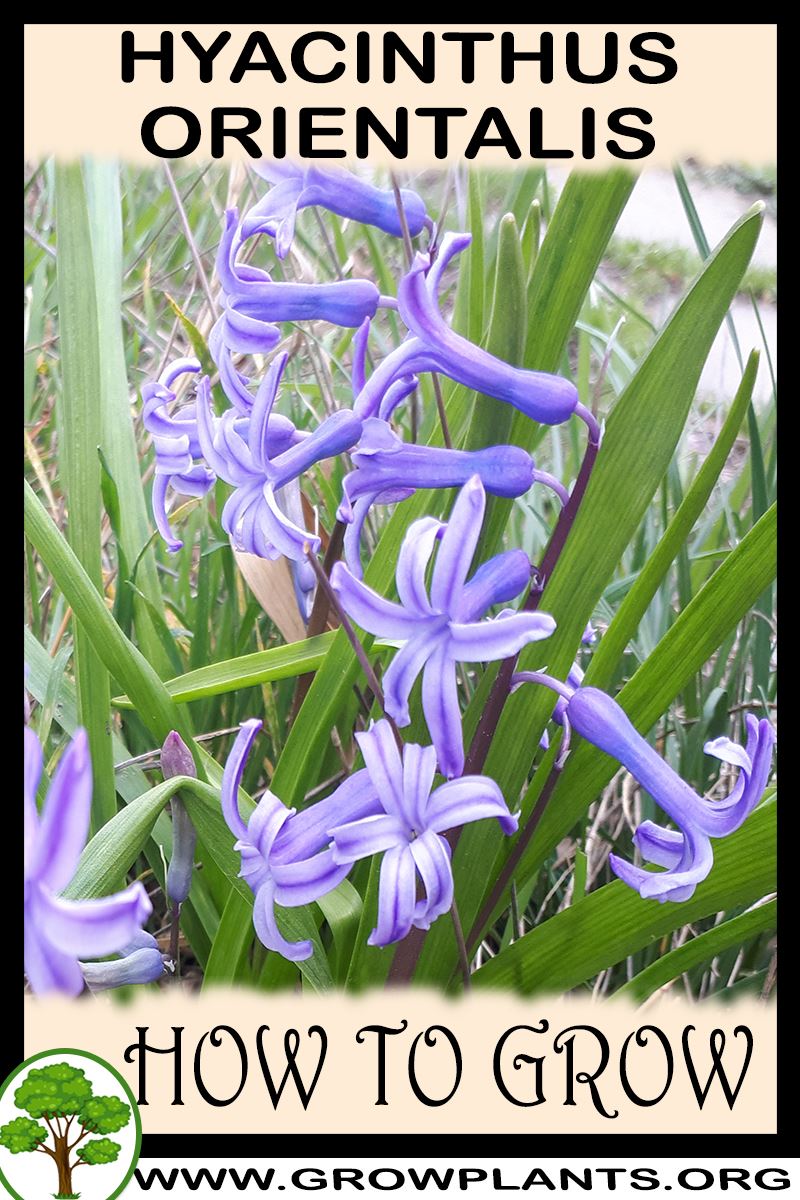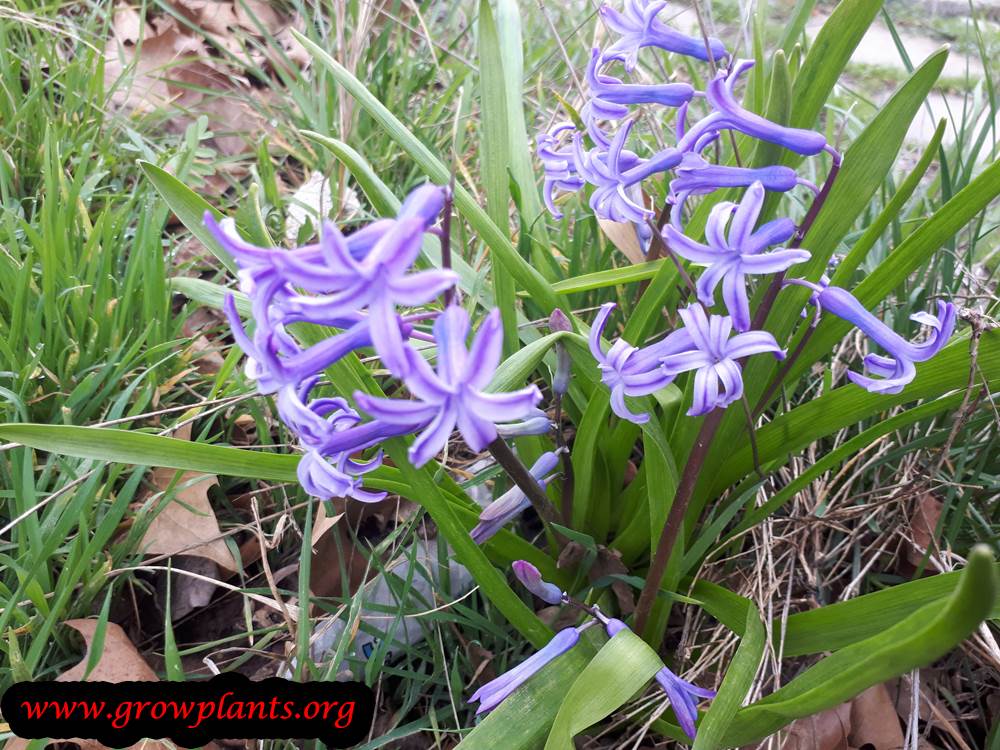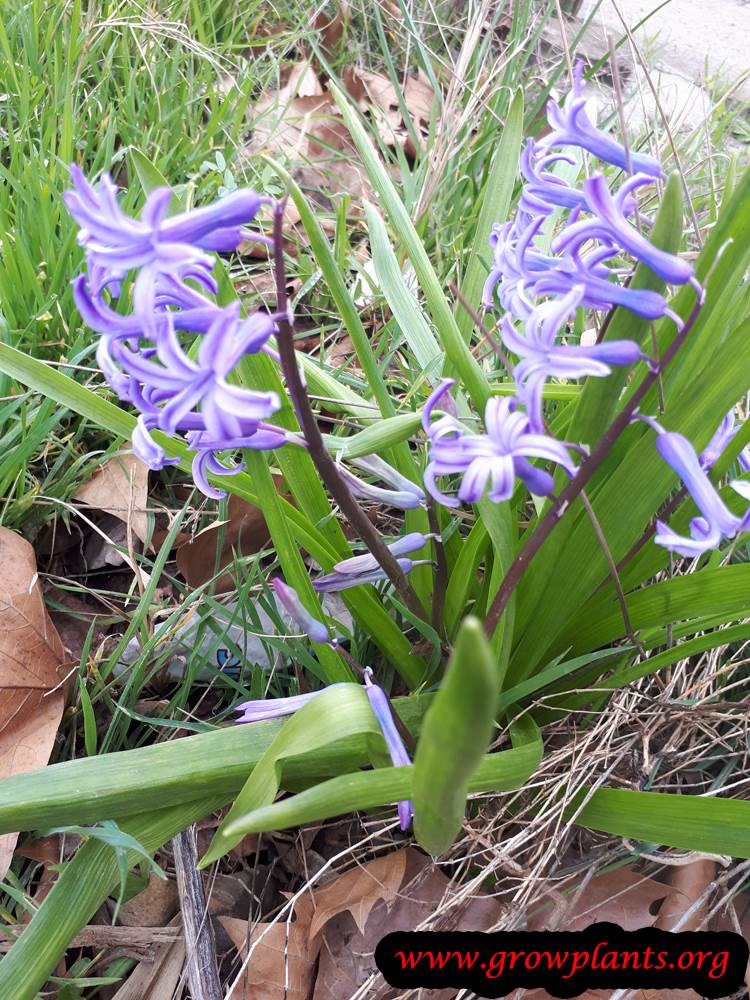
Plant Profile & Key Characteristics
Overview: A bulbous perennial geophyte only about 10-20 cm (4-8 in) tall, sometimes grown as an annual, prized as a highly fragrant ornamental and cut flower. It bears a dense, cone-shaped spike of star-like flowers above strap-shaped leaves.
Quick Specifications
| Specification | Attribute |
|---|---|
| Plant Type / Life Cycle | Perennial geophyte (sometimes grown as annual) |
| Foliage Type | Deciduous (dies back after flowering; bulb dormant in summer) |
| Mature Size | 10-20 cm (4-8 in) tall |
| Growth Rate | Moderate to slow (slow while the bulb establishes) |
| Root System | Bulbous geophyte |
| Toxicity | Bulbs toxic to people and pets (oxalate crystals); handling bulbs can irritate skin |
| Hardiness | USDA zone 4-10 |
Growth Form & Structure
- Height & Spread: 10-20 cm (4-8 in) tall; grown in beds, forced in containers, or brought indoors while in bloom.
- Growth Habit & Form: Low bulbous plant with a single upright flower stalk rising from a basal rosette of leaves.
- Lifespan & Maturity: Perennial bulb that flowers each winter to spring; slow to bulk up from seed, faster from offsets.
Anatomy & Physical Features
- Leaves & Foliage: Green, lance- to strap-shaped leaves emerging directly from the bulb.
- Flower Characteristics: Fragrant five-petalled flowers in a dense cone-shaped spike, in purple, pink or white (full detail in the Bloom section).
Primary Uses & Landscape Value
- Functional & Ornamental Roles: Popular fragrant spring ornamental for beds, containers, forcing indoors and as a cut flower.
Care Guide: Planting, Soil & Watering
Overview: Hyacinthus orientalis is a hardy, bulb-forming perennial (zones 4–10) prized as a fragrant spring flower; it needs winter chill and a dry summer dormancy. It grows best in loamy, well-drained soil with modest watering, and rots easily if kept wet through summer.
Quick Care Requirements
| Requirement | Ideal Condition |
|---|---|
| Planting Season | Autumn to winter, while the soil is cool |
| Growth Rate | Slow to Moderate (bulb is slow to establish) |
| Soil Type | Loamy, well-drained soil |
| Water Need | Low to Moderate — moist in growth, dry in summer dormancy |
Planting & Establishment
- Best Planting Season: Plant the bulbs in autumn to winter, during the cool season, so they receive the winter chill they need before flowering in late winter to spring.
- How to Plant:
- Hole Preparation: Set bulbs roughly 10–15 cm (4–6 in) deep and about 8–10 cm apart, pointed growing tip facing up.
- Soil Amendments: Loosen the soil and work in compost for a loamy, free-draining bed; add grit if drainage is poor.
- Planting Depth: As a rule, plant bulbs about three times their own height deep, with the pointed tip up and roots down.
- Growth Speed & Expectations: Foliage and flowers emerge in late winter to spring; bulbs take a season to settle and bulk up before flowering strongly.
Soil, Watering & Drainage Care
- Soil Mix & Drainage Needs: Sharp drainage is essential — in wet-summer areas lift the bulbs after the foliage dies down and store them dry, or grow in pots that can be kept dry over summer.
- Watering Schedule & Technique:
- Young / Newly Planted: Water in after planting and keep the soil lightly moist while roots and shoots develop through the cool season.
- Established: Water moderately during active growth and flowering, letting the surface dry between waterings.
- Seasonal Adjustments: Once the leaves die back, withhold water and keep the bulbs dry through summer dormancy.
Climate, Light & Hardiness
Hyacinthus orientalis needs a winter chill period followed by a dry summer dormancy; it is hardy across a broad range, roughly zone 4–10, in temperate, Mediterranean, and subtropical climates, and performs best with well-drained, loamy soil and full sun to half shade.
Quick Climate Specifications
| Climate Zones | Mediterranean, subtropics, temperate |
|---|---|
| USDA Hardiness Zones | Approximately 4–10 |
| Light Conditions | Full sun; half shade |
Temperature Extremes & Hardiness
USDA Hardiness & Regional Limits
Hardy roughly zone 4 through 10.
Chilling Requirement
Needs a period of winter cold to flower well; in warm-winter areas without adequate natural chill, bulbs are sometimes pre-chilled before planting.
Wind, Humidity & Microclimate
Rainfall & Seasonal Moisture
Needs a distinctly dry summer dormancy; in climates with wet summers, growers lift and store the bulbs to prevent rot.
Growing in Pots, Balconies & Indoors
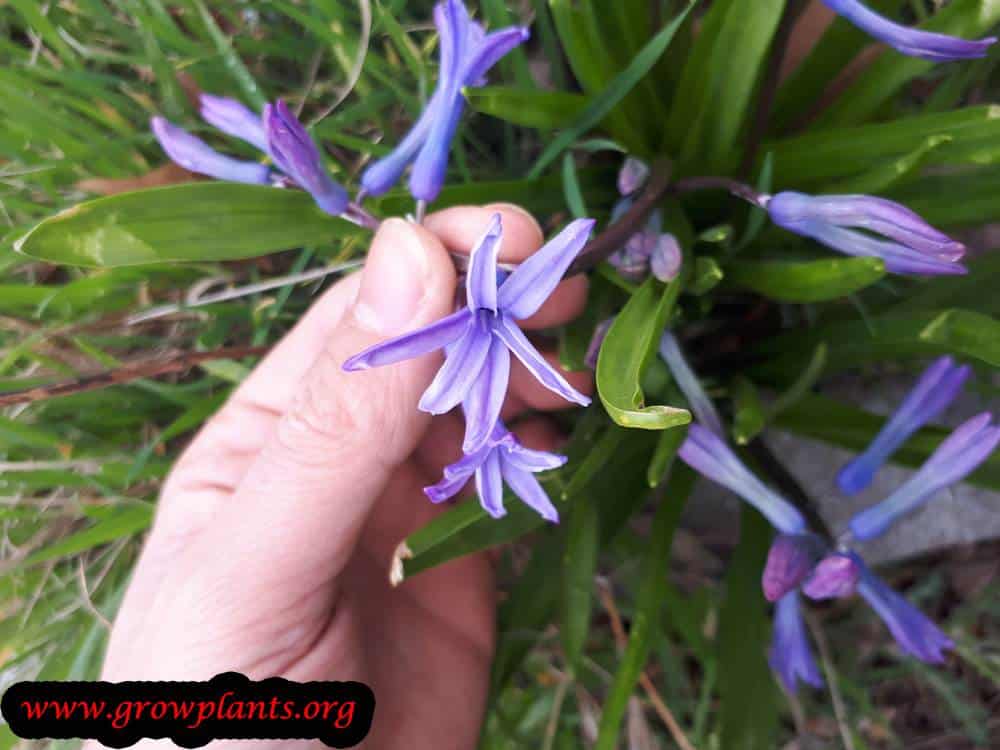
Hyacinthus orientalis is a hardy spring bulb rather than a houseplant, but – as the grower notes – because its flowering season is short you can bring a potted, budding bulb indoors to enjoy the scent, then return it outside. It also grows well in outdoor pots.
Quick Details
- Container Size: Small pots or bowls of 1-5 L; group several bulbs for impact
- Indoor Suitability: Not a permanent houseplant, but can be displayed indoors while in bloom (grower’s note)
- Best Spot: Full sun to part shade outdoors; a bright, cool spot indoors while flowering
- Soil & Drainage: Free-draining, gritty potting mix – bulbs rot in wet, heavy soil
- Watering in Pots: Keep barely moist while rooting and growing; avoid waterlogging, which rots the bulb
Indoors & On the Windowsill
- Windowsill / display only: The grower marks it No as a permanent houseplant, but notes the flowering season is short, so a budding potted bulb can be brought indoors to a bright, cool spot to enjoy – then moved back outside.
- Needs winter cold: Hyacinths need a cold, dark rooting period before they flower and a genuine winter chill each year – they will not thrive kept warm indoors long-term.
- Safety: Hyacinth bulbs are toxic if eaten and the papery skin can irritate skin – handle with care and keep away from children and pets.
On a Balcony or Patio
- Light, wind & heat: Give it the sunniest spot you have. Walls and paving reflect heat so pots dry quickly – check moisture often in warm weather. On an exposed balcony, stake tall stems and shelter from strong wind.
- Practicalities: A full pot is heavy once watered – make sure the balcony can take the load and that drainage runoff has somewhere to go.
Choosing the Pot, Soil & Long-Term Care
- Pot & drainage: Use a pot with strong drainage holes and skip a standing-water saucer to avoid root rot. Terracotta breathes and dries faster; glazed or plastic pots hold moisture longer.
- Potting mix: A well-aerated, organic-rich mix – potting mix or peat/coir blended with perlite or vermiculite for free drainage.
- Feeding: Potted plants need feeding more often than those in open ground, as nutrients leach out with each watering – feed regularly through the growing season.
- Long-term care: As a perennial bulb, let the foliage die back after flowering; lift and divide crowded clumps and refresh the mix every couple of years.
Fertilizing & Feeding
A light feeder: this fragrant spring bulb draws on stored reserves and mainly needs a light balanced feeding while its leaves are green and actively growing.
Quick Fertilizing Specs
| Feeding Level | Light feeder |
|---|---|
| Main Nutrient Priority | Balanced feeding with adequate potassium to help the bulb rebuild for the following bloom |
| Best Feeding Period | While the leaves are green and growing, from planting through flowering |
| Organic Options | Compost worked into loamy, well-drained soil at planting time |
| Reduce/Stop Feeding | Feeding stops once flowering ends and the foliage starts yellowing and dying back |
| Micronutrients | Rarely an issue in loamy, well-drained soil; correct only a diagnosed deficiency |
| Soil pH | Prefers loamy, well-drained soil |
Feeding by Growth Stage
Autumn or winter planting and rooting
Get roots established in loamy, well-drained soil ahead of the winter chill this species needs to flower well.
| Nutrient direction | A balanced fertilizer or bulb amendment worked into the planting hole supports early root development. |
|---|---|
| Timing | At autumn or winter planting time. |
| Frequency | A single light feeding worked in at planting is generally enough. |
| Fertilizer types | A balanced, complete fertilizer or bulb fertilizer worked into the planting hole, Compost mixed into the soil at planting |
| Precautions | Keep any feeding at planting light and avoid direct contact between fertilizer and the bulb, which can cause injury. |
Leaf growth and fragrant spring bloom
Support the strap-shaped leaves and flower spike while they are actively growing, and help the bulb store reserves for the next bloom cycle.
| Nutrient direction | Balanced feeding with adequate potassium while leaves are green helps the bulb build reserves rather than just fueling this season’s flowers. |
|---|---|
| Timing | From leaf emergence through the fragrant spring bloom. |
| Frequency | A light feeding while leaves are actively green is generally sufficient. |
| Fertilizer types | A balanced complete fertilizer, potassium-forward to support bulb reserves, A bulb-specific fertilizer applied as the leaves grow |
| Precautions | Let the leaves die back naturally rather than removing them early; they are still feeding the bulb after bloom. |
Foliage dieback and summer dormancy
Let the bulb finish storing reserves and rest through the dry summer it requires between bloom cycles.
| Nutrient direction | None – withhold fertilizer once the foliage yellows and dies back for the season. |
|---|---|
| Timing | As leaves die back after bloom and through summer dormancy, including any time the bulb is lifted for storage. |
| Frequency | No feeding during foliage dieback or dormancy. |
| Fertilizer types | No feeding at this stage; do not fertilize a dormant or lifted bulb. |
| Precautions | Withhold fertilizer until the bulb is replanted or new growth resumes. |
Nutrient Deficiency Signs & Corrections
Leaves emerge pale or yellowish green and overall growth appears weak.
| Possible causes | low available soil nitrogen, nutrients leached from light, fast-draining soil, a planting bed that has not been amended in several seasons |
|---|---|
| Appears first on | emerging leaves |
| What to check | soil fertility and amendment history, drainage and leaching, bulb age and vigor |
| Possible correction | Work a balanced fertilizer or compost into the bed at planting and while leaves are actively growing. |
Leaf and root tips brown or scorch and growth looks poor despite otherwise reasonable care.
| Possible causes | fertilizer salt buildup from over-application near the bulb, fertilizer placed in direct contact with the bulb, insufficient watering to carry salts away from the root zone |
|---|---|
| Appears first on | leaf tips and root tips |
| What to check | placement and amount of fertilizer used, watering after feeding, soil drainage |
| Possible correction | Reduce fertilizer amounts, keep it away from direct bulb contact, and water thoroughly after feeding. |
Young leaves show yellowing between the veins while the veins themselves remain green.
| Possible causes | high soil pH limiting iron availability, cold, waterlogged soil restricting early root activity, compacted soil limiting root uptake |
|---|---|
| Appears first on | youngest leaves |
| What to check | soil pH, drainage and soil temperature, root condition |
| Possible correction | Improve drainage and, where pH is the cause, apply a chelated iron product per its label. |
Pruning, Training & Seasonal Maintenance
Hyacinthus orientalis, the species behind cultivated garden hyacinths, needs the same light bulb-maintenance regimen as its bred forms: no structural pruning, just deadheading and a foliage cutback timed to the leaves’ own dieback rather than to the calendar. As a dry-summer-dormant bulb, the safest window is late spring into summer, once leaves have fully yellowed and finished recharging the bulb for next year’s spike.
Quick Pruning & Maintenance Specs
| Pruning Tolerance | Low (foliage-dependent bulb; no woody structure) |
| Primary Pruning Window | Late spring to summer, once foliage has fully yellowed |
| Typical Frequency | Once per year, after bloom and dieback |
| Main Objective | Recharge the bulb; clear the bed before its dry summer rest |
| Best Tool Type | Small precision snips |
| Avoid Heavy Pruning During | While foliage is still green |
Pruning by Plant Age & Size
Newly Established
Bulb establishment is slow at first; skip all foliage removal the first year, even post-bloom, to let the bulb build size.
Young / Formative
No structural training applies to a bulb. The formative task is simply letting each year’s foliage die back fully before removal, which builds the bulb over successive seasons.
Mature / Established
Established plants get the same annual cycle: deadhead once flowering ends, then cut foliage back only once it is fully yellow. Where summers are wet, lift and dry the bulbs at season’s end instead of leaving them in damp ground.
Seasonal Pruning Schedule
Post-Flowering
Objective: prevent energy loss to seed formation. Remove: the spent flower stalk near its base. Do not remove: the still-green leaves. Response: reserves build in the bulb for next year’s bloom.
Foliage Dieback (Early to Mid-Summer)
Objective: clear spent leaves once they’ve finished their job. Remove: foliage only after it has yellowed and gone limp naturally. Do not remove: any leaf with green remaining. Response: clean entry into dormancy; lift promptly in wet-summer climates to avoid bulb rot.
Special Growth to Remove
- Spent flower stalk — cut at the base once bloom fades.
- Dead/yellowed leaves — remove only once fully brown, never while green.
No suckers, watersprouts, or root suckers occur on this bulb — nothing else to manage.
Container & Small-Space Pruning
Grows well in pots. The same dieback-first rule applies even indoors: resist cutting yellowing leaves early for tidiness. Once foliage is fully spent, lift the bulb and store it dry until its next planting window.
Tools
Small precision snips or scissors are sufficient for its soft, thin stems and leaves.
Tool Hygiene & Disease Risk
Routine. Aphids are the only reported issue, not a cut-transmissible disease, so ordinary clean tools are enough between plants.
Cut Placement & Technique
Cut the flower stalk close to its base without damaging nearby foliage. Remove dead leaves at soil level rather than leaving long stubs.
Heavy Pruning & Rejuvenation
Not applicable — there is no woody framework to rejuvenate. Declining vigor points to overcrowding, addressed by lifting and dividing offsets rather than pruning.
Post-Pruning Care
Water sparingly after foliage removal to respect its dry-summer rest. In wet-summer regions, lift bulbs once foliage is gone and store dry until the autumn/winter planting window. Skip feeding after cutback — the plant is entering dormancy, not regrowth.
Common Pruning Mistakes
- Cutting green foliage immediately after bloom, which weakens next year’s flower.
- Braiding or knotting leaves for neatness, reducing their light capture while still alive.
- Leaving bulbs in damp soil through a wet summer instead of lifting and drying them.
When NOT to Prune
Never remove foliage while any part is still green. Avoid disturbing the plant during active bloom.
Recommended Tools (by task)
| Task | Tool Category | Why |
| Deadheading spent stalks; removing yellowed leaves | precision_snips | Thin, soft growth needs only a small clean cut. |
Propagation Guide
Hyacinthus orientalis is propagated almost entirely by dividing the small offset bulbs that form at the base of the mother bulb, since this is the only reliable way to reproduce an exact flower color and shape; seedlings are not true-to-type and are slow to reach flowering size. Division is a Moderate task because natural offsetting happens slowly.
Quick Propagation Specs
| Best Propagation Method | Bulb offset (bulblet) division |
| Alternative Methods | Seed (for breeding, not for named colors) |
| Propagation Difficulty | Moderate |
| Seed True-to-Type | No – seedlings vary in flower color and shape |
| Vegetative True-to-Type | Yes |
| Best Propagation Season | Autumn or winter, matching the recommended planting season, when bulbs are lifted or replanted |
Growing from Seed
Seed Handling & Viability
Seed is used mainly by breeders working toward new flower colors or forms, not to reproduce an existing plant.
Dormancy & Pre-Sowing Treatment
As a hardy, winter-chill bulb species, seed generally benefits from a cold period before it will germinate.
Germination Time
Germination is slow, and it then takes several years of bulb development before a seedling first flowers.
Rhizomes, Tubers, Bulbs & Corms
Bulb Offset (Bulblet) Division
Small daughter bulbs form naturally at the base of the parent bulb and can be separated when the clump is lifted; in humid-summer areas the site’s own guidance is to lift bulbs out of the ground before summer moisture sets in, which is also a practical time to divide offsets. Offsets are typically grown on for a season or two before they reach flowering size. Replant in autumn or winter in loamy, well-drained soil.
Bloom & Flower Guide
Quick Details
- Bloom Season: Late winter into spring
- Time to First Bloom: From an autumn-planted bulb, it flowers in its first spring
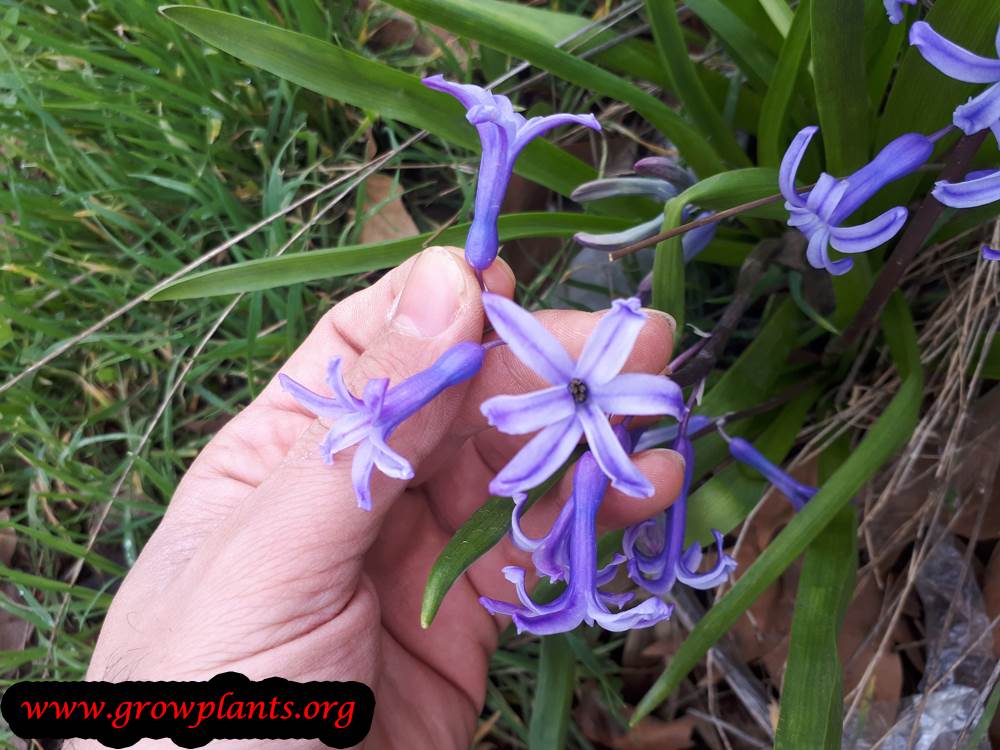
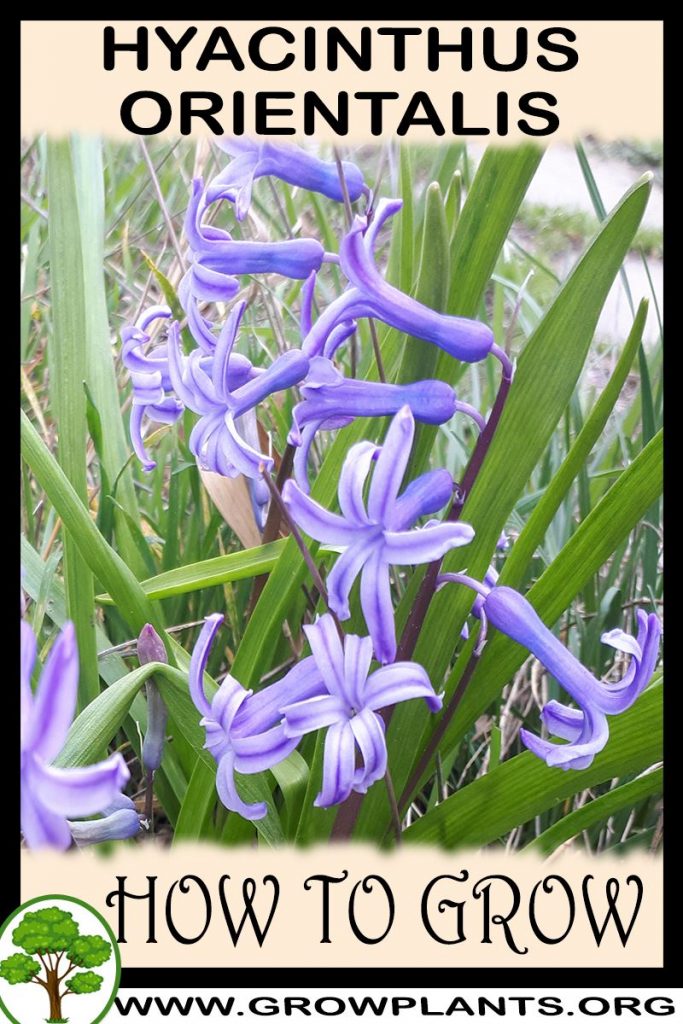
- Flower Appearance: A dense spike of intensely fragrant, star- to bell-shaped florets, each with six recurved tepals, in purple, pink or white
- Edibility: Toxic – not edible; the bulbs are poisonous and the sap can irritate skin
Detailed Blooming Overview
Few spring bulbs are as powerfully perfumed as the hyacinth. Each stout stalk carries a crowded spike of waxy florets, and their fragrance can fill a room. Each little floret is star- to bell-shaped and opens into six recurved lobes, or tepals, rather than the five sometimes reported. It is a wonderful fragrant cut flower and forces well indoors – but the bulbs are toxic and their sap can irritate skin, so handle with a little care.
Flower Characteristics
- A dense, upright spike of many waxy florets.
- Each floret is star- to bell-shaped with six recurved tepals.
- Richly fragrant, in purple, pink or white (and, in other cultivars, blue, apricot and more).
Bloom Care & Thinning
- After flowering: Let the foliage die down naturally so the bulb can recharge for next year’s bloom.
- Cut flowers and forcing: Superb for fragrant arrangements and for forcing into early bloom indoors.
- Safety: Wear gloves when handling bulbs, as the sap can irritate skin, and keep bulbs away from children and pets.
Pests, Diseases & Troubleshooting
Overview: Hyacinths are spring bulbs whose troubles are mostly below ground: bulb and basal rots, the narcissus bulb fly, and a distinctive bacterial soft rot known as ‘yellows’. Foliage pests are minor, so the keys are healthy, firm bulbs, free-draining soil, dry summer storage and strict hygiene rather than routine spraying.
Quick Troubleshooting Overview
| Issue / Pest | Main Symptom | Primary Solution |
|---|---|---|
| Basal / bulb rot | Bulb fails to sprout or growth is weak; base soft, brown and mouldy | Discard soft bulbs, plant in well-drained soil, dry storage, fungicide dip |
| Bacterial soft rot (‘yellows’) | Slimy, foul-smelling bulb interior, yellow streaks in leaves | Destroy affected bulbs, sanitation, avoid injury |
| Narcissus bulb fly | Grubs hollow the bulb; few or grassy, weak leaves and no flower | Firm soil over necks after flowering, remove/destroy soft bulbs |
| Aphids | Colonies on shoots and flowers; can spread mosaic virus | Rinse off, insecticidal soap, remove virused plants |
| Grey mould | Brown flecks and fuzzy grey mould in cool, damp conditions | Improve airflow, remove affected tissue and debris |
| Stem & bulb eelworm | Swollen, distorted, streaked leaves; soft rings in cut bulb | Destroy infested bulbs, do not replant same soil |
Common Pests & Management
- Narcissus bulb fly (Merodon equestris):
- Symptoms: A bee-like fly whose single fat grub tunnels into and hollows the bulb; infested bulbs fail to flower, rot, or produce only thin, grassy leaves, and feel soft when squeezed.
- Prevention & Control: After the leaves die down, firm the soil over the emptied leaf necks or cover with fleece so females cannot lay at the bulb neck; lift and destroy soft, light bulbs; hot-water treatment of dormant bulbs is used commercially; rotate planting sites.
- Bulb mites (Rhizoglyphus spp.):
- Symptoms: Tiny pearly mites that invade bulbs already damaged or rotting, accelerating decay; usually a secondary problem following injury or basal rot.
- Prevention & Control: Plant only firm, undamaged bulbs, avoid wounding at lifting, store cool and dry, and discard soft or rotting bulbs; controlling the primary rot removes the mites’ foothold.
- Aphids (Myzus persicae and allies):
- Symptoms: Green or grey aphids clustering on emerging shoots, leaves and flower stalks, causing sticky honeydew and distortion, and – most importantly – spreading mosaic virus between plants.
- Prevention & Control: Rinse off with water and treat with insecticidal soap; remove and destroy any mottled, virus-suspect plants promptly; encourage natural predators and control aphids on nearby stored bulbs.
- Stem & bulb eelworm (Ditylenchus dipsaci):
- Symptoms: Microscopic nematodes that cause swollen, twisted, pale leaves and, in a cut bulb, characteristic soft brown rings; heavily infested bulbs rot and collapse.
- Prevention & Control: There is no home cure – dig up and destroy infested bulbs, do not replant hyacinths or other hosts in that soil for several years, and buy clean stock; the pest spreads in soil and plant debris.
- Slugs & snails (Deroceras / Cornu spp.):
- Symptoms: Rasped holes in emerging leaves and flower spikes, with slime trails, mainly in wet spring weather.
- Prevention & Control: Hand-pick at night, clear hiding places, use grit barriers or iron-phosphate bait around emerging shoots.
Diseases & Fungal Issues
- Basal rot (Fusarium oxysporum):
- Symptoms: A fungal rot entering through the basal plate, so bulbs fail to root and sprout or growth is stunted and yellow; the base becomes soft, brown and sometimes pink- or white-mouldy, worst in warm, wet soil.
- Treatment & Management: Plant only firm bulbs in free-draining soil, avoid waterlogging and physical damage, and lift and dry bulbs properly for storage; discard rotten bulbs, and a fungicidal bulb dip before planting protects valuable stock.
- Bacterial soft rot / ‘yellows’ (Dickeya / Xanthomonas hyacinthi):
- Symptoms: The classic hyacinth disease: yellow stripes and streaks running up the leaves, slimy, foul-smelling breakdown of the bulb interior, and collapse of the plant, spreading in warm, wet conditions and through wounds.
- Treatment & Management: There is no cure – rogue out and destroy affected plants and bulbs, avoid injuring bulbs, keep tools and hands clean, provide good drainage and airflow, and never replant into contaminated soil; start again with certified clean bulbs.
- Grey mould (Botrytis cinerea (incl. B. hyacinthi)):
- Symptoms: Brown flecks and spots on leaves and flowers with fuzzy grey mould in cool, damp, crowded conditions, sometimes rotting the flower spike.
- Treatment & Management: Remove faded flowers and dead foliage, improve spacing and airflow, avoid overhead watering, and clear debris; hygiene usually suffices.
- Penicillium blue mould (storage) (Penicillium spp.):
- Symptoms: Blue-green mould on bulbs in storage, especially on damaged or damp bulbs.
- Treatment & Management: Cure and store bulbs cool, dry and airy, handle gently to avoid wounds, and discard mouldy or soft bulbs before planting.
- Hyacinth mosaic virus (Potyvirus):
- Symptoms: Pale mottling, streaking and distortion of leaves and reduced vigour, spread by aphids and not curable.
- Treatment & Management: Remove and destroy affected plants, control aphid vectors, and buy virus-tested stock; do not propagate suspect bulbs.
Growing Difficulties & Abiotic Problems
- Waterlogged bulb rot:
- Cause & Symptoms: Bulbs planted in heavy, wet soil rot rather than root, failing to emerge or collapsing early.
- Correction Strategy: Plant in free-draining soil or raised beds, add grit to heavy ground, and avoid sites that stay wet in winter; in pots, ensure good drainage and do not overwater.
- Poor / small flowering:
- Cause & Symptoms: Undersized flower spikes or ‘blindness’ in later years from bulb exhaustion, warm storage, or lifting foliage too early.
- Correction Strategy: Let leaves die down naturally to rebuild the bulb, feed after flowering, and store dormant bulbs cool; forced indoor bulbs rarely repeat well and are best planted out afterwards.
- Floppy, top-heavy spikes:
- Cause & Symptoms: Large dense flower heads that lean or topple, especially on forced or over-fed plants in low light.
- Correction Strategy: Grow in good light, avoid excess nitrogen, and stake tall indoor spikes; cooler, brighter conditions give sturdier stems.
- Loose or split crown / frost:
- Cause & Symptoms: Cold damage to early growth and, occasionally, a hollow or split crown from irregular growth.
- Correction Strategy: Plant at the correct depth in autumn, mulch in hard-frost areas, and avoid exposing forced bulbs to sudden temperature swings.
What Helps – Products & Tools
Prevention is mostly cultural: firm, healthy bulbs, free-draining soil, and dry cool storage. A fungicidal bulb dip (or copper) before planting guards against basal rot, insecticidal soap handles aphids, and fleece or firmed soil keeps the bulb fly out. There is no spray for bacterial yellows or eelworm – clean stock, sanitation and drainage are the real tools.