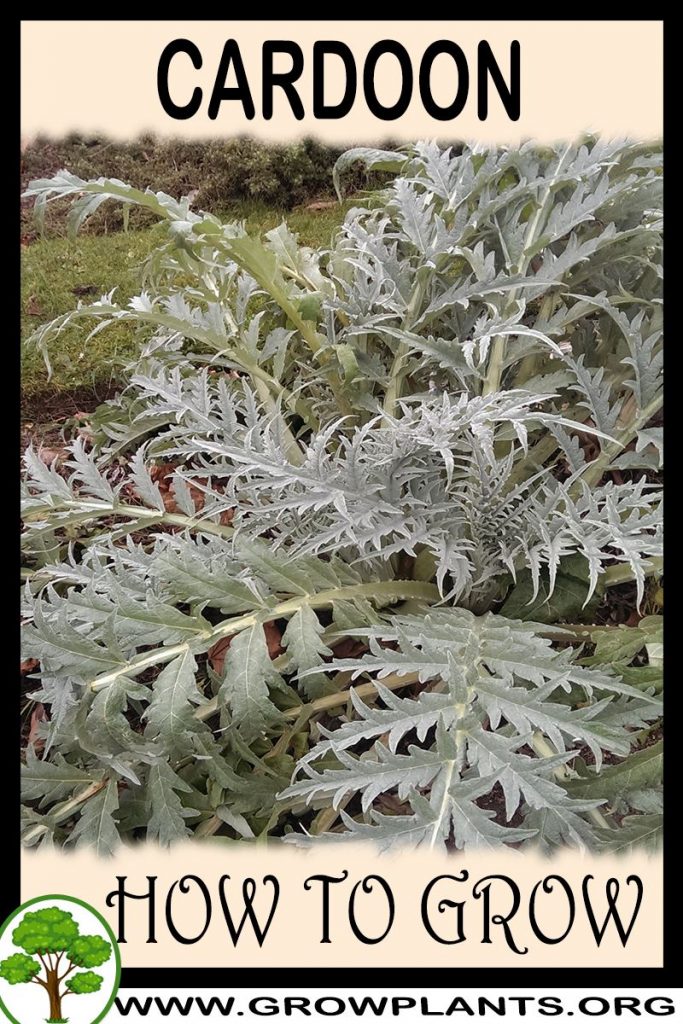
Plant Profile & Key Characteristics
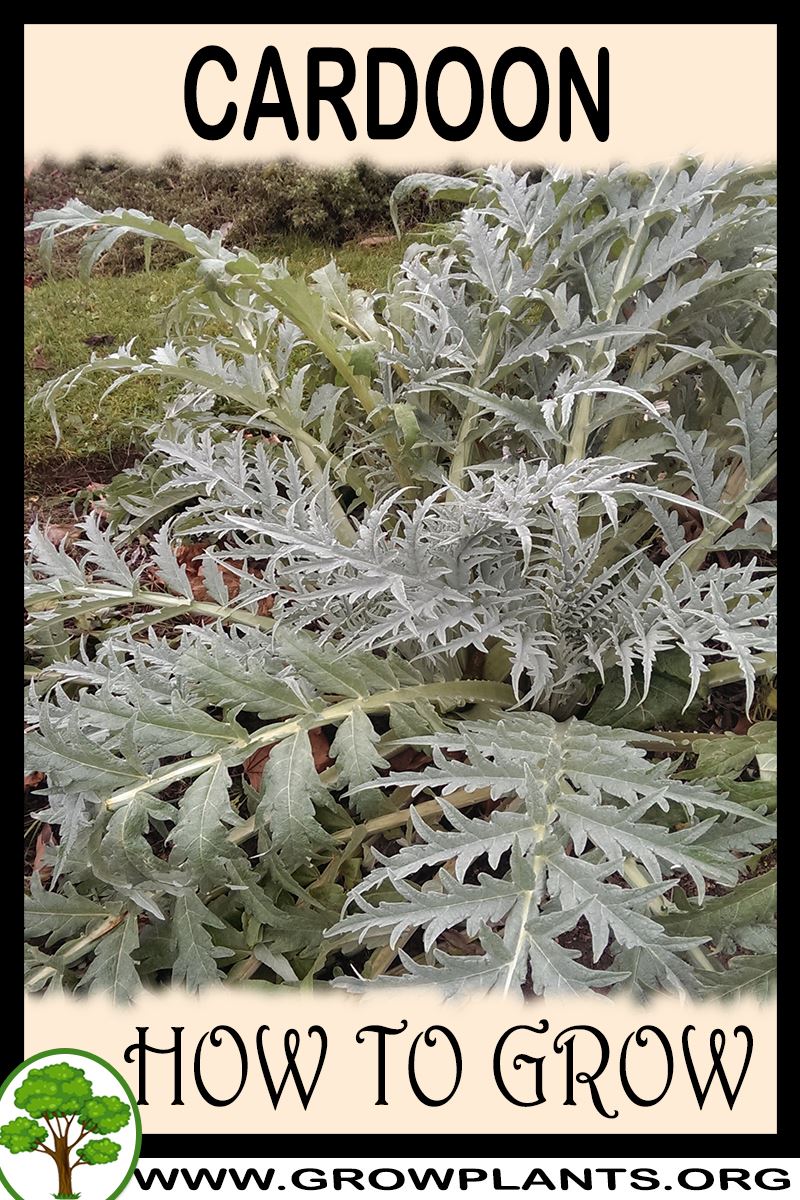
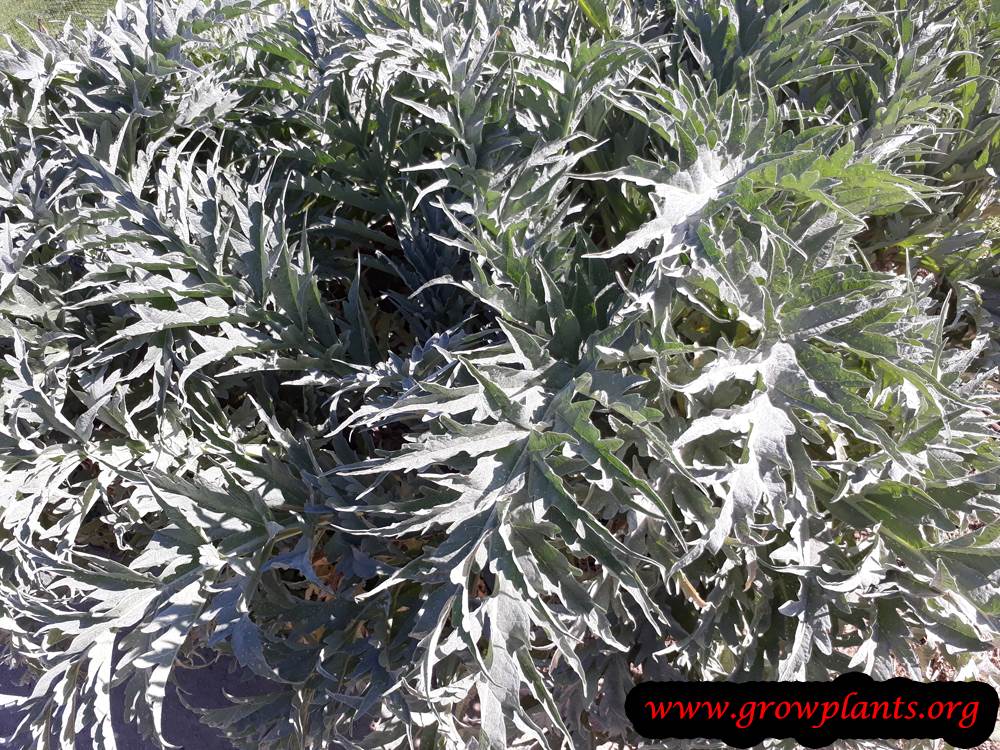
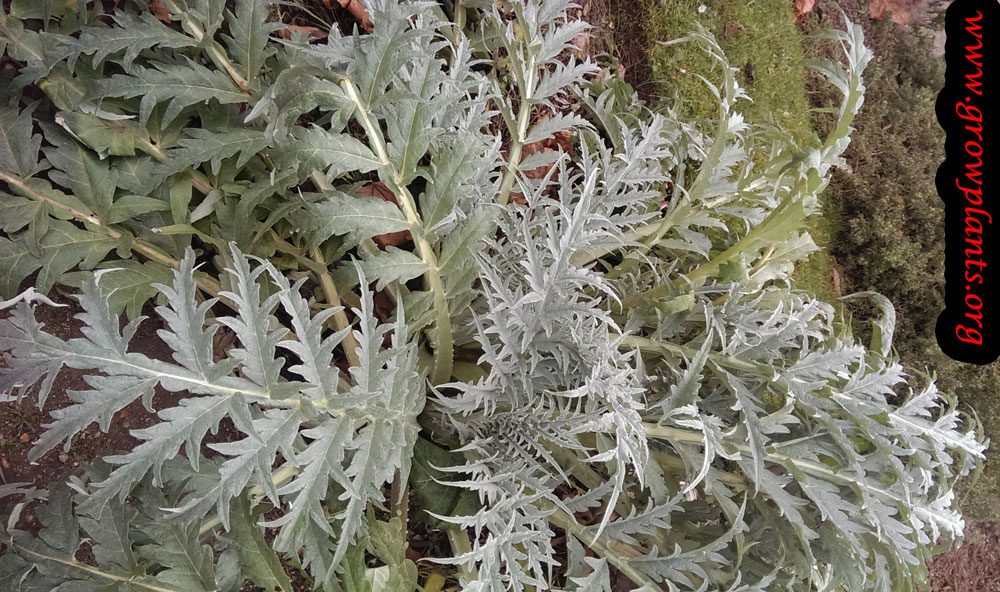
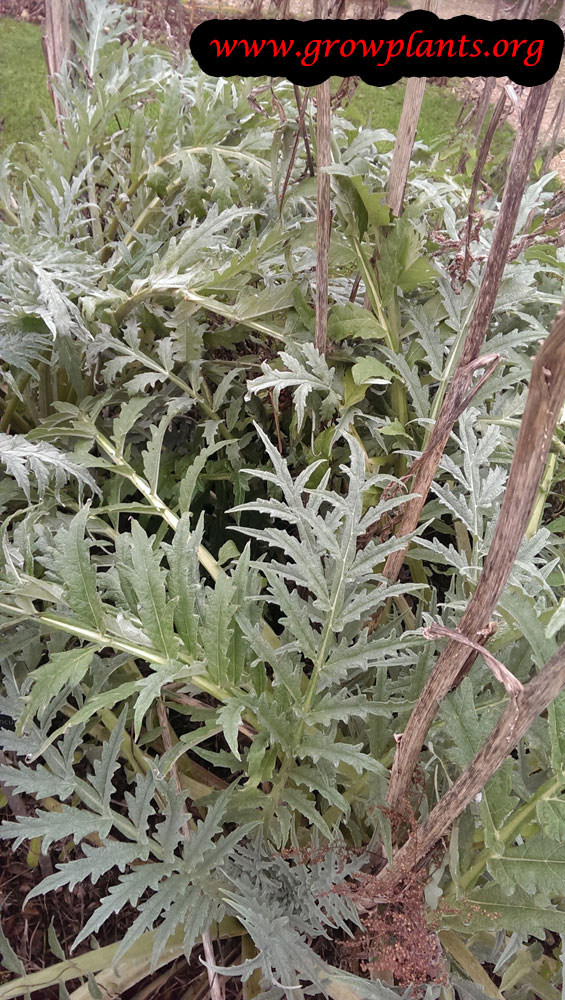
Overview: Cardoon is a large, thistle-like perennial 1-2 m tall with striking silvery-grey foliage, grown both as a vegetable and as a bold ornamental. It is evergreen in mild climates (grown as an annual where winters are cold) and cultivated for its edible leaf-stalks and flower buds.
Quick Specifications
| Specification | Attribute |
|---|---|
| Plant Type / Life Cycle | Perennial (evergreen; grown as an annual in cold climates) |
| Foliage Type | Evergreen |
| Mature Size | 1-2 m tall |
| Growth Rate | Moderate to fast |
| Root System | Deep, fleshy taproot |
| Toxicity | Non-toxic / edible |
| Hardiness | USDA zones 8-10 as a perennial (5-8 grown as an annual) |
Growth Form & Structure
- Height & Spread: 1-2 m tall in the ground; can be grown in large containers but is not an indoor plant.
- Growth Habit & Form: Large, clump-forming thistle-like shrub with an architectural rosette of arching foliage.
- Lifespan & Maturity: Fast-establishing, forming a harvestable clump within its first season.
Anatomy & Physical Features
- Leaves & Foliage: Large (20-70+ cm), deeply cut, serrated green-grey leaves; the fleshy leaf-stalks are the edible part.
- Flower Characteristics: Large purple thistle flowers in rounded heads, attractive to bees.
Primary Uses & Landscape Value
- Edible Uses: Blanched leaf-stalks cooked as a vegetable; flower buds edible like a small artichoke.
- Functional & Ornamental Roles: Bold architectural ornamental for borders and a nectar source for bees.
Care Guide: Planting, Soil & Watering
Overview: Cardoon is a large, architectural perennial that grows best in full sun to light shade and deep, rich, well-draining soil. It is a hungry, thirsty plant that likes steady moisture and a moisture-holding mulch.
Quick Care Requirements
| Requirement | Ideal Condition |
|---|---|
| Planting Season | Spring; in frost-free areas also summer and autumn |
| Growth Rate | Fast to Moderate |
| Soil Type | Deep, rich, well-draining soil |
| Water Need | Moderate to High – keep consistently moist in active growth |
Planting & Establishment
- Best Planting Season: plant in spring in most climates; in mild, frost-free areas it can also go in through summer and autumn.
- How to Plant:
- Hole Preparation: dig a generous, wide hole to give the large root system room to spread.
- Soil Amendments: work in plenty of compost or well-rotted manure, then mulch to feed the plant and conserve soil moisture.
- Planting Depth: set the crown level with the soil surface – do not bury the crown.
- Growth Speed & Expectations: fast to moderate – it forms a bold clump around 1–2 m in a season.
Soil, Watering & Drainage Care
- Soil Mix & Drainage Needs: deep, rich but free-draining soil; a mulch layer keeps the roots cool and moist. It can also be grown in a large container.
- Watering Schedule & Technique:
- Young / Newly Planted: water regularly to settle the plant and build its large root system.
- Established: water deeply and consistently, especially in hot, dry spells.
- Seasonal Adjustments: increase water in summer heat and reduce it in cool weather or dormancy.
Climate, Light & Hardiness
Cardoon is a Mediterranean-climate perennial that stays evergreen and productive year-round in mild-winter zones, while in colder regions it is typically grown as an annual since the crown will not reliably survive hard freezes.
Quick Climate Specifications
| Climate Zones | Mediterranean, temperate, subtropical |
|---|---|
| USDA Hardiness Zones | Approximately 8–10 as a returning perennial; commonly grown as an annual in zones 5–8 |
| Light Conditions | Full sun; half shade tolerated |
Sunlight & Light Exposure
Optimal Light Setup
Full sun gives the strongest growth of the edible leaf stalks and buds.
Shade & Heat Management
Half shade is tolerated and can be useful in hot-summer areas.
Temperature Extremes & Hardiness
USDA Hardiness & Regional Limits
Reliably perennial and evergreen in roughly zones 8–10. In zones 5–8 the crown is unlikely to survive winter, so it is grown as an annual, started fresh from seed or seedling each spring.
Cold Damage & Winter Protection
Mulching the crown can help push survival toward the cooler end of its perennial range.
Growing in Pots, Balconies & Indoors
Cardoon is a bold, silvery perennial reaching 1-2 m – far too large for a house, but the grower confirms it grows in containers. A big tub on a sunny patio suits it, and potting makes it easy to shelter over a cold winter.
Quick Details
- Container Size: A large tub of 30-50 L (8-13 gal) to support its size
- Indoor Suitability: Not an indoor plant – too large and architectural for a room
- Best Spot: Full sun to part shade, outdoors, with room for the arching leaves
- Soil & Drainage: Well-aerated, organic-rich mix (potting mix or peat/coir with perlite or vermiculite); must drain freely
- Watering in Pots: Water generously and keep the mix consistently moist – pots dry fast; ensure excess drains away and never leave it standing in water
Indoors & On the Windowsill
- Not a houseplant: The grower marks it No – it is simply too big and needs full outdoor light.
- Overwintering: In cold-winter climates a potted cardoon is easy to move to a frost-free, unheated shelter and mulch, then bring back out as warmth returns – a key reason to grow this tender perennial in a container.
On a Balcony or Patio
- Light, wind & heat: Give it the sunniest spot you have. Walls and paving reflect heat so pots dry quickly – check moisture often in warm weather. On an exposed balcony, stake tall stems and shelter from strong wind.
- Practicalities: A full pot is heavy once watered – make sure the balcony can take the load and that drainage runoff has somewhere to go.
Choosing the Pot, Soil & Long-Term Care
- Pot & drainage: Use a pot with strong drainage holes and skip a standing-water saucer to avoid root rot. Terracotta breathes and dries faster; glazed or plastic pots hold moisture longer.
- Potting mix: A well-aerated, organic-rich mix – potting mix or peat/coir blended with perlite or vermiculite for free drainage.
- Feeding: Potted plants need feeding more often than those in open ground, as nutrients leach out with each watering – feed regularly through the growing season.
- Long-term care: Every couple of years refresh the top of the mix or pot up; divide congested clumps and lightly trim roots to keep the plant vigorous.
Fertilizing & Feeding
A moderate feeder grown for its edible leaf stalks: nitrogen-leaning feeding through the main growing period keeps the stalks thick and tender ahead of harvest.
Quick Fertilizing Specs
| Feeding Level | Moderate feeder |
|---|---|
| young_feeding | A balanced starter feeding as seedlings establish |
| mature_feeding | Nitrogen-forward feeding through active growth, easing to balanced near harvest |
| Main Nutrient Priority | Nitrogen for thick, tender leaf stalks, on a balanced base |
| Best Feeding Period | The main growing period before the leaf stalks are harvested |
| Organic Options | Compost or aged organic matter worked into the soil, plus mulch |
| Soil pH | Prefers slightly acidic soil |
Feeding by Growth Stage
Establishment after planting
Help seedlings or transplants root in before the plant’s large, silvery-green rosette develops.
| Nutrient direction | A balanced complete fertilizer with organic matter worked into the bed. |
|---|---|
| Timing | At planting, mainly in spring. |
| Frequency | A modest starter feeding as seedlings establish. |
| Fertilizer types | Balanced complete fertilizer, Compost or aged organic matter worked into the soil, plus a mulch layer |
| Precautions | Watch for ant colonies near the planting site; a heavy ant presence is a known problem for this plant. |
Leaf stalk growth
Build the large leaf stalks that are the harvested, edible part of this plant.
| Nutrient direction | A nitrogen-forward complete fertilizer to drive vigorous leaf and stalk growth. |
|---|---|
| Timing | Through the main growing period, before the leaf stalks are harvested. |
| Frequency | Feed regularly through active growth to keep stalks thick and tender. |
| Fertilizer types | Complete fertilizer with a nitrogen emphasis, A mulch layer to conserve moisture |
| Precautions | Keep soil consistently moist; drought stress toughens the edible leaf stalks. |
Stalk harvest
Sustain the plant as tender, nearly full-grown leaf stalks are harvested.
| Nutrient direction | Steady, balanced feeding supports continued stalk production once harvesting begins. |
|---|---|
| Timing | As leaf stalks reach harvest size, mainly in winter and spring. |
| Frequency | Light, regular feeding after harvest keeps new stalks coming. |
| Fertilizer types | A balanced complete fertilizer |
| Precautions | Focus on consistent moisture alongside moderate nutrition as stalks approach harvest size. |
Nutrient Deficiency Signs & Corrections
Overall pale, yellow-green leaves with thin, less succulent stalks.
| Possible causes | Low available nitrogen in the soil, Nitrogen leached away after heavy watering or rain, Cold soil limiting root uptake |
|---|---|
| Appears first on | Older, lower leaves. |
| What to check | Recent feeding history, Soil moisture and drainage, Mulch coverage |
| Possible correction | Feed with a nitrogen-forward complete fertilizer during active growth and keep watering consistent. |
New leaves yellow between the veins while the veins stay green.
| Possible causes | High or alkaline soil pH limiting iron availability, Waterlogged or poorly drained soil, Genuine iron shortage in poor soil |
|---|---|
| Appears first on | Youngest leaves at the growing tips. |
| What to check | Soil pH, Drainage and root health, Whether symptoms follow cold, wet spells |
| Possible correction | Correct soil pH where it is too high and, if needed, apply a chelated iron product per its label. |
Leaf stalks and margins turning tough, brown, or scorched.
| Possible causes | Inconsistent watering or drought stress, Fertilizer salt buildup from overfeeding, Poor drainage trapping salts near the roots |
|---|---|
| Appears first on | Leaf margins and stalk tips. |
| What to check | Watering consistency and mulch coverage, Recent feeding amount, Soil drainage |
| Possible correction | Ease off feeding, keep soil evenly moist with mulch, and water thoroughly to flush any built-up salts. |
Pruning, Training & Seasonal Maintenance
Cardoon is a large, architectural herbaceous perennial—evergreen where hardy (zone 8–10) and grown as an annual further north—cultivated for its blanched, edible leaf stalks. It tolerates hard cutting-back well and responds with a fresh flush of tender growth, but “pruning” here is really foliage and stalk management rather than woody structural work, matching the plant’s own year-round “dead leaves” maintenance note.
Quick Pruning & Maintenance Specs
| Pruning Tolerance | Moderate–High – accepts a hard cutback to the crown |
| Primary Pruning Window | Late winter/early spring, or immediately after the leaf-stalk harvest |
| Secondary Maintenance Window | Ongoing dead-leaf removal, all year (per the plant’s own data) |
| Typical Frequency | Continuous light removal plus one seasonal renewal cutback |
| Main Objective | Sanitary care plus stimulating fresh, tender leaf-stalk growth for harvest |
| Young Plant Priority | None – build the clump before the first harvest |
| Mature Plant Priority | Cut spent flower stalks (unless left ornamentally); remove old fibrous stalks after harvest |
| Best Tool Type | Bypass secateurs/loppers for the thick, fibrous stalks |
| Avoid Heavy Pruning During | Peak summer heat, or while stems are flowering if the ornamental bloom is wanted |
Pruning by Plant Age & Size
Newly Established
Minimal—remove only damaged leaves while the clump establishes its root system before any harvest is taken.
Young / Formative
No structural training; it is a basal clump, not a trained framework. Simply let the rosette of leaf stalks bulk up before the first harvest.
Mature / Established
After 2–3 years, cut older, less-productive growth back hard in late winter to rejuvenate the clump. Remove the fibrous outer/older leaf stalks once harvested.
Seasonal Pruning Schedule
Ongoing Sanitary
Objective: matches the plant’s own “all year” pruning-window fact. Remove: dead or yellowing leaves continuously. Do not remove: healthy stalks mid-development. Why it matters: the plant’s own “difficulties” note flags that ant colonies nesting at the base can kill it—dead leaf litter around the crown is exactly what shelters them.
Post-Harvest
Objective: make room for the next flush. Per the plant’s own note, leaf stalks are taken “before the flowers” while tender. Remove: the remaining fibrous leaf bases, cut back to the crown once stalks are harvested. Expected response: a fresh flush of new stalks.
Dormant/Winter (Zone 8–10 Evergreen, or Pre-Frost in Marginal Zones)
Objective: reset the clump and reduce frost-damaged bulk overwintering. Remove: cut the whole clump back hard. Expected response: a clean spring flush.
Structural Pruning & Training
Renewal pruning—cutting the whole clump back to the crown every 1–2 years—keeps stalks tender; there is no woody canopy to thin or train.
Special Growth to Remove
- Spent flower stalks, unless intentionally left for the ornamental purple thistle-head and its pollinator value (per the plant’s own bloom-season data)—letting stems flower diverts energy away from the harvestable leaf stalks, so it’s one or the other per stem.
- Dead outer leaves—harbor the ant problem the plant’s own data flags.
Container & Small-Space Pruning
Container culture is unusual for a 1–2 m plant but possible; expect to need renewal cutbacks more often, since a restricted root run reduces stalk vigor faster than in open ground.
Tools
- Bypass secateurs for leaf-stalk and flower-stem harvest cuts.
- Loppers for the whole-clump renewal cutback.
- Precision snips for light day-to-day dead-leaf tidying.
Tool Hygiene & Disease Risk
Routine—no transmissible disease is flagged in the plant’s own data; standard clean-tool practice is sufficient.
Cut Placement & Technique
Cut leaf stalks near the base at the crown. Cut spent flower stems down at their base rather than mid-stem, to avoid stubs that collect rot.
Heavy Pruning & Rejuvenation
Well tolerated. A hard cutback to the crown in late winter/early spring, or right after the main harvest, produces a fresh flush of tender stalks within weeks during the growing season. Avoid doing this during summer heat.
Post-Pruning Care
Water well after a hard cutback to support the new flush. Watch the crown for the ants/slugs the plant’s own pest data lists, especially around fresh cuts.
Common Pruning Mistakes
- Leaving old fibrous dead leaves piled at the crown—invites the ant problem the plant’s own difficulty note warns can be fatal to it.
- Cutting back hard during peak summer heat, stressing regrowth.
When NOT to Prune
- Avoid a hard crown cutback during summer heat/drought stress.
- Avoid it right before a hard frost in marginal zones, where the existing growth offers some protection.
Recommended Tools (by task)
- Task: Harvesting/removing leaf and flower stalks – thick, fibrous → bypass_secateurs – clean cuts through fibrous stems too tough for snips.
- Task: Whole-clump renewal cutback → loppers – needed for the base of a mature multi-stalk clump.
Pruning Troubleshooting
| Problem | Possible Cause | What to Check | Corrective Action |
| Thin, stringy leaf stalks | Clump left too long without a renewal cutback, or harvested too late after flowering began | Age of the clump; whether stalks were left to flower before harvest | Renewal-cut the clump in late winter; harvest stalks before flowering, per the plant’s own “before the flowers” note |
| Ant or slug colonies at the crown | Dead leaf litter accumulation | Base of the plant for debris | Clear dead leaves promptly—the plant’s own data warns this difficulty can be fatal if untreated |
| No stalk harvest, only flowers | Plant allowed to bolt to flower before stalks were cut | Whether flower stalks have already emerged | Cut flower stalks as they emerge if stalk harvest, not ornamental bloom, is the goal |
Propagation Guide
Cardoon is most easily started from seed, which the site confirms is sufficient and does not require grafting; because seed-grown plants can vary somewhat in bud and leaf character, dividing rooted offshoots from an established clump is the practical way to reproduce a specific plant true-to-type. Difficulty is easy from seed and moderate from division.
Quick Propagation Specs
| Best Propagation Method | Seed |
| Alternative Methods | Division of rooted basal offshoots/suckers |
| Propagation Difficulty | Easy (seed); Moderate (division) |
| Seed True-to-Type | Mostly uniform, with some variation in bud/leaf character possible |
| Vegetative True-to-Type | Yes |
| Best Propagation Season | Spring, summer and autumn in hardiness zone 10b, per the site; division in the dormant or early-growth period |
Growing from Seed
Sowing Season
Sow in spring, or through summer and autumn in warm-winter zone 10b, per the site’s planting season.
Germination Conditions
Germinates in average, well-drained-to-moist soil in full sun to half shade; avoid siting near ant nests, which the site flags as a serious threat to this plant’s survival.
Seedling Care
Grow seedlings on until well rooted before planting out, and keep the area free of ants, per the site’s noted growing difficulty.
Division, Offsets, Pups & Suckers
Established clumps produce basal offshoots that can be separated with their own roots attached, typically during the dormant or early active-growth period. Choose offshoots of reasonable size with an existing root system, reduce the leaf mass at separation to limit moisture loss, and grow the division on in a sheltered spot, away from ant activity, until re-established.
Bloom & Edible Flower Guide
Quick Details
- Bloom Season: Summer into autumn
- Time to First Bloom: Usually flowers from its second year as the perennial clump establishes
- Flower Appearance: Large spiny green buds opening to purple thistle flowers in a globe-shaped head
- Edibility: Yes – the immature flower buds, and especially the heart at the base, are edible cooked, like a small artichoke
Detailed Blooming Overview
Cardoon is the wild cousin of the globe artichoke, and its flowering stage is where much of the eating happens. The big, spiny buds open into striking purple thistle flowers set in a rounded head, but caught young and tight they are prized in the kitchen. The heart at the base of each bud is the largest edible part, and the dried mature flowers have long been used as a plant-based rennet for setting cheese.
Flower Characteristics
- Large, spiny buds opening to bright purple, brush-like thistle flowers.
- Held in a rounded, globe-shaped head on stout grey-green stems.
- Architectural and bold, as valuable ornamentally as they are in the kitchen.
Bloom Care & Thinning
- Harvesting the buds: Cut the buds while young, tight and green, before the spines harden and the flower opens.
- Letting some flower: Leave a few buds to open into their dramatic purple blooms, which bees adore, or to dry for use as a vegetable rennet.
- Pollination: The open flowers are heavily worked by bees.
Fruit & Uses
Cardoon is grown for its thick leaf stalks, which are blanched and cooked much like a bitter, artichoke-flavoured celery, and for its immature flower buds, whose base and inner leaves form an edible heart similar to a small artichoke. Both parts require cooking rather than being eaten raw.
Quick Edible Specs
| Edible Parts | Leaf stalks (petioles); flower buds, including the heart |
|---|---|
| Main Use(s) | Culinary vegetable – braised or gratin leaf stalks; buds cooked like small artichokes |
| Eaten Raw or Cooked | Cooked |
| Preparation Required | Stalks are typically blanched (light-excluded) before harvest and de-stringed; buds need spines and tough outer bracts trimmed away to reach the heart |
| Harvest Season | Leaves – winter to spring; Flower buds – summer to autumn (bloom season) |
| Time to First Harvest | Leaves are taken once the plant is established and before it flowers, choosing tender, nearly full-grown leaves; buds are picked while still tight, before the purple flower opens |
| Storage | Best used fresh; not typically stored long-term |
| Safety/Toxicity Caveat | No significant toxicity; the spiny stalks and buds can irritate skin during handling, so gloves are useful |
Shoots & Stems
The edible part of the leaf is its stem (petiole): green-grey, 20–70+ cm, with a serrated edge. Stalks are harvested once the plant is established and before flowering, taking tender, nearly full-grown leaves and using the fleshy stalk rather than the leaf blade. Traditionally the stalks are blanched by excluding light for a period before harvest to soften their naturally bitter flavour, then destrung and cooked (braised, gratinated).
Flowers & Flower Buds
The purple, globe-shaped flower buds are edible while still immature and tightly closed, in the same way as a globe artichoke: the base of the bud is the heart, the largest edible portion, and the base of each bud-leaf is also edible. Buds are spiny and should be trimmed before cooking.
Harvesting
Leaf stalks are cut in winter/spring before the plant sends up its flower stalks; flower buds are picked in summer/autumn while still closed, before the purple flowers open and the bud toughens.
Preparation, Uses & Safety
Leaf stalks: blanch (exclude light) before cutting to reduce bitterness, remove the fibrous strings, then cook (braised, gratin). Flower buds: trim the spiny tips and tough outer bracts to reach the tender heart and base of the inner leaves, then cook as with a small artichoke. No significant toxicity is documented; handling can be irritating to skin because of the spines, so gloves are recommended.
Pests, Diseases & Troubleshooting
Overview: The cardoon (Cynara cardunculus) and its relatives are large thistle-family perennials whose main foe is the artichoke aphid that colonises the crowns and buds, alongside caterpillars, slugs and a few soil-borne wilts. Vigorous, well-spaced plants in fertile, free-draining soil shrug off most problems; the approach is to keep colonies knocked back early, encourage predators, and rotate away from Verticillium-prone ground.
Quick Troubleshooting Overview
| Issue / Pest | Main Symptom | Primary Solution |
|---|---|---|
| Artichoke / black aphid | Dense colonies in bud scales and leaf axils, honeydew and sooty mould | Hose off; insecticidal soap or neem; encourage ladybirds |
| Artichoke plume moth | Larvae boring into buds and stalks; frass and holes | Remove debris; hand-pick; Bacillus thuringiensis on young larvae |
| Slugs and snails | Ragged holes in leaves and grazed young plants | Hand-pick; iron-phosphate bait; remove hiding places |
| Verticillium wilt | Yellowing, one-sided wilt, browned vascular tissue | Remove plants; rotate; use resistant stock and clean ground |
| Powdery mildew | White powdery film on leaves in mild, humid conditions | Improve airflow; sulfur or potassium-bicarbonate spray |
Common Pests & Management
- Artichoke aphid (Capitophorus elaeagni):
- Symptoms: The signature pest – dense colonies of pale green aphids pack into the bud scales, leaf axils and undersides, sapping vigour, distorting growth and coating everything in honeydew and sooty mould; they also foul edible buds.
- Prevention & Control: Blast off with water, spray insecticidal soap or neem into the crowns and buds, and support ladybirds, lacewings and hoverflies; treat early before colonies bury deep in the bud.
- Black bean aphid (Aphis fabae):
- Symptoms: Black aphids swarm shoot tips and flower stalks, often tended by ants, causing curling, stunting and sticky honeydew.
- Prevention & Control: Same as above – water jets, insecticidal soap or neem, and control ant trails (which farm and protect the aphids) with barriers or bait.
- Artichoke plume moth (Platyptilia carduidactyla):
- Symptoms: Small greenish caterpillars tunnel into buds, leaf stalks and crowns, leaving entry holes, frass and ruined buds; the tan adult moths have deeply divided plume-like wings.
- Prevention & Control: Clear crop debris and old stalks where they overwinter, hand-pick larvae, and spray Bacillus thuringiensis (Bt) or spinosad onto young caterpillars before they bore in.
- Slugs and snails (various species):
- Symptoms: Ragged holes and slime trails on leaves; young plants and emerging shoots can be grazed heavily in damp weather.
- Prevention & Control: Hand-pick after dark, remove mulch hiding places near the crown, set beer traps or copper barriers, and use iron-phosphate bait sparingly.
- Ants (aphid tenders) (various species):
- Symptoms: Ant trails running up the plant indicate they are farming aphids for honeydew and driving off the aphids’ natural enemies.
- Prevention & Control: Treat the aphids and interrupt the ants with sticky bands around stalks or ant bait; controlling ants lets predators clean up the aphids.
- Thrips and leaf miners (Frankliniella / Liriomyza species):
- Symptoms: Silvery flecking from thrips and pale winding tunnels from leaf-miner larvae on the large leaves; mostly cosmetic but can weaken heavy infestations.
- Prevention & Control: Remove badly mined leaves, use sticky traps to monitor, encourage parasitic wasps, and spray insecticidal soap or spinosad only if damage is severe.
Diseases & Fungal Issues
- Verticillium wilt (Verticillium dahliae):
- Symptoms: Lower leaves yellow, wilt and brown from the margins, often on one side; cut stems show brown-streaked vascular tissue. The soil-borne fungus persists for years.
- Treatment & Management: There is no cure; remove and destroy affected plants, do not replant Cynara or other susceptible crops on that ground for several years, choose tolerant varieties and keep plants vigorous.
- Powdery mildew (Leveillula taurica):
- Symptoms: White to greyish powdery patches on leaves (this species can also show as yellow blotches with sporulation on the underside), reducing photosynthesis in mild humid weather.
- Treatment & Management: Space plants for airflow, avoid excess nitrogen, remove badly affected leaves, and apply sulfur or potassium-bicarbonate sprays; grow resistant cultivars where possible.
- Grey mould (Botrytis cinerea):
- Symptoms: Fuzzy grey rot on buds, crowns and damaged tissue in cool, wet, crowded conditions, spoiling edible heads.
- Treatment & Management: Improve spacing and airflow, remove faded and damaged tissue promptly, avoid overhead watering, and apply a biofungicide if pressure is high.
- Ramularia / leaf spot (Ramularia cynarae):
- Symptoms: Brown to grey angular spots and blotches on the large leaves, sometimes coalescing and killing leaf areas in wet seasons.
- Treatment & Management: Remove infected leaves and debris, avoid wetting foliage, improve airflow, and use a protectant copper fungicide only if severe.
- Curly dwarf virus (Artichoke curly dwarf virus):
- Symptoms: Stunted, distorted, curled foliage and reduced yield; spread through infected planting stock and weeds.
- Treatment & Management: No cure; plant certified clean stock, rogue out symptomatic plants, and control nearby weed reservoirs such as milk thistle.
Growing Difficulties & Abiotic Problems
- Frost damage to buds:
- Cause & Symptoms: Cold snaps blacken bud tips and blister the outer bract surfaces (frost etching), disfiguring edible heads though flavour is usually unaffected.
- Correction Strategy: Protect developing buds during cold spells with fleece, site plants where they escape hard frost, and simply harvest damaged heads early.
- Bolting and poor bud quality:
- Cause & Symptoms: Heat, drought stress or premature flowering causes tough, quickly opening buds and reduced quality.
- Correction Strategy: Keep soil evenly moist, mulch the crowns, feed adequately, and harvest buds while still tight and firm.
- Nutrient and drainage stress:
- Cause & Symptoms: Waterlogged crowns rot, while poor fertility or boron shortage yellows and weakens the large leaves.
- Correction Strategy: Plant on free-draining, fertile soil, avoid waterlogging, and feed with balanced nutrition during active growth.
What Helps – Products & Tools
Start with water jets, hand-picking and good airflow. Keep insecticidal soap and neem oil for aphids, Bacillus thuringiensis (Bt) or spinosad for plume-moth caterpillars, and iron-phosphate bait plus copper barriers for slugs. For disease, sulfur or potassium-bicarbonate sprays address powdery mildew and a copper fungicide addresses leaf spot, while resistant varieties and crop rotation are the real defence against Verticillium. Apply oils and sprays in the evening and follow label directions to protect pollinators.