


Plant Profile & Key Characteristics
Overview: A low, spreading perennial daisy 30-60 cm (12-24 in) tall, evergreen in mild areas, that forms colonies by runners. It is grown as an ornamental and cut flower for its early, long-lasting daisy blooms.
Quick Specifications
| Specification | Attribute |
|---|---|
| Plant Type / Life Cycle | Evergreen herbaceous perennial |
| Foliage Type | Evergreen (in mild climates) |
| Mature Size | 30-60 cm (12-24 in) tall |
| Growth Rate | Fast to moderate |
| Root System | Fibrous roots with spreading stolons (forms colonies) |
| Hardiness | USDA zones 4-9 |
Growth Form & Structure
- Height & Spread: Flower stems 30-60 cm (12-24 in) above a low basal rosette; it spreads sideways by runners into a broad patch and grows well in containers.
- Growth Habit & Form: Mat-forming rosette plant sending up slender, branching flower stems and spreading by stolons to form colonies.
- Lifespan & Maturity: Quick to establish and flower, spreading steadily; can become aggressive in good soil.
Anatomy & Physical Features
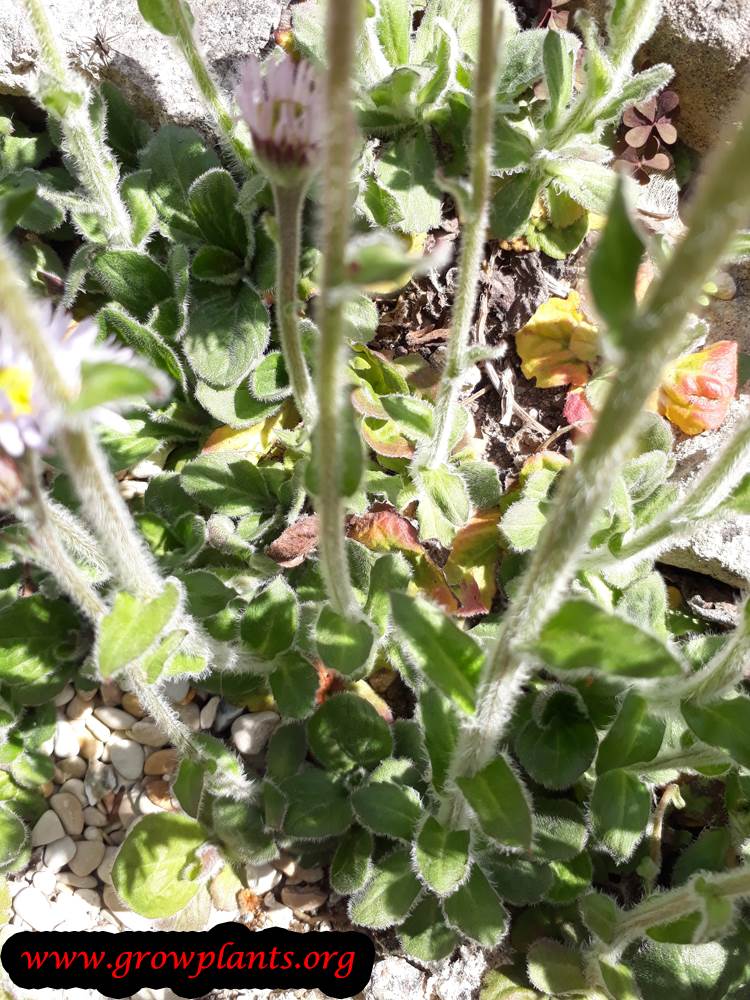
- Leaves & Foliage: Green, spoon-shaped leaves in a soft, slightly hairy basal rosette.
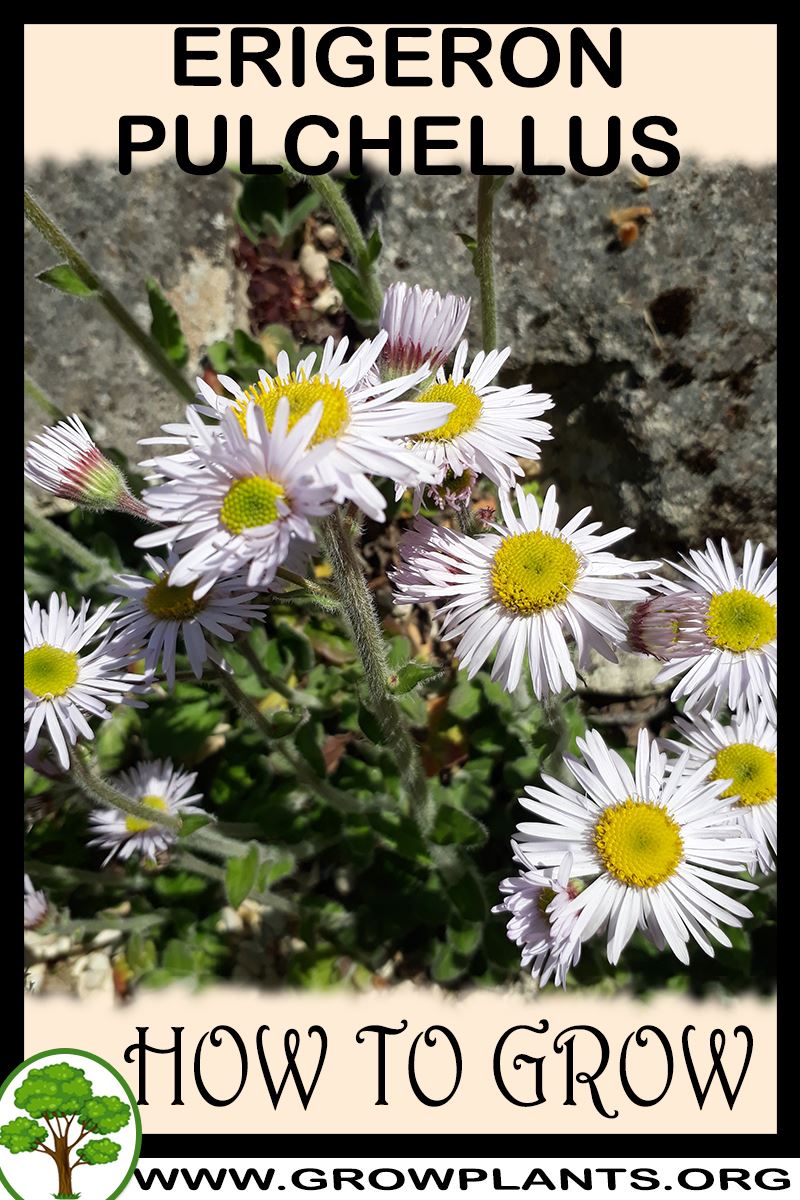
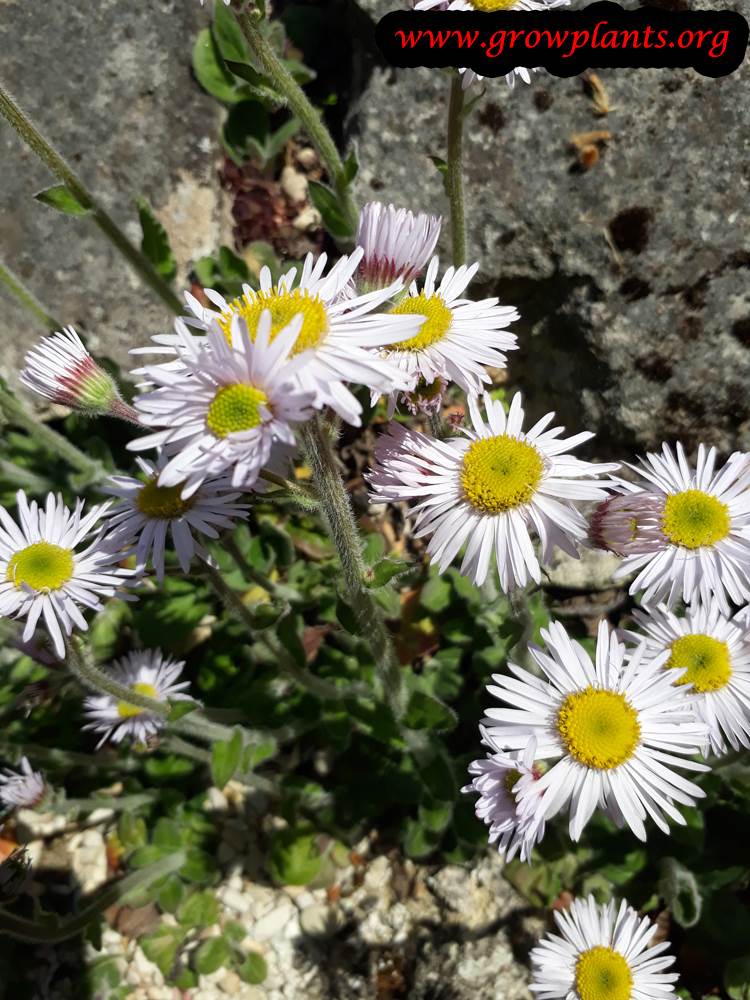
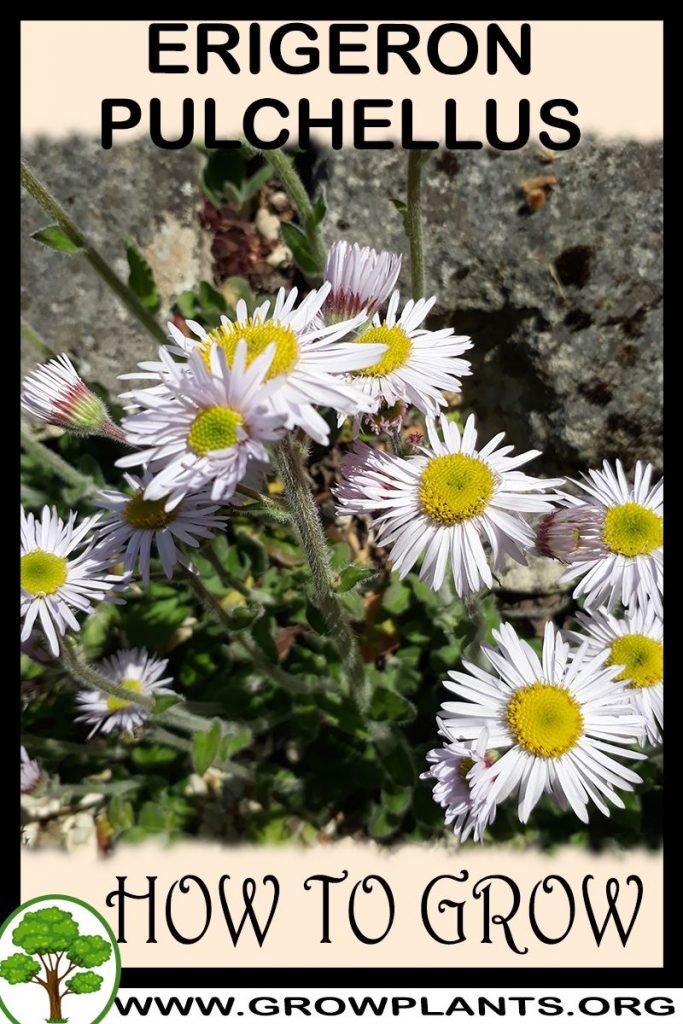
- Flower Characteristics: Fine-rayed daisy heads in purple, white, pink or blue with a yellow centre, opening in spring to early summer.
Primary Uses & Landscape Value
- Functional & Ornamental Roles: Groundcover, edging and rock- or wildflower-garden ornamental, pollinator plant and cut flower.
Care Guide: Planting, Soil & Watering
Overview: Robin’s plantain (Erigeron pulchellus) is a low, spreading daisy that grows easily in full sun to half shade in well-drained soil. It has modest water needs and spreads readily to form a soft ground cover.
Quick Care Requirements
| Requirement | Ideal Condition |
|---|---|
| Planting Season | Spring to summer |
| Growth Rate | Moderate to fast |
| Soil Type | Well-draining |
| Water Need | Low to moderate; let the surface dry between waterings |
Planting & Establishment
- Best Planting Season: Plant in spring or summer once the soil has warmed.
- How to Plant:
- Hole Preparation: Dig a hole as wide as the root ball, spacing plants to allow for spread.
- Soil Amendments: Loosen the soil and add grit or compost to sharpen drainage where needed.
- Planting Depth: Set the crown level with the soil surface and firm gently.
- Growth Speed & Expectations: Grows at a moderate to fast pace to 30-60 cm and spreads by runners, so give it room or it can become aggressive.
Soil, Watering & Drainage Care
- Soil Mix & Drainage Needs: Needs a well-drained soil; it tolerates leaner ground and dislikes constant wetness.
- Watering Schedule & Technique:
- Young / Newly Planted: Water regularly to settle plants in, keeping the soil lightly moist.
- Established: Water moderately, letting the top of the soil dry before watering again.
- Seasonal Adjustments: A little more in summer heat; reduce in winter.
Climate, Light & Hardiness
Blue spring daisy is a cold-hardy woodland-edge perennial for temperate and subtropical gardens, grown in full sun to half shade. It tolerates winter cold well within its stated range and blooms in the cooler part of the growing season.
Quick Climate Specifications
| Climate Zones | Temperate, subtropical |
|---|---|
| USDA Hardiness Zones | Zones 4–9 |
| Frost Tolerance | High (dormant crown survives winter cold) |
| Light Conditions | Full sun / half shade |
Sunlight & Light Exposure
Optimal Light Setup
Full sun to half shade both work; in warmer parts of its range, half shade helps it cope with summer heat.
Temperature Extremes & Hardiness
USDA Hardiness & Regional Limits
Reliably perennial through zones 4–9; the crown survives winter cold within this range and resprouts each spring.
Growing in Pots, Balconies & Indoors
Erigeron pulchellus (robin’s plantain) is a low, gentle fleabane with soft lavender daisies – it is a pretty pot and edging plant rather than a houseplant, though a compact clump can flower on a bright, sunny sill.
Quick Details
- Container Size: A small-to-medium pot, about 5-12 L (1.5-3 gal), for a plant of 30-60 cm (12-24 in)
- Indoor Suitability: Not a room houseplant (the grower marks it “No”); a bright, sunny windowsill is the only indoor option
- Best Spot: Full sun to half shade
- Soil & Drainage: Free-draining, average mix; it is not fussy
- Watering in Pots: Low to moderate – let the surface dry between waterings; it tolerates lean, dryish soil
Indoors & On the Windowsill
- Houseplant limits: The grower marks it as not suitable indoors; in a dim room it stretches and flowers poorly.
- Windowsill growing: A compact clump on a bright, sunny sill will flower in spring with enough direct light.
- Overwintering: Hardy – it can stay outside, dying back and reshooting; shelter the pot in the hardest frost.
On a Balcony or Patio
- Light & wind: An easy, low filler for a sunny or lightly shaded balcony; its slender flower stems sway but rarely need staking. Small pots dry quickly, so check moisture in heat.
- Practicalities: It slowly spreads into a mat, so give it a slightly wider pot; ensure water drains away freely.
Choosing the Pot, Soil & Long-Term Care
- Pot & drainage: A 5-12 L pot with strong drainage holes; skip a standing water saucer to avoid root rot.
- Potting mix: A free-draining general mix with a little perlite.
- Feeding: Feed lightly through the growing season – it is not greedy, but potted plants lose nutrients to leaching.
- Repotting: Refresh the mix and divide the mat every couple of years.
Fertilizing & Feeding
This spreading woodland-edge perennial daisy is a light feeder – it is naturally vigorous and can be aggressive in the garden, so restrained feeding is enough to keep its spring bloom strong without encouraging excess spread.
Quick Fertilizing Specs
| Feeding Level | Light |
|---|---|
| Main Nutrient Priority | Balanced feeding to support foliage and its spring flower display |
| Best Feeding Period | Spring, ahead of and during its early-summer bloom window |
| Organic Options | Compost worked into well-drained soil at planting |
| Soil pH | Adaptable to a range of well-drained soils |
Feeding by Growth Stage
Spring establishment
Support root and foliage development as the plant begins active spring growth
| Nutrient direction | Balanced feeding at a light rate to support healthy foliage ahead of bloom |
|---|---|
| Timing | Spring, as new growth emerges |
| Frequency | Light, infrequent feeding through establishment |
| Fertilizer types | Balanced complete fertilizer at a light rate, Compost worked into the soil at planting |
| Precautions | Because this species spreads readily, avoid heavy nitrogen feeding that would encourage even more vigorous, aggressive growth |
Spring to early-summer bloom
Support the plant’s characteristic spring-into-early-summer flowering
| Nutrient direction | Balanced feeding kept light through the bloom window |
|---|---|
| Timing | Spring through early summer, during active bloom |
| Frequency | Feed sparingly through the bloom period |
| Fertilizer types | Balanced complete fertilizer suited to flowering perennials, applied lightly |
| Routine trace nutrients | iron |
| Precautions | This plant rarely needs feeding once established in reasonable soil; err toward less rather than more |
Post-bloom rest and winter dormancy
Let the plant rest after its spring bloom and through winter dormancy
| Nutrient direction | None – withhold fertilizer once flowering finishes and through the dormant season |
|---|---|
| Timing | From after the spring bloom finishes through autumn and winter |
| Frequency | No feeding at this stage |
| Fertilizer types | No feeding at this stage – resume only with fresh spring growth |
| Precautions | Do not fertilize after bloom or during winter dormancy; focus care on deadheading and removing dead foliage instead |
Nutrient Deficiency Signs & Corrections
Pale, thin foliage and a noticeably weaker bloom than expected for this normally vigorous species
| Possible causes | Nitrogen deficiency, Poor soil fertility, Overcrowding from the plant’s own spreading habit |
|---|---|
| Appears first on | Older leaves lower in the clump |
| What to check | Soil fertility and organic matter, Clump density and whether division is needed, Recent feeding history |
| Possible correction | Amend soil with compost, thin overcrowded clumps, and resume light balanced feeding |
Interveinal yellowing on new leaves while veins remain green
| Possible causes | Iron deficiency, Alkaline soil limiting iron availability, Poorly drained, waterlogged soil |
|---|---|
| Appears first on | Newest growth |
| What to check | Soil pH, Drainage around the roots, Whether the yellowing is limited to new leaves |
| Possible correction | Improve drainage, correct soil pH where testing confirms an issue, and apply a chelated iron product per its label if a true deficiency is confirmed |
Pruning, Training & Seasonal Maintenance
Erigeron pulchellus is a low, evergreen, mat-forming perennial (30–60 cm) that spreads by basal offsets and is noted as an aggressive spreader; it carries no woody framework, so pruning means grooming spent bloom stems and refreshing tired foliage rather than structural cutting. Because it flowers in spring to early summer, the main formative cut is a post-bloom shear that tidies the rosette and can trigger a light rebloom; a lighter foliage tidy in late winter, just before new growth starts, cleans up any tattered evergreen leaves left over from the cold months.
Quick Pruning & Maintenance Specs
| Pruning Tolerance | Low–Moderate – grooming only, not structural |
| Primary Pruning Window | Post-bloom, early-to-mid summer |
| Secondary Maintenance Window | Late winter, light foliage tidy before spring growth |
| Typical Frequency | 1–2 times per year |
| Main Objective | Deadhead spent flower stalks and refresh foliage |
| Young Plant Priority | None – let the clump establish |
| Mature Plant Priority | Post-bloom shear plus spread control |
| Best Tool Type | Precision snips |
| Avoid Heavy Pruning During | Active spring bloom |
Pruning by Plant Age & Size
Newly Established
No pruning beyond removing any damaged transplant leaves.
Young / Formative
No structural training – this is a low mat-former; pinching is not typically needed.
Mature / Established
Shear off spent bloom stalks after flowering to tidy the mat and encourage a possible secondary flush; periodically trim or divide the spreading mat, since this plant is flagged as an aggressive spreader, to keep it within its intended area.
Seasonal Pruning Schedule
Post-Flowering
Objective: tidy the plant and limit unwanted seeding. Remove: spent flowering stalks at the base. Avoid removing: the evergreen basal foliage, which remains functional. Response: tidier mat, occasional light rebloom.
Dormant / Winter
Objective: refresh winter-worn foliage before spring growth resumes. Remove: only frost-damaged or tattered leaves. Avoid removing: healthy evergreen leaves, which are still functioning through winter. Response: cleaner rosette entering the spring growth flush.
Special Growth to Remove
- Spent flower stems
- Runners or spreading growth extending beyond the intended area, given the plant’s aggressive spreading habit
Container & Small-Space Pruning
This species suits containers well; pot culture naturally limits the spread that otherwise needs active control in open ground. Continue shearing spent blooms as usual, and expect to divide or repot more often as roots fill the container.
Tools
- Precision snips – the only tool needed for this low, soft-stemmed, non-woody perennial
Tool Hygiene & Disease Risk
Routine – clean, sharp tools are sufficient; no specific transmissible disease risk is flagged for this plant.
Cut Placement & Technique
Shear spent flower stalks down to the basal foliage. When trimming spreading runners, cut at a node.
Heavy Pruning & Rejuvenation
This plant does not need or particularly tolerate a hard rejuvenation cut – it is a low, self-renewing mat. If a clump becomes patchy or tired, divide it rather than cutting it back hard.
Post-Pruning Care
Water lightly after the post-bloom shear if conditions are dry; no feeding is needed. Fresh basal leaves typically appear within a couple of weeks.
Common Pruning Mistakes
- Shearing hard in autumn or winter and removing functional evergreen foliage the plant still needs
- Letting the aggressive spread go unchecked, allowing it to smother neighbouring plants
When NOT to Prune
Avoid shearing during peak spring bloom if flowers are wanted for pollinators. Avoid a hard cutback immediately after transplanting, before the plant is established.
Recommended Tools (by task)
- precision_snips – for deadheading soft flower stalks and trimming spreading foliage; this low, non-woody growth never needs a heavier tool
Propagation Guide
Erigeron pulchellus (Robin’s plantain) is easiest to propagate by dividing the rooted basal offsets it naturally produces as it spreads, though it also grows well from seed since it is a species plant rather than a hybrid. Both methods are easy for home gardeners, with division giving a bloomer sooner.
Quick Propagation Specs
| Best Propagation Method | Division of rooted offsets |
| Alternative Methods | Seed |
| Propagation Difficulty | Easy |
| Seed True-to-Type | Usually true-to-type |
| Vegetative True-to-Type | Yes |
| Best Propagation Season | Spring |
Growing from Seed
Sowing Season
Sow in spring.
Germination Conditions & Time
Like many daisy-family (Asteraceae) seeds, germinates best with light surface contact rather than deep burial; timing is not tightly documented for this species, so allow several weeks and expect some variability.
Division, Offsets, Pups & Suckers
Basal Offset Division
This species spreads readily by low, leafy basal offsets that root as they go – the trait behind its noted aggressive/spreading habit. In spring, separate a rooted offset with its own root system from the parent clump and replant; unrooted runner tips should be allowed to root in place before separation.
Bloom & Flower Guide
Quick Details
- Bloom Season: Spring to early summer
- Time to First Bloom: As a spreading perennial it usually flowers from the second year, forming a low mat that blooms each spring
- Flower Appearance: Daisy flowers with many fine rays in purple, white, pink or blue around a yellow center
- Edibility: Native ornamental; not used as an edible flower
Detailed Blooming Overview
Robin’s plantain is an easy-going native fleabane that opens its soft, many-rayed daisies early in the season, offering valuable nectar to bees and small butterflies when little else is in bloom. It quietly spreads into a gentle ground cover.
Flower Characteristics
- Fine-rayed daisies in soft pastel shades with a bright yellow center, held above low rosettes.
Bloom Care & Thinning
- Managing the bloom: Shear lightly after flowering to tidy the plant, and divide established clumps to help it spread.
- Pollination: Pollinated by bees and butterflies.
Pests, Diseases & Troubleshooting
Overview: Erigeron (fleabane) are tough, short-lived daisy-family perennials that are largely trouble-free; expect powdery mildew in humid crowding and occasional sap-suckers rather than serious pests. Airy siting and free-draining soil head off most problems.
Quick Troubleshooting Overview
| Issue / Pest | Main Symptom | Primary Solution |
|---|---|---|
| Powdery mildew | White powdery film on leaves in humid, crowded conditions | Improve airflow and light, sulfur/bicarbonate spray |
| Aphids | Clusters on shoots and buds; distortion and honeydew | Hose off, encourage predators, insecticidal soap |
| Leaf miners | Winding pale tunnels within leaves | Pick off mined leaves; usually cosmetic |
| Rust / leaf spot | Orange pustules or brown spots on foliage | Remove affected leaves, airflow, fungicide if persistent |
| Root rot | Wilting and collapse in wet, heavy soil | Improve drainage, avoid overwatering |
| Flopping | Loose, sprawling stems in rich soil or shade | Full sun, leaner soil, trim after first flush |
Common Pests & Management
- Aphids (Aphidoidea):
- Symptoms: Green or black colonies on new shoots, buds and flower stems, causing distortion, honeydew and sooty mold.
- Prevention & Control: Rinse off or squash small colonies and encourage ladybirds, hoverflies and lacewings; use insecticidal soap or neem only for heavier outbreaks.
- Leaf miners (Agromyzidae larvae):
- Symptoms: Pale serpentine or blotchy mines within the leaf; unsightly but rarely harmful.
- Prevention & Control: Pick off and destroy affected leaves and clear debris; natural parasites usually keep numbers low.
- Thrips (Thysanoptera):
- Symptoms: Silvery streaking and speckling on leaves and petals, with tiny black frass; flowers may distort.
- Prevention & Control: Use blue sticky traps to monitor, remove badly affected blooms, and treat with insecticidal soap or neem if numbers climb.
- Spider mites (Tetranychus urticae):
- Symptoms: Fine speckling and light webbing in hot, dry spells, giving leaves a dull bronzed look.
- Prevention & Control: Hose foliage and avoid drought stress; apply horticultural oil or insecticidal soap to undersides if needed.
Diseases & Fungal Issues
- Powdery mildew (Golovinomyces / Erysiphe spp.):
- Symptoms: White powdery coating on leaves and stems, the most common fleabane disease, favored by crowding, shade and humid, still air.
- Treatment & Management: Space plants and thin clumps for airflow, grow in full sun, and avoid overhead watering late in the day; treat with sulfur or potassium bicarbonate at first signs.
- Rust (Puccinia spp.):
- Symptoms: Orange to brown powdery pustules on leaf undersides, with yellowing above, in damp weather.
- Treatment & Management: Remove affected leaves and debris, improve airflow, and apply a sulfur fungicide only if it persists.
- Leaf spot (Septoria / Cercospora spp.):
- Symptoms: Brown or grey spots, sometimes with darker margins, on leaves in wet conditions.
- Treatment & Management: Pick off spotted leaves, water at the base, and clear old foliage to reduce inoculum.
- Aster yellows (phytoplasma):
- Symptoms: Distorted, greenish, stunted flowers and yellowed growth; incurable and leafhopper-borne.
- Treatment & Management: Remove and destroy affected plants, control leafhoppers and nearby weeds; no chemical cure exists.
Growing Difficulties & Abiotic Problems
- Root rot in wet soil:
- Cause & Symptoms: Wilting and collapse when short-lived fleabanes sit in wet, heavy or poorly drained ground.
- Correction Strategy: Grow in free-draining soil in full sun, avoid overwatering, and divide or renew clumps periodically since plants are naturally short-lived.
- Flopping / legginess:
- Cause & Symptoms: Loose, sprawling growth in over-rich soil or too much shade.
- Correction Strategy: Site in full sun on leaner soil, avoid heavy feeding, and shear lightly after the first flush to firm up the plant and prompt rebloom.
- Short-lived decline:
- Cause & Symptoms: Plants naturally fade after a few seasons and may die out.
- Correction Strategy: Divide regularly and allow some self-seeding, or replace plants periodically to keep the planting fresh.
What Helps – Products & Tools
Erigeron needs little: a sulfur or potassium-bicarbonate fungicide for powdery mildew, insecticidal soap or neem for aphids, thrips and mites, and blue sticky traps to monitor thrips. Cultural steps – airflow, full sun and sharp drainage – do most of the work. Spray in the evening to protect pollinators and follow the label.