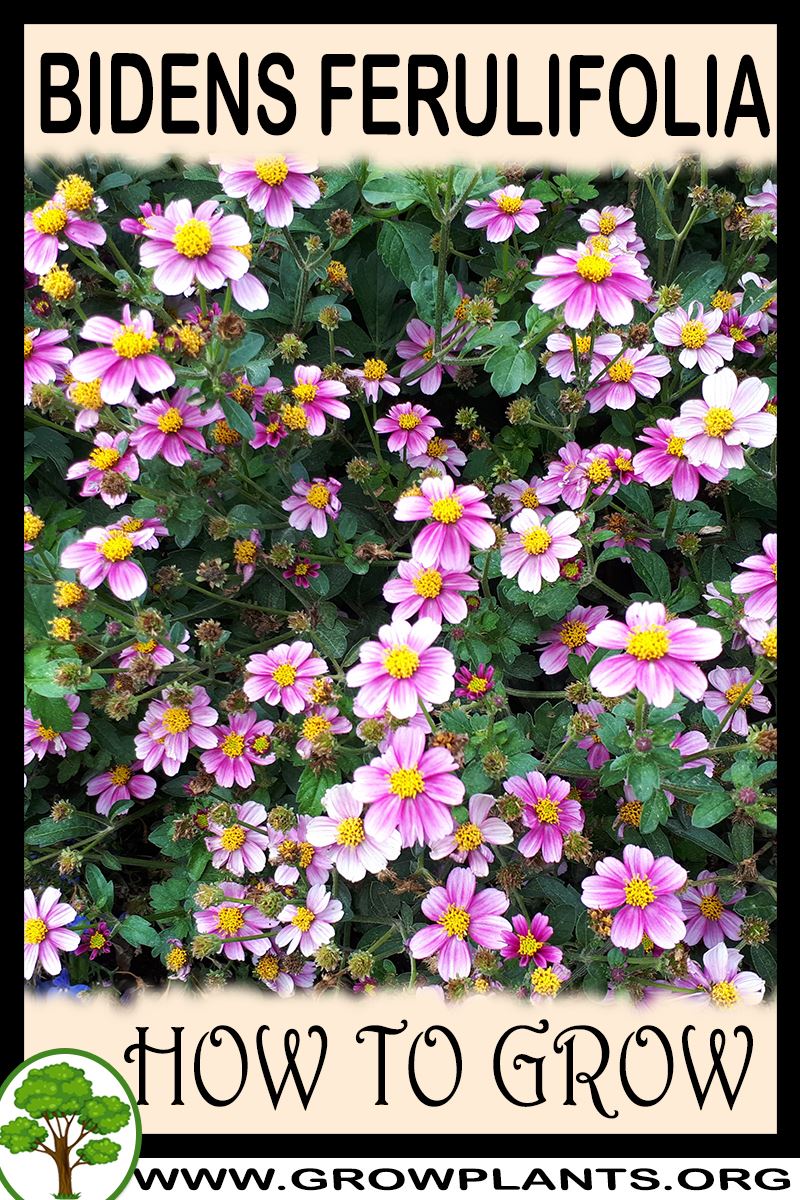
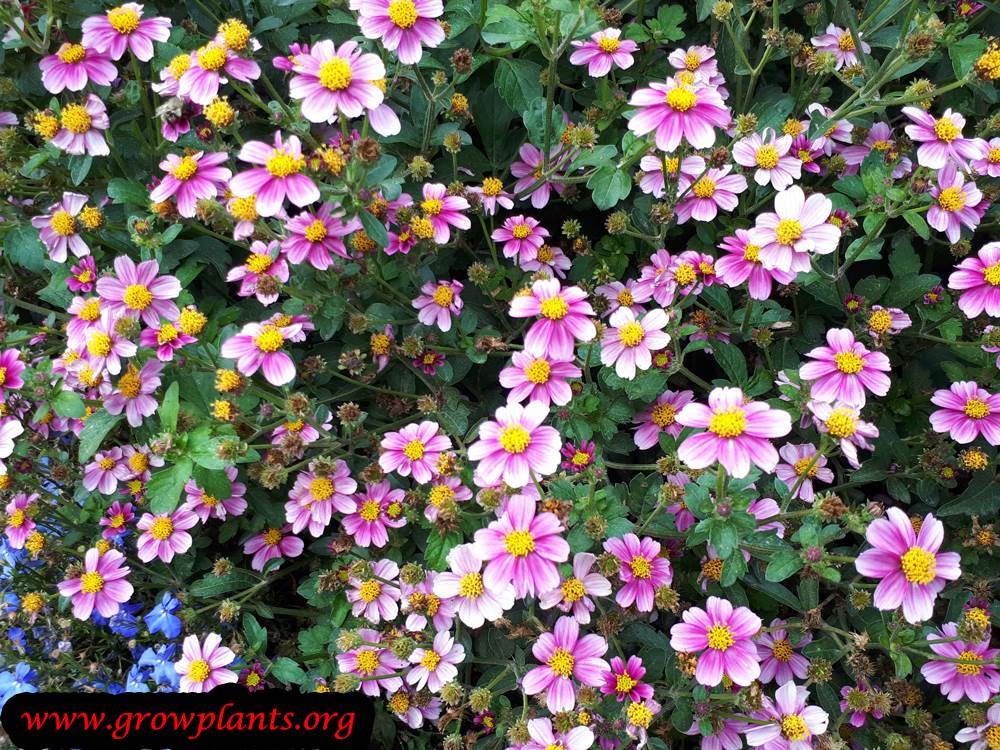
Plant Profile & Key Characteristics
Overview: A trailing evergreen perennial about 30-60 cm (12-24 in) across, grown for its cheerful yellow daisy flowers. It is a popular fast-growing container and basket ornamental.
Quick Specifications
| Specification | Attribute |
|---|---|
| Plant Type / Life Cycle | Perennial (often grown as an annual) |
| Foliage Type | Evergreen (in frost-free climates) |
| Mature Size | 30-60 cm (12-24 in) tall/spread |
| Growth Rate | Fast to moderate |
| Hardiness | USDA zone 8+ |
Growth Form & Structure
- Height & Spread: 30-60 cm (12-24 in) with a trailing habit; excellent in containers and hanging baskets.
- Growth Habit & Form: Low, spreading, finely divided-leaved herbaceous plant.
- Lifespan & Maturity: Fast to reach flowering size; can self-seed.
Anatomy & Physical Features
- Leaves & Foliage: Green, finely divided (fern-like), serrated leaves in a pinnate arrangement.
- Flower Characteristics: Yellow daisy flowers (full detail in the Bloom section).
Primary Uses & Landscape Value
- Functional & Ornamental Roles: Container, basket and border ornamental; attracts pollinators.
Care Guide: Planting, Soil & Watering
Overview: Bidens ferulifolia (Bidens ferulifolia) is an easy, fast-growing flowering perennial or annual for full sun to part shade that likes a moist but well-drained soil. It has moderate-to-high water needs and can spread or self-seed vigorously.
Quick Care Requirements
| Requirement | Ideal Condition |
|---|---|
| Planting Season | In spring and summer, during the warm growing season |
| Growth Rate | Moderate to fast |
| Soil Type | Moist but well-draining |
| Water Need | Moderate to high – keep evenly moist, not waterlogged |
Planting & Establishment
- Best Planting Season: Plant in spring or summer after frost, during the warm season.
- How to Plant:
- Hole Preparation: Dig a hole about twice the width of the root ball.
- Soil Amendments: Blend in compost or organic matter for a moist yet free-draining bed.
- Planting Depth: Set the root collar level with the soil; do not bury the stem.
- Growth Speed & Expectations: Moderate to fast; forms a 30–60 cm (12–24 in) mound and can spread readily, so give it room or contain it.
Soil, Watering & Drainage Care
- Soil Mix & Drainage Needs: Moisture-retentive but well-drained soil; in pots use a free-draining mix with good drainage holes.
- Watering Schedule & Technique:
- Young / Newly Planted: Keep consistently moist while establishing.
- Established: Water regularly to keep the soil moist, letting the surface dry slightly between waterings.
- Seasonal Adjustments: More in summer heat; less in cool, wet weather.
Climate, Light & Hardiness
Bidens ferulifolia is a fast-growing, sun-loving perennial that thrives across tropical, desert, subtropical, temperate, and mediterranean climates. It performs best in full sun to half shade and is reliably hardy outdoors from about USDA zone 8 and warmer.
Quick Climate Specifications
| Climate Zones | Tropics, desert, subtropics, temperate, mediterranean |
| USDA Hardiness Zones | 8+ |
| Optimal Temp Range | Approximately 18–29°C (64–85°F) during active growth |
| Approx. Survival Minimum | Established plants may briefly tolerate winter minimums around −12°C to −7°C (10°F to 20°F), reflecting its zone 8 rating |
| Frost Tolerance | Moderate |
| Light Conditions | Full sun to half shade |
| Wind Tolerance | Moderate |
Sunlight & Light Exposure
Optimal Light Setup
Full sun produces the most abundant, continuous bloom.
Direct Sun Requirement
Direct sun is preferred for best flowering, though half shade is tolerated with somewhat reduced bloom.
Best Exposure / Orientation
An open, sunny bed or container position with good air movement suits this fast grower well.
Temperature Extremes & Hardiness
USDA Hardiness & Regional Limits
Reliably hardy outdoors from about zone 8 and warmer; in colder climates it is typically grown as a warm-season annual since frost limits year-round outdoor survival.
Cold Damage & Winter Protection
Frost damages and can kill foliage and stems; in marginal zones a sheltered, warm microclimate improves the chance of the plant persisting.
Frost Sensitivity
Frost-sensitive; young plants are especially vulnerable, and the growing season should respect the local frost-free window in cooler climates.
Extreme Heat Tolerance
Good heat tolerance in warm subtropical, desert, and tropical climates, provided soil moisture is adequate.
Wind, Humidity & Microclimate
Humidity Preferences
Adapts to a wide range of humidity, from humid tropical conditions to drier temperate and mediterranean air.
Dry-Air Tolerance
Reasonably tolerant of dry air once established, though it prefers consistently moist, well-drained soil.
Wind Tolerance
Moderate wind tolerance; its lax, branching habit can benefit from some shelter in very exposed sites.
Rainfall & Seasonal Moisture
Prefers a climate with regular moisture through the growing season rather than prolonged drought.
Microclimate Recommendations
An open, sunny position with moist, well-drained soil supports vigorous growth and continuous flowering.
Growing in Pots, Balconies & Indoors
Bidens ferulifolia is a free-flowering, trailing sun-lover – one of the best plants for spilling over the edge of a pot, window box or hanging basket. It is not a houseplant, but on a bright balcony or patio it blooms non-stop through the warm season.
Quick Details
- Container Size: A medium pot or basket, roughly 5-12 L (1.5-3 gal); its trailing habit suits hanging baskets and window boxes
- Indoor Suitability: Not a houseplant – a trailing full-sun bloomer for pots and baskets
- Best Spot: Full sun (tolerates a little light shade)
- Soil & Drainage: Free-draining but moisture-retentive potting mix with perlite; add some organic matter.
- Watering in Pots: Keep the mix evenly moist – it likes more water than most daisies and wilts quickly if a pot dries out.
Indoors & On the Windowsill
- Houseplant limits: It needs strong, direct sun to keep flowering; in a room it grows thin and stops blooming.
- Windowsill growing: Only the very sunniest sill will do, and even then it is happier outside – treat it as a patio and basket plant.
On a Balcony or Patio
- Light & wind: Give it all-day sun; its trailing stems love to cascade from raised pots and railings. Exposed pots dry fast, so check moisture often in hot spells.
- Practicalities: Water the pot in – allow for its weight on a balcony, and set it where drainage runoff won’t be a nuisance.
Choosing the Pot, Soil & Long-Term Care
- Pot & drainage: Choose a pot with strong drainage holes and skip a standing-water saucer, which invites root rot. Terracotta breathes and dries quickly, which suits these sun-lovers; glazed or plastic pots hold moisture longer if you can’t water often.
- Potting mix: Free-draining but moisture-retentive potting mix with perlite; add some organic matter.
- Feeding: Potted plants use up their food faster because watering leaches nutrients away, so feed a little more often through the growing season than you would in open ground.
- Repotting: Refresh the mix or pot up about every couple of years to keep growth healthy.
Fertilizing & Feeding
A moderate feeder: this lacy-leaved, trailing bloomer performs best on balanced feeding through spring and summer, especially in containers and hanging baskets where nutrients wash through faster.
Quick Fertilizing Specs
| Feeding Level | Moderate feeder |
|---|---|
| Main Nutrient Priority | Balanced feeding to support fine, fern-like foliage and continuous golden-yellow bloom |
| Best Feeding Period | Spring through summer, continuing into autumn where bloom persists |
| Organic Options | Compost worked into moist, well-drained soil or a quality potting mix |
| Reduce/Stop Feeding | Ease off feeding as bloom fades and growth slows toward the end of the season |
| Micronutrients | Usually met by a complete fertilizer; correct only a diagnosed deficiency |
| Soil pH | Prefers moist, well-drained soil; adaptable to a range of near-neutral conditions |
Feeding by Growth Stage
Spring establishment and trailing growth
Build a full mound or trailing mass of fine, fern-like foliage before the plant settles into steady bloom.
| Nutrient direction | Balanced feeding with adequate nitrogen supports the fine, lacy foliage growth typical of this species. |
|---|---|
| Timing | Spring, as new growth begins after planting. |
| Frequency | Regular light feeding supports steady early growth, especially in containers. |
| Fertilizer types | A balanced complete fertilizer, Compost or quality potting mix worked into the root zone |
| Precautions | In containers or hanging baskets, feed a bit more often than in open ground since watering washes nutrients through faster; still keep individual feedings light. |
Main golden bloom flush
Support the abundant small yellow daisy flowers this trailing bidens is grown for.
| Nutrient direction | Continue balanced feeding rather than switching to a high-phosphorus bloom product; consistent overall nutrition drives the flower display. |
|---|---|
| Timing | Through the main spring and summer bloom period. |
| Frequency | Modest, regular feeding keeps flowers coming without forcing weak, leggy trails. |
| Fertilizer types | A balanced complete fertilizer, A controlled-release product for containers, supplemented lightly as needed |
| Precautions | Avoid heavy feeding, which can push soft, floppy trailing growth at the expense of flowers. |
Sustaining bloom into autumn
Keep the trailing display flowering as the season carries into autumn.
| Nutrient direction | A lighter, balanced feeding helps sustain continued flowering as growth slows. |
|---|---|
| Timing | Late summer into autumn, following the main bloom flush. |
| Frequency | Light, infrequent feeding is usually enough to keep the display going. |
| Fertilizer types | A balanced complete fertilizer at reduced strength |
| Precautions | Keep feeding light at this stage, particularly in containers where salts can build up faster than in open ground. |
End-of-season decline or winter rest
Let the plant wind down naturally, whether it completes its cycle as an annual or rests through cooler weather.
| Nutrient direction | None – withhold fertilizer as bloom fades and growth slows for the season. |
|---|---|
| Timing | Late autumn into winter, or once flowering has clearly finished. |
| Frequency | No feeding at this stage. |
| Fertilizer types | No feeding at this stage; do not fertilize a plant that is finishing its cycle or resting. |
| Precautions | Withhold fertilizer now; feeding a resting or finished plant only wastes nutrients and risks salt buildup, especially in a container. |
Nutrient Deficiency Signs & Corrections
Older leaves fade to pale green or yellow and the trailing mass thins with slowed growth.
| Possible causes | low available soil or potting-mix nitrogen, nitrogen leaching from frequent watering, especially in containers, an undersized container restricting the root system |
|---|---|
| Appears first on | older, lower leaves |
| What to check | recent feeding history, watering frequency and drainage, container size and root crowding if potted |
| Possible correction | Apply a balanced complete fertilizer and, if potted, consider a controlled-release product to even out feeding between waterings. |
Full, lacy foliage but noticeably fewer flowers than expected.
| Possible causes | excess nitrogen feeding favoring foliage over blooms, reduced light from too much shade, root-bound conditions in an undersized container |
|---|---|
| Appears first on | whole plant, most noticeable during the main bloom window |
| What to check | recent feeding balance and amount, hours of direct sun the plant receives, container size and root crowding |
| Possible correction | Moderate nitrogen-heavy feeding, move toward fuller sun where possible, and repot if root-bound. |
Leaf tips and margins brown or scorch, most often noticed in container or basket plantings.
| Possible causes | fertilizer salt buildup from frequent container feeding, irregular watering that concentrates salts in the root zone, over-application of fertilizer |
|---|---|
| Appears first on | leaf margins and tips |
| What to check | recent fertilizer amounts, watering consistency, drainage of the container or bed |
| Possible correction | Ease off feeding, flush the root zone thoroughly with water, then return to lighter, less frequent feeding. |
Pruning, Training & Seasonal Maintenance
Bidens ferulifolia (fern-leaf beggarticks) is grown mainly as a mounding, trailing container and hanging-basket plant, prized for its fine ferny foliage and yellow daisy flowers. Unlike its wilder relative B. alba, many modern garden cultivars of this species are bred to be largely self-cleaning – dropping spent flowers on their own without deadheading – and are far less prone to setting viable seed, which reduces (though doesn’t eliminate, in the straight species) the self-seeding tendency noted for the genus. Because of its basket/container use, pinching young plants for a full, branched habit matters more here than for garden-bed Bidens. It flowers continuously through spring–autumn on new growth, and as a frost-tender perennial at the edge of its hardiness (zone 8+), dies back and is cut back in autumn/winter.
Quick Pruning & Maintenance Specs
| Pruning Tolerance | High |
| Primary Pruning Window | Autumn/winter cutback as growth dies back with cold |
| Secondary Maintenance Window | Pinching young plants in spring; occasional grooming through bloom |
| Typical Frequency | One or two formative pinches when young; light grooming as needed through bloom; one autumn/winter cutback |
| Main Objective | Build a full, branched, trailing habit for baskets/containers and maintain bloom |
| Young Plant Priority | Pinch growing tips two to three times early on to force the branching a full basket needs |
| Mature Plant Priority | Light grooming of any spent flowers on non-self-cleaning plants; cut back trailing stems that thin out mid-season |
| Best Tool Type | Precision snips |
| Avoid Heavy Pruning During | Right before an expected frost with no recovery time, where grown as a marginal perennial |
Pruning by Plant Age & Size
Newly Established
Pinch the growing tips soon after transplanting into a basket or container – this is more important here than for most Bidens, since a full, mounding trail depends on early branching.
Young / Formative
No formal training system, but repeat pinching two to three times over the first several weeks builds the multi-stem, cascading habit that makes this plant valuable in baskets.
Mature / Established
Mostly self-maintaining on self-cleaning cultivars; on others, remove spent flowers periodically. Cut back any trailing stems that go bare or thin toward the base mid-season to force fresh growth.
Seasonal Pruning Schedule
| Ongoing Sanitary (spring–autumn) | Spent flowers on non-self-cleaning types; thin or bare trailing stems | Healthy actively-blooming stems | Continued bloom on new growth | None – blooms on current growth |
| Dormant/Winter | Cut back dying top growth once flowering ends | Live tissue at the base where grown as a perennial | Fresh regrowth from the base next spring | None |
Structural Pruning & Training
No scaffold; the structural task is managing trail length and fullness – cutting back a stem that has gone bare-based encourages fresh branching from lower on the plant rather than an ever-lengthening, thinning trail.
Special Growth to Remove
- Spent flowers on cultivars that aren’t self-cleaning
- Bare or thin trailing stems, cut back to encourage rebranching
Container & Small-Space Pruning
This is fundamentally a container/basket plant. Pinch repeatedly when young for fullness, and expect to do a mid-season refresh cut on any stems that have trailed out and thinned – baskets in particular can look sparse by midsummer without it. Consistent watering after cutting back is important since containers dry fastest and moisture stress causes premature flower drop.
Tools
Precision snips for pinching and grooming the soft trailing stems.
Tool Hygiene & Disease Risk
Routine – no major transmissible disease documented for this species.
Cut Placement & Technique
Pinch above a leaf node to force branching; when refreshing a thinning trail, cut back to a lower, leafier point on the stem rather than just tipping the ends.
Heavy Pruning & Rejuvenation
Tolerated well – a leggy or bare-based basket planting can be cut back by up to half and will fill back in within a few weeks in warm weather.
Post-Pruning Care
Water consistently, especially after a cutback in a container. No extra feeding is needed specifically for a routine pinch, though container plants generally benefit from their normal feeding schedule to support the vigorous continuous bloom. Watch fresh regrowth for aphids.
Common Pruning Mistakes
- Skipping the early formative pinches and ending up with a single sparse trailing stem instead of a full basket
- Letting a basket planting go bare-based and thin without a mid-season refresh cut
- Assuming deadheading is required on self-cleaning cultivars when it may not be
When NOT to Prune
Avoid a heavy cutback right before an expected frost with no recovery time, where grown as a marginal perennial.
Recommended Tools (by task)
- precision_snips – for the formative pinching, grooming, and refresh cuts this basket/container plant needs.
Propagation Guide
Bidens ferulifolia is propagated mainly from stem-tip cuttings, since most plants sold for containers and hanging baskets are named trailing cultivars that need to be kept true to their compact habit and flower size; seed is viable for the species but is less commonly used, as cultivar seed is limited and offspring can vary. Both methods are easy, with cuttings rooting quickly.
Quick Propagation Specs
| Best Propagation Method | Stem-tip cuttings |
| Alternative Methods | Seed (species) |
| Propagation Difficulty | Easy |
| Seed True-to-Type | Usually true-to-type for the species; cultivar-dependent for named selections |
| Vegetative True-to-Type | Yes |
| Best Propagation Season | Spring to summer |
| Seed Germination Time | Typically 1–3 weeks |
| Cutting Rooting Time | Around 1–2 weeks |
| Germination Temperature | Warm, around 18–24°C (64–75°F) |
| Seed Sowing Depth | Shallow cover |
Growing from Seed
Seed Handling & Viability
Species seed stores reasonably well when kept dry; seed of named cultivars is not commonly available.
Sowing Season
Spring.
Sowing Depth & Orientation
Sow shallowly.
Germination Conditions
Warm conditions.
Germination Time
Typically 1–3 weeks.
Stem Cuttings
Cutting Type
Tip cuttings with 2–3 nodes.
Best Timing
During active growth, spring through summer.
Cutting Preparation
Remove lower leaves and any flower buds before inserting into the rooting medium.
Rooting Setup
Roots readily in water or a moist, free-draining mix under warm, humid conditions.
Rooting Hormone
Unnecessary – not required for reliable rooting.
Rooting Time
Typically about 1–2 weeks.
Bloom & Flower Guide
Quick Details
- Bloom Season: Spring through autumn
- Time to First Bloom: Quickly – a fast, free-flowering plant that blooms within weeks of establishing and continues all season
- Flower Appearance: Bright yellow daisy-shaped flowers
- Edibility: Grown as an ornamental; not used as an edible flower
Detailed Blooming Overview
Golden daisies smother the ferny foliage from spring to autumn. This is a superb plant for containers and edging, and a steady draw for bees throughout the warm months.
Flower Characteristics
- Small, bright yellow daisies carried non-stop over finely divided leaves.
Bloom Care & Thinning
- Managing the bloom: Largely self-cleaning; a light midseason shear keeps it tidy and pushes a fresh flush of flowers.
- Pollination: Visited and pollinated by bees.
Pests, Diseases & Troubleshooting
Overview: Bidens are tough, fast, often weedy daisies (Asteraceae) and are among the more trouble-free garden plants. Aphids on soft new growth are the main pest, with spider mites in heat, occasional whitefly and leafhoppers, and powdery mildew or leaf spot in humid crowding. They rarely need much beyond airflow and restraint with water and feed.
Quick Troubleshooting Overview
| Issue / Pest | Main Symptom | Primary Solution |
|---|---|---|
| Aphids | Honeydew and curled shoot tips | Water blast, insecticidal soap, predators |
| Spider mites | Stippling and webbing in hot, dry spells | Hose foliage, insecticidal soap or oil |
| Powdery mildew | White coating on leaves late season | Airflow, avoid overhead water, sulphur |
| Leaf spot | Dark spots on foliage | Remove affected leaves, sanitation |
Common Pests & Management
- Aphids (Aphis / Myzus spp.):
- Symptoms: Clusters of soft-bodied insects on shoot tips and flower buds curl new growth and leave sticky honeydew and sooty mould.
- Prevention & Control: Knock them off with water, spray insecticidal soap or neem, and encourage ladybirds, lacewings and hoverflies; avoid over-feeding with nitrogen.
- Spider mites (Tetranychus urticae):
- Symptoms: Fine stippling, dull bronzing and webbing on leaf undersides in hot, dry conditions.
- Prevention & Control: Hose foliage, raise humidity, keep plants watered, and treat undersides with insecticidal soap or horticultural oil.
- Whitefly (Trialeurodes / Bemisia spp.):
- Symptoms: Tiny white flies rise when disturbed; nymphs on undersides excrete honeydew and blacken leaves with sooty mould.
- Prevention & Control: Use yellow sticky traps, spray insecticidal soap or neem on undersides, and encourage Encarsia under glass.
- Leafhoppers (Cicadellidae):
- Symptoms: Small wedge-shaped hoppers cause pale stippling and can transmit aster yellows phytoplasma, distorting and greening flowers.
- Prevention & Control: Manage weeds, remove infected plants promptly, use row cover on vulnerable plantings, and support predators.
Diseases & Fungal Issues
- Powdery mildew (Golovinomyces / Erysiphe spp.):
- Symptoms: White powdery film on leaves in humid, crowded or shaded conditions, later in the season.
- Treatment & Management: Space for airflow, avoid overhead watering, remove affected leaves, and spray sulphur or potassium bicarbonate.
- Aster yellows (phytoplasma (leafhopper-vectored)):
- Symptoms: Yellowed, stunted, distorted growth with green, deformed flowers.
- Treatment & Management: There is no cure – remove and destroy infected plants promptly, control leafhoppers, and manage nearby weed hosts.
- Leaf spot (Septoria / Cercospora spp.):
- Symptoms: Small dark spots that enlarge and merge on the leaves in wet weather.
- Treatment & Management: Remove spotted leaves, water at the base, improve airflow, and use copper only if it persists.
- Botrytis / rust (Botrytis cinerea / Puccinia spp.):
- Symptoms: Grey mould on spent flowers in damp air, or orange rust pustules on leaf undersides.
- Treatment & Management: Deadhead, improve ventilation, remove affected tissue, and space for airflow.
Growing Difficulties & Abiotic Problems
- Legginess / flop:
- Cause & Symptoms: Rich soil, shade or lack of pinching makes stems sprawl and flower less.
- Correction Strategy: Grow in full sun on lean soil, pinch young plants, and trim back mid-season to refresh.
- Chlorosis in wet soil:
- Cause & Symptoms: Waterlogged or poor soil yellows the foliage.
- Correction Strategy: Improve drainage, feed lightly, and avoid overwatering.
- Cold sensitivity:
- Cause & Symptoms: Tender types are cut back by frost, being grown as annuals in cold climates.
- Correction Strategy: Treat as an annual or overwinter cuttings where frost is hard.
What Helps – Products & Tools
For Bidens keep insecticidal soap or neem for aphids, whitefly and mites, and a sulphur or potassium-bicarbonate fungicide for powdery mildew and leaf spot. These are naturally tough plants, so cultural care – sun, airflow and lean growing – usually keeps sprays unnecessary.