Plant Profile & Key Characteristics
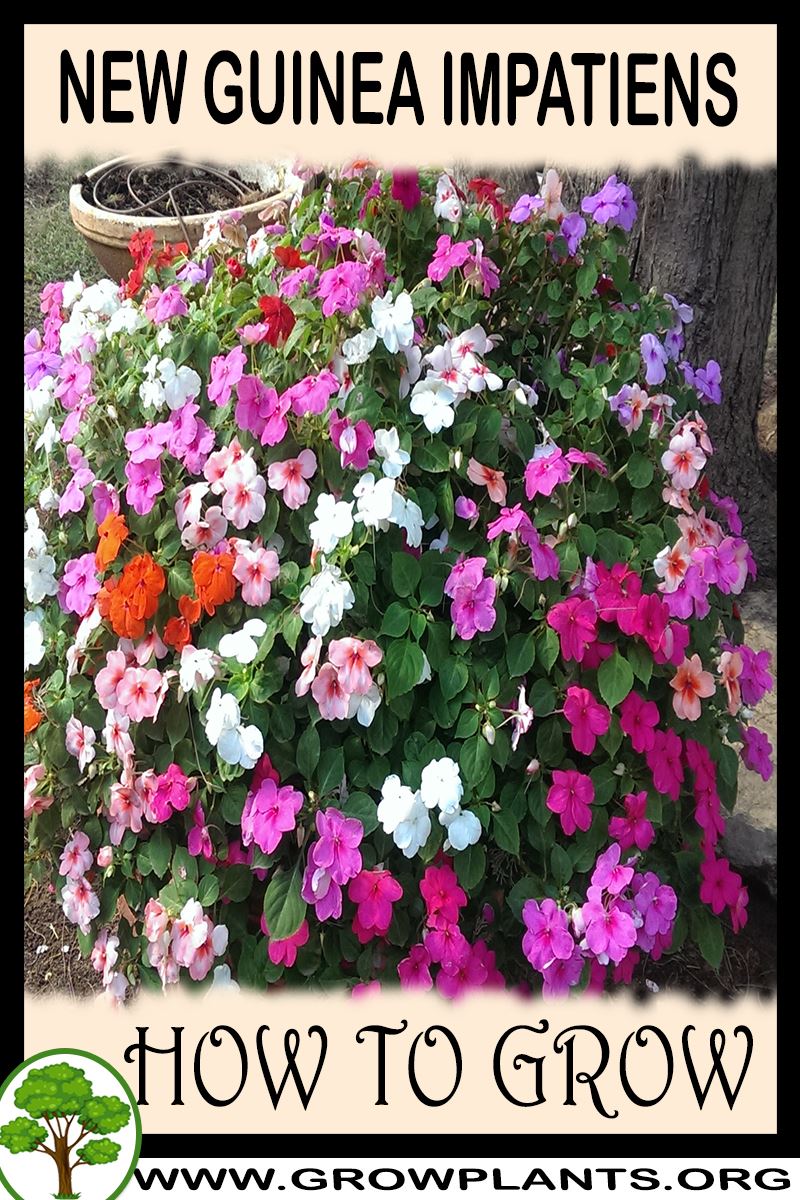
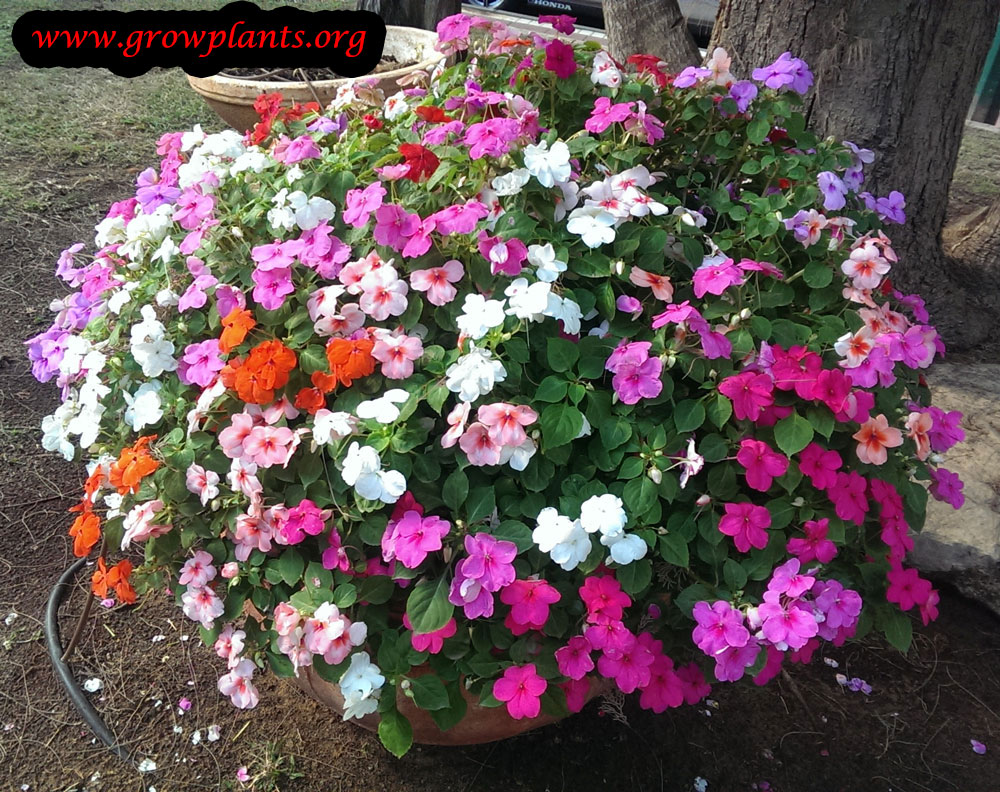
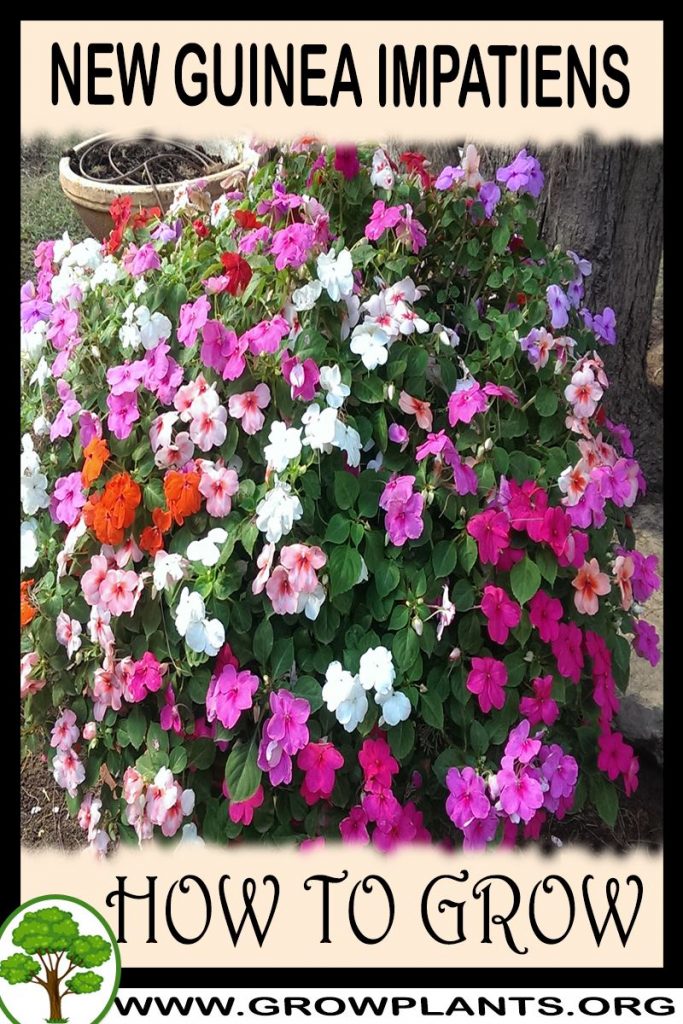
Overview: New Guinea Impatiens (Impatiens hawkeri) is a mounded, tender perennial 20-60 cm (8-24 in) tall, grown as a fragrant ornamental for its bright flowers and often coloured foliage. It suits tropical, Mediterranean, subtropical and temperate climates and is popular as a bedding and container plant.
Quick Specifications
| Specification | Attribute |
|---|---|
| Plant Type / Life Cycle | Perennial (often grown as an annual) |
| Foliage Type | Evergreen (in frost-free climates) |
| Mature Size | 20-60 cm (8-24 in) tall |
| Growth Rate | Fast |
| Root System | Shallow, fibrous |
| Toxicity | Non-toxic |
| Hardiness | USDA zones 10+ as perennial (4-9 as annual) |
Growth Form & Structure
- Height & Spread: Forms a bushy mound 20-60 cm (8-24 in) tall; excellent in beds, pots, hanging baskets and as a houseplant.
- Growth Habit & Form: Compact, well-branched, succulent-stemmed mounding plant.
- Lifespan & Maturity: Fast-growing; long-flowering, frost-tender perennial usually replanted each season in cold areas.
Anatomy & Physical Features
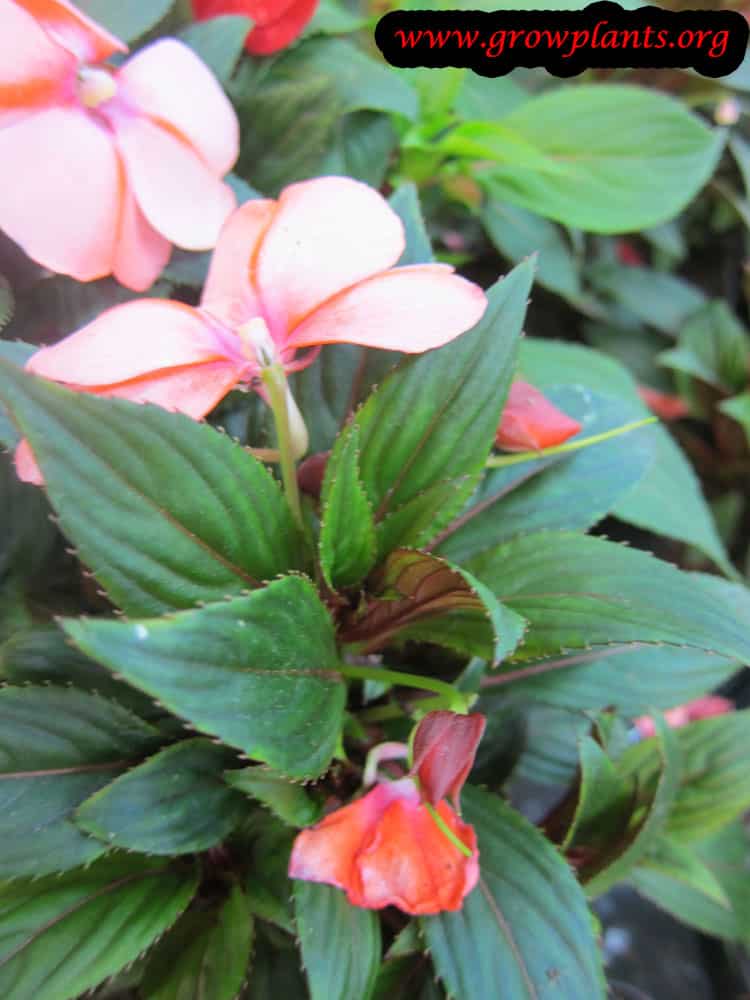
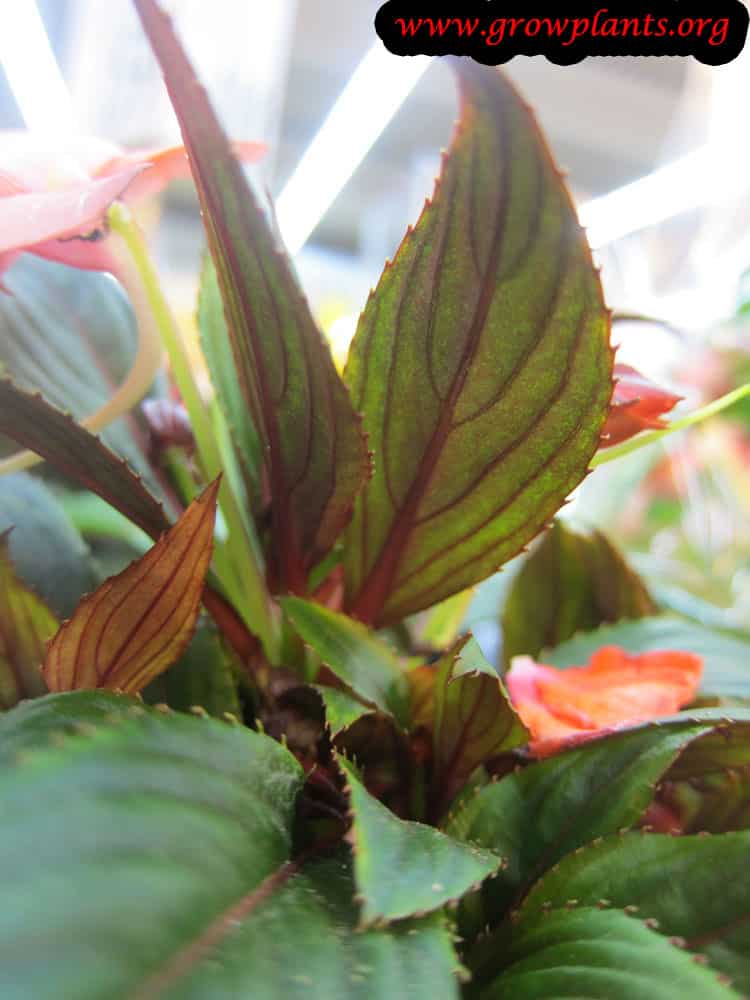
- Leaves & Foliage: Green (sometimes bronze or variegated), elliptic leaves with a serrated edge.
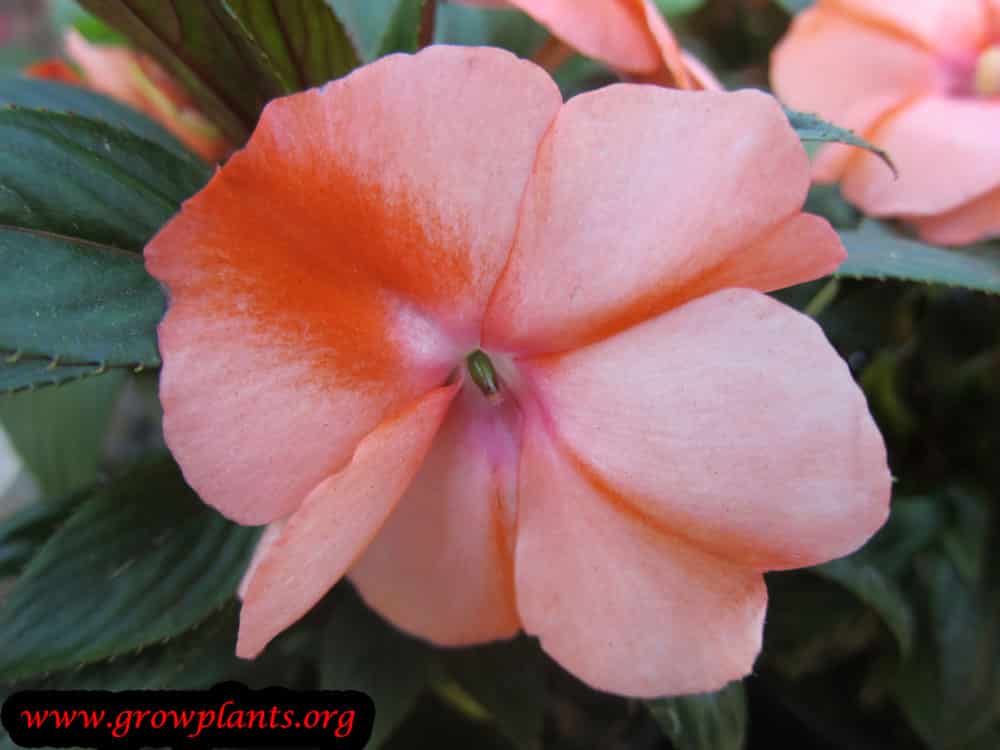
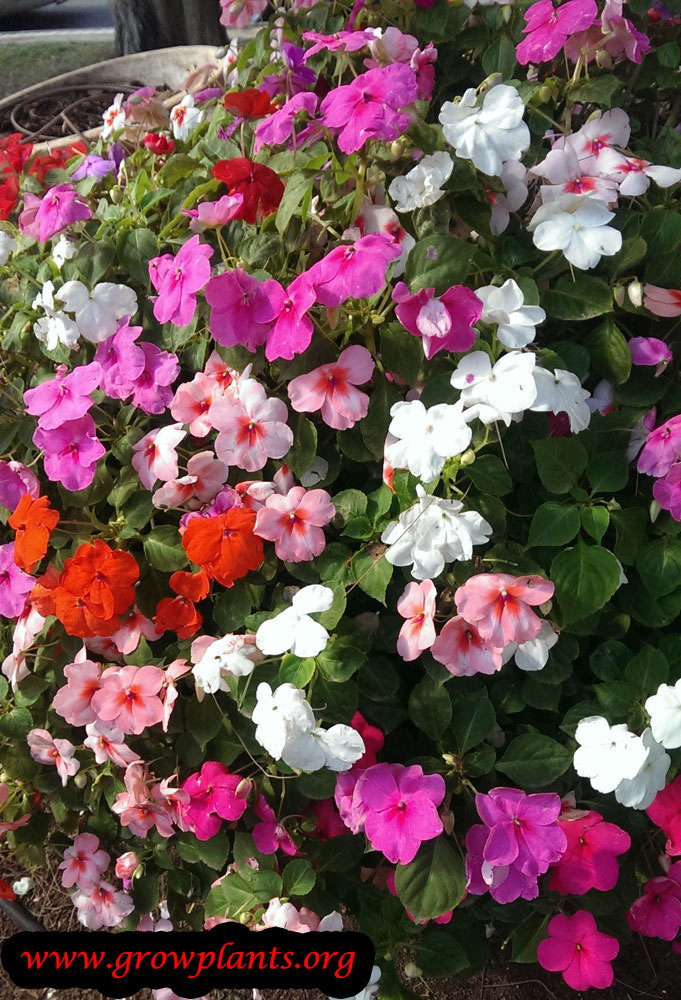
- Flower Characteristics: Flat, fragrant flowers with 5 to many petals in red, pink, orange, purple or white.
Primary Uses & Landscape Value
- Functional & Ornamental Roles: Ornamental for shady beds, borders, containers, hanging baskets and as a houseplant.
Care Guide: Planting, Soil & Watering
Overview: New Guinea impatiens is a frost-tender, fast-growing flowering plant that wants rich, moist, well-drained soil and steady moisture. It grows quickly in the warm season but must be protected from frost.
Quick Care Requirements
| Requirement | Ideal Condition |
|---|---|
| Planting Season | Warm, frost-free season – spring through autumn |
| Growth Rate | Fast |
| Soil Type | Rich, moist, well-drained |
| Water Need | Moderate – keep evenly moist, do not let it wilt |
Planting & Establishment
- Best Planting Season: Plant after the last frost in the warm season, spring through autumn.
- How to Plant:
- Hole Preparation: Dig a hole as wide as the root ball and the same depth.
- Soil Amendments: Mix in compost or organic matter for a rich, well-drained soil.
- Planting Depth: Set the crown at soil level.
- Growth Speed & Expectations: Fast – it fills out and flowers quickly.
Soil, Watering & Drainage Care
- Soil Mix & Drainage Needs: Rich, moisture-retentive yet well-drained soil; avoid waterlogging, which causes rot.
- Watering Schedule & Technique:
- Young / Newly Planted: Keep consistently moist while establishing.
- Established: Water regularly and moderately; do not let it dry to the point of wilting.
- Seasonal Adjustments: More water in heat; protect from frost, as the plant is frost-tender.
Climate, Light & Hardiness
New Guinea Impatiens grows as a tender perennial or houseplant in frost-free climates and as a warm-season annual elsewhere, thriving in shaded, humid, tropical-to-temperate conditions. It is frost-sensitive and prefers half shade to full shade with light rather than intense direct sun.
Quick Climate Specifications
| Climate Zones | Tropics, mediterranean, subtropics, temperate; also grown as a houseplant |
| USDA Hardiness Zones | Zone 10+ as a perennial; Zone 4–9 as a warm-season annual |
| Optimal Temp Range | Approximately 18–27°C (64–81°F); indoors, normal room temperature suits it well |
| Cold Damage Begins | Described in the source data as needing frost-free conditions; foliage and stems are killed by frost, so it survives year-round only where winters stay above freezing (zone 10+) and is treated as an annual in zones 4–9. |
| Frost Tolerance | None |
| Light Conditions | Full sun to half shade, or full shade with bright ambient light |
| Wind Tolerance | Low |
Sunlight & Light Exposure
Optimal Light Setup
Bright, filtered light or half shade gives the best balance of compact growth and continuous flowering.
Direct Sun Requirement
Direct, intense sun - especially afternoon sun in hot climates - can scorch the foliage; light morning sun or dappled shade is preferable.
Shade & Heat Management
Tolerates full shade as long as ambient light is reasonably bright; in hot climates, afternoon shade prevents wilting and leaf burn.
Best Exposure / Orientation
An east-facing or lightly shaded position, or a spot under high tree canopy, suits it well outdoors; indoors, a bright spot out of direct midday sun is ideal.
Temperature Extremes & Hardiness
USDA Hardiness & Regional Limits
Can persist as a perennial only in frost-free climates (Zone 10+); in colder climates (Zone 4–9) it is grown as a warm-season annual, planted out after the danger of frost has passed.
Cold Damage & Winter Protection
Described in the source data as needing frost-free conditions; foliage and stems are killed by frost, so it survives year-round only where winters stay above freezing (zone 10+) and is treated as an annual in zones 4–9.
Frost Sensitivity
Highly frost-sensitive - foliage and stems are killed by even a light frost, so outdoor planting and season length must respect the local frost-free window.
Extreme Heat Tolerance
Performs best in moderate warmth; in very hot, intense-sun climates it needs shade and consistent moisture to avoid wilting.
Wind, Humidity & Microclimate
Humidity Preferences
Prefers moderate to high humidity, reflecting its tropical and subtropical origins; indoor air that is too dry can stress the foliage.
Dry-Air Tolerance
Limited tolerance of very dry air; benefits from consistent soil moisture and, indoors, occasional misting or a humidity tray in dry rooms.
Wind Tolerance
Soft, brittle stems give it low wind tolerance; a sheltered planting spot away from strong wind is best.
Rainfall & Seasonal Moisture
Grows best with consistent moisture through the warm growing season; it is not adapted to prolonged drought.
Microclimate Recommendations
A sheltered, partly shaded spot with good humidity and protection from wind and hot midday sun best mimics its native forest-edge habitat.
Growing in Pots, Balconies & Indoors
Impatiens are among the easiest flowering houseplants and container plants there are – the grower confirms they grow well indoors, and they bloom happily in pots on a shady balcony, windowsill or patio where many flowers simply won’t.
Quick Details
- Container Size: A medium pot, about 3-10 L, for a 20-60 cm (8-24 in) plant; also perfect for window boxes and hanging baskets
- Indoor Suitability: A genuine houseplant (the grower marks it “Yes”) – one of the best for lower-light rooms
- Best Spot: Bright, indirect light indoors; outdoors half to full shade, or full sun where summers are mild and it is kept moist
- Soil & Drainage: Rich, moisture-retentive but free-draining potting mix
- Watering in Pots: Keep evenly moist – impatiens wilt fast when dry and pots dry quickly; never waterlogged
Indoors & On the Windowsill
- A real houseplant: The grower marks it suitable indoors. A drip irrigation kit with a timer can take over that watering check automatically. Give it bright, indirect light (an east or north window, or set back from a bright one), warmth and steady moisture, and it will flower for months (New Guinea types take a little more light than common busy Lizzies).
- Keeping it neat: Pinch the tips to keep plants bushy and pick off spent blooms to keep it flowering.
- Overwintering: Frost-tender – bring pots indoors before frost, or take easy cuttings on a windowsill to carry plants through winter.
On a Balcony or Patio
- Light & wind: Prized for shade – it flowers where sun-lovers fail. Shelter it from strong wind and, in hot climates, from harsh midday sun.
- Practicalities: Hanging baskets and window boxes dry out fast, so check moisture daily in heat; make sure pots drain freely.
Choosing the Pot, Soil & Long-Term Care
- Pot & drainage: A pot with strong drainage holes; skip a standing water saucer to avoid root rot. Plastic or glazed pots hold the steady moisture impatiens like better than fast-drying terracotta.
- Potting mix: Rich, aerated and moisture-retentive – an organic mix with peat or coir plus perlite.
- Feeding: Potted plants leach nutrients quickly – feed regularly through the growing season for continuous bloom.
- Season to season: Usually grown fresh each year, but plants can be potted up or renewed from cuttings.
Fertilizing & Feeding
A moderate feeder, especially in containers or indoors: light, regular feeding supports vivid, continuous bloom, while heavy or infrequent feeding risks root stress in a pot’s limited soil volume.
Quick Fertilizing Specs
| Feeding Level | Moderate feeder |
|---|---|
| Main Nutrient Priority | Balanced, steady feeding, especially important for container and indoor plants |
| Best Feeding Period | Spring through autumn outdoors, or year-round indoors under good light |
| Organic Options | A quality potting mix with organic matter; a diluted liquid feed for containers |
| Micronutrients | Usually supplied by a complete fertilizer; correct specific issues only when diagnosed |
| Soil pH | Prefers well-drained soil; tolerates a range of pH |
Feeding by Growth Stage
Establishment after planting or repotting
Root new plants into their bed, patio container, or pot before pushing full growth.
| Nutrient direction | A balanced, complete fertilizer at a light rate. |
|---|---|
| Timing | From planting or repotting through early establishment. |
| Frequency | A light feeding at planting, continued lightly as the plant settles in. |
| Fertilizer types | A balanced complete garden or container fertilizer, A quality potting mix with some organic matter for potted plants |
| Precautions | Keep rates light while roots are establishing, especially in a fresh container mix. |
Active growth and vivid bloom
Support this variety’s larger flowers and glossy foliage through its main growing and flowering period.
| Nutrient direction | Balanced, steady feeding with adequate nitrogen keeps foliage full and flowering strong. |
|---|---|
| Timing | Spring through autumn outdoors, or year-round indoors or in frost-free climates under good light. |
| Frequency | Regular light feedings through active growth; potted and indoor plants typically need feeding more often than those in garden beds. |
| Fertilizer types | A balanced complete fertilizer, A diluted liquid feed for container and indoor plants |
| Precautions | Avoid heavy or infrequent feeding, which can scorch roots in a container’s limited soil volume. |
Slowdown in low light or cold weather
Match feeding to the plant’s reduced growth when light drops indoors or temperatures fall outdoors.
| Nutrient direction | None – withhold fertilizer while growth has slowed or stopped. |
|---|---|
| Timing | Winter, or extended low-light periods for indoor plants. |
| Frequency | No feeding at this stage. |
| Fertilizer types | No feeding at this stage; resume light feeding once active growth and good light return. |
| Precautions | Do not fertilize a plant that isn’t actively growing; feeding a dormant or stressed plant can damage roots. |
Nutrient Deficiency Signs & Corrections
Older leaves pale and overall flowering weakens.
| Possible causes | low nutrient levels in the potting mix or soil, frequent watering leaching nutrients from containers, an extended period without feeding |
|---|---|
| Appears first on | older, lower leaves |
| What to check | feeding history, container drainage and mix age, watering frequency |
| Possible correction | Resume a balanced complete fertilizer at a light, regular rate. |
Interveinal yellowing on older leaves while the veins stay green.
| Possible causes | low magnesium in the potting mix or soil, potassium-heavy feeding competing with magnesium uptake, leaching from frequent container watering |
|---|---|
| Appears first on | older, lower leaves |
| What to check | recent fertilizer balance, container drainage, watering frequency |
| Possible correction | Apply a labeled magnesium source such as Epsom salt and rebalance feeding. |
Wilting despite moist soil, along with yellowing leaves.
| Possible causes | waterlogged potting mix, poor container drainage, root rot pathogens favored by soggy soil |
|---|---|
| Appears first on | lower leaves and overall vigor |
| What to check | soil moisture and drainage, pot drainage holes, root condition if the plant is unpotted |
| Possible correction | Improve drainage, let the mix dry appropriately between waterings, and ease off feeding until new, healthy growth appears. |
Pruning, Training & Seasonal Maintenance
New Guinea Impatiens (Impatiens hawkeri) has thicker, sturdier stems and larger leaves than common impatiens, giving it a naturally fuller, less floppy habit that needs less frequent pinching. It is grown as a perennial in frost-free zones and as a warm-season annual elsewhere (zone 4–9), and like other impatiens it flowers continuously on new growth, so routine pruning at any time simply maintains shape without costing a future bloom flush. Notably, New Guinea hybrids are much more resistant to the impatiens downy mildew that plagues I. walleriana, so disease sanitation is a smaller concern here.
Quick Pruning & Maintenance Specs
| Pruning Tolerance | High – sturdy stems resprout readily |
| Primary Pruning Window | Spring through autumn (continuous where frost-free) |
| Typical Frequency | Occasional pinching plus deadheading through the bloom season – less frequent than common impatiens since the habit stays fuller on its own |
| Main Objective | Shape/compactness, remove spent flowers, refresh leggy stems |
| Young Plant Priority | One or two pinches after transplant to set a branched framework |
| Mature Plant Priority | Cut back any overgrown or sun-stressed stems; deadhead routinely |
| Best Tool Type | Precision snips (stems are thicker than common impatiens but still soft/succulent) |
| Avoid Heavy Pruning During | Immediately before an expected cold snap in marginal zones |
Pruning by Plant Age & Size
Newly Established
Minimal – remove only damaged growth from transplanting; the sturdier stems rarely need early corrective pinching.
Young / Formative
No formal training. A single pinch of the growing tip after establishment is usually enough to set a full, branched mound – this species self-branches more readily than common impatiens.
Mature / Established
Deadhead through the season; cut back any individual stems that stretch or flop, particularly in part shade where growth is softer.
Seasonal Pruning Schedule
| Ongoing Sanitary (spring–autumn, or year-round frost-free) | Spent flowers, damaged leaves, any overly long stems | Healthy compact growth | Continuous rebloom within 1–2 weeks | None – blooms on current growth |
Structural Pruning & Training
No scaffold to build. Because the habit is naturally bushier and sturdier than common impatiens, crowding/airflow problems are less of an issue, but very dense container plantings still benefit from thinning a few interior stems to keep light reaching the lower leaves.
Special Growth to Remove
- Spent flowers (deadhead for a tidier, more continuous display)
- Damaged or sunburned leaves in very hot, exposed positions
- Any individual leggy stem – cut back to a leaf node to rebranch
Container & Small-Space Pruning
Extremely common as a patio and hanging basket plant, and it holds a fuller shape in containers than common impatiens with less pinching. Where a basket does thin out by mid-season, cut back by about a third; keep watering consistent afterward since containers dry fastest in the full sun this species tolerates better than I. walleriana.
Tools
Precision snips for pinching and deadheading; stems are sturdier than common impatiens but still non-woody, so no cutting tool larger than snips is ever needed.
Tool Hygiene & Disease Risk
Routine – this species is markedly more resistant to impatiens downy mildew than I. walleriana, so the elevated sanitation needed for common impatiens is not required here. Standard clean-tool practice is sufficient.
Cut Placement & Technique
Pinch or cut just above a leaf node; deadhead by removing the spent flower and its short stalk.
Heavy Pruning & Rejuvenation
Tolerated well – an overgrown or sun-stressed plant can be cut back by up to a third and will refill within a couple of weeks.
Post-Pruning Care
Water normally; no extra feeding needed for a routine pinch. New growth can still draw aphids, so check tender regrowth.
Common Pruning Mistakes
- Over-pinching out of habit carried over from common impatiens – this species needs it far less often
- Ignoring individual flopping stems in part shade instead of spot-pruning them
- Hard cutback right before a cold snap in marginal zones with no time to recover
When NOT to Prune
Avoid heavy cutback immediately before an expected frost in non-tropical zones.
Recommended Tools (by task)
- precision_snips – the only tool needed, for pinching and deadheading the soft-to-semi-firm stems.
Propagation Guide
New Guinea Impatiens is propagated mainly from stem-tip cuttings, which root quickly and exactly reproduce a chosen plant’s flower color and foliage pattern; seed is possible but most garden and container plants are hybrid cultivars whose seedlings will vary from the parent. Overall this is an easy plant to propagate vegetatively.
Quick Propagation Specs
| Best Propagation Method | Stem-tip cuttings |
| Alternative Methods | Seed (species/open-pollinated types) |
| Propagation Difficulty | Easy |
| Seed True-to-Type | Hybrid offspring vary; most modern cultivars are F1 hybrids |
| Vegetative True-to-Type | Yes |
| Best Propagation Season | Spring through summer (site data also lists autumn as a planting season) |
| Seed Germination Time | Typically 1–3 weeks |
| Cutting Rooting Time | Often about 2–3 weeks |
| Germination Temperature | Around 21–24°C (70–75°F) |
| Seed Sowing Depth | Surface-sow; needs light to germinate |
Growing from Seed
Seed Handling & Viability
Use fresh seed where possible; viable seed of true cultivars is limited since most are propagated vegetatively.
Sowing Season
Spring, matching the site’s recommended spring/summer/autumn planting window.
Sowing Depth & Orientation
Surface-sow without covering, similar to other Impatiens species.
Germination Conditions
Warm, humid, indirect light.
Germination Time
Usually 1–3 weeks, and seedlings from hybrid seed may not match the parent’s color or pattern.
Stem Cuttings
Cutting Type
Tip cuttings with 2–3 nodes.
Best Timing
During active growth; spring and summer root fastest.
Cutting Preparation
Remove lower leaves and any flower buds so the cutting’s energy goes into rooting.
Rooting Setup
Root in water or a moist, light potting mix under warm, humid conditions; New Guinea Impatiens cuttings are somewhat more prone to rot than common impatiens, so avoid waterlogged media.
Rooting Hormone
Optional – can speed and even out rooting but is not required.
Rooting Time
Typically about 2–3 weeks.
Bloom & Flower Guide
Quick Details
- Bloom Season: Spring, summer and autumn – nearly continuous in frost-free conditions
- Flower Appearance: Flat, five-petalled to fuller flowers in red, pink, orange, purple or white, each petal elliptic to heart-shaped
- Edibility: Grown as an ornamental; enjoy the flowers for colour rather than the kitchen
Detailed Blooming Overview
New Guinea impatiens is one of the most generous bloomers you can grow, flowering non-stop from spring through autumn wherever frost stays away. The flat, softly fragrant flowers come in a rich range of colours and sit brightly against the glossy foliage, making it a favourite for shady beds and containers alike.
Flower Characteristics
- Colours span red, pink, orange, purple and white.
- Five petals up to many, each elliptic to heart-shaped.
- Lightly fragrant and freely produced.
Bloom Care & Thinning
- Keeping it flowering: Steady moisture and a light trim keep the plant full and blooming; it flowers well even in shade with a little bright light.
- Managing the bloom: Remove spent flowers and any tired growth to keep the display fresh.
Pests, Diseases & Troubleshooting
Overview: New Guinea impatiens (Impatiens hawkeri) are vigorous bedding and container plants, notably more resistant to the impatiens downy mildew that devastates common bedding impatiens. Their main concerns are sap-feeders (aphids, thrips, mites, whitefly), thrips-vectored viruses, and root/stem rot in overwatered, poorly drained conditions. Keep them evenly moist but never soggy and manage pests organically.
Quick Troubleshooting Overview
| Issue / Pest | Main Symptom | Primary Solution |
|---|---|---|
| Aphids | Curled shoots; sticky honeydew | Water jet; soap; encourage predators |
| Thrips | Silvery flecking; distorted buds; virus risk | Sticky traps; remove buds; spinosad if needed |
| Spider mites | Stippled, bronzed leaves in heat/dry | Raise humidity; rinse; miticide/oil |
| Whiteflies | White flies rising from foliage | Yellow sticky traps; soap/neem |
| Downy mildew | Yellowing, white fuzz under leaves, leaf drop | Airflow; remove plants; resistant NG types |
| Botrytis | Gray mold on flowers/stems | Remove spent blooms; airflow |
| Root/stem rot | Wilting, blackened base | Sharp drainage; ease watering |
Common Pests & Management
- Aphids (Myzus persicae / Aphis spp.):
- Symptoms: Clusters on tender shoots and buds, curling new growth and dropping sticky honeydew.
- Prevention & Control: Hose off, encourage ladybirds and hoverflies, and spot-treat with insecticidal soap or neem if colonies build.
- Thrips (Frankliniella occidentalis):
- Symptoms: Silvery streaks and flecking on leaves, distorted discolored buds and scarred petals – and, importantly, they spread INSV/TSWV viruses.
- Prevention & Control: Monitor with blue sticky cards, remove infested buds, keep the area weed-free, and treat with spinosad, soap or neem; controlling thrips is the key to preventing virus.
- Spider mites (Tetranychus urticae):
- Symptoms: Fine stippling and a bronzed, dry look on leaves in hot, dry conditions, with fine webbing.
- Prevention & Control: Raise humidity, rinse foliage, and apply insecticidal soap, a miticide or light oil; avoid heat/drought stress.
- Whiteflies (Trialeurodes / Bemisia):
- Symptoms: Tiny white flies rising in a cloud when disturbed, with honeydew and sooty mold.
- Prevention & Control: Hang yellow sticky traps, rinse leaf undersides, and apply insecticidal soap or neem in the evening.
- Fungus gnats (Sciaridae):
- Symptoms: Small dark flies over wet media; larvae attack roots of young plants.
- Prevention & Control: Let the surface dry between waterings, use sticky cards, and drench with Bti or nematodes if larvae damage roots.
Diseases & Fungal Issues
- Impatiens downy mildew (Plasmopara obducens):
- Symptoms: Subtle yellowing or stippling with a white downy coating on leaf undersides, then leaf and flower drop leaving bare stems; devastating on common impatiens but New Guinea types are largely resistant.
- Treatment & Management: Choose New Guinea (resistant) types, space for airflow, avoid overhead watering and evening wetness, remove and destroy affected plants and debris, and do not compost them; there is no home cure once established.
- Botrytis / gray mold (Botrytis cinerea):
- Symptoms: Gray fuzzy mold on faded flowers, buds and soft stems in cool, damp, crowded conditions.
- Treatment & Management: Deadhead spent blooms, remove debris, improve airflow, and avoid leaving foliage wet; reduce humidity around plants.
- Root & stem rot (Pythium / Phytophthora / Rhizoctonia):
- Symptoms: Wilting, yellowing and a blackened, rotten stem base and roots in overwatered, poorly drained soil or containers.
- Treatment & Management: Grow in free-draining mix, water when the surface begins to dry, avoid waterlogging, and discard collapsed plants.
- Impatiens necrotic spot virus (INSV / TSWV):
- Symptoms: Ring spots, black-brown blotches, stem streaks and stunting spread by thrips.
- Treatment & Management: There is no cure – control thrips, rogue out and destroy infected plants promptly, and remove weed reservoirs.
Growing Difficulties & Abiotic Problems
- Wilting in heat / drought:
- Cause & Symptoms: These thirsty plants wilt dramatically when dry or in intense afternoon heat, even with adequate roots.
- Correction Strategy: Keep evenly moist, mulch, and give some afternoon shade in hot climates; they recover quickly once watered but hate both drought and waterlogging.
- Flower / bud drop:
- Cause & Symptoms: Sudden dryness, heat, or moving the plant causes buds and flowers to drop.
- Correction Strategy: Keep watering and conditions steady, and avoid drought stress during flowering.
- Legginess & poor bloom:
- Cause & Symptoms: Too little light stretches plants and reduces flowering; too dense shade also invites disease.
- Correction Strategy: Grow in bright light to part shade (New Guinea types take more sun than common impatiens), pinch to keep bushy, and feed lightly.
What Helps – Products & Tools
Manage organically: insecticidal soap or neem for aphids, whitefly and mites, spinosad for thrips (the virus vectors), yellow/blue sticky traps for monitoring, Bti for fungus gnats, and above all cultural control – resistant New Guinea types, airflow, and drainage – for downy mildew, Botrytis and root rot.