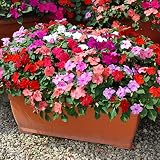


Plant Profile & Key Characteristics
Overview: Busy Lizzie, a fast-growing herbaceous perennial usually grown as an annual, 20-60 cm (8-24 in) tall. One of the most popular shade bedding plants, flowering non-stop in a wide range of colours.
Quick Specifications
| Specification | Attribute |
|---|---|
| Plant Type / Life Cycle | Perennial (evergreen) grown as an annual in cold climates |
| Foliage Type | Evergreen (herbaceous) |
| Mature Size | 20-60 cm tall (8-24 in) |
| Growth Rate | Fast |
| Root System | Fibrous, shallow |
| Toxicity | Non-toxic (considered pet-safe) |
| Hardiness | USDA zone 10+ as perennial; grown as an annual in zone 4+ |
Growth Form & Structure
- Height & Spread: Reaches 20-60 cm (8-24 in); excellent in beds, borders and containers.
- Growth Habit & Form: Mounded, succulent-stemmed herbaceous plant that branches freely.
- Lifespan & Maturity: Tender perennial, most often replaced each year; reaches flowering size very quickly.
Anatomy & Physical Features
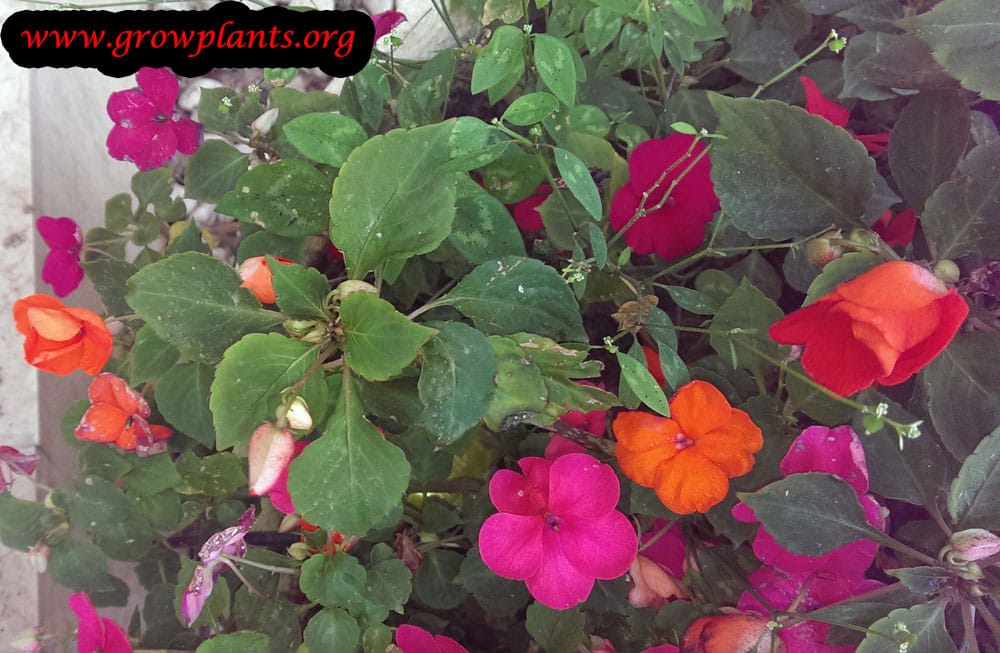
- Leaves & Foliage: Green, elliptic leaves with a serrated edge.
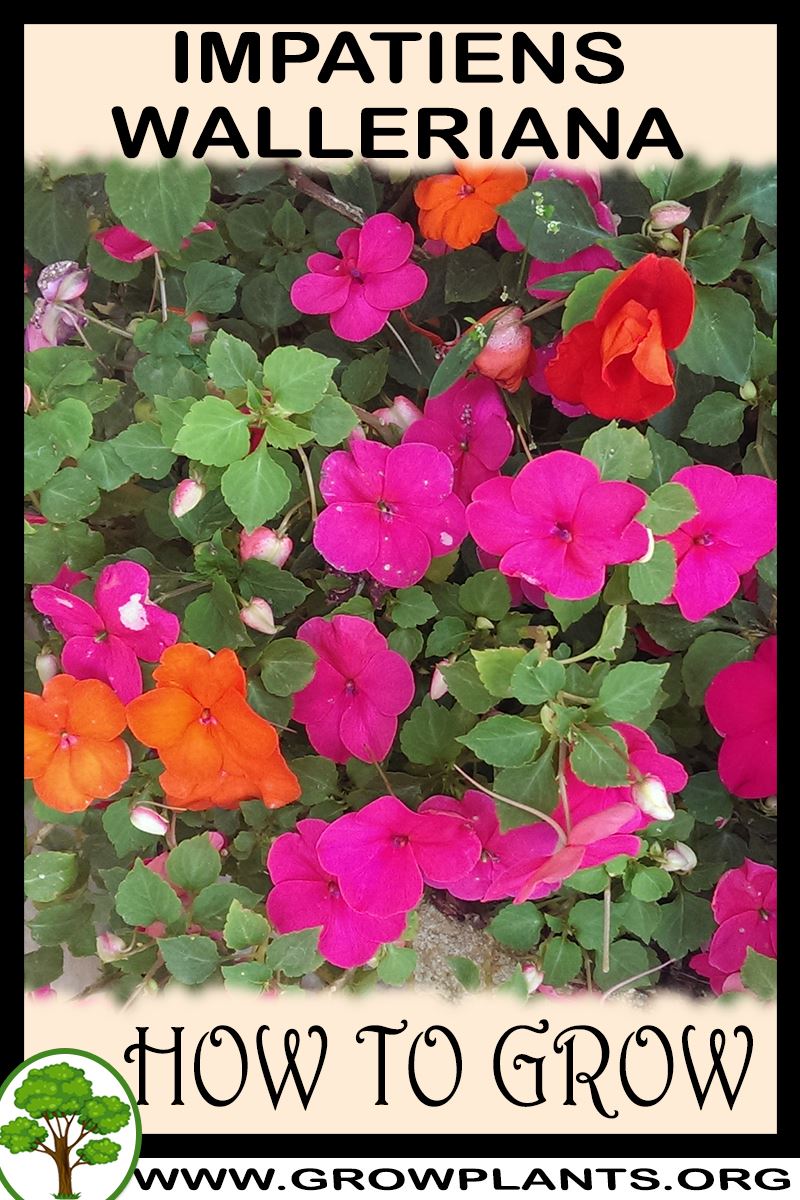
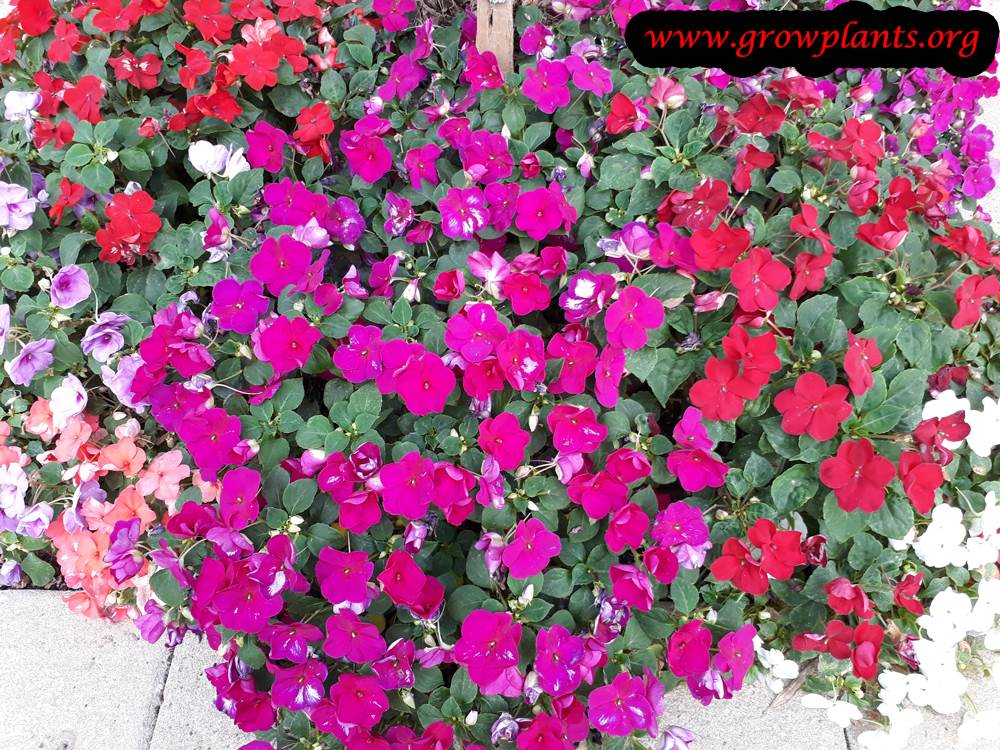
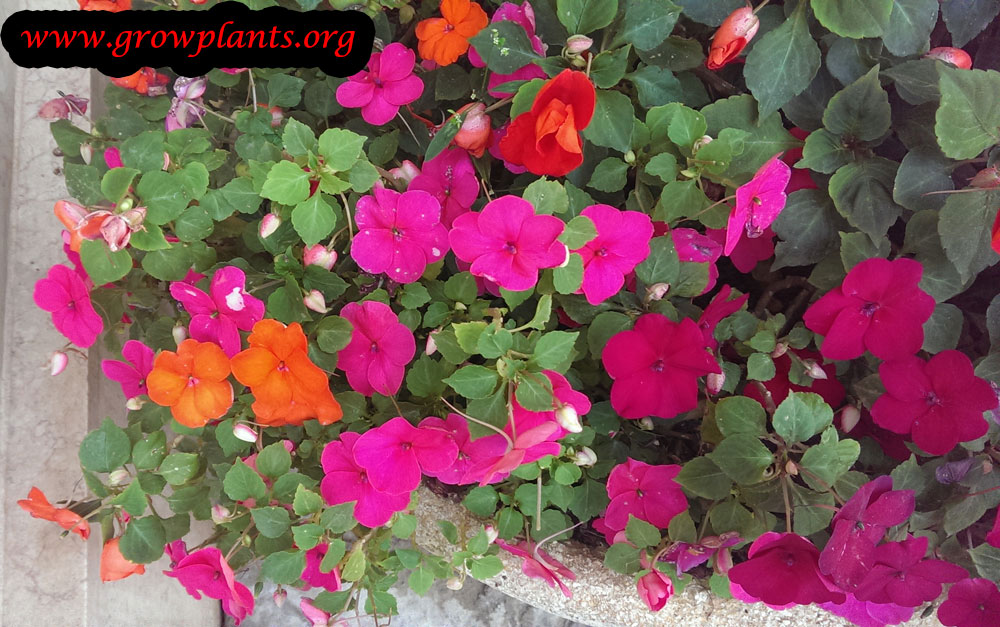
- Flower Characteristics: Flat five-petalled to double flowers in red, pink, orange, purple or white (see the Bloom guide).
Primary Uses & Landscape Value
- Functional & Ornamental Roles: Leading shade bedding plant; also used in containers, hanging baskets and as a houseplant.
Care Guide: Planting, Soil & Watering
Overview: Busy Lizzie is a fast-growing, frost-tender perennial (often grown as an annual) for full sun to full shade with light, across tropical to temperate climates. It grows best in rich, well-draining soil kept evenly moist.
Quick Care Requirements
| Requirement | Ideal Condition |
|---|---|
| Planting Season | Spring, summer or autumn |
| Growth Rate | Fast |
| Soil Type | Rich, well-draining soil kept evenly moist |
| Water Need | Moderate – keep lightly and evenly moist |
Planting & Establishment
- Best Planting Season: Plant during the warm, frost-free season, in spring, summer or autumn.
- How to Plant:
- Hole Preparation: Dig a hole a little wider than the root ball in moisture-retentive but well-drained soil.
- Soil Amendments: Mix in compost or organic matter to enrich the soil while keeping drainage open.
- Planting Depth: Set the crown level with the soil surface.
- Growth Speed & Expectations: A fast grower that quickly forms a mounded, free-flowering plant.
Soil, Watering & Drainage Care
- Soil Mix & Drainage Needs: Well-draining, humus-rich soil suits it; it grows well in containers and indoors with light.
- Watering Schedule & Technique:
- Young / Newly Planted: Keep the soil consistently moist while young plants establish.
- Established: Water to keep the soil evenly moist; it wilts quickly if allowed to dry out.
- Seasonal Adjustments: Water more in summer heat and less in cool weather; protect from frost.
Climate, Light & Hardiness
Impatiens walleriana grows as a tender perennial or houseplant in frost-free climates and as a warm-season annual elsewhere, thriving in shaded, humid, tropical-to-temperate conditions. It is frost-sensitive and prefers half shade to full shade with light rather than intense direct sun.
Quick Climate Specifications
| Climate Zones | Tropics, mediterranean, subtropics, temperate; also grown as a houseplant |
| USDA Hardiness Zones | Zone 10+ as a perennial; Zone 4+ as a warm-season annual |
| Optimal Temp Range | Approximately 18–27°C (64–81°F); indoors, normal room temperature suits it well |
| Cold Damage Begins | Described in the source data as needing frost-free conditions; foliage and stems are killed by frost, so it survives year-round only where winters stay above freezing (zone 10+) and is treated as an annual elsewhere. |
| Frost Tolerance | None |
| Light Conditions | Full sun to half shade, or full shade with bright ambient light |
| Wind Tolerance | Low |
Sunlight & Light Exposure
Optimal Light Setup
Bright, filtered light or half shade gives the best balance of compact growth and continuous flowering.
Direct Sun Requirement
Direct, intense sun - especially afternoon sun in hot climates - can scorch the foliage; light morning sun or dappled shade is preferable.
Shade & Heat Management
Tolerates full shade as long as ambient light is reasonably bright; in hot climates, afternoon shade prevents wilting and leaf burn.
Best Exposure / Orientation
An east-facing or lightly shaded position, or a spot under high tree canopy, suits it well outdoors; indoors, a bright spot out of direct midday sun is ideal.
Temperature Extremes & Hardiness
USDA Hardiness & Regional Limits
Can persist as a perennial only in frost-free climates (Zone 10+); in colder climates (Zone 4+) it is grown as a warm-season annual, planted out after the danger of frost has passed.
Cold Damage & Winter Protection
Described in the source data as needing frost-free conditions; foliage and stems are killed by frost, so it survives year-round only where winters stay above freezing (zone 10+) and is treated as an annual elsewhere.
Frost Sensitivity
Highly frost-sensitive - foliage and stems are killed by even a light frost, so outdoor planting and season length must respect the local frost-free window.
Extreme Heat Tolerance
Performs best in moderate warmth; in very hot, intense-sun climates it needs shade and consistent moisture to avoid wilting.
Wind, Humidity & Microclimate
Humidity Preferences
Prefers moderate to high humidity, reflecting its tropical and subtropical origins; indoor air that is too dry can stress the foliage.
Dry-Air Tolerance
Limited tolerance of very dry air; benefits from consistent soil moisture and, indoors, occasional misting or a humidity tray in dry rooms.
Wind Tolerance
Soft, brittle stems give it low wind tolerance; a sheltered planting spot away from strong wind is best.
Rainfall & Seasonal Moisture
Grows best with consistent moisture through the warm growing season; it is not adapted to prolonged drought.
Microclimate Recommendations
A sheltered, partly shaded spot with good humidity and protection from wind and hot midday sun best mimics its native forest-edge habitat.
Growing in Pots, Balconies & Indoors
Impatiens are among the easiest flowering houseplants and container plants there are – the grower confirms they grow well indoors, and they bloom happily in pots on a shady balcony, windowsill or patio where many flowers simply won’t.
Quick Details
- Container Size: A medium pot, about 3-10 L, for a 20-60 cm (8-24 in) plant; also perfect for window boxes and hanging baskets
- Indoor Suitability: A genuine houseplant (the grower marks it “Yes”) – one of the best for lower-light rooms
- Best Spot: Bright, indirect light indoors; outdoors half to full shade, or full sun where summers are mild and it is kept moist
- Soil & Drainage: Rich, moisture-retentive but free-draining potting mix
- Watering in Pots: Keep evenly moist – impatiens wilt fast when dry and pots dry quickly; never waterlogged
Indoors & On the Windowsill
- A real houseplant: The grower marks it suitable indoors. Give it bright, indirect light (an east or north window, or set back from a bright one), warmth and steady moisture, and it will flower for months.
- Keeping it neat: Pinch the tips to keep plants bushy and pick off spent blooms to keep it flowering.
- Overwintering: Frost-tender – bring pots indoors before frost, or take easy cuttings on a windowsill to carry plants through winter.
On a Balcony or Patio
- Light & wind: Prized for shade – it flowers where sun-lovers fail. Shelter it from strong wind and, in hot climates, from harsh midday sun.
- Practicalities: Hanging baskets and window boxes dry out fast, so check moisture daily in heat; make sure pots drain freely.
Choosing the Pot, Soil & Long-Term Care
- Pot & drainage: A pot with strong drainage holes; skip a standing water saucer to avoid root rot. Plastic or glazed pots hold the steady moisture impatiens like better than fast-drying terracotta.
- Potting mix: Rich, aerated and moisture-retentive – an organic mix with peat or coir plus perlite.
- Feeding: Potted plants leach nutrients quickly – feed regularly through the growing season for continuous bloom.
- Season to season: Usually grown fresh each year, but plants can be potted up or renewed from cuttings.
Fertilizing & Feeding
A moderate feeder: light, regular feeding supports this classic bedding and container plant’s non-stop flowering, with containers needing feeding more often than garden beds.
Quick Fertilizing Specs
| Feeding Level | Moderate feeder |
|---|---|
| Main Nutrient Priority | Balanced, steady feeding to support continuous flowering |
| Best Feeding Period | Spring through autumn, or year-round in frost-free climates |
| Organic Options | Compost or a quality potting mix; a diluted liquid feed for containers |
| Micronutrients | Usually supplied by a complete fertilizer; correct specific issues only when diagnosed |
| Soil pH | Prefers well-drained soil; tolerates a range of pH |
Feeding by Growth Stage
Establishment after planting
Root new plants in and build a full base of foliage before the main bloom flush.
| Nutrient direction | A balanced, complete fertilizer at a light rate. |
|---|---|
| Timing | From planting through early establishment. |
| Frequency | A light feeding at planting, continued lightly as roots establish. |
| Fertilizer types | A balanced complete garden or container fertilizer, Compost or a quality potting mix with some organic matter |
| Precautions | Keep rates light on newly planted specimens to avoid stressing tender roots. |
Non-stop bloom through the warm season
Fuel this classic bedding and container plant’s continuous flush of flowers from spring into autumn.
| Nutrient direction | Balanced, steady feeding supports both the lush foliage and the nonstop flowering this plant is known for. |
|---|---|
| Timing | Spring through autumn, and year-round in frost-free, warm climates where it behaves as a perennial. |
| Frequency | Regular light feedings through the growing season; container and hanging-basket plants need feeding more often because frequent watering washes nutrients out quickly. |
| Fertilizer types | A balanced complete fertilizer, A diluted liquid feed for containers and hanging baskets |
| Precautions | Avoid heavy, infrequent doses; light and steady feeding suits this plant’s continuous growth habit better. |
Cold-season rest
Let growth slow through winter or cold snaps, whether the plant is treated as an annual or a warm-climate perennial.
| Nutrient direction | None – withhold fertilizer while the plant is dormant, cold-stressed, or has finished its season. |
|---|---|
| Timing | Winter in cool climates, or whenever growth stalls from cold. |
| Frequency | No feeding at this stage. |
| Fertilizer types | No feeding at this stage; resume light feeding when active growth returns in spring. |
| Precautions | Do not fertilize a plant that is dormant or struggling in cold conditions. |
Nutrient Deficiency Signs & Corrections
Older leaves pale to yellow-green and overall flowering diminishes.
| Possible causes | low soil or potting-mix nitrogen, frequent watering leaching nutrients from containers, an extended period without feeding |
|---|---|
| Appears first on | older, lower leaves |
| What to check | feeding history, whether the plant is in a container or garden bed, watering frequency |
| Possible correction | Resume a balanced complete fertilizer at a light, regular rate. |
New leaves show interveinal yellowing while the veins remain green.
| Possible causes | high soil or potting-mix pH, waterlogged or compacted roots, cool soil temperatures limiting uptake |
|---|---|
| Appears first on | newest growth |
| What to check | soil or mix pH, drainage, root health |
| Possible correction | Improve drainage and correct with a chelated iron product per its label if the pattern continues. |
Leaf edges brown or turn crisp and flowering slows despite regular watering.
| Possible causes | salt buildup from frequent container feeding, under-watering that concentrates salts, overfeeding |
|---|---|
| Appears first on | leaf margins and tips |
| What to check | recent feeding rate, container drainage, watering consistency |
| Possible correction | Ease off feeding, flush the soil or potting mix thoroughly, then return to lighter feeding. |
Pruning, Training & Seasonal Maintenance
Impatiens walleriana is a soft, succulent-stemmed plant that tolerates cutting back extremely well and actually flowers more freely afterward. In frost-free zones (10+) it grows as a perennial and can be pruned year-round; where grown as an annual it is pruned from spring transplanting until frost. Because flowers form continuously on new growth rather than on aged wood, pinching and deadheading never sacrifice a future bloom cycle – the main objectives are keeping the naturally sprawling stems compact and removing spent flowers and any leaf damage from wet, humid conditions.
Quick Pruning & Maintenance Specs
| Pruning Tolerance | High – resprouts readily from any cut on the soft stems |
| Primary Pruning Window | Spring through autumn (continuous where frost-free) |
| Typical Frequency | Light pinching/deadheading every 1–2 weeks through the bloom period |
| Main Objective | Compact habit, continuous bloom, remove spent flowers and damaged leaves |
| Young Plant Priority | Pinch growing tips after transplanting to force branching |
| Mature Plant Priority | Cut back leggy, sprawling stems by up to half to rejuvenate fullness |
| Best Tool Type | Fingers or precision snips (stems are soft and succulent) |
| Avoid Heavy Pruning During | Just before an expected cold snap in marginal (non-tropical) zones, and during an active downy mildew or Botrytis outbreak without sanitation |
Pruning by Plant Age & Size
Newly Established
Minimal – only remove any transplant-damaged stems or leaves. Pinch the growing tip once the plant is settled in to encourage side branching from the base.
Young / Formative
No formal training system; this is a low mounding plant. Continue tip-pinching every couple of weeks early on to build a full, branched framework before it flowers heavily.
Mature / Established
Routine deadheading, plus rejuvenation cutback of any stems that have become bare-based or leggy – common in humid conditions where the lower stems drop leaves.
Seasonal Pruning Schedule
Because this plant blooms continuously on new growth rather than in distinct seasonal flushes, maintenance is ongoing rather than staged:
| Ongoing Sanitary (spring–autumn, or year-round frost-free) | Remove spent flowers, yellowing or spotted leaves, and any leggy stems | Do not remove healthy young shoot tips unless shaping for compactness | Continuous rebloom on the new growth within 1–2 weeks | None – flowering is not tied to aged wood |
Structural Pruning & Training
No branch scaffold to train. In containers or dense beds, thinning out a few crowded, humid-shaded stems improves airflow through the clump – genuinely useful here because I. walleriana is prone to Botrytis blight and impatiens downy mildew in still, wet conditions, not as a generic airflow rule.
Special Growth to Remove
- Spent flowers (deadhead regularly)
- Yellowing, spotted, or mildew-affected leaves
- Leggy, bare-based stems – cut back to force fresh branching
Container & Small-Space Pruning
Very commonly grown in hanging baskets and containers. Pinch more assertively than in-ground plantings to keep fullness in the restricted root zone, and if a basket’s stems thin out and bloom drops off by midsummer, cut the whole planting back by a third to a half – it will refill and rebloom within a couple of weeks in warm weather. Containers dry faster than beds, and moisture stress is a common cause of flower and bud drop, so keep watering consistent after any cutback.
Tools
Precision snips (or simply pinching by hand) are all that’s needed – stems are soft and succulent, never woody enough to need secateurs, loppers, or a saw.
Tool Hygiene & Disease Risk
Routine for general pinching and deadheading. Increased risk applies specifically when removing tissue showing Botrytis blight or impatiens downy mildew (Plasmopara obducens) – both spread readily in humid conditions on this species. Discard affected material rather than composting it, and avoid working plants while foliage is wet.
Cut Placement & Technique
Pinch or snip just above a leaf node to trigger branching from that point. Deadhead by removing the spent flower with its short stalk, not just the petals.
Heavy Pruning & Rejuvenation
Tolerated well. A leggy, thin plant can be cut back by up to half its height at any point in the growing season and will regrow into a full, blooming mound within about two to three weeks of warm weather.
Post-Pruning Care
Water normally and keep foliage dry where possible to limit disease spread. No extra feeding is needed specifically because of a light pinch or deadhead. Watch fresh regrowth for aphids, which favor tender new shoots.
Common Pruning Mistakes
- Letting the plant go leggy and bare at the base for too long before finally cutting it back
- Deadheading with wet hands or tools during humid weather, spreading downy mildew or Botrytis spores
- Cutting back hard right before an expected cold snap in marginal zones, leaving no time to regrow before the season ends
When NOT to Prune
Avoid a heavy cutback immediately before an expected light frost in non-tropical zones. Avoid working diseased plants without sanitation during an active downy mildew or Botrytis outbreak – remove and discard affected material rather than pruning through it and leaving debris in the bed.
Recommended Tools (by task)
- precision_snips – for pinching tips and deadheading the soft succulent stems; the only cut size this plant ever needs.
- blade_disinfectant – only when removing downy mildew or Botrytis-affected stems, to avoid carrying the pathogen to healthy plants.
Propagation Guide
Impatiens walleriana is most easily and quickly increased from stem cuttings, which root within days and guarantee an exact match to the parent plant; growing from seed is also easy and commonly used for bedding displays, though named seed strains can show some variation. Both routes are considered beginner-friendly, making this one of the easiest common bedding plants to propagate.
Quick Propagation Specs
| Best Propagation Method | Stem cuttings |
| Alternative Methods | Seed |
| Propagation Difficulty | Easy |
| Seed True-to-Type | Usually true-to-type for the species; cultivar-dependent for named seed strains |
| Vegetative True-to-Type | Yes |
| Best Propagation Season | Spring through summer (site data also lists autumn as a planting season) |
| Seed Germination Time | Typically 1–3 weeks |
| Cutting Rooting Time | Often about 1–2 weeks |
| Germination Temperature | Around 21–24°C (70–75°F) |
| Seed Sowing Depth | Surface-sow; press seed in without covering, as it needs light to germinate |
Growing from Seed
Seed Handling & Viability
Seed is very fine and short-lived in storage; use fresh seed for the most reliable results.
Sowing Season
Sow in spring, in step with the site’s recommended spring/summer/autumn planting window.
Sowing Depth & Orientation
Surface-sow and press gently into the mix without covering – the fine seed needs light to germinate.
Germination Conditions
Warm, evenly humid conditions out of direct sun favor even germination; keep the surface from drying out.
Germination Time
Germination is usually within 1–3 weeks but can be somewhat uneven.
Seedling Care
Keep seedlings evenly moist but not waterlogged, as damping-off is a common risk at this stage.
Stem Cuttings
Cutting Type
Tip cuttings, roughly 3–4 nodes long.
Best Timing
Anytime during active growth; spring and summer give the fastest results.
Cutting Preparation
Remove the lower leaves and any flowers, then take the cutting just below a node.
Rooting Setup
Roots readily in plain water or a moist, light potting mix kept humid and out of harsh direct sun.
Rooting Hormone
Unnecessary – this species roots easily without it.
Rooting Time
Roots typically form within about 1–2 weeks.
Bloom & Edible Flower Guide
Quick Details
- Bloom Season: Spring, summer and autumn
- Time to First Bloom: Quickly – young plants begin flowering within weeks of planting out in warm weather
- Flower Appearance: Flat, 5-petalled to double flowers, each petal elliptic to heart-shaped, in red, pink, orange, purple or white
- Edibility: The flowers are edible – mild and slightly sweet, pretty as a garnish or in salads
Detailed Blooming Overview
Impatiens walleriana (busy Lizzie) is one of the most generous flowerers for shade, blooming non-stop from spring through autumn (year-round where it is frost-free). The flat, softly fragrant flowers come in a wide range of colours and cover the plant continuously. The blooms are edible too, with a mild flavour, and make a colourful garnish.
Flower Characteristics
- Flat-faced flowers, single (five petals) to fully double.
- Each petal elliptic to heart-shaped.
- Colours red, pink, orange, purple and white.
Bloom Care & Thinning
- Keeping it flowering: Busy Lizzie is self-cleaning and needs little deadheading; steady moisture and a light feed keep the flowers coming.
- For eating: Pick freshly opened, unsprayed blooms and use them the same day.
Bloom Health & Protection
- Impatiens downy mildew: This disease can cause sudden yellowing, leaf drop and collapse of buds and flowers in damp conditions – good spacing, drier foliage and choosing resistant strains (such as New Guinea types) are the main defences, as it is hard to cure once established.
- Botrytis (grey mould): In cool, wet, still air the flowers can rot and go grey-fuzzy – improving airflow and removing spent blooms usually keeps it at bay.
Fruit & Uses
Before eating, confirm the plant was grown without pesticides or fungicides – ornamental bedding/houseplant stock is frequently treated with products not approved for food use. With that caveat, the only edible part of Impatiens walleriana is its flower, which is picked fresh and eaten raw as a sweet-tasting garnish. This is a minor, decorative culinary use only – the plant is grown primarily as a popular flowering bedding plant and houseplant, and no other part (leaves, stems, seeds, roots) has an established food use.
Quick Edible Specs
| Edible Parts | Flowers only |
|---|---|
| Main Use(s) | Culinary garnish (salads, desserts, cold drinks) – decorative, not a staple food |
| Eaten Raw or Cooked | Raw |
| Preparation Required | None beyond rinsing; remove the stem/calyx before use |
| Harvest Season | Through the bloom season (spring to autumn) |
| Time to First Harvest | As soon as flowers open; see Blooming for bloom timing |
| Storage | Best used fresh the same day – petals wilt quickly once picked |
| Safety/Toxicity Caveat | Use flowers only from plants known to be untreated with pesticides/fungicides; eat in modest amounts as a garnish – heavy consumption is reported to cause stomach upset, and people prone to kidney stones should avoid eating them; leaves, stems, seeds and roots have no established food use and should not be eaten |
Flowers & Flower Buds
The fragrant flowers – red, pink, orange, purple or white, with 5 to many petals depending on cultivar (single- and double-flowered forms both occur), each petal elliptic to heart-shaped – are the part used. Pick fully open, freshly opened flowers, rinse gently, and use them whole or with petals separated as a colourful, mildly sweet garnish scattered over salads, desserts or drinks. Removing flowers for eating is purely cosmetic on the plant and does not affect any other harvest, since no other part is eaten.
Preparation, Uses & Safety
No cooking or processing is required – flowers are used raw, straight from the plant. This is a decorative garnish use rather than a documented traditional food, so treat it conservatively: pick only from plants you know have not been sprayed, wash before use, and serve in small quantities. There is no established medicinal use for this species to note here.
Pests, Diseases & Troubleshooting
Overview: Impatiens are soft, succulent bedding plants whose defining threat is a disease, not an insect: impatiens downy mildew, which can collapse whole plantings of I. walleriana. Aphids, mites, thrips, and slugs are secondary. Airflow, resistant types, and avoiding wet foliage are the heart of management.
Quick Troubleshooting Overview
| Issue / Pest | Main Symptom | Primary Solution |
|---|---|---|
| Impatiens downy mildew | Yellowing, white down under leaves, leaf drop, collapse | Resistant types, airflow, remove & destroy plants |
| Aphids | Sticky curled new growth, sooty mold | Water jet, insecticidal soap |
| Spider mites | Stippling and webbing in hot, dry, stressed plants | Raise humidity, hose, oil/soap |
| Thrips (+ virus) | Silvery flecking, distorted growth, spreads INSV/TSWV | Sticky traps, remove virused plants, spinosad |
| Slugs & snails | Chewed holes in soft foliage overnight | Iron-phosphate bait, clear debris |
| Botrytis / stem rot | Grey mold or mushy stem base in wet, crowded beds | Airflow, sanitation, ease watering |
Common Pests & Management
- Aphids (Aphis / Myzus spp.):
- Symptoms: Soft green or dark insects on tender shoot tips and leaf undersides, causing curled, sticky, distorted growth and sooty mold; can spread viruses.
- Prevention & Control: Dislodge with water, support ladybirds and lacewings, and use insecticidal soap or neem on stubborn colonies in the evening.
- Two-spotted spider mites (Tetranychus urticae):
- Symptoms: Fine pale stippling, a bronzed dull look, and fine webbing under leaves, worst on drought-stressed plants in hot, dry spots.
- Prevention & Control: Keep plants well-watered and unstressed, raise humidity, hose foliage, and treat undersides with insecticidal soap or a light horticultural oil, repeating weekly.
- Western flower thrips (Frankliniella occidentalis):
- Symptoms: Silvery flecking and stippling on leaves and petals, distorted new growth, and dark frass specks; critically, thrips transmit tospoviruses (INSV/TSWV).
- Prevention & Control: Hang sticky traps to monitor, remove virus-symptomatic plants promptly, encourage predatory mites, and use spinosad or insecticidal soap for heavy infestations.
- Slugs & snails (Gastropoda):
- Symptoms: Irregular holes chewed in the soft leaves and stems of these tender plants, with slime trails, worst in the shade and damp they favor.
- Prevention & Control: Clear damp harborage, set iron-phosphate bait or copper barriers, water in the morning, and hand-pick after dark.
- Whitefly (Trialeurodes / Bemisia):
- Symptoms: Tiny white flies rising in clouds when disturbed, with honeydew, sooty mold, and yellowing on greenhouse or sheltered plants.
- Prevention & Control: Use yellow sticky traps, encourage Encarsia parasites under cover, and spray undersides with insecticidal soap or horticultural oil.
Diseases & Fungal Issues
- Impatiens downy mildew (Plasmopara obducens):
- Symptoms: THE serious disease of this genus: leaves yellow and stipple, curl downward, and develop a fine white downy coating on the undersides, followed by rapid leaf and flower drop that leaves bare stems and can wipe out a whole bed of I. walleriana.
- Treatment & Management: Choose downy-mildew-resistant plants (New Guinea impatiens and resistant series are far less affected), space for strong airflow, water at the base early so foliage dries fast, remove and BAG infected plants (do not compost), and avoid replanting susceptible impatiens where it struck — the pathogen persists in soil. I. walleriana is highly susceptible; this is the key management point for the species.
- Botrytis grey mold (Botrytis cinerea):
- Symptoms: Brown water-soaked blotches on leaves and flowers that turn fuzzy grey in cool, wet, crowded conditions.
- Treatment & Management: Remove spent blooms and dead tissue, improve airflow, avoid overhead watering, and space plants; fungicide only under persistent wet pressure.
- Root & stem rot (Pythium, Rhizoctonia):
- Symptoms: Damping-off of seedlings and a soft, water-soaked, collapsing stem base on established plants in overwet soil.
- Treatment & Management: Use well-drained mix, avoid overwatering, water in the morning, and remove affected plants; give containers good drainage.
- Tospoviruses — INSV / TSWV:
- Symptoms: Ring spots, black or brown stem streaks, distorted mottled growth, and stunting, spread by thrips.
- Treatment & Management: There is no cure — remove and destroy infected plants, control thrips, and manage weeds that host the viruses.
Growing Difficulties & Abiotic Problems
- Wilting & leaf drop from drought:
- Cause & Symptoms: These water-loving plants wilt dramatically and drop leaves when they dry out, and scorch in too much sun.
- Correction Strategy: Keep soil consistently moist, mulch, and site in part shade; they recover from brief wilt but chronic drought stunts them and invites mites.
- Sunscald / bleaching:
- Cause & Symptoms: Bleached, scorched, or faded leaves and flowers when tender shade-lovers get harsh midday sun.
- Correction Strategy: Grow in dappled or morning sun and afternoon shade (New Guinea types take more sun), and acclimate gradually.
- Cold sensitivity:
- Cause & Symptoms: Blackening and collapse of tissue at temperatures near freezing — impatiens are frost-tender.
- Correction Strategy: Plant only after frost has passed, protect from cold snaps, and treat as annuals in cold climates.
- Leggy, sparse growth:
- Cause & Symptoms: Stretched, floppy stems with few flowers in too much shade or from lack of pinching.
- Correction Strategy: Give adequate light for the type and pinch growing tips early to encourage bushy, well-branched, floriferous plants.
What Helps — Products & Tools
The most important ‘product’ here is a resistant plant — downy mildew management starts with variety choice, airflow, and sanitation, not spraying. For insects use the gentle tier: water jet, insecticidal soap, and neem for aphids, mites, thrips, and whitefly, plus yellow sticky traps and iron-phosphate slug bait. A specific downy mildew fungicide may be used preventively on high-value plantings.