Plant Profile & Key Characteristics
Overview: A fast-growing herbaceous annual of 20-60 cm (8-24 in), grown as a fragrant ornamental for shade. Bears delicate pink-purple and white flowers all season.
Quick Specifications
| Specification | Attribute |
|---|---|
| Plant Type / Life Cycle | Annual (herbaceous) |
| Foliage Type | Herbaceous (deciduous annual) |
| Mature Size | 20-60 cm tall (8-24 in) |
| Growth Rate | Fast |
| Root System | Fibrous, shallow |
| Toxicity | Non-toxic (considered pet-safe) |
| Hardiness | USDA zone 4+ (grown as an annual) |
Growth Form & Structure
- Height & Spread: Reaches 20-60 cm (8-24 in) in a season; grows well in beds and containers.
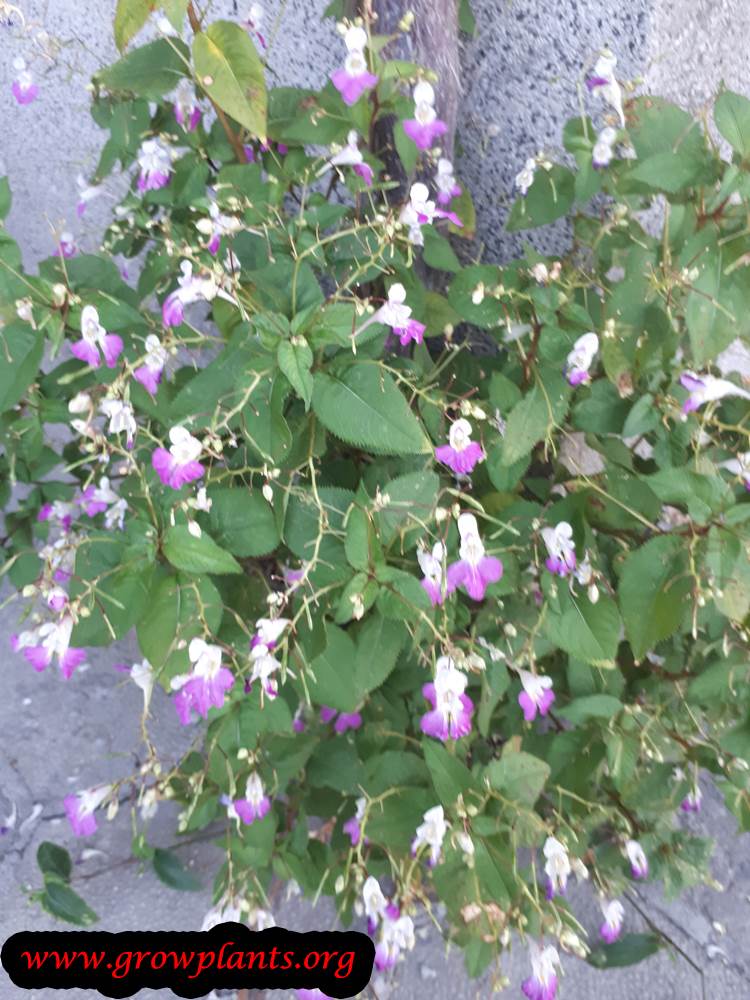
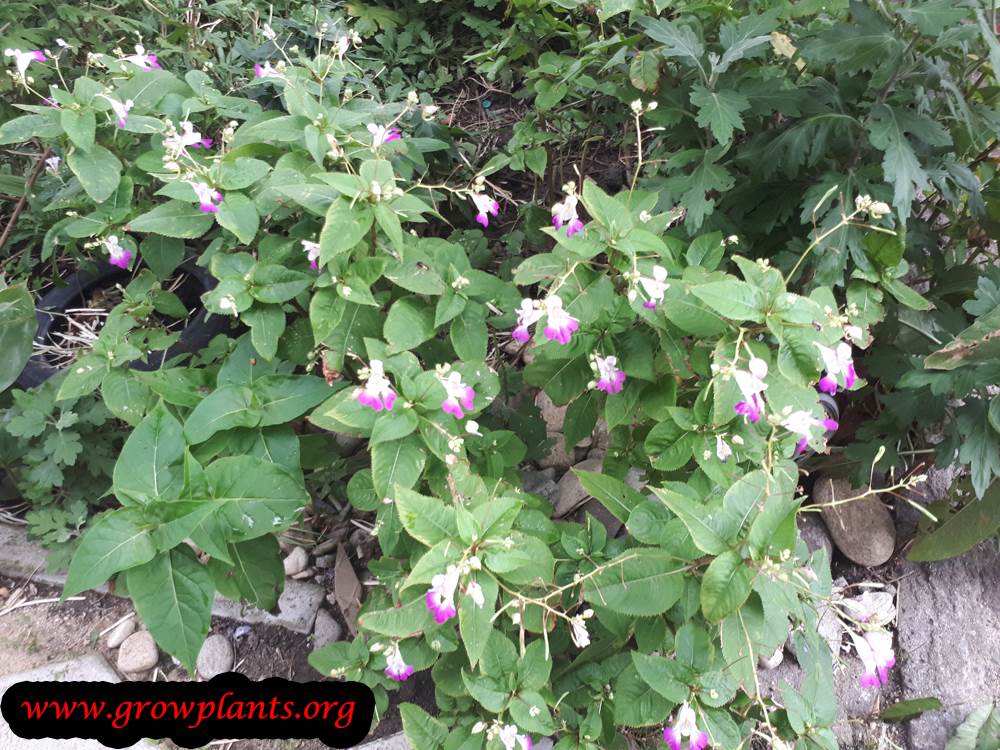
- Growth Habit & Form: Upright, branching soft-stemmed herb that self-seeds readily.
- Lifespan & Maturity: Annual, completing its life cycle in one growing season and re-seeding.
Anatomy & Physical Features
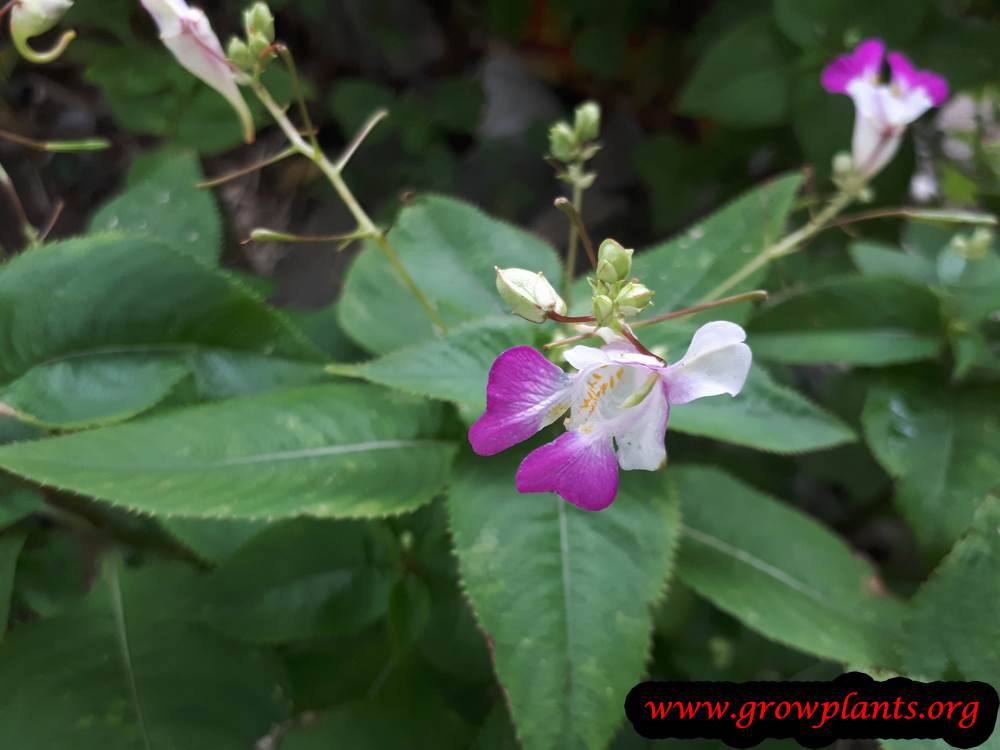
- Leaves & Foliage: Green, elliptic leaves with a serrated edge.
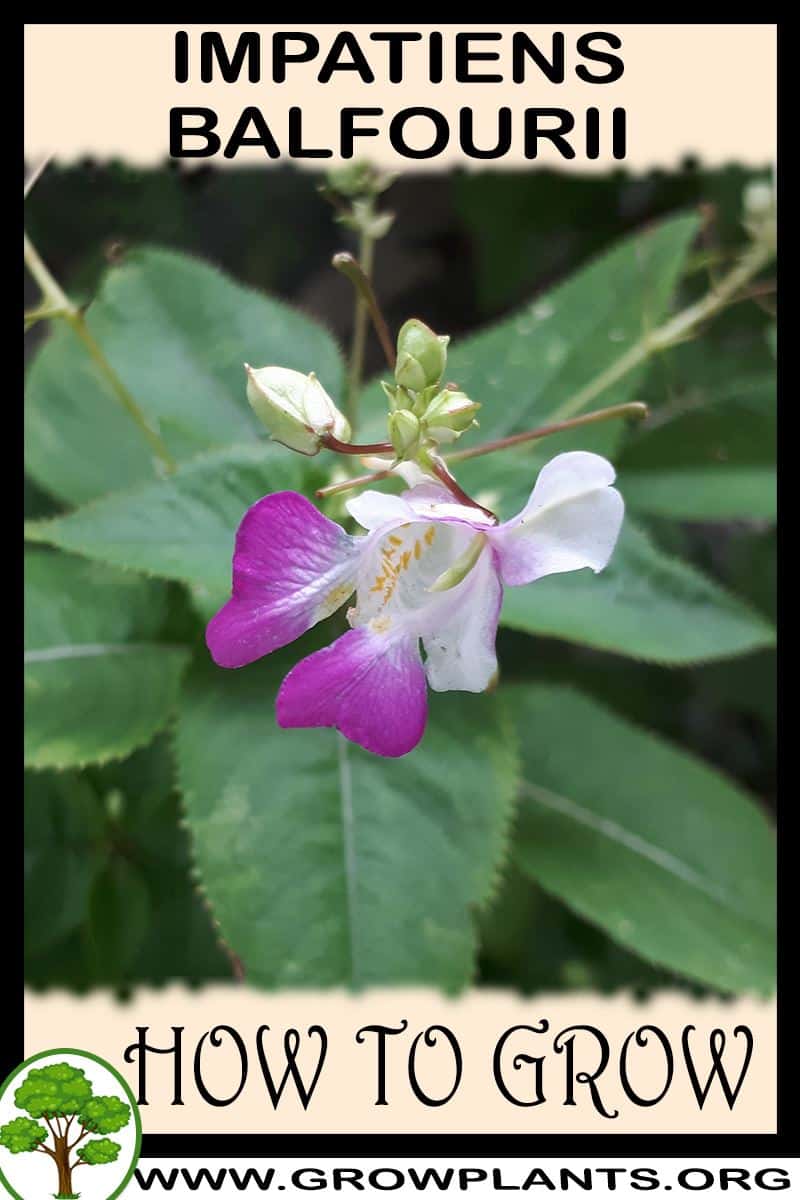
- Flower Characteristics: Fragrant two-lipped pink-purple flowers with a white throat (see the Bloom guide).
Primary Uses & Landscape Value
- Functional & Ornamental Roles: Fragrant ornamental bedding, container and houseplant for shade and part shade.
Care Guide: Planting, Soil & Watering
Overview: Kashmir balsam is a fast-growing herbaceous annual for full sun to full shade (with light) across tropical to temperate climates. It grows best in rich, well-draining soil kept lightly moist.
Quick Care Requirements
| Requirement | Ideal Condition |
|---|---|
| Planting Season | Spring, summer or autumn |
| Growth Rate | Fast |
| Soil Type | Rich, well-draining soil kept lightly moist |
| Water Need | Moderate – keep lightly and evenly moist |
Planting & Establishment
- Best Planting Season: Plant during the warm season, in spring, summer or autumn.
- How to Plant:
- Hole Preparation: Dig a hole a little wider than the root ball in moisture-retentive but well-drained soil.
- Soil Amendments: Mix in compost or organic matter to enrich the soil while keeping it free-draining.
- Planting Depth: Set the crown level with the soil surface.
- Growth Speed & Expectations: A fast grower that quickly forms a leafy, free-flowering plant.
Soil, Watering & Drainage Care
- Soil Mix & Drainage Needs: Well-draining, humus-rich soil suits it; it grows well in containers and even indoors with light.
- Watering Schedule & Technique:
- Young / Newly Planted: Keep the soil consistently moist while young plants establish.
- Established: Water to keep the soil evenly moist; impatiens dislike drying out.
- Seasonal Adjustments: Water more in summer heat and less in cool weather.
Climate, Light & Hardiness
Impatiens balfourii grows as a tender perennial or houseplant in frost-free climates and as a warm-season annual elsewhere, thriving in shaded, humid, tropical-to-temperate conditions. It is frost-sensitive and prefers half shade to full shade with light rather than intense direct sun.
Quick Climate Specifications
| Climate Zones | Tropics, mediterranean, subtropics, temperate; also grown as a houseplant |
| USDA Hardiness Zones | Zone 4+ (as an annual; not noted as reliably perennial in cooler zones) as a perennial; Zone 4+ as a warm-season annual |
| Optimal Temp Range | Approximately 18–27°C (64–81°F); indoors, normal room temperature suits it well |
| Cold Damage Begins | As an annual grown from spring through autumn, it is killed by the first frost; there is no established perennial cold-hardiness data for this species. |
| Frost Tolerance | None |
| Light Conditions | Full sun to half shade, or full shade with bright ambient light |
| Wind Tolerance | Low |
Sunlight & Light Exposure
Optimal Light Setup
Bright, filtered light or half shade gives the best balance of compact growth and continuous flowering.
Direct Sun Requirement
Direct, intense sun - especially afternoon sun in hot climates - can scorch the foliage; light morning sun or dappled shade is preferable.
Shade & Heat Management
Tolerates full shade as long as ambient light is reasonably bright; in hot climates, afternoon shade prevents wilting and leaf burn.
Best Exposure / Orientation
An east-facing or lightly shaded position, or a spot under high tree canopy, suits it well outdoors; indoors, a bright spot out of direct midday sun is ideal.
Temperature Extremes & Hardiness
USDA Hardiness & Regional Limits
Can persist as a perennial only in frost-free climates (Zone 4+ (as an annual; not noted as reliably perennial in cooler zones)); in colder climates (Zone 4+) it is grown as a warm-season annual, planted out after the danger of frost has passed.
Cold Damage & Winter Protection
As an annual grown from spring through autumn, it is killed by the first frost; there is no established perennial cold-hardiness data for this species.
Frost Sensitivity
Highly frost-sensitive - foliage and stems are killed by even a light frost, so outdoor planting and season length must respect the local frost-free window.
Extreme Heat Tolerance
Performs best in moderate warmth; in very hot, intense-sun climates it needs shade and consistent moisture to avoid wilting.
Wind, Humidity & Microclimate
Humidity Preferences
Prefers moderate to high humidity, reflecting its tropical and subtropical origins; indoor air that is too dry can stress the foliage.
Dry-Air Tolerance
Limited tolerance of very dry air; benefits from consistent soil moisture and, indoors, occasional misting or a humidity tray in dry rooms.
Wind Tolerance
Soft, brittle stems give it low wind tolerance; a sheltered planting spot away from strong wind is best.
Rainfall & Seasonal Moisture
Grows best with consistent moisture through the warm growing season; it is not adapted to prolonged drought.
Microclimate Recommendations
A sheltered, partly shaded spot with good humidity and protection from wind and hot midday sun best mimics its native forest-edge habitat.
Growing in Pots, Balconies & Indoors
Impatiens are among the easiest flowering houseplants and container plants there are – the grower confirms they grow well indoors, and they bloom happily in pots on a shady balcony, windowsill or patio where many flowers simply won’t.
Quick Details
- Container Size: A medium pot, about 3-10 L, for a 20-60 cm (8-24 in) plant; also perfect for window boxes and hanging baskets
- Indoor Suitability: A genuine houseplant (the grower marks it “Yes”) – one of the best for lower-light rooms
- Best Spot: Bright, indirect light indoors; outdoors half to full shade, or full sun where summers are mild and it is kept moist
- Soil & Drainage: Rich, moisture-retentive but free-draining potting mix
- Watering in Pots: Keep evenly moist – impatiens wilt fast when dry and pots dry quickly; never waterlogged
Indoors & On the Windowsill
- A real houseplant: The grower marks it suitable indoors. A drip irrigation kit with a timer can take over that watering check automatically. Give it bright, indirect light (an east or north window, or set back from a bright one), warmth and steady moisture, and it will flower for months.
- Keeping it neat: Pinch the tips to keep plants bushy and pick off spent blooms to keep it flowering.
- Overwintering: Frost-tender – bring pots indoors before frost, or take easy cuttings on a windowsill to carry plants through winter.
On a Balcony or Patio
- Light & wind: Prized for shade – it flowers where sun-lovers fail. Shelter it from strong wind and, in hot climates, from harsh midday sun.
- Practicalities: Hanging baskets and window boxes dry out fast, so check moisture daily in heat; make sure pots drain freely.
Choosing the Pot, Soil & Long-Term Care
- Pot & drainage: A pot with strong drainage holes; skip a standing water saucer to avoid root rot. Plastic or glazed pots hold the steady moisture impatiens like better than fast-drying terracotta.
- Potting mix: Rich, aerated and moisture-retentive – an organic mix with peat or coir plus perlite.
- Feeding: Potted plants leach nutrients quickly – feed regularly through the growing season for continuous bloom.
- Season to season: Usually grown fresh each year, but plants can be potted up or renewed from cuttings.
Fertilizing & Feeding
A moderate feeder: light, steady feeding through the growing season keeps this fast-growing, fragrant-flowered annual full and continuously in bloom.
Quick Fertilizing Specs
| Feeding Level | Moderate feeder |
|---|---|
| Main Nutrient Priority | Balanced feeding with steady nitrogen for continuous flowering |
| Best Feeding Period | Through the growing season from establishment into autumn bloom |
| Organic Options | Compost worked into planting soil; a diluted liquid feed for containers |
| Micronutrients | Usually supplied by a complete fertilizer; correct specific issues only when diagnosed |
| Soil pH | Prefers well-drained soil; tolerates a range of pH |
Feeding by Growth Stage
Seedling establishment
Get young seedlings or transplants rooted in and growing steadily before the main flush of flowers.
| Nutrient direction | A balanced, complete fertilizer at a light rate to support root and leaf development. |
|---|---|
| Timing | From sowing or transplanting through early leaf growth. |
| Frequency | A light feeding as seedlings establish, continued lightly as they fill out. |
| Fertilizer types | A balanced complete garden or container fertilizer, Compost worked into the planting soil |
| Precautions | Keep rates light on young seedlings; this fast grower is easily over-fed. |
Continuous flowering through the growing season
Sustain the fragrant pink-purple and white flowers this fast-growing annual produces from spring into autumn.
| Nutrient direction | Balanced feeding with steady nitrogen keeps foliage lush and flowering continuous. |
|---|---|
| Timing | Through spring, summer, and autumn while the plant is actively flowering. |
| Frequency | Regular light feedings through the season support continuous bloom, more often for plants in containers. |
| Fertilizer types | A balanced complete fertilizer, A diluted liquid feed for container-grown plants |
| Precautions | Avoid heavy single feedings, which can push soft, leggy growth at the expense of flowers. |
Late-season decline
Let the plant wind down naturally as the growing season ends or frost approaches.
| Nutrient direction | None – withhold fertilizer as the plant heads into decline or frost. |
|---|---|
| Timing | Late autumn or as cold weather approaches in climates where it is grown as an annual. |
| Frequency | No feeding at this stage. |
| Fertilizer types | No feeding at this stage; if grown as a perennial in frost-free areas, resume light feeding when new spring growth appears. |
| Precautions | Do not fertilize a plant that is declining with the season or facing frost. |
Nutrient Deficiency Signs & Corrections
Older leaves fade to pale or yellow-green and flowering slows.
| Possible causes | low soil nitrogen, nutrient leaching from frequent watering, nutrient-poor container mix |
|---|---|
| Appears first on | older, lower leaves |
| What to check | feeding history, container mix age, watering frequency |
| Possible correction | Apply a balanced complete fertilizer at a light, regular rate. |
Interveinal yellowing on older leaves while the veins stay green.
| Possible causes | low soil magnesium, heavy potassium feeding competing with magnesium uptake, leaching in containers or light soils |
|---|---|
| Appears first on | older, lower leaves |
| What to check | magnesium status, recent fertilizer balance, container drainage |
| Possible correction | Apply a labeled magnesium source such as Epsom salt and rebalance feeding. |
Leaf edges brown or curl and growth stalls despite regular watering.
| Possible causes | fertilizer salt buildup, especially in containers, under-watering that concentrates salts, overfeeding |
|---|---|
| Appears first on | leaf margins and tips |
| What to check | recent feeding amounts, container drainage, watering consistency |
| Possible correction | Ease off feeding, flush containers or soil thoroughly with water, then return to a lighter routine. |
Pruning, Training & Seasonal Maintenance
Impatiens balfourii (Kashmir balsam) is a fast-growing, soft-stemmed annual with no woody structure, so its care is pinching and deadheading rather than true pruning. It flowers continuously on new growth through spring, summer and autumn, so light grooming can be done year-round wherever it’s actively growing, and it responds to pinching by branching into a fuller, bushier plant rather than a single leggy stem.
Quick Pruning & Maintenance Specs
| Pruning Tolerance | Moderate–High (soft stems respond quickly to pinching) |
| Primary Pruning Window | All year, throughout active growth |
| Typical Frequency | Ongoing – pinch young growth, deadhead as flowers fade |
| Main Objective | Build a bushy, compact plant and limit self-seeding |
| Young Plant Priority | Pinch the growing tip after a few leaf pairs to force branching |
| Mature Plant Priority | Deadhead continuously; remove leggy, etiolated stems, especially in shade |
| Best Tool Type | Precision snips (fingers are often enough for pinching) |
Pruning by Plant Age & Size
Newly Established
Once a young plant has developed a few sets of true leaves, pinch out the growing tip to encourage side branching rather than a single tall stem.
Young / Formative
Continue light pinching of new shoot tips every few weeks while the plant is small, to build a compact, bushy habit; no formal training system is used for this soft-stemmed annual.
Mature / Established
Deadhead spent flowers regularly, and cut back any stems that have become leggy or stretched (common in lower light), which will reshoot and rebranch quickly given the plant’s fast growth rate.
Seasonal Pruning Schedule
Ongoing Sanitary
Objective: sustain continuous, fragrant bloom and a compact shape while limiting self-seeding. Remove: faded flowers before their seed pods mature, and dead or yellowing leaves. Do not remove: all buds at once during a peak flowering flush. Flowering impact: none – deadheading keeps the plant channeling energy into more flowers rather than seed.
Special Growth to Remove
- Spent flowers, removed before their seed pods mature and split – Impatiens seed pods disperse explosively, and this species is already noted as prone to self-seeding/invasive spread
- Leggy, stretched stems, particularly on plants growing in shade
Container & Small-Space Pruning
Grows well as a houseplant or in containers; pinch more frequently indoors or in lower light, where growth tends toward leggier, more etiolated stems than it would in brighter, more open conditions.
Tools
- Precision snips – the only tool ever needed, for soft, succulent stems; pinching by hand is equally effective on young tips
Tool Hygiene & Disease Risk
Routine: clean, sharp snips (or clean fingers) are sufficient; only increase care when removing shoot tips showing aphid activity, this species’ one noted pest.
Cut Placement & Technique
Pinch or cut just above a leaf node or leaf pair to encourage branching from that point; deadhead by removing the spent flower just behind its swelling seed pod.
Heavy Pruning & Rejuvenation
A leggy plant can be cut back fairly hard mid-season to force a fresh, bushier flush, and it recovers quickly given its fast growth rate; late in the growing season, though, a hard cutback may not leave enough time to rebloom before the plant’s natural annual decline (or, for indoor/frost-free specimens, before light and warmth drop off for the season).
Post-Pruning Care
Water consistently afterward, since this plant prefers an average, steady water supply; watch new soft regrowth for aphids.
Common Pruning Mistakes
- Letting spent flowers mature into seed pods, which then disperse and self-seed widely
- Skipping early pinching, leading to a single leggy, weak-stemmed plant instead of a bushy one
- Deadheading so aggressively during peak bloom that all developing buds are removed along with faded flowers
When NOT to Prune
Avoid a hard cutback very late in the season when there isn’t enough time left for the plant to rebloom before its natural decline, and avoid pinching or cutting right after transplanting while the plant is still settling in.
Recommended Tools (by task)
- precision_snips – pinching young growth and deadheading spent flowers, the only cuts this soft-stemmed annual ever needs
Propagation Guide
Kashmir balsam self-sows so freely from seed that it rarely needs help, and stem cuttings root very easily if a specific plant needs to be increased vegetatively, though this is not necessary. Propagation is easy.
Quick Propagation Specs
| Best Propagation Method | Seed |
| Alternative Methods | Stem cuttings |
| Propagation Difficulty | Easy |
| Seed True-to-Type | Yes |
| Vegetative True-to-Type | Yes |
| Best Propagation Season | Spring through autumn |
| Seed Germination Time | Typically 1–3 weeks |
| Cutting Rooting Time | Often just 1–2 weeks, even in water |
Growing from Seed
Seed Handling & Viability
Like other Impatiens, ripe seed capsules burst open explosively to scatter seed, so pods need collecting just as they ripen if seed is to be saved; the plant otherwise self-sows freely on its own.
Sowing Season
Sow in spring through autumn, matching the plant’s normal planting window.
Sowing Depth & Orientation
Sow shallowly on the surface or just barely covered.
Germination Conditions
Germinates readily at warm room temperature in a moist, free-draining mix.
Germination Time
Typically 1–3 weeks.
Stem Cuttings
Cutting Type
Non-flowering stem tip cuttings root very easily, a well-known trait of Impatiens.
Rooting Setup
Roots readily in a glass of water or in a moist, free-draining mix.
Rooting Hormone
Unnecessary – cuttings root on their own with no special treatment.
Rooting Time
Often just 1–2 weeks.
Bloom & Flower Guide
Quick Details
- Bloom Season: Spring, summer and autumn
- Time to First Bloom: Fast from seed – sown in spring it flowers the same summer, then self-sows freely
- Flower Appearance: Fragrant, orchid-like spurred flowers, pink-purple with a white throat
- Edibility: Ornamental – grown for its flowers (the plant is generally regarded as non-toxic), not as an edible flower
Detailed Blooming Overview
Impatiens balfourii (Kashmir balsam, also called poor man’s orchid) carries dainty, fragrant, two-tone flowers – pink-purple with a white throat – dangling among the foliage from late spring through autumn. Each bloom has a slender backward-pointing nectar spur that gives it that orchid-like look, and the plant self-seeds readily, gently colonising a bed once it settles in.
Flower Characteristics
- Colour and scent: Fragrant, pink-purple with a white throat
- Form: Open, mouth-shaped, orchid-like flower with a slender nectar spur behind it
- Pollinators: The spur draws long-tongued bees and bumblebees
Bloom Care & Thinning
- Keep it flowering: Steady moisture and a little shade give the longest bloom; drought cuts the display short.
- Feeding: A light feed supports continuous flowering.
- Managing self-seeding: Leave a few spent flowers to set seed for next year, or remove them to keep its spread in check.
Bloom Health & Protection
- Impatiens downy mildew: The notable disease of the genus. Balsams like this one tend to be more resistant than bedding impatiens, but good airflow and avoiding wet foliage overnight help keep it at bay.
Fruit & Uses
Before eating, confirm the plant was grown without pesticides or fungicides – ornamental nursery stock is frequently treated with products not approved for food use. With that caveat, the only edible part of Impatiens balfourii is its flower, which can be picked fresh and eaten raw as a mild, subtly sweet garnish. This is a minor, decorative culinary use only – the plant is grown primarily as a fragrant ornamental, and no other part (leaves, stems, seeds, roots) has an established food use.
Quick Edible Specs
| Edible Parts | Flowers only |
|---|---|
| Main Use(s) | Culinary garnish (salads, desserts, cold drinks) – decorative, not a staple food |
| Eaten Raw or Cooked | Raw |
| Preparation Required | None beyond rinsing; remove the stem/calyx before use |
| Harvest Season | Through the bloom season (spring to autumn) |
| Time to First Harvest | As soon as flowers open; see Blooming for bloom timing |
| Storage | Best used fresh the same day – petals wilt quickly once picked |
| Safety/Toxicity Caveat | Use flowers only from plants known to be untreated with pesticides/fungicides; eat in modest amounts as a garnish, not in bulk; leaves, stems, seeds and roots have no established food use and should not be eaten |
Flowers & Flower Buds
The fragrant, mouth-shaped flowers (pink-purple with a white centre) are the part used. Pick fully open, freshly opened flowers, rinse gently, and use them whole or with petals separated as a colourful, mildly sweet garnish scattered over salads, desserts or drinks. Removing flowers for eating is purely cosmetic on the plant and does not affect any other harvest, since no other part is eaten.
Preparation, Uses & Safety
No cooking or processing is required – flowers are used raw, straight from the plant. This is a decorative garnish use rather than a documented traditional food, so treat it conservatively: pick only from plants you know have not been sprayed, wash before use, and serve in small quantities. There is no established medicinal use for this species to note here.
Pests, Diseases & Troubleshooting
Overview: Impatiens are soft, succulent bedding plants whose defining threat is a disease, not an insect: impatiens downy mildew, which can collapse whole plantings of I. walleriana. Aphids, mites, thrips, and slugs are secondary. Airflow, resistant types, and avoiding wet foliage are the heart of management.
Quick Troubleshooting Overview
| Issue / Pest | Main Symptom | Primary Solution |
|---|---|---|
| Impatiens downy mildew | Yellowing, white down under leaves, leaf drop, collapse | Resistant types, airflow, remove & destroy plants |
| Aphids | Sticky curled new growth, sooty mold | Water jet, insecticidal soap |
| Spider mites | Stippling and webbing in hot, dry, stressed plants | Raise humidity, hose, oil/soap |
| Thrips (+ virus) | Silvery flecking, distorted growth, spreads INSV/TSWV | Sticky traps, remove virused plants, spinosad |
| Slugs & snails | Chewed holes in soft foliage overnight | Iron-phosphate bait, clear debris |
| Botrytis / stem rot | Grey mold or mushy stem base in wet, crowded beds | Airflow, sanitation, ease watering |
Common Pests & Management
- Aphids (Aphis / Myzus spp.):
- Symptoms: Soft green or dark insects on tender shoot tips and leaf undersides, causing curled, sticky, distorted growth and sooty mold; can spread viruses.
- Prevention & Control: Dislodge with water, support ladybirds and lacewings, and use insecticidal soap or neem on stubborn colonies in the evening.
- Two-spotted spider mites (Tetranychus urticae):
- Symptoms: Fine pale stippling, a bronzed dull look, and fine webbing under leaves, worst on drought-stressed plants in hot, dry spots.
- Prevention & Control: Keep plants well-watered and unstressed, raise humidity, hose foliage, and treat undersides with insecticidal soap or a light horticultural oil, repeating weekly.
- Western flower thrips (Frankliniella occidentalis):
- Symptoms: Silvery flecking and stippling on leaves and petals, distorted new growth, and dark frass specks; critically, thrips transmit tospoviruses (INSV/TSWV).
- Prevention & Control: Hang sticky traps to monitor, remove virus-symptomatic plants promptly, encourage predatory mites, and use spinosad or insecticidal soap for heavy infestations.
- Slugs & snails (Gastropoda):
- Symptoms: Irregular holes chewed in the soft leaves and stems of these tender plants, with slime trails, worst in the shade and damp they favor.
- Prevention & Control: Clear damp harborage, set iron-phosphate bait or copper barriers, water in the morning, and hand-pick after dark.
- Whitefly (Trialeurodes / Bemisia):
- Symptoms: Tiny white flies rising in clouds when disturbed, with honeydew, sooty mold, and yellowing on greenhouse or sheltered plants.
- Prevention & Control: Use yellow sticky traps, encourage Encarsia parasites under cover, and spray undersides with insecticidal soap or horticultural oil.
Diseases & Fungal Issues
- Impatiens downy mildew (Plasmopara obducens):
- Symptoms: THE serious disease of this genus: leaves yellow and stipple, curl downward, and develop a fine white downy coating on the undersides, followed by rapid leaf and flower drop that leaves bare stems and can wipe out a whole bed of I. walleriana.
- Treatment & Management: Choose downy-mildew-resistant plants (New Guinea impatiens and resistant series are far less affected), space for strong airflow, water at the base early so foliage dries fast, remove and BAG infected plants (do not compost), and avoid replanting susceptible impatiens where it struck — the pathogen persists in soil. I. balfourii shows more tolerance to downy mildew than I. walleriana.
- Botrytis grey mold (Botrytis cinerea):
- Symptoms: Brown water-soaked blotches on leaves and flowers that turn fuzzy grey in cool, wet, crowded conditions.
- Treatment & Management: Remove spent blooms and dead tissue, improve airflow, avoid overhead watering, and space plants; fungicide only under persistent wet pressure.
- Root & stem rot (Pythium, Rhizoctonia):
- Symptoms: Damping-off of seedlings and a soft, water-soaked, collapsing stem base on established plants in overwet soil.
- Treatment & Management: Use well-drained mix, avoid overwatering, water in the morning, and remove affected plants; give containers good drainage.
- Tospoviruses — INSV / TSWV:
- Symptoms: Ring spots, black or brown stem streaks, distorted mottled growth, and stunting, spread by thrips.
- Treatment & Management: There is no cure — remove and destroy infected plants, control thrips, and manage weeds that host the viruses.
Growing Difficulties & Abiotic Problems
- Wilting & leaf drop from drought:
- Cause & Symptoms: These water-loving plants wilt dramatically and drop leaves when they dry out, and scorch in too much sun.
- Correction Strategy: Keep soil consistently moist, mulch, and site in part shade; they recover from brief wilt but chronic drought stunts them and invites mites.
- Sunscald / bleaching:
- Cause & Symptoms: Bleached, scorched, or faded leaves and flowers when tender shade-lovers get harsh midday sun.
- Correction Strategy: Grow in dappled or morning sun and afternoon shade (New Guinea types take more sun), and acclimate gradually.
- Cold sensitivity:
- Cause & Symptoms: Blackening and collapse of tissue at temperatures near freezing — impatiens are frost-tender.
- Correction Strategy: Plant only after frost has passed, protect from cold snaps, and treat as annuals in cold climates.
- Leggy, sparse growth:
- Cause & Symptoms: Stretched, floppy stems with few flowers in too much shade or from lack of pinching.
- Correction Strategy: Give adequate light for the type and pinch growing tips early to encourage bushy, well-branched, floriferous plants.
What Helps — Products & Tools
The most important ‘product’ here is a resistant plant — downy mildew management starts with variety choice, airflow, and sanitation, not spraying. For insects use the gentle tier: water jet, insecticidal soap, and neem for aphids, mites, thrips, and whitefly, plus yellow sticky traps and iron-phosphate slug bait. A specific downy mildew fungicide may be used preventively on high-value plantings.