Plant Profile & Key Characteristics
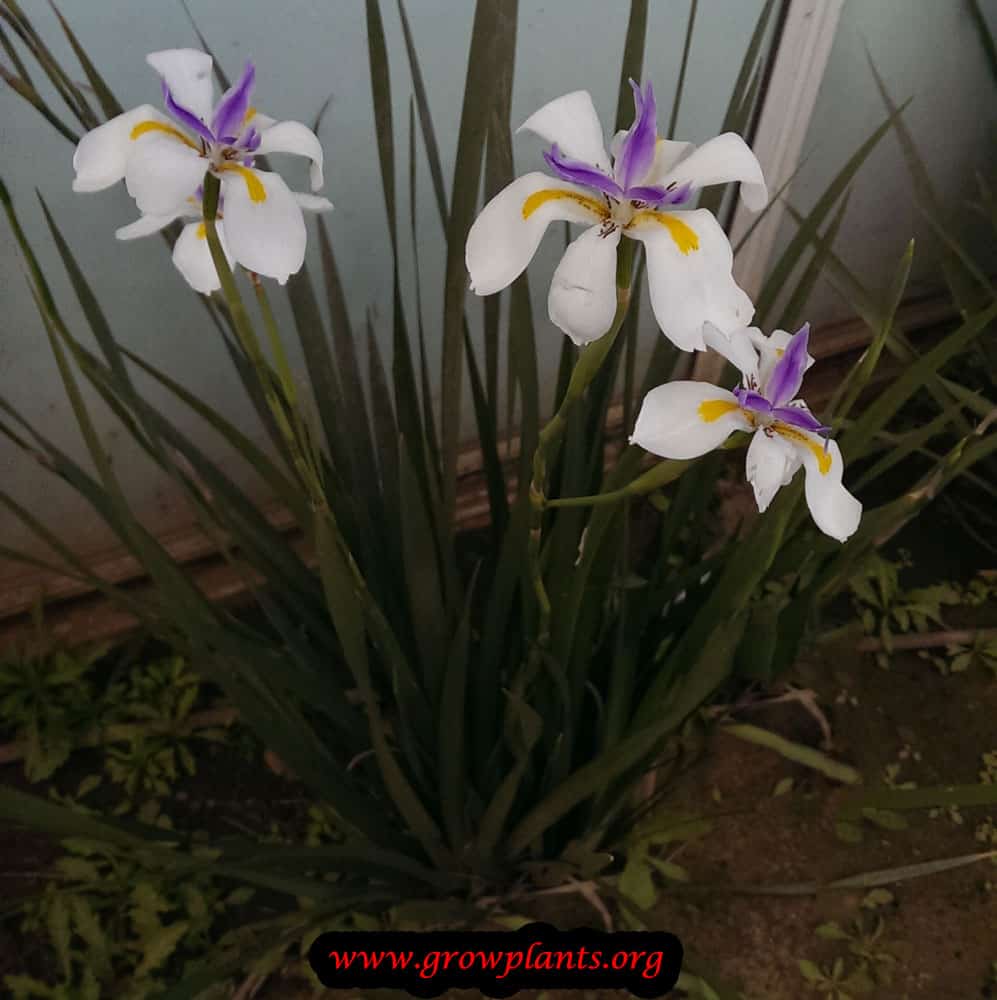
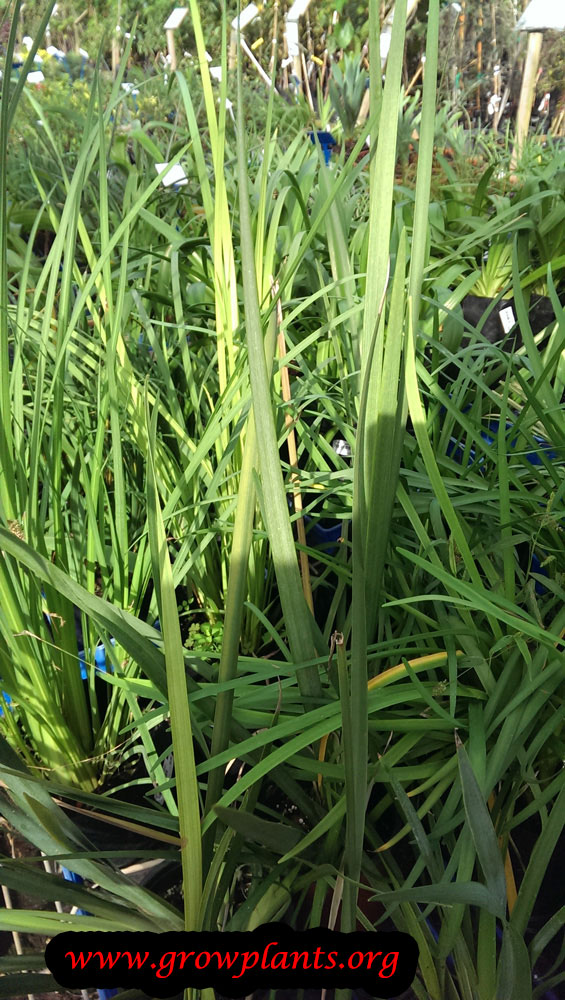
Overview: Clumping evergreen perennial forming fans of narrow, sword-like leaves about 0.5-1 m tall. A tough, drought-tolerant ornamental grown for its iris-like flowers, good for mass planting, water-wise borders and cut flowers.
Quick Specifications
| Specification | Attribute |
|---|---|
| Plant Type / Life Cycle | Perennial (evergreen, rhizomatous geophyte) |
| Foliage Type | Evergreen |
| Mature Size | 0.5-1 m tall (20-40 in / 1.5-3 ft) |
| Growth Rate | Moderate |
| Root System | Rhizomatous (spreads by rhizomes into clumps) |
| Hardiness | USDA zone 8b+ (8a with the right winter care) |
Growth Form & Structure
- Height & Spread: Upright clumps 0.5-1 m (1.5-3 ft) tall; in containers use a wide, shallow pot of at least 10-20 L.
- Growth Habit & Form: Clump-forming rhizomatous geophyte; upright fans of linear, sword-shaped foliage.
- Lifespan & Maturity: Long-lived perennial that spreads steadily into large clumps and can become aggressive.
Anatomy & Physical Features
- Leaves & Foliage: Narrow, sword-shaped green leaves borne in flat, interlinked fans.
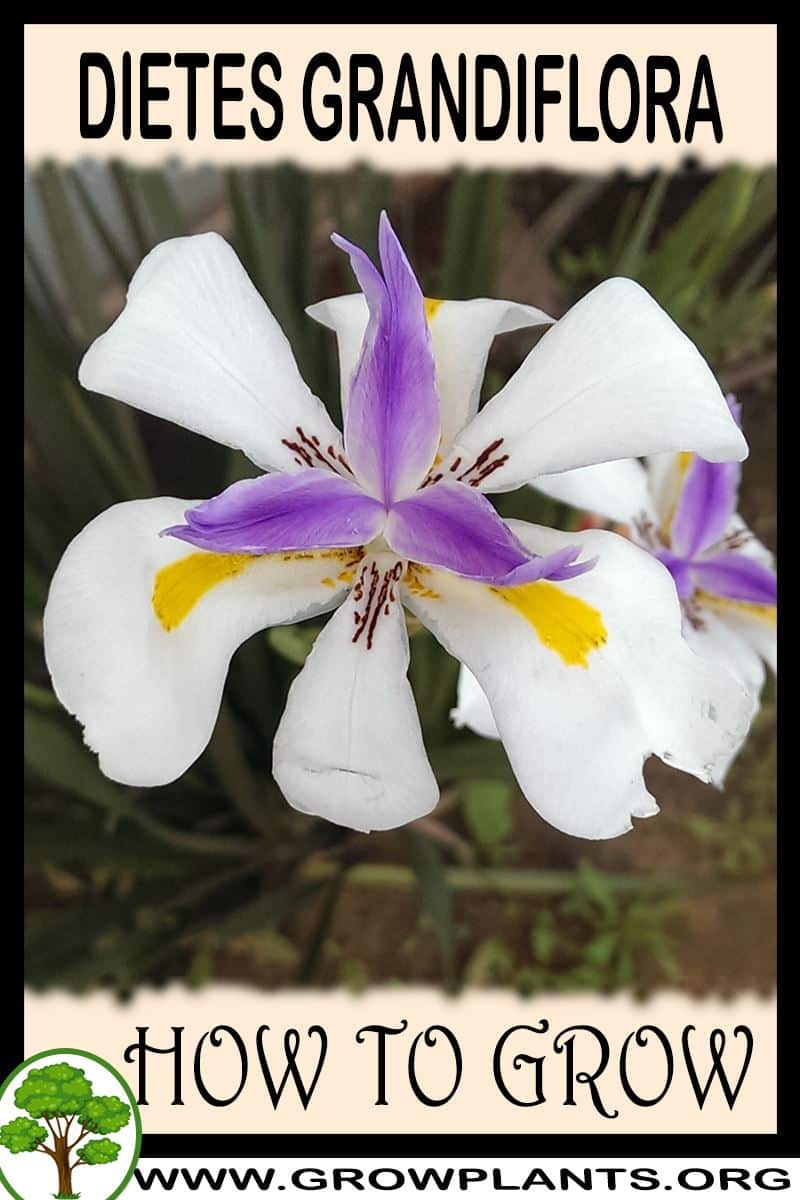
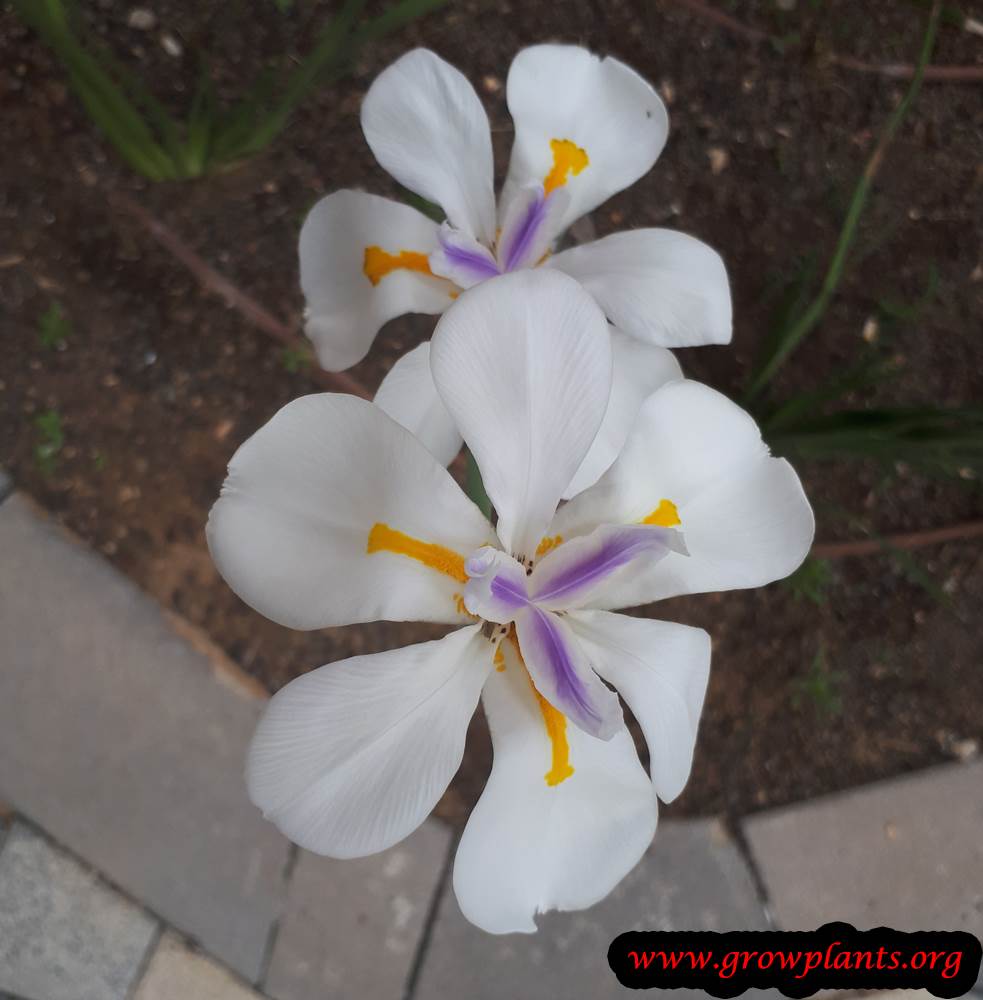
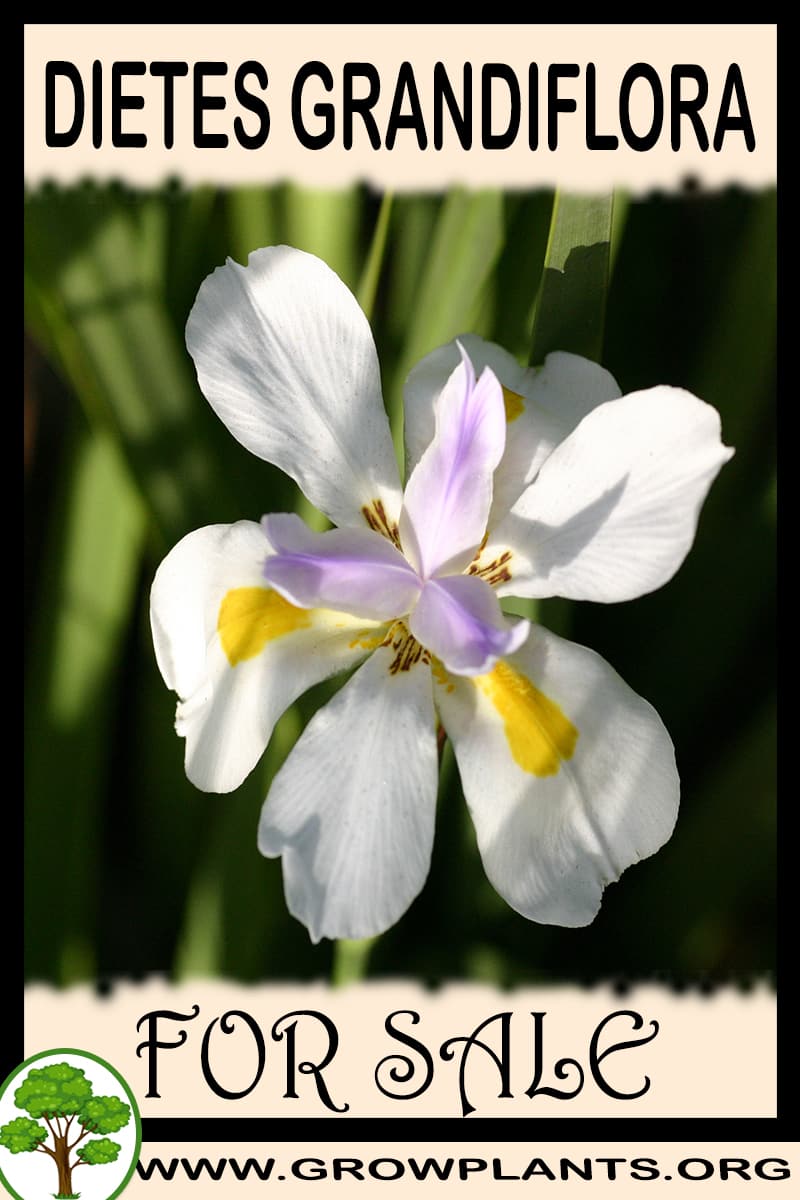
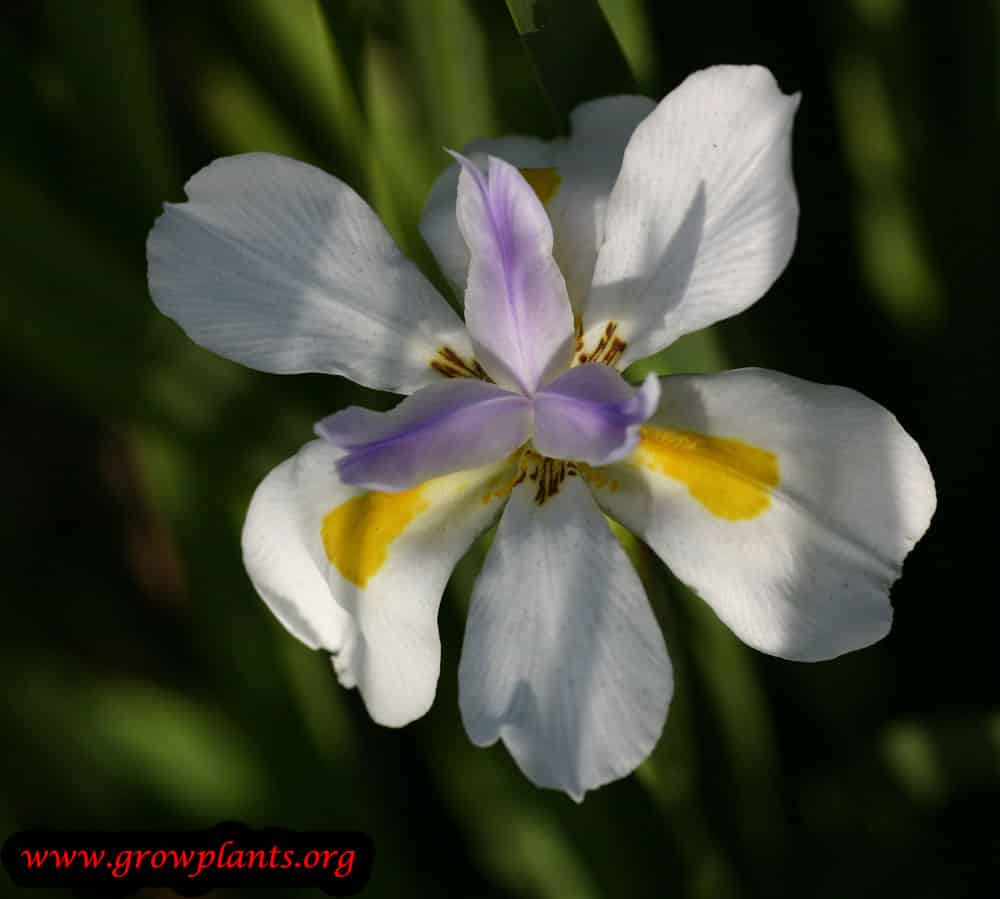
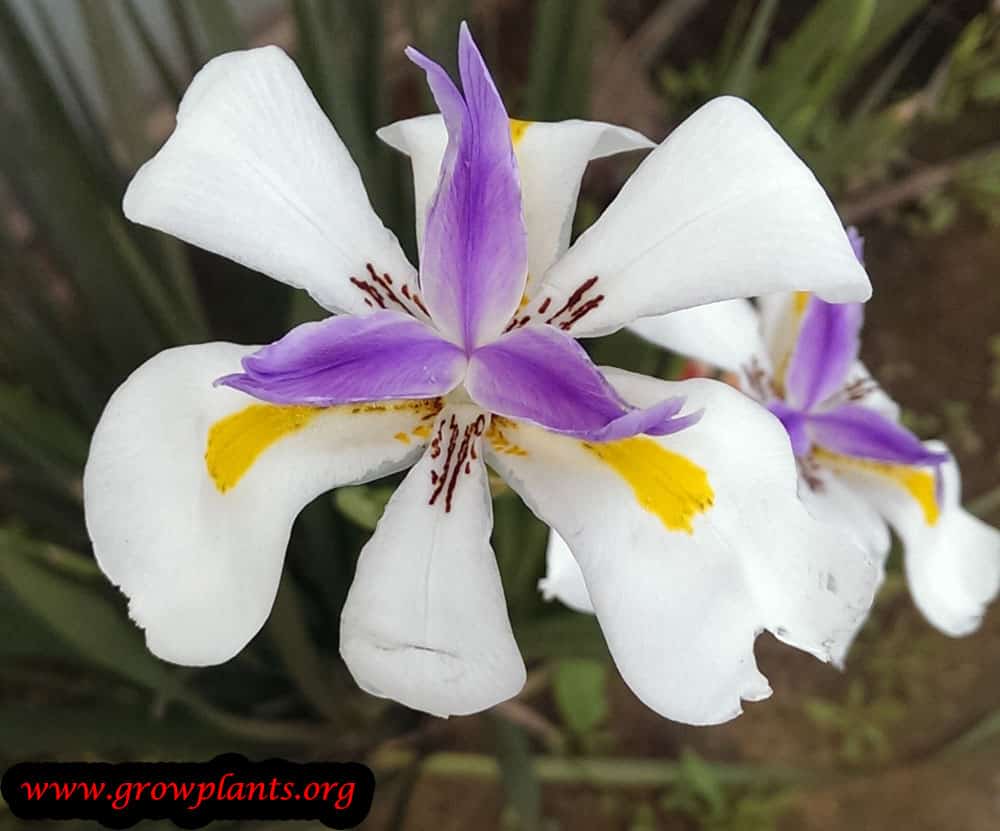
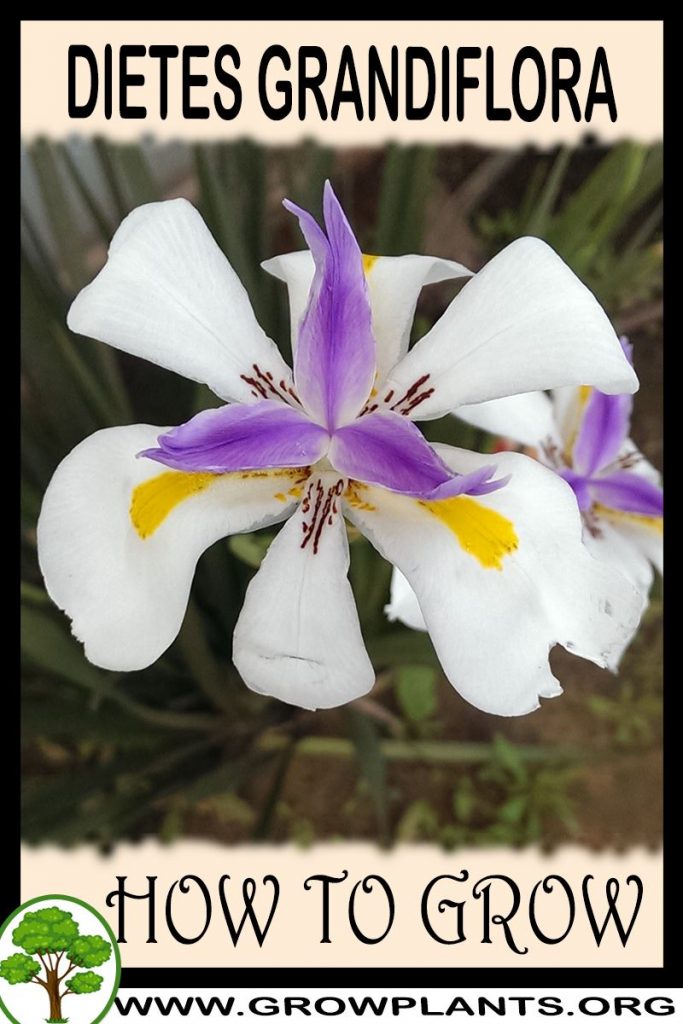
- Flower Characteristics: Large white ‘fairy iris’ flowers marked with yellow and violet/brown-black centres; blooms are large and showy.
Primary Uses & Landscape Value
- Functional & Ornamental Roles: Drought-tolerant ornamental for mass planting and water-wise borders, cut flowers, and attracting pollinators.
Care Guide: Planting, Soil & Watering
Overview: African iris (Dietes) thrives in full sun in light, well-draining soil, ideally one enriched with organic matter. It is genuinely drought-tolerant once established, yet flowers most freely when watered regularly through the blooming season — always over soil that drains well.
Quick Care Requirements
| Requirement | Ideal Condition |
|---|---|
| Planting Season | Spring in zone 8; spring to summer in zones 9–10a; spring to autumn in zones 10b–11; year-round in zone 12+ |
| Growth Rate | Moderate |
| Soil Type | Well-draining, preferably rich in organic matter |
| Water Need | Low to moderate — very drought-tolerant, but water regularly in the flowering season with good drainage |
Planting & Establishment
- Best Planting Season: Time planting to the warm season: in zone 8 plant in spring; in zones 9–10a from spring into summer; in zones 10b–11 from spring through autumn; and year-round in zone 12 and warmer. Young plants from seed or late plantings benefit from winter protection in zones 8–10a.
- How to Plant:
- Hole Preparation: Dig a hole roughly the size of the root ball so the fan of rhizomes sits level with the surrounding soil.
- Soil Amendments: Work in compost or other organic matter to enrich the bed; established clumps rarely need feeding if the soil is already rich.
- Planting Depth: Set the plant so the crown sits at soil level — keep the rhizomes shallow and do not bury the base of the leaf fans.
- Growth Speed & Expectations: Expect a moderate, steady pace; clumps establish over a season or two and then spread readily, and divisions can be lifted and replanted in spring.
Soil, Watering & Drainage Care
- Soil Mix & Drainage Needs: The single most important thing is sharp drainage — these plants tolerate drought far better than soggy soil. In containers use a free-draining potting mix in a wide, shallow pot, since the roots stay relatively shallow, and refresh the mix every few years as its drainage declines.
- Watering Schedule & Technique:
- Young / Newly Planted: Keep the soil evenly moist while new plants or divisions settle in, watering regularly for the first few weeks.
- Established: Once established the plant is very drought-tolerant and can take long dry spells, but it flowers best with regular deep watering during the blooming season — always let excess water drain away.
- Seasonal Adjustments: Water more generously through the warm flowering months and cut right back in cool, wet weather to avoid waterlogging.
Climate, Light & Hardiness
Dietes grandiflora is an adaptable, drought-tolerant evergreen that grows across an unusually broad span of climates - tropical, desert, Mediterranean, subtropical, and temperate - provided it gets full sun and winters that stay at or above roughly USDA zone 8b+. Cold, rather than heat or aridity, is what actually limits where it can be grown outdoors year-round.
Quick Climate Specifications
| Climate Zones | Tropical, Mediterranean, desert, subtropical, temperate |
| USDA Hardiness Zones | 8b+ (root-hardy; young or newly planted specimens benefit from protection down to zone 8a, per site care data) |
| Cold Damage Begins | With hard freezes; young or newly planted specimens are markedly more cold-sensitive than established clumps, which is why site care data specifically calls for protecting young plants toward the colder end of the rated range. |
| Approx. Survival Minimum | Approximately -12–-7°C (10–20°F) - the average annual minimum for USDA zone 8, the coldest zone in this plant's rated range. This applies to established plantings; young specimens need protection well before conditions approach this figure. |
| Frost Tolerance | Moderate (established plants); Low (young or newly planted specimens) |
| Light Conditions | Full Sun (reduced flowering in less than full sun, per site data) |
| Wind Tolerance | Moderate |
| Salt / Coastal Tolerance | Moderate |
Sunlight & Light Exposure
Optimal Light Setup
Full sun gives the strongest flowering; site data notes explicitly that less-than-full sun still allows the plant to grow but reduces flower production.
Direct Sun Requirement
Full sun is genuinely preferred, not just tolerated. It's the light level this plant is bred and sold to perform in for cut-flower and landscape use.
Shade & Heat Management
In the hottest parts of its range, light shade is a reasonable trade of some bloom for reduced heat and water stress, but heat itself is well within this plant's comfort zone given its native and cultivated range through tropical and desert climates.
Best Exposure / Orientation
Open, unobstructed beds; a south-facing exposure suits it well in cooler parts of its range.
Temperature Extremes & Hardiness
USDA Hardiness & Regional Limits
Dietes grandiflora is rated to USDA hardiness zone 8b+ (root-hardy; young or newly planted specimens benefit from protection down to zone 8a, per site care data) on this site. This genus is native to relatively mild-winter parts of South Africa, so cold is the defining limit on where it survives outdoors - not the heat, aridity, or humidity of the tropical, desert, and Mediterranean climates it is otherwise listed as tolerating. Cold tolerance is also strongly tied to plant age: site care data specifically flags young or recently planted specimens as needing winter protection toward the colder end of the range, while established clumps are considerably hardier.
Cold Damage & Winter Protection
Protect young plantings over winter at the cold edge of the rated zone - mulch over the crown and a sheltered planting site are the practical steps site guidance points to. Established clumps generally need no special winter protection within the rated zone; frost-damaged foliage can simply be cut back once the risk of further freezes has passed.
Frost Sensitivity
Moderate for established clumps, which tolerate occasional light frost with some foliage damage; higher for young plants, whose crowns are more exposed to cold injury before the root system is fully established.
Extreme Heat Tolerance
Strong. This genus grows natively and in cultivation across tropical, desert, and Mediterranean-summer climates, and is explicitly noted as drought-tolerant; regular water in the blooming season improves flower quality in hot conditions but heat itself is not a limiting stress.
Wind, Humidity & Microclimate
Humidity Preferences
No strong humidity preference; the plant's native and cultivated range spans everything from arid desert to humid tropical climates.
Dry-Air Tolerance
High. As a drought-tolerant species suited to desert and Mediterranean-summer climates, dry air is well within its normal range.
Wind Tolerance
Moderate. The tough, narrow, sword-like leaves typical of this genus generally handle ordinary garden wind without much damage.
Coastal / Salt Tolerance
Moderate. This genus is commonly used in South African and other landscaping in coastal-adjacent settings, though direct salt spray on the foliage is still best avoided.
Rainfall & Seasonal Moisture
Adaptable to widely varying rainfall regimes given its cross-climate range; site care data notes it tolerates extended dry periods once established but flowers best with regular water and good drainage during the blooming season.
Microclimate Recommendations
Open beds with good air movement suit established plants well. In zone 8 gardens toward the cold edge of its range, a warm, sheltered microclimate (a south-facing wall, or mass planting for mutual protection) meaningfully improves winter survival, especially for young plants.
Growing in Pots, Balconies & Indoors
Dietes grandiflora is a tough, clump-forming evergreen relative of the iris. It is not a houseplant – it needs full sun to flower well, so indoors it simply will not get enough light – but it is a superb container plant for a sunny balcony, patio or terrace.
Quick Details
- Container Size: Minimum 10 L (2.6 gal), better 20 L (5.2 gal) or more; choose a pot 50-100% wider than the root ball, and wide and shallow rather than deep, as the roots are not deep
- Indoor Suitability: Not a houseplant – it needs full sun; grow it outdoors in containers instead
- Best Spot: Full sun; it will grow in less but flowers far less
- Soil & Drainage: Well-drained mix; drought tolerant once established but flowers best with regular water
- Watering in Pots: Can go dry for spells, but prefers regular water – especially in the blooming season – with good drainage
Indoors & On the Windowsill
- Not for indoors: The grower marks this as unsuitable as a houseplant. It demands strong, direct sun that a room cannot provide, so indoors it grows weak and shy of flowering.
- Brightest sill only: If you must keep it inside over a hard winter, use the sunniest possible window and treat it as temporary shelter, not a permanent home.
- Overwintering: In cold-winter climates a pot lets you move the plant to a bright, frost-free spot for the coldest months, then back outside once frost has passed.
On a Balcony or Patio
- Light, wind & heat: Give it the sunniest spot you have; it stands up well to wind and to heat reflected off walls and railings, but those same conditions dry pots fast – check moisture regularly and water more in summer.
- Practicalities: A filled 20 L pot is heavy, so set it in place before filling, and make sure drainage runoff can escape without pooling or staining the balcony.
Choosing the Pot, Soil & Long-Term Care
- Pot & drainage: A wide, shallow container of at least 10 L (better 20 L or more), 50-100% larger than the root ball, with strong drainage holes; skip a standing-water saucer to avoid root rot. Terracotta breathes and dries faster; glazed or plastic holds moisture longer.
- Potting mix: A free-draining, aerated mix; after a few years the drainage stops working as well, so refresh it with new soil.
- Feeding: Potted plants need feeding a little more often than those in the ground, since watering steadily leaches nutrients away.
- Refreshing & dividing: When kept in a smaller pot, reduce the number of plants and trim some of the roots each time you change the soil, so the clump stays vigorous and keeps flowering.
Fertilizing & Feeding
A drought-tolerant, clump-forming perennial grown for its large, showy pale-purple flowers: a balanced fertilizer worked in ahead of its spring-through-autumn bloom season is usually enough, and rich, organic soil can often meet its needs without any separate feeding.
Quick Fertilizing Specs
| Feeding Level | Moderate feeder, often needing little where soil is already rich in organic matter |
|---|---|
| Main Nutrient Priority | Balanced nutrition rather than a phosphorus-heavy bloom booster |
| Best Feeding Period | Ahead of the spring bloom season, then lightly through the extended flowering period |
| Organic Options | Rich, organic-matter-amended soil at planting; often removes the need for separate fertilizer |
| Reduce/Stop Feeding | Ease off as growth and flowering slow through the cooler winter months |
Feeding by Growth Stage
Spring growth flush
Support the flush of new sword-shaped foliage as the clump comes out of its winter slowdown and heads toward its large, showy bloom.
| Nutrient direction | A balanced, complete fertilizer worked in ahead of the bloom season supports strong flowering; where soil is already rich in organic matter, additional feeding often isn’t needed. |
|---|---|
| Timing | As new growth resumes in spring, before flowering begins. |
| Frequency | A single feeding ahead of the bloom season is typically enough for an established clump. |
| Fertilizer types | A balanced, complete fertilizer worked in ahead of the bloom season, Organic matter or compost, which can often meet the plant’s needs on its own |
| Precautions | Skip feeding altogether where the planting bed already has good organic matter; extra fertilizer on already-rich soil mainly pushes leafy growth rather than more flowers. |
Repeat bloom through spring, summer, and autumn
Sustain the extended bloom cycle of its large, pale-purple, brown-marked flowers, which can run from spring through summer and into autumn.
| Nutrient direction | Continue with light, balanced feeding rather than a phosphorus-heavy bloom product; adequate nitrogen alongside phosphorus and potassium supports the repeat flowering. |
|---|---|
| Timing | Through the spring-to-autumn bloom period, while the clump is actively flowering. |
| Frequency | Occasional light feeding through the bloom season is usually enough; heavier feeding mainly encourages leaf growth at the expense of flowers. |
| Fertilizer types | A balanced, complete fertilizer used sparingly during the bloom season |
| Precautions | Avoid heavy or frequent feeding through the bloom season; overly lush growth can flop and can come at the cost of flowering. |
Winter slowdown
Let growth and flowering pause through the cooler winter months without fertilizer.
| Nutrient direction | None – withhold fertilizer while winter growth is slow, especially for young plants near the cold edge of their hardiness range. |
|---|---|
| Timing | Over winter, as growth and flowering slow with cooler temperatures. |
| Frequency | No feeding at this stage; resume once spring growth restarts. |
| Fertilizer types | No feeding at this stage – do not fertilize while winter growth is slow |
| Precautions | Do not fertilize through winter; young or newly planted clumps near the cold edge of their hardiness range need winter protection rather than feeding. |
Nutrient Deficiency Signs & Corrections
The clump grows well but produces few flowers.
| Possible causes | insufficient direct sunlight, which reduces flowering even though the plant will still grow, insufficient feeding ahead of the bloom season, an old, overcrowded clump that has not been divided and thinned as it multiplies |
|---|---|
| Appears first on | overall bloom count for the season |
| What to check | how much direct sun the planting site receives, whether the clump was fed ahead of the bloom season, how long since the clump was last divided |
| Possible correction | Move the plant or thin surrounding growth for more direct sun, feed lightly ahead of next season’s bloom, and divide old, overcrowded clumps in spring – this species readily produces new plants from division. |
Leaves are pale and growth is weak during the active season.
| Possible causes | low available nitrogen in poor, unamended soil, lapsed feeding through the growing season, root stress from a waterlogged planting site |
|---|---|
| Appears first on | older leaves first |
| What to check | soil richness and whether organic matter has been added, recent feeding history, site drainage |
| Possible correction | Work organic matter or a balanced fertilizer into the soil, and improve drainage if the site stays wet. |
New leaves emerge yellow between the veins while the veins themselves stay green.
| Possible causes | high soil pH, common in desert or alkaline plantings this genus tolerates, waterlogged soil restricting root uptake, naturally low iron in an alkaline garden soil |
|---|---|
| Appears first on | young, newly emerging leaves |
| What to check | soil pH, particularly in desert or alkaline sites, drainage and whether the soil stays wet, overall root health |
| Possible correction | Correct pH toward neutral and improve drainage first; a chelated iron product can correct a confirmed deficiency per its label. |
General decline and yellowing that does not respond to feeding, despite the plant’s normal drought tolerance.
| Possible causes | poorly drained soil holding excess moisture around the roots, overwatering, particularly outside the bloom season when the plant needs less, an old, congested clump whose roots and soil have not been refreshed in years |
|---|---|
| Appears first on | roots and the base of the leaf fans |
| What to check | soil drainage at the planting site, watering frequency relative to the season, how long since the clump’s roots and soil were last refreshed |
| Possible correction | Improve drainage and reduce watering rather than adding fertilizer, and divide and refresh an old, congested clump rather than feeding through a drainage problem. |
Pruning, Training & Seasonal Maintenance
Dietes grandiflora is a robust, clumping evergreen bearing the largest flowers of the commonly grown Dietes, on branched stems that rebloom in flushes rather than flowering once and finishing. As with the rest of the genus there’s no wood to shape, so care is sanitation plus periodic clump control. Because reliable increase of this species is by division rather than seed, division doubles as both the propagation method and the main renewal tool for aging clumps – reserve it for winter and never cut a flower stem while it still shows green tissue.
Quick Pruning & Maintenance Specs
| Pruning Tolerance | Moderate for foliage/clump; Low for flower stems still capable of reblooming |
| Primary Pruning Window | Winter, for reducing/dividing the clump |
| Secondary Maintenance Window | Year-round removal of fully dead leaves and dry stems |
| Typical Frequency | Light grooming as needed; division as the main periodic maintenance since it doesn’t reliably self-increase from seed |
| Main Objective | Sanitation and clump renewal via division, without cutting away live flower stems bearing this species’ larger blooms |
| Young Plant Priority | Minimal handling while the clump establishes |
| Mature Plant Priority | Winter division of congested clumps to renew vigor and flower size; otherwise remove only fully dry material |
| Best Tool Type | Precision snips or bypass secateurs; spade for division |
| Avoid Heavy Pruning During | Active bloom flushes |
Pruning by Plant Age & Size
Newly Established
Remove only damaged or dried leaves in the first season; let the clump establish before any division.
Young / Formative
No structural training applies. The habit worth building is leaving flower stems alone until fully dry, so the larger blooms this species is grown for keep coming.
Mature / Established
Since seed propagation isn’t reliable for this species, mature-clump management leans on division: in winter, lift and split congested clumps into vigorous divisions to maintain both plant vigor and flower size.
Seasonal Pruning Schedule
Dormant/Winter
Objective: renew and, if needed, propagate via division; clear the season’s dead growth. Remove fully dry leaves and spent flower stems; lift and divide congested clumps, replanting vigorous sections. Leave anything green. Response: renewed vigor and stronger flowering from divided sections.
Ongoing Sanitary (through the bloom season)
Objective: tidiness without losing blooms. Remove only fully dead leaves; leave flower stems that have finished a flush but remain green, since they typically produce further flowers.
Structural Pruning & Training
Renewal by division is the central structural task here, more so than in the smaller-flowered Dietes, since this species relies on division rather than self-seeding to increase and stay vigorous.
Special Growth to Remove
- Fully dead leaves, any time.
- Fully dried flower stems only.
- Weak, worn-out clump centers at division time – discard in favor of vigorous outer sections.
Container & Small-Space Pruning
In containers, manage size by dividing and reducing the number of fans at repotting rather than shearing foliage; refresh soil and trim some roots every few years as drainage declines, since without division the clump won’t thin itself.
Tools
Precision snips for individual leaves and slender flower stems; bypass secateurs for thicker basal growth; a garden spade for the divisions this species depends on.
Tool Hygiene & Disease Risk
Routine hygiene is sufficient – its pests (leaf miner, spider mites) aren’t spread by pruning tools.
Cut Placement & Technique
Cut dead material back to its base at the rhizome. When dividing, use a spade to separate sections with roots intact, keeping divisions generous rather than over-splitting, since this species relies on division to increase reliably.
Heavy Pruning & Rejuvenation
No whole-clump hard cutback – it would remove reblooming stems. Division is this species’ actual rejuvenation method, and is more central to its care than to the seed-propagated Dietes in this batch.
Post-Pruning Care
Water new divisions in well and keep evenly moist until re-established; no extra feeding needed beyond the normal annual fertilizing.
Common Pruning Mistakes
- Cutting flower stems as soon as a flush fades, losing the next round of this species’ larger blooms.
- Relying on self-seeding to renew or spread the planting, when division is the dependable method for this species.
- Over-dividing into pieces too small to establish well.
When NOT to Prune
- While a flower stem still has green tissue.
- During active bloom, beyond removing truly dead leaves.
- Right after dividing/transplanting, until re-established.
Recommended Tools (by task)
- precision_snips – dead leaves and slender flower stems.
- bypass_secateurs – thicker growth near the rhizome.
- garden_spade – division, this species’ main method of renewal and increase.
Propagation Guide
For Dietes grandiflora the site specifically flags vegetative propagation as necessary, so dividing an established clump into rooted daughter plants is the recommended, most reliable method; seed is also documented with full sowing details and can be used, but is treated here as the secondary route given the site’s own guidance for this species. Division is easy and dependable.
Quick Propagation Specs
| Best Propagation Method | Clump/daughter-plant division |
| Alternative Methods | Seed sowing |
| Propagation Difficulty | Easy (by division) |
| Seed True-to-Type | Not confirmed as reliable – site notes vegetative propagation is necessary for this species |
| Vegetative True-to-Type | Yes |
| Best Propagation Season | Divide clumps in spring; sow spring to summer in zone 8–11, year-round in zone 12+ |
| Seed Germination Time | 2–8 weeks |
| Germination Temperature | 15–25°C (59–77°F) |
| Seed Sowing Depth | 0.5–1cm (0.25–0.5in) |
Growing from Seed
Seed Handling & Viability
Store seed dry and dark, ideally refrigerated before sowing.
Dormancy & Pre-Sowing Treatment
Soak seed that isn’t fresh in water for at least 12 hours before sowing.
Sowing Season
Spring to summer in zone 8–11; possible year-round in zone 12+.
Sowing Depth & Orientation
Sow about 0.5–1cm (0.25–0.5in) deep; nursery-row spacing around 20x30cm (8x12in).
Germination Conditions
Sunny, well-drained site at 15–25°C (59–77°F); keep the medium moist with light humidity, watering heavily the first week then reducing to average.
Germination Time
2–8 weeks.
Seedling Care
Full sun, watered regularly, keeping the soil moist.
Division, Offsets, Pups & Suckers
Because the site marks vegetative propagation as necessary for this species, divide established clumps into daughter plants in spring, taking each division with its roots attached to establish reliably.
Bloom & Flower Guide
Quick Details
- Bloom Season: Spring, summer and autumn
- Time to First Bloom: Established clumps flower freely; plants raised from seed usually take two to three years
- Flower Appearance: Light purple almost white with 6 outer petals (3 with a yellow stripe at the base, 3 marked brown-black) and 3 purple inner petals
- Edibility: Ornamental only – grown for its iris-like flowers, not eaten
Detailed Blooming Overview
Dietes earns its common name of fortnight lily from the way it blooms – each individual flower lasts only a single day, but the plant produces them in repeated flushes through the warmer months, so a healthy clump is rarely without bloom for long. The airy, iris-like flowers are excellent for pollinators and can be cut for the vase; for cutting, take the stems before the buds are fully open.
Flower Characteristics
- 6 outer petals in light purple to almost white – 3 with a yellow stripe at the base, the other 3 marked with brown-black dots.
- 3 inner petals in purple.
- Each flower opens for a single day, replaced by fresh buds on the same stalk.
Bloom Care & Thinning
- Leave the flower stalks: Do not cut back or deadhead the green flowering stems – they keep producing new buds from the same stalk for a long time. Only remove the old, brown, spent stalks right at the base.
- Cut flowers: If cutting for the vase, harvest the stems just before the buds open fully.
- Low-fuss blooming: These are drought-tolerant plants that flower reliably once established.
Pests, Diseases & Troubleshooting
Overview: Dietes grandiflora (large wild iris, fairy iris) is a tough, clump-forming, rhizomatous iris-relative that is genuinely near pest-free; its only occasional insects are aphids, spider mites, thrips, snails and, on congested clumps, mealybugs and scale, while its real weaknesses are the wet-soil crown and rhizome rots and iris leaf spot. Grown in full sun with free-draining soil it thrives on neglect; heavy, waterlogged ground and deep shade are what actually cause trouble.
Quick Troubleshooting Overview
| Issue / Pest | Main Symptom | Primary Solution |
|---|---|---|
| Aphids | Clusters on flower stalks and new fans, honeydew | Hose off; insecticidal soap if needed |
| Spider mites | Fine stippling on leaves in hot, dry weather | Hose foliage, raise humidity; horticultural oil |
| Snails and slugs | Chewed leaf edges and grazed flower stalks | Hand-pick at night, iron-phosphate bait |
| Iris leaf spot | Brown, water-soaked spots that enlarge on the fans | Remove spotted leaves, improve airflow |
| Crown / rhizome rot | Base rots and fans yellow in soggy soil | Divide, replant high in free-draining soil |
| No flowers | Few or no blooms in shade or after hard cutting | Move to full sun; do not shear the whole clump |
Common Pests & Management
- Aphids (Aphis / Myzus spp.):
- Symptoms: Small clusters of soft green or black insects on the tender flower stalks, buds and emerging fans, with sticky honeydew and sooty mould; a minor and occasional pest on this otherwise tough plant.
- Prevention & Control: Usually a strong jet of water is enough, backed by conserving ladybirds, lacewings and hoverflies. Insecticidal soap or neem clears heavier colonies, applied in the cool of evening to protect pollinators.
- Two-spotted spider mite (Tetranychus urticae):
- Symptoms: Fine pale stippling and a dull, greyish cast to the sword-shaped leaves, with faint webbing in hot, dry, dusty conditions, mainly on stressed or sheltered plants.
- Prevention & Control: Hose the foliage and raise humidity, and avoid drought stress and dust. Horticultural oil or insecticidal soap and predatory mites bring them down; broad-spectrum sprays are unnecessary and cause flare-ups.
- Thrips (Frankliniella spp.):
- Symptoms: Silvery flecking and streaking on leaves and flowers with black frass specks, and occasionally distorted blooms; a light, sporadic pest of the flowers in warm weather.
- Prevention & Control: Tolerate light damage on this vigorous plant, use blue sticky traps to monitor, and keep weeds down. Spinosad or insecticidal soap is only needed for unusually heavy pressure; protect pollinators.
- Snails and slugs (Cornu / Deroceras spp.):
- Symptoms: Grazed, notched leaf edges and chewed flower stalks and buds, with slime trails, worst on young fans and in damp, sheltered, mulched clumps.
- Prevention & Control: Hand-pick after dark, set traps, and clear damp debris from the base of the clump. Iron-phosphate pellets are effective and safe around pets and wildlife.
- Mealybugs and scale (Planococcus / Coccus spp.):
- Symptoms: White cottony tufts (mealybugs) or limpet-like brown or soft scale in the crowded bases of the fans, with honeydew and sooty mould; occasional on old, congested clumps.
- Prevention & Control: Divide and thin congested clumps to open them up, wipe off or dislodge small infestations, and conserve natural predators. Horticultural oil or insecticidal soap smothers persistent colonies.
Diseases & Fungal Issues
- Iris leaf spot (Cladosporium iridis / Mycosphaerella spp.):
- Symptoms: Brown, oval, water-soaked spots, often with a yellow halo and greyish centre, that enlarge along the sword-shaped leaves and can blight the fan tips in warm, wet, humid weather.
- Treatment & Management: Remove and destroy spotted leaves, avoid overhead watering, and space and divide clumps for airflow. Clear old dead foliage; a copper fungicide protects new growth only under persistent damp pressure.
- Rust (Puccinia spp.):
- Symptoms: Occasional orange to rusty-brown powdery pustules on the leaves, mostly a minor, cosmetic problem in humid conditions, causing some yellowing and dieback of the fans if severe.
- Treatment & Management: Remove affected leaves, improve air movement and avoid wetting the foliage. This robust plant rarely needs spraying; sulfur or a suitable fungicide is only justified under heavy, persistent pressure.
- Crown, rhizome and root rot (Phytophthora / Pythium / Fusarium spp.):
- Symptoms: Yellowing, wilting and collapse of fans with soft, dark, decayed rhizomes and roots, in heavy, wet, poorly drained soil or where clumps sit waterlogged; the main real threat to Dietes.
- Treatment & Management: Grow in free-draining soil and avoid waterlogging; this plant tolerates drought far better than sodden ground. Lift, divide and replant high, discarding rotted rhizomes, and improve drainage before replanting.
- Bacterial soft rot (Pectobacterium / Erwinia spp.):
- Symptoms: Soft, slimy, foul-smelling rot of the rhizome and fan bases, often following mechanical damage, insect injury or waterlogging, causing sudden collapse of part of the clump.
- Treatment & Management: Avoid injuring rhizomes, plant high in free-draining soil, and keep the crown dry and uncrowded. Cut out and destroy rotted tissue, or lift and salvage clean divisions; there is no chemical cure.
Growing Difficulties & Abiotic Problems
- Crown rot from wet, heavy soil:
- Cause & Symptoms: Fans yellow and the base rots where the soil is heavy and constantly wet; despite its love of moisture in growth, Dietes cannot tolerate waterlogged, airless ground.
- Correction Strategy: Plant in free-draining soil, raise beds on heavy ground, and avoid overwatering. Divide congested clumps every few years and replant the rhizomes at the surface, not buried, for a long, healthy life.
- Failure to flower:
- Cause & Symptoms: Few or no of the fleeting iris-like blooms, usually because the plant is in too much shade, is newly divided, or has had its flowering stalks cut off.
- Correction Strategy: Grow in full sun for best flowering, be patient after dividing, and leave the flower stalks in place, since Dietes reblooms from the same old stalks for several seasons. Do not shear the whole clump to the ground.
- Salt and tip burn:
- Cause & Symptoms: Browned, scorched leaf tips and edges from salty or hard water, salt-laden coastal wind, or accumulated fertiliser salts, showing as dead tan margins on the fans.
- Correction Strategy: Flush the soil with clean water to leach salts, feed only lightly, and accept some tip browning on exposed coastal plants, which are otherwise very salt-tolerant. Trim badly scorched tips for appearance.
- Frost and cold damage:
- Cause & Symptoms: Foliage browns and dies back in hard frost, though established clumps are tough and usually resprout from the rhizome; young plants are more vulnerable.
- Correction Strategy: Mulch the crown in cold-winter areas and protect young plants, then cut back damaged foliage in spring as fresh fans emerge. In frost-free climates it stays evergreen and needs no protection.
What Helps — Products & Tools
For Dietes the kit is minimal, reflecting a genuinely tough, near pest-free plant: a hose and insecticidal soap for the odd aphid or mite outbreak, horticultural oil for scale or mealybug on congested clumps, iron-phosphate slug bait, and blue sticky traps to monitor thrips. On the disease side, division, airflow and free-draining soil prevent the leaf spot, rust and, above all, the crown and rhizome rots that are its only serious threat; a copper fungicide is rarely needed. The source pest names are unreliable and were not used.