
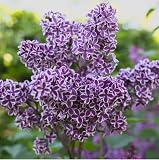


Plant Profile & Key Characteristics
Overview: A deciduous common-lilac cultivar (‘Sensation’) growing as a shrub to small tree of 3-6 m (10-20 ft), grown as an ornamental. It is prized for its bicolour purple-and-white flowers and use as a hedge or cut flower.
Quick Specifications
| Specification | Attribute |
|---|---|
| Plant Type / Life Cycle | Deciduous flowering shrub to small tree (woody perennial) |
| Foliage Type | Deciduous |
| Mature Size | 3-6 m (10-20 ft) tall |
| Growth Rate | Slow to moderate |
| Root System | Shallow and fibrous; established plants spread by root suckers |
| Toxicity | Non-toxic (Syringa is not listed as toxic to cats, dogs or horses) |
| Hardiness | USDA zones 3-10a |
Growth Form & Structure
- Height & Spread: In the ground 3-6 m (10-20 ft) tall; can be kept smaller in a container or by pruning.
- Growth Habit & Form: Upright, multi-stemmed shrub that suckers from the base to form a clump, and can be trained as a small tree.
- Lifespan & Maturity: Long-lived woody shrub returning and flowering each spring for many years.
Anatomy & Physical Features
- Leaves & Foliage: Green leaves, oval to deltoid (heart-shaped).
- Flower Characteristics: Fragrant purple florets each edged with white, carried in dense clusters.
Primary Uses & Landscape Value
- Functional & Ornamental Roles: Fragrant flowering shrub for borders and hedges, and a favourite source of cut flowers.
Care Guide: Planting, Soil & Watering
Overview: Sensation lilac (Syringa vulgaris ‘Sensation’) is a hardy, cold-loving deciduous shrub-to-small tree that thrives in full sun and a genuine cold winter (hardiness zones 3–10a). It grows best in fertile, well-draining soil enriched with organic matter and appreciates steady, even moisture, especially through spring flowering.
Quick Care Requirements
| Requirement | Ideal Condition |
|---|---|
| Planting Season | Late winter to early spring while dormant (also through summer with attentive watering) |
| Growth Rate | Slow to Moderate |
| Soil Type | Fertile, humus-rich, well-draining soil |
| Soil pH | Neutral to slightly alkaline (about 6.5–7.5); dislikes strongly acidic soil |
| Water Need | High — enjoys generous, regular water; keep the soil evenly moist |
Planting & Establishment
- Best Planting Season: Plant while dormant in late winter to early spring so roots settle before the growing season; planting can also be done through summer if you keep the soil reliably moist.
- How to Plant:
- Hole Preparation: Dig a hole as deep as the root ball and about twice as wide, loosening the surrounding soil so young roots can spread easily.
- Soil Amendments: Work compost or well-rotted organic matter into the backfill to enrich the soil and improve both drainage and moisture-holding.
- Planting Depth: Set the plant with its root collar level with the surrounding soil — never bury the stem — then firm gently and water in well.
- Growth Speed & Expectations: Expect a slow-to-moderate pace; these lilacs take a few seasons to settle but reward patience with long-lived, fragrant, clustered blooms.
Soil, Watering & Drainage Care
- Soil Mix & Drainage Needs: Give it deep, fertile, free-draining soil; it loves moisture but resents standing water. In containers use a rich, loam-based mix with generous drainage.
- Watering Schedule & Technique:
- Young / Newly Planted: Water newly planted lilacs regularly to keep the root zone evenly moist right through the first growing season.
- Established: Established plants prefer a deep, thorough soak during dry spells rather than frequent light sprinkles.
- Seasonal Adjustments: Water more in summer heat and while in bloom; ease right off through the cold, leafless dormant months.
Climate, Light & Hardiness
Syringa vulgaris 'Sensation' grows across temperate, Mediterranean, and subtropical climates and needs a cold winter to bloom well. It performs best in full sun and is a very cold-hardy shrub once established, with a slightly wider warm-climate range than the straight species.
Quick Climate Specifications
| Climate Zones | Temperate, Mediterranean, Subtropics |
|---|---|
| USDA Hardiness Zones | 3–10a |
| Optimal Temp Range | Typically 15–26°C (59–79°F) during active growth |
| Cold Damage Begins | Mature wood tolerates severe winter cold; late spring frosts after bud break can injure new shoots and flowers |
| Approx. Survival Minimum | Established plants withstand winter lows to approximately −35 to −40°C (−30 to −40°F) at the USDA zone 3 edge of its range |
| Frost Tolerance | High |
| Light Conditions | Full Sun |
| Wind Tolerance | Moderate–High |
| Salt / Coastal Tolerance | Low |
Sunlight & Light Exposure
Optimal Light Setup
Full sun produces the densest form and the heaviest, most fragrant flowering of this bicolor-edged cultivar.
Direct Sun Requirement
At least six hours of direct sun daily is recommended.
Shade & Heat Management
Toward the warm, subtropical end of its range (up to zone 10a), light afternoon shade can help without much loss of bloom.
Best Exposure / Orientation
An open site with good airflow keeps foliage dry and reduces fungal disease pressure.
Temperature Extremes & Hardiness
USDA Hardiness & Regional Limits
Hardy from USDA zones 3–10a, reaching further into warm-winter, near-subtropical climates than many common lilac cultivars while still tolerating severe continental cold at its other extreme.
Cold Damage & Winter Protection
No winter protection is needed for established plants within its hardiness range; mulch young shrubs for their first winters.
Frost Sensitivity
Late spring frost after bud break can damage that season's flowers and new growth without long-term harm to the plant.
Extreme Heat Tolerance
Its extended range into zone 10a suggests better tolerance of warm winters than many lilacs, though as with all lilacs, insufficient winter chill in the warmest zones can reduce flowering.
Wind, Humidity & Microclimate
Humidity Preferences
Adapts to a wide range of humidity conditions across its broad climate range; good airflow limits fungal issues in humid summers.
Wind Tolerance
Established shrubs tolerate moderate to strong wind well.
Coastal / Salt Tolerance
Generally low salt tolerance; not a strong choice for exposed coastal sites.
Microclimate Recommendations
Avoid frost pockets; its unusually broad hardiness range makes it forgiving in both cold-winter and mild-winter gardens.
Growing in Pots, Balconies & Indoors
Lilacs are large, cold-hardy garden shrubs rather than houseplants, but they grow well in big containers on a sunny patio or balcony – especially the compact and dwarf cultivars. Indoors they will not thrive: they need full sun and a real winter chill to set their fragrant spring flowers.
Quick Details
- Container Size: A large tub, at least 40-60 L (10-15 gal); this shrub reaches about 3-6 m (120-240 in) in the open, so a compact/dwarf cultivar is the realistic choice for long-term pot life
- Indoor Suitability: Not a houseplant – a hardy outdoor shrub that needs winter cold to bloom
- Best Spot: Full sun on a patio, terrace or balcony
- Soil & Drainage: Rich, aerated mix that drains freely; lilacs dislike waterlogging
- Watering in Pots: Water generously – lilacs are thirsty and pots dry fast – but never leave the roots standing in water
Indoors & On the Windowsill
- Houseplant limits: Not a houseplant. A lilac needs full sun and a cold, dormant winter to flower, so it cannot live in a heated room. Even a bright windowsill cannot give it the light or the seasonal chill it needs.
- Overwintering: Unlike tender plants, a potted lilac should stay outdoors through winter – the cold is exactly what triggers next year’s blooms. In very cold regions protect the pot itself (roots are less hardy in a container than in the ground) by grouping pots together, wrapping them, or heeling the pot into soil.
On a Balcony or Patio
- Light & wind: Give it the sunniest spot you have. Walls and railings reflect heat, so container soil dries quickly – check moisture often in warm weather. A tall lilac catches the wind, so stake young plants and set the pot where it cannot blow over.
- Practicalities: A mature lilac in a big soil-filled pot is heavy – stand it on the ground or a plant dolly rather than a flimsy shelf, and allow for drainage runoff.
Choosing the Pot, Soil & Long-Term Care
- Pot & drainage: Use the largest practical pot with strong drainage holes; skip a standing water saucer to avoid root rot. Terracotta breathes and dries faster; glazed or plastic holds moisture longer.
- Potting mix: Rich but free-draining – a quality potting soil with added grit or perlite.
- Feeding: Potted lilacs need feeding more often than those in the ground, because nutrients leach out with watering; a balanced feed through the growing season is enough – go easy on nitrogen, which pushes leaves at the expense of flowers.
- Repotting: Every couple of years refresh the top of the mix or pot up a size, and lightly prune both roots and top growth to keep a compact cultivar in balance with its container.
Fertilizing & Feeding
A moderate feeder: this fragrant lilac hedge shrub benefits from steady balanced feeding while it is young and establishing as a hedge or specimen, then settles into a light yearly feeding once mature, with no feeding needed once it hardens off for its cold winter dormancy.
Quick Fertilizing Specs
| Feeding Level | Moderate feeder |
|---|---|
| Main Nutrient Priority | Balanced nutrition with adequate nitrogen through spring growth, tapering as bloom finishes |
| Best Feeding Period | As new growth begins in early spring, ahead of and during bud development |
| Organic Options | Compost or well-rotted manure worked into the soil around the root zone |
| Soil pH | Prefers neutral to slightly alkaline soil; strongly acidic soil can limit iron availability |
| Reduce/Stop Feeding | Taper off by mid-summer so new growth can harden before the plant’s cold winter dormancy |
| Micronutrients | Usually met by a complete fertilizer and organic matter; correct only a diagnosed issue |
Feeding by Growth Stage
Spring growth flush
Support vigorous new shoot and leaf growth on this fragrant hedge shrub as it breaks dormancy in spring.
| Nutrient direction | A balanced, nitrogen-forward feeding fuels the flush of new stems and oval-to-deltoid leaves. |
|---|---|
| Timing | As new growth begins in early spring. |
| Frequency | A single feeding at the start of the growing season is usually enough for an established hedge. |
| Fertilizer types | A balanced, general-purpose granular or slow-release shrub fertilizer, Compost or well-rotted manure worked into the soil surface around the root zone |
| Precautions | Keep fertilizer away from the stem base and ease off nitrogen once flower buds are visible so energy goes into bloom rather than leaves. |
Fragrant spring bloom
Support the fragrant lilac-purple-and-white flower clusters that make this shrub prized as a hedge plant and cut flower.
| Nutrient direction | Balanced feeding with adequate but not excessive nitrogen; skip high-phosphorus ‘bloom booster’ products, which aren’t needed to drive flowering. |
|---|---|
| Timing | As flower clusters form and through the blooming period in spring. |
| Frequency | Feeding rarely needs repeating during bloom if the spring feeding was already applied. |
| Fertilizer types | A balanced, general-purpose fertilizer applied lightly only if the spring feeding was skipped |
| Precautions | Ease off feeding once bloom fades so the shrub shifts its energy into next year’s flower buds rather than new growth. |
Summer hardening and cold winter dormancy
Let the hedge harden off and enter the cold dormancy this lilac needs without a late flush of tender growth.
| Nutrient direction | None – withhold fertilizer. |
|---|---|
| Timing | From mid-to-late summer through winter. |
| Frequency | No feeding at this stage. |
| Fertilizer types | No feeding at this stage; let the shrub draw on stored reserves as it hardens off and goes dormant for winter. |
| Precautions | Do not fertilize during this period; late-season feeding can push tender growth that is vulnerable to frost. |
Nutrient Deficiency Signs & Corrections
New leaves turn yellow between the veins while the veins themselves stay green, most noticeable on the newest hedge growth.
| Possible causes | high soil pH tying up available iron, poorly drained or compacted soil limiting root uptake, root stress from recent transplanting or nearby construction |
|---|---|
| Appears first on | newest leaves at the branch tips |
| What to check | soil pH and drainage around the root zone, recent root disturbance near the hedge line, whether older leaves stay green, pointing to an uptake issue rather than a simple nitrogen shortage |
| Possible correction | Improve drainage and avoid over-liming; where soil pH is the cause, a chelated iron product applied per its label can green up chlorotic leaves. |
Overall pale or yellow-green foliage, smaller-than-normal leaves, and a thin, sparse bloom.
| Possible causes | insufficient nitrogen in the soil, competition from grass or weeds growing over the root zone, poor root establishment or root damage, waterlogged soil limiting uptake, given how much water this shrub takes up |
|---|---|
| Appears first on | older, lower leaves first, spreading if the shortage continues |
| What to check | overall vigor and growth rate compared with previous seasons, competing vegetation or lack of mulch over the root zone, soil drainage, since this hedge prefers ample and consistent moisture |
| Possible correction | A balanced, nitrogen-forward feeding in spring paired with a layer of compost usually restores color and vigor within a season. |
Yellowing between the veins on older, interior leaves while the veins themselves stay green.
| Possible causes | magnesium deficiency, often on sandy or heavily leached soil, potassium excess from over-fertilizing interfering with magnesium uptake, general root stress limiting nutrient uptake |
|---|---|
| Appears first on | older leaves lower in the hedge |
| What to check | whether yellowing is concentrated on older versus newer leaves, which helps distinguish it from iron chlorosis, recent fertilizer history, especially high-potassium products, soil texture and drainage |
| Possible correction | Correct with a chelated or soluble magnesium product applied per its label, and review recent feeding for excess potassium. |
Pruning, Training & Seasonal Maintenance
‘Sensation’ is a common-lilac cultivar grown specifically for its bicolor purple-and-white picotee-edged flowers, and it follows the same old-wood bloom biology as other common lilacs: this year’s new growth matures into next spring’s flowering wood, so the safe pruning window is immediately after bloom. One trait specific to this cultivar matters for pruning: it is a genetic sport, and branches occasionally revert to plain solid-purple flowers, which should be cut out so they don’t gradually take over the plant.
Quick Pruning & Maintenance Specs
| Pruning Tolerance | Moderate – tolerates renewal cuts well, shearing sacrifices bloom |
| Primary Pruning Window | Immediately after flowering (spring) |
| Secondary Maintenance Window | Dormant winter – sanitary cuts and reversion-shoot removal |
| Typical Frequency | Annual shaping; renewal-thin oldest stems every 2–3 years; check for reverted shoots at every visit |
| Main Objective | Preserve the bicolor flower display and keep flowering wood young |
| Young Plant Priority | Establish a well-spaced multi-stem framework; watch for early reversion |
| Mature Plant Priority | Renewal-remove oldest stems; remove any plain-purple reverted branches |
| Best Tool Type | Bypass secateurs and loppers |
| Avoid Heavy Pruning During | Mid-summer through winter (buds already set) |
Pruning by Plant Age & Size
Newly Established
Remove only damaged growth; let the plant establish before structural cutting. Note the true bicolor flower pattern in the first bloom so any later reversion is easy to spot.
Young / Formative
Select a well-spaced multi-stem framework right after early bloom cycles; inspect flowers closely each spring, since a young plant showing an all-purple branch this early should have that shoot removed before it becomes a large part of the framework.
Mature / Established
Renewal-prune the oldest stems at the base as with any common lilac, and at every bloom season scan the whole plant for branches flowering plain purple instead of the picotee pattern – cut these out at their point of origin, since reverted wood tends to be more vigorous and can gradually crowd out the true cultivar.
Seasonal Pruning Schedule
Post-Flowering: while flowers are still visible or freshly finished, identify and remove any plain-purple reverted branches at their base, along with normal deadheading and renewal of a portion of the oldest stems. Doing this while blooms are visible is the only reliable way to spot reversion.
Dormant/Winter: sanitary removal of dead or damaged wood only; any reverted shoots missed at bloom time can still be cut if identified by more vigorous growth, but confirmation is easiest at flowering.
Flowering & Fruiting Wood
Flowers on the previous season’s wood, the same as common lilac generally. Pruning right after bloom removes none of the developing flowering wood; pruning later removes buds already set for next spring.
Structural Pruning & Training
Thin crossing or rubbing stems at the base. Because reverted shoots are often more vigorous than true-to-type growth, an unusually strong, upright branch is worth checking at its next bloom before assuming it’s simply healthy growth to keep.
Special Growth to Remove
No grafting indicated, so basal shoots are ordinary clump growth, not rootstock suckers. The one non-generic removal priority for this cultivar is genetic reversion: any branch that blooms solid purple instead of the picotee bicolor should be cut out at its base as soon as identified.
Container & Small-Space Pruning
As with common lilac generally, its potential 3–6 m size makes long-term container culture difficult; where grown in a large planter, prune firmly right after bloom to restrain size and still check for reverted growth.
Tools
Bypass secateurs for most cuts; loppers for thicker basal stems during renewal or when removing an established reverted branch.
Tool Hygiene & Disease Risk
Increased. Bacterial blight and powdery mildew are the notable genus-wide risks; disinfect tools between plants and avoid pruning wet foliage.
Cut Placement & Technique
Remove reverted or renewal stems flush at their point of origin so they don’t resprout from a stub. Favor thinning cuts over heading cuts.
Heavy Pruning & Rejuvenation
Tolerated when staged over two to three years, removing about a third of the oldest stems each year; hard cutbacks sacrifice most of the next season’s bicolor bloom.
Post-Pruning Care
Water normally; watch new growth for aphids. No extra feeding needed for pruning alone.
Common Pruning Mistakes
- Not checking for reverted plain-purple branches at bloom time, letting them slowly overtake the true bicolor display.
- Pruning in the dormant season for size, removing next year’s already-set buds.
- Shearing for a formal outline, which sacrifices bloom.
When NOT to Prune
Avoid pruning during or just before bloom except to remove clearly reverted branches; avoid heavy cuts from mid-summer through winter; avoid heavy pruning under drought stress.
Recommended Tools (by task)
- bypass_secateurs – general thinning, deadheading and removing small reverted shoots.
- loppers – thicker basal stems and any established reverted branch.
Pruning Troubleshooting
| Problem | Possible Cause | What to Check | Corrective Action |
| Increasing share of plain-purple flowers over the years | Genetic reversion left unpruned and gradually dominating the plant | Compare flower color/pattern branch by branch at bloom | Cut reverted branches out at their base as soon as identified |
| No or reduced bloom | Pruned in dormant season, removing set buds | Timing of last prune relative to bloom | Move structural pruning to immediately post-bloom |
| Dieback at cuts | Bacterial blight in wet-weather cuts | Blackened, oozing cut ends | Prune in dry weather, disinfect tools, cut below symptoms |
Propagation Guide
‘Sensation’ must be propagated vegetatively – almost always by softwood cuttings on its own roots – because its distinctive purple-with-white-edge bicolor flower is a sport that will not reproduce from seed. Difficulty is moderate: cuttings need attentive humidity, and growers should watch for occasional branch reversion to solid purple, since reverted wood is unsuitable for propagation.
Quick Propagation Specs
| Best Propagation Method | Softwood stem cuttings (own-root) |
| Alternative Methods | Rooted suckers from own-root plants (division) |
| Propagation Difficulty | Moderate |
| Seed True-to-Type | No – the bicolor picotee pattern does not reproduce from seed |
| Vegetative True-to-Type | Yes, from own-root, non-reverted wood only |
| Best Propagation Season | Cuttings: late spring–early summer, shortly after bloom |
| Cutting Rooting Time | Typically several weeks under mist or humidity |
Stem Cuttings
Cutting Type
Softwood cuttings from new growth, taken while still semi-succulent.
Best Timing
Late spring to early summer, shortly after flowering, before wood hardens.
Cutting Preparation
Tip cuttings about 10–15 cm (4–6 inches) with 2–3 nodes; strip lower leaves and lightly wound the base. Select material only from shoots showing the normal bicolor flower pattern, not from any branch that has reverted to solid purple.
Rooting Setup
Free-draining medium (perlite/peat or coarse sand) under high humidity (mist bench or humidity dome), bright indirect light.
Rooting Hormone
Beneficial for more even rooting, though not strictly required.
Rooting Time
Typically several weeks under consistently humid conditions.
Grafting & Budding
Why Grafting Is Used
Named bicolor cultivars like ‘Sensation’ were historically grafted onto privet or seedling common-lilac rootstock to speed up commercial nursery production.
Rootstock
Privet or Syringa vulgaris seedlings historically; own-root cuttings are now generally preferred.
Best Grafting Season
Dormant season for bench grafting, or late summer for budding.
Graft Aftercare
Grafted plants are prone to vigorous rootstock suckering below the graft union – remove promptly, as unchecked rootstock growth will overtake and eventually replace the ‘Sensation’ top growth. This suckering issue is a key reason own-root propagation is favored today.
Division, Offsets, Pups & Suckers
Own-root ‘Sensation’ plants can produce root suckers around the base that are true to the cultivar and can be dug with roots attached and transplanted in the dormant season. On a grafted plant, suckers from below the graft union are rootstock only and must not be used.
Bloom & Edible Flower Guide
Quick Details
- Bloom Season: Spring
- Time to First Bloom: A young shrub usually takes about 3-5 years to flower well, and lilacs need a spell of winter cold to set their flower buds
- Flower Appearance: Fragrant purple edged with white florets massed into dense, upright clusters (panicles) along the stems
- Edibility: The blossoms are edible – lightly floral and a little bitter, used fresh as a garnish or infused into syrups, sugars and cordials (use in moderation)
Detailed Blooming Overview
Syringa Sensation – the bicolour common-lilac cultivar ‘Sensation’ – is a deciduous lilac grown as much for its perfume as its looks. In spring the stems carry generous clusters of purple edged with white flowers whose scent carries right across the garden. It blooms on wood formed the previous year, so the timing of any pruning matters. Lilacs make a fine fragrant hedge and a lovely cut flower.
Flower Characteristics
- Small, richly scented florets gathered into upright conical clusters.
- Colour: purple edged with white.
- Strongly fragrant and very attractive to bees and butterflies.
Bloom Care & Thinning
- Encouraging next year’s bloom: Deadhead the spent flower clusters soon after flowering so the plant channels its energy into next season’s buds rather than into seed.
- Timing your pruning: Prune right after the flowers fade. Lilacs bloom on old wood, so pruning in late summer, autumn or winter removes the very buds that would have flowered.
- Pollination: The fragrant flowers draw bees and butterflies in numbers.
- Winter chill: A cold dormant period helps trigger a strong, even spring display.
Bloom Health & Protection
- Bacterial blight (Pseudomonas syringae): In cool, wet springs it can blacken young shoots and spot or wither the opening blooms; cutting out affected shoots and improving air movement helps, and a copper-based spray is sometimes used.
- Powdery mildew: A common late-season white film on the leaves that rarely harms the plant – good spacing and airflow, or a sulfur-based fungicide, keep it in check.
Fruit & Uses
‘Sensation’ is a purple-and-white bicolor cultivar of common lilac (Syringa vulgaris), and like the species, only its fragrant florets are used as food – picked fresh and eaten raw or infused as a garnish, not eaten in quantity. Leaves, bark and seed capsules are not eaten.
Quick Edible Specs
| Edible Parts | Flowers (individual florets only) |
|---|---|
| Main Use(s) | Culinary garnish, syrup, sugar, jelly, baking |
| Eaten Raw or Cooked | Raw, or infused/cooked into syrups, sugars and jellies |
| Preparation Required | Separate florets from the green stem and calyx (bitter-tasting) and rinse before use |
| Harvest Season | Spring, at peak bloom (see Bloom season above) |
| Time to First Harvest | Not applicable – a seasonal flower harvest once the shrub is mature enough to bloom |
| Storage | Best used fresh the day of picking; can be dried or preserved in sugar/syrup for longer storage |
| Safety/Toxicity Caveat | Only the individual florets are eaten – leaves, bark and seed capsules are bitter and not for consumption; use sparingly and avoid if pregnant or nursing |
Flowers
The distinctive purple florets edged in white (fid 2741-p03) are picked once fully open and fragrant, in the same way as other common lilacs. Separate individual florets from the green stem and calyx, which taste bitter, then rinse gently. Used fresh as a salad or dessert garnish, crystallized, or infused into sugar, honey, vinegar, syrup or baked goods.
Harvesting
Pick clusters in full bloom on a dry morning, from plants grown without pesticide or herbicide treatment. Flowering is a single spring flush, so this is a short seasonal harvest rather than a repeat harvest through the year.
Preparation, Uses & Safety
Wash florets gently and discard the green calyx/stem, which carries a bitter taste. Use fresh, or dry for tea, or infuse in sugar, honey or vinegar. Eaten only in small quantities as a flavoring or garnish, not as a bulk food, and best avoided during pregnancy or while nursing. The bark and leaves are not eaten and are outside the scope of this section.
Pests, Diseases & Troubleshooting
Lilacs are hardy, long-lived shrubs but are prone to a familiar set of troubles centred on poor airflow and humidity: powdery mildew disfigures the foliage while borers, scale and the lilac leafminer attack stressed or crowded plants. The management philosophy is cultural first – open, sunny placement with good air movement, sensible pruning right after flowering, and prompt removal of dead wood keep most problems minor.
Quick Troubleshooting Overview
| Issue / Pest | Main Symptom | Primary Solution |
|---|---|---|
| Powdery mildew | White powdery film on leaves in late season | Improve airflow, thin growth; sulfur or potassium-bicarbonate spray |
| Lilac borer | Wilting stems, sawdust-like frass, holes near base | Prune out and destroy infested wood; keep plants vigorous |
| Oystershell scale | Small oyster-shaped bumps on bark, dieback | Prune heavily infested wood; horticultural oil at dormancy |
| Lilac leafminer | Blotchy mines then rolled, browned leaves | Remove affected leaves; encourage parasitic wasps |
| Bacterial blight | Black-brown angular spots, shoot blackening | Cut out infected shoots; avoid overhead watering; copper |
Common Pests & Management
- Lilac / ash borer (Podosesia syringae):
- Symptoms: Clearwing-moth larvae tunnel into the lower trunk and main stems; look for wilting or dead branches, sawdust-like frass at wounds, and pencil-sized exit holes near the base. Most common on older, stressed or sunscalded wood.
- Prevention & Control: Keep plants vigorous and unstressed; avoid mechanical trunk wounds. Prune out and burn infested stems in the dormant season. Wrap or paint young trunks to prevent sunscald, and use pheromone traps to time any bark treatment; beneficial nematodes can be injected into galleries.
- Oystershell scale (Lepidosaphes ulmi):
- Symptoms: Tiny brown oyster-shell-shaped bumps encrust stems and older bark; heavy infestations cause yellowing, sparse leaves and branch dieback. Bark can look crusty and grey.
- Prevention & Control: Prune out and destroy the most heavily encrusted wood. Apply horticultural (dormant) oil while the plant is leafless to smother overwintering scale, and a second summer-oil treatment when the mobile crawlers are active. Preserve lady beetles and parasitic wasps.
- Lilac leafminer (Caloptilia syringella):
- Symptoms: Small larvae first mine inside the leaf making pale blotches, then emerge to roll and tie the leaf tips, which brown and curl. Damage is cosmetic but disfiguring in a bad year.
- Prevention & Control: Hand-pick and destroy mined and rolled leaves as they appear; rake and remove fallen leaves to break the cycle. Encourage native parasitic wasps; reserve spinosad only for severe outbreaks and apply in the evening to spare pollinators.
- Lilac aphid (Aphis species):
- Symptoms: Clusters of soft green insects on new shoots and flower stalks cause leaf curl and sticky honeydew that fuels sooty mould; ants often farm them.
- Prevention & Control: Blast colonies off with a strong water jet and squash the first arrivals. Encourage ladybirds, lacewings and hoverflies; band trunks to stop ant tending. Insecticidal soap or a light horticultural oil handles stubborn colonies.
Diseases & Fungal Issues
- Powdery mildew (Erysiphe / Microsphaera syringae):
- Symptoms: A white-grey powdery coating spreads over the upper leaf surfaces, usually in late season; it rarely kills the plant but disfigures foliage and can cause early leaf drop. Worst in humid, crowded, shaded conditions.
- Treatment & Management: Site in full sun with free air movement and avoid crowding. Thin congested stems after flowering to open the canopy, and clear fallen leaves. If needed, apply sulfur, potassium bicarbonate or a horticultural-oil-based fungicide at the first sign; choose mildew-resistant cultivars where possible.
- Bacterial blight (Pseudomonas syringae pv. syringae):
- Symptoms: Water-soaked spots turn brown-black with yellow halos; young shoots blacken and bend over (‘shepherd’s crook’), and buds may fail to open. Spreads in cool, wet spring weather.
- Treatment & Management: Prune out infected shoots well below the damage in dry weather, disinfecting tools between cuts. Avoid overhead irrigation and excess nitrogen. Improve drainage and airflow; copper sprays give preventive protection in wet springs.
- Phytophthora / Verticillium wilt (Phytophthora spp. / Verticillium spp.):
- Symptoms: Sudden wilting, branch dieback and internal vascular streaking; roots and crown may rot in waterlogged soils. Whole branches can collapse while others look healthy.
- Treatment & Management: Plant in well-drained soil and never let lilacs sit wet; avoid deep planting. Remove and destroy dead wood and, if wilt is confirmed, badly affected plants. No chemical cure – focus on drainage, sanitation and resistant stock.
Growing Difficulties & Abiotic Problems
- Failure to bloom:
- Cause & Symptoms: Too much shade, over-fertilising with nitrogen, pruning at the wrong time (removing next year’s buds), or a plant that is still juvenile. Lush leaves but few flowers is the classic sign.
- Correction Strategy: Give at least six hours of direct sun. Prune only right after flowering, never in winter. Go easy on high-nitrogen feeds; a little phosphorus and lime encourages bloom. Be patient with young or recently moved plants.
- Lime-loving nutrition / chlorosis:
- Cause & Symptoms: Lilacs prefer neutral-to-alkaline soil; in acidic ground leaves may yellow between the veins and vigour declines.
- Correction Strategy: Test the soil and add garden lime to raise pH toward neutral if it is acidic. Mulch and feed moderately; correct any waterlogging, which mimics nutrient stress.
- Wet-soil root rot:
- Cause & Symptoms: Heavy, poorly drained soil causes root suffocation and rot, seen as stunting, yellowing and dieback.
- Correction Strategy: Plant on a slight mound in free-draining soil, water deeply but infrequently, and avoid mulch piled against the stem base.
What Helps – Products & Tools
For lilacs the useful toolkit is dormant and summer horticultural oil (scale, overwintering pests), insecticidal soap (aphids, soft insects), sulfur or potassium-bicarbonate fungicide (powdery mildew), copper fungicide (bacterial blight), pheromone traps and beneficial nematodes (borers), plus garden lime to sweeten acidic soil. Reach for cultural fixes first and use products sparingly, spraying oils in the evening to protect bees.