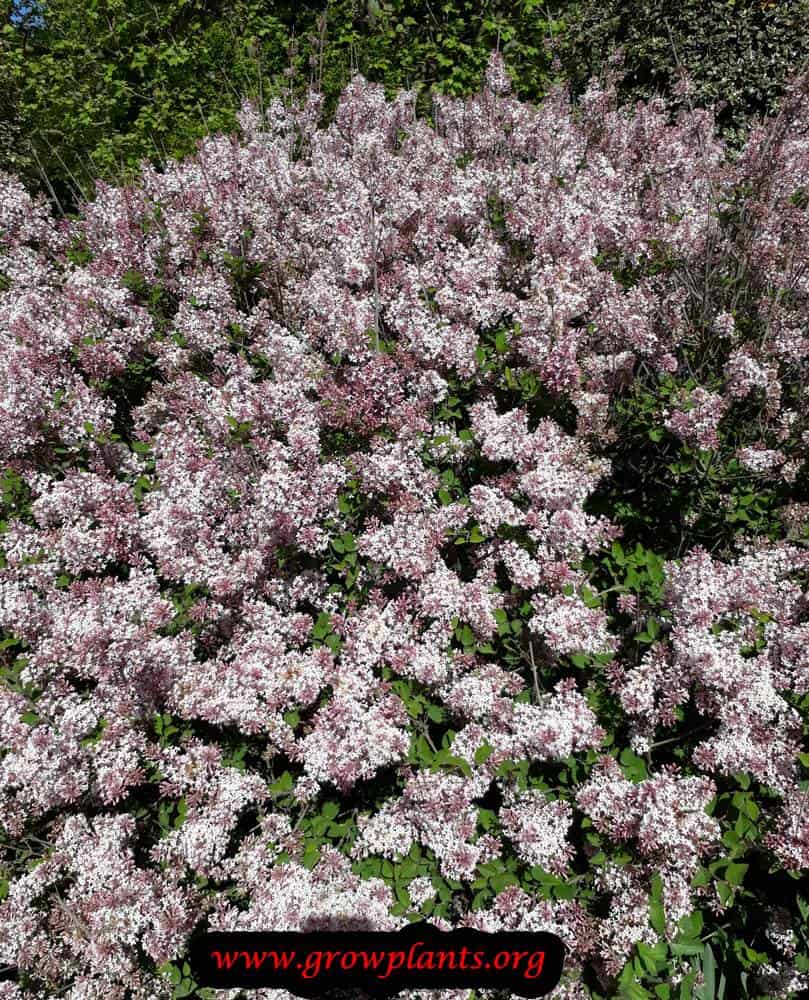
Plant Profile & Key Characteristics
Overview: Syringa Josee is a fragrant deciduous shrub reaching 1-2 m, grown as an ornamental hedge, specimen and cut flower. It is a spring-flowering perennial that needs winter chill to bloom well.
Quick Specifications
| Specification | Attribute |
|---|---|
| Plant Type / Life Cycle | Perennial (deciduous shrub) |
| Foliage Type | Deciduous |
| Mature Size | 1-2 m (3-6 ft) |
| Growth Rate | Slow to moderate |
| Toxicity | Non-toxic |
| Hardiness | USDA zones 2-8 |
Growth Form & Structure
- Height & Spread: 1-2 m (3-6 ft) in ground; also grows in a large container.
- Growth Habit & Form: Multi-stemmed deciduous shrub, often producing root suckers.
- Lifespan & Maturity: Slow to moderate but long-lived; needs a cold winter to flower well.
Anatomy & Physical Features
- Leaves & Foliage: Green oval to deltoid leaves.
- Flower Characteristics: Fragrant flowers in lilac (purple) to pink borne in dense clusters (panicles) on the stems in spring (full detail in the Bloom guide).
Primary Uses & Landscape Value
- Functional & Ornamental Roles: Fragrant ornamental hedge, screen or specimen; excellent cut flower and attracts pollinators.
Care Guide: Planting, Soil & Watering
Overview: Syringa josee is a deciduous shrub that flowers best in full sun with fertile, well-draining, neutral-to-alkaline soil. It needs a cold winter to bloom well and appreciates regular watering in the growing season, but sharp drainage is essential – lilacs dislike wet feet.
Quick Care Requirements
| Requirement | Ideal Condition |
|---|---|
| Planting Season | Late winter to summer, while dormant or in active growth |
| Growth Rate | Moderate to slow |
| Soil Type | Fertile, well-draining soil |
| Soil pH | Neutral to slightly alkaline – lilacs favour “sweet” soil and dislike strongly acidic ground |
| Water Need | Moderate to high – water regularly in growth, but always with sharp drainage |
Planting & Establishment
- Best Planting Season: Plant in winter, spring or summer; suited to hardiness zones 2–8, a period of winter cold is needed for good flowering.
- How to Plant:
- Hole Preparation: Dig a hole about twice the width of the root ball and the same depth, loosening the surrounding soil.
- Soil Amendments: Work compost or well-rotted organic matter into the backfill; on acidic ground add a little garden lime, since lilacs prefer neutral-to-alkaline soil.
- Planting Depth: Set the plant at the same depth it grew in its pot, with the crown at soil level; do not bury the stem.
- Growth Speed & Expectations: Growth is moderate to slow, building into a fragrant, spring-flowering shrub over several seasons.
Soil, Watering & Drainage Care
- Soil Mix & Drainage Needs: Provide fertile, well-draining soil that never stays waterlogged; in containers use a free-draining mix and ensure surplus water escapes, as soggy soil rots the roots.
- Watering Schedule & Technique:
- Young / Newly Planted: Water regularly after planting to keep the root zone evenly moist while the shrub establishes.
- Established: Water deeply but occasionally, letting the top few centimetres dry between waterings; established lilacs are fairly resilient and dislike constantly wet soil.
- Seasonal Adjustments: Water more in hot, dry spells, especially around flowering; reduce watering in autumn and winter while the plant is dormant.
Climate, Light & Hardiness
Lilac (Syringa) is a cold-climate-loving, deciduous, fragrant-flowering shrub to small tree best suited to temperate and mediterranean gardens with a genuinely cold winter, grown in full sun. Its USDA hardiness range is zone 2-8 per site guidance, and it depends on winter chill to flower well, so it performs poorly in mild, near-frost-free climates despite tolerating cold winters easily.
Quick Climate Specifications
| Climate Zones | Temperate, Mediterranean, Subtropical (marginal – reduced flowering without adequate winter chill) |
|---|---|
| USDA Hardiness Zones | 2-8 |
| Optimal Temp Range | Typically cool-to-mild growing-season temperatures, roughly 15–25°C (59–77°F) |
| Cold Damage Begins | Not meaningfully cold-damaged by ordinary winter cold within its hardiness range; the real risk is a late spring frost after new growth or flower buds emerge, which can blacken or damage them |
| Approx. Survival Minimum | Dormant, established plants tolerate the severe winter cold typical of the coldest part of zone 2-8 without injury |
| Frost Tolerance | High while dormant; flower buds and fresh spring growth are frost-sensitive |
| Light Conditions | Full Sun |
Sunlight & Light Exposure
Optimal Light Setup
Full sun is essential for abundant flowering; too much shade sharply reduces bloom.
Direct Sun Requirement
Needs at least several hours of direct sun daily; this is not a shade-tolerant shrub.
Shade & Heat Management
In hotter, sunnier climates near the warm edge of its range, a little afternoon relief can help, but overall it wants as much sun as the climate allows.
Best Exposure & Orientation
An open, unobstructed, south- or west-facing spot away from buildings that cast heavy shade suits it best.
Temperature Extremes & Hardiness
USDA Hardiness & Regional Limits
Site guidance places this variety at USDA zone 2-8, reflecting excellent winter cold tolerance; in practice the limiting factor for good performance is often the warm end of the range, where winters may be too mild to provide enough chill.
Cold Damage & Winter Protection
Fully winter-dormant and needs no winter protection within its hardiness range; the main cold-related risk is a late spring frost after flower buds or new leaves emerge.
Frost Sensitivity
Dormant wood and buds are very frost-hardy; open flowers and fresh spring growth are frost-sensitive and can be blackened by a late freeze.
Extreme Heat Tolerance
Prefers a defined cool season and can struggle with prolonged, very hot, humid summers, particularly toward the warm end of its range.
Chilling Requirement
Site guidance flags this variety as needing a cold winter; like other lilacs it needs a sustained period of winter chill to break dormancy properly and flower well the following spring, and in mild, near-frost-free climates flowering is typically sparse or absent even though the plant may survive.
Wind, Humidity & Microclimate
Humidity Preferences
Prefers the moderate humidity of temperate and mediterranean climates; very humid, hot summers can favor foliar problems.
Dry-Air Tolerance
Tolerates the drier air of mediterranean-type summers well, given adequate soil moisture.
Wind Tolerance
Generally wind-tolerant once established, typical of a woody garden shrub or hedge plant.
Rainfall & Seasonal Moisture
Adapted to climates with clear seasonal variation, including a properly cold winter and a warmer growing season.
Microclimate Recommendations
In marginal warm-winter areas, an open site that avoids urban heat pooling (rather than next to warm walls) helps it accumulate more effective winter chill.
Growing in Pots, Balconies & Indoors
Lilacs are large, cold-hardy garden shrubs rather than houseplants, but they grow well in big containers on a sunny patio or balcony – especially the compact and dwarf cultivars. Indoors they will not thrive: they need full sun and a real winter chill to set their fragrant spring flowers.
Quick Details
- Container Size: A large tub, at least 40-60 L (10-15 gal); this shrub reaches about 1-2 m (40-80 in) in the open, so a compact/dwarf cultivar is the realistic choice for long-term pot life
- Indoor Suitability: Not a houseplant – a hardy outdoor shrub that needs winter cold to bloom
- Best Spot: Full sun on a patio, terrace or balcony
- Soil & Drainage: Rich, aerated mix that drains freely; lilacs dislike waterlogging
- Watering in Pots: Water generously – lilacs are thirsty and pots dry fast – but never leave the roots standing in water
Indoors & On the Windowsill
- Houseplant limits: Not a houseplant. A lilac needs full sun and a cold, dormant winter to flower, so it cannot live in a heated room. Even a bright windowsill cannot give it the light or the seasonal chill it needs.
- Overwintering: Unlike tender plants, a potted lilac should stay outdoors through winter – the cold is exactly what triggers next year’s blooms. In very cold regions protect the pot itself (roots are less hardy in a container than in the ground) by grouping pots together, wrapping them, or heeling the pot into soil.
On a Balcony or Patio
- Light & wind: Give it the sunniest spot you have. Walls and railings reflect heat, so container soil dries quickly – check moisture often in warm weather. A tall lilac catches the wind, so stake young plants and set the pot where it cannot blow over.
- Practicalities: A mature lilac in a big soil-filled pot is heavy – stand it on the ground or a plant dolly rather than a flimsy shelf, and allow for drainage runoff.
Choosing the Pot, Soil & Long-Term Care
- Pot & drainage: Use the largest practical pot with strong drainage holes; skip a standing water saucer to avoid root rot. Terracotta breathes and dries faster; glazed or plastic holds moisture longer.
- Potting mix: Rich but free-draining – a quality potting soil with added grit or perlite.
- Feeding: Potted lilacs need feeding more often than those in the ground, because nutrients leach out with watering; a balanced feed through the growing season is enough – go easy on nitrogen, which pushes leaves at the expense of flowers.
- Repotting: Every couple of years refresh the top of the mix or pot up a size, and lightly prune both roots and top growth to keep a compact cultivar in balance with its container.
Fertilizing & Feeding
A light to moderate feeder: a single light balanced feeding as growth resumes in spring is usually enough; over-feeding favours leaves over the fragrant blooms.
Quick Fertilizing Specs
| Feeding Level | Light to moderate feeder |
|---|---|
| Main Nutrient Priority | Balanced feeding; avoid excess nitrogen |
| Best Feeding Period | Early spring as growth resumes |
| Organic Options | Compost spread over the root zone |
| Micronutrients | Usually met by a complete fertilizer and organic matter; correct only diagnosed issues |
| Soil pH | Near neutral, tolerant of slightly alkaline soil |
| Reduce/Stop Feeding | Stop feeding as the deciduous shrub goes dormant in autumn and winter |
Feeding by Growth Stage
Spring growth and leaf-out
Fuel new shoots and healthy foliage as the deciduous shrub breaks dormancy.
| Nutrient direction | A balanced complete fertilizer as growth resumes in spring. |
|---|---|
| Timing | In early spring as buds swell and leaves emerge. |
| Frequency | A light feeding as the shrub leafs out. |
| Fertilizer types | A balanced complete garden fertilizer, Compost spread over the root zone |
| Precautions | Keep feeding light and even; lilac is not a heavy feeder and over-feeding favours leaves over flowers. |
Bloom and summer growth
Carry the fragrant flower clusters and support the season’s shoot growth that sets next year’s buds.
| Nutrient direction | Balanced feeding with adequate nitrogen; balanced nutrition, not extra phosphorus, supports flowering. |
|---|---|
| Timing | Through spring bloom and into the summer growing season. |
| Frequency | Minimal feeding is usually enough for an established shrub. |
| Fertilizer types | A balanced complete fertilizer |
| Precautions | Avoid high-phosphorus bloom formulas and excess nitrogen; full sun and steady moisture matter most for flowering. |
Autumn and winter dormancy
Let the deciduous shrub harden off and rest through its cold winter dormancy.
| Nutrient direction | None – withhold fertilizer while the shrub is leafless and dormant. |
|---|---|
| Timing | From leaf drop in autumn through winter. |
| Frequency | No feeding at this stage. |
| Fertilizer types | No feeding at this stage while the shrub is dormant and leafless. |
| Precautions | Do not fertilize until growth resumes in spring; late feeding can push tender growth before winter. |
Nutrient Deficiency Signs & Corrections
Older, lower leaves fade to pale green or uniform yellow and overall growth slows.
| Possible causes | low available soil nitrogen, nitrogen leaching from heavy watering or rain, thin, low-organic-matter soil |
|---|---|
| Appears first on | older, lower leaves |
| What to check | recent feeding history, soil organic matter, watering and drainage |
| Possible correction | Apply a nitrogen-containing complete fertilizer and build soil organic matter, then water evenly. |
Leaf margins brown or scorch and growth stalls despite adequate watering.
| Possible causes | fertilizer salt buildup in the root zone, under-watering that concentrates salts, excessive or too-frequent feeding |
|---|---|
| Appears first on | leaf margins and tips |
| What to check | recent fertilizer amounts, watering consistency, drainage, especially in containers |
| Possible correction | Ease off feeding, water thoroughly to flush accumulated salts, then return to lighter feeding. |
Vigorous leafy growth but few flowers.
| Possible causes | excess nitrogen driving foliage over flowers, insufficient light, over-rich soil |
|---|---|
| Appears first on | the whole plant |
| What to check | how nitrogen-heavy the feeding is, light exposure, overall soil richness |
| Possible correction | Reduce nitrogen, give full sun, and feed with a balanced fertilizer; extra phosphorus does not force more bloom. |
Pruning, Training & Seasonal Maintenance
‘Josee’ is a compact, reblooming lilac – it produces a full spring flush like other lilacs, then continues to send up smaller flower clusters intermittently through summer if kept deadheaded. That reblooming habit is what should drive its care: prompt deadheading after the spring flush is the single most useful thing you can do, since it both tidies the plant and encourages the secondary summer flowering this cultivar is grown for. Otherwise it needs very little pruning at its compact 1–2 m size.
Quick Pruning & Maintenance Specs
| Pruning Tolerance | Moderate (light, frequent attention suits it better than one hard annual cut) |
| Primary Pruning Window | Right after the spring flush fades |
| Secondary Maintenance Window | Ongoing light deadheading through summer to sustain repeat bloom |
| Typical Frequency | Deadhead every 2–3 weeks spring–summer; light shape once a year |
| Main Objective | Sustain repeat flowering while keeping the compact form tidy |
| Young Plant Priority | Minimal – allow the naturally dense, rounded habit to establish |
| Mature Plant Priority | Consistent deadheading; occasional thinning of old interior wood |
| Best Tool Type | Precision snips / bypass secateurs |
| Avoid Heavy Pruning During | Mid-to-late summer, when cutting live wood removes forming rebloom clusters |
Pruning by Plant Age & Size
Newly Established
Remove only damaged growth; the compact habit develops on its own without formative shaping.
Young / Formative
No structural training needed at this scale – it naturally forms a dense, well-branched mound.
Mature / Established
Ongoing deadheading is the main task; every few years thin the oldest interior stems to keep the reblooming wood vigorous.
Flowering & Fruiting Wood
The main spring flush blooms on the previous year’s wood, like other lilacs – prune that framework right after bloom, not in dormancy, to protect next spring’s display. The secondary summer rebloom, however, forms on new growth produced after the spring flush, which is why prompt deadheading (removing spent clusters before they set seed) rather than any hard pruning is what actually drives the repeat flowering.
Special Growth to Remove
- Spent flower clusters – deadhead promptly and repeatedly through the season; this is the key task for this reblooming cultivar, not a cosmetic extra.
- Any dead or crossing twiggy interior growth.
Container & Small-Space Pruning
Its genuinely compact size and repeat bloom make it a strong container choice; keep deadheading consistent in pots, where missed spent blooms both look untidy and are more likely to suppress the summer rebloom given the plant’s smaller root volume.
Tools
- Precision snips for the frequent deadheading this cultivar needs.
- Bypass secateurs for the occasional thicker stem during interior thinning.
Tool Hygiene & Disease Risk
Routine – clean, sharp tools are sufficient for the light, frequent cuts this cultivar receives.
Cut Placement & Technique
Deadhead by cutting the spent cluster’s stem back to the first healthy leaf pair or side shoot below it, which is exactly where the next round of rebloom growth originates.
Common Pruning Mistakes
- Skipping deadheading and losing the summer rebloom this cultivar is specifically valued for.
- Treating it like a full-size lilac and attempting heavy renewal pruning it doesn’t need.
When NOT to Prune
Avoid dormant-season structural cuts on the framework that carries the spring flush, and avoid cutting live wood in a way that removes forming summer flower clusters.
Recommended Tools (by task)
- precision_snips – frequent deadheading through spring and summer to sustain repeat bloom.
- bypass_secateurs – occasional thicker stems during light interior thinning.
Propagation Guide
Syringa josee can be propagated vegetatively by stem cuttings, layering, and where naturally produced, rooted suckers. Seed is possible but slower and may not preserve selected garden forms.
Quick Propagation Specs
| Preferred Vegetative Methods | Stem cuttings; layering; rooted suckers where present |
| Seed | Possible, but variable |
Stem Cuttings
Take healthy non-flowering shoot material with viable nodes and root it in a clean, free-draining propagation medium under steady humidity.
Layering and Suckers
Layer flexible low shoots while attached to the parent, or separate an already rooted sucker only after it has formed an independent root system.
Aftercare
Keep newly rooted plants protected from severe heat and drought until established.
Bloom & Edible Flower Guide
Quick Details
- Bloom Season: Late spring, often with a lighter repeat flush later in the season
- Time to First Bloom: A young plant usually needs two to three years to settle in before it flowers freely
- Flower Appearance: Small, four-lobed, intensely fragrant florets packed into dense conical clusters (panicles), lilac-purple to pink
- Edibility: The blossoms are edible – lightly floral and a touch bitter, used for syrups, infused sugar, and as a garnish; use only clean, unsprayed flowers
Detailed Blooming Overview
Lilac is grown above all for its spring perfume: dense trusses of tiny flowers open lilac-purple to pink and scent the whole garden. This is one of the repeat-blooming lilacs, so a lighter second flush often follows later in the year. A cold winter dormancy is part of the recipe – lilacs need that chill to set a strong crop of buds, which is why they flower so well in temperate gardens.
Flower Characteristics
- Flower color lilac-purple to pink, and richly fragrant.
- Each floret is small and tubular with four spreading lobes.
- Massed into dense, upright, cone-shaped clusters (panicles) at the branch tips.
- The nectar and scent draw bees and butterflies.
Bloom Care & Thinning
- Managing the bloom: Deadhead the spent trusses as soon as they fade to keep the plant tidy and steer its energy into next year”s buds.
- When to prune: Prune right after flowering rather than in autumn or winter – lilacs form next spring”s flower buds on old wood during summer, so late pruning cuts off the coming blooms.
- Pollination: The fragrant, nectar-rich flowers are pollinated by bees and butterflies; no hand-work is needed.
Bloom Health & Protection
- Aphids: They gather on buds and soft new shoots; a jet of water, insecticidal soap, or neem oil keeps them down.
- Bacterial blight (Pseudomonas syringae): In cool, wet springs it can blacken young shoots and flower clusters – prune well below the damage into clean wood, and a copper-based spray helps check its spread.
Fruit & Uses
Syringa josee is grown as a compact, fragrant ornamental hedge and cut-flower shrub (see Blooming), and like other true lilacs its flowers carry a genuine minor culinary tradition. They are eaten fresh as a garnish or infused into syrups and jellies, never as a food staple, and no other part of the shrub is eaten.
Quick Edible Specs
| Edible Parts | Flowers (fresh florets) only |
|---|---|
| Main Use(s) | Garnish; infused syrup, sugar or honey; jelly; light floral tea |
| Eaten Raw or Cooked | Raw as a garnish; briefly steeped/infused for syrup or jelly |
| Preparation Required | Remove toxic part – pinch off the bitter greenish-white “heel” at the base of each floret; wash gently; use only unsprayed flowers |
| Harvest Season | Spring, during bloom |
| Time to First Harvest | None until the shrub reaches flowering maturity (see Propagation for how it is started) |
| Storage | Use fresh the day of picking, or infuse/dry promptly; cut flowers fade fast |
| Safety/Toxicity Caveat | True lilac (Syringa) is not documented as toxic; use in small garnish quantities and do not confuse it with the unrelated, toxic “Persian lilac” (Melia azedarach) |
Flowers & Flower Buds
This compact shrub (staying to roughly 1–2 m) bears fragrant florets ranging from lilac (purple) to pink in tight clusters on the stems. As with other lilacs, individual florets are snipped from an open cluster and the bitter greenish-white base of each floret pinched away, leaving the sweeter petal tips for use. Because the plant is small, a single harvest yields a modest quantity of florets – enough for a light infusion, a garnish, or a small batch of syrup or jelly rather than a large-scale preserve. Use the flowers within a day of cutting, since their scent and flavour fade quickly.
Harvesting
Cut whole clusters once most florets have opened, on a dry morning for best fragrance, then strip individual florets from the stems just before use. Bloom is a single spring flush (see Blooming), so plan to harvest and use the flowers within that window.
Preparation, Uses & Safety
Pick only from plants known to be free of pesticide or other chemical sprays, and rinse gently before use. Remove the bitter white/green heel at the base of each floret, since leaving it in quantity makes infusions taste unpleasantly bitter. Treat the flowers as a flavouring, not a bulk food – a light hand in syrups, sugars, jellies or tea is typical, especially given the modest quantity a compact cultivar like this produces. The leaves and stems have no traditional food use. True lilac (Syringa) is not documented as toxic to people or common pets, but should never be confused with the unrelated “Persian lilac” (Melia azedarach, chinaberry), which is toxic – only true Syringa flowers should be eaten.
Pests, Diseases & Troubleshooting
Overview: Lilacs (Syringa) are hardy, long-lived Oleaceae shrubs whose defining issues are powdery mildew on the leaves, boring insects and scale on the woody stems, and – most often of all – a failure to bloom from wrong pruning, shade or too little winter chill. They are otherwise tough and forgiving; good siting, airflow, correct-timed pruning and renewal of old wood prevent nearly every problem.
Quick Troubleshooting Overview
| Issue / Pest | Main Symptom | Primary Solution |
|---|---|---|
| Powdery mildew | White powdery film on leaves in late season | Airflow, sun, thin stems, resistant types |
| Lilac / ash borer | Wilting, sawdust and holes near the base of stems | Keep vigorous, prune out and destroy borer-riddled canes |
| Oystershell scale | Mussel-shaped grey bumps encrusting stems, dieback | Prune out, dormant oil, horticultural oil on crawlers |
| Lilac leafminer | Blotchy mined then rolled, browned leaves | Remove mined leaves, encourage parasites, tolerate light damage |
| Bacterial blight | Blackened shoots and angular leaf spots in wet springs | Prune out, avoid overhead water, copper in wet weather |
| No flowers | Leafy but few blooms | Full sun, prune right after bloom, avoid excess nitrogen |
Common Pests & Management
- Lilac / ash borer (Podosesia syringae):
- Symptoms: Wilting and dieback of individual stems, with round exit holes, sawdust-like frass and sap near the base of older canes; a clearwing-moth larva tunnels the woody stems and can girdle and kill them. This is the most serious lilac pest.
- Prevention & Control: Keep shrubs vigorous and unstressed, since borers target weak, aged or wounded wood, and avoid basal injuries from mowers and trimmers. Prune out and destroy infested and dying canes, use renewal pruning to keep young healthy wood coming, and monitor with pheromone traps to time any bark treatment where borers are a known problem.
- Oystershell scale (Lepidosaphes ulmi):
- Symptoms: Small grey-brown, mussel- or oystershell-shaped bumps encrusting the stems and branches; heavy infestations cause yellowing, reduced vigour and branch dieback.
- Prevention & Control: Prune out and destroy heavily encrusted branches, apply a dormant-season horticultural oil to smother overwintering scale, and treat the vulnerable crawler stage with horticultural oil or insecticidal soap in the growing season; conserve the parasitic wasps and lady beetles that attack scale.
- Lilac leafminer (Caloptilia syringella):
- Symptoms: Pale brown blotch mines between the leaf surfaces that later cause the leaf edges to roll and brown; small caterpillars feed inside, and damage is disfiguring but rarely serious.
- Prevention & Control: Pick off and destroy mined and rolled leaves, rake up and remove fallen leaves where the pest overwinters, and encourage parasitic wasps; tolerate light damage, as the shrub outgrows it. Treat only severe infestations.
- Aphids (Aphis / Myzus spp.):
- Symptoms: Clusters of soft green insects on the tender new shoots causing sticky, curled growth and sooty mould.
- Prevention & Control: Knock colonies off with a water spray, conserve lady beetles and lacewings, and spray insecticidal soap on heavy flushes; avoid excess nitrogen that pushes soft growth.
- Thrips & lilac leafminer look-alikes:
- Symptoms: Fine silvery flecking on leaves and, occasionally, thrips damage to flowers.
- Prevention & Control: Usually minor; remove spent flowers, monitor with sticky traps, and treat only heavy infestations with insecticidal soap at dusk to protect pollinators.
Diseases & Fungal Issues
- Powdery mildew (Erysiphe syringae / Microsphaera):
- Symptoms: A white powdery film can appear on leaves in humid, crowded, late-season conditions, but this cultivar/species is notably more mildew-resistant than common lilac, so it is usually light and cosmetic.
- Treatment & Management: Site in sun with good airflow and thin crowded stems; its natural resistance means fungicide is rarely if ever needed. Remove affected leaves if desired.
- Bacterial blight (Pseudomonas syringae pv. syringae):
- Symptoms: Blackened, water-soaked young shoots that wilt and bend into a hook, angular brown leaf spots with yellow halos, and blighted flower clusters – worst in cool, wet spring weather and on soft, over-fertilised growth.
- Treatment & Management: Prune out blighted shoots well below the damage, disinfecting tools between cuts, and remove and destroy the prunings. Improve airflow, avoid overhead watering and excess nitrogen, and apply a copper-based bactericide during cool wet spring conditions where the disease recurs.
- Phytophthora / lilac blight & ring spot:
- Symptoms: Shoot blight and dieback resembling bacterial blight (Phytophthora), or chlorotic ring and line patterns on leaves from lilac ring-spot virus.
- Treatment & Management: For Phytophthora blight, improve drainage and airflow and prune out affected shoots; for the virus there is no cure, so remove severely affected plants and propagate only from healthy stock.
- Leaf spots (fungal):
- Symptoms: Brown to purplish spots on the leaves in wet seasons, sometimes causing early leaf drop.
- Treatment & Management: Rake up and destroy fallen leaves, improve airflow, and water at the base; fungicides are seldom necessary as sanitation controls it.
- Verticillium wilt (Verticillium spp.):
- Symptoms: Sudden wilting and dieback of one side or individual branches, with dark vascular streaking in the wood, in infested soil.
- Treatment & Management: No cure – prune out affected branches, keep the shrub vigorous and watered, and avoid replanting susceptible plants in known-infested soil.
Growing Difficulties & Abiotic Problems
- Failure to bloom:
- Cause & Symptoms: A healthy leafy lilac that produces few or no flowers – the commonest lilac complaint – caused by too much shade, excess nitrogen, pruning at the wrong time, or immaturity.
- Correction Strategy: Grow in full sun (at least six hours), avoid high-nitrogen feeding that favours leaves, and prune right after flowering since lilacs set next year’s buds on old wood soon after bloom – pruning later or in winter removes the flower buds. Young and recently moved plants often need a few years to settle before blooming well.
- Chill requirement / heat stress:
- Cause & Symptoms: Poor flowering, weak growth or dieback in warm-winter climates because most lilacs need a period of winter cold to bloom.
- Correction Strategy: In warm regions choose low-chill lilac types (such as the littleleaf and cutleaf lilacs and their hybrids), and site in the coolest suitable spot; common lilac simply will not thrive without adequate winter chill.
- Lime-loving / pH:
- Cause & Symptoms: Poor growth and chlorosis on strongly acidic soils; lilacs prefer neutral to slightly alkaline ground.
- Correction Strategy: Test the soil and add lime to bring very acidic soil toward neutral, and ensure good drainage; unlike many shrubs, lilacs actually favour a slightly alkaline pH.
- Suckering & overcrowding:
- Cause & Symptoms: Dense thickets of suckers and congested old stems that reduce bloom and airflow (and worsen mildew).
- Correction Strategy: Remove excess suckers and, on mature shrubs, renewal-prune by cutting a few of the oldest thick stems to the ground each year to keep the plant vigorous, open and floriferous.
What Helps – Products & Tools
Lilacs need little routine spraying: dormant oil and horticultural oil for scale and borer-vulnerable wood, insecticidal soap for aphids, a sulphur or potassium-bicarbonate fungicide for severe powdery mildew, and a copper bactericide for bacterial blight in wet springs. The most effective ‘tools’ are full sun, correct-timed pruning, renewal of old wood, and mildew-resistant cultivars.