Plant Profile & Key Characteristics
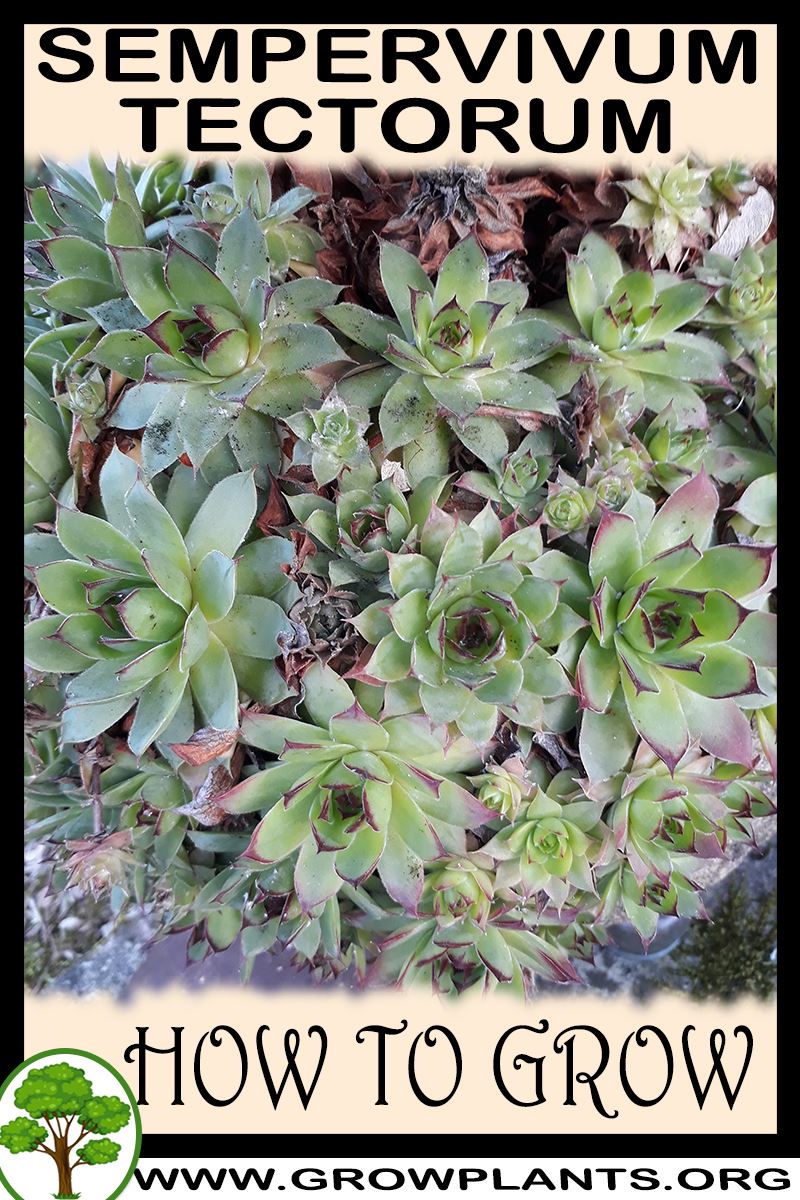
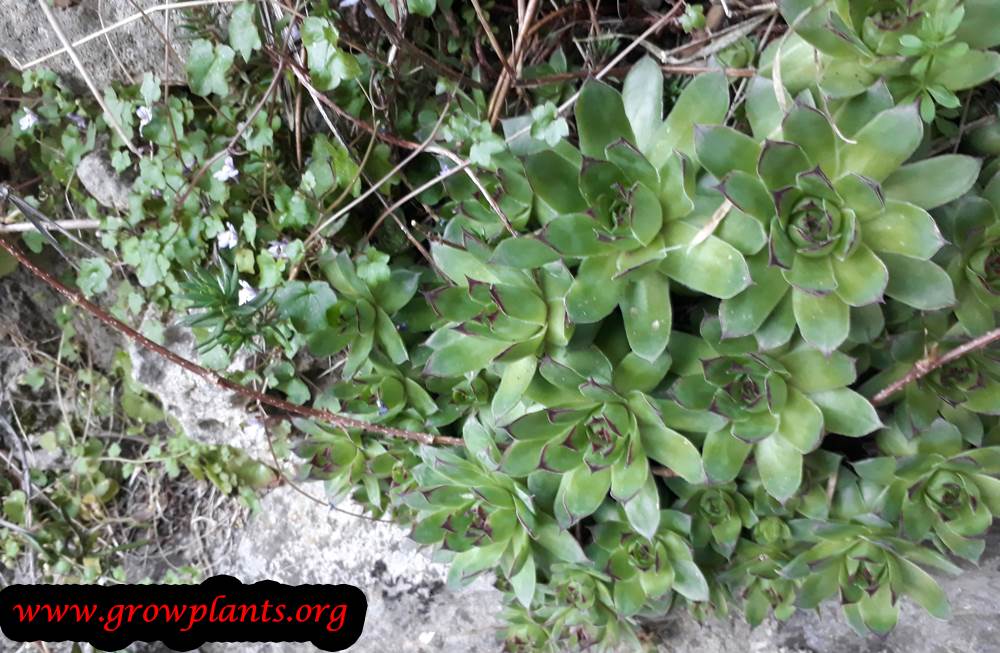
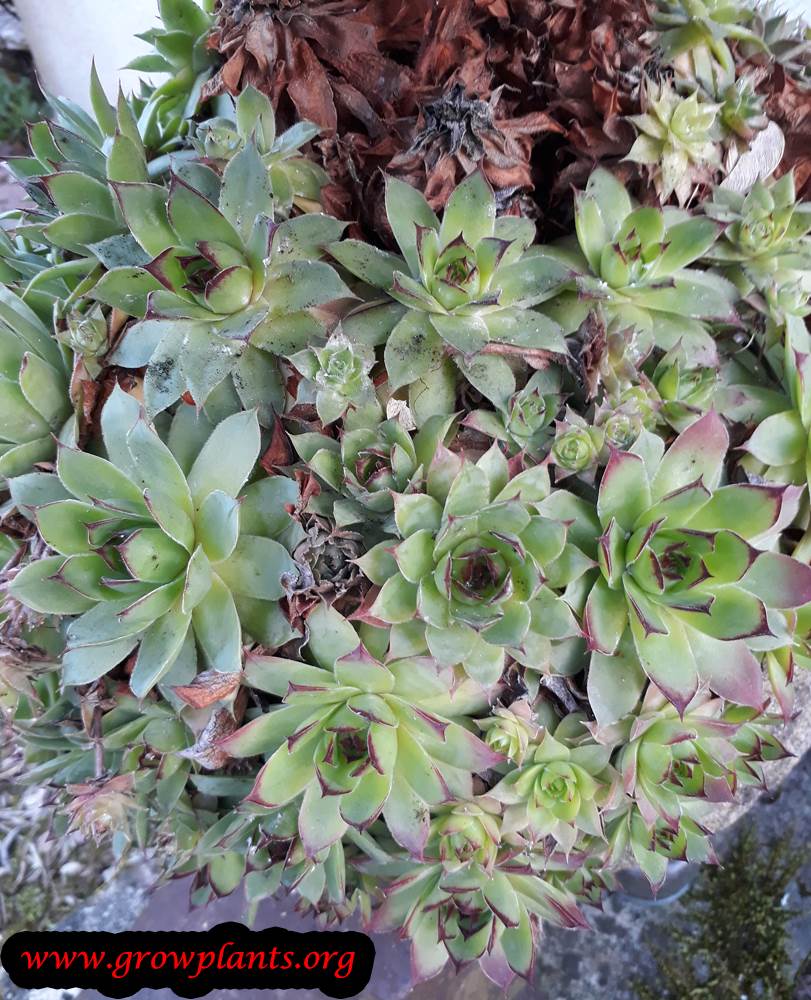
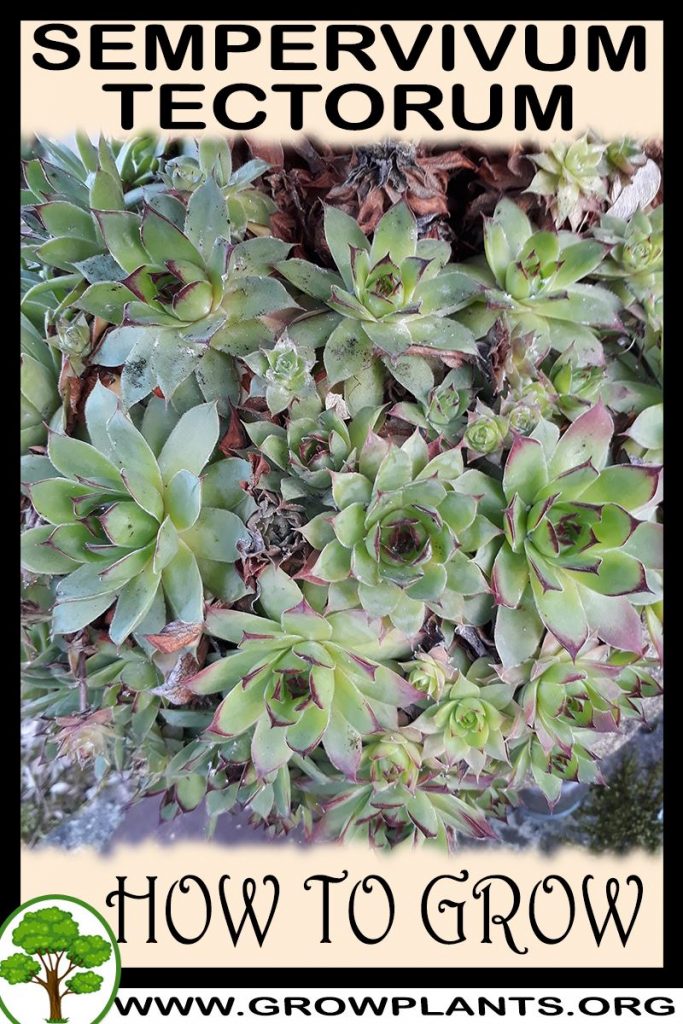
Overview: A compact, evergreen succulent forming tight, ground-hugging rosettes to 15-40 cm (6-16 in) in spreading colonies. This very hardy, drought-tolerant houseleek is grown as an ornamental for rockeries, troughs, containers and green roofs, prized for its geometric rosettes and freely produced offsets (‘chicks’).
Quick Specifications
| Specification | Attribute |
|---|---|
| Plant Type / Life Cycle | Evergreen succulent perennial (rosettes are monocarpic – each flowers once, then dies and is replaced by offsets) |
| Foliage Type | Evergreen |
| Mature Size | 15-40 cm (6-16 in) – rosettes small, spreading into wide mats and colonies |
| Growth Rate | Slow |
| Root System | Shallow and fibrous |
| Toxicity | Non-toxic – historically grown on roofs and used in folk medicine; not listed as toxic to cats or dogs |
| Hardiness | USDA zone 4+ (very cold-hardy) |
Growth Form & Structure
- Height & Spread: Each rosette is only a few centimetres high and 15-40 cm (6-16 in) across, but plants multiply into wide, weed-suppressing mats; equally at home in a shallow pot, trough or wall crevice.
- Growth Habit & Form: Ground-hugging, clump-forming succulent; a central rosette (the ‘hen’) rings itself with offset rosettes (‘chicks’) on short runners, and throws up a thick flowering stalk before that rosette dies and is replaced.
- Lifespan & Maturity: The colony is effectively perennial and self-renewing; an individual rosette lives a few years, flowers once, then dies while its offsets carry on.
Anatomy & Physical Features
- Leaves & Foliage: Fleshy, elliptic to wedge-shaped leaves in green, blue, purple, red, yellow, brown or orange with pointed tips, sometimes velvety-hairy.
- Flower Characteristics: Star-shaped, many-petalled blooms in pink to purple with a yellow centre carried on a stout upright stalk in the warm season (each rosette flowers only once).
Primary Uses & Landscape Value
- Functional & Ornamental Roles: Rockery, trough, wall and container specimen, green-roof and edging plant; an excellent low-water groundcover and popular collector’s succulent.
Care Guide: Planting, Soil & Watering
Overview: Sempervivum tectorum (Common houseleek) is a tough, cold-hardy alpine succulent that grows best in full sun with sharply drained, gritty soil. It stores water in its rosettes and needs very little irrigation, so the soil must drain fast to keep the roots from rotting.
Quick Care Requirements
| Requirement | Ideal Condition |
|---|---|
| Planting Season | In spring or summer once the soil has warmed |
| Growth Rate | Slow |
| Soil Type | Sharply drained, gritty or sandy soil; poor lean soil is fine |
| Water Need | Low — drought-tolerant; let the soil dry out fully between waterings |
Planting & Establishment
- Best Planting Season: Plant offsets in spring or summer during warm, active growth; this species is frost-hardy down to zone 4, but establishing it in the warm season lets the roots settle before winter.
- How to Plant:
- Hole Preparation: Dig a shallow hole just big enough for the small root system, in a spot that never collects standing water.
- Soil Amendments: Mix coarse sand, grit or perlite into the bed to open up drainage; avoid rich, moisture-holding soil, which encourages rot.
- Planting Depth: Set the rosette so its base sits right at the soil surface — do not bury the crown, and press grit around the neck to keep it dry.
- Growth Speed & Expectations: Expect slow, steady growth; each rosette clumps up over time by producing offsets (the ‘chicks’) around the parent.
Soil, Watering & Drainage Care
- Soil Mix & Drainage Needs: Provide a gritty, free-draining mix — cactus or succulent soil cut with extra sand or perlite; in containers make sure water drains straight through, as waterlogged soil is the quickest way to lose the plant.
- Watering Schedule & Technique:
- Young / Newly Planted: Water lightly after planting to settle the roots, then let the soil dry before watering again while the rosette establishes.
- Established: Water sparingly and deeply only once the soil has dried out; established plants get by on very little and tolerate drought well.
- Seasonal Adjustments: Give a little more in prolonged summer heat, and keep it nearly dry through winter, when cold, wet soil is most dangerous.
Climate, Light & Hardiness
Sempervivum tectorum, the common houseleek, is a hardy alpine succulent at home in Mediterranean, desert-fringe, subtropical, and cool-temperate climates, and it also grows well as a houseplant. It is one of the most cold-tolerant succulents in cultivation and performs best in full sun, though it also tolerates half or full shade.
Quick Climate Specifications
| Climate Zones | Mediterranean, desert, subtropics, temperate, and tropics (as a houseplant) |
| USDA Hardiness Zones | 4+ |
| Frost Tolerance | High |
| Light Conditions | Full Sun (best rosette color/form) / Half Shade / Full Shade |
| Wind Tolerance | High |
Sunlight & Light Exposure
Optimal Light Setup
Full sun produces the tightest rosettes and the most saturated leaf color (green, blue, purple, red, yellow, brown, or orange); in half or full shade the rosettes loosen and colors fade.
Best Exposure / Orientation
Traditionally grown on rooftops, stone walls, and rock gardens, it thrives in open, sun-exposed, shallow-soil sites with excellent drainage.
Temperature Extremes & Hardiness
USDA Hardiness & Regional Limits
Hardy from USDA zone 4 upward, it is among the toughest ornamental succulents for cold climates, surviving harsh winters outdoors once established.
Cold Damage & Winter Protection
The plant can survive frost, though it looks fullest and best colored when spared the very hardest freezes; no winter protection is normally required within its hardiness range.
Frost Sensitivity
Frost tolerance is high, with established rosettes largely unaffected by typical winter freezes from zone 4 upward.
Wind, Humidity & Microclimate
Wind Tolerance
Its low, compact rosette habit makes it well suited to open, exposed, windy sites such as rooftops and rock walls.
Rainfall & Seasonal Moisture
Drought tolerant, it copes with both the dry summers of a Mediterranean climate and the more even rainfall of temperate regions, as long as drainage is fast.
Microclimate Recommendations
Shallow, gritty, fast-draining soil is key in any climate; in higher-rainfall or humid areas, raised plantings, wall crevices, or containers reduce the risk of crown and root rot.
Growing in Pots, Balconies & Indoors
Sempervivum tectorum (houseleeks) are tough, cold-hardy alpine succulents that are happiest outdoors in full sun – they are classic pot, trough and green-roof plants. They can sit on a cold, very bright windowsill, but in a warm, dim room they stretch and lose their tight rosette shape, so they are really outdoor and bright-sill plants rather than deep-room houseplants.
Quick Details
- Container Size: A shallow pot, trough or bowl to suit their spreading 15-40 cm (6-16 in) mats of offsets
- Indoor Suitability: Only on a cold, very bright windowsill; they are outdoor plants that dislike warm, dim rooms
- Best Spot: Full sun outdoors – the more light, the tighter and more colourful the rosettes
- Soil & Drainage: A gritty, sharply draining mix; they shrug off poor soil but not wet feet
- Watering in Pots: Sparingly – very drought tolerant; let the mix dry out fully between waterings
Indoors & On the Windowsill
- Bright sill only: The grower notes they can be kept indoors, but they need a cold, sunlit windowsill; in a warm, shady room they etiolate and go soft.
- Hardy outdoors: Unlike tender succulents they are frost hardy and actually prefer to stay outside all year, so there is usually no need to bring them in.
- Winter: They tolerate cold and even snow in a pot; just keep them on the dry side and never let the pot stand in water over winter.
On a Balcony or Patio
- Light & exposure: Perfect for an open, sunny balcony, wall pot or trough; they cope with wind and reflected heat and only need watering in long dry spells.
- Drainage: Make sure rain drains straight through – standing water in cold weather is the main thing that rots them.
Choosing the Pot, Soil & Long-Term Care
- Pot & drainage: Any well-drained pot, trough or shallow bowl with plenty of holes and no standing saucer; terracotta suits them well.
- Potting mix: A gritty cactus/alpine mix – sandy or gritty soil with added grit; poor and lean is fine.
- Feeding: Barely any – a very weak feed once in the growing season at most; rich feeding spoils the tight form.
- Refreshing & offsets: Refresh the mix every few years; they multiply into a mat of offsets (“chicks”) that you can split and replant to fill new pots.
Fertilizing & Feeding
A very light feeder: these hardy rosette succulents grow well in lean soil and need only a little dilute low-nitrogen fertilizer during the warm season, and none over winter.
Quick Fertilizing Specs
| Feeding Level | Very light feeder |
|---|---|
| Main Nutrient Priority | Light, low-nitrogen feeding; avoid excess nitrogen |
| Best Feeding Period | The warm active growing season only |
| Organic Options | A gritty, fast-draining mix; go easy on rich organic matter |
| Reduce/Stop Feeding | Stop feeding through the rest period |
| Micronutrients | Rarely needed; a complete fertilizer covers trace needs |
| Soil pH | Slightly acidic to near neutral, in a fast-draining mix |
Feeding by Growth Stage
Warm-season active growth
Support tight, well-colored rosettes and healthy offsets without forcing lush growth.
| Nutrient direction | A dilute, low-nitrogen complete fertilizer; this plant needs only light feeding. |
|---|---|
| Timing | During the warm active growing season. |
| Frequency | An occasional light feeding through the growing season; light feeding is usually enough. |
| Fertilizer types | A dilute low-nitrogen complete fertilizer, A specialized cactus and succulent fertilizer |
| Precautions | Avoid rich feeding, which loosens the rosettes, mutes their color, and reduces cold hardiness. |
Winter dormancy
Let the rosettes rest through winter cold, when growth stops.
| Nutrient direction | None – withhold fertilizer while the plant is not in active growth. |
|---|---|
| Timing | Through the cold winter dormancy. |
| Frequency | No feeding at this stage. |
| Fertilizer types | No feeding at this stage; hold off fertilizing until active growth resumes. |
| Precautions | Do not fertilize while the plant is resting; feed again only when new growth appears. |
Nutrient Deficiency Signs & Corrections
Growth turns soft, pale, and stretched, and the rosette or body loses its compact form.
| Possible causes | excess nitrogen from over-generous feeding, feeding while light is too low to support the growth, a rich, moisture-holding mix instead of a gritty one |
|---|---|
| Appears first on | newest leaves and growing points |
| What to check | how recently and heavily it was fed, light levels, whether the potting mix drains fast |
| Possible correction | Ease off feeding, move to brighter light, and let the plant firm up, then feed only lightly once strong growth resumes. |
Leaf margins or tips brown and scorch and growth stalls despite adequate watering.
| Possible causes | fertilizer salt buildup in the root zone, under-watering that concentrates salts, excessive or too-frequent feeding |
|---|---|
| Appears first on | leaf margins and tips |
| What to check | recent fertilizer amounts, watering consistency, drainage, especially in containers |
| Possible correction | Ease off feeding, water thoroughly to flush accumulated salts, then return to lighter feeding. |
Overall growth pales and stalls, with older leaves losing color first.
| Possible causes | exhausted potting mix with little available nitrogen, nitrogen leaching from repeated watering, no feeding over a long period |
|---|---|
| Appears first on | older, lower leaves |
| What to check | how long since the mix was refreshed or fed, watering frequency, overall vigor and color |
| Possible correction | During the growing season, apply a dilute low-nitrogen complete fertilizer and refresh the mix if it is spent. |
Pruning, Training & Seasonal Maintenance
Sempervivum tectorum (Common Houseleek) forms a hardy, cold-tolerant rosette mat where the plant-level fact that matters most for pruning is that each rosette flowers only once: it pushes up a single tall stalk, blooms, and then that particular rosette dies, while the clump keeps going through its offsets. Cutting is therefore about clearing that finished rosette and old leaves rather than shaping the plant, and can be done whenever it’s needed – a spring tidy after winter dieback and a follow-up once individual rosettes finish their summer bloom cover the year’s work.
Quick Pruning & Maintenance Specs
| Pruning Tolerance | Low |
| Primary Pruning Window | Spring tidy after winter dieback |
| Secondary Maintenance Window | After each rosette finishes flowering (summer) |
| Typical Frequency | A few short sessions per year |
| Main Objective | Remove the spent monocarpic rosette after bloom; clear dried leaves; thin crowded offsets |
| Young Plant Priority | None – let offsets establish undisturbed |
| Mature Plant Priority | Remove dead/flowered rosettes at the base; divide congested mats |
| Best Tool Type | Precision snips for deadheading/dried leaves; hand division or a small spade for offsets |
| Avoid Heavy Pruning During | Not applicable – no heavy-pruning stage exists for this plant |
Pruning by Plant Age & Size
Newly Established
Leave undisturbed while young offsets root; no cutting needed.
Young / Formative
No structural training applies – the mat spreads on its own via offsets around each rosette.
Mature / Established
Each year, remove any rosette that has finished flowering and died back (it will not return – blooming is a one-time event for that rosette), clear dried outer leaves, and divide the clump if offsets have grown too dense for good airflow.
Special Growth to Remove
- Spent flowering rosette – the mother rosette that sent up the flower stalk dies once bloom finishes; cut it and the dried stalk out at the base, which costs the plant nothing since that rosette was already at end of life.
- Dried lower leaves – remove browned, papery outer leaves for appearance and to limit rot pockets.
- Overcrowded offsets – thin or transplant chicks once the mat is dense enough to trap moisture at the crown.
Container & Small-Space Pruning
In pots the continuously offsetting habit fills space quickly; dividing surplus chicks to maintain airflow between rosettes is the main container-specific task, reducing crown-rot risk in the confined space.
Tools
Precision snips for deadheading and dried-leaf removal; hand separation or a small spade for dividing offsets – nothing larger is ever needed.
Tool Hygiene & Disease Risk
Routine – clean, sharp snips are enough. No specific transmissible disease risk noted; overcrowding-driven crown rot is managed by thinning, not sterilization.
Cut Placement & Technique
Cut the dead flower stalk and rosette at soil level once fully dried, not while still green. Remove dried leaves at their base without disturbing the living crown. When dividing, sever the thin stolon close to each offset.
Heavy Pruning & Rejuvenation
Not applicable. A damaged or cut rosette center will not resprout; the plant renews only through its own offsets.
Post-Pruning Care
No feeding needed after routine tidy-up. After dividing offsets, let cuts callus a day before replanting in gritty, well-drained soil with light watering.
Common Pruning Mistakes
- Cutting a flowering stalk while still green, mistaking normal monocarpic dieback for a problem.
- Leaving dead rosettes in place, holding moisture against the crown of surrounding offsets.
- Over-dividing and leaving bare gaps in the mat.
When NOT to Prune
Don’t remove a green flowering stalk if seed collection is wanted. Avoid working the mat while wet, since tight rosette clusters are prone to fungal issues in damp conditions.
Recommended Tools (by task)
| Deadhead spent flowering rosette | precision_snips | Clean, low-force cut at soil level without disturbing neighboring offsets. |
| Divide congested offset clumps | garden_spade | Lifts and separates shallow-rooted offsets for replanting or thinning. |
Propagation Guide
Sempervivum tectorum, the common houseleek traditionally grown on roof tiles and walls, is propagated almost entirely by dividing off the small rosette offsets it produces around its base; seed is possible for the species but, because this plant hybridizes readily in gardens, seedlings do not reliably match the parent, so vegetative propagation is the way to keep a particular clone true. Propagation is easy.
Quick Propagation Specs
| Best Propagation Method | Offsets (division of rosette “chicks”) |
| Alternative Methods | Seed (variable where cross-pollination with other Sempervivum has occurred) |
| Propagation Difficulty | Easy |
| Seed True-to-Type | Usually true for isolated species plants; variable/cultivar-dependent where hybridizing has occurred |
| Vegetative True-to-Type | Yes |
| Best Propagation Season | Spring to summer |
| Seed Germination Time | Usually within a few weeks |
| Germination Temperature | Cool to moderate, roughly 15–21°C (59–70°F) |
| Seed Sowing Depth | Surface-sow; the dust-fine seed needs light and should not be buried |
Growing from Seed
Seed Handling & Viability
Seed is very fine and dust-like; keep it cool and dry and sow reasonably promptly for the best results.
Dormancy & Pre-Sowing Treatment
As a fully hardy alpine-type perennial, a brief cold spell (winter-sowing outdoors, or a few weeks of moist refrigeration) can even out germination, though untreated seed often germinates fine too.
Sowing Season
Early spring, or winter-sow in autumn to give the seed a natural cold spell first.
Sowing Depth & Orientation
Surface-sow onto a gritty, well-drained mix and press in lightly; the fine seed needs light and should not be covered.
Germination Conditions
Cool, bright conditions, the surface kept evenly moist (not wet), with good airflow to avoid damping off.
Germination Time
Usually within a few weeks, though it can be uneven.
Seedling Care
Growth is slow at first; pot on once a small rosette has formed, in a gritty, free-draining mix, and avoid overwatering.
Division, Offsets, Pups & Suckers
Rosettes continuously produce offsets around the base, often on short connecting stolons. Once an offset has its own roots and a compact rosette, gently detach it from the stolon and pot it into a gritty, well-drained mix; if it is not yet rooted, let the cut base dry for a day or so before potting, as with a cutting. Each individual rosette is monocarpic (it flowers once, then dies after setting seed), so the ring of offsets around a flowering or spent rosette is what carries the planting forward – separate and pot these on rather than relying on the spent rosette. Keep new divisions lightly watered until rooted in, then water as for an established plant.
Bloom & Flower Guide
Quick Details
- Bloom Season: Summer
- Time to First Bloom: After the rosette has matured for a few years – each rosette flowers only once
- Flower Appearance: Star-like, many-petalled flowers in pink to purple, often with a paler or yellow centre, on an upright stem
- Edibility: Ornamental only – not grown for eating
Detailed Blooming Overview
Sempervivum tectorum (common houseleek) is the classic “hen and chicks” succulent. A rosette flowers just once, in summer, when it stretches up a stout stem topped with a cluster of starry, many-petalled blooms in pink and purple tones. That flowering rosette then dies back – but by then it is surrounded by offset “chicks” that carry the planting on, so the colony lives on year after year.
Flower Characteristics
- Star-shaped flowers with many narrow petals.
- Colours pink to purple, some with a darker or yellow eye.
- Held in an upright cluster on a stem that rises from the centre of the rosette.
Bloom Care & Thinning
- After flowering: Once the bloomed rosette fades, simply lift and remove it – the surrounding offsets will fill the gap.
- Encouraging bloom: Full sun and a lean, gritty, well-drained mix suit it best; flowering is a natural part of a mature rosette’s life cycle.
Fruit & Uses
Common houseleek (Sempervivum tectorum) is grown mainly as an ornamental, roof-hardy succulent, but its thick young leaves and offset rosettes are genuinely edible in small amounts, eaten raw with a mildly sour, cucumber-like taste. The species name “tectorum” (“of roofs”) reflects its long European history of being planted on roof tiles, where the leaves doubled as an occasional emergency salad green as well as decoration.
Quick Edible Specs
| Edible Parts | Young leaves and offset rosettes |
|---|---|
| Main Use(s) | Culinary – minor use as a raw salad garnish and refreshing juice; long folk-medicine tradition for skin/ear complaints (traditional use only, no health claim) |
| Eaten Raw or Cooked | Raw |
| Preparation Required | None for small amounts; wash before eating |
| Harvest Season | As needed, year-round from established rosettes |
| Time to First Harvest | Once rosettes are established (see Care for growth speed) |
| Storage | Best used fresh; not a plant grown for storage |
| Safety/Toxicity Caveat | Non-toxic in small amounts, but eating large quantities has been reported to cause an emetic/purgative effect – treat as a garnish, not a vegetable |
Leaves & Greens
The thick, water-storing rosette leaves and young offset (“chick”) leaves are the part eaten. Pick individual outer leaves while plump and hydrated rather than stripping a whole rosette, in line with the light, old-leaf removal described in Pruning. The taste is mild and slightly sour, often likened to cucumber; leaves are used raw, sliced into salads or as a garnish, and the pressed juice has traditionally been drunk in small amounts as a cooling drink.
Harvesting
There is no set harvest season – a few outer leaves can be taken from mature rosettes whenever needed. Avoid heavy repeated picking from one rosette, since a rosette dies back after it flowers (see Pruning and Blooming); take leaves from offsets instead to keep the clump productive.
Preparation, Uses & Safety
Culinary use is minor: raw leaves add a mild sour crunch to salads and the juice is occasionally drunk fresh. Common houseleek is far better known for its long folk-medicine history – leaves and juice applied externally to soothe skin irritation, burns and stings, and, in some regional traditions, used against ear and mouth complaints – this is noted here only as documented traditional use, not a health claim, and is a topical/traditional use rather than a food use. Because the edible use is minor and historical rather than a cultivated crop, keep portions small; reliable sources note that eating larger amounts internally can act as an emetic or purgative.
Pests, Diseases & Troubleshooting
Overview: Houseleeks are exceptionally tough alpine succulents and are among the most pest-free plants you can grow; their real enemies are wet, and a distinctive rust plus a small handful of soft-bodied insects. Sharp drainage and honest sun prevent the great majority of problems, so management is almost entirely cultural.
Quick Troubleshooting Overview
| Issue / Pest | Main Symptom | Primary Solution |
|---|---|---|
| Vine weevil | Rosettes wilt/topple; roots eaten, C-shaped grubs | Drench with beneficial nematodes; check roots |
| Root & crown rot | Rosettes go mushy, brown, collapse | Sharp drainage; dry gritty mix; avoid wet crowns |
| Houseleek rust | Orange-brown swollen pustules deforming leaves | Remove affected rosettes; improve airflow |
| Aphids | Clusters on new growth & flower stalks; sticky | Rinse off; insecticidal soap if needed |
| Mealybugs | White cottony tufts in the rosette centre/roots | Alcohol swab; systemic if root mealybug |
| Etiolation | Rosettes stretch, open up, lose colour | Give full, bright sun; grow hard and lean |
Common Pests & Management
- Vine weevil (Otiorhynchus sulcatus):
- Symptoms: The most damaging pest of container houseleeks: fat, legless, C-shaped white grubs with brown heads eat the roots and hollow out the base, so rosettes suddenly wilt, discolour and lift away at a touch. Adults notch leaf edges at night but do little harm compared with the larvae.
- Prevention & Control: Inspect roots when repotting and squash any grubs. Drench pots with entomopathogenic nematodes (Steinernema/Heterorhabditis) in warm soil as a biological control, and encourage birds and beetles in the open garden. Fresh, gritty mix and vigilance at potting time keep numbers down.
- Aphids (Aphis / Macrosiphum spp.):
- Symptoms: Green, black or grey clusters on tender new growth and especially on the emerging flower stalks, sucking sap and coating the plant in sticky honeydew that attracts ants and sooty mould.
- Prevention & Control: Blast off with a jet of water or wipe away small colonies. Insecticidal soap or a light oil clears heavier infestations; spray in the evening to protect pollinators drawn to the flowers. Ladybirds and hoverflies usually keep outdoor plants clean without help.
- Mealybugs & root mealybugs (Pseudococcus / Rhizoecus spp.):
- Symptoms: White, cottony tufts hidden deep in the rosette centre or, more insidiously, white waxy deposits on the roots and inner pot wall (root mealybug) that quietly sap vigour and cause slow decline.
- Prevention & Control: Swab visible colonies with alcohol on a cotton bud. For root mealybug, bare-root and wash the plant, discard old mix, and repot into fresh gritty medium; a soil drench of insecticidal soap or a systemic can be used for stubborn cases. Quarantine new plants and check roots at potting.
Diseases & Fungal Issues
- Houseleek rust (Endophyllum sempervivi):
- Symptoms: A signature disease of the genus: swollen, distorted leaves bearing orange to red-brown powdery pustules, often systemic within a rosette so the whole rosette is deformed and stunted. It spreads between touching rosettes in damp, crowded plantings.
- Treatment & Management: There is no easy cure once systemic — remove and destroy affected rosettes promptly and do not propagate from infected plants. Improve airflow and spacing, avoid overhead watering, and keep plantings lean and open. Copper or sulphur fungicides give some protection on valued collections but sanitation is the main tool.
- Crown, stem & root rot (Phytophthora / Pythium / Fusarium spp.):
- Symptoms: Rosettes turn soft, brown and mushy from the centre or base and pull away rotten; the classic result of wet, humid, poorly drained conditions, water sitting in the rosette, or winter wet on heavy soil.
- Treatment & Management: Prevention is drainage and dryness: grow in a very gritty, free-draining mix or raised/rock setting, water sparingly and only at the base, and keep crowns dry especially over winter. Remove rotten rosettes and surrounding soil; the healthy offsets can be re-rooted in dry, gritty mix.
Growing Difficulties & Abiotic Problems
- Winter/wet rot and frost heave:
- Cause & Symptoms: Although very cold-hardy, houseleeks rot in cold combined with wet, and freeze-thaw can lift shallow rosettes out of the ground.
- Correction Strategy: Ensure perfect drainage, add a grit mulch under the rosettes to keep necks dry, and shelter from prolonged winter wet with an overhead pane if needed. Firm heaved plants back in spring.
- Etiolation (too little light):
- Cause & Symptoms: In shade the tight rosettes stretch, open up, pale, and lose their red and purple tones, becoming soft and rot-prone.
- Correction Strategy: Grow in full sun to very bright light; the leaner and brighter the conditions, the tighter and more colourful the rosettes. Move indoor plants to the sunniest spot or supplement with a grow light.
- Monocarpic flowering (‘death bloom’):
- Cause & Symptoms: Each individual rosette is monocarpic — after it sends up its tall flower spike it sets seed and dies. This is natural, not a disease.
- Correction Strategy: Nothing is wrong: the many offsets (‘chicks’) around the parent carry on. Simply remove the spent rosette after flowering and let the surrounding offsets fill the gap.
What Helps – Products & Tools
Houseleeks need very little: beneficial nematodes are the key tool against vine-weevil grubs in pots, insecticidal soap or light horticultural oil handles the occasional aphid or mealybug, and rubbing alcohol on a cotton bud spot-treats rosette mealybugs. For the characteristic houseleek rust, sanitation is primary, with copper or sulphur fungicide as backup on prized plants. The most valuable ‘products’ are really a gritty, free-draining mix and a grit topdressing — keep them sunny, lean and dry and disease all but disappears.