Plant Profile & Key Characteristics
Overview: Dregea sinensis (Chinese dregea) is a vigorous evergreen woody climber reaching 3–5 m (10–15 ft), grown as an ornamental for its fragrant, star-shaped flower clusters. It is used to cover fences, trellises and pergolas and as a flowering screen.
Quick Specifications
| Specification | Attribute |
|---|---|
| Plant Type / Life Cycle | Perennial (evergreen woody climber) |
| Foliage Type | Evergreen |
| Mature Size | 3–5 m (10–15 ft) |
| Growth Rate | Moderate |
| Hardiness | USDA zones 9b–12 |
Growth Form & Structure
- Height & Spread: Twines to 3–5 m and needs support such as a trellis, fence or pergola; also grown in large containers.
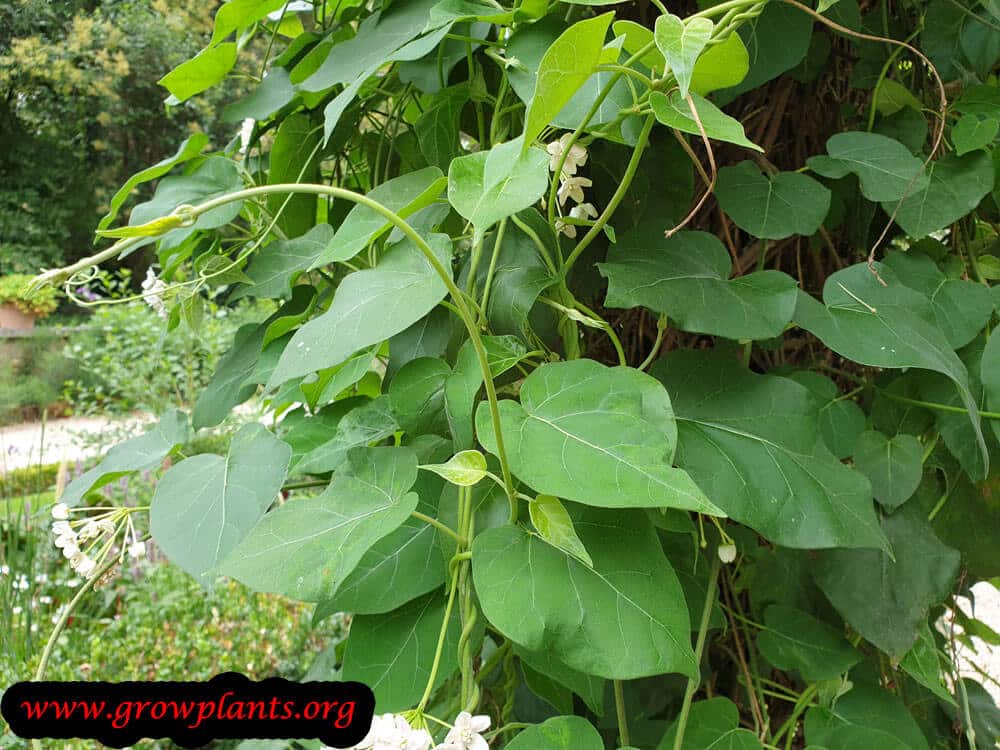
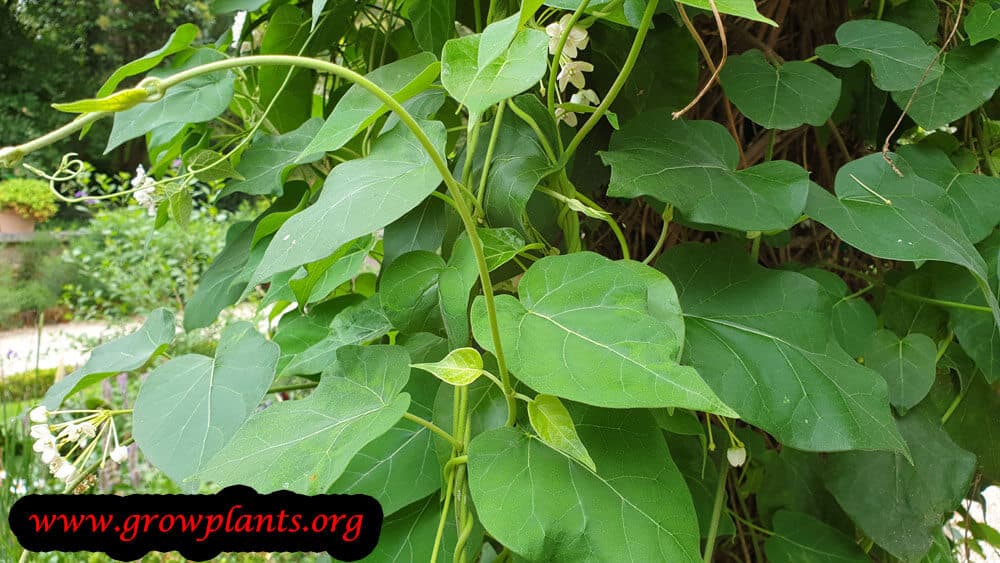
- Growth Habit & Form: Woody twining vine clothed in heart-shaped leaves.
- Lifespan & Maturity: Long-lived perennial climber.
Anatomy & Physical Features
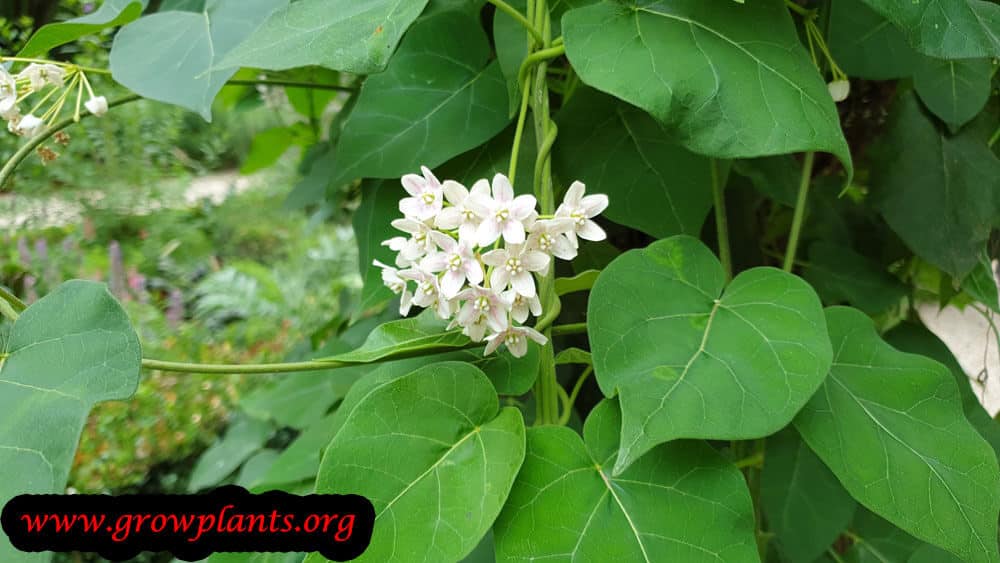
- Leaves & Foliage: Green, heart-shaped leaves.
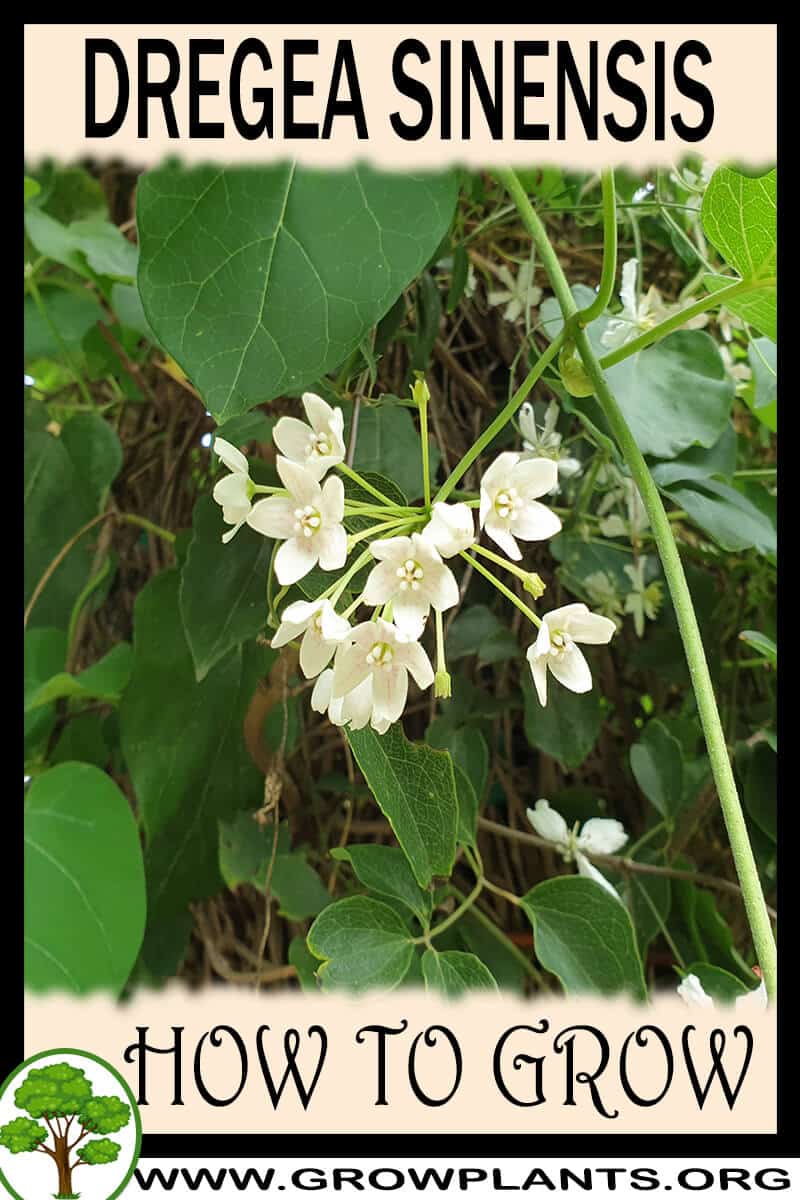
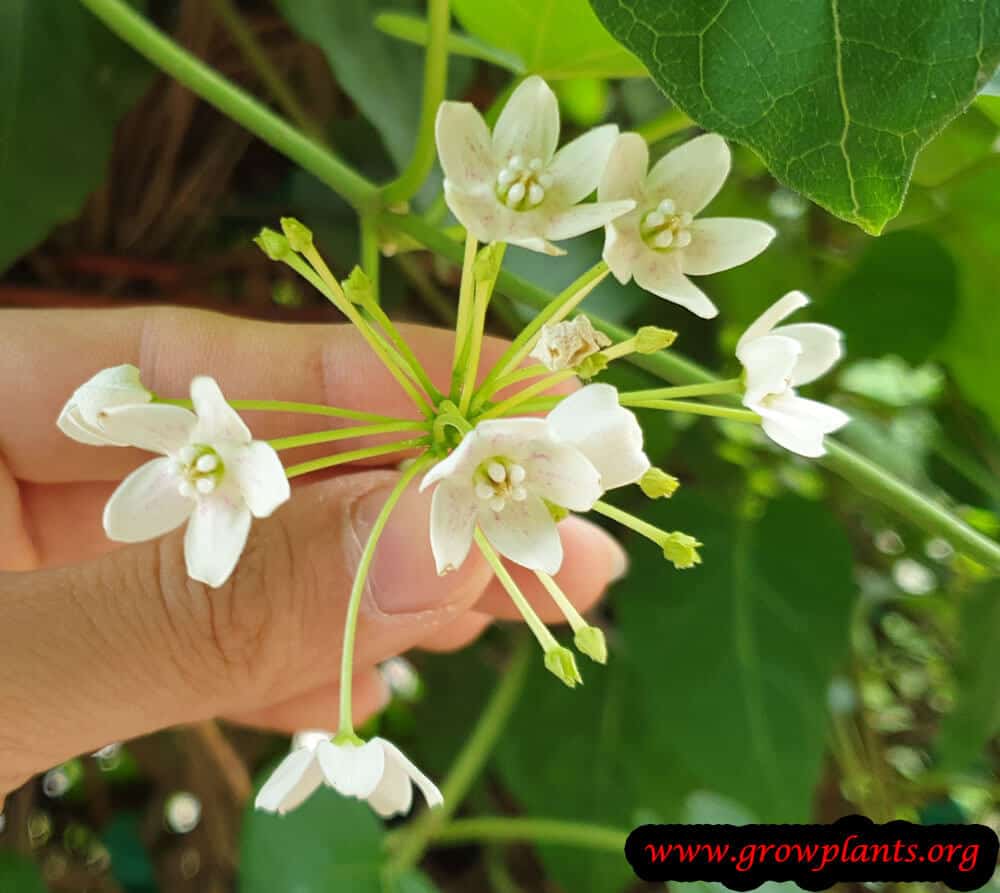
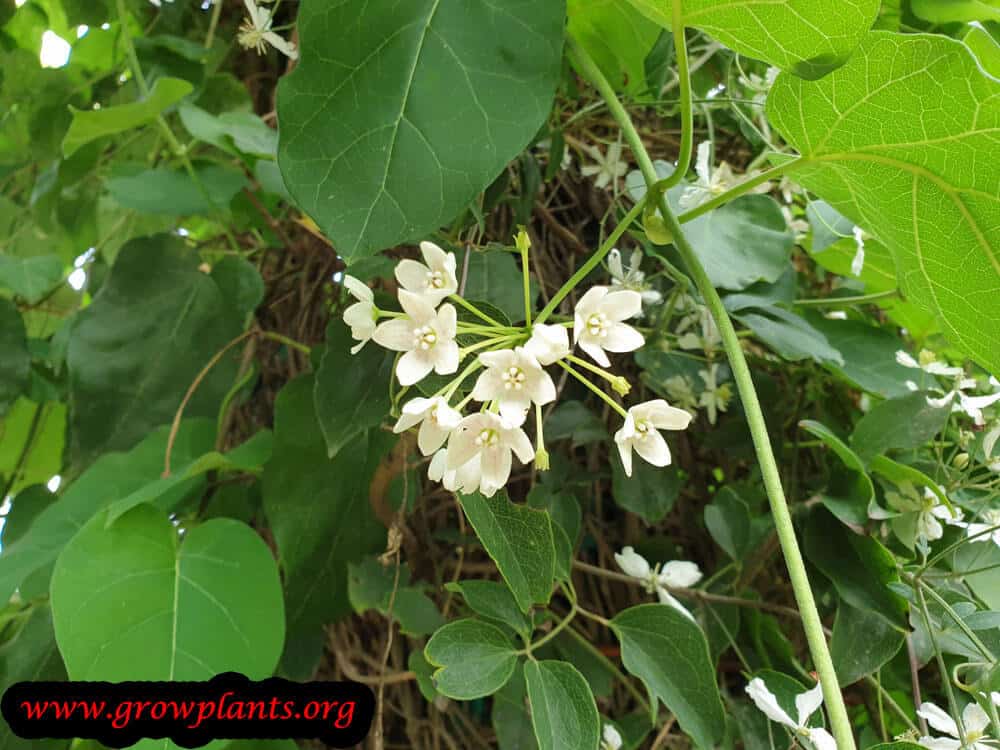
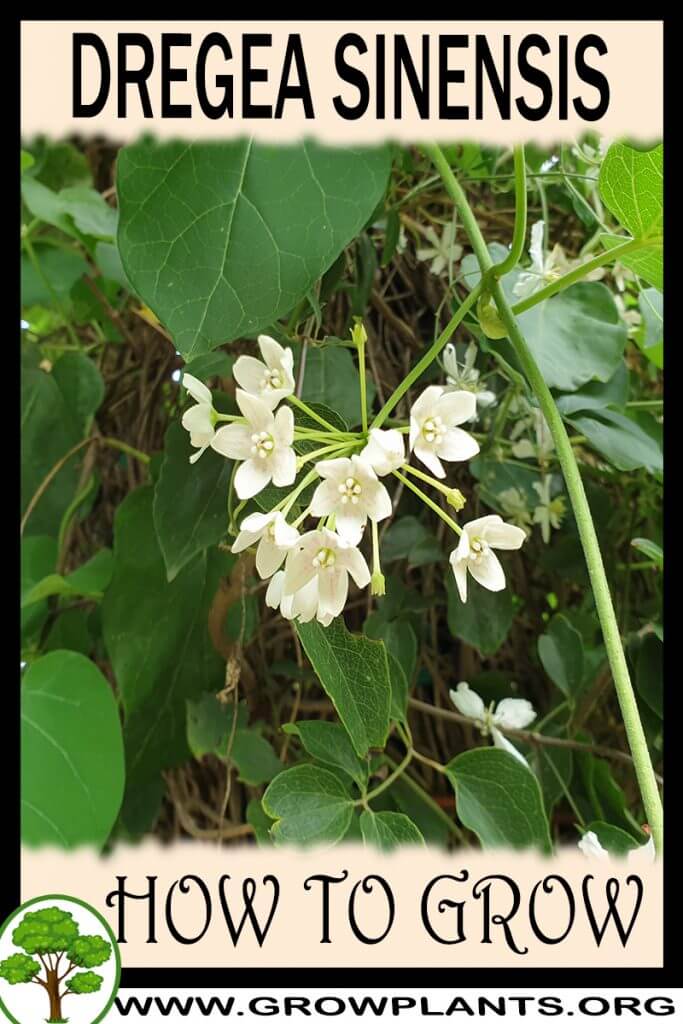
- Flower Characteristics: Fragrant, star-shaped five-petalled flowers, white flushed with pink, borne in clusters.
Primary Uses & Landscape Value
- Functional & Ornamental Roles: Ornamental flowering climber for screening, hedging, trellises and pergolas.
Care Guide: Planting, Soil & Watering
Overview: Dregea sinensis is a moderately vigorous evergreen climber that prefers rich, well-drained soil and a warm, sheltered spot. It takes an average amount of water and grows well in full sun to part shade.
Quick Care Requirements
| Requirement | Ideal Condition |
|---|---|
| Planting Season | Spring through autumn, during the warm growing season |
| Growth Rate | Moderate |
| Soil Type | Rich, fertile, well-draining soil |
| Water Need | Moderate — keep evenly moist but not waterlogged |
Planting & Establishment
- Best Planting Season: Plant during the warm season, from spring through autumn, avoiding frosty periods.
- How to Plant:
- Hole Preparation: Dig a hole a little wider than, and as deep as, the root ball, near a support the vine can climb.
- Soil Amendments: Enrich the planting soil with plenty of compost or well-rotted organic matter, and ensure it drains freely.
- Planting Depth: Set the plant at the same depth it grew in its pot, keeping the root collar at soil level.
- Growth Speed & Expectations: Expect moderate, steady climbing growth; provide a trellis or fence for support.
Soil, Watering & Drainage Care
- Soil Mix & Drainage Needs: Give it rich but free-draining soil; in containers use a quality potting mix and ensure good drainage to avoid soggy roots.
- Watering Schedule & Technique:
- Young / Newly Planted: Water regularly to keep the soil evenly moist while the vine establishes.
- Established: Water moderately, allowing the surface to dry slightly between waterings; don’t let it dry out completely in summer.
- Seasonal Adjustments: Reduce watering in autumn and winter; increase during hot, dry weather.
Climate, Light & Hardiness
Dregea sinensis is a fairly adaptable twining vine suited to subtropical, mild Mediterranean, and warm-temperate gardens, growing well in full sun to half shade. It has noticeably more cold tolerance than many tropical vines – hardy from about USDA zone 9b upward, meaning it can shrug off an occasional light frost, though not a hard freeze.
Quick Climate Specifications
| Climate Zones | Subtropical, mild Mediterranean, warm temperate |
|---|---|
| USDA Hardiness Zones | 9b–12 |
| Light Conditions | Full sun to half shade |
| Frost Tolerance | Low (tolerates brief light frost; not hard freezes) |
Sunlight & Light Exposure
Optimal Light Setup
Full sun to half shade both work well; more sun generally supports denser growth and better flowering on this clustered, star-flowered vine.
Best Exposure / Orientation
A sunny fence, trellis, or hedge line in the open suits it well; half shade is a reasonable fallback in hotter climates or where reflected heat is intense.
Temperature Extremes & Hardiness
USDA Hardiness & Regional Limits
Hardy from approximately zone 9b through 12, a notably wider cold tolerance than most tropical vines, allowing it to persist outdoors through mild, brief winter chill.
Cold Damage & Winter Protection
At the cooler edge of its range, foliage may be damaged by a harder-than-typical frost; siting against a warm wall or in a sheltered spot improves winter reliability in zone 9b gardens.
Frost Sensitivity
Low – light, brief frost is generally tolerated, but sustained hard freezes are likely to cause significant damage.
Wind, Humidity & Microclimate
Microclimate Recommendations
A warm, sheltered spot such as a sunny wall or fence line offers the best combination of flowering performance and winter reliability, particularly toward the cooler end of its hardiness range.
Growing in Pots, Balconies & Indoors
Dregea sinensis is a hardy, twining climber (3-5 m / 10-15 ft) with clusters of scented, hoya-like flowers. The grower says it is not a houseplant, but it grows well in a container if you give it a trellis or wires to climb, in full sun to part shade.
It is an outdoor climber for a patio, balcony or wall rather than an indoor plant; a large pot with strong support keeps it manageable.
Quick Details
- Container Size: A large pot with a sturdy trellis, obelisk or wires to climb.
- Indoor Suitability: Not a houseplant – a hardy climber that belongs outdoors with room to twine.
- Best Spot: Full sun to half shade against a wall, fence or frame.
- Soil & Drainage: Rich, organic, free-draining mix.
- Watering in Pots: Keep evenly moist – average water – but never waterlogged; pots dry faster than open ground.
Indoors & On the Windowsill
- Not for indoors: The grower says no – it is a vigorous twining climber that needs outdoor light and space to scramble.
On a Balcony or Patio
- Light & support: Give it a sunny to lightly shaded spot with a strong trellis or wires; on an exposed balcony, tie it in and shelter it from wind.
- Overwintering: It is fairly hardy but the potted rootball is more cold-exposed – shelter the pot in hard frost; it can die back and re-shoot.
Choosing the Pot, Soil & Long-Term Care
- Pot & drainage: A large, stable pot fitted with a trellis or obelisk for the twining stems. Give it strong drainage holes and skip a standing-water saucer to avoid root rot; terracotta breathes and dries faster, while glazed or plastic pots hold moisture longer.
- Potting mix: A light, aerated, organic-rich mix – potting soil, or peat/coir with perlite, enriched with a little humus or compost.
- Feeding: Potted plants use up their food faster because nutrients wash out with every watering, so feed lightly but more regularly than plants growing in open ground.
- Repotting: Refresh the mix and pot up every couple of years; prune after flowering to keep the climber in bounds.
Fertilizing & Feeding
A moderate feeder as an evergreen climbing hedge plant: balanced feeding at planting shifts toward nitrogen while the vine fills out its structure, then to balanced feeding through the flowering period.
Quick Fertilizing Specs
| Feeding Level | Moderate feeder through the growing season |
|---|---|
| Main Nutrient Priority | Nitrogen to build vine structure, then balanced feeding to support flowering |
| Best Feeding Period | Warm-season active growth from spring through the summer bloom |
| Organic Options | Compost or organic matter worked into rich soil around the root zone |
| Reduce/Stop Feeding | Ease off feeding once the season’s growth flush and bloom have finished |
| Micronutrients | Usually supplied by a complete fertilizer; correct only a diagnosed deficiency |
| Soil pH | Tolerates a range of soil pH; performs best in rich soil |
Feeding by Growth Stage
Establishment after planting
Let the root system settle into rich soil before the vine is asked to cover its support structure.
| Nutrient direction | A light, balanced feeding at planting supports early root and shoot development. |
|---|---|
| Timing | At planting and through the first weeks as the vine begins to climb. |
| Frequency | A light feeding at planting, worked into rich soil around the root zone. |
| Fertilizer types | A balanced complete fertilizer worked into the planting area, Compost or organic matter mixed into the soil |
| Precautions | Keep feeding light until the vine is clearly climbing and putting out new growth on its own. |
Active vine growth
Support the vine as it extends and fills out its trellis, fence, or hedge structure.
| Nutrient direction | A nitrogen-forward feeding supports the vigorous stem and leaf growth needed to cover the support. |
|---|---|
| Timing | Through spring and into summer as the vine actively extends. |
| Frequency | Regular light feedings through the main growth flush. |
| Fertilizer types | A nitrogen-forward balanced fertilizer, Organic matter worked in around the root zone |
| Routine trace nutrients | iron |
| Precautions | Avoid pushing overly soft, fast growth, which is more prone to aphid infestation. |
Spring to summer bloom
Support the clusters of star-shaped flowers through the bloom period.
| Nutrient direction | A balanced fertilizer supports flowering without encouraging excess vine growth at the expense of blooms. |
|---|---|
| Timing | Through the spring-to-summer bloom season. |
| Frequency | Continue light, regular feeding through the bloom period, then ease off once flowering finishes. |
| Fertilizer types | A balanced complete fertilizer, Compost or humus as a top-dressing |
| Precautions | Reduce nitrogen relative to the growth stage; too much late nitrogen favors leafy growth over flowering. |
Nutrient Deficiency Signs & Corrections
Vine growth is sparse or slow to cover its support and leaves are pale green.
| Possible causes | low available soil nitrogen, nitrogen leaching from watering or rainfall, thin, low-organic-matter soil |
|---|---|
| Appears first on | overall vine vigor and leaf color |
| What to check | recent feeding history, soil organic matter, how densely the vine is covering its support relative to its age |
| Possible correction | Apply a nitrogen-forward balanced fertilizer and build soil organic matter. |
New leaves show yellowing between the veins while the veins stay green.
| Possible causes | iron deficiency, often in alkaline soil, poor drainage stressing the roots, cold soil limiting root uptake |
|---|---|
| Appears first on | newest growth |
| What to check | soil pH and drainage, recent watering pattern, whether yellowing is interveinal or uniform |
| Possible correction | Where soil is markedly alkaline, work toward a more moderate pH and apply a chelated iron product per its label. |
A black, sooty coating develops on leaves, dulling their color and reducing overall vigor.
| Possible causes | aphid honeydew supporting sooty mold growth on leaf surfaces, poor airflow around dense vine growth favoring mold, reduced plant vigor from uneven feeding lowering resistance to pests |
|---|---|
| Appears first on | leaf surfaces beneath aphid colonies |
| What to check | leaves and new shoots for aphid colonies, airflow and crowding in the vine canopy, recent feeding consistency |
| Possible correction | Control the aphids, wash sooty mold from leaves, improve airflow by thinning growth, and keep feeding balanced to support recovery. |
Pruning, Training & Seasonal Maintenance
Dregea sinensis is an evergreen, twining vine grown for its fragrant clustered flowers and often used as a climbing hedge/screen plant, so pruning is about guiding and containing a vigorous climber rather than building permanent structure. It flowers in spring to summer, and the recorded pruning window – autumn to winter – falls right after that bloom finishes, which is the safest time to shape and thin it without cutting away the coming season’s flower buds.
Quick Pruning & Maintenance Specs
| Pruning Tolerance | Moderate to high – tolerates shaping and thinning, resprouts well |
| Primary Pruning Window | Autumn to winter, after flowering finishes |
| Typical Frequency | Once a year, plus occasional light tidying of stray growth |
| Main Objective | Contain size/spread and keep the twining growth organised on its support |
| Young Plant Priority | Establish a support and guide leading shoots onto it |
| Mature Plant Priority | Thin congested, crossing or tangled stems; control height and spread |
| Best Tool Type | Bypass secateurs, with loppers for older basal stems |
| Avoid Heavy Pruning During | Spring to summer, while flower buds are developing and opening |
Pruning by Plant Age & Size
Newly Established
Put a trellis, wire or arbor in place early and only remove damaged growth – let the young vine put its energy into reaching and gripping its support.
Young / Formative
Guide and tie the leading twining shoots onto the support to spread coverage; this is a training-by-guiding vine rather than one needing a leader or framework of permanent branches.
Mature / Established
Once established, thin out overcrowded or tangled twining stems after flowering, remove crossing/rubbing growth, and cut back any stems that have outgrown their allotted space.
Seasonal Pruning Schedule
Post-Flowering (Autumn to Winter): objective is shaping and size control. Remove tangled, crossing or overly long stems; do not strip out all of the older twining growth, since flowers form on spurs along established stems similar to related twining vines in this family, and next season’s bloom depends partly on that wood being retained.
Flowering & Fruiting Wood
Like its close relatives among the twining milkweed vines (e.g. Hoya), Dregea sinensis is understood to flower repeatedly from spurs on established stems rather than purely on brand-new growth, so indiscriminately cutting all old wood back each year removes flowering potential. Prune selectively – thin and shorten some stems, but leave a framework of older twining growth in place – and always prune after the spring/summer bloom rather than before or during it.
Structural Pruning & Training
As a twining climber grown for screening/hedging, the main structural task is keeping growth organised on its support: remove crossing and inward-tangling stems, thin dense congestion so light reaches the interior, and cut back stems that have exceeded the intended height or spread.
Special Growth to Remove
Remove dead or tangled twining stems. If grown as a hedge/screen, basal shoots can be retained to thicken the base of the planting; if a single, cleaner vine is wanted, remove excess basal shoots instead.
Container & Small-Space Pruning
In a container, provide a compact trellis and prune more frequently to keep growth within bounds, since confined roots will not slow this vine’s twining habit on their own.
Tools
Bypass secateurs handle routine stem thinning and shaping; loppers are useful for thicker, older basal stems on a mature specimen; soft ties or stakes are needed to train new growth onto its support.
Tool Hygiene & Disease Risk
Routine. No significant tool-transmitted disease is reported (aphids are the main pest); ordinary clean, sharp tools are sufficient.
Cut Placement & Technique
Cut back to a healthy node or bud facing the direction you want the new twining growth to travel along the support; avoid tearing stems away from their ties.
Heavy Pruning & Rejuvenation
An old, tangled specimen tolerates fairly hard renovation – cut back within the support framework and let it resprout from the remaining older stems and base. On a very overgrown vine, spread the hardest cuts over two seasons to avoid losing most of a year’s flowering wood at once.
Post-Pruning Care
Refresh ties after pruning so regrowth climbs cleanly, and watch the new flush of soft growth for aphids.
Common Pruning Mistakes
- Pruning in spring or summer and cutting off developing flower buds.
- Stripping out all older twining stems at once, removing the spurs next year’s flowers would have come from.
- Letting the vine go untrained until it becomes a tangled mass that then needs harsh corrective cutting.
When NOT to Prune
Avoid pruning in spring to summer while flower buds are forming and opening; wait until after the bloom finishes in autumn/winter.
Recommended Tools (by task)
- bypass_secateurs – routine thinning and shaping of twining stems.
- loppers – cutting back thicker, older stems on a mature specimen.
- soft_ties_stakes – training new twining growth onto its support.
Pruning Troubleshooting
| Problem | Possible Cause | What to Check | Corrective Action |
| Few or no flowers | Pruned too hard or too early, removing flowering spurs/buds | Timing of the last prune relative to the spring/summer bloom | Shift pruning to directly after flowering; thin lightly rather than stripping old wood |
| Tangled, bare-based vine | No regular structural thinning; inadequate support | Congestion and crossing stems, condition of the support | Selectively thin congested stems and secure a proper support/trellis |
Propagation Guide
Dregea sinensis is not difficult to start from either seed or cuttings, and the site notes that neither grafting nor vegetative propagation is strictly required; as a twining vine related to Hoya and Marsdenia, semi-hardwood stem cuttings are generally the most practical way to propagate it at home, while seed – produced in paired pod-like follicles with silky, wind-dispersed seeds typical of this plant family – offers a straightforward alternative when available. Propagation is generally Easy.
Quick Propagation Specs
| Best Propagation Method | Semi-hardwood stem cuttings |
| Alternative Methods | Seed |
| Propagation Difficulty | Easy |
| Seed True-to-Type | Usually true-to-type |
| Vegetative True-to-Type | Yes |
| Best Propagation Season | Spring through summer, during active growth |
Growing from Seed
Seed Handling & Viability
Seed is produced in paired follicles with silky, wind-dispersed plumes, typical of this plant family; as with many related vines in the milkweed family, viability likely declines fairly quickly after harvest, so sowing reasonably fresh seed is advisable.
Germination Conditions
Warm, humid conditions with a free-draining mix.
Stem Cuttings
Cutting Type
Semi-hardwood stem cuttings.
Best Timing
Spring through summer, during active growth.
Rooting Setup
Warm, humid conditions with a free-draining, moisture-retentive medium.
Rooting Hormone
Optional; may improve rooting consistency but is not strictly required.
Rooting Time
Typically a few weeks under warm, humid conditions.
Bloom & Flower Guide
Quick Details
- Bloom Season: Spring into summer
- Flower Appearance: Rounded clusters of small, white, star-shaped flowers with five petals, flushed with a little pink; fragrant
- Edibility: Ornamental – not eaten
Detailed Blooming Overview
Chinese dregea is a twining climber in the milkweed and dogbane family (Apocynaceae), related to Hoya. Through the warmer months it produces hanging clusters of sweetly scented, waxy star flowers on a plant that doubles as an ornamental hedge or wall cover.
Flower Characteristics
- White five-petalled stars with fine pink markings.
- Carried in rounded clusters; sweetly fragrant.
Bloom Care & Thinning
- Site for flowers: Blooms on new growth in a warm, sheltered, sunny spot; keep the roots cool and moist.
- Pruning: Prune after flowering to shape and to encourage the next flush.
Bloom Health & Protection
- Aphids on buds: Milkweed-family plants often draw aphids that cluster on buds and flower stalks – a strong jet of water or a neem-oil spray keeps them in check.
Pests, Diseases & Troubleshooting
Dregea sinensis is a twining milkweed-family climber (a close relative of Hoya and Wattakaka) and, like its kin, is largely trouble-free but attractive to sap-sucking insects on its soft new growth and fragrant flower clusters. Aphids, mealybugs and scale are the mainstays, with occasional mites and whitefly; its main disease risks are fungal leaf spots and root rot in wet, heavy soil. Grow it in free-draining soil with good airflow, inspect the new shoots and flower buds regularly, and cultural controls will handle most issues.
Quick Troubleshooting Overview
| Issue / Pest | Main Symptom | Primary Solution |
|---|---|---|
| Aphids | Clusters on new shoots/buds; sticky honeydew, sooty mould | Hose off, insecticidal soap, encourage ladybirds |
| Mealybugs | White cottony tufts in leaf axils and on stems | Alcohol swab, insecticidal soap, horticultural oil |
| Scale insects | Brown/tan bumps on stems and leaf undersides | Scrape off, horticultural oil |
| Spider mites | Fine stippling and webbing in hot dry conditions | Raise humidity, rinse foliage, horticultural oil |
| Fungal leaf spot | Brown/black spots, sometimes with yellow halos | Remove leaves, improve airflow, copper fungicide |
| Root rot | Wilting, yellowing, soft stem base in wet soil | Reduce watering, improve drainage |
Common Pests & Management
- Aphids (Aphis / Myzus spp.):
- Symptoms: Dense clusters of soft green, black or brown insects on the tender growing tips, flower stalks and buds; sticky honeydew, sooty mould and curled, distorted new growth follow. Often the first pest to appear on this vine.
- Prevention & Control: Dislodge colonies with a strong jet of water and wipe growth clean. Apply insecticidal soap or neem/horticultural oil to soft growth, repeating as needed, and encourage ladybirds, lacewings and hoverflies, which control aphids well outdoors.
- Mealybugs (Planococcus / Pseudococcus spp.):
- Symptoms: White cottony, waxy tufts nestled in leaf axils, along stems, and among flower clusters; honeydew and sooty mould accompany them. Root mealybugs can also occur in the pot.
- Prevention & Control: Dab colonies with an alcohol-dipped swab and wipe stems and leaves. Follow with insecticidal soap or horticultural oil every 7–10 days until clear; check the rootball and repot into fresh mix if roots are infested.
- Scale insects (Coccus / Saissetia spp.):
- Symptoms: Brown, tan or dark limpet-like bumps clustered along stems, leaf undersides and midribs; soft scale exudes honeydew that blackens foliage with sooty mould.
- Prevention & Control: Scrape scale off with a fingernail or soft brush and dab with alcohol, then smother the remainder with horticultural oil, ensuring full coverage. Repeat for successive crawler generations and prune out heavily encrusted stems.
- Spider mites (Tetranychus urticae):
- Symptoms: Fine pale stippling and a dull, bronzed cast to the leaves, with fine webbing in severe cases; worst on plants grown hot, dry and sheltered, or indoors over winter.
- Prevention & Control: Raise humidity and rinse the foliage, particularly the undersides. Apply horticultural oil or insecticidal soap to both leaf surfaces, repeating to break the life cycle; predatory mites help in enclosed spaces.
- Whitefly (Trialeurodes / Bemisia spp.):
- Symptoms: Tiny white moth-like insects that flutter up in clouds when the foliage is disturbed; nymphs on leaf undersides suck sap and excrete honeydew, yellowing leaves and encouraging sooty mould.
- Prevention & Control: Hang yellow sticky traps to monitor and reduce adults. Rinse leaf undersides and treat with insecticidal soap or horticultural oil, repeating regularly; encourage natural parasitoids and predators in the garden.
Diseases & Fungal Issues
- Fungal leaf spot (Cercospora / Colletotrichum / Alternaria spp.):
- Symptoms: Round to irregular brown or black spots, sometimes ringed with a yellow halo, on the leaves; they multiply in wet, humid, crowded conditions and can cause premature leaf drop.
- Treatment & Management: Remove and destroy spotted leaves and clear fallen debris. Improve air circulation, water at the base rather than overhead, and apply a copper-based fungicide if spotting spreads.
- Powdery mildew (Erysiphe / Podosphaera spp.):
- Symptoms: A white to greyish powdery coating on leaves and shoots, chiefly in warm days with cool humid nights and poor airflow; heavy infection distorts and yellows leaves.
- Treatment & Management: Improve airflow and light penetration by thinning and training the vine, and avoid wetting the foliage. Treat with a sulphur- or potassium-bicarbonate-based fungicide, or a horticultural oil, at first signs.
- Root & stem rot (Phytophthora / Pythium / Fusarium spp.):
- Symptoms: Wilting and yellowing despite moist soil, with a soft, darkened stem base and brown, mushy roots; caused by waterlogged, poorly drained soil.
- Treatment & Management: Reduce watering and improve drainage immediately. In pots, unpot and cut away soft, dark roots, then repot into fresh, free-draining mix. In the ground, avoid planting in heavy, wet spots and do not overwater.
Growing Difficulties & Abiotic Problems
- Overwatering & poor drainage:
- Cause & Symptoms: Like other milkweed-family climbers, Dregea resents wet feet; soggy soil suffocates the roots and leads to yellowing, wilting and rot.
- Correction Strategy: Plant or pot in free-draining soil and let the surface dry between waterings, easing off in cool or dormant periods. Ensure containers drain freely and never leave the plant standing in water.
- Cold & frost damage:
- Cause & Symptoms: Though hardier than many relatives, hard frost can blacken young growth and cut the vine back; cold, wet winters are riskier than cold alone.
- Correction Strategy: Site it in a sheltered, sunny spot with good drainage. In colder areas grow against a warm wall or in a container that can be protected, and mulch the roots over winter; prune out frost-damaged growth in spring.
- Chlorosis (nutrient / alkaline soil):
- Cause & Symptoms: Yellowing between green veins on new leaves points to iron or manganese deficiency, often induced by very alkaline or waterlogged soil rather than a true lack of nutrients.
- Correction Strategy: Improve drainage and correct soil pH toward neutral; apply a chelated iron/trace-element feed as a short-term fix while addressing the underlying soil condition.
- Poor flowering / weak growth:
- Cause & Symptoms: Too much shade, over-feeding with nitrogen, or a cramped root run gives lush leaf but few of the scented flower umbels.
- Correction Strategy: Grow in full sun to light shade with support to climb, feed moderately with a balanced (not high-nitrogen) fertiliser, and allow it to establish; flowering improves on settled, well-sited plants.
What Helps – Products & Tools
The toolkit here is simple and organic-led: insecticidal soap and neem / horticultural oil for aphids, mealybugs, scale, mites and whitefly; rubbing alcohol for spot-dabbing; yellow sticky traps for whitefly; a sulphur or potassium-bicarbonate fungicide for powdery mildew and a copper fungicide for leaf spot; plus chelated iron for chlorosis. Free-draining soil and good airflow do most of the preventative work.