Plant Profile & Key Characteristics
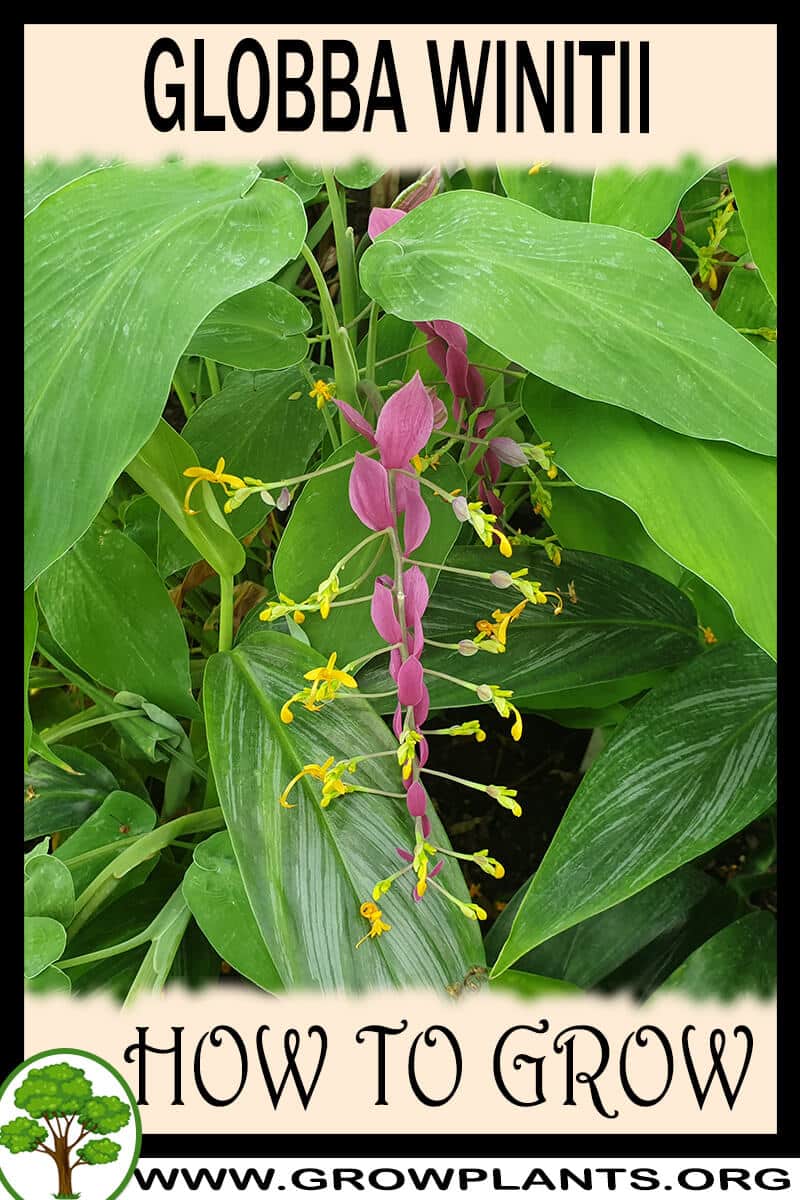
Overview: Globba winitii (dancing lady ginger) is a tropical evergreen perennial 30-120 cm (1-4 ft) tall from the ginger family, grown as an ornamental and houseplant for its arching sprays of colourful bracts and small yellow flowers. It thrives in shade and warmth.
Quick Specifications
| Specification | Attribute |
|---|---|
| Plant Type / Life Cycle | Evergreen perennial (rhizomatous) |
| Foliage Type | Evergreen (dormant/deciduous where cool or dry) |
| Mature Size | 30-120 cm (1-4 ft) tall |
| Growth Rate | Moderate |
| Root System | Rhizomatous |
| Hardiness | USDA zones 10b+ (grown as a houseplant or lifted where colder) |
Growth Form & Structure
- Height & Spread: A clump 30-120 cm (1-4 ft) tall; well suited to shady containers and to growing indoors.
- Growth Habit & Form: Clump-forming, ginger-like plant with leafy stems and arching, pendent flower sprays.
- Lifespan & Maturity: A perennial spreading by rhizomes; may go dormant in cool or dry conditions.
Anatomy & Physical Features
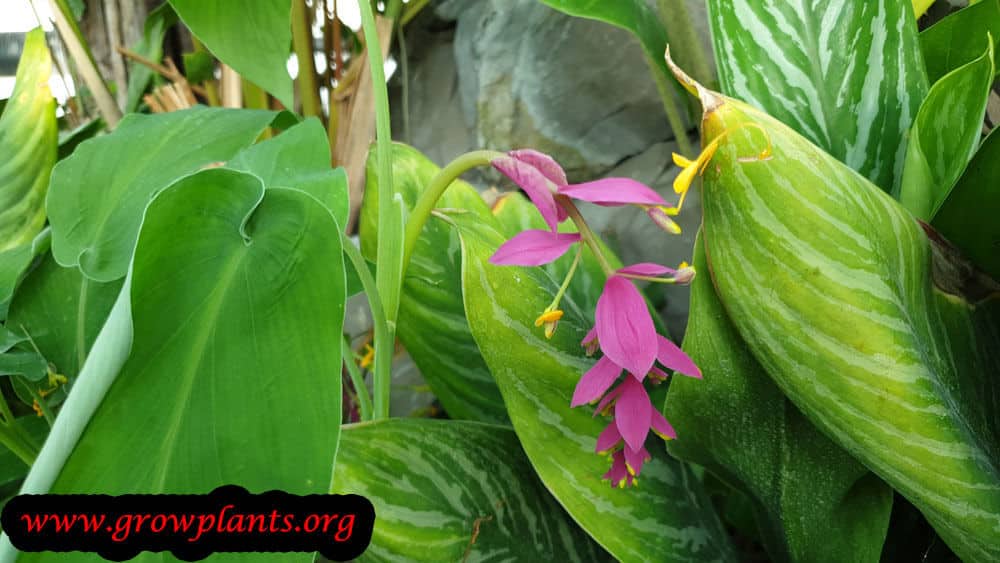
- Leaves & Foliage: Green, oval leaves on upright, ginger-like stems.
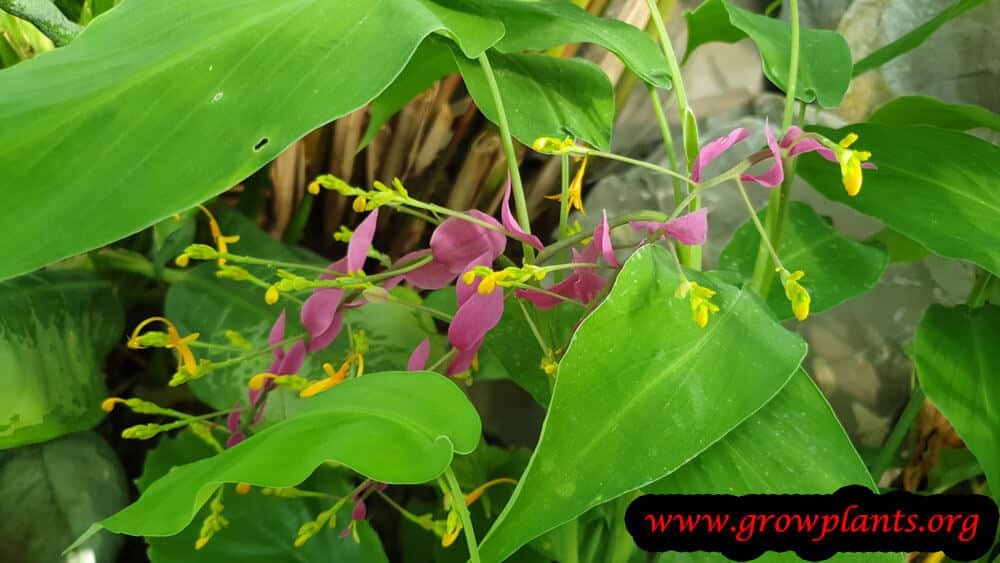
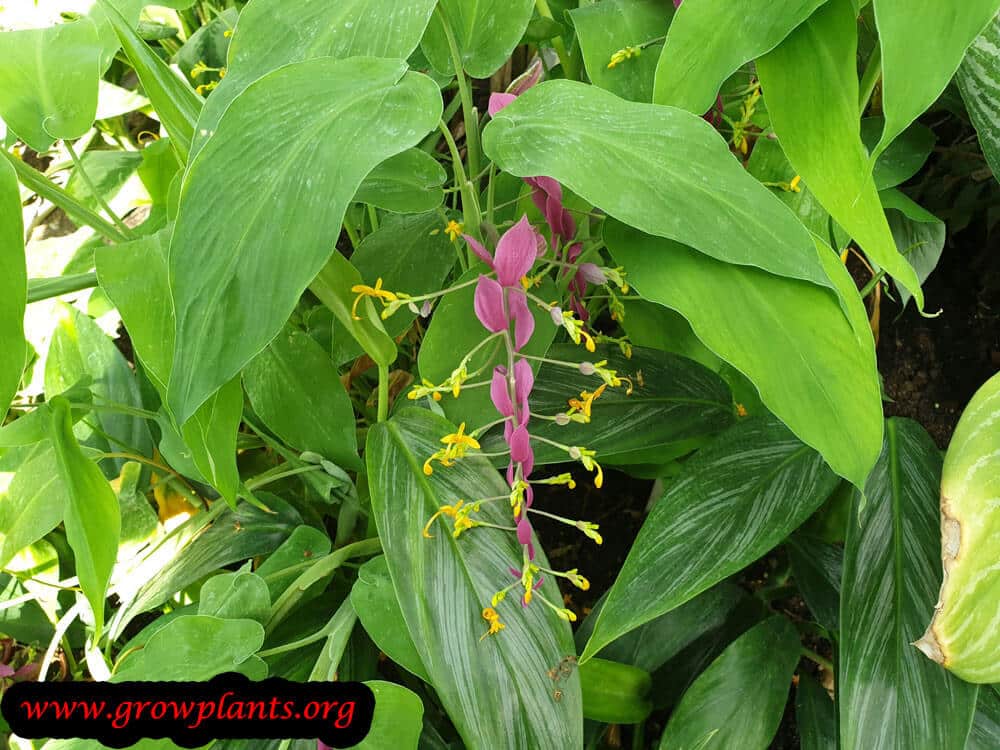
- Flower Characteristics: Pendent sprays of drop-shaped bracts (pink, yellow, white, orange, red or purple) with small, curiously shaped yellow flowers.
Primary Uses & Landscape Value
- Functional & Ornamental Roles: A shade-garden, tropical-border, container and houseplant ornamental grown for its exotic flower sprays.
Care Guide: Planting, Soil & Watering
Overview: Globba (dancing girl ginger) is a medium-growing tropical perennial (hardiness zone 10b+, or a houseplant) for shade to part shade, thriving in rich, moist, well-drained soil high in organic matter. It likes generous, steady moisture and warm, humid conditions.
Quick Care Requirements
| Requirement | Ideal Condition |
|---|---|
| Planting Season | Warm season — spring, summer or autumn |
| Growth Rate | Moderate |
| Soil Type | Rich, moisture-retentive, well-draining soil |
| Water Need | Moderate to High — keep evenly moist, never let it dry out |
Planting & Establishment
- Best Planting Season: Plant in the warm months of spring through autumn in frost-free zone 10b+; elsewhere grow it in a pot that can move indoors.
- How to Plant:
- Hole Preparation: Dig a hole about twice the width of the root ball and the same depth.
- Soil Amendments: Work in plenty of compost or leaf mould — this ginger relative wants a rich, humus-laden soil.
- Planting Depth: Set the rhizome and crown at soil level; don’t bury the stems.
- Growth Speed & Expectations: Moderate — forms a leafy clump that arches into flower by summer.
Soil, Watering & Drainage Care
- Soil Mix & Drainage Needs: Use rich, moisture-retentive yet well-drained soil; a peat- or compost-based potting mix with good aeration suits containers and indoor pots.
- Watering Schedule & Technique:
- Young / Newly Planted: Keep the soil consistently moist and humid while the plant establishes.
- Established: Water generously to keep the soil evenly moist through the growing season; do not let it dry out.
- Seasonal Adjustments: Water freely in warm growth and reduce as growth slows in cooler weather.
Climate, Light & Hardiness
Globba winitii is a tropical understory perennial that needs warm, humid, shaded-to-filtered conditions, and it is markedly frost-tender - thriving outdoors only in essentially frost-free climates or being grown as a houseplant elsewhere.
Quick Climate Specifications
| Climate Zones | Tropics, subtropics, and Mediterranean climates (with protection), or as a houseplant elsewhere |
|---|---|
| USDA Hardiness Zones | 10b and warmer outdoors; in cooler zones it is grown as a container plant, kept indoors or brought in before cold weather |
| Optimal Temp Range | Approximately 18–28°C (64–82°F) |
| Cold Damage Begins | Roughly below 10°C (50°F), where foliage typically starts to show cold stress |
| Approx. Survival Minimum | The rhizome may survive brief, mild cool spells if kept relatively dry and protected, but sustained cold or cold-wet conditions are usually fatal to top growth and can kill the rhizome |
| Frost Tolerance | Very Low |
| Light Conditions | Half shade to full shade (bright, filtered light) |
| Wind Tolerance | Low |
Sunlight & Light Exposure
Optimal Light Setup
Bright, filtered or dappled light that mimics a tropical forest understory suits it best; deep, dense shade reduces flowering.
Shade & Heat Management
Protect it from strong midday and afternoon sun, especially in hot climates - filtered light under trees outdoors, or a bright spot out of direct rays indoors, both work well.
Best Exposure / Orientation
An east-facing or otherwise gently lit position that avoids intense afternoon sun gives the healthiest foliage.
Temperature Extremes & Hardiness
USDA Hardiness & Regional Limits
Hardy outdoors only from zone 10b upward. Elsewhere it is grown as a seasonal container plant or houseplant that can spend summer outside in a sheltered, shaded spot and must come indoors well before cold weather arrives.
Cold Damage & Winter Protection
Temperatures below roughly 10°C (50°F) begin to stress the foliage. Indoor plants should be kept clear of cold drafts and cold window glass through winter.
Frost Sensitivity
Very frost sensitive; any frost is likely to kill top growth, and prolonged freezing threatens the rhizome as well.
Extreme Heat Tolerance
Tolerates warm to hot tropical temperatures well provided humidity and shade or filtered light are maintained; heat combined with dry air and full sun causes leaf scorch.
Wind, Humidity & Microclimate
Humidity Preferences
Needs consistently high humidity, reflecting its native humid tropical forest-floor habitat; dry indoor air can cause leaf-tip browning.
Dry-Air Tolerance
Low - benefits from misting, a pebble tray, or a humidifier when grown indoors in dry climates or during winter heating season.
Wind Tolerance
Low; the broad, soft leaves are easily torn or damaged by strong wind, so a sheltered position is best.
Rainfall & Seasonal Moisture
Native to consistently moist, high-rainfall tropical climates; performs best where moisture is fairly constant through the growing season rather than through prolonged dry spells.
Microclimate Recommendations
A shaded, humid, wind-sheltered spot - such as under tree canopy outdoors or a bright bathroom or kitchen indoors - suits it best.
Growing in Pots, Balconies & Indoors
Globba winitii is a tender, shade-loving tropical ginger that the grower confirms as a good houseplant, and it also thrives in containers. Its need for warmth, humidity and shade makes a pot indoors or on a sheltered patio the natural way to grow it outside the tropics.
Quick Details
- Container Size: A medium pot suited to a 30-120 cm clump; pot up as the rhizomes spread
- Indoor Suitability: A genuine houseplant – happy in bright, indirect indoor light
- Best Spot: Half to full shade; warm, humid and out of direct midday sun
- Soil & Drainage: Rich, moisture-retentive but free-draining mix
- Watering in Pots: Average to generous water – keep the mix consistently moist through active growth
Indoors & On the Windowsill
- A true houseplant: The grower rates it as a good indoor plant. Give it bright, indirect light and warmth, keep the humidity up (group with other plants or stand the pot on a damp pebble tray), and keep the mix evenly moist.
- Overwintering: It is frost-tender; where winters are cold, keep it indoors or move the pot inside, easing off water as the rhizomes rest through the cool season.
On a Balcony or Patio
- Light & shelter: Choose a shaded, sheltered corner out of harsh sun and wind, which scorch and tatter the foliage. Warm, humid air suits it best.
- Practicalities: Pots dry and lose humidity faster in open air – check moisture often and mist or group plants to hold humidity.
Choosing the Pot, Soil & Long-Term Care
- Pot & drainage: Use a pot with strong drainage holes and skip a standing-water saucer, which invites root rot. Terracotta breathes and dries faster, while glazed or plastic pots hold moisture longer.
- Potting mix: A well-aerated, organic-rich medium – a quality potting mix, or peat/coir loosened with perlite or vermiculite. It likes richer, moisture-holding mixes.
- Feeding: Potted plants run through their soil faster as nutrients leach away with each watering, so feed a little more often than plants in open ground.
- Repotting: Refresh the mix and pot up roughly every couple of years, lightly trimming the root ball and top growth on perennials. Divide crowded rhizome clumps at the same time.
Growing this plant in a greenhouse
A greenhouse can give globba winitii frost protection, cold protection, humidity control and extra warmth.
Greenhouse at a glance
| Greenhouse suitability | Good - clearly useful |
|---|---|
| Main benefits | frost protection, cold protection, humidity control, extra warmth |
| Season extension | earlier spring & later autumn |
| Outdoor protection advisable below | about 10°C |
| Maintain greenhouse minimum | around 15°C for active growth |
| Suitable types | heated greenhouse, polycarbonate greenhouse |
| Heating | Heating is recommended in cold climates for continuous growth. |
Related greenhouse guides
- Greenhouses: How to Choose the Right Greenhouse
- Best Greenhouse Heaters
- Greenhouse Climate Control: Temperature, Ventilation and Humidity
- Polycarbonate Greenhouses: What to Look for Before Buying
Fertilizing & Feeding
A light feeder: several light feedings through the warm growing season, applied as a diluted spray, support the leafy growth and colorful bracts, with feeding stopped once the weather turns cool.
Quick Fertilizing Specs
| Feeding Level | Light feeder |
|---|---|
| Main Nutrient Priority | Balanced feeding with adequate nitrogen for foliage and bract color |
| Best Feeding Period | Through the warm active growing season into bloom |
| Organic Options | Compost or humus worked into rich, moisture-retentive soil |
| Reduce/Stop Feeding | Feeding stops as the weather cools and growth slows for the season |
| Micronutrients | Usually met by a complete fertilizer; correct only a diagnosed issue |
| Soil pH | Near neutral in rich, moist, well-drained soil |
Feeding by Growth Stage
Spring flush of new shoots and foliage
Support fresh rhizome shoots and leafy growth as the plant comes back into active growth.
| Nutrient direction | A balanced complete fertilizer with adequate nitrogen supports the flush of new foliage. |
|---|---|
| Timing | As new shoots emerge and through the start of the warm growing season. |
| Frequency | A light feeding as growth resumes, then continuing lightly as foliage fills out. |
| Fertilizer types | A balanced complete fertilizer, diluted for light feeding, Compost or humus worked into rich soil |
| Precautions | Keep feeding light; rich, moisture-retentive soil already supplies much of what this plant needs. |
Blooming with colorful bracts and flowers
Support the drooping clusters of bracts and flowers through their display.
| Nutrient direction | Continued balanced feeding, applied lightly as a foliar spray, is what drives good bract and flower color; a high-phosphorus “bloom booster” is not needed for this. |
|---|---|
| Timing | Through the bloom period in the warm months. |
| Frequency | An occasional light feeding, applied as a spray, is usually enough through bloom. |
| Fertilizer types | A balanced complete fertilizer, diluted and applied as a light foliar spray |
| Precautions | Rarely needs feeding beyond a light, occasional application; overfeeding can dull leaf and bract color. |
Cool-season rest
Let the plant coast through cooler weather without pushing new growth it can’t use.
| Nutrient direction | None – withhold fertilizer while the plant is not in active growth. |
|---|---|
| Timing | During cool weather or the cooler part of the year, including as an overwintering houseplant. |
| Frequency | No feeding during this rest period. |
| Fertilizer types | No feeding at this stage; do not fertilize until active growth resumes in warm weather. |
| Precautions | Do not fertilize while the plant is resting in cool conditions; feeding it now can build up salts the plant cannot use. |
Nutrient Deficiency Signs & Corrections
Older leaves turn pale green to yellow and new growth is smaller and slower than expected.
| Possible causes | low available nitrogen from infrequent feeding, nitrogen leaching from moist, well-drained or frequently watered soil, soil with little organic matter |
|---|---|
| Appears first on | older, lower leaves |
| What to check | recent feeding history, soil organic matter and moisture, overall growth rate compared to the growing season |
| Possible correction | Apply a diluted, balanced complete fertilizer and renew organic matter in the soil. |
New leaves show yellowing between the veins while the veins themselves stay green.
| Possible causes | high soil pH limiting iron availability, waterlogged or poorly drained soil, root stress from cold or overly wet conditions |
|---|---|
| Appears first on | newest leaves |
| What to check | soil pH and drainage, recent watering and temperature stress, root health |
| Possible correction | Correct drainage and soil pH where possible, and apply a chelated iron product per its label if the issue persists. |
Interveinal yellowing develops on older leaves while veins remain green.
| Possible causes | low soil magnesium, leaching from frequent watering in rich, moist soil, heavy potassium feeding competing with magnesium uptake |
|---|---|
| Appears first on | older, lower leaves |
| What to check | soil magnesium status, watering frequency and drainage, recent feeding balance |
| Possible correction | Apply a labeled magnesium source such as Epsom salt and rebalance overall feeding. |
Pruning, Training & Seasonal Maintenance
Globba winitii (Dancing Lady Ginger) is a rhizomatous, cane-forming ginger relative that tolerates only light, mostly sanitary pruning – it is never shaped or trained. In its native tropical/subtropical range it stays evergreen and canes persist for a season or two, but in cooler zones (below about hardiness 10b) or as a houseplant kept on the dry side over winter, top growth dies back naturally and is cut to the base ahead of spring regrowth from the rhizome. The pendant, bracted flower spikes form at the tips of the current season’s canes through spring and summer, so canes should be left standing through and after bloom rather than tipped or cut back early.
Quick Pruning & Maintenance Specs
| Pruning Tolerance | Low-Moderate (sanitary only) |
| Primary Pruning Window | Autumn/Winter, after canes die back or finish flowering |
| Secondary Maintenance Window | Ongoing removal of yellowing leaves through the growing season |
| Typical Frequency | One cane cutback per year; occasional leaf clean-up |
| Main Objective | Remove spent canes and dead foliage; keep the rhizome clump tidy |
| Young Plant Priority | None – let new canes establish undisturbed |
| Mature Plant Priority | Cut faded, yellowing canes to the base once flowering has finished; thin overcrowded clumps |
| Best Tool Type | Precision snips / bypass secateurs |
| Avoid Heavy Pruning During | Active flowering and while canes are still green |
Pruning by Plant Age & Size
Newly Established
Newly planted rhizome divisions need no pruning beyond removing any growth damaged in transplanting; let new canes emerge and mature undisturbed for at least one growing season.
Young / Formative
No structural training is used – canes grow to their natural arching habit directly from the rhizome. The only intervention at this stage is trimming off individual damaged leaf tips.
Mature / Established
Once a cane has flowered and its foliage begins to yellow, cut it to the base to make room for fresh canes rising from the rhizome; in cooler climates, cut back the whole clump once frost or a dry dormant spell blackens the canes.
Seasonal Pruning Schedule
- Dormant/Winter: where grown outside the true tropics, or wintered on the dry side indoors, canes die back after flowering finishes; cut the blackened top growth down to the rhizome once it has fully died back – cutting while canes are still green sacrifices energy the rhizome would otherwise store.
- Ongoing Sanitary: through the growing season, remove individual yellowing or damaged leaves and spent flower spikes as they appear; this does not affect later bloom, since new spikes form on new canes.
Special Growth to Remove
- Spent flower spikes, once the bracts have faded, cut back to the cane.
- Individual dead or yellowing leaves, removed at any time.
- Old flowered canes, cut to the base once foliage yellows, to redirect the rhizome’s energy to new shoots.
- Where a clump becomes congested after several seasons, older interior canes can be thinned at ground level to improve light and airflow to new shoots.
Container & Small-Space Pruning
In containers or as a houseplant, canes stay more compact than in open tropical ground; simply remove spent canes at the base as they finish flowering and yellow, and avoid hard cutback while the plant is indoors over a warm winter, since without true cool dormancy it may keep growing slowly. Divide congested container clumps at repotting time rather than pruning to control size.
Tools
- Precision snips – deadheading spent bracted spikes and trimming individual damaged leaves.
- Bypass secateurs – cutting whole spent or dormant canes at the base.
Tool Hygiene & Disease Risk
Routine – clean, sharp tools are sufficient; the source data notes only aphids as a pest concern, with no specific disease-transmission risk recorded for this species.
Cut Placement & Technique
Cut spent canes as close to the rhizome/soil line as practical rather than leaving tall stubs, and cut flower spikes back to just above the point they emerge from the cane.
Heavy Pruning & Rejuvenation
This plant is not hard-pruned or headed back for size control – it renews itself through the rhizome. Rejuvenation instead comes from lifting and dividing an overcrowded rhizome clump every few years, which reinvigorates flowering more effectively than cutting back top growth.
Post-Pruning Care
After a full cool-season cutback, water sparingly until new shoots appear, since a dormant rhizome without active top growth is prone to rot if kept wet. No feeding is needed immediately after cutback; resume normal spring-summer fertilizing once new canes are growing.
Common Pruning Mistakes
- Cutting canes back while they are still green and actively flowering, forfeiting the current bloom and stored energy.
- Cutting the whole clump to the ground too early in autumn, before it has naturally died back.
- Over-watering a freshly cut-back dormant rhizome.
When NOT to Prune
Avoid cutting back canes while they are actively flowering – the pendant bracted spikes form at the tips of current canes, so removing canes now removes the display. Avoid hard cutback during active warm-season growth; reserve it for once canes have died back or clearly finished for the season.
Recommended Tools (by task)
- precision_snips – fine deadheading of bracted flower spikes and trimming individual damaged leaves on this soft-tissued rhizomatous plant.
- bypass_secateurs – clean cuts through the base of whole spent or dormant canes without crushing the pith.
Propagation Guide
Globba winitii is most easily and quickly propagated by dividing its rhizome clumps, which reliably reproduces the plant’s foliage and dancing-lady bracts since it is a species rather than a named hybrid. Growing from seed is also possible and generally comes reasonably true, but is slower to reach flowering size, so division is easy while seed-raising is moderate in difficulty.
Quick Propagation Specs
| Best Propagation Method | Rhizome division |
| Alternative Methods | Seed |
| Propagation Difficulty | Easy (division); Moderate (seed) |
| Seed True-to-Type | Usually true-to-type (species, not a named cultivar) |
| Vegetative True-to-Type | Yes |
| Best Propagation Season | Spring, as new growth begins |
| Seed Germination Time | Several weeks; can be slow and uneven |
| Germination Temperature | About 24–27°C (75–80°F) |
| Seed Sowing Depth | Shallow, lightly covered |
Growing from Seed
Seed Handling & Viability
As with many gingers and their relatives, seed viability can decline fairly quickly in storage, so sow fresh seed where possible rather than holding it long-term.
Germination Conditions & Time
Needs warm, consistently humid conditions and bright, indirect light; germination is typically slow and can be uneven, often taking several weeks.
Seedling Care
Keep the seedling mix consistently moist and warm, and pot on once several true leaves have formed.
Rhizomes, Tubers, Bulbs & Corms
Rhizome division is the fastest and most reliable way to increase Globba winitii, since like other members of the ginger family it grows from a spreading rhizome rather than a bulb or true tuber.
Divide in spring as new growth begins, or whenever the plant is repotted. Separate or cut the rhizome into sections, making sure each piece carries at least one healthy growth point (eye) and some attached roots; discard any soft or rotten portions. Pot divisions into the same moist, rich, well-drained mix the plant prefers, and keep warm and humid until new shoots appear, which is typically within a few weeks.
Bloom & Flower Guide
Quick Details
- Bloom Season: Spring into summer
- Flower Appearance: Dangling, drop-shaped coloured bracts (pink, yellow, white, orange, red or purple) with small, uniquely shaped yellow true flowers
- Edibility: Grown as an ornamental and cut flower; the flowers are not used for eating
Detailed Blooming Overview
This dancing-lady ginger flowers in spring and summer, and the show comes mostly from its arching, pendant flower stems. The eye-catching part is the row of drop-shaped bracts, which can be pink, yellow, white, orange, red or purple, while the true flowers tucked among them are small, yellow and curiously shaped. The whole spray is long-lasting and much loved as an exotic cut flower.
Flower Characteristics
- Colourful, drop-shaped bracts in pink, yellow, white, orange, red or purple.
- Small yellow true flowers of a distinctive, intricate shape.
Bloom Care & Thinning
- As a cut flower: The pendant sprays are long-lasting in the vase; cut when the bracts are well coloured.
- Conditions: Warmth, humidity and light shade keep it flowering well.
Pests, Diseases & Troubleshooting
Overview: Globba, the dancing-girl gingers, are tender rhizomatous Zingiberaceae grown for their pendant flower sprays. Like other gingers their troubles are mostly sap-suckers under warm dry air (spider mites, mealybugs, scale, aphids) and moisture-driven rhizome rot when dormant rhizomes sit wet and cold. Give them warmth, humidity, dappled light and a free-draining mix, and keep dormant rhizomes on the dry side. Manage culturally first.
Quick Troubleshooting Overview
| Issue / Pest | Main Symptom | Primary Solution |
|---|---|---|
| Spider mites | Fine stippling and webbing, crisped leaves in dry air | Raise humidity, hose foliage, predatory mites; oil if severe |
| Mealybugs | Cottony white masses in leaf axils and on rhizomes | Wipe off, alcohol dab, soap/oil; check rhizomes at repotting |
| Scale insects | Sticky bumps on stems and leaf undersides; honeydew | Scrape off, horticultural oil, encourage predators |
| Rhizome rot (abiotic/fungal) | Soft, foul rhizomes and yellow collapse in wet, cold soil | Free-draining mix, keep dormant rhizomes dry, discard rotted |
| Aphids | Sticky, distorted new growth and flower sprays | Hose off, soap or neem |
| Leaf scorch (abiotic) | Brown crisp leaf tips/edges in dry air or direct sun | Dappled light, raise humidity, keep evenly moist in growth |
Common Pests & Management
- Two-spotted spider mite (Tetranychus urticae):
- Symptoms: Fine pale stippling that bronzes leaves, with fine webbing on undersides in warm, dry, still air (common indoors); foliage dulls and crisps.
- Prevention & Control: Raise humidity, mist and hose leaf undersides, and release predatory mites; use horticultural oil or a labelled miticide for heavy infestations.
- Mealybugs (Pseudococcus / Planococcus spp.):
- Symptoms: Cottony white tufts in leaf axils, on stems and on rhizomes, with honeydew and sooty mould; root mealybugs can infest the rootball.
- Prevention & Control: Wipe off with a damp cloth or dab with dilute alcohol, treat with insecticidal soap or horticultural oil, and inspect and clean rhizomes when repotting.
- Scale insects (Coccus / Aspidiotus spp.):
- Symptoms: Small immobile brown or tan bumps on stems and leaf undersides, with honeydew and sooty mould; foliage yellows.
- Prevention & Control: Scrape off light infestations, apply horticultural oil to smother scale, and encourage natural predators; repeat treatments catch crawlers.
- Aphids (Aphis / Myzus spp.):
- Symptoms: Soft-bodied colonies on new shoots and flower sprays, causing distortion, honeydew and sooty mould.
- Prevention & Control: Hose off, support ladybirds and lacewings, and treat persistent colonies with insecticidal soap or neem.
- Root-knot nematodes (Meloidogyne spp.):
- Symptoms: Stunting, yellowing and poor vigour with galled, knotted roots in warm soils.
- Prevention & Control: Use clean mix and containers, rotate ground, and add organic matter to support antagonistic microbes; discard heavily galled stock.
Diseases & Fungal Issues
- Rhizome & root rot (Pythium / Fusarium / Ralstonia):
- Symptoms: Yellowing, wilting and collapse with soft, foul-smelling rhizomes, especially when dormant rhizomes sit in cold, wet soil.
- Treatment & Management: Grow in a free-draining mix, water carefully in growth and keep dormant rhizomes barely moist and warm; discard rotted rhizomes and start clean. Bacterial wilt (Ralstonia) cannot be cured – destroy affected stock.
- Leaf spot (Colletotrichum / Phyllosticta):
- Symptoms: Brown or tan spots and blotches on leaves in humid, crowded or overhead-watered conditions.
- Treatment & Management: Improve airflow, water at the base, and remove spotted leaves; a copper or general fungicide only if it spreads.
- Botrytis / grey mould (Botrytis cinerea):
- Symptoms: Fuzzy grey mould on flowers and soft tissue in cool, humid, crowded conditions.
- Treatment & Management: Deadhead, improve airflow, and avoid wetting foliage; remove affected parts promptly.
Growing Difficulties & Abiotic Problems
- Rhizome rot from wet dormancy:
- Cause & Symptoms: Rhizomes rot when kept cold and wet during dormancy, the commonest way to lose these gingers.
- Correction Strategy: Reduce watering as growth dies back, keep dormant rhizomes warm and just barely moist in a free-draining mix, and never leave them waterlogged.
- Leaf scorch & crisping:
- Cause & Symptoms: Brown, crisp leaf tips and margins from dry air, cold draughts or too much direct sun.
- Correction Strategy: Grow in warm, humid, dappled light out of direct midday sun and draughts; mist or use a humidity tray, and keep evenly moist during active growth.
- Cold damage:
- Cause & Symptoms: Blackened, collapsed foliage after exposure to cold; these are frost-tender plants.
- Correction Strategy: Keep above about 15°C, bring under cover or lift rhizomes before cold weather, and store dormant rhizomes frost-free.
- Poor flowering:
- Cause & Symptoms: Sparse or no bloom from too little warmth, light or a too-short growing season.
- Correction Strategy: Provide warmth, bright dappled light and a steady feed through the growing season; let plants build strong rhizomes.
What Helps – Products & Tools
Warmth and humidity are the real tools here, plus a gritty free-draining mix. For sap-suckers use insecticidal soap, neem or horticultural oil (great for mealybugs, scale and mites); raise humidity to deter mites; and keep a copper or general fungicide only for spreading leaf spot. The key discipline is dry, warm dormancy to prevent rhizome rot.