Plant Profile & Key Characteristics
Overview: Globba (dancing girl ginger) is a tropical evergreen perennial 30-120 cm (1-4 ft) tall from the ginger family, grown as an ornamental and houseplant for its arching sprays of colourful bracts and unusual flowers. It thrives in shade and warmth.
Quick Specifications
| Specification | Attribute |
|---|---|
| Plant Type / Life Cycle | Evergreen perennial (rhizomatous) |
| Foliage Type | Evergreen (dormant/deciduous where cool or dry) |
| Mature Size | 30-120 cm (1-4 ft) tall |
| Growth Rate | Moderate |
| Root System | Rhizomatous |
| Hardiness | USDA zones 10b+ (grown as a houseplant or lifted where colder) |
Growth Form & Structure
- Height & Spread: A clump 30-120 cm (1-4 ft) tall; well suited to shady containers and to growing indoors.
- Growth Habit & Form: Clump-forming, ginger-like plant with leafy stems and arching, pendent flower sprays.
- Lifespan & Maturity: A perennial spreading by rhizomes; may go dormant in cool or dry conditions.
Anatomy & Physical Features
- Leaves & Foliage: Green, oval leaves on upright, ginger-like stems.
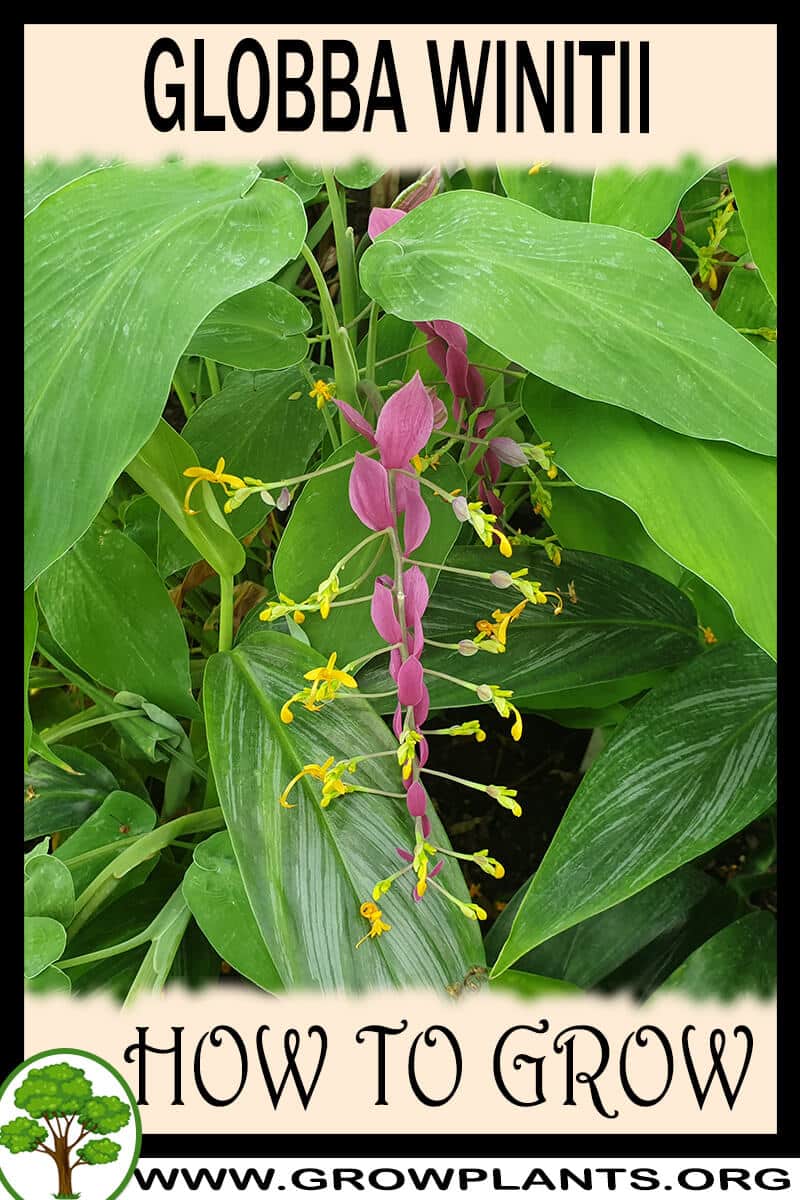
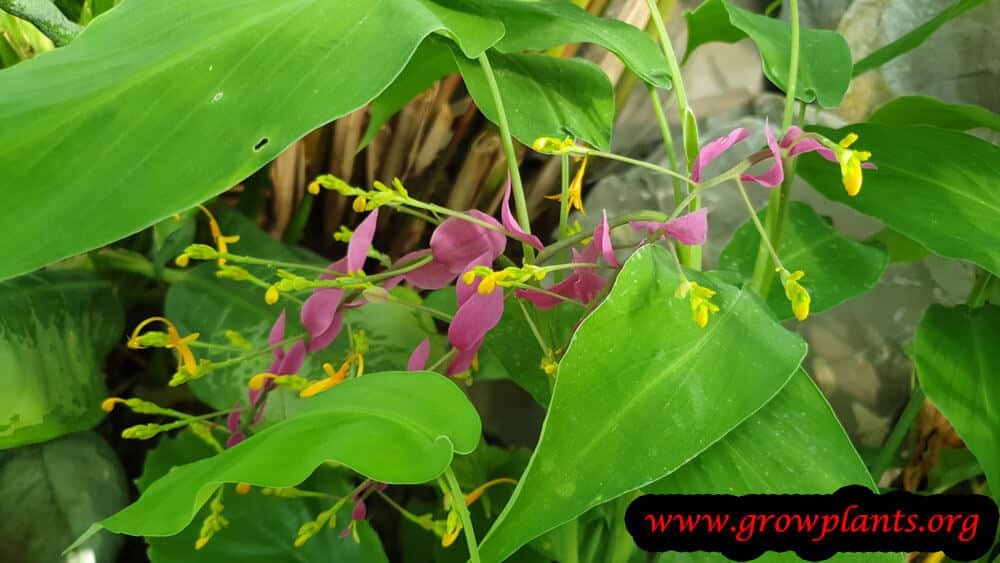
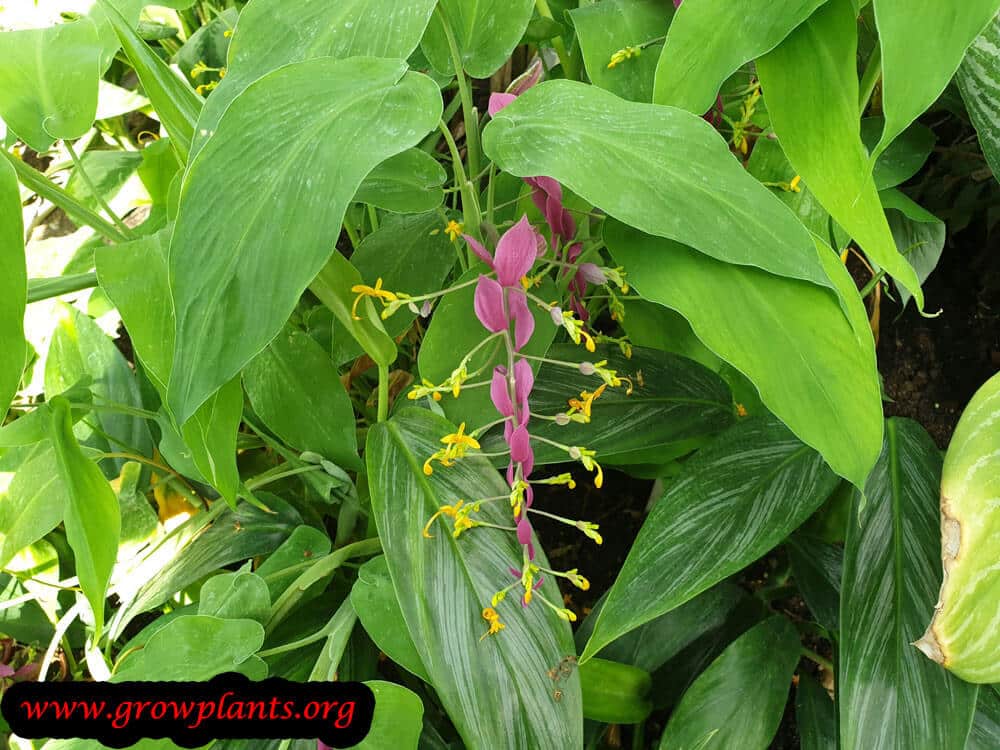
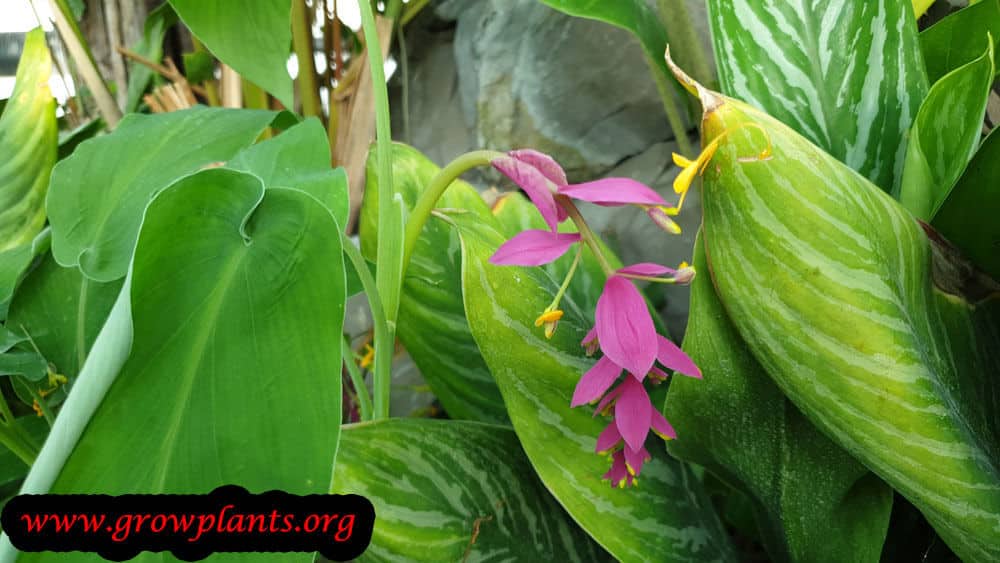
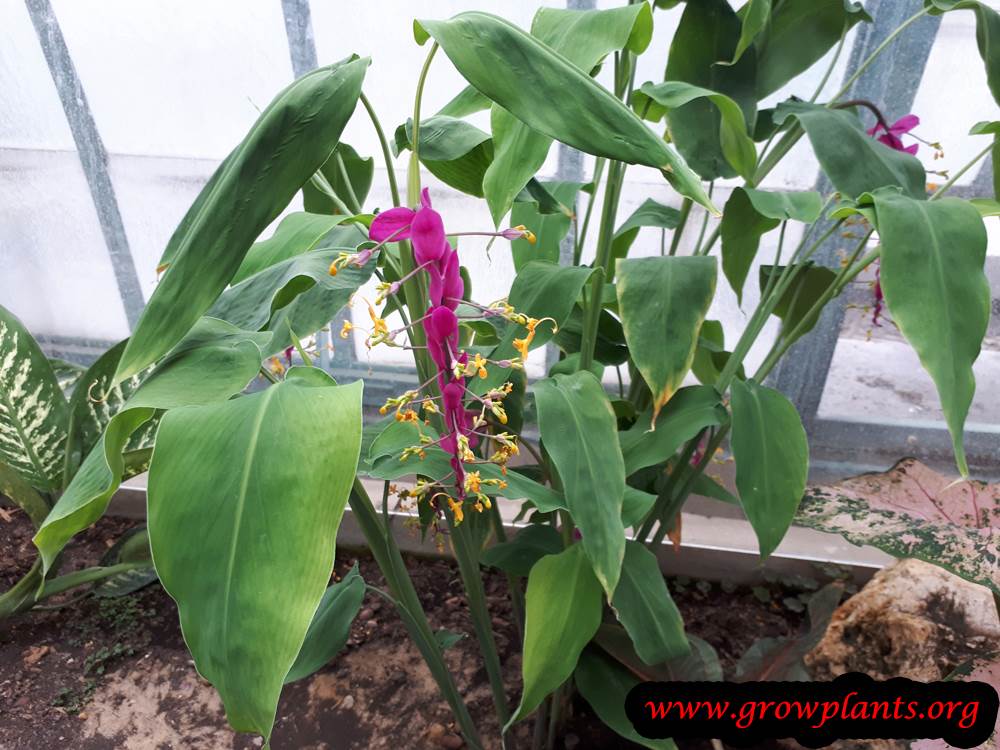
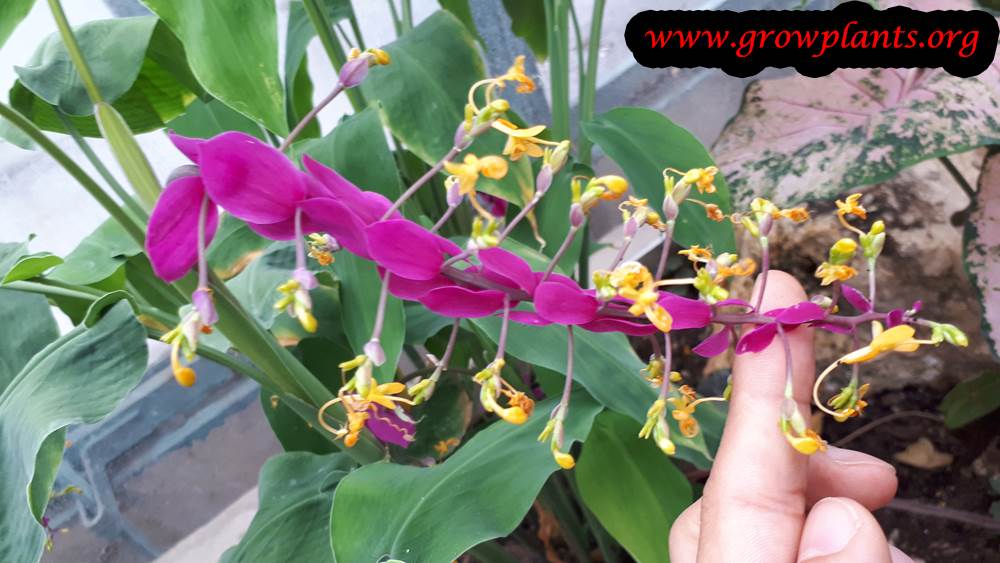
- Flower Characteristics: Pendent sprays of drop-shaped bracts (pink, yellow, white, orange, red or purple) with small, curiously shaped yellow flowers.
Primary Uses & Landscape Value
- Functional & Ornamental Roles: A shade-garden, tropical-border, container and houseplant ornamental grown for its exotic flower sprays.
Care Guide: Planting, Soil & Watering
Overview: Globba (dancing girl ginger) is a medium-growing tropical perennial (hardiness zone 10b+, or a houseplant) for shade to part shade, thriving in rich, moist, well-drained soil high in organic matter. It likes generous, steady moisture and warm, humid conditions.
Quick Care Requirements
| Requirement | Ideal Condition |
|---|---|
| Planting Season | Warm season — spring, summer or autumn |
| Growth Rate | Moderate |
| Soil Type | Rich, moisture-retentive, well-draining soil |
| Water Need | Moderate to High — keep evenly moist, never let it dry out |
Planting & Establishment
- Best Planting Season: Plant in the warm months of spring through autumn in frost-free zone 10b+; elsewhere grow it in a pot that can move indoors.
- How to Plant:
- Hole Preparation: Dig a hole about twice the width of the root ball and the same depth.
- Soil Amendments: Work in plenty of compost or leaf mould — this ginger relative wants a rich, humus-laden soil.
- Planting Depth: Set the rhizome and crown at soil level; don’t bury the stems.
- Growth Speed & Expectations: Moderate — forms a leafy clump that arches into flower by summer.
Soil, Watering & Drainage Care
- Soil Mix & Drainage Needs: Use rich, moisture-retentive yet well-drained soil; a peat- or compost-based potting mix with good aeration suits containers and indoor pots.
- Watering Schedule & Technique:
- Young / Newly Planted: Keep the soil consistently moist and humid while the plant establishes.
- Established: Water generously to keep the soil evenly moist through the growing season; do not let it dry out.
- Seasonal Adjustments: Water freely in warm growth and reduce as growth slows in cooler weather.
Climate, Light & Hardiness
Globba is a tropical-climate perennial suited to tropic, mediterranean, subtropical, and temperate settings, or as a houseplant, hardy outdoors only in USDA zone 10b and warmer. It grows best in half shade to full shade with consistently moist, rich soil.
Quick Climate Specifications
| Climate Zones | Tropical, mediterranean, subtropical, temperate (or houseplant) |
|---|---|
| USDA Hardiness Zones | 10b+ |
| Frost Tolerance | Low |
| Light Conditions | Half shade to full shade |
Sunlight & Light Exposure
Optimal Light Setup
Half shade to full shade - a tropical understory-type plant.
Direct Sun Requirement
Not suited to strong direct sun.
Shade & Heat Management
Does well in shadier spots; pair with consistent moisture for best growth.
Best Exposure / Orientation
Dappled or filtered light outdoors, or a bright indoor spot without harsh direct sun.
Temperature Extremes & Hardiness
USDA Hardiness & Regional Limits
Hardy outdoors only in zone 10b and warmer; elsewhere it must be grown as a houseplant or given winter protection.
Cold Damage & Winter Protection
Cold and frost are likely to damage or kill the plant; in marginal areas, bring container specimens indoors before cold weather arrives.
Frost Sensitivity
Low tolerance.
Extreme Heat Tolerance
Suited to warm, humid tropical conditions.
Wind, Humidity & Microclimate
Humidity Preferences
Prefers relatively high humidity, consistent with its moist-soil, tropical-climate profile.
Rainfall & Seasonal Moisture
Needs consistently moist soil; avoid letting it dry out.
Microclimate Recommendations
A warm, humid, shaded spot outdoors, or a bright, humid indoor room where winters are too cold for outdoor culture.
Growing in Pots, Balconies & Indoors
Globba (dancing-ladies ginger) is a shade-loving tropical the grower confirms grows well indoors. Its love of warmth, humidity and filtered light makes it a handsome foliage-and-flower houseplant, and a pot lets you overwinter its rhizomes in cold climates.
Quick Details
- Container Size: Medium – a pot with room for the spreading rhizomes to clump up.
- Indoor Suitability: Yes – a good houseplant in a warm, bright, humid spot.
- Best Spot: Part to full shade with bright, indirect light – no harsh direct sun.
- Soil & Drainage: Rich, moisture-retentive but well-drained mix.
- Watering in Pots: Keep evenly moist through growth – moderate to generous – easing off as it dies back.
Indoors & On the Windowsill
- Houseplant: Yes – a lovely indoor plant where it is warm and humid, out of direct sun.
- Light and humidity: Give it bright, filtered light and some humidity; keep it away from cold draughts and drying heat.
- Overwintering: In cold climates it dies back to its rhizomes – keep the pot warm, drier and frost-free through the cold season, then restart it as warmth returns.
On a Balcony or Patio
- Warm, shaded spot: Outdoors it wants a warm, part-shaded, sheltered corner – never a hot, exposed wall.
- Watering: Keep pots evenly moist in warm weather; they dry faster in the open air.
Choosing the Pot, Soil & Long-Term Care
- Pot & drainage: Choose a pot with strong drainage holes and skip a standing-water saucer, which invites root rot; terracotta breathes and dries quickly, while glazed or plastic hold moisture longer.
- Potting mix: Fill with a well-aerated, organic-rich medium – a good potting mix, or peat/coir blended with perlite or vermiculite for drainage.
- Feeding: Container plants run through nutrients fast because watering washes them out, so feed a little more often through the growing season than you would in open ground.
- Repotting: Divide and refresh the rhizomes every couple of years when the clump fills its pot.
Fertilizing & Feeding
A rich-soil, moisture-loving ornamental grown for its colorful bracts and flowers: moderate, balanced feeding through active growth and bloom supports the display, easing off as the plant rests in cooler, less active months.
Quick Fertilizing Specs
| Feeding Level | Moderate feeder |
|---|---|
| Main Nutrient Priority | Balanced overall; no need to favor phosphorus for bloom |
| Best Feeding Period | Through active growth in spring, summer, and autumn |
| Organic Options | Rich, moist soil amended with compost or well-rotted organic matter |
| Micronutrients | Usually adequate from a complete fertilizer in rich soil; correct specific issues only when diagnosed |
| Soil pH | Prefers rich, moisture-retentive soil without a strict pH requirement noted |
Feeding by Growth Stage
Active growth and shoot development
Build lush foliage and new shoots from the rhizomatous rootstock as growth resumes.
| Nutrient direction | A balanced, complete fertilizer with adequate nitrogen to support vigorous shoot and leaf growth. |
|---|---|
| Timing | As new growth emerges in spring and through the summer growing season. |
| Frequency | Regular light-to-moderate feeding while shoots are actively extending. |
| Fertilizer types | A balanced complete fertilizer for flowering or foliage plants, Compost or well-rotted organic matter worked into rich soil |
| Precautions | Keep soil consistently moist when feeding, since this plant prefers rich, moisture-retentive conditions and dislikes drying out. |
Flowering and bract display
Sustain the colorful bract and flower display through summer.
| Nutrient direction | Continue balanced feeding rather than shifting toward extra phosphorus; steady overall nutrition supports flowering. |
|---|---|
| Timing | Through the spring-to-summer bloom period. |
| Frequency | Regular light feedings through the bloom period, including for container-grown plants. |
| Fertilizer types | A balanced complete fertilizer for flowering plants, A diluted liquid feed for container-grown plants |
| Precautions | Container plants need more frequent light feeding than those in the ground, since watering flushes nutrients from the limited soil volume. |
Cooler-season rest
Let the plant rest as growth slows going into autumn and winter, when pruning of dead growth also occurs.
| Nutrient direction | None – withhold fertilizer while growth is minimal. |
|---|---|
| Timing | Autumn and winter, when growth slows and dead branches and leaves are pruned away. |
| Frequency | No feeding at this stage. |
| Fertilizer types | No feeding at this stage – allow the plant to rest without fertilizer. |
| Precautions | Do not fertilize while growth is minimal; resume light feeding only once active growth restarts in spring. |
Nutrient Deficiency Signs & Corrections
Older leaves fade to pale green or yellow and shoot growth slows.
| Possible causes | low available soil nitrogen, nutrients leaching from frequent watering in rich, moist soil, insufficient feeding for a plant in active growth |
|---|---|
| Appears first on | older, lower leaves |
| What to check | recent feeding history, soil moisture and drainage, overall plant vigor |
| Possible correction | Resume a balanced complete fertilizer on a light-to-moderate schedule during active growth. |
New growth turns pale to yellow while the leaf veins stay green.
| Possible causes | high soil pH tying up available iron, waterlogged or poorly drained soil, root stress limiting nutrient uptake |
|---|---|
| Appears first on | newest leaves |
| What to check | soil drainage and moisture levels, soil pH if known, recent root disturbance or repotting |
| Possible correction | Improve drainage and work toward a more favorable soil pH, then apply a chelated iron product per its label if the pattern persists. |
Leaf tips or margins brown and growth stalls despite regular watering.
| Possible causes | fertilizer salt buildup from frequent feeding, under-watering that concentrates salts in the root zone, poor drainage in containers or rich soil |
|---|---|
| Appears first on | leaf margins and tips |
| What to check | recent feeding frequency and amount, container or bed drainage, watering consistency |
| Possible correction | Ease off feeding, flush the soil thoroughly, then return to lighter feeding. |
Pruning, Training & Seasonal Maintenance
Globba grows from a spreading rhizome that sends up individual leafy canes, each of which flowers at its tip and then gradually declines while the rhizome pushes out fresh canes to replace it. Maintenance pruning is really cane management: removing spent or dead canes at their base once they’ve finished flowering and faded, which tidies the clump and redirects the rhizome’s energy into new growth, done any time but most needed as top growth dies back in autumn/winter.
Quick Pruning & Maintenance Specs
| Pruning Tolerance | Moderate – individual canes can be removed freely; no shaping of a woody framework applies |
| Primary Pruning Window | Autumn/winter, as canes die back |
| Typical Frequency | Ongoing removal of spent canes as they decline through the season |
| Main Objective | Clear spent canes so the rhizome’s energy goes into fresh growth |
| Young Plant Priority | Leave newly emerging canes untouched to build up the clump |
| Mature Plant Priority | Remove old, faded, or damaged canes at the base to make room for replacements |
| Best Tool Type | Precision snips or bypass secateurs |
Special Growth to Remove
- Spent flowering canes once their blooms and bracts have faded – cut at the base near the rhizome rather than partway up the cane.
- Dead or damaged leaves anywhere along a cane.
Container & Small-Space Pruning
Globba is often grown in containers or indoors; in a pot, keep up with cane removal a little more promptly than in the ground, since a container clump has less room to carry old, spent canes alongside new growth.
Tools
- Precision snips for individual dead leaves.
- Bypass secateurs for cutting whole spent canes at the base.
Tool Hygiene & Disease Risk
Routine – clean, sharp tools are sufficient; aphids are the main pest noted for this plant and are not pruning-transmitted, so no special disinfection routine is required.
Cut Placement & Technique
Cut spent canes as close to the rhizome as practical, rather than leaving a tall stub, so the clump stays tidy and new canes have room to emerge.
Common Pruning Mistakes
- Removing canes that are still flowering or still green, before they’ve finished contributing to the plant.
- Leaving spent canes in place too long, crowding out the space needed for new shoots from the rhizome.
When NOT to Prune
Avoid cutting a cane while it is still actively flowering; wait until its blooms and bracts have faded.
Recommended Tools (by task)
- precision_snips – trimming individual damaged leaves.
- bypass_secateurs – removing whole spent canes at the base.
Propagation Guide
Globba is most reliably propagated by dividing its clumping rhizomes, which reproduces the plant true-to-type and establishes quickly; seed is possible but slower, and since this is a broad genus, seed-grown results can vary by species. Propagation is easy given the plant’s naturally clumping, rhizomatous habit.
Quick Propagation Specs
| Best Propagation Method | Rhizome division |
| Alternative Methods | Seed; vegetative bulbils in species that produce them |
| Propagation Difficulty | Easy |
| Seed True-to-Type | Usually true-to-type |
| Vegetative True-to-Type | Yes |
| Best Propagation Season | Spring, as new growth begins |
Growing from Seed
Seed can be sown in the warmer months, in line with the plant’s spring–autumn planting season; keep it warm, humid and in the half-shade to shade this plant prefers, and expect germination and early growth to take patience since this is a broad genus with variable seed behavior between species.
Rhizomes, Tubers, Bulbs & Corms
Rhizome Division
Divide established clumps in spring as new growth begins, or after flowering. Each division should include several growth points and some roots attached.
Pot up divisions into the moist, rich soil this plant prefers, and keep them humid and in half to full shade until re-established.
Bulbils (Species-Dependent)
Some Globba species produce small vegetative bulbils along the flower spikes after blooming; where present, these can be detached once they show roots or shoots and potted into a moist growing medium. This trait varies by species within the genus and is not confirmed for every Globba.
Bloom & Flower Guide
Quick Details
- Bloom Season: Summer
- Flower Appearance: Small yellow flowers of an unusual, dangling “dancing lady” shape, set off by drop-shaped bracts in pink, yellow, white, orange, red or purple
- Edibility: Ornamental only
Detailed Blooming Overview
Globba, sometimes called dancing girl ginger, carries its flowers on gracefully arching, pendant stems. The individual blooms are small and yellow with an intricate, dancer-like form, while colourful drop-shaped bracts – pink, yellow, white, orange, red or purple – give the whole inflorescence its lasting display. It is a shade-lover that brings an exotic touch to warm, sheltered spots.
Flower Characteristics
- Small yellow flowers of a distinctive, hanging “dancing lady” shape.
- Drop-shaped bracts in a wide range of colours, held on arching, pendant inflorescences.
Bloom Care & Thinning
- Conditions: Warmth, shade to part shade, and steady moisture bring the best flowering; it dies back and rests in the cool season.
Pests, Diseases & Troubleshooting
Overview: Globba, the dancing-girl gingers, are tender rhizomatous Zingiberaceae grown for their pendant flower sprays. Like other gingers their troubles are mostly sap-suckers under warm dry air (spider mites, mealybugs, scale, aphids) and moisture-driven rhizome rot when dormant rhizomes sit wet and cold. Give them warmth, humidity, dappled light and a free-draining mix, and keep dormant rhizomes on the dry side. Manage culturally first.
Quick Troubleshooting Overview
| Issue / Pest | Main Symptom | Primary Solution |
|---|---|---|
| Spider mites | Fine stippling and webbing, crisped leaves in dry air | Raise humidity, hose foliage, predatory mites; oil if severe |
| Mealybugs | Cottony white masses in leaf axils and on rhizomes | Wipe off, alcohol dab, soap/oil; check rhizomes at repotting |
| Scale insects | Sticky bumps on stems and leaf undersides; honeydew | Scrape off, horticultural oil, encourage predators |
| Rhizome rot (abiotic/fungal) | Soft, foul rhizomes and yellow collapse in wet, cold soil | Free-draining mix, keep dormant rhizomes dry, discard rotted |
| Aphids | Sticky, distorted new growth and flower sprays | Hose off, soap or neem |
| Leaf scorch (abiotic) | Brown crisp leaf tips/edges in dry air or direct sun | Dappled light, raise humidity, keep evenly moist in growth |
Common Pests & Management
- Two-spotted spider mite (Tetranychus urticae):
- Symptoms: Fine pale stippling that bronzes leaves, with fine webbing on undersides in warm, dry, still air (common indoors); foliage dulls and crisps.
- Prevention & Control: Raise humidity, mist and hose leaf undersides, and release predatory mites; use horticultural oil or a labelled miticide for heavy infestations.
- Mealybugs (Pseudococcus / Planococcus spp.):
- Symptoms: Cottony white tufts in leaf axils, on stems and on rhizomes, with honeydew and sooty mould; root mealybugs can infest the rootball.
- Prevention & Control: Wipe off with a damp cloth or dab with dilute alcohol, treat with insecticidal soap or horticultural oil, and inspect and clean rhizomes when repotting.
- Scale insects (Coccus / Aspidiotus spp.):
- Symptoms: Small immobile brown or tan bumps on stems and leaf undersides, with honeydew and sooty mould; foliage yellows.
- Prevention & Control: Scrape off light infestations, apply horticultural oil to smother scale, and encourage natural predators; repeat treatments catch crawlers.
- Aphids (Aphis / Myzus spp.):
- Symptoms: Soft-bodied colonies on new shoots and flower sprays, causing distortion, honeydew and sooty mould.
- Prevention & Control: Hose off, support ladybirds and lacewings, and treat persistent colonies with insecticidal soap or neem.
- Root-knot nematodes (Meloidogyne spp.):
- Symptoms: Stunting, yellowing and poor vigour with galled, knotted roots in warm soils.
- Prevention & Control: Use clean mix and containers, rotate ground, and add organic matter to support antagonistic microbes; discard heavily galled stock.
Diseases & Fungal Issues
- Rhizome & root rot (Pythium / Fusarium / Ralstonia):
- Symptoms: Yellowing, wilting and collapse with soft, foul-smelling rhizomes, especially when dormant rhizomes sit in cold, wet soil.
- Treatment & Management: Grow in a free-draining mix, water carefully in growth and keep dormant rhizomes barely moist and warm; discard rotted rhizomes and start clean. Bacterial wilt (Ralstonia) cannot be cured – destroy affected stock.
- Leaf spot (Colletotrichum / Phyllosticta):
- Symptoms: Brown or tan spots and blotches on leaves in humid, crowded or overhead-watered conditions.
- Treatment & Management: Improve airflow, water at the base, and remove spotted leaves; a copper or general fungicide only if it spreads.
- Botrytis / grey mould (Botrytis cinerea):
- Symptoms: Fuzzy grey mould on flowers and soft tissue in cool, humid, crowded conditions.
- Treatment & Management: Deadhead, improve airflow, and avoid wetting foliage; remove affected parts promptly.
Growing Difficulties & Abiotic Problems
- Rhizome rot from wet dormancy:
- Cause & Symptoms: Rhizomes rot when kept cold and wet during dormancy, the commonest way to lose these gingers.
- Correction Strategy: Reduce watering as growth dies back, keep dormant rhizomes warm and just barely moist in a free-draining mix, and never leave them waterlogged.
- Leaf scorch & crisping:
- Cause & Symptoms: Brown, crisp leaf tips and margins from dry air, cold draughts or too much direct sun.
- Correction Strategy: Grow in warm, humid, dappled light out of direct midday sun and draughts; mist or use a humidity tray, and keep evenly moist during active growth.
- Cold damage:
- Cause & Symptoms: Blackened, collapsed foliage after exposure to cold; these are frost-tender plants.
- Correction Strategy: Keep above about 15°C, bring under cover or lift rhizomes before cold weather, and store dormant rhizomes frost-free.
- Poor flowering:
- Cause & Symptoms: Sparse or no bloom from too little warmth, light or a too-short growing season.
- Correction Strategy: Provide warmth, bright dappled light and a steady feed through the growing season; let plants build strong rhizomes.
What Helps – Products & Tools
Warmth and humidity are the real tools here, plus a gritty free-draining mix. For sap-suckers use insecticidal soap, neem or horticultural oil (great for mealybugs, scale and mites); raise humidity to deter mites; and keep a copper or general fungicide only for spreading leaf spot. The key discipline is dry, warm dormancy to prevent rhizome rot.