



Plant Profile & Key Characteristics
Overview: This dahlia is a tuberous, herbaceous perennial reaching about 0.3–1.5 m (1–5 ft) tall, grown for its showy, long-lasting blooms. It is a deciduous, frost-tender geophyte used mainly as an ornamental border plant and as a cut flower.
Quick Specifications
| Specification | Attribute |
|---|---|
| Plant Type / Life Cycle | Herbaceous perennial (tuberous geophyte) |
| Foliage Type | Deciduous (dies back after frost) |
| Mature Size | 0.3–1.5 m tall (about 1–5 ft); typically 0.3–0.6 m (1–2 ft) wide |
| Growth Rate | Moderate |
| Root System | Tuberous (grows from a cluster of fleshy tubers) |
| Hardiness | USDA zones 8–11 in the ground; in zones 2–7 lift and store the tubers over winter |
Growth Form & Structure
- Height & Spread: In the ground it forms a clump 0.3–1.5 m tall and roughly 0.3–0.6 m wide; it also grows well in large containers, where more compact varieties stay smaller.
- Growth Habit & Form: Upright, branching, clump-forming herbaceous plant that arises each season from a cluster of underground tubers; taller types benefit from staking.
- Lifespan & Maturity: A tender perennial that regrows from its tubers each year, reaching full height and flowering within a single growing season.
Anatomy & Physical Features
- Leaves & Foliage: Green foliage with leaflets that are elliptic to lanceolate or deeply lobed and serrated at the margins, arranged pinnately along the stems.
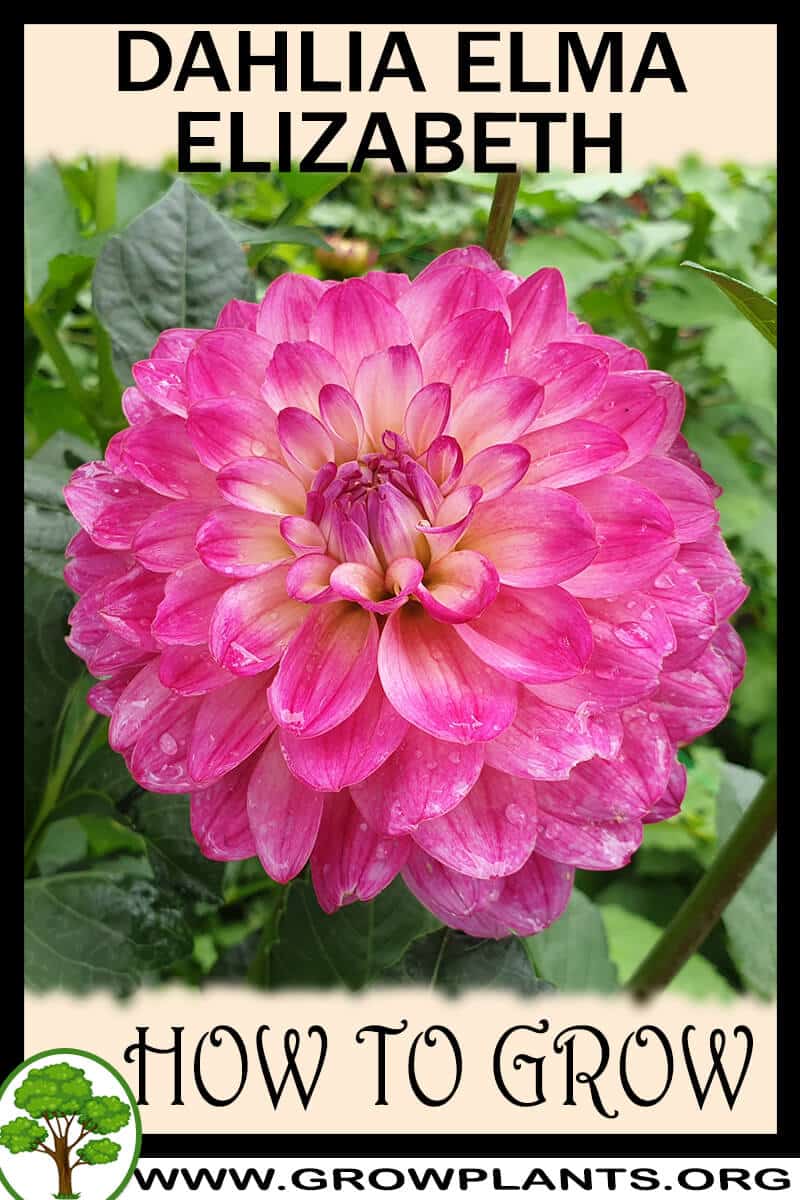
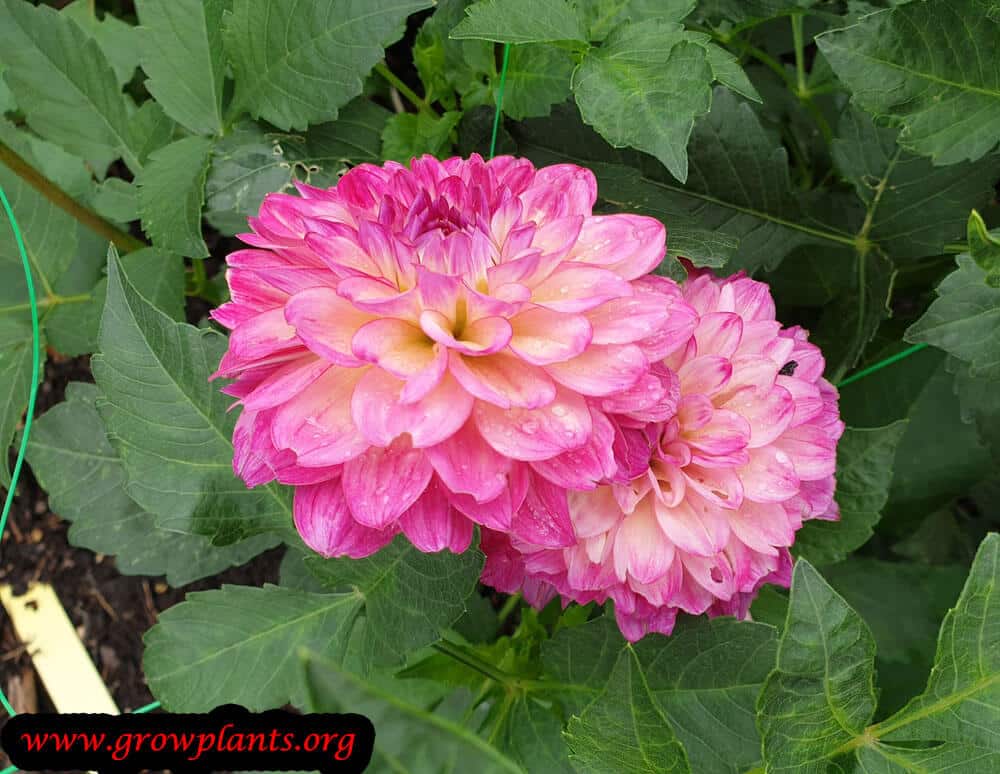
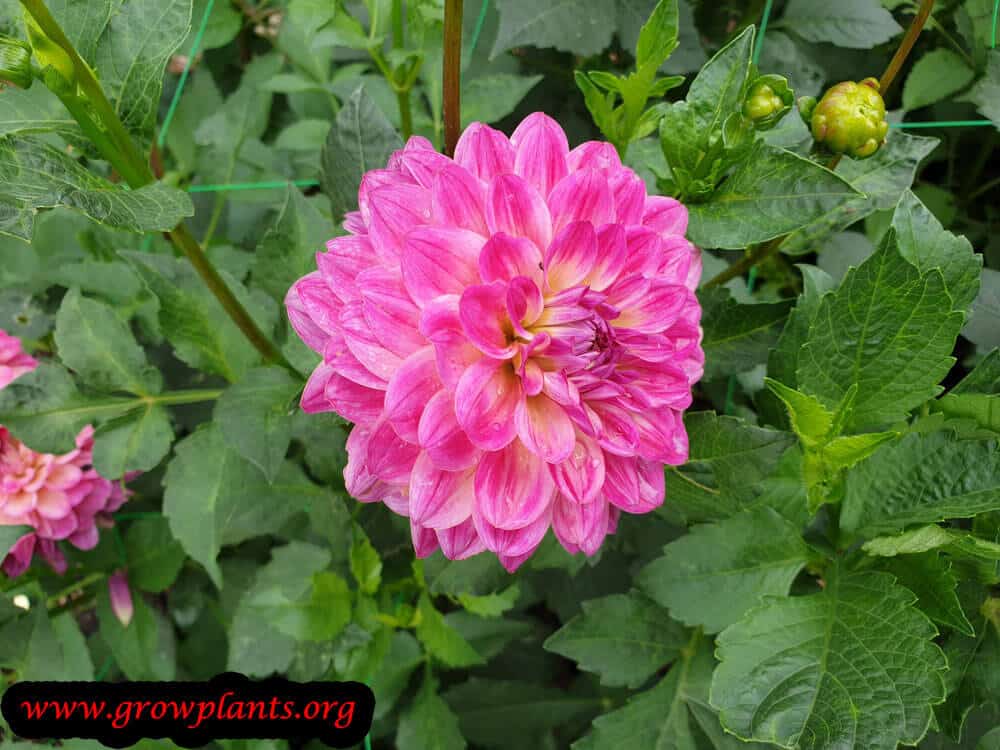
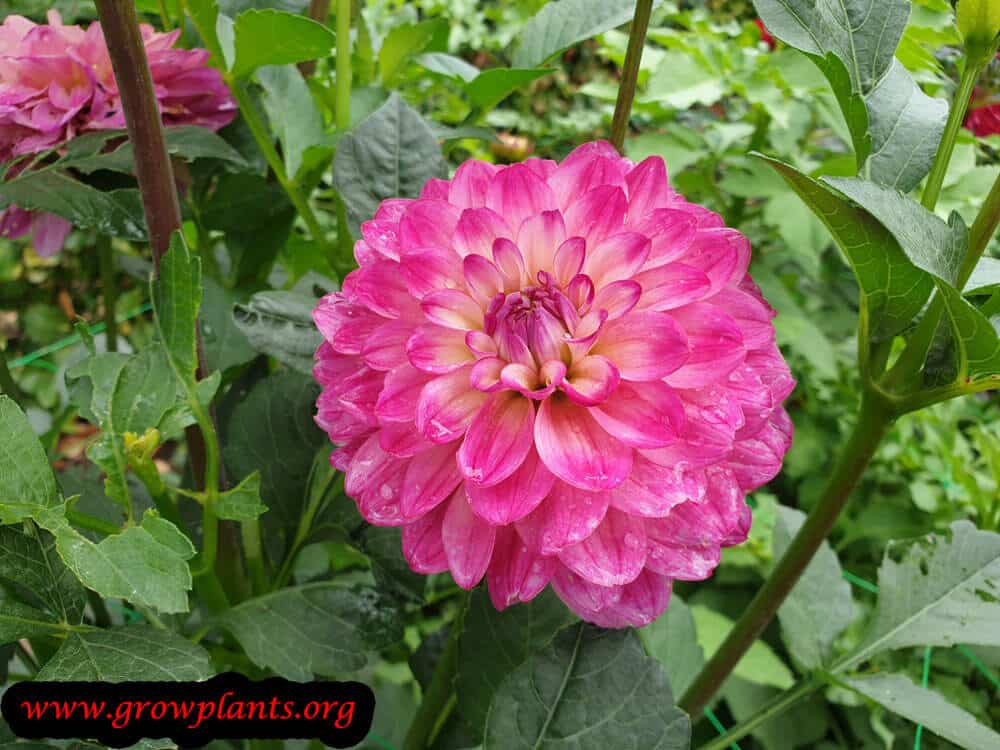
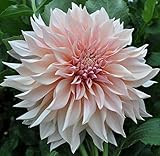
- Flower Characteristics: Pink, fully double decorative bloom with broad ovate-to-elliptic petals. Valued as a cut flower.
Primary Uses & Landscape Value
- Functional & Ornamental Roles: Grown as an ornamental for beds, borders and containers, and widely cultivated as a cut flower.
Care Guide: Planting, Soil & Watering
Overview: This dahlia is a sun-loving tuberous perennial that grows best in rich, loose, well-draining soil in a warm, bright spot. It needs steady, moderate moisture through the growing season, but its tubers rot easily in cold, waterlogged ground, so sharp drainage is the single most important condition to get right.
Quick Care Requirements
| Requirement | Ideal Condition |
|---|---|
| Planting Season | Spring, after all danger of frost has passed (mid-spring in colder regions) |
| Growth Rate | Moderate |
| Soil Type | Rich, loose, well-draining soil |
| Water Need | Moderate – keep evenly moist in active growth, never waterlogged |
Planting & Establishment
- Best Planting Season: Dahlia tubers are frost-tender, so plant in spring once the danger of frost has passed and the soil has warmed; in colder regions wait until mid-spring. In warm hardiness zones (roughly 8–11) tubers can be left in the ground year-round, while in colder zones (about 2–7) they are lifted after the season, stored dry over winter, and replanted the following spring.
- How to Plant:
- Hole Preparation: Dig a hole a little wider than the tuber and set the tuber on its side with the growing eye facing up, about 10–15 cm deep in loosened, free-draining soil.
- Soil Amendments: Work plenty of compost or well-rotted organic matter into the bed to enrich it and improve drainage; avoid heavy, high-nitrogen feeding, which drives leafy growth at the expense of flowers.
- Planting Depth: Plant the tuber shallowly, with the crown and growing eye just below the surface – deep, wet planting encourages rot. Hold off on heavy watering until the shoots emerge.
- Growth Speed & Expectations: A moderate grower that, once shoots emerge, bulks up steadily through the warm season to reach roughly 0.3–1.5 m tall (sometimes more) by maturity.
Soil, Watering & Drainage Care
- Soil Mix & Drainage Needs: Dahlias must have free-draining soil – in heavy clay, raise the bed or dig in grit and compost to keep water moving. In containers, use a quality free-draining potting mix rather than garden soil and make sure the pot drains freely, since soggy conditions quickly rot the tubers.
- Watering Schedule & Technique:
- Young / Newly Planted: Water sparingly right after planting until shoots appear, then keep the soil lightly moist as the plant establishes.
- Established: Once growing strongly, water deeply and regularly, letting the top few centimetres of soil dry between waterings – a thorough soak two to three times a week suits an established plant better than frequent shallow sprinklings.
- Seasonal Adjustments: Increase watering in hot, dry spells during full growth, and cut right back as growth dies down in autumn; tubers left in the ground over winter need dry, well-drained conditions to avoid rot.
Climate, Light & Hardiness
This Dahlia cultivar adapts to a wide climate range - Mediterranean, subtropical, desert, temperate, and tropical - but its tuberous roots are frost-tender and need protection wherever winters freeze. It flowers most heavily in full sun, and its practical cold hardiness hinges on whether growers leave the tuber in the ground or lift it for winter storage.
Quick Climate Specifications
| Climate Zones | Mediterranean, subtropical, desert, temperate, and tropical climates |
|---|---|
| USDA Hardiness Zones | 8–11 in-ground; extendable to zones 2–7 and 12+ when tubers are lifted and stored over winter and replanted in spring |
| Optimal Temp Range | Best growth and bloom generally occur in mild-to-warm conditions, roughly 15–26°C (59–79°F) |
| Cold Damage Begins | Foliage is typically damaged at the first frost, near 0°C (32°F) |
| Approx. Survival Minimum | Unprotected in-ground tubers generally do not survive prolonged freezing soil; a heavy mulch layer can offer a small additional buffer |
| Frost Tolerance | Low |
| Light Conditions | Full sun |
| Wind Tolerance | Low to Moderate |
Sunlight & Light Exposure
Optimal Light Setup
A full-sun spot with at least 6 hours of direct light produces the sturdiest stems and heaviest flowering.
Direct Sun Requirement
Direct sun is genuinely needed; growth becomes leggy and flowering drops off in shade.
Shade & Heat Management
In hot, arid climates, a bit of afternoon shade can reduce bloom scorching and fading without much cost to overall flower production.
Best Exposure/Orientation
Site it in the open, away from overhead tree shade; with stems reaching 0.3–1.5 m tall per site data, some wind protection helps keep it upright.
Temperature Extremes & Hardiness
USDA Hardiness & Regional Limits
Hardy as an in-ground perennial across zones 8–11. In colder regions (zones 2–7) and in the warmest zones (12+), it is grown by lifting the tuber each year and replanting after frost risk passes, rather than as a permanent in-ground planting.
Cold Damage & Winter Protection
Site guidance calls for lifting the bulb out of the ground for winter storage in cold areas; where winters stay mild within its hardy zones, a thick mulch over the tuber is generally sufficient in-ground protection.
Frost Sensitivity
Frost ends active growth quickly, so this Dahlia should go in the ground only after the last spring frost.
Extreme Heat Tolerance
Tolerates real summer heat, including desert conditions, fairly well, though prolonged extremes can shorten bloom longevity.
Wind, Humidity & Microclimate
Humidity Preferences
Grows acceptably in both humid and dry climates; in humid areas, open spacing that improves airflow around the foliage is beneficial.
Dry-Air Tolerance
Tolerates dry, low-humidity air well provided the root zone has adequate moisture during the growing season.
Wind Tolerance
Taller stems (up to roughly 1.5 m) can be knocked over or broken by strong wind, so a sheltered site or staking is worth considering.
Rainfall & Seasonal Moisture
Copes with varied rainfall patterns, but persistently wet winter soil raises the risk of tuber rot, so drainage becomes more important in higher-rainfall climates.
Microclimate Recommendations
A sunny, wind-sheltered position with free-draining soil suits it best; add afternoon shade in the hottest desert locations.
Growing in Pots, Balconies & Indoors
Dahlias are superb container and balcony plants but not true houseplants – grown from a tender tuber, they need strong light to stay stocky and flower well, so deep in a room they quickly grow leggy. In a big, free-draining pot they shine on a sunny patio or balcony, and a compact type can even bloom on a very bright, sunny windowsill.
Quick Details
- Container Size: A large, deep pot for the taller types (up to about 1.5 m); dwarf bedding dahlias are happy in smaller containers
- Indoor Suitability: Not a deep-room houseplant (the grower marks it “no”); a compact cultivar can flower on a bright, sunny sill
- Best Spot: Full sun – a sheltered, sunny patio or balcony is ideal
- Soil & Drainage: Aerated, organic-rich mix (peat or coir with perlite or vermiculite); must drain freely
- Watering in Pots: Keep evenly moist while in growth – pots dry fast; never waterlogged, or the tuber rots
Indoors & On the Windowsill
- Houseplant limits: The grower marks this as not a houseplant – deep in a room the light is far too weak for such a sun-lover, and it grows leggy and shy to flower.
- Windowsill growing: Choose a compact or dwarf dahlia and the sunniest sill you have, with direct sun for most of the day; there a potted plant can flower well.
- Overwintering under cover: Dahlias grow from tender tubers that will not survive hard frost, which is a key reason to pot them. In cold climates, once the first frost knocks the top growth back, move the pot into a frost-free shed or garage (or lift and store the dry tubers) and start it back into growth once the cold has passed.
- Safety: Dahlias are mildly toxic – all parts can upset children and pets if chewed, and the sap may irritate skin – so keep pots out of reach indoors.
On a Balcony or Patio
- Light & wind: Give it the sunniest, most sheltered spot. The taller types are top-heavy and brittle, so stake them early and shelter them from wind. Walls and paving throw back heat, so pots dry quickly – check moisture daily in warm weather.
- Practicalities: A large, moist pot is heavy – make sure the balcony can take the weight, stand it where drainage runoff won’t be a nuisance, and raise it on pot feet so water drains freely.
Choosing the Pot, Soil & Long-Term Care
- Pot & drainage: Use a deep pot with strong drainage holes; skip a standing-water saucer, which invites tuber and root rot. Terracotta breathes and dries faster, while glazed or plastic pots hold moisture longer.
- Potting mix: A well-aerated, organic-rich mix – peat or coir opened up with perlite or vermiculite.
- Feeding: Potted dahlias need feeding more often than those in the ground, as frequent watering washes nutrients out; switch to a higher-potash feed once buds form to encourage flowering.
- Refreshing the tuber: Each year start the tuber into fresh mix; every couple of years divide congested clumps so the pot doesn’t become overcrowded.
Growing this plant in a greenhouse
A greenhouse can give dahlia elma elizabeth frost protection and cold protection.
Greenhouse at a glance
| Greenhouse suitability | Conditional - depends on your climate |
|---|---|
| Main benefits | frost protection, cold protection |
| Season extension | earlier spring & later autumn |
| Outdoor protection advisable below | about 5°C |
| Maintain greenhouse minimum | around 5°C for active growth |
| Suitable types | unheated greenhouse, polycarbonate greenhouse |
| Heating | Heating is optional - useful mainly for winter growing in cold areas. |
Related greenhouse guides
- Greenhouses: How to Choose the Right Greenhouse
- Polycarbonate Greenhouses: What to Look for Before Buying
Fertilizing & Feeding
A moderate feeder: balanced feeding with adequate nitrogen builds the leafy growth the tuber needs after spring planting, then nitrogen is kept in check through the bloom season so flowering isn’t crowded out by foliage.
Quick Fertilizing Specs
| Feeding Level | Moderate feeder |
|---|---|
| Main Nutrient Priority | Balanced feeding, with nitrogen moderated once flowering begins |
| Best Feeding Period | From spring planting through active leaf growth and the bloom season |
| Organic Options | Compost worked into the bed at planting time |
| Micronutrients | Usually met by a complete fertilizer and organic matter; correct only diagnosed issues |
| Soil pH | Near neutral, well-drained soil |
| Reduce/Stop Feeding | Feeding stops as foliage dies back and tubers go dormant or are lifted for winter storage |
Feeding by Growth Stage
Spring planting and early growth
Support root establishment from the tuber and build strong early stems and foliage.
| Nutrient direction | A balanced complete fertilizer with adequate nitrogen to get leafy growth going. |
|---|---|
| Timing | From spring planting, once new shoots emerge, through early leafy growth. |
| Frequency | Light, regular feeding as the young plant establishes. |
| Fertilizer types | A balanced complete garden fertilizer, Compost worked into well-drained soil at planting |
| Precautions | Plant tubers in well-drained soil; waterlogged ground raises the risk of tuber rot no matter how feeding is managed. |
Flowering season
Sustain a long spring-through-autumn display of decorative-type blooms with broad, layered petals without the plant running to foliage.
| Nutrient direction | Continue balanced feeding but keep nitrogen moderate; heavy nitrogen favors leafy growth at the expense of flowers, and extra phosphorus does not force more bloom. |
|---|---|
| Timing | Through the spring, summer, and autumn bloom period. |
| Frequency | Light, regular feeding maintained while the plant is actively flowering. |
| Fertilizer types | A balanced complete fertilizer |
| Precautions | Grow in full sun and avoid nitrogen-heavy feeding late in the season, which can favor foliage over flowers. |
Dormancy or winter storage
Let the plant die back naturally as the tuber goes dormant, whether left in the ground or lifted for winter storage.
| Nutrient direction | None – withhold fertilizer while the tuber is dormant. |
|---|---|
| Timing | After bloom ends and foliage dies back, through winter dormancy or storage. |
| Frequency | No feeding at this stage. |
| Fertilizer types | No feeding at this stage; the tuber is dormant, either resting in the ground or lifted and stored for winter. |
| Precautions | Do not fertilize dormant or stored tubers; resume feeding only after new growth appears the following spring. |
Nutrient Deficiency Signs & Corrections
Older, lower leaves fade to pale green or uniform yellow and overall growth slows.
| Possible causes | low available soil nitrogen, nitrogen leaching from heavy watering or rain, thin, low-organic-matter soil |
|---|---|
| Appears first on | older, lower leaves |
| What to check | recent feeding history, soil organic matter, watering and drainage |
| Possible correction | Apply a nitrogen-containing complete fertilizer and build soil organic matter, then water evenly. |
Interveinal yellowing on older leaves while the veins themselves stay green.
| Possible causes | low soil magnesium, high potassium feeding competing with magnesium uptake, leaching in light, sandy soils |
|---|---|
| Appears first on | older, lower leaves |
| What to check | soil magnesium status, how potassium-heavy recent feeding has been, soil texture and leaching |
| Possible correction | Apply a labeled magnesium source such as Epsom salt or a dolomitic amendment and rebalance feeding. |
Vigorous, leafy growth but few or delayed flowers.
| Possible causes | excess nitrogen driving foliage over flowers, insufficient sun exposure, over-rich or freshly manured soil |
|---|---|
| Appears first on | the whole plant |
| What to check | how nitrogen-heavy recent feeding has been, light exposure, overall soil richness |
| Possible correction | Ease off nitrogen, ensure full sun, and keep to a balanced fertilizer; extra phosphorus will not force more bloom. |
Leaf margins brown or scorch and growth stalls despite adequate watering.
| Possible causes | fertilizer salt buildup around the tuber and root zone, under-watering that concentrates salts, excessive or too-frequent feeding |
|---|---|
| Appears first on | leaf margins and tips |
| What to check | recent fertilizer amounts, watering consistency, drainage, especially in containers |
| Possible correction | Ease off feeding, water thoroughly to flush accumulated salts, then return to lighter feeding. |
Pruning, Training & Seasonal Maintenance
Dahlia elma elizabeth is a Decorative-group dahlia grown from a tuber – a fully herbaceous plant whose entire top growth is soft, current-season stem, so pruning here means shaping and disbudding that growth rather than cutting any permanent framework. Pinching the young plant and disbudding the fully double pink blooms directly determine flower size and stem quality for cutting, deadheading keeps it reblooming through the season, and one full cutback at frost ends the year; because next year’s stems all grow fresh from the tuber, none of this seasonal work removes future flowers.
Quick Pruning & Maintenance Specs
| Pruning Tolerance | High for soft top growth – it dies back and regrows from the tuber every year |
| Primary Pruning Window | Spring–autumn, ongoing (pinch once when young, then disbud/deadhead weekly) |
| Secondary Maintenance Window | Winter – full top-growth cutback (and tuber lift in cold climates) |
| Typical Frequency | One early pinch; weekly disbudding/deadheading in bloom; one autumn cutback |
| Main Objective | Branching, larger/cleaner cut blooms, prolonged flowering, tuber energy conservation |
| Young Plant Priority | Pinch the growing tip to force multiple flowering stems |
| Mature Plant Priority | Disbud side buds on cutting stems; deadhead continuously; stake before top-heavy |
| Best Tool Type | Fingers or precision snips; bypass secateurs for the autumn cutback |
| Avoid Heavy Pruning During | Before the first killing frost, and in prolonged wet, humid weather |
Pruning by Plant Age & Size
Newly Established
Newly planted tubers or young transplants need no cutting beyond removing any damaged or rotted growth; let the first shoots establish for a few weeks before doing anything else.
Young / Formative
Once the plant has 3–4 sets of leaves, pinch out the soft growing tip just above a leaf node. This single step converts one stem into several branched flowering stems and is the main reason a well-tended plant ends up bushy and floriferous instead of tall and floppy. Set a stake at the same stage, before the tuber’s roots are established enough to disturb.
Mature / Established
There is no woody framework to build; ongoing work is disbudding the two smaller side buds beside the main bud on stems grown for cutting (giving one large, long-stemmed pink Decorative bloom), and continuous deadheading of spent flowers on the rest of the plant.
Seasonal Pruning Schedule
Summer Canopy Management
Objective: sustain bloom size and quality through the growing season. Remove spent flowers by cutting the stem back to the next strong leaf axil, not just snapping off the head; disbud side buds while still small on stems intended for cutting or show. Do not remove healthy unopened buds or vigorous new side shoots – these are the next flowers and branches. Expected response is continuous new flowering stems; un-disbudded garden stems give a fuller show of slightly smaller blooms.
Dormant/Winter
Objective: manage the natural end-of-season dieback. After the first frost blackens the foliage, cut all top growth back to about 10–15cm above ground. In hardiness zones 8–11 the tuber can often stay in the ground under mulch; in colder zones lift it for storage after cutting back. Do not cut back green foliage before frost – it is still feeding the tuber for next year’s growth.
Structural Pruning & Training
The only structural task is branching (the early pinch) and support for the hollow, brittle stems once loaded with fully double blooms; there is no thinning or multi-year renewal pruning, since the whole top is renewed from the tuber every year at the winter cutback.
Special Growth to Remove
Spent flower heads (deadhead regularly), yellowing or diseased lower leaves in humid weather to limit gray mold, and – on stems grown for cutting – the small side buds flanking the main bud.
Container & Small-Space Pruning
Grows well in a large container; pinch a little earlier and more assertively than an in-ground plant to keep it compact, and stake early since a pot offers less wind anchorage. Deadhead just as attentively; a container plant left to seed will flower less.
Tools
Fingers or precision snips for pinching and disbudding; bypass secateurs for deadheading and the autumn cutback. No loppers, saw or hedge shears – stems are soft and hollow, and shearing would remove buds indiscriminately.
Tool Hygiene & Disease Risk
Increased – dahlias are grown from tuber divisions and are susceptible to sap-transmissible viruses such as Dahlia mosaic virus, so wipe or disinfect blades between plants when dividing tubers or working several cultivars in one session. Routine deadheading on a single healthy plant only needs clean, sharp tools.
Cut Placement & Technique
Pinch just above a leaf node to prompt two new shoots; deadhead by cutting back to the next strong leaf axil or side shoot rather than leaving a bare stub; disbud by nipping out the small side buds cleanly while still tiny, without disturbing the central bud.
Heavy Pruning & Rejuvenation
Not applicable in the shrub-renovation sense – there is no old wood. The one heavy cut is the full autumn top-growth removal described above; hard mid-season cutback is not recommended, as it wastes the season’s bloom without any compensating regrowth benefit.
Post-Pruning Care
After routine deadheading/disbudding, normal watering is enough. After the frost cutback, let cut stems and tubers dry and callus for a day or two before lifting in cold climates to limit rot, and skip fertilizing once the plant is dormant.
Common Pruning Mistakes
Skipping the early pinch, leaving one tall single-bloom stem instead of a branched plant; disbudding too early before the buds are distinguishable; snapping off spent flowers instead of cutting to a node; cutting back green foliage before a killing frost, weakening next year’s tuber.
When NOT to Prune
Avoid cutting back top growth before the first killing frost; avoid disbudding/deadheading with unclean tools right after seeing virus-like leaf mottling anywhere in the bed; avoid heavy cutting in prolonged wet, humid weather when fresh cuts are more prone to gray mold.
Recommended Tools (by task)
- precision_snips – pinching the growing tip and disbudding small side buds without disturbing the main bud.
- bypass_secateurs – deadheading spent flowering stems and the autumn top-growth cutback.
- soft_ties_stakes – supporting hollow, brittle stems carrying heavy Decorative blooms.
Pruning Troubleshooting
| Problem | Possible Cause | What to Check | Corrective Action |
| Leggy plant, one tall stem | Growing tip never pinched | Whether the plant was pinched at 3–4 leaf sets | Pinch remaining growth now to force branching |
| Small or misshapen cut blooms | No disbudding, or disbudded too late | Side buds still present around the main bud | Disbud earlier in the next flush, while buds are small |
| Stems snapping in wind/rain | No staking for the hollow stems | Stem diameter versus bloom weight and exposure | Stake now, tying loosely below the flower head |
| Gray, fuzzy mold on flowers/leaves | Spent blooms/wet foliage left too long | Un-deadheaded flowers, dense damp growth | Remove affected material, deadhead more often, improve airflow |
Propagation Guide
This pink Decorative-type dahlia is best propagated by dividing its dormant tuber clump, or by taking basal cuttings from tubers started into growth in spring, since seed from this hybrid cultivar will not reproduce its exact flower shape and colour. Division is an easy technique for most home growers, while cutting propagation is moderate in difficulty, mainly because it needs sustained warmth and humidity to root reliably.
Quick Propagation Specs
| Best Propagation Method | Tuber (clump) division |
| Alternative Methods | Basal stem cuttings from sprouted tubers |
| Propagation Difficulty | Easy (division); Moderate (cuttings) |
| Seed True-to-Type | No – hybrid offspring vary |
| Vegetative True-to-Type | Yes |
| Best Propagation Season | Spring (mid-spring in cold areas) |
| Cutting Rooting Time | Typically a couple of weeks under warm, humid conditions |
Stem Cuttings
Cutting Type
Young basal shoots arising from the tuber crown as growth resumes; each cutting is a short stem section, sometimes with a thin sliver of crown tissue attached.
Best Timing
Take cuttings once tubers are started into growth under cover in late winter/early spring, ahead of the site’s recommended spring, mid-spring in cold areas, planting window.
Cutting Preparation
Select shoots about 7–10cm (3–4in) long with a couple of leaf pairs, cut cleanly below a node (or with a small heel), and remove the lower leaves before inserting.
Rooting Setup
Use a free-draining, humidity-retentive propagation mix; maintain warmth around 18–21°C (64–70°F) with high humidity (propagator lid or misting) and bright, indirect light.
Rooting Hormone
Optional rather than required; it can speed and improve rooting consistency on soft basal cuttings.
Rooting Time
Roots generally form within a couple of weeks in warm, humid conditions, though this varies with temperature and cutting vigour.
Rhizomes, Tubers, Bulbs & Corms
Tuber Division
- Divide dormant clumps in spring, either shortly after lifting in cold climates or once eyes are visible at the crown, in line with the site’s spring / mid-spring planting timing.
- Each viable division must carry an intact tuber joined to crown/stem-base tissue with at least one visible eye; tubers detached from the crown without an eye will not grow.
- The site notes hardiness zones 8–11 allow tubers to overwinter in the ground, whereas colder zones (2–7 and 12+) call for lifting after frost blackens the foliage, with top growth cut back first.
- Guard against the rotten-bulb issue the site lists as a common problem by letting cut surfaces callus for a day before replanting or storage, and keeping stored divisions cool, frost-free, and just slightly damp.
- Set divisions with the eye pointing upward, tuber laid horizontally roughly 10–15cm (4–6in) deep in well-drained soil.
Bloom & Edible Flower Guide
Quick Details
- Bloom Season: Summer to autumn – from mid-summer until the first frost (starting in spring where winters are frost-free).
- Time to First Bloom: In its first season – roughly 8 to 12 weeks after the tubers are planted out into warm soil.
- Flower Appearance: Pink, decorative (fully double) form.
- Edibility: Edible – the ray petals can be eaten (remove the bitter white petal base); the flavour is mild and varies by cultivar.
Detailed Blooming Overview
Dahlias are tender, tuberous perennials from the highlands of Mexico, grown as much for the vase as for the border. This cultivar is a decorative (fully double) type: each bloom is a fully double bloom of broad, evenly arranged ray petals with no visible central disc. Planted as a tuber once the soil has warmed after the last frost, it flowers in its very first season and keeps producing from mid-summer right through to the first hard frost. In mild, frost-free areas (its comfortable range is roughly hardiness zones 8 to 11) the tubers can stay in the ground and flower over a long season; where winters are colder they are lifted and stored frost-free, then replanted in spring.
Flower Characteristics
- Colour & form: Pink flowers, flowers multi petals and petal shape ovate to elliptic with pointed top and wider base.
- Bloom type: decorative (fully double) – a fully double bloom of broad, evenly arranged ray petals with no visible central disc.
- Fully double: the packed petals largely hide the central florets, so these blooms offer pollinators less than open, single types.
- Long-lasting: a classic cut flower that also holds well in the border.
Bloom Care & Thinning
- Deadheading: remove faded blooms regularly – spent flowers form rounded seed heads while unopened buds stay firm and round, so snap off the finished ones to keep new buds coming.
- Disbudding (optional): for fewer but larger, show-quality blooms, pinch out the two side buds below each main bud.
- Support: stake taller, large-flowered plants early so the heavy blooms do not snap or splay in wind and rain.
- Through the season: keep plants watered and fed while in flower; in cold-winter areas lift and store the tubers once the first frost has blackened the foliage.
Bloom Health & Protection
- Aphids: colonies on buds and soft new growth can distort blooms and spread virus – a strong jet of water, insecticidal soap or neem oil keeps them in check.
- Earwigs: they chew petals and buds at night; an upturned, straw-filled pot set on a cane makes a simple overnight trap to reduce numbers.
- Powdery mildew: a white bloom on the leaves in crowded, late-season plantings – good spacing and airflow help, and a sulphur-based fungicide can be used if it takes hold.
Fruit & Uses
Dahlia elma elizabeth is a Decorative-type dahlia grown for cutting and border colour, but like all dahlias it carries two edible parts from its Mexican ancestry: the fleshy tuberous roots and the flower’s ray-floret petals. Neither part was selected for by breeders working on this flower-show line, so the edible use is genuine but modest rather than a reliable food crop.
Quick Edible Specs
| Edible Parts | Tuberous roots; flower petals |
|---|---|
| Main Use(s) | Culinary (root vegetable; petals as a salad garnish) |
| Eaten Raw or Cooked | Tubers: raw (thin-sliced) or cooked; petals: raw |
| Preparation Required | Tubers: peel and scrub; petals: pull from the flower, rinse, discard the central disc |
| Harvest Season | Autumn for tubers, at the end of the growing season; petals during spring–autumn bloom |
| Time to First Harvest | Same growing season the tuber was planted; see Propagation for planting detail |
| Storage | Cool, humid, frost-free root-vegetable storage; petals are not storable and should be used fresh |
| Safety/Toxicity Caveat | Not bred for eating quality – flavour and texture are unpredictable; Dahlia belongs to the Asteraceae (daisy/ragweed) family, so related allergies are a caution |
Roots & Tubers
Below ground the plant forms a cluster of fleshy tuberous roots attached to the crown – the same structure the site’s care notes describe lifting from the ground before winter in cold climates, and the structure it is normally propagated from (see Propagation: ‘Plant / Tuber / Bulb’). For eating, lift the clump in autumn once the first frost has blackened the foliage, the same timing used for winter storage, and choose the larger outer roots rather than the smaller ones bearing the visible ‘eyes’ needed for next year’s plants. Peel and scrub before eating; the tubers can be sliced and eaten raw like a mild radish or jicama, or cooked as a root vegetable (roasted, boiled, sautéed). Flavour and texture vary widely between dahlia varieties – some are pleasantly nutty, others bland, fibrous or slightly bitter – and this Decorative show cultivar has not been evaluated for eating quality, so results are unpredictable.
Flowers & Flower Buds
The pink, ovate-to-elliptic petals described in the site’s flower notes are edible and can be pulled from a freshly opened flower to use as a garnish on salads or plated dishes. Use only the outer ray petals; the crowded central disc is more bitter and coarse and is normally discarded. Rinse gently and use promptly, as loose petals wilt within hours. Taste is mild, faintly bitter to peppery, and the petals are prized mainly for colour rather than for strong flavour.
Preparation, Uses & Safety
Historically, dahlia tuberous roots were cultivated as a food source by Indigenous peoples in Mexico well before the plant was bred into today’s ornamental forms – a historical note, not a health claim. Cooking the tubers (roasting or boiling) tends to soften woody or bitter texture better than eating them raw. Only eat tubers that can be positively identified as dahlia; the plant is often grown in mixed beds with other spring bulbs and corms, some of which are toxic, so an unlabelled tuber dug from shared ground should not be assumed safe. Dahlia is a member of the Asteraceae (daisy) family, related to ragweed and chrysanthemum, so anyone with allergies to that plant family should avoid eating the petals or tubers.
Pests, Diseases & Troubleshooting
Overview: Dahlias are vigorous, tuberous perennials that are generally trouble-free once established, but their soft young shoots and lush, sugar-rich blooms attract a predictable set of visitors — above all slugs, snails and earwigs, with sap-suckers such as aphids and thrips acting as virus carriers. The soundest approach is cultural and organic first: keep plants strong and open, patrol at dusk, protect emerging shoots, encourage beneficial insects, and reserve any spray for genuine outbreaks. Because dahlias are frost-tender and store as tubers over winter, clean handling and dry, airy storage prevent most of the serious losses.
Quick Troubleshooting Overview
| Issue / Pest | Main Symptom | Primary Solution |
|---|---|---|
| Slugs & snails | Young shoots and leaves shredded overnight; slime trails | Evening patrols, barriers and traps; iron-phosphate bait if needed |
| Earwigs | Ragged notches and holes chewed in petals and young foliage | Rolled-cardboard / inverted-pot traps emptied each morning |
| Aphids | Sticky honeydew, curled shoot tips, sooty mould; spreads virus | Wash off, encourage ladybirds; insecticidal soap for heavy infestations |
| Thrips | Silvery flecking and distorted buds; can transmit spotted wilt | Blue sticky traps, remove weeds; predatory mites in protected crops |
| Powdery mildew | White powdery coating on late-season leaves | Improve airflow and spacing; sulfur or potassium-bicarbonate spray |
| Tuber storage rot | Soft, mouldy or shrivelled tubers over winter | Lift after frost, dry and cure, store cool, dry and airy |
Common Pests & Management
- Slugs & snails (Deroceras reticulatum, Cornu aspersum):
- Symptoms: The number-one dahlia pest, especially on newly sprouted tubers and young shoots. Look for irregular holes and shredded, stripped shoots overnight, with tell-tale silvery slime trails; damage is worst in damp, mild weather and near mulch or dense planting.
- Prevention & Control: Patrol at dusk or after rain and remove by hand; clear hiding places (boards, debris, loose mulch) near emerging plants. Ring young shoots with grit, crushed shell or copper tape, and set beer or yeast traps. Encourage frogs, ground beetles and birds. If pressure is high, scatter iron-phosphate (ferric) bait sparingly — it is safe around pets and wildlife.
- European earwig (Forficula auricularia):
- Symptoms: The signature pest of dahlia flowers. Earwigs feed at night, chewing ragged notches and holes in petals and tender young leaves, then hide by day deep in the blooms or under debris. Damage on open flowers is often mistaken for caterpillar feeding — check by torchlight after dark.
- Prevention & Control: Trap them: stuff straw or rolled corrugated cardboard into inverted pots on canes, or lay rolled newspaper among the plants, and empty the sheltering earwigs each morning. Keep the base clear of debris. They are also useful aphid predators, so trap-and-relocate rather than blanket-spray; only spot-treat if flower damage becomes severe.
- Aphids (Myzus persicae, Aphis fabae):
- Symptoms: Colonies of green or black soft-bodied insects cluster on shoot tips, buds and leaf undersides, causing curling and stickiness. The real danger is indirect: aphids are the main vectors of dahlia mosaic and other viruses, and their honeydew fuels black sooty mould.
- Prevention & Control: Inspect growing tips regularly and dislodge small colonies with a strong jet of water or by finger-wiping. Encourage ladybirds, lacewings and hoverflies; avoid excess nitrogen, which produces soft, aphid-prone growth. For heavier infestations use insecticidal soap or a light horticultural/neem oil, spraying in the evening to protect pollinators.
- Western flower thrips (Frankliniella occidentalis):
- Symptoms: Tiny slender insects that rasp leaves and petals, leaving silvery flecking, pale streaks and distorted, discoloured buds. Most important as the vector of tomato spotted wilt virus, so persistent thrips warrant attention beyond the cosmetic damage.
- Prevention & Control: Hang blue sticky traps to monitor and reduce numbers, and keep the bed weed-free to remove alternative hosts. Encourage predatory mites and minute pirate bugs. In protected or nursery settings, release biological controls; spot-treat bad outbreaks with insecticidal soap or spinosad, rotating products and sparing flowering heads.
- Two-spotted spider mite (Tetranychus urticae):
- Symptoms: A hot, dry-weather problem. Leaves take on a fine pale stippling, then bronze and dry from the base upward; fine webbing appears on undersides and shoot tips in bad cases. Growth is checked and flowering suffers.
- Prevention & Control: Mites thrive in dusty, drought-stressed conditions, so keep plants well watered and occasionally hose down foliage to raise humidity and knock off colonies. Encourage predatory mites and other natural enemies. Treat persistent outbreaks with insecticidal soap or horticultural oil, ensuring thorough coverage of leaf undersides.
- Capsid (plant) bugs (Lygocoris pabulinus, Lygus spp.):
- Symptoms: Sap-sucking bugs feed on shoot tips and developing buds, injecting toxic saliva. Affected leaves emerge tattered with many small ragged holes and a puckered, distorted shape, and buds may abort or open lopsided (“blind” or one-sided blooms).
- Prevention & Control: Damage is usually intermittent and rarely fatal. Keep surrounding weeds and rough herbage down to reduce shelter, and tolerate light injury. Encourage general predators; for repeated serious damage, an evening application of an approved contact insecticide to the growing tips can be used, protecting pollinators.
- Caterpillars & cutworms (e.g. Agrotis segetum, various noctuids):
- Symptoms: Caterpillars chew larger irregular holes in leaves and buds, leaving dark frass. Cutworms (soil-dwelling moth larvae) are more damaging early on, severing young shoots and stems at ground level so plants topple or fail to emerge.
- Prevention & Control: Hand-pick caterpillars in the evening and check for cutworms in the top few centimetres of soil around felled shoots. Protect transplants with collars pushed into the soil, hoe to expose pupae, and encourage birds and ground beetles. For persistent leaf caterpillars, a targeted Bacillus thuringiensis (Bt) spray is selective and pollinator-safe.
Diseases & Fungal Issues
- Powdery mildew (Golovinomyces cichoracearum):
- Symptoms: A white to greyish powdery coating on upper leaf surfaces, typically arriving late in the season on crowded, stressed plants. Heavily coated leaves yellow and die back early, weakening the plant and its tubers.
- Treatment & Management: Space plants for good airflow, avoid drought stress, and don’t over-feed with nitrogen. Remove and bin affected foliage. At first signs, spray sulfur, potassium bicarbonate or a milk-based solution; repeat as needed and clear all debris at season’s end.
- Grey mould / botrytis (Botrytis cinerea):
- Symptoms: Fuzzy grey-brown mould on ageing or rain-damaged blooms, plus soft brown spotting and rot of petals and buds in cool, wet, still conditions. Dense double and dinnerplate flowers are most at risk because they trap moisture.
- Treatment & Management: Deadhead spent and spotted blooms promptly and improve air movement by proper spacing and staking. Avoid overhead watering late in the day. Remove infected material to reduce spores; fungicide is rarely justified in the garden if sanitation is good.
- Dahlia mosaic & tomato spotted wilt (Dahlia mosaic virus; Tomato spotted wilt orthotospovirus):
- Symptoms: Viral infections show as yellow mosaic mottling, vein-banding or pale patterns on leaves, stunting, distortion and, with spotted wilt, ringspots and dark streaks with poor flowering. Spread by aphids (mosaic) and thrips (spotted wilt), and carried on in infected tubers.
- Treatment & Management: There is no cure — rogue out and destroy plainly infected plants to protect the rest. Control aphids and thrips, keep weeds down, propagate only from healthy stock, and disinfect knives between plants when taking cuttings or dividing tubers.
- Verticillium & Fusarium wilt (Verticillium dahliae, Fusarium oxysporum):
- Symptoms: Soil-borne fungi that invade the water-conducting tissue. Foliage yellows and wilts — often one side or lower leaves first — then browns and collapses despite moist soil; cut stems may show darkened internal streaking. Verticillium dahliae was in fact first described on dahlia.
- Treatment & Management: No chemical cure. Remove and destroy affected plants and their tubers; do not compost them. Do not replant dahlias in the same infected ground — rotate to a fresh site or use clean containers, keep drainage good, and start with healthy tubers.
- Tuber storage rot (Pectobacterium/Erwinia soft rot, Fusarium & Penicillium):
- Symptoms: The main over-winter loss. Lifted tubers turn soft, slimy and foul-smelling (bacterial soft rot) or develop dry, sunken, mouldy patches in storage; damaged or immature tubers rot first.
- Treatment & Management: Lift carefully after the first frost, remove soil, trim damaged tissue and cure/dry the tubers for a few days before storing. Keep them cool but frost-free, dry and airy in barely-moist media, and check periodically, removing any that begin to rot.
Growing Difficulties & Abiotic Problems
- Tuber rot in wet, cold soil:
- Cause & Symptoms: Dahlias hate waterlogging. Tubers planted too early into cold, sodden ground — or left in heavy wet soil over winter in mild areas — simply rot before or after sprouting, giving gaps and no growth.
- Correction Strategy: Plant only once the soil has warmed and drained, into free-draining soil improved with compost or grit; raise beds or use containers on heavy ground. Avoid overwatering un-sprouted tubers, and in cold-winter regions lift and store rather than leaving tubers in the ground.
- Frost blackening:
- Cause & Symptoms: Dahlias are frost-tender. A first frost blackens and collapses all top growth almost overnight, and an unexpected late frost will cut down tender young shoots.
- Correction Strategy: Plant out only after frost risk has passed and protect early shoots with fleece if a late frost threatens. Treat the first hard frost as the signal to cut down and lift tubers for storage in cold climates, or to mulch heavily where they are left in the ground.
- Failure to bloom (all leaves, few flowers):
- Cause & Symptoms: Lush leafy plants that produce few or no flowers usually signal too much nitrogen, too little sun, or a lack of deadheading. Dahlias need full sun and a feed higher in potassium to flower well.
- Correction Strategy: Site in full sun, ease off high-nitrogen feeds and switch to a higher-potassium (tomato-type) feed as buds form. Deadhead continually to keep new blooms coming, and pinch out the growing tip early to build a bushier, more floriferous plant.
- Weak stems, flopping & staking / disbudding needs:
- Cause & Symptoms: Tall varieties and large-flowered types carry heavy blooms on brittle, hollow stems that snap or flop in wind and rain, and unthinned plants produce many smaller, congested blooms.
- Correction Strategy: Stake at planting so canes or a support grid are in place before growth is tall, and tie in loosely as plants rise. Disbud (remove the two side buds below each main bud) for larger, cleaner show blooms, and pinch early for sturdier, well-branched plants.
What Helps — Products & Tools
For dahlias the mainstays are physical and organic: slug/snail traps and iron-phosphate (ferric) bait, earwig traps (rolled cardboard or straw-filled pots), copper tape and grit barriers, blue and yellow sticky traps for thrips and monitoring, and a hand sprayer for insecticidal soap, light horticultural or neem oil, and Bacillus thuringiensis (Bt) for caterpillars. On the disease side, keep sulfur or potassium-bicarbonate fungicide for powdery mildew, practise strict sanitation for botrytis and viruses, and rely on good stakes, plant ties and a sharp, disinfected knife for staking, disbudding and clean tuber division. Sound tuber storage (dry, airy, frost-free) is the single best insurance against winter losses.