Plant Profile & Key Characteristics
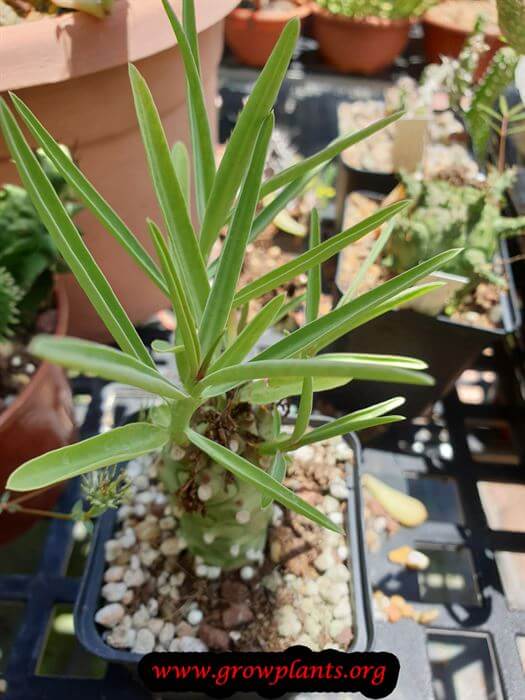
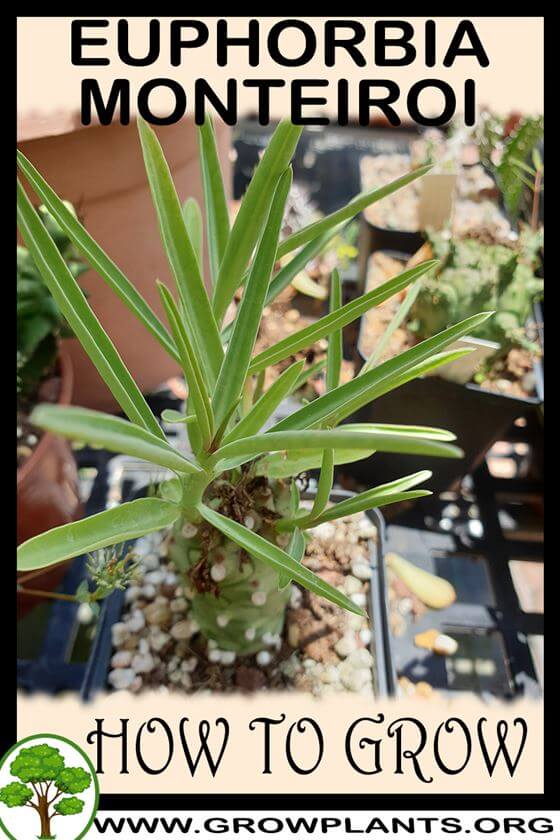
Overview: An evergreen succulent spurge grown as an ornamental, drought-tolerant plant with a thick, bonsai-like green-to-brown stem topped by narrow leaves. It stays small at about 5–15 cm and can be kept as a houseplant.
Quick Specifications
| Specification | Attribute |
|---|---|
| Plant Type / Life Cycle | Perennial (succulent) |
| Foliage Type | Evergreen |
| Mature Size | 5–15 cm (2–6 in) |
| Growth Rate | Slow |
| Toxicity | Toxic – milky latex irritates skin and eyes (typical of Euphorbia); keep away from mouth and eyes |
| Hardiness | USDA zones 10b–13 |
Growth Form & Structure
- Height & Spread: 5–15 cm (2–6 in); suits small, well-drained containers indoors or out.
- Growth Habit & Form: Compact succulent with a thick, bonsai-like swollen stem and leaves clustered at the top.
- Lifespan & Maturity: Long-lived, slow-growing succulent.
Anatomy & Physical Features
- Trunk & Bark: Thick green-to-brown swollen stem that gives the plant its bonsai-like appearance.
- Leaves & Foliage: Green, linear leaves borne mostly at the top of the stem.
- Flower Characteristics: Small purple rounded flowers set among green, triangular bracts.
Primary Uses & Landscape Value
- Functional & Ornamental Roles: Ornamental drought-tolerant succulent for containers and indoor display; handle with care because of its irritant sap.
Care Guide: Planting, Soil & Watering
Overview: Euphorbia monteiroi is a slow-growing, drought-tolerant succulent that grows well in full sun to light shade and needs well-drained soil. Water sparingly and let the soil dry out between waterings — it stores water in its stems and rots if kept too wet.
Quick Care Requirements
| Requirement | Ideal Condition |
|---|---|
| Planting Season | Spring through autumn, during the warm growing season |
| Growth Rate | Slow |
| Soil Type | Gritty, well-draining (cactus/succulent mix) |
| Water Need | Low — let the soil dry out between waterings, never overwater |
Planting & Establishment
- Best Planting Season: plant during the warm growing season, from spring through autumn, once the weather is reliably warm.
- How to Plant:
- Hole Preparation: set it into a shallow hole in loose, free-draining soil where water never pools; wear gloves, as the milky sap irritates skin.
- Soil Amendments: blend in coarse sand, grit or pumice to guarantee fast drainage.
- Planting Depth: set the plant at soil level with the base of the stem resting on the surface — do not bury the stem, which invites rot.
- Growth Speed & Expectations: slow-growing and compact, staying only about 5–15 cm (2–6 in) with a bonsai-like habit.
Soil, Watering & Drainage Care
- Soil Mix & Drainage Needs: use a gritty, well-draining succulent or cactus mix. In a pot, choose a free-draining container and add grit or pumice — sharp drainage is essential to prevent root rot. It can also be grown indoors in bright light.
- Watering Schedule & Technique:
- Young / Newly Planted: water lightly to settle it in, keeping the soil barely moist without soaking it.
- Established: water sparingly and deeply, then let the soil dry out between waterings.
- Seasonal Adjustments: water a little more during active growth in warm weather; cut back in winter and keep it drier while it rests.
Climate, Light & Hardiness
Euphorbia monteiroi is an adaptable, drought-tolerant succulent that grows outdoors in tropical, subtropical, and Mediterranean climates, or indoors as a houseplant, tolerating anything from full sun to full shade with adequate light. It is a tender, essentially frost-free species with little cold hardiness.
Quick Climate Specifications
| Climate Zones | Tropical, subtropical, and Mediterranean climates, or indoors as a houseplant |
|---|---|
| USDA Hardiness Zones | 10b–13 |
| Frost Tolerance | Very Low |
| Light Conditions | Full sun to full shade (with adequate supplemental light in deep shade) |
Sunlight & Light Exposure
Optimal Light Setup
Highly adaptable to light levels, from full sun outdoors to bright indirect light indoors; even deeper shade is tolerated as long as some usable light reaches the plant.
Shade & Heat Management
Tolerates full shade better than most succulents, provided the location still receives meaningful light; this flexibility makes it a workable indoor plant.
Best Exposure/Orientation
A bright windowsill indoors, or a partially shaded to sunny outdoor position in frost-free climates, both work well.
Temperature Extremes & Hardiness
USDA Hardiness & Regional Limits
Hardy only in USDA zones 10b–13 - essentially frost-free, tropical-to-warm-temperate conditions. Outside this range it needs to be grown as a container plant and moved indoors or under cover before cold weather.
Cold Damage & Winter Protection
Keep well away from any frost risk; as a houseplant, avoid cold drafts, unheated porches, or windowsills that get chilly overnight in winter.
Frost Sensitivity
Frost-sensitive with essentially no cold tolerance - even light frost is likely to cause damage.
Extreme Heat Tolerance
Well suited to warm tropical and subtropical heat typical of its native and cultivated range.
Wind, Humidity & Microclimate
Dry-Air Tolerance
Good - as a drought-tolerant ornamental it copes well with dry air and is comfortable in typical indoor humidity.
Rainfall & Seasonal Moisture
Needs well-drained soil and does not tolerate waterlogging or prolonged wet conditions.
Microclimate Recommendations
In climates cooler than zone 10b, grow it in a container so it can be brought indoors or under cover for winter, and give it a bright indoor spot with stable, draft-free warmth.
Growing in Pots, Balconies & Indoors
This small, slow-growing succulent (about 5-15 cm / 2-6 in) is, in the grower’s experience, suitable as a houseplant, and it even tolerates full shade as long as there is some light – which makes it unusually adaptable indoors for a Euphorbia. In a small, free-draining pot it is an easy, low-water desk or windowsill plant.
Quick Details
- Container Size: A small, snug pot just larger than the root ball; pot up only as it fills out
- Indoor Suitability: A genuine houseplant here – it copes with lower light than most succulents, though brighter is better
- Best Spot: Full sun to half shade, and even full shade with some light indoors
- Soil & Drainage: Gritty, free-draining mix – sandy/cactus mix or peat and perlite, with lava grit or coarse sand; strong drainage holes and no water-holding saucer
- Watering in Pots: Very little – let it dry fully between waterings
Indoors & On the Windowsill
- Houseplant use: The grower confirms it can be grown indoors. A ready-made cactus and succulent soil mix provides that structure without mixing it yourself. Give it the brightest spot you comfortably can; it tolerates shadier corners better than most succulents but stays healthiest in good light.
- Windowsill growing: Its compact size is ideal for a sill. Keep it off cold glass in winter and away from heaters, and water only when the mix is dry.
- Overwintering: Tender – keep frost-free and nearly dry through cold months.
- Safety: The milky sap can cause skin irritation (noted by the grower) and, as with all Euphorbias, is toxic if eaten – keep away from children and pets and wash hands after handling.
On a Balcony or Patio
- Light & warmth: Thrives on a warm, bright balcony or patio; it also accepts a part-shaded spot. Reflected heat from walls is welcome, but shelter it from prolonged rain.
- Practicalities: Small pots are easy to move indoors before cold or wet weather.
Choosing the Pot, Soil & Long-Term Care
- Pot & drainage: A snug pot only slightly larger than the root ball, with strong drainage holes; skip a standing-water saucer to prevent rot. Terracotta breathes and dries fast, which suits succulents better than glazed or plastic.
- Potting mix: Free-draining and gritty – cactus/succulent mix, or peat/coir with plenty of perlite and some coarse sand or lava grit.
- Feeding: Feed sparingly – a dilute low-strength feed once or twice during active growth is enough.
- Repotting: Refresh the mix and pot up every couple of years, lightly trimming roots and top growth on perennials to keep them in scale with the pot.
Fertilizing & Feeding
A light feeder overall: this slow-growing succulent needs only minimal, low-nitrogen feeding during active growth, with no feeding at all while it rests.
Quick Fertilizing Specs
| Feeding Level | Light feeder |
|---|---|
| Main Nutrient Priority | Low-nitrogen, minimal feeding that keeps growth compact and true to the plant’s naturally slow habit |
| Best Feeding Period | During the warm active growing season, never during the rest period |
| Organic Options | A gritty mineral succulent mix rarely needs added organic matter beyond what it starts with; indoor pots benefit from the same lean, mineral-forward mix rather than rich potting soil |
| Micronutrients | Rarely an issue; an occasional dilute balanced feed usually covers what little the plant needs |
| Soil pH | Well-drained, gritty soil matters far more than a specific pH target; tolerates a wide range |
| Reduce/Stop Feeding | Stop feeding entirely as growth slows and the plant settles into its rest period |
Feeding by Growth Stage
Active warm-season growth
Support steady but naturally slow growth of the thick, bonsai-like branching stems without pushing soft, over-lush tissue.
| Nutrient direction | A dilute, low-nitrogen balanced feed keeps growth compact and in character for this slow-growing succulent. |
|---|---|
| Timing | Through the warmer active growing months when new growth is visibly forming. |
| Frequency | Minimal feeding is usually enough – an occasional light dose rather than a regular routine. |
| Fertilizer types | A cactus/succulent-formulated fertilizer diluted well below normal garden strength |
| Precautions | Keep the mix gritty and free-draining; overfeeding or overwatering this small, slow grower risks soft, rot-prone tissue. Handle carefully – the sap can irritate skin. |
Cool-season evergreen rest
Let the plant rest undisturbed through its slow season rather than pushing new growth it can’t sustain.
| Nutrient direction | None – withhold fertilizer while growth is at a standstill. |
|---|---|
| Timing | As growth slows through its natural rest period the plant may thin or hold its foliage back rather than dropping it outright, typically through the cooler part of the year. |
| Frequency | No feeding at this stage. |
| Fertilizer types | No feeding at this stage – let the plant coast on stored reserves |
| Precautions | Do not fertilize a dormant or resting plant; unused nutrients just build up as salts around roots that aren’t actively taking anything up. |
Nutrient Deficiency Signs & Corrections
New growth on the thick, bonsai-like branching stems comes in pale, washed-out green rather than a healthy deep green, and overall growth stays noticeably slow.
| Possible causes | little to no nitrogen reaching the roots over a long stretch without feeding, a gritty, low-organic mix that holds almost no nutrient reserve, roots that are compromised by overwatering and can’t take up what nutrients are present |
|---|---|
| Appears first on | newest growth |
| What to check | how long it has been since any feeding, root health and soil moisture, overall vigor compared with the plant’s normal slow pace |
| Possible correction | Work a light, diluted balanced feed into the active growing season rather than skipping feeding indefinitely; correct any overwatering issue first. |
Stem or leaf tips turn brown or corky, and the base of the plant can look stressed or soft even though watering seems appropriate.
| Possible causes | mineral salts accumulating from repeated feeding without adequate flushing, feeding at a stronger dose than this slow-growing succulent can use, a container without enough drainage to let excess salts wash out |
|---|---|
| Appears first on | stem or leaf tips and the base near the soil line |
| What to check | recent feeding strength and frequency, drainage of the pot and soil mix, any crusty residue on the soil surface |
| Possible correction | Flush the soil with plain water to carry off excess salts, cut back feeding strength, and confirm the mix and container drain freely. |
Older, lower growth shows yellowing between the veins or in blotchy patches while the newest growth still looks normal.
| Possible causes | low magnesium in the soil or potting mix, an imbalanced feeding history that leans heavily on other nutrients, leaching from a very free-draining, mineral-heavy mix |
|---|---|
| Appears first on | older, lower stems or leaves |
| What to check | age and pattern of the affected growth, recent feeding history and mix composition, whether new growth is unaffected |
| Possible correction | Apply a labeled magnesium source such as Epsom salt sparingly and rebalance the general feeding routine. |
Pruning, Training & Seasonal Maintenance
Euphorbia monteiroi is a slow-growing dwarf succulent with a thickened, bonsai-like stem, and it tolerates only very light pruning. The only real task is removing dead or shriveled growth as it appears – there is no framework to build and no flowering or fruiting crop to manage. Because growth is slow, any wound takes a long time to be covered by new tissue, so cuts should be minimal and made only when needed; the safest time is during the plant’s active warm-season growth, when cut surfaces callus fastest.
Quick Pruning & Maintenance Specs
| Pruning Tolerance | Low |
| Primary Pruning Window | Spring – Summer (active growth, fastest healing) |
| Typical Frequency | As needed, a few minutes a year |
| Main Objective | Remove dead/shriveled stem tips and spent bracts; keep the compact bonsai-like form |
| Young Plant Priority | Leave untouched – let the caudex-like stem thicken naturally |
| Mature Plant Priority | Sanitation only; do not reshape a healthy stem |
| Best Tool Type | Small precision snips or a grafting knife |
| Avoid Heavy Pruning During | Cool, damp winter rest period |
Special Growth to Remove
- Dead, shriveled, or blackened sections of stem – cut back into firm healthy tissue.
- Spent flower bracts once they dry and turn papery.
Container & Small-Space Pruning
Almost always grown in a small pot where its bonsai-like stem is the display feature. Do not top or shorten a healthy stem to control height – it will not branch back the way a woody shrub does, and cutting into good tissue only leaves a permanent scar. Size is controlled by the plant’s naturally slow growth, not by pruning.
Tools
A small pair of precision snips or a thin, sharp grafting knife for clean single cuts; nothing larger is ever needed on a plant this size.
Tool Hygiene & Disease Risk
Routine – wipe the blade clean between plants. The bigger concern is personal safety, not disease: the milky latex sap is a skin and eye irritant, so wear gloves and avoid touching your face when cutting.
Cut Placement & Technique
Make a single clean cut back into healthy tissue rather than nibbling at a damaged section repeatedly. Let the latex flow stop and the cut surface dry before it contacts soil or water.
Heavy Pruning & Rejuvenation
Not tolerated. This is a single slow-growing succulent form, not a shrub that regenerates from hard cuts – removing significant stem tissue can permanently disfigure or kill the plant.
Post-Pruning Care
Keep the cut dry for several days to callus over; do not water directly onto a fresh wound. Do not fertilize after a light trim – this plant is not being pushed to regrow.
Common Pruning Mistakes
- Cutting into healthy stem to reshape it like a bonsai – the plant will not regenerate a matching new form.
- Handling cuts without gloves and getting the irritant sap on skin or in eyes.
- Watering a fresh cut before it has callused, inviting rot.
When NOT to Prune
Avoid cutting during the cool, damp winter rest period, when wounds heal slowly and are most prone to rot.
Recommended Tools (by task)
- precision_snips – for the occasional single dead-tip or spent-bract removal on a plant this small.
- grafting_knife – a sharp, sterile blade gives the cleanest cut into succulent tissue when snips can’t reach a low stem base.
Propagation Guide
Euphorbia monteiroi is most easily increased from stem cuttings, which preserve its thickened, bonsai-like branch structure faster than starting from seed; as a true species, seed-grown plants are usually true-to-type. Propagation is easy, though the plant’s irritant sap means cuttings should be handled with care.
Quick Propagation Specs
| Best Propagation Method | Stem cuttings |
| Alternative Methods | Seed |
| Propagation Difficulty | Easy |
| Seed True-to-Type | Usually true-to-type |
| Vegetative True-to-Type | Yes |
| Best Propagation Season | Spring through autumn, during active growth |
| Germination Temperature | Warm conditions, roughly 20–27°C (68–80°F) |
| Seed Sowing Depth | Surface-sown, only lightly covered |
Growing from Seed
Sowing Season
Spring through summer, matching the plant’s main planting season.
Sowing Depth & Orientation
Sow on the surface of a well-drained mix and cover only lightly.
Germination Conditions
Warm and only lightly moist; this species needs little water in general, so avoid keeping the sowing medium wet.
Germination Time
Typically within a few weeks under warm conditions, though timing can be irregular.
Stem Cuttings
Cutting Type
A section cut from one of the thickened, bonsai-like branches.
Best Timing
Spring to summer, during active growth; autumn is also workable in mild climates.
Cutting Preparation
The site notes cuttings are the easier route to a new plant than seed. Wear gloves when taking cuttings, since the sap can cause skin irritation, and let the cut surface dry and callus for a few days in a shaded spot before potting to reduce rot risk.
Rooting Setup
Insert into a well-drained soil mix and water sparingly.
Rooting Hormone
Optional; Euphorbia cuttings of this type generally root without it.
Rooting Time
Roots are typically established within a few weeks under warm conditions.
Bloom & Flower Guide
Quick Details
- Bloom Season: Spring to summer
- Flower Appearance: Small purple, rounded blooms set against green, triangular bracts
- Edibility: Not edible. The milky Euphorbia sap is toxic and a skin and eye irritant.
Detailed Blooming Overview
Euphorbia monteiroi carries its colour in specialised cyathia – the small purple, rounded flower-structures – held above green bracts arranged in a triangular fashion. As with the whole genus, these are not true petalled flowers but the distinctive Euphorbia inflorescence, opening through spring and summer.
Flower Characteristics
- Rounded, purple cyathia.
- Green, triangular bracts frame the blooms.
Bloom Care & Thinning
- Handle with care: Cut or broken stems weep a toxic milky latex; use gloves and keep it clear of eyes, skin, children and pets.
- Encouraging flowers: Provide strong light and a dry rest in the cool season; no thinning is required.
Pests, Diseases & Troubleshooting
Overview: Euphorbia monteiroi is a caudiciform succulent spurge from southern Africa with thin ridged stems and a swollen base, carrying the caustic milky latex typical of the genus. It is a tough, largely pest-free plant whose main threats are sap-sucking insects that hide on stems and roots, and stem/root rots that follow overwatering or cold-wet soil. Handle with care, because the latex irritates skin and eyes; manage pests organically and keep the plant dry and airy.
Quick Troubleshooting Overview
| Issue / Pest | Main Symptom | Primary Solution |
|---|---|---|
| Mealybugs (incl. root) | White cottony fluff on stems or roots, weak growth | Alcohol swab, soap/oil, bare-root and repot |
| Scale insects | Brown bumps along stems, yellowing | Scrape off, horticultural oil |
| Spider mites | Fine stippling and webbing on stems, dull colour | Rinse, fresh air, miticidal oil |
| Whitefly / aphids | Clouds of whitefly or aphids on soft new growth | Sticky traps, insecticidal soap |
| Stem / root rot | Soft, blackening, collapsing stems or base | Cut to clean tissue, dry out, gritty mix |
| Cold / overwatering damage | Corky or mushy translucent patches | Keep warm and dry in winter, water less |
Common Pests & Management
- Mealybugs & Root Mealybugs (Pseudococcus / Rhizoecus spp.):
- Symptoms: White cottony tufts in stem crevices, branch joints and the crown, or on the roots, with sticky honeydew, sooty mould and slow, weak growth. The commonest succulent-euphorbia pest.
- Prevention & Control: Wearing gloves (mind the latex), dab clusters with an alcohol swab and treat with insecticidal soap or horticultural oil; for root mealybug, bare-root, wash and repot in fresh dry mix. Repeat to catch survivors.
- Scale Insects (Diaspis and soft scales):
- Symptoms: Small brown or grey limpet-like bumps along the ridged stems, causing yellowing and weakening as they suck sap.
- Prevention & Control: Scrape off gently with a soft brush and apply horticultural oil to smother the rest, repeating to catch crawlers.
- Spider Mites (Tetranychus spp.):
- Symptoms: Fine pale stippling, dull bronzed stems and delicate webbing in hot, dry, stagnant conditions, especially on soft new growth.
- Prevention & Control: Give fresh air and occasional rinsing, avoid drought stress, and treat active mites with horticultural oil or a miticidal soap.
- Whitefly & Aphids:
- Symptoms: Whitefly rise in clouds when disturbed and coat growth in honeydew; aphids cluster on tender new shoots, distorting them.
- Prevention & Control: Use yellow sticky traps to monitor, encourage natural predators, and spray with insecticidal soap or light horticultural oil in the evening.
Diseases & Fungal Issues
- Stem & Root Rot (Fusarium, Pythium, Phytophthora):
- Symptoms: Soft, blackening, collapsing patches on the stems or a mushy rotting base, the classic result of overwatering, cold-wet soil or water sitting in the crown.
- Treatment & Management: Cut back into clean, firm tissue with a sterile blade (protect skin from the latex), dust with sulphur, let it callus, and re-root or reseat in dry gritty mix. Prevent with a very free-draining mineral mix, sparing water and warmth.
- Fungal Leaf/Stem Spot & Canker (Colletotrichum and others):
- Symptoms: Brown or black sunken spots and cankers on stems in humid, crowded, wet conditions, sometimes with spore masses.
- Treatment & Management: Remove affected tissue, improve airflow and keep the plant dry; apply a copper or sulphur fungicide if spotting spreads.
- Botrytis / Grey Mould (Botrytis cinerea):
- Symptoms: Grey fuzzy mould on damaged or dying tissue in cool, damp, still air.
- Treatment & Management: Remove affected parts, raise airflow, lower humidity and avoid overhead watering.
Growing Difficulties & Abiotic Problems
- Overwatering & Rot:
- Cause & Symptoms: Excess water, poor drainage or cold-wet soil rots the roots and swollen base, causing soft collapse.
- Correction Strategy: Use a gritty mineral mix, water only when fully dry, cut back sharply in cool weather and never let the plant stand wet.
- Cold Damage:
- Cause & Symptoms: Temperatures below its comfort range cause soft, translucent, blackening patches that invite rot.
- Correction Strategy: Keep frost-free and warm in winter, and drier when cool to harden the plant against cold.
- Sunburn & Etiolation:
- Cause & Symptoms: Sudden fierce sun scorches pale patches, while too little light makes stems stretch thin and weak.
- Correction Strategy: Give bright light with acclimatised direct sun, shading lightly at peak midday heat and increasing light gradually.
- Caustic Latex (Handling Hazard):
- Cause & Symptoms: Cut or broken stems bleed milky latex that irritates skin and eyes, as the source note warns.
- Correction Strategy: Wear gloves and eye protection when pruning or repotting, keep the plant away from children and pets, and wash any contact promptly.
What Helps – Products & Tools
For succulent euphorbias the essentials are a gritty, free-draining mineral mix and careful watering, plus isopropyl alcohol swabs and horticultural oil or insecticidal soap for mealybugs, scale, mites, whitefly and aphids, a systemic drench for root mealybug, yellow sticky traps, and sulphur or copper fungicide with a sterile knife for rot and canker. Gloves and eye protection are must-have tools because of the caustic latex.