

Plant Profile & Key Characteristics
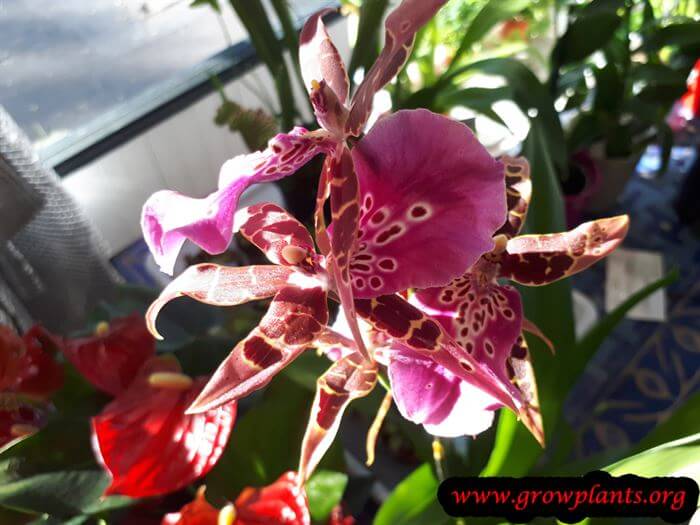
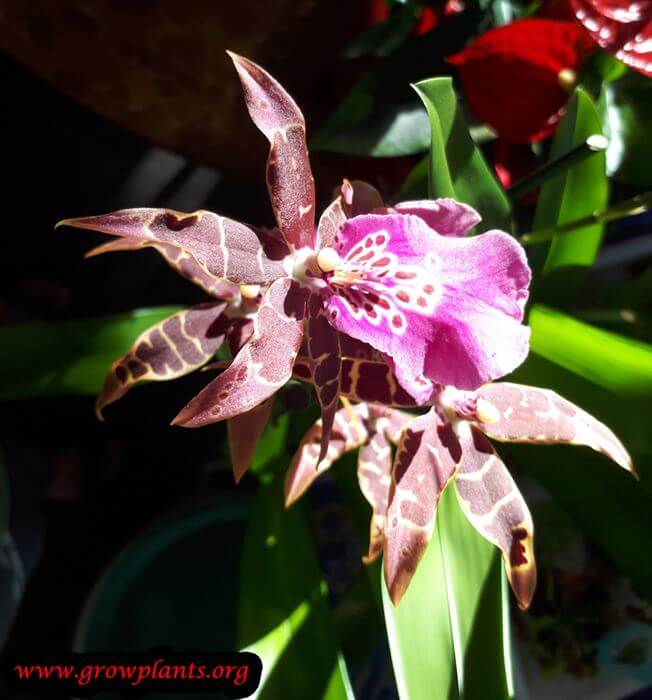
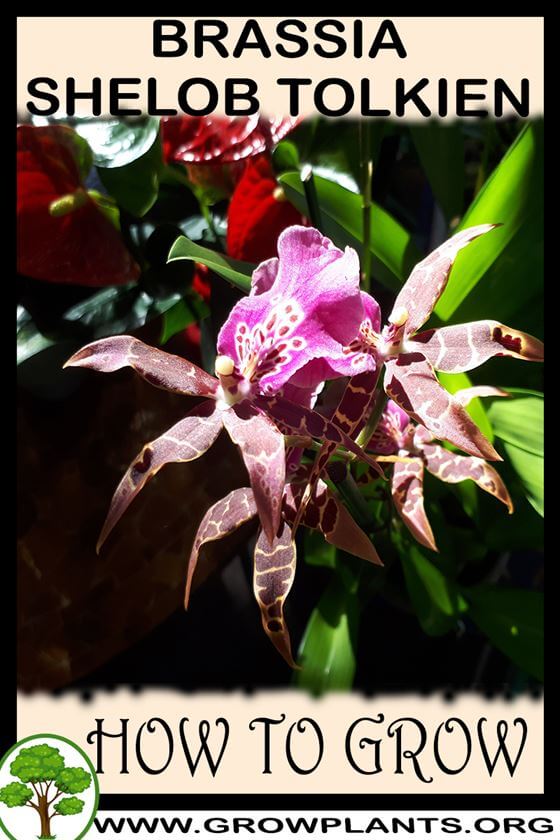
Overview: Brassia ‘Shelob Tolkien’ is a perennial evergreen epiphytic spider orchid, about 30-70 cm, grown as an ornamental houseplant or greenhouse plant in tropical and subtropical climates. It bears the group’s characteristic long-petalled, spider-like flowers in pink with dark-red and yellow markings.
Quick Specifications
| Specification | Attribute |
|---|---|
| Plant Type / Life Cycle | Perennial (epiphytic orchid) |
| Foliage Type | Evergreen |
| Mature Size | 30-70 cm (12-28 in) |
| Growth Rate | Slow |
| Root System | Epiphytic – thick aerial roots rather than a soil root system |
| Toxicity | Non-toxic (orchids are generally regarded as non-toxic) |
| Hardiness | USDA zone 12+ |
Growth Form & Structure
- Height & Spread: 30-70 cm (12-28 in); grown in a snug, well-drained pot of bark or cork next to a bright window.
- Growth Habit & Form: Epiphytic, sympodial orchid whose fleshy leaves grow from pseudobulbs; roots need air and good drainage.
- Lifespan & Maturity: Long-lived, slow-growing orchid; repot as it outgrows its pot.
Anatomy & Physical Features
- Leaves & Foliage: Green, oval, fleshy leaves borne on pseudobulbs.
- Flower Characteristics: Spider-like flowers with narrow, linear petals and an apron-shaped lip; pink with dark red and yellow stripes (summary only – see the Bloom guide).
Primary Uses & Landscape Value
- Functional & Ornamental Roles: Ornamental orchid grown as a houseplant or in a greenhouse.
Care Guide: Planting, Soil & Watering
Overview: Brassia ‘Shelob Tolkien’ (spider orchid) is an epiphytic orchid that grows on bark and branches rather than in soil, thriving in bright, filtered light, warmth and high humidity. It prefers warm days (about 18-24 C) with nights no colder than about 12-15 C and humidity above 50%. It needs an open, fast-draining bark or cork medium in a snug pot, with clean, room-temperature water and a slight dry-down between waterings.
Quick Care Requirements
| Requirement | Ideal Condition |
|---|---|
| Planting Season | Spring to summer |
| Growth Rate | Slow |
| Soil Type | Epiphytic – open bark or cork-chip mix, not soil |
| Water Need | Low to moderate – more during active growth, less otherwise |
Planting & Establishment
- Best Planting Season: Brassia ‘Shelob Tolkien’ (spider orchid) can be potted or divided at almost any time, but disturb it only when repotting, ideally after flowering.
- How to Plant:
- Hole Preparation: Choose a transparent pot just large enough for the roots – too big a pot stays wet and rots them.
- Soil Amendments: Use fresh orchid bark, cork or bark chips, adding pieces of Styrofoam for extra air, and refresh the medium before it breaks down into acidic compost.
- Planting Depth: Settle the plant so the base of the shoots sits at the surface and the roots are held in the bark; trim any dead roots when repotting.
- Growth Speed & Expectations: Slow-growing; repot roughly once a year as the roots and plant outgrow their pot.
Soil, Watering & Drainage Care
- Soil Mix & Drainage Needs: An open, airy bark or cork mix in a snug transparent pot gives the free drainage and root aeration these orchids demand; keep humidity high.
- Watering Schedule & Technique:
- Young / Newly Planted: After potting, water with clean, room-temperature or rain water, keeping the medium lightly moist as new roots establish.
- Established: Water when the bark approaches dryness, then water thoroughly with clean water; never leave it sodden. It needs a little more water during the growing season and less at other times.
- Seasonal Adjustments: More frequently during warm, active growth and less in cooler months.
Climate, Light & Hardiness
This epiphytic orchid needs warm, humid, tropical-greenhouse conditions with bright indirect light and a distinct day–night temperature drop; it has essentially no cold hardiness and is only viable outdoors in frost-free zone 12+ climates.
Quick Climate Specifications
| Climate Zones | Tropical, Subtropical (greenhouse or houseplant elsewhere) |
|---|---|
| USDA Hardiness Zones | 12+ |
| Optimal Temp Range | Day approximately 18–24°C (65–75°F); night approximately 12–15°C (55–60°F) |
| Cold Damage Begins | Night temperatures colder than the 12–15°C (55–60°F) range |
| Frost Tolerance | None |
| Light Conditions | Half Shade / bright indirect light (no direct sun) |
Sunlight & Light Exposure
Optimal Light Setup
Bright, filtered light - an east-facing window indoors or a shaded greenhouse bench - suits this genus, which is adapted to dappled forest light in the wild.
Shade & Heat Management
Keep out of hot midday sun, which can scorch the fleshy leaves and pseudobulbs; a sheer curtain or shade cloth works well.
Best Exposure / Orientation
An east- or north-facing window indoors, or overhead dappled shade in a greenhouse.
Temperature Extremes & Hardiness
USDA Hardiness & Regional Limits
Hardy outdoors only in essentially frost-free zone 12+ climates; everywhere else it must be grown as a protected greenhouse or houseplant orchid.
Cold Damage & Winter Protection
The site's own care notes are specific: keep daytime temperatures around 18–24°C (65–75°F) and nights around 12–15°C (55–60°F) - nights colder than this range can damage the plant even though the days may run warmer. Provide supplemental heat if grown in a cool sunroom or greenhouse in winter.
Frost Sensitivity
No meaningful frost tolerance; this epiphytic orchid must never experience frost or near-freezing temperatures.
Extreme Heat Tolerance
Tolerates warm days within its comfortable range, but sustained heat above that, especially combined with low humidity, causes stress - pair warmth with the humidity above 50% the site's care notes call for.
Wind, Humidity & Microclimate
Humidity Preferences
Needs humidity above 50%, typical of an epiphytic orchid; a humidity tray, regular misting, or greenhouse humidification helps meet this.
Dry-Air Tolerance
Poor - dry indoor air, especially near heating vents or air conditioning, stresses the plant; grouping with other plants or using a pebble tray helps.
Microclimate Recommendations
A stable, humid spot away from cold drafts, heating vents, and direct sun - a shaded greenhouse bench or a humid kitchen/bathroom window - best mimics its native forest conditions.
Growing in Pots, Balconies & Indoors
Brassia ‘Shelob Tolkien’ (Spider orchid) is an epiphytic orchid grown as a houseplant, and the grower confirms it does well indoors next to a window. Like most epiphytic orchids it is grown not in soil but in a free-draining bark mix in a pot, and it wants bright but indirect light, warmth and humidity – all easy to give on a bright sill.
Quick Details
- Container Size: A snug transparent pot that just fits the roots – the grower stresses not too big, and to move up only a size at a time as it grows
- Indoor Suitability: A genuine houseplant – the grower says yes, right next to a window
- Best Spot: Bright but indirect light (half shade), not direct sun; warm days around 18-24C and cooler but not cold nights
- Soil & Drainage: Not soil – an open epiphyte mix of bark or bark chips (with cork); a transparent pot with free drainage – a bagged orchid potting mix and bark is a convenient ready-made option
- Watering in Pots: Small to average amounts, more in the growing season; use clean, room-temperature water (rainwater is ideal) and let it drain freely – never let it sit wet
Indoors & On the Windowsill
- A real houseplant: The grower confirms it grows well indoors beside a window. Give it bright, filtered light and steady warmth and it will settle happily on a sill or a bright shelf.
- Light & humidity: Bright but indirect light – protect it from harsh direct sun through glass. It likes humidity above 50%, so group it with other plants or stand it on a humidity tray, especially in dry indoor air.
- Warmth: Comfortable at about 18-24C by day and around 12-15C at night; avoid cold draughts, which can damage it.
On a Balcony or Patio
- Light & shelter: In warm, frost-free weather it can summer outdoors in bright shade – never full sun – and enjoys the humidity and air movement. Keep it out of strong wind and bring it back in before nights turn cold.
- Watering outdoors: Pots and open bark dry quickly outdoors, so check often and water with clean water; make sure it drains and never stands in a saucer.
Choosing the Pot, Soil & Long-Term Care
- Pot & medium: Use a transparent pot (the roots photosynthesise and it lets you see moisture) that is only just big enough; the grower advises against potting straight into a large pot. Grow in bark/cork chips, not soil, and add a little Styrofoam for extra air around the roots.
- Renew the medium: Bark and cork break down and turn acidic, so change the medium before it composts – typically every year or two – and cut away any dead roots at the same time.
- Feeding: Feed with a dilute orchid fertiliser during active growth, flushing with plain water between feeds so salts do not build up in the bark.
- Repotting: The grower notes it needs potting on each time it outgrows its pot; move up just one size, refreshing the bark and trimming dead roots and old yellow leaves. After flowering, cut the spent stem about 2 cm from the base.
Grower’s Container Tip
- Grower’s orchid method: Keep it in a transparent, close-fitting pot in fresh bark/cork with a few pieces of Styrofoam for aeration; never plant straight into a big pot, use clean room-temperature water, and renew the bark before it rots and turns acidic.
Growing this plant in a greenhouse
A greenhouse can give brassia shelob tolkien frost protection, cold protection, humidity control and extra warmth. Under warm enough conditions it can keep growing well beyond the normal outdoor season and potentially be maintained year-round - though continuous cropping is not guaranteed and depends on temperature and light.
Greenhouse at a glance
| Greenhouse suitability | Excellent - a major practical advantage |
|---|---|
| Main benefits | frost protection, cold protection, humidity control, extra warmth |
| Outdoor protection advisable below | about 15°C |
| Maintain greenhouse minimum | around 15°C for active growth |
| Suitable types | heated greenhouse, glass greenhouse, mini greenhouse |
| Heating | Heating is recommended in cold climates for continuous growth. |
Related greenhouse guides
- Greenhouses: How to Choose the Right Greenhouse
- Best Greenhouse Heaters
- Greenhouse Climate Control: Temperature, Ventilation and Humidity
- Best Mini Greenhouses
Fertilizing & Feeding
Grown epiphytically in bark or cork rather than soil, this orchid takes up nutrients quickly through its exposed roots and is easily over-fed; keep every feeding light and let the fast-draining medium carry away any excess.
Quick Fertilizing Specs
| Feeding Level | light |
|---|---|
| Main Nutrient Priority | Balanced feeding through active growth, easing off as flowering finishes |
| Best Feeding Period | Spring through summer while new pseudobulbs and roots are actively forming |
| Organic Options | Diluted fish- or seaweed-based liquid feeds work well in bark culture, where granular products are hard to apply evenly |
| Micronutrients | A complete orchid-specific fertilizer supplies the trace elements this plant needs; bark media alone provide very little |
Feeding by Growth Stage
Spring-Summer Active Growth
Support development of new pseudobulb growths and active root growth as the plant moves out of its slower winter phase.
| Nutrient direction | Balanced feeding with a steady nitrogen component to fuel new leaf, pseudobulb, and root growth. |
|---|---|
| Timing | Spring into summer, once new growth is visibly underway. |
| Frequency | Light, regular feeding worked into routine watering rather than occasional heavy doses. |
| Fertilizer types | A balanced, orchid-formulated liquid fertilizer diluted well below typical houseplant strength, Bark-culture-specific blends that account for the nitrogen tie-up caused by decomposing bark |
| Precautions | Epiphytic roots and fine bark media are sensitive to salt buildup, so err toward feeding too lightly rather than too heavily, and periodically flush the medium with plain water between feedings. |
Bloom Period
Maintain plant vigor while flower spikes develop and the pink, dark-red-and-yellow-striped spider-shaped blooms open.
| Nutrient direction | Continue the same balanced feeding used during active growth; heavy nitrogen favors leaf growth over flowering, so keep the overall level light and even rather than switching products. |
|---|---|
| Timing | Coincides with the spring/summer bloom season as flower spikes emerge and open. |
| Frequency | Keep the same light, regular feeding rhythm established during active growth. |
| Fertilizer types | The same diluted balanced orchid fertilizer used during active growth, without switching to a high-phosphorus ‘bloom booster’ product |
| Precautions | Avoid feeding directly onto open flowers or into the central crown, where pooled fertilizer and water encourage rot. |
Cooler Rest Period
Let the plant slow down through the cooler, lower-light part of the year without pushing soft new growth.
| Nutrient direction | None – withhold fertilizer while growth is minimal. |
|---|---|
| Timing | Once the current season’s growths have matured and light and temperature drop. |
| Frequency | No feeding at this stage; resume only once active growth restarts in spring. |
| Fertilizer types | No feeding at this stage – plain water only, reduced in frequency to match the plant’s slower water use |
| Precautions | Do not fertilize during this rest period; feeding a plant that isn’t actively growing mainly builds up salts in the bark medium and can injure roots. |
Nutrient Deficiency Signs & Corrections
Overall pale, weak new growth with smaller-than-normal pseudobulbs and leaves.
| Possible causes | Insufficient or overly dilute fertilizer relative to the plant’s active growth, A fast-draining bark medium flushing nutrients before the roots take them up, Root loss from rot limiting uptake even when feeding is adequate |
|---|---|
| Appears first on | newest pseudobulbs and leaves |
| What to check | Review recent feeding frequency and dilution against the current growth stage, Inspect roots for firmness, color, and signs of rot, Confirm the bark medium hasn’t broken down and lost its open structure |
| Possible correction | Resume regular light feeding with a balanced orchid fertilizer once root health is confirmed, accounting for the fast-draining bark medium. |
Yellowing of newer leaves while the veins remain distinctly green.
| Possible causes | A fertilizer lacking trace elements relative to the plant’s needs, Hard, high-pH irrigation water locking out iron and other micronutrients, Root damage limiting overall nutrient and water uptake and mimicking a deficiency |
|---|---|
| Appears first on | youngest, newest leaves |
| What to check | Note the hardness or pH of the water source used, Confirm the fertilizer used is a complete formulation containing trace elements, Check root condition, since damaged roots can produce the same symptom |
| Possible correction | Switch to a complete orchid fertilizer containing trace elements, and consider rainwater or a lower-mineral water source if the tap water is very hard. |
Blackened or dried root tips and browning at leaf tips.
| Possible causes | Fertilizer salts building up faster than the bark medium can shed them, Feeding at too concentrated a strength for an epiphytic orchid, Old, broken-down bark holding salts against the roots |
|---|---|
| Appears first on | root tips and leaf tips |
| What to check | Inspect the bark medium for breakdown, compaction, or a visible salt crust, Review fertilizer dilution against a product labeled specifically for orchids, Flush the medium thoroughly with plain water and watch for improvement over subsequent growth |
| Possible correction | Reduce feeding strength, flush the medium regularly with plain water between feedings, and refresh bark that has broken down. |
Pruning, Training & Seasonal Maintenance
Brassia ‘Shelob Tolkien’ is a sympodial epiphytic orchid that grows from a chain of pseudobulbs rather than woody stems, so there is no structural or seasonal “wood” logic here – maintenance is limited to removing spent flower spikes, old yellowed leaves and dead roots, and never cutting into a healthy green pseudobulb. Each pseudobulb blooms once; once its spike has finished, it will not rebloom on the same spike, so the flower stem is simply removed, while the pseudobulb itself is kept as a “back bulb” that still feeds the plant and can later be divided for propagation.
Quick Pruning & Maintenance Specs
| Pruning Tolerance | Low – maintenance cuts only, no structural pruning |
| Primary Pruning Window | After a flower spike has fully finished blooming |
| Typical Frequency | Per bloom cycle, plus ongoing removal of yellowed leaves/dead roots |
| Main Objective | Remove spent flower spikes and non-living tissue; keep green pseudobulbs intact |
| Young Plant Priority | None – let new growths and pseudobulbs bulk up |
| Mature Plant Priority | Post-bloom spike removal; divide overcrowded clumps only when repotting |
| Best Tool Type | Sterile precision snips or a sterile blade |
| Avoid Heavy Pruning During | Active blooming or active new-growth/root development |
Pruning by Plant Age & Size
Newly Established
No cutting beyond removing any leaves or roots that arrived dead; let the plant settle into its pot/mount before any maintenance cuts.
Young / Formative
No structural training. A flower spike may benefit from a thin stake or clip to keep it upright as it develops, but this is support, not pruning.
Mature / Established
Remove each flower spike once it has fully finished blooming, and once a pseudobulb chain has built up 3–4 back bulbs deep, divide the clump at repotting to keep it vigorous, rather than pruning it while it stays in the pot.
Special Growth to Remove
- Spent flower spike – cut about 2 cm above its base once all flowers have faded; it will not bloom again.
- Old, fully yellowed leaves – remove; these are finished, not a sign the plant needs feeding or more water.
- Dead or mushy roots – trim back to firm, white/green tissue, best done at repotting.
Do not remove green, plump pseudobulbs (“back bulbs”) even if leafless – they store the energy reserves this orchid draws on between growth cycles, and are also what a future division needs to succeed.
Tools
A sterile precision snips or a dedicated sterile blade for spikes, leaves and roots; nothing larger is ever needed on an orchid this size.
Tool Hygiene & Disease Risk
High-risk. Orchids as a group are vulnerable to virus (e.g. Cymbidium mosaic and Odontoglossum ringspot viruses) that spread readily on cutting tools between plants and show no cure once present. Use a dedicated, freshly disinfected blade for this plant, and disinfect again before moving on to any other orchid.
Cut Placement & Technique
Cut the flower spike cleanly about 2 cm above where it emerges from the pseudobulb, angled slightly so water does not pool on the cut surface; when dividing at repotting, cut through the connecting rhizome between pseudobulbs, keeping at least three pseudobulbs per division.
Heavy Pruning & Rejuvenation
Not applicable in the shrub sense – there is no hard cutback to rejuvenate this orchid. The equivalent renewal technique is division: separating an overcrowded, multi-bulb clump into smaller sections at repotting so each has room to produce new growths.
Post-Pruning Care
Keep the cut spike stub and any root-trim wounds dry for the first day or so; resume normal watering and humidity once cuts have dried, and hold off repotting/dividing right after a flowering cycle – wait until active root growth resumes.
Common Pruning Mistakes
- Cutting a green, healthy leafless pseudobulb because it looks “done,” when it is actually a valuable back bulb.
- Leaving a fully spent spike in place indefinitely instead of removing it, which the plant gains nothing from keeping.
- Using an unsterilised blade shared between orchids, risking virus spread that has no cure.
When NOT to Prune
Do not cut a flower spike while it may still be producing buds – wait until it is clearly fully spent; avoid dividing or hard root-trimming while the plant is in active bloom or has just finished flowering, since that is a high-stress moment better followed by a rest before disturbing the roots.
Recommended Tools (by task)
- Spike, leaf and root removal (any age): precision_snips.
- Between plants and between cuts: blade_disinfectant – orchid virus risk makes this a real, not routine, precaution.
Propagation Guide
The most practical way to propagate this Brassia orchid cultivar is by dividing its pseudobulb clumps, since the site notes vegetative propagation is needed to keep ‘Shelob Tolkien’ true to its named form. Seed-grown orchids of a hybrid cultivar will not come true and require specialist sterile flask culture, so division is the standard home and nursery method – Moderate in difficulty for division, Specialist by seed.
Quick Propagation Specs
| Best Propagation Method | Division of pseudobulb clumps |
| Alternative Methods | Backbulb propagation (rejuvenating older leafless pseudobulbs); seed only via specialist sterile/asymbiotic flask culture |
| Propagation Difficulty | Moderate (division); Specialist (seed) |
| Seed True-to-Type | No – named hybrid cultivar, seedlings vary |
| Vegetative True-to-Type | Yes |
| Best Propagation Season | Spring to summer, at repotting time |
Growing from Seed
Orchid seed is dust-like, lacks a food-storing endosperm, and will not germinate reliably outside sterile, symbiotic-fungus or agar-flask culture – a lab-based, specialist technique rather than a home method. Because ‘Shelob Tolkien’ is a named cultivar, seedlings also would not reproduce its exact flower form even if germinated.
Division, Offsets, Pups & Suckers
Divide at repotting time, which this plant needs fairly often since the site advises moving it up gradually rather than placing it directly into a large pot. Keep at least three to four pseudobulbs with healthy roots per division for reliable re-establishment, and as with routine repotting, trim away any dead or rotted roots before replanting into a fresh, fast-draining orchid mix (bark, cork chip or similar) in a snug, well-fitting pot. Older, leafless back bulbs can also be potted separately on their own – they root more slowly and take longer to push a new growth, but let a grower multiply a valued cultivar without disturbing the actively growing clump. After dividing, maintain humidity above 50% and hold off on heavy watering until new roots appear.
Bloom & Flower Guide
Quick Details
- Bloom Season: Spring and summer
- Time to First Bloom: Once a plant has built up mature, plump pseudobulbs it can send up its flower spikes
- Flower Appearance: Long, narrow, spider-like petals in pink with dark red and yellow striping, and a broad lower lip like an apron – the whole flower reads like a little dancer
- Edibility: Ornamental orchid – the flowers are not eaten
Detailed Blooming Overview
The spider orchids are named for their long, narrow, leg-like petals. Those slender flowers are more than decorative: in the wild the spider-like shape lures spider-hunting wasps, which try to sting the “prey” and pollinate the flower in the process. Grown as an ornamental, this hybrid throws arching spikes of these striking blooms in spring and summer, rising from mature pseudobulbs.
Flower Characteristics
- Five long, narrow, linear petals plus a broad apron-like lip, giving a spider or dancer shape.
- Colour is pink on the lip with dark red markings and yellow striping.
Bloom Care & Thinning
- Build strong pseudobulbs: Good light (bright but not scorching), steady warmth and regular feeding through the growing season build the plump pseudobulbs that carry the flower spikes.
- A slight rest: A modest cooling and slightly drier spell after growth finishes helps cue the spikes.
- Support the spikes: The arching flower stems are long and can be gently staked so the blooms are shown off well.
- After bloom: Leave the pseudobulbs in place after flowering – they feed next season’s growth and flowers.
Pests, Diseases & Troubleshooting
Overview: Brassia ‘Shelob Tolkien’ is an epiphytic orchid, and its pest and disease profile is the classic orchid one: sap-sucking scale, mealybug, spider mites and thrips, plus snails and slugs that chew roots and new growth. Its most dangerous diseases are the fast bacterial and fungal rots (black rot, bacterial brown/soft rot) that spread in warm, wet, stagnant conditions, along with incurable orchid viruses. Almost everything is prevented by clean tools, good air movement, careful watering into a free-draining medium, and never letting water sit in the crown. This is a named Brassia (spider-orchid) hybrid grex; it follows the standard Brassia pest and disease profile, being particularly watchful for spider mites and thrips on its thin leaves and buds.
Quick Troubleshooting Overview
| Issue / Pest | Main Symptom | Primary Solution |
|---|---|---|
| Scale insects | Brown/white bumps on leaves, pseudobulbs and sheaths; sticky | Wipe/alcohol; horticultural oil |
| Mealybugs | White cottony tufts in sheaths and leaf axils | Alcohol swab; insecticidal soap / oil |
| Spider mites | Fine silvery stippling and webbing on leaf undersides | Raise humidity, wipe leaves; miticidal oil |
| Thrips | Silvery flecking, distorted buds, spoiled flowers | Sticky traps; spinosad; remove buds |
| Snails & slugs | Chewed roots, new growth and flower spikes; slime | Bait, barriers, night hand-picking |
| Black rot / soft rot | Fast-spreading black or watery mushy lesions | Cut out to clean tissue; improve airflow; reduce wetness |
Common Pests & Management
- Scale insects (Diaspididae / Coccidae (e.g. Boisduval scale)):
- Symptoms: Brown, tan or white immobile bumps and, with Boisduval scale, cottony patches on the leaves, pseudobulbs and inside old leaf sheaths; feeding causes yellow flecking, pitting and gradual decline, plus honeydew and sooty mould from soft scales. Hidden populations under sheaths make it persistent.
- Prevention & Control: Isolate the plant and strip away old dry sheaths and bracts where scale hides. Wipe or dab crawlers and adults with an alcohol-moistened swab, and spray horticultural oil or insecticidal soap over all surfaces, repeating every 1–2 weeks to catch successive crawlers. Sterilise tools between plants.
- Mealybugs (Pseudococcus / Planococcus spp.):
- Symptoms: White cottony, waxy tufts tucked into leaf axils, flower sheaths, new growth and even among the roots, with honeydew, sooty mould and weakened, distorted growth.
- Prevention & Control: Dab colonies with an alcohol swab and remove hiding places such as old sheaths; check the roots and repot into fresh medium if infested. Spray insecticidal soap or horticultural oil thoroughly and repeat until clear, keeping the plant isolated.
- Spider mites (Tetranychus / Brevipalpus spp.):
- Symptoms: Fine silvery or pale stippling and a dull, pitted look on the leaf undersides, sometimes with delicate webbing, in warm, dry, low-humidity air; false spider mites cause sunken pitting without obvious webbing.
- Prevention & Control: Raise humidity and improve air movement, and wipe or rinse the leaf undersides regularly to remove mites and dust. Encourage predatory mites. Treat outbreaks with a miticidal horticultural oil or insecticidal soap, covering the undersides and repeating.
- Thrips (Frankliniella / Thrips spp.):
- Symptoms: Tiny slender insects that rasp leaves, buds and flowers, causing silvery flecking and streaking, deformed buds, and browning, spotted, short-lived blooms; they also spread orchid viruses.
- Prevention & Control: Monitor with blue or yellow sticky traps and remove infested buds and spent flowers. For outbreaks use spinosad or insecticidal soap in the evening, repeating to break the cycle; keep new purchases isolated, as thrips arrive on incoming plants.
- Snails and slugs (Gastropoda):
- Symptoms: Chewed root tips, new growth, buds and flower spikes with tell-tale slime trails; small bush snails hide in the pot and medium and feed at night, damaging the sensitive roots.
- Prevention & Control: Hand-pick at night, set beer or bait traps, and use copper barriers around benches. Drench or repot to flush out pot-dwelling snails, and use iron-phosphate pellets where needed. Keep benches and pots clean and free of debris.
Diseases & Fungal Issues
- Black rot (Phytophthora / Pythium spp.):
- Symptoms: Fast-spreading black or purplish-brown watery, mushy lesions on leaves, new growth and pseudobulbs, often starting at the base or in the crown after water sits there; it can kill a plant rapidly in warm, wet, stagnant conditions.
- Treatment & Management: Act fast: cut well back into clean, firm green tissue with a sterile blade, dust the cuts with cinnamon or a fungicide, and move the plant to bright, airy, drier conditions. Water early in the day, never into the crown, and improve air movement. A copper or phosphonate fungicide protects valued plants; discard plants that are too far gone.
- Bacterial brown / soft rot (Acidovorax / Erwinia (Pectobacterium) spp.):
- Symptoms: Soft, water-soaked, sunken spots that turn brown or blackish and enlarge rapidly, sometimes with a foul smell and oozing, especially in warm, humid, wet conditions and after crown wetting.
- Treatment & Management: Cut out infected tissue back to healthy green with a sterile tool and keep the plant dry, cool and airy while it heals; treat cuts with cinnamon or copper. Reduce humidity around the plant, water in the morning only, and avoid overhead splashing that spreads bacteria plant-to-plant.
- Fungal leaf spot & anthracnose (Cercospora / Colletotrichum / Guignardia):
- Symptoms: Small yellow, brown or black spots and blotches, sometimes in rings or with concentric zoning, mainly on older leaves in humid, poorly ventilated conditions; anthracnose causes sunken dark leaf-tip and blotch lesions.
- Treatment & Management: Remove and destroy spotted leaves, improve air circulation and light, and keep foliage dry, especially overnight. A copper-based fungicide checks persistent spotting, but ventilation and dry leaves are the primary control.
- Orchid viruses (Cymbidium mosaic & Odontoglossum ringspot virus):
- Symptoms: Irregular mosaic mottling, colour-break streaking, chlorotic or necrotic rings, streaks and flecks on leaves, and distorted, streaky flowers; growth is weakened but the plant does not usually die outright. Viruses are incurable and spread by sap.
- Treatment & Management: There is no cure – isolate and ideally destroy confirmed virus-positive plants to protect the collection. Prevent spread by sterilising cutting tools between every plant (flame or fresh blades), controlling sap-feeding thrips, aphids and scale, and buying clean stock; virus test valuable plants if unsure.
Growing Difficulties & Abiotic Problems
- Root rot from overwatering / stale medium:
- Cause & Symptoms: Overwatering, a broken-down soggy medium, or pots that never dry cause the fleshy roots to blacken, rot and die, so the plant dehydrates and shrivels even though it is ‘wet’ – the commonest orchid killer.
- Correction Strategy: Grow in an open, free-draining orchid medium (bark, or mounted for these epiphytes), let the roots approach dryness between waterings, and repot into fresh medium every year or two. Ensure pots drain freely and never leave the plant standing in water.
- Sunburn & leaf scorch:
- Cause & Symptoms: Bleached, then brown or black dry patches on leaves exposed to too much direct sun or a sudden increase in light, worst when leaves are wet or airflow is poor.
- Correction Strategy: Provide bright but filtered/diffused light appropriate to the plant, and increase light gradually. Improve air movement to cool the leaves, and shade during the most intense midday sun. Damaged tissue will not recover but should stop spreading.
- Bud blast & poor flowering:
- Cause & Symptoms: Buds yellowing and dropping before opening, or failure to flower, caused by sudden changes in temperature, light or watering, low humidity, or drought/overwatering stress.
- Correction Strategy: Keep conditions stable through spike and bud development, maintain adequate humidity and steady watering, and give the correct light and the day–night temperature difference the plant needs to initiate and hold blooms.
- Salt & fertiliser burn:
- Cause & Symptoms: Blackened, dead root tips and brown leaf-tip burn from accumulated fertiliser salts, over-strong feeding, or hard water in the medium.
- Correction Strategy: Feed ‘weakly, weekly’ with a dilute balanced orchid fertiliser, flush the medium periodically with plain water to leach salts, and use rain or low-mineral water where possible. Repot if the medium is heavily salt-encrusted or degraded.
What Helps – Products & Tools
The orchid toolkit is isopropyl alcohol swabs, insecticidal soap and horticultural / neem oil for scale, mealybug and mites, spinosad plus blue/yellow sticky traps for thrips, and iron-phosphate pellets or copper barriers for snails and slugs. For the dangerous rots keep ground cinnamon or a copper/phosphonate fungicide and a sterile blade to cut out infection, and always sterilise tools between plants to stop virus spread. Fresh free-draining medium and good airflow are the best insurance. Spray oils in the evening to protect pollinators.