

Plant Profile & Key Characteristics
Also known as: paddle plant, flapjacks, desert cabbage, white lady, geelplakkie, meelplakkie, or plakkie
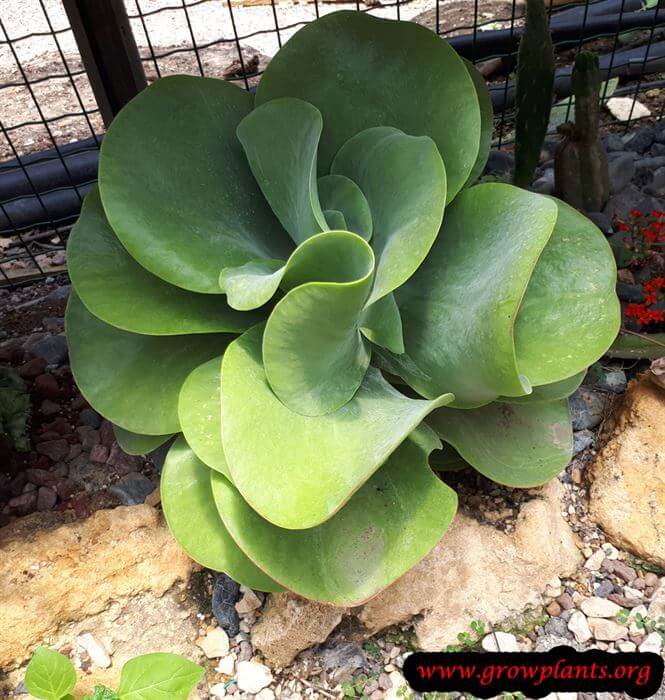
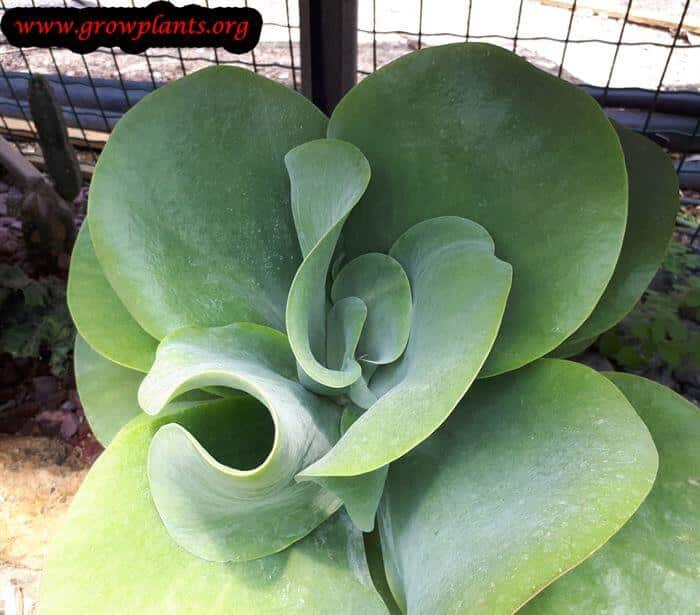
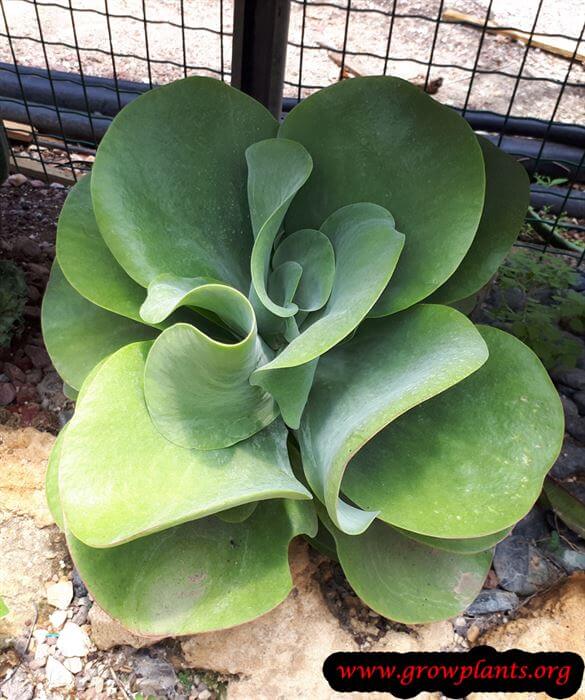
Overview: Kalanchoe luciae (paddle plant) is an evergreen succulent 30–50 cm (12–20 in) tall, grown for its rounded, red-edged paddle-shaped leaves. It is slow-growing, drought tolerant and popular in containers and warm-climate gardens.
Quick Specifications
| Specification | Attribute |
|---|---|
| Plant Type / Life Cycle | Perennial |
| Foliage Type | Evergreen (succulent) |
| Mature Size | 30–50 cm tall (12–20 in) |
| Growth Rate | Slow |
| Root System | Fibrous and shallow (typical of succulents) |
| Toxicity | Toxic – contains cardiac glycosides (bufadienolides); harmful to cats, dogs and livestock if ingested |
| Hardiness | USDA zones 9–11 |
Growth Form & Structure
- Height & Spread: A succulent 30–50 cm (12–20 in) tall for containers and warm gardens.
- Growth Habit & Form: Rosette-forming succulent that produces a tall flowering spike at maturity.
Anatomy & Physical Features
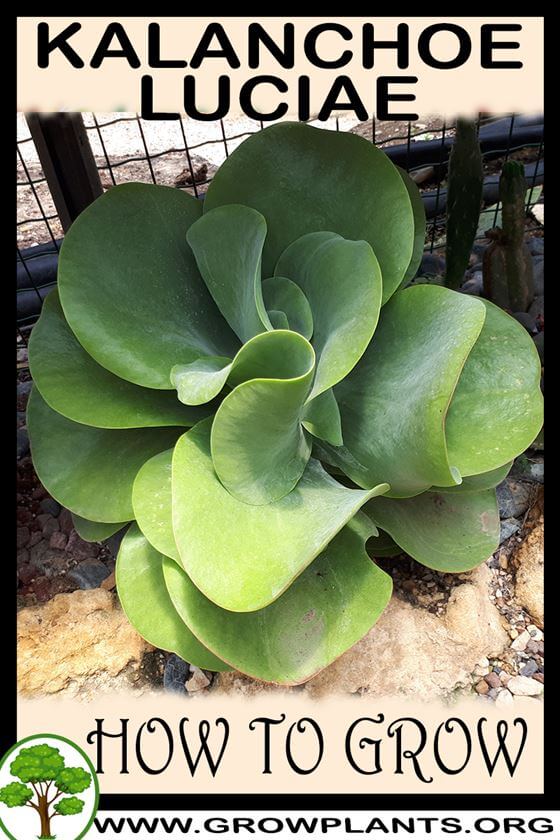
- Leaves & Foliage: Large, rounded to spoon-shaped fleshy leaves, green often flushed red at the margins, sometimes wavy-edged.
- Flower Characteristics: White, bell-shaped flowers in clusters on tall stems (winter to spring).
Primary Uses & Landscape Value
- Functional & Ornamental Roles: Ornamental foliage/rosette plant for containers, rockeries and drought-tolerant beds.
Care Guide: Planting, Soil & Watering
Overview: This Kalanchoe is a drought-tolerant succulent for warm, frost-free climates (desert, mediterranean and subtropical) that stores water in its fleshy leaves. It needs a gritty, free-draining soil and only occasional watering, thriving in full sun to light shade.
Quick Care Requirements
| Requirement | Ideal Condition |
|---|---|
| Planting Season | In spring, summer or autumn during the warm season, avoiding frost |
| Growth Rate | Slow |
| Soil Type | Gritty, free-draining mix (cactus/succulent mix or sandy soil) |
| Water Need | Low – water sparingly and let the soil dry out between waterings; avoid overwatering |
Planting & Establishment
- Best Planting Season: Plant in the warm season, spring to autumn, in frost-free conditions.
- How to Plant:
- Hole Preparation: Make a planting pocket about as deep as the root ball and a little wider, in fast-draining ground or a raised gritty bed.
- Soil Amendments: Open up the soil with coarse sand, grit or a cactus mix rather than heavy, moisture-holding material; keep the site sharply drained.
- Planting Depth: Set the plant so the base of the stem sits at soil level; do not bury the fleshy stem, which can rot if kept wet.
- Growth Speed & Expectations: Slow-growing; the broad-leaved Paddle plant grows slowly to about 30 to 50 cm.
Soil, Watering & Drainage Care
- Soil Mix & Drainage Needs: Sharp drainage is essential to prevent root and stem rot. In containers use a cactus or succulent mix, add a layer of grit at the base, and make sure the pot drains freely.
- Watering Schedule & Technique:
- Young / Newly Planted: Water lightly after planting and then only when the soil has dried, letting new roots reach for moisture.
- Established: Water sparingly once established, giving a thorough drink and then letting the soil dry out completely before the next.
- Seasonal Adjustments: Water a little more in the heat of summer growth, and keep it nearly dry through the cool, low-light winter months.
Climate, Light & Hardiness
Kalanchoe luciae (paddle plant) is a South African succulent shrub suited to desert, subtropical, Mediterranean, and temperate climates with full sun to half shade. It is only reliably hardy outdoors where winters stay mild, and it is frost-sensitive.
Quick Climate Specifications
| Climate Zones | Desert, Subtropical, Mediterranean, Temperate |
|---|---|
| USDA Hardiness Zones | 9–11 |
| Approx. Survival Minimum | Zone 9 corresponds to a typical average minimum extreme of roughly −6 to −1°C (20–30°F); colder exposure is generally fatal |
| Frost Tolerance | Low |
| Light Conditions | Full Sun / Half Shade |
Sunlight & Light Exposure
Optimal Light Setup
Full sun brings out the deepest leaf coloration, often with reddish edges; half shade keeps foliage more uniformly green and is gentler in very hot climates.
Shade & Heat Management
Tolerates strong desert and Mediterranean sun once established; a little afternoon shade in the hottest inland summers can prevent scorch.
Best Exposure / Orientation
A bright, south-facing bed or windowsill maximizes color and compact growth.
Temperature Extremes & Hardiness
USDA Hardiness & Regional Limits
Hardy outdoors only in USDA zones 9–11. In colder climates it is best grown in a container and moved somewhere cool, bright, and frost-free for winter - the site data does not list it as a typical indoor houseplant, so a porch or cold frame suits it better than a warm indoor room.
Cold Damage & Winter Protection
Cool nights can intensify the reddish leaf coloring, but hard frost blackens and collapses the fleshy foliage.
Frost Sensitivity
Frost-sensitive; move containers to shelter before the first frost outside its hardy zones.
Wind, Humidity & Microclimate
Humidity Preferences
Prefers relatively dry air typical of its desert-to-Mediterranean native range; avoid humid, stagnant conditions that encourage rot.
Dry-Air Tolerance
High, as a drought-tolerant succulent.
Microclimate Recommendations
A raised, gritty, well-drained spot in full sun with sharp winter drainage suits it best. In containers, the root zone cools and freezes faster than garden soil, so bring pots under cover before frost.
Growing in Pots, Balconies & Indoors
Kalanchoe luciae (Paddle plant) is a striking rosette succulent with round, red-edged leaves. The grower does not list it as an indoor houseplant – it colours up and stays compact only in strong sun – but it grows well in pots for a bright sill, balcony or patio. Note that Kalanchoe species are toxic if eaten, so keep it away from children and pets.
Quick Details
- Container Size: A pot roughly 50% wider than the rosette; not deep – the roots are shallow
- Indoor Suitability: Not a deep-room houseplant; needs the sunniest sill to keep its shape and red leaf edges
- Best Spot: Full sun to half shade – strong light brings out the red margins
- Soil & Drainage: Free-draining succulent mix; strong drainage holes
- Watering in Pots: Small amounts; let the mix dry between waterings – the fleshy leaves store water and rot easily in a wet pot
Indoors & On the Windowsill
- Houseplant limits: The grower marks it as not a true houseplant – in low indoor light the rosette flattens, stretches and loses its red colour.
- Windowsill growing: It does well on the brightest, sunniest sill, where direct light keeps the paddle rosette tight and colourful.
- Overwintering indoors: Frost-tender (hardiness zone 9-11); in cold climates keep it potted and move it to a bright, frost-free spot for winter.
- Safety: All parts are toxic if eaten (Kalanchoe contain cardiac glycosides) – keep it out of reach of children and pets.
On a Balcony or Patio
- Light & heat: Loves a hot, sunny balcony; reflected wall heat suits it, though pots dry fast, so check the mix. Shelter from prolonged rain to avoid rot.
- Practicalities: Easy to move; bring it under cover before frost and stand it clear of cold, wet paving.
Choosing the Pot, Soil & Long-Term Care
- Pot & drainage: A wide, shallow pot with strong holes; skip a standing water saucer. Terracotta breathes and dries fast, which suits succulents.
- Potting mix: A free-draining succulent/cactus mix with added grit or perlite.
- Feeding: Light feeding only – a dilute succulent feed once or twice in the growing season; pots leach nutrients but it needs little.
- Repotting: Slow-growing, so repot only every couple of years to refresh the mix; remove offsets to make new plants.
Fertilizing & Feeding
A light feeder. This paddle-leaved succulent shrub is drought-tolerant and colors up best when kept lean; a little feeding through the warm growing season is enough to support its rosettes and winter-into-spring bloom, and none is needed once growth slows.
Quick Fertilizing Specs
| Feeding Level | Light feeder |
|---|---|
| Main Nutrient Priority | A diluted, low-nitrogen feed; rich feeding pushes soft green growth and dulls the red leaf coloring this plant is grown for |
| Best Feeding Period | The warm active growing season |
| Organic Options | A little compost worked into the fast-draining mix |
| Reduce/Stop Feeding | Stop feeding once growth slows in cooler weather and after the main flowering rosettes finish blooming |
| Micronutrients | Usually adequate in a complete fertilizer; correct only a diagnosed deficiency |
| Soil pH | Tolerates a wide range; slightly acidic to near neutral in fast-draining soil |
Feeding by Growth Stage
Warm-season active growth
Support firm paddle-leaf rosette growth and the winter-into-spring flower stems without forcing soft growth that loses its red coloring.
| Nutrient direction | A diluted, low-nitrogen complete fertilizer; too much nitrogen produces soft, greener growth and weakens the plant’s characteristic leaf color. |
|---|---|
| Timing | During the warm active growing season once new paddle leaves are forming. |
| Frequency | Feed sparingly; a light feeding during the warm season is usually enough for this slow-growing succulent. |
| Fertilizer types | A diluted, low-nitrogen complete fertilizer, A cactus and succulent fertilizer used at reduced strength, A little compost worked into the fast-draining mix |
| Precautions | Keep feeding light and apply only to moist soil; this is a lean feeder and overfeeding produces soft rosettes, dulls leaf color, and risks fertilizer-salt buildup. |
Rest after bloom and through cool weather
Let the plant rest once its main rosettes finish flowering and through cooler weather, without pushing growth it cannot use.
| Nutrient direction | None – withhold fertilizer while the plant is resting and not producing new active growth. |
|---|---|
| Timing | After the main flowering rosettes finish blooming, and through cool weather and winter. |
| Frequency | No feeding at this stage; resume only when warm-season growth returns. |
| Fertilizer types | No feeding at this stage; do not fertilize until active growth resumes. |
| Precautions | Do not fertilize a resting plant; the flowering rosette naturally declines after bloom while offsets take over, and feeding now only wastes nutrients and risks salt injury. |
Nutrient Deficiency Signs & Corrections
Paddle leaves fade to a washed-out pale green and the rosette barely grows over a full season.
| Possible causes | very low available nitrogen in lean, fast-draining soil, nitrogen leaching from a light potting mix, a plant left unfed for a very long time in the same container |
|---|---|
| Appears first on | older, lower paddle leaves |
| What to check | when the plant was last fed, age and condition of the potting mix, whether pale color is simply low light rather than a nutrient issue |
| Possible correction | During the warm season apply a single diluted, low-nitrogen feeding to moist soil; avoid overcorrecting, since this succulent naturally grows slowly. |
Paddle leaf margins brown or scorch and the rosette looks stressed despite careful watering.
| Possible causes | fertilizer-salt buildup in the dry, rarely-flushed root zone, feeding at too high a strength for a lean succulent, feeding onto dry soil or during the rest period |
|---|---|
| Appears first on | leaf margins and tips |
| What to check | how strong and how often recent feeding has been, whether fertilizer was applied to dry soil, drainage and any white salt crust on the mix or pot |
| Possible correction | Ease off feeding, leach the mix with a thorough watering to flush accumulated salts, and return to only light warm-season feeding. |
New central paddle leaves turn pale or yellow between the veins while older leaves stay greener or redder.
| Possible causes | iron tied up by overly wet or poorly drained soil, high soil pH reducing iron availability, root stress from soggy conditions limiting uptake |
|---|---|
| Appears first on | new, young central leaves |
| What to check | drainage and how long the mix stays wet, soil pH, root health for rot from overwatering |
| Possible correction | Improve drainage and let the mix dry properly; correct pH if high and, only if a true deficiency is confirmed, apply a chelated iron product per its label. |
Pruning, Training & Seasonal Maintenance
Kalanchoe luciae needs only light, corrective pruning – there is no framework to train. The one distinctive event to plan around is flowering: in mature plants the central rosette sends up a tall bloom stalk in winter/spring, and after seed-set that flowering rosette commonly declines and dies back while offsets at the base take over, so most “pruning” here is post-bloom cleanup rather than shaping.
Quick Pruning & Maintenance Specs
| Pruning Tolerance | Low – grooming only |
| Primary Pruning Window | After the flower stalk fades (late spring) |
| Typical Frequency | Occasional, tied to the bloom cycle rather than a season |
| Main Objective | Remove the spent flower stalk; later, remove a fully declined mother rosette |
| Young Plant Priority | None – let the rosette bulk up |
| Mature Plant Priority | Post-bloom stalk removal; clear a dead rosette once offsets are established |
| Best Tool Type | Precision snips or bypass secateurs |
| Avoid Heavy Pruning During | While the rosette is actively budding/flowering |
Pruning by Plant Age & Size
Newly Established
No pruning – young plants are single, non-flowering rosettes that just need to grow on.
Young / Formative
No structural training; this is a single-rosette succulent, not a branching shrub.
Mature / Established
Once flowering size is reached, the main task is managing the bloom-and-decline cycle: cut the spent flower stalk near its base after it fades, and once the mother rosette has fully browned off, remove it to let the basal offsets fill in.
Seasonal Pruning Schedule
Post-Flowering
Objective: tidy the plant after its winter/spring bloom. Remove: the flower stalk once blooms have fully faded, cut near the base; later, the mother rosette itself once it has visibly browned and dried, not while it is still green. Do not remove: a rosette that is merely finishing bloom but still green – give it time to finish channelling energy to offsets/seed. Expected response: basal offsets bulk up and become the new display. Flowering impact: none – the stalk will not rebloom, so removing it only tidies the plant.
Special Growth to Remove
- Spent flower stalk – cut near the base once flowers are fully finished.
- The mature rosette itself, once fully declined after flowering – this is normal post-bloom senescence in this species, not disease.
- Offsets/pups at the base – retain; these are the plant’s natural succession, not a problem.
Container & Small-Space Pruning
Grown in a shallow, well-drained pot; no root-pruning is generally needed given its slow growth, and the rosette’s compact habit needs no height/spread control.
Tools
Precision snips for the flower stalk; bypass secateurs if the declined mother rosette’s base is thick and fleshy.
Tool Hygiene & Disease Risk
Routine – no specific disease susceptibility is noted for this species; clean, sharp tools are sufficient.
Cut Placement & Technique
Cut the flower stalk close to where it emerges from the rosette; when removing a fully spent rosette, cut below the dead tissue, at or just above where healthy offsets attach, to avoid nicking them.
Heavy Pruning & Rejuvenation
Not applicable in the usual sense – there is no “cutting back hard” to rejuvenate a single rosette, since a cut through the growing point simply ends that rosette. Renewal comes from the basal offsets, or from leaf/stem cuttings, not from pruning the mother plant.
Post-Pruning Care
Let cut surfaces dry before any water contact; do not increase feeding after removing the spent rosette – the offsets are already drawing on the plant’s own reserves.
Common Pruning Mistakes
- Mistaking natural post-bloom rosette decline for disease and treating it with fungicide instead of simply letting it finish and removing it.
- Cutting into the crown/growing point of a still-healthy, non-flowering rosette, which has no other bud to regrow from.
- Removing offsets before they have their own roots, wasting the plant’s natural propagation.
When NOT to Prune
Don’t cut the flower stalk while it is still actively blooming, and don’t remove the mother rosette until it has fully browned – it is still feeding the offsets and/or ripening seed while green.
Recommended Tools (by task)
- Flower stalk removal: precision_snips – a thin, single cut.
- Removing a declined rosette: bypass_secateurs – the base can be fleshier/thicker than snips handle cleanly.
Propagation Guide
Paddle plant is easiest to increase from stem or leaf cuttings, which reliably reproduce the exact look of the parent — important since keeping a specific named variety true to form requires vegetative propagation rather than seed. Growing from seed works for the straight species, but named forms won’t necessarily come true. Propagation is generally easy.
Quick Propagation Specs
| Best Propagation Method | Stem cuttings |
| Alternative Methods | Leaf cuttings; seed (species only) |
| Propagation Difficulty | Easy |
| Seed True-to-Type | Cultivar-dependent — named varieties need vegetative propagation to stay true |
| Vegetative True-to-Type | Yes |
| Best Propagation Season | Spring, summer or autumn |
| Cutting Rooting Time | Typically a few weeks |
| Germination Temperature | Warm, roughly 20–24°C (68–75°F) |
| Seed Sowing Depth | Surface-sow; seed is very fine |
Growing from Seed
Sowing Depth & Orientation
Kalanchoe seed is very fine and should be surface-sown, pressed gently onto a well-drained mix without covering it.
Germination Conditions
Keep the seed warm and only lightly moist until it germinates.
Stem Cuttings
Cutting Type
A stem tip with a few leaves attached.
Cutting Preparation
Let the cut end callus for a day or two in a dry spot before inserting it into soil, as is standard for fleshy succulent stems, to reduce the risk of rot.
Rooting Setup
Use a well-drained, gritty mix and water sparingly, in keeping with this plant’s small water needs.
Rooting Hormone
Not necessary; stem cuttings of this succulent root readily on their own.
Rooting Time
Typically a few weeks.
Leaf & Root Cuttings
Individual paddle-shaped leaves can also be used: let a detached leaf callus for a day or two, then set the base onto well-drained succulent mix and keep it barely moist until a small plantlet forms. Leaf propagation is possible but generally slower and somewhat less reliable than stem cuttings for this species.
Division, Offsets, Pups & Suckers
Established plants often produce basal offsets, particularly once the main rosette has flowered — in Kalanchoe luciae the flowered rosette typically declines afterward, so side offsets are the plant’s natural way of continuing. Offsets can be separated once they have some roots of their own and potted on individually.
Bloom & Flower Guide
Quick Details
- Bloom Season: Winter into spring
- Time to First Bloom: Once the rosette is mature and full-sized, usually after a couple of seasons of growth
- Flower Appearance: White, bell-shaped flowers carried in clusters on a tall stem above the paddle-shaped leaves
- Edibility: None – the plant is toxic; do not eat any part, including the flowers
Detailed Blooming Overview
The paddle plant sends up a tall flowering stem from the centre of its rosette in the cool part of the year, topped with clusters of small white bells. It is worth knowing that the rosette which flowers will slowly fade after blooming, but it usually leaves offsets around its base to carry on. The flush is triggered by shorter winter days, so bright light and a natural seasonal rhythm bring it on.
Flower Characteristics
- Small, white, bell-shaped flowers.
- Carried in clusters on an upright stem well above the foliage.
Bloom Care & Thinning
- Light and season: Bright light and the shorter days of winter cue flowering; a natural light cycle is all it needs.
- After bloom: Once the flower stem fades, cut it away; keep the offsets around the base to replace the spent rosette.
- Safety: Like other kalanchoes, this plant contains bufadienolides and is toxic if eaten, so keep the flowers and foliage away from children and pets.
Pests, Diseases & Troubleshooting
Overview: Kalanchoes are easy-going succulents whose troubles are overwhelmingly about moisture and light, not insects: overwatering brings stem and root rot – the number-one killer – while the genus is also notably prone to powdery mildew. Sap-suckers like mealybugs, aphids and scale appear mainly on stressed or indoor plants. Grow in gritty free-draining soil, bright light and with a dry-between-waterings routine and it stays healthy.
Quick Troubleshooting Overview
| Issue / Pest | Main Symptom | Primary Solution |
|---|---|---|
| Mealybugs | White cottony fluff in leaf axils and roots, sticky leaves | Alcohol swab / hose; insecticidal soap or oil |
| Aphids | Sticky, distorted flower stems and new growth | Water jet; insecticidal soap |
| Scale & spider mites | Brown bumps or fine stippling/webbing | Horticultural/neem oil; raise humidity for mites |
| Powdery mildew | White powdery film on leaves | Airflow, keep leaves dry; sulfur / bicarbonate |
| Stem & root rot | Soft, black, mushy base; collapse | Gritty free-draining mix; water sparingly |
| Etiolation / sunburn | Stretched pale growth, or scorched patches | Bright light; acclimate to sun gradually |
Common Pests & Management
- Mealybugs (Planococcus citri / Rhizoecus spp.):
- Symptoms: Cottony white tufts tucked into leaf axils and along stems (and, as root mealybugs, white specks on the roots of an unthrifty plant); sticky honeydew, stunting and yellowing follow.
- Prevention & Control: Dab clusters with an alcohol-moistened swab, hose the plant, and treat with insecticidal soap or neem oil; for root mealybugs, bare-root, wash and repot into fresh gritty mix in a clean pot. Avoid over-feeding with nitrogen.
- Aphids (Aphis spp.):
- Symptoms: Soft green, grey or black insects clustered on tender new growth and especially on flower stems and buds, with sticky honeydew and distorted, curled growth.
- Prevention & Control: Rinse off with a water jet, pinch badly infested flower stalks, encourage ladybirds, and use insecticidal soap on persistent colonies.
- Scale insects (Coccus / Aspidiotus spp.):
- Symptoms: Immobile brown or tan bumps on stems and leaf undersides, sticky leaves and sooty mold in heavy cases.
- Prevention & Control: Scrape off light infestations by hand, prune badly affected growth, and smother the rest with horticultural or neem oil in the evening.
- Spider mites (Tetranychus urticae):
- Symptoms: Fine pale stippling, a dull look and fine webbing on leaf undersides in hot, dry indoor air.
- Prevention & Control: Raise humidity a little and rinse the foliage; treat with insecticidal soap or a light miticidal oil, taking care with fuzzy-leaved kinds that mark easily.
- Fungus gnats (Bradysia spp.):
- Symptoms: Small dark flies running over the soil surface; larvae in constantly damp mix nibble roots of seedlings and young plants – a sign the soil is being kept too wet.
- Prevention & Control: Let the top of the mix dry out (which suits the plant anyway), use yellow sticky traps and a gritty top-dressing, and drench with Bacillus thuringiensis israelensis or beneficial nematodes if larvae persist.
- Snails & slugs (Cornu / Deroceras spp.):
- Symptoms: Irregular grazed holes and slime trails on soft leaves and new growth in damp, mild conditions – a minor, mostly outdoor issue.
- Prevention & Control: Hand-pick after dark, set beer traps, and ring plants with grit or copper tape; keeping the surface dry and gritty deters them and also cuts rot.
Diseases & Fungal Issues
- Powdery mildew (Oidium / Erysiphe spp.):
- Symptoms: White powdery patches or a dusty film on leaves and stems; Kalanchoe is notably susceptible, and infection distorts growth and mars the foliage, worst in crowded, humid, poorly ventilated conditions.
- Treatment & Management: Increase airflow and light, avoid crowding and overhead watering, remove affected leaves, and treat with a sulfur, potassium-bicarbonate or neem-based fungicide; grow on the dry side.
- Stem, crown & root rot (Pythium / Phytophthora / Fusarium spp.):
- Symptoms: A soft, blackening, mushy base or stem, wilting despite (or because of) wet soil, and sudden collapse – the commonest cause of death, driven by overwatering and cold, wet soil.
- Treatment & Management: Prevention is the cure: gritty free-draining mix, careful watering, warmth and never letting the plant sit in water. Cut back to firm, healthy tissue and re-root clean cuttings or offsets; discard badly rotted plants.
- Gray mold (botrytis) (Botrytis cinerea):
- Symptoms: Fuzzy grey-brown mold on leaves, stems or fading flowers in cool, damp, still air, causing soft decay.
- Treatment & Management: Remove affected parts and spent flowers promptly, improve ventilation, lower humidity, and avoid wetting the foliage; a fungicide is rarely needed if airflow is corrected.
- Bacterial soft rot & leaf spot (Erwinia / Xanthomonas spp.):
- Symptoms: Water-soaked, slimy, foul-smelling rot of leaves or stem, or dark angular leaf spots, spreading fast in warm, wet, crowded conditions.
- Treatment & Management: There is no chemical cure – cut out and destroy affected tissue with clean tools, keep foliage dry, improve airflow, and avoid injuring the plant; propagate from clean, healthy material.
Growing Difficulties & Abiotic Problems
- Etiolation (stretching):
- Cause & Symptoms: Pale, weak, elongated growth with widely spaced leaves as the plant reaches for light in too much shade.
- Correction Strategy: Move to bright light or full sun (acclimating gradually), and prune or behead leggy stems to restart compact growth from cuttings.
- Sunburn:
- Cause & Symptoms: Bleached, brown or scorched patches when a shade-grown or newly bought plant is moved abruptly into strong direct sun.
- Correction Strategy: Introduce sun gradually over a week or two; provide light afternoon shade in the hottest climates.
- Overwatering & edema:
- Cause & Symptoms: Soft, translucent, yellowing or blistered leaves and dropping foliage from too-frequent watering or poor drainage; the leading route to rot.
- Correction Strategy: Water only when the mix has dried, use a gritty succulent mix and a pot with drainage, and cut back sharply in cool, low-light periods.
- Cold damage:
- Cause & Symptoms: Translucent, blackened or mushy leaves after exposure below about 5–10°C; these are frost-tender succulents.
- Correction Strategy: Keep above 10°C, move containers indoors or under cover in cold weather, and keep the plant dry when cool to limit rot.
What Helps – Products & Tools
Kalanchoe care is mostly about restraint: gritty free-draining soil, bright light and dry-between-waterings routine prevent the rot that kills most plants. For pests, insecticidal soap, neem or horticultural oil covers mealybugs, aphids, scale and mites; yellow sticky traps and a dry surface handle fungus gnats. Sulfur, potassium-bicarbonate or neem fungicide treats the powdery mildew this genus is prone to. Keep foliage dry, especially on felted-leaf types, and spray oils in the evening to protect pollinators.