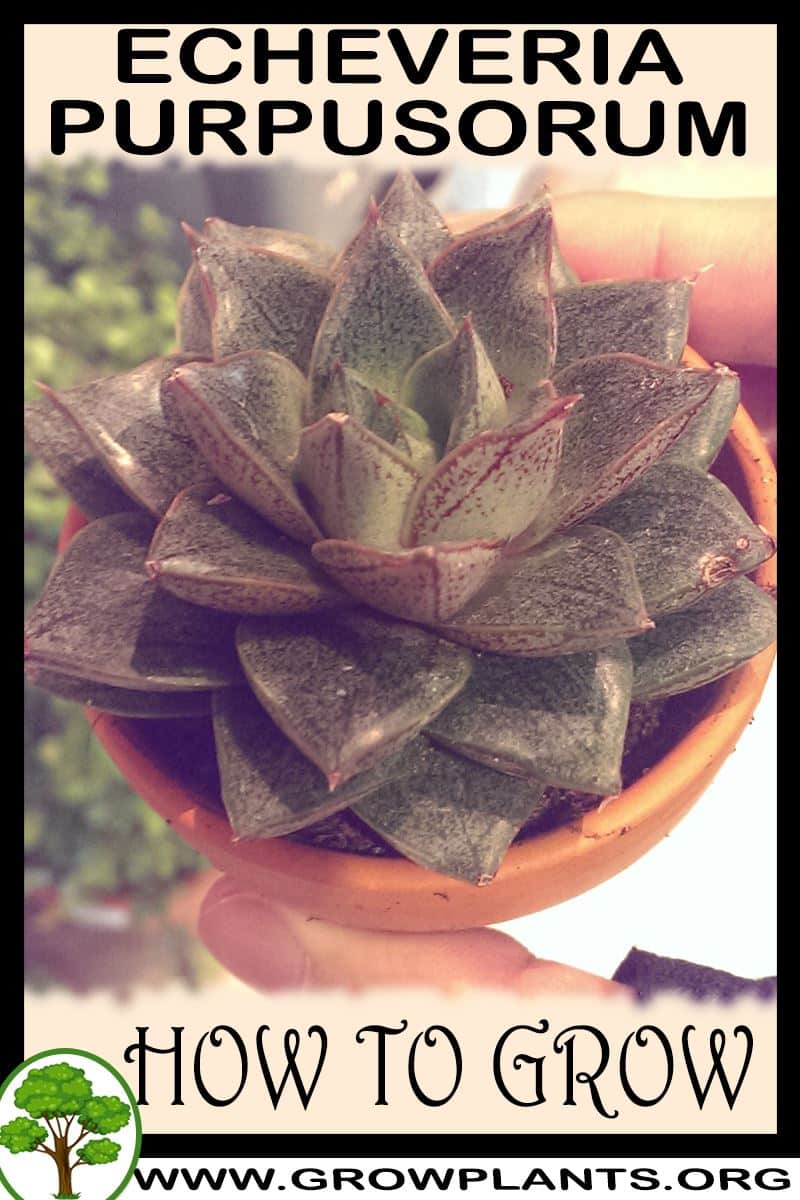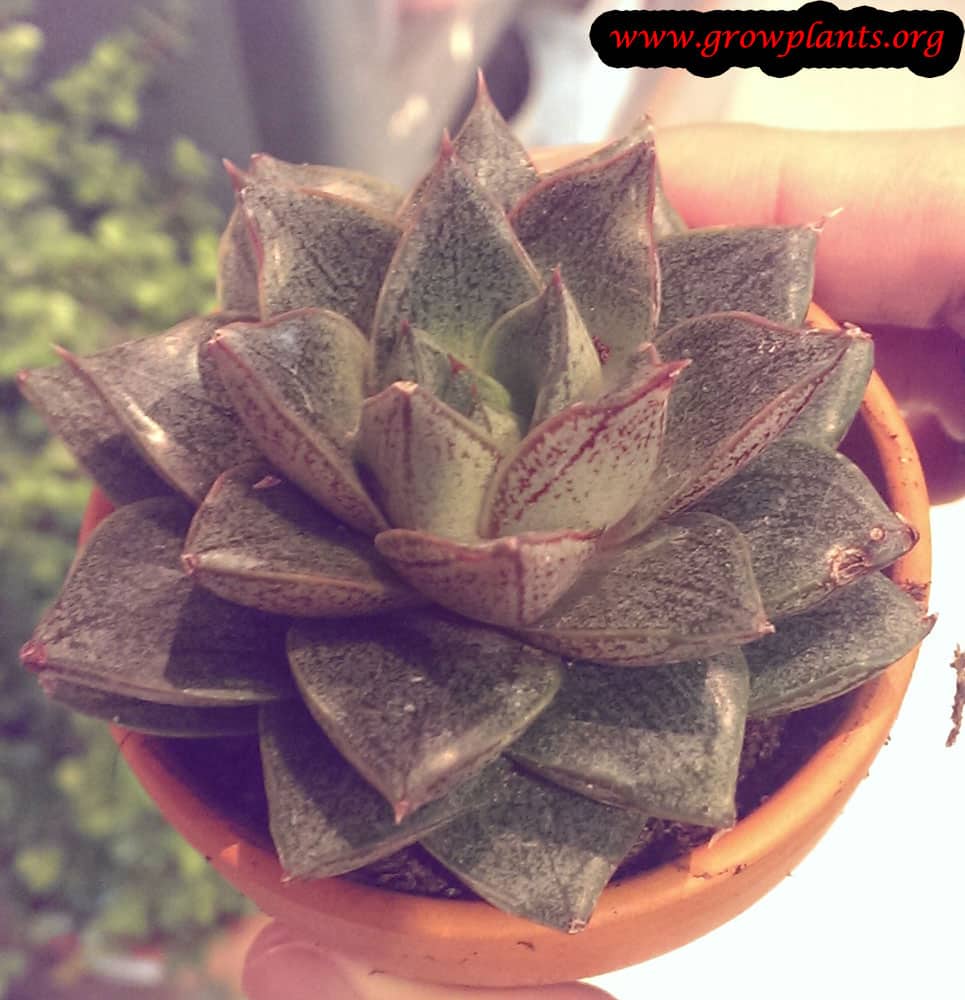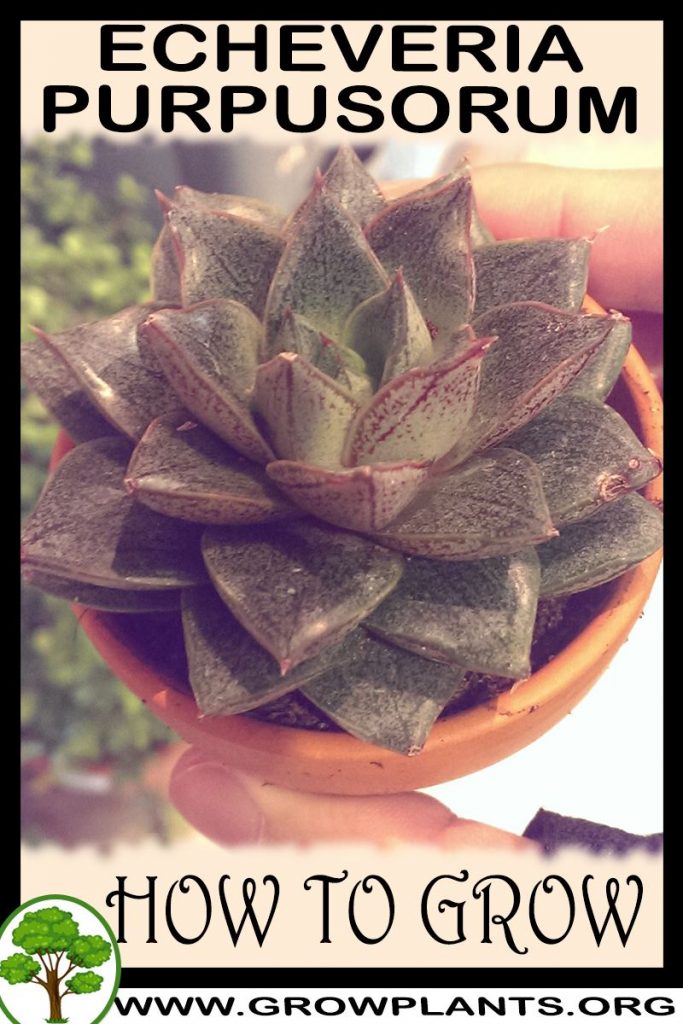
Plant Profile & Key Characteristics
Overview: A slow, compact evergreen rosette succulent about 15-30 cm across, distinctive for its red-marbled, triangular leaves. It is grown as a drought-tolerant ornamental and houseplant.
Quick Specifications
| Specification | Attribute |
|---|---|
| Plant Type / Life Cycle | Perennial (evergreen leaf succulent) |
| Foliage Type | Evergreen |
| Mature Size | 15-30 cm tall (6-12 in) |
| Growth Rate | Slow |
| Root System | Shallow, fibrous |
| Toxicity | Non-toxic (safe around people and pets) |
| Hardiness | USDA 9+ |
Growth Form & Structure
- Height & Spread: Reaches 15-30 cm (6-12 in) tall; in the ground it stays a compact rosette a few centimetres across; in a pot use a container about 50-80% wider than the root ball, filled with free-draining cactus mix over gravel.
- Growth Habit & Form: Low, stem-succulent forming a symmetrical leaf rosette.
- Lifespan & Maturity: Slow-growing, especially while young, taking a few seasons to reach full size; long-lived with good drainage.
Anatomy & Physical Features
- Leaves & Foliage: Green leaves patterned with red dots, spots and stripes, elliptic to triangular with a pointed tip, forming a tight low rosette.
- Flower Characteristics: Bell-shaped red flowers with yellow, carried on stems.
Primary Uses & Landscape Value
- Functional & Ornamental Roles: Ornamental succulent for rock gardens, containers and windowsills; drought-tolerant xeriscape accent.
Care Guide: Planting, Soil & Watering
Overview: Echeveria purpusorum is a drought-tolerant succulent that thrives in full sun to light shade in sharply drained, sandy soil, tolerating warmth above about 7°C and only light frost. It stores water in its fleshy leaves, so it needs only occasional watering and will rot if left sitting in wet soil.
Quick Care Requirements
| Requirement | Ideal Condition |
|---|---|
| Planting Season | In spring as growth resumes — spring in zone 9, spring–summer in 10a, spring–autumn in 10b–11a, and year-round in frost-free zones 11b and warmer |
| Growth Rate | Slow |
| Soil Type | Sharply drained, sandy or gritty soil |
| Water Need | Low — let the soil dry out between waterings |
Planting & Establishment
- Best Planting Season: Plant in spring once the weather warms and frost has passed; in frost-free zones (11b and warmer) it can go in at almost any time of year.
- How to Plant:
- Hole Preparation: Dig a hole a little larger than the root ball and backfill with loose, well-aerated, sandy soil; in rainy sites plant on a mound or raised bed so water never pools around the roots.
- Soil Amendments: Work in coarse sand or grit to sharpen drainage, and avoid heavy, water-retentive soil.
- Planting Depth: Set the rosette at soil level so the crown sits just above the surface — never bury the lower leaves or stem, which invites rot.
- Growth Speed & Expectations: Slow-growing, especially while young, so expect a compact plant that fills out gradually.
Soil, Watering & Drainage Care
- Soil Mix & Drainage Needs: Free drainage matters above all — sandy ground outdoors, or a cactus/succulent potting mix lightened with gravel, pebbles or lava rock in pots. Sharp drainage is what prevents fatal root rot, and spent container mix is best refreshed every few years.
- Watering Schedule & Technique:
- Young / Newly Planted: Water lightly every few days after planting, letting the surface dry between waterings so the roots establish without staying soggy.
- Established: Water sparingly and only once the soil has dried out; a deep but infrequent soak suits it far better than frequent sips.
- Seasonal Adjustments: Cut back watering in cool, wet or winter months when growth slows, and water a little more often during hot, dry spells.
Climate, Light & Hardiness
Echeveria purpusorum is a rosette succulent suited to Mediterranean, desert, subtropical, temperate, and tropical climates. It prefers full sun to bright light with some protection from the harshest summer sun, is hardy to about USDA zone 9 and warmer, and grows best kept above roughly 7°C (45°F) although it can tolerate some frost.
Quick Climate Specifications
| Climate Zones | Mediterranean, desert, subtropical, temperate, and tropical climates |
|---|---|
| USDA Hardiness Zones | Approximately Zone 9 and warmer |
| Optimal Temp Range | Generally above about 7°C (45°F), with typical warm-season growing temperatures roughly 18–27°C (65–80°F) |
| Cold Damage Begins | Growth and leaf condition typically decline below approximately 7°C (45°F) |
| Approx. Survival Minimum | Can tolerate occasional light frost, but exact survival limits vary with duration, exposure, and plant age |
| Frost Tolerance | Low–Moderate |
| Light Conditions | Full Sun (may scorch in hot summer areas; fine in winter within zones 9–10a) / Half Shade (preferable in hot climates) / Full Shade with bright ambient light |
| Wind Tolerance | Moderate |
Sunlight & Light Exposure
Optimal Light Setup
Grows best with strong, bright light; good sun exposure brings out the red dots, spots, or stripes on the leaves.
Direct Sun Requirement
Direct sun is well tolerated in winter and in mild climates (roughly zones 9–10a); in hot-summer areas, half shade generally gives better leaf condition.
Shade & Heat Management
In hot climates, filtering the harshest midday-to-afternoon sun helps prevent leaf burn.
Best Exposure / Orientation
An east-facing or lightly filtered south/west exposure balances strong light with protection from the most intense summer sun.
Temperature Extremes & Hardiness
USDA Hardiness & Regional Limits
Hardy to roughly USDA zone 9 and warmer. Outdoor planting timing reflects this limit: recommended for spring planting in zone 9, spring through summer in zone 10a, spring through autumn in zones 10b–11a, and possible year-round in zone 11b and warmer.
Cold Damage & Winter Protection
Performs best kept above about 7°C (45°F); in climates colder than its hardiness zone, grow in containers that can be moved indoors or under cover for winter.
Frost Sensitivity
Can tolerate some frost, but is not a reliably frost-hardy plant; protect young offsets more carefully than established rosettes.
Extreme Heat Tolerance
Handles heat well as a drought-tolerant succulent, though intense, direct summer sun can still scorch foliage without some shade relief.
Wind, Humidity & Microclimate
Humidity Preferences
Adapts to the ambient humidity of Mediterranean, desert, subtropical, temperate, and tropical climates alike; not dependent on high humidity.
Dry-Air Tolerance
High, consistent with its drought-tolerant succulent nature.
Wind Tolerance
The compact rosette generally tolerates moderate garden wind well.
Rainfall & Seasonal Moisture
Best suited to climates or garden positions with limited standing moisture; in high-rainfall locations it does better planted in a raised bed or well-drained mound rather than a low spot prone to puddling.
Microclimate Recommendations
Choose a well-drained, sun-exposed site, raised above grade in wet climates; in marginal cold zones, container culture that can be brought under cover through winter extends where it can be grown successfully.
Growing in Pots, Balconies & Indoors
Echeveria purpusorum is a small, slow succulent rosette (15-30 cm / 6-12 in) that makes an easy, good-looking houseplant – the grower confirms it is not hard to grow indoors, as long as you give it plenty of light. It is just as happy in a pot on a bright windowsill, balcony or patio.
Quick Details
- Container Size: A snug pot about 15-30% larger than the root ball (up to 50-80% is fine); it will also grow in a smaller pot if you trim the roots at planting
- Indoor Suitability: A genuine houseplant – easy indoors; move it to more light if it starts to look drawn or pale
- Best Spot: Bright light – a sunny windowsill indoors, or full sun to light shade outside (very hot midday sun can scorch the leaves)
- Soil & Drainage: Gritty, fast-draining cactus or potting mix; drainage is critical
- Watering in Pots: Little and seldom – let it dry between waterings; overwatering will rot and kill it
Indoors & On the Windowsill
- Good houseplant: Easy to grow indoors. Its one real need is light – if the rosette stretches, loses colour or looks poor, move it somewhere brighter.
- Windowsill growing: A sunny sill with direct light is ideal; its compact size makes it a perfect windowsill or desk plant. Turn the pot now and then so it grows evenly.
- Overwintering: It is tender (frost-free zones only), so in cold climates keep it in a pot and bring it to a bright, cool, frost-free window for winter, watering very little.
On a Balcony or Patio
- Light & wind: It loves a bright balcony, but shelter it from harsh midday summer sun, which can burn the leaves, and from heavy rain. Walls and paving reflect heat and dry small pots quickly – check moisture, but still err on the dry side.
- Practicalities: Light and easy to move; make sure water drains freely and never collects in a tray under the pot.
Choosing the Pot, Soil & Long-Term Care
- Pot & drainage: A pot about 15-30% bigger than the roots with strong drainage holes; do not stand it on a saucer of water. Terracotta breathes and dries fast, which suits this rot-prone succulent better than glazed or plastic.
- Potting mix: Fast-draining – cactus mix, or potting mix opened up with perlite, pumice or coarse grit. A ready-made cactus and succulent soil mix provides that structure without mixing it yourself.
- Feeding: Very little – a weak feed once or twice in the growing season is plenty; potted succulents need far less than leafy plants.
- Refreshing the mix: After a few years the mix stops draining well – replace all or part of it (and pot up if needed) to keep the roots healthy.
Grower’s Container Tip
- Guaranteed drainage: The grower mixes in a little gravel, lava rock or pebbles for drainage and never stands the pot on a saucer. You can also keep a plant in a smaller pot by cutting the roots back when you plant it.
Growing this plant in a greenhouse
A greenhouse can give echeveria purpusorum frost protection and cold protection.
Greenhouse at a glance
| Greenhouse suitability | Conditional - depends on your climate |
|---|---|
| Main benefits | frost protection, cold protection |
| Outdoor protection advisable below | about 7°C |
| Maintain greenhouse minimum | around 7°C for active growth |
| Suitable types | unheated greenhouse, polycarbonate greenhouse |
| Heating | Heating is optional - useful mainly for winter growing in cold areas. |
Related greenhouse guides
- Greenhouses: How to Choose the Right Greenhouse
- Polycarbonate Greenhouses: What to Look for Before Buying
- Greenhouse Climate Control: Temperature, Ventilation and Humidity
Fertilizing & Feeding
A very light feeder that stores its own reserves: a well-diluted, low-nitrogen feeding while growth is active in the warm season is all it needs, and feeding is skipped through the cool dormant rest.
Quick Fertilizing Specs
| Feeding Level | Very light feeder |
|---|---|
| Main Nutrient Priority | A low-nitrogen, well-diluted balanced feeding; nitrogen kept modest so growth stays firm and compact |
| Best Feeding Period | During active growth in the warm season |
| Organic Options | A little compost or worm castings worked into a gritty, fast-draining mix |
| Reduce/Stop Feeding | Stop feeding through the cool-season dormant rest |
| Micronutrients | Usually supplied by a complete fertilizer; correct only a diagnosed deficiency |
| Soil pH | Slightly acidic to near neutral |
Feeding by Growth Stage
Warm-season active growth
Support steady, compact growth and good leaf color during the active warm season.
| Nutrient direction | A well-diluted, low-nitrogen complete fertilizer; keep nitrogen modest so growth stays firm rather than soft and stretched. |
|---|---|
| Timing | During the warm active growing season. |
| Frequency | An occasional light feeding while the plant is actively growing is plenty. |
| Fertilizer types | A well-diluted balanced or low-nitrogen fertilizer, A little compost or worm castings in a gritty, fast-draining mix |
| Precautions | Feed sparingly; these plants store reserves, so overfeeding produces soft, stretched, weak growth and salt buildup in fast-draining mixes. |
Cool-season dormant rest
Let the plant rest through cool, low-light conditions without pushing soft growth.
| Nutrient direction | None – withhold fertilizer while the plant is resting and not in active growth. |
|---|---|
| Timing | During cool weather and the low-light dormant rest. |
| Frequency | No feeding at this stage; resume only when warm-season growth returns. |
| Fertilizer types | No feeding at this stage; do not fertilize until warm-season growth resumes. |
| Precautions | Do not fertilize a resting succulent; feeding now wastes nutrients and risks salt and root damage in the dry, slow period. |
Nutrient Deficiency Signs & Corrections
Older leaves fade to a pale, washed-out green and new growth is small and slow.
| Possible causes | low available nitrogen in a lean, gritty mix, nitrogen leached out by watering a fast-draining medium, an old, exhausted potting mix |
|---|---|
| Appears first on | older, lower leaves |
| What to check | how long since the mix was refreshed or fed, watering and leaching in the fast-draining mix, overall light levels |
| Possible correction | Apply a well-diluted, low-nitrogen complete fertilizer during active growth and refresh the mix, avoiding overfeeding. |
Leaf tips and margins brown or scorch and growth becomes soft and stretched.
| Possible causes | fertilizer salt buildup in a fast-draining mix, overfeeding beyond this plant’s low needs, infrequent leaching so salts concentrate |
|---|---|
| Appears first on | leaf tips and margins |
| What to check | recent feeding amounts and strength, salt crust on the soil surface or pot, drainage and how often the mix is flushed |
| Possible correction | Ease off feeding, flush the mix thoroughly with plain water to leach salts, then return to very light feeding. |
New leaves turn pale or yellow between the veins while the veins themselves stay green.
| Possible causes | reduced micronutrient uptake in cold, wet, poorly drained soil, alkaline conditions locking up iron and manganese, root stress from overwatering |
|---|---|
| Appears first on | youngest leaves at the growing point |
| What to check | drainage and how wet the mix stays, soil and water alkalinity, root health for rot from overwatering |
| Possible correction | Improve drainage and correct alkalinity; if a true deficiency is confirmed, apply a chelated iron or manganese product per its label. |
Pruning, Training & Seasonal Maintenance
Echeveria purpusorum is a compact, slow-growing rosette succulent, so pruning tolerance is low and mostly about grooming rather than shaping. Because it stays low and tight rather than building a tall stem, the main tasks are removing spent leaves and the flower stalk after bloom, not stem or height control. Cuts are safe year-round, with design-focused tidying best done in winter.
Quick Pruning & Maintenance Specs
| Pruning Tolerance | Low |
| Primary Pruning Window | Winter (for design/tidying) |
| Secondary Maintenance Window | All year, as leaves or flower stalks need removal |
| Typical Frequency | Roughly once a year, plus spot cleanup |
| Main Objective | Remove dead leaves and spent flower stalks; keep the rosette clean |
| Young Plant Priority | No pruning – this species is slow, especially while young |
| Mature Plant Priority | Deadhead after summer bloom; manage any offsets/clumping |
| Best Tool Type | Precision snips |
| Avoid Heavy Pruning During | Wet/puddled soil; germination or freshly transplanted stage |
Pruning by Plant Age & Size
Newly Established
Do not prune. Growth is explicitly slow “especially when the plant is young,” so the seedling or young rosette needs every leaf to build itself; remove only anything clearly dead on arrival.
Young / Formative
No structural training is used – this is a rosette groundcover-type succulent, not trained to a stem or frame. The only formative task is trimming dried leaf tips or fully spent leaves as they appear.
Mature / Established
Established plants mainly need the summer flower stalk removed after bloom and any dead lower leaves cleared. If offsets/clumps form around the mother rosette, thinning crowded offsets keeps individual rosettes well-formed rather than shaded and stretched.
Seasonal Pruning Schedule
Post-Flowering
Objective: post-bloom tidy after the summer flowering. Remove: the spent flower stem at its base. Do not remove: healthy leaves – flowering does not exhaust this rosette. Expected response: cleaner appearance; no impact on the following year’s bloom.
Ongoing Sanitary
Objective: hygiene. Remove: dead or infected leaves that cannot be cleaned. Do not remove: firm, healthy leaves, especially on a plant that is already slow-growing.
Structural Pruning & Training
Not applicable in the shrub-training sense – there is no stem framework to build. If offsets crowd together, separating or removing excess ones prevents the tight rosette form (this species’ main ornamental feature) from being obscured.
Special Growth to Remove
- Dried or dead leaves at the base of the rosette.
- Spent flower stems after the summer bloom.
- Infected leaves that cannot be cleaned – remove entirely.
- Crowded offsets, if clumping starts to shade out the main rosette’s form.
Container & Small-Space Pruning
This species is well suited to small containers given its compact, slow habit. Keep the rosette tidy by removing spent leaves promptly rather than letting dead material accumulate in the tight growth. Avoid cutting right after watering, since the source flags this plant as sensitive to overwatering and puddled soil.
Tools
Precision snips are sufficient for all routine cuts on a plant this small and compact; no larger tool is warranted.
Tool Hygiene & Disease Risk
Routine hygiene (clean, sharp blade) is enough for normal grooming. Given documented overwater sensitivity and susceptibility to mealybug, wipe the blade when removing infected leaf tissue to avoid spreading rot or pests.
Cut Placement & Technique
Cut or gently twist leaves off at their base rather than tearing, which can wound the rosette stem tissue underneath. Let any cut callus before the next watering.
Heavy Pruning & Rejuvenation
This species does not call for hard rejuvenation pruning – it is slow-growing and stays compact rather than stretching into a leggy stem the way shrubbier Echeverias can. If a rosette does etiolate from low light, the correction is improving light, not routine hard cutting.
Post-Pruning Care
Let cuts dry and callus before watering again, given this species’ sensitivity to overwatering. Avoid intense direct sun immediately after cutting, and check that cut sites callus cleanly rather than softening.
Common Pruning Mistakes
- Pruning a young, still-establishing plant that needs its full leaf area.
- Watering immediately after a cut.
- Tearing leaves instead of cutting/twisting cleanly.
- Leaving infected leaf tissue in place instead of removing it.
When NOT to Prune
Avoid pruning while the plant is young and still establishing – growth is already slow at that stage. Avoid cutting in wet or puddled soil conditions, and hold off during an active pest outbreak until treated.
Recommended Tools (by task)
- precision_snips – the only tool this compact, small-scale rosette genuinely needs, for dead leaves and spent flower stems.
- blade_disinfectant – when removing infected or pest-affected leaf material.
Propagation Guide
Echeveria purpusorum can be grown from seed or from leaf and stem cuttings, but cuttings are the easier and faster route and the only way to guarantee the offspring matches the parent’s red-marked rosette. Vegetative propagation is preferred rather than required, and both methods are easy for a home grower.
Quick Propagation Specs
| Best Propagation Method | Leaf or stem cuttings |
| Alternative Methods | Seed |
| Propagation Difficulty | Easy |
| Seed True-to-Type | No – seedling type cannot be ensured |
| Vegetative True-to-Type | Yes |
| Best Propagation Season | Sowing: spring after the last frost (zone 10a) through spring–autumn or all year in warmer zones; Cuttings: late spring to early summer outdoors, any time indoors |
| Seed Germination Time | 3–6 weeks |
| Cutting Rooting Time | A few weeks to about a month |
| Germination Temperature | 23–27°C (73–80°F) |
| Seed Sowing Depth | 0.5cm (0.25in) |
Growing from Seed
Seed Handling & Viability
Store seed in a dry, dark spot at room temperature until sowing.
Sowing Season
Spring after the last frost in hardiness zone 10a, spring to summer in zone 10b, spring to autumn in zone 11, and possibly all year in zone 12.
Sowing Depth & Orientation
Sow about 0.5cm (0.25in) deep in light, sandy or well-ventilated, well-drained soil.
Germination Conditions
Keep the soil slightly moist – moist but not overwatered, and not allowed to dry out – in a lit spot that does not need to be sunny, at 23–27°C (73–80°F). Overwatering interferes with germination. Water lightly to moderately.
Germination Time
3–6 weeks.
Seedling Care
Keep seedlings in light with moist, well-ventilated soil; once large enough to handle, transplant at about 5x5cm (2x2in) spacing.
Stem Cuttings
Cutting Type
Stem cuttings taken from the plant’s stems.
Best Timing
Best started in late spring to early summer outdoors, but cuttings can be started indoors at any time of year.
Cutting Preparation
Sever the stem and let the cut end callus for a few days until the wound has healed before potting it – do not pot a fresh, unhealed cut.
Rooting Setup
Set the healed cutting into well-drained soil and water every few days, letting the mix dry somewhat between waterings without letting it go fully dry.
Rooting Hormone
Not used in the site’s method – unnecessary for reliable rooting.
Rooting Time
Roots typically begin forming after a few weeks to about a month.
Leaf & Root Cuttings
Leaf cuttings are the easiest way to propagate this plant. Remove a leaf by hand at its base – avoid cutting tools – and let the wound heal for at least 24 hours, longer is better, before setting the healed leaf base onto well-drained soil. Water every few days, keeping the medium just barely moist rather than saturated; a new rosette forms at the leaf base along with roots after a few weeks to about a month, after which the spent leaf can be removed.
Bloom & Flower Guide
Quick Details
- Bloom Season: Summer
- Time to First Bloom: Once the rosette is mature and well established, often after a couple of years
- Flower Appearance: Bell-shaped flowers, red with a yellow edge, in clusters on arching stems
- Edibility: Ornamental – the flowers are grown for their looks, not the plate, and Echeveria is not considered toxic to people or pets.
Detailed Blooming Overview
Echeveria bloom from a tall, gracefully arching flower stalk (a raceme) that rises well clear of the rosette. The bell- or urn-shaped flowers are frequently bicoloured and open in sequence along the curving stem, drawing in bees and, in warmer regions, hummingbirds. Reassuringly, Echeveria are polycarpic – unlike some other rosette succulents, the plant is not spent by flowering and carries on growing and offsetting afterwards. In Echeveria purpusorum the bell-shaped blooms are red edged with yellow.
Flower Characteristics
- Flowers: Bell-shaped flowers, red with a yellow edge, in clusters on arching stems.
- Inflorescence: Carried on a tall, arching stalk that lengthens as it opens from the base upward.
- Pollinators: Nectar-rich and appealing to bees and hummingbirds.
Bloom Care & Thinning
- Supporting the stalk: The flowering stem can grow long and top-heavy, so stake it if it begins to lean awkwardly.
- After flowering: Once the last blooms fade, trim the spent stalk back to the base to redirect energy into the rosette and its offsets.
- Thinning: If a young or stressed plant sends up a stalk you would rather it skip, you can remove it early so the energy stays in the rosette.
Bloom Health & Protection
- Aphids on the flower stalk: Soft green or grey aphids are drawn to the tender bloom stems and buds; a firm spray of water, insecticidal soap, or a neem-oil spray keeps them in check.
Pests, Diseases & Troubleshooting
Echeverias are hardy rosette succulents whose most serious threats are not leaf-chewers but sap-sucking insects that hide deep in the rosette and, above all, rot caused by overwatering and poor drainage. This small, firm, patterned species follows the standard Echeveria pattern with no farina to protect. Management is overwhelmingly cultural: a sharp, gritty, fast-draining mix, cautious watering, bright airy conditions, and routine inspection of the crown and roots.
Quick Troubleshooting Overview
| Issue / Pest | Main Symptom | Primary Solution |
|---|---|---|
| Mealybugs | White cottony fluff in leaf axils and on roots | Dab with alcohol; systemic drench for root infestations |
| Root / crown rot | Mushy, blackened, collapsing base and stem | Stop watering, unpot, cut to clean tissue, re-root dry |
| Vine weevil | Notched leaf edges; roots eaten, plant topples | Beneficial nematodes; check root-ball; systemic if severe |
| Spider mites | Fine pale stippling and faint webbing in hot, dry air | Raise humidity/airflow; horticultural oil or soap |
| Aphids | Clusters on soft new growth and flower stalks | Rinse off; insecticidal soap; encourage ladybirds |
| Overwatering / edema | Translucent, swollen, or blister-spotted leaves | Water less, improve drainage and light |
Common Pests & Management
- Mealybugs, incl. root mealybug (Planococcus citri, Pseudococcus spp., Rhizoecus spp.):
- Symptoms: The number-one Echeveria pest. White cottony tufts lodge in leaf axils, at the rosette center, and on the roots, where root mealybugs coat the root-ball in white “mold-like” wax. Sucking causes stunting, distorted new leaves, and sticky honeydew followed by sooty mould. Look deep into the crown and always check the roots at repotting.
- Prevention & Control: Isolate affected plants. Dab visible colonies with a cotton swab of 70% isopropyl alcohol; rinse the rosette. For root mealybug, bare-root, wash the roots, and repot into fresh gritty mix in a clean pot, or apply a systemic soil drench. Encourage lacewings and ladybirds outdoors; avoid over-feeding, which fuels soft, pest-prone growth.
- Vine weevil (Otiorhynchus sulcatus):
- Symptoms: Adults chew tell-tale notches from leaf margins at night, but the C-shaped white larvae in the potting mix are the real danger, devouring roots until a seemingly healthy rosette suddenly loosens and topples. Especially damaging to container plants.
- Prevention & Control: Inspect the root-ball whenever repotting and crush any grubs. Drench the mix with entomopathogenic nematodes (Steinernema/Heterorhabditis) in warm conditions. Trap adults at night; a systemic soil treatment is a last resort for valued potted specimens.
- Aphids (Aphis spp., Myzus persicae):
- Symptoms: Soft green, black, or grey colonies mass on tender new growth and emerging flower stalks, sucking sap and secreting honeydew that turns black with sooty mould and attracts ants. New leaves may curl or stall.
- Prevention & Control: Knock them off with a firm water spray, then treat persistent colonies with insecticidal soap or a light horticultural-oil spray. Conserve natural enemies (ladybirds, hoverfly and lacewing larvae). Avoid excess nitrogen.
- Spider mites (Tetranychus urticae):
- Symptoms: A hot, dry, still-air problem, worst indoors. Leaves develop a fine pale or bronzed stippling, and in bad cases delicate webbing bridges the rosette; the mites are just visible as moving dots on the undersides.
- Prevention & Control: Improve airflow and raise humidity slightly. Rinse the plant, then spray insecticidal soap or horticultural oil, covering leaf undersides and repeating at intervals to break the life cycle. Predatory mites (Phytoseiulus) help in collections.
- Scale insects (Coccus, Diaspididae spp.):
- Symptoms: Small, immobile brown or tan bumps cling to leaves and stems, sucking sap and, in the soft-scale forms, dripping honeydew. Heavy infestations weaken the plant and dull its colour.
- Prevention & Control: Scrape off or dab with alcohol on a swab; treat with horticultural oil to smother crawlers, repeating as needed. Isolate new acquisitions and inspect leaf bases where scale hides.
- Fungus gnats (Bradysia spp.):
- Symptoms: Tiny black flies drift up from the soil surface; their larvae live in constantly moist mix and can nibble fine roots of seedlings and offsets. Their presence is mainly a warning sign of an over-wet, poorly drained pot.
- Prevention & Control: Let the top of the mix dry fully between waterings; add a gritty top-dressing. Use yellow sticky traps for adults and Bacillus thuringiensis israelensis or nematodes for larvae. Fixing the watering usually ends the problem.
- Slugs & snails (Deroceras spp., Cornu aspersum):
- Symptoms: Outdoors and in greenhouses they rasp irregular holes and notches in fleshy leaves overnight and leave silvery slime trails, disfiguring the tidy rosette.
- Prevention & Control: Hand-pick after dark, remove daytime hiding places, and set beer traps or a ring of grit/diatomaceous earth. Iron-phosphate baits are a pet-safe option.
Diseases & Fungal Issues
- Root & crown rot (Fusarium, Pythium, Phytophthora spp.):
- Symptoms: The classic Echeveria killer. Excess water and cold, airless soil cause the roots and the base of the rosette to turn brown-black, soft, and foul; the plant loses its grip and the lower leaves pull away mushy. It often advances unseen until sudden collapse.
- Treatment & Management: Prevention is everything: gritty, fast-draining mix, unglazed pots with drainage, water only when the mix is dry, and never leave the rosette sitting wet. If caught early, unpot, cut away all rot to clean firm tissue, dust with sulfur, let it callus, and re-root in dry mix. Behead and re-root the healthy top if the base is lost.
- Botrytis / grey mould (Botrytis cinerea):
- Symptoms: In cool, damp, crowded conditions a fuzzy grey mould settles on dead flower stalks, damaged leaves, and water trapped in the rosette, causing soft brown decay that spreads into healthy tissue.
- Treatment & Management: Improve ventilation, avoid overhead watering and water sitting in the crown, and promptly remove spent flowers and dead leaves. Reduce humidity; a fungicide is rarely needed if hygiene and airflow are good.
- Fungal leaf spot / anthracnose (Colletotrichum, Cercospora spp.):
- Symptoms: Sunken tan-to-black spots, sometimes with reddish margins or a moist rot, appear on leaves in warm, humid, wet-foliage conditions and can enlarge to spoil the rosette.
- Treatment & Management: Remove affected leaves, keep foliage dry, and space plants for airflow. A copper-based fungicide can check spread if the problem persists; correct the humid, wet conditions that allowed it.
- Powdery mildew (Erysiphe/Oidium spp.):
- Symptoms: Uncommon on echeverias but possible in still, humid air: a light dusty white coating on leaves that can distort new growth. Not to be confused with the natural farina (see below).
- Treatment & Management: Increase airflow and light and reduce humidity. Sulfur or potassium-bicarbonate sprays control it if it takes hold, but on farinose types test first, as sprays can mark the powdery coating.
Growing Difficulties & Abiotic Problems
- Overwatering & edema:
- Cause & Symptoms: Too-frequent watering leaves the rosette limp and translucent and, in edema, raises corky brown bumps or water-blisters on the undersides where cells burst from taking up water faster than they lose it.
- Correction Strategy: Water only when the mix is fully dry, use a gritty free-draining medium, and give bright light with good airflow so the plant transpires. Damaged leaves will not heal but new growth firms up once watering is corrected.
- Etiolation (low light):
- Cause & Symptoms: In too little light the rosette stretches, the stem elongates, leaves space out and point upward, and colours fade to pale green as the plant reaches for light.
- Correction Strategy: Move to the brightest spot available or add a grow light, acclimating gradually. Behead and re-root a badly stretched rosette to restart it compact.
- Sunburn / scorch:
- Cause & Symptoms: Moved abruptly into intense sun, leaves develop bleached white or dry brown scorched patches that are permanent, most often on the sun-facing side of the rosette.
- Correction Strategy: Acclimate to strong light in stages over a couple of weeks and provide light shade during the fiercest midday heat. Scarred leaves are eventually shed as the plant grows out.
- Cold & frost damage:
- Cause & Symptoms: Frost turns the fleshy leaves translucent, then mushy and brown as the water in them freezes and ruptures cells; a hard freeze can kill the whole rosette.
- Correction Strategy: Keep echeverias above freezing and dry in cold spells; move containers under cover. Remove damaged tissue afterward and hold off watering while the plant recovers.
What Helps — Products & Tools
Reach for gentle, targeted tools first: 70% isopropyl alcohol on a cotton swab for spot-treating mealybugs and scale, insecticidal soap or a light horticultural/neem oil for aphids, mites, and scale crawlers (apply in the cool of evening and, on farinose or hairy types, test on one leaf first), and entomopathogenic nematodes for vine-weevil grubs and fungus-gnat larvae. Diatomaceous earth or iron-phosphate bait handles slugs and snails, yellow sticky traps monitor gnats and adults, and a systemic soil drench is the reliable answer for stubborn root mealybug or vine weevil. The single most important “product” is a sharp, gritty, free-draining succulent mix in a pot with drainage, which prevents the rots that kill more echeverias than any insect.