


Plant Profile & Key Characteristics
Overview: A deciduous spring-flowering bulb 10–30 cm tall, grown as an ornamental and cut flower. A Triumph-group tulip needing a dry summer dormancy and cold winter.
Quick Specifications
| Specification | Attribute |
|---|---|
| Plant Type / Life Cycle | Perennial (deciduous geophyte) |
| Foliage Type | Deciduous |
| Mature Size | 10–30 cm H (4–12 in) |
| Growth Rate | Moderate |
| Root System | Bulbous geophyte |
| Toxicity | Toxic if eaten — bulbs contain tulipalin; handling can irritate skin |
| Hardiness | USDA zones 3–11 |
Growth Form & Structure
- Height & Spread: Upright stems 10–30 cm tall from a single bulb; grows well in planters and containers.
- Growth Habit & Form: Upright, single-stemmed bulb with basal leaves; needs a dry summer dormancy and cold winter.
- Lifespan & Maturity: Perennial bulb; increases by offset bulbs and is best lifted and stored dry over summer.
Anatomy & Physical Features
- Leaves & Foliage: Green, lance-shaped leaves rising from the bulb.
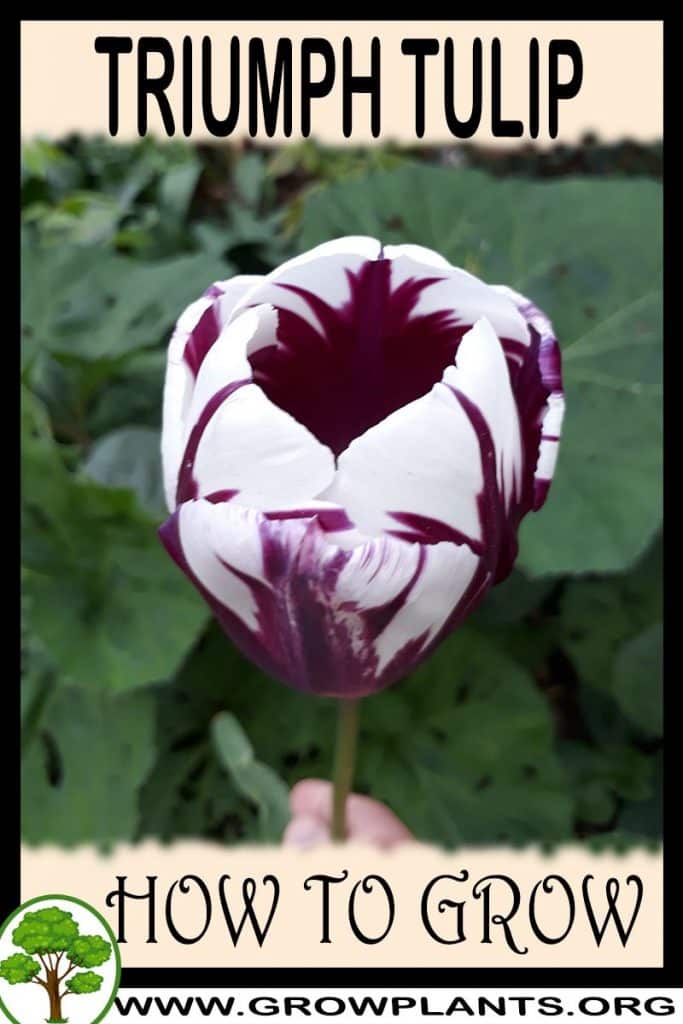
- Flower Characteristics: Single flowers in red, pink, black, purple, orange, white, yellow or multicolour, opening from a drop-shaped bud (full detail in the Bloom accordion).
Primary Uses & Landscape Value
- Functional & Ornamental Roles: Ornamental spring bedding, border and container bulb, and cut flower.
Note: Botanical name: Tulipa.
Care Guide: Planting, Soil & Watering
Overview: The Triumph tulip is a hardy autumn-planted bulb that needs a cold winter to trigger its spring bloom and sharp drainage year-round. It grows best in sandy, free-draining soil in full sun to light shade, staying dry through its summer dormancy.
Quick Care Requirements
| Requirement | Ideal Condition |
|---|---|
| Planting Season | Autumn |
| Growth Rate | Moderate |
| Soil Type | Sandy, well-draining |
| Water Need | Low to Moderate; moist in growth, dry in summer dormancy |
Planting & Establishment
- Best Planting Season: Plant the bulbs in autumn so they receive their winter chilling; in the coldest zones (3-11) plant in spring instead. Where winters are mild, pre-chill the bulbs in a fridge above 5 C before planting.
- How to Plant:
- Hole Preparation: Dig a hole about two to three times the height of the bulb, in soil that drains freely.
- Soil Amendments: On heavy ground, mix in sand or grit so the bulb never sits in wet soil.
- Planting Depth: Set the bulb pointed-end up, roughly two to three times its own height deep.
- Growth Speed & Expectations: A moderate grower reaching about 10-30 cm (4-12 in), with foliage emerging first and flowers following in spring.
Soil, Watering & Drainage Care
- Soil Mix & Drainage Needs: Keep it in sandy, free-draining soil and avoid wet ground, which rots the bulb; container growing works well with a gritty mix and open drainage.
- Watering Schedule & Technique:
- Young / Newly Planted: Water in after autumn planting to settle the soil, then let winter rain do the work.
- Established: Keep lightly moist during active growth and flowering, never waterlogged.
- Seasonal Adjustments: Withhold water through the summer dormancy; the bulb can be lifted and stored dry, and given a cold spell before replanting.
Climate, Light & Hardiness
The Triumph Tulip is an exceptionally cold-hardy bulb suited to Mediterranean, subtropical and temperate climates, needing a genuine winter chill to flower well the following spring. It wants full sun to half shade, and in mild-winter regions the bulb's chilling requirement - not frost damage - is the main climate hurdle.
Quick Climate Specifications
| Climate Zones | Mediterranean, subtropical, temperate |
|---|---|
| USDA Hardiness Zones | 3–11 |
| Frost Tolerance | High – the dormant bulb tolerates deep winter cold; emerged foliage and buds are more vulnerable to a late hard frost |
| Light Conditions | Full sun to half shade |
Sunlight & Light Exposure
Optimal Light Setup
Full sun to half shade during the bloom period gives the strongest flowering stems.
Best Exposure / Orientation
An open bed with well-drained, sandy soil suits it; heavy shade is not supported by site data.
Temperature Extremes & Hardiness
USDA Hardiness & Regional Limits
An unusually wide hardiness range of USDA zones 3–11, reflecting a bulb built to survive severe winter cold underground; the true limiting factor in warm zones is not survival but flowering (see Chilling Requirement below).
Cold Damage & Winter Protection
Site data describes a dry summer dormancy followed by a cold winter as the natural cycle; in the ground, the dormant bulb is not damaged by ordinary winter cold.
Frost Sensitivity
The dormant bulb itself tolerates hard freezes well; once leaves and flower buds emerge in spring, a late hard frost can typically damage or blacken them.
Chilling Requirement
Tulips need a sustained period of cold (approximately 5°C/41°F or below per site data) to properly initiate flowering. In naturally cold-winter zones this happens outdoors; in warm-winter zones (roughly zone 8 and milder) growers commonly lift the bulbs and pre-chill them in a refrigerator before planting, since the local winter alone isn't reliably cold enough.
Wind, Humidity & Microclimate
Rainfall & Seasonal Moisture
Prefers a distinctly dry summer dormancy - consistent with its Mediterranean-climate origins - alongside a moist, cold winter/spring growth period.
Microclimate Recommendations
Well-drained, sandy soil that allows the bulb to stay dry and dormant in summer, combined with genuine winter cold (natural or supplied by pre-chilling), gives the most reliable annual flowering.
Growing in Pots, Balconies & Indoors
Triumph tulips are classic spring-flowering bulbs and superb subjects for outdoor pots, but the grower confirms they are not houseplants – they need a cold winter dormancy to flower. In containers they give a brilliant seasonal display on a balcony or patio; pre-chilled bulbs can also be ‘forced’ for a short-lived show indoors.
Quick Details
- Container Size: A pot deep enough to plant the bulbs a few times their own depth; group many bulbs close together for impact
- Indoor Suitability: Not a houseplant – they need winter cold; only pre-chilled bulbs can be forced for a brief indoor display
- Best Spot: Full sun to half shade in the growing season; cold outdoors in winter
- Soil & Drainage: Free-draining potting mix; bulbs rot in cold, wet, stagnant soil
- Watering in Pots: Small to average water – moist while growing and flowering, then dry as the foliage dies back and the bulbs rest
Indoors & On the Windowsill
- Not a true houseplant: The grower says no. Tulips need a proper cold winter rest to trigger flowering, which a warm room cannot provide, so they are grown outdoors in pots.
- Forcing for a temporary show: Bulbs that have been given a long cold period (chilled) can be brought into a cool, bright room to bloom early – a lovely but one-off display; the bulbs are usually spent afterwards.
- Toxic bulbs: Tulip bulbs (and the plant) are toxic to cats, dogs, and people, so keep bulbs and pots away from pets and children and never eat any part.
On a Balcony or Patio
- Light & cold: A sunny to part-shaded balcony or patio is perfect; the pots need the winter cold outdoors to set flower, so do not shelter them from the chill.
- Practicalities: Ensure the pots drain freely over winter – waterlogged, cold soil rots the bulbs. After flowering, let the leaves die back before storing or discarding the bulbs.
Choosing the Pot, Soil & Long-Term Care
- Pot & drainage: A pot with strong drainage holes and no standing-water saucer; cold, wet soil is the main cause of bulb rot.
- Potting mix: A free-draining potting mix; add grit if your mix is heavy.
- Feeding: A little bulb feed as they grow and after flowering helps if you want to keep the bulbs, though many gardeners treat potted tulips as a one-season display.
- After flowering: Let the foliage die down naturally to recharge the bulb, then lift and store dry, or replant fresh bulbs next season for the best show.
Fertilizing & Feeding
A light feeder – most of a tulip’s flowering energy comes from the bulb itself, so feeding plays a supporting role rather than driving bloom quality.
Quick Fertilizing Specs
| Feeding Level | Light feeder – most flowering energy comes from the bulb itself. |
|---|---|
| Main Nutrient Priority | Balanced feeding as leaves emerge, shifting toward potassium as buds form. |
| Best Feeding Period | From leaf emergence through the bloom period. |
| Reduce/Stop Feeding | Stop feeding once flowering ends and the foliage begins dying back. |
Feeding by Growth Stage
Leaf Emergence and Growth
Support the leaf growth that fuels the bulb and the coming bloom.
| Nutrient direction | A balanced feeding as leaves emerge supports strong growth and helps recharge the bulb. |
|---|---|
| Timing | As leaves emerge in late winter to early spring. |
| Frequency | A single light feeding as growth begins is usually enough. |
| Fertilizer types | A balanced fertilizer worked into the soil surface around emerging shoots, Well-rotted compost applied at planting in autumn |
| Precautions | Apply fertilizer to the soil rather than directly on emerging leaves, which can scorch tender new growth. |
Bud Set and Bloom
Support the flower display without diverting energy into excess foliage.
| Nutrient direction | Shift toward a fertilizer that supports flowering; keep overall feeding light. |
|---|---|
| Timing | As flower buds form and through the winter-to-spring bloom. |
| Frequency | One light feeding as buds form typically carries the plant through bloom. |
| Fertilizer types | A balanced to potassium-leaning fertilizer to support flowering |
| Precautions | Avoid heavy nitrogen during bloom, which favors leafy growth over flowers. |
Post-Bloom Foliage Die-Back
Let the leaves die back naturally to store energy in the bulb without adding fertilizer once flowering is finished.
| Nutrient direction | None – withhold fertilizer once flowering ends and the foliage begins yellowing. |
|---|---|
| Timing | After flowering, while the leaves yellow and die back before summer dormancy. |
| Frequency | No feeding at this stage. |
| Fertilizer types | No feeding at this stage; the bulb rests until replanting or new growth the following season. |
| Precautions | Do not fertilize once the foliage is dying back – the bulb is entering dormancy and cannot use additional nutrients. |
Nutrient Deficiency Signs & Corrections
Healthy leaves emerge but flowers are small, absent, or fail to open properly.
| Possible causes | A bulb too immature or depleted to flower well, Insufficient cold exposure before or during planting for proper bud development, Excess nitrogen favoring leaf growth over flowering |
|---|---|
| Appears first on | Whole-plant flowering outcome rather than an individual leaf |
| What to check | Check bulb size and condition at planting, Review the cold period the bulb received before planting, Review recent fertilizer nitrogen levels |
| Possible correction | Start with quality, properly chilled bulbs, and shift toward balanced-to-potassium feeding rather than nitrogen-heavy products. |
Leaves yellowing well before the normal post-bloom die-back.
| Possible causes | Nutrient deficiency in poor or depleted soil, Waterlogged soil causing root stress, since this bulb needs a dry summer rest, Natural die-back timing being mistaken for a problem |
|---|---|
| Appears first on | Older leaves first |
| What to check | Compare timing to the normal post-bloom die-back schedule, Check soil drainage, especially heading into the dry summer rest period, Assess overall soil fertility |
| Possible correction | Improve drainage if the soil stays wet, and consider a light balanced feeding during the next leaf-growth period if fertility looks generally low. |
Soft, rotten bulbs or poor emergence the following season.
| Possible causes | Excess soil moisture during the bulb’s required dry summer rest, Fertilizer or organic matter applied too close to a dormant bulb, encouraging rot, Fungal or bacterial rot unrelated to feeding |
|---|---|
| Appears first on | The bulb itself, discovered at lifting or replanting |
| What to check | Inspect bulbs for softness or rot before replanting, Check drainage and summer moisture levels, Review whether fertilizer was applied during the dormant period |
| Possible correction | Improve drainage, keep the bulb dry during its summer rest, and avoid fertilizing while it is dormant. |
Pruning, Training & Seasonal Maintenance
Triumph tulips are deciduous, spring-flowering bulbs with no pruning in the shrub or tree sense — the only real tasks are deadheading the spent bloom right after flowering and removing the foliage, but only once it has fully died back, which is why this variety’s own data places pruning in summer and describes it as removing all the leaves. Timing matters directly for next year’s flower: cutting green leaves early starves the bulb, while deadheading redirects energy from seed production back into the bulb.
Quick Pruning & Maintenance Specs
| Pruning Tolerance | Low (deadhead + dead-leaf removal only) |
| Primary Pruning Window | Summer, once foliage has fully yellowed and died back |
| Secondary Maintenance Window | Immediately after flowering — deadhead the spent bloom |
| Typical Frequency | Once per bloom cycle |
| Main Objective | Stop energy going to seed; let foliage fully recharge the bulb before removal |
| Best Tool Type | Precision snips (flower stem); by hand once foliage is dry |
| Avoid Heavy Pruning During | Any time foliage is still green |
Pruning by Plant Age & Size
Newly Established
First-year bulbs (planted in autumn) should be left undisturbed through their first bloom and full die-back to build reserves.
Young / Formative
Not applicable — there is no training system for a bulb.
Mature / Established
Deadhead the spent flower stem right after petals drop; remove the full leaf set only in summer once it has yellowed/browned and pulls away easily.
Seasonal Pruning Schedule
Post-Flowering
Objective: stop energy going to seed. Remove: the spent flower stem down to where it emerges. Do not remove: any green leaf. Expected response: bulb builds reserves instead of forming seed. Flowering impact: supports next year’s bloom.
Summer (foliage die-back)
Objective: tidy the bed or prepare to lift bulbs. Remove: all leaves once fully yellow-brown and dry. Do not remove: leaves still partly green. Expected response: bulb goes fully dormant. Flowering impact: removing leaves too early reduces or prevents next year’s flower.
Special Growth to Remove
- Spent flower stem — deadhead right after bloom.
- Fully dried foliage — remove in summer once yellow-brown; never while still green.
Container & Small-Space Pruning
The same rule applies in pots — let foliage die back completely before removing it, even though it looks untidy. This is often where the temptation to cut green leaves early is strongest. If lifting bulbs for storage (this variety tolerates being taken out of the ground over a dry summer), wait until foliage detaches easily.
Tools
- Precision snips for deadheading the flower stem.
- By-hand removal for the dried summer foliage, once it pulls away without resistance.
Tool Hygiene & Disease Risk
Increased — tulips are notably susceptible to Botrytis tulipae (tulip fire), which shows as scorched or spotted leaves and flowers; remove and discard (don’t compost) any obviously infected material and clean tools before moving to the next bulb or bed.
Cut Placement & Technique
Cut the flower stem down to just above the foliage rather than pulling it, to avoid disturbing the bulb. Remove dried leaves at the base once they detach with a gentle tug.
Heavy Pruning & Rejuvenation
Not applicable — there is no woody structure to rejuvenate. A declining clump is addressed by lifting, dividing and replanting bulbs, not by pruning harder.
Post-Pruning Care
No feeding is tied to leaf removal, since the bulb is already dormant by then. If lifting, dry and store bulbs per this variety’s stated need for a dry summer rest and a cold winter chill, rather than continuing to water the empty bed.
Common Pruning Mistakes
- Cutting or braiding down green leaves to tidy the bed right after flowering — the single biggest error, and it reduces next year’s bloom.
- Leaving spent flowers to set seed instead of deadheading.
When NOT to Prune
Never remove leaves while any part is still green, even weeks after flowering ends. Avoid disturbing the bulb during its dormant, dry-summer rest.
Recommended Tools (by task)
- precision_snips — for a clean cut on the single flower stem; the only real ‘cut’ this bulb needs, since dry foliage is removed by hand.
Propagation Guide
Triumph Tulip is a named cultivar and must be propagated vegetatively, by dividing the offset bulbs that form beside the mature bulb, to keep its exact flower colour and form; seed is only useful for breeding new plants, not for reproducing this cultivar, and takes years to reach flowering size. Bulb division is an easy, standard propagation method.
Quick Propagation Specs
| Best Propagation Method | Bulb division (offset bulbs) |
| Alternative Methods | Seed (breeding only, not true-to-type) |
| Propagation Difficulty | Easy |
| Seed True-to-Type | No – hybrid offspring vary |
| Vegetative True-to-Type | Yes |
| Best Propagation Season | Autumn |
Rhizomes, Tubers, Bulbs & Corms
Triumph Tulip grows from a true bulb. In summer, once foliage has died back, the bulb can be lifted from the ground; offset bulbs that have formed alongside it can be separated at this time. Store lifted bulbs dry, and in warm climates give them a cold period (refrigerated at around 5°C/41°F or above) before replanting, since this cultivar needs winter chilling to flower well. Replant offsets in autumn in well-drained, sandy soil. Smaller offset bulbs may need a season or two of growing on before they reach flowering size.
Bloom & Flower Guide
Quick Details
- Bloom Season: Late winter into spring
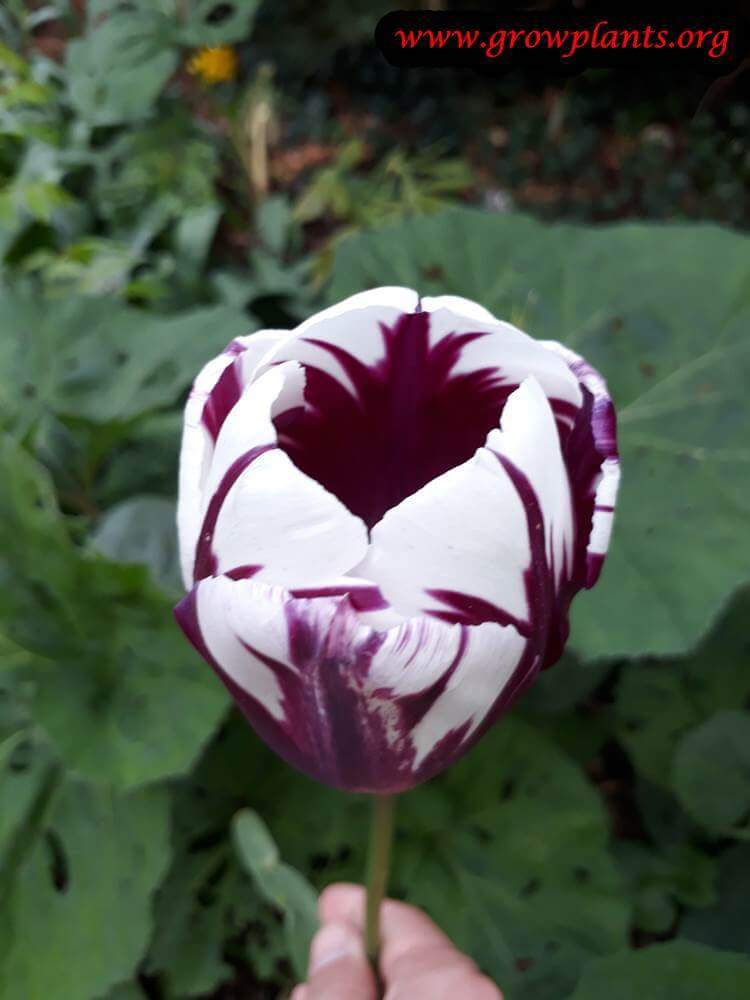
- Flower Appearance: Classic single, cup-shaped tulips in a very wide colour range, including bicolours, drop-shaped in bud
- Edibility: Not edible – the bulbs are toxic and can irritate skin, so it is grown purely as an ornamental
Detailed Blooming Overview
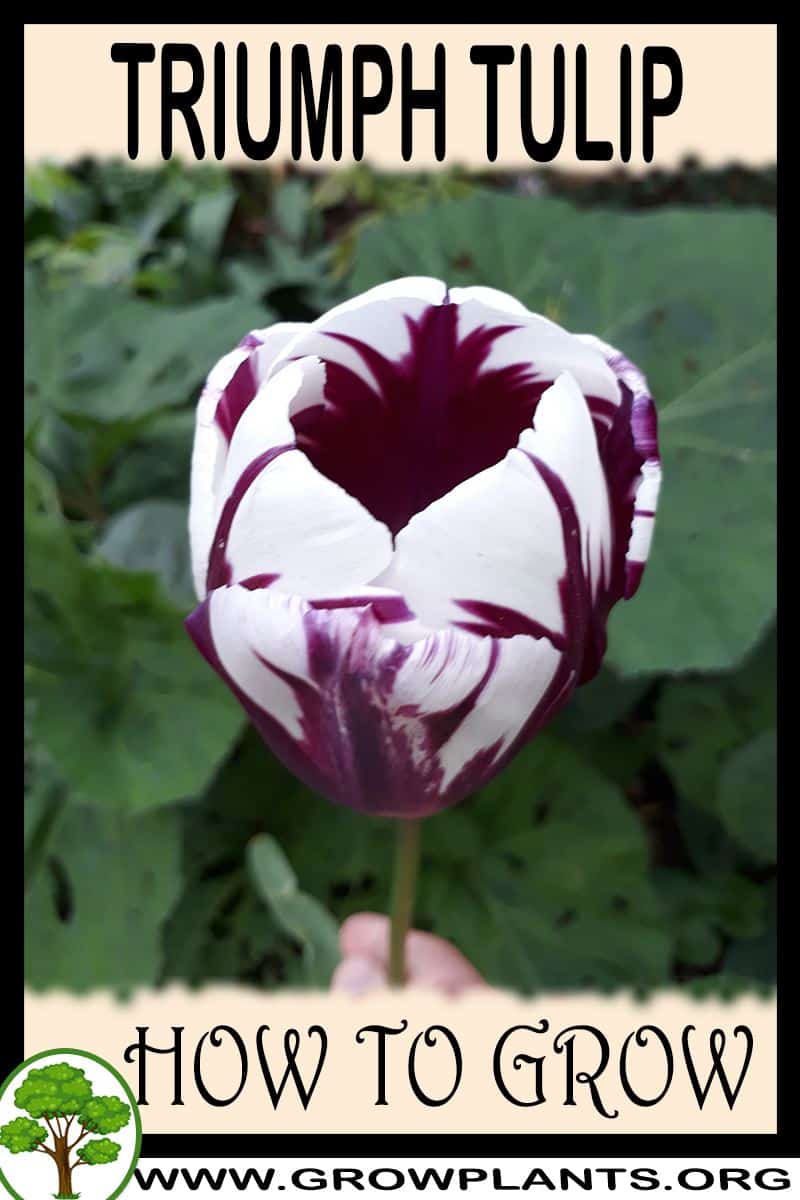
Triumph tulips are the classic mid-spring bedding and cutting tulips, valued for sturdy, weather-resistant stems and a huge palette of colours. Each bloom begins as a neat teardrop bud before opening into the familiar rounded cup, in shades from red, pink and purple through black, orange, white and yellow, as well as striking bicolours.
Flower Characteristics
- Single, cup-shaped flowers on strong, upright stems.
- Colours across red, pink, purple, black, orange, white, yellow and multicolour.
- Drop-shaped in bud, opening into a rounded cup.
Bloom Care & Thinning
- After flowering: Deadhead spent blooms but let the foliage die down naturally so the bulb can recharge.
- Handling: Bulbs and sap can irritate skin, so wear gloves when planting, and keep bulbs away from pets.
Bloom Health & Protection
- Tulip fire (Botrytis tulipae): A fungal disease that scorches and spots petals and leaves in wet springs; good drainage, sun and removing infected parts help, with a fungicide where it recurs.
Pests, Diseases & Troubleshooting
Overview: Tulips are spring-flowering bulbs whose signature problems are the fungal disease tulip fire (Botrytis tulipae) and bulb rots in wet soil, alongside bulb-digging rodents and the tulip bulb aphid that hides in stored bulbs. Above ground slugs, aphids and the streaking of tulip breaking virus are the main callers. The whole management philosophy is dry, well-drained soil, clean bulbs, crop rotation and good airflow.
Quick Troubleshooting Overview
| Issue / Pest | Main Symptom | Primary Solution |
|---|---|---|
| Tulip fire (Botrytis) | Scorched, spotted, twisted shoots and flowers | Rotate, remove infected plants, airflow, fungicide |
| Tulip bulb aphid | Colonies on stored/sprouting bulbs | Inspect bulbs, brush off, insecticidal soap |
| Slugs & snails | Grazed shoots and flowers | Handpick, grit barriers, iron-phosphate bait |
| Rodents / squirrels | Dug-up, eaten bulbs | Wire baskets, gravel, deterrents |
| Basal rot | Bulbs fail to sprout, soft and mouldy | Plant firm bulbs, sharp drainage, no summer wet |
| Tulip breaking virus | Streaked, broken flower colour | Remove plants, control aphids |
Common Pests & Management
- Tulip bulb aphid (Dysaphis tulipae):
- Symptoms: Grey-green aphid colonies clustered under the papery tunic of stored bulbs and on emerging shoots, weakening growth and spreading tulip breaking virus.
- Prevention & Control: Inspect bulbs at planting and rub off colonies, store bulbs cool and airy, encourage lady beetles and lacewings on growing plants, and use insecticidal soap or neem on infested shoots.
- Slugs and snails (Gastropoda):
- Symptoms: Grazed, ragged emerging shoots, holed leaves and chewed flowers with slime trails in damp spring weather.
- Prevention & Control: Handpick at night, clear debris and hiding places, use grit or copper barriers around plantings, and apply pet-safe iron-phosphate bait where shoots are being damaged.
- Bulb mites (Rhizoglyphus spp.):
- Symptoms: Tiny pale mites infesting already damaged, diseased or rotting bulbs in storage or wet soil, accelerating breakdown.
- Prevention & Control: Plant only firm, undamaged bulbs, store them cool and dry, discard soft or injured bulbs, and keep growing soil free-draining so healthy bulbs are not invaded.
- Rodents and squirrels (Rodentia):
- Symptoms: Newly planted bulbs dug up and eaten, disturbed soil, and clumps that fail to emerge in spring – tulips are a favourite target.
- Prevention & Control: Plant bulbs inside wire mesh baskets, cover beds with chicken wire until growth starts, add sharp gravel around bulbs, and use humane deterrents; deep, firm planting also helps.
- Aphids on foliage and flowers (Aphidoidea):
- Symptoms: Green aphids on stems, buds and flowers causing honeydew, distortion and virus spread.
- Prevention & Control: Wash off with water, encourage natural enemies, remove badly virused plants, and use insecticidal soap or neem for persistent colonies.
Diseases & Fungal Issues
- Tulip fire (Botrytis tulipae):
- Symptoms: The signature tulip disease: distorted, scorched-looking emerging shoots, brown spots with grey mould on leaves and petals, twisted growth and rotting buds, spreading fast in cool wet springs. Bulbs may carry black sclerotia.
- Treatment & Management: Remove and destroy infected plants immediately, never replant tulips in the same soil for at least three years, space for airflow, avoid overhead watering, discard bulbs with black sclerotia, and apply a protectant fungicide in high-value plantings during wet weather.
- Basal rot and bulb rots (Fusarium oxysporum / Pythium spp.):
- Symptoms: Bulbs that fail to sprout or produce weak plants, with soft, browned, sometimes pink-mouldy basal plates; driven by warm, wet or poorly drained soil.
- Treatment & Management: Plant only firm healthy bulbs in free-draining soil, avoid waterlogging and summer irrigation of dormant bulbs, rotate planting sites, and lift and store bulbs cool and dry in wet climates.
- Tulip breaking virus (Tulip breaking virus (Potyvirus)):
- Symptoms: Feathered or streaked ‘broken’ flower colour and mottled foliage; historically prized but a sign of a debilitating, aphid-spread virus that weakens bulbs over time.
- Treatment & Management: There is no cure – remove and destroy affected plants, control the aphids that spread it, keep virus-prone tulips away from lilies, and buy virus-free stock.
- Grey mould and Pythium root rot (Botrytis cinerea / Pythium spp.):
- Symptoms: Fuzzy grey mould on flowers and foliage in cool damp still air, and soft, brown, poorly rooted plants in wet soil.
- Treatment & Management: Improve airflow and drainage, remove faded flowers and dead foliage, avoid overwatering, and keep beds free of debris.
Growing Difficulties & Abiotic Problems
- Poor or declining flowering:
- Cause & Symptoms: Warm winters that fail to chill the bulbs, cutting foliage too early, or leaving bulbs in hot wet summer soil all reduce or end flowering; many hybrid tulips naturally weaken after the first year.
- Correction Strategy: Give a proper cold dormancy (pre-chill bulbs in mild climates), let foliage die down naturally to recharge the bulb, keep bulbs dry over summer, and treat many hybrids as annuals or choose perennialising and species types.
- Frost and weather damage to flowers:
- Cause & Symptoms: Late frosts scorch buds and foliage, and heavy rain or wind flatten the tall stems.
- Correction Strategy: Site in a sheltered spot, cover during hard late frosts, and choose sturdier or shorter cultivars in exposed gardens.
What Helps – Products & Tools
Tulip care centres on prevention: sharp drainage and rotation against tulip fire and basal rot, wire baskets and gravel against rodents, iron-phosphate bait for slugs, and insecticidal soap or neem for the bulb aphid and foliar aphids that spread virus. Keep a protectant fungicide (for example chlorothalonil-type or copper) only for tulip fire in wet springs on valued displays.