
Plant Profile & Key Characteristics
Also known as: Waxflower, Miniature Hoya, Hoya bonsai
Overview: An evergreen succulent (epiphytic) climbing vine reaching about 50-150 cm (20-60 in), grown for its thick, waxy foliage and clusters of fragrant, star-shaped ‘wax’ flowers. It is a popular container and hanging houseplant.
Quick Specifications
| Specification | Attribute |
|---|---|
| Plant Type / Life Cycle | Perennial (succulent vine) |
| Foliage Type | Evergreen |
| Mature Size | 50-150 cm (20-60 in) long |
| Growth Rate | Slow to moderate |
| Root System | Epiphytic – fibrous roots plus adventitious air roots along the stems |
| Toxicity | Not for eating – regarded as mildly toxic/irritant if ingested |
| Hardiness | USDA zone 10b+ |
Growth Form & Structure
- Height & Spread: Stems trail or climb to about 50-150 cm (20-60 in); usually grown in containers or hanging baskets and trained on a trellis or left to weep down.
- Growth Habit & Form: Twining, trailing succulent vine that produces adventitious air roots and clings or hangs from support.
- Lifespan & Maturity: Long-lived perennial; plants must reach maturity (often around 5-7 years) before they flower.
Anatomy & Physical Features
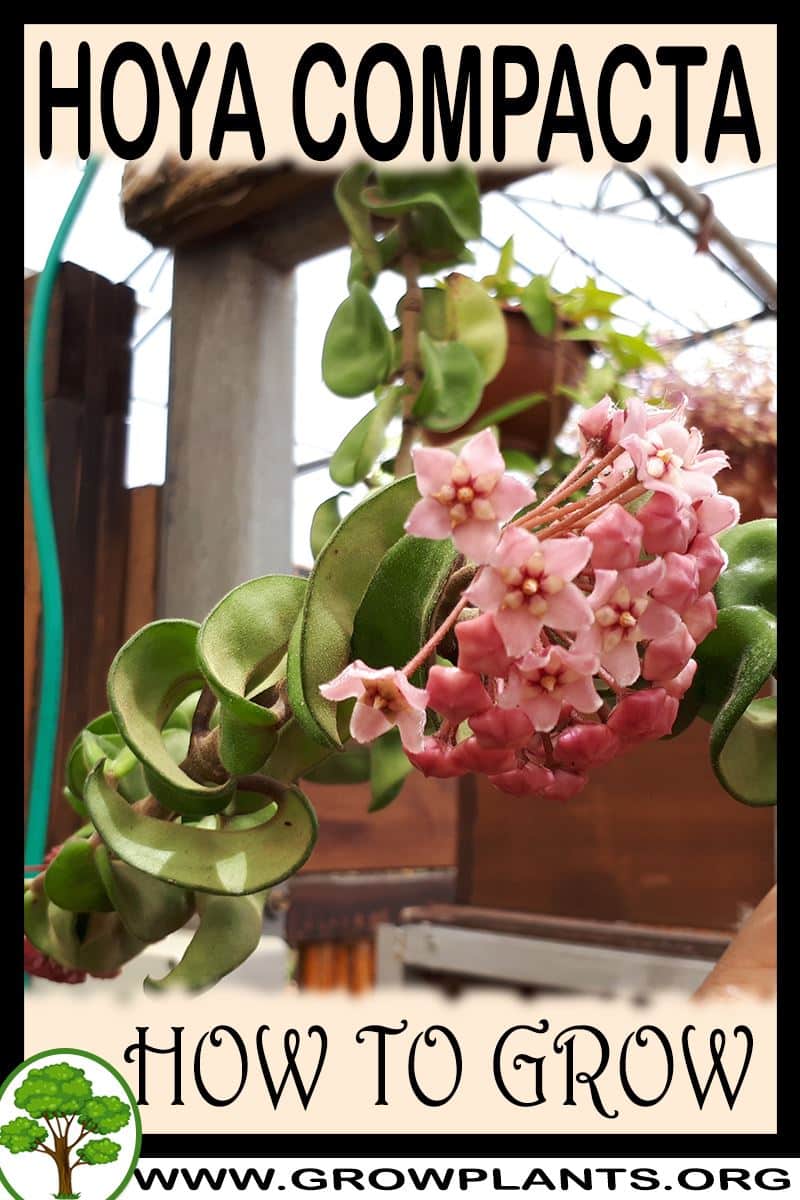
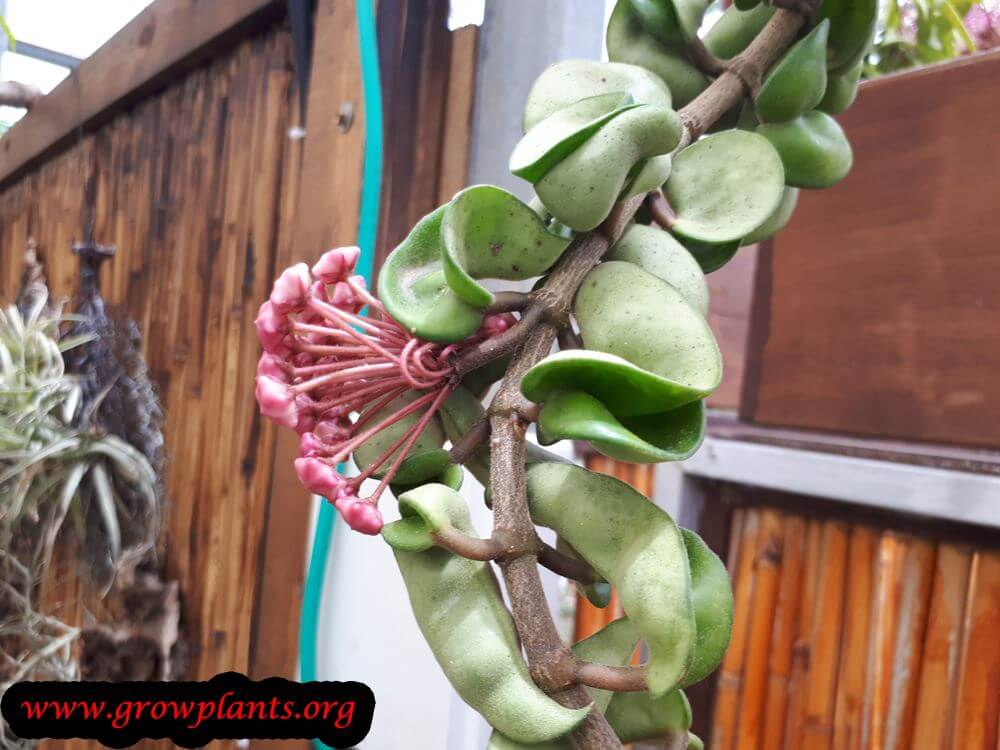
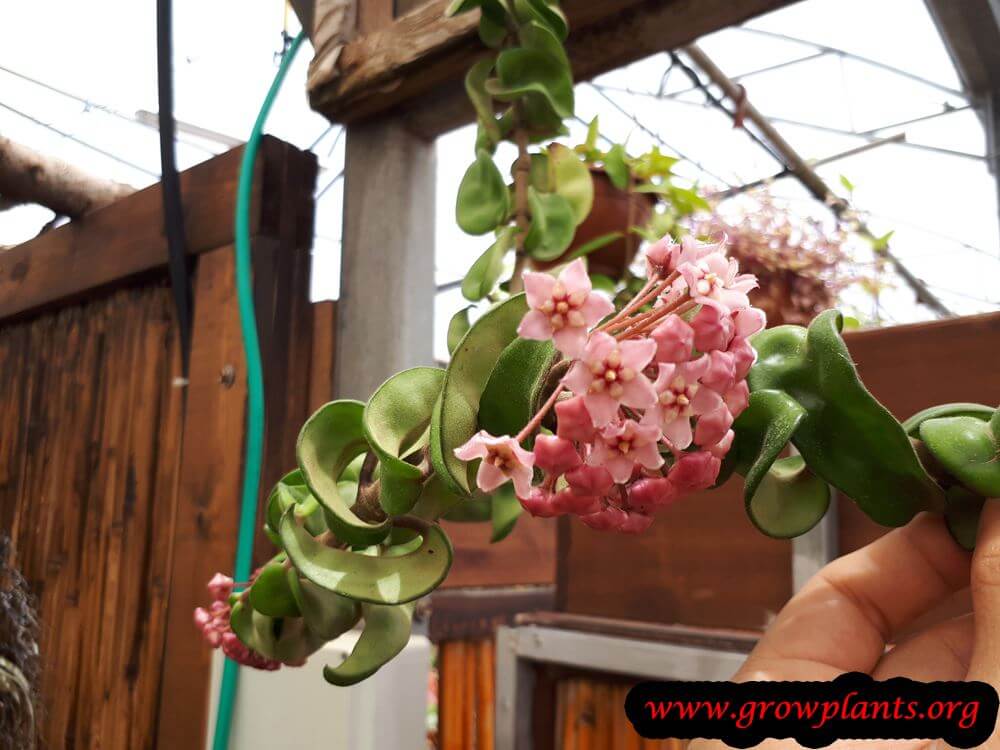
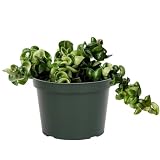
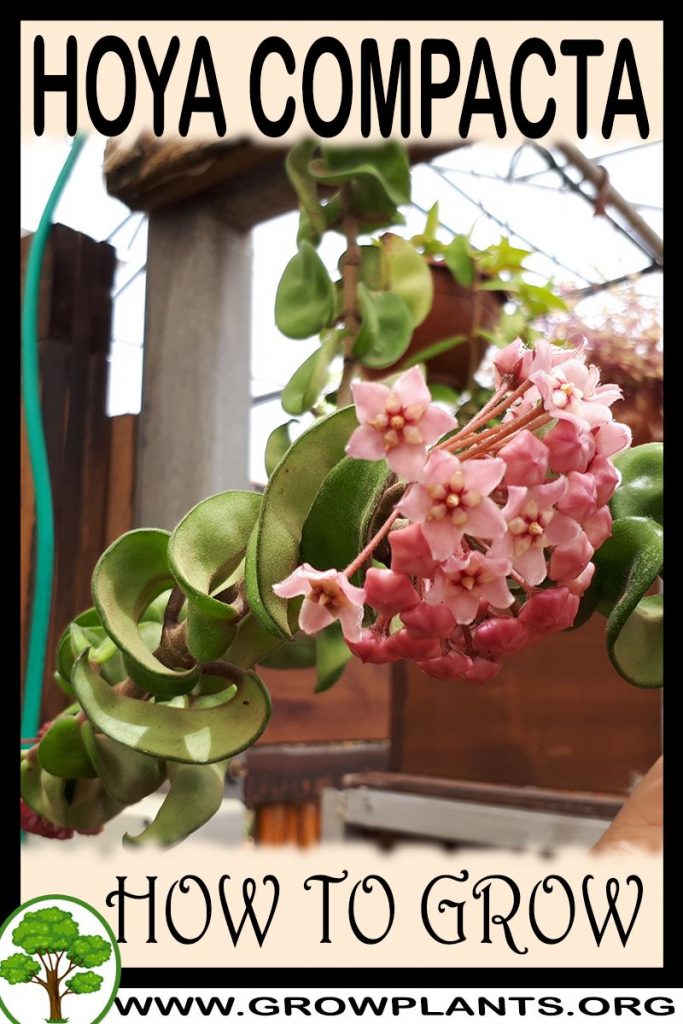
- Leaves & Foliage: Fleshy, waxy, heart-shaped green leaves that are twisted and curled along the stem, some variegated.
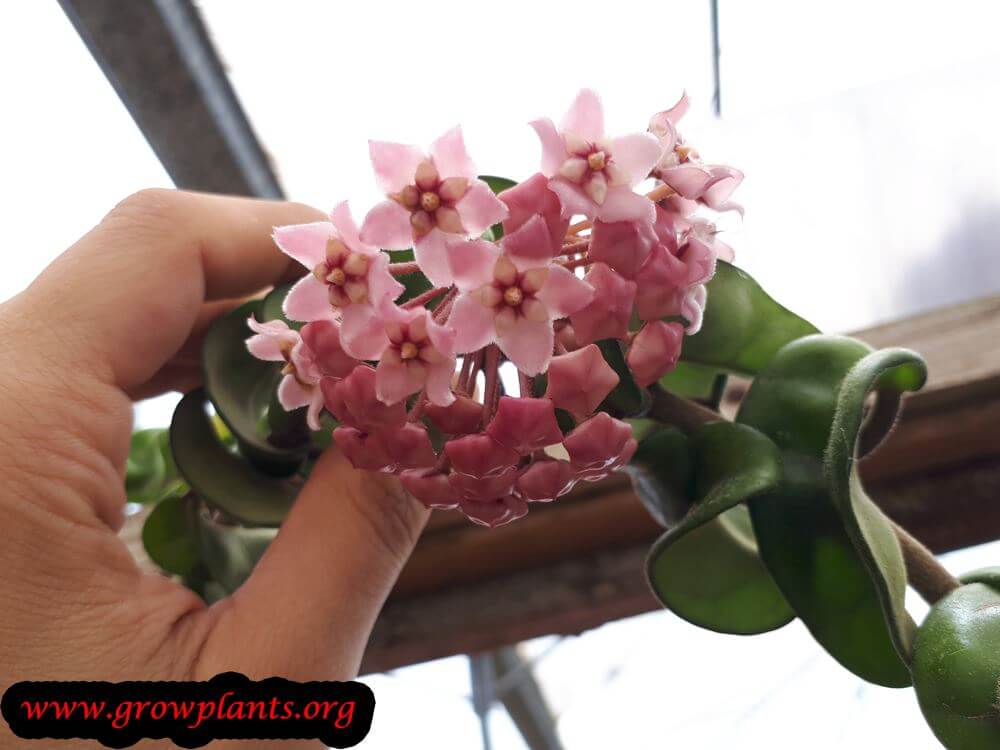
- Flower Characteristics: Fragrant pink waxy star-shaped flowers, in umbel to ball-shaped clusters (full detail in the Bloom section).
Primary Uses & Landscape Value
- Functional & Ornamental Roles: Ornamental foliage and flowering houseplant for containers and hanging baskets; grown outdoors on supports only in frost-free climates.
Care Guide: Planting, Soil & Watering
Overview: Hoya compacta is an epiphytic, succulent-leaved vine that thrives in warm, frost-free conditions (best kept above about 10°C / 50°F) with bright light and high humidity. It wants a loose, airy, fast-draining medium kept lightly moist and allowed to dry a little between waterings, and resents cold, soggy roots.
Quick Care Requirements
| Requirement | Ideal Condition |
|---|---|
| Planting Season | Warm season by zone — spring in zone 10a, spring–summer in 10b, spring–autumn in 11, year-round in 12+ |
| Growth Rate | Slow to Moderate |
| Soil Type | Loose, airy, well-draining mix (e.g. orchid bark, coco chips and perlite) |
| Water Need | Moderate — keep lightly moist but let the top of the mix dry between waterings |
Planting & Establishment
- Best Planting Season: Plant in the warm season once nights are reliably mild — spring in zone 10a (into mid-summer), spring to summer in 10b, spring to autumn in 11 and year-round in 12+. Acclimatise greenhouse-raised plants gradually and avoid moving them outdoors into cold weather.
- How to Plant:
- Hole Preparation: Use a container only a little larger than the root ball — Hoya flower best when slightly pot-bound — or a pocket of loose, chunky medium if grown on a moss pole or mount.
- Soil Amendments: Blend an open, epiphyte-style mix: orchid bark, coco chips or perlite added to a peat or potting base for sharp drainage and plenty of air around the roots.
- Planting Depth: Set the plant at the level it grew, keeping the base of the stem at the surface; burying the stem invites rot.
- Growth Speed & Expectations: Expect slow to moderate growth, quicker in warmth and bright light; plants need several years to mature before they bloom.
Soil, Watering & Drainage Care
- Soil Mix & Drainage Needs: Grow in a light, airy, sharply-draining mix — Hoya hate wet feet. A container with free drainage is preferred over open ground, and extra bark or perlite keeps the mix open and guards against root rot.
- Watering Schedule & Technique:
- Young / Newly Planted: Keep the mix lightly and evenly moist while roots establish, using soft water (rainwater or low-mineral water) and misting the aerial roots.
- Established: Water thoroughly, then let the top of the mix dry before watering again, and ease off before the blooming season; avoid hard, mineral-rich water.
- Seasonal Adjustments: Water more during warm, active growth and much less in cool winter weather, when the plant rests and rots easily if kept wet.
Climate, Light & Hardiness
Hoya compacta (Hoya carnosa 'Compacta', also known as Hindu Rope or Miniature Hoya) is a tropical succulent vine suited to tropical, subtropical, or warm Mediterranean climates outdoors, or bright, humid indoor culture elsewhere. It grows best with around 75% sun or filtered light and needs to stay above about 10°C (50°F), with frost-free winter conditions strongly preferred.
Quick Climate Specifications
| Climate Zones | Tropics, Subtropics, Mediterranean (or houseplant) |
|---|---|
| USDA Hardiness Zones | 10b and warmer |
| Frost Tolerance | Very Low (frost-free preferred) |
| Light Conditions | Full Sun (with care) to Half Shade; about 75% sun or filtered light ideal for flowering |
Sunlight & Light Exposure
Optimal Light Setup
Roughly 75% sun or bright filtered light, through shade net or a window, gives the best flowering, per site data.
Direct Sun Requirement
Tolerates full sun but may need some shading depending on site conditions; high humidity helps prevent sunburned leaves.
Shade & Heat Management
Half shade is generally preferable to avoid leaf scorch; full shade is possible, but the plant won't flower without enough indirect light.
Best Exposure/Orientation
Bright, filtered light – for example beneath open deciduous tree canopy outdoors, or a curtained sunny window indoors – suits this compact, trailing vine well, including hanging-basket display.
Temperature Extremes & Hardiness
USDA Hardiness & Regional Limits
Hardy from zone 10b and warmer; zone 10 culture works best in frost-free conditions with winter protection.
Cold Damage & Winter Protection
Prefers temperatures above about 10°C (50°F); the site notes plants fresh from a greenhouse can struggle if moved straight into colder conditions, so acclimate gradually.
Frost Sensitivity
Frost-sensitive; not suited to exposed outdoor culture outside zone 10b and warmer.
Extreme Heat Tolerance
Tolerates strong subtropical/tropical heat well, provided humidity is kept high to protect the fleshy, twisted leaves from scorch.
Wind, Humidity & Microclimate
Humidity Preferences
Needs high humidity, at least 60% indoors per site; misting the aerial roots supports healthy growth.
Dry-Air Tolerance
Low; dry air increases the risk of leaf scorch in sun and overall stress.
Wind Tolerance
Strong wind can dry the exposed aerial roots faster than they take up moisture, so shelter from wind is preferable, especially outdoors.
Rainfall & Seasonal Moisture
Prefers even moisture with good drainage and soft water (rainwater or equivalent).
Microclimate Recommendations
A humid, sheltered spot, such as a bathroom indoors or dappled tree shade outdoors, suits its epiphytic tropical origin; at a compact 50–150 cm (20–60 in), it also does well elevated in a hanging basket, keeping the twisted foliage away from cold pockets near ground level.
Growing in Pots, Balconies & Indoors
Hoya carnosa ‘Compacta’ (Hindu rope) is an excellent houseplant – the grower grows it indoors – and a natural container and hanging plant. It wants bright light, even some direct sun, plus warmth and humidity; ordinary artificial room light alone is not enough.
Quick Details
- Container Size: Start small and grow with the plant – about 5-12 L (1.5-3 gal), a pot 20-50% larger than the root ball (smaller extra for bigger plants) – grower’s value
- Indoor Suitability: A good houseplant in bright light with humidity
- Best Spot: Bright light to some direct sun; high humidity (ideally 60%+) prevents leaf scorch
- Soil & Drainage: Open, well-drained mix – peat/coir with perlite, or potting mix, plus lava grit at the base
- Watering in Pots: Average – let it dry between waterings, and mist the aerial roots; use soft (rain or clean) water
Indoors & On the Windowsill
- A genuine houseplant: Grows well indoors given a bright spot with plenty of light, even some sun – the grower stresses that ordinary room lighting is not enough, so a grow light can help make up the difference. Keep it away from heaters, air-conditioners and ventilators.
- Humidity & the bathroom: It loves humidity – at least 60% – so a bright bathroom suits it well; in humid spots use less water. Grow it as a hanging plant to show off the trailing stems.
- What matters most: The grower’s key point for indoors: get the location, light and humidity right, and water the aerial roots (spray them), not just the soil.
On a Balcony or Patio
- Light & wind: Outdoors give bright light with a little shade in the fiercest sun; high humidity protects the leaves. Shelter it from cold, drying wind – it is frost-tender.
- Practicalities: Ideal as a hanging plant; a small, light pot is easy to move indoors when it turns cold.
Choosing the Pot, Soil & Long-Term Care
- Pot & drainage: Start small (5-12 L) and pot up 20-50% at a time as it fills the pot; make good drainage holes and, the grower advises, do not fit a saucer under the pot. Skip standing water to avoid root rot.
- Potting mix: An open, well-drained mix – peat/coir with perlite, or potting mix, with some lava grit at the base; keep it rich with organic matter and humus on top.
- Feeding: The grower feeds at least once, better twice, a year, applying liquid feed to the aerial roots as well as the soil.
- Repotting: Pot on when it fills the container, but sparingly – every transplant sets back flowering, and mature plants can take up water and feed through their aerial roots, so they may not need repotting.
Grower’s Container Tip
- Feed and mist the aerial roots: The grower stresses that watering the soil alone is usually not enough – spray the aerial roots and apply liquid feed to them too, always with soft (rain or clean, low-ion) water. Because each repot sets back blooming, disturb an established plant as little as possible.
Fertilizing & Feeding
A light feeder overall: this slow-to-moderate-growing, twisted-leaf vine needs only occasional, dilute feeding through the warm growing season, with no feeding at all during cold winter weather.
Quick Fertilizing Specs
| Feeding Level | Light feeder |
|---|---|
| Main Nutrient Priority | Nitrogen-leaning while young, then balanced feeding through growth and bloom |
| Best Feeding Period | The warm active growing season |
| Organic Options | A humus-rich, well-drained potting mix with organic matter |
| Reduce/Stop Feeding | No feeding during cold winter weather when growth slows |
| Micronutrients | Usually met by a complete houseplant fertilizer; correct only diagnosed issues |
| Soil pH | Prefers a rich, well-drained potting mix over any particular pH |
Feeding by Growth Stage
Young plant establishment and vine growth
Help a young or newly rooted plant build roots and its distinctive twisted vine growth.
| Nutrient direction | A balanced, nitrogen-leaning feeding supports steady vine and leaf growth while the plant is still young. |
|---|---|
| Timing | While the plant is young and putting on new vine growth, mainly in the warm season. |
| Frequency | Light, infrequent feeding is enough while the plant establishes; this is a slow grower that doesn’t need frequent inputs. |
| Fertilizer types | A balanced, nitrogen-leaning houseplant fertilizer, diluted |
| Precautions | Keep feeding light and diluted; young roots and air roots are sensitive to over-fertilizing. |
Mature growth and blooming
Support a mature vine’s warm-season growth and its fragrant star-shaped blooms.
| Nutrient direction | A balanced complete feeding through the growing season, applied to both the potting mix and misted onto the aerial roots, supports foliage and flowering. On variegated cultivars, keep nitrogen moderate rather than heavy to help the leaf coloring hold. |
|---|---|
| Timing | Through the warm active growing and blooming season. |
| Frequency | Light feeding through the growing season is usually enough for this slow-to-moderate grower. |
| Fertilizer types | A balanced complete houseplant fertilizer, diluted, Occasional misting of dilute fertilizer onto the aerial roots |
| Routine trace nutrients | iron, manganese |
| Precautions | Avoid heavy nitrogen at the expense of flowering, and keep all feeding light – this plant does well on minimal inputs. |
Cold-season rest
Let the plant coast through cold, lower-light weather without pushing new growth.
| Nutrient direction | None – withhold fertilizer during cold weather while growth is minimal. |
|---|---|
| Timing | During cold winter weather, particularly where temperatures drop toward the plant’s cold tolerance limit. |
| Frequency | No feeding at this stage; feeding resumes only once warmer weather brings active growth back. |
| Fertilizer types | No feeding at this stage; better not to fertilize during cold winter weather. |
| Precautions | Do not fertilize in cold weather; the plant is not actively using nutrients and unused fertilizer can build up as salts. |
Nutrient Deficiency Signs & Corrections
Leaves turn pale and overall growth slows or stalls.
| Possible causes | low available nitrogen from infrequent feeding, old, depleted potting mix, root stress from overwatering or poor drainage |
|---|---|
| Appears first on | older leaves first |
| What to check | recent feeding history and mix age, watering routine and drainage, root condition |
| Possible correction | Resume light, balanced feeding during the active growing season and refresh the potting mix if it’s old. |
Healthy-looking vine that produces little or no bloom despite maturity.
| Possible causes | insufficient light reaching the plant, nutrient imbalance such as excess nitrogen relative to overall feeding, an immature plant that has not yet reached blooming size |
|---|---|
| Appears first on | absence of flower clusters despite otherwise healthy growth |
| What to check | light exposure, plant age and maturity, recent feeding balance |
| Possible correction | Increase light first, then ensure balanced feeding through the growing season rather than pushing nitrogen alone. |
Leaf tip or margin browning, especially after a period of feeding.
| Possible causes | fertilizer salt buildup in the potting mix, infrequent watering that concentrates salts, feeding while the plant is not actively growing |
|---|---|
| Appears first on | leaf tips and margins |
| What to check | recent fertilizer amounts and frequency, watering and flushing history, potting mix drainage |
| Possible correction | Flush the potting mix with plain water to clear built-up salts, then resume only light, diluted feeding. |
Pruning, Training & Seasonal Maintenance
Hoya compacta (‘Hindu Rope’) is a dense, slow-to-medium growing epiphytic succulent vine with distinctively twisted, curled leaves and stems. It needs very little pruning – the main task is light shaping on its support (often a hoop or wire form, given its naturally coiling habit) rather than any structural framework. The safest window is after a bloom flush. Like other Hoya, it reflowers from the same permanent flower spurs year after year, so pruning must protect those rather than treat them as spent growth.
Quick Pruning & Maintenance Specs
| Pruning Tolerance | Low–Moderate – trims for size, but bloom spurs must be preserved |
| Primary Pruning Window | After a bloom flush |
| Secondary Maintenance Window | Year-round for dead/damaged leaves and stems |
| Typical Frequency | Light, occasional trimming |
| Main Objective | Shape/size on its hoop or trellis support; protect flower spurs |
| Young Plant Priority | Guide the naturally twisting stems onto a support form early |
| Mature Plant Priority | Trim excess length; never remove flower spurs |
| Best Tool Type | Precision snips only – all stems are soft/succulent |
| Avoid Heavy Pruning During | Active budding/flowering |
Pruning by Plant Age & Size
Newly Established
Minimal – remove only damage from transplant; let the plant settle before shaping.
Young / Formative
This cultivar’s naturally twisted stems are commonly trained around a wire hoop as they grow, rather than left to trail or climb straight up a trellis; gently guide and loosely tie stems to the form while young and pliable. Pinch only the tips lightly to encourage denser growth – avoid hard cuts on an immature plant.
Mature / Established
Trim vine length for size/shape as needed, continuing to wind new growth around the support form; remove dead or damaged growth, leaving all flower spurs in place.
Flowering & Fruiting Wood
Flowers form on persistent spurs (peduncles) at older nodes that rebloom over multiple seasons. Because this cultivar’s stems are already densely coiled and can look tangled, it is especially easy to mistake an old flower spur for clutter when tidying – leave short woody spur stubs in place rather than cutting them out.
Structural Pruning & Training
No formal framework beyond the hoop/wire support most growers use for this cultivar’s twisting habit; control length by trimming stem tips rather than cutting into older, spur-bearing growth, and periodically re-guide new growth around the form as it lengthens.
Special Growth to Remove
- Dead or damaged leaves and stems.
- Excess aerial roots, only if unwanted cosmetically.
- Do not remove flower spurs/peduncles after bloom.
Container & Small-Space Pruning
Almost always grown in a pot with its hoop or wire support; tolerates being pot-bound, which favors blooming, so avoid heavy root pruning at repotting. Its naturally compact, dense habit makes it one of the more space-efficient Hoya for small containers, needing only light trims to keep it tidy rather than frequent size-control cuts.
Tools
Precision snips for tip-pinching and dead-material removal; soft ties or stakes for guiding stems around the hoop/support. No loppers, saws or hedge shears.
Tool Hygiene & Disease Risk
Routine – clean, sharp tools are sufficient; note the sticky latex sap typical of the genus when handling cuts.
Cut Placement & Technique
Pinch or snip just above a leaf node; when re-training a stem around the hoop, tie loosely enough to allow for stem thickening over time.
Heavy Pruning & Rejuvenation
Mature plants tolerate a moderate cutback if the coiled growth becomes overly congested, though this removes some spurs and delays flowering on that portion; stagger any significant cutback across seasons and avoid it on young plants.
Post-Pruning Care
Water normally; skip a nitrogen-heavy feed right after cutting back, favoring spur formation over leafy regrowth.
Common Pruning Mistakes
- Cutting out flower spurs while tidying the naturally tangled-looking coiled stems.
- Hard-pruning a young plant before it has filled out its support.
- Tying stems too tightly to the hoop, constricting them as they thicken.
When NOT to Prune
Avoid cutting during active budding/bloom, and avoid pruning right after a move or repot.
Recommended Tools (by task)
- Tip-pinching, removing dead leaves/stems → precision_snips: the only cut size this soft-stemmed vine needs.
- Guiding/re-tying the twisting stems around a hoop support → soft_ties_stakes: shapes the naturally coiling habit without damaging stems.
Propagation Guide
Hoya compacta (Hindu rope), including its variegated forms, is propagated from stem or leaf-node cuttings rather than seed, since the site notes seed is very hard to find and vegetative propagation is what keeps this cultivar’s distinctive twisted leaves, any variegation, and its flower color true. Cuttings root in moist, humid soil (a greenhouse helps) or in water, making this an easy-to-moderate plant to propagate at home.
Quick Propagation Specs
| Best Propagation Method | Stem or leaf-node cuttings |
| Alternative Methods | Water-rooted cuttings; layering (bending a stem into soil) |
| Propagation Difficulty | Easy–Moderate |
| Seed True-to-Type | Not practical — seed is very hard to find for this cultivar |
| Vegetative True-to-Type | Yes — needed to keep the twisted-leaf form, variegation and flower color true |
| Best Propagation Season | Spring to early summer |
| Cutting Rooting Time | Not given a specific timeframe by the site; water-rooted cuttings are ready for fertilizer once they have about five or more roots |
Growing from Seed
Seed is rarely available for this cultivar and the site notes it can be very hard to find; vegetative propagation is what keeps its distinctive twisted leaves and flower color true, so stem or leaf cuttings are the standard route rather than seed.
Stem Cuttings
Cutting Type
Stem tip cuttings, or a leaf taken with a piece of stem attached; when taking a leaf-with-stem cutting, include at least 3 leaves on that stem section.
Best Timing
Spring to early summer.
Cutting Preparation
After cutting, let the piece sit in the shade for a few days until the cut tissue heals over before planting.
Rooting Setup
Plant into moist soil under high humidity; a greenhouse is noted as improving success. As an alternative, root the cutting in water: wait a few days after cutting before placing the stem in water, and use soft water (rainwater or otherwise clean, low in dissolved ions) rather than hard tap water.
Rooting Hormone
Not specified by the site; can be considered optional to speed rooting.
Rooting Time
Not given a specific timeframe by the site; for water-rooted cuttings, once roughly five or more roots have formed, fertilizer can be added.
Leaf & Root Cuttings
Always include a piece of stem (a node) with a leaf cutting rather than taking a bare leaf, as the site’s own instruction to include at least 3 leaves’ worth of stem reflects. For variegated selections, make sure the cutting includes visibly variegated tissue rather than an all-green shoot, since propagating only from a reverted, plain-green section will produce a plain green plant instead of the variegated form.
Air & Ground Layering
The site also describes a simple layering method: bend a stem down to soil level, cover the bent section with soil, and keep that soil consistently moist until roots form along the buried section; once rooted, the layered section can be cut away from the parent plant as a new, already-rooted plant.
Bloom & Flower Guide
Quick Details
- Bloom Season: Spring and summer, occasionally into autumn
- Flower Appearance: Fragrant, waxy pink star-shaped flowers with a small star in the center, in rounded umbel-shaped clusters
- Edibility: Not eaten – the plant is mildly toxic and the sap can irritate; grown as an ornamental
Detailed Blooming Overview
The reward for growing this miniature hoya is its remarkable flowers: tight, rounded clusters of small, waxy, porcelain-like stars in pink, each with a tiny star at its heart. They look almost artificial and are sweetly fragrant, especially in the evening, often beading with sticky nectar. Good, bright light is the key to bloom – a plant kept too dark simply grows leaves and never flowers.
Flower Characteristics
- Waxy pink star-shaped flowers with a smaller star in the center.
- Borne in umbel-to-ball shaped clusters; fragrant, particularly at night.
Bloom Care & Thinning
- Never cut the flower spur: Hoyas rebloom year after year from the same short spur (peduncle) – remove it and you lose next season’s flowers, so leave the old spur in place after the blooms drop.
- For more flowers: Bright, filtered light or gentle sun, and letting the plant dry out a little before the bloom season, encourage flowering.
Bloom Health & Protection
- Mealybugs and sooty mould: Mealybugs love to hide inside the flower umbels, and the sugary nectar can grow black sooty mould – wipe the pests off or dab with insecticidal soap, and rinse away mould once the pests are controlled.
Pests, Diseases & Troubleshooting
Overview: Wax plants (Hoya) are tough, semi-succulent epiphytes whose thick, waxy leaves shrug off most trouble, but mealybugs are the signature scourge – hiding in leaf axils, along stems and even tucked inside the flower peduncles (the perennial ‘spurs’ that must never be removed). The Hindu-rope Hoya’s tightly curled, contorted foliage creates ideal hiding places for mealybugs and scale, which are hard to spot and treat. Nearly all sap-sucker problems and the fatal root rot trace back to overwatering and stagnant air, so lean, gritty compost and careful watering are the foundation of control.
Quick Troubleshooting Overview
| Issue / Pest | Main Symptom | Primary Solution |
|---|---|---|
| Mealybug | White cottony tufts in the deep leaf crevices, axils and flower spurs, sticky honeydew, stunted new growth | Dab with 70% alcohol, wash with insecticidal soap, repeat weekly; check roots |
| Scale | Flat brown/tan bumps on stems and leaf undersides, sticky leaves | Scrape off, wipe down, treat with horticultural oil |
| Aphids | Clusters on soft new shoots and developing buds, distortion | Rinse off, insecticidal soap, encourage predators |
| Spider mites | Fine pale stippling and delicate webbing in dry indoor air | Raise humidity, shower foliage, miticide if persistent |
| Sooty mould | Black sooty film coating leaves over honeydew | Control the sap pests feeding above, wipe leaves clean |
| Root / stem rot | Yellowing, soft mushy base, wilting even though the mix is wet | Unpot, cut away rot, repot into dry gritty mix, water less |
Common Pests & Management
- Mealybug (Planococcus citri):
- Symptoms: The number-one Hoya pest: white, cottony, waxy insects clustered in the deep leaf crevices, axils and flower spurs, producing sticky honeydew and sooty mould, weakening growth and disfiguring blooms. A root-infesting form (root mealybug) leaves white waxy deposits on the rootball and causes unexplained decline.
- Prevention & Control: Spot-treat colonies with a cotton bud dipped in 70% isopropyl alcohol; follow with insecticidal soap or a horticultural/neem oil spray, repeating every 5-7 days to catch hatchlings; isolate new plants; inspect the roots at repotting and rinse or drench with a systemic if root mealybug is present. Never cut off the flower spurs, as mealybugs shelter there but the plant reblooms from them.
- Scale insects (Coccus hesperidum, Saissetia coffeae):
- Symptoms: Brown, tan or blackish limpet-like bumps fixed to stems and the undersides of leaves along the veins; they exude honeydew that fuels sooty mould, and heavy infestations cause yellowing and leaf drop.
- Prevention & Control: Scrape or wipe off with an alcohol-dampened cloth; spray thoroughly with horticultural oil to smother crawlers and adults; repeat and inspect leaf undersides; prune out badly encrusted stems.
- Aphids (Aphis gossypii, Myzus persicae):
- Symptoms: Soft green, yellow or black insects massing on tender new shoots and flower buds, causing curling, sticky honeydew and sooty mould; most damaging to fresh growth and blooms.
- Prevention & Control: Blast off with water, then treat with insecticidal soap or neem; remove badly infested tips; encourage ladybirds and lacewings; check imported new plants first.
- Spider mites (Tetranychus urticae):
- Symptoms: Fine pale speckling (stippling) on the upper leaf surface and gossamer webbing on undersides and between leaves, thriving in hot, dry indoor air; leaves dull and bronze over time.
- Prevention & Control: Raise humidity and shower the foliage; wipe leaves; apply a miticide or repeated horticultural-oil/soap sprays covering leaf undersides; avoid letting the plant sit dry and dusty.
- Thrips (Frankliniella / Thrips spp.):
- Symptoms: Silvery scarring, tiny black frass specks and distorted new leaves and buds; a minor but occasional problem, more troublesome on flowering plants.
- Prevention & Control: Use blue/yellow sticky traps to monitor, remove damaged growth, and treat with insecticidal soap or spinosad if numbers build; isolate affected plants.
Diseases & Fungal Issues
- Root & stem rot (Pythium / Phytophthora spp.):
- Symptoms: The commonest killer of Hoyas: overwatering and poor drainage rot the roots and stem base, so leaves yellow, go limp and drop while the soil stays wet, and the base turns soft, dark and mushy.
- Treatment & Management: Prevent it by using a very free-draining, chunky epiphyte mix and letting the top of the mix dry between waterings; at first sign, unpot, cut away all soft tissue, dust cuts, and re-root healthy vine tips in a barely-moist gritty mix; never leave the pot standing in water.
- Botrytis (grey mould) (Botrytis cinerea):
- Symptoms: Fuzzy grey mould and brown watery rot on flowers, buds and leaves in cool, damp, still air, often starting on fading blooms.
- Treatment & Management: Remove spent flowers and dead material, improve airflow and lower humidity around the plant, and avoid wetting foliage; rarely needs a fungicide if hygiene is good.
- Fungal / bacterial leaf spot (Colletotrichum / Cercospora / bacterial):
- Symptoms: Brown or black spots, sometimes with yellow halos or a water-soaked look, usually where leaves stay wet or air is stagnant.
- Treatment & Management: Remove spotted leaves, keep foliage dry, space and ventilate plants; a copper fungicide helps stubborn fungal spotting, while bacterial spots respond mainly to sanitation and drier conditions.
- Sooty mould (Capnodium spp.):
- Symptoms: A black, soot-like film coating leaves and stems, growing on the honeydew left by mealybugs, scale or aphids; it blocks light rather than infecting tissue.
- Treatment & Management: Eliminate the sap-sucking pests producing the honeydew, then wipe the black film off with a damp cloth; leaves recover once the source is gone.
Growing Difficulties & Abiotic Problems
- Overwatering & root rot:
- Cause & Symptoms: The single biggest cause of Hoya death: soggy, airless compost suffocates and rots the roots, giving limp, yellowing leaves that persist even when the mix is wet.
- Correction Strategy: Grow in a gritty, bark-based free-draining mix in a pot with drainage; water only when the mix has nearly dried, and much less in cool or low-light periods; never leave standing water in the saucer.
- Shrivelled, dropping leaves (underwatering):
- Cause & Symptoms: Wrinkled, soft or curling leaves and dropping foliage when the plant has been left bone-dry too long or roots are damaged.
- Correction Strategy: Check that roots are healthy, then resume even watering; if roots have rotted, re-root healthy cuttings rather than trying to over-water a failing plant back to health.
- Sunburn vs failure to bloom:
- Cause & Symptoms: Harsh direct midday sun bleaches and scorches leaves, while too little light gives lush growth but no flowers, since Hoyas need bright light to bloom.
- Correction Strategy: Give bright, indirect light or gentle morning sun; a few hours of filtered sun encourages blooming without scorching; move gradually to avoid shock.
- Cold damage:
- Cause & Symptoms: Blackened, translucent or mushy patches after exposure below about 10 C / 50 F.
- Correction Strategy: Keep above ~12-15 C, away from cold draughts and winter windowpanes; remove damaged growth once the plant is warm again.
- Edema:
- Cause & Symptoms: Corky bumps and blister-like spots on the undersides of leaves from erratic watering when roots take up water faster than leaves lose it.
- Correction Strategy: Water more evenly, improve light and airflow, and avoid heavy watering in cool, humid, dim conditions; the marks are harmless but permanent on affected leaves.
What Helps – Products & Tools
Keep it simple and cultural: 70% isopropyl alcohol on cotton buds for spot-treating mealybug and scale, backed by insecticidal soap and neem or light horticultural oil for wider coverage; a systemic soil drench is reserved for stubborn root mealybug. Blue/yellow sticky traps monitor thrips and fungus gnats, a copper fungicide handles persistent leaf spot, and – most importantly – a chunky, free-draining epiphyte mix and disciplined watering prevent the root rot that kills most Hoyas.