

Plant Profile & Key Characteristics
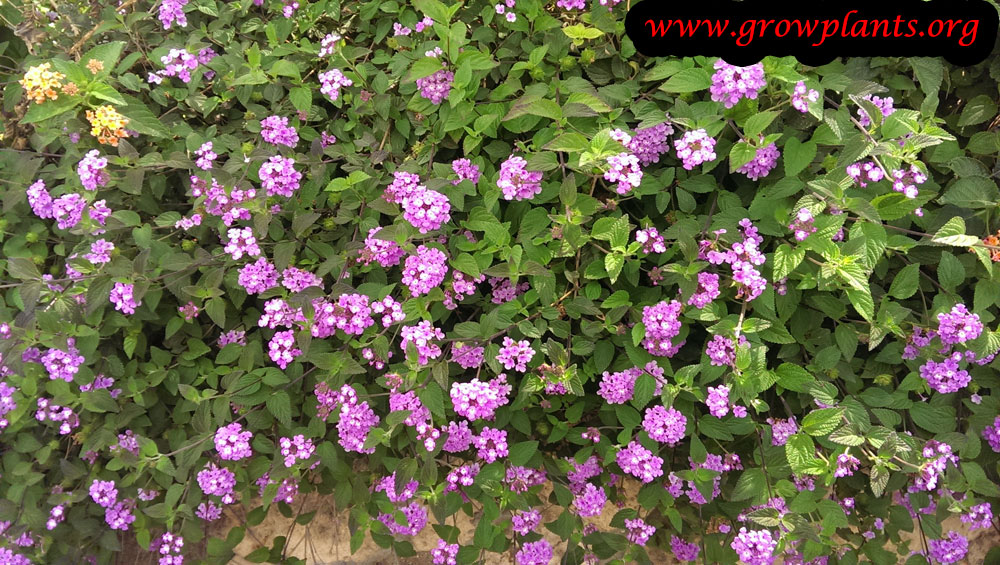
Overview: A fast-growing, trailing evergreen subshrub only 20-50 cm (8-20 in) tall but spreading widely, briefly deciduous under frost. Grown as an ornamental groundcover for its constant purple-and-white flower clusters that draw butterflies.
Quick Specifications
| Specification | Attribute |
|---|---|
| Plant Type / Life Cycle | Evergreen perennial (trailing subshrub; annual in cold climates) |
| Foliage Type | Evergreen (deciduous under frost) |
| Mature Size | 20-50 cm (8-20 in) tall, spreading well beyond that |
| Growth Rate | Fast |
| Toxicity | Toxic — the berries and foliage are poisonous to people and livestock |
| Hardiness | USDA zone 5 and up (evergreen only where frost-free; grown as an annual where winters are cold) |
Growth Form & Structure
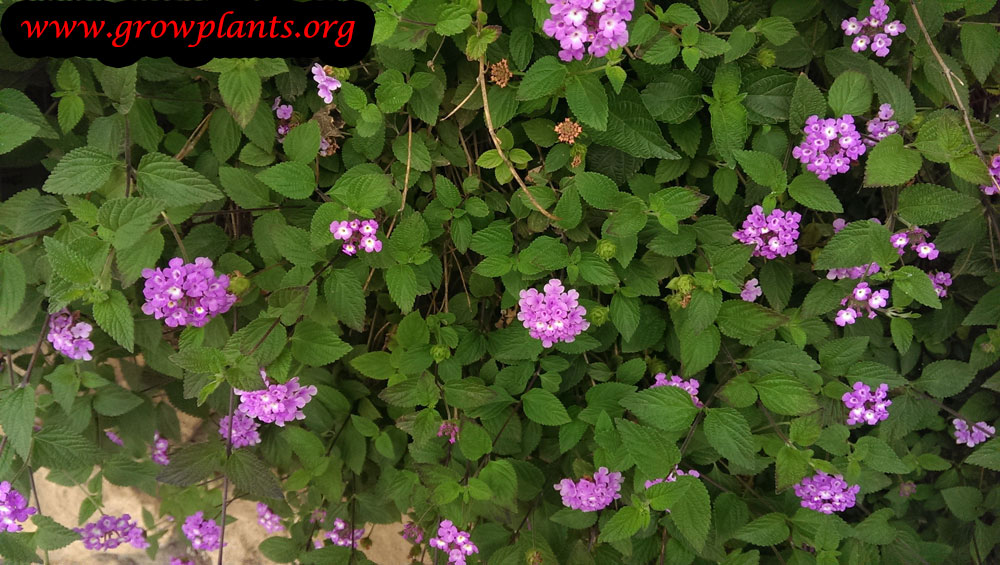
- Height & Spread: Low and trailing, 20-50 cm (8-20 in) high but spreading to cover ground or cascade; superb spilling over walls, banks and container edges.
- Growth Habit & Form: Prostrate, creeping subshrub with long, prickly, wiry stems that root as they run.
- Lifespan & Maturity: Long-lived woody perennial reaching full spread quickly and flowering almost year-round in warm climates.
Anatomy & Physical Features
- Leaves & Foliage: Green, elliptic leaves 2-4 cm long with a rough, aromatic surface that is unpleasant to touch; the stems carry small thorns.
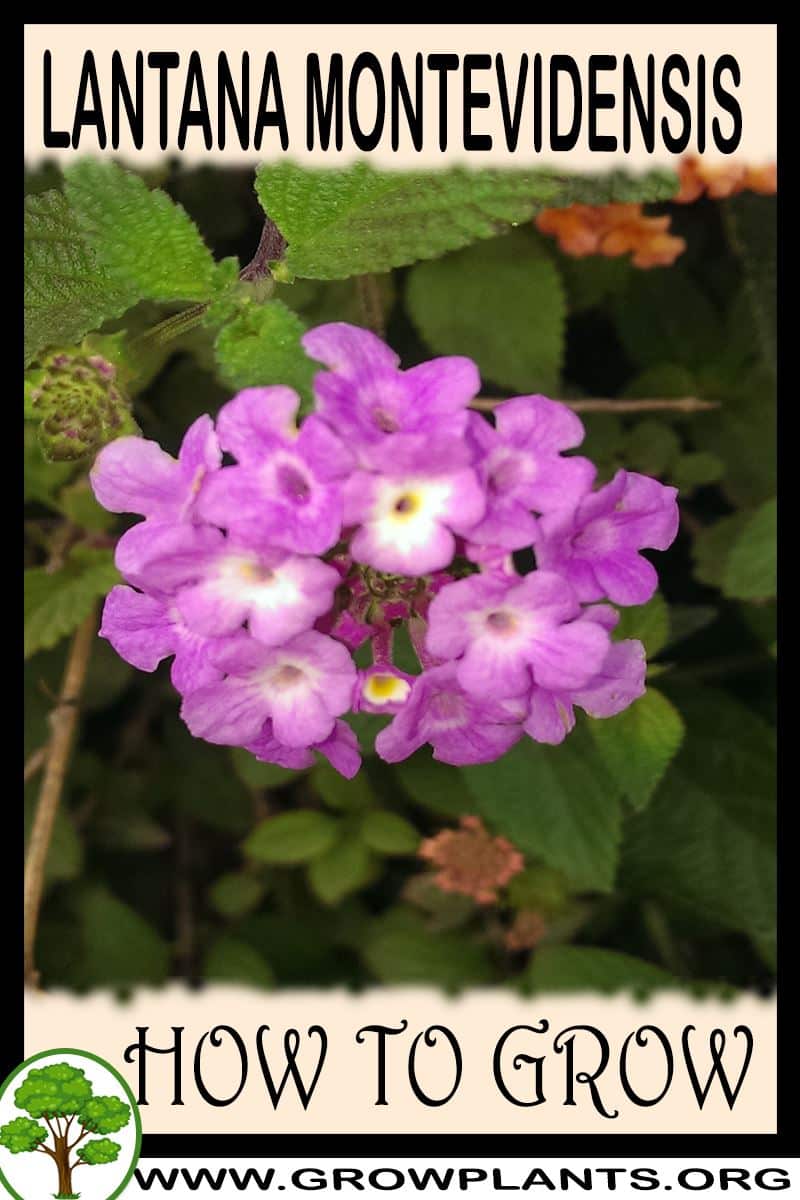
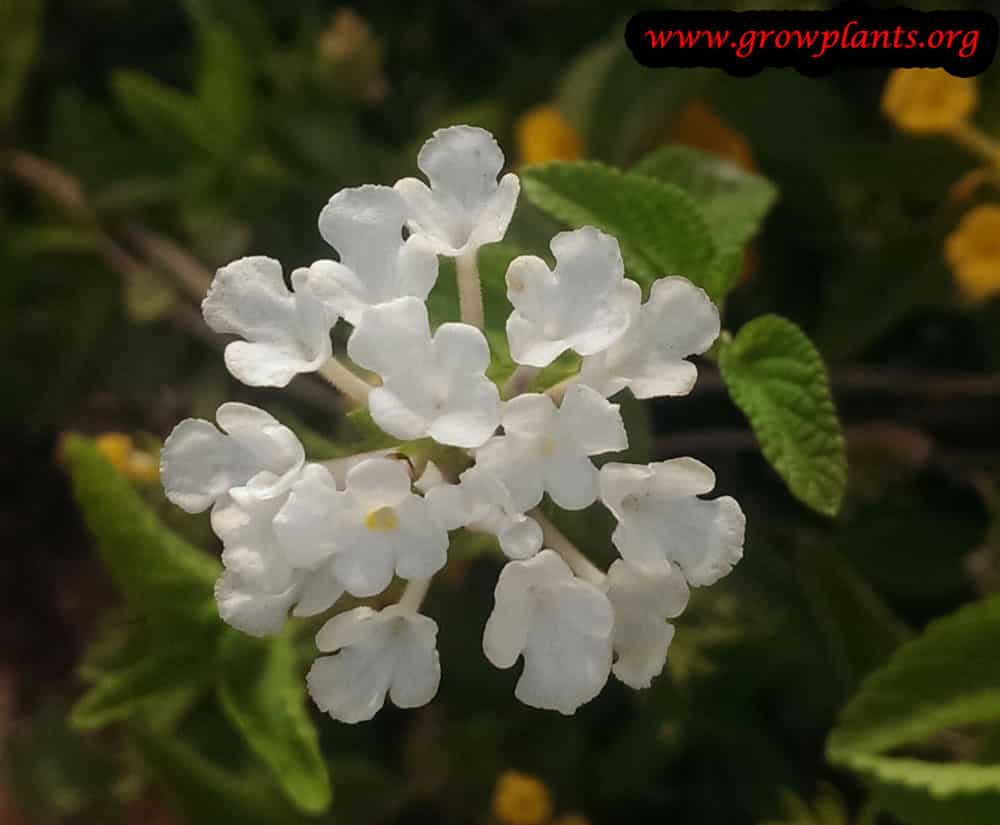
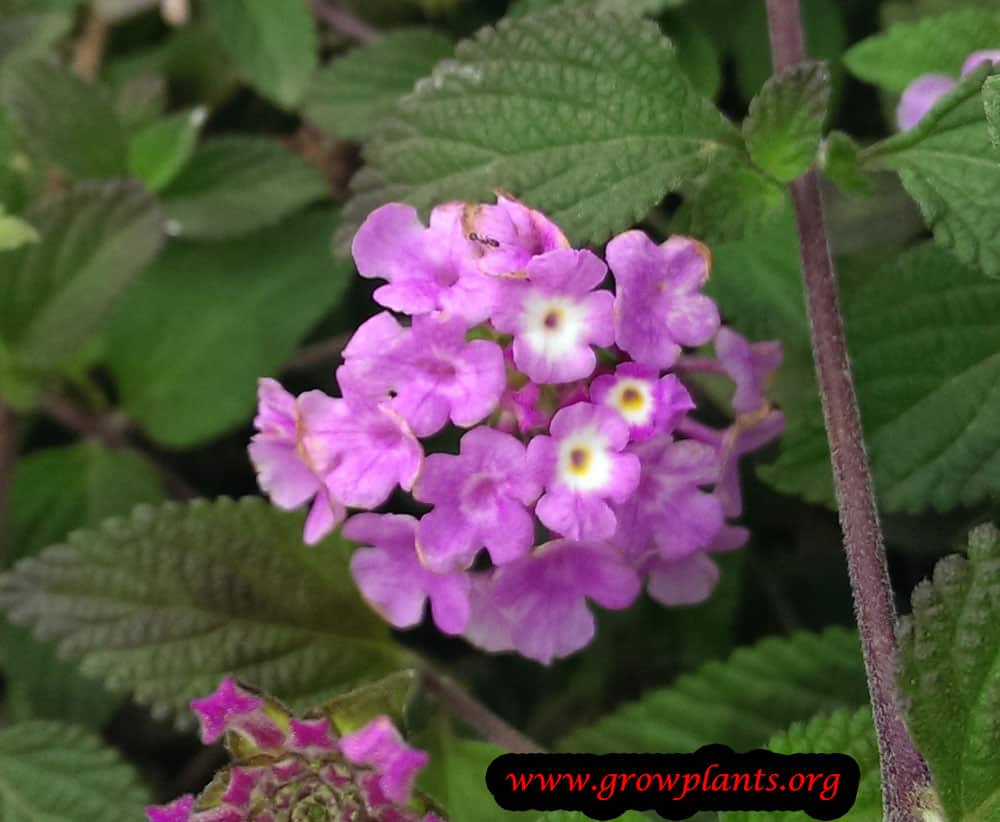
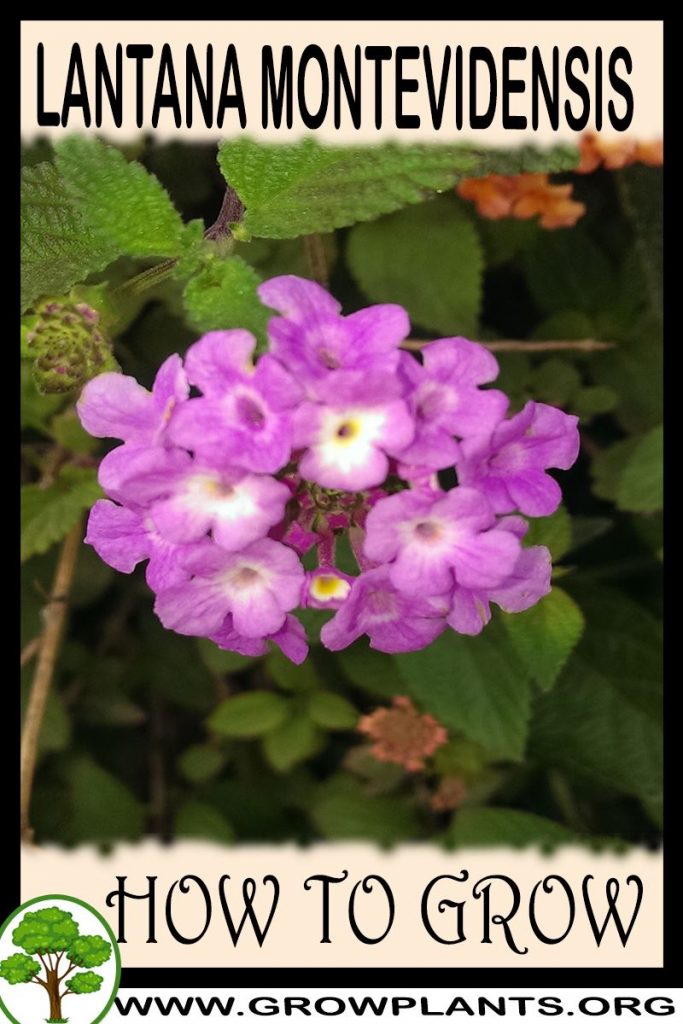
- Flower Characteristics: Rounded clusters of purple or white flowers, each with a small yellow-white eye; nectar-rich and attractive to butterflies.
Primary Uses & Landscape Value
- Functional & Ornamental Roles: Trailing groundcover, bank and wall cover, hanging-basket and container spiller and butterfly plant. Classed as invasive in many warm regions.
Care Guide: Planting, Soil & Watering
Overview: Trailing lantana is a fast, spreading evergreen for warm climates (zone 5+) that flowers continuously in full sun to half shade and is very heat- and drought-tolerant. Undemanding about soil, it cascades well over walls and in baskets.
Quick Care Requirements
| Requirement | Ideal Condition |
|---|---|
| Planting Season | Spring to summer in cool climates; year-round in hot climates |
| Growth Rate | Fast |
| Soil Type | Ordinary, well-draining (undemanding) |
| Water Need | Low to moderate; let the soil dry between waterings |
Planting & Establishment
- Best Planting Season: Plant in spring or summer in cooler climates, or at any time of year in hot ones; it establishes fast in warmth.
- How to Plant:
- Hole Preparation: Dig a hole a little wider than the root ball in free-draining soil.
- Soil Amendments: It needs nothing special – a little compost helps it start, but it thrives even in poor soil.
- Planting Depth: Set the root ball level with the surface and firm gently.
- Growth Speed & Expectations: A fast, spreading grower staying low at about 20-50 cm but trailing widely as a ground cover or basket plant; it can be invasive, so trim to control it.
Soil, Watering & Drainage Care
- Soil Mix & Drainage Needs: Tolerates most well-drained soils; excellent in containers and hanging baskets where it can cascade.
- Watering Schedule & Technique:
- Young / Newly Planted: Water regularly through the first season to establish.
- Established: Drought-tolerant once established – water occasionally and let the soil dry out between waterings.
- Seasonal Adjustments: A little extra in prolonged heat; very little in cool weather.
Climate, Light & Hardiness
Trailing lantana (Lantana montevidensis) is a heat- and sun-loving evergreen groundcover/subshrub for tropical to temperate climates, excellent for hot, dry banks and coastal sites. Its foliage is frost-tender and becomes deciduous in frost, dying back and regrowing from the roots where winters are mild and grown as an annual where they are cold.
Quick Climate Specifications
| Climate Zones | Tropical, subtropical, Mediterranean, and temperate |
| USDA Hardiness Zones | Site lists zone 5 upward; foliage frost-tender, root-hardy only in milder zones |
| Optimal Temp Range | Warm, approximately 20–30 °C (68–86 °F) |
| Cold Damage Begins | Foliage damaged by light frost, around 0 to −2 °C (32 to 28 °F) |
| Approx. Survival Minimum | Top growth killed by frost; established roots may survive brief cold in milder zones |
| Frost Tolerance | Low |
| Light Conditions | Full sun (part shade tolerated) |
| Wind Tolerance | Moderate to high |
| Salt / Coastal Tolerance | Moderate to high |
Sunlight & Light Exposure
Optimal Light Setup
Full sun gives the most compact growth and heaviest, longest flowering. It also grows in part shade, but blooming thins noticeably and growth becomes looser with less than about six hours of direct sun.
Direct Sun Requirement
Yes - a genuine sun lover that thrives in bright, hot, exposed positions, including reflected heat from walls and paving where many plants struggle.
Best Exposure & Orientation
A hot, open, south- or west-facing aspect is ideal, including tough roadside, courtyard, and coastal sites.
Temperature Extremes & Hardiness
USDA Hardiness & Regional Limits
The site's data lists Lantana montevidensis from about USDA zone 5 upward, and this established value is retained here. In practice its top growth is frost-sensitive: it is reliably root-hardy only in milder zones, where it dies back in frost and resprouts in spring, while in cold-winter areas it is grown as an annual or a container plant brought under cover. Cold tolerance varies by cultivar, plant age, exposure duration, and conditions.
Cold Damage & Winter Protection
Light frost (around 0 to −2 °C / 32 to 28 °F) blackens the foliage and it becomes deciduous. Where winters are mild, an established plant is cut to the ground by frost and regrows from the roots, helped by a heavy winter mulch over the crown; in colder areas it is treated as an annual or overwintered frost-free.
Frost Sensitivity
Low - the top growth does not withstand hard frost. Young plants are markedly more cold-sensitive than established, well-rooted specimens, and hardiness differs between cultivars.
Extreme Heat Tolerance
Very high - one of its great strengths. It flowers through intense summer heat and copes with hot, dry, reflected-heat sites that scorch less-tough plants.
Wind, Humidity & Microclimate
Humidity Preferences
Adaptable across a wide range of humidity, from arid to humid subtropical climates, provided it has heat and sun.
Dry-Air Tolerance
High - thoroughly at home in hot, dry air, which makes it a mainstay of low-humidity and desert-edge planting.
Wind Tolerance
Moderate to high - the wiry, woody stems stand up well to wind, suiting exposed and sprawling groundcover sites.
Coastal / Salt Tolerance
Moderate to high - a well-known choice for coastal gardens, tolerant of salt spray and seaside exposure. Tolerance of salt spray is separate from tolerance of saline irrigation water or saline soil.
Microclimate Recommendations
Best in the warmest, sunniest, most heat-banked spots - against a south-facing wall, in reflected heat, or on a sunny slope - which also improves winter survival at the cold edge of its range. Container plants can be moved to shelter or under cover for winter, but their root-zones freeze faster than open ground. Its low, trailing habit leaves the crown a little more exposed, so mulch it well at the cold edge of its range.
Growing in Pots, Balconies & Indoors
Lantana montevidensis is a sun-loving flowering shrub rather than a houseplant, but it makes a superb container plant for a hot, sunny balcony or patio, flowering for months. In cold-winter climates a pot lets you move it under cover to overwinter.
Quick Details
- Container Size: About 12-20 L (3-5 gal) for this low, spreading type (general guidance – the grower confirms container growing but gave no size)
- Indoor Suitability: Not a houseplant – it needs strong light and airflow; grow it outdoors and, at most, bring it in only to overwinter
- Best Spot: Full sun to light/half shade – the hotter and brighter, the more it flowers
- Soil & Drainage: Free-draining mix; it is drought-tolerant and dislikes wet feet
- Watering in Pots: Low to moderate – let the top of the mix dry between waterings; pots dry faster than open ground
Indoors & On the Windowsill
- Not a houseplant: The grower does not grow it indoors – it wants full sun and good airflow, which a room rarely provides, and it tends to grow leggy and pest-prone inside.
- Overwintering indoors: Lantana is frost-tender, so in cold climates the main reason to pot it is to shelter it over winter – keep it in the brightest, coolest frost-free spot and water sparingly until growth resumes; a hard prune before bringing it in keeps it compact.
On a Balcony or Patio
- Light & wind: Give it the sunniest spot; it shrugs off reflected heat from walls and railings. Pots dry quickly in that heat, so check moisture in warm spells – though it would rather be a little dry than soggy.
- Practicalities: This is a trailing, spreading type that looks lovely cascading over a railing or from a hanging pot; make sure water can always drain away freely.
Choosing the Pot, Soil & Long-Term Care
- Pot & drainage: A container with strong drainage holes; skip a standing-water saucer to avoid root rot. Terracotta breathes and dries fast, which suits this drought-tolerant shrub; glazed or plastic holds moisture longer.
- Potting mix: A well-aerated, free-draining mix – potting mix with added perlite or grit.
- Feeding: Feed lightly through the growing season; potted plants need feeding more often as watering leaches nutrients, but too much feed gives leaves at the expense of flowers.
- Repotting: Refresh the mix or pot up about every couple of years, with a light root and top prune to keep it vigorous and shapely.
Safety: All parts of lantana – especially the unripe berries – are toxic if eaten, and the foliage can irritate skin. Keep it away from children and pets, and wash your hands after pruning.
Growing this plant in a greenhouse
A greenhouse can give lantana montevidensis frost protection and cold protection. In the right climate it may also be kept growing through winter, depending on how much warmth and light are provided.
Greenhouse at a glance
| Greenhouse suitability | Conditional - depends on your climate |
|---|---|
| Main benefits | frost protection, cold protection |
| Season extension | earlier spring & later autumn |
| Outdoor protection advisable below | about 5°C |
| Maintain greenhouse minimum | around 5°C for active growth |
| Suitable types | unheated greenhouse, polycarbonate greenhouse, lean-to |
| Heating | Heating is optional - useful mainly for winter growing in cold areas. |
Related greenhouse guides
- Greenhouses: How to Choose the Right Greenhouse
- Best Lean-To Greenhouses
- Polycarbonate Greenhouses: What to Look for Before Buying
Fertilizing & Feeding
Lantana is a moderate feeder that flowers best on balanced nutrition. Steady, moderate feeding through the warm season keeps it blooming, while excess nitrogen produces leaves at the expense of flowers.
Quick Fertilizing Specs
| Feeding Level | Moderate – a steady but not heavy feeder |
|---|---|
| Main Nutrient Priority | Balanced nutrition with adequate nitrogen; no high-phosphorus bloom booster needed |
| Best Feeding Period | From spring through the warm flowering season |
| Reduce/Stop Feeding | Stop feeding in winter dormancy |
| Soil pH | Adaptable; tolerates a wide range but prefers well-drained soil |
| Organic Options | Compost or a balanced organic fertilizer worked in at planting |
Feeding by Growth Stage
Spring growth flush
Fuel healthy new shoots and foliage as the plant breaks from winter and starts into growth.
| Nutrient direction | A balanced complete fertilizer with adequate nitrogen to build the framework of leaves and stems. |
|---|---|
| Timing | In spring as new growth begins. |
| Frequency | Begin light, regular feeding as growth picks up through spring. |
| Fertilizer types | A balanced granular or controlled-release fertilizer, A dilute balanced liquid feed for container plants |
| Precautions | Avoid heavy nitrogen, which drives leafy growth at the expense of flowers; feed moderately. |
Flowering
Sustain continuous flowering through the warm season on this long-blooming plant.
| Nutrient direction | A balanced fertilizer with steady, moderate nitrogen sustains both foliage and continuous bloom; high-phosphorus bloom products are not needed. |
|---|---|
| Timing | Through the main flowering period in the warm months. |
| Frequency | Feed regularly but moderately across the blooming period. |
| Fertilizer types | A balanced complete fertilizer, Diluted balanced liquid feed for containers |
| Precautions | Do not rely on high-phosphorus bloom boosters; too much nitrogen also reduces flowering, so keep it balanced. |
Winter dormancy or rest
Allow the plant to rest through winter, when growth slows or it becomes deciduous in frost.
| Nutrient direction | None – withhold fertilizer while the plant is dormant. |
|---|---|
| Timing | In winter, when growth stops or the plant drops leaves in frost. |
| Frequency | No feeding at this stage. |
| Fertilizer types | No feeding at this stage – do not fertilize until growth resumes in spring. |
| Precautions | Do not fertilize during dormancy; withhold feeding until active growth returns in spring. |
Nutrient Deficiency Signs & Corrections
Yellowing between the veins while the veins stay green.
| Possible causes | Iron or manganese shortage, often induced by high soil pH, Waterlogged or cold soil limiting root uptake |
|---|---|
| Appears first on | Youngest leaves at the shoot tips. |
| What to check | Soil pH and drainage, Root health and recent watering |
| Possible correction | Correct soil pH and drainage; if needed apply a chelated iron or micronutrient product per its label. |
Vigorous leafy growth but few flowers.
| Possible causes | Excess nitrogen from over-feeding, Too little direct light |
|---|---|
| Appears first on | Whole plant, most obvious at the shoot tips. |
| What to check | Fertilizer type and nitrogen level, Amount of direct sun the plant receives |
| Possible correction | Ease off nitrogen, switch to a balanced feed, and ensure full sun. |
Overall pale, yellow-green foliage with weak growth.
| Possible causes | General nitrogen shortage in poor soil, Leaching from heavy watering or rain |
|---|---|
| Appears first on | Older, lower leaves first. |
| What to check | Recent feeding history, Soil quality and organic matter |
| Possible correction | Resume balanced feeding and add organic matter to the soil. |
Pruning, Training & Seasonal Maintenance
Trailing lantana is a low, spreading groundcover, not a shrub with a framework to build – pruning here is really about keeping the mat dense, tidy and within bounds rather than shaping a structure. It tolerates cutting back at almost any time of year, and because it flowers on new growth, a trim simply renews the display rather than costing you bloom. The main risk with this fast, aggressive spreader is bare, woody centres and encroachment into lawn or neighbouring beds if it is never cut back.
Quick Pruning & Maintenance Specs
| Pruning Tolerance | High |
| Primary Pruning Window | All year (shear/trim as needed) |
| Secondary Maintenance Window | — |
| Typical Frequency | Every few weeks to a couple of months during active growth |
| Main Objective | Contain spread, refresh flowering, prevent a bare woody centre |
| Young Plant Priority | Pinch runners to encourage a dense mat |
| Mature Plant Priority | Periodic shear-back to renew growth and stop it invading neighbouring areas |
| Best Tool Type | Hand shears or hedge shears for mass plantings; precision snips for containers |
| Avoid Heavy Pruning During | Peak bloom flush if display is wanted; hard frost |
Pruning by Plant Age & Size
Newly Established
Pinch the growing tips of young runners to encourage branching and a dense mat before the plant is left to spread on its own.
Young / Formative
No structural training applies to this trailing habit; instead, pinch/trim regularly so the plant fills in evenly rather than sending a few long runners out ahead of the rest.
Mature / Established
Once established as a mat or bank cover, shear back periodically (whole-plant, not selective branch work) to remove old woody runners, keep the mat low and dense, and stop it creeping into lawn, paths or neighbouring plantings – consistent with its noted aggressive, spreading habit.
Seasonal Pruning Schedule
Ongoing Sanitary
Objective: keep the mat dense and flowering. Remove: old woody runners, spent flower clusters, and any growth spreading beyond the intended area. Do not remove: the whole planting at once – work in sections so some flowering cover remains. Expected response: fresh low growth and renewed bloom within a few weeks. Flowering impact: positive, since flowers form on the new growth this stimulates.
Flowering & Fruiting Wood
Flowers are produced on current-season growth, so trimming at almost any time simply forces a fresh flush rather than removing next season’s buds – this is why the plant can be sheared back year-round without a real flowering penalty.
Structural Pruning & Training
No formal training system applies to this ground-hugging, trailing habit; management is limited to periodic shearing/renewal to keep the mat dense and to control how far it spreads.
Special Growth to Remove
Old, woody runners that have stopped producing leafy new growth; spent flower clusters; any stems rooting/spreading well beyond the intended planting area.
Container & Small-Space Pruning
In hanging baskets or containers, pinch and lightly trim regularly to keep trailing stems in proportion to the pot rather than letting them run bare and leggy; cut back by up to half if the planting becomes sparse in the middle, and expect it to fill back in quickly.
Tools
For mass ground-cover plantings, hedge shears make quick work of a whole-bed shear-back; for containers or spot-trimming, precision snips give cleaner, more selective cuts on individual runners.
Tool Hygiene & Disease Risk
Routine – clean, sharp tools are sufficient; no specific transmissible pathogen is noted for this plant.
Cut Placement & Technique
Cut runners back to just above a node with visible leaves so regrowth resumes quickly; for a mass shear-back, an even, level cut across the planting encourages uniform regrowth.
Heavy Pruning & Rejuvenation
Tolerated well: an overgrown, woody planting can be cut back hard (to a few centimetres of the base) at almost any point in the growing season, and will regenerate into a dense mat within weeks.
Post-Pruning Care
Water as normal after a hard shear-back to support regrowth; extra feeding is not needed since the cut alone is enough to push fresh growth. Watch new growth for aphids, the pest noted for this plant.
Common Pruning Mistakes
Never cutting back at all, which leaves a woody, bare-centred mat with flowers only at the growing tips; shearing only the top surface repeatedly instead of occasionally cutting hard into old wood; letting runners root into neighbouring beds or lawn before trimming them back.
When NOT to Prune
Avoid a full shear-back right before an expected hard frost in marginal climates, since it forces tender new growth that is then more exposed to cold damage.
Recommended Tools (by task)
- Mass ground-cover bed, periodic shear-back → hedge_shears – efficient for cutting an entire spreading mat back evenly.
- Container or hanging basket, spot pinching/trimming → precision_snips – selective, clean cuts on individual trailing stems.
Propagation Guide
Trailing lantana is usually propagated from stem cuttings, which root quickly and keep the trailing habit and flower color true; it also grows readily from seed. Because its trailing stems root naturally where they touch moist soil, sections can be layered in place as well. Difficulty is easy by any of these methods.
Quick Propagation Specs
| Best Propagation Method | Stem cuttings |
| Alternative Methods | Seed; ground layering of trailing stems |
| Propagation Difficulty | Easy |
| Seed True-to-Type | Variable |
| Vegetative True-to-Type | Yes |
| Best Propagation Season | Spring–summer in cold climates; all year in hot climates |
Growing from Seed
Seed Handling & Viability
Seed comes from the plant’s poisonous berries; wear gloves and clean the fleshy pulp off seed before sowing.
Dormancy & Pre-Sowing Treatment
The seed coat is fairly impermeable; scarifying or soaking seed can speed and even out germination.
Sowing Season
Spring to summer in cold climates; all year where winters are warm.
Germination Time
Often slow and uneven, typically taking several weeks.
Stem Cuttings
Cutting Type
Tip cuttings taken from the trailing stems.
Best Timing
During the warm growing season, spring through summer.
Rooting Hormone
Optional; may improve rooting consistency.
Rooting Time
Usually roots within a few weeks under warm, humid conditions.
Air & Ground Layering
As a naturally trailing, creeping plant, stems that stay in contact with moist soil will root on their own at the nodes. Pinning a low stem section to the soil speeds this along, and the newly rooted section can be cut free from the parent plant once it’s established.
Bloom & Flower Guide
Quick Details
- Bloom Season: Nearly year-round in warm climates; spring through autumn where winters are cool
- Time to First Bloom: Within the first season; young plants flower quickly and keep going
- Flower Appearance: Small flowers packed into rounded clusters, in purple or white, with a small yellow-and-white eye in the centre of the cluster
- Edibility: None. Lantana is toxic (the unripe berries and foliage are poisonous), so the flowers must not be eaten
Detailed Blooming Overview
Lantana is a tough, sun-loving shrub grown for its long, non-stop display of nectar-rich flower clusters that are a magnet for butterflies and other pollinators. In warm climates it can bloom almost all year; where winters are cool it flowers from spring into autumn and may drop its leaves in frost. It flowers freely on very little care once established.
Flower Characteristics
- Tiny tubular florets in rounded clusters, purple or white with a pale yellow eye at the centre
- Rounded clusters open from the outside in, so colours often shift as they age
- Strongly attractive to butterflies and other pollinators
Bloom Care & Thinning
- Keeping it flowering: Full sun and light trimming of spent clusters keep the flushes coming; it is drought-tolerant once established.
- Safety: All parts, and especially the green unripe berries, are poisonous if eaten; the foliage can irritate skin, so wear gloves and keep it away from children and pets. Note it can be invasive in mild climates.
Bloom Health & Protection
- Aphids: Cluster on buds and soft new growth; a jet of water or insecticidal soap keeps them down.
- Lantana lace bug: Feeds on the foliage and can reduce flowering vigour; keeping plants healthy and treating with insecticidal soap or neem oil helps.
Pests, Diseases & Troubleshooting
Overview: Lantana are tough, sun-loving verbena-family shrubs that are largely resistant to serious problems in the open garden, but in still, humid air or under glass they draw sap-sucking insects – whitefly above all – and can develop foliar fungal issues. Manage culturally first: full sun, good airflow and restrained watering prevent most trouble before any spray is needed.
Quick Troubleshooting Overview
| Issue / Pest | Main Symptom | Primary Solution |
|---|---|---|
| Whitefly | Clouds of tiny white flies lift off when foliage is disturbed; sticky leaves and black sooty mold | Yellow sticky traps, hose off, insecticidal soap or neem on leaf undersides |
| Lantana lace bug | Upper leaves stippled, bleached and bronzed; dark tar-like specks beneath | Encourage predators; spray undersides with insecticidal soap/neem |
| Spider mites | Fine pale speckling and webbing in hot, dry conditions | Raise humidity, hose foliage, apply horticultural oil |
| Powdery mildew | White powdery film on leaves in shade or crowding | Improve airflow, move to full sun, sulfur or potassium-bicarbonate spray |
| Root/collar rot | Wilting despite moist soil; blackened stem base and roots | Improve drainage, water less, remove affected plants |
| Poor bloom / legginess | Sparse flowers and stretched stems | Move to full sun and trim to promote branching |
Common Pests & Management
- Whitefly (Trialeurodes vaporariorum / Bemisia tabaci):
- Symptoms: Tiny white moth-like insects clustered on leaf undersides that fly up in a cloud when touched; honeydew makes foliage sticky and encourages black sooty mold. Worst under glass and in sheltered plantings.
- Prevention & Control: Hang yellow sticky traps to monitor and reduce adults; blast colonies off with water; conserve parasitic wasps and lacewings. If populations persist, treat leaf undersides thoroughly with insecticidal soap or neem/horticultural oil, repeating every 5–7 days to catch newly hatched nymphs.
- Lantana lace bug (Teleonemia scrupulosa):
- Symptoms: Small lacy-winged bugs and their spiny black nymphs feed on leaf undersides, leaving upper surfaces finely stippled, bleached then bronzed, with dark varnish-like frass beneath. Heavy attacks cause leaf drop and stop flowering.
- Prevention & Control: Keep plants vigorous and well spaced; tolerate light damage as predators build up. For active infestations coat leaf undersides with insecticidal soap or neem, repeating to reach successive generations; remove badly damaged growth.
- Spider mites (Tetranychus urticae):
- Symptoms: Fine yellow speckling and a dull bronze cast, with delicate webbing on shoot tips and leaf undersides in hot, dry, dusty conditions.
- Prevention & Control: Raise humidity and hose down foliage regularly to disrupt them; avoid drought stress. Apply horticultural oil or insecticidal soap to leaf undersides; introduce predatory mites under glass.
- Aphids (Aphis gossypii and related spp.):
- Symptoms: Soft green, yellow or black insects clustered on new shoots and buds, causing distortion, honeydew and sooty mold.
- Prevention & Control: Squash or hose off small colonies; encourage ladybirds, hoverflies and lacewings. Insecticidal soap or neem clears heavier outbreaks; avoid excess nitrogen that fuels soft, aphid-prone growth.
- Mealybugs (Planococcus citri):
- Symptoms: White cottony tufts in leaf axils and on stems, with sticky honeydew and sooty mold; common on container and indoor plants.
- Prevention & Control: Dab colonies with an alcohol-moistened swab; wash off with soapy water. Treat repeatedly with neem or horticultural oil, and isolate new plants to avoid introducing them.
Diseases & Fungal Issues
- Powdery mildew (Erysiphe / Oidium spp.):
- Symptoms: White powdery coating on leaves and stems, usually where air is stagnant, humidity high or light poor; leaves may yellow and drop.
- Treatment & Management: Space and prune for airflow, grow in full sun, and avoid wetting foliage late in the day. Treat with sulfur, potassium bicarbonate or a horticultural-oil spray at first signs.
- Botrytis (gray mold) (Botrytis cinerea):
- Symptoms: Fuzzy grey-brown mold on spent flowers and soft growth in cool, damp, crowded conditions.
- Treatment & Management: Remove faded flowers and debris, improve ventilation and reduce overhead watering; apply a suitable fungicide only if it persists.
- Root and collar rot (Phytophthora / Rhizoctonia spp.):
- Symptoms: Wilting, yellowing and collapse despite moist soil; stem base and roots turn brown and mushy in waterlogged ground.
- Treatment & Management: Prevention is key – plant in free-draining soil, avoid overwatering and never mulch against the stem. Remove and destroy badly affected plants; drench survivors with an appropriate fungicide.
- Sooty mold (Capnodium spp.):
- Symptoms: Black soot-like film coating leaves, always a secondary problem growing on the honeydew of whitefly, aphids or mealybugs.
- Treatment & Management: Control the sap-sucking pest producing the honeydew and the mold weathers away; wipe or wash leaves to restore light capture.
Growing Difficulties & Abiotic Problems
- Iron chlorosis:
- Cause & Symptoms: Yellowing leaves with green veins on alkaline or waterlogged soils where iron uptake is blocked.
- Correction Strategy: Improve drainage, avoid over-liming, and apply chelated iron; acidify the root zone where soils are chalky.
- Frost and cold damage:
- Cause & Symptoms: Blackened, collapsed shoots after cold snaps; lantana is frost-tender and may die back to the base.
- Correction Strategy: Protect or overwinter under cover in cold areas; delay cutting back damaged growth until frost risk passes, then trim to live wood.
- Poor flowering in shade:
- Cause & Symptoms: Sparse blooms and lush leafy growth where light is insufficient or nitrogen excessive.
- Correction Strategy: Grow in full sun, use a lower-nitrogen high-potassium feed, and deadhead or lightly trim to keep flushes coming.
- Overwatering yellowing:
- Cause & Symptoms: General yellowing and leaf drop in soggy soil; lantana resents wet feet.
- Correction Strategy: Let the soil dry between waterings, improve drainage and lift back from saucers of standing water.
What Helps – Products & Tools
For lantana the useful toolkit is insecticidal soap and neem or light horticultural oil for whitefly, lace bug, mites, aphids and mealybugs; yellow sticky traps for monitoring whitefly; and sulfur or potassium-bicarbonate fungicide for powdery mildew. Keep an iron chelate on hand for chlorosis on limy soils. Apply oils in the cool of evening to protect pollinators and avoid leaf scorch, and always follow the label.
Frequently Asked Questions
What color are the flowers of Lantana montevidensis?
Lantana montevidensis blooms in purple or white. Each small flower sits in a rounded cluster with a little yellow-white eye at the center, and flowering is nearly continuous in warm climates.
What is Lantana montevidensis?
Lantana montevidensis, also called trailing lantana, is a low, spreading evergreen grown as ground cover, prized for its constant purple or white flower clusters that attract butterflies.
Is Lantana montevidensis poisonous?
Yes. The berries and foliage of Lantana montevidensis are toxic to people and livestock, and the foliage can irritate skin, so keep it away from children and pets and wash your hands after handling or pruning it.
Does Lantana montevidensis spread aggressively, and how do you keep it under control?
Yes — it is a fast, creeping subshrub whose stems root as they run, and it is classed as invasive in many warm regions. Shear it back periodically to keep the mat low and dense and to stop it creeping into lawns, paths or neighboring plantings.
Can Lantana montevidensis be grown in containers or hanging baskets?
Yes — it makes a superb container plant for a hot, sunny balcony or patio, flowering for months, and its trailing habit suits hanging baskets. Use about 12-20 L (3-5 gal) of free-draining mix; it is not suited as an indoor houseplant since it needs full sun and good airflow that a room rarely provides.