Plant Profile & Key Characteristics
Overview: A vigorous herbaceous climber 0.5–4 m tall, grown for its edible tubers and leaves and also used ornamentally. It is a perennial (often grown as an annual) that needs support and moist soil.
Quick Specifications
| Specification | Attribute |
|---|---|
| Plant Type / Life Cycle | Perennial, often grown as an annual |
| Foliage Type | Evergreen where frost-free; herbaceous |
| Mature Size | 0.5–4 m H (1.6–13 ft), climbing |
| Growth Rate | Moderate to fast |
| Root System | Tuberous (produces edible tubers) |
| Toxicity | Non-toxic / edible (tubers and leaves) |
| Hardiness | USDA zones 8–10a |
Growth Form & Structure
- Height & Spread: Climbs 0.5–4 m on supports; also grows in planters and containers.
- Growth Habit & Form: Twining, herbaceous climbing vine; needs trellising.
- Lifespan & Maturity: Tubers lifted for harvest in autumn to winter; propagated true-to-type from tubers.
Anatomy & Physical Features
- Leaves & Foliage: Round, plate-like green leaves with small lobes, edible.
- Flower Characteristics: Spurred flowers in orange, red or yellow, sometimes multicoloured (full detail in the Bloom accordion).
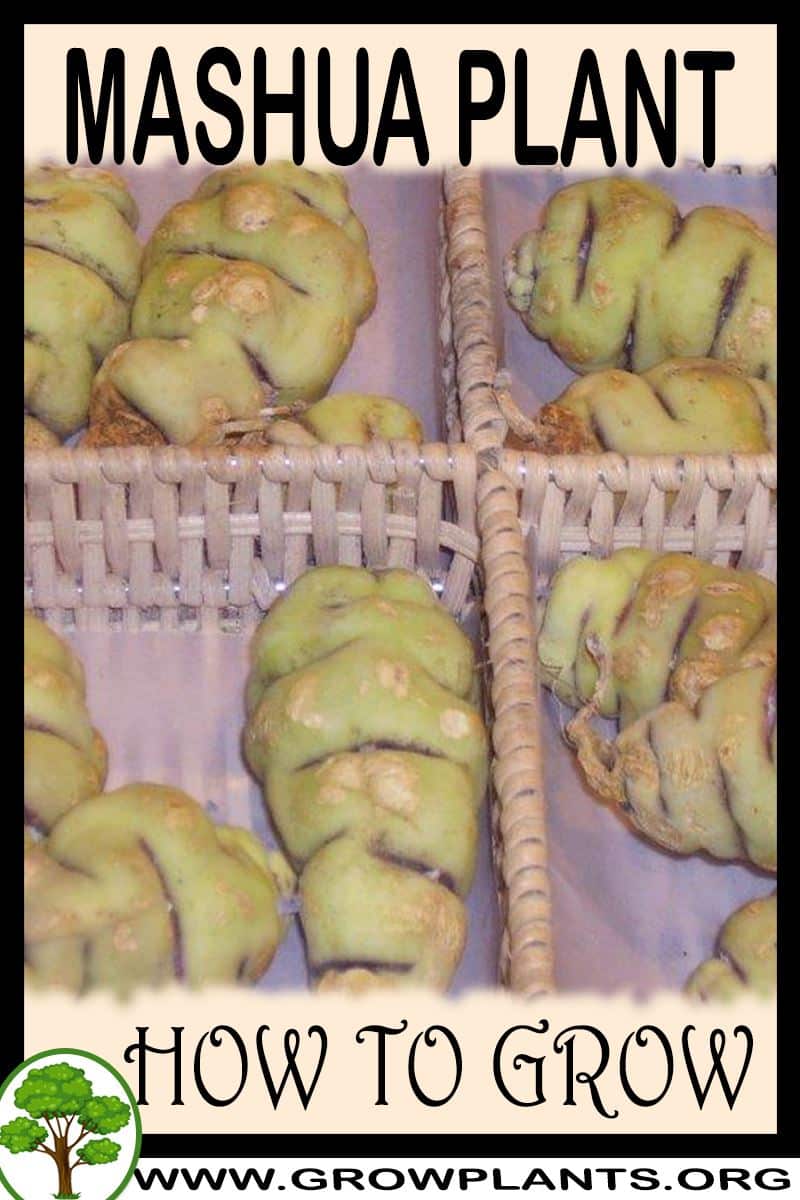
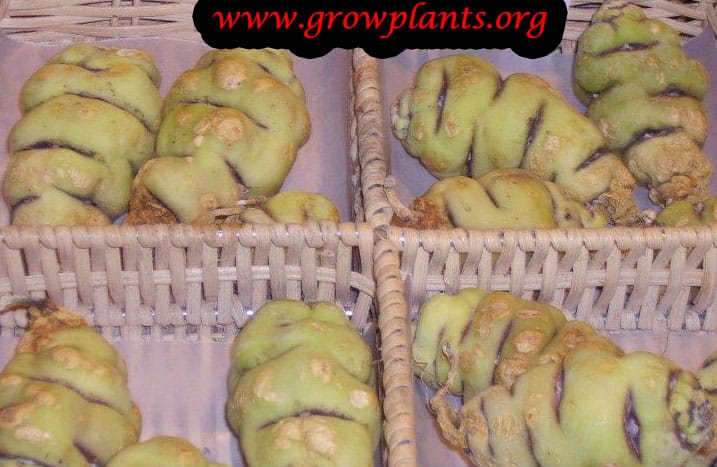
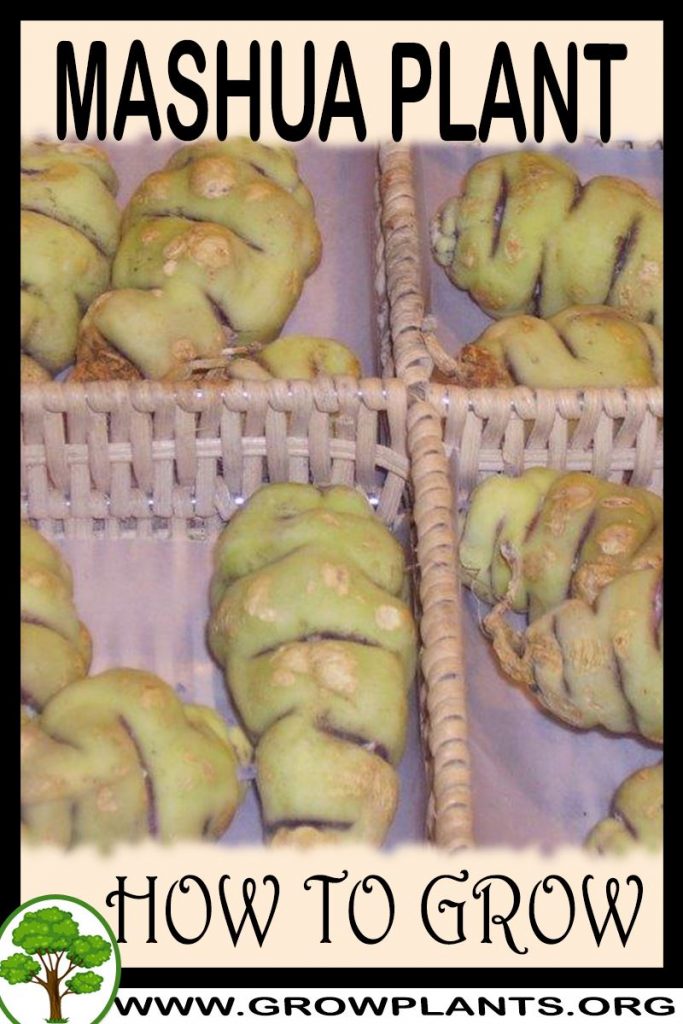
- Fruit Profile: Underground tubers with white flesh and red, white, brown, yellow, green, orange or purple striped skin (full detail in the edible-tuber accordion).
Primary Uses & Landscape Value
- Edible Uses: Tubers cooked or eaten raw; young leaves eaten raw, in salad or stir-fried.
- Functional & Ornamental Roles: Edible tuber crop and ornamental climber for fences and trellises.
Care Guide: Planting, Soil & Watering
Overview: Mashua is a vigorous tuberous climber that grows in full sun and cool, moist, well-worked soil. Give it a trellis to scramble up and steady moisture through the growing season for the best leaf and tuber harvest.
Quick Care Requirements
| Requirement | Ideal Condition |
|---|---|
| Planting Season | Spring through autumn, once the soil is warm |
| Growth Rate | Moderate to Fast |
| Soil Type | Rich, moist, well-draining |
| Water Need | Moderate; keep the soil evenly moist |
Planting & Establishment
- Best Planting Season: Plant tubers from spring into autumn, once the ground has warmed, in a frost-free or mild spot.
- How to Plant:
- Hole Preparation: Dig a hole a few centimetres deep to seat the tuber, at the base of a support it can climb.
- Soil Amendments: Work organic matter into the bed to keep it rich and moisture-retentive.
- Planting Depth: Cover the tuber with a few centimetres of soil and provide a trellis for the climbing stems.
- Growth Speed & Expectations: A fast climber that can reach several metres in a season, so give it sturdy support early.
Soil, Watering & Drainage Care
- Soil Mix & Drainage Needs: Keep it in moisture-retentive but well-draining soil; it also grows in a large container given the same steady moisture.
- Watering Schedule & Technique:
- Young / Newly Planted: Keep the soil moist while the tuber sprouts and roots establish.
- Established: Water regularly to maintain even moisture through the growing season.
- Seasonal Adjustments: Reduce watering as the foliage dies back in autumn to winter, ahead of lifting the tubers.
Climate, Light & Hardiness
Mashua is an Andean tuberous climber for cool temperate and mild subtropical gardens, growing in full sun and hardy to roughly USDA zone 8. Its top growth is frost-tender and it dislikes prolonged heat, favouring cool, moist conditions where the tubers can survive mild winters underground.
Quick Climate Specifications
| Climate Zones | Temperate, subtropical (cool, moist) |
|---|---|
| USDA Hardiness Zones | Approximately 8–10a |
| Optimal Temp Range | Cool to mild growing conditions |
| Cold Damage Begins | Top growth damaged by frost; tubers more protected in the ground |
| Approx. Survival Minimum | Foliage killed by frost; mulched tubers may survive light winter frost in mild zones |
| Frost Tolerance | Low (foliage); tubers hardier under mulch |
| Light Conditions | Full sun |
| Wind Tolerance | Moderate (climbing stems need support) |
Sunlight & Light Exposure
Optimal Light Setup
Full sun in cool climates; light shade helps where summers run warm.
Direct Sun Requirement
Full sun supports vigour and tuber formation.
Temperature Extremes & Hardiness
USDA Hardiness & Regional Limits
Hardy to about zone 8; grown as a perennial where winters are mild, or lifted and replanted as tubers where winters are colder.
Cold Damage & Winter Protection
Frost cuts down the foliage, but a mulch protects the tubers so they resprout.
Frost Sensitivity
Moderate for the foliage; the below-ground tubers are better shielded.
Extreme Heat Tolerance
Poor - an Andean highland crop that prefers cool conditions and can struggle in hot summers.
Wind, Humidity & Microclimate
Humidity Preferences
Prefers cool, moist air.
Wind Tolerance
Give the climbing stems support in exposed sites.
Microclimate Recommendations
Cool, moist, lightly frosted microclimates suit it best.
Growing in Pots, Balconies & Indoors
Mashua (Tropaeolum tuberosum) is a vigorous climbing relative of the nasturtium, grown for its edible tubers and reaching up to 4 m on a support. It grows well in a large tub but is not a houseplant – it is too rampant for a room and prefers cool nights – so grow it outdoors on a sunny balcony or patio with a trellis to climb.
Quick Details
- Container Size: Large tub, 20-30 L or more, with a trellis or strings
- Indoor Suitability: Not indoors – a vigorous climber that needs full outdoor light and cool nights
- Best Spot: Full sun, outdoors, with sturdy support
- Soil & Drainage: Aerated, organic-rich mix with good drainage
- Watering in Pots: Keep evenly moist through growth; a pot dries faster than open ground
Indoors & On the Windowsill
- Houseplant limits: The grower marks it as not an indoor plant – it climbs vigorously, needs full sun and cool nights, and quickly outgrows any sill.
- Windowsill growing: Not suitable; grow it in a big tub outdoors with support instead.
- Overwintering: Where frost threatens, lift and store the tubers dry over winter, or move the whole pot to a frost-free spot, and replant when it warms.
On a Balcony or Patio
- Light, support & wind: A sunny balcony or patio is where this climber shines – give it a trellis, railing or strings to climb and shelter it from strong wind, which shreds the soft growth. Reflected heat from walls dries the pot fast, so check moisture daily in warm weather. A drip irrigation kit with a timer can take over that watering check automatically.
- Practicalities: Make sure the filled pot and its support are stable and that drainage runoff can escape freely without pooling below.
Choosing the Pot, Soil & Long-Term Care
- Pot & drainage: A large 20-30 L tub with strong drainage holes; skip a standing water saucer so the roots never sit wet. Terracotta breathes and dries faster, while glazed or plastic holds moisture longer.
- Potting mix: Well-aerated and organic-rich – a general potting mix, or peat/coir with perlite or vermiculite.
- Feeding: Potted plants need feeding more often than those in the ground because nutrients leach out with each watering – feed lightly through the growing season.
- Repotting: Refresh the mix or pot up about every couple of years; for perennials, lightly prune the root ball and top growth at the same time.
Fertilizing & Feeding
Mashua is an Andean tuber crop: feed nitrogen for vigorous vines early, shift toward potassium as tubers bulk, then stop feeding as the crop matures for harvest. A fertilizer formulated for tomatoes and vegetables supports that feeding pattern through harvest.
Quick Fertilizing Specs
| Feeding Level | Moderate |
|---|---|
| Main Nutrient Priority | Nitrogen early for vines, then potassium for tuber bulking. |
| Best Feeding Period | From spring establishment through summer, tapering as tubers mature. |
| Organic Options | Compost, humus and well-rotted manure; wood ash adds potassium. |
| Micronutrients | Usually covered by a complete fertilizer and rich soil; correct iron only if new growth yellows. |
| Soil pH | Tolerates a wide range; slightly acidic to neutral, rich, moist soil suits it. |
| Reduce/Stop Feeding | Ease off and then stop feeding as tubers mature in autumn. |
Feeding by Growth Stage
Establishment
Get tubers sprouted and vines rooted in rich, moist soil.
| Nutrient direction | A balanced complete feed and plenty of organic matter get plants off to a steady start. |
|---|---|
| Timing | At planting in spring, worked into rich, moist soil. |
| Frequency | A light feed at planting, supported by compost in the bed. |
| Fertilizer types | A balanced complete fertilizer, Compost and well-rotted organic matter mixed into the soil |
| Precautions | Rich, moist soil matters more than heavy feeding at this stage. |
Vegetative vine and canopy growth
Build vigorous vines and foliage that will power tuber formation.
| Nutrient direction | A nitrogen-forward feed supports lush climbing growth. |
|---|---|
| Timing | Through the main spring-to-summer vine growth. |
| Frequency | Light, regular feeding while the vine is climbing and filling out. |
| Fertilizer types | A nitrogen-forward complete fertilizer, Compost topdressing |
| Precautions | Ample nitrogen now is fine, but taper it as tubers begin to form so growth shifts below ground. |
Tuber bulking
Shift the plant’s energy into swelling tubers.
| Nutrient direction | A potassium-leaning complete feed favours tuber development over leafy growth. |
|---|---|
| Timing | In late summer to autumn as tubers begin to swell, especially as days shorten. |
| Frequency | A light potassium-leaning feed as bulking begins. |
| Fertilizer types | A complete fertilizer that supplies potassium, Wood ash or compost as a potassium-bearing organic option |
| Precautions | Avoid pushing more nitrogen now, which favours vines over tubers. |
Maturation and harvest
Let tubers finish and skins firm up before lifting; growth has stopped.
| Nutrient direction | None – withhold fertilizer while the plant is not actively growing |
|---|---|
| Timing | During dormancy or cool-season rest when growth has stopped |
| Frequency | No feeding at this stage |
| Fertilizer types | No feeding at this stage – resume only when active growth returns |
| Precautions | Do not fertilize until active growth resumes; feeding a resting plant risks salt buildup and root injury |
Nutrient Deficiency Signs & Corrections
Older, lower leaves fade to pale green or yellow overall and growth slows.
| Possible causes | Low soil nitrogen or thin organic matter, Nitrogen leached out by heavy watering or rain on light soils, Cold, waterlogged roots limiting uptake |
|---|---|
| Appears first on | older, lower leaves |
| What to check | soil organic matter and recent feeding, whether heavy rain or irrigation may have leached nutrients, overall plant vigor and colour |
| Possible correction | Topdress with compost or apply a balanced complete fertilizer at label strength; keep watering steady but not excessive so nutrients are not washed away. |
Margins of older leaves yellow then scorch and turn brown, and stems may be weak.
| Possible causes | Low soil potassium, Sandy or heavily leached soil, Drought stress limiting uptake |
|---|---|
| Appears first on | margins of older, lower leaves |
| What to check | soil test or fertilizer history, soil texture and drainage, watering consistency |
| Possible correction | Apply a complete fertilizer that supplies potassium at label strength and keep moisture steady during bulking and cropping. |
Older leaves show yellowing between the veins, sometimes with reddish or bronzed tints, while veins remain green.
| Possible causes | Low soil magnesium, High potassium levels competing with magnesium uptake, Leaching on light, sandy soils |
|---|---|
| Appears first on | older, lower leaves |
| What to check | recent fertilizer balance, soil texture and leaching history, overall leaf colour pattern |
| Possible correction | Apply a magnesium source such as dolomitic lime or a magnesium-containing fertilizer per its label, and avoid over-applying potassium. |
Pruning, Training & Seasonal Maintenance
Mashua is a soft, herbaceous twining climber, not a woody plant, so it tolerates cutting well but genuinely needs very little of it – the vine dies back naturally on its own each year. Pruning is mostly about guiding the twining stems onto a support and tidying shape; it can be done safely almost any time during growth. The one real seasonal event is the autumn/winter die-back, when top growth collapses and the plant is cut back as part of harvesting or overwintering the tuber, not as a wood-renewal operation.
Quick Pruning & Maintenance Specs
| Pruning Tolerance | High (herbaceous, regrows fully from the tuber each season) |
| Primary Pruning Window | Anytime during active growth, for shaping/design only |
| Secondary Maintenance Window | Autumn/winter die-back cutback, ahead of or after lifting the tuber |
| Typical Frequency | Occasional, as-needed |
| Main Objective | Guide twining growth onto a support and keep it tidy |
| Young Plant Priority | Get a support in place early; avoid cutting the leading twining tip |
| Mature Plant Priority | Redirect strays back onto the support; prevent self-smothering tangles |
| Best Tool Type | Precision snips (stems are soft and thin throughout) |
| Avoid Heavy Pruning During | Late summer/early autumn while the tuber is bulking |
Pruning by Plant Age & Size
Newly Established
Remove only damaged or weak seedling growth. Because Mashua climbs by twisting its leaf petioles around a support rather than by tendrils, get a trellis or strings in place from the start – don’t top the leading shoot while it’s still searching for something to grip.
Young / Formative
Staking/trellis training: gently guide the leading shoots onto the support. No formal framework is needed; pinch a tip only if you want bushier, denser leaf cover.
Mature / Established
Redirect wandering stems back onto the support and thin out self-tangled sections so the vine doesn’t smother itself or neighbouring plants.
Seasonal Pruning Schedule
Dormant / Winter
Objective: clear collapsed top growth once frost has knocked the foliage down (or just ahead of lifting the tuber). Remove: frost-blackened stems and leaves. Do not remove: healthy green foliage while it’s still actively feeding the tuber. Expected response: the plant regrows fully from the tuber the following spring. Flowering impact: none, since flowering has already finished for the season.
Ongoing Sanitary
Remove dead or damaged leaves at any time; this doesn’t affect flowering, since flowers form on new growth later in the season.
Structural Pruning & Training
The only real structural task is guiding the twining stems onto a trellis or support and reining in wandering growth so it doesn’t spread into and smother neighbouring plants.
Special Growth to Remove
- Frost-damaged or dead foliage, once collapsed
- Spent flower stems, if a tidier look is wanted (optional – not required for plant health)
Container & Small-Space Pruning
Mashua grows well in containers with a small trellis or obelisk. Pinch more frequently to keep it compact in a pot, and cut the top growth back at season’s end the same as in-ground plants before overwintering the tuber indoors.
Tools
- Precision snips – for all routine pinching and shaping; stems never thicken enough to need anything heavier
- Soft ties/stakes – for training the twining stems onto a support while young
Tool Hygiene & Disease Risk
Routine: clean, sharp tools are sufficient. The plant’s known problems (aphids, caterpillar) are chewing/sap-feeding pests, not pathogens typically spread by pruning cuts.
Cut Placement & Technique
Pinch or cut just above a leaf node to encourage branching. Guide stem tips gently onto the support rather than forcing them – the petioles will twine on their own once in contact.
Heavy Pruning & Rejuvenation
Well tolerated: cutting all the top growth back to the crown at the end of the season (once frost collapses the foliage, or ahead of lifting the tuber) is standard practice, not a stress-recovery measure – the plant regrows completely from the tuber next season.
Post-Pruning Care
After the autumn cutback, lift and store the tuber in cold climates, or mulch the crown if leaving it in the ground in milder zones. No need to fertilize immediately after a seasonal cutback.
Common Pruning Mistakes
- Trimming back leaf growth too hard in late summer, just as the tuber is bulking, which starves tuber development
- Not providing a trellis early enough, so the twining stems tangle into a dense mat that’s hard to shape or separate later
When NOT to Prune
Avoid heavy leaf removal in the weeks before tuber harvest – the foliage is still actively feeding the tubers. Also avoid disturbing the twining tips right after transplanting, before they’ve gripped a support.
Recommended Tools (by task)
- Pinching/shaping soft stems – precision_snips: stems are thin and herbaceous throughout, no woody cuts are ever needed
- Training onto a trellis – soft_ties_stakes: guides the twining growth while it establishes a grip
Propagation Guide
Mashua is grown from its tubers, much like a potato, which is the reliable way to reproduce a particular type — the site confirms vegetative propagation is needed to get the same tuber. Stem cuttings also root readily; seed is rarely used. Overall an Easy to Moderate plant, mainly a matter of lifting and storing tubers over winter.
Quick Propagation Specs
| Best Propagation Method | Tubers (whole small tubers or divided pieces with an eye) |
| Alternative Methods | Stem cuttings |
| Propagation Difficulty | Easy to Moderate |
| Vegetative True-to-Type | Yes — tubers and cuttings reproduce the parent, including its tuber type; required to keep it |
| Best Propagation Season | Plant tubers in spring; take cuttings spring to summer |
Stem Cuttings
Cutting Type & Rooting
Take cuttings from healthy vine growth in spring or summer and root them in moist soil (or water), keeping humidity high. Rooting hormone is optional. Cuttings are a quick way to increase a plant while keeping it identical to the parent.
Rhizomes, Tubers, Bulbs & Corms
Tuber Division & Planting
Lift the tubers in autumn to winter, when the site harvests them, and store them frost-free over winter. Replant in spring, setting out whole small tubers or dividing larger ones so each piece carries at least one eye (growth bud), as with seed potatoes. This is the standard, dependable way to propagate mashua and to preserve a chosen tuber form.
Bloom & Edible Flower Guide
Quick Details
- Bloom Season: Spring, summer and autumn
- Flower Appearance: Tubular, spurred flowers in orange to red (sometimes with yellow tones), often two-toned
- Edibility: Edible – like its nasturtium relatives, mashua flowers and young leaves are edible
Detailed Blooming Overview
Mashua is a vigorous Andean climber and a close relative of the garden nasturtium. It carries showy tubular flowers in fiery orange and red over a long season, and like other Tropaeolum species the blooms are edible, with a peppery note.
Flower Characteristics
- Tubular, spurred flowers in orange to red, often shaded with yellow.
- Held on slender stalks among the rounded leaves.
Bloom Care & Thinning
- Managing the bloom: Give it a support to climb and a long, mild season – flowering builds through late summer into autumn.
- Pollination: Visited by bees and butterflies (hummingbirds in its native range).
- Using the flowers: Use freshly opened blooms raw as a colourful, peppery garnish.
Fruit & Uses
Mashua is grown mainly for its colourful tubers, a traditional Andean root crop, though its leaves are edible too. Tubers are eaten cooked or raw, and leaves are used raw in salads or stir-fried.
Quick Edible Specs
| Edible Parts | Tubers; leaves |
|---|---|
| Main Use(s) | Root vegetable (tuber); leafy green (leaves) |
| Eaten Raw or Cooked | Tubers cooked or raw; leaves raw or stir-fried |
| Preparation Required | None strictly required, though tubers are more commonly cooked – raw tubers have a sharper, more pungent, mustard-like bite that cooking mellows |
| Harvest Season | Leaves: spring–autumn; Tubers: autumn/winter |
| Time to First Harvest | Leaves once the plant is established; tubers are lifted later in the season as the vine dies back |
| Storage | Tubers store reasonably well after lifting; leaves are best used fresh |
| Safety/Toxicity Caveat | Raw tubers have a peppery, mustard-oil pungency (same family trait as nasturtium); cooking mellows the flavour, so most are eaten cooked |
Leaves & Greens
The rounded, lightly lobed, plate-shaped leaves are trimmed while the plant is young, or cut with the stems once established. Harvestable from spring through autumn, and used raw in salads or stir-fried.
Roots & Tubers
The tubers have white flesh under a peel that can be red, white, brown, yellow, green, orange or purple, in oval, cone or irregular shapes with characteristic stripe markings. They are lifted in autumn/winter, similar to other tuber crops, and can be eaten cooked or raw – cooking is more typical since it softens the tubers’ natural mustard-like sharpness.
Preparation, Uses & Safety
Tubers are most often cooked (boiled, roasted, etc.) to mellow their peppery bite, though they can be eaten raw. Leaves need no special preparation and are used fresh or briefly cooked. No specific toxicity is recorded, but as with the related nasturtium the sharp flavour comes from natural mustard-oil compounds – normal for this plant, not a warning sign.
Pests, Diseases & Troubleshooting
Overview: Mashua is an Andean tuberous relative of nasturtium, grown for its edible tubers and notably one of the most pest- and disease-resistant of the Andean root crops; its pungent foliage even repels some soil pests. The few problems it does get mirror nasturtium – aphids and leaf-eating caterpillars above ground, plus tuber rot and frost damage below.
Quick Troubleshooting Overview
| Issue / Pest | Main Symptom | Primary Solution |
|---|---|---|
| Aphids | Clustered insects, honeydew, curling | Water jet, beneficials, insecticidal soap |
| Caterpillars | Chewed leaves, frass | Handpick, Bt |
| Whiteflies | Tiny white flies, sticky leaves | Sticky traps, insecticidal soap |
| Tuber rot | Soft, rotting tubers in storage/wet soil | Cure and store dry, improve drainage |
| Frost damage | Blackened foliage after cold | Harvest before hard frost, mulch |
Common Pests & Management
- Aphids (Aphidoidea (incl. Aphis fabae)):
- Symptoms: Green or black soft-bodied insects on shoot tips and leaf undersides with honeydew, sooty mould and curling growth; like nasturtium, mashua can attract black bean aphid.
- Prevention & Control: Blast off with water, encourage lady beetles, lacewings and hoverflies, and spot-treat heavy colonies with insecticidal soap or neem in the evening.
- Leaf-eating caterpillars (Noctuidae / Pieridae):
- Symptoms: Caterpillars chewing holes in the leaves with visible frass, though the pungent foliage makes mashua less attractive than most crops.
- Prevention & Control: Handpick, encourage birds and parasitic wasps, and apply Bacillus thuringiensis (Bt) to feeding larvae if damage becomes significant.
- Whiteflies (Trialeurodes vaporariorum):
- Symptoms: Tiny white flies rising from disturbed foliage, with honeydew and yellowing, mainly in warm or protected conditions.
- Prevention & Control: Use yellow sticky traps, encourage Encarsia wasps, and spray insecticidal soap or neem, repeating to catch nymphs.
- Slugs and snails (Gastropoda):
- Symptoms: Grazed young shoots and holed leaves with slime trails in damp conditions, chiefly on emerging plants.
- Prevention & Control: Handpick at night, use grit or copper barriers, and apply iron-phosphate bait where seedlings are threatened.
Diseases & Fungal Issues
- Viral diseases (Potyvirus / mosaic viruses):
- Symptoms: Mottling, streaking and leaf distortion with reduced vigour, spread by aphids and through infected tubers.
- Treatment & Management: Plant clean, healthy tubers, rogue out symptomatic plants, control aphid vectors, and disinfect tools; there is no cure once infected.
- Tuber rots (Fusarium / Pythium / bacterial soft rot):
- Symptoms: Soft, discoloured, foul-smelling tubers in wet soil or poor storage, and sometimes wilting plants from rotted roots.
- Treatment & Management: Grow in free-draining soil, avoid waterlogging, cure harvested tubers and store cool, dry and airy, and discard any damaged or soft tubers before storage.
- Leaf spots (Cercospora / Alternaria spp.):
- Symptoms: Small brown spots on leaves in prolonged wet weather, occasionally coalescing but rarely serious on this resistant crop.
- Treatment & Management: Remove affected leaves, water at the base, improve airflow, and clear debris; fungicides are seldom warranted.
Growing Difficulties & Abiotic Problems
- Frost and cold damage:
- Cause & Symptoms: Foliage is frost-tender and blackens after cold; in short-season climates tubers may not have time to bulk up.
- Correction Strategy: Grow through the frost-free season, mulch the root zone, and lift tubers before hard frost, storing them cool and dry.
- Poor tuberisation:
- Cause & Symptoms: Mashua is short-day dependent, so tubers mainly form as days shorten in autumn; too little season or excess nitrogen gives lush tops but few tubers.
- Correction Strategy: Give a long growing season into the shortening days of autumn, avoid heavy nitrogen, and keep plants steadily watered while tubers bulk up.
What Helps – Products & Tools
Mashua needs little intervention: insecticidal soap or neem for aphids and whiteflies, yellow sticky traps for whiteflies, Bt for the occasional caterpillar, and iron-phosphate bait for slugs on young plants. The main below-ground safeguards are clean seed tubers, good drainage and proper curing and storage rather than any spray.
Frequently Asked Questions
What is mashua (Tropaeolum tuberosum)?
Mashua is a fast-growing Andean climbing vine grown for its edible tubers and leaves, bearing bright orange to red trumpet-shaped flowers on twining stems. It is a vigorous herbaceous climber reaching 0.5–4 m tall, usually grown as a perennial or annual that needs support and moist soil.
How do you grow mashua?
Grow mashua in full sun with rich, moist, well-draining soil, and give it a trellis or support since it is a twining vine that can reach several metres in a season. Plant tubers from spring through autumn once the ground has warmed, keep the soil evenly moist through the growing season, and reduce watering as the foliage dies back before lifting the tubers.
Can mashua be grown from seed?
Seed is rarely used for mashua; it is grown from its tubers instead, much like a potato. Stem cuttings also root readily as an alternative propagation method.
What do mashua tubers look like, and how are they eaten?
Mashua tubers have white flesh under a peel that can be red, white, brown, yellow, green, orange or purple, with characteristic stripe markings and oval, cone or irregular shapes. They are lifted in autumn/winter and can be eaten cooked or raw, though cooking is more typical since it softens their natural mustard-like sharpness.