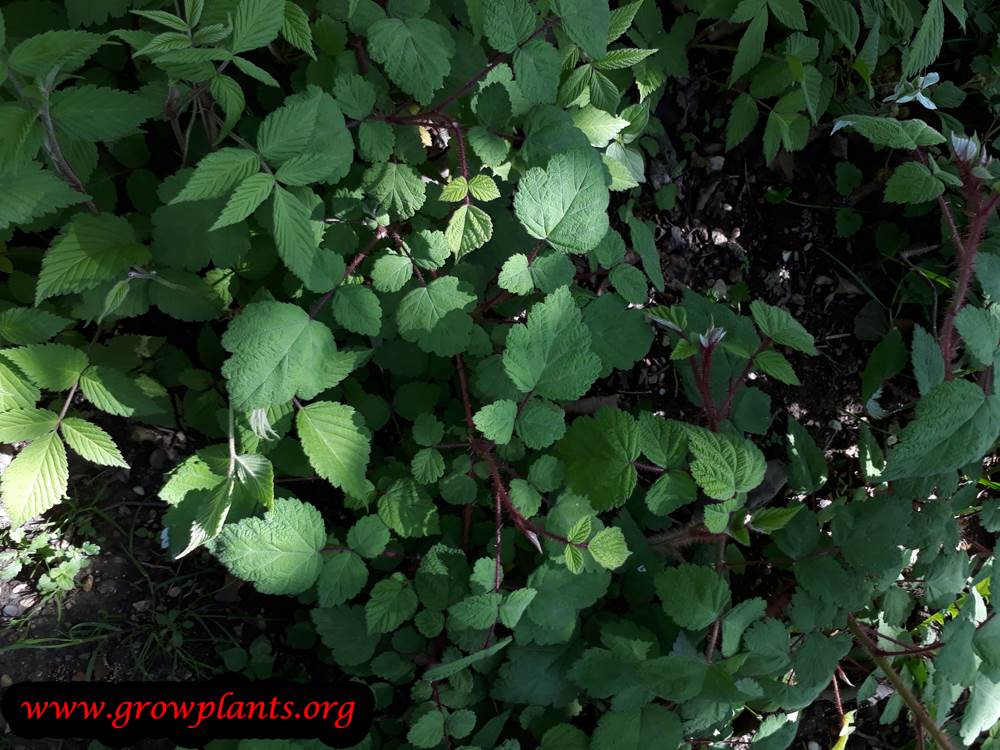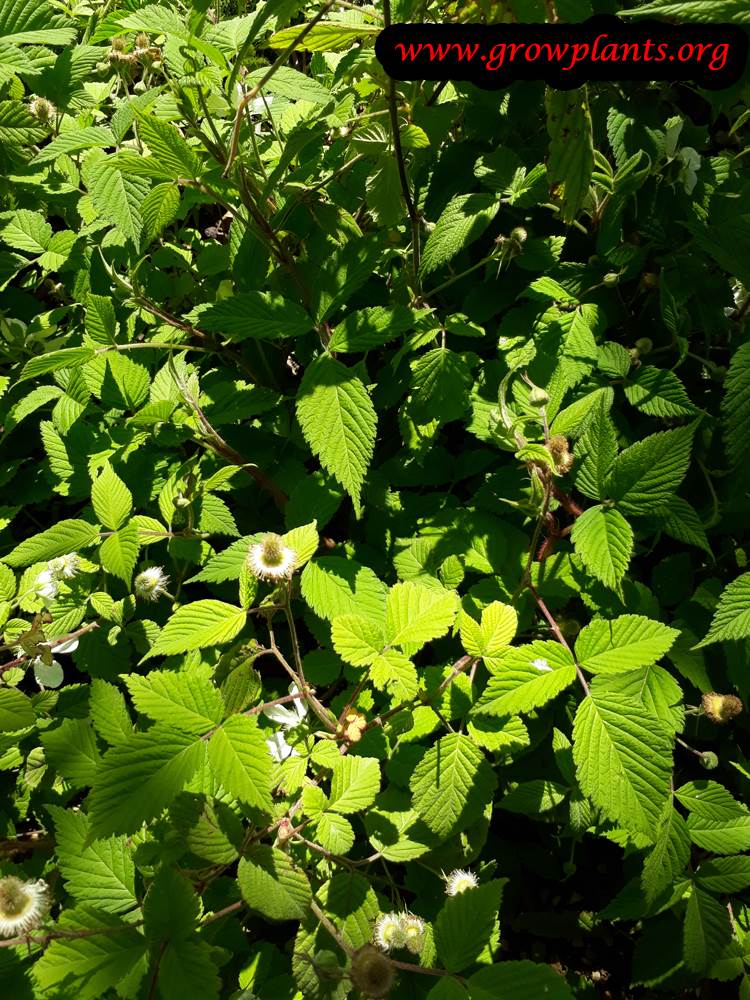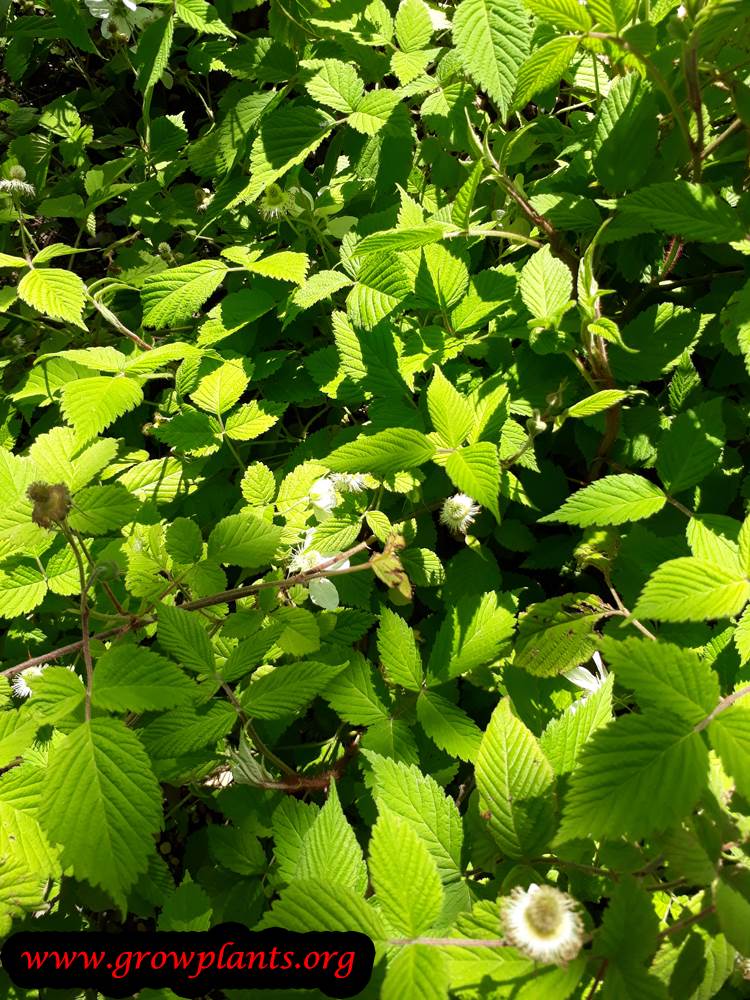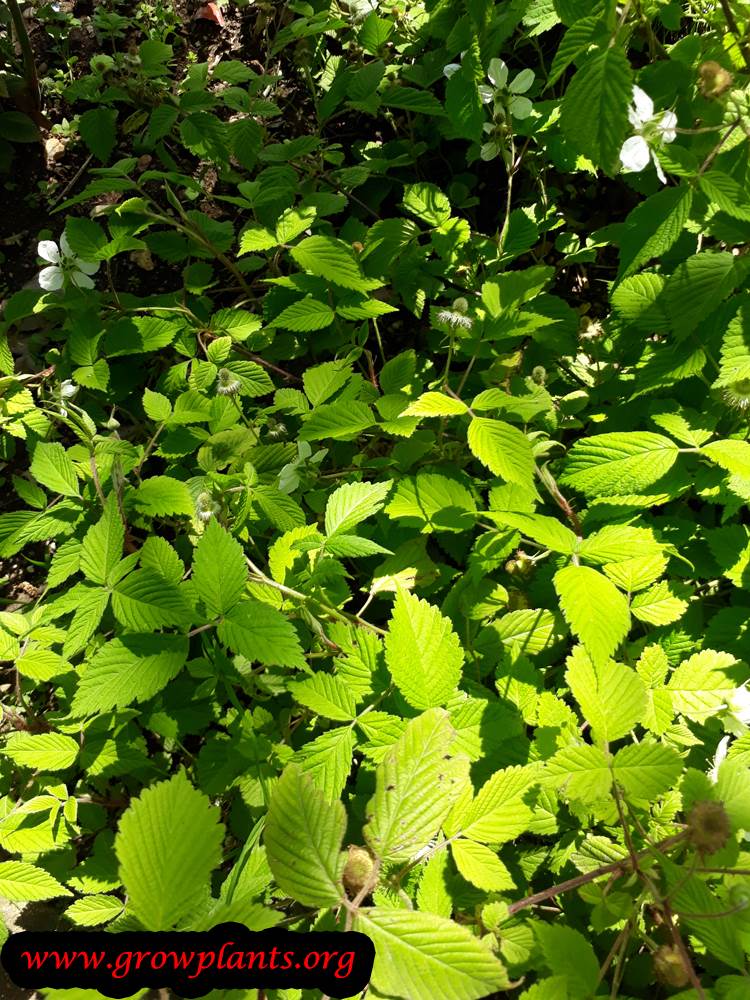
Plant Profile & Key Characteristics
Also known as: Japanese Wineberry, Wine raspberry, Wineberry, Dewberry
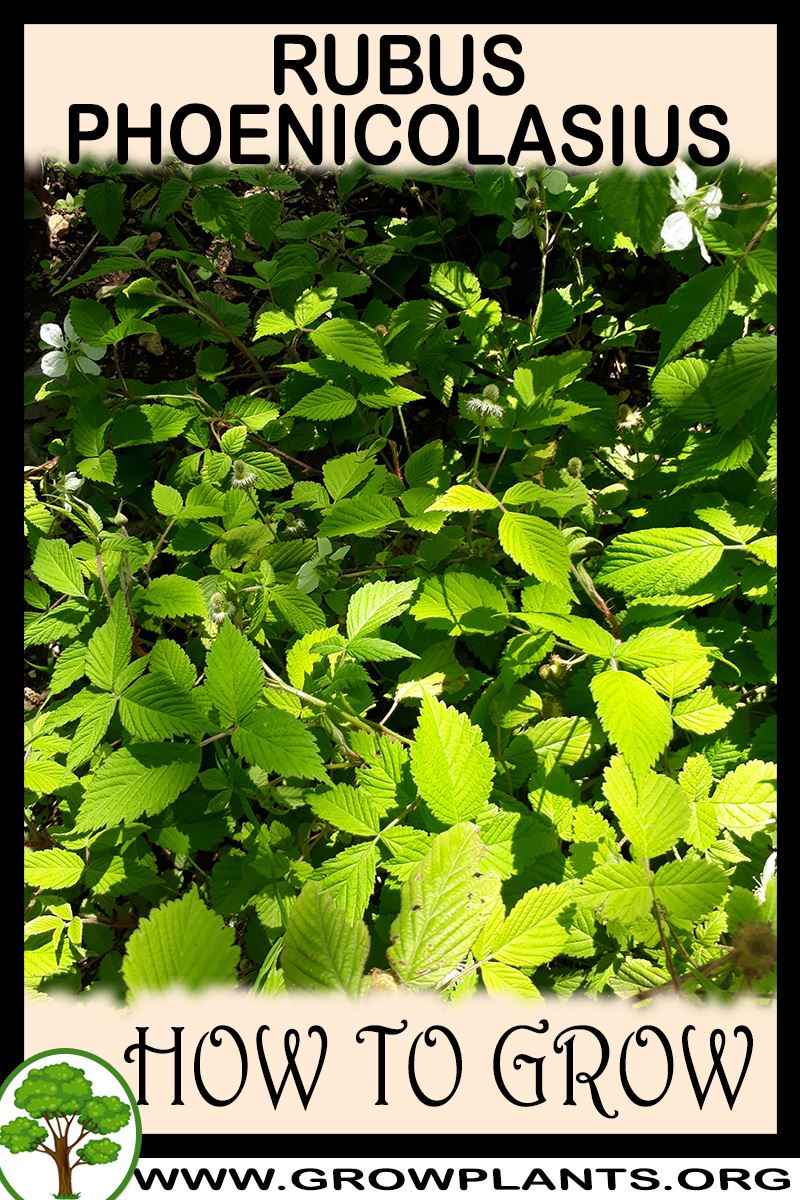
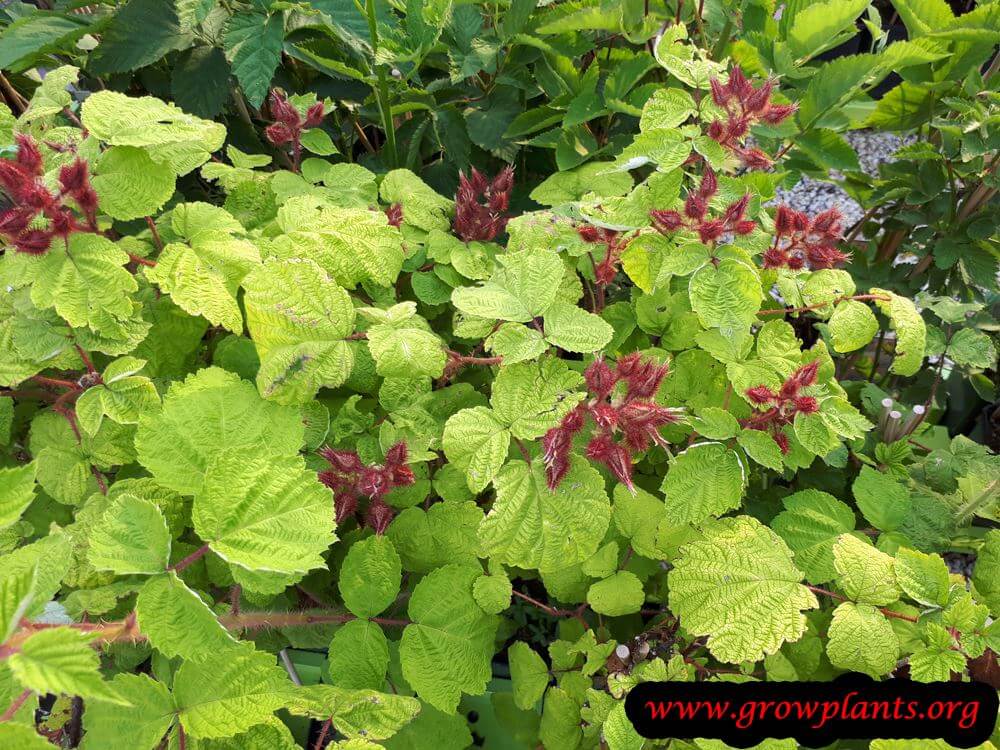
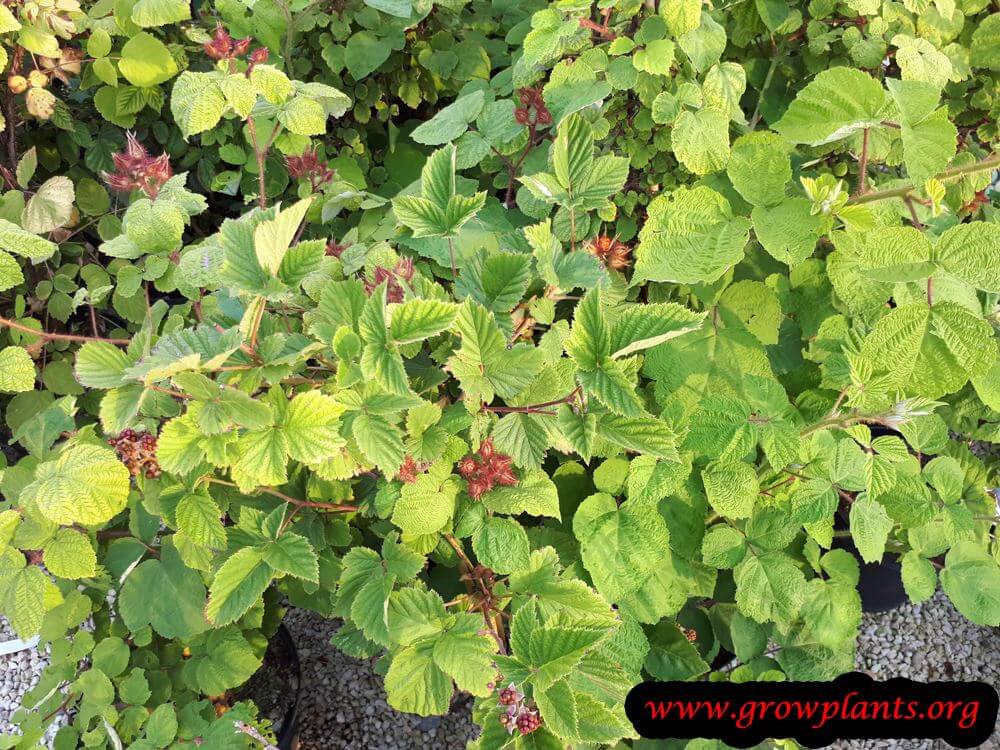
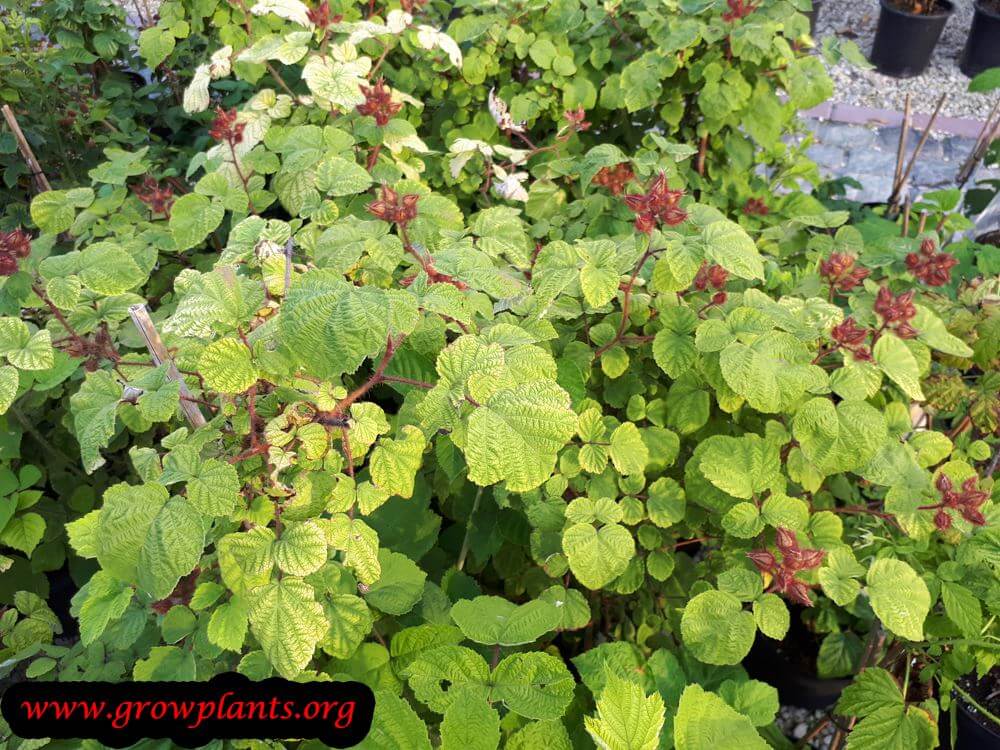
Overview: A deciduous, semi-evergreen wineberry with distinctive reddish bristly canes, scrambling 1-3 m (3-10 ft). It is grown as an ornamental hedge and for its glossy red-to-black edible berries.
Quick Specifications
| Specification | Attribute |
|---|---|
| Plant Type / Life Cycle | Perennial cane fruit (biennial fruiting canes) |
| Foliage Type | Deciduous to semi-evergreen |
| Mature Size | 1-3 m (3-10 ft) |
| Growth Rate | Moderate |
| Root System | Shallow, spreading roots; canes tip-root where they touch the ground |
| Toxicity | Non-toxic / edible fruit |
| Hardiness | USDA zones 4-10a (10b with the right summer care) |
Growth Form & Structure
- Height & Spread: Arching canes reach 1-3 m (3-10 ft) and tip-root into thickets; can be trellised or grown in a large container.
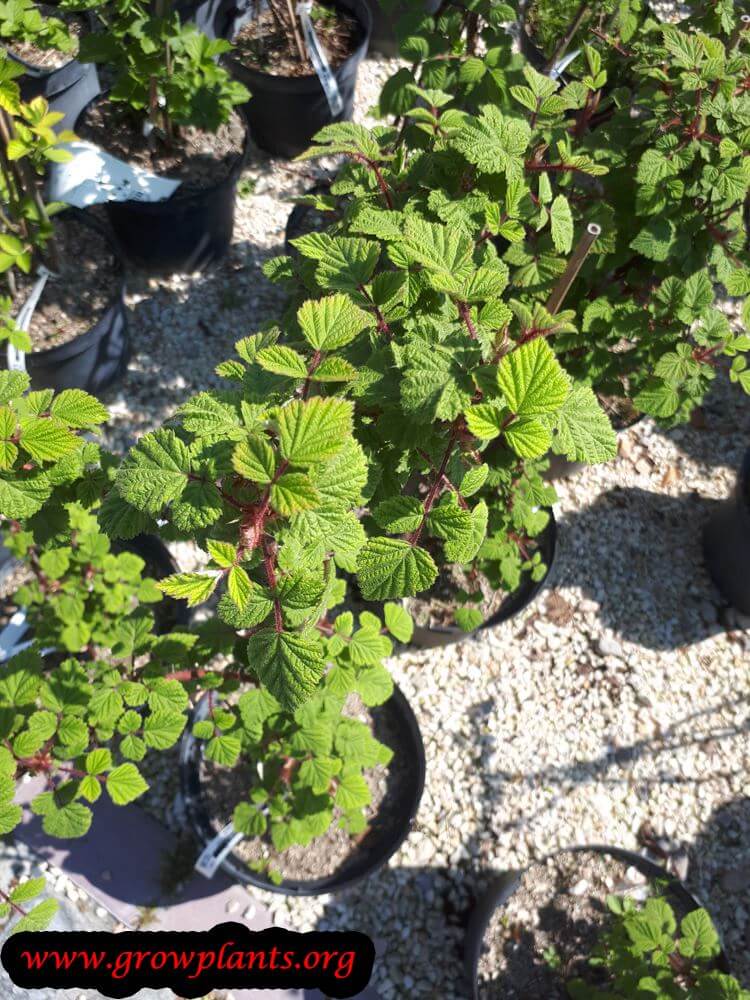
- Growth Habit & Form: Scrambling cane fruit whose canes are densely clothed in soft reddish hairs and bristles.
- Lifespan & Maturity: Perennial crown with biennial canes; fruiting in about 2-3 years.
Anatomy & Physical Features
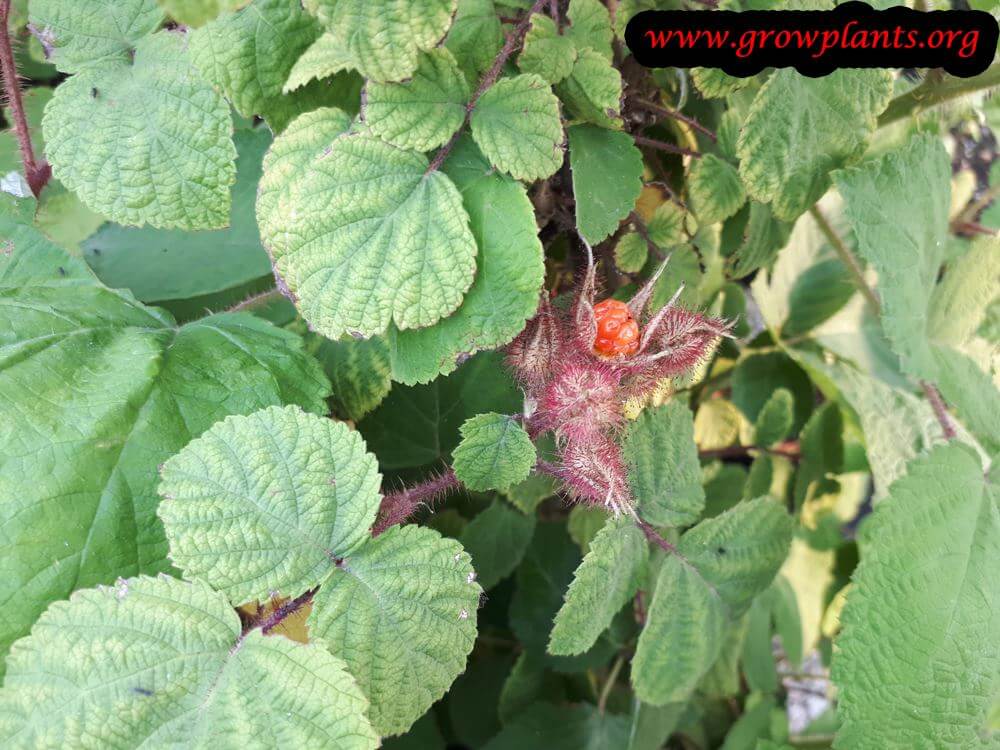
- Trunk & Bark: Canes covered in fine, reddish, glandular hairs that sheath the developing fruit.
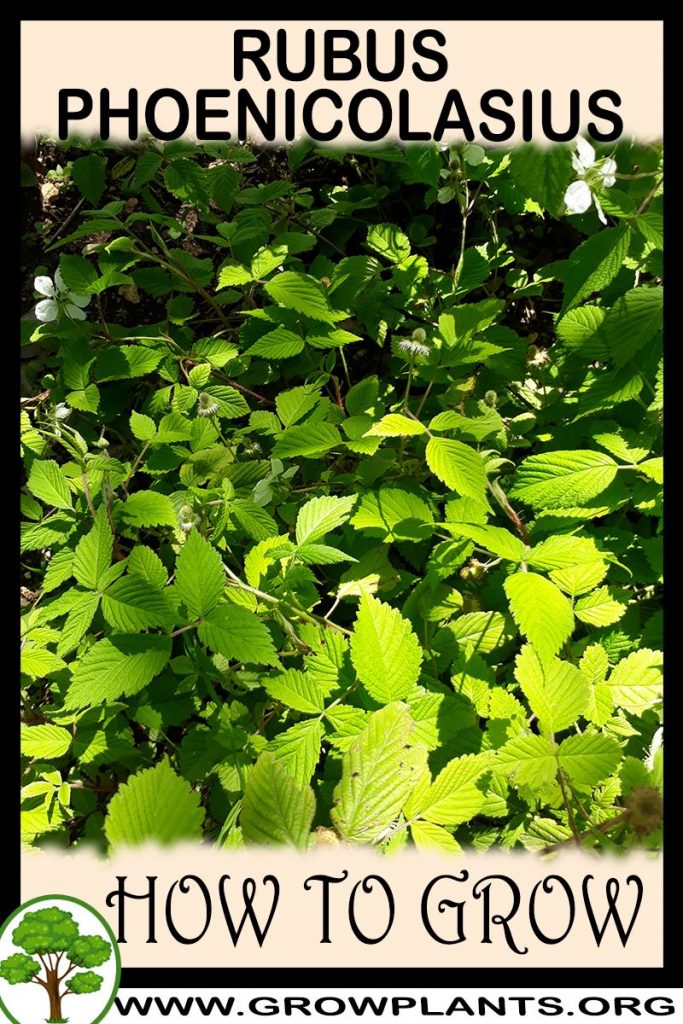
- Leaves & Foliage: Small green leaves with five rounded lobes, hairy at the base.
- Flower Characteristics: White flowers borne in clusters, pollinated by bees.
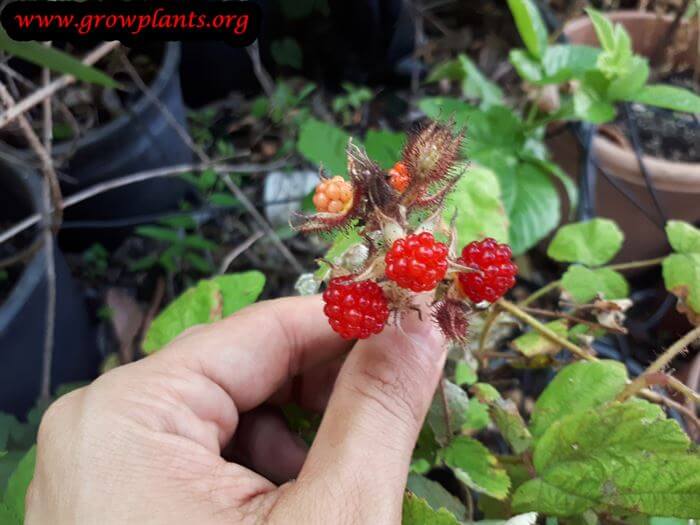
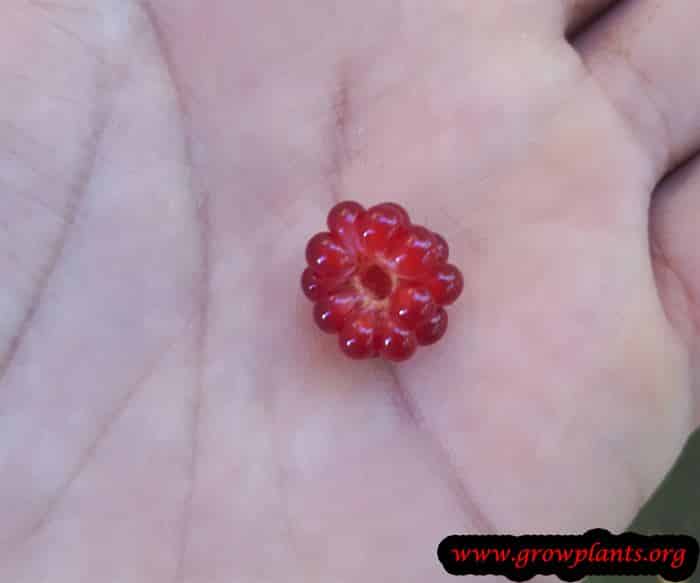
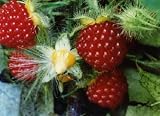
- Fruit Profile: Glossy red-to-black aggregate berries with a fine hairy surface.
Primary Uses & Landscape Value
- Edible Uses: Berries eaten fresh, cooked, in cakes and juice.
- Functional & Ornamental Roles: Grown as an ornamental hedge and for edible fruit; note it can spread aggressively.
Care Guide: Planting, Soil & Watering
Overview: Wineberry (Rubus phoenicolasius) is a vigorous, trailing bramble grown for its berries and as ornamental ground cover, thriving in full sun across hardiness zones 4-10a (and 10b with good summer care). Give it deep, rich, well-draining soil kept steadily moist and mulched, and allow plenty of room for its spreading, cane-forming habit.
Quick Care Requirements
| Requirement | Ideal Condition |
|---|---|
| Planting Season | Cool to warm season (dormant winter through spring, and into summer in mild zones) |
| Growth Rate | Moderate |
| Soil Type | Rich, humus-rich, well-draining; mulched to hold moisture |
| Soil pH | Slightly acidic to neutral (about 5.5-6.5) |
| Water Need | Moderate; keep evenly moist, never waterlogged |
Planting & Establishment
- Best Planting Season: Plant while the weather is mild – from the dormant winter period through spring in most zones, and on into summer where summers stay cool. Avoid setting new canes out in the peak of heat.
- How to Plant:
- Hole Preparation: Dig a hole at least 50-100% wider than the root ball and loosen the surrounding soil so the shallow, spreading roots can run freely.
- Soil Amendments: Work plenty of organic matter into the backfill – compost, dead leaves, rich soil and humus mixed together, and set a stake or trellis in place at planting so the canes have support as they lengthen.
- Planting Depth: Set the plant at the same depth it grew in its pot, keeping the crown at soil level and never burying the canes.
- Growth Speed & Expectations: A moderate grower forming canes of about 1-3 m; prune spent canes to about 5 cm after fruiting and expect fruit within about 2-3 years.
Soil, Watering & Drainage Care
- Soil Mix & Drainage Needs: Keep the soil rich, moisture-retentive and freely draining under a layer of mulch; brambles resent standing water, so never let the roots sit wet. In containers use a peat-and-humus mix with good drainage and average, low-mineral water.
- Watering Schedule & Technique:
- Young / Newly Planted: Water in well at planting and keep the young plant consistently moist for the first weeks so it never dries out while it establishes its roots.
- Established: Once settled, water deeply and regularly; the plants root shallowly and appreciate steady moisture, especially while flowering and setting fruit.
- Seasonal Adjustments: Increase watering through summer heat and the fruiting period, and ease back in cool or wet weather while the plant is dormant.
Climate, Light & Hardiness
Wineberry is a deciduous-to-evergreen fruiting vine for temperate and subtropical climates, needing full sun. It is hardy through USDA zones 4–10a, and can be grown into zone 10b with attentive summer care.
Quick Climate Specifications
| Climate Zones | Temperate, Subtropical |
|---|---|
| USDA Hardiness Zones | 4–10a (to 10b with care) |
| Frost Tolerance | High |
| Light Conditions | Full Sun |
Sunlight & Light Exposure
Optimal Light Setup
Needs full sun for good fruiting; this trellised, cane-forming vine performs best in an open, unshaded site.
Temperature Extremes & Hardiness
USDA Hardiness & Regional Limits
Hardy through USDA zones 4–10a, a cold-tolerant caning fruit vine, and growable into the warmer zone 10b with extra summer-season care.
Frost Sensitivity
Dormant canes tolerate winter cold well within this range; fresh spring growth and flowers are the more frost-sensitive stage.
Wind, Humidity & Microclimate
Microclimate Recommendations
Because it needs support for trellising, a sheltered but sunny site that protects long canes from wind damage is preferable.
Growing in Pots, Balconies & Indoors
Wineberry is a bramble grown for its sweet, sticky-red berries, with ornamental red-bristled canes. It is not a houseplant, but the grower gives a full method for growing it in pots, kept compact and potted on in stages, for fruit on a patio or balcony.
Quick Details
- Container Size: Start with a pot 40-60% larger than the root ball; pot on as it fills each pot
- Indoor Suitability: Not a houseplant; it needs an outdoor winter dormancy
- Best Spot: Full sun
- Soil & Drainage: Acid, humus-rich mix (peat or other acid soil) with good drainage and a pine/acid mulch
- Watering in Pots: Average with good drainage; soft, low-mineral water is best
Indoors & On the Windowsill
- Houseplant limits: The grower does not rate it as an indoor plant; it needs full sun and an outdoor winter rest.
- Keep it outside: Leave the pot outdoors year-round; the grower changes the soil during winter dormancy.
- Handling: The canes are covered in soft red bristles – site the pot clear of busy paths.
On a Balcony or Patio
- Light & wind: Give it a full-sun balcony and a support for the arching canes; keep the pot evenly moist with good drainage. Reflected wall heat dries pots fast, so check moisture regularly.
Choosing the Pot, Soil & Long-Term Care
- Pot & drainage: Start in a pot 40-60% larger than the root ball with good drainage; give it average water but never let it sit wet, and prefer soft, low-mineral water.
- Acid, moisture-holding mix: Use peat or other acidic, humus-rich soil with plenty of organic matter, and mulch with pine needles or similar acid mulch to keep the soil moist.
- Change soil in dormancy: The grower changes the soil in the middle of winter, while the plant is dormant.
- Feeding: Potted plants exhaust their soil faster than those in the ground – feed through the growing season, since nutrients leach out with every watering.
Grower’s Container Tip
- Pot up in stages: The grower starts in a pot 40-60% bigger than the root ball and moves up a size only as roots fill each pot, until it reaches the size wanted – keeping the soil fresh and the plant efficient to care for; he refreshes the soil during winter dormancy.
Fertilizing & Feeding
A moderate feeder: an early spring, nitrogen-forward feeding drives strong new cane growth on this trellised bramble, then a balanced, potassium-adequate feed carries it through summer fruit fill.
Quick Fertilizing Specs
| Feeding Level | Moderate feeder |
|---|---|
| Main Nutrient Priority | Nitrogen-forward in early spring as canes extend, shifting toward balanced with adequate potassium as fruit develops |
| Best Feeding Period | Early spring through summer active growth |
| Organic Options | Compost, dead leaves, or other organic matter worked into well-drained, rich soil |
| Micronutrients | Usually supplied by a complete fruiting fertilizer; correct iron chlorosis only when diagnosed |
| Soil pH | Prefers rich, well-drained soil |
| Reduce/Stop Feeding | Ease off feeding as fruit ripens in summer to early autumn and as growth slows afterward |
Feeding by Growth Stage
Establishment and trellis training
Help a newly planted wineberry establish roots and begin training onto a support structure.
| Nutrient direction | A light, balanced feeding to support root establishment without forcing excess cane growth before the plant is trellised. |
|---|---|
| Timing | The first growing season after planting. |
| Frequency | Light, infrequent feeding while the plant establishes and is trained onto its support. |
| Fertilizer types | A balanced complete fruit fertilizer, Compost, dead leaves, or other organic matter worked into the planting hole |
| Precautions | Give the plant plenty of space and a sturdy support; overcrowded plants are noted to fruit and grow less well. |
Early spring cane growth
Drive strong new cane growth as the plant resumes active growth in early spring.
| Nutrient direction | A nitrogen-forward feeding applied as growth resumes in early spring. |
|---|---|
| Timing | Early spring, as new growth begins. |
| Frequency | A feeding in early spring, with light follow-up feeding as canes extend through the growing season. |
| Fertilizer types | A nitrogen-forward complete fertilizer, Mulch and organic matter worked around the root zone |
| Precautions | Keep new canes well supported and avoid crowding, which increases disease pressure on this bramble. |
Summer fruit development
Support fruit fill on the reddish-black berries through summer into early autumn.
| Nutrient direction | Shift toward a balanced feeding with adequate potassium as fruit develops. |
|---|---|
| Timing | Summer through early autumn fruit ripening. |
| Frequency | Light, steady feeding tapering off as fruit ripens. |
| Fertilizer types | A balanced complete fruiting fertilizer, Organic matter worked around the root zone |
| Precautions | Ease back on nitrogen once fruiting begins, since excess nitrogen favors cane growth over fruit quality. |
Nutrient Deficiency Signs & Corrections
New leaves turn yellow between dark green veins, most noticeable on the youngest growth.
| Possible causes | high soil pH limiting iron availability, poorly drained or overly wet soil, root stress from recent transplanting |
|---|---|
| Appears first on | the newest leaves at cane tips |
| What to check | soil pH and drainage, recent root disturbance or waterlogging, overall vigor of the canes |
| Possible correction | Improve soil drainage and pH balance, and apply a chelated iron product per its label if chlorosis persists. |
Overall pale, yellow-green foliage and weak new cane extension.
| Possible causes | low soil nitrogen, competition from weeds or grass around the root zone, poor soil organic matter |
|---|---|
| Appears first on | older, lower leaves first, then overall |
| What to check | recent feeding history, weed competition near the root zone, soil organic matter level |
| Possible correction | Apply a nitrogen-forward complete fertilizer in early spring and improve soil organic matter. |
Leaf margins scorch or yellow and berries come smaller or fewer than expected.
| Possible causes | low soil potassium, sandy soil with nutrient leaching, an imbalanced, nitrogen-heavy feeding history |
|---|---|
| Appears first on | older leaf margins |
| What to check | soil texture and drainage, recent feeding balance, berry size and cane crowding |
| Possible correction | Shift toward a balanced, potassium-adequate fertilizer and thin crowded canes to improve air and light. |
Pruning, Training & Seasonal Maintenance
Rubus phoenicolasius (wineberry) is a cane-fruiting bramble that tolerates and needs hard annual renewal pruning, since each cane fruits only once, in its second year, and then declines. The main objective is to remove spent, fruited canes to make room for the new canes that will bear next season’s crop, and to make harvest easier by controlling the sprawling, scrambling growth (source: "prune for easy harvest"). The safest and most effective window is autumn, right after fruiting finishes.
Quick Pruning & Maintenance Specs
| Pruning Tolerance | High (renewal system depends on hard annual cutting) |
| Primary Pruning Window | Autumn, immediately after fruiting |
| Typical Frequency | Once a year |
| Main Objective | Remove spent fruiting canes; ease harvest access |
| Young Plant Priority | Establish canes on support/trellis; minimal cutting |
| Mature Plant Priority | Cut spent (fruited) canes to ~5cm from the ground each year |
| Best Tool Type | Bypass secateurs / loppers (thorny, tangled canes) |
| Avoid Heavy Pruning During | While canes are flowering or fruiting (summer) |
Pruning by Plant Age & Size
Newly Established
Minimal – get the young canes onto their support (source recommends staking/trellising at planting) and remove only damaged growth; first-year canes are building toward next year’s fruiting wood, not yet fruiting themselves.
Young / Formative
Cane training onto a stake or trellis, as recommended at planting; no other structural framework is needed – this is a scrambling cane fruit, not a trained tree or shrub form.
Mature / Established
Each autumn, after the crop is picked, cut the canes that fruited that year down to about 5cm from the ground (per source); leave the current season’s new (non-fruited) canes to overwinter and bear next year’s crop.
Seasonal Pruning Schedule
Post-Harvest
Objective: renew the cane supply. Remove: canes that have just finished fruiting, cut to ~5cm from the ground. Do not remove: the current season’s new, non-fruited canes – these carry next year’s crop. Expected response: new primocanes take over as the following year’s fruiting canes. Fruiting impact: essential for maintaining next year’s harvest – skipping this leaves old, unproductive canes competing with new growth.
Flowering & Fruiting Wood
Fruits form on second-year (floricane) wood: canes grow one season, overwinter, then flower and fruit the following summer before declining. This is why the source instruction to cut spent canes right after harvest is correct – those canes will not fruit again, while the current year’s new canes are being kept for next season.
Structural Pruning & Training
Cane selection and support are the main structural tasks: keep the strongest new canes on their stake/trellis and remove excess, weak, or overly tangled canes so the remaining ones get light and are easy to harvest, per source’s stated goal of easing harvest.
Special Growth to Remove
Spent fruiting canes: the primary annual removal, cut to near ground level after harvest, as noted above.
Container & Small-Space Pruning
Grows in containers (start with a pot 40–60% larger than the root ball, per source). In a container, keep fewer canes than an in-ground planting to match the restricted root volume, and provide the same support/trellis at a smaller scale, since this species needs it even when young.
Tools
Bypass secateurs for most cane cuts; loppers for thicker old cane clusters at the base. Gloves are worth using given the tangled, thorny growth typical of this genus.
Tool Hygiene & Disease Risk
Routine to increased: source lists aphids and, on the fruit, birds and slugs as the main pressures rather than a major disease; keep tools clean and remove any visibly diseased cane promptly.
Cut Placement & Technique
Cane-at-base removal for spent fruiting canes (to ~5cm from ground, per source); no thinning-vs-heading distinction needed since whole canes are removed rather than shortened.
Heavy Pruning & Rejuvenation
The annual post-harvest cane removal is itself a form of routine hard renewal – this is normal and expected for this species, not a rare rejuvenation measure. A badly overgrown, tangled planting can be reset by removing all old fruited canes at once and thinning new canes to the strongest few per support point.
Post-Pruning Care
Water normally; source recommends adding fertilizer and mulch/organic matter in early spring (a seasonal care step, not a response to pruning specifically). Watch new primocanes for aphids.
Common Pruning Mistakes
Leaving spent fruited canes in place, which crowds the planting and does not add future yield; cutting back current-season new canes by mistake, which removes next year’s crop; skipping support/trellising, making the scrambling canes hard to prune and harvest.
When Not to Prune
Avoid cutting canes during flowering or while fruit is ripening (summer to early autumn, per source harvest window) – wait until after harvest to remove the spent canes.
Recommended Tools (by task)
- bypass_secateurs – for cutting individual canes at the base after harvest.
- loppers – for thicker or tangled clusters of old cane at ground level.
- soft_ties_stakes – to train and support new canes on their trellis, as recommended at planting.
Pruning Troubleshooting
| Problem | Possible Cause | What to Check | Corrective Action |
| Declining yield | Old, spent canes left in place instead of being removed | Cane age and presence of dead fruited canes | Cut spent canes to ~5cm from ground after harvest |
| No fruit on canes expected to bear | New (first-year) canes mistakenly cut back | Whether removed canes had fruited that year | Only remove canes that have already fruited |
| Tangled, hard-to-harvest growth | Canes not trained onto support | Presence and use of stakes/trellis | Tie new canes to support as they grow |
Propagation Guide
Wineberry is propagated almost exclusively by vegetative methods – the site states this is necessary for good results, and its naturally trailing, creeping cane growth means tip-rooting and simple division are the easiest routes. Seed is technically possible but the site advises against it, so propagation difficulty is easy via vegetative means, though seed starting is comparatively unreliable.
Quick Propagation Specs
| Best Propagation Method | Tip layering of trailing canes, or division of rooted canes/suckers |
| Alternative Methods | Softwood cuttings; seed (possible but not recommended) |
| Propagation Difficulty | Easy |
| Seed True-to-Type | Variable |
| Vegetative True-to-Type | Yes |
| Best Propagation Season | Winter through summer, matching the site’s broad planting-season window |
Growing from Seed
Seed Handling & Viability
The site notes seed is possible but not the recommended way to start this plant.
Dormancy & Pre-Sowing Treatment
As in other brambles, seed likely has a hard coat and dormancy that would need scarification and cold stratification to germinate reliably – general Rubus knowledge supplementing the site’s brief note, offered cautiously since the site does not detail this itself.
Germination Conditions
Expect slow, uneven germination even with pre-treatment, part of why the site steers growers toward vegetative propagation instead.
Air & Ground Layering
As a trailing, creeping cane plant, wineberry roots naturally where its cane tips touch the soil – a form of ground/tip layering consistent with the creeping-vine growth habit the site itself describes. Pin a cane tip to moist soil during the growing season; it typically roots within a matter of weeks to a couple of months and can then be severed from the parent cane and transplanted once well rooted.
Division, Offsets, Pups & Suckers
New canes and suckers arising from the base or from rooted tips can be dug and separated once they have their own root system, generally during the winter-to-summer window the site lists for planting; reduce top growth on separated canes to ease establishment.
Bloom & Flower Guide
Quick Details
- Bloom Season: Spring to early summer
- Flower Appearance: Small white, five-petalled flowers about 1 cm across, in clusters, cupped by red-hairy calyces
- Edibility: Flowers are not eaten — the plant is grown for its berries
Detailed Blooming Overview
Wineberry is grown for its fruit and its striking red-bristly canes. Small white flowers open in clusters in late spring, each one cupped by the distinctive reddish, hairy calyx.
Flower Characteristics
- White flowers, about 1 cm across, with five petals, borne in clusters.
- The hairy red sepals are a hallmark of the species.
Bloom Care & Thinning
- Thinning: on a newly planted vine, thin the bloom while the plant settles in and becomes established.
- Pollination: mainly by bees and other insects.
Fruit & Uses
Japanese wineberry is grown for its bright, raspberry-like fruit, which is eaten fresh off the cane or used in cooking. Ripe berries are sweet-tart and can be eaten raw as a snack, or made into cakes, cooked preserves and juice.
Quick Edible Specs
| Edible Parts | Fruit (berries) |
|---|---|
| Main Use(s) | Culinary – fresh eating, baking, cooked preserves, juice |
| Eaten Raw or Cooked | Both |
| Preparation Required | None for fresh eating; cook for jam/preserves or juice |
| Harvest Season | Summer to early autumn |
| Time to First Harvest | Canes take a couple of seasons to reach full fruiting (see Propagation/Planting for exact timing) |
| Storage | Best used fresh soon after picking, like other bramble fruit; freezes well for later cooking |
| Safety/Toxicity Caveat | None noted for the ripe fruit |
Fruit
The berry is built from many small drupelets clustered into a raspberry-like shape, coloured red to black at ripeness, with fine reddish bristles on the surrounding husk rather than on the fruit itself. Birds and slugs are the main competition for the crop. Fruit can be picked slightly under-ripe and left to finish ripening off the plant if needed.
Harvesting
Pick as berries colour up through summer into early autumn; ripening is staggered along the canes, so plan on repeat picking over the season. No special protective measures are noted beyond general bird/slug watchfulness.
Preparation, Uses & Safety
Ripe berries are eaten straight off the cane with no preparation needed, or cooked into cakes, jam-style preserves and juice for larger harvests. No detoxification or special processing is required.
Pests, Diseases & Troubleshooting
Overview: Wineberry (Rubus phoenicolasius) is a Rubus bramble whose canes, foliage and fruit attract a fairly predictable set of pests and fungal diseases; sap-feeding insects and cane-boring grubs are the main animal threats, while the biggest losses usually come from cane and fruit fungi in humid, crowded plantings. The sticky red-haired canes deter some chewing pests but still attract sap-feeders and fruit flies. Manage it culturally first – space and thin the canes for airflow, remove and burn spent floricanes, keep the row narrow and weed-free, and harvest cleanly – before reaching for oils, soaps or fungicides.
Quick Troubleshooting Overview
| Issue / Pest | Main Symptom | Primary Solution |
|---|---|---|
| Aphids | Curled new leaves, sticky honeydew, spread of viruses | Blast with water, encourage lady beetles, insecticidal soap |
| Spotted wing drosophila | Soft, collapsing ripe berries with tiny larvae inside | Harvest frequently, chill fruit fast, hang vinegar traps |
| Cane borers / crown borer | Wilting cane tips, swollen or dying canes | Prune out and destroy affected canes below damage |
| Cane blight / spur blight | Dark cankers on canes, buds fail, canes snap | Thin canes, improve airflow, remove old fruiting canes |
| Orange / yellow rust | Bright orange pustules on leaf undersides | Remove infected plants, avoid overhead water |
| Grey mould (Botrytis) | Fuzzy grey rot on berries in wet weather | Pick ripe fruit promptly, improve airflow, sanitation |
Common Pests & Management
- Aphids (Amphorophora / Aphis idaei):
- Symptoms: Clusters of small green or pinkish insects on shoot tips and leaf undersides, causing curled distorted new growth and sticky honeydew that turns sooty black; the most serious harm is their transmission of raspberry mosaic and leaf-curl viruses.
- Prevention & Control: Knock colonies off with a firm water jet, protect and attract lady beetles, lacewings and hoverflies with insectary flowers, and remove badly infested tips. Treat persistent colonies with insecticidal soap or a light horticultural oil, coating leaf undersides; avoid feeding excess nitrogen, which fuels soft aphid-prone growth.
- Spotted wing drosophila (Drosophila suzukii):
- Symptoms: A small vinegar-type fly whose females cut into ripening and ripe berries; fruit softens, weeps and collapses within a day or two, and tiny white maggots are found inside. Unlike common vinegar flies it attacks sound, ripening fruit, not just over-ripe.
- Prevention & Control: Harvest every one to two days and remove all over-ripe and dropped fruit to break the breeding cycle; refrigerate picked fruit immediately to kill eggs. Hang apple-cider-vinegar or yeast-sugar traps to monitor and reduce numbers, and keep the planting open and dry. Fine mesh netting can exclude the fly on smaller plots.
- Raspberry cane borer (Oberea bimaculata):
- Symptoms: Beetle that girdles cane tips with two rings of punctures, causing the top to wilt and blacken suddenly; larvae then tunnel down inside the cane. Look for the classic double ring of pin-pricks about a hand’s width below a wilting tip.
- Prevention & Control: Prune each wilting tip a few centimetres below the lower ring of punctures as soon as it appears and destroy the prunings to remove the grub inside. Routine winter removal of old canes reduces overwintering larvae; chemical control is rarely needed if tips are cut promptly.
- Raspberry crown / cane borer grubs (Pennisetia / Oberea spp.):
- Symptoms: Larvae bore into the crown and lower canes, so whole canes wilt, weaken and die; galls or swellings and sawdust-like frass may appear near the base. Affected canes often snap easily at the damaged point.
- Prevention & Control: Dig out and destroy badly infested crowns and canes; keep plants vigorous with good soil and even moisture so they outgrow minor attacks. Cultivate lightly around crowns in the dormant season and keep the area free of wild brambles that harbour the pest.
- Two-spotted spider mite (Tetranychus urticae):
- Symptoms: Fine pale stippling and bronzing of leaves, with delicate webbing on undersides in hot, dry, dusty conditions; heavy attacks cause leaves to dry and drop, reducing fruiting.
- Prevention & Control: Raise humidity and hose down foliage to disrupt mites and dust, mulch to keep roots cool and evenly moist, and conserve predatory mites by avoiding broad-spectrum insecticides. Spot-treat hot-spots with insecticidal soap or horticultural oil on leaf undersides.
- Japanese beetle / raspberry beetle (Popillia japonica / Byturus tomentosus):
- Symptoms: Adults skeletonise leaves and chew flowers and fruit; raspberry-beetle grubs feed inside the fruit, leaving dried, maggoty drupelets at the stalk end. Skeletonised leaves and grubby berries at harvest are the tell-tale signs.
- Prevention & Control: Hand-pick adults into soapy water in the cool of morning, and cultivate soil lightly in the dormant season to expose grubs. Encourage birds and ground beetles; where pressure is high, an oil or approved botanical spray at first flower-drop protects developing fruit – spray in the evening to spare pollinators.
Diseases & Fungal Issues
- Cane blight (Leptosphaeria coniothyrium):
- Symptoms: Dark brown-purple cankers spread up the canes, often from a wound; buds fail to break, leaves wither and canes become brittle and snap. Cutting a cane reveals discoloured, dead wood.
- Treatment & Management: Prune out and burn affected canes well below the canker, disinfecting tools between cuts; thin canes to open the row and speed drying. Avoid mechanical injury to canes and keep nitrogen moderate; a protective copper or approved fungicide at bud-break helps in wet climates.
- Spur blight (Didymella applanata):
- Symptoms: Purple-brown blotches form around buds and nodes on new canes, later turning silvery-grey with black dots; buds die and side-shoots fail the following season.
- Treatment & Management: Remove and destroy old fruiting canes and thin new canes for airflow; avoid overcrowding and excess nitrogen. Overhead irrigation late in the day worsens it – water at the base. Copper or an approved fungicide programme aids control where the disease is established.
- Anthracnose (Elsinoë veneta):
- Symptoms: Small purple spots on canes and leaves enlarge into sunken grey-centred pits with purple margins; heavily spotted canes crack and fruit may be malformed.
- Treatment & Management: Cut out the most affected canes, clear fallen debris, and keep the planting open and weed-free. Choose resistant cultivars where possible; a dormant copper or lime-sulphur spray plus in-season protectants reduces spread in humid regions.
- Orange / yellow rust (Phragmidium / Gymnoconia / Kuehneola spp.):
- Symptoms: Bright orange or yellow powdery pustules on leaf undersides in spring and summer; systemic orange rust distorts and stunts whole plants, which never recover.
- Treatment & Management: Systemically rust-infected plants should be dug out and destroyed – pruning does not cure them. For leaf rusts, remove infected leaves, improve airflow and avoid wetting foliage; sulphur or an approved fungicide gives partial protection.
- Grey mould / fruit rot (Botrytis cinerea):
- Symptoms: Ripening berries develop soft brown patches then a fuzzy grey mould, spreading rapidly in warm, humid or wet weather and in crowded canes; flowers may also blight.
- Treatment & Management: Pick fruit frequently and remove all rotting berries, open the canopy for airflow and light, and avoid overhead watering. Cool fruit quickly after harvest. Sanitation is the main control; a protectant fungicide at flowering helps only in persistently wet seasons.
- Phytophthora root rot (Phytophthora fragariae var. rubi):
- Symptoms: Canes are weak, leaves yellow or redden and wilt, and plants collapse in wet, poorly drained soil; roots are rotted with a red-brown core rather than white.
- Treatment & Management: Prevention is key – plant on raised, free-draining beds, never in waterlogged ground, and use clean stock and resistant cultivars. Improve drainage and avoid overwatering; there is no reliable cure for established infections, so remove and replace affected plants.
Growing Difficulties & Abiotic Problems
- Crumbly, seedy fruit:
- Cause & Symptoms: Berries fall apart into loose drupelets, often from incomplete pollination in poor weather, boron/zinc shortage, or raspberry-bushy-dwarf and other viruses building up in old plants.
- Correction Strategy: Ensure good bee activity and shelter from wind at flowering, correct micronutrient deficiencies with a balanced feed, and replace declining virus-affected stock with certified clean plants.
- Iron / manganese chlorosis:
- Cause & Symptoms: New leaves turn yellow between green veins on alkaline or waterlogged soils where iron and manganese are locked up.
- Correction Strategy: Improve drainage, add organic matter and mulch, and lower pH gradually with sulphur or acidic compost; apply chelated iron for a quick correction of severe cases.
- Sunscald and heat stress:
- Cause & Symptoms: Exposed fruit bleaches white or browns and leaf margins scorch during intense sun and heat, especially on the shaded-then-suddenly-exposed side.
- Correction Strategy: Maintain a healthy leaf canopy to shade fruit, mulch and water deeply and evenly in heat, and provide light afternoon shade in the hottest climates.
- Winter / cold injury:
- Cause & Symptoms: Canes brown internally, buds fail to break and cane tips die back after hard cold or fluctuating late-season temperatures.
- Correction Strategy: Grow cultivars suited to the local climate, avoid late-season nitrogen that delays hardening, and protect tender canes with mulch or by laying and covering them where winters are severe.
What Helps – Products & Tools
For this bramble the useful toolkit is insecticidal soap and light horticultural or neem oil for aphids, mites and beetles; apple-cider-vinegar or yeast-sugar traps for spotted wing drosophila; sharp, disinfected secateurs for cutting out borer-hit and canker-blighted canes; and copper or sulphur-based fungicides for cane blight, spur blight, anthracnose and rust in wet climates. Netting excludes fruit flies and protects ripening berries. Apply oils and any sprays in the evening to protect bees.