Plant Profile & Key Characteristics
Overview: An evergreen, scrambling herbaceous perennial about 1-1.5 m (40-60 in) tall, historically grown both as an ornamental and as the source of madder dye. Its creeping roots yield the traditional red colourant.
Quick Specifications
| Specification | Attribute |
|---|---|
| Plant Type / Life Cycle | Perennial (herbaceous) |
| Foliage Type | Evergreen |
| Mature Size | 1-1.5 m (40-60 in) tall |
| Growth Rate | Fast to moderate |
| Root System | Creeping rhizomatous roots — the part harvested for dye |
| Hardiness | USDA zones 5-9 |
Growth Form & Structure
- Height & Spread: Reaches 1-1.5 m (40-60 in), the weak stems scrambling over neighbours or support; also grown in containers.
- Growth Habit & Form: A sprawling, scrambling perennial with rough, four-angled stems that lean on surrounding plants; spreads by creeping roots.
- Lifespan & Maturity: A perennial grown on for several years so the roots thicken enough to harvest for dye.
Anatomy & Physical Features
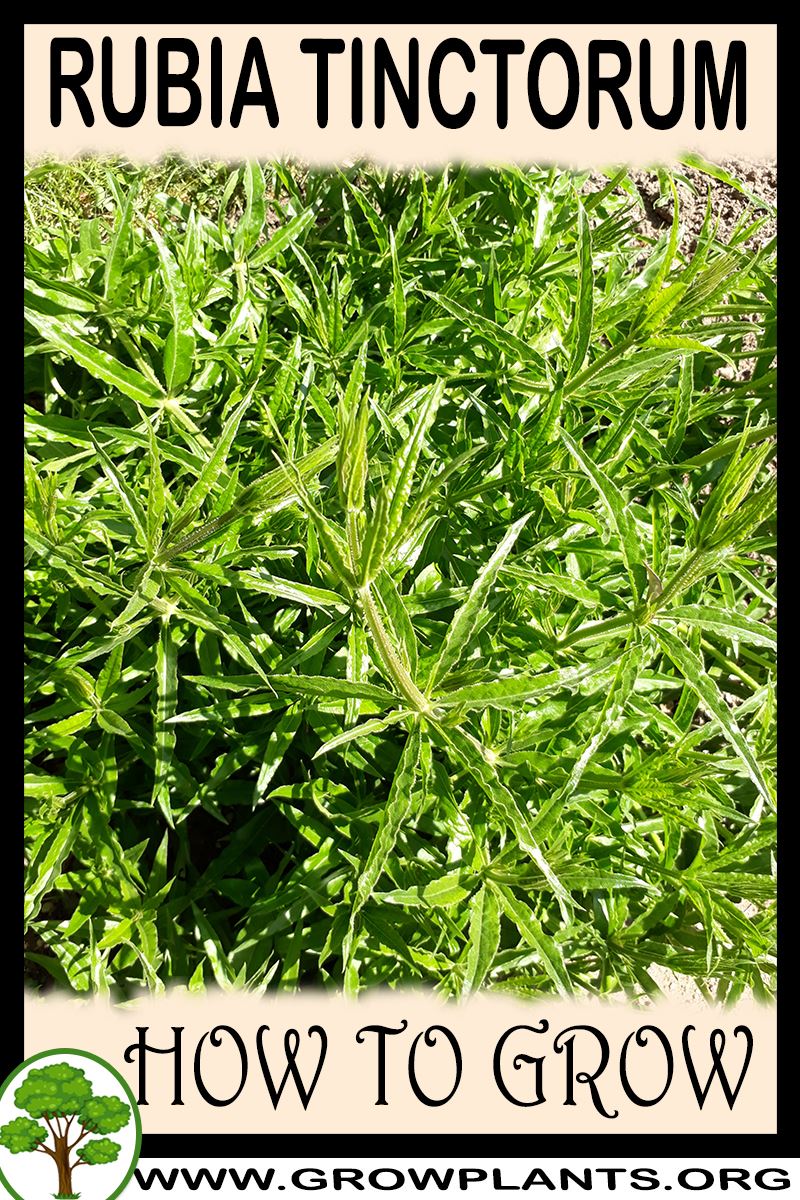
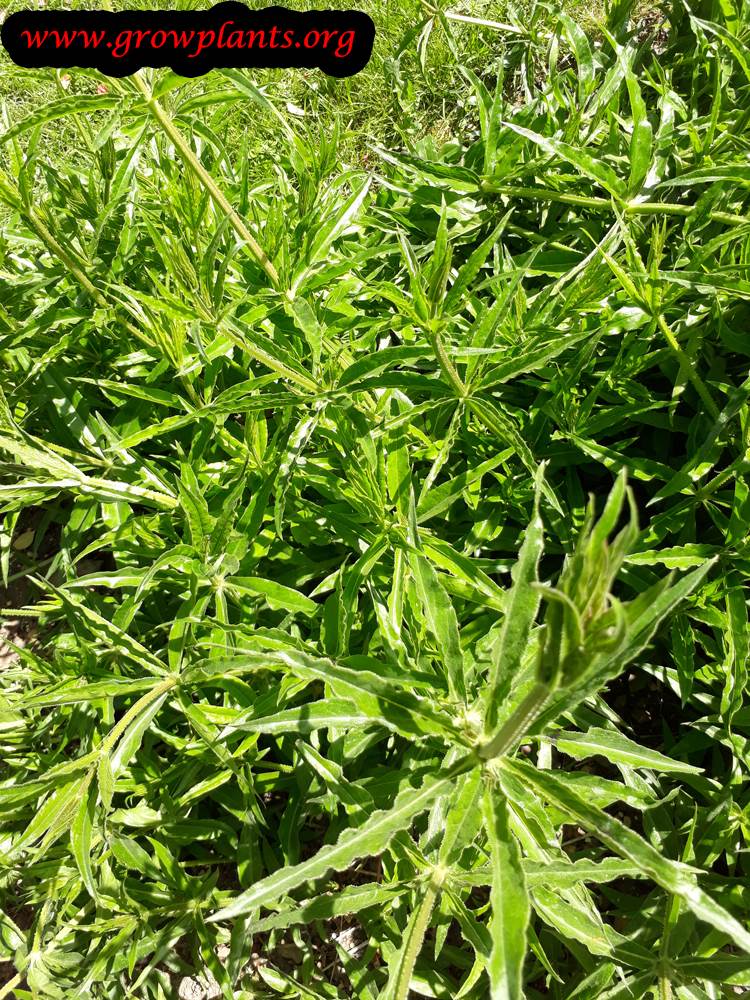
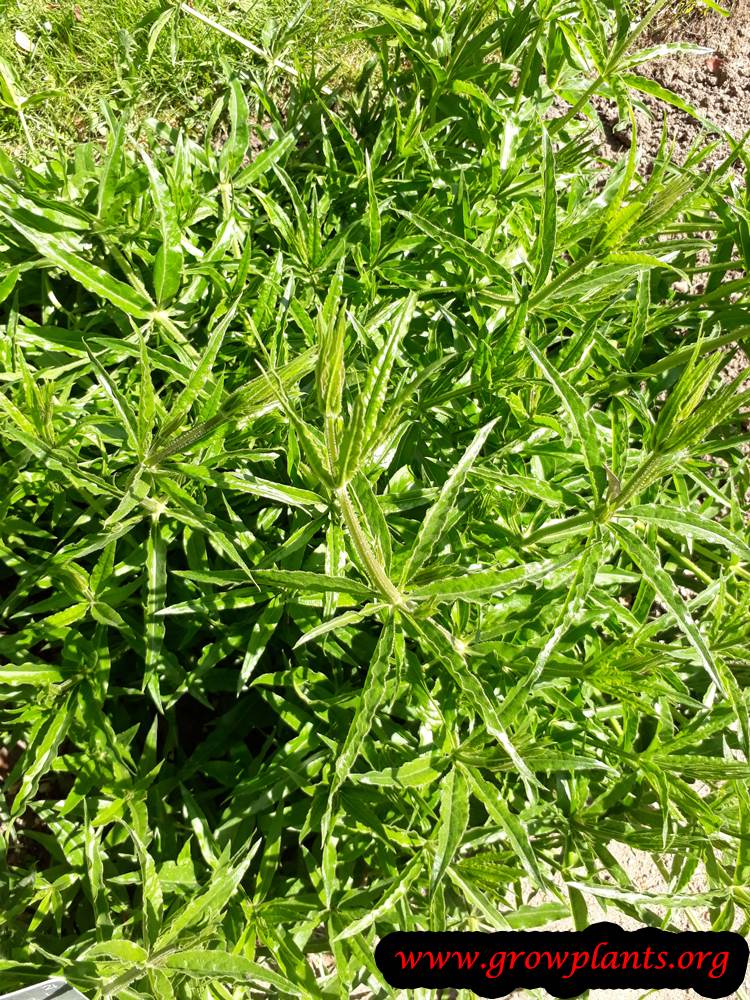
- Leaves & Foliage: Green, linear leaves borne in whorls of six around the stem.
- Flower Characteristics: Small, yellow-to-green, bowl-shaped flowers.
Primary Uses & Landscape Value
- Functional & Ornamental Roles: Grown as a heritage dye plant — the roots produce the classic red ‘madder’ dye for fabric — and as a curiosity ornamental.
Care Guide: Planting, Soil & Watering
Overview: Common madder (Rubia tinctorum) is a hardy herbaceous perennial that grows best in full sun to half shade in deep, well-drained soil. It needs only moderate, steady watering, and good drainage is important since it is grown mainly for its roots.
Quick Care Requirements
| Requirement | Ideal Condition |
|---|---|
| Planting Season | In the warm season, in spring or summer, once the soil has warmed |
| Growth Rate | Moderate to Fast (spreading) |
| Soil Type | Deep, well-drained soil |
| Water Need | Moderate — keep evenly moist, letting the surface dry between waterings |
Planting & Establishment
- Best Planting Season: Plant in the warm season, in spring or summer, once the soil has warmed.
- How to Plant:
- Hole Preparation: Dig a hole wider than the root ball in deep, loosened, free-draining soil to give the roots room to run.
- Soil Amendments: Work compost or organic matter into the soil to improve structure and drainage.
- Planting Depth: Set the crown at soil level and firm gently.
- Growth Speed & Expectations: A moderate to fast, spreading grower that builds up a strong root system over a few years.
Soil, Watering & Drainage Care
- Soil Mix & Drainage Needs: Give it deep, loose, well-aerated soil that drains freely; in containers use a free-draining mix and choose a deep pot to accommodate the roots.
- Watering Schedule & Technique:
- Young / Newly Planted: Keep the soil evenly moist while young plants establish.
- Established: Water moderately and regularly, letting the surface dry between waterings.
- Seasonal Adjustments: Water a little more in summer heat and reduce over the cooler months.
Climate, Light & Hardiness
Common madder is an evergreen herbaceous perennial for temperate and subtropical climates, growing in full sun to half shade. It is hardy through USDA zones 5–9.
Quick Climate Specifications
| Climate Zones | Temperate, Subtropical |
|---|---|
| USDA Hardiness Zones | 5–9 |
| Frost Tolerance | Moderate to High |
| Light Conditions | Full Sun / Half Shade |
Sunlight & Light Exposure
Optimal Light Setup
Full sun to half shade both suit this scrambling perennial, traditionally grown for its dye-yielding roots.
Temperature Extremes & Hardiness
USDA Hardiness & Regional Limits
Hardy through USDA zones 5–9, tolerating cold-winter temperate climates as well as milder subtropical regions.
Frost Sensitivity
As an evergreen perennial in its hardy range, foliage may be knocked back by hard frost but the plant typically regrows from the base.
Wind, Humidity & Microclimate
Microclimate Recommendations
Adaptable to typical temperate garden conditions across its zone 5–9 range.
Growing in Pots, Balconies & Indoors
Madder is a sprawling, deep-rooted perennial grown for the red dye in its roots. It is not a houseplant, but it can be grown in a large, deep pot outdoors, which also helps contain its running, wandering habit.
Quick Details
- Container Size: A large, deep pot to suit its long, spreading roots
- Indoor Suitability: Not a houseplant – an outdoor dye and utility plant
- Best Spot: Full sun to part shade
- Soil & Drainage: Free-draining, organic-rich mix
- Watering in Pots: Average; keep lightly moist in growth – pots dry faster
Indoors & On the Windowsill
- Houseplant limits: The grower does not rate it as an indoor plant; it wants outdoor light, space and a cool season.
- Contained spread: A deep pot is useful mainly to keep its running roots in bounds.
On a Balcony or Patio
- Light & wind: Suits a sunny or part-shaded balcony in a big pot; the sprawling stems can be given a support or left to trail. Handle with gloves – the stems carry tiny hooked prickles.
Choosing the Pot, Soil & Long-Term Care
- Pot & drainage: A large, deep pot with strong drainage holes for the long roots; no standing water.
- Potting mix: A free-draining yet organic-rich mix – a quality potting mix or peat/coir blended with perlite or vermiculite for aeration.
- Feeding: Potted plants exhaust their soil faster than those in the ground – feed through the growing season, since nutrients leach out with every watering.
- Repotting: Pot on or divide every couple of years; harvest is from the roots, so expect to disturb the plant when you lift it.
Fertilizing & Feeding
A light feeder: this vigorous, well-drained-soil perennial needs only modest, balanced feeding through its active growing season, then no feeding as it rests through autumn and winter.
Quick Fertilizing Specs
| Feeding Level | Light feeder |
|---|---|
| Main Nutrient Priority | Balanced, modest feeding through the active spring and summer growth period |
| Best Feeding Period | Spring through summer while in active growth |
| Organic Options | Compost or well-rotted organic matter worked into well-drained soil |
| Micronutrients | Usually unnecessary; address interveinal yellowing only if it appears |
| Soil pH | Performs best in well-drained soil; not documented as needing a specific pH range |
| Reduce/Stop Feeding | Stop feeding as growth slows heading into autumn and winter |
Feeding by Growth Stage
Establishment after planting
Help a newly planted Rubia tinctorum settle into well-drained soil and build a strong root system.
| Nutrient direction | A light, balanced feeding to support root establishment without forcing rapid top growth. |
|---|---|
| Timing | The first growing season, from spring or summer planting onward. |
| Frequency | A light feeding at planting, then minimal feeding while roots establish. |
| Fertilizer types | A balanced complete garden fertilizer, Compost or well-rotted organic matter worked into the planting area |
| Precautions | Avoid overfeeding newly planted material; prioritize good drainage over heavy fertilizing. |
Active growing season
Support this fast-to-medium growing perennial through its main spring and summer growth period.
| Nutrient direction | A balanced feeding through the active growing season; this plant is not a heavy feeder. |
|---|---|
| Timing | Spring through summer while the plant is in active growth. |
| Frequency | A few light feedings spaced through the growing season. |
| Fertilizer types | A balanced complete garden fertilizer |
| Precautions | Keep feeding light on well-drained soil; this plant tends to grow vigorously without heavy inputs. |
Autumn and winter rest
Let growth slow naturally heading into the cooler part of the year, when this plant is pruned back for shape.
| Nutrient direction | None – withhold fertilizer as growth slows through autumn and winter. |
|---|---|
| Timing | Autumn through winter, alongside the plant’s dormant-season pruning. |
| Frequency | No feeding at this stage. |
| Fertilizer types | No feeding at this stage – let the plant rest through the cooler months |
| Precautions | Do not fertilize during the autumn-winter slowdown; resume feeding once active spring growth resumes. |
Nutrient Deficiency Signs & Corrections
Overall pale green foliage and noticeably slower growth than expected for this normally fast-to-medium growing plant.
| Possible causes | low soil nitrogen, poor soil organic matter, root competition from nearby plants |
|---|---|
| Appears first on | older leaves and overall plant vigor |
| What to check | recent feeding history, soil organic matter, competing vegetation nearby |
| Possible correction | Apply a balanced complete fertilizer during active growth and improve soil organic matter. |
Yellowing between the veins on newer leaves while the veins themselves stay green.
| Possible causes | high soil pH limiting micronutrient availability, poorly drained or waterlogged soil, root stress from recent disturbance |
|---|---|
| Appears first on | the newest leaves |
| What to check | soil pH and drainage, recent root disturbance, overall plant vigor |
| Possible correction | Improve soil drainage and pH balance, and apply a chelated micronutrient product per its label if the issue persists. |
Wilting, yellowing, or dieback despite adequate rainfall or watering, in a plant that prefers well-drained soil.
| Possible causes | waterlogged or compacted soil, overwatering, root rot from poor drainage |
|---|---|
| Appears first on | lower stems and the root zone |
| What to check | soil drainage and structure, recent watering frequency, root health at the base of the plant |
| Possible correction | Improve drainage, reduce watering frequency, and avoid feeding a stressed or waterlogged plant until conditions improve. |
Pruning, Training & Seasonal Maintenance
Rubia tinctorum is a soft-stemmed, scrambling herbaceous perennial with no woody framework to build or protect, so it tolerates cutting back freely and needs very little formal pruning beyond shaping and tidying. The main objective is simply controlling size and sprawl – per source, cuts are made purely for appearance, not to influence flowering or a harvest. The safest window is autumn to winter, once the current season’s growth has finished its display.
Quick Pruning & Maintenance Specs
| Pruning Tolerance | High (soft, non-woody growth) |
| Primary Pruning Window | Autumn – winter |
| Typical Frequency | As needed, roughly once a year |
| Main Objective | Shape and contain sprawling growth |
| Young Plant Priority | None – let the plant establish its scrambling habit |
| Mature Plant Priority | Cut back sprawling stems to keep it in bounds |
| Best Tool Type | Precision snips / hand shears |
Pruning by Plant Age & Size
Newly Established
No pruning needed beyond removing any damaged growth – let the plant fill out its scrambling, whorled-leaf habit.
Young / Formative
No structural training system applies; this species has weak, sprawling stems rather than a trainable framework, so treat any early cutting purely as shaping.
Mature / Established
Cut back stems that have sprawled beyond their space or become untidy; this can be done at any point but is most often done in the autumn/winter tidy.
Seasonal Pruning Schedule
Dormant / Autumn-Winter
Objective: tidy the plant for the coming season. Remove: straggly, sprawling or dieback stems, purely for appearance. Do not remove: more than needed – there is no flowering-wood or harvest consequence to guard here. Expected response: a neater clump heading into the next growing season.
Special Growth to Remove
Cut back any stems that have scrambled into neighbouring plants or hardscape, since this species spreads by sprawling growth rather than staying in a tidy clump.
Container & Small-Space Pruning
Can be grown in a planter or container per source; in a pot, cut back more frequently than an in-ground plant to keep the sprawling stems from spilling over and to keep the plant in scale with the container.
Tools
Precision snips or light hand shears are all that is needed for soft, non-woody stems – no saw or loppers are relevant here.
Tool Hygiene & Disease Risk
Routine: no specific disease risk noted for this species; clean, sharp tools are sufficient.
Cut Placement & Technique
Simple shaping cuts anywhere along the sprawling stems to reduce length; no bud-facing or collar considerations apply to this soft-stemmed habit.
Post-Pruning Care
Water normally after cutting back; no special aftercare is needed for this level of light maintenance pruning.
Common Pruning Mistakes
Treating it like a woody shrub and trying to impose a structural framework it does not have; over-cutting in the middle of active growth rather than the autumn/winter tidy window.
When Not to Prune
No strong restriction is noted; avoid cutting back hard during active summer growth if a fuller look is wanted through the season.
Recommended Tools (by task)
- precision_snips – the right scale of tool for shaping this soft-stemmed scrambling perennial.
Propagation Guide
Common madder grows easily from seed and can equally be increased by dividing its spreading rhizomatous roots, and the site confirms that neither grafting nor vegetative propagation is actually required for this plant. Both routes are straightforward, making overall propagation difficulty easy.
Quick Propagation Specs
| Best Propagation Method | Seed, or division of the spreading rootstock |
| Alternative Methods | Root/rhizome division |
| Propagation Difficulty | Easy |
| Seed True-to-Type | Yes (species plant, not a cultivar) |
| Vegetative True-to-Type | Yes |
| Best Propagation Season | Spring to summer, matching the site’s planting-season guidance |
Growing from Seed
Sowing Season
Spring through summer, aligned with the site’s stated planting season.
Germination Conditions
Sow in well-drained soil in full sun to half shade, matching this plant’s general growing preferences; germination is generally straightforward for this vigorous species.
Seedling Care
Seedlings establish readily; the site notes this is a fast-to-medium growing plant once underway.
Rhizomes, Tubers, Bulbs & Corms
Common madder spreads by creeping rhizomatous roots, and established clumps can be divided to produce new plants – a natural extension of the site’s general ‘vegetative reproduction’ listing, though the site does not itself spell out this structure or method in detail. Divide during the plant’s spring-to-summer growing season, replanting root sections with visible growth points into well-drained soil.
Bloom & Flower Guide
Quick Details
- Bloom Season: Summer
- Flower Appearance: Small, pale yellow to greenish, star- or bowl-shaped flowers in loose airy sprays
- Edibility: Grown as an ornamental and a dye plant; the flowers are not eaten
Detailed Blooming Overview
Common madder is famous less for its flowers than for the rich red dye (from the compound alizarin) held in its roots – the source of centuries of red-dyed cloth. The summer flowers themselves are modest: small five-pointed stars in pale yellow-green, scattered in loose sprays that are more curious than showy, and later giving way to small berries.
Flower Characteristics
- Small star- to bowl-shaped flowers in pale yellow to green.
- Held in loose, open sprays.
Bloom Care & Thinning
- Managing spread: The plant self-seeds and creeps by runners – trim back or remove spent growth if you want to contain it.
- Pollination: The small nectar flowers are worked by little bees and flies.
Pests, Diseases & Troubleshooting
Overview: Madder (Rubia tinctorum), the classic red-dye plant of the Rubiaceae, is a tough, weedy perennial with few serious pests: aphids and spider mites on the foliage and, most importantly for a root crop, root-knot nematodes that damage the harvestable dye roots. Its main diseases are powdery mildew and root rot in wet soil. Because the roots are the crop, clean, deep, well-drained, nematode-free soil matters more than foliage sprays.
Quick Troubleshooting Overview
| Issue / Pest | Main Symptom | Primary Solution |
|---|---|---|
| Aphids | Sticky, distorted new shoots | Predators, water jet, insecticidal soap |
| Spider mites | Stippled, bronzed leaves in heat | Hose foliage, horticultural oil |
| Root-knot nematodes | Galled roots; stunted plants; poor dye roots | Rotation, clean soil, solarising, organic matter |
| Powdery mildew | White film on leaves in humidity | Sun, airflow, sulfur if needed |
| Root rot | Crown and roots rot in wet soil | Deep free-draining soil, no waterlogging |
| Poor root development | Short, forked, low-pigment roots | Deep loose soil; grow 2-3 seasons before lifting |
Common Pests & Management
- Aphids (Aphididae):
- Symptoms: Clusters of soft insects on the soft new shoots and whorled leaves, causing distortion, sticky honeydew and sooty mould.
- Prevention & Control: Protect predators and dislodge colonies with a water jet. Insecticidal soap or light horticultural oil on the undersides controls heavier infestations, sprayed in the evening to protect bees.
- Spider mites (Tetranychus urticae):
- Symptoms: Fine stippling, bronzing and webbing on leaves in hot, dry conditions, worst on stressed plants.
- Prevention & Control: Avoid drought and dust stress and hose foliage in heat; encourage predatory mites. Horticultural oil or insecticidal soap controls outbreaks on leaf undersides.
- Root-knot nematodes (Meloidogyne spp.):
- Symptoms: Especially important because madder is grown for its roots: infected roots develop knotty galls, and plants above ground are stunted, wilt in heat and yield poor, distorted dye roots.
- Prevention & Control: Rotate away from madder and other hosts, and plant in clean, nematode-free ground; add organic matter to boost antagonistic soil life. Solarising infested soil and growing resistant cover/rotation crops reduce populations before planting the root crop.
- Whiteflies (Aleyrodidae):
- Symptoms: Tiny white flies and yellowing, honeydew-coated foliage, mostly under glass or in warm sheltered spots.
- Prevention & Control: Yellow sticky traps monitor and reduce adults; encourage parasitic wasps. Treat leaf undersides with insecticidal soap or neem/horticultural oil, repeating for new crawlers.
Diseases & Fungal Issues
- Powdery mildew (Erysiphales):
- Symptoms: A white powdery film on the leaves in humid, crowded or shaded conditions late in the season, sometimes distorting growth.
- Treatment & Management: Grow in an open, sunny position with good airflow and space plants well; avoid overhead watering and soft over-fed growth. Sulfur or potassium bicarbonate controls it if troublesome; avoid sulfur in high heat.
- Root rot (Phytophthora / Pythium / Fusarium):
- Symptoms: Wilting, yellowing and rotting of the crown and roots in heavy, wet or poorly drained soil — a direct threat to the harvestable dye roots.
- Treatment & Management: Grow in deep, free-draining soil and avoid waterlogging; do not overwater. Improve drainage or grow in raised beds for a clean root crop. Remove rotted plants and do not replant madder in the same wet ground.
- Rust / leaf spot (various fungi):
- Symptoms: Rusty or brown spots on foliage in wet weather, usually cosmetic and not affecting the roots much.
- Treatment & Management: Remove affected leaves and debris, improve airflow, and avoid wetting foliage; fungicide is rarely warranted for a root crop.
Growing Difficulties & Abiotic Problems
- Shallow or poor soil limiting the root crop:
- Cause & Symptoms: Madder is grown for long, thick dye roots; in shallow, stony or compacted soil the roots stay short, forked and low in pigment.
- Correction Strategy: Plant in deep, loose, well-drained, moderately fertile soil and let plants grow for two to three seasons before lifting, so the roots develop the depth and maturity needed for good dye.
- Chlorosis on poor soil:
- Cause & Symptoms: Pale or yellowing foliage and weak growth on thin, exhausted or waterlogged soils.
- Correction Strategy: Enrich soil with organic matter, keep it evenly moist and well-drained, and feed moderately in growth; chelated iron corrects lime-induced yellowing.
- Sprawling, invasive spread:
- Cause & Symptoms: The scrambling, prickly stems and creeping roots sprawl over neighbours and can spread beyond their bed.
- Correction Strategy: Give it space or contain the roots, support or let it scramble where it will not smother other plants, and dig out unwanted spread.
What Helps — Products & Tools
For madder, foliage pests are minor and yield to insecticidal soap and light horticultural oil, with sulfur for any powdery mildew. The decisions that matter are cultural and soil-based: rotate and plant in clean, deep, free-draining, nematode-free ground to protect the dye roots, avoid waterlogging that causes root rot, and let plants mature for two to three seasons. Follow the label on any spray and protect pollinators.