Plant Profile & Key Characteristics
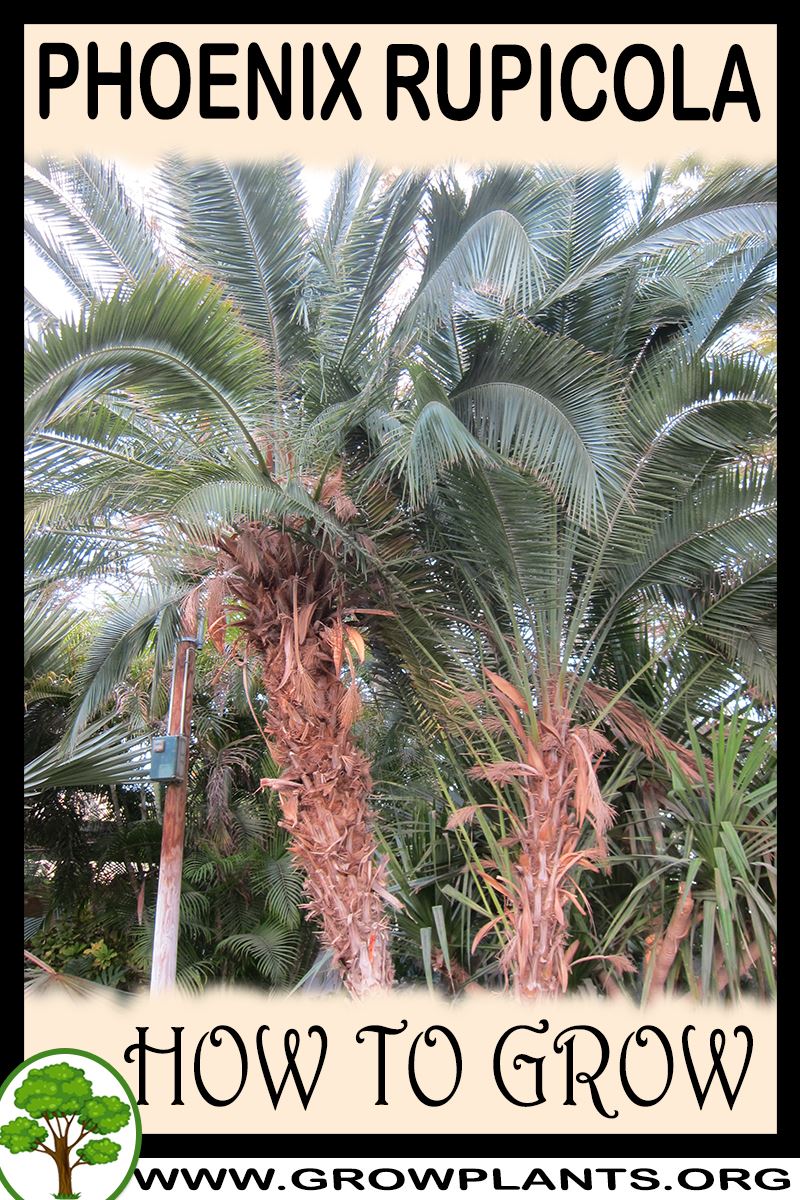
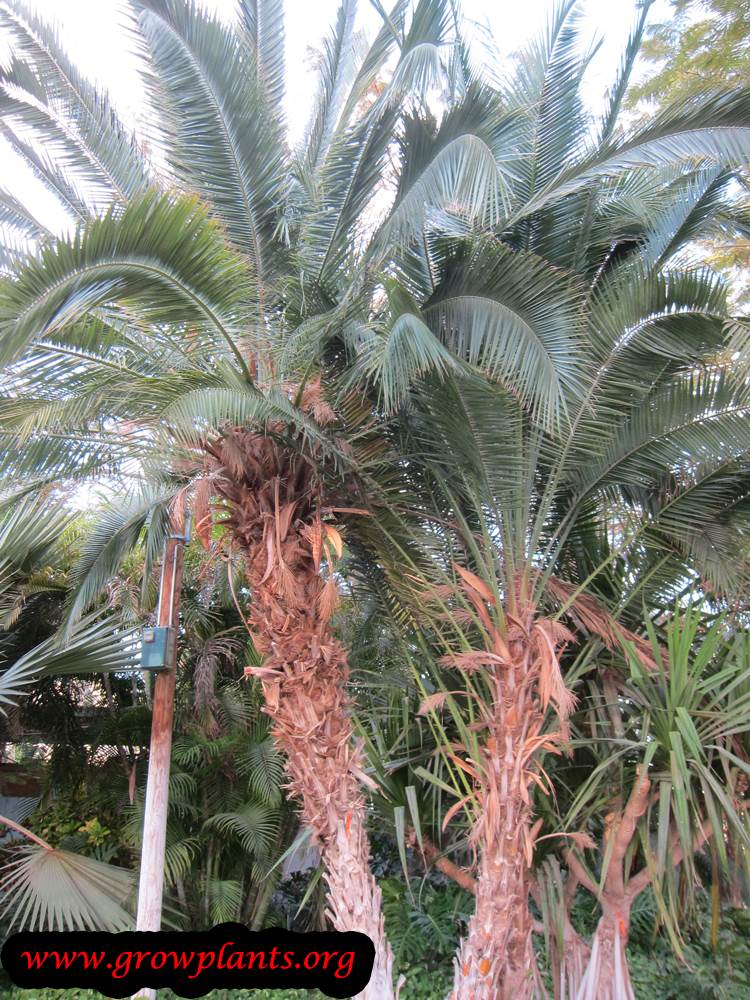
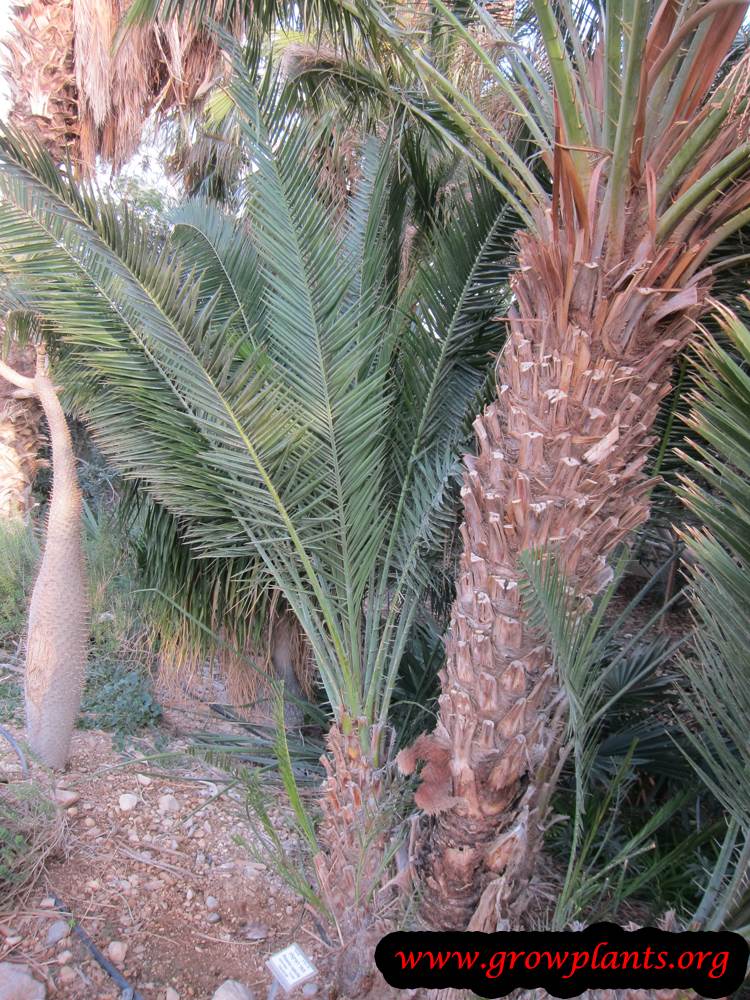
Overview: Phoenix rupicola, the cliff date palm, is a solitary evergreen palm grown mainly for its graceful, arching crown of pinnate leaves. It is a warm-climate ornamental palm and should not be confused with the true date palm, Phoenix dactylifera.
Quick Specifications
| Plant Type | Evergreen perennial palm |
| Growth Habit | Solitary trunk with arching pinnate crown |
| Mature Size | About 4-8 m on the current GrowPlants record |
| Growth Rate | Moderate |
| Light | Full sun |
| Water Need | Moderate to high during active growth, with good drainage |
| Primary Use | Ornamental palm |
| Propagation Biology | Seed-primary; not a normal offset-dividing palm |
Identity Note
This page is specifically Phoenix rupicola. Legacy Phoenix dactylifera text must not be reused for its profile, fruiting timeline or propagation.
Care Guide: Planting, Soil & Watering
Overview: The date palm is a large desert palm that thrives in full sun and intense heat in deep, well-drained soil, tolerating dry and saline conditions. Despite its desert home it drinks heavily — abundant water is needed for good fruiting — and it withstands cold down to about −10°C.
Quick Care Requirements
| Requirement | Ideal Condition |
|---|---|
| Planting Season | Spring, summer or autumn in the warm season |
| Growth Rate | Moderate |
| Soil Type | Deep, sandy, well-drained; tolerates dry and saline soil |
| Water Need | High — deep, generous watering, especially for fruit |
Planting & Establishment
- Best Planting Season: Plant in spring, summer or autumn during the warm season.
- How to Plant:
- Hole Preparation: Dig a deep, wide hole to accommodate the root system on a freely draining site with room for the large trunk.
- Soil Amendments: Improve heavy ground with sand or grit for drainage; the palm is not fussy about fertility and tolerates poor, salty soil.
- Planting Depth: Set the base of the trunk at soil level, keeping the growing crown well above the surface; do not bury the trunk.
- Growth Speed & Expectations: Expect moderate growth to a tall palm 4–8 m; a male and a female plant are needed to set fruit.
Soil, Watering & Drainage Care
- Soil Mix & Drainage Needs: Deep, free-draining soil is best — the classic saying is ‘feet in water, head in fire.’ It is a large tree unsuited to containers.
- Watering Schedule & Technique:
- Young / Newly Planted: Water young palms deeply and regularly to establish the deep root system.
- Established: Water deeply and generously; consistent, abundant moisture at the roots is what produces heavy date crops.
- Seasonal Adjustments: Water most through the hot fruiting season and reduce it in cool winter weather.
Climate, Light & Hardiness
This ornamental date palm grows in mediterranean, desert, subtropical, and tropical climates, needing full sun. Per the site's own data it is hardy through USDA zones 9–11 and tolerates winter cold down to roughly −10°C (14°F) once established.
Quick Climate Specifications
| Climate Zones | Mediterranean, Desert, Subtropical, Tropic |
|---|---|
| USDA Hardiness Zones | 9–11 |
| Approx. Survival Minimum | Established plants may briefly tolerate cold down to about −10°C (14°F) |
| Frost Tolerance | Moderate |
| Light Conditions | Full Sun |
Sunlight & Light Exposure
Optimal Light Setup
Needs full sun; the site's own care data notes it can grow without full sun but will not produce fruit reliably in that case.
Temperature Extremes & Hardiness
USDA Hardiness & Regional Limits
Hardy through USDA zones 9–11, a genuinely cold-tolerant palm for its type, able to withstand occasional winter cold well below freezing once established.
Cold Damage & Winter Protection
The site's own data states this palm tolerates cold above roughly −10°C (14°F); cold tolerance in date palms generally varies by cultivar, plant age, and exposure duration, and young palms are more cold-sensitive than mature, established specimens.
Frost Sensitivity
Established trunks tolerate brief freezes reasonably well within the stated limit, but the growing point (crown) is the most cold-vulnerable part and hard, prolonged freezes can be fatal.
Wind, Humidity & Microclimate
Wind Tolerance
Date palms are generally wind-firm, sturdy trees well suited to open, exposed desert and coastal-adjacent sites.
Growing in Pots, Balconies & Indoors
This is a large date palm that reaches 4-8 m and demands full sun and plenty of water, so the grower rates it as neither a houseplant nor a lasting container plant. Only a young plant can be kept in a big pot for a few years before it needs the open ground.
Quick Details
- Container Size: A very large, heavy pot – and only a medium-term home for a young plant
- Indoor Suitability: Not a houseplant and not a lasting container plant; it is a big, sun-hungry tree
- Best Spot: Full sun – it will not thrive in shade or indoors
- Soil & Drainage: Free-draining, organic-rich mix
- Watering in Pots: Big amounts – it is thirsty and a pot must never be allowed to bake dry
Indoors & On the Windowsill
- Not for indoors: The grower does not rate it as a houseplant; it demands full sun that no window can supply, and it grows into a large tree.
- Not a lasting pot plant: He also marks it as unsuitable for containers – a young plant tolerates a big pot for a while, but it soon needs open ground.
On a Balcony or Patio
- Young plants only: A young date palm can stand on a hot, sunny patio in a big, heavy pot, but expect to plant it out before it becomes top-heavy and root-bound. It is thirsty, so water generously and never let the pot dry out.
Choosing the Pot, Soil & Long-Term Care
- Pot & drainage: A very large, stable pot with strong drainage holes; even a thirsty palm must not sit in stagnant water.
- Potting mix: A free-draining yet organic-rich mix – a quality potting mix or peat/coir blended with perlite or vermiculite for aeration.
- Watering: Water generously and often – large palms in pots dry out fast in full sun.
- Move it on: Pot on while young, but plan to plant it out once it outgrows container life.
Fertilizing & Feeding
A moderate feeder – a complete, palm-specific fertilizer supplying potassium and magnesium alongside routine manganese supports steady frond growth on this large, full-sun palm over its long lifespan.
Quick Fertilizing Specs
| Feeding Level | Moderate – a complete palm-specific fertilizer supports steady frond growth and, where present, fruit development |
|---|---|
| Main Nutrient Priority | Balanced feeding with attention to potassium and magnesium |
| Best Feeding Period | The warm active growing season |
| Micronutrients | Manganese and magnesium are routinely included in palm-specific fertilizer blends |
| Reduce/Stop Feeding | Ease off feeding as growth slows in cooler weather |
Feeding by Growth Stage
Establishment after planting
Support root establishment and steady frond growth on this large, full-sun date palm during its early years
| Nutrient direction | A balanced, palm-specific fertilizer supports strong establishment without forcing excessive soft growth |
|---|---|
| Timing | During the early growing seasons after planting, while the palm is still establishing its root system |
| Frequency | Regular, moderate feeding through the warm growing season supports steady establishment |
| Fertilizer types | A balanced, controlled-release palm-specific fertilizer, Organic mulch spread around, not against, the trunk |
| Routine trace nutrients | manganese, magnesium |
| Precautions | Keep fertilizer away from direct trunk contact, and expect this large palm to take a long time to reach fruiting size and full stature |
Ongoing feeding for an established, full-sun palm
Maintain healthy, uniformly green fronds and support the palm through its ongoing growth and, on fruiting specimens, fruit development
| Nutrient direction | A balanced palm-specific fertilizer with potassium and magnesium helps prevent the frond discoloration common in palms and supports overall vigor |
|---|---|
| Timing | Through the warm active growing season each year |
| Frequency | Regular, moderate feeding through the growing season, tapering off as growth slows in cooler weather |
| Fertilizer types | A controlled-release palm-specific fertilizer formulated with potassium and magnesium |
| Routine trace nutrients | manganese, magnesium |
| Precautions | Avoid plain lawn fertilizer near this palm, since it typically lacks the potassium and magnesium palms need; fruit set depends on having both a male and female palm nearby and isn’t controlled by feeding alone |
Nutrient Deficiency Signs & Corrections
Oldest fronds show orange-yellow spotting and leaflet tips that look scorched or dead
| Possible causes | Potassium deficiency, one of the most common issues in landscape palms, Underlying magnesium deficiency causing a similar pattern on older fronds, Normal aging of the oldest fronds |
|---|---|
| Appears first on | Oldest, lowest fronds |
| What to check | Whether spotting is orange/necrotic (potassium) or a clean yellow margin band (magnesium), Fertilizer history – general lawn fertilizer usually lacks enough potassium for palms, Whether newer fronds look healthy by comparison |
| Possible correction | Switch to a palm-specific fertilizer with adequate potassium per its label; already-damaged fronds won’t recover but new growth should improve |
Older fronds develop a broad yellow band along the leaflet edges while the center stays green
| Possible causes | Magnesium deficiency, common in palms on sandy or heavily leached soil, Potassium deficiency producing a similar older-frond pattern, Normal frond aging |
|---|---|
| Appears first on | Older fronds, along the margins |
| What to check | Whether yellowing forms a clean margin band versus scattered spotting, Soil type and fertilizing history, Position of affected fronds on the palm |
| Possible correction | Apply a palm-specific fertilizer that includes magnesium per its label |
Newly emerging fronds look weak, streaked, or frizzled rather than uniformly green
| Possible causes | Manganese deficiency (frizzle top), often tied to high soil pH or waterlogged conditions, Poor drainage stressing the root system, An unbalanced fertilizer program missing key micronutrients |
|---|---|
| Appears first on | Newest emerging fronds |
| What to check | Soil pH and drainage, Whether the frizzling is specific to new growth versus older fronds, Fertilizer history for micronutrient content |
| Possible correction | Apply a chelated manganese product per its label and switch to a complete palm-specific fertilizer |
Pruning, Training & Seasonal Maintenance
As a single-trunk feather palm, this plant tolerates almost no true pruning – it has one growing point at the crown, and removing green tissue permanently weakens the whole tree. The only real maintenance is removing fully dead, brown fronds, and even then the recommended practice is to leave the leaf-base ‘boot’ attached to the trunk rather than cutting flush, since that persistent base helps protect the trunk. Spines at the frond bases make this a genuinely hazardous plant to work on, so cuts on a mature tree of this size are usually a job for a pole pruner or a professional.
Quick Pruning & Maintenance Specs
| Pruning Tolerance | Low – sanitation of dead fronds only |
| Primary Pruning Window | Fully dead fronds are typically cleared up in autumn in cultivation, though removal can happen whenever a frond has fully browned |
| Typical Frequency | As fronds die; roughly annual clean-up |
| Main Objective | Remove dead fronds and spent fruit stalks without wounding the trunk or crown |
| Young Plant Priority | None – let the single trunk and crown develop undisturbed |
| Mature Plant Priority | Remove only fully brown fronds, leaving the leaf-base boot in place; clear spent fruit clusters |
| Best Tool Type | Pruning saw for frond bases; pole pruner for a tree this tall (4–8 m) |
| Avoid Heavy Pruning During | Never remove green or partially green fronds, at any time of year |
Pruning by Plant Age & Size
Newly Established
No pruning beyond removing fronds damaged in transplant; let the palm establish its root system undisturbed.
Young / Formative
No structural training applies – a solitary palm has a single growing point and cannot be shaped by cutting.
Mature / Established
Remove fully dead fronds as they occur, always cutting at the base of the leaf stalk rather than flush against the trunk, and clear spent fruit stalks once the crop has been picked or dropped.
Seasonal Pruning Schedule
Autumn clean-up: in cultivation, dead-frond removal is often timed for autumn, but the underlying trigger is always frond condition, not the calendar – a fully browned frond can be removed whenever it occurs.
Special Growth to Remove
- Fully dead, brown fronds only – cut at the base of the leaf stalk, leaving the boot attached to the trunk rather than cutting flush to it.
- Spent fruit clusters after harvest or once fruit has dropped.
Tools
A pruning saw for the tough, spiny frond bases; a pole pruner is genuinely warranted for reaching the crown safely on a tree this tall rather than climbing for every cut.
Tool Hygiene & Disease Risk
High-risk – the red palm weevil (Rhynchophorus ferrugineus, the recorded pest for this palm) is a serious, often lethal pest of Phoenix palms, and pruning wounds are a known entry point for it. Avoid unnecessary wounding of the trunk or crown, disinfect blades between palms, and inspect any fresh cut for boring dust or frass afterward.
Cut Placement & Technique
Cut each dead frond at the base of its stalk, leaving the persistent leaf-base boot on the trunk rather than stripping it away – removing it exposes trunk tissue unnecessarily. Handle cut fronds carefully given the sharp spines along their edges/base.
Heavy Pruning & Rejuvenation
Not tolerated. This palm has a single crown and growing point; there is no way to cut back and regenerate the canopy, and any damage to the crown itself can kill the tree.
Post-Pruning Care
Monitor any fresh cut for signs of weevil activity (boring holes, frass, oozing) in the following weeks, and avoid creating unnecessary wounds, especially during periods of high local weevil activity.
Common Pruning Mistakes
- ‘Hurricane cutting’ – stripping most of the green canopy back to a tuft of top fronds, which severely weakens the palm and increases its susceptibility to pests including red palm weevil.
- Cutting fronds flush against the trunk instead of leaving the protective boot, unnecessarily exposing trunk tissue.
- Wounding the crown or trunk while harvesting fruit, which becomes harder to pick as the tree matures.
When NOT to Prune
Never remove a green or partially green frond for appearance’s sake, and avoid any unnecessary trunk or crown wounding at any time given local weevil pressure.
Recommended Tools (by task)
- Pruning saw – for cutting through tough, spiny frond bases.
- Pole pruner – to reach and remove fronds safely on a tall, mature specimen without climbing for every cut.
- Blade disinfectant – given the high-risk red palm weevil pressure, disinfecting between cuts and between palms reduces the chance of spreading it via pruning wounds.
Pruning Troubleshooting
| Problem | Possible Cause | What to Check | Corrective Action |
| Boring holes, frass or oozing near a recent cut | Red palm weevil infestation entering through a pruning wound | Inspect the cut and surrounding trunk closely; check for wilting or collapsing fronds | Contact a professional/local plant health authority promptly; avoid further unnecessary wounding |
| Thin, weak-looking canopy | Over-pruning of green fronds (‘hurricane cut’) | Number of green fronds remaining; pruning history | Stop removing anything but fully brown fronds; allow the crown to recover over seasons |
| Increasingly difficult, risky fruit harvest | Tall mature trunk with dense fruit-stalk and frond congestion | Height of fruiting bunches; accessibility | Remove spent fruit stalks promptly after harvest and use a pole pruner or professional access rather than climbing |
Propagation Guide
Phoenix rupicola, the cliff date palm, is propagated primarily from seed. As a solitary palm it does not normally provide the rooted basal offsets used to divide naturally clustering palm species.
Quick Propagation Specs
| Best Propagation Method | Seed |
| Stem or Leaf Cuttings | Not suitable |
| Offset Division | Not a normal method for this solitary species |
| Propagation Difficulty | Moderate |
| Best Seed | Fresh, fully mature seed |
| Conditions | Warm, consistently moist but well-drained medium |
Preparing the Seed
Remove any remaining fruit flesh from mature seed and clean it thoroughly. Fresh seed is preferable because palm seed generally loses viability during prolonged or unsuitable storage.
Sowing
Sow the cleaned seed shallowly in a loose, well-drained propagation medium. Keep the medium consistently moist without allowing it to become saturated.
Germination Conditions
Provide steady warmth during germination. Palm seedlings can take time to emerge, so maintain stable moisture and temperature rather than disturbing the seed to check for roots.
Seedling Care
After germination, give seedlings bright light and good air movement. Pot them on carefully once the young root system is established, taking care not to damage the developing palm root.
Bloom & Flower Guide
Quick Details
- Bloom Season: Summer
- Flower Appearance: Many small yellow flowers – dozens along each branching flower cluster that emerges from among the fronds
- Edibility: Grown for its fruit and as an ornamental palm; the flowers themselves are not eaten
Detailed Blooming Overview
Phoenix rupicola, the cliff date palm, carries its flowers in large branching clusters that burst from a sheath among the fronds in summer, each bearing dozens of small yellow flowers. Like other date palms it is dioecious – male and female flowers are borne on separate plants – so both are needed for fruit.
Flower Characteristics
- Small yellow flowers, dozens crowded along each branch of the cluster.
- Male and female flowers on separate trees (dioecious).
Bloom Care & Thinning
- Pollination: Wind-pollinated; where fruit is wanted, a female tree needs pollen from a nearby male (growers often hand-pollinate).
- Managing the bloom: No deadheading needed – simply remove old flower stalks once they have finished.
Pests, Diseases & Troubleshooting
Overview: Phoenix palms are hardy, drought- and salt-tolerant, but they face one truly serious threat – the red palm weevil, which bores unseen into the crown and can kill a mature palm before symptoms show – plus date palm scale, mites and, on fruiting trees, birds and bats after the ripening dates. Bayoud disease and rots are the key diseases. Vigilant crown inspection, orchard hygiene and prompt removal of infested tissue are essential.
Quick Troubleshooting Overview
| Issue / Pest | Main Symptom | Primary Solution |
|---|---|---|
| Red palm weevil | Wilting/collapsing crown, oozing tunnels, frass | Inspect crown, pheromone traps, remove & destroy infested palms |
| Date palm scale | White/grey crust on leaves and fruit | Prune infested fronds, horticultural oil |
| Spider mites | Dusty webbing, scarred fruit and leaflets | Rinse, horticultural oil, encourage predators |
| Birds & bats | Pecked/eaten ripening dates | Net or bag bunches before ripening |
| Bayoud disease | One-sided frond death, wilting fronds | Resistant varieties, remove & destroy, sanitation |
| Fruit rot / spotting | Rotting, spotted dates in humid/wet weather | Bag bunches, thin, harvest promptly |
Common Pests & Management
- Red palm weevil (Rhynchophorus ferrugineus):
- Symptoms: The most dangerous palm pest: large reddish weevils lay eggs in crown wounds and leaf bases, and grubs tunnel unseen through the heart. Early signs are chewed, holed or drooping young fronds, oozing brown fluid and fermenting frass, then sudden crown collapse – often fatal before it is noticed.
- Prevention & Control: Inspect the crown regularly, avoid unnecessary frond wounds (a key entry point) and seal any cuts; use pheromone mass-trapping around the planting. Remove and destroy heavily infested palms to protect neighbours, and follow local quarantine and treatment programmes – this pest usually needs coordinated, professional management.
- Date palm scale (parlatoria scale) (Parlatoria blanchardi):
- Symptoms: White, grey or brown crusty scale encrusting leaflets, rachis and fruit, weakening the palm and downgrading the dates.
- Prevention & Control: Prune out and burn heavily infested fronds, keep palms vigorous, and encourage natural enemies such as ladybirds; horticultural oil smothers scale on accessible fronds, targeting the crawler stage.
- Two-spotted spider mite (Tetranychus urticae):
- Symptoms: Fine pale stippling on leaves, faint webbing on undersides and leaf axils, and a dusty bronzed look in warm dry conditions. Tiny moving specks visible with a hand lens.
- Prevention & Control: Raise humidity and hose foliage regularly, as mites thrive in hot dry air; introduce predatory mites (Phytoseiulus persimilis) under cover. Treat hotspots with insecticidal soap or horticultural oil, ensuring thorough coverage of leaf undersides.
- Rhinoceros / longhorn stem borers (Oryctes spp. / Cerambycidae):
- Symptoms: Beetles and grubs bore into the crown, frond bases and trunk, leaving holes, tunnels and weakened growth that can invite the red palm weevil.
- Prevention & Control: Keep the palm clean of rotting frond bases and debris where beetles breed, remove and destroy infested material, and use light traps or pheromone traps where available.
- Birds & bats (fruit) (various):
- Symptoms: Ripening dates are pecked, eaten and fouled by birds and fruit bats, causing direct loss and opening fruit to rot.
- Prevention & Control: Bag or net the fruit bunches with fine mesh or paper sleeves before ripening; this also keeps out insects and reduces rot. Harvest promptly as bunches ripen.
Diseases & Fungal Issues
- Bayoud disease (Fusarium oxysporum f. sp. albedinis):
- Symptoms: A lethal soil-borne wilt: fronds die one side at a time, leaflets whitening and drying from the tip along one half before the whole frond and then the palm dies. A major disease of date palms in affected regions.
- Treatment & Management: No cure – plant resistant varieties in known areas, use clean planting stock and tools, remove and destroy affected palms, and practise strict sanitation to avoid spreading the fungus on soil, water and offshoots.
- Graphiola false smut (Graphiola phoenicis):
- Symptoms: Small black, wart-like spore bodies scattered over leaflets in humid conditions, yellowing and weakening fronds.
- Treatment & Management: Improve air circulation, avoid overhead watering, remove badly affected fronds, and grow tolerant varieties; copper fungicide where humidity keeps it active.
- Fruit rot & inflorescence rot (Khamedj) (Mauginiella / Thielaviopsis spp.):
- Symptoms: Rotting, browning flower spathes and rotting, spotted fruit in damp or wet weather, especially when rain hits ripening dates.
- Treatment & Management: Bag bunches to shield from rain, thin fruit for airflow, remove infected material, and harvest promptly; copper sprays at flowering in wet regions.
- Crown & trunk rots (Thielaviopsis / Ganoderma spp.):
- Symptoms: Soft rotting or bleeding of the crown or trunk, and shelf-like brackets at the base with Ganoderma butt rot.
- Treatment & Management: Avoid crown and trunk wounds, keep the base dry and clean, and remove palms with advanced butt rot; there is no cure for Ganoderma.
Growing Difficulties & Abiotic Problems
- Frizzle top / micronutrient deficiency:
- Cause & Symptoms: Manganese (and sometimes potassium) deficiency, common in poor or alkaline soils, gives weak, frizzled, necrotic new fronds and yellowing older leaves.
- Correction Strategy: Correct with a palm-specific fertiliser containing manganese, potassium and magnesium; treat manganese deficiency with a soil or foliar manganese application and correct soil pH.
- Salt & drought stress:
- Cause & Symptoms: Though tolerant, extreme salinity or prolonged drought browns leaflet tips and thins the canopy.
- Correction Strategy: Leach salts with deep irrigation, and water deeply but infrequently to keep the palm vigorous and better able to resist the weevil.
- Fruit cracking & poor set:
- Cause & Symptoms: Rain or erratic water on ripening dates causes cracking and rot, while poor pollination gives few fruit.
- Correction Strategy: Hand-pollinate for reliable set, thin and bag bunches, and manage irrigation to steady moisture as fruit ripens.
What Helps – Products & Tools
For Phoenix palms the priorities are red-palm-weevil pheromone traps and vigilant crown inspection, plus fruit bunch bags/nets against birds, bats, insects and rot. Horticultural oil handles scale and mites; copper fungicide covers false smut and wet-weather fruit rots; and a manganese-rich palm fertiliser corrects frizzle top. Serious weevil or Bayoud outbreaks need coordinated, often professional, action.