Plant Profile & Key Characteristics
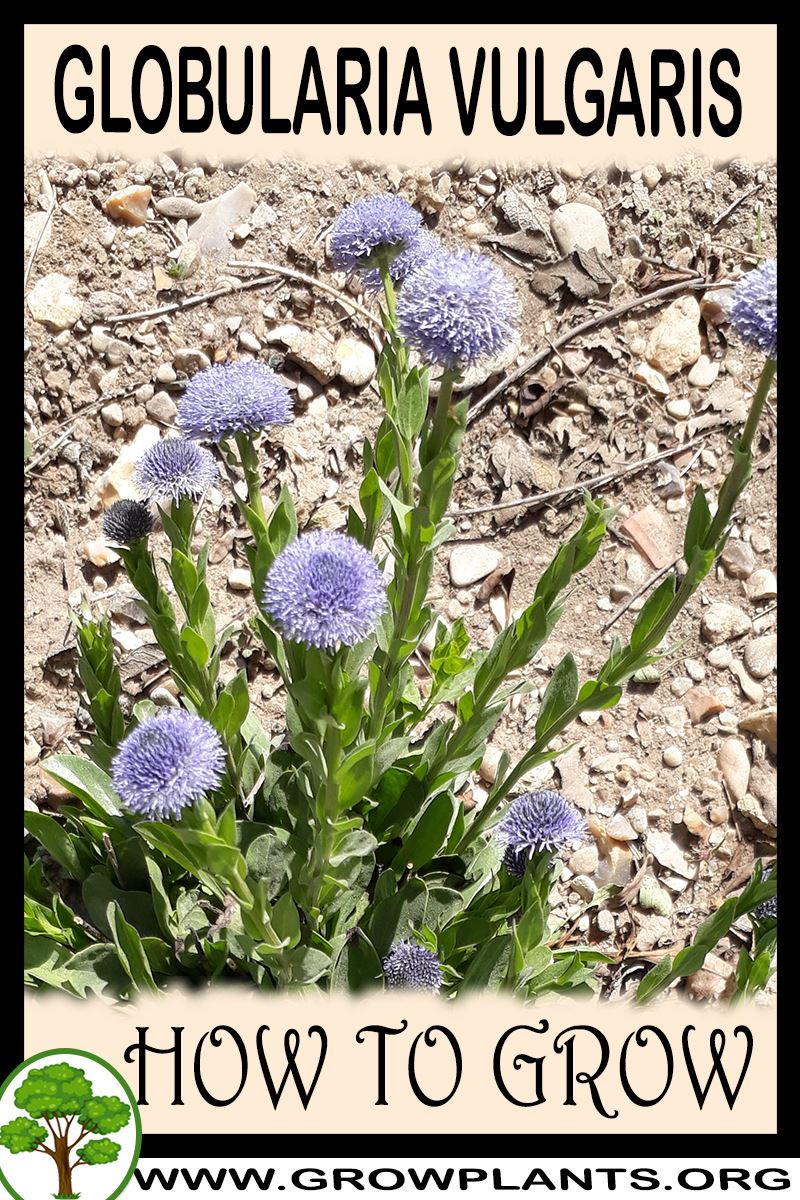
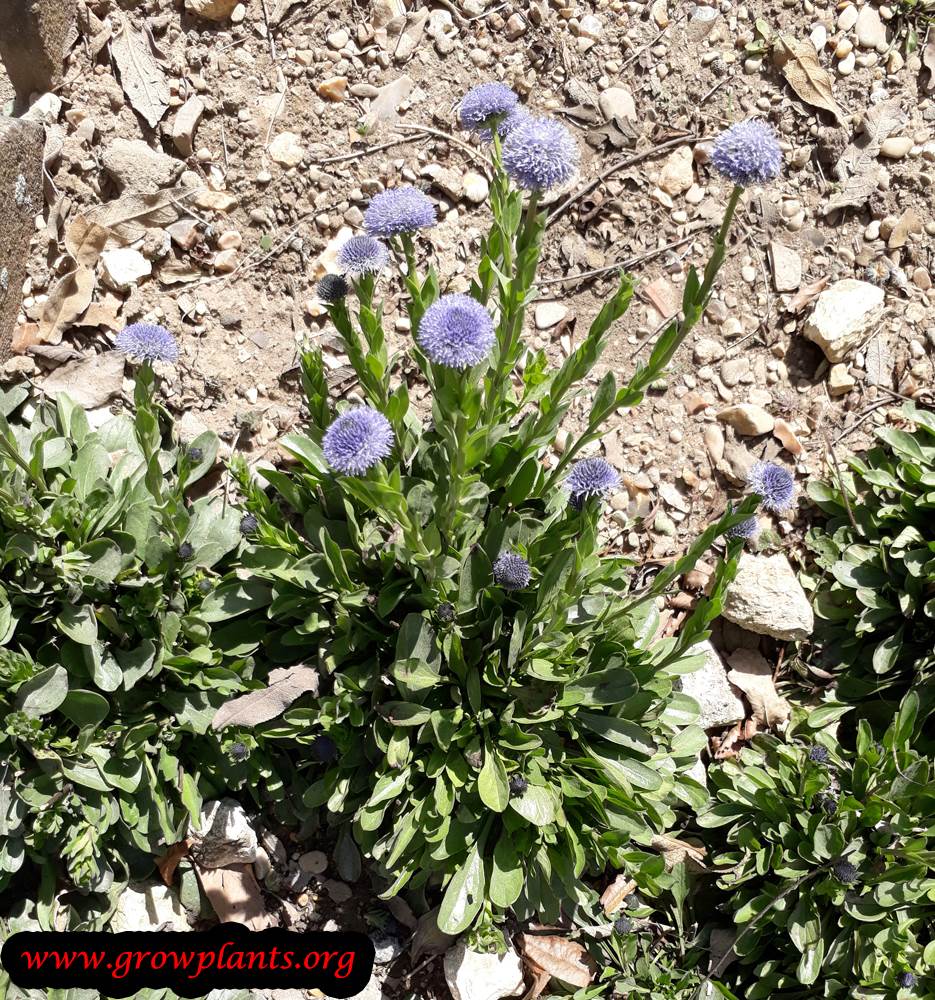
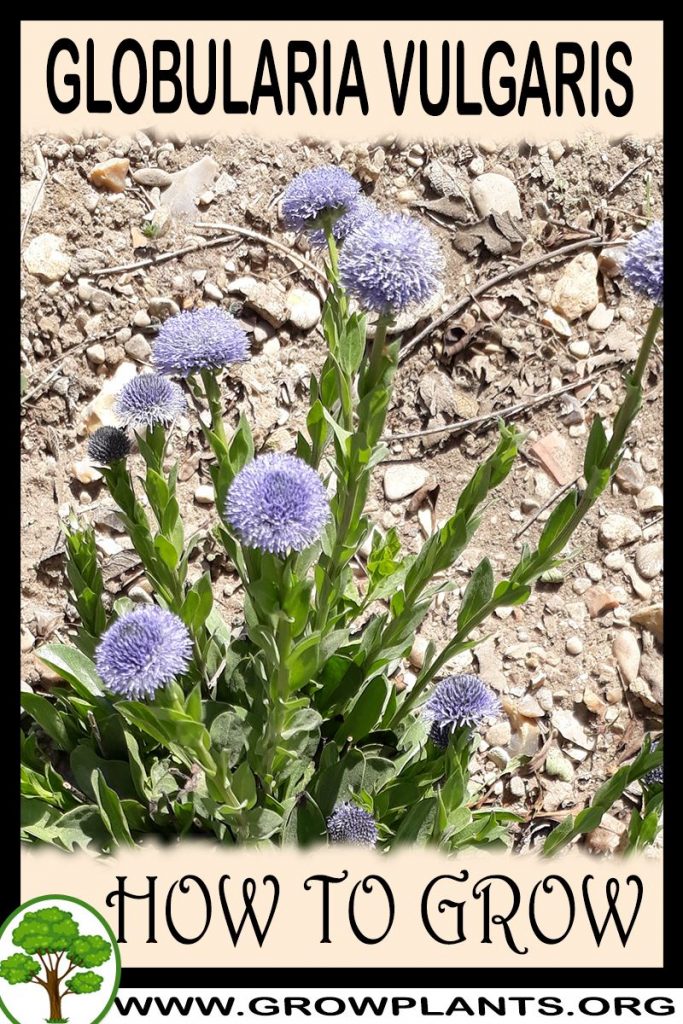
Overview: Globe daisy (Globularia vulgaris) is a low, evergreen subshrub 10-50 cm (4-20 in) tall, grown as an ornamental for rockeries and edging. It bears rounded, ball-shaped blue to purple flower heads over spoon-shaped foliage.
Quick Specifications
| Specification | Attribute |
|---|---|
| Plant Type / Life Cycle | Evergreen perennial subshrub |
| Foliage Type | Evergreen |
| Mature Size | 10-50 cm (4-20 in) tall |
| Growth Rate | Fast to moderate |
| Hardiness | USDA zones 5-9 |
Growth Form & Structure
- Height & Spread: A low mound 10-50 cm (4-20 in) high; suited to rockeries, troughs and containers.
- Growth Habit & Form: Low, cushion- to mat-forming evergreen subshrub with a basal rosette of leaves.
- Lifespan & Maturity: A hardy, long-lived perennial flowering in summer.
Anatomy & Physical Features
- Leaves & Foliage: Green, spoon-shaped leaves in a low rosette.
- Flower Characteristics: Small flowers packed into round, ball-shaped heads of blue to purple.
Primary Uses & Landscape Value
- Functional & Ornamental Roles: A rockery, alpine-trough, edging and groundcover ornamental.
Care Guide: Planting, Soil & Watering
Overview: Globularia vulgaris (globe daisy) is a low, evergreen alpine subshrub (hardiness zone 5–9) for full sun and gritty, sharply drained soil. It is a rock-garden plant that takes moderate water but must never sit in wet ground.
Quick Care Requirements
| Requirement | Ideal Condition |
|---|---|
| Planting Season | Warm season — spring or summer |
| Growth Rate | Fast to Moderate |
| Soil Type | Gritty, sharply drained soil |
| Water Need | Moderate — let the surface dry between waterings |
Planting & Establishment
- Best Planting Season: Plant in spring or summer so it establishes in warm soil.
- How to Plant:
- Hole Preparation: Dig a hole about twice the width of the root ball and the same depth.
- Soil Amendments: Add grit or coarse sand to open up heavy soil; it thrives in lean, stony ground.
- Planting Depth: Set the crown level with the soil surface; don’t bury it.
- Growth Speed & Expectations: Fast to moderate — spreads into a low evergreen mat topped with globe-shaped blooms.
Soil, Watering & Drainage Care
- Soil Mix & Drainage Needs: Sharp drainage is key — use a gritty, free-draining mix in troughs and rock gardens; wet winter soil is its main enemy.
- Watering Schedule & Technique:
- Young / Newly Planted: Water to establish, letting the surface dry between waterings.
- Established: Water moderately in dry spells; it tolerates short drought once settled.
- Seasonal Adjustments: Keep it on the dry side in cool, wet winters and water a little more in summer heat.
Climate, Light & Hardiness
Globe daisy is a cold-hardy subshrub for subtropical and temperate gardens, thriving in full sun and well-drained soil.
Quick Climate Specifications
| Climate Zones | Subtropical, Temperate |
|---|---|
| USDA Hardiness Zones | 5–9 |
| Frost Tolerance | High |
| Light Conditions | Full Sun |
Sunlight & Light Exposure
Optimal Light Setup
Needs full sun for the best flowering and a compact habit.
Temperature Extremes & Hardiness
USDA Hardiness & Regional Limits
Hardy in USDA zones 5–9, tolerating cold winters typical of temperate climates without protection.
Wind, Humidity & Microclimate
Rainfall & Seasonal Moisture
Prefers well-drained soil and is generally tolerant of a dry-summer climate pattern.
Growing in Pots, Balconies & Indoors
Globularia vulgaris is a low, sun-loving rock plant with fluffy blue flower-heads. The grower confirms it is not a houseplant but grows well in containers, and it is a fine subject for a sunny alpine pot or trough kept bright and sharply drained.
Quick Details
- Container Size: 5-10 L, or an alpine pan – a compact 10-50 cm plant
- Indoor Suitability: Not a houseplant; an outdoor rock plant for a bright, gritty pot
- Best Spot: Full sun – the brightest, most open spot you have
- Soil & Drainage: A gritty, sharply drained mix; it thrives in lean, stony ground
- Watering in Pots: Water moderately – let the surface dry between waterings and keep it drier in winter
Indoors & On the Windowsill
- Not a houseplant: The grower marks it as unsuitable indoors – it needs full sun and sharp drainage that indoor conditions cannot match.
- Windowsill: Only a cold, very sunny sill or alpine house comes close; a warm room makes it soft and shapeless.
- Cool rest: Hardy and sun-loving, it keeps best outdoors year-round in a bright, well-drained spot.
On a Balcony or Patio
- Light & wind: Give it the hottest, sunniest, airiest position; it shrugs off heat and lean soil but resents winter wet, so keep drainage sharp.
- Practicalities: Its neat evergreen mats suit a sunny trough or the front of a gritty pot; let runoff drain freely.
Choosing the Pot, Soil & Long-Term Care
- Pot & drainage: A pot with generous drainage holes and a layer of grit at the base; terracotta suits these plants because it dries quickly and the crown must never sit wet. Top-dress with grit to keep the neck dry.
- Potting mix: A sharply drained, gritty mix – loam-based compost cut with plenty of grit or coarse sand.
- Feeding: Feed sparingly – a weak balanced feed a few times in the growing season; these plants dislike rich conditions and lush, soft growth.
- Repotting: Repot every couple of years into fresh gritty mix and renew the grit top-dressing.
Fertilizing & Feeding
A light feeder: this low, well-drained-soil-loving subshrub naturally grows in lean conditions, so minimal feeding is enough to support its spring growth and summer bloom of blue-to-purple flower heads.
Quick Fertilizing Specs
| Feeding Level | Light feeder |
|---|---|
| Main Nutrient Priority | A light, balanced feed through spring growth; avoid high-phosphorus “bloom booster” products, which are not needed to drive flowering |
| Best Feeding Period | From spring growth through the summer bloom |
| Organic Options | A light top-dressing of compost worked into well-drained soil |
| Micronutrients | Usually adequately supplied by a light complete fertilizer; correct specific issues only when diagnosed |
| Soil pH | Prefers lean, well-drained soil; tolerates a range but dislikes rich, waterlogged conditions |
| Reduce/Stop Feeding | Stop feeding once bloom ends and the plant heads into autumn and winter dormancy |
Feeding by Growth Stage
Spring growth flush
Support modest new growth as this low, evergreen subshrub comes out of winter rest.
| Nutrient direction | A light, balanced complete fertilizer to support steady, compact growth. |
|---|---|
| Timing | As new growth resumes in spring. |
| Frequency | A single light feeding as growth resumes is usually enough for this lean-soil plant. |
| Fertilizer types | A balanced complete garden fertilizer used sparingly, A light top-dressing of compost |
| Precautions | Avoid rich or heavy feeding, which pushes this naturally compact plant into loose, floppy growth and can encourage rot in well-drained soil that stays too moist. |
Summer bloom
Support the ball-shaped blue-to-purple flower heads through their summer display.
| Nutrient direction | Minimal feeding is usually enough; high-phosphorus “bloom booster” products are not needed to drive flowering in this plant. |
|---|---|
| Timing | Through the summer bloom period. |
| Frequency | Feed sparingly, if at all, once flowering is underway. |
| Fertilizer types | A balanced complete garden fertilizer used sparingly, if needed |
| Precautions | Rich feeding during bloom favors soft foliage over flowers in this sun-loving subshrub. |
Autumn and winter rest
Let the plant rest through autumn and winter, when dead leaves and spent bloom stems are cleared away.
| Nutrient direction | None – withhold fertilizer through the autumn and winter rest period. |
|---|---|
| Timing | From autumn through winter. |
| Frequency | No feeding at this stage. |
| Fertilizer types | No feeding at this stage – allow the plant to rest undisturbed |
| Precautions | Do not fertilize during the autumn and winter rest period; resume only once spring growth clearly resumes. |
Nutrient Deficiency Signs & Corrections
New leaves turn pale yellow between dark green veins while older leaves stay green.
| Possible causes | high soil pH tying up iron, soil that stays wetter than this plant prefers, root stress from poorly drained soil |
|---|---|
| Appears first on | the youngest leaves |
| What to check | soil pH, drainage in the planting area, recent watering pattern |
| Possible correction | Improve drainage, correct overly alkaline soil where practical, and apply a chelated iron product per its label if chlorosis persists. |
Overall pale, thin foliage and a weak spring growth flush.
| Possible causes | very lean soil with little organic matter, low soil nitrogen, root competition from nearby plants |
|---|---|
| Appears first on | older leaves first, then the whole plant |
| What to check | overall leaf color and density, soil organic matter level, recent feeding history |
| Possible correction | Apply a light, balanced complete fertilizer during spring growth rather than a heavy feed. |
Leaf margins scorch or brown, and flowering comes weaker or shorter-lived than expected.
| Possible causes | low soil potassium, an imbalanced, nitrogen-heavy feeding history, leaching in light, sandy, well-drained soils |
|---|---|
| Appears first on | older leaf margins |
| What to check | leaf margin condition, recent feeding balance, bloom size and duration |
| Possible correction | Shift to a light, balanced fertilizer rather than adding more nitrogen. |
Pruning, Training & Seasonal Maintenance
Globularia vulgaris is a low, mounding alpine subshrub grown for its compact rockery habit and small blue-purple flower balls, so pruning needs are light and mainly cosmetic. The plant tolerates only gentle trimming – there is no framework of larger branches to train. The safest window is autumn into winter, once summer bloom has finished, and the main tasks are removing spent flowering stems and any dead leaves; a light shear immediately after flowering also helps keep the mound tight and prevents it opening up in the centre over time.
Quick Pruning & Maintenance Specs
| Pruning Tolerance | Low to Moderate – light trimming only, no hard cutback |
| Primary Pruning Window | Autumn / Winter |
| Secondary Maintenance Window | Immediately after summer bloom (light trim) |
| Typical Frequency | Once or twice a year |
| Main Objective | Remove dead leaves and spent bloom stems; keep the mound compact |
| Young Plant Priority | No pruning needed while the small mound fills in |
| Mature Plant Priority | Light post-bloom trim and autumn/winter tidy to prevent a bare, open centre |
| Best Tool Type | Precision snips |
| Avoid Heavy Pruning During | Summer bloom itself and any hard cutback at any time of year |
Pruning by Plant Age & Size
Newly Established
No pruning needed – let the small mound establish and fill in undisturbed.
Young / Formative
No structural training system applies to this low, naturally mounding subshrub.
Mature / Established
Trim lightly right after the bloom flush to keep the mound dense, and remove dead leaves and spent stems in autumn/winter.
Seasonal Pruning Schedule
Post-Flowering (Summer): objective – keep the mound compact; remove spent flowering stems with a light shear over the top of the mound; do not cut into old bare wood at the base. Expected response is tighter, denser growth without a bare centre developing.
Autumn / Winter tidy: objective – remove dead leaves and any remaining old flower stems; do not disturb healthy evergreen foliage.
Special Growth to Remove
- Spent flower stems, right after the summer bloom
- Dead leaves, cleared through autumn/winter
Container & Small-Space Pruning
Its naturally small size (10–50cm) suits troughs and rockery containers well without any size-control pruning; the same light post-bloom trim keeps a container specimen neat.
Tools
- Precision snips for spent flower stems and dead-leaf removal
Tool Hygiene & Disease Risk
Routine – clean, sharp tools are sufficient; the species’ known issue (aphids) is not tool-transmissible.
Cut Placement & Technique
Trim just above the point where flower stems emerge from the foliage mound; avoid cutting into the older, woodier base of the subshrub, which resprouts poorly compared with the soft new growth.
Heavy Pruning & Rejuvenation
Does not tolerate hard rejuvenation pruning well – like many low alpine subshrubs, cutting into old bare wood at the base often fails to resprout. If a mound becomes overly woody and gappy, propagation from cuttings or division to replace it is more reliable than trying to renovate it by hard pruning.
Post-Pruning Care
No special aftercare beyond normal watering; this light trimming does not warrant extra feeding.
Common Pruning Mistakes
- Cutting hard into the old woody base expecting it to resprout like a herbaceous perennial
- Leaving spent flower stems on all season, which lets the mound look tatty and can encourage a bare centre
When NOT to Prune
Avoid cutting during the summer bloom itself, and avoid any hard cutback into old wood at any time of year.
Recommended Tools (by task)
- Precision snips – the only tool this plant’s scale and soft new growth call for, whether deadheading or clearing dead leaves.
Propagation Guide
Globularia vulgaris is grown mainly from seed, which the site lists as the way to start this plant, with vegetative reproduction not required. As a mat-forming rock-garden subshrub, division or cuttings of a rooted section can also work as a supplementary option when a specific plant needs increasing quickly. Overall difficulty is Moderate, mainly because alpine/rock-garden seed can be slow and uneven to germinate.
Quick Propagation Specs
| Best Propagation Method | Seed |
| Alternative Methods | Division of rooted mat sections; semi-hardwood cuttings |
| Propagation Difficulty | Moderate |
| Seed True-to-Type | Usually true-to-type |
| Vegetative True-to-Type | Yes |
| Best Propagation Season | Spring to summer |
Growing from Seed
Dormancy & Pre-Sowing Treatment
Like many alpine and rock-garden species, germination may be improved by a period of cold (stratification) before or during sowing; this is a general precaution rather than a species-confirmed requirement here.
Sowing Season
Spring to summer, per the site’s planting season.
Germination Conditions
Sow in a gritty, well-drained mix in line with this species’ well-drained soil preference; germination can be slow and irregular, so allow time before giving up on a tray.
Division, Offsets, Pups & Suckers
Established mats can be lifted and divided into rooted sections, ideally in spring, to increase a specific plant more quickly than seed allows; replant divisions promptly into well-drained soil.
Bloom & Flower Guide
Quick Details
- Bloom Season: Late spring into summer
- Time to First Bloom: Established plants flower each year
- Flower Appearance: Many tiny florets packed into a rounded, fluffy ball in blue to purple
- Edibility: Grown as an ornamental – the flowers are not eaten
Detailed Blooming Overview
The globe daisy is named for its flower heads: dozens of slender florets gather into a neat blue-to-purple pompon on a short stem above a mat of spoon-shaped leaves. The pincushion-like heads are a favourite of bees and butterflies and suit a sunny rock garden or trough.
Flower Characteristics
- Small florets clustered into a rounded ball head in blue to purple.
- Held on short stems above a low, evergreen rosette.
Bloom Care & Thinning
- Encouraging bloom: Full sun and sharp drainage give the best flowering.
- Pollination: The nectar-rich heads draw bees and butterflies.
Pests, Diseases & Troubleshooting
Overview: Globe daisies (Globularia) are tough, low, alkaline-loving alpine sub-shrubs grown in rock gardens and troughs, and they are generally trouble-free. Their one real vulnerability is rot in winter wet or heavy soil; insect pests are few and minor. Because this is an obscure alpine with limited documented pest data, the profile below is generalised at the family/rock-garden level and should be verified. Grow lean, gritty and sharply drained.
Quick Troubleshooting Overview
| Issue / Pest | Main Symptom | Primary Solution |
|---|---|---|
| Crown/root rot (abiotic) | Collapse in winter wet or heavy soil | Gritty sharp drainage, alkaline lean soil, avoid winter wet |
| Aphids | Sticky, distorted new growth (occasional) | Hose off, encourage predators; soap if needed |
| Slugs & snails | Grazed new growth, slime trails | Grit barriers, hand-collect at night |
| Vine weevil (containers) | Trough plants wilt; grubs at roots | Nematode drench, hand-pick adults at night |
| Legginess (abiotic) | Soft, open, floppy growth in rich soil | Grow hard in poor, gritty soil and full sun |
| Rust/leaf spot | Occasional pustules or spots on leaves (rare) | Remove affected leaves, improve airflow |
Common Pests & Management
- Aphids (Aphis / Myzus spp.):
- Symptoms: Occasional small colonies of soft-bodied insects on new growth and flower stems, with mild distortion and honeydew.
- Prevention & Control: Hose off, encourage ladybirds and lacewings, and use insecticidal soap only if colonies persist; a minor and infrequent problem.
- Slugs & snails (Deroceras / Cornu spp.):
- Symptoms: Grazing on fresh spring growth and flower buds in damp conditions, with slime trails; mostly a nuisance on new growth.
- Prevention & Control: Use grit or sharp gravel mulch (which suits the plant anyway), hand-collect at night, and keep the crown clear; iron-phosphate pellets if pressure is high.
- Vine weevil (Otiorhynchus sulcatus):
- Symptoms: In troughs and pots, adults notch leaves at night while grubs eat roots, causing sudden wilting and collapse.
- Prevention & Control: Drench containers with parasitic nematodes in warm soil, hand-pick adults after dark, and check the rootball when repotting.
- Root mealybugs (Rhizoecus spp.):
- Symptoms: White cottony patches on roots of container plants, with slow decline and poor vigour.
- Prevention & Control: Inspect roots at repotting, wash and repot into fresh gritty mix, and discard heavily infested plants; a soil drench for valued stock.
Diseases & Fungal Issues
- Crown & root rot (Phytophthora / Pythium / Rhizoctonia):
- Symptoms: Blackening, collapse and death, particularly over a wet, cold dormancy in heavy or poorly drained soil; the main disease risk.
- Treatment & Management: Grow in very sharply drained, gritty, alkaline soil, keep the crown dry and mulched with grit, and avoid winter wet; raised beds and troughs suit it best.
- Rust (Puccinia spp.):
- Symptoms: Occasional orange-brown pustules on leaves; uncommon and usually minor.
- Treatment & Management: Remove affected leaves and improve airflow; treatment is rarely needed.
- Leaf spot (various fungi):
- Symptoms: Occasional brown spots on foliage in damp, still conditions; largely cosmetic.
- Treatment & Management: Remove spotted leaves, improve airflow, and avoid overhead watering.
Growing Difficulties & Abiotic Problems
- Winter wet rot:
- Cause & Symptoms: The chief risk: crowns and roots rot in wet, heavy or poorly drained soil over a cold dormancy.
- Correction Strategy: Plant in gritty, sharply drained, alkaline soil, mulch the collar with grit, and choose a raised, sunny, open position; keep it dry in winter.
- Legginess in rich soil:
- Cause & Symptoms: Soft, floppy, open growth with poor flowering in fertile or shaded conditions.
- Correction Strategy: Grow hard in poor, lean, gritty soil in full sun; avoid feeding, which spoils the tight alpine habit.
- Heat/drought stress in heavy soil:
- Cause & Symptoms: Scorch and dieback where drainage is poor and roots cook or suffocate.
- Correction Strategy: Ensure sharp drainage and a cool, gritty root run; these alpines want bright light but an airy, well-drained root zone.
What Helps – Products & Tools
The main ‘products’ are grit, gravel and sharp drainage – get the soil right and pests are rarely an issue. Keep insecticidal soap for the odd aphid, parasitic nematodes for vine weevil in troughs, and iron-phosphate pellets for slugs on new growth.