

Plant Profile & Key Characteristics
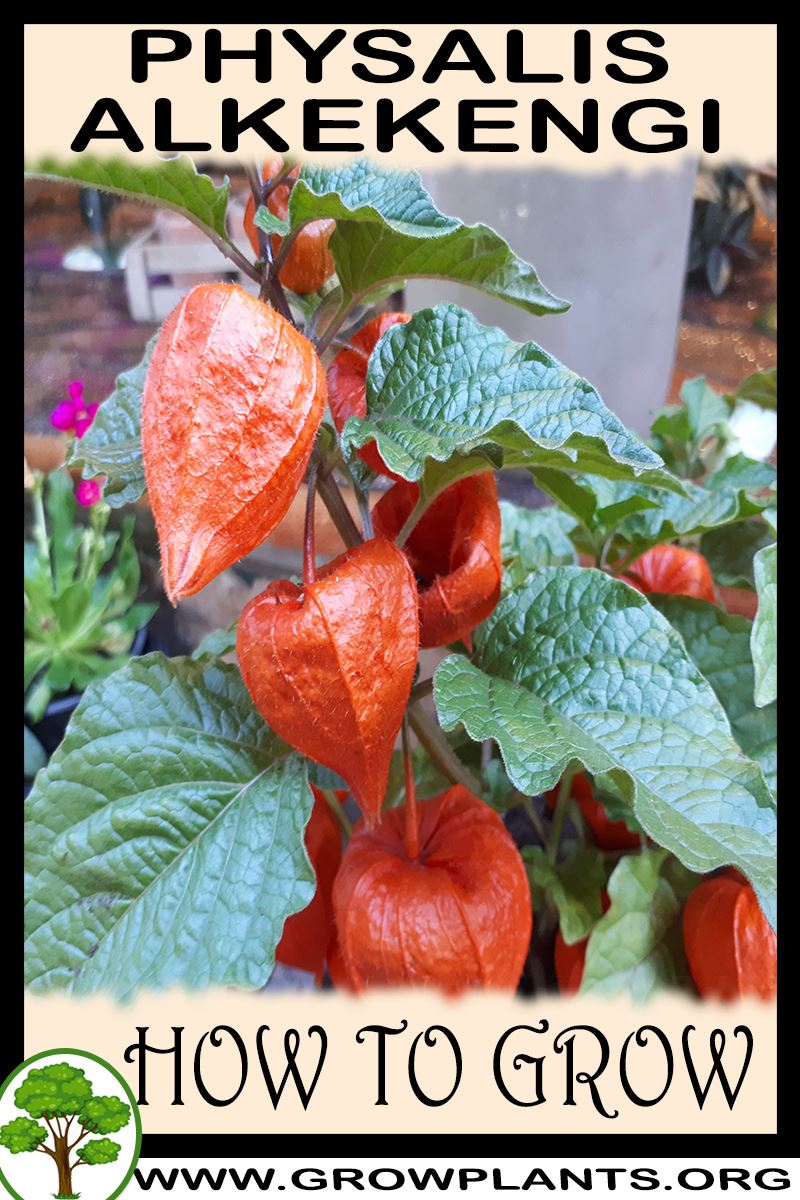
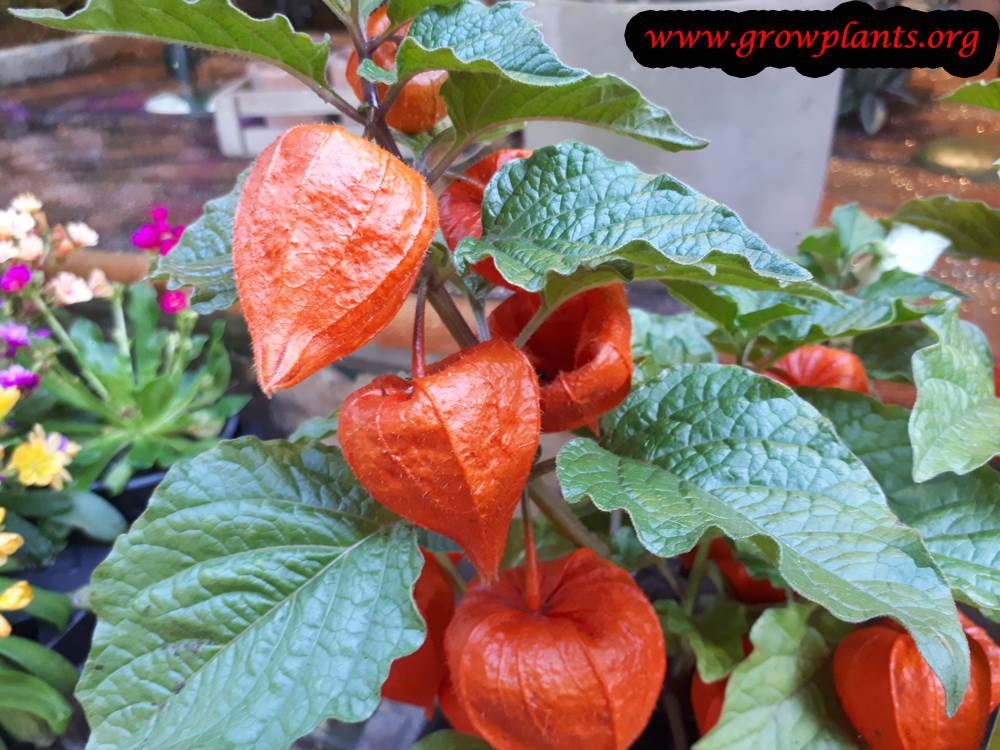
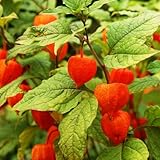
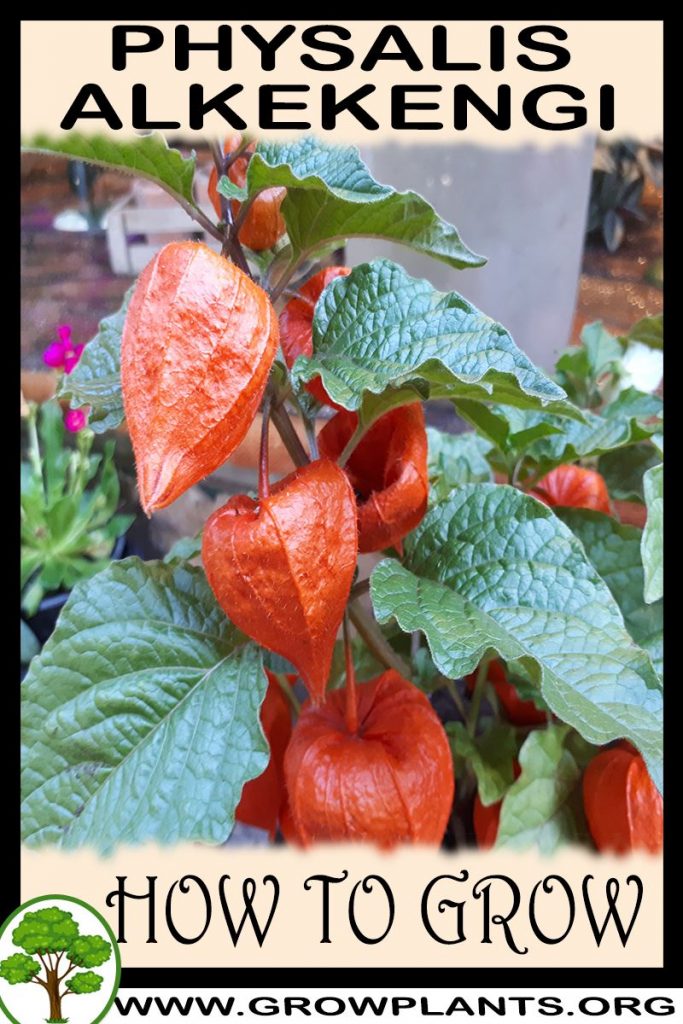
Overview: A herbaceous perennial (or annual) 30-80 cm (12-32 in) tall, famous for the papery, bright-orange lantern husks that surround its fruit. It is grown chiefly as an ornamental, especially for dried arrangements, and spreads by rhizomes.
Quick Specifications
| Specification | Attribute |
|---|---|
| Plant Type / Life Cycle | Herbaceous perennial (or annual) |
| Foliage Type | Herbaceous — dies back in winter |
| Mature Size | 30-80 cm (12-32 in) tall |
| Growth Rate | Fast to moderate |
| Root System | Rhizomatous (spreads and can be invasive) |
| Toxicity | Foliage, calyces and unripe fruit contain solanine-type alkaloids and are toxic; grown mainly for ornament |
| Hardiness | USDA zones 2-10 |
Growth Form & Structure
- Height & Spread: Upright stems 30-80 cm (12-32 in) tall spreading by rhizome into a colony; best contained, and grown in the ground or in pots.
- Growth Habit & Form: Rhizomatous herbaceous perennial; erect leafy stems rise from creeping roots and can spread aggressively.
- Lifespan & Maturity: A long-lived perennial that dies back each winter and returns and widens from the rhizomes.
Anatomy & Physical Features
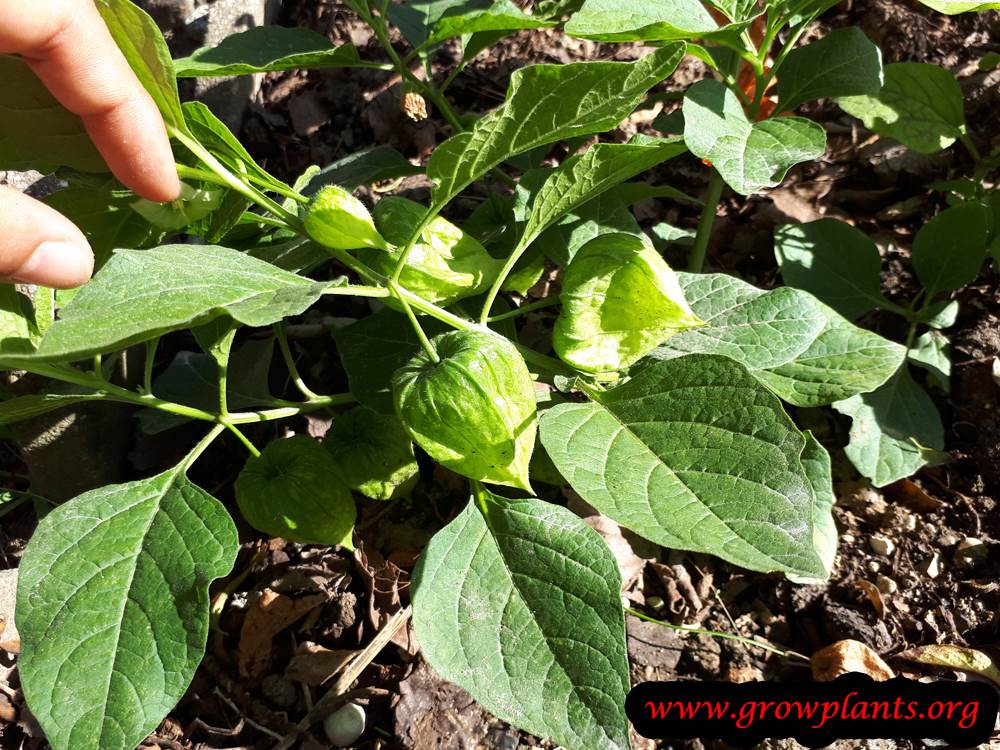
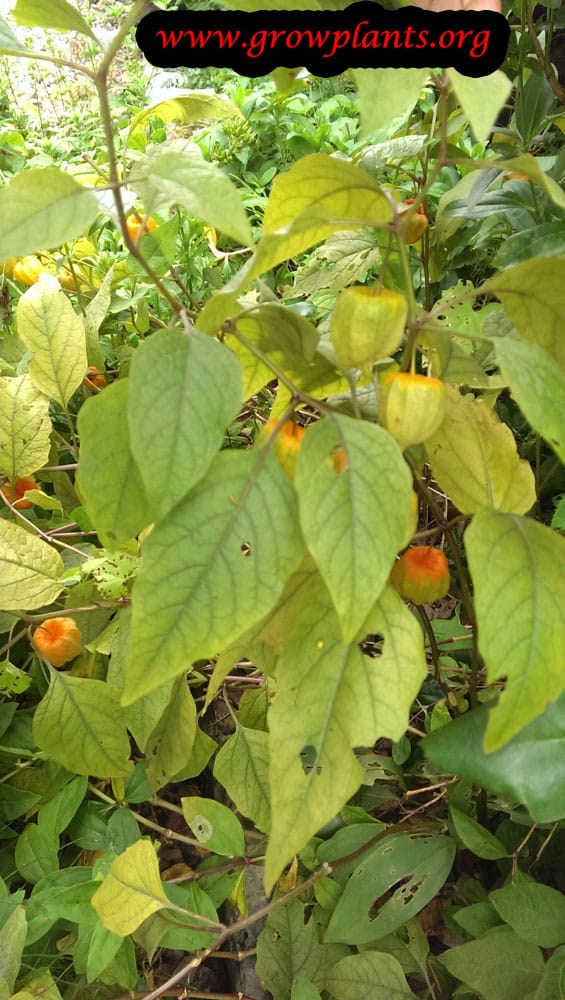
- Leaves & Foliage: Green rhomboid leaves with toothed margins and a slightly hairy texture.
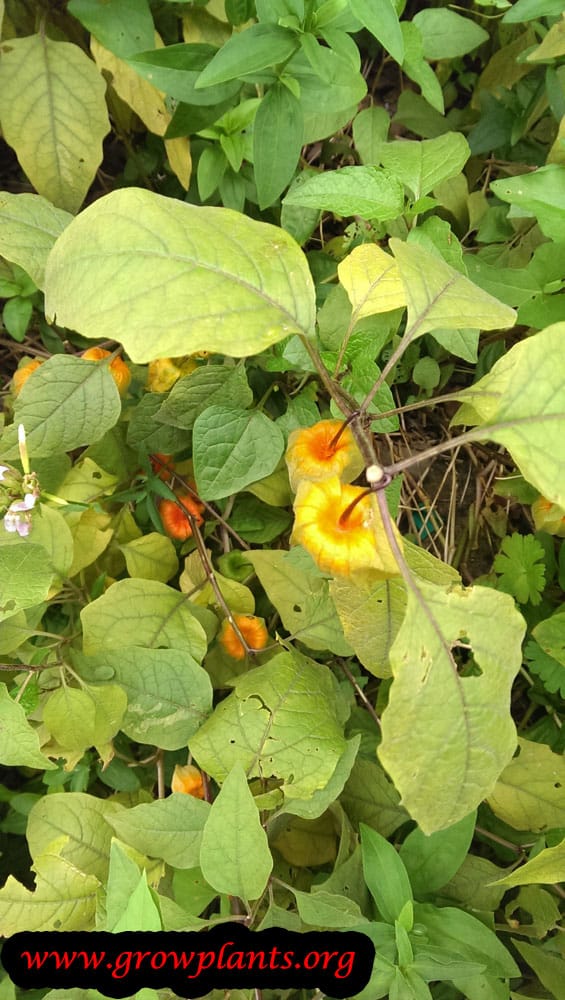
- Flower Characteristics: Small white flowers in clusters, bee-pollinated.
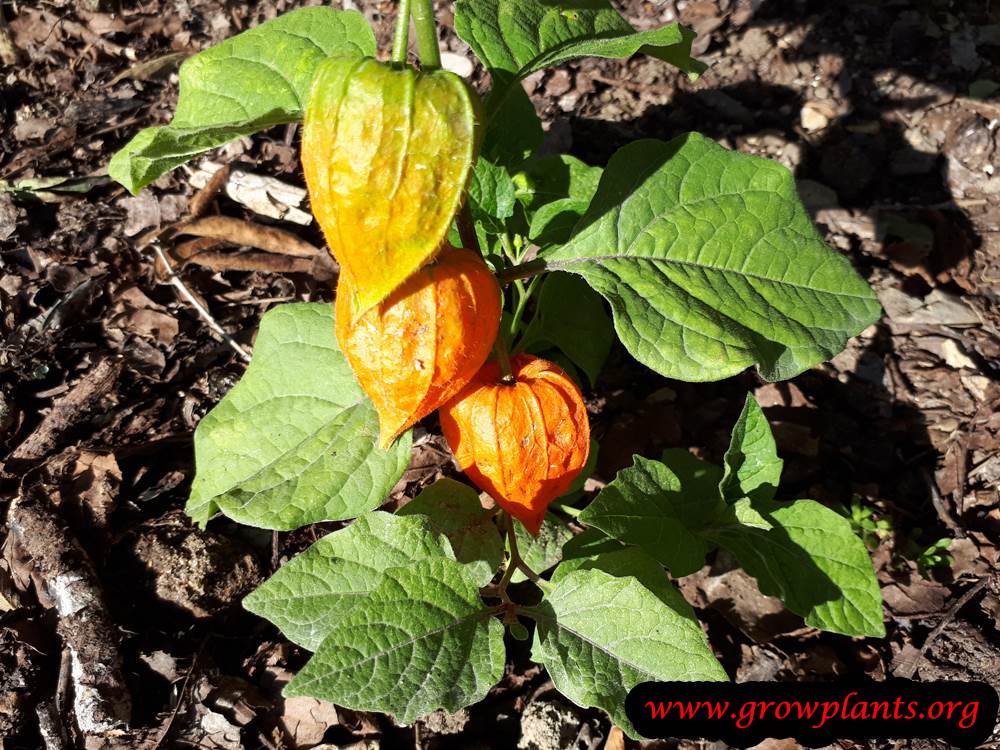
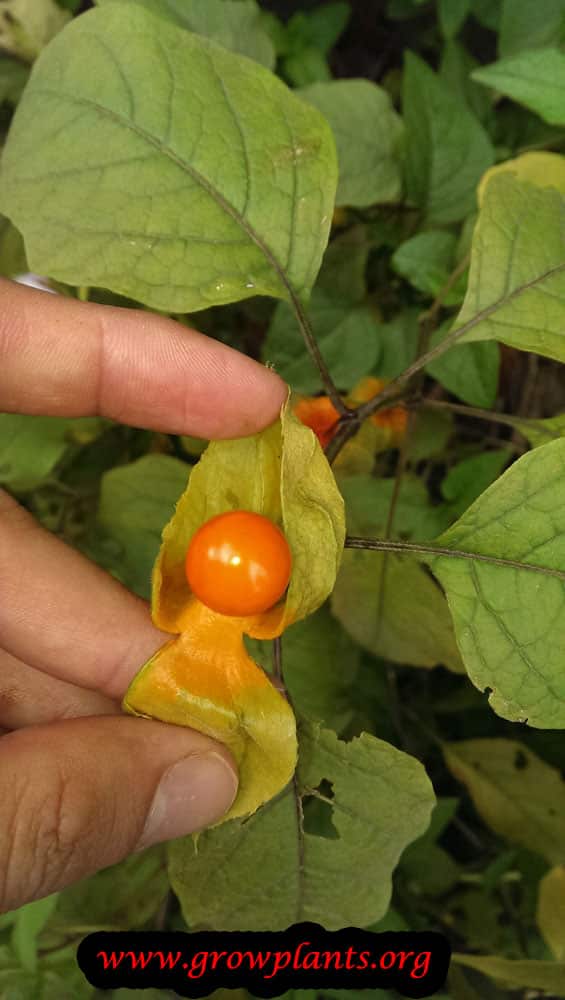
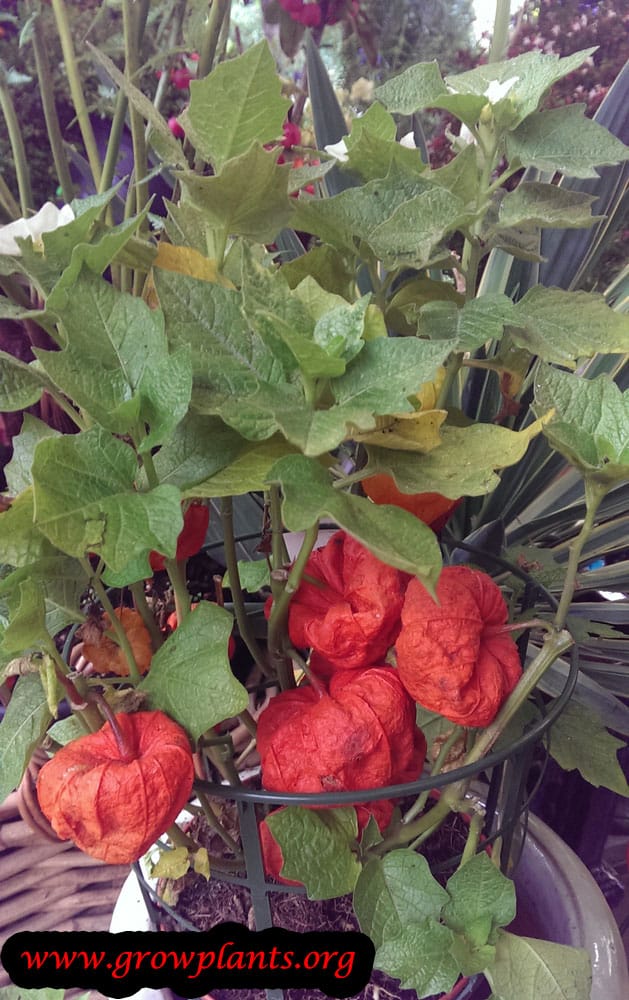
- Fruit Profile: A small orange berry enclosed in an inflated, papery bright-orange lantern husk.
Primary Uses & Landscape Value
- Functional & Ornamental Roles: Grown as an ornamental for its striking orange lantern husks, prized fresh and in dried arrangements; best sited where its rhizomes can be contained.
Care Guide: Planting, Soil & Watering
Overview: Chinese lantern is a vigorous perennial that grows in full sun in rich, well-drained soil kept mulched. It likes steady, moderate-to-generous moisture but spreads aggressively by underground rhizomes, so it is best contained.
Quick Care Requirements
| Requirement | Ideal Condition |
|---|---|
| Planting Season | Spring to summer in the growing season |
| Growth Rate | Fast to moderate |
| Soil Type | Rich, well-drained |
| Water Need | Moderate to high — keep evenly moist |
Planting & Establishment
- Best Planting Season: Plant in spring or summer during the active growing season.
- How to Plant:
- Hole Preparation: Dig a hole as deep as and a little wider than the root ball; to curb its spread, plant within a buried barrier or a bottomless container.
- Soil Amendments: Enrich the soil with compost or organic matter and apply a mulch to conserve moisture.
- Planting Depth: Set the root ball level with the surface, keeping the crown at soil level.
- Growth Speed & Expectations: Expect fast-to-moderate growth to a clump 30–80 cm tall that spreads outward each year.
Soil, Watering & Drainage Care
- Soil Mix & Drainage Needs: Rich but well-drained soil is ideal; avoid waterlogging. Growing it in a container is a good way to contain the running rhizomes.
- Watering Schedule & Technique:
- Young / Newly Planted: Keep the soil evenly moist while young plants establish.
- Established: Water regularly to keep the root zone moist during active growth.
- Seasonal Adjustments: Water more in summer heat and reduce it in autumn and winter as top growth dies back.
Climate, Light & Hardiness
Chinese lantern is a hardy, herbaceous perennial of temperate, Mediterranean and subtropical climates, grown in full sun for its bright orange papery husks. Unlike its tender relatives it is genuinely cold-hardy - the site data gives a range of roughly USDA zone 2 to 10 - dying down in winter and resprouting from spreading roots in spring.
Quick Climate Specifications
| Climate Zones | Temperate, Mediterranean and subtropical |
|---|---|
| USDA Hardiness Zones | Approximately zones 2–10 (site data) |
| Optimal Temp Range | Temperate, mild-to-warm growing conditions |
| Cold Damage Begins | Top growth dies back with autumn frost, as expected for a herbaceous perennial |
| Approx. Survival Minimum | Roots survive hard winter cold (to about zone 2) and resprout in spring |
| Frost Tolerance | Foliage: Low (dies back); Rootstock: High (fully winter-hardy) |
| Light Conditions | Full sun (tolerates light shade) |
| Wind Tolerance | Moderate |
Sunlight & Light Exposure
Optimal Light Setup
Full sun gives the sturdiest growth and the best colour on the lantern-like husks; it also tolerates light shade.
Direct Sun Requirement
Grows and colours best in open, direct sun.
Best Exposure / Orientation
Any warm, sunny aspect suits it; because it spreads strongly by underground runners and can be invasive, site it where its spread can be contained (a bed edge or a buried barrier).
Temperature Extremes & Hardiness
USDA Hardiness & Regional Limits
The site data gives roughly zones 2 to 10. As a cold-hardy herbaceous perennial it survives severe winters underground and reappears each spring - a very different pattern from the frost-tender Physalis grown for fruit. Its warm-end limit is heat rather than cold.
Cold Damage & Winter Protection
Autumn frost cuts the top down, but the roots need no protection through winter and resprout vigorously; no winter shelter is required within its range.
Frost Sensitivity
Only the season's top growth is frost-sensitive; the perennial rootstock is fully hardy.
Extreme Heat Tolerance
Prefers temperate warmth; in very hot climates it appreciates some afternoon shade and steady soil moisture, which marks the warm edge of its range.
Wind, Humidity & Microclimate
Humidity Preferences
Adaptable; grows across a range of humidity in temperate gardens.
Dry-Air Tolerance
Moderate - tolerates ordinary dry spells when soil moisture is kept up.
Wind Tolerance
Moderate; the upright stems can lean in strong wind but the plant recovers readily.
Microclimate Recommendations
Easy across most temperate sites; in hot-summer areas a slightly cooler, part-shaded spot suits it, and a contained bed keeps its spreading roots in check.
Growing in Pots, Balconies & Indoors
Chinese lantern (Physalis alkekengi) is grown for its papery orange lantern husks rather than as a houseplant. It grows happily in a container on a sunny patio or balcony, and potting it is actually wise: in open ground it spreads fast by runners, so a pot keeps it contained. It reaches about 30-80 cm (12-32 in) and dies back each winter to return in spring.
Quick Details
- Container Size: About 10-20 L (3-5 gal) with strong drainage – a solid pot also blocks its running roots (general guidance)
- Indoor Suitability: Not a houseplant; a bright, sunny windowsill at most – it is really an outdoor perennial
- Best Spot: Full sun for the best lantern colour
- Soil & Drainage: Ordinary, well-aerated mix that drains freely
- Watering in Pots: Keep evenly moist in growth; it dies back and needs little water while dormant
Indoors & On the Windowsill
- Houseplant limits: The grower’s answer is no – it needs a real dormancy and full sun, so it is not a room plant; the cut lantern stems, however, are popular dried indoors.
- Containment: Keep it potted to stop the runners escaping into the garden.
- Safety: The unripe fruit and the foliage are toxic – keep them away from children and pets (only the fully ripe berry is edible, and even then in moderation).
On a Balcony or Patio
- Light & wind: A sunny, open spot gives the brightest lanterns; it is undemanding and copes with wind. Water in summer heat when pots dry fast.
- Practicalities: As a hardy perennial it can stay out over winter; protect the pot from hard freezes since roots are less insulated in a container.
Choosing the Pot, Soil & Long-Term Care
- Pot & drainage: About a 10-20 L pot with strong drainage holes. Skip a standing-water saucer, which keeps the roots wet and invites rot. Terracotta breathes and dries faster; glazed or plastic pots hold moisture longer.
- Potting mix: Well-aerated and organic-rich – a quality potting mix, or peat/coir with perlite or vermiculite for drainage.
- Feeding: Potted plants need feeding more often than those in the ground, since frequent watering leaches nutrients away – feed through the growing season with a balanced, organic-rich fertilizer.
- Repotting: Every couple of years refresh the mix and pot on a size; for perennials, lightly prune the root ball and top growth at the same time to keep them vigorous.
Fertilizing & Feeding
A moderate feeder: balanced feeding through spring and summer supports both bloom and the decorative lantern husks.
Quick Fertilizing Specs
| Feeding Level | moderate |
|---|---|
| Main Nutrient Priority | Balanced nutrition; no need for high-phosphorus products |
| Best Feeding Period | During spring and summer active growth |
| Reduce/Stop Feeding | Stop feeding as the top dies back in autumn |
| Soil pH | Tolerates a wide range of soils |
| Organic Options | Compost and mulch over the root zone |
Feeding by Growth Stage
Spring growth
Support new shoots rising from the rootstock in spring.
| Nutrient direction | A balanced complete fertilizer as growth resumes. |
|---|---|
| Timing | Early in the growing season as new shoots emerge. |
| Frequency | A light feeding as spring growth begins. |
| Fertilizer types | Balanced complete fertilizer, Compost or mulch over the root zone |
| Precautions | Feed moderately; this spreader can become invasive in rich, open ground. |
Bloom and lantern set
Support flowering and the decorative papery lantern husks.
| Nutrient direction | A balanced feed carries the plant through bloom; high-phosphorus additives are unnecessary. |
|---|---|
| Timing | Through the spring-to-summer bloom and into lantern development. |
| Frequency | Light feeding to sustain the plant through bloom and fruiting. |
| Fertilizer types | Balanced complete fertilizer |
| Precautions | Even watering supports clean foliage and well-formed lanterns. |
Winter dieback
The herbaceous top dies back and the plant rests; no nutrients are needed.
| Nutrient direction | None – withhold fertilizer while the plant is not in active growth. |
|---|---|
| Timing | Late autumn into winter after the top dies down. |
| Frequency | No feeding at this stage. |
| Fertilizer types | No feeding at this stage – hold off on fertilizer until spring growth resumes |
| Precautions | Do not fertilize the dormant, leafless plant; wait for spring growth. |
Nutrient Deficiency Signs & Corrections
Older, lower leaves fade to pale green or yellow and overall growth is slow and weak.
| Possible causes | Low or leached soil nitrogen, Cold or waterlogged soil limiting root uptake |
|---|---|
| Appears first on | Older, lower leaves |
| What to check | Recent feeding history and soil organic matter, Soil drainage and root health |
| Possible correction | Apply a complete nitrogen-bearing fertilizer during active growth and build soil with compost. |
Youngest leaves yellow between still-green veins (interveinal chlorosis).
| Possible causes | High soil pH reducing iron availability, Waterlogged or cold roots, Often not a true shortage of soil iron |
|---|---|
| Appears first on | Youngest leaves |
| What to check | Soil pH, Soil drainage and watering |
| Possible correction | Correct soil pH and, where needed, apply a chelated iron product per its label. |
Interveinal yellowing on older leaves while the veins stay green.
| Possible causes | Low soil magnesium, High potassium competing with magnesium uptake, Sandy, leached soils |
|---|---|
| Appears first on | Older leaves |
| What to check | Soil test for magnesium, Balance of recent fertilizer use |
| Possible correction | Apply a magnesium source such as a labeled Epsom-salt drench if a soil test confirms the need. |
Pruning, Training & Seasonal Maintenance
Chinese lantern (Physalis alkekengi) is a herbaceous perennial grown for its papery orange lantern husks, not for a woody framework: it dies back to the ground each winter and resprouts from a spreading rhizome system that makes it aggressively invasive. “Pruning” is therefore cutting the dead top growth to the base each year, cutting stems for dried arrangements when the lanterns colour, and—most importantly—containing the roots so it does not run through the border. The unripe fruit is toxic, so site it away from children and pets.
Quick Pruning & Maintenance Specs
| Pruning Tolerance | High to cutting (herbaceous; resprouts from rhizomes) |
| Primary Pruning Window | Late winter / early spring – cut last year’s dead stems to the ground |
| Secondary Window | Autumn – cut coloured lantern stems for drying |
| Typical Frequency | Once-yearly cut-down, plus ongoing rhizome containment |
| Main Objective | Clear dead growth; harvest lanterns; stop the roots spreading |
| Young Plant Priority | Plant in a buried barrier or pot to confine the rhizomes from the start |
| Mature Plant Priority | Annual cut-down; slice back escaping rhizomes each season |
| Best Tool Type | Bypass secateurs or shears (stems); a spade for rhizomes |
| Avoid Heavy Pruning During | — (it is a hardy die-back plant; timing is flexible) |
Pruning by Plant Age & Size
Newly Established
The most important early step is not a cut but containment—plant into a buried barrier, a bottomless pot or a confined bed so the rhizomes cannot escape. Remove only damaged growth in the first season.
Young / Formative
There is no training—it grows as an upright herbaceous clump. Deciding how far to let the clump spread, and barriering it accordingly, is the only “formative” work.
Mature / Established
Cut the dead stems to the ground each late winter, cut lantern stems for drying in autumn, and each season sever and dig out the rhizomes that have crept beyond their allotted space. Left uncontained the clump marches outward year on year.
Seasonal Pruning Schedule
Autumn — Lantern Harvest
Objective: gather the ornamental husks. Cut stems bearing well-coloured lanterns for drying; leave the rest to feed the rhizome if you want a bigger clump, or cut it if you are curbing spread.
Late Winter / Early Spring — Cut-Down
Objective: clear the dead top. Cut all last year’s dead stems to the ground before the new shoots push through. Response: clean fresh growth. This is renewal by cutting the herbaceous top, not by shaping wood.
Ongoing — Rhizome Containment
Objective: stop the spread. Slice around the clump with a spade and lift the runners that have escaped; bag rhizome pieces rather than composting them, since fragments regrow.
Structural Pruning & Training
Not applicable—there is no woody structure. The plant’s “renewal” is the natural annual die-back and resprout; your role is to cut away the spent top and keep the rhizomes in bounds.
Special Growth to Remove
The key growth to remove is the spreading rhizome—cut and dig back the runners that escape the clump. Also remove dead stems at the annual cut-down. You generally do not deadhead, because the lanterns are the whole point of the plant; only remove them if you want to limit self-seeding as well as rhizome spread.
Container & Small-Space Pruning
A container is the ideal way to grow this plant, because the pot confines the invasive rhizomes. Cut the dead top down each year, harvest lanterns in autumn, and every year or two divide the congested rhizome mass—never tip spent compost with rhizome fragments into open ground.
Tools
Bypass secateurs or shears for cutting the soft stems, and a spade for severing and lifting rhizomes. No woody-plant tools apply.
Tool Hygiene & Disease Risk
Classification: Routine. There is no significant pruning-borne disease; keep tools clean and sharp. Wash hands after handling, given the toxic unripe fruit, and dispose of rhizome pieces where they cannot re-root.
Cut Placement & Technique
Cut spent stems to ground level at the annual clean-up; cut lantern stems long for drying. For containment, drive a spade cleanly around the clump and lift the outer rhizomes intact so fragments are not left to resprout.
Heavy Pruning & Rejuvenation
The whole top is cut to the ground every year as a matter of course, and the plant resprouts vigorously—so there is no special rejuvenation beyond this annual renewal and periodic division of a congested, spreading clump.
Post-Pruning Care
After the cut-down little is needed; the plant reshoots readily. Watch the margins for escaping rhizomes and cut them back before they establish. No feeding is wanted for a plant whose vigour you are trying to contain.
Common Pruning Mistakes
- Planting it unconfined and letting the rhizomes invade the whole border.
- Composting rhizome fragments, which simply regrow.
- Deadheading off the lanterns that are the plant’s main ornamental value.
- Handling or leaving the toxic unripe fruit where children or pets reach it.
When NOT to Prune
Being a hardy die-back perennial, timing is forgiving; the real error is failing to contain the roots rather than cutting at the wrong moment. Delay the annual cut-down only if you want to enjoy the lanterns through winter.
Recommended Tools (by task)
- bypass_secateurs — cut lantern stems for drying and dead stems at clean-up.
- garden_spade — sever and lift escaping rhizomes to contain the clump.
Propagation Guide
Chinese lantern spreads vigorously by creeping underground rhizomes, so lifting and dividing rooted rhizome pieces is the quickest, true-to-type way to increase it; seed is also easy but slower. Propagation is easy – indeed the plant is aggressive and can be invasive, so it is often best contained.
Quick Propagation Specs
| Best Propagation Method | Rhizome division |
| Alternative Methods | Seed |
| Propagation Difficulty | Easy |
| Vegetative True-to-Type | Yes – rhizome divisions are clones of the parent |
| Seed True-to-Type | Mostly uniform for this species |
| Best Propagation Season | Divide in the dormant season; sow seed in spring to summer |
| Germination Temperature | Warm, roughly 18–25°C (64–77°F) |
Rhizomes, Tubers, Bulbs & Corms
Rhizome Division
The plant runs outward on white creeping rhizomes. In the dormant season lift a clump, cut the rhizomes into sections each bearing a bud or growth point with some root, and replant. Because even small buried pieces resprout, this is easy – and the same trait is why the plant needs a barrier or a contained bed to keep it in bounds.
Growing from Seed
Seed Handling & Germination
Extract seed from the ripe orange lantern, clean it and sow into warm, moist mix in spring to summer; it germinates readily. Seedlings will themselves begin to spread by rhizome once established.
Bloom & Flower Guide
Quick Details
- Bloom Season: Spring to summer
- Time to First Bloom: Usually from its second year, once the clump is established
- Flower Appearance: Small nodding white flowers carried singly or in loose clusters
- Edibility: Not eaten – the flowers, foliage and unripe fruit are toxic; this is an ornamental
Detailed Blooming Overview
The white flowers are easy to overlook – Chinese lantern is really grown for the papery orange husks that follow. Small five-lobed blooms open along the stems through the warm months and give way to the inflated calyx that makes the plant famous. Handsome as it is, the plant spreads hard by underground runners, so give it room or a container.
Flower Characteristics
- Small white five-lobed flowers, slightly nodding, borne in clusters.
- Each pollinated flower is followed by the swelling papery lantern that turns orange later in the season.
Bloom Care & Thinning
- Pollination: Worked by bees.
- Managing the bloom: Leave the flowers if you want the ornamental lanterns; because the plant is invasive by rhizome, thin or contain the clump rather than letting it run.
Bloom Health & Protection
- Aphids: They gather on soft buds and flowering shoots – a blast of water, insecticidal soap or neem oil keeps them in check.
Fruit & Uses
Safety first: Chinese lantern is grown mostly as an ornamental for its bright orange papery husks, and its unripe fruit, the husk (calyx) and the foliage are toxic. Only the fully ripe orange berry is edible, and then only in moderation — the rest of the plant should not be eaten.
Quick Edible Specs
| Edible Parts | Fruit — fully ripe berry only |
|---|---|
| Main Use(s) | Culinary (minor) – the ripe berry eaten raw, juiced or made into jam; the plant is mainly ornamental |
| Eaten Raw or Cooked | Raw when fully ripe, or cooked into preserves |
| Preparation Required | Remove and discard the papery husk; use only fully ripe fruit |
| Harvest Season | Summer and autumn |
| Time to First Harvest | Several months from planting (see growing notes) |
| Storage | Best used fresh; husks are often dried for ornament, not eating |
| Safety/Toxicity Caveat | Unripe fruit, the husk/calyx and the foliage are toxic; eat only the fully ripe berry and keep the ornamental husks away from children who might eat them |
Fruit
Each small fruit sits inside an inflated papery husk that ripens to bright orange; the ripe berry is orange with a taste reminiscent of sweet tomato and is ready when the husk starts to turn (drying and colouring). Only fully ripe berries should be used — unripe fruit is toxic. Harvest when the berry inside is fully coloured and soft.
Harvesting
If harvesting for eating, open the husk and take only fully ripe berries, discarding the husk and any unripe fruit. Many growers instead cut and dry the coloured husks for decoration, in which case the fruit is not eaten. Birds and aphids are noted as fruit pests.
Preparation, Uses & Safety
The fully ripe berry can be eaten raw, juiced or made into jam, but this is a minor use of a mainly ornamental plant. Do not eat the papery husk, the unripe green fruit or the leaves and stems, which are toxic. Because the toxic parts closely surround the edible one, treat this plant with caution, especially around children.
Pests, Diseases & Troubleshooting
Overview: Chinese lantern is grown for its bright papery orange husks rather than food, and as a tough rhizomatous perennial it is largely trouble-free – its bigger ‘problem’ is aggressive spreading. It gets the usual nightshade nibblers (flea beetles, potato beetles, aphids and whitefly) but rarely to a damaging degree, and slugs graze fresh growth. Containment and airflow matter more than pest sprays.
Quick Troubleshooting Overview
| Issue / Pest | Main Symptom | Primary Solution |
|---|---|---|
| Invasive spreading | Shoots erupting far from the clump | Grow in a barrier or container; dig out strays |
| Flea beetles | Shot-hole peppering of leaves | Usually cosmetic; row cover if establishing |
| Aphids | Clusters on new growth, sooty mould | Water jet, insecticidal soap |
| Slugs & snails | Grazed young shoots and lanterns | Hand-pick, iron-phosphate pellets |
| Powdery mildew | White coating late season | Airflow, base watering |
| Spider mite | Stippling in hot dry spells | Hose foliage, horticultural oil |
Common Pests & Management
- Flea beetles (Epitrix spp.):
- Symptoms: Tiny jumping beetles pepper the leaves with small round ‘shot-holes’, mostly cosmetic on this vigorous perennial.
- Prevention & Control: Protect young plants with row cover if establishing; on a tough clump the damage is usually tolerable and needs no treatment.
- Aphids (Aphidoidea spp.):
- Symptoms: Small soft-bodied green, black or grey insects clustered on new shoots; causes curled, distorted foliage, sticky honeydew and sooty mould. Look-alikes: whitefly (which flies up when disturbed).
- Prevention & Control: Encourage ladybirds, lacewings and parasitic wasps; blast colonies off with a firm jet of water; remove badly infested tips. Persistent outbreaks respond to insecticidal soap or a light horticultural oil applied to leaf undersides in the cool of the evening to protect pollinators.
- Three-lined potato beetle (Lema daturaphila):
- Symptoms: Striped beetles and shielded larvae chew ragged holes in the leaves.
- Prevention & Control: Hand-pick on a garden scale; the plant readily outgrows light feeding, so sprays are rarely justified on an ornamental.
- Whitefly (Trialeurodes vaporariorum):
- Symptoms: Clouds of tiny white moth-like insects rise when foliage is disturbed; leaf undersides carry scale-like nymphs, and honeydew fuels sooty mould.
- Prevention & Control: Hang yellow sticky traps to monitor and reduce adults; introduce the parasitic wasp Encarsia formosa under cover; keep plants unstressed. Treat with insecticidal soap or horticultural oil to leaf undersides, repeating regularly.
- Slugs & snails (Gastropoda spp.):
- Symptoms: Irregular ragged holes in leaves and soft new shoots, worst in damp shady conditions, with tell-tale slime trails at night.
- Prevention & Control: Hand-pick after dark; remove damp hiding places; set beer traps or copper barriers; encourage frogs and ground beetles. Scatter iron-phosphate pellets, which are safe around pets and wildlife, only where needed.
- Two-spotted spider mite (Tetranychus urticae):
- Symptoms: Fine pale stippling on leaves, faint webbing on undersides and leaf axils, and a dusty bronzed look in warm dry conditions. Tiny moving specks visible with a hand lens.
- Prevention & Control: Raise humidity and hose foliage regularly, as mites thrive in hot dry air; introduce predatory mites (Phytoseiulus persimilis) under cover. Treat hotspots with insecticidal soap or horticultural oil, ensuring thorough coverage of leaf undersides.
Diseases & Fungal Issues
- Powdery mildew (Erysiphe spp.):
- Symptoms: White powdery film on leaves in humid, crowded conditions late in the season.
- Treatment & Management: Space and divide clumps for airflow, water at the base, and remove affected foliage; rarely needs fungicide on an ornamental.
- Leaf spots & wilts (Alternaria / Verticillium spp.):
- Symptoms: Brown spotting or one-sided yellowing and wilting in poor or infested soil.
- Treatment & Management: Remove affected leaves and debris, avoid overhead watering, and lift and divide tired clumps into fresh ground.
Growing Difficulties & Abiotic Problems
- Invasive rhizome spread:
- Cause & Symptoms: Vigorous underground rhizomes let Chinese lantern colonise borders and crowd out neighbours.
- Correction Strategy: Grow it in a sunken container or behind a root barrier, or in a spot where it can roam; dig out escaping runners each season.
- Flopping:
- Cause & Symptoms: Rich soil or shade makes stems flop before the lanterns colour.
- Correction Strategy: Grow in full sun on ordinary soil and support or space plants; avoid over-feeding with nitrogen.
- Sunburn / leaf scorch:
- Cause & Symptoms: Sudden exposure to intense sun after shade, or reflected heat, causes bleached, papery or brown patches on the most exposed leaves.
- Correction Strategy: Acclimatise plants gradually to brighter positions; provide light shade during the fiercest midday sun; keep roots evenly moist so foliage is not additionally heat-stressed.
What Helps – Products & Tools
As an ornamental, Chinese lantern needs almost no pest products – its key ‘tool’ is a root barrier or container to control spread. Insecticidal soap or a water jet deals with aphids, iron-phosphate pellets with slugs, and horticultural oil with the odd mite. Save fungicide for persistent mildew; most feeding damage is purely cosmetic.
Frequently Asked Questions
Is Chinese lantern (Physalis alkekengi) fruit edible?
Only the fully ripe orange berry is edible, and even then only in moderation. The unripe fruit, the papery husk (calyx), and the foliage are toxic and should not be eaten.
How do you grow Chinese lantern from seed?
Extract the seed from a ripe orange lantern, clean it, and sow into a warm, moist mix in spring to summer; it germinates readily at around 18-25°C (64-77°F). Seedlings will themselves begin to spread by rhizome once established.
What is Chinese lantern (Physalis alkekengi)?
Chinese lantern is a hardy herbaceous perennial (sometimes grown as an annual) grown mainly as an ornamental for its inflated, bright orange papery husks. It grows 30-80 cm (12-32 in) tall and spreads by rhizomes.
How do you stop Chinese lantern from spreading in the garden?
Because its rhizomes spread aggressively, plant it within a buried barrier or a bottomless container to curb its spread. Each season, slice around the clump with a spade and lift out any runners that have escaped, and bag rhizome pieces rather than composting them since fragments regrow.