
Plant Profile & Key Characteristics
Overview: A bushy herbaceous plant 0.3-1.4 m (12-56 in) tall grown as an annual (or tender perennial) for its husk-wrapped fruits. It is an edible crop used green in Mexican cooking, fruiting just 6-10 weeks from sowing.
Quick Specifications
| Specification | Attribute |
|---|---|
| Plant Type / Life Cycle | Perennial or annual (usually grown as an annual) |
| Mature Size | 0.3-1.4 m (12-56 in) tall |
| Growth Rate | Fast to moderate |
| Toxicity | Ripe fruit is edible; unripe fruit, husk and foliage contain solanine-type alkaloids and should not be eaten (Solanaceae) |
| Hardiness | USDA zones 10+ as a perennial; grown as an annual in zones 4-9 |
Growth Form & Structure
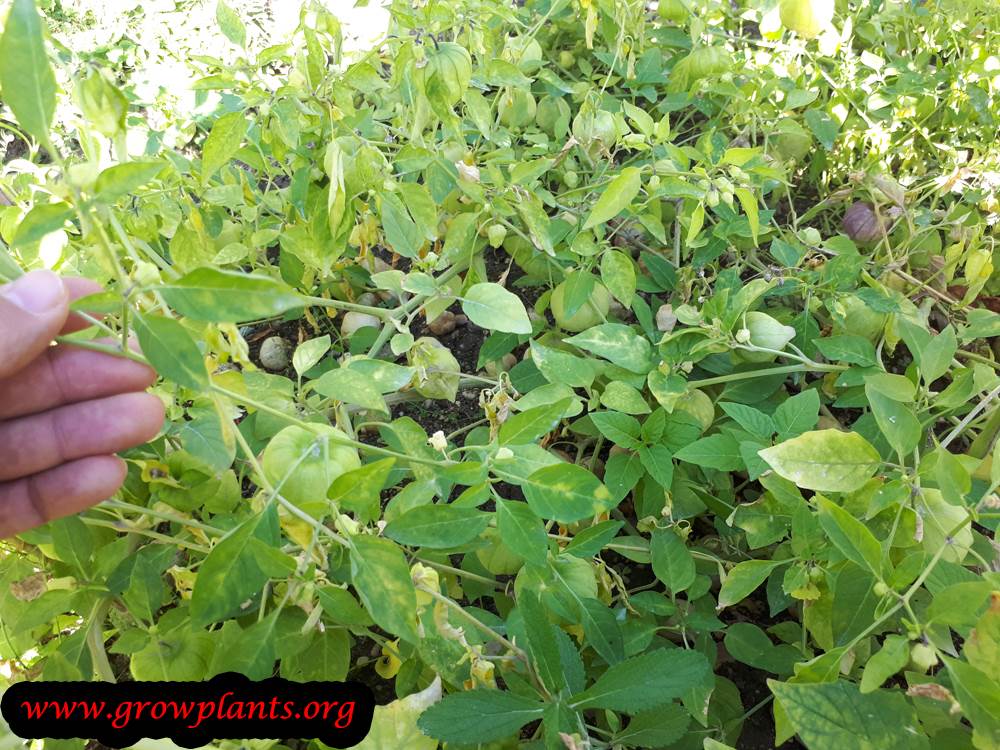
- Height & Spread: A spreading bushy plant 0.3-1.4 m (12-56 in) tall; grows well in the ground and in large containers, and usually needs two or more plants set together for pollination.
- Growth Habit & Form: Sprawling, branching herbaceous plant, often benefiting from staking or a cage under a heavy fruit load.
- Lifespan & Maturity: A fast single-season crop, bearing fruit about 6-10 weeks from seed.
Anatomy & Physical Features
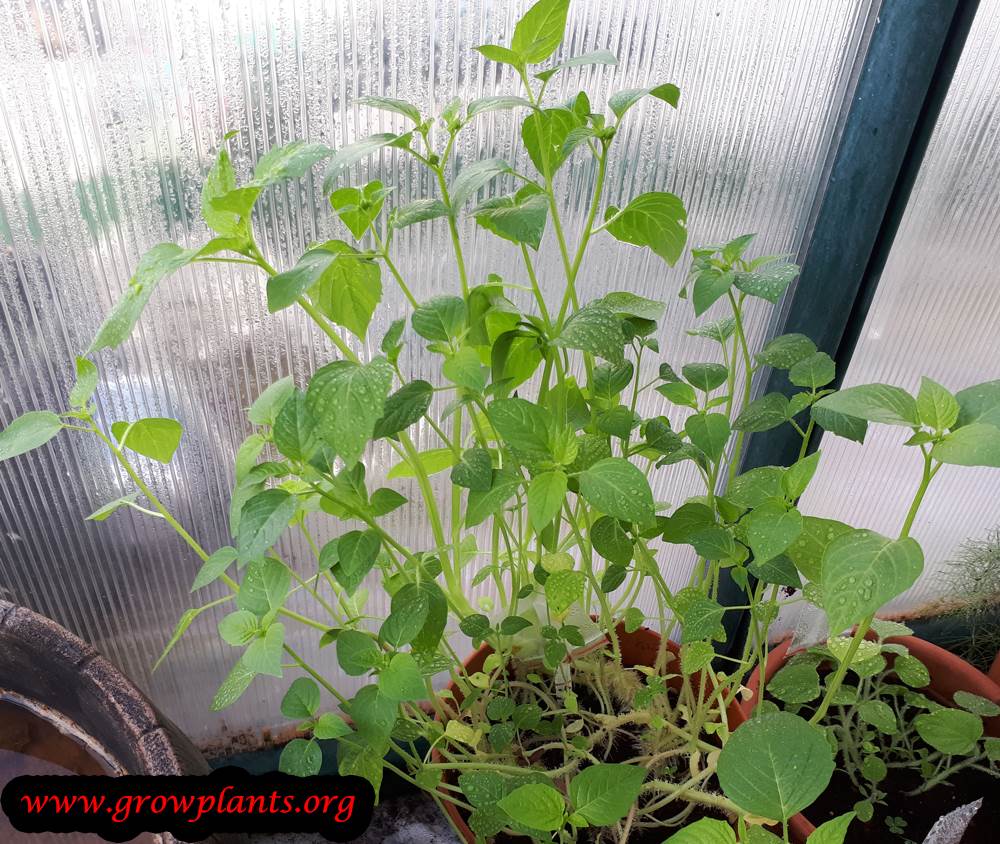
- Leaves & Foliage: Soft, velvety green oval leaves.
- Flower Characteristics: Yellow, purple, white or green flowers; the plant is self-incompatible and needs more than one cultivar to set fruit.
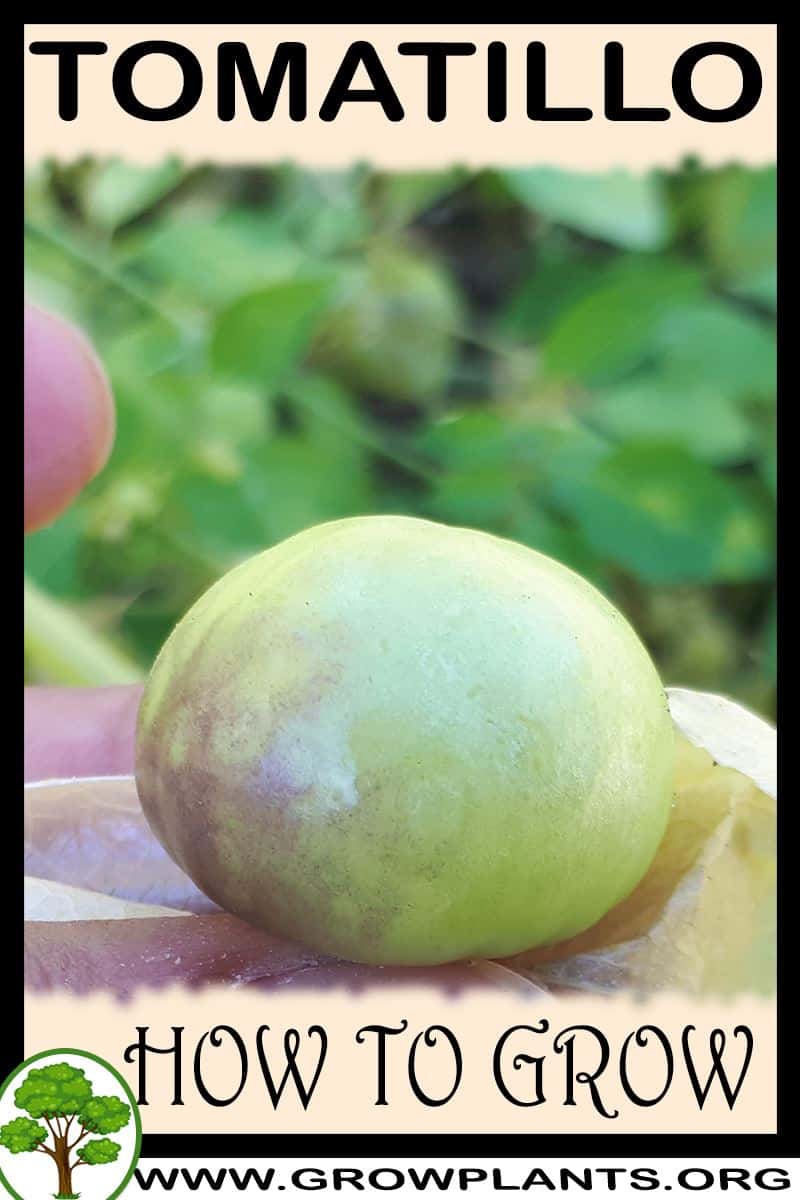
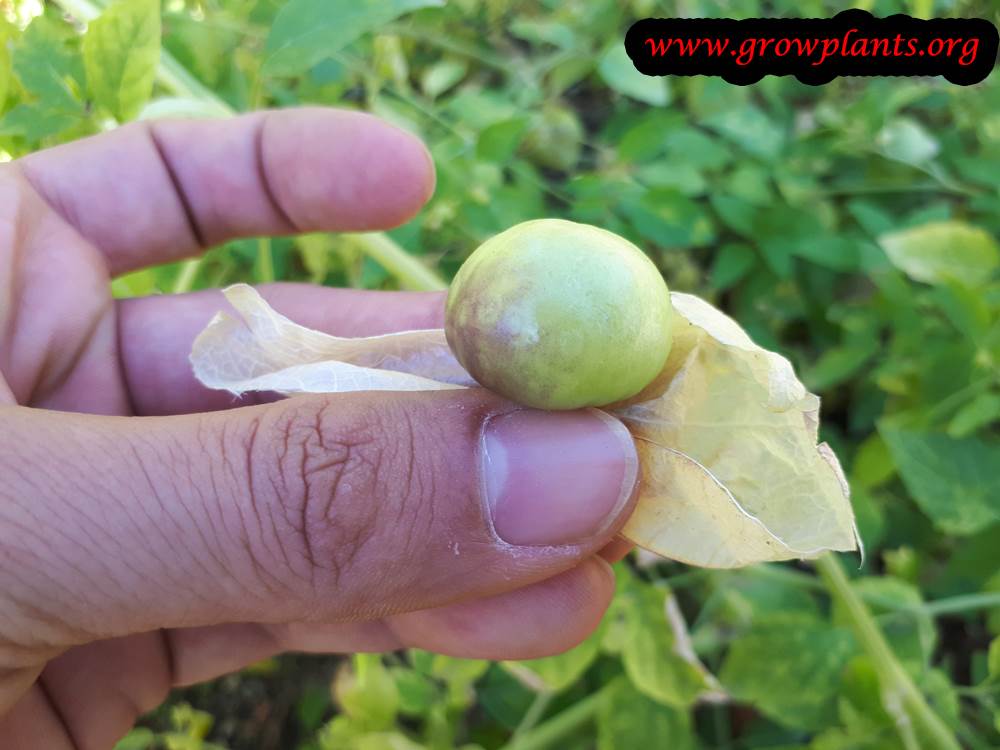
- Fruit Profile: A round green-to-brown fruit filling a papery husk, tart to mildly sweet with a tomato-like flavour, ripe when the husk begins to brown.
Primary Uses & Landscape Value
- Edible Uses: Fruit eaten raw or, more usually, cooked green into salsas, sauces and stews.
- Functional & Ornamental Roles: Grown chiefly as a vegetable-garden and container crop; also of ornamental interest for its lantern-like husks.
Care Guide: Planting, Soil & Watering
Overview: The tomatillo is a warm-season fruiting plant, grown much like a tomato, that needs full sun to part shade and rich, moist, well-drained soil. It likes steady moisture, and you should grow at least two plants for good pollination and fruit set.
Quick Care Requirements
| Requirement | Ideal Condition |
|---|---|
| Planting Season | In spring to summer, after the last frost |
| Growth Rate | Fast to moderate |
| Soil Type | Rich, moisture-retentive, well-drained |
| Soil pH | Neutral, about 6.0–7.0 |
| Water Need | Moderate to high — keep the soil evenly moist |
Planting & Establishment
- Best Planting Season: Plant in spring to summer after the last frost, once the soil has warmed.
- How to Plant:
- Hole Preparation: Dig a hole as deep as and a little wider than the root ball; grow at least two plants near each other for cross-pollination.
- Soil Amendments: Enrich the soil with compost for a fertile, free-draining, moisture-retentive bed.
- Planting Depth: Set transplants a little deep, like tomatoes — the buried lower stem will root and anchor the sprawling plant; keep the growing tip well clear.
- Growth Speed & Expectations: Expect fast-to-moderate growth to a sprawling plant 0.3–1.4 m tall.
Soil, Watering & Drainage Care
- Soil Mix & Drainage Needs: Rich but well-drained soil is ideal; avoid waterlogging. In a container use a fertile, free-draining mix and stake or cage the plant.
- Watering Schedule & Technique:
- Young / Newly Planted: Keep the soil consistently moist while young plants establish.
- Established: Water deeply and regularly to keep the root zone evenly moist, watering at the base to keep foliage dry.
- Seasonal Adjustments: Increase water in summer heat and during fruiting; reduce it in cool weather.
Climate, Light & Hardiness
Tomatillo (Mexican husk tomato) is a warm-season, sun-loving crop grown across tropical, Mediterranean, desert, subtropical and temperate climates, and it needs more than one plant to set fruit. It is frost-sensitive - perennial only in essentially frost-free areas (roughly USDA zone 10 and warmer) and grown as a summer annual through about zones 4–9 wherever winters freeze.
Quick Climate Specifications
| Climate Zones | Tropical, Mediterranean, desert, subtropical and temperate (warm-season growing) |
|---|---|
| USDA Hardiness Zones | Perennial in zone 10+; grown as an annual through about zones 4–9 |
| Optimal Temp Range | Warm conditions through the growing season |
| Cold Damage Begins | Soft growth checked by cool weather; decline as temperatures approach freezing |
| Approx. Survival Minimum | Near 0 °C (32 °F); frost is generally fatal to the top |
| Frost Tolerance | None (frost-sensitive) |
| Light Conditions | Full sun to part shade |
| Wind Tolerance | Low–Moderate (soft, sprawling stems) |
Sunlight & Light Exposure
Optimal Light Setup
Full sun gives the best growth and fruit set; part shade is tolerated but reduces cropping.
Direct Sun Requirement
A full-sun crop - open exposure drives flowering and the filling of its husked fruit.
Shade & Heat Management
The soft foliage takes strong sun well but can benefit from very light afternoon shade in the fiercest desert heat.
Best Exposure / Orientation
A warm, sunny position suits it; plant two or more together, as tomatillo is largely self-incompatible and needs cross-pollination to set fruit.
Temperature Extremes & Hardiness
USDA Hardiness & Regional Limits
The site data lists tomatillo as perennial in zone 10 and warmer and grown as an annual through about zones 4–9. Hardiness reflects winter cold survival, not heat preference - where winters freeze it is grown as a fast warm-season annual and resown each year.
Cold Damage & Winter Protection
As a perennial it continues only in frost-free areas; cool weather checks growth and frost kills the top. In cold climates resow each spring rather than overwinter.
Frost Sensitivity
Frost-sensitive - frost damages the soft foliage and near 0 °C (32 °F) is generally fatal to unprotected plants.
Extreme Heat Tolerance
A warm-climate crop that tolerates heat well when kept moist; prolonged extreme heat can reduce set, eased by steady soil moisture.
Frost-Free Growing Season
As a frost-tender crop it needs a warm, frost-free run - roughly six to ten weeks from transplant to fruit - so in short-season regions start seed early and set out after the last frost.
Wind, Humidity & Microclimate
Humidity Preferences
Accepts a fairly wide range; moderate humidity with good airflow suits it.
Dry-Air Tolerance
Moderate when soil moisture is maintained, though hot, dry winds during flowering can reduce set.
Wind Tolerance
Low to moderate; the soft, sprawling stems benefit from a cage or support and a sheltered spot, especially in containers.
Rainfall & Seasonal Moisture
Suits a warm season with moderate moisture; prolonged wet, humid weather favours foliar disease.
Microclimate Recommendations
A warm, sunny, sheltered spot maximises cropping in cooler areas; grouping several plants also aids the cross-pollination it needs.
Growing in Pots, Balconies & Indoors
Tomatillo is a warm-season crop, not a houseplant – it needs strong sun to grow and fruit well, so deep indoors it will not thrive. In a large, free-draining container it does well on a sunny patio or balcony, and a compact plant can fruit on a very bright, sunny windowsill. It sprawls, so cage or stake it in the pot. Expect roughly 0.3-1.4 m (1-4.5 ft) in good conditions.
Quick Details
- Container Size: About 20-40 L (5-10 gal) for a full-size plant with strong drainage holes (general guidance – the grower simply notes containers work well)
- Indoor Suitability: Not a houseplant; only a bright, sunny windowsill will do, and a patio or balcony is better still
- Best Spot: Full sun, with a little part shade tolerated
- Soil & Drainage: Well-aerated, organic-rich mix (potting mix, or peat/coir with perlite or vermiculite); must drain freely
- Watering in Pots: Keep evenly moist – pots dry fast, so mulch the surface; never waterlogged
Indoors & On the Windowsill
- Houseplant limits: The grower’s answer is no – it wants full sun that a room’s interior cannot give, so it stays weak and shy to fruit away from a window.
- Windowsill growing: The best indoor option is the brightest, sunniest sill you have; keep the plant compact so it and its fruit get direct light.
- Overwintering: Grown as an annual in most climates; a potted plant can be sheltered indoors in mild regions. Note tomatillos crop best with two or more plants for pollination.
- Safety: Only the ripe fruit is edible – the leaves, stems and unripe green fruit are in the nightshade family and contain solanine, so keep an indoor plant out of reach of children and pets.
On a Balcony or Patio
- Light & wind: Give it the sunniest spot. Walls and paving reflect heat and dry pots fast, so check moisture daily in summer and mulch; shelter a tall plant from wind and stake it if it gets top-heavy. A drip irrigation kit with a timer can take over that watering check automatically.
- Practicalities: A filled large pot is heavy – position it before filling, and keep drainage runoff off the balcony floor.
Choosing the Pot, Soil & Long-Term Care
- Pot & drainage: About 20-40 L (5-10 gal) for a full-size plant with strong drainage holes (general guidance – the grower simply notes containers work well) Skip a standing-water saucer, which keeps the roots wet and invites rot. Terracotta breathes and dries faster; glazed or plastic pots hold moisture longer.
- Potting mix: Well-aerated and organic-rich – a quality potting mix, or peat/coir with perlite or vermiculite for drainage.
- Feeding: Potted plants need feeding more often than those in the ground, since frequent watering leaches nutrients away – feed through the growing season with a balanced, organic-rich fertilizer.
- Repotting: Every couple of years refresh the mix and pot on a size; for perennials, lightly prune the root ball and top growth at the same time to keep them vigorous.
Fertilizing & Feeding
A moderate feeder grown much like a tomato relative: steady feeding supports leafy growth and a long fruit set. A fertilizer formulated for tomatoes and vegetables supports that feeding pattern through harvest.
Quick Fertilizing Specs
| Feeding Level | moderate |
|---|---|
| Main Nutrient Priority | Nitrogen for early growth, balanced with potassium during fruiting |
| Best Feeding Period | During active growth and fruiting |
| Reduce/Stop Feeding | Ease off feeding as the season ends |
| Soil pH | Prefers slightly acidic to near-neutral soil |
| Organic Options | Compost and mulch |
Feeding by Growth Stage
Establishment
Settle young plants and build early roots and leaves.
| Nutrient direction | A balanced complete fertilizer for steady early growth. |
|---|---|
| Timing | After transplanting, or once seedlings are growing. |
| Frequency | A light starter feeding as plants establish. |
| Fertilizer types | Balanced complete vegetable fertilizer, Compost worked into the bed |
| Precautions | Avoid heavy feeding that pushes soft growth prone to aphids. |
Vegetative growth
Build a strong leafy framework before heavy fruiting.
| Nutrient direction | A slightly nitrogen-leaning feed to build vigorous plants. |
|---|---|
| Timing | During active leaf and stem growth before flowering peaks. |
| Frequency | Feed at intervals through active growth, easing back as flowering begins. |
| Fertilizer types | Nitrogen-forward complete fertilizer |
| Precautions | Too much nitrogen delays fruiting and encourages excess foliage. |
Flowering and fruiting
Support flowering and a long fruit set.
| Nutrient direction | Shift to a balanced feed with adequate potassium to support fruiting. |
|---|---|
| Timing | From first flowering through the harvest window. |
| Frequency | Steady, moderate feeding while the plant flowers and fruits. |
| Fertilizer types | Balanced fertilizer with adequate potassium |
| Precautions | Keep watering even to prevent fruit and husk problems. |
Nutrient Deficiency Signs & Corrections
Older, lower leaves fade to pale green or yellow and overall growth is slow and weak.
| Possible causes | Low or leached soil nitrogen, Cold or waterlogged soil limiting root uptake |
|---|---|
| Appears first on | Older, lower leaves |
| What to check | Recent feeding history and soil organic matter, Soil drainage and root health |
| Possible correction | Apply a complete nitrogen-bearing fertilizer during active growth and build soil with compost. |
Margins of older leaves yellow then scorch brown, with weak fruiting or bulking.
| Possible causes | Low soil potassium, Sandy or heavily leached soil, Drought stress worsening the symptom |
|---|---|
| Appears first on | Margins of older leaves |
| What to check | Soil test for potassium, Consistency of watering |
| Possible correction | Use a balanced fertilizer supplying adequate potassium as fruits or tubers develop. |
Interveinal yellowing on older leaves while the veins stay green.
| Possible causes | Low soil magnesium, High potassium competing with magnesium uptake, Sandy, leached soils |
|---|---|
| Appears first on | Older leaves |
| What to check | Soil test for magnesium, Balance of recent fertilizer use |
| Possible correction | Apply a magnesium source such as a labeled Epsom-salt drench if a soil test confirms the need. |
Pruning, Training & Seasonal Maintenance
Tomatillo (Physalis philadelphica), the Mexican husk tomato, is a big, sprawling, indeterminate annual that sets its husk-wrapped fruit on new growth all season. It needs almost no cutting but a great deal of support: without a stout cage or stakes it collapses under its own weight and the fruit rots on the soil. A key point is that tomatillo is largely self-incompatible—you need two or more plants for fruit to set—so a plant that flowers heavily but sets little fruit has a pollination problem, not a pruning one. Keep pruning to a light shaping pinch and sanitary removal; heavy pruning only costs yield.
Quick Pruning & Maintenance Specs
| Pruning Tolerance | Low (light cutting only; over-pruning reduces yield) |
| Primary Pruning Window | Through the season as needed (no dormant prune — it is an annual) |
| Typical Frequency | Occasional light passes |
| Main Objective | Support the sprawl, keep fruit off the soil, light sanitary work |
| Young Plant Priority | Optional early tip-pinch for a bushier, sturdier plant; cage at planting |
| Mature Plant Priority | Keep it caged; remove lower leaves touching soil; clear dead growth |
| Best Tool Type | Precision snips |
| Avoid Heavy Pruning During | Flowering and fruit set — you simply lose crop |
Pruning by Plant Age & Size
Newly Established
Set a strong cage or stakes at planting and remove only damaged leaves. Plant at least two together so they can pollinate each other.
Young / Formative
An optional early tip-pinch gives a bushier, more manageable plant, but tomatillo naturally branches into a broad sprawl and needs no training system—the effort goes into caging and tying, not cutting.
Mature / Established
Keep the plant supported and tied in as it sprawls, remove lower leaves and shoots that trail onto the soil (where fruit and foliage rot and pick up disease), and clear dead growth. Resist the urge to thin hard—every removed shoot is lost fruit on this heavy-cropping annual.
Seasonal Pruning Schedule
Summer Canopy & Support
Objective: keep the sprawl up and productive. Remove: only soil-touching lower growth and any dead or diseased leaves; tie in the rest. Do NOT thin the fruiting canopy. Response: cleaner fruit, fewer disease problems, full yield retained.
Ongoing Sanitary
Objective: limit aphids and keep dropped fruit clean. Remove infested and dead growth; gather fallen husks.
Flowering & Fruiting Wood
Tomatillo flowers and fruits on current-season growth throughout the season, so there is no old fruiting wood to protect and no benefit in cutting for bloom timing. The decisive factor for a crop is cross-pollination between two or more plants, not pruning—so retain flowering growth rather than removing it, and ensure companions are nearby for bees to work between.
Structural Pruning & Training
“Training” here means caging and tying rather than cutting: contain the broad sprawl inside a sturdy cage, tie over-long trailing stems back in, and keep the base clear of soil-lying growth. There is no framework to build and no benefit in opening the canopy by thinning.
Special Growth to Remove
Remove only the lowest leaves and shoots that trail onto the soil, plus dead and diseased growth. Keep all the healthy fruiting shoots—unlike a tomato, tomatillo is not de-shooted, because those side-shoots carry the crop. Grown from seed on its own roots, so there are no suckers to manage.
Container & Small-Space Pruning
In a large pot a firm cage and a light early pinch keep the plant manageable, but you still need two plants close together to get fruit. Keep the sprawl tied in and the base clear; do not compensate for the small space by pruning hard, which just reduces the already pollination-limited crop.
Tools
Precision snips handle the light pinching and leaf removal this soft annual needs. Secateurs are handy for clearing dead stems at season’s end; there is no role for loppers, a saw, a pole pruner or hedge shears.
Tool Hygiene & Disease Risk
Classification: Increased. As a Physalis it shares the nightshade viruses. Use clean tools and wash hands before moving from any mottled plant; routine cuts on healthy growth need no sterilising between each.
Cut Placement & Technique
Pinch soft tips by hand; cut soil-touching or dead stems back cleanly to a healthy node. Keep cuts minimal and work with dry foliage so the soft stems seal.
Post-Pruning Care
Little is needed: keep the plant caged and evenly watered, and watch fresh growth for aphids. There is no call for feeding after the trivial cutting this crop wants—steady, even growth and good pollination matter far more.
Common Pruning Mistakes
- Growing a single plant and blaming poor fruit set on pruning—it needs two or more to pollinate.
- Pruning hard for “airflow” and throwing away crop-bearing shoots.
- Growing without a cage, so the plant collapses and fruit rots on the soil.
- De-shooting it like a tomato and removing the fruiting laterals.
When NOT to Prune
Avoid any real cutting during flowering and fruit set—you only lose crop. Keep interventions to support, tying in, and removing soil-touching or dead growth.
Recommended Tools (by task)
- precision_snips — light tip-pinching and removing soil-touching or dead leaves.
- soft_ties_stakes — cage and tie in the heavy sprawling plant.
Pruning Troubleshooting
| Problem | Possible Cause | What to Check | Corrective Action |
| Heavy flowering, empty husks, little fruit | Self-incompatible — pollination, not pruning | How many plants; bee activity | Grow two or more plants together; encourage pollinators |
| Plant collapsed, fruit rotting on soil | No support for the sprawl | Cage/stakes; soil-touching growth | Cage firmly; tie in; clear the base |
| Reduced yield after ‘tidying’ | Fruiting shoots pruned off | Whether laterals were removed | Stop hard pruning; retain healthy fruiting shoots |
Propagation Guide
Tomatillo is grown from seed, which is easy and quick in warmth; because the plant is largely self-incompatible you need two or more different plants for them to pollinate and set the fruit that in turn yields viable seed. Soft cuttings root readily as a secondary option. Propagation is easy.
Quick Propagation Specs
| Best Propagation Method | Seed |
| Alternative Methods | Soft stem cuttings |
| Propagation Difficulty | Easy |
| Seed True-to-Type | Variable – cross-pollination between the required separate plants means seedlings are not uniform |
| Vegetative True-to-Type | Yes – cuttings reproduce a chosen plant exactly |
| Best Propagation Season | Spring to summer |
| Cutting Rooting Time | A few weeks under warm, humid conditions |
| Germination Temperature | Warm, roughly 20–28°C (68–82°F) |
Growing from Seed
Seed Handling & Viability
Take seed from ripe fruit (husk browning), rinse off the pulp and sow shallowly into warm, moist mix. Remember that fruit – and therefore seed – only forms when two or more genetically different plants flower together, so always raise several plants.
Germination & Seedling Care
Seed germinates readily in warmth in about one to two weeks; grow seedlings on in full sun to part shade.
Stem Cuttings
Soft cuttings taken in the warm season root easily in moist mix or water, letting you reproduce a particular plant without relying on the variable seed.
Bloom & Flower Guide
Quick Details
- Bloom Season: Spring to summer as an annual; year-round where grown as a perennial
- Flower Appearance: Small round yellow flowers, typically with dark markings in the throat, with fused petals
- Edibility: The flower is not eaten; the foliage and unripe parts are toxic, and only the ripe fruit inside its husk is edible
Detailed Blooming Overview
Tomatillo flowers freely over a long warm season, tucking small yellow bells into the leaf joints. Unlike its cousin the cape gooseberry, tomatillo generally will not pollinate itself, so growing two or more plants together is the key to turning those cheerful flowers into husk-wrapped fruit.
Flower Characteristics
- Small, round, five-lobed yellow flowers with fused petals, often marked with dark spots in the throat.
- Some strains show purple, white or greenish tints.
- Borne in the leaf axils.
Bloom Care & Thinning
- Pollination: Bees carry the pollen, and because the plant is largely self-incompatible you need more than one plant nearby for the flowers to set fruit.
- Encouraging bloom: Full sun, warmth and moderate feeding keep the flowers coming; too much nitrogen favors leaves over flowers.
Fruit & Uses
The Tomatillo (Mexican husk tomato) is grown for its edible fruit, which grows inside a papery husk and is eaten raw and cooked — famously in salsas and sauces. Only the fruit is used; the husk is peeled off and discarded.
Quick Edible Specs
| Edible Parts | Fruit |
|---|---|
| Main Use(s) | Culinary – eaten raw, salads, sauces, paste, cooked and baked dishes, jams |
| Eaten Raw or Cooked | Both |
| Preparation Required | Remove the papery husk and rinse off the sticky film |
| Harvest Season | Spring, summer and autumn |
| Time to First Harvest | A couple of months from sowing (see growing notes) |
| Storage | Keeps in its husk for a period; also cooked into sauces and preserves |
| Safety/Toxicity Caveat | The husk is not eaten; use mature fruit and rinse off the sticky residue before use |
Fruit
Each fruit grows inside a husk (capsule) that runs from green to brown; the flesh tastes like a sweet or regular tomato, varying by cultivar. Fruit is ready to pick when the husk starts to turn brown and the fruit fills or splits the husk. Harvest when the husk has loosened and the fruit inside is firm and full.
Harvesting
Pick the fruit once the husks begin to brown and split; fallen ripe fruit can also be gathered. Note this plant needs more than one cultivar for good pollination and fruit set. Birds and aphids are noted as fruit pests.
Preparation, Uses & Safety
Remove the papery husk and rinse off the naturally sticky film on the skin, then use the fruit raw in salads, or cooked into salsas, sauces, pastes and baked dishes, or made into jams. Only the fruit is used; the husk is discarded.
Pests, Diseases & Troubleshooting
Overview: The tomatillo is a sprawling, productive nightshade that carries the same pest and disease profile as its relative the tomato – potato and flea beetles, hornworms, aphids and whitefly – but its husk protects the developing fruit from most direct attack. Its defining quirk is self-incompatibility: you must grow two or more plants for fruit to set. Rotation, spacing and base watering manage its fungal and viral diseases.
Quick Troubleshooting Overview
| Issue / Pest | Main Symptom | Primary Solution |
|---|---|---|
| No fruit / empty husks | Husks form but stay empty | Grow 2+ plants for cross-pollination |
| Three-lined potato beetle | Ragged holes; shielded larvae | Hand-pick, row cover, neem if heavy |
| Flea beetles | Shot-hole peppering of leaves | Row cover on seedlings, keep vigorous |
| Aphids / whitefly | Honeydew, sooty mould, virus vectors | Water jet, insecticidal soap, sticky traps |
| Early blight / leaf spot | Target-ring spots on lower leaves | Mulch, base water, rotate, copper if severe |
| Mosaic / spotted wilt | Mottled distorted leaves, stunting | Control aphids/thrips, remove plants |
Common Pests & Management
- Three-lined potato beetle (Lema daturaphila):
- Symptoms: Yellow beetles with three black stripes, and slug-like larvae that carry their own excrement on their backs, chewing ragged holes in leaves – a beetle especially associated with groundcherries and tomatillos.
- Prevention & Control: Hand-pick adults, larvae and orange egg clusters on a garden scale, encourage predators, and use row cover early; neem or spinosad in the evening for heavy infestations.
- Colorado potato beetle (Leptinotarsa decemlineata):
- Symptoms: Yellow-and-black striped beetles and humpbacked red larvae defoliate plants rapidly.
- Prevention & Control: Hand-pick and crush egg clusters, rotate away from other nightshades, and use row cover; spinosad or Bt tenebrionis for larvae on bad outbreaks.
- Flea beetles (Epitrix / Phyllotreta spp.):
- Symptoms: Tiny jumping beetles riddle leaves with a ‘shot-hole’ pattern of small round holes, worst on young plants.
- Prevention & Control: Protect seedlings with row cover, keep plants vigorous, and use sticky traps; kaolin clay or spinosad where damage threatens establishment.
- Tomato / tobacco hornworm (Manduca quinquemaculata):
- Symptoms: Large green caterpillars with a tail horn strip leaves and can defoliate shoots quickly, leaving dark frass.
- Prevention & Control: Hand-pick (look for frass below); leave any bearing white parasitic-wasp cocoons; Bt for young larvae on heavy attacks.
- Aphids (Aphidoidea spp.):
- Symptoms: Small soft-bodied green, black or grey insects clustered on shoot tips and leaf undersides; causes curled, distorted foliage, sticky honeydew and sooty mould. Look-alikes: whitefly (which flies up when disturbed).
- Prevention & Control: Encourage ladybirds, lacewings and parasitic wasps; blast colonies off with a firm jet of water; remove badly infested tips. Persistent outbreaks respond to insecticidal soap or a light horticultural oil applied to leaf undersides in the cool of the evening to protect pollinators.
- Whitefly (Trialeurodes vaporariorum):
- Symptoms: Clouds of tiny white moth-like insects rise when foliage is disturbed; leaf undersides carry scale-like nymphs, and honeydew fuels sooty mould.
- Prevention & Control: Hang yellow sticky traps to monitor and reduce adults; introduce the parasitic wasp Encarsia formosa under cover; keep plants unstressed. Treat with insecticidal soap or horticultural oil to leaf undersides, repeating regularly.
- Two-spotted spider mite (Tetranychus urticae):
- Symptoms: Fine pale stippling on leaves, faint webbing on undersides and leaf axils, and a dusty bronzed look in warm dry conditions. Tiny moving specks visible with a hand lens.
- Prevention & Control: Raise humidity and hose foliage regularly, as mites thrive in hot dry air; introduce predatory mites (Phytoseiulus persimilis) under cover. Treat hotspots with insecticidal soap or horticultural oil, ensuring thorough coverage of leaf undersides.
Diseases & Fungal Issues
- Powdery mildew (Leveillula / Erysiphe spp.):
- Symptoms: White powdery coating on leaves in warm conditions, yellowing and dropping foliage.
- Treatment & Management: Space plants for airflow, water at the base, and remove affected leaves; sulfur or potassium bicarbonate on a food crop, observing the harvest interval.
- Verticillium / Fusarium wilt (Verticillium / Fusarium spp.):
- Symptoms: Yellowing and wilting of lower leaves, often one-sided, with browning inside the stem, in infested soil.
- Treatment & Management: No cure – rotate out of nightshades for several years, remove and destroy affected plants, and grow in clean or resistant stock; improve soil health.
- Early blight & leaf spots (Alternaria / Septoria / Cercospora spp.):
- Symptoms: Brown target-ringed or dark spots on lower leaves, spreading upward in wet weather.
- Treatment & Management: Mulch to stop soil splash, water at the base, remove infected leaves and debris, and rotate; copper for persistent wet-season pressure.
- Mosaic & spotted-wilt viruses (CMV / TSWV / PVY):
- Symptoms: Mottled, distorted, streaked leaves and stunting, spread by aphids and thrips.
- Treatment & Management: No cure – control aphid and thrip vectors, remove infected plants, manage weeds that harbour virus, and rotate.
Growing Difficulties & Abiotic Problems
- Poor fruit set / empty husks:
- Cause & Symptoms: Heat, cold nights, drought or (in tomatillo) growing only one plant leaves husks empty or fruit failing to fill.
- Correction Strategy: Keep evenly watered, mulch to steady temperatures, and grow at least two tomatillo plants for cross-pollination; be patient as many groundcherries fruit late.
- Blossom-end rot:
- Cause & Symptoms: Calcium not reaching the fruit during uneven watering causes a sunken dark rot at the fruit base.
- Correction Strategy: Keep soil moisture even, mulch, avoid excess nitrogen, and ensure adequate calcium; erratic watering is the real driver.
- Sprawling & self-seeding:
- Cause & Symptoms: Physalis plants sprawl widely and drop husked fruit that self-sows freely, becoming weedy the next season.
- Correction Strategy: Cage or space plants, and collect dropped fruit to limit volunteer seedlings; site with room to spread.
What Helps – Products & Tools
Manage tomatillos as you would tomatoes: rotation, spacing, mulch and base watering come first. Use insecticidal soap for aphids and whitefly, neem or spinosad for beetles and hornworms, sticky traps for whitefly, and sulfur or copper for its diseases, observing harvest intervals. The most important non-pest ‘fix’ is simply planting two or more for pollination.