
Plant Profile & Key Characteristics
Overview: A fast-growing, trailing creeping subshrub reaching about 10-20 cm (4-8 in) but spreading widely. Grown as an ornamental groundcover and trailing container plant; a short-lived perennial usually grown as an annual.
Quick Specifications
| Specification | Attribute |
|---|---|
| Plant Type / Life Cycle | Short-lived perennial or annual |
| Foliage Type | Evergreen (frost-tender) / grown as annual |
| Mature Size | 10-20 cm tall (4-8 in), spreading widely |
| Growth Rate | Fast |
| Root System | Fibrous, shallow |
| Hardiness | USDA zones 9-11 (perennial) / 5-8 (annual) |
Growth Form & Structure
- Height & Spread: 10-20 cm (4-8 in) tall but trailing and spreading widely; ideal for hanging baskets and containers.
- Growth Habit & Form: Low, creeping, mounding-to-trailing subshrub that makes a dense groundcover or cascade.
- Lifespan & Maturity: Fast-growing and free-flowering; short-lived, often replaced each year.
Anatomy & Physical Features
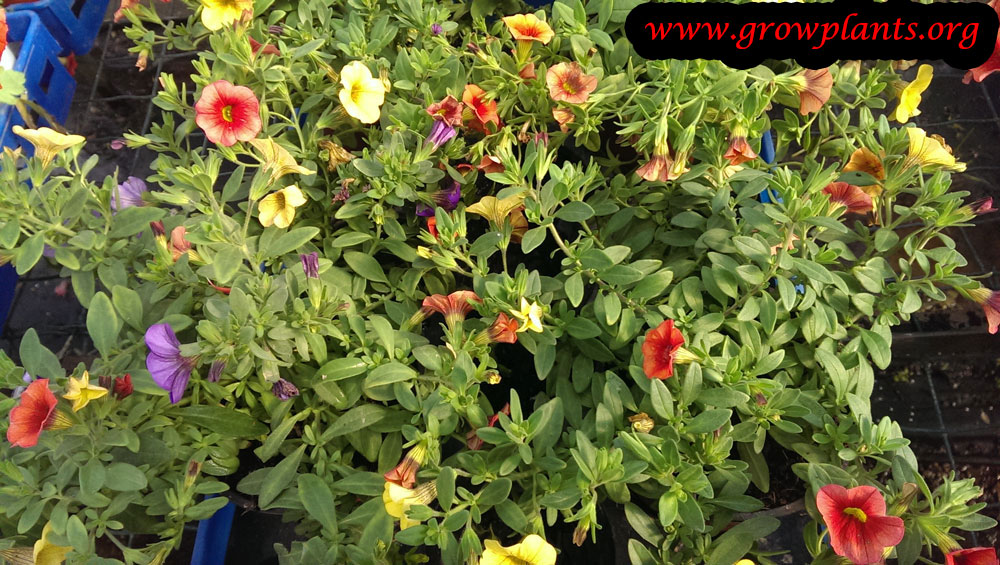
- Leaves & Foliage: Small, green, elliptic to ovate leaves about 2-4 cm long.
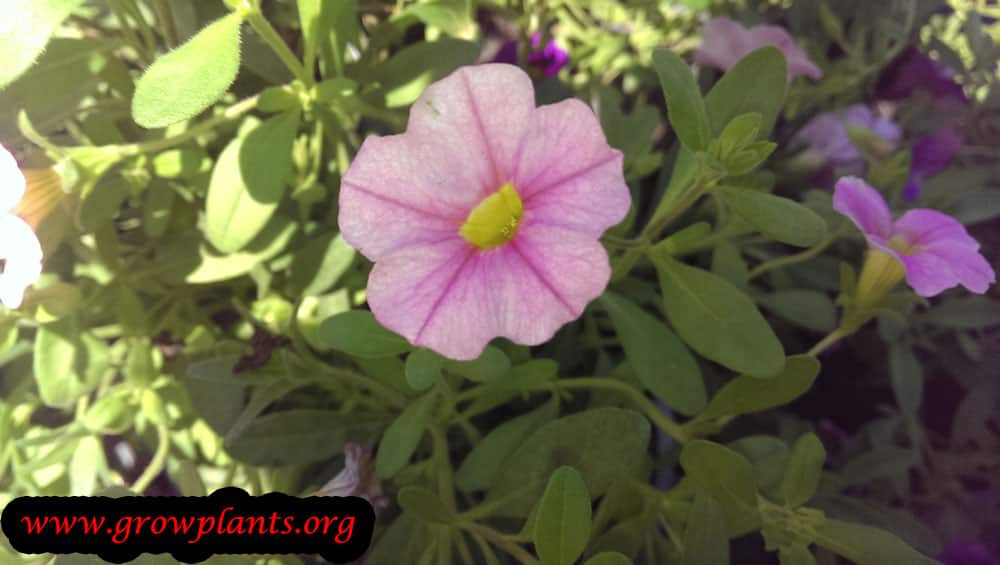
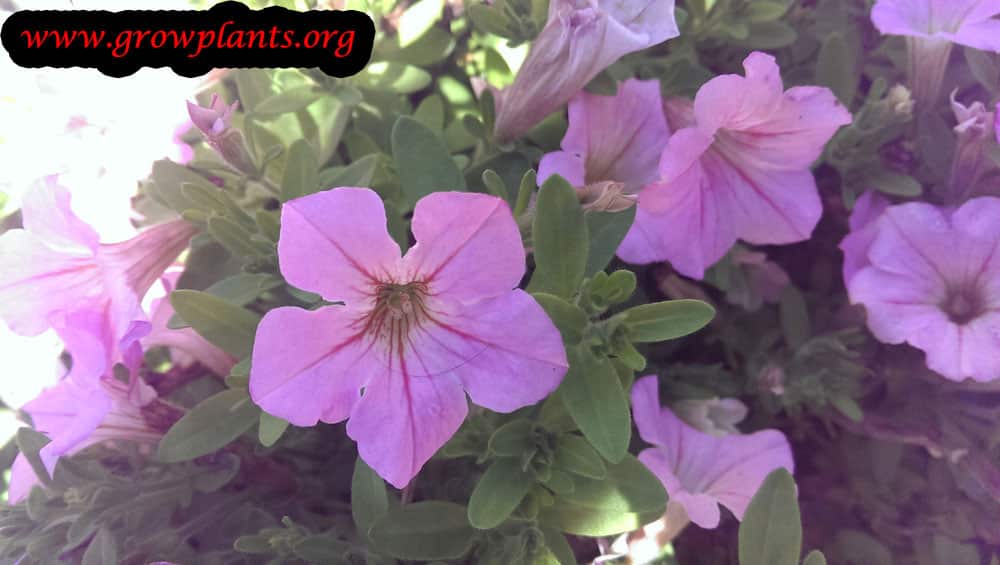
- Flower Characteristics: Masses of small, petunia-like trumpet flowers in many colours, often multi-coloured, over a long season.
Primary Uses & Landscape Value
- Functional & Ornamental Roles: Ornamental trailing groundcover, hanging baskets, containers and window boxes.
Care Guide: Planting, Soil & Watering
Overview: A free-flowering trailing plant for tropical to temperate gardens (hardiness zone 9-11 as a perennial, 5-8 as an annual) grown in full sun. It thrives in rich, well-drained, moisture-retentive soil with a moderate, steady supply of water.
Quick Care Requirements
| Requirement | Ideal Condition |
|---|---|
| Planting Season | Spring, or autumn in frost-free areas |
| Growth Rate | Fast |
| Soil Type | Rich, well-drained, moisture-retentive |
| Water Need | Moderate – keep evenly moist, not soggy |
Planting & Establishment
- Best Planting Season: Plant in spring once frost has passed, or in autumn in warm climates with no real winter, so it can trail and flower through the mild season.
- How to Plant:
- Hole Preparation: In beds or containers, plant into a rich, free-draining mix; baskets and pots show off its trailing habit best.
- Soil Amendments: Blend compost or other organic matter into the mix – it is a hungry plant that rewards feeding.
- Planting Depth: Set the crown level with the surface – don’t bury the stem base.
- Growth Speed & Expectations: Fast-growing and quickly spreading, trailing to about 10-20 cm tall as it fills a pot or basket.
Soil, Watering & Drainage Care
- Soil Mix & Drainage Needs: A rich but sharply drained, moisture-retentive mix is ideal; good drainage in pots prevents the root rot it is prone to when overwatered.
- Watering Schedule & Technique:
- Young / Newly Planted: Keep the mix evenly moist while young plants root in and begin trailing.
- Established: Water regularly to keep the soil moist but never waterlogged – containers dry fast and may need daily water in heat.
- Seasonal Adjustments: Water freely and feed through the warm flowering season; cut back in cool, wet weather.
Climate, Light & Hardiness
Calibrachoa "million bells" is a tender, short-lived perennial usually grown as an annual, thriving in tropical, Mediterranean, subtropical and temperate climates and flowering continuously through the warm season in baskets and pots. It wants full sun and tolerates heat better than petunia, with the site rating it at hardiness zones 9–11 as a perennial and zones 5–8 grown as an annual.
Quick Climate Specifications
| Climate Zones | Tropical, Mediterranean, subtropical, temperate |
|---|---|
| USDA Hardiness Zones | Approximately 9–11 as a perennial; 5–8 grown as an annual (site data) |
| Optimal Temp Range | Mild to warm, roughly 15–27°C (59–81°F) |
| Cold Damage Begins | Frost damages foliage and flowers |
| Frost Tolerance | Low |
| Light Conditions | Full sun (light shade in hottest climates) |
| Salt / Coastal Tolerance | Moderate |
Sunlight & Light Exposure
Optimal Light Setup
Full sun keeps plants dense and covered in the small bell flowers; low light causes stretching and poor bloom. A little afternoon shade helps in the hottest midsummer weather.
Temperature Extremes & Hardiness
USDA Hardiness & Regional Limits
The two figures reflect lifecycle: in frost-free, mild-winter climates (zones 9–11) it can persist as a short-lived perennial, while in colder regions (zones 5–8) it is grown as a spring-to-summer annual. Hardiness and cultivation habit are separate concepts.
Cold Damage & Winter Protection
Frost damages foliage and flowers, so planting is timed to the frost-free window. In mild winters plants may carry over and keep flowering, though they are naturally short-lived.
Extreme Heat Tolerance
Good – more heat- and sun-tolerant than standard petunias, staying floriferous through warm summers when kept evenly moist, and largely self-cleaning.
Wind, Humidity & Microclimate
Coastal / Salt Tolerance
Moderately tolerant of coastal exposure and salt spray, so it is a dependable seaside basket and container plant. (This refers to salt spray rather than saline soil or irrigation water.)
Microclimate Recommendations
A sunny, warm, airy position – especially raised pots and hanging baskets – gives the longest, fullest display.
Growing in Pots, Balconies & Indoors
Calibrachoa (million bells) are compact, wide-spreading trailing plants (10-20 cm / 4-8 in) smothered in small petunia-like flowers. They are not houseplants – they need strong sun and grow leggy and shy of flowering indoors – but in pots, window boxes and hanging baskets they are among the best of all sunny balcony and patio plants.
Quick Details
- Container Size: Any pot, window box or hanging basket with good drainage; they spread and trail, so give them room
- Indoor Suitability: Not a houseplant; a very bright, sunny sill at best – they truly belong outdoors in full sun
- Best Spot: Full sun, with a little afternoon shade in hot-summer climates
- Soil & Drainage: Light, free-draining potting mix (peat/coir with perlite); it must not stay waterlogged
- Watering in Pots: Regular – pots and baskets dry fast; keep evenly moist but not soggy
Indoors & On the Windowsill
- Houseplant limits: In low light they stretch, go pale and stop blooming – this is an outdoor plant.
- Windowsill growing: A very bright, sunny sill can hold them for a while, but a balcony or patio in full sun is far better.
- Overwintering: Usually grown as annuals and replaced each year; a favourite plant can be kept over somewhere bright and frost-free.
On a Balcony or Patio
- Light & wind: This is their ideal home – railing boxes and hanging baskets in full sun. They dry out fast in wind and heat, so check them daily and water often.
- Keep them blooming: Deadhead spent flowers and they will flower non-stop through the warm season.
Choosing the Pot, Soil & Long-Term Care
- Pot & drainage: Any container with strong drainage holes; skip a standing water saucer to avoid root rot. Terracotta breathes and dries faster, while glazed or plastic pots and baskets hold moisture longer.
- Potting mix: A light, free-draining potting mix – peat or coir with perlite.
- Feeding: They are hungry plants in pots – feed regularly through the season, as nutrients leach out with frequent watering; this keeps the flowers coming.
- Renewal: Being fast annuals, they are simply replaced each year rather than repotted long-term.
Fertilizing & Feeding
A steady, light feeder: a balanced complete fertilizer through the growing and blooming season keeps flowering ornamentals healthy without forcing soft growth.
Quick Fertilizing Specs
| Feeding Level | moderate |
|---|---|
| Main Nutrient Priority | A balanced complete fertilizer with steady nitrogen; extra phosphorus is not needed for bloom. |
| Best Feeding Period | Through the active growing and flowering season. |
| Organic Options | Compost and other organic matter improve the soil and supply gentle, steady nutrition. |
| Soil pH | Slightly acidic to near neutral suits most flowering ornamentals. |
| Reduce/Stop Feeding | Ease off feeding as growth slows heading into the cool, dormant rest period. |
Feeding by Growth Stage
Spring growth flush
Support healthy new shoots and leaf growth as the plant wakes up.
| Nutrient direction | A complete, balanced fertilizer with steady nitrogen to build strong foliage and stems. |
|---|---|
| Timing | As new growth begins in spring and the weather warms. |
| Frequency | Light, regular feedings through the active growing season. |
| Fertilizer types | A balanced complete garden fertilizer, A slow-release complete fertilizer worked into the soil, Compost or other organic matter to enrich the soil |
| Precautions | Feed lightly and avoid overfeeding with nitrogen, which pushes soft leafy growth at the expense of flowers. |
Flowering period
Fuel abundant, well-colored flowers while keeping the plant vigorous.
| Nutrient direction | A balanced complete fertilizer with adequate nitrogen; balanced feeding, not extra phosphorus, drives good bloom. |
|---|---|
| Timing | Through the blooming season. |
| Frequency | Steady, light feeding maintained across the flowering period. |
| Fertilizer types | A balanced complete flowering-plant fertilizer, A water-soluble complete fertilizer for container plants |
| Precautions | Skip high-phosphorus ‘bloom booster’ products; they are rarely needed and excess phosphorus can harm the soil. Container plants need even feeding to avoid salt buildup. |
Repeat bloom and rebound
Keep long-blooming plants flushing new flowers after deadheading or shearing.
| Nutrient direction | A balanced complete fertilizer to refuel growth and encourage the next wave of flowers. |
|---|---|
| Timing | After each flush of bloom or a mid-season trim, while the plant is still actively growing. |
| Frequency | Resume light, regular feeding as new growth pushes. |
| Fertilizer types | A balanced water-soluble complete fertilizer, A balanced complete garden fertilizer |
| Precautions | Feed sparingly in heat; combine feeding with consistent watering so nutrients stay available. |
Dormancy or cool-season rest
Let the plant rest through cold or low-light conditions without forcing new growth.
| Nutrient direction | None – withhold fertilizer while the plant is resting. |
|---|---|
| Timing | During cold winter weather or the plant’s low-light dormant rest. |
| Frequency | No feeding at this stage. |
| Fertilizer types | No feeding at this stage – resume only when active growth returns. |
| Precautions | Do not fertilize until active growth resumes; feeding a resting plant risks salt buildup and root injury. |
Nutrient Deficiency Signs & Corrections
Older, lower leaves fade to pale green or yellow and overall growth is weak.
| Possible causes | Low nitrogen in the soil, Nutrients leached out by heavy rain or frequent watering, Cold, wet roots slowing nutrient uptake |
|---|---|
| Appears first on | Older, lower leaves |
| What to check | Recent feeding history, Soil drainage and how often it is watered, Whether roots are healthy and warm enough |
| Possible correction | Apply a balanced complete fertilizer and improve drainage; correct soil pH if it is far off so nutrients stay available. |
Newest leaves turn yellow between green veins (interveinal yellowing) while older leaves stay greener.
| Possible causes | High soil pH locking up iron, Waterlogged or poorly aerated roots, Genuinely low available iron |
|---|---|
| Appears first on | Youngest, newest leaves |
| What to check | Soil pH, Drainage and root health, Whether only new growth is affected |
| Possible correction | Correct soil pH and improve drainage; where iron is truly short, apply a chelated iron product per its label. |
Lush leaves but few flowers, or pale weak blooms.
| Possible causes | Excess nitrogen driving leafy growth over flowers, Too little light for good flowering, A pest or cultural problem rather than a nutrient shortage |
|---|---|
| Appears first on | Flower buds and flowering shoots |
| What to check | How much nitrogen was applied, Hours of direct light, General plant health and pest pressure |
| Possible correction | Ease off nitrogen, move the plant to brighter light, and keep feeding balanced rather than reaching for high-phosphorus products. |
Pruning, Training & Seasonal Maintenance
Calibrachoa is a short-lived, fast-growing trailing sub-shrub — a close petunia relative — grown mainly as a warm-season basket and container plant. Unlike large petunias it is largely self-cleaning, dropping most spent blooms on its own, so routine deadheading is minor; the maintenance that actually matters is pinching young plants for branching and shearing the whole plant back when the trailing stems run leggy and bloom retreats to the tips. There is no woody framework to build. “Million Bells” is a trade-series name for Calibrachoa; pruning is identical to the genus.
Quick Pruning & Maintenance Specs
| Pruning Tolerance | High — responds to pinching and shearing with denser regrowth |
| Primary Pruning Window | Throughout the warm growing and blooming season |
| Secondary Maintenance Window | One or two mid-season shear-backs as stems go leggy |
| Typical Frequency | Light and ongoing; shear back every few weeks if trailing stems bare out |
| Main Objective | Compact, well-branched trailing habit and continuous bloom |
| Young Plant Priority | Pinch tips to build a full, branched plant |
| Mature Plant Priority | Shear back leggy stems to rejuvenate flowering |
| Best Tool Type | Fingers or precision snips / light shears |
| Avoid Heavy Pruning During | Peak heat / drought stress and late season near frost |
Pruning by Plant Age & Size
Newly Established
Pinch the growing tips of a young plant once or twice early on. Calibrachoa branches freely, so a couple of soft pinches quickly turns a single trailing shoot into a full, mounded-and-cascading plant. No structural training is required.
Young / Formative
Continue light tip pinching while the plant fills its container. The goal is many branch points, not a framework — there is no leader or vase form. Nursery plants are usually already bushy and need little more than an occasional pinch.
Mature / Established
By mid to late summer the long stems tend to bare out at the base and flower only near the tips. Shear the plant back by about one third, cutting to leafy growth, to force fresh branched shoots and a renewed flush. Repeating this lightly is what keeps a basket looking full at 10–20 cm and beyond, spreading widely.
Seasonal Pruning Schedule
Grown as a warm-season plant, it has no dormant or old-wood cycle; maintenance is continuous.
Ongoing (growing season)
Objective: keep the trailer compact and blooming. Remove: leggy, over-extended stems and any yellowing lower foliage. Do not remove: the bulk of healthy leafy growth — new blooms come from those axils. Response: rapid re-branching in warm weather. Bloom impact: the shear-back briefly pauses then multiplies flowering.
Special Growth to Remove
Because Calibrachoa is largely self-cleaning, spent-flower removal is minor — the plant sheds most faded blooms itself. The real “special growth” task is the periodic shear of tired, leggy trailing stems. There are no suckers, watersprouts or runners; every vigorous leafy shoot is future bloom, so do not strip them out.
Container & Small-Space Pruning
Almost all Calibrachoa is grown in hanging baskets and pots, where the shear-back is the defining maintenance job. Confined roots plus long cascading stems mean the centre thins out by midsummer; a mid-season haircut of one third rebuilds the mound. Root-pruning does not apply — these fast, hungry plants are grown for a single season, kept fed and watered rather than root-managed.
Tools
Thin soft stems need only fingers, precision snips, or light one-hand shears to speed a basket-wide shear-back. Nothing heavier — loppers, saws and hedge shears have no role here.
Tool Hygiene & Disease Risk
Routine. Clean sharp snips suffice. Step up to increased caution only for plants showing mottled or distorted leaves — Calibrachoa can host mosaic-type viruses — in which case remove and bin the whole plant rather than trimming through it, and wash hands before handling healthy stock. Everyday shearing of healthy plants needs no between-cut disinfection.
Cut Placement & Technique
Shear or pinch just above leaves so regrowth breaks from the axils; cuts left in bare stem simply die back. When rejuvenating, take the whole plant to an even height above leafy growth rather than gouging into bare lower stems, which recover slowly.
Heavy Pruning & Rejuvenation
Tolerated and useful within the season: a tired plant sheared back by up to a third re-flushes from lower foliage in one to two weeks of warm weather. As an annual-use plant there is no multi-season renovation — the mid-season shear is the rejuvenation.
Post-Pruning Care
After a shear-back, water well and give a light feed — Calibrachoa is a heavy feeder that also prefers slightly acidic conditions, and a modest feed fuels the re-flush of these fast container plants (an exception to the usual “don’t feed after hard pruning” rule, which applies to woody plants). Keep the rootball evenly moist while it rebuilds and watch the soft new tips for aphids.
Common Pruning Mistakes
- Deadheading obsessively as if it were a large petunia — Calibrachoa is self-cleaning, so the effort is better spent on the mid-season shear.
- Never shearing back, so baskets go bare-centred with flowers only at the trailing tips.
- Cutting hard into old bare stem below the leaves, or shearing during heat stress — both regrow slowly.
When NOT to Prune
Avoid the hard shear-back during heatwaves, drought stress or right after planting; wait until the plant is turgid and growing. Skip heavy cutting late in the season, when frost will end the plant before it can rebuild.
Recommended Tools (by task)
- precision_snips — light shears or snips for the mid-season shear-back and occasional tidy; the only cutting tool a soft-stemmed trailer needs.
Propagation Guide
Calibrachoa ‘Million Bells’ is propagated almost entirely by stem cuttings: the plants are complex hybrids that set little or no viable seed, so cuttings are the way to reproduce them, and they root very easily. Note that most named series are patented, so propagating them without a licence is restricted.
Quick Propagation Specs
| Best Propagation Method | Stem cuttings |
| Alternative Methods | Seed only for the few seed-raised strains |
| Propagation Difficulty | Easy (from cuttings) |
| Seed True-to-Type | No — largely sterile hybrids that seldom set viable seed |
| Vegetative True-to-Type | Yes |
| Best Propagation Season | Warm season |
| Cutting Rooting Time | Roughly two to three weeks |
Stem Cuttings
Cutting Type & Timing
Softwood tip cuttings taken in the warm season.
Rooting Setup & Hormone
Root in a moist, free-draining mix under high humidity; a rooting hormone is optional, as tips root readily.
Rooting Time
Cuttings usually root in about two to three weeks. Remember that patented/trademarked series may not be propagated without permission.
Bloom & Flower Guide
Quick Details
- Bloom Season: Nearly year-round in frost-free climates; late spring through autumn in temperate zones
- Time to First Bloom: Fast – young plants usually begin flowering within a few weeks of being planted out in warm weather
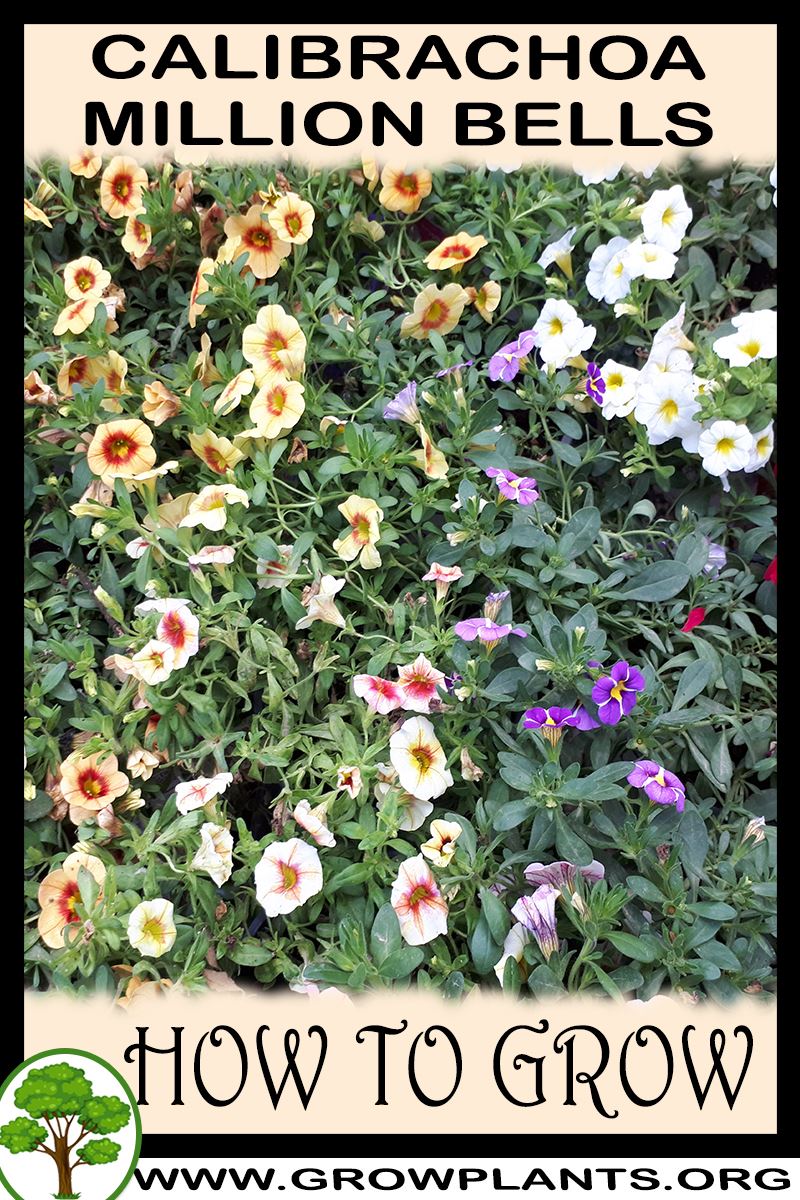
- Flower Appearance: Small petunia-like trumpets in red, pink, purple, yellow, orange, near-black or white, often more than one colour on a bloom
- Edibility: Ornamental only – grown for its flowers, not for eating
Detailed Blooming Overview
Calibrachoa is one of the longest-flowering plants you can grow in a basket or pot. In mild, frost-free areas it can carry blooms for most of the year, while in colder zones it flowers freely from late spring until the first frost. The trumpet-shaped flowers are like miniature petunias and are produced in great numbers all over the trailing stems.
Flower Characteristics
- Petunia-like (trumpet-shaped) flowers.
- Colours include red, pink, purple, yellow, orange, near-black and white, and many are bicoloured.
- Carried in profusion along the creeping, cascading stems.
Bloom Care & Thinning
- Keeping it flowering: Calibrachoa is largely self-cleaning and rarely needs deadheading. If flowering fades in mid-season, a light trim and a feed will bring on a fresh flush.
- Feeding: Because it blooms so heavily, it appreciates regular, balanced feeding through the growing season.
Bloom Health & Protection
- Budworm: Tobacco budworm caterpillars chew into buds and open flowers, leaving ragged holes and few blooms – a Bt (Bacillus thuringiensis) spray targets the caterpillars while sparing pollinators.
- Botrytis (grey mould): In cool, wet, crowded conditions flowers can rot and turn fuzzy-grey – improving airflow, avoiding overhead watering, and removing spent blooms usually keeps it in check.
Pests, Diseases & Troubleshooting
Overview: Calibrachoa are soft, fast-growing bedding and container plants whose lush tender growth attracts sap-sucking insects, and whose fine roots are very sensitive to soggy, cold or alkaline media. The single biggest field problem is iron chlorosis on high-pH water or compost, followed by root and stem rots in overwatered pots; manage them culturally with an acidic, sharply drained mix, moderate feeding and good airflow before reaching for sprays.
Quick Troubleshooting Overview
| Issue / Pest | Main Symptom | Primary Solution |
|---|---|---|
| Aphids | Sticky new shoots, curled tips, sooty mould | Blast off, insecticidal soap / neem |
| Whitefly | White clouds when disturbed, yellow speckling | Yellow sticky traps, soap sprays |
| Thrips | Silvery streaks, distorted buds, virus spread | Blue sticky traps, remove buds, spinosad |
| Iron chlorosis | Yellow leaves with green veins on new growth | Acidify mix, iron chelate (Fe-EDDHA) |
| Black root rot | Stunting, black roots, collapse | Discard, sterile acidic mix, avoid overwatering |
| Botrytis | Grey fuzzy mould on old flowers/leaves | Deadhead, improve airflow, avoid wet foliage |
Common Pests & Management
- Aphids (Myzus persicae, Aphis gossypii):
- Symptoms: Small green, peach or black soft insects clustered on shoot tips and flower buds; growth curls and puckers, honeydew makes leaves sticky and blackens with sooty mould. Look for cast white skins and attending ants.
- Prevention & Control: Knock colonies off with a firm water jet, pinch out badly infested tips, and encourage ladybirds and lacewings. Treat persistent outbreaks with insecticidal soap or neem/horticultural oil applied in the cool of evening to protect bees.
- Whitefly (Trialeurodes vaporariorum, Bemisia tabaci):
- Symptoms: Tiny white moth-like insects that fly up in a cloud when the plant is shaken; nymphs on leaf undersides cause mottled yellowing, honeydew and sooty mould, and can transmit viruses.
- Prevention & Control: Hang yellow sticky traps to monitor and reduce adults, remove the worst leaves, and rinse undersides. Encourage Encarsia parasitoids under cover; spray insecticidal soap or oil, repeating every few days to catch emerging nymphs.
- Thrips (Frankliniella occidentalis):
- Symptoms: Slender pale-to-brown insects hiding in buds; feeding gives silvery-flecked, streaked petals and leaves and deformed new growth. They also spread tospoviruses.
- Prevention & Control: Use blue sticky traps, remove and bin distorted buds, and keep plants unstressed. Introduce predatory mites (Amblyseius) under cover; spot-treat with spinosad or insecticidal soap, alternating actives to avoid resistance.
- Spider mites (Tetranychus urticae):
- Symptoms: Fine pale stippling on leaves, a dull bronze cast and delicate webbing on undersides in hot, dry conditions; leaves dry and drop.
- Prevention & Control: Raise humidity and hose down foliage, as mites thrive in dry heat. Remove heavily webbed growth and release predatory mites (Phytoseiulus); use insecticidal soap or horticultural oil, coating leaf undersides thoroughly.
- Fungus gnats (Bradysia species):
- Symptoms: Small dark flies running over the mix and short flights near the pot; larvae in constantly wet compost feed on fine roots, weakening young or rooting plants.
- Prevention & Control: Let the surface dry between waterings, use a free-draining mix, and cover the surface with grit. Yellow sticky traps catch adults; Bti (Bacillus thuringiensis israelensis) drenches or predatory nematodes control larvae.
Diseases & Fungal Issues
- Black root rot (Berkeleyomyces basicola (Thielaviopsis basicola)):
- Symptoms: A signature Calibrachoa disease: plants stall and yellow while roots turn from white to grey-black with banded dead zones; worst in cold, wet, alkaline media.
- Treatment & Management: There is no cure once established, so discard badly affected plants and their mix. Prevent it with clean pots, a fresh sterile acidic mix, moderate watering and warm root temperatures; avoid recycling compost between crops.
- Root and crown rot (Pythium, Phytophthora, Rhizoctonia species):
- Symptoms: Wilting despite moist soil, browning at the soil line, mushy dark roots and sudden collapse of pots that stay too wet.
- Treatment & Management: Improve drainage and never leave pots standing in water; water in the morning so the surface dries. Remove collapsed plants promptly and avoid splashing mix onto healthy foliage; drench-type biofungicides (Trichoderma) help preventively.
- Grey mould (Botrytis cinerea):
- Symptoms: Fuzzy grey-brown mould on faded flowers, dying leaves and dense crowded growth, especially in cool damp weather or under cover.
- Treatment & Management: Deadhead spent blooms, thin congested growth for airflow and avoid wetting foliage late in the day. Remove affected tissue into a bag; if pressure is high, a suitable garden fungicide can be used, rotating chemistry.
- Mosaic viruses (Tobacco mosaic virus and related potyviruses):
- Symptoms: Mottled light-and-dark green or yellow leaves, distorted growth and streaked or broken flower colour that does not respond to feeding.
- Treatment & Management: There is no cure: rogue out and destroy affected plants and control aphids and thrips that spread viruses. Wash hands and tools, avoid taking cuttings from suspect stock, and buy clean, virus-indexed plants.
Growing Difficulties & Abiotic Problems
- Iron / manganese chlorosis (high pH):
- Cause & Symptoms: The classic Calibrachoa disorder: newest leaves turn pale yellow while the veins stay green, caused by alkaline water or compost locking up iron; whole plants can bleach to cream.
- Correction Strategy: Use an ericaceous (acidic) mix and rain or acidified water; feed with an iron chelate (Fe-EDDHA works best at high pH) and a fertiliser formulated for acid-loving plants. Keep media pH around 5.5–6.2.
- Overwatering and waterlogging:
- Cause & Symptoms: Constantly wet, airless mix suffocates the fine roots, giving yellowing, wilting and rot even as the soil looks moist.
- Correction Strategy: Grow in free-draining containers with plenty of drainage holes, let the top of the mix dry before rewatering, and empty saucers. In wet spells move containers under cover.
- Nutrient deficiency and hunger:
- Cause & Symptoms: Heavy bloomers in small pots run out of feed, showing overall pale, small leaves and weak flowering by mid-season.
- Correction Strategy: Feed regularly at a moderate rate with a balanced or slightly high-potassium liquid feed, avoiding sudden over-feeding that softens growth and invites aphids.
- Legginess and heat stress:
- Cause & Symptoms: Stems stretch bare and flowering thins in shade or extreme heat, and dried-out plants brown at the centre.
- Correction Strategy: Give full sun, trim back leggy stems by a third to rejuvenate, and keep watering consistent through hot spells; consistent moisture prevents the mid-summer slump.
What Helps – Products & Tools
Reach first for physical and organic tools – a strong water jet, yellow and blue sticky traps, insecticidal soap and neem or horticultural oil for aphids, whitefly, thrips and mites. For the root/crown rots the answer is cultural: sterile acidic mix, clean pots and careful watering, with Trichoderma or Bti drenches as support. Correct the signature yellowing with an iron chelate (Fe-EDDHA) and an ericaceous feed.