Plant Profile & Key Characteristics
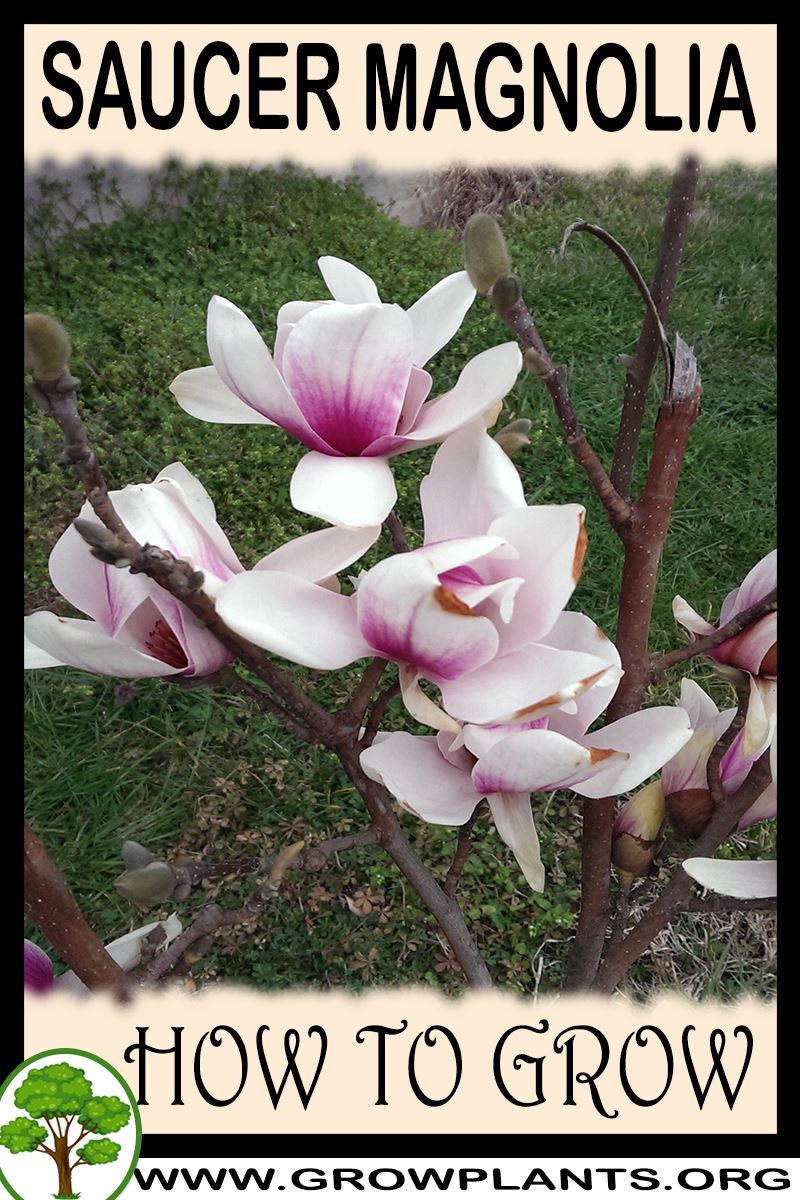
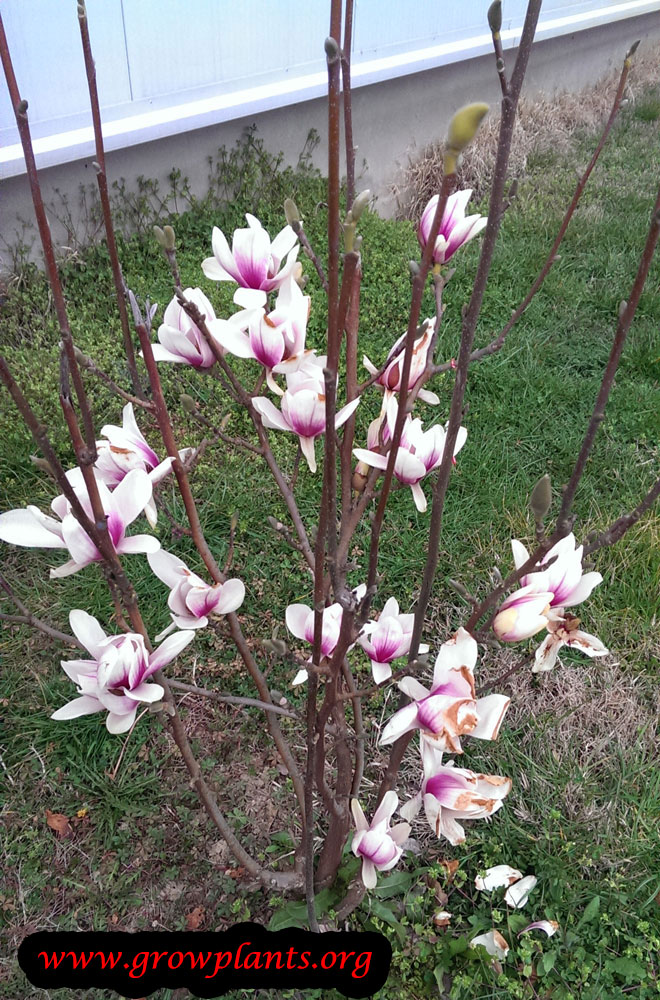
Overview: Deciduous shrub to small tree reaching 3-6 m, grown as a spring-flowering ornamental. Bears large pink, white or purple cup-shaped flowers on bare branches before the leaves.
Quick Specifications
| Specification | Attribute |
|---|---|
| Plant Type / Life Cycle | Perennial (deciduous shrub/small tree) |
| Foliage Type | Deciduous |
| Mature Size | 3-6 m (10-20 ft) |
| Growth Rate | Moderate |
| Root System | Shallow, fleshy rope-like roots |
| Toxicity | Non-toxic |
| Hardiness | USDA zones 4-9 |
Growth Form & Structure
- Height & Spread: 3-6 m; can be container-grown while young.
- Growth Habit & Form: Multi-stemmed, spreading deciduous shrub or small tree.
- Lifespan & Maturity: Long-lived; moderate to reach full size.
Anatomy & Physical Features
- Leaves & Foliage: Green, oval leaves emerging after flowering.
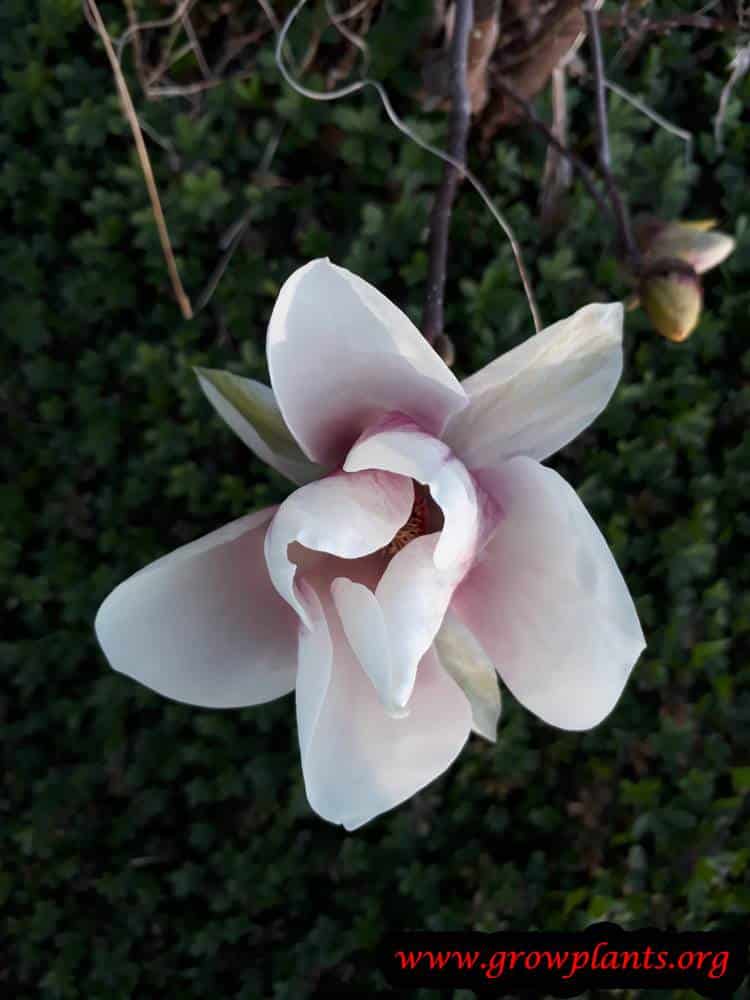
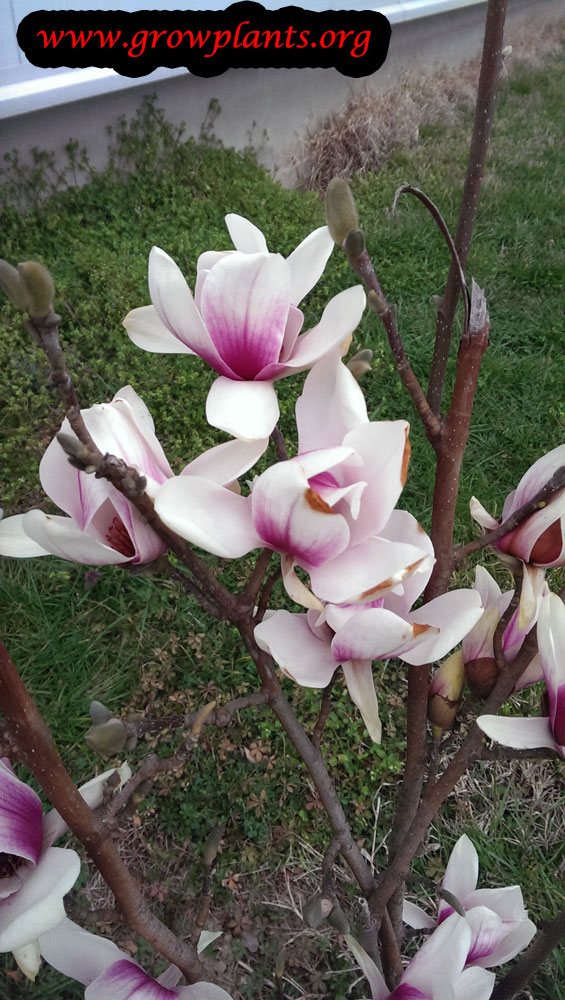
- Flower Characteristics: Large, cup-shaped flowers in pink, white or purple, opening on bare branches in spring.
Primary Uses & Landscape Value
- Functional & Ornamental Roles: Spring-flowering specimen and ornamental shrub or small tree.
Care Guide: Planting, Soil & Watering
Overview: Saucer magnolia (Magnolia soulangeana) is a moderate-growing deciduous shrub or small tree (zones 4–9) that flowers best in full sun and needs winter cold to bloom. It prefers a rich, moist, well-drained soil and steady moderate watering.
Quick Care Requirements
| Requirement | Ideal Condition |
|---|---|
| Planting Season | Late winter to early spring |
| Growth Rate | Moderate |
| Soil Type | Rich, moist, well-drained |
| Water Need | Moderate – keep evenly moist |
Planting & Establishment
- Best Planting Season: In late winter to early spring, just before growth resumes.
- How to Plant:
- Hole Preparation: Dig a hole about the depth of the root ball and two to three times as wide, loosening the sides for the shallow, fleshy roots.
- Soil Amendments: Work compost or leaf mould into the backfill to build a rich, moisture-retentive yet free-draining soil.
- Planting Depth: Set the root collar level with the soil surface; avoid deep planting, which magnolias resent, and mulch afterwards.
- Growth Speed & Expectations: A moderate grower that develops into a spreading, multi-stemmed shrub or small tree.
Soil, Watering & Drainage Care
- Soil Mix & Drainage Needs: A humus-rich, moisture-retentive but free-draining soil suits it best; mulch to keep the roots cool. It can be grown in a large container with a rich, free-draining mix and drainage holes.
- Watering Schedule & Technique:
- Young / Newly Planted: Keep the soil consistently moist while the plant establishes, watering whenever the surface begins to dry.
- Established: Water deeply when the top few centimetres dry, keeping the soil evenly moist but never waterlogged.
- Seasonal Adjustments: Cut back in winter and water more often during hot, dry spells.
Climate, Light & Hardiness
Saucer magnolia is a cold-hardy deciduous flowering tree for temperate, subtropical and Mediterranean climates, opening its large cup-shaped blooms in late winter to early spring before the leaves. It flowers best in full sun and, with the site rating it across hardiness zones 4–9, its main climate vulnerability is not winter cold but late-spring frost catching the early flowers.
Quick Climate Specifications
| Climate Zones | Temperate, subtropical, Mediterranean |
|---|---|
| USDA Hardiness Zones | Approximately 4–9 (site data) |
| Optimal Temp Range | Mild to warm, roughly 15–27°C (59–81°F) in growth |
| Cold Damage Begins | Open flowers and buds are browned by spring frost |
| Frost Tolerance | Wood: high; flowers: low |
| Light Conditions | Full sun |
Sunlight & Light Exposure
Optimal Light Setup
Full sun gives the heaviest bloom and a sturdy, well-shaped crown. Light shade is tolerated but reduces flowering.
Best Exposure / Orientation
Avoid warm, early-sun positions (such as an exposed east or south face) that coax the buds open during mid-winter warm spells – a slightly cooler, sheltered aspect delays flowering until frost risk eases and protects the display.
Temperature Extremes & Hardiness
USDA Hardiness & Regional Limits
Site data lists zones 4–9; the lower edge of zone 4 corresponds to winter lows around −34 to −29°C (−30 to −20°F). The dormant tree is very cold-hardy – it is the flowers, not the wood, that are at risk.
Frost Sensitivity
The early, showy flowers are the weak point: a late frost after the buds swell or open will brown and collapse the blooms in a single night, even though the tree itself is unharmed. In frost-prone areas, siting and later-flowering cultivars reduce the risk.
Cold Damage & Winter Protection
Established trees need no winter protection within their zone; young trees appreciate shelter while establishing. A cold, dormant winter is welcome and helps the tree flower well.
Extreme Heat Tolerance
Moderate. It grows in the warmer, subtropical end of its range but prefers cooler summers; in hot climates give it rich, moist soil and some afternoon relief.
Wind, Humidity & Microclimate
Wind Tolerance
Moderate. Shelter from strong wind protects the brittle, fleshy petals and keeps the delicate spring display intact.
Microclimate Recommendations
A sheltered spot that warms up slowly in spring is ideal – it steadies bloom timing and shields the flowers from both frost and wind.
Growing in Pots, Balconies & Indoors
Saucer magnolia is a beautiful spring-flowering deciduous small tree – the grower does not class it as a houseplant, but it can be grown in a large container while young. Reaching 3-6 m in time, it is best thought of as a big-growing patio tree for a tub in its early years before it wants a permanent spot.
Quick Details
- Container Size: Large – a young plant needs a 40-90 L (10-24 gal) tub, and it will eventually outgrow even that
- Indoor Suitability: Not a houseplant – a hardy deciduous tree that needs an outdoor season and winter chill
- Best Spot: Full sun for best flowering; shelter the early blooms from cold morning sun after frost
- Soil & Drainage: Rich, moisture-retentive but well-drained mix; it likes cool, non-alkaline soil
- Watering in Pots: Average and steady – keep the tub evenly moist, especially through bud and leaf growth
Indoors & On the Windowsill
- Not a houseplant: The grower marks it unsuitable indoors – it needs cold winters to flower and drops its leaves in dormancy.
- Overwintering: Hardy to zone 4, it simply rests outdoors over winter; protect the tub from freezing solid in very cold areas rather than bringing it into a warm room.
On a Balcony or Patio
- A patio tree while young: In a big tub it makes a fine spring-flowering feature for a few years; site it where the early blooms are sheltered from frost and cold morning sun.
- Weight & wind: A large tub is heavy and top-heavy in leaf – stand it on a strong point and shelter it from strong wind.
Choosing the Pot, Soil & Long-Term Care
- Pot & drainage: A large, stable pot with strong drainage holes; skip a standing water saucer to avoid root rot. Terracotta breathes and dries faster, glazed or plastic holds moisture longer.
- Potting mix: A rich, slightly acid, moisture-retentive but free-draining mix.
- Feeding: Feed through the growing season; potted nutrients leach with watering, so feed regularly but lightly.
- Repotting & planting out: Refresh the mix and pot up every couple of years while young; as it grows into a small tree, plan to plant it into open ground for the long term.
Fertilizing & Feeding
A moderate feeder that blooms best on balanced feeding with adequate nitrogen; avoid high-phosphorus bloom boosters, and stop feeding by late summer so no frost-tender growth is pushed.
Quick Fertilizing Specs
| Feeding Level | Moderate |
|---|---|
| Main Nutrient Priority | Balanced feeding with adequate nitrogen, not high phosphorus |
| Best Feeding Period | Early in the growing season through spring |
| Organic Options | Compost and organic mulch over the root zone |
| Micronutrients | Watch for iron on alkaline soils |
| Soil pH | Moist, well-drained, slightly acidic soil |
| Reduce/Stop Feeding | Stop feeding by late summer to avoid frost-tender growth |
Feeding by Growth Stage
Spring growth
Support a healthy flush of new leaves and shoots as growth resumes.
| Nutrient direction | A balanced complete fertilizer as new growth begins; adequate nitrogen, not high phosphorus. |
|---|---|
| Timing | Early in the growing season as buds break and shoots extend. |
| Frequency | A feeding early in the growing season supports the season’s growth. |
| Fertilizer types | A balanced complete fertilizer, Slow-release granular fertilizer, Compost or organic matter |
| Precautions | Avoid high-phosphorus “bloom booster” products; balanced feeding with adequate nitrogen drives healthy bloom. |
Flowering
Sustain the plant through fragrant flowering without forcing soft growth.
| Nutrient direction | Keep balanced feeding rather than switching to a high-phosphorus product for more flowers. |
|---|---|
| Timing | Around the flowering period. |
| Frequency | Little extra feeding is needed during bloom itself. |
| Fertilizer types | A balanced complete fertilizer |
| Precautions | Extra phosphorus does not increase bloom and can harm soil life; keep feeding balanced. |
Dormancy / winter rest
Let the tree rest through the cold season.
| Nutrient direction | None – withhold fertilizer while the tree is dormant. |
|---|---|
| Timing | Late autumn and winter dormancy. |
| Frequency | No feeding at this stage. |
| Fertilizer types | No feeding at this stage until growth resumes in spring. |
| Precautions | Do not fertilize a dormant tree; feeding late can push frost-tender growth. |
Nutrient Deficiency Signs & Corrections
Younger leaves yellow between the veins while the veins remain green; severe cases scorch.
| Possible causes | Iron uptake limited by high or alkaline soil pH, Waterlogged or compacted soil, Root damage or stress |
|---|---|
| Appears first on | Youngest leaves |
| What to check | soil pH, drainage and soil compaction, root condition |
| Possible correction | Correct soil pH toward slightly acidic and apply a chelated iron product following its label. |
Overall pale foliage with weak, slow new growth.
| Possible causes | Low soil nitrogen, Leaching in sandy soils, Competition from turf or nearby roots |
|---|---|
| Appears first on | Older leaves |
| What to check | soil fertility and feeding history, mulch and organic matter, surrounding competition |
| Possible correction | Apply a balanced feed with adequate nitrogen and maintain organic mulch. |
Leaf margins brown and scorch, or soft late growth is damaged by frost.
| Possible causes | Excess fertilizer salts, Feeding too late in the season pushing tender growth, Drought stress |
|---|---|
| Appears first on | Leaf margins and new shoots |
| What to check | recent feeding timing and amount, soil moisture, exposure to frost |
| Possible correction | Lighten feeding, water thoroughly to flush salts, and avoid late-season nitrogen. |
Pruning, Training & Seasonal Maintenance
Saucer magnolia is a deciduous shrub to small tree that blooms very early in spring on bare, leafless branches, before the leaves appear. Those large cup-shaped flowers open from fat, furry buds set the previous summer on last year’s wood, so timing is everything: the safe window is immediately after flowering in late spring, and pruning in summer, autumn or winter removes next spring’s flower buds. It needs little pruning, resents heavy cuts and heals slowly, so work is limited to light shaping and removing crossing or damaged stems.
Quick Pruning & Maintenance Specs
| Pruning Tolerance | Low – minimal cuts; resents hard pruning, heals slowly |
| Primary Pruning Window | Immediately AFTER flowering (late spring) – not autumn/winter |
| Typical Frequency | Rarely – only as needed for shape and health |
| Main Objective | Light shape; remove crossing/damaged stems; keep flower buds |
| Young Plant Priority | Choose a single-trunk tree or a multi-stem shrub form |
| Mature Plant Priority | Thin only crossing or dead stems, just after bloom |
| Best Tool Type | Bypass secateurs and loppers |
| Avoid Heavy Pruning During | Midsummer through winter – you would cut off next spring’s buds |
Pruning by Plant Age & Size
Newly Established
Remove only damaged growth and decide the form you want; do not hard-prune a young plant that is still building its framework.
Young / Formative
For a single-stem small tree, select one leader, clear the lowest shoots and raise the canopy – all done just after bloom; for a broad shrub, keep several stems and only thin the weakest. Because it is usually grafted or cutting-grown to come true, watch for growth from below any graft union.
Mature / Established
Limit work to removing crossing, rubbing or dead stems immediately after flowering; otherwise leave the naturally rounded shape alone.
Seasonal Pruning Schedule
Post-Flowering (Late Spring) – the main window
Objective: shape with no loss of next year’s bloom. Remove: crossing, rubbing, weak or badly placed stems. Do NOT remove: healthy tips and spurs, which will set flower buds over the coming summer. Expected response: a full summer to form buds for the next spring.
Ongoing Sanitary
Objective: safety and health. Remove: clearly dead or broken stems, which can go at any time. Do NOT: cut healthy bud-bearing wood outside the post-bloom window.
Flowering & Fruiting Wood
Critical here: flowers form on the tips and short spurs of the previous season’s wood, from buds set the summer before, and open precociously on bare branches. Pruning after midsummer – or in the autumn/winter that a generic schedule would suggest – cuts off the very buds that would open next spring. Prune only just after bloom to keep the display.
Structural Pruning & Training
Grow it either as a single-stem small tree (one leader, canopy raised) or as a broad multi-stem shrub; remove crossing, rubbing or weak wood and any reverted growth. Avoid hard thinning – big cuts heal slowly and spoil the naturally rounded outline.
Special Growth to Remove
- Rootstock suckers – on a grafted plant, remove any shoots from below the graft union promptly; they are not the named variety and will overtake it.
- Basal shoots – keep them for a multi-stem shrub, or remove them for a clean-trunked tree.
Container & Small-Space Pruning
It can be grown in a large pot as a compact specimen; keep pruning to light post-bloom shaping, expect slower growth, and do not root-prune to force size – the plant resents disturbance and responds to stress with lost bloom.
Tools
Use bypass secateurs for twigs, loppers for older stems, and a pruning saw only for the occasional larger limb. Never use hedge shears on this open-branched plant.
Tool Hygiene & Disease Risk
Routine – clean, sharp cuts aid the slow healing. Disinfect only when cutting obviously diseased wood.
Cut Placement & Technique
Use thinning cuts back to a branch junction to keep the natural shape; cut just outside the collar and avoid stubs, which die back on magnolias. Remove larger limbs in stages to prevent bark tearing.
Heavy Pruning & Rejuvenation
Poorly tolerated. An old, overgrown saucer magnolia can be reduced only cautiously and slowly; hard cuts provoke a flush of watersprouts and years of lost flowering, so spread any renovation over several seasons and always cut just after bloom.
Post-Pruning Care
Minimal – keep the plant watered after any canopy work, watch large wounds close slowly, and rub out or thin any watersprouts that crowd in after harder cuts.
Common Pruning Mistakes
- Pruning in winter “while dormant” and cutting off all the flower buds – the single most common error, and the one a generic autumn/winter schedule would cause.
- Shearing it into a formal shape it is not suited to.
- Leaving stubs, which die back.
- Ignoring rootstock suckers until they overtake the grafted variety.
When NOT to Prune
From midsummer through winter, when you would remove next spring’s flower buds; also avoid heavy cuts on a stressed or newly transplanted plant.
Recommended Tools (by task)
- bypass_secateurs – twiggy shaping and sucker removal.
- loppers – older crossing or dead stems.
- pruning_saw – the occasional larger limb, cut cleanly at the collar in stages.
Pruning Troubleshooting
| Problem | Possible Cause | What to Check | Corrective Action |
| No flowers next spring | Pruned outside the post-bloom window | When last year’s pruning was done | Prune only just after flowering; wait a year for buds to reset |
| Flush of upright watersprouts | Hard cuts provoking vigorous regrowth | Severity of recent cuts | Thin sprouts out; renovate gradually over seasons |
| Dieback at cut ends | Stubs left, or wounds slow to heal | Whether cuts were to a junction/collar | Recut to a healthy junction outside the collar; avoid stubs |
| Off-type shoots from the base | Rootstock suckers below the graft | Whether growth arises below the union | Remove suckers promptly at their origin |
Propagation Guide
Saucer magnolia is a hybrid (Magnolia × soulangeana), so vegetative propagation is needed to reproduce a plant true to its parent — seedlings are variable. The most reliable home methods are softwood/semi-hardwood cuttings and simple layering, both moderately achievable, while grafting is used in the nursery trade.
Quick Propagation Specs
| Best Propagation Method | Softwood/semi-hardwood cuttings or layering |
| Alternative Methods | Grafting; seed (variable, breeding/rootstock only) |
| Propagation Difficulty | Moderate |
| Seed True-to-Type | No — hybrid offspring vary |
| Vegetative True-to-Type | Yes — required to keep the cultivar |
| Best Propagation Season | Cuttings in early to mid summer; layer in spring |
| Cutting Rooting Time | Several weeks to a few months |
Stem Cuttings
Cutting Type & Timing
Softwood to semi-hardwood tip cuttings taken in early to mid summer while growth is still flexible.
Cutting Preparation & Rooting Hormone
Wound the base lightly and use a rooting hormone; magnolias root unevenly, so hormone is strongly recommended.
Rooting Setup & Time
Root under mist or high humidity with warmth; rooting takes several weeks to a few months, and newly rooted cuttings are best overwintered before potting on.
Air & Ground Layering
Simple or ground layering works well: peg a low, flexible branch into the soil (or air-layer a higher branch), keep the medium moist, and allow it to root over a full growing season before separating.
Grafting & Budding
Nurseries graft cultivars onto compatible magnolia rootstock to reproduce them true and to build up stock quickly; this is a specialist step rather than a home method.
Growing from Seed
Seed is used only for breeding or to raise rootstock, not to reproduce the plant, because hybrid seedlings vary. If attempted, clean the fleshy coat, keep the seed moist (do not dry), and give it a period of moist cold stratification before sowing.
Bloom & Edible Flower Guide
Quick Details
- Bloom Season: Early spring
- Time to First Bloom: Nursery-grown plants usually begin flowering within a few years
- Flower Appearance: Large, cup- to saucer-shaped flowers in pink, white or purple
- Edibility: The petals are edible – traditionally pickled or candied, with a gingery flavour; use only freshly opened, unsprayed flowers
Detailed Blooming Overview
The saucer magnolia is a deciduous magnolia that flowers on bare branches in early spring, before the leaves appear, for a spectacular display. Like other magnolias, its cup-shaped blooms are mainly beetle-pollinated. Because it flowers so early, a late frost can brown the open blooms.
Flower Characteristics
- Large, cup- to saucer-shaped flowers.
- Colours: pink, white or purple.
- Appear before the foliage in early spring.
Bloom Care & Thinning
- Managing the bloom: Little pruning is needed; where possible, shelter the early blooms from late frost.
- Pollination: Mainly beetle-pollinated.
- Edible use: Use only just-opened, unsprayed petals, and sparingly.
Fruit & Uses
Saucer magnolia is grown as an ornamental flowering tree, not as a food crop. Its only edible part is the fleshy flower petal, which has a marginal, niche use pickled or lightly cooked and eaten in small amounts.
Quick Edible Specs
| Edible Parts | Flower petals only (marginal use) |
|---|---|
| Main Use(s) | Occasional culinary flavouring – petals pickled or lightly cooked; otherwise purely ornamental |
| Eaten Raw or Cooked | Usually pickled or cooked; used sparingly |
| Preparation Required | Use young petals, wash well, pickle or cook; strong flavour so use in small amounts |
| Harvest Season | Spring, while the flowers are fresh and newly open |
| Safety/Toxicity Caveat | Treat petals as a garnish/flavouring, not a food staple; be sure of correct identification |
Flowers & Flower Buds
The flowers are large and cup-shaped in pink, white or purple, opening in spring. The thick, fleshy young petals are the part with a culinary tradition – in some cuisines they are pickled or battered and lightly cooked. The flavour is distinctive and slightly gingery, so only small amounts are used. Pick petals from freshly opened spring flowers.
Preparation, Uses & Safety
This is a niche culinary use rather than a mainstream food. Take fresh young petals, wash them, and pickle or lightly cook them, using sparingly. No other part of the tree is used as food, and no medicinal or health claims are made.
Pests, Diseases & Troubleshooting
Overview: Magnolias are generally robust ornamental trees whose most conspicuous pest is magnolia scale, backed by other scales, mites and thrips, while their diseases are mostly cosmetic leaf spots and mildews plus occasional canker and Verticillium wilt. The commonest real problems are abiotic – chlorosis on alkaline soil, leaf scorch and, for early-blooming types, frost damage to the flowers. Culture and sanitation carry the day.
Quick Troubleshooting Overview
| Issue / Pest | Main Symptom | Primary Solution |
|---|---|---|
| Magnolia scale | Large shiny bumps on twigs; heavy honeydew, sooty mould | Prune out; dormant/horticultural oil at crawler stage |
| Scale (soft/tuliptree) | Brown scales, yellowing, sticky leaves | Scrape/prune; horticultural oil |
| Spider mites | Stippling and bronzing in hot dry weather | Hose foliage; horticultural oil |
| Leaf spots / algal spot | Brown or grey-green spots on leaves | Rake leaves; airflow; copper if severe |
| Chlorosis | Interveinal yellowing on alkaline soil | Acidify soil; chelated iron; mulch |
| Frost/scorch damage | Browned flowers or scorched leaf margins | Shelter siting; even watering; delay pruning |
Common Pests & Management
- Magnolia scale (Neolecanium cornuparvum):
- Symptoms: One of the largest soft scales – smooth, shiny, pinkish-brown to grey bumps up to a centimetre across encrust twigs and branches, drenching the plant in honeydew and black sooty mould and causing branch dieback.
- Prevention & Control: Prune out and destroy heavily infested twigs, apply horticultural or dormant oil to smother the overwintering nymphs and target the crawler stage in the warm season, and conserve parasitoid wasps and lady beetles; spray oils in the evening to protect pollinators.
- Tuliptree / soft scale (Toumeyella liriodendri / Coccus spp.):
- Symptoms: Brown, rounded scales on twigs and leaf undersides suck sap, yellowing leaves and coating foliage with honeydew and sooty mould.
- Prevention & Control: Scrape off accessible scale, prune out infested wood, and treat crawlers with horticultural oil; keep trees vigorous and unstressed.
- Two-spotted / spider mites (Tetranychus urticae / Oligonychus spp.):
- Symptoms: Fine pale stippling, bronzing and faint webbing on leaves in hot, dry, dusty conditions, causing dullness and early leaf drop.
- Prevention & Control: Hose foliage to remove dust and mites, keep the tree watered during drought, and use horticultural oil for persistent colonies; conserve predatory mites.
- Thrips (Thrips / Frankliniella spp.):
- Symptoms: Silvery flecking and distortion of young leaves and petals with tiny black frass, sometimes browning the flowers.
- Prevention & Control: Encourage predators, hose foliage, and use insecticidal soap or neem only if damage is heavy; keep plants unstressed.
Diseases & Fungal Issues
- Bacterial leaf spot (Pseudomonas syringae):
- Symptoms: Angular water-soaked then brown-black spots on leaves, sometimes with yellow halos, in cool wet conditions; mostly cosmetic.
- Treatment & Management: Rake up and destroy fallen leaves, avoid overhead watering, improve airflow, and use a copper spray only where it recurs badly.
- Algal leaf spot (Cephaleuros virescens):
- Symptoms: Circular grey-green to orange velvety patches on leaves of evergreen magnolias in warm, humid, still conditions.
- Treatment & Management: Improve air circulation by pruning, reduce leaf wetness, keep trees vigorous, and apply a copper product for severe infections.
- Powdery mildew (Microsphaera spp.):
- Symptoms: White powdery patches on leaves in warm, humid, crowded conditions, causing yellowing and distortion.
- Treatment & Management: Prune for airflow, water at the base, remove affected leaves, and use sulfur or potassium-bicarbonate if it spreads.
- Verticillium wilt (Verticillium spp.):
- Symptoms: Sudden wilting, yellowing and dieback of one side or scattered branches, with dark staining in the wood – a soil-borne vascular disease.
- Treatment & Management: There is no cure: prune out dead wood, keep the tree vigorous with water and mulch, avoid planting magnolias where the disease is known, and remove severely affected trees.
- Canker & dieback (Nectria / Botryosphaeria):
- Symptoms: Sunken, cracked cankers on branches with dieback, usually entering through wounds or cold-damaged bark.
- Treatment & Management: Prune out cankered wood well below the lesion with sterilised tools in dry weather, avoid wounding, and keep trees unstressed.
Growing Difficulties & Abiotic Problems
- Lime-induced chlorosis:
- Cause & Symptoms: Interveinal yellowing of leaves on alkaline soil, as magnolias prefer neutral to acid ground and cannot take up iron at high pH.
- Correction Strategy: Test and acidify the soil with organic matter and elemental sulfur, mulch with leaf-mould, and correct quickly with chelated iron; site in suitable acid-to-neutral soil long term.
- Leaf scorch & sunburn:
- Cause & Symptoms: Browned leaf margins and bleached patches from drought, hot wind or intense reflected sun, worst on newly planted trees.
- Correction Strategy: Water deeply and evenly especially while establishing, mulch to conserve moisture, and shelter from hot drying wind; avoid planting against hot reflective walls.
- Frost damage to early blooms:
- Cause & Symptoms: Browned, mushy, collapsed flowers when this early deciduous magnolia blooms before the last frosts and buds are caught by cold.
- Correction Strategy: Site out of frost pockets and away from early-morning sun that thaws frosted buds too fast, choose a sheltered spot or later-blooming cultivar, and accept that some seasons will lose blooms to frost.
What Helps – Products & Tools
Sanitation and oil are the mainstays: prune out and oil-treat magnolia scale at the crawler stage, hose off mites, and rake leaves to limit leaf spots. Chelated iron corrects chlorosis on limey soil, and copper or sulfur handle stubborn leaf spot or mildew. Careful siting prevents most scorch and frost damage.