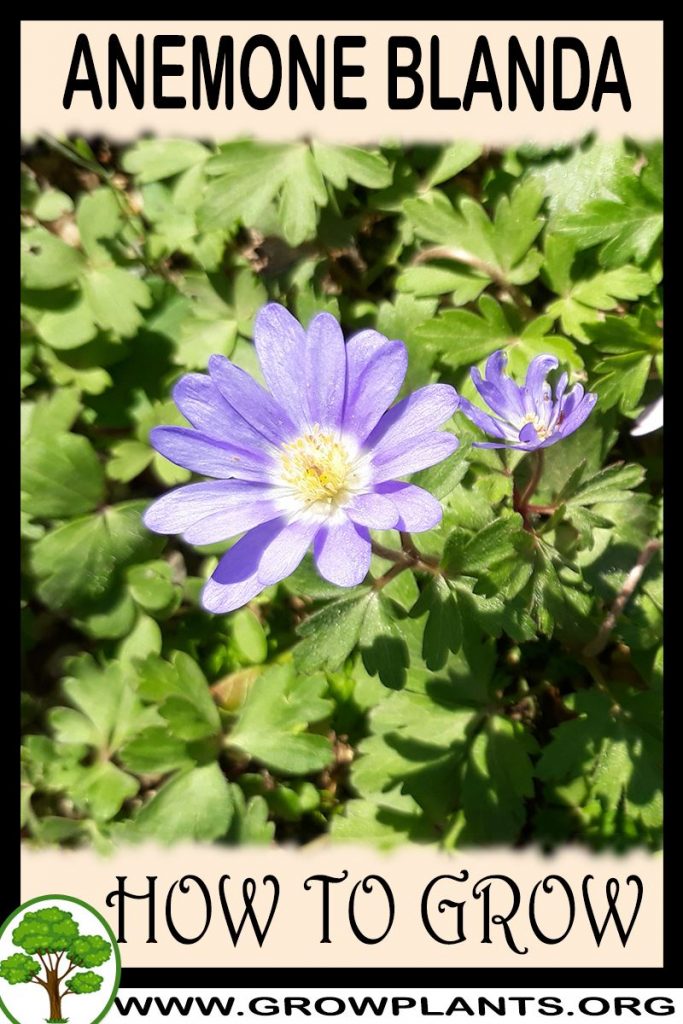
Plant Profile & Key Characteristics
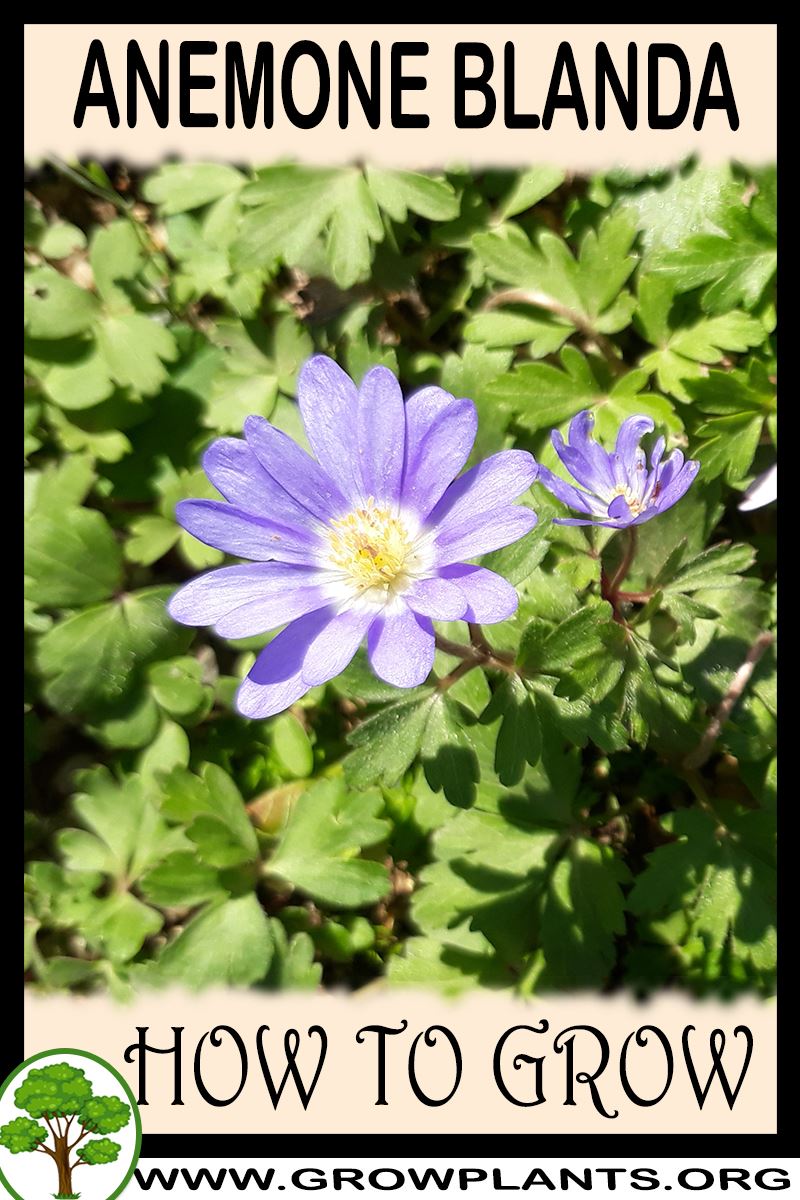
Overview: Grecian windflower (Anemone blanda) is a low tuberous perennial reaching 10-20 cm, carpeting the ground with daisy-like flowers in late winter to early spring. It is dormant in summer, and its sap is a skin/mucous-membrane irritant.
Quick Specifications
| Specification | Attribute |
|---|---|
| Plant Type / Life Cycle | Perennial (tuberous geophyte) |
| Foliage Type | Deciduous (dies back after flowering) |
| Mature Size | 10-20 cm (4-8 in) tall |
| Growth Rate | Moderate |
| Root System | Tuberous |
| Toxicity | Toxic – sap contains irritant protoanemonin |
| Hardiness | USDA zones 5-10a |
Growth Form & Structure
- Height & Spread: Low, 10-20 cm (4-8 in) tall, spreading to form drifts; also grown in containers.
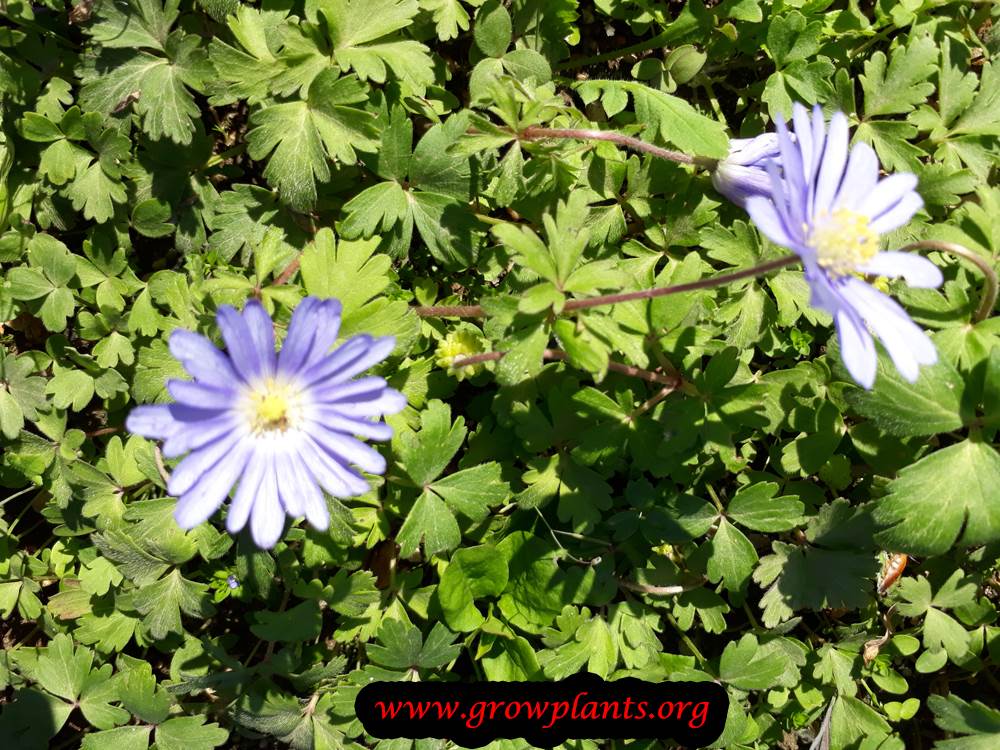
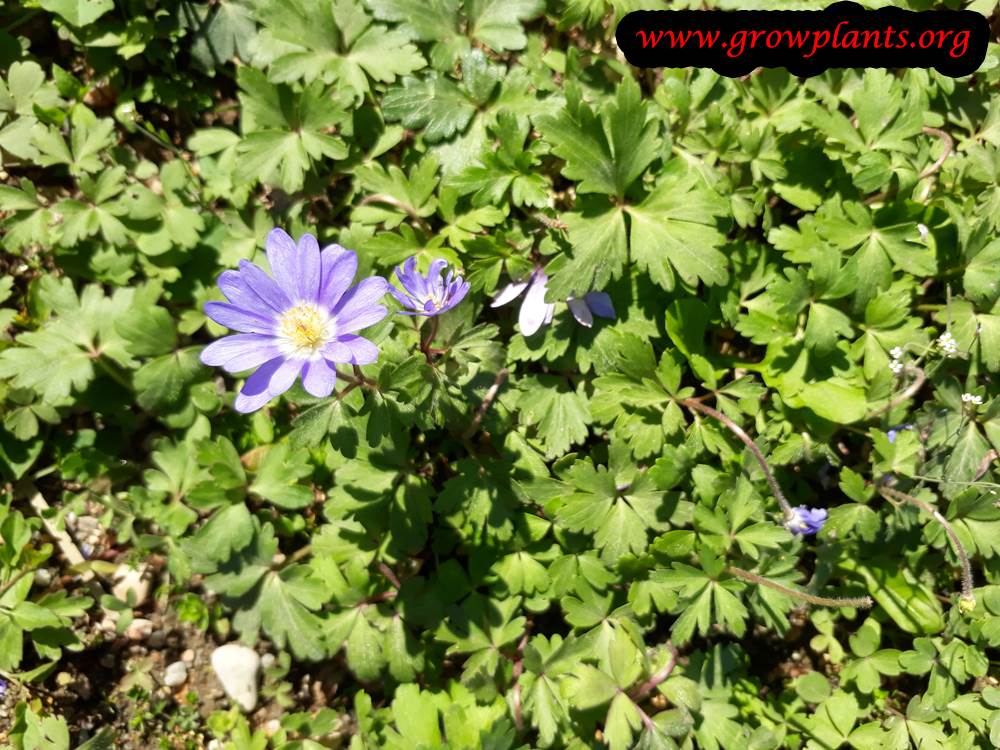
- Growth Habit & Form: Low tuberous geophyte with ferny foliage and daisy-like flowers on short stems.
- Lifespan & Maturity: Perennial tuber, dormant in summer; blooms late winter to early spring.
Anatomy & Physical Features
- Leaves & Foliage: Green, deeply lobed pinnate to bi-pinnate leaves borne on stems.
- Flower Characteristics: Daisy/star-like flowers with about six petals in purple, pink or white around a showy centre.
Primary Uses & Landscape Value
- Functional & Ornamental Roles: Spring bedding and naturalising, rockeries, containers and cut flowers.
Care Guide: Planting, Soil & Watering
Overview: Grecian windflower is a small tuberous perennial that grows best in full sun to part shade in loamy, well-drained soil. It grows and flowers in the cool, moist part of the year, then wants a dry rest through summer dormancy.
Quick Care Requirements
| Requirement | Ideal Condition |
|---|---|
| Planting Season | In late winter to spring |
| Growth Rate | Moderate |
| Soil Type | Loamy, well-drained soil |
| Water Need | Moderate in growth; keep dry through summer dormancy |
Planting & Establishment
- Best Planting Season: Plant the tubers in late winter to spring; soaking dried tubers overnight before planting helps them start.
- How to Plant:
- Hole Preparation: Dig or dib a shallow hole a few centimetres deep for the small tubers.
- Soil Amendments: Work a little compost into loamy soil; the key is free drainage so the tubers do not rot in summer.
- Planting Depth: Plant tubers about 3–5 cm deep; firm and water in.
- Growth Speed & Expectations: Moderate, forming low 10–20 cm clumps that flower in late winter to early spring, then die back for summer.
Soil, Watering & Drainage Care
- Soil Mix & Drainage Needs: Loamy, well-drained soil is ideal; the tubers need moisture in growth but must stay dry during summer dormancy to avoid rot.
- Watering Schedule & Technique:
- Young / Newly Planted: Keep the soil lightly moist as growth and flowers emerge.
- Established: Water moderately through the growing season; stop watering as the foliage dies back and keep dry over summer.
- Seasonal Adjustments: Moisture in the cool growing season; a dry summer rest during dormancy.
Climate, Light & Hardiness
Anemone blanda (Grecian windflower) is a Mediterranean-climate bulb also suited to subtropical and temperate gardens, thriving in full sun to half shade. It is a cold-hardy, summer-dormant geophyte, reliable across USDA zones 5–10a, and prefers a dry summer rest period typical of its native Mediterranean climate.
Quick Climate Specifications
| Climate Zones | Mediterranean, Subtropical, Temperate |
|---|---|
| USDA Hardiness Zones | 5–10a |
| Frost Tolerance | High |
| Light Conditions | Full Sun to Half Shade |
Sunlight & Light Exposure
Optimal Light Setup
Full sun to half shade both suit this early-blooming bulb, which often flowers before deciduous tree canopy leafs out.
Temperature Extremes & Hardiness
USDA Hardiness & Regional Limits
Hardy across USDA zones 5–10a. The foliage dies back naturally in summer (deciduous/dormant habit), and the tuber survives winter cold underground within its hardy range.
Frost Sensitivity
Established tubers tolerate ordinary winter frost well within zones 5–10a.
Wind, Humidity & Microclimate
Rainfall & Seasonal Moisture
Adapted to a Mediterranean rainfall pattern - moist during the cool growing season and dry during summer dormancy; a dry summer rest is part of its natural cycle rather than a sign of stress.
Growing in Pots, Balconies & Indoors
Grecian windflower (Anemone blanda) is a low spring tuber of 10-20 cm (4-8 in) that the grower grows in containers but not as a houseplant. It gives a carpet of daisy-like flowers in a wide pan, but it needs an outdoor winter and a dormant rest.
Quick Details
- Container Size: A wide, shallow pan or 2-5 L (0.5-1 gal) pot – plant several tubers together
- Indoor Suitability: Not a houseplant; the tubers need a cold winter and dormancy
- Best Spot: Full sun to half shade
- Soil & Drainage: Free-draining mix; the tubers rot in wet, airless soil
- Watering in Pots: Average while in leaf and flower; keep dry through summer dormancy
Indoors & On the Windowsill
- Houseplant limits: Not an indoor plant – the tubers need cold and a dry summer rest to flower again.
- Safety: Like other anemones it is toxic and the sap can irritate skin – keep it from children and pets.
On a Balcony or Patio
- Light & wind: Give it the sunniest spot; walls, railings and paving throw back heat so pots dry quickly – check moisture often and shelter or stake it on an exposed, windy balcony.
- Practicalities: Account for the weight of a full pot and make sure drainage water can run away freely without staining the balcony.
Choosing the Pot, Soil & Long-Term Care
- Pot & drainage: Use a pot with strong drainage holes and skip a standing-water saucer to avoid root rot; terracotta breathes and dries faster, while glazed or plastic holds moisture longer.
- Potting mix: Well-aerated and organic-rich – a quality potting mix, or peat/coir with perlite or vermiculite.
- Feeding: Potted plants use up their soil faster as nutrients leach out with each watering – feed lightly through the growing season.
- Repotting: Let the pot dry for the summer rest, then refresh the mix and replant the tubers each year.
Fertilizing & Feeding
A light feeder – this small woodland bulb flowers reliably on modest nutrition and needs no heavy feeding program
Quick Fertilizing Specs
| Feeding Level | light |
|---|---|
| Main Nutrient Priority | Balanced feeding while leaves are actively growing and through bloom |
| Best Feeding Period | From new growth emergence through flowering |
| Soil pH | Prefers loamy, well-drained soil |
| Reduce/Stop Feeding | Stop feeding entirely once foliage dies back into its dry summer dormancy |
| Organic Options | Compost worked lightly into the soil surface at the start of growth |
Feeding by Growth Stage
Active Leaf Growth
Support leaf growth as the tuber sends up new foliage ahead of flowering
| Nutrient direction | Balanced feeding to support leaf growth as the tuber sends up new foliage |
|---|---|
| Timing | As new growth emerges from the tuber, ahead of flowering |
| Frequency | A light feeding or two while foliage is actively developing |
| Fertilizer types | A balanced, complete fertilizer for bulbs and tubers, Compost worked lightly into the surface soil |
| Precautions | Keep feeding light – this is a small, low-demand woodland-type bulb, not a heavy feeder |
Bloom
Sustain the plant through flowering
| Nutrient direction | Balanced feeding to sustain the plant through flowering |
|---|---|
| Timing | During the bloom period as flowers open and may be cut |
| Frequency | A single light feeding is usually enough through the bloom period |
| Fertilizer types | A balanced, complete fertilizer suited to flowering bulbs |
| Precautions | Avoid heavy feeding during bloom; this plant flowers reliably on modest nutrition |
Post-Bloom Dormancy
Let the tuber rest through its dry summer dormant period
| Nutrient direction | None – withhold fertilizer as foliage dies back into dormancy |
|---|---|
| Timing | After flowering, as the foliage yellows and the plant enters its dry dormant period |
| Frequency | No feeding at this stage |
| Fertilizer types | No feeding at this stage – the tuber rests until the next growth cycle |
| Precautions | Do not fertilize during dormancy; this bulb naturally rests through a dry period |
Nutrient Deficiency Signs & Corrections
Pale, weak foliage and reduced flowering
| Possible causes | Insufficient nitrogen availability, Poor soil drainage or compaction, Root competition from neighboring plants in the same bed |
|---|---|
| Appears first on | Foliage overall, especially older leaves |
| What to check | Leaf color and vigor across the planting, Soil drainage and compaction, Root competition from nearby plants |
| Possible correction | Apply a balanced, complete fertilizer worked lightly into the soil |
Interveinal yellowing on new leaves while the veins stay green
| Possible causes | High soil pH limiting iron availability, Waterlogged or poorly drained soil restricting root function, Root disturbance from recent transplanting or dividing |
|---|---|
| Appears first on | Newest leaves |
| What to check | Soil pH and drainage, Whether yellowing is interveinal and limited to new growth, Recent transplant or division stress |
| Possible correction | Correct soil pH toward neutral where practical and apply a chelated iron product according to its label |
Weak flower stems and reduced bloom quality
| Possible causes | Low potassium availability in the soil, Drought stress reducing nutrient uptake, Sandy or leached soil low in retained nutrients |
|---|---|
| Appears first on | Across older foliage and flower stems |
| What to check | Watering consistency during active growth, Soil texture and drainage, Stem strength and bloom quality |
| Possible correction | Apply a balanced fertilizer with adequate potassium and maintain consistent watering during active growth |
Pruning, Training & Seasonal Maintenance
Anemone blanda is a small spring-flowering tuber that goes fully dormant through a dry summer, so it has no persistent stems or wood to train. The only “pruning” this species needs is removing the foliage once it has yellowed and died back on its own after flowering, which lets the tuber finish recharging for next year’s bloom before it disappears underground for summer.
Quick Pruning & Maintenance Specs
| Pruning Tolerance | Low – nothing to prune while the plant is actively growing; only spent foliage is removed at dormancy |
| Primary Pruning Window | Summer, once foliage has yellowed and died back naturally after flowering |
| Main Objective | Tidy up spent foliage; never remove it while it is still green |
| Young Plant Priority | None – let a newly planted tuber complete a full growth cycle undisturbed |
| Mature Plant Priority | Remove dead leaves and stems once they have fully died back |
| Best Tool Type | Precision snips |
| Avoid Heavy Pruning During | Any time foliage is still green, even after flowering has finished – it is still feeding the tuber |
Pruning by Plant Age & Size
Newly Established
No pruning; let a newly planted tuber complete its first full leaf cycle to build reserves.
Young / Formative
Not applicable – this geophyte has no structure to train.
Mature / Established
Remove dead leaves and stems each year once they’ve fully collapsed at summer dormancy; otherwise the plant is hands-off.
Seasonal Pruning Schedule
| Stage | Objective | Remove | Do Not Remove | Response / Impact |
| Post-Flowering, into early Summer | Let the tuber recharge | Nothing, while leaves are still green | Green post-bloom foliage | Continued photosynthesis strengthens the tuber for next year’s bloom; cutting green foliage early reduces next year’s flowering |
| Summer (dormancy cleanup) | Tidy the bed | All leaves and stems, once fully yellowed and collapsed | N/A – foliage has finished its job | None needed; the plant is dormant underground |
Special Growth to Remove
- Dead or collapsed leaves and stems in summer, once fully died back
Container & Small-Space Pruning
This species grows well in a planter. The same rule applies – remove foliage only after it dies back. Containers dry faster, which can actually suit this species’ dry-summer dormancy preference, but watch that a very small pot doesn’t let the tuber desiccate completely.
Tools
- Precision snips, for the single annual foliage cleanup
Tool Hygiene & Disease Risk
Routine – clean tools are sufficient; watch instead for snails and slugs on emerging foliage the following season.
Cut Placement & Technique
Cut dead stems at soil level once they’ve fully collapsed.
Post-Pruning Care
After removing summer-dormant foliage, reduce watering to match this species’ preference for a dry summer dormancy.
Common Pruning Mistakes
- Cutting back foliage while it’s still green right after flowering – the single most common mistake with spring bulbs/tubers, and one that directly reduces next year’s bloom
- Overwatering during summer dormancy because the bed “looks bare”
When NOT to Prune
- Never remove green, actively photosynthesizing foliage, even once flowering has finished
Recommended Tools (by task)
- precision_snips – for cutting the spent leaves and stems at soil level once they have fully died back in summer
Propagation Guide
Anemone blanda is most commonly and easily started from its knobbly tubers (often sold as “bulbs”), though the site notes seed is also viable and vegetative reproduction is not required. Seed-grown plants can vary somewhat in flower color, while tuber-grown plants are true to the parent; overall this is an Easy plant to establish from tubers.
Quick Propagation Specs
| Best Propagation Method | Tuber (division of the tuberous rootstock) |
| Alternative Methods | Seed |
| Propagation Difficulty | Easy |
| Seed True-to-Type | Variable (flower color can differ from the parent) |
| Vegetative True-to-Type | Yes |
| Best Propagation Season | End of winter to spring for planting tubers/seed; divide tubers once foliage dies back in summer |
| Seed Germination Time | Often slow and irregular, sometimes spread over a full season or more |
Growing from Seed
Seed Handling & Viability
Seed is best sown fresh soon after collection, since anemone seed loses viability with prolonged storage.
Dormancy & Pre-Sowing Treatment
Fresh seed typically needs a period of cool, moist conditions (natural autumn/winter cold) before it will germinate.
Sowing Season
Autumn, following the site’s own end-of-winter to spring planting window for the wider plant but allowing the extra cold period seed needs beforehand.
Germination Conditions
Cool temperatures and consistently moist, well-drained soil, in line with the site’s loamy, well-drained care overview.
Germination Time
Can be slow and uneven; germination is sometimes delayed until the following spring.
Rhizomes, Tubers, Bulbs & Corms
Tuber Division
Once the foliage dies back after flowering (the plant is deciduous), lift the small knobbly tubers and separate them where natural divisions occur. Soaking dry, shriveled tubers overnight before replanting can improve establishment. Replant promptly, matching the site’s end-of-winter to spring planting season, in the dry-summer, loamy, well-drained soil the site recommends.
Bloom & Flower Guide
Quick Details
- Bloom Season: Late winter to early spring.
- Time to First Bloom: Tubers planted in autumn flower in their first spring.
- Flower Appearance: Daisy-like flowers with many narrow petals (tepals) in purple, pink or white – sometimes bicoloured – around a showy central boss of stamens.
- Edibility: Toxic – do not eat. All parts, including the flowers, contain irritant compounds.
Detailed Blooming Overview
Anemone blanda, the Grecian windflower, opens low, sunny, daisy-like blooms in the first mild days of the year and closes them at night and in dull weather. It is a cheerful early-season carpet for borders and pots, and a favourite as a cut flower.
Flower Characteristics
- Many-petalled, daisy-like flowers.
- Colours include purple, pink and white, sometimes multi-coloured.
- A prominent central cluster of stamens.
Bloom Care & Thinning
- Encouraging bloom: Plant tubers in autumn in a sunny, free-draining spot for a strong spring display.
- Safety: Handle with care and keep away from people and pets who might chew it – the sap can irritate skin, and the plant is not edible.
Pests, Diseases & Troubleshooting
Overview: Anemones are generally easy but share a handful of characteristic troubles – foliar nematode blotching, powdery and downy mildews in crowded damp conditions, slugs and caterpillars on soft growth, and tuber rot when dormant tubers sit in wet warm soil. Good airflow, sharp drainage in the dormant season and clean planting stock prevent nearly all of it.
Quick Troubleshooting Overview
| Issue / Pest | Main Symptom | Primary Solution |
|---|---|---|
| Foliar nematode | Angular dark blotches between leaf veins | Remove & destroy affected leaves; avoid wet foliage; clean stock |
| Slugs & snails | Young leaves and buds rasped and holed | Iron-phosphate bait; traps; clear damp hiding places |
| Aphids | Curled, sticky new growth; may spread virus | Rinse off; insecticidal soap; conserve predators |
| Powdery mildew | White powdery bloom on leaves in dry crowded sites | Airflow, avoid drought; sulphur or bicarbonate |
| Downy mildew | Yellow leaf patches with grey-purple mould beneath | Improve airflow; avoid wet foliage; remove infected leaves |
| Tuber rot | Tubers fail to emerge or rot in wet dormancy | Sharp drainage; lift/keep dry where soils stay wet |
Common Pests & Management
- Foliar (leaf & bud) nematode (Aphelenchoides spp.):
- Symptoms: Dark brown-to-purple angular blotches spread between the leaf veins (which stop the microscopic nematodes), starting on lower leaves and moving up; buds and shoots can be blind or distorted in bad cases.
- Prevention & Control: There is no easy chemical cure – remove and destroy affected leaves and whole badly infected plants, and avoid splashing water that spreads the nematodes leaf-to-leaf. Space plants for fast drying, water at the base, and start from clean, healthy stock.
- Aphids (Aphidoidea):
- Symptoms: Soft green or black aphids cluster on the tender new leaves, stems and flower buds, causing curling and sticky honeydew, and – importantly – spreading mosaic viruses between plants.
- Prevention & Control: Rinse colonies off with water and conserve ladybirds, lacewings and hoverflies. Insecticidal soap clears heavier infestations; because aphids vector virus, keep them in check on plants you intend to save for their tubers.
- Cutworms & caterpillars (Noctuidae larvae):
- Symptoms: Ragged holes and notches in leaves and flowers, and cutworms that sever young shoots at ground level overnight; caterpillars hide in the soil or leaf litter by day.
- Prevention & Control: Hand-pick at night, clear weeds and litter, and use cardboard collars around vulnerable young plants. Bacillus thuringiensis targets leaf-feeding caterpillars selectively without harming beneficials.
- Slugs & snails (Gastropoda):
- Symptoms: Young shoots, leaves and flower buds are rasped, holed and shredded, with slime trails, especially in damp shady conditions and on emerging spring growth.
- Prevention & Control: Clear damp hiding places, water in the morning so surfaces dry, and use beer traps or copper barriers. Iron-phosphate pellets are effective and safe around wildlife and pets; encourage ground beetles, frogs and birds.
- Flea beetles (Alticini):
- Symptoms: Tiny beetles chew a fine ‘shot-hole’ peppering of small round holes in the leaves and jump when disturbed; damage is mostly cosmetic but heavy on seedlings.
- Prevention & Control: Keep plants vigorous to outgrow damage, use floating row cover over young plants, and clear plant debris where beetles overwinter; sticky traps and neem help in bad outbreaks.
Diseases & Fungal Issues
- Powdery mildew (Erysiphe / Podosphaera spp.):
- Symptoms: A white-to-grey powdery coating on leaves and stems, usually in crowded, dry-rooted plants with poor airflow; leaves yellow and distort under heavy infection.
- Treatment & Management: Space and thin plants for airflow, avoid drought stress, and remove infected leaves. Sulphur, potassium bicarbonate or an approved fungicide keeps it in check on susceptible plantings.
- Downy mildew (Peronospora / Plasmopara):
- Symptoms: Pale yellow angular patches on the upper leaf surface with a grey-to-purple downy mould on the undersides in cool, wet, humid weather; leaves brown and die.
- Treatment & Management: Improve airflow and drainage, avoid overhead watering and wet foliage, and remove infected leaves promptly. Copper or an approved downy-mildew fungicide protects new growth in prolonged wet spells.
- Rust (Tranzschelia / Puccinia spp.):
- Symptoms: Yellow spots above with powdery orange-to-brown pustules on the leaf undersides; heavy infection yellows and drops foliage and weakens the plant.
- Treatment & Management: Remove and destroy infected leaves, improve air circulation, and avoid wetting foliage. On valued plants an approved fungicide controls it; some species are notably more susceptible.
- Botrytis (grey mould) (Botrytis cinerea):
- Symptoms: Fuzzy grey mould rots flowers, buds and soft leaves in cool damp conditions, especially on ageing blooms and crowded growth, causing browning and collapse.
- Treatment & Management: Remove faded flowers and dead material promptly, improve airflow and avoid overhead watering. Keep foliage dry; a fungicide is rarely needed if hygiene and ventilation are good.
- Tuber / crown rot (Sclerotium / Sclerotinia / soft-rot bacteria):
- Symptoms: Dormant tubers or crowns turn soft, dark and rotten in warm wet soil, sometimes with white fungal threads or hard black sclerotia; plants fail to emerge or collapse.
- Treatment & Management: Ensure very sharp drainage, especially through the summer dormancy of tuberous species; where soils stay wet, lift and store tubers dry and cool. Plant only firm, healthy tubers and discard any that are soft.
Growing Difficulties & Abiotic Problems
- Poor emergence / non-flowering:
- Cause & Symptoms: Tubers planted too deep, too dry, or that are old and shrivelled fail to emerge or flower; dry soil at planting is a common cause of blanks.
- Correction Strategy: Soak tuberous types briefly before planting, set at the correct shallow depth in moist soil, and buy plump, firm tubers; give adequate light for good flowering.
- Summer-dormancy tuber loss:
- Cause & Symptoms: Tuberous anemones die back after flowering; if the resting tubers sit in hot, wet soil they rot rather than resprout.
- Correction Strategy: Provide free-draining soil and keep the dormant area on the drier side, or lift and store tubers dry and frost-free where summers are wet.
- Leaf scorch / drought stress:
- Cause & Symptoms: Full hot sun and dry soil brown the leaf margins and scorch the foliage of shade-preferring species.
- Correction Strategy: Site in part shade with moisture-retentive soil and mulch; keep evenly moist during growth and flowering.
What Helps – Products & Tools
Anemones ask little: iron-phosphate slug pellets and traps for gastropods, insecticidal soap for aphids, and Bacillus thuringiensis for caterpillars. For disease, sulphur or bicarbonate handles powdery mildew and a copper or approved fungicide covers downy mildew, rust and severe grey mould; the strongest ‘tools’, though, are clean planting stock, airflow and sharp drainage in the dormant season.