



Plant Profile & Key Characteristics
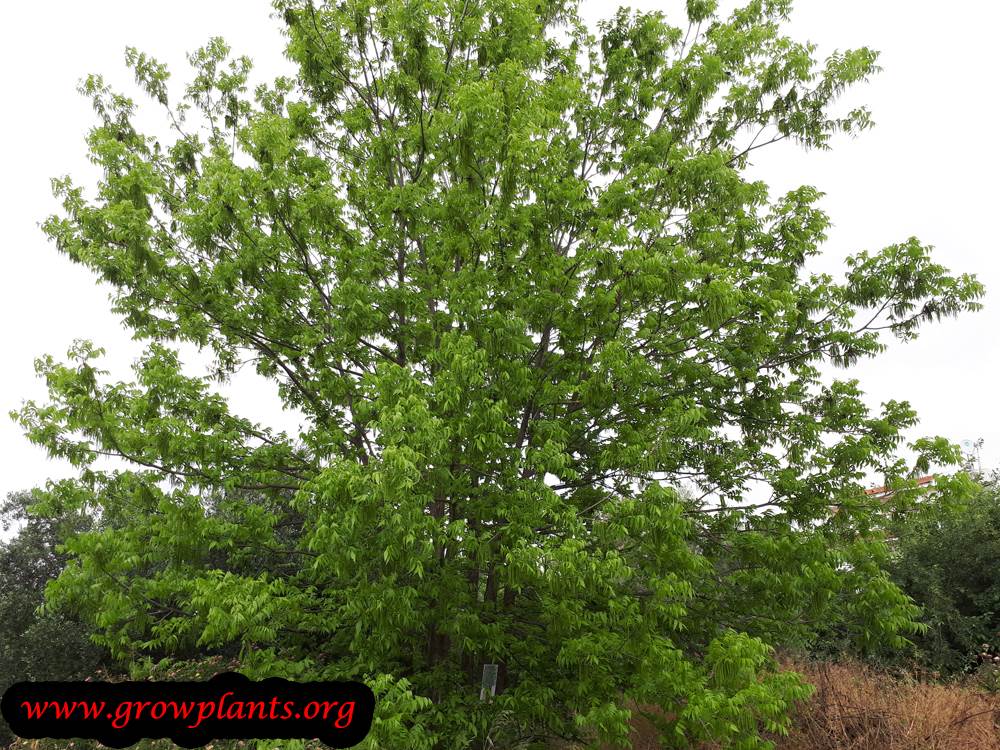
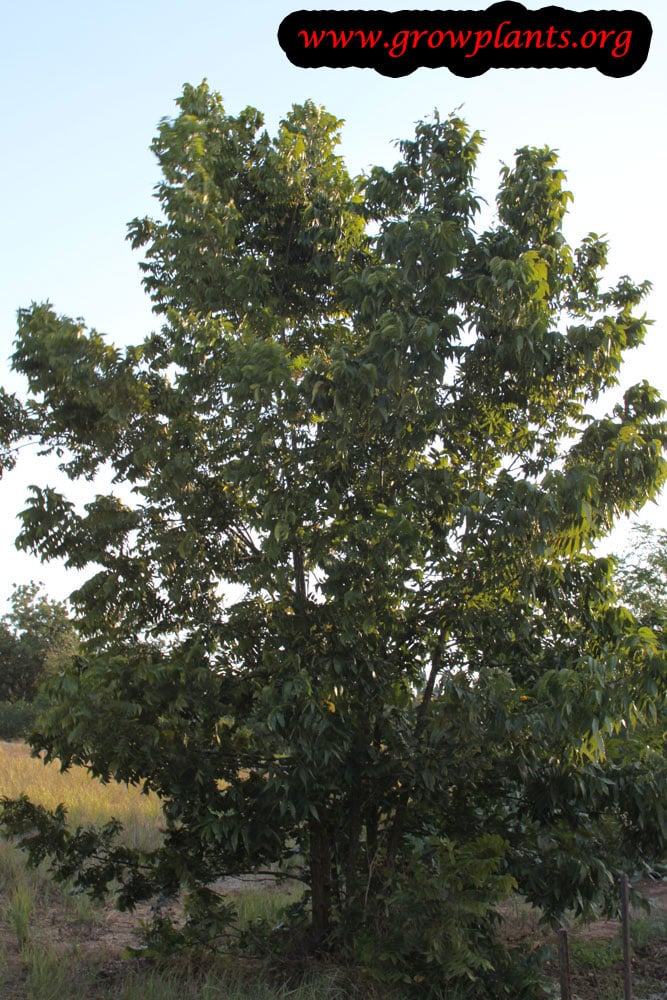
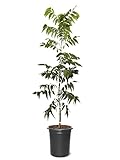
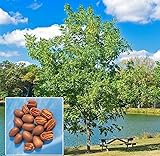
A large deciduous nut tree reaching about 10-30 m (30-100 ft) with a broad, spreading canopy. A long-lived perennial grown for its edible pecans and as a shade tree; it needs a second tree for pollination.
Quick Specifications
| Specification | Attribute |
|---|---|
| Plant Type / Life Cycle | Perennial (long-lived) |
| Foliage Type | Deciduous |
| Mature Size | 10-30 m tall (30-100 ft) |
| Growth Rate | Fast |
| Root System | Deep taproot |
| Toxicity | Nuts edible / non-toxic |
| Hardiness | USDA zone 5-10 |
Growth Form & Structure
- Height & Spread: 10-30 m (30-100 ft) with a broad crown; not suited to containers
- Growth Habit & Form: Large single-trunked tree with pinnate leaves and a wide canopy
- Lifespan & Maturity: Long-lived; bears nuts about 5-7 years from grafting (longer from seed)
Anatomy & Physical Features
- Trunk & Bark: Sturdy trunk with furrowed grey-brown bark
- Leaves & Foliage: Pinnate, compound green leaves
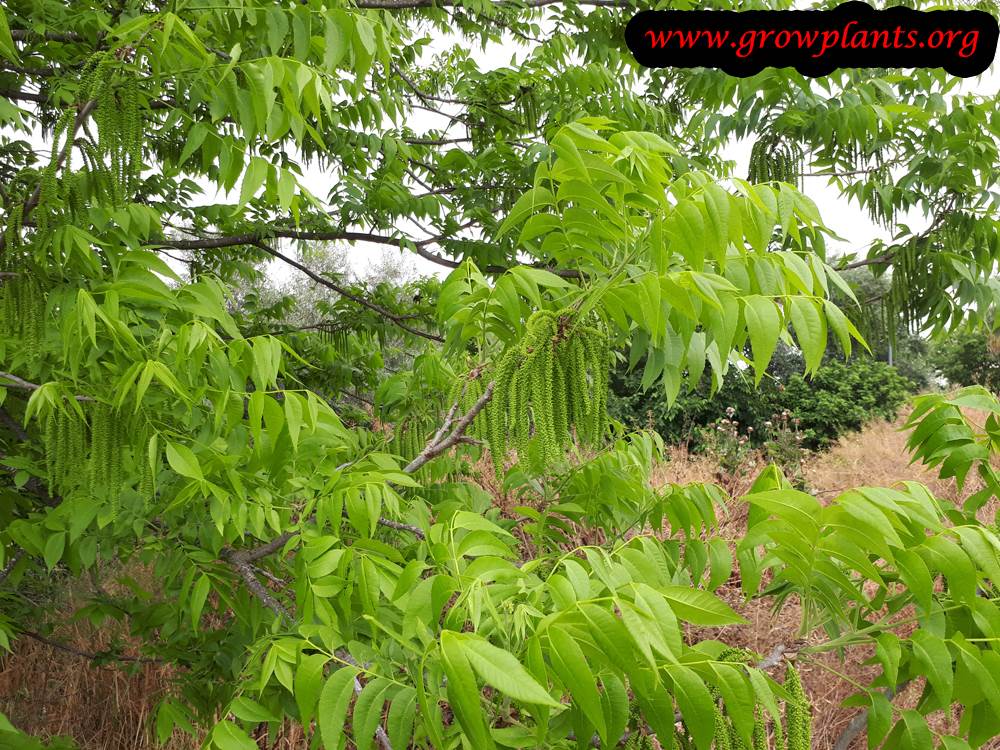
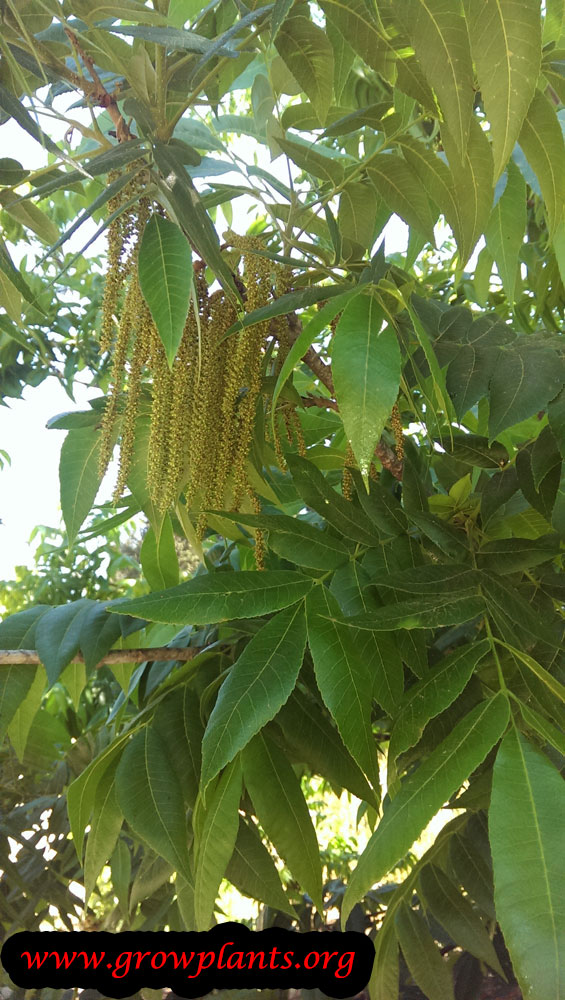
- Flower Characteristics: Inconspicuous green catkins; separate male and female on the same tree; wind-pollinated
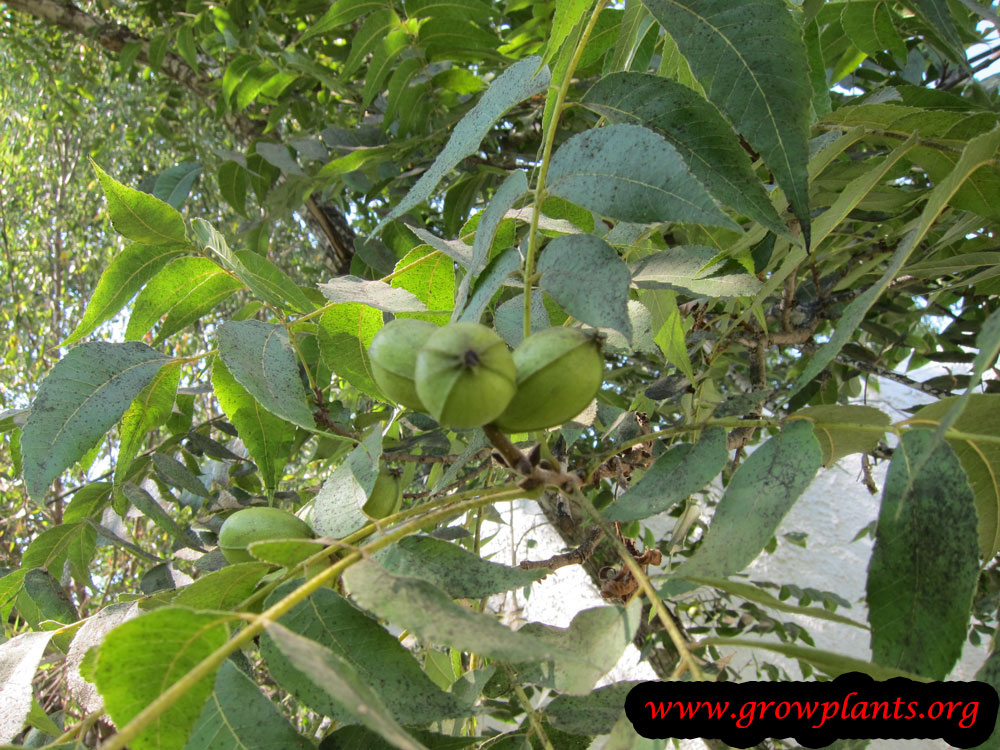
- Fruit Profile: Oval brown nuts in a green husk that browns and splits open
Primary Uses & Landscape Value
- Edible Uses: Nuts eaten raw and used in cakes, ice-cream and baking
- Functional & Ornamental Roles: Orchard nut tree and large shade tree
Care Guide: Planting, Soil & Watering
Overview: A large, fast-growing deciduous nut tree for full sun and deep, well-drained soil. It needs cool winters and a second tree nearby for good pollination, plus deep watering in dry spells.
Quick Care Requirements
| Requirement | Ideal Condition |
|---|---|
| Planting Season | In winter to spring, while dormant |
| Growth Rate | Fast |
| Soil Type | Deep and well-draining |
| Water Need | Low to moderate – deep-rooted; water deeply, especially when nuts are filling |
Planting & Establishment
- Best Planting Season: Plant while dormant in winter or early spring, and plant at least two trees for cross-pollination.
- How to Plant:
- Hole Preparation: Dig a deep hole to take the long taproot without bending it.
- Soil Amendments: Loosen deeply and mix in some organic matter; make sure the site drains freely.
- Planting Depth: Set the root collar at soil level and keep the taproot straight.
- Growth Speed & Expectations: Fast, ultimately a very large tree of 10–30 m – give it plenty of room.
Soil, Watering & Drainage Care
- Soil Mix & Drainage Needs: Deep, well-drained soil suits it best; not suited to container growing.
- Watering Schedule & Technique:
- Young / Newly Planted: Water regularly and deeply to establish the taproot.
- Established: Water deeply in dry periods, especially through nut development; it tolerates short dry spells.
- Seasonal Adjustments: More in summer heat and while filling nuts; less in the dormant season.
Climate, Light & Hardiness
The pecan (Carya illinoinensis) is a large deciduous nut tree for temperate, Mediterranean and subtropical climates, needing a cool winter yet a long, hot summer to ripen its crop. It grows in full sun and, dormant, is cold-hardy across the site's rated zones 5–10.
Quick Climate Specifications
| Climate Zones | Temperate, Mediterranean, subtropical |
|---|---|
| USDA Hardiness Zones | 5–10 (per site data) |
| Optimal Temp Range | Warm growing season, roughly 21–32 °C (70–90 °F) |
| Frost Tolerance | Moderate to High when dormant; spring growth & catkins frost-sensitive |
| Light Conditions | Full sun |
| Wind Tolerance | Moderate |
Sunlight & Light Exposure
Optimal Light Setup
A full-sun tree; ample light and summer heat are essential for shoot vigour and for filling the nuts.
Direct Sun Requirement
Direct, all-day sun is required; shade sharply reduces yield.
Best Exposure / Orientation
An open, sunny site with room for a very large canopy and good air movement for wind pollination is ideal.
Temperature Extremes & Hardiness
USDA Hardiness & Regional Limits
Rated for zones 5–10, it withstands genuinely cold winters at the colder end while needing enough summer heat at the warmer end to mature nuts. Cold tolerance varies by cultivar, tree age and conditions.
Cold Damage & Winter Protection
Dormant wood tolerates hard winter freezes well within its zone range; young trees are more tender and benefit from protection at the cold margin.
Frost Sensitivity
The dormant tree is hardy, but late-spring frosts can damage emerging shoots and the catkins, reducing that season's set.
Extreme Heat Tolerance
High - it welcomes long, hot summers, which help ripen the crop.
Chilling Requirement
The site notes a cool-winter need. Pecans require winter chill to break dormancy and leaf out evenly; in mild-winter areas inadequate chilling causes erratic bud break. A precise chill-hour figure is not established here and varies by cultivar, so match the variety to the local winter.
Frost-Free Growing Season
Because the nuts need a long, warm season to fill and mature, a lengthy frost-free period between spring and autumn frosts is important for reliable cropping.
Wind, Humidity & Microclimate
Wind Tolerance
Moderate: light air movement aids wind pollination, but the large, somewhat brittle limbs can be broken by storms, so avoid the most exposed sites.
Microclimate Recommendations
A deep, open site with cold enough winters for chilling, a long hot summer, and freedom from late spring frosts gives the best results.
Growing in Pots, Balconies & Indoors
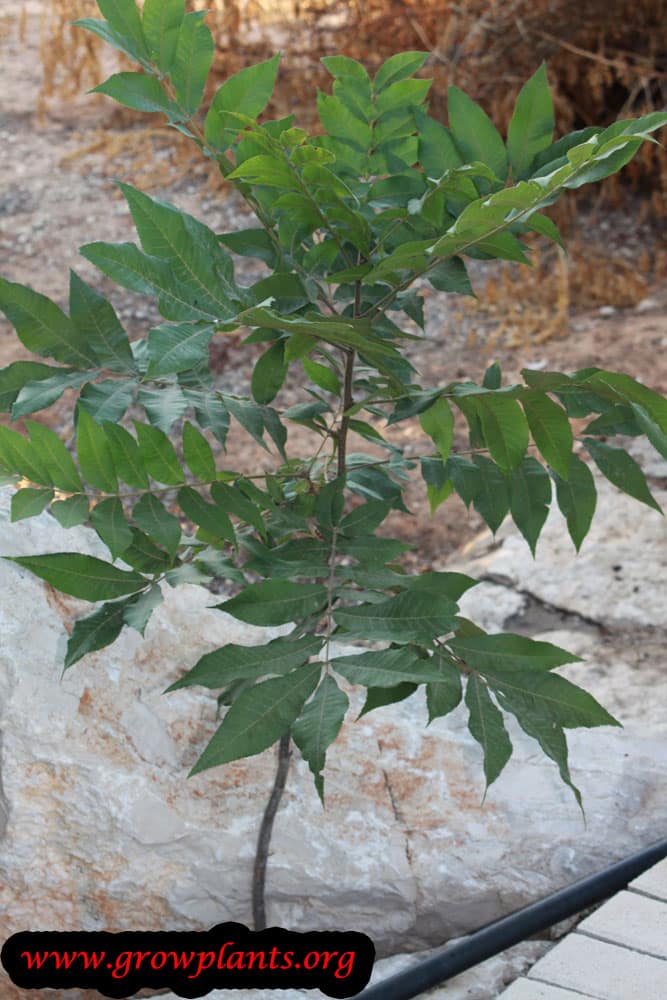
The pecan tree (Carya illinoinensis) is a large tree (10-30 m / 30-100 ft), so the grower marks it as neither a houseplant nor a long-term container plant – and rightly so. You can keep a young seedling in a pot for its first few years, but it soon needs open ground to develop a deep root system and full canopy.
Quick Details
- Container Size: A large tub only while young (say 30-50 L / 8-12 gal for the first years); ultimately it needs open ground
- Indoor Suitability: Not a houseplant – it becomes a full-size tree and needs full sun
- Best Spot: full sun, planted in the ground outdoors
- Soil & Drainage: Deep, free-draining soil; a potted young tree needs an aerated mix that drains freely
- Watering in Pots: A potted young tree dries out far faster than one in the ground – check it often
Indoors & On the Windowsill
- Houseplant limits: The pecan tree (Carya illinoinensis) will not grow indoors – it demands full sun and quickly outgrows any room. Even a bright window only suits it at the seedling stage.
- Young plants: A seedling can spend its first year or two in a pot in a bright spot before being planted out.
On a Balcony or Patio
- Young specimen only: A young tree can stand on a large patio or balcony in full sun, but pots dry quickly and give no room for a taproot, so it will need moving into the ground within a few years.
Choosing the Pot, Soil & Long-Term Care
- Pot & drainage: If growing a young tree, use the largest tub you can with strong drainage holes; skip a standing water saucer to avoid root rot. Terracotta breathes and dries faster, while glazed or plastic holds moisture longer.
- Potting mix: An aerated, organic-rich mix – for example peat or coir with perlite or vermiculite.
- Watering: Water a young potted tree moderately, letting the surface dry between waterings.
- Feeding: A potted tree exhausts its soil quickly and nutrients leach with every watering, so feed more often than a tree in open ground.
- Potting on: Move it into a larger container each year while young; once it is too big for pots, plant it out.
Fertilizing & Feeding
Pecan tree is a moderate feeder: build the soil with organic matter and give balanced, restrained feedings through the growing season, easing off toward dormancy.
Quick Fertilizing Specs
| Feeding Level | Moderate |
|---|---|
| young_feeding | Nitrogen-forward complete fertilizer to build the framework. |
| mature_feeding | Balanced complete fertilizer with adequate potassium at bearing. |
| Main Nutrient Priority | Nitrogen while young, shifting to balanced with potassium once bearing. |
| Best Feeding Period | Through the active growing season. |
| Organic Options | Compost, well-rotted manure and organic mulch. |
| Micronutrients | Watch for iron, zinc and manganese on alkaline soils. |
| Soil pH | Slightly acidic to near neutral. |
| Reduce/Stop Feeding | Ease off as growth slows heading into winter dormancy. |
Feeding by Growth Stage
Newly planted
Help the young Pecan tree settle in and push out roots after planting.
| Nutrient direction | Focus on root establishment; keep any feeding gentle and let roots reach into the surrounding soil. |
|---|---|
| Timing | From planting through the first season of establishment. |
| Frequency | Feed sparingly at this stage; well-prepared soil often carries the tree through the first months. |
| Fertilizer types | Well-rotted compost or organic matter worked into the planting area, A gentle complete fertilizer only if soil is poor |
| Precautions | Avoid strong or concentrated fertilizer against fresh roots. Pecans are prone to zinc shortage, so watch new growth closely. |
Young tree (building the frame)
Drive steady shoot and canopy growth so the Pecan tree builds a strong framework before it starts bearing.
| Nutrient direction | Lean toward nitrogen to support vegetative growth, within a complete fertilizer. |
|---|---|
| Timing | Through the active growing season in the pre-bearing years. |
| Frequency | Several light feedings across the growing season rather than one heavy dose. |
| Fertilizer types | A nitrogen-forward complete fertilizer, Compost or other organic matter to build soil |
| Routine trace nutrients | iron, manganese, zinc |
| Precautions | Taper feeding as growth slows toward autumn so new shoots harden before cold weather. |
Established, approaching bearing
Keep the Pecan tree growing vigorously while it matures toward its first nuts crop.
| Nutrient direction | Shift toward a balanced complete fertilizer as the tree fills out. |
|---|---|
| Timing | During the active growing season as the tree nears bearing age. |
| Frequency | Light, spread-out feedings through the growing season. |
| Fertilizer types | A balanced complete fruit-tree fertilizer, Compost or mulch to maintain soil health |
| Routine trace nutrients | iron, manganese, zinc |
| Precautions | Watch for pale or yellowing new leaves on alkaline soils, a sign micronutrient availability is low. |
Mature, bearing nuts
Support consistent nuts yield and quality while keeping the mature Pecan tree healthy.
| Nutrient direction | A balanced complete fertilizer with adequate potassium to support the developing crop. |
|---|---|
| Timing | From the start of the growing season through crop development. |
| Frequency | Split light feedings across the growing season; adjust to the tree’s vigor and crop load. |
| Fertilizer types | A balanced complete fruit-tree fertilizer with potassium, Compost or organic mulch |
| Routine trace nutrients | iron, manganese, zinc |
| Precautions | Reduce feeding as the season ends so the tree can harden off before dormancy. |
Nutrient Deficiency Signs & Corrections
Interveinal yellowing on the youngest leaves, with veins staying green.
| Possible causes | High or alkaline soil pH locking up iron, Waterlogged or poorly drained soil stressing roots, Genuinely low available iron in the soil |
|---|---|
| Appears first on | Newest leaves at the shoot tips. |
| What to check | Soil pH and drainage, Whether symptoms track wet spells, Recent watering pattern |
| Possible correction | Correct pH and drainage first; where needed apply a chelated iron product per its label. |
Uniform pale-green to yellow older leaves with weak, slow growth.
| Possible causes | Low soil nitrogen, Leaching of nitrogen from sandy soil, Competition from grass or weeds at the root zone |
|---|---|
| Appears first on | Older, lower leaves first. |
| What to check | Overall shoot vigor and colour, Ground cover competition, Recent feeding history |
| Possible correction | Apply a nitrogen-containing complete fertilizer during active growth and keep the root zone weed-free. |
Small, narrow leaves, shortened internodes and rosetting of new shoots.
| Possible causes | High or alkaline soil pH reducing zinc uptake, Sandy, low-organic-matter soil, Cold, wet soil slowing root activity |
|---|---|
| Appears first on | New spring growth at the shoot tips. |
| What to check | Soil pH, Leaf size versus normal, Shoot spacing and rosetting |
| Possible correction | Correct soil pH and, where confirmed, apply a zinc product per its label. |
Scorching and browning along the margins of older leaves, with poor crop fill.
| Possible causes | Low soil potassium, Leaching from sandy soil, Heavy crop load drawing down reserves |
|---|---|
| Appears first on | Margins of older, lower leaves. |
| What to check | Crop load versus leaf health, Soil type and leaching, Feeding history |
| Possible correction | Use a complete fertilizer that supplies potassium through the growing season. |
Pruning, Training & Seasonal Maintenance
Pecan is a very large, fast-growing deciduous nut tree that is pruned mainly when dormant to build a sound central-leader framework — its own facts call for winter pruning and removal of “branches that go down.” Good early structure matters more here than on most trees because pecan naturally makes narrow, weakly-attached crotches that split under heavy nut loads and wind; once the scaffold is set, mature trees need only light thinning, deadwood removal and suckering. It is wind-pollinated and typically grafted, so cultivar identity, cross-pollination and rootstock management all bear on how you prune.
Quick Pruning & Maintenance Specs
| Pruning Tolerance | Moderate – structural when young, light when mature |
| Primary Pruning Window | Dormant / winter, before spring bud-break |
| Typical Frequency | Annual training for the first years, then occasional |
| Main Objective | Strong central-leader scaffold with wide branch angles |
| Young Plant Priority | Select a dominant leader & well-spaced, wide-angled scaffolds |
| Mature Plant Priority | Deadwood, low/downward limbs, light thinning, suckers |
| Best Tool Type | Loppers & pruning saw; pole pruner for height |
| Avoid Heavy Pruning During | Active spring growth and just after transplanting |
Pruning by Plant Age & Size
Newly Established
Remove only broken or damaged wood at planting; a young grafted pecan needs its foliage to build roots. Begin light leader training the first dormant season rather than hard-cutting at planting.
Young / Formative
Train to a single central leader (modified-central-leader system). Each dormant season keep one dominant vertical leader, remove or subordinate competing upright shoots, and select scaffold branches that are well spaced up the trunk and, critically, come off at wide angles — narrow “V” unions with included bark are the branches that later tear out under a nut crop.
Mature / Established
Structure is essentially done: remove deadwood, downward-pointing and low limbs that interfere with orchard access, thin only enough to keep light in the canopy, and clear rootstock suckers. Avoid heavy heading — it delays cropping and provokes watersprouts.
Seasonal Pruning Schedule
Dormant / winter: the main structural window — leader and scaffold selection, deadwood, crossing and downward limbs, removed with clean collar cuts while the tree is leafless and easy to read.
Ongoing sanitary: rub or pinch off unwanted watersprouts and rootstock suckers during the growing season while they are soft, rather than sawing them off later.
Flowering & Fruiting Wood
Pecan is monoecious and wind-pollinated, and cultivars are dichogamous (male and female flowers mature at different times), which is why more than one compatible cultivar is needed for a crop. Nuts are borne at the terminals of the current season’s shoots that arise from one-year-old wood, so indiscriminate tipping and heavy heading of the outer canopy directly removes fruiting positions. Pecan is also strongly alternate-bearing; keep pruning light and consistent to steady the crop rather than forcing big vegetative regrowth in an “off” year.
Structural Pruning & Training
The whole game is a dominant central leader with strong, wide-angled, vertically spaced scaffolds. Remove co-dominant leaders early, favour thinning cuts over heading, and take out limbs that grow downward or into the centre. On a mature tree, modest thinning to let light and spray reach the interior is far better than reducing height by topping.
Special Growth to Remove
Because named pecans are grafted, promptly remove any suckers arising below the graft union — they are rootstock, not your cultivar. Rub out watersprouts on the upper limbs while soft; a few can be retained to fill a gap, but a thicket of them should be thinned.
Tools
Thin shoots take bypass secateurs; scaffold-forming cuts take loppers; larger limbs and any scaffold removal need a pruning saw. On tall mature trees a pole pruner (or a professional) is needed for the upper canopy — do not attempt big high cuts from a ladder.
Tool Hygiene & Disease Risk
Routine, rising to Increased with cankered wood. Pecan’s major disease (scab) is a rain-splashed fungal leaf/nut disease rather than a tool-borne one, so clean sharp tools suffice for normal work; disinfect blades when you deliberately cut out diseased, dying or cankered limbs so you do not carry inoculum to fresh wounds.
Cut Placement & Technique
Cut just outside the branch collar, never flush, and avoid stubs. Favour thinning cuts (removing a branch back to its origin) over heading cuts, which produce clusters of upright watersprouts. Remove large limbs with a three-cut sequence to prevent bark tearing.
Heavy Pruning & Rejuvenation
Pecan tolerates the removal of dead and structurally poor limbs but responds to hard heading with excessive watersprouting and delayed nut production. Rejuvenate a neglected tree gradually over several dormant seasons — thin, remove deadwood and reduce the worst limbs rather than topping.
Post-Pruning Care
Keep the root zone adequately watered as new growth pushes, and watch that a newly opened canopy does not sunscald the upper bark in intense summer sun. No wound dressing is needed; monitoring large cuts for clean closure is enough. Do not feed simply because you pruned.
Common Pruning Mistakes
- Keeping narrow-angled, included-bark scaffolds that split out under a heavy nut load.
- Heading the outer canopy and removing the current-season shoot terminals that carry the nuts.
- Allowing rootstock suckers below the graft to grow away and take over.
- Topping a mature tree, which triggers watersprouts and worsens alternate bearing.
When NOT to Prune
Avoid pruning during active spring flush and immediately after transplanting. Do not carry out large cuts in prolonged wet weather, and delay heavy work in a known heavy-crop (“on”) year that is already stressing the tree.
Recommended Tools (by task)
- bypass_secateurs – thin shoots, sucker removal and light training cuts.
- loppers – scaffold selection and branch wood up to a few centimetres.
- pruning_saw – larger limbs and any scaffold or deadwood removal.
- pole_pruner – upper-canopy deadwood and downward limbs on a tall tree from the ground.
Pruning Troubleshooting
| Problem | Possible Cause | What to Check | Corrective Action |
| Scaffold limb split out under crop | Narrow crotch with included bark | Branch-union angles on the framework | Select wide-angled scaffolds when training; remove weak unions early |
| Vigorous upright watersprouts | Heavy heading cuts | How many heading vs thinning cuts were made | Thin to a few useful shoots; switch to thinning cuts |
| Delayed or reduced nut set | Over-pruning of one-year wood / terminals | Whether current-season shoot terminals were removed | Prune lighter; retain fruiting terminals |
| Off-type suckers from the base | Rootstock growth below the graft | Position of shoots relative to the graft union | Remove all below-graft suckers promptly |
Propagation Guide
Named pecan cultivars are propagated by grafting or budding onto seedling rootstock, because seed-grown trees do not come true and vary widely in nut quality. Seed is used mainly to raise the rootstock; a graft is the necessary method to reproduce a known variety.
Quick Propagation Specs
| Best Propagation Method | Grafting / budding onto seedling rootstock |
| Alternative Methods | Seed (for rootstock or breeding, not variety-true) |
| Propagation Difficulty | Difficult / Specialist (grafting skill required) |
| Seed True-to-Type | No – seedlings are variable |
| Vegetative True-to-Type | Yes (grafts keep the cultivar) |
| Best Propagation Season | Seed sown late winter to spring; grafting/budding in the active growing season |
| Seed Germination Time | Emerges in spring after cold-moist stratification |
Growing from Seed (Rootstock & Breeding)
Seed Handling & Viability
Use sound, filled nuts from the current season. The kernels are oily and keep best cool; avoid hot dry storage, which shortens viability.
Dormancy & Pre-Sowing Treatment
Pecan seed needs a period of cold-moist stratification (over winter, or refrigerated in a damp medium for roughly a couple of months) to break dormancy. Soaking the nuts beforehand aids imbibition.
Sowing & Germination
Sow deep in a tall container or nursery row so the strong taproot can develop; stratified seed germinates in spring. Grow on one to two seasons before grafting to a graftable caliper.
Grafting & Budding
Why Grafting Is Used
Grafting fixes a chosen cultivar’s nut quality and cropping onto a vigorous seedling root system — seed alone will not reproduce the parent.
Preferred Methods
Whip / bark grafting in spring and patch or chip budding during the growing season are the standard pecan techniques.
Rootstock & Scion
Rootstock: vigorous open-pollinated pecan seedlings. Scion: dormant, healthy one-year wood of the desired cultivar (budwood taken in season for budding). Because pecans are wind-pollinated and partly self-incompatible, plant more than one compatible cultivar for cropping.
Graft Aftercare
Keep unions bound and protected until they knit, and remove rootstock suckers below the graft. Grafting also brings trees into production sooner than seedlings.
Bloom & Flower Guide
Quick Details
- Bloom Season: Spring, as the new growth emerges
- Flower Appearance: Green and inconspicuous – both sexes on the same tree, with drooping male catkins and small female flowers in short spikes (about 3–6 per cluster, and dozens per male catkin)
- Edibility: Ornamental and shade tree – grown for its nuts; the flowers are not eaten
Detailed Blooming Overview
Pecan is monoecious, carrying both male and female flowers on the same tree. The males hang as slender green catkins crowded with dozens of tiny flowers, while the females are small and inconspicuous, gathered just a few (roughly three to six) to a short spike at the shoot tips. There are no showy petals – this is a quiet, green bloom whose whole purpose is wind pollination.
Flower Characteristics
- Male flowers: many, in drooping green catkins.
- Female flowers: few (about 3–6) per short terminal spike, small and green.
Bloom Care & Thinning
- Pollination: Wind-pollinated.
- For a good set: Male and female flowers on a given tree often mature at different times, so planting a second compatible variety greatly improves nut set.
Fruit & Uses
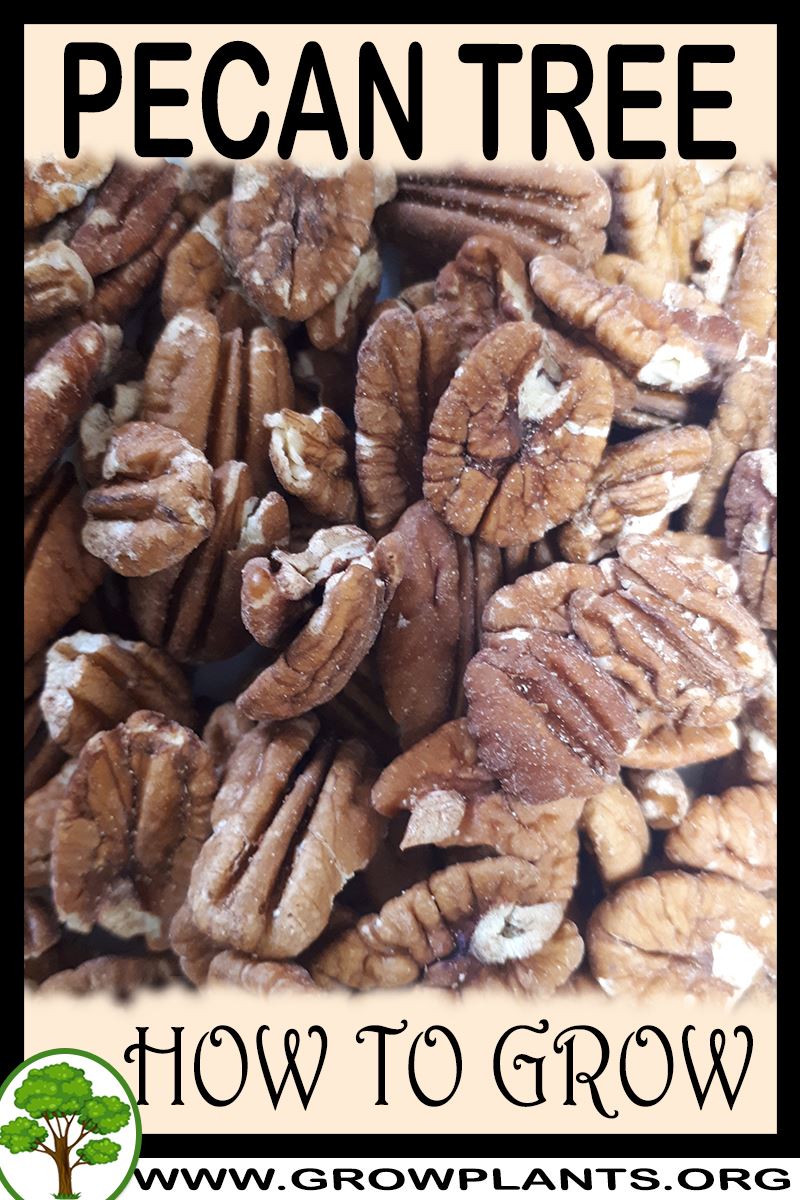
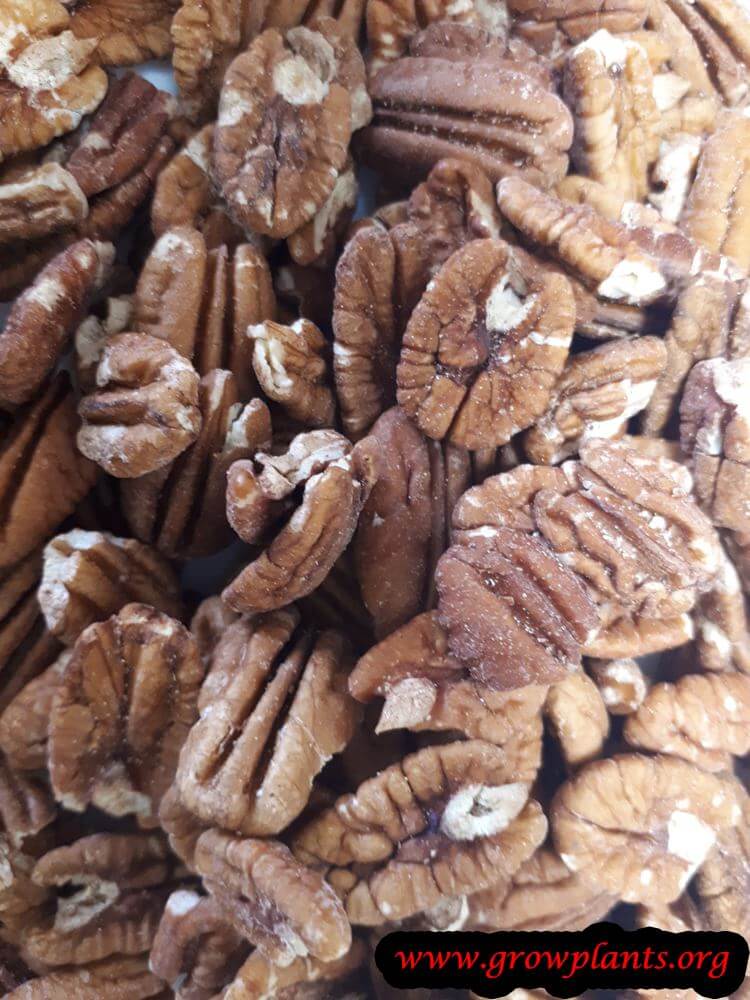
The edible part is the brown pecan kernel, which develops inside a green husk that turns brown at maturity. Kernels are eaten raw and are widely used in baking — cakes and ice-cream, for example.
Quick Edible Specs
| Edible Parts | Nut (kernel) |
|---|---|
| Main Use(s) | Culinary: eaten raw, and used in cakes and ice-cream |
| Eaten Raw or Cooked | Both — raw or in cooked/baked dishes |
| Preparation Required | Crack the shell |
| Harvest Season | Summer to autumn |
| Time to First Harvest | Several years from planting (see growing notes) |
| Storage | Keeps well in the shell |
Seeds, Pods & Nuts
The pecan (botanically not a true nut) grows in a green husk that browns as it matures. The nuts are ready once the husk opens and they drop — wait for the shell to fall, then collect the nuts from the ground.
Preparation, Uses & Safety
Crack the shell and eat the kernel raw, or use it in baking such as cakes and ice-cream. No detoxification is required.
Pests, Diseases & Troubleshooting
Overview: The pecan (Carya illinoinensis) is a large nut tree whose economics hinge on two things: pecan scab, its dominant disease in humid climates, and a suite of nut-attacking insects — pecan weevil, hickory shuckworm and nut casebearer — plus foliage aphids and phylloxera. Because the tree is huge and long-lived, management is built on resistant cultivars, orchard sanitation (destroying dropped nuts and leaves), conserving natural enemies, and correcting the near-universal zinc deficiency, with timed sprays reserved for real thresholds.
Quick Troubleshooting Overview
| Issue / Pest | Main Symptom | Primary Solution |
|---|---|---|
| Pecan scab | Black lesions on leaves and shucks, cracked shucks, stunted nuts | Resistant cultivars, airflow, sanitation, fungicide program |
| Pecan weevil | Nut drop and larvae hollowing kernels with exit holes | Trap/monitor emergence, destroy dropped nuts, timed spray |
| Shuckworm / nut casebearer | Bored, dropped or poorly filled nutlets and shucks | Sanitation, pheromone traps, spray timed to egg hatch |
| Pecan aphids | Honeydew, sooty mold; yellow angular blotches (black aphid) | Conserve beneficials, avoid broad sprays, treat flare-ups |
| Phylloxera | Green-to-brown galls on leaves, shoots, nut clusters | Prune galled twigs, dormant oil at bud break |
| Zinc deficiency (rosette) | Small crinkled rosetted leaves, short internodes, dieback | Foliar zinc during growth flush, balanced nutrition |
Common Pests & Management
- Pecan weevil (Curculio caryae):
- Symptoms: Long-snouted brown weevil; adults feed on nuts causing drop, while larvae develop inside the kernel and chew a round exit hole, hollowing the nut — the most serious pecan pest in many regions.
- Prevention & Control: Monitor adult emergence with trunk traps or ground cloths and jarring; collect and destroy dropped nuts to break the multi-year cycle; encourage the natural late-season emergence to be caught by traps. Well-timed trunk/canopy insecticide sprays are used in commercial orchards, but sanitation is essential.
- Pecan aphids (yellow and black) (Monelliopsis pecanis / Monellia caryella / Melanocallis caryaefoliae):
- Symptoms: Yellow aphids coat leaf undersides with sticky honeydew and sooty mold, weakening trees; the more damaging black pecan aphid causes bright yellow angular blotches that turn brown, triggering heavy leaf drop.
- Prevention & Control: Conserve the abundant natural enemies (lady beetles, lacewings, parasitic wasps) that usually control aphids; avoid broad-spectrum sprays that cause aphid flare-ups; monitor honeydew. Treat only damaging black-aphid outbreaks, using selective products that spare beneficials.
- Pecan phylloxera (Phylloxera devastatrix / P. notabilis):
- Symptoms: Aphid-like insects that trigger conspicuous green-to-brown galls on new leaves, shoots and nut clusters in spring; heavy stem-phylloxera galling deforms shoots and can reduce the crop.
- Prevention & Control: Prune out and destroy galled twigs in badly affected trees; galls are sealed once formed, so control targets the vulnerable window at bud break with dormant oil or a well-timed spring spray on susceptible trees.
- Hickory shuckworm (Cydia caryana):
- Symptoms: Caterpillars bore into the nut shuck, disrupting kernel filling and causing sticky, stained, poorly filled or dropped nuts; damage shows as tunnels and frass in the shuck.
- Prevention & Control: Collect and destroy dropped shucks and nuts to reduce overwintering larvae; monitor with pheromone traps. Where economically important, sprays are timed to egg-lay after nut set; orchard sanitation is the foundation.
- Pecan nut casebearer (Acrobasis nuxvorella):
- Symptoms: Small caterpillars bore into newly set nutlets soon after pollination, hollowing them and webbing clusters together, causing early nut drop; a key cause of crop loss in the young-nut stage.
- Prevention & Control: Monitor adult flight with pheromone traps and scout nutlets for entry holes; a properly timed spray at egg hatch protects the crop where thresholds are exceeded. Healthy natural-enemy populations help suppress low infestations.
- Fall webworm (Hyphantria cunea):
- Symptoms: Large silken webs enclosing branch tips full of hairy caterpillars that skeletonize enclosed foliage late in the season; unsightly but rarely tree-threatening on established trees.
- Prevention & Control: Prune out and destroy accessible webs while small; encourage birds and parasitoids. Bt sprayed into opened webs controls larvae; large trees usually tolerate the damage.
Diseases & Fungal Issues
- Pecan scab (Venturia effusa (Fusicladium effusum)):
- Symptoms: The most important pecan disease: small olive-black lesions on leaves, shoots and especially nut shucks that enlarge and coalesce, blackening and cracking the shucks, stunting nuts and slashing yield in warm, humid, rainy climates.
- Treatment & Management: Choose scab-resistant cultivars — the single best defense; prune and space trees for airflow and light; remove fallen debris; avoid crowding. In humid regions, susceptible cultivars require a program of protective fungicide sprays timed from bud break through nut sizing.
- Downy spot (Mycosphaerella caryigena):
- Symptoms: Pale, downy white spots on the undersides of leaves in spring that later turn yellow then brown, causing premature leaf drop and weakening the tree.
- Treatment & Management: Rake and destroy fallen leaves (the overwintering source); improve airflow; resistant cultivars and the fungicide sprays used for scab also control downy spot.
- Pecan anthracnose / leaf blotch (Glomerella cingulata / Gnomonia):
- Symptoms: Irregular dark blotches and lesions on leaves and shucks, premature defoliation and shuck dieback, worse on stressed trees in wet seasons.
- Treatment & Management: Maintain tree vigor with proper nutrition, water and zinc; sanitation and the scab fungicide program suppress these secondary leaf diseases.
- Powdery mildew (Microsphaera penicillata):
- Symptoms: White powdery growth on leaves and shucks in humid weather; usually cosmetic but can affect nut fill on heavily infected shucks.
- Treatment & Management: Airflow and light penetration reduce it; it rarely warrants dedicated treatment beyond the general fungicide program on susceptible trees.
Growing Difficulties & Abiotic Problems
- Zinc deficiency (rosette):
- Cause & Symptoms: Small, narrow, crinkled leaves bunched into rosettes at shoot tips, short internodes and dieback — a classic and common pecan disorder, especially on alkaline soils where zinc is unavailable.
- Correction Strategy: Apply zinc as foliar sprays during the flush of new growth (the most reliable route on high-pH soils) and/or soil zinc on acidic soils; maintain balanced nutrition to keep new growth healthy.
- Alternate bearing and nut drop:
- Cause & Symptoms: Heavy crops one year followed by light crops the next, and waves of nut drop from poor pollination, moisture stress, or overload; the tree self-thins when overburdened.
- Correction Strategy: Even irrigation (especially during the water/kernel-fill stage), balanced feeding, and in orchards fruit-thinning of very heavy crops moderate the swing; ensure compatible pollinator cultivars for good set.
- Water-stage fruit split and shuck decline:
- Cause & Symptoms: Nuts split or shucks fail to open properly, and “stick-tights” cling shut, from moisture swings, scab pressure or nutritional imbalance during kernel fill.
- Correction Strategy: Provide consistent deep watering through the kernel-filling period, manage scab, and maintain zinc and overall nutrition to promote clean shuck split and good kernel quality.
What Helps — Products & Tools
For pecans, the foundation is scab-resistant cultivars plus sanitation (removing fallen nuts, shucks and leaves) and zinc nutrition. Keep pheromone traps for casebearer and shuckworm monitoring, and where warranted a fungicide program (for scab and downy spot) and well-timed insecticide for weevil/casebearer. Conserve beneficial insects to hold aphids, use dormant/horticultural oil for phylloxera at bud break, and apply foliar zinc to prevent rosette. Even deep irrigation during kernel fill underpins nut quality.