Plant Profile & Key Characteristics
Overview: A fast-growing annual legume 15–30 cm tall, cultivated for its aromatic seeds, edible leaves and sprouts. It is both a culinary and medicinal herb and, as a legume, fixes nitrogen in the soil.
Quick Specifications
| Specification | Attribute |
|---|---|
| Plant Type / Life Cycle | Annual |
| Foliage Type | Herbaceous (annual) |
| Mature Size | 15–30 cm H (6–12 in) |
| Growth Rate | Fast |
| Root System | Taproot with nitrogen-fixing root nodules (legume) |
| Toxicity | Non-toxic / edible (culinary herb and spice) |
| Hardiness | USDA zones 4–11 |
Growth Form & Structure
- Height & Spread: Slender herb 15–30 cm tall; grows readily in planters and containers as well as open ground.
- Growth Habit & Form: Upright, branching herbaceous annual.
- Lifespan & Maturity: Completes its cycle in a single season; seeds ready to harvest about 3–5 months from sowing.
Anatomy & Physical Features
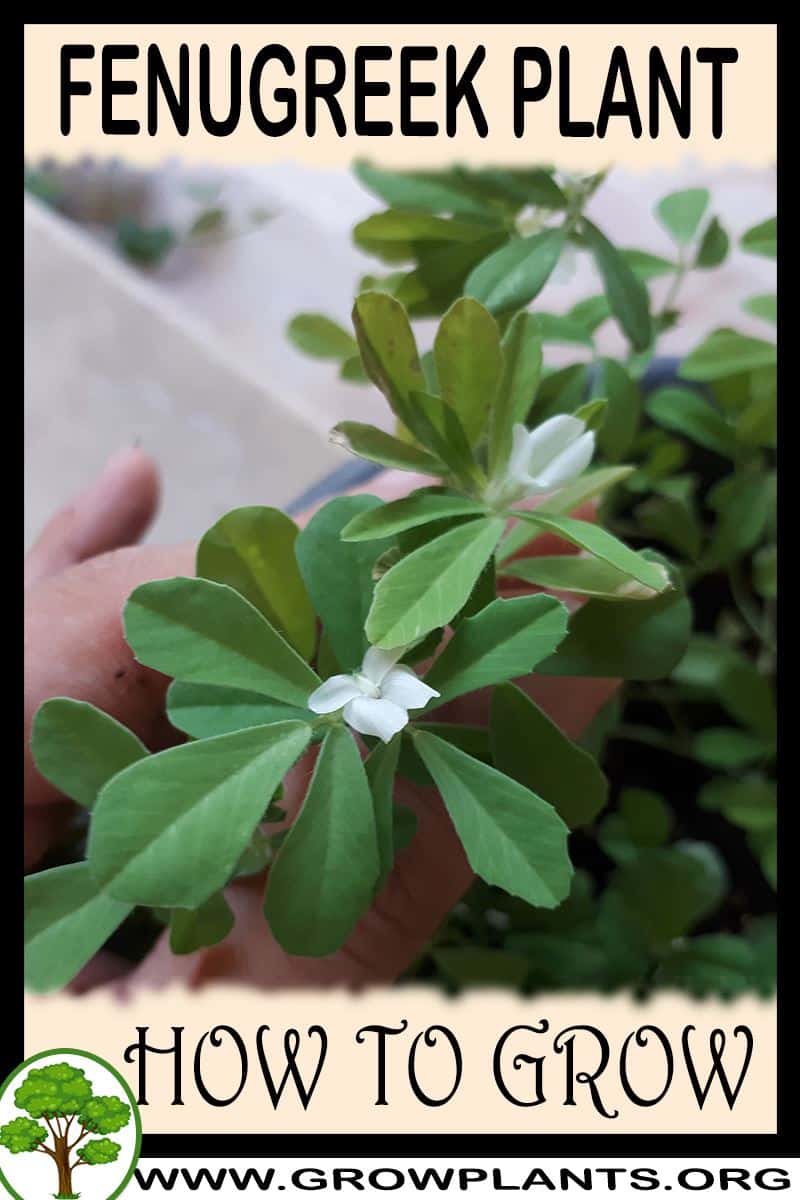
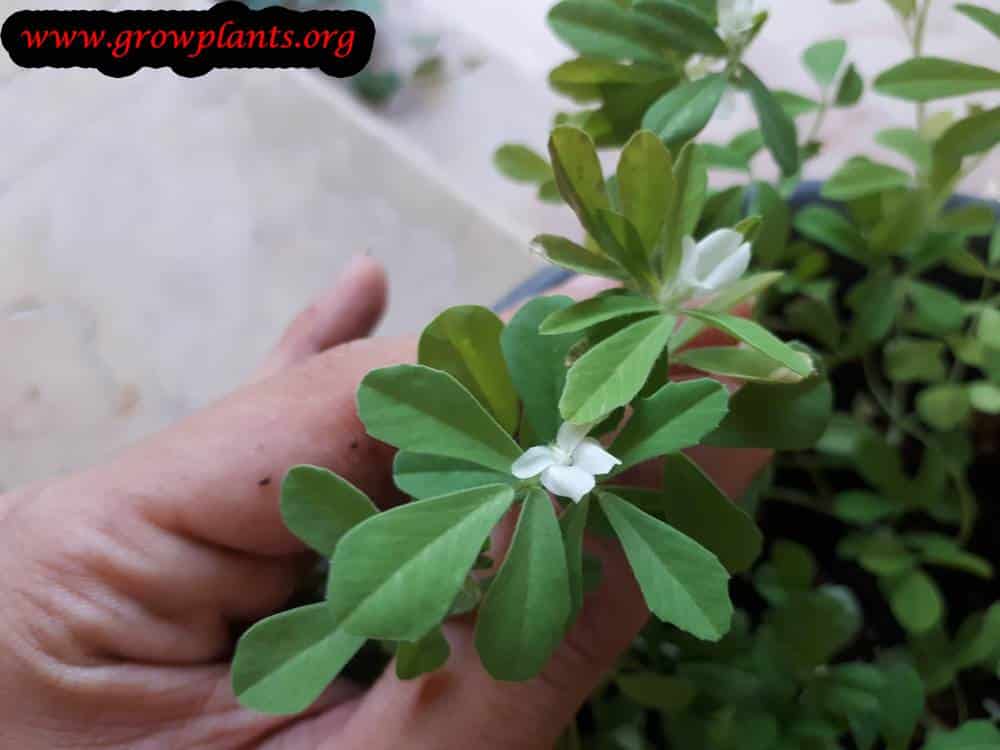
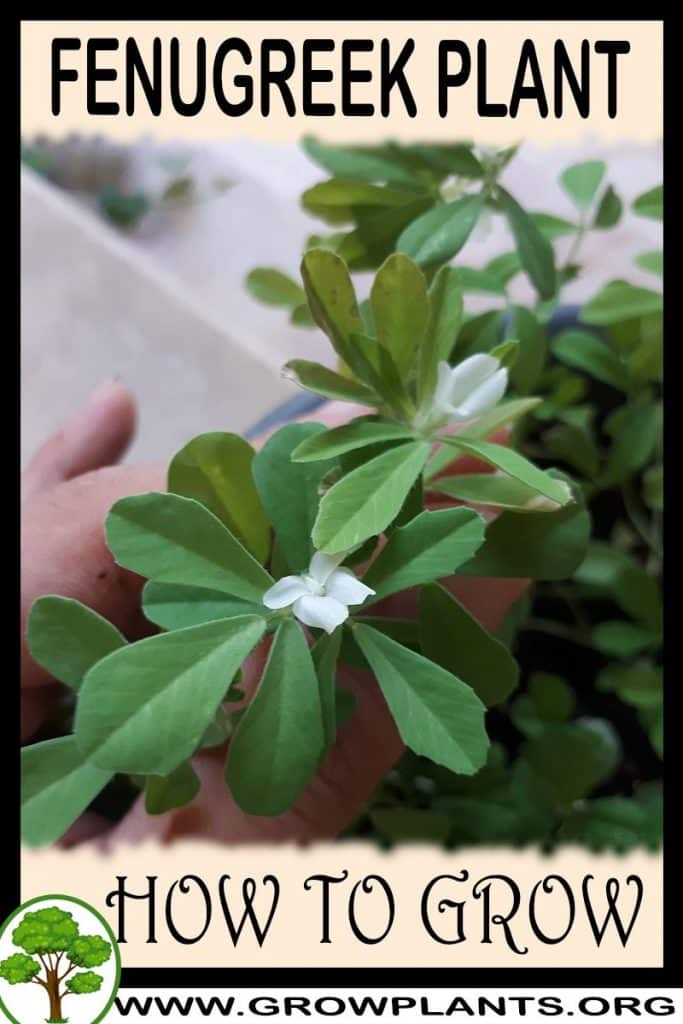
- Leaves & Foliage: Green, ovate leaves in groups of three (trifoliate), with a distinctive aroma.
- Flower Characteristics: Small white pea-shaped flowers (full detail in the Bloom accordion).
- Fruit Profile: Slender pods holding hard, brown, angular seeds (full detail in the Fruit/Seed accordion).
Primary Uses & Landscape Value
- Edible Uses: Seeds used cooked, ground as a spice or made into paste; leaves eaten raw, in salad or cooked; also grown for sprouts.
- Functional & Ornamental Roles: Culinary and medicinal herb and a nitrogen-fixing cover crop.
Care Guide: Planting, Soil & Watering
Overview: Fenugreek (Trigonella foenum-graecum) is a fast-growing annual legume, easy to raise in full sun to light shade in light, well-drained soil enriched with a little organic matter. As a legume it fixes its own nitrogen and needs only low to moderate watering.
Quick Care Requirements
| Requirement | Ideal Condition |
|---|---|
| Planting Season | In spring–summer in cooler climates; in autumn–winter in warm climates |
| Growth Rate | Fast |
| Soil Type | Light, well-drained soil enriched with organic matter |
| Soil pH | 6.0–7.0 (slightly acidic to neutral) |
| Water Need | Low to moderate — keep lightly moist during growth but avoid waterlogging |
Planting & Establishment
- Best Planting Season: Sow in spring to summer in cool climates, or in autumn to winter where summers are hot.
- How to Plant:
- Hole Preparation: Cultivate loose, crumbly soil; being taprooted, fenugreek is best direct-sown rather than transplanted.
- Soil Amendments: Mix in a little compost or organic matter to give a light, fertile bed.
- Planting Depth: Sow shallowly and barely cover; set the crown at soil level if planting seedlings.
- Growth Speed & Expectations: Fast — reaches usable leaf and sprout size within a few weeks.
Soil, Watering & Drainage Care
- Soil Mix & Drainage Needs: Light, free-draining soil; avoid heavy, wet ground that rots the roots.
- Watering Schedule & Technique:
- Young / Newly Planted: Keep evenly moist for germination and while young plants establish.
- Established: Water moderately, letting the surface dry slightly; it is fairly drought-tolerant once growing.
- Seasonal Adjustments: Water a little more in heat and less in cool, damp weather.
Climate, Light & Hardiness
Fenugreek is a fast-growing annual legume grown across mediterranean, desert, subtropical, and temperate climates, from USDA zones 4 through 11, doing best in full sun to half shade. As with many cool-season annual crops, the growing window shifts with climate: spring-to-summer sowing in colder zones, and autumn-to-winter sowing in warm, mild-winter areas to avoid summer heat.
Quick Climate Specifications
| Climate Zones | Mediterranean, desert, subtropical, temperate |
|---|---|
| USDA Hardiness Zones | 4–11 (grown as an annual crop within this broad range) |
| Frost Tolerance | Low |
| Light Conditions | Full sun to half shade |
| Frost-Free Growing Season | Approximately 3–5 months to reach seed harvest |
Sunlight & Light Exposure
Optimal Light Setup
Full sun gives the fastest growth and best seed yield; half shade is also tolerated.
Direct Sun Requirement
Grows well in direct sun.
Shade & Heat Management
Half shade can ease stress during intense heat; in warm climates the crop is deliberately timed for the cooler autumn-to-winter window rather than grown through peak summer heat.
Best Exposure / Orientation
Open, sunny beds; for this fast annual crop, sowing timing matters more than orientation.
Temperature Extremes & Hardiness
USDA Hardiness & Regional Limits
The site data spans zones 4–11 as an annual crop - this broad range reflects that fenugreek is planted and harvested within a single frost-free window rather than persisting through winter anywhere. Frost is what limits the growing window, not the plant's cold hardiness as a perennial.
Cold Damage & Winter Protection
Seedlings and mature plants are frost sensitive. In colder zones the crop is sown in spring after frost danger passes and harvested before autumn frost; in warmer zones it is sown in autumn/winter instead, specifically to avoid summer heat.
Frost Sensitivity
Low tolerance - frost is generally avoided by timing rather than tolerated by the plant.
Extreme Heat Tolerance
In hot, mild-winter climates the crop is deliberately grown through the cooler autumn-to-winter period because summer heat is limiting, indicating fenugreek performs best in mild-to-warm rather than extreme heat.
Wind, Humidity & Microclimate
Rainfall & Seasonal Moisture
Grown with a small to average amount of water; not documented as needing high humidity or heavy rainfall.
Microclimate Recommendations
Open, sunny beds; in hot-summer regions, time plantings to the autumn-winter window (as reflected in the source data) to avoid peak summer heat.
Growing in Pots, Balconies & Indoors
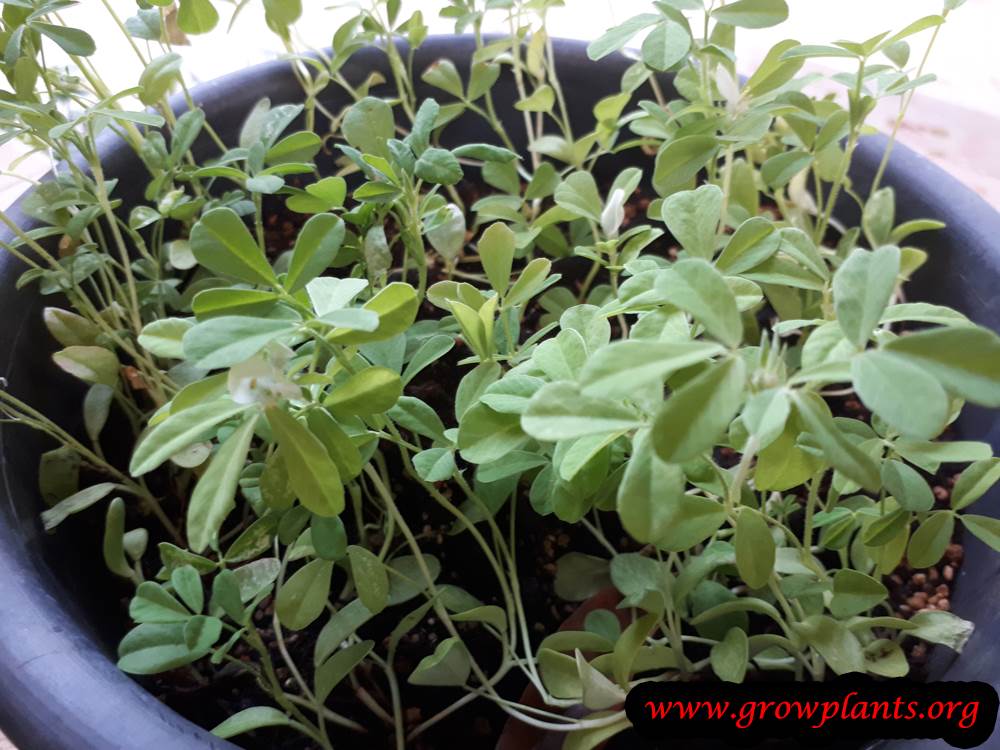
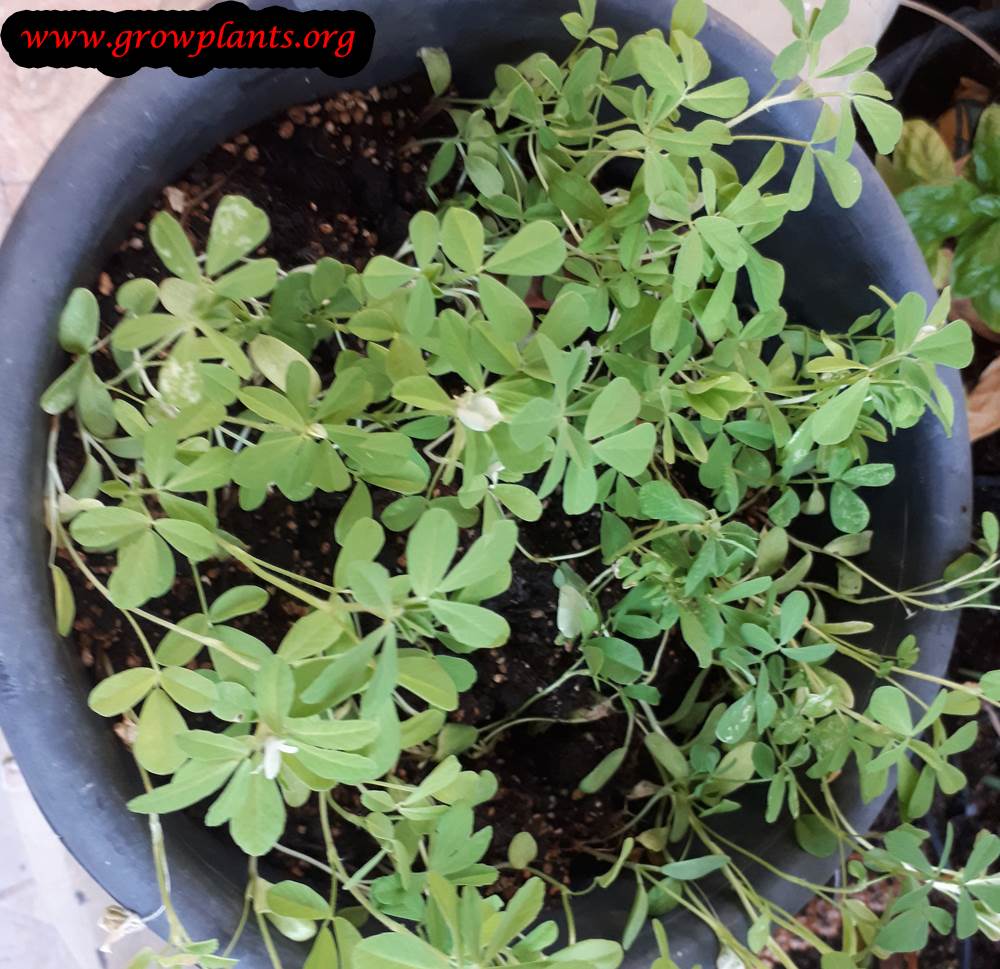
Fenugreek (Trigonella foenum-graecum) is a fast, leafy annual herb that grows readily in pots and troughs – but the grower notes it is not a houseplant. It wants real sun and air, so grow it outdoors on a sunny sill, balcony or patio.
Quick Details
- Container Size: Small – a wide, shallow pot or trough is ideal for a quick leafy crop.
- Indoor Suitability: No – not a true houseplant; a very sunny windowsill is the closest indoor option for a leaf crop.
- Best Spot: Full sun to part shade.
- Soil & Drainage: Free-draining, fertile mix.
- Watering in Pots: Even, modest to moderate moisture; keep it steady while the leaves are growing.
Indoors & On the Windowsill
- Not a houseplant: The grower’s answer is no – indoors the light is too weak and the still, dry air does not suit it. It belongs outdoors in a container.
- A bright sill at most: If you want to try it inside, only a very bright, sunny windowsill comes close, and even then it is happier out on a balcony or patio.
On a Balcony or Patio
- Light, wind and heat: A sunny to lightly shaded spot suits it; reflected heat off walls and drying wind mean pots need checking often in warm weather, and tall stems may want staking.
- Quick crop: Sow thickly and cut young leaves; it grows so fast that a sunny balcony gives cut-and-come-again pickings in weeks.
Choosing the Pot, Soil & Long-Term Care
- Pot & drainage: Choose a pot with strong drainage holes and skip a standing-water saucer, which invites root rot; terracotta breathes and dries quickly, while glazed or plastic hold moisture longer.
- Potting mix: Fill with a well-aerated, organic-rich medium – a good potting mix, or peat/coir blended with perlite or vermiculite for drainage.
- Feeding: Container plants run through nutrients fast because watering washes them out, so feed a little more often through the growing season than you would in open ground.
- Repotting: Refresh the mix or pot up about every couple of years; for perennials, lightly trim the roots and top growth at the same time.
Fertilizing & Feeding
A legume herb that fixes some of its own nitrogen: light feeding built around organic matter is usually enough, with restraint on extra nitrogen so the plant favors seed, leaf, and sprout production over soft foliage.
Quick Fertilizing Specs
| Feeding Level | Light feeder |
|---|---|
| Main Nutrient Priority | Balanced, low-nitrogen; organic matter over heavy nitrogen feeding |
| Best Feeding Period | At and shortly after sowing, tapering off as the crop matures toward seed |
| Organic Options | Compost or well-rotted organic matter worked into the bed before sowing |
| Micronutrients | Usually adequate from organic matter in average garden soil; correct specific issues only when diagnosed |
| Soil pH | Tolerates an average garden soil range without special adjustment |
Feeding by Growth Stage
Establishment after sowing
Support even germination and early root and leaf development.
| Nutrient direction | Light, balanced nutrition, mainly from organic matter worked into the bed rather than a nitrogen-heavy feed. |
|---|---|
| Timing | At sowing and through early seedling growth. |
| Frequency | A single light feeding or organic amendment at bed preparation is usually enough to start. |
| Fertilizer types | Compost or well-rotted organic matter worked into the soil before sowing, A light, balanced starter fertilizer only on poor soils |
| Precautions | Avoid heavy nitrogen at sowing, which can favor soft leafy growth over the legume’s own nitrogen-fixing nodules. |
Active growth toward leaf, sprout, and seed production
Support foliage for leaf harvest and, later, pod and seed development without encouraging excess soft growth.
| Nutrient direction | Keep nitrogen restrained since the plant fixes much of its own; favor organic matter and only light supplemental feeding if growth looks weak. |
|---|---|
| Timing | Through the main growth period from young leaves to flowering and pod set. |
| Frequency | Rarely needs more than a light top-up feeding if the crop is growing poorly. |
| Fertilizer types | A light, balanced fertilizer used sparingly, only if growth is weak, Organic matter such as compost as the primary nutrient source |
| Precautions | Over-feeding nitrogen can push leafy growth at the expense of flowering and seed set, and may reduce the plant’s own nitrogen fixation. |
Nutrient Deficiency Signs & Corrections
Older leaves turn pale green to yellow and overall growth is stunted despite the plant’s legume habit.
| Possible causes | poor nodulation or failed nitrogen fixation in compacted or waterlogged soil, very low native soil fertility before fixation becomes established, soil pH outside the range favorable for nodule-forming bacteria |
|---|---|
| Appears first on | older, lower leaves |
| What to check | soil drainage and compaction, root nodule presence if plants can be inspected, overall stand vigor and color |
| Possible correction | Improve soil drainage and structure, and apply a light balanced feeding only if poor nodulation is suspected rather than relying on nitrogen alone. |
New leaves turn pale to yellow while the veins remain green.
| Possible causes | high soil pH tying up available iron, waterlogged or poorly aerated soil, root stress from compaction or transplant disturbance |
|---|---|
| Appears first on | newest leaves |
| What to check | soil pH if known, drainage and soil structure, recent watering and root disturbance |
| Possible correction | Improve drainage and soil structure, and apply a chelated iron product per its label if the pattern persists. |
Leaf edges scorch or yellow on older leaves and pod or seed set is reduced.
| Possible causes | low soil potassium, sandy soil with high leaching, uneven watering stressing the plant during pod fill |
|---|---|
| Appears first on | older leaf margins |
| What to check | soil potassium status, soil texture and watering consistency, stage of pod and seed development |
| Possible correction | Work in a balanced or potassium-containing organic amendment and keep watering consistent through pod fill. |
Pruning, Training & Seasonal Maintenance
Fenugreek is a fast-growing annual that completes its life cycle in one season, so it needs almost no formal pruning – the plant’s own life cycle, not a pruning calendar, drives what little cutting it gets. The two real interventions are pinching young leaves for kitchen use and removing any diseased tissue; both can be done at any point in the growing season without harming the plant’s shape or seed set.
Quick Pruning & Maintenance Specs
| Pruning Tolerance | Low – not required for plant health; only light harvest-pinching and sanitary removal apply |
| Primary Pruning Window | Any time during the growing season |
| Typical Frequency | Occasional, as needed for leaf harvest or to remove damaged tissue |
| Main Objective | Leaf harvest and sanitary removal, not shaping |
| Young Plant Priority | Light pinching of the topmost leaves to encourage a bushier, leafier plant |
| Mature Plant Priority | Leave the plant largely intact so it can flower and fill its seed pods |
| Best Tool Type | Fingers or precision snips |
| Avoid Heavy Pruning During | Flowering and pod-fill, if seed is the goal |
Special Growth to Remove
- Any yellowed, diseased, or pest-damaged leaves – remove promptly, since sanitary removal is the main pruning task this plant actually needs.
- Spent seed pods left on the plant too long can shatter and self-sow; because fenugreek is noted to spread invasively, cut and collect pods before they fully dry and drop if volunteer seedlings are unwanted.
Container & Small-Space Pruning
Fenugreek grows well in containers and stays compact (15–30cm); no size-control pruning is normally needed. In a pot, harvest leaves a little more conservatively than in open ground so the smaller root volume can still support pod development if seed is wanted.
Tools
- Precision snips or clean fingers for pinching leaves – the stems are soft and herbaceous, so nothing larger than a snip is ever justified.
Tool Hygiene & Disease Risk
Routine – no major transmissible pruning-borne disease is reported for fenugreek; simply keep tools reasonably clean when removing diseased foliage so spores aren’t carried to healthy leaves.
Cut Placement & Technique
Pinch or snip individual leaves or stem tips just above a leaf node, taking younger top growth for the best flavor and to encourage side branching. Avoid stripping a plant bare in one pass; leave enough foliage for it to keep photosynthesizing and, if seed is wanted, to flower and fill pods.
Common Pruning Mistakes
- Over-harvesting leaves before the plant has enough foliage left to support seed production, if pods are the goal.
- Leaving spent, drying pods on the plant too long, encouraging unwanted self-seeding given this plant’s invasive tendency.
When NOT to Prune
Avoid heavy leaf removal once the plant has moved into flowering and pod-set, since fenugreek has limited foliage to begin with and needs it to fill the seed pods; collect pods for harvest before autumn rather than leaving them to shatter.
Recommended Tools (by task)
- precision_snips – for pinching leaves and trimming diseased tissue on this soft-stemmed annual herb; no larger cutting tool is warranted.
Propagation Guide
Fenugreek is propagated only from seed, direct-sown where it is to grow since it has a taproot and does not transplant well; seed comes true-to-type. Propagation is easy and quick, with plants establishing within days of sowing under warm conditions.
Quick Propagation Specs
| Best Propagation Method | Seed (direct sowing) |
| Propagation Difficulty | Easy |
| Seed True-to-Type | Yes |
| Best Propagation Season | Spring to summer in cool climates; autumn to winter in warm climates |
| Seed Germination Time | Typically 1–2 weeks |
| Germination Temperature | About 18–25°C (64–77°F) |
| Seed Sowing Depth | Shallow, roughly 1–2cm (0.4–0.8 inch) |
Growing from Seed
Seed Handling & Viability
Collect seed before autumn, as the site notes (before pods split), and keep it cool and dry until sowing.
Dormancy & Pre-Sowing Treatment
No special treatment is required, though soaking the seed overnight in water can help soften the hard seed coat and speed up even germination.
Sowing Season
Spring to summer in cooler climates, or autumn to winter where the climate is warm, matching the plant’s general planting season.
Sowing Depth & Orientation
Sow directly where the plants are to grow, shallowly covered, about 1–2cm (0.4–0.8 inch) deep – as a taprooted legume it resents transplanting.
Germination Conditions
Warm soil, around 18–25°C (64–77°F), kept evenly moist.
Germination Time
Germination is usually quick, often within 1–2 weeks.
Seedling Care
Thin seedlings to give them room to develop; the site notes birds can be a pest on the seed, so newly sown areas may need protection until seedlings are established.
Bloom & Flower Guide
Quick Details
- Bloom Season: Spring to summer
- Time to First Bloom: Within its first season, as an annual
- Flower Appearance: Small white pea-shaped flowers tucked into the leaf axils
- Edibility: The plant is culinary – its leaves, sprouts and seeds are used – but the small flowers themselves are not the part eaten
Detailed Blooming Overview
Fenugreek is a fast-growing annual legume. After its modest white, pea-like blooms it forms the aromatic seed pods it is grown for. As a legume it also fixes nitrogen, quietly improving the soil while it grows.
Flower Characteristics
- White, pea-shaped (papilionaceous) flowers in the leaf axils.
Bloom Care & Thinning
- Managing the bloom: As an annual it flowers and then pods quickly; leave the flowers to set the seed pods if you want to harvest the spice.
Fruit & Uses
Fenugreek is grown for its edible seeds and leaves: the small brownish seeds are cooked or ground into spice blends and pastes, while the young leaves are eaten fresh in salads or cooked as a leafy green. Fresh sprouted seeds are also commonly eaten.
Quick Edible Specs
| Edible Parts | Seeds, leaves (greens), sprouts |
|---|---|
| Main Use(s) | Culinary (spice, paste, cooked green, salad); traditionally used medicinally |
| Eaten Raw or Cooked | Leaves: raw or cooked. Seeds: cooked (or sprouted and eaten raw) |
| Preparation Required | None for young raw leaves; cook for seeds and mature leaves; sprouting for seeds used raw |
| Harvest Season | Leaves: spring to summer (cool climates) or autumn to winter (warm climates), matching the planting season. Seeds: spring, summer or autumn, collected before fall |
| Time to First Harvest | Young leaves can be cut early in growth; seed pods mature over the growing season (see site data for exact months) |
| Storage | Dried seeds store well in a sealed container; fresh leaves are best used soon after picking |
| Safety/Toxicity Caveat | None known when used as food in normal culinary amounts |
Leaves & Greens
The green, ovate leaves grow in groups of three and are best picked young and tender. They can be eaten raw in salads or cooked, similar to other leafy herbs. Harvesting leaves regularly encourages fresh new growth, but heavy leaf picking will reduce the plant’s seed production.
Seeds, Pods & Nuts
The small, brown, roughly square-shaped seeds form in pods after flowering. They are collected before they drop in fall and are used whole or ground into cooking, spice blends and pastes; the seeds can also be sprouted and eaten fresh. Letting the plant go to seed diverts energy from leaf production, so growers should decide whether they are prioritising a leaf or seed harvest.
Preparation, Uses & Safety
Fenugreek leaves are used fresh in salads or cooked into dishes, while the seeds are typically cooked, roasted or ground for use as a spice and in pastes; sprouted seeds are eaten raw. Fenugreek also has a long history of traditional medicinal use, though no specific health claims are made here. No particular toxicity or required detoxification step applies to normal culinary use of the leaves or seeds.
Pests, Diseases & Troubleshooting
Overview: Fenugreek is a fast, cool-season annual legume grown as a leafy herb, spice and green manure. It is largely trouble-free over its short cycle but is vulnerable to sap-sucking insects and, above all, to powdery mildew and several soil-borne rots in warm, humid or waterlogged conditions. Good drainage, spacing and rotation prevent most problems.
Quick Troubleshooting Overview
| Issue / Pest | Main Symptom | Primary Solution |
|---|---|---|
| Aphids | Clustered insects, honeydew, curled tips | Water jet, beneficials, insecticidal soap |
| Spider mites | Fine stippling and webbing in heat | Raise humidity, spray undersides, horticultural oil |
| Whiteflies | Tiny white flies rising when disturbed | Yellow sticky traps, insecticidal soap |
| Powdery mildew | White powdery patches on leaves | Airflow, resistant sowing, sulphur/bicarbonate |
| Root rot / damping-off | Seedling collapse, blackened stem base | Well-drained mix, avoid overwatering, rotate |
Common Pests & Management
- Aphids (Aphis craccivora and others):
- Symptoms: Soft green or black insects clustered on tender shoot tips and leaf undersides, causing sticky honeydew, sooty mould, curling foliage and stunting; they can also spread legume viruses.
- Prevention & Control: Knock colonies off with water, encourage lady beetles, lacewings and hoverflies, and treat persistent infestations with insecticidal soap or neem oil on leaf undersides. Avoid excess nitrogen, which fuels soft aphid-prone growth.
- Spider mites (Tetranychus urticae):
- Symptoms: Fine pale stippling and faint webbing on leaf undersides in hot, dry weather, with leaves bronzing and drying in bad cases.
- Prevention & Control: Keep plants watered and humid to reduce stress, hose foliage undersides, and use insecticidal soap or horticultural oil; conserve predatory mites by avoiding broad-spectrum sprays.
- Whiteflies (Bemisia tabaci / Trialeurodes vaporariorum):
- Symptoms: Clouds of tiny white flies lifting from the foliage when disturbed, with honeydew, sooty mould and yellowing, mainly under protection or in warm climates.
- Prevention & Control: Hang yellow sticky traps, encourage Encarsia parasitic wasps, and spray insecticidal soap or neem, repeating to catch newly hatched nymphs.
- Cutworms and leaf-eating caterpillars (Noctuidae):
- Symptoms: Seedlings cut at the base overnight, or ragged holes chewed in leaves with visible frass.
- Prevention & Control: Handpick at night, fit cardboard collars around seedlings, encourage birds and ground beetles, and apply Bacillus thuringiensis (Bt) to feeding larvae if numbers rise.
Diseases & Fungal Issues
- Powdery mildew (Erysiphe polygoni / Leveillula taurica):
- Symptoms: White to greyish powdery patches spreading across leaves and stems, especially late in the crop or in warm humid weather, causing yellowing, curling and early leaf loss. This is fenugreek’s most important disease.
- Treatment & Management: Sow with generous spacing for airflow, avoid overhead watering and excess nitrogen, harvest young leafy crops promptly, and apply sulphur, potassium bicarbonate or a milk spray at first signs.
- Root rot, wilt and damping-off (Rhizoctonia / Fusarium / Pythium spp.):
- Symptoms: Seedlings that fail to emerge or topple with a pinched, blackened stem base, and older plants that yellow, wilt and collapse from rotted roots in wet or heavy soil.
- Treatment & Management: Use free-draining soil or a fresh seed-starting mix, sow into warm soil, avoid overwatering, do not crowd, and rotate away from legumes; treating seed with Trichoderma or a biofungicide helps on problem ground.
- Downy mildew and Cercospora leaf spot (Peronospora / Cercospora traversiana):
- Symptoms: Angular yellow blotches with greyish downy growth on leaf undersides (downy mildew), or small dark leaf spots that coalesce (Cercospora), both worse in prolonged leaf wetness.
- Treatment & Management: Water at the base early in the day, improve drainage and airflow, remove infected leaves and debris, use clean seed, and apply a copper fungicide under persistent wet pressure.
- Charcoal rot (Macrophomina phaseolina):
- Symptoms: In hot, dry, stressed crops, wilting and premature death with shredded lower stems peppered with tiny black microsclerotia.
- Treatment & Management: Avoid heat and drought stress with even watering and mulch, maintain soil organic matter, and rotate; there is no rescue treatment once plants are affected.
Growing Difficulties & Abiotic Problems
- Waterlogging and overwatering:
- Cause & Symptoms: Fenugreek resents wet feet; saturated soil starves roots of oxygen and triggers rot, showing as yellowing, wilting and collapse.
- Correction Strategy: Grow in light, well-drained soil or raised beds, water only when the surface dries, and never let containers stand in water.
- Bolting and bitterness:
- Cause & Symptoms: Heat and long days push leafy plants quickly to flower, and old or drought-stressed leaves turn bitter and tough.
- Correction Strategy: Sow in cool conditions, keep soil evenly moist, harvest leaves young and often, and make successional sowings for a continuous supply.
What Helps – Products & Tools
For fenugreek reach first for cultural controls plus insecticidal soap or neem for aphids, mites and whiteflies, yellow sticky traps for whiteflies, and Bt for caterpillars. Against its main threat, powdery mildew, use sulphur or potassium-bicarbonate spray with good spacing; a copper fungicide covers downy mildew and leaf spot, and a Trichoderma seed treatment protects against damping-off.