Plant Profile & Key Characteristics
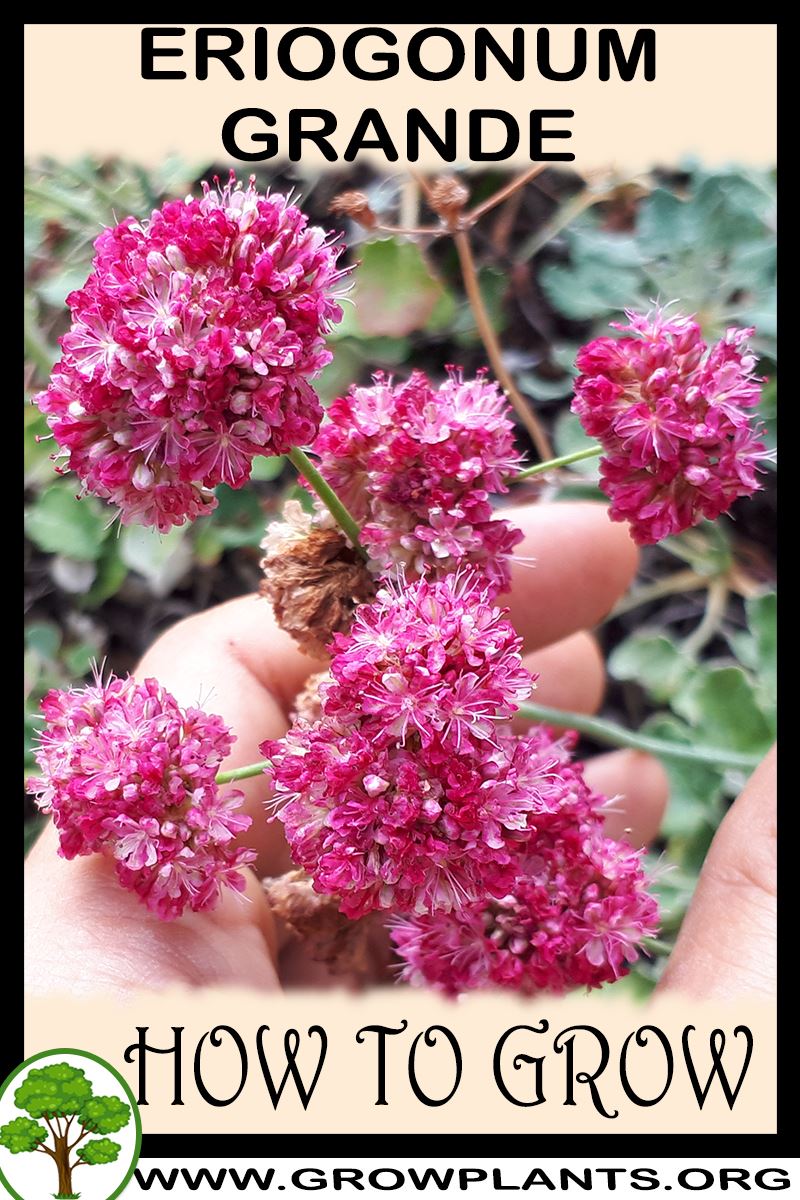
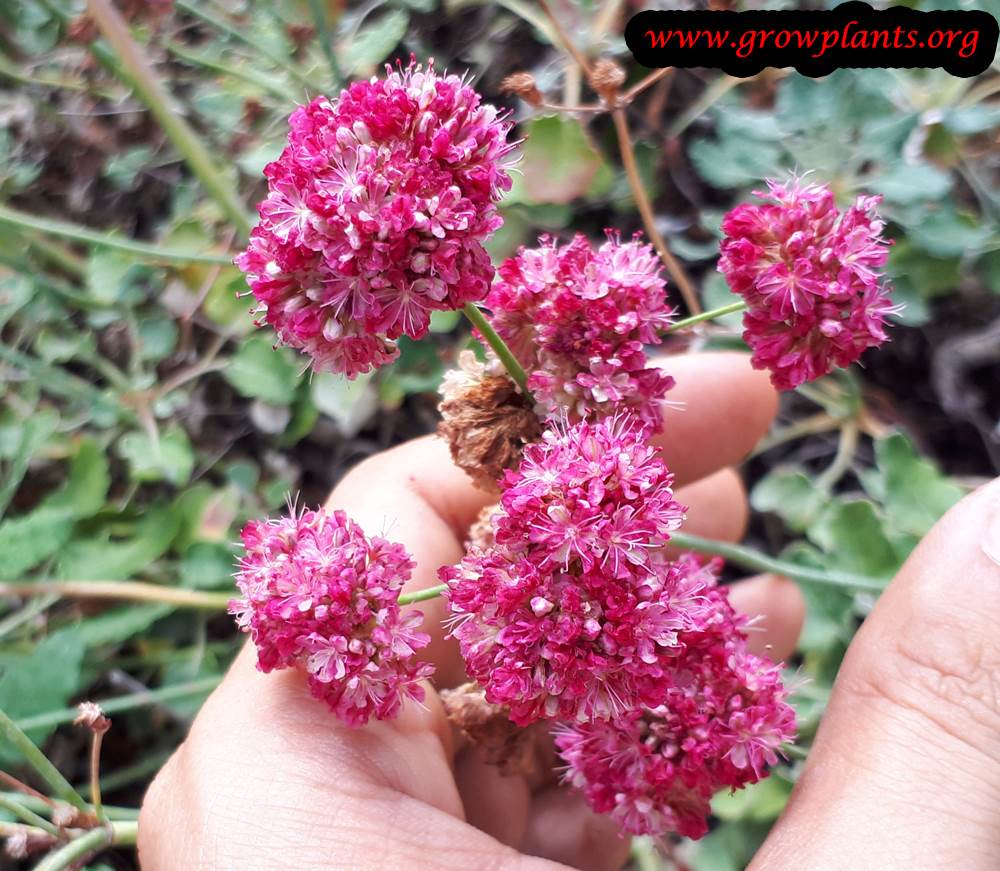
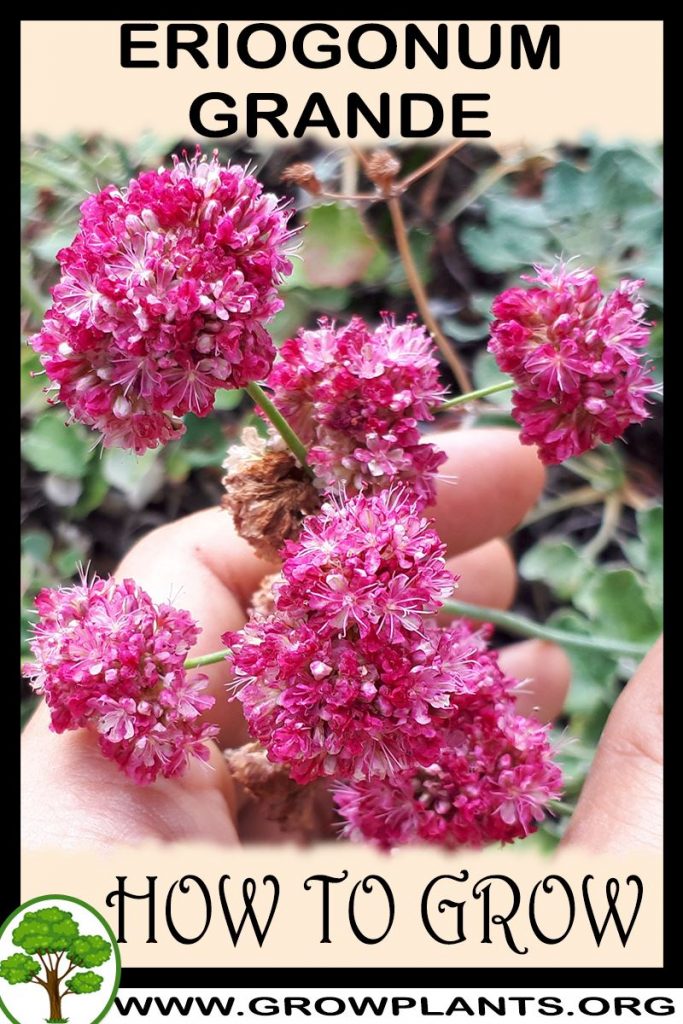
Overview: Eriogonum grande (redflower buckwheat) is an evergreen perennial 20-50 cm (8-20 in) tall with grey-green wavy-edged leaves and ball-like clusters of small flowers. A drought-tolerant ornamental that attracts pollinators.
Quick Specifications
| Specification | Attribute |
|---|---|
| Plant Type / Life Cycle | Perennial (subshrubby) |
| Foliage Type | Evergreen |
| Mature Size | 20-50 cm (8-20 in) tall |
| Growth Rate | Moderate to fast |
| Hardiness | USDA zone 8-10 |
Growth Form & Structure
- Height & Spread: 20-50 cm (8-20 in) tall; also grown in containers.
- Growth Habit & Form: Low mounding perennial with a woody base and upright flowering stems.
- Lifespan & Maturity: Perennial.
Anatomy & Physical Features
- Leaves & Foliage: Oval green-to-grey leaves with wavy, lobed margins.
- Flower Characteristics: Small white, pink or red flowers massed into rounded ball-like clusters (full detail in the Bloom guide).
Primary Uses & Landscape Value
- Functional & Ornamental Roles: Drought-tolerant ornamental for dry gardens and slopes; valued for attracting pollinators.
Care Guide: Planting, Soil & Watering
Overview: Eriogonum grande is a drought-tolerant, sun-loving perennial that thrives in lean, sharply drained soil. It needs little water once established and rots in rich, wet ground.
Quick Care Requirements
| Requirement | Ideal Condition |
|---|---|
| Planting Season | Warm season (spring through autumn) |
| Growth Rate | Moderate to fast |
| Soil Type | Lean, sandy or gritty, well-drained |
| Water Need | Low – let the soil dry between waterings |
Planting & Establishment
- Best Planting Season: Plant from spring through autumn while the soil is warm.
- How to Plant:
- Hole Preparation: Dig a hole about twice the width of the root ball and equal in depth on an open, sunny site.
- Soil Amendments: Add grit or coarse sand to heavy soil for drainage; avoid rich amendments, which this lean-soil plant dislikes.
- Planting Depth: Set the crown at soil level and avoid mounding soil or mulch against it.
- Growth Speed & Expectations: Growth is moderate to fast, forming a low mound topped with ball-like flower clusters.
Soil, Watering & Drainage Care
- Soil Mix & Drainage Needs: Excellent drainage is essential – wet, heavy soil causes rot; a gritty mix suits containers.
- Watering Schedule & Technique:
- Young / Newly Planted: Water occasionally to establish, letting the soil dry well between waterings.
- Established: Water sparingly; established plants are very drought-tolerant.
- Seasonal Adjustments: A little extra water in extreme summer heat is enough; keep it dry in winter.
Climate, Light & Hardiness
Eriogonum grande is a drought-tolerant, sun-loving perennial suited to subtropical, mediterranean, and temperate climates, hardy in USDA zones 8–10. It performs best in full sun on well-drained soil and needs relatively little supplemental water once established.
Quick Climate Specifications
| Climate Zones | Subtropical, mediterranean, temperate |
|---|---|
| USDA Hardiness Zones | 8–10 |
| Frost Tolerance | Moderate |
| Light Conditions | Full sun |
| Salt / Coastal Tolerance | Moderate to High |
Sunlight & Light Exposure
Optimal Light Setup
Full sun gives the most compact, floriferous growth.
Direct Sun Requirement
Needs strong direct sun to perform well.
Best Exposure / Orientation
An open, sunny site with excellent drainage - a slope or raised bed works well.
Temperature Extremes & Hardiness
USDA Hardiness & Regional Limits
Hardy in zones 8–10, reflecting a mild-winter, mediterranean/coastal-type climate range rather than areas with severe, prolonged freezes.
Cold Damage & Winter Protection
No specific low-temperature threshold is documented; treat zone 8 as the practical cold limit, and avoid heavy, wet winter soil that combined with cold could encourage rot.
Frost Sensitivity
Moderate - hardy to typical zone 8 winter lows but not documented as tolerating harsher cold.
Extreme Heat Tolerance
Well suited to hot, dry mediterranean and subtropical summers, given its drought tolerance and preference for well-drained soil.
Wind, Humidity & Microclimate
Dry-Air Tolerance
High, consistent with its low water requirement and native dry-climate habitat.
Wind Tolerance
Likely high, given that wild populations grow on exposed coastal bluffs.
Salt / Coastal Tolerance
Moderate to high - native populations occur on coastal bluffs in California, where salt spray and wind exposure are common.
Rainfall & Seasonal Moisture
Adapted to dry-summer mediterranean rainfall patterns with minimal water; avoid overwatering or poorly drained, wet soils.
Microclimate Recommendations
Open, well-drained, sunny sites such as slopes or raised beds; well suited to dry gardens and coastal-influenced landscapes.
Growing in Pots, Balconies & Indoors
Eriogonum grande (a wild buckwheat) is a tough, sun-and-drought-loving plant that does well in a sharply drained pot but is not a houseplant. It needs full sun and lean, gritty conditions outdoors.
Quick Details
- Container Size: Small to medium – a snug, very free-draining pot suits it.
- Indoor Suitability: No – not a houseplant; a hot, sunny sill at most.
- Best Spot: Full sun.
- Soil & Drainage: Very sharp drainage – a gritty, lean mix; it hates wet feet.
- Watering in Pots: Sparing – let it dry well between waterings; it is drought-tolerant.
Indoors & On the Windowsill
- Not a houseplant: The grower’s answer is no – indoors the light is too weak and the still, dry air does not suit it. It belongs outdoors in a container.
- A bright sill at most: If you want to try it inside, only a very bright, sunny windowsill comes close, and even then it is happier out on a balcony or patio.
On a Balcony or Patio
- Sun, wind and heat: Give it your sunniest, most open spot; walls and railings throw back heat and wind dries pots fast, so check moisture daily in hot weather and stake tall stems on an exposed balcony. A drip irrigation kit with a timer can take over that watering check automatically.
- Grit it up: Add extra grit or perlite and a gravel mulch; overwatering and rich soil are its main enemies in a pot.
Choosing the Pot, Soil & Long-Term Care
- Sharp drainage: This is a dry-climate plant – use a gritty, free-draining mix and a pot that never stays soggy.
- Pot & drainage: Choose a pot with strong drainage holes and skip a standing-water saucer, which invites root rot; terracotta breathes and dries quickly, while glazed or plastic hold moisture longer.
- Potting mix: Fill with a well-aerated, organic-rich medium – a good potting mix, or peat/coir blended with perlite or vermiculite for drainage.
- Feeding: Container plants run through nutrients fast because watering washes them out, so feed a little more often through the growing season than you would in open ground.
- Repotting: Refresh the mix or pot up about every couple of years; for perennials, lightly trim the roots and top growth at the same time.
Fertilizing & Feeding
A drought-tolerant, pollinator-friendly native grown in well-drained soil with little water, this species is adapted to lean sites and needs only light feeding, if any, to support its naturally modest growth and ball-shaped flower clusters.
Quick Fertilizing Specs
| Feeding Level | Light feeder suited to lean, well-drained sites |
|---|---|
| Main Nutrient Priority | A light, balanced feeding that avoids pushing soft growth on a plant adapted to lean soil |
| Best Feeding Period | Early in the growing season before the main flowering display |
| Organic Options | A light top-dressing of compost worked lightly into well-drained soil |
| Reduce/Stop Feeding | Skip feeding once flowering begins and during the plant’s dry-season rest |
| Soil pH | Tolerates a wide range of soil conditions as long as drainage is good |
Feeding by Growth Stage
Early-season growth
Support modest new growth on this naturally lean-adapted plant before it shifts energy into flowering.
| Nutrient direction | A light, balanced feeding is enough; this species is adapted to well-drained, naturally lean soil and does not want heavy nutrition. |
|---|---|
| Timing | Early in the growing season as new growth appears. |
| Frequency | A single light feeding early in the season is usually all this low-input native plant needs. |
| Fertilizer types | A light, balanced, complete fertilizer, A thin top-dressing of compost |
| Precautions | Avoid rich soil amendments or heavy feeding, which can produce weak, floppy growth on a plant adapted to lean, well-drained conditions. |
Flowering display
Support the ball-shaped flower clusters that attract pollinators without pushing excess vegetative growth.
| Nutrient direction | Feeding is rarely needed once flowering is underway; this plant blooms reliably on the nutrition already in well-drained garden soil. |
|---|---|
| Timing | Through the main flowering period. |
| Frequency | Minimal to no additional feeding is typically needed during bloom. |
| Fertilizer types | A very light, balanced feeding only if growth looks notably weak |
| Precautions | Resist the urge to feed heavily for more flowers; overfeeding tends to produce leafy growth at the expense of the bloom pollinators rely on. |
Dry-season and winter rest
Let the plant rest through its natural dry-season slowdown or winter cold without added nutrition.
| Nutrient direction | None – withhold fertilizer while the plant is resting. |
|---|---|
| Timing | During the dry part of the year or winter cold, depending on climate. |
| Frequency | No feeding at this stage. |
| Fertilizer types | No feeding at this stage; the plant is adapted to go without added nutrition during its natural rest period. |
| Precautions | Do not fertilize during dry-season or winter rest; this drought-adapted plant does not need it and cannot use it while inactive. |
Nutrient Deficiency Signs & Corrections
New growth looks unusually pale or sparse even during the active growing period.
| Possible causes | extremely lean or depleted soil even by this species’ low standards, root competition from nearby vigorous plants, poor establishment limiting the root system’s reach |
|---|---|
| Appears first on | newest growth |
| What to check | soil condition and any recent feeding, competition from neighboring plants, how well the plant has established |
| Possible correction | Apply a single light, balanced feeding early in the season rather than repeated heavy applications. |
Stems grow unusually long and floppy, and the plant flops open or sprawls more than expected.
| Possible causes | overly rich soil or too much feeding for a plant adapted to lean conditions, too much water or shade encouraging soft, stretched growth, crowding from denser neighboring plantings |
|---|---|
| Appears first on | whole-plant habit rather than individual leaves |
| What to check | recent feeding and soil amendments, light exposure and watering, spacing from other plants |
| Possible correction | Stop supplemental feeding, improve light and drainage, and let the plant return to its naturally compact habit over time. |
The plant wilts or declines despite normal watering, with roots appearing dark and mushy when checked.
| Possible causes | poorly drained soil holding too much moisture around the roots, overwatering a plant adapted to little water, fertilizing during the dry-season rest, encouraging growth that is then stressed by drought |
|---|---|
| Appears first on | roots and lower stem |
| What to check | soil drainage, watering frequency relative to this drought-tolerant species’ needs, whether feeding occurred outside the active growing period |
| Possible correction | Improve drainage, reduce watering to match this drought-tolerant plant’s needs, and avoid feeding outside active growth. |
Pruning, Training & Seasonal Maintenance
Eriogonum grande is a low, mounding perennial with a long bloom season (spring through autumn) carried on the current season’s growth, so grooming rather than structural cutting is the main task. It tolerates light shearing and deadheading well and can be tidied at almost any time of year, but as with many Mediterranean-climate perennial buckwheats, it does not reliably resprout from bare, leafless old wood – so cuts should stay within live, leafy growth rather than reducing the plant into its older woody base.
Quick Pruning & Maintenance Specs
| Pruning Tolerance | Moderate (light shearing/deadheading only; avoid cutting into bare wood) |
| Primary Pruning Window | All year, timed around bloom flushes |
| Typical Frequency | Ongoing deadheading through the long spring–autumn bloom, one light shape-up after the main flush |
| Main Objective | Tidy spent flower heads and dead leaves, keep the mound compact |
| Young Plant Priority | Light tip pinching to build a bushy mound |
| Mature Plant Priority | Deadhead through bloom; light shaping only, never into leafless wood |
| Best Tool Type | Precision snips / bypass secateurs |
Pruning by Plant Age & Size
Newly Established
Let the young plant root in undisturbed; remove only clearly dead or damaged growth.
Young / Formative
No formal training system is used; light pinching of tips helps build a fuller, more compact mound before the bloom season.
Mature / Established
Deadhead spent flower umbels through its long bloom season, and give the plant a light shape-up after the main flush to keep it from sprawling, always cutting back into live, leafy stem rather than the bare woody base.
Flowering & Fruiting Wood
Flowers form in ball-like clusters on the current season’s terminal growth, produced continuously through spring, summer and autumn. Because bloom is on fresh growth rather than older wood, deadheading spent flower heads does not reduce future flowering and can encourage further flushes; the risk instead runs the other way – cutting back hard into the older, leafless stems can remove growth the plant is not reliably able to replace.
Special Growth to Remove
- Spent flower heads/stems – deadhead to tidy the plant and encourage continued bloom through its long flowering season.
- Dead leaves – remove as part of routine grooming.
Container & Small-Space Pruning
Its compact size (20–50cm) and low water needs make it well suited to containers. In a pot, keep the same light-touch approach – deadhead and lightly tip-prune rather than shearing hard – and take extra care with drainage and watering, since this is a drought-tolerant plant that is more prone to rot than growth problems if kept too wet after cutting.
Tools
- Precision snips – deadheading and fine tip-pinching.
- Bypass secateurs – for the occasional slightly woodier stem at the base.
Tool Hygiene & Disease Risk
Routine – clean, sharp tools are sufficient; no significant tool-transmissible disease is documented for this species.
Cut Placement & Technique
Deadhead by cutting the spent flower stem back to just above a set of healthy leaves; when shaping, cut within live leafy growth and avoid flush cuts into the bare, older stems at the plant’s base.
Heavy Pruning & Rejuvenation
Not recommended – like many perennial buckwheats, this species often fails to resprout reliably when cut back hard into leafless wood. If a plant becomes overly woody or sparse with age, light ongoing shaping is preferable to a hard rejuvenation cut; badly declined plants are usually better replaced than rejuvenated.
Post-Pruning Care
Avoid overwatering after cutting – this is a low-water, well-drained-soil plant, and excess moisture around fresh cuts raises the risk of crown or stem rot. Otherwise no special aftercare is needed.
Common Pruning Mistakes
- Cutting into bare, leafless stems expecting them to resprout, which often fails.
- Watering heavily right after pruning, encouraging rot in a drought-adapted plant.
- Letting spent flower heads accumulate all season instead of deadheading progressively.
When NOT to Prune
Avoid pruning during peak bloom if the flowers are wanted for display (deadhead selectively instead), and avoid cutting during wet weather given the plant’s preference for small amounts of water and good drainage.
Recommended Tools (by task)
- precision_snips – routine deadheading and tip-pinching of this compact plant’s fine growth.
- bypass_secateurs – occasional firmer basal stems when lightly shaping the mound.
Propagation Guide
Seed is the standard way to start Eriogonum grande, sown into a sharp, well-drained mix; the site notes vegetative propagation is not required, so cuttings are mainly useful for holding a particular flower color true since this species ranges from white through pink to red. Overall difficulty is moderate, since germination can be slow and uneven.
Quick Propagation Specs
| Best Propagation Method | Seed |
| Alternative Methods | Softwood stem cuttings (for a specific flower color) |
| Propagation Difficulty | Moderate |
| Seed True-to-Type | Usually true-to-type, though flower color can vary |
| Vegetative True-to-Type | Yes |
| Best Propagation Season | Spring |
Growing from Seed
Dormancy & Pre-Sowing Treatment
Many wild buckwheats (Eriogonum spp.) germinate more readily after a period of cool, moist stratification; where practical, a cold treatment before sowing, or sowing outdoors in autumn to overwinter naturally, can improve results.
Sowing Season
Typically sown in spring.
Germination Conditions
Full sun and a sharp, well-drained mix, matching the plant’s low-water, well-drained-soil preference; avoid keeping the medium wet.
Germination Time
Germination can be slow and irregular.
Stem Cuttings
Cutting Type
Softwood tip cuttings from new growth.
Best Timing
Spring to summer.
Rooting Setup
A sharp, well-drained cutting mix, consistent with this plant’s low water needs.
Rooting Hormone
May improve rooting consistency for this woody-based perennial, though not strictly required.
Rooting Time
Typically several weeks.
Bloom & Flower Guide
Quick Details
- Bloom Season: Spring through autumn
- Time to First Bloom: Usually flowers from its second year once the rosette is established
- Flower Appearance: Many tiny flowers packed into rounded, ball-like heads; white, pink or red
- Edibility: Grown as an ornamental — the flowers are not eaten
Detailed Blooming Overview
Red-flowered buckwheat carries tight, ball-like clusters of tiny flowers on wiry stems above neat silvery foliage, over a long season from spring into autumn. It is a first-class pollinator plant, alive with bees and butterflies, and shrugs off heat and drought.
Flower Characteristics
- Each rounded head is made of many small flowers held in an inflorescence.
- Colour ranges from white through pink to red.
- The heads age to attractive rusty seed clusters that hold on the plant.
Bloom Care & Thinning
- Site for best flowering: Full sun, sharp drainage and low water suit this tough native.
- Managing the bloom: Leave the fading heads for pollinators and seed, or trim lightly to tidy.
- Pollination: A magnet for bees and butterflies.
Pests, Diseases & Troubleshooting
Overview: Wild buckwheat (Eriogonum grande) is a tough California-native subshrub and a superb pollinator plant that is remarkably free of pests. Nearly every problem it suffers comes from kindness – too much water, humidity or rich soil – rather than insects or disease, so the whole management philosophy is lean, sharp-drained, sun-baked culture and a hands-off approach to the beneficial insects it feeds.
Quick Troubleshooting Overview
| Issue / Pest | Main Symptom | Primary Solution |
|---|---|---|
| Root / crown rot | Sudden wilting or collapse, blackened base in wet soil | Sharp drainage, lean soil, little to no summer water |
| Powdery mildew | White powdery coating on leaves in shade or humidity | Full sun, airflow, avoid overhead watering |
| Aphids | Clusters on flower stalks with honeydew | Hose off; usually tolerate – it draws beneficial insects |
| Spider mites | Fine pale stippling in hot, dry, dusty sites | Rinse foliage, tolerate light levels |
Common Pests & Management
- Aphids (Aphididae):
- Symptoms: Small soft-bodied aphids sometimes gather on flower stalks and tender growth, leaving a little honeydew; buckwheat’s flowers are such a beneficial-insect magnet that predators usually arrive fast.
- Prevention & Control: In most cases do nothing – the aphids feed the ladybirds, lacewings and parasitic wasps buckwheat is grown to support; a sharp water spray knocks down heavy clusters, and insecticidal soap is a last resort.
- Spider mites (Tetranychus urticae):
- Symptoms: In hot, dry, dusty conditions leaves show fine pale stippling and may bronze, with faint webbing on undersides in severe cases.
- Prevention & Control: Rinse foliage occasionally to raise humidity and dislodge mites, avoid dusty stress, and tolerate light populations; insecticidal soap or horticultural oil handles rare flare-ups.
- Leaf-feeding caterpillars (Lepidoptera larvae):
- Symptoms: Buckwheats are larval hosts for numerous native butterflies and moths (e.g. blues and metalmarks); occasional chewed leaves are the sign, but damage is minor and ecologically valuable.
- Prevention & Control: Tolerate this feeding as part of the plant’s conservation role – buckwheat is one of the most important native butterfly hosts; handpick only if a very small plant is being noticeably stripped.
Diseases & Fungal Issues
- Powdery mildew (Erysiphales):
- Symptoms: A white powdery film on leaves and stems, mainly in shade, crowding or humid stagnant air; heavy coating can distort growth but rarely threatens established plants.
- Treatment & Management: Site in full sun with free air movement, avoid overhead watering, and thin crowded plantings; sulfur or potassium-bicarbonate sprays help in a bad season, though good siting usually makes them unnecessary.
- Root & crown rot (Phytophthora / Pythium):
- Symptoms: The main killer of buckwheats: plants wilt and collapse, often suddenly, with dark rotted roots and stem base, invariably tied to overwatering or poorly drained soil.
- Treatment & Management: Plant in gritty, fast-draining soil (ideally a slope or raised bed), water only to establish and then very sparingly, and never give summer irrigation to a settled plant; there is no cure once the crown rots.
- Rust (Puccinia spp.):
- Symptoms: Occasional orange-brown pustules on leaf undersides in humid conditions; usually minor on garden plants.
- Treatment & Management: Remove affected leaves, improve airflow and avoid overhead watering; rarely warrants treatment beyond sanitation.
Growing Difficulties & Abiotic Problems
- Overwatering collapse:
- Cause & Symptoms: The classic cause of death: rich, moist or poorly drained soil, or summer irrigation, rots the roots of this drought-adapted plant and it wilts and dies, often looking healthy right up to collapse.
- Correction Strategy: Treat it as a dryland plant – lean gritty soil, excellent drainage, water only to establish, then withhold; never amend with rich compost or irrigate an established plant in summer.
- Floppy, short-lived growth from rich soil:
- Cause & Symptoms: Over-fertile or heavily amended soil produces soft, leggy, short-lived growth that flops and is more disease- and rot-prone.
- Correction Strategy: Grow hard in poor, gritty soil with full sun and no feeding; the plant is naturally denser, tougher and longer-lived under lean conditions.
- Humidity / frost stress:
- Cause & Symptoms: Prolonged humid, still air encourages mildew and rot, while hard frost can damage soft growth in colder gardens.
- Correction Strategy: Choose an open, sunny, breezy site with sharp drainage; in cold areas give a warm microclimate and avoid winter wet, which is far more damaging than cold itself.
What Helps – Products & Tools
Wild buckwheat needs almost no inputs – the best ‘products’ are grit and good drainage. Reserve insecticidal soap or horticultural oil for rare aphid or mite flare-ups, and sulfur or potassium-bicarbonate spray for powdery mildew in a humid spell. Above all, resist watering and feeding: lean, dry, sunny culture is the real treatment.