Plant Profile & Key Characteristics
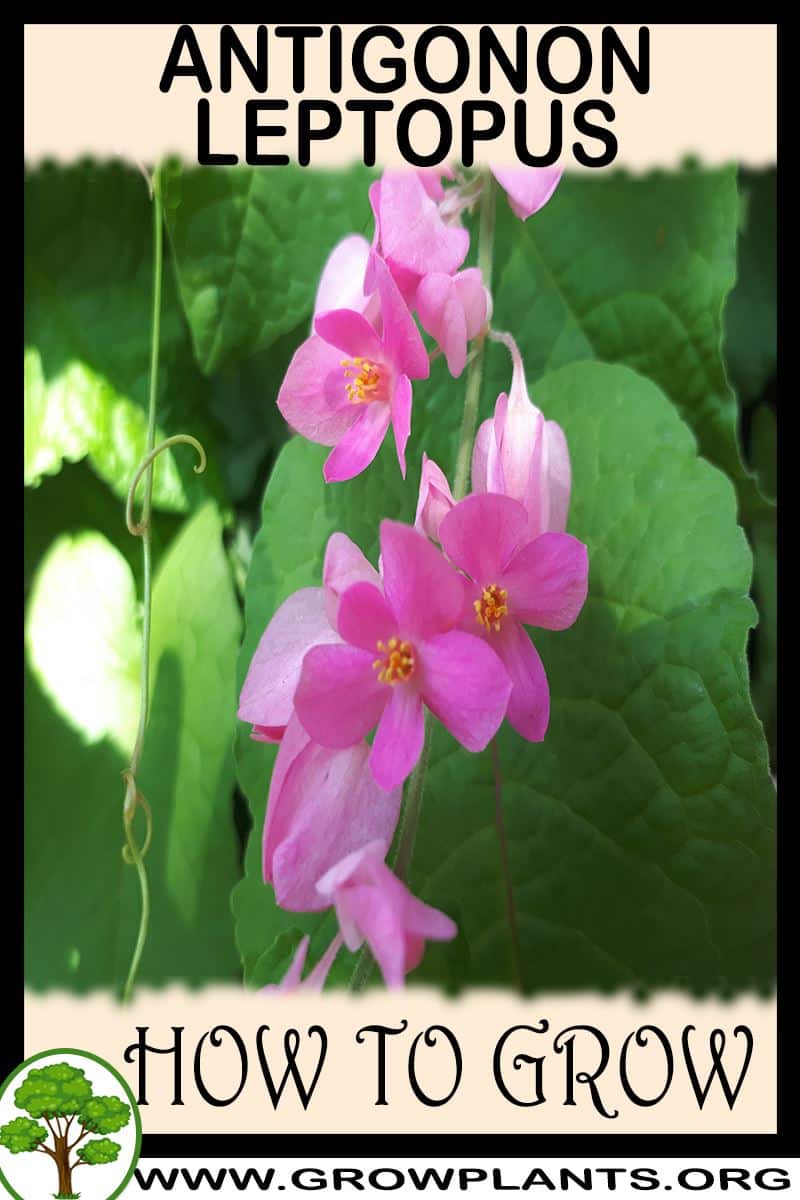
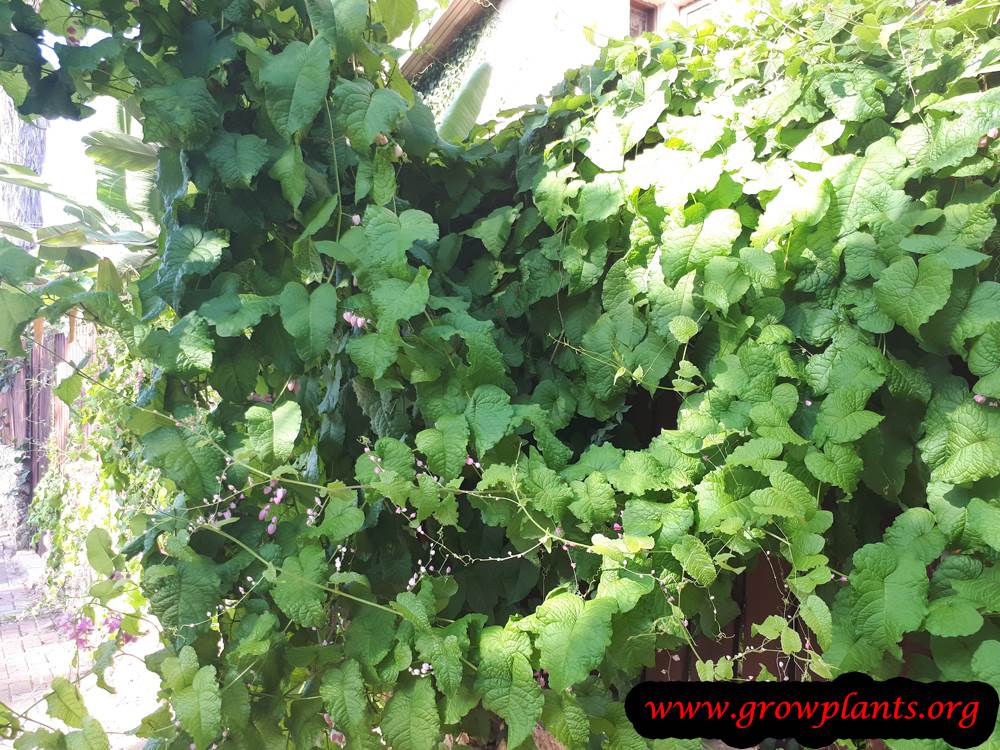
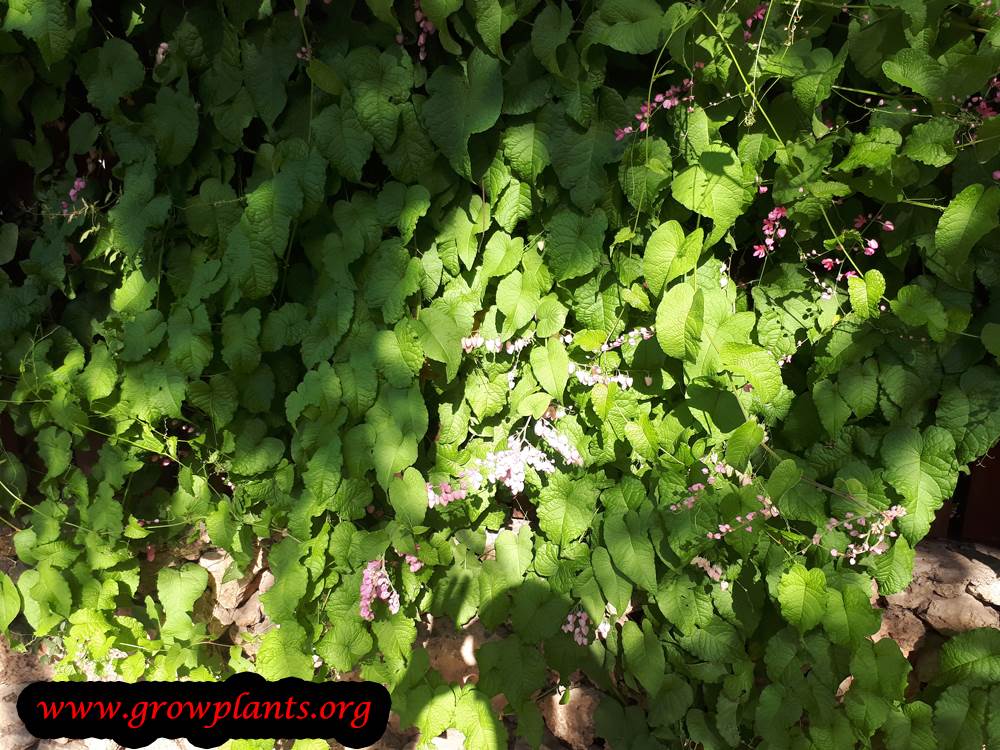
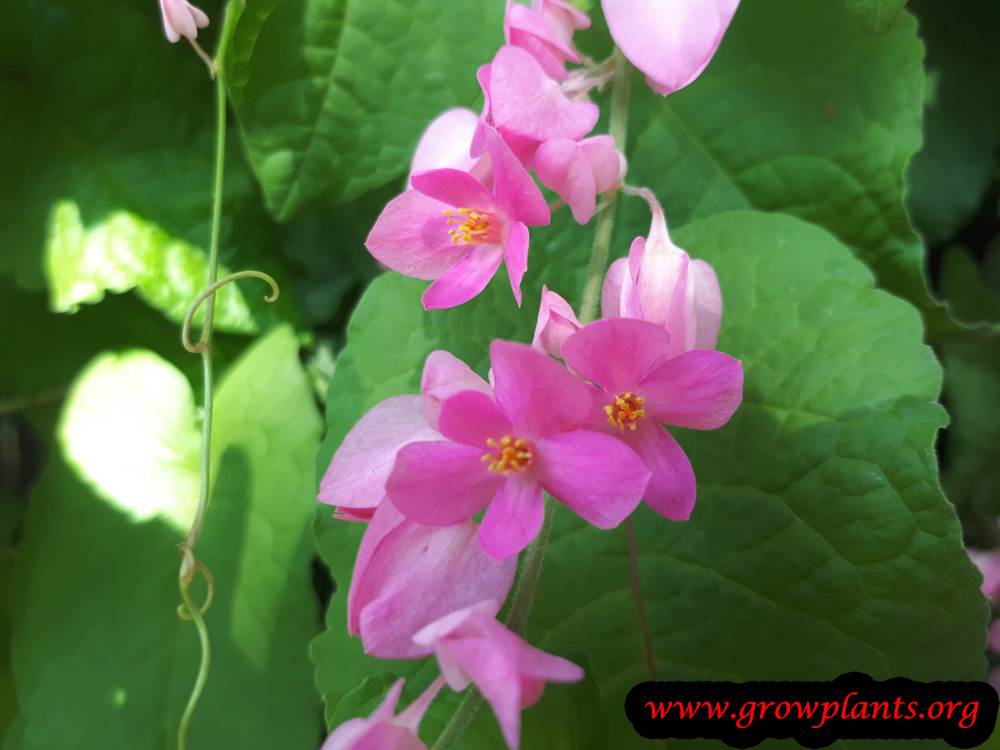
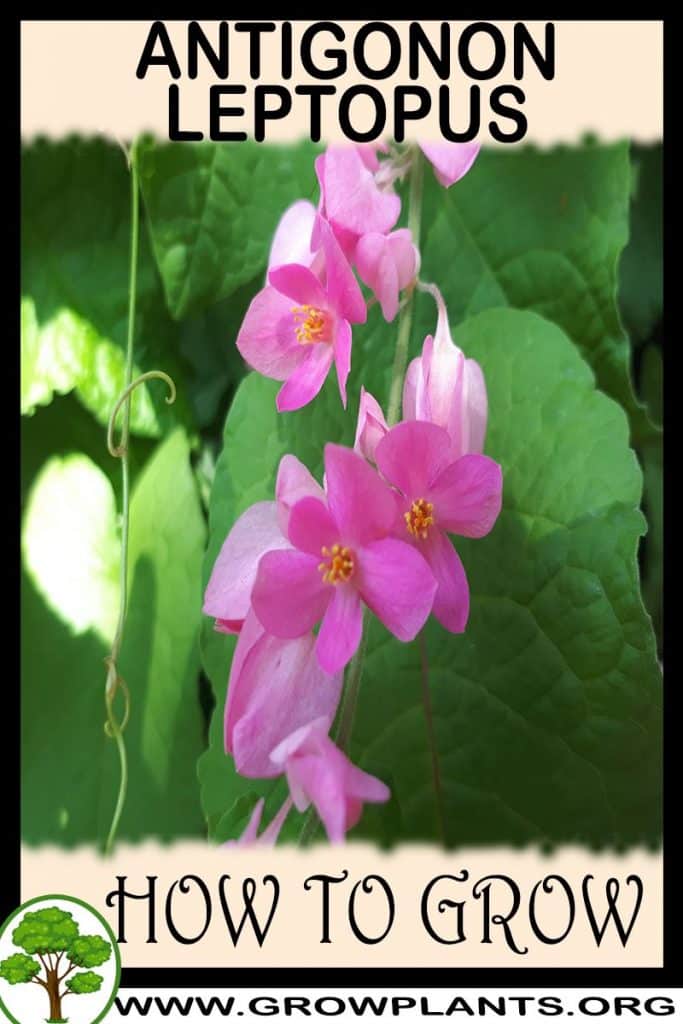
Overview: Antigonon leptopus (coral vine) is a fast-growing evergreen climbing vine reaching 3-8 m, with heart-shaped leaves and sprays of pink or white flowers. It is a drought-tolerant ornamental grown on fences and as a flowering screen.
Quick Specifications
| Specification | Attribute |
|---|---|
| Plant Type / Life Cycle | Perennial vine |
| Foliage Type | Evergreen |
| Mature Size | 3-8 m (15-25 ft) |
| Growth Rate | Fast to Moderate |
| Root System | Tuberous rootstock |
| Hardiness | USDA zone 8+ |
Growth Form & Structure
- Height & Spread: Climbs 3-8 m (15-25 ft); can be container-grown with support.
- Growth Habit & Form: Vigorous tendril-climbing vine that can become aggressive and invasive.
- Lifespan & Maturity: Long-lived perennial vine that regrows readily from its tubers.
Anatomy & Physical Features
- Leaves & Foliage: Green, heart-shaped leaves.
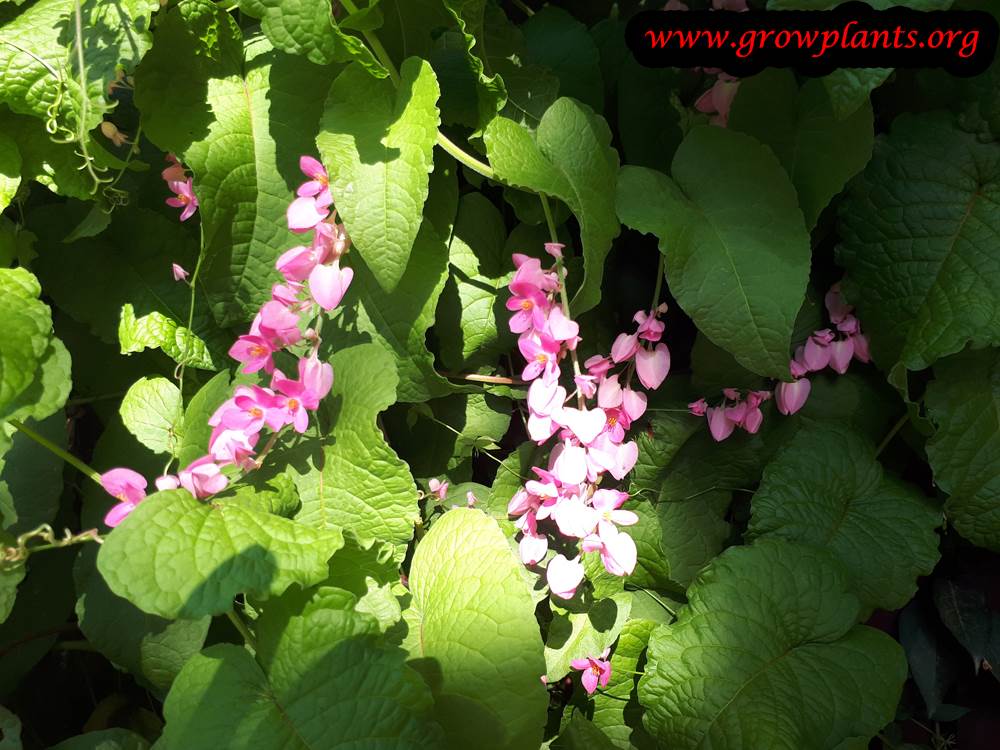
- Flower Characteristics: Sprays of small pink or white flowers that attract bees (see the Bloom accordion).
Primary Uses & Landscape Value
- Functional & Ornamental Roles: Drought-tolerant flowering vine for fences, arbours, hedges and screens.
Care Guide: Planting, Soil & Watering
Overview: Coral vine is a vigorous, sun-loving climber that grows in almost any well-draining soil. It is drought tolerant once established, needing only low to moderate water, and climbs best on a trellis.
Quick Care Requirements
| Requirement | Ideal Condition |
|---|---|
| Planting Season | Warm season – spring through autumn |
| Growth Rate | Moderate to Fast |
| Soil Type | Well-draining, adaptable |
| Water Need | Low to Moderate |
Planting & Establishment
- Best Planting Season: Plant during the warm season, from spring through autumn.
- How to Plant:
- Hole Preparation: Dig a hole slightly wider than the root ball beside a trellis or support.
- Soil Amendments: Work in a little compost; this adaptable vine is not fussy about soil.
- Planting Depth: Set the root collar at soil level and provide the climbing support at planting time.
- Growth Speed & Expectations: Fast and vigorous – it can become invasive, so site it where it can be contained and pruned.
Soil, Watering & Drainage Care
- Soil Mix & Drainage Needs: Well-drained soil of almost any type; good drainage keeps the roots healthy.
- Watering Schedule & Technique:
- Young / Newly Planted: Water regularly through the first season to establish it.
- Established: Low to moderate once established, as it is drought tolerant – let the soil dry between waterings.
- Seasonal Adjustments: Less water in cool or wet weather, a little more in extended summer heat.
Climate, Light & Hardiness
Antigonon leptopus (Coral vine) grows in mediterranean, desert, temperate, subtropical, or tropical climates and prefers full sun to half shade. The site rates it to approximately zone 8 and above.
Quick Climate Specifications
| Climate Zones | Mediterranean, desert, temperate, subtropical, and tropical climates |
|---|---|
| USDA Hardiness Zones | Approximately 8 and above |
| Frost Tolerance | Low |
| Light Conditions | Full Sun to Half Shade |
Sunlight & Light Exposure
Optimal Light Setup
Full sun to half shade both work; this is the extent of the light detail available for this plant on the site.
Temperature Extremes & Hardiness
USDA Hardiness & Regional Limits
Reliable outdoor culture is rated from approximately zone 8 upward; detailed cold-damage data is not available on this site, so this should be treated as an approximate guide.
Frost Sensitivity
Top growth is generally frost-tender on vigorous vines like this; where grown near the cooler edge of its range, expect some dieback in a hard freeze, with roots potentially resprouting the following season, though this specific behavior is not confirmed in the site's own data for this plant.
Wind, Humidity & Microclimate
Microclimate Recommendations
Given the limited climate detail available, a warm, sheltered site is a reasonable, cautious default at the cooler end of its rated range.
Growing in Pots, Balconies & Indoors
Coral vine is not a houseplant – the grower marks it unsuitable indoors – and as a vigorous flowering climber (3-8 m / 15-25 ft) it needs full sun and a sturdy support. It can be grown in a large container on a sunny balcony or patio, but it is an outdoor plant, not a windowsill one.
Quick Details
- Container Size: A large pot of about 30-50 L (8-13 gal) with a strong trellis
- Indoor Suitability: Not an indoor plant; grow it outdoors against a support
- Best Spot: Full sun to light shade for the best flowering
- Soil & Drainage: Free-draining, organic-rich mix
- Watering in Pots: Water moderately once established; it is fairly drought-tolerant
Indoors & On the Windowsill
- Not a houseplant: Far too vigorous and light-hungry for indoors – it wants to climb several metres in full sun.
- Windowsill: Not practical; without strong sun and room to climb it won’t flower.
- Overwintering: Frost-tender – in cold areas a potted plant can be cut back and moved under cover, re-sprouting from its tuberous root in spring.
On a Balcony or Patio
- Light & wind: Give it a hot, sunny wall or railing to scramble over; secure the support well, as it becomes heavy and catches the wind.
- Practicalities: A big, stable pot is essential once the vine fills out; pots on a sunny balcony dry fast, so check moisture in the heat.
Choosing the Pot, Soil & Long-Term Care
- Pot & drainage: A large 30-50 L pot with strong drainage holes; skip a standing-water saucer to avoid root rot. Terracotta breathes and dries faster; glazed or plastic holds moisture longer.
- Potting mix: A light, aerated, organic-rich mix – potting compost or peat/coir with added perlite or vermiculite for drainage.
- Feeding: Nutrients wash out of pots faster than open ground, so feed potted coral vine more often – a balanced liquid feed through the active growing season.
- Repotting: Refresh the top layer of mix each year and renew it or pot up every couple of years; lightly trim the roots and top growth when you do.
Fertilizing & Feeding
An established coral vine is a vigorous, largely self-sufficient climber; keep feeding light so it doesn’t outpace its trellis, with organic matter covering most of its ongoing needs.
Quick Fertilizing Specs
| Feeding Level | Light feeder |
|---|---|
| Main Nutrient Priority | Balanced feeding with adequate nitrogen while the vine is filling out its support |
| Best Feeding Period | Spring through the warm growing season |
| Organic Options | Compost or aged manure worked into the planting area |
| Reduce/Stop Feeding | Ease off feeding once the vine is established and covering its trellis or fence |
| Micronutrients | Rarely needed on coral vine; correct only a diagnosed deficiency |
| Soil pH | Adaptable to a wide range of soil pH |
Feeding by Growth Stage
Establishing after planting
Help new roots and stems establish quickly so the vine begins climbing its support.
| Nutrient direction | A balanced fertilizer with adequate nitrogen to build a strong root system and early stem growth. |
|---|---|
| Timing | The first growing season after planting. |
| Frequency | A light feeding as new growth begins, repeated as roots establish. |
| Fertilizer types | A balanced complete fertilizer, Compost worked into the planting hole or bed |
| Precautions | Avoid heavy feeding right after planting; overly rich soil can push soft top growth before roots are established. |
Vigorous climbing and summer bloom
Support fast climbing growth and the abundant pink or white summer flowering without fueling its already aggressive habit.
| Nutrient direction | Light, balanced feeding sustains healthy growth and flowering; this vine rarely needs more. |
|---|---|
| Timing | Spring and summer while the vine is actively climbing and blooming. |
| Frequency | An occasional light feeding is usually enough for an established planting. |
| Fertilizer types | A balanced complete fertilizer, A top-dressing of compost |
| Precautions | Because coral vine spreads aggressively and can become invasive, avoid overfeeding, which only accelerates its vigor. |
Cool-season rest or die-back
Let the vine pause without pushing new growth when temperatures drop or top growth is cut back by cold.
| Nutrient direction | None – withhold fertilizer while the vine is dormant or recovering from cold die-back. |
|---|---|
| Timing | During cool weather or winter die-back in marginal climates. |
| Frequency | No feeding at this stage; resume once vigorous new growth returns in spring. |
| Fertilizer types | No feeding at this stage; hold off fertilizing until active growth resumes. |
| Precautions | Do not fertilize dormant or frost-damaged growth; wait for new spring shoots before feeding again. |
Nutrient Deficiency Signs & Corrections
Older leaves turn pale green to yellow and new growth is thin and sparse.
| Possible causes | low available soil nitrogen, nitrogen leaching in sandy or heavily irrigated soil, root competition from surrounding turf or shrubs |
|---|---|
| Appears first on | older, lower leaves |
| What to check | recent feeding history, soil type and drainage, competing nearby plantings |
| Possible correction | Apply a balanced fertilizer with available nitrogen and work in compost to build soil fertility. |
New leaves are yellow with the veins staying distinctly green.
| Possible causes | high soil pH limiting iron availability, waterlogged or compacted soil restricting root uptake, cold soil temperatures slowing nutrient uptake |
|---|---|
| Appears first on | newest growth at the shoot tips |
| What to check | soil pH, drainage around the root zone, whether nearby plants show the same symptom |
| Possible correction | Correct soil pH toward the plant’s preference and apply a chelated iron product per its label if the pattern is confirmed. |
Leaf edges scorch or brown and flowering is noticeably reduced.
| Possible causes | low soil potassium, drought stress limiting nutrient uptake, heavy nitrogen feeding diluting potassium relative to growth |
|---|---|
| Appears first on | margins of older leaves |
| What to check | watering consistency, recent fertilizer balance, overall bloom performance versus prior seasons |
| Possible correction | Shift to a more balanced or potassium-inclusive fertilizer and maintain even watering. |
Pruning, Training & Seasonal Maintenance
Coral vine is an extremely vigorous, tendril-climbing vine with a tuberous rootstock, and the facts flag it as aggressive/invasive – so pruning here is mostly about containing size and spread rather than fine shaping. It tolerates hard cutting back and regrows readily from its base and roots. The safest time for the main cutback is autumn into winter, once the summer–autumn bloom flush has finished; because flowers form on new growth each season, this timing controls the vine’s size without costing next season’s bloom.
Quick Pruning & Maintenance Specs
| Pruning Tolerance | High |
| Primary Pruning Window | Autumn – winter (post-bloom / dormant-ish) |
| Secondary Maintenance Window | Light tip control and sucker removal through the growing season |
| Typical Frequency | One hard annual cutback plus frequent checks for spreading growth |
| Main Objective | Contain size and spread, keep growth on its support |
| Young Plant Priority | Establish onto a sturdy trellis early, before growth accelerates |
| Mature Plant Priority | Renewal cutback of tangled growth; remove root suckers |
| Best Tool Type | Bypass secateurs / loppers for thicker base growth |
| Avoid Heavy Pruning During | Peak summer growth when flower buds are actively forming |
Pruning by Plant Age & Size
Newly Established
Remove only damaged growth; focus effort on tying young shoots to a permanent, sturdy support rather than cutting, since the vine’s rapid growth needs somewhere to go from the start.
Young / Formative
Train onto a trellis, arbor or fence – this is a twining/tendril climber with no self-clinging structures, so it needs tying-in until it takes hold. No formal framework (leader/vase) applies; the goal is simply full coverage of the support.
Mature / Established
Give an annual hard cutback to remove the season’s tangled top growth and keep the vine within its allotted space, then watch through the growing season for root suckers or rooted stem sections extending beyond the intended area.
Seasonal Pruning Schedule
Autumn / Winter
- Objective: reset size after the bloom flush and remove any frost-damaged growth in cooler parts of its range.
- Remove: the bulk of the season’s top growth, cutting back hard to a framework of main stems.
- Do not remove: the tuberous root crown – this is what resprouts vigorously each spring.
- Expected response: rapid, dense regrowth in spring.
- Flowering impact: none – blooms form on the new growth produced after this cutback.
Ongoing Sanitary / Containment
- Objective: stop the vine escaping its intended footprint.
- Remove: root suckers and any stems that have rooted where they touch soil.
- Do not remove: vigorous growth still confined to the support – it is not a problem there.
Flowering Wood
Coral vine flowers on the current season’s new growth, produced in long pendant racemes through spring, summer and autumn. Because bloom wood is renewed each year, dormant-season cutback does not sacrifice flowering; only pruning right as buds are forming mid-season will delay that particular flush.
Structural Pruning & Training
The main structural task is renewal – periodically cutting the oldest, most tangled growth back to a framework of main stems so the vine does not build up into an impenetrable, self-smothering mat on its support.
Special Growth to Remove
- Root suckers / tuber-sprouted shoots: remove promptly – this is the main driver of the plant’s documented invasive spread.
- Self-rooted stem sections: cut and lift wherever a trailing stem has rooted into the soil away from the main plant.
- Frost-killed top growth: cut back to live wood in early spring where winters cause die-back.
Container & Small-Space Pruning
Container growth is possible but works against this vine’s rampant nature; expect to prune far more often and harder than an in-ground plant, and provide a very sturdy support from the start, since even a restricted root zone will not meaningfully slow its top growth.
Tools
Bypass secateurs for routine tip and stem work; loppers for the thicker base stems that develop on an established vine.
Tool Hygiene & Disease Risk
Routine care only – keep tools clean and sharp; no significant transmissible disease risk is documented for this species beyond general good hygiene.
Cut Placement & Technique
Use thinning cuts to remove whole stems back to a main framework rather than shearing the surface, which encourages even more tangled regrowth; cut suckers flush at their point of origin.
Heavy Pruning & Rejuvenation
Well tolerated: the tuberous root system supports hard, even near-ground-level cutback, with vigorous regrowth the following season – this is the standard way to reset an overgrown plant.
Post-Pruning Care
Water normally after a hard cutback; avoid extra feeding, since this species already grows fast and over-feeding will only add to the maintenance burden. Watch the base of the plant over the following season for new suckers.
Common Pruning Mistakes
- Leaving the vine unpruned until it forms a dense, self-smothering, weedy tangle over neighbouring plants or structures.
- Installing too light a support, which collapses under the vine’s rapid growth.
- Ignoring root suckers, allowing the plant to spread well beyond its intended footprint.
When Not to Prune
Avoid major cutback in the middle of the summer bloom flush if uninterrupted flowering is the goal – save the hard reset for autumn/winter.
Pruning Troubleshooting
| Problem | Possible Cause | What to Check | Corrective Action |
| Reduced flowering after pruning | Cut made mid-season while buds were forming | Timing of the last cutback relative to bloom flush | Shift hard pruning to the autumn/winter post-bloom window |
| Vine spreading beyond its bed or support | Unremoved root suckers or self-rooted stems | Soil around the base and along trailing stems | Cut and remove suckers/rooted sections as soon as seen |
Recommended Tools (by task)
- bypass_secateurs – routine tip work, sucker removal, tying-in.
- loppers – the annual hard cutback of thicker base stems on an established vine.
- soft_ties_stakes – securing new growth to its trellis or support while it establishes.
Propagation Guide
Coral vine spreads and propagates easily by seed, which it sheds abundantly, and it also regrows readily from its large fleshy tuberous roots and from stem cuttings; this ease of increase is part of why the site notes the plant as aggressive and invasive. Overall propagation is easy.
Quick Propagation Specs
| Best Propagation Method | Seed (self-sows readily) or division of the tuberous rootstock |
| Alternative Methods | Semi-hardwood stem cuttings |
| Propagation Difficulty | Easy |
| Seed True-to-Type | Yes (species) |
| Vegetative True-to-Type | Yes |
| Best Propagation Season | Spring to summer |
| Seed Germination Time | Generally within a couple of weeks under warmth |
| Cutting Rooting Time | A few weeks |
| Germination Temperature | Warm, roughly 21–27°C (70–80°F) |
| Seed Sowing Depth | Shallow, lightly covered |
Growing from Seed
Seed Handling & Viability
No recalcitrant or short-lived behavior is documented; normal handling is fine.
Dormancy & Pre-Sowing Treatment
Fresh seed usually needs no pretreatment, though a brief soak can help speed and even germination.
Sowing Season
Spring or summer once conditions are consistently warm.
Sowing Depth & Orientation
Sow shallow, a centimetre or less deep.
Germination Conditions
Warm and consistently moist.
Germination Time
Often within a couple of weeks, though timing can vary.
Seedling Care
Grow seedlings on until well rooted before planting out; volunteer seedlings frequently appear near established plants since this vine self-sows freely.
Stem Cuttings
Cutting Type
Semi-hardwood stem sections with a few nodes.
Best Timing
Warm growing season.
Cutting Preparation
Remove the lower leaves before inserting the cutting.
Rooting Setup
Well-drained mix kept warm and humid.
Rooting Hormone
Optional, may improve consistency.
Rooting Time
A few weeks.
Rhizomes, Tubers, Bulbs & Corms
Tuber Division: Mature plants develop large fleshy tuberous roots. Sections of this tuberous rootstock can be divided, each with at least one growth point, and replanted promptly. Note that fragments of tuber left behind in the soil readily resprout – part of why this vine is difficult to fully remove once established, matching the site’s own “aggressive, invasive” note.
Bloom & Flower Guide
Quick Details
- Bloom Season: Spring through autumn, and nearly year-round in frost-free climates
- Flower Appearance: Small pea-shaped flowers in pink or white, carried in trailing sprays
- Edibility: Ornamental and non-toxic; grown for its long display and as a rich nectar plant for bees (hence the name bee bush)
Detailed Blooming Overview
Coral vine is one of the most generous bloomers among ornamental climbers, throwing out cascades of small pink or white flowers from spring well into autumn, and longer still where frost never reaches. The airy sprays are a magnet for bees and butterflies.
Flower Characteristics
- Pea-shaped flowers in pink or white, borne in loose trailing racemes above heart-shaped foliage.
Bloom Care & Thinning
- Encouraging bloom: Full sun and a warm position bring the heaviest flowering; a light feed as growth resumes supports the long season.
- Managing the display: It flowers on new growth, so a hard cut back in the cool season keeps it tidy and renews the flowering wood.
- Pollinators: The nectar-rich flowers are readily worked by bees.
Bloom Health & Protection
- Aphids on buds: Aphids can gather on soft flower buds and new shoots; a jet of water or insecticidal soap keeps them in check.
Fruit & Uses
Coral vine is grown almost entirely as an ornamental flowering hedge/vine, but it produces a fleshy, starchy tuberous root that is reportedly eaten, roasted or boiled, in parts of Mexico and Central America. This is a minor, regional folk food use rather than a common crop, so it should be treated as a curiosity rather than a reliable food source.
Quick Edible Specs
| Edible Parts | Tuberous roots (occasional regional use only) |
|---|---|
| Main Use(s) | Folk/regional food, cooked |
| Eaten Raw or Cooked | Cooked (roasted or boiled) |
| Preparation Required | Cook before eating; peel as needed |
| Harvest Season | Not established/documented for this use |
| Time to First Harvest | Not documented; tubers would need to develop for at least a full growing season before being sizeable |
| Storage | Not documented |
| Safety/Toxicity Caveat | Only the cooked tuberous root has any documented food use; this is a lightly-sourced, regional practice rather than a verified mainstream food, so treat any use with caution and do not rely on it as a food source. |
Roots & Tubers
Coral vine develops a fleshy, water-storing tuberous rootstock below ground, which is what supports the plant’s fast regrowth and invasiveness. In parts of its native range this tuber is reportedly roasted or boiled and eaten, with a starchy texture likened to jicama or water chestnut, but this is not a widely commercialized or well-verified food use, and the site itself does not describe the plant as edible.
Preparation, Uses & Safety
Where this tuber is used as food, it is cooked (roasted or boiled) rather than eaten raw. Because documentation of this use is thin and regional, it should not be treated as an established, reliable edible crop – this plant is grown almost exclusively for ornamental hedging and flowering, and any tuber harvest for food is a minor, optional curiosity rather than a recommended practice.
Pests, Diseases & Troubleshooting
Overview: Coral vine (Antigonon leptopus) is a vigorous, tough, drought-tolerant climber that is essentially pest- and disease-free; occasional leaf-chewing caterpillars, beetles and grasshoppers, and light aphid or scale, are the extent of its insect troubles and are easily outgrown. It gets few significant diseases beyond minor leaf spot or powdery mildew in poor airflow. Honestly, its biggest ‘problem’ is its own invasive vigour, so management is mostly about containment rather than pest control.
Quick Troubleshooting Overview
| Issue / Pest | Main Symptom | Primary Solution |
|---|---|---|
| Caterpillars / beetles | Chewed, holed leaves | Hand-pick, Bt only if heavy |
| Aphids | Sticky new shoots, sooty mould | Water jet, beneficials |
| Scale / mealybugs | Bumps or cottony masses, honeydew | Prune, ant control, oil if needed |
| Overgrowth | Vine smothering supports/neighbours | Hard regular pruning, strong support |
| Frost dieback | Top growth killed by frost | Mulch crown; resprouts from tubers |
Common Pests & Management
- Caterpillars & leaf-chewing insects (Lepidoptera larvae / Coleoptera):
- Symptoms: Irregular holes and ragged margins chewed in the heart-shaped leaves, and occasionally skeletonised foliage; the vigorous vine easily outgrows light feeding.
- Prevention & Control: Hand-pick caterpillars and beetles, encourage birds and predatory insects, and only for heavy attacks use Bacillus thuringiensis (Bt) against caterpillars. This robust grower rarely needs intervention.
- Aphids (Aphidoidea):
- Symptoms: Clusters of soft insects on soft new shoots and flower sprays, with honeydew and sooty mould, mainly on stressed or young plants.
- Prevention & Control: Rinse off with water, encourage ladybirds and lacewings, and use insecticidal soap only if colonies persist.
- Scale & mealybugs (Coccidae / Pseudococcidae):
- Symptoms: Brown bumps or white cottony masses on stems and leaf undersides with honeydew and sooty mould, occasional on older or sheltered growth.
- Prevention & Control: Prune out infested stems, control ants, encourage natural enemies, and apply horticultural oil if needed.
- Grasshoppers & chrysomelid beetles (Orthoptera / Chrysomelidae):
- Symptoms: Chewed, notched leaves and defoliated shoot tips, most noticeable on young plants; usually cosmetic on an established vine.
- Prevention & Control: Hand-pick, encourage birds, and keep surrounding weeds down; treatment is rarely justified on this fast-recovering plant.
Diseases & Fungal Issues
- Fungal leaf spot ((various fungi)):
- Symptoms: Minor brown spots on leaves in warm, humid, crowded conditions; seldom serious on this open, airy climber.
- Treatment & Management: Improve airflow by thinning tangled growth, remove affected leaves, and avoid overhead watering; treatment is rarely necessary.
- Root rot (Phytophthora / Pythium spp.):
- Symptoms: Wilting and yellowing with browned roots in waterlogged soil; uncommon except in heavy, wet ground.
- Treatment & Management: Grow in free-draining soil and avoid overwatering this drought-tolerant vine; improve drainage where needed.
- Powdery mildew (Erysiphe spp.):
- Symptoms: White powdery film on leaves in shaded, crowded, poorly ventilated positions; usually minor.
- Treatment & Management: Site in full sun with airflow and thin dense growth; remove affected leaves if it appears.
Growing Difficulties & Abiotic Problems
- Invasive vigour / overgrowth:
- Cause & Symptoms: This extremely fast, tuber-forming vine can smother supports and neighbouring plants and self-seed freely, becoming weedy in warm climates.
- Correction Strategy: Provide a strong support, prune hard and regularly to contain it, remove spent seed heads to limit self-sowing, and site it where its vigour is welcome.
- Frost dieback:
- Cause & Symptoms: Frost kills the top growth, though established tubers usually resprout in spring in mild climates.
- Correction Strategy: In cold areas mulch the crown heavily or grow in containers; expect and simply cut back frost-killed top growth.
- Poor bloom in shade / over-rich soil:
- Cause & Symptoms: Too little sun, or over-feeding, produces lush foliage but sparse flowering.
- Correction Strategy: Grow in full sun on lean-to-moderate soil and avoid heavy nitrogen to encourage the abundant pink flower sprays.
What Helps — Products & Tools
Little is needed beyond secateurs to contain the vine and a strong support. Where pests appear, appropriate types are insecticidal soap or horticultural oil for aphids and scale, and Bacillus thuringiensis (Bt) for heavy caterpillar attacks; full sun and airflow prevent most leaf disease. Restraint — both in feeding and spraying — suits this exuberant plant.