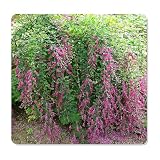

Plant Profile & Key Characteristics
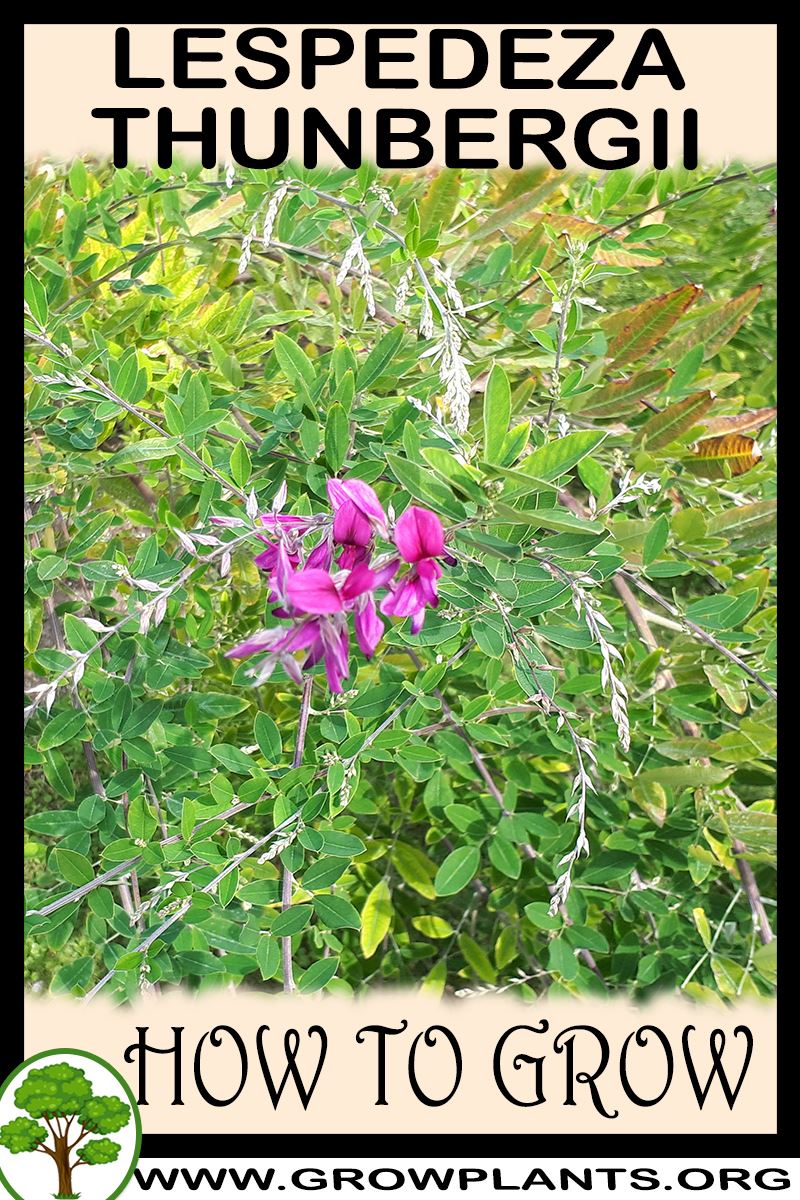
Overview: Lespedeza thunbergii (Thunberg’s bushclover) is a deciduous shrub of about 1-2 m, grown as an ornamental and nitrogen-fixing hedge for its arching, pea-flowered stems. It is a moderate-growing perennial hardy across USDA zones 4-10.
Quick Specifications
| Specification | Attribute |
|---|---|
| Plant Type / Life Cycle | Perennial (deciduous shrub) |
| Foliage Type | Deciduous |
| Mature Size | 1-2 m tall (3-6.5 ft) |
| Growth Rate | Moderate |
| Root System | Nitrogen-fixing root nodules (legume) |
| Toxicity | Non-toxic (forage legume) |
| Hardiness | USDA zones 4-10 |
Growth Form & Structure
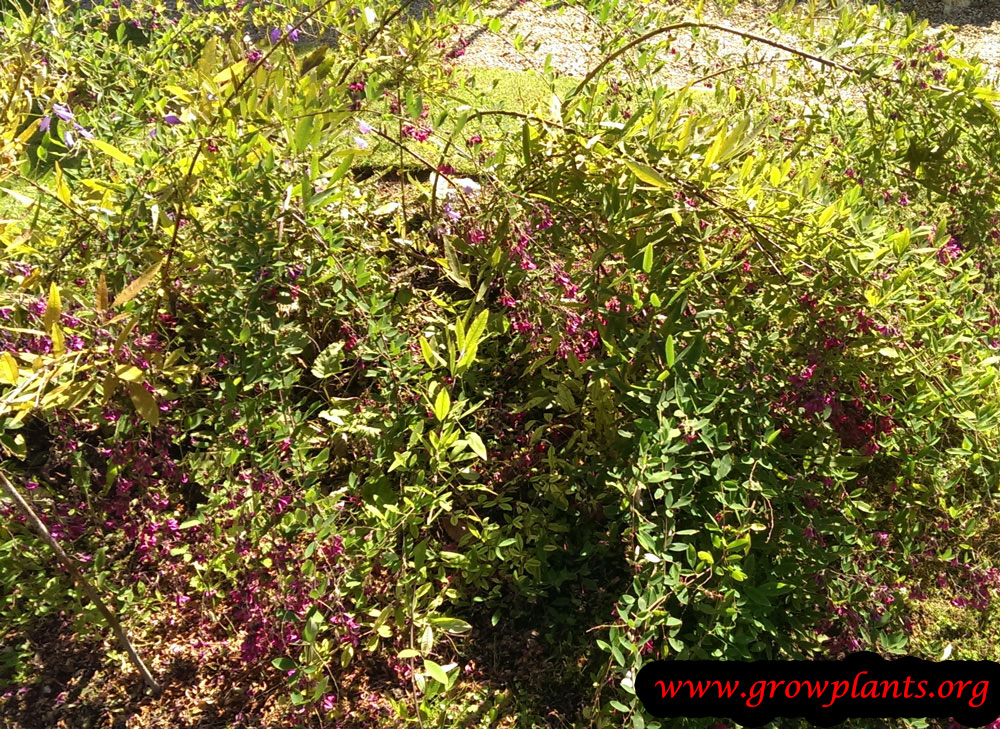
- Height & Spread: Reaches about 1-2 m (3-6.5 ft) tall and wide; can be grown in large containers.
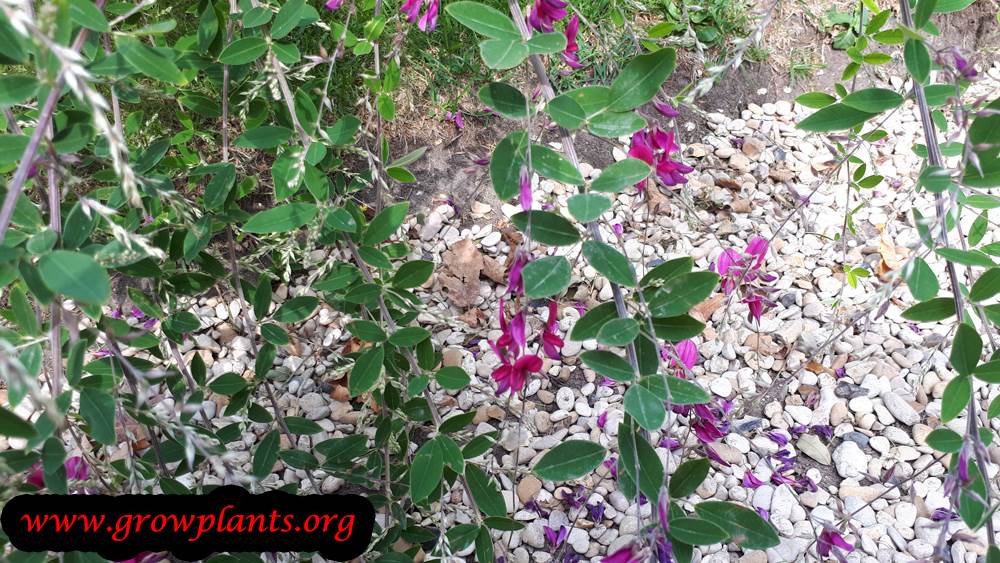
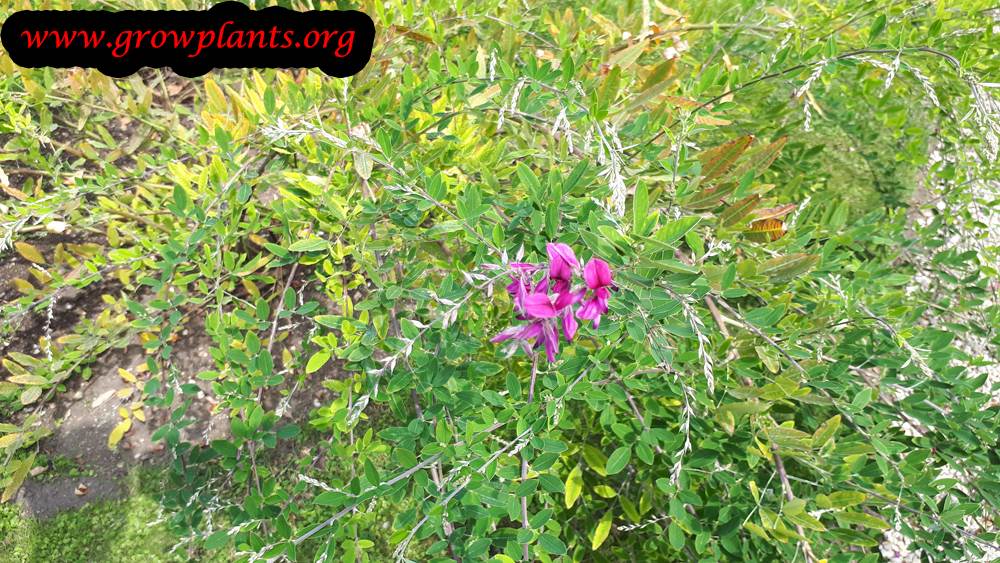
- Growth Habit & Form: Arching, fountain-like deciduous shrub that often dies back near the ground and regrows each year.
- Lifespan & Maturity: Moderate; established plants are cut back hard in autumn or winter and flush again in spring.
Anatomy & Physical Features
- Leaves & Foliage: Green, elliptic (trifoliate) leaves along slender arching stems.
- Flower Characteristics: Pea-shaped flowers in purple, pink or white, sometimes multi-coloured.
Primary Uses & Landscape Value
- Functional & Ornamental Roles: Ornamental flowering and nitrogen-fixing shrub, useful as an informal hedge; can spread and be invasive.
Care Guide: Planting, Soil & Watering
Overview: Thunberg’s bushclover is a deciduous shrub that grows in full sun to part shade in temperate, Mediterranean, or subtropical climates (hardiness zone 4-10) and fixes its own nitrogen. It likes a well-drained yet moisture-retentive soil and moderate to high water.
Quick Care Requirements
| Requirement | Ideal Condition |
|---|---|
| Planting Season | Spring and summer (autumn to winter in mild zones) |
| Growth Rate | Moderate |
| Soil Type | Well-draining yet moisture-retentive; adaptable as it fixes its own nitrogen |
| Water Need | Moderate to high; keep moist but not soggy |
Planting & Establishment
- Best Planting Season: Plant in spring or summer (autumn to winter in mild-winter areas).
- How to Plant:
- Hole Preparation: Dig a hole about the width of the root ball.
- Soil Amendments: Work in compost; it needs little feeding since it fixes its own nitrogen.
- Planting Depth: Set the root collar level with the soil.
- Growth Speed & Expectations: A moderate grower reaching about 1-2 m (3-6 ft); it can spread and become invasive.
Soil, Watering & Drainage Care
- Soil Mix & Drainage Needs: Use a well-drained but moisture-retentive soil.
- Watering Schedule & Technique:
- Young / Newly Planted: Water regularly to help it establish.
- Established: Keep the soil moist with moderate to high watering, not soggy.
- Seasonal Adjustments: It dies back and needs far less water in winter.
Climate, Light & Hardiness
Thunberg’s bushclover is a hardy deciduous shrub for temperate, Mediterranean and subtropical climates, growing in full sun to half shade. The dataset gives roughly zones 4–10; it dies back over winter and regrows from the base each spring, which underlies its good cold hardiness.
Quick Climate Specifications
| Climate Zones | Temperate, Mediterranean, subtropical |
|---|---|
| USDA Hardiness Zones | Approximately 4–10 (per dataset) |
| Optimal Temp Range | Approximately 18–28 °C / 64–82 °F in the growing season |
| Cold Damage Begins | Top growth killed by autumn frost; this is its natural dieback |
| Approx. Survival Minimum | Roots and crown withstand hard winter cold within the zone range (roughly to −30 °C / −22 °F) |
| Frost Tolerance | Crown High; top growth Low |
| Light Conditions | Full sun to half shade |
| Wind Tolerance | Moderate |
Sunlight & Light Exposure
Optimal Light Setup
Full sun gives the fullest arching habit and heaviest late-season bloom; it tolerates half shade with a somewhat looser form.
Temperature Extremes & Hardiness
USDA Hardiness & Regional Limits
It is genuinely cold-hardy through its cited zone 4–10 range because it overwinters as a dormant crown, sending up fresh flowering stems each year even after the top is frozen off.
Cold Damage & Winter Protection
Autumn frost naturally cuts back the stems, which are pruned to the ground; the hardy base needs little protection within its range.
Extreme Heat Tolerance
It handles warm summers well and flowers into the hot part of the season.
Wind, Humidity & Microclimate
Wind Tolerance
The long, arching stems can flop in strong wind; a little shelter keeps the habit tidy.
Microclimate Recommendations
A sunny, well-drained but not bone-dry position suits it; its dieback habit makes it forgiving of hard winters.
Growing in Pots, Balconies & Indoors
Lespedeza thunbergii is an arching, shrubby perennial that spills gracefully over the edge of a large pot – lovely on a sunny patio or balcony. It is not a houseplant.
Quick Details
- Container Size: About 25-45 L (7-12 gal) for its arching, shrubby growth
- Indoor Suitability: Not a houseplant; a hardy patio or balcony shrub that dies back and reshoots each year
- Best Spot: Full sun to light shade
- Soil & Drainage: Aerated, organic-rich mix – peat or coir with perlite or vermiculite; must drain freely
- Watering in Pots: Keep the mix evenly moist in the growing season; it likes steady moisture but not waterlogging
Indoors & On the Windowsill
- Houseplant limits: Not a houseplant – it wants full sun and open air, and it dies back over winter.
- Outdoor pot plant: Grow it as a patio or balcony shrub; the arching stems look best cascading from a raised container.
On a Balcony or Patio
- Light, heat & wind: Give it the sunniest spot you can. Walls, railings and paving reflect heat, so pots dry quickly – check moisture daily in warm weather, and shelter tall growth from wind. A drip irrigation kit with a timer can take over that watering check automatically.
- Room to arch: Give the cascading stems space at the pot edge and shelter them from strong wind.
Choosing the Pot, Soil & Long-Term Care
- Pot & drainage: A 25-45 L pot with strong drainage holes; skip a standing water saucer to avoid root rot. Terracotta breathes and dries fast; glazed or plastic holds moisture longer.
- Potting mix: Use a well-aerated, organic-rich mix – peat or coir blended with perlite or vermiculite for free drainage.
- Feeding: Potted plants lose nutrients as watering leaches them from the mix, so feed more often than in open ground – a balanced liquid feed through the growing season.
- Repotting: Refresh the mix or pot up about every two years; cut the old stems back hard once dormant to make way for new growth.
Fertilizing & Feeding
A light feeder – an ornamental legume that fixes much of its own nitrogen; a light balanced feed supports growth and bloom, and high-phosphorus bloom boosters are unnecessary.
Quick Fertilizing Specs
| Feeding Level | Light – an ornamental legume that fixes much of its own nitrogen. |
|---|---|
| young_feeding | A modest balanced feed as new plants establish. |
| mature_feeding | Light, occasional balanced feeding through bloom. |
| Main Nutrient Priority | Balanced nutrition with restrained nitrogen. |
| Best Feeding Period | Through spring growth and the blooming period. |
| Organic Options | Compost or well-rotted organic matter. |
| Soil pH | Tolerates a range; near neutral is fine. |
| Reduce/Stop Feeding | Stop feeding as the plant enters dormancy. |
| Micronutrients | Rarely needed; correct only if a deficiency shows. |
Feeding by Growth Stage
Spring flush of growth
Fuel healthy new shoots and leaves as growth resumes.
| Nutrient direction | A balanced complete fertilizer; keep nitrogen restrained since this legume fixes much of its own. |
|---|---|
| Timing | As new growth begins in spring. |
| Frequency | A light feeding as the plant breaks into active growth. |
| Fertilizer types | Balanced complete fertilizer, Compost or well-rotted organic matter |
| Precautions | Avoid heavy nitrogen, which pushes leaves at the expense of flowers. |
Flowering
Sustain steady flowering without forcing soft growth.
| Nutrient direction | Stay with a balanced feed and adequate nitrogen; a high-phosphorus bloom booster does not force more flowers. |
|---|---|
| Timing | Through the blooming period. |
| Frequency | Light, occasional feeding while in bloom. |
| Fertilizer types | Balanced complete fertilizer |
| Precautions | Do not reach for high-phosphorus formulas to push bloom; balanced nutrition and light drive flowering. |
Dormancy / rest period
Let the plant rest with little to no nutrient demand.
| Nutrient direction | None – withhold fertilizer while the plant is dormant. |
|---|---|
| Timing | Through winter dormancy or the seasonal rest period. |
| Frequency | No feeding at this stage. |
| Fertilizer types | No feeding at this stage – withhold fertilizer until active growth resumes. |
| Precautions | Do not fertilize until active growth resumes; excess salts on a resting plant only risk root injury. |
Nutrient Deficiency Signs & Corrections
Overall pale, yellow-green foliage and weak growth even on reasonable soil.
| Possible causes | Poor rhizobial nodulation, so little nitrogen is being fixed, Cold or waterlogged soil suppressing root and nodule activity, Genuinely low soil nitrogen on very poor ground |
|---|---|
| Appears first on | Older, lower leaves first. |
| What to check | Dig a root and look for pink, active nodules, Soil drainage and temperature, Whether the seed or bed carried the right legume inoculant |
| Possible correction | Ensure the right rhizobia are present, improve drainage and warmth, and give only a modest balanced feed if the ground is truly poor. |
Yellowing between the veins of the youngest leaves while the veins stay green.
| Possible causes | High or alkaline soil pH locking up iron and manganese, Waterlogged or cold roots reducing micronutrient uptake, Occasionally low available iron or manganese in the soil |
|---|---|
| Appears first on | New growth at the shoot tips. |
| What to check | Soil pH, Drainage and watering habits, Whether symptoms follow cool, wet spells |
| Possible correction | Correct soil pH toward the plant’s preferred range, improve drainage, and if it persists apply a chelated iron or manganese product per its label. |
Vigorous leafy growth but sparse flowering.
| Possible causes | Excess nitrogen driving foliage at the expense of flowers, Too little light for good bud set, Overly rich or frequent feeding |
|---|---|
| Appears first on | The whole plant, especially the most vigorous shoots. |
| What to check | Recent nitrogen inputs, Light exposure, Overall vigor versus bloom |
| Possible correction | Reduce nitrogen, rely on a balanced feed, and give more light rather than reaching for a high-phosphorus bloom booster, which does not force flowers. |
Scorched leaf edges, wilting, or white crusting on the soil despite adequate water.
| Possible causes | Over-application of fertilizer, Poor leaching in containers or heavy soil, Letting the root zone dry out between heavy feeds |
|---|---|
| Appears first on | Leaf margins and tips; container plants first. |
| What to check | Recent fertilizer amounts, Drainage, Soil crusting or white surface residue |
| Possible correction | Ease off feeding, water thoroughly to flush excess salts from the root zone, then feed only lightly. |
Pruning, Training & Seasonal Maintenance
Lespedeza thunbergii is a deciduous, arching subshrub (1–2 m) that flowers in late summer and autumn on the current season’s growth, and this single fact drives its pruning: because bloom is carried on new wood, it is cut back hard — almost to the ground — in late winter or early spring, and then throws up long, fresh, flower-laden canes the same year. Old stems die back and look untidy over winter, so this coppice-style renewal both tidies the plant and maximises the arching floral display. It tolerates and needs this hard annual cut; light trimming alone leaves it congested and sparse.
Quick Pruning & Maintenance Specs
| Pruning Tolerance | High — regrows strongly from the base each spring |
| Primary Pruning Window | Late winter to early spring, before new growth |
| Secondary Maintenance Window | Autumn tidy of collapsed old canes |
| Typical Frequency | Once a year, hard |
| Main Objective | Renew flowering canes; maximise the late-season arching display |
| Young Plant Priority | Let the crown build; cut back to establish the coppice habit |
| Mature Plant Priority | Cut all stems back near ground level each spring |
| Best Tool Type | Bypass secateurs and loppers |
| Avoid Heavy Pruning During | Autumn just before hard frost in colder zones |
Pruning by Plant Age & Size
Newly Established
Let the young plant build a crown in its first season. An initial hard cut in the first or second late winter establishes the multi-stem, cut-back-annually habit.
Young / Formative
No permanent woody framework is kept — the training is simply to grow a strong low crown from which fresh canes rise each year. There is no leader or vase to build.
Mature / Established
Each late winter or early spring, cut all the previous year’s stems back to a low framework 10–15 cm above the ground (or to strong basal buds). The plant responds with vigorous new canes that arch and flower in late summer.
Seasonal Pruning Schedule
Pre-Growth / Early-Spring
Objective: renew the flowering canes. Remove: all of last year’s stems, cut down near the base. Do NOT remove: the live basal crown and emerging buds. Expected response: strong, long new canes. Flowering impact: strongly positive — the new wood carries the late-summer/autumn bloom.
Dormant / Winter (tidy)
Objective: neaten collapsed top growth. Remove: broken or flopping old canes if they are a nuisance over winter. Do NOT remove: the whole plant hard in a cold zone before the worst frost — leaving top growth over winter can protect the crown; make the main hard cut at winter’s end.
Flowering & Fruiting Wood
Lespedeza flowers on the current season’s growth, producing its pea-flowers along new canes in late summer and autumn. Because none of the flowering wood is older than the current year, hard late-winter pruning does not sacrifice bloom — it guarantees it, by forcing the vigorous new canes on which the flowers form. Pruning at the wrong time (in summer, into developing canes) is what would cost flowers.
Structural Pruning & Training
The “structure” is a low crown, renewed annually; there is no lasting branch framework to thin. If a clump becomes crowded at the base over the years, thin out the weakest basal shoots at the spring cut so the strongest canes have room to arch.
Special Growth to Remove
Remove all the spent, dead stems at the spring coppice — they will not reflower. If the plant spreads at the root and becomes invasive in your setting, remove outer basal shoots to contain the clump.
Container & Small-Space Pruning
Grows well in a large container and is cut back hard each spring just as in the ground; the annual renewal keeps a potentially large, floppy subshrub to a manageable fresh mound. Thin basal canes to prevent overcrowding in the confined root space.
Tools
Bypass secateurs for most canes and loppers for the thicker basal stems at the spring cut. No saw is normally needed on stems renewed yearly, and hedge shears are wrong — the plant is cut low at the base, not sheared over.
Tool Hygiene & Disease Risk
Routine: clean, sharp tools are enough. No significant tool-borne pathogen; wipe blades if cutting aphid- or mite-infested growth to avoid moving pests around.
Cut Placement & Technique
Make the annual cut low, just above strong basal buds or the woody crown, using clean cuts rather than ragged tears on the semi-woody canes. When thinning, remove whole weak canes at the base rather than shortening many stems partway.
Heavy Pruning & Rejuvenation
Not only tolerated but expected: the hard annual cut-back near ground level is itself the rejuvenation, and the plant relies on it to stay vigorous and floriferous. Skipping it leaves an old, congested, sparse-flowering shrub; there is no gentler routine that serves as well.
Post-Pruning Care
Water the crown as new canes emerge; the plant likes moist but well-drained soil and grows fast once cut. No feeding is required to force the flush — the hard cut alone drives it. Watch new shoots for aphids and spider mites.
Common Pruning Mistakes
- Not cutting it back, leaving an untidy, congested subshrub that flowers poorly.
- Pruning in summer into the developing canes, removing the coming flowers.
- Only lightly trimming the tips instead of coppicing to the base.
- Cutting hard in autumn in a cold zone, removing the top growth that shelters the crown.
When NOT to Prune
Do not prune hard in summer while the flowering canes are developing, and in cold zones avoid the hard cut in autumn before severe frost — wait until late winter. Do not shear the arching canes mid-season.
Recommended Tools (by task)
- bypass_secateurs — for cutting the bulk of last year’s canes at the spring coppice.
- loppers — for the thicker basal stems at the crown.
Pruning Troubleshooting
| Problem | Possible Cause | What to Check | Corrective Action |
| Sparse flowering, untidy shape | Not cut back hard in spring | Whether old canes were coppiced | Cut all stems near the base in late winter to force new flowering canes |
| Few flowers after summer pruning | Developing flowering canes removed | When pruning was done | Restrict hard pruning to late winter; avoid cutting canes in summer |
| Congested, weak crown over the years | Basal shoots never thinned | Density of shoots at the base | Thin the weakest basal canes at the spring cut |
Propagation Guide
Thunberg’s bushclover is increased by seed, by softwood or semi-hardwood cuttings, or by dividing the crown; because it dies back and re-shoots from the base each year, division is straightforward. Cuttings and division keep named forms such as ‘Gibraltar’ or ‘White Fountain’ true, since seedlings vary in flower colour.
Quick Propagation Specs
| Best Propagation Method | Softwood/semi-hardwood cuttings (or division) |
| Alternative Methods | Seed (scarified); crown division |
| Propagation Difficulty | Easy |
| Seed True-to-Type | Variable — flower colour differs; cultivars not true from seed |
| Vegetative True-to-Type | Yes |
| Best Propagation Season | Cuttings in early to mid summer; divide or sow late winter to spring |
| Germination Temperature | Roughly 18–22°C (64–72°F) |
Growing from Seed
Dormancy & Pre-Sowing Treatment
The hard seed coat germinates more evenly after scarifying or an overnight soak.
Stem Cuttings
Softwood or semi-ripe cuttings taken in early summer root in a humid frame; rooting hormone is beneficial but not essential.
Division, Offsets, Pups & Suckers
Since the plant is cut to the ground and re-shoots from the crown, lift and divide it while dormant, keeping roots on each piece.
Bloom & Flower Guide
Quick Details
- Bloom Season: Spring, summer and into autumn, with the main show late in the season
- Time to First Bloom: Usually within a year or two of planting, once the shrub is established
- Flower Appearance: Small pea-shaped flowers in purple, pink, white or a mix, wreathing the arching stems
- Edibility: Ornamental, grown for its bloom and as a nitrogen-fixing hedge; not an edible flower
Detailed Blooming Overview
Thunberg’s bushclover saves its best for late in the season, when the long, arching branches bend under sprays of small pea flowers in purple and pink. The effect is that of a flowering fountain, and it comes just as many other shrubs are winding down. Bees work the blooms steadily while they last.
Flower Characteristics
- Small butterfly-shaped flowers in purple, pink, white or blends.
- Carried in profusion along gracefully arching stems.
- A good late-season nectar source for bees.
Bloom Care & Thinning
- Site for flowering: Full sun gives the fullest, most cascading bloom.
- Hard spring prune: Because it flowers on the current season’s growth, cutting the plant back hard in early spring encourages long new stems and a heavier display.
Pests, Diseases & Troubleshooting
Overview: Bush clover is a graceful, arching leguminous shrub, and as a member of the pea family it is fairly trouble-free – its own nitrogen-fixing habit keeps it vigorous. Problems are limited to sap-suckers and a few leaf-chewers, plus foliar fungi and root rot in wet, crowded conditions; good airflow and drainage keep it clean.
Quick Troubleshooting Overview
| Issue / Pest | Main Symptom | Primary Solution |
|---|---|---|
| Aphids | Sticky curled shoot tips, honeydew | Water jet; beneficials; soap |
| Spider mites | Fine stippling in hot dry weather | Hose; raise humidity; miticidal oil |
| Leafhoppers | Pale stippling, distorted tips | Tolerate; clear weeds; soap if heavy |
| Japanese beetle / leaf beetles | Skeletonised leaves | Hand-pick; encourage predators |
| Powdery mildew / rust | White film or brown pustules on leaves | Airflow; sulphur fungicide |
| Root rot | Wilting, collapse in wet soil | Improve drainage; ease watering |
Common Pests & Management
- Aphids (Aphis / Acyrthosiphon spp.):
- Symptoms: Green or black soft-bodied insects clustering on the soft arching shoot tips and flower sprays, curling leaves and leaving honeydew.
- Prevention & Control: Blast off with water and support ladybirds, lacewings and hoverflies; avoid heavy nitrogen (the plant fixes its own). Insecticidal soap or neem for stubborn colonies, sprayed in the evening.
- Two-spotted spider mite (Tetranychus urticae):
- Symptoms: Fine pale stippling and delicate webbing on the leaves in hot, dry weather, bronzing and dropping foliage when severe.
- Prevention & Control: Raise humidity, hose the undersides of leaves, and use predatory mites or a horticultural oil.
- Leafhoppers (Cicadellidae):
- Symptoms: Slender wedge-shaped insects that hop when disturbed and rasp the leaves, causing pale stippling and tip distortion.
- Prevention & Control: Usually cosmetic and tolerable; clear weeds, encourage predators, and use insecticidal soap for heavy infestations in the evening.
- Leaf beetles / Japanese beetle (Popillia japonica / Chrysomelidae):
- Symptoms: Beetles that skeletonise the leaves between the veins where this pest occurs, in the warm season.
- Prevention & Control: Hand-pick or shake beetles into soapy water in the morning, encourage predators, and treat grub-prone soil nearby; avoid broad sprays that harm pollinators.
Diseases & Fungal Issues
- Powdery mildew (Erysiphaceae):
- Symptoms: A white powdery film on leaves and shoots in humid, crowded or shaded conditions, common on legumes late in the season.
- Treatment & Management: Improve airflow with spacing and pruning, grow in sun, avoid overhead watering, and apply a sulphur or potassium-bicarbonate fungicide if it spreads.
- Rust (Uromyces spp.):
- Symptoms: Brown to reddish pustules on the undersides of leaves with yellow spots above, in damp weather, causing leaf drop.
- Treatment & Management: Remove and destroy affected leaves, improve airflow, and use a sulphur fungicide where persistent.
- Leaf spot & root rot (Cercospora / Phytophthora / Rhizoctonia spp.):
- Symptoms: Brown leaf spots in wet weather, or wilting and basal collapse in wet, poorly drained soil.
- Treatment & Management: Improve airflow and drainage, remove affected growth and debris, avoid over-watering, and cut back hard to rejuvenate – bush clover flowers on new wood and responds well to renewal pruning.
Growing Difficulties & Abiotic Problems
- Winter dieback / flops:
- Cause & Symptoms: Long, arching stems that are cut back by hard frost, and lax growth that flops.
- Correction Strategy: Treat as a cut-back shrub – prune hard in the dormant season; it flowers on new growth and re-sprouts vigorously. Give it room to arch.
- Legginess in shade:
- Cause & Symptoms: Sparse, weak, flower-poor growth in too much shade.
- Correction Strategy: Grow in full sun on moderately fertile, well-drained soil for the best form and flowering.
- Root rot from over-watering:
- Cause & Symptoms: Yellowing and collapse where soil stays wet.
- Correction Strategy: Ensure good drainage and water only as needed; the plant is drought-tolerant once established.
What Helps – Products & Tools
A robust legume that needs little: airflow, sun and drainage suffice, and hard renewal pruning keeps it healthy. Keep insecticidal soap or neem for aphids, mites and leafhoppers, and a sulphur or potassium-bicarbonate fungicide for mildew or rust in humid spells. Spray in the evening to protect pollinators.