Plant Profile & Key Characteristics
Overview: Teddy bear vine is a fast- to moderate-growing, evergreen trailing succulent only about 5-10 cm (2-4 in) high but with stems that cascade well beyond. It is grown as an ornamental and houseplant for its velvety, purple-backed leaves.
Quick Specifications
| Specification | Attribute |
|---|---|
| Plant Type / Life Cycle | Perennial (evergreen trailing succulent) |
| Foliage Type | Evergreen |
| Mature Size | About 5-10 cm (2-4 in) high; trailing stems much longer |
| Growth Rate | Fast to moderate |
| Root System | Shallow and fibrous; roots at the stem nodes as it creeps |
| Hardiness | USDA zones 10+ (or grown as a houseplant) |
Growth Form & Structure
- Height & Spread: Low, at about 5-10 cm (2-4 in) high, with trailing stems that cascade; best grown as a hanging or container plant.
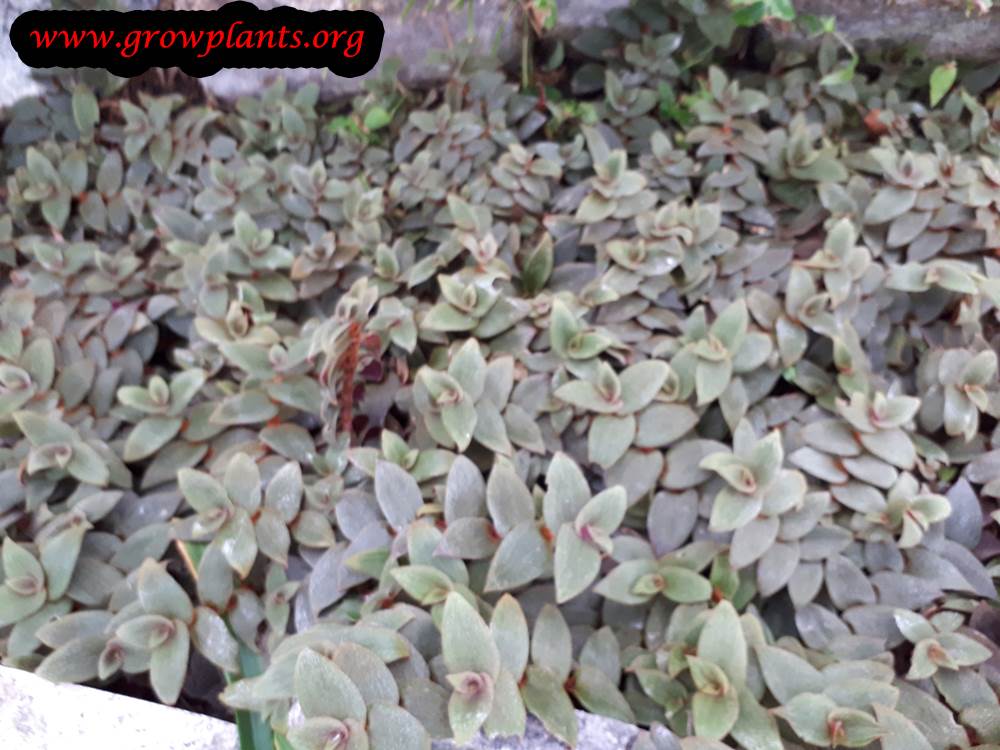
- Growth Habit & Form: A creeping, trailing succulent that also works as a groundcover; can be aggressive in tropical conditions.
- Lifespan & Maturity: An evergreen perennial that fills a pot or basket quickly.
Anatomy & Physical Features
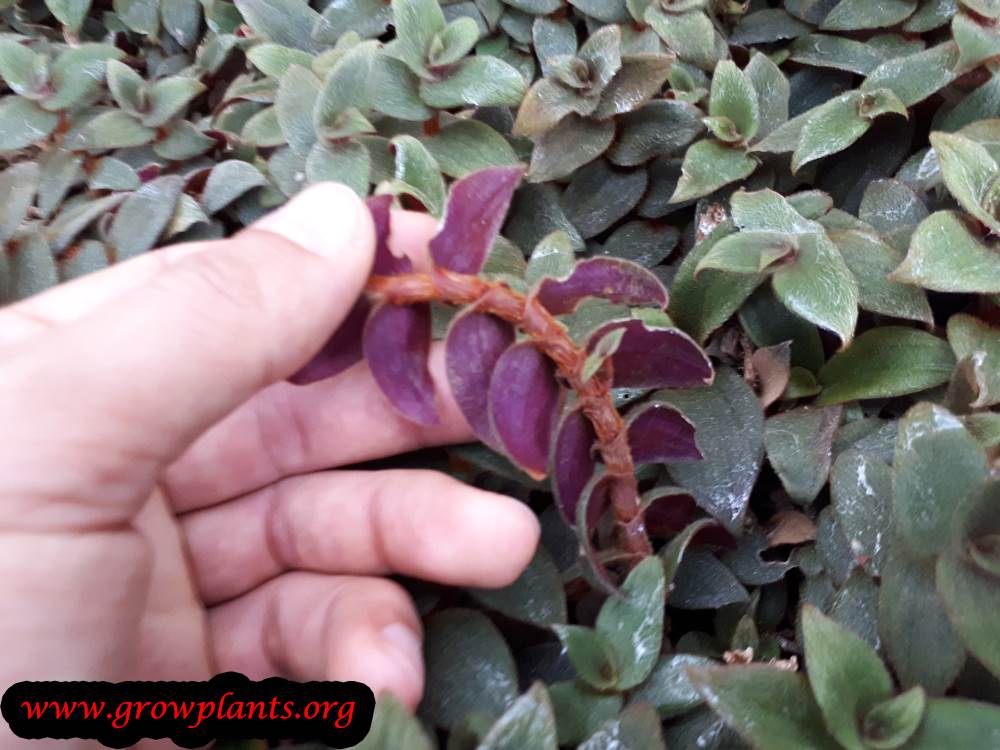
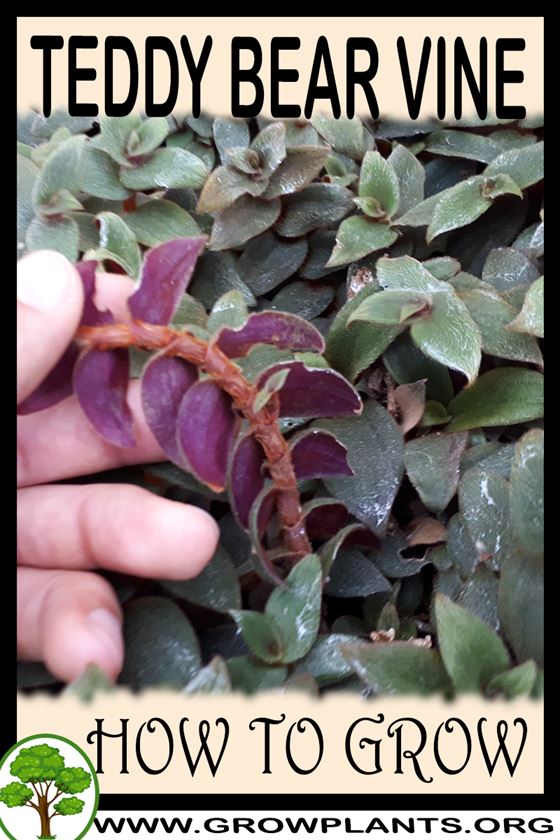
- Leaves & Foliage: Small, oval, green leaves with purple undersides, densely covered in soft, velvety hairs.
- Flower Characteristics: Small, triangular purple flowers with yellow stamens forming little pom-poms.
Primary Uses & Landscape Value
- Functional & Ornamental Roles: Ornamental foliage plant for hanging baskets, containers, groundcover and as a houseplant.
Care Guide: Planting, Soil & Watering
Overview: Teddy bear vine is a soft, velvety-leaved trailing succulent that likes a rich, organic but freely draining mix and bright shade. Water regularly in growth but let the surface dry slightly between drinks – it rots if kept soggy.
Quick Care Requirements
| Requirement | Ideal Condition |
|---|---|
| Planting Season | In spring to summer (frost-free, ~zone 10+; year-round in 11b+) |
| Growth Rate | Moderate to fast |
| Soil Type | Rich and organic with good drainage (potting or peat mix with perlite/vermiculite) |
| Water Need | Moderate – let the top dry slightly; do not overwater |
Planting & Establishment
- Best Planting Season: Plant or pot up in spring to summer; frost-free conditions only, and it does well as a hanging plant.
- How to Plant:
- Hole Preparation: Pot into a container with ample drainage holes, or set into rich, free-draining ground.
- Soil Amendments: Use a rich potting or peat mix lightened with perlite or vermiculite.
- Planting Depth: Set it at the same level it was growing, keeping the crown at the surface.
- Growth Speed & Expectations: Moderate to fast; a low 5-10 cm (2-4 in) plant that trails to hang attractively, showing the purple leaf undersides.
Soil, Watering & Drainage Care
- Soil Mix & Drainage Needs: An airy, organic mix with reliable drainage; grow in a pot with holes and empty any saucer so it never sits in water.
- Watering Schedule & Technique:
- Young / Newly Planted: Keep the mix slightly moist while it roots; avoid overwatering.
- Established: Water when the top of the mix begins to dry, then water thoroughly and let it dry a little again before the next.
- Seasonal Adjustments: Ease back in the cool, low-light months; a little more during warm active growth.
Climate, Light & Hardiness
Teddy Bear Vine (Cyanotis kewensis) is a trailing succulent-type plant from warm tropical, subtropical, and mediterranean climates that actually prefers shade over strong sun, since too much direct light burns its velvety foliage. It is reliably hardy outdoors only from about USDA zone 10 upward, elsewhere best grown as a houseplant.
Quick Climate Specifications
| Climate Zones | Tropic, subtropical, Mediterranean, or grown as a houseplant |
|---|---|
| USDA Hardiness Zones | Approximately 10 and warmer |
| Frost Tolerance | Very low |
| Light Conditions | Half shade to full shade; performs best in mostly shaded (roughly 85% shade) conditions |
Sunlight & Light Exposure
Optimal Light Setup
Does best in mostly shaded, bright conditions – too much sun will burn the leaves, so filtered or indirect light is preferred over direct exposure.
Shade & Heat Management
Tolerates near-full shade well and, unusually for a succulent-type plant, prefers it over strong direct sun.
Temperature Extremes & Hardiness
USDA Hardiness & Regional Limits
Reliable outdoors only from about USDA zone 10 upward; elsewhere it is grown as a warm, indoor hanging plant.
Cold Damage & Winter Protection
Cold and damp conditions together are damaging; seed and cutting establishment are best done at around 20–25°C (68–77°F).
Frost Sensitivity
Highly frost-sensitive.
Growing in Pots, Balconies & Indoors
The teddy bear vine (Cyanotis kewensis) is a small, fuzzy-leaved trailer the grower confirms grows well indoors. Its soft, bronze-green foliage is perfect for a hanging pot or shelf in bright, indirect light.
Quick Details
- Container Size: A small pot or hanging basket – it trails rather than grows tall
- Indoor Suitability: A good houseplant; grows better the more (indirect) light it gets
- Best Spot: Bright shade – roughly 85% shade suits it; too much direct sun scorches the leaves
- Soil & Drainage: Free-draining potting or succulent-type mix
- Watering in Pots: Water regularly but let it dry a little (not fully) between waterings; never overwater
Indoors & On the Windowsill
- A good houseplant: The grower grows it indoors and notes it does better with more light – give it a bright spot out of harsh direct sun.
- Trailing habit: Its fuzzy stems cascade beautifully from a hanging pot or high shelf; pinch the tips to keep it full.
- Handle with care: Like its dayflower relatives, the sap can irritate sensitive skin and mildly upset pets if chewed – keep nibbling pets away.
On a Balcony or Patio
- Bright shade: On a balcony keep it in bright shade (roughly 85% shade), sheltered from direct midday sun and wind; in a small pot it dries quickly, so check it often but let it dry slightly between waterings.
Choosing the Pot, Soil & Long-Term Care
- Pot & drainage: A small pot or hanging basket with strong drainage holes and no standing saucer.
- Potting mix: A free-draining mix – potting compost with added perlite, or a light succulent blend.
- Feeding: A dilute balanced feed now and then in the growing season is plenty.
- Refresh the mix and pot on about every two years, lightly root-pruning and top-pruning to keep it vigorous.
Fertilizing & Feeding
A trailing succulent grown for its velvety, colorful foliage rather than vigorous growth; light, infrequent feeding during active growth is enough, with none needed at rest.
Quick Fertilizing Specs
| Feeding Level | Light feeder |
|---|---|
| Main Nutrient Priority | Balanced but kept low in nitrogen to avoid soft, weak growth |
| Best Feeding Period | Through active warm-season growth only |
| Organic Options | A light top-dressing of compost is optional; not required for this succulent |
| Micronutrients | Rarely needed; a complete succulent fertilizer at active growth is usually sufficient |
| Soil pH | Grows best in a well-drained, fast-draining succulent mix |
Feeding by Growth Stage
Active warm-season growth
Support gentle new trailing growth and healthy leaf color without encouraging lanky, weak stems.
| Nutrient direction | A diluted, low-nitrogen succulent or cactus fertilizer that keeps growth compact and leaves richly colored. |
|---|---|
| Timing | Through the warm, actively growing months. |
| Frequency | Light feeding is usually enough during active growth; this succulent rarely needs frequent applications. |
| Fertilizer types | A diluted, low-nitrogen succulent or cactus fertilizer |
| Precautions | Apply only to moist soil and avoid wetting the fuzzy foliage; excess nitrogen produces soft, stretched growth. |
Cool-season rest
Match feeding to the plant’s natural slowdown when light and warmth drop.
| Nutrient direction | None – withhold fertilizer while the plant rests through cooler, lower-light conditions. |
|---|---|
| Timing | Winter, or any extended period of cooler temperatures and reduced light. |
| Frequency | No feeding at this stage. |
| Fertilizer types | No feeding at this stage; resume light feeding once active growth returns |
| Precautions | Do not fertilize a resting succulent; unused nutrients can build up as salts and stress the roots. |
Nutrient Deficiency Signs & Corrections
Older foliage fades to a dull, pale green and new growth is sparse during the active season.
| Possible causes | very low nutrient reserves in fast-draining succulent mix, no feeding for an extended stretch of active growth, old, depleted potting mix |
|---|---|
| Appears first on | older leaves |
| What to check | how long since the last feeding, age and condition of the potting mix, whether the plant is actively growing or resting |
| Possible correction | Resume light, diluted feeding during the active growing season and refresh old potting mix. |
Leaf tips or margins brown and shrivel, and roots may look sparse or blackened.
| Possible causes | fertilizer salt buildup from feeding during the dormant rest period, over-fertilizing beyond what this light feeder needs, poor drainage that concentrates salts around the roots |
|---|---|
| Appears first on | leaf tips and margins |
| What to check | recent fertilizer use relative to the growth stage, drainage of the potting mix, root condition |
| Possible correction | Stop feeding, flush the soil with plain water if drainage allows, and resume only light feeding once active growth returns. |
Stems soften and blacken at the base, and leaves drop even though the plant is watered regularly.
| Possible causes | overwatering combined with feeding that keeps soil too wet and rich, poorly drained soil holding excess moisture around roots, fertilizing during the resting season when uptake is minimal |
|---|---|
| Appears first on | stem base and lower leaves |
| What to check | soil moisture and drainage, pot drainage holes, recent watering and feeding pattern |
| Possible correction | Let the soil dry appropriately between waterings, improve drainage, and withhold feeding until healthy new growth resumes. |
Pruning, Training & Seasonal Maintenance
Teddy Bear Vine is a small, soft-stemmed, creeping succulent vine grown mainly as a hanging houseplant for its velvety, purple-backed leaves. It has no woody structure and tolerates trimming well; the goal of pruning here is purely cosmetic and cultural – keeping trailing stems full and well-branched rather than bare and stringy. Because it grows year-round in its typical warm, frost-free conditions (or indoors), light trimming can be done any time active growth is underway rather than in one fixed season.
Quick Pruning & Maintenance Specs
| Pruning Tolerance | High (soft succulent stems regenerate readily) |
| Primary Pruning Window | Year-round, during active growth |
| Typical Frequency | Pinch trailing tips every few weeks; occasional harder cutback as stems age |
| Main Objective | Encourage branching and fullness, control trailing length, remove leggy/bare growth |
| Young Plant Priority | Pinch early to build multiple trailing stems from the base |
| Mature Plant Priority | Trim back bare, overly long trailing stems and propagate the cuttings |
| Best Tool Type | Precision snips |
| Avoid Heavy Pruning During | Cool, low-light winter slowdown when regrowth is sluggish |
Pruning by Plant Age & Size
Newly Established
Let a newly potted or newly rooted cutting settle in before pinching; remove only any damaged or rotted leaf/stem tissue.
Young / Formative
Pinch the growing tips of young trailing stems to encourage branching from lower nodes, so the hanging plant fills out fully rather than sending up a few sparse trailers.
Mature / Established
Trim back individual trailing stems that have grown bare at the base or excessively long, cutting to just above a leafy node so the stem re-branches.
Special Growth to Remove
- Bare, leggy, or overly long trailing stems, shortened to a leafy node.
- Any soft, rotted, or damaged stem sections (this succulent dislikes overwatering and can rot).
Container & Small-Space Pruning
As a hanging-basket plant, regularly pinch and shorten trailing stems to keep the display in scale with the pot rather than letting stems sprawl over furniture. Cuttings taken during trimming root readily and can be used to refill thin spots in the same pot.
Tools
Precision snips only – every stem on this small (5–10cm growth increments), soft-succulent vine is easily cut with a fine blade.
Tool Hygiene & Disease Risk
Routine – clean, sharp snips are sufficient; the only noted pest (larvae) is not tool-transmissible.
Cut Placement & Technique
Pinch or cut just above a leaf node so the stem below branches rather than dying back to the cut.
Heavy Pruning & Rejuvenation
Tolerated well: an old hanging specimen that has become bare-based and stringy can be cut back hard, close to the pot, and will regrow a fresh flush of trailing stems at its fast-to-medium growth rate; alternatively, root a batch of tip cuttings to start a fuller replacement plant in the same pot.
Post-Pruning Care
Let the soil dry slightly between waterings as usual after trimming (this plant dislikes being kept constantly wet); no extra feeding is needed beyond routine care.
Common Pruning Mistakes
- Never pinching young growth, leaving a few long, sparse, unbranched trailers instead of a full hanging plant.
- Overwatering after a cutback, which risks rotting the softened stem tissue.
- Letting stems grow bare at the base for years before finally rejuvenating, rather than trimming lightly and regularly.
When NOT to Prune
Avoid cutting back hard during the slow, low-light winter period when regrowth is weak, and let a recently rooted cutting establish before trimming it further.
Recommended Tools (by task)
- precision_snips – pinching tips and shortening trailing stems; this plant’s stem size never calls for anything larger.
Propagation Guide
Teddy bear vine is most easily and quickly increased from stem cuttings taken from actively growing shoots, which is easier than raising it from seed; seed sowing is also possible but slower and more exacting about moisture. Propagation is easy overall.
Quick Propagation Specs
| Best Propagation Method | Stem cuttings |
| Alternative Methods | Seed |
| Propagation Difficulty | Easy |
| Seed True-to-Type | Usually true-to-type |
| Vegetative True-to-Type | Yes |
| Best Propagation Season | Spring, before new growth begins (cuttings); spring in hardiness zone 10–11, or year-round in zone 12+ (seed) |
| Seed Germination Time | 2–8 weeks |
| Cutting Rooting Time | Commonly a few weeks under warm, humid conditions |
| Germination Temperature | 20–25°C (68–77°F) |
| Seed Sowing Depth | Cover lightly, about 1mm |
Growing from Seed
Seed Handling & Viability
Save seed dry, at room temperature, until sowing.
Sowing Season
Spring in hardiness zone 10–11; year-round in zone 12+.
Sowing Depth & Orientation
Cover lightly with about 1mm of soil; space around 10x20cm (4x8in) where sown in rows or trays.
Germination Conditions
Slightly moist soil in a peat-based mix with vermiculite, low humidity, warm at 20–25°C (68–77°F); a little morning sun is beneficial.
Germination Time
2–8 weeks.
Seedling Care
Keep soil slightly moist without overwatering; grow on in potting or sandy soil with perlite, in a pot with adequate drainage holes.
Stem Cuttings
Cutting Type
A tip cutting with about 5 leaves (fewer also works), taken from the end of a stem.
Best Timing
Best taken before new growth begins, when the buds are just swelling.
Rooting Setup
Can be started in water, changing it every few days, but rooting is more reliable directly in a moist, humid medium such as potting or peat soil mixed with perlite or vermiculite.
Rooting Time
Typically a few weeks under warm, humid conditions; this vine roots easily and is noted as easier than starting from seed.
Bloom & Flower Guide
Quick Details
- Bloom Season: Summer into autumn
- Flower Appearance: Small violet-purple, three-petaled flowers with fuzzy yellow stamens, forming little pompons
- Edibility: Ornamental
Detailed Blooming Overview
Cyanotis kewensis, the teddy bear vine, is grown above all for its small, fuzzy, brown-haired leaves, but from summer into autumn it also produces charming little flowers: violet-purple, three-petaled blooms with fuzzy yellow stamens that gather into tiny pompons tucked among the foliage.
Flower Characteristics
- Small, three-petaled flowers in violet-purple.
- Fuzzy yellow stamens forming a little pompon.
- A modest bonus to the plant’s furry foliage.
Bloom Care & Thinning
- Managing the bloom: Give bright, indirect light to encourage the occasional flowers; it is mainly grown as a trailing foliage or house plant, so the blooms are a welcome extra rather than the main show.
Pests, Diseases & Troubleshooting
Overview: Teddy Bear Vine is a trailing member of the spiderwort family (Commelinaceae) and, like its Tradescantia relatives, is generally tough but succulent-stemmed — meaning its biggest risks come from sap-sucking insects and from moisture sitting in its dense, fuzzy foliage. The fine hairs that give the plant its charm also trap humidity and water against the leaves, so most trouble is either overwatering-related rot or small pests hiding in the felty growth. Manage it with sharp drainage, good airflow, and regular close inspection rather than routine spraying.
Quick Troubleshooting Overview
| Issue / Pest | Main Symptom | Primary Solution |
|---|---|---|
| Mealybugs | White cottony fluff in leaf axils and along stems | Dab with alcohol, isolate, treat with insecticidal soap |
| Spider mites | Fine webbing, stippled dull leaves in dry air | Raise humidity, rinse foliage, apply horticultural oil |
| Aphids | Clustered soft insects on tender new tips, sticky honeydew | Rinse off, encourage predators, insecticidal soap |
| Root / stem rot | Blackened mushy stems, collapse at the base | Cut back to healthy tissue, dry out, repot in gritty mix |
| Fungus gnats | Tiny flies over the soil; larvae in wet compost | Let top layer dry, yellow sticky traps, bottom water |
Common Pests & Management
- Mealybugs (Pseudococcus spp.):
- Symptoms: White, cottony, waxy tufts tucked into leaf joints, stem bases and the undersides of the hairy leaves; sticky honeydew and sooty mould follow. Easy to miss because the fuzz mimics the plant’s own hairs.
- Prevention & Control: Inspect new growth weekly; wipe individual insects off with a cotton bud dipped in rubbing alcohol. Isolate affected plants. For wider infestations use insecticidal soap or a light horticultural oil, repeating every 7–10 days to catch newly hatched crawlers.
- Spider mites (Tetranychus urticae):
- Symptoms: Fine pale stippling and a dusty, faded look to the leaves, with delicate webbing between stems and hairs in hot, dry conditions. Look-alike for early nutrient issues — check leaf undersides with a lens for moving specks.
- Prevention & Control: Mites thrive in dry air, so improve humidity and airflow. Rinse foliage gently (then let it dry — do not leave water trapped in the fuzz). Treat persistent cases with horticultural oil or insecticidal soap on leaf undersides.
- Aphids (Aphis / Myzus spp.):
- Symptoms: Clusters of soft green, black or brown insects on the softest new tips, causing curled, distorted growth and sticky honeydew.
- Prevention & Control: Dislodge with a firm water rinse; encourage or introduce ladybirds and lacewings. Pinch out badly infested tips. Insecticidal soap handles the rest — avoid heavy chemical use on such soft foliage.
- Whitefly (Trialeurodes vaporariorum):
- Symptoms: Tiny white moth-like insects that fly up in a cloud when the plant is disturbed; honeydew and mottling on leaves.
- Prevention & Control: Yellow sticky traps for monitoring and knock-down; keep plants uncrowded. Insecticidal soap or oil sprays applied to undersides, repeated to break the life cycle.
- Fungus gnats (Bradysia spp.):
- Symptoms: Small dark flies drifting over the soil; larvae in the top layer of constantly damp compost can nibble fine roots and weaken cuttings.
- Prevention & Control: The cure is drier soil — let the surface dry between waterings and water from below. Yellow sticky traps catch adults; a Bacillus thuringiensis israelensis (Bti) drench targets larvae.
Diseases & Fungal Issues
- Root & stem rot (Pythium / Rhizoctonia spp.):
- Symptoms: Soft, blackened, collapsing stems at the base, wilting despite moist soil, and an easily detached rotten root system — the most common killer of this plant.
- Treatment & Management: Almost always caused by overwatering or a heavy, airless mix. Take healthy tip cuttings to save the plant, discard rotten material, and repot survivors into a fast-draining, gritty mix. Water only when the top of the soil is dry.
- Grey mould (Botrytis cinerea):
- Symptoms: Fuzzy grey-brown mould on damaged or congested foliage, especially where water sits trapped in the hairs in cool, damp, still air.
- Treatment & Management: Improve airflow, remove affected leaves, avoid overhead watering and misting late in the day. Space plants and clear fallen debris; a copper-based fungicide is a last resort.
- Leaf spot (fungal / bacterial):
- Symptoms: Brown or water-soaked spots that may enlarge and merge, often after prolonged leaf wetness.
- Treatment & Management: Keep foliage dry, water at the base, increase spacing and remove spotted leaves promptly. Sanitation usually resolves it without chemicals.
Growing Difficulties & Abiotic Problems
- Overwatering & base rot:
- Cause & Symptoms: Constantly wet, heavy soil causes mushy stems and sudden collapse. The felty leaves also hold water, so overhead watering promotes rot in the crown.
- Correction Strategy: Use a gritty, free-draining mix, water from below or at the soil surface, and let the mix dry between drinks. Empty saucers promptly.
- Leggy, sparse growth:
- Cause & Symptoms: Long bare stems with widely spaced leaves and loss of the compact, fuzzy look — a sign of too little light.
- Correction Strategy: Move to bright, indirect light. Pinch tips regularly to encourage branching and root the trimmings back into the pot for fullness.
- Crispy brown leaf tips & edges:
- Cause & Symptoms: Dry, brown, brittle margins from very low humidity, underwatering, or fertiliser salt build-up.
- Correction Strategy: Keep watering even (never bone-dry for long), raise ambient humidity modestly, and flush the pot occasionally to leach salts. Feed at half strength in the growing season.
- Faded leaf colour / scorch:
- Cause & Symptoms: Bleached, dull or scorched patches from harsh direct midday sun.
- Correction Strategy: Provide bright but filtered light; shield from intense direct sun through glass.
What Helps — Products & Tools
This plant rarely needs strong chemicals. Keep on hand insecticidal soap and a light horticultural (or neem) oil for mealybugs, mites, aphids and whitefly; rubbing alcohol on cotton buds for spot-treating; yellow sticky traps and a Bti drench for fungus gnats; and a copper-based fungicide only as a last resort for mould or leaf spot. The single most useful “tool” is a gritty, fast-draining potting mix that prevents the rot which kills most specimens.